“You Are All a Lost Generation”
Gertrude Stein borrowed the line from a garage owner, Hemingway pinned it to a novel, and a generation got a name it spent the rest of its life arguing with. An essay on the era's most famous epigraph.
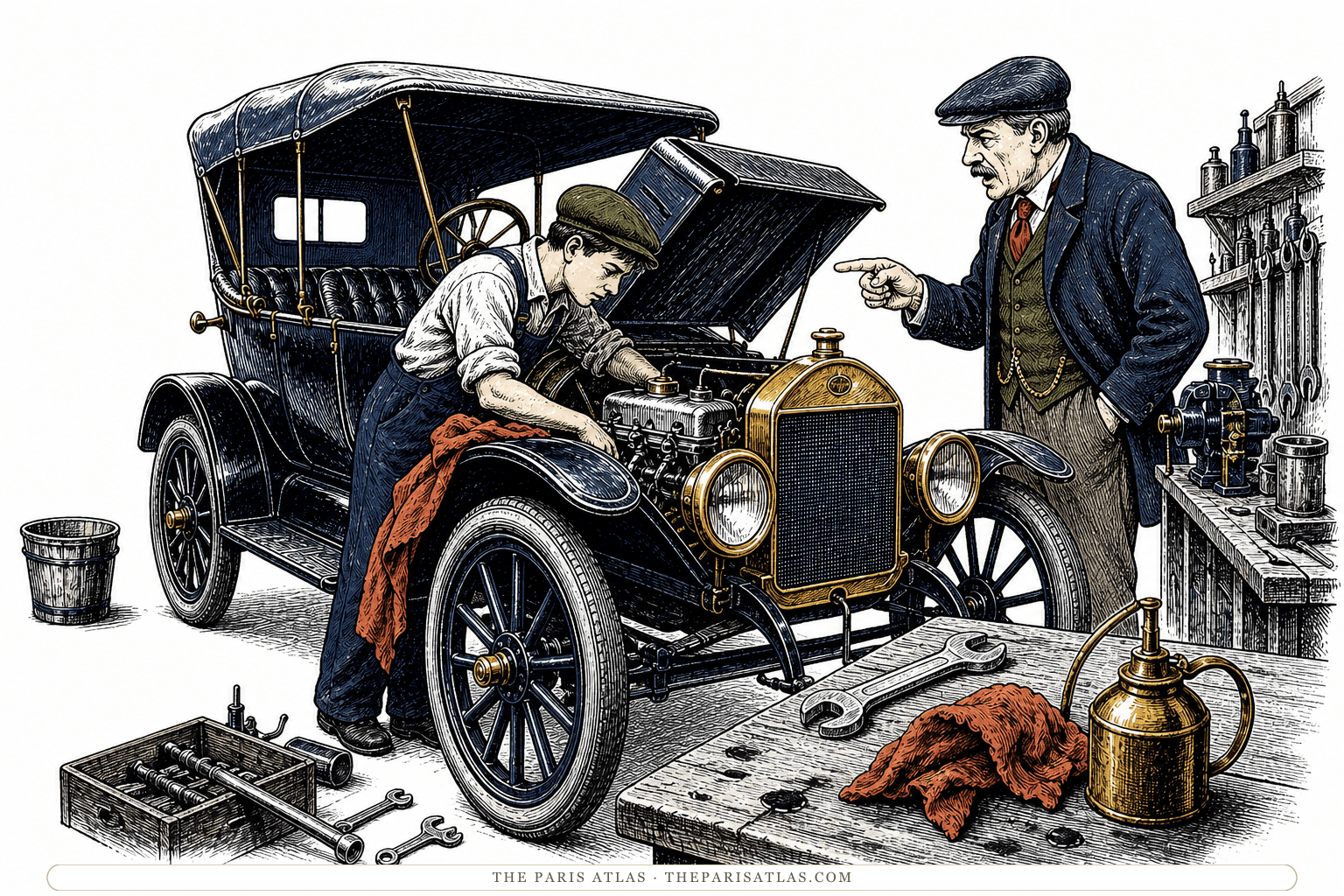
The story, as Hemingway tells it in A Moveable Feast, goes like this: Gertrude Stein's Model T needed work, the young mechanic was slow, and the garage owner dressed the boy down with a phrase about his generation — the one that had gone to the war — being une génération perdue. Stein liked it, aimed it at her young visitor, and expanded the indictment: 'That's what you all are. All of you young people who served in the war. You are a lost generation.'[1]
Hemingway's genius was to disagree with the line and use it anyway. The Sun Also Rises opens with Stein's verdict as its first epigraph — and then immediately undercuts it with a second, the passage from Ecclesiastes about the earth abiding forever, from which the novel takes its title. One generation passeth away, and another generation cometh; the sun also rises. The book's whole argument sits in the white space between those two quotations: lost compared to what, exactly?[2]
Lost compared to what, exactly?
What 'lost' actually meant
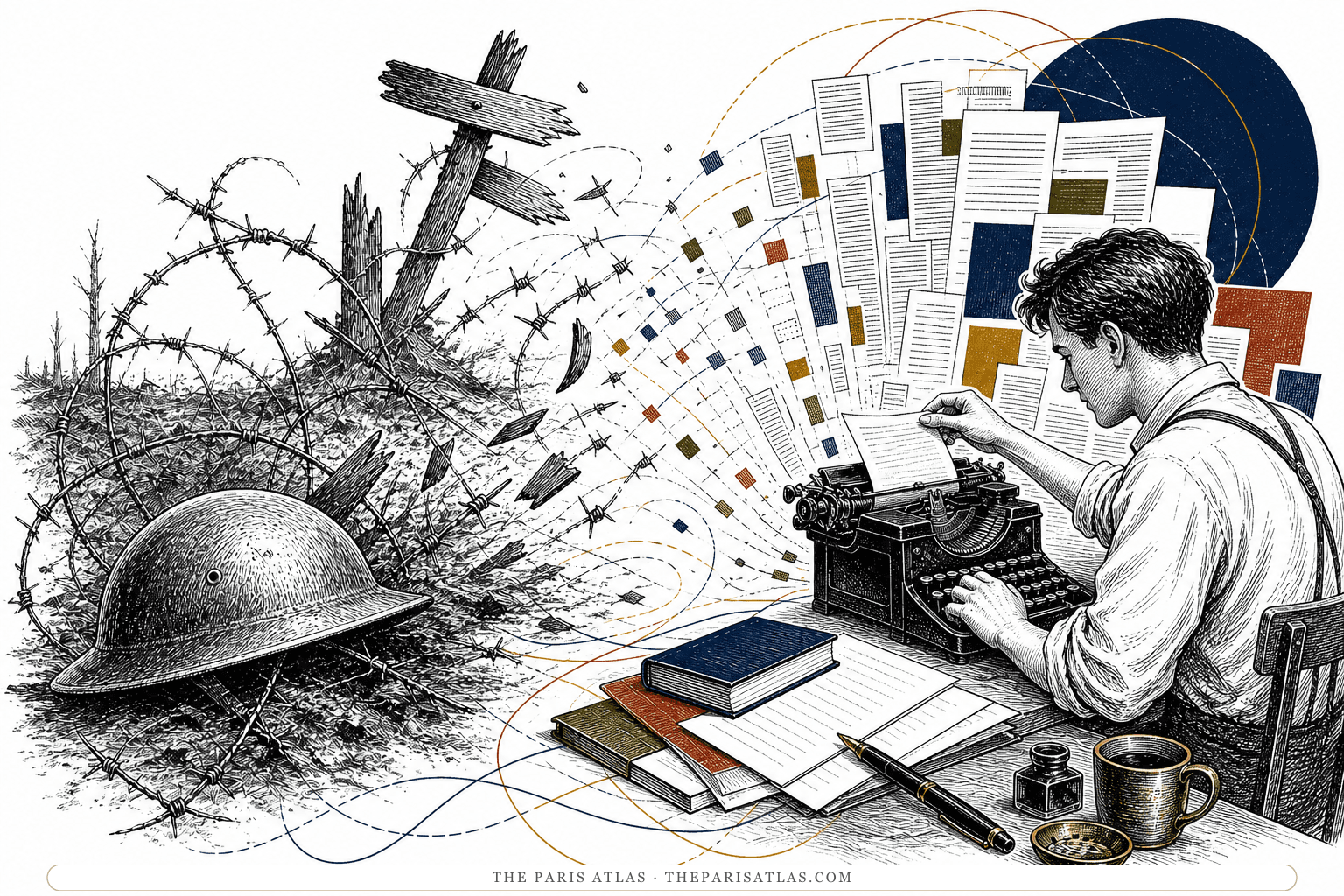
It never meant aimlessness, though a thousand cocktail scenes have made it read that way. The word's true cargo was the war. A generation raised on the big abstractions — glory, honor, courage, sacrifice — had watched those words administrate a slaughter, and came home (or didn't come home; Pound's 'died a myriad' should be read alongside every party scene) unable to use the vocabulary their world ran on. What was lost wasn't direction. It was the language of meaning itself.[3]
Read that way, the era's styles stop looking like fashion and start looking like triage. Hemingway's stripped sentences are what prose sounds like when the abstract words have been struck off the ration. Céline's ranting spoken French is the same surgery performed with the opposite instrument — if the official language lies, write in the language of the men who dug the trenches. Even the Cantos' fragments are a response to the same rubble. The Lost Generation's real project was rebuilding a working language from the concrete nouns up.
The label's afterlife
The writers themselves mostly hated it. Hemingway, in the memoir, dismisses Stein's line as 'splendid bombast' and notes tartly that all generations are lost by something.[1] He had a point, and it's the reason the label endures anyway: every generation since has recognized the sensation of inheriting a vocabulary that no longer describes the world. The era's books keep finding new readers not because the twenties were glamorous, but because the problem they solved — how to say true things after the official words go bankrupt — never stays solved for long.
Start with the novel that carries the epigraph, then follow the argument through the war books and the memoirs. The garage owner, it turns out, was wrong about the mechanic and wrong about the generation. They weren't lost. They were taking inventory.




 View source