Places
The real addresses where the work was made — every café, studio, bookshop, and dance hall researched, illustrated, and mapped, neighborhood by neighborhood.
Montparnasse

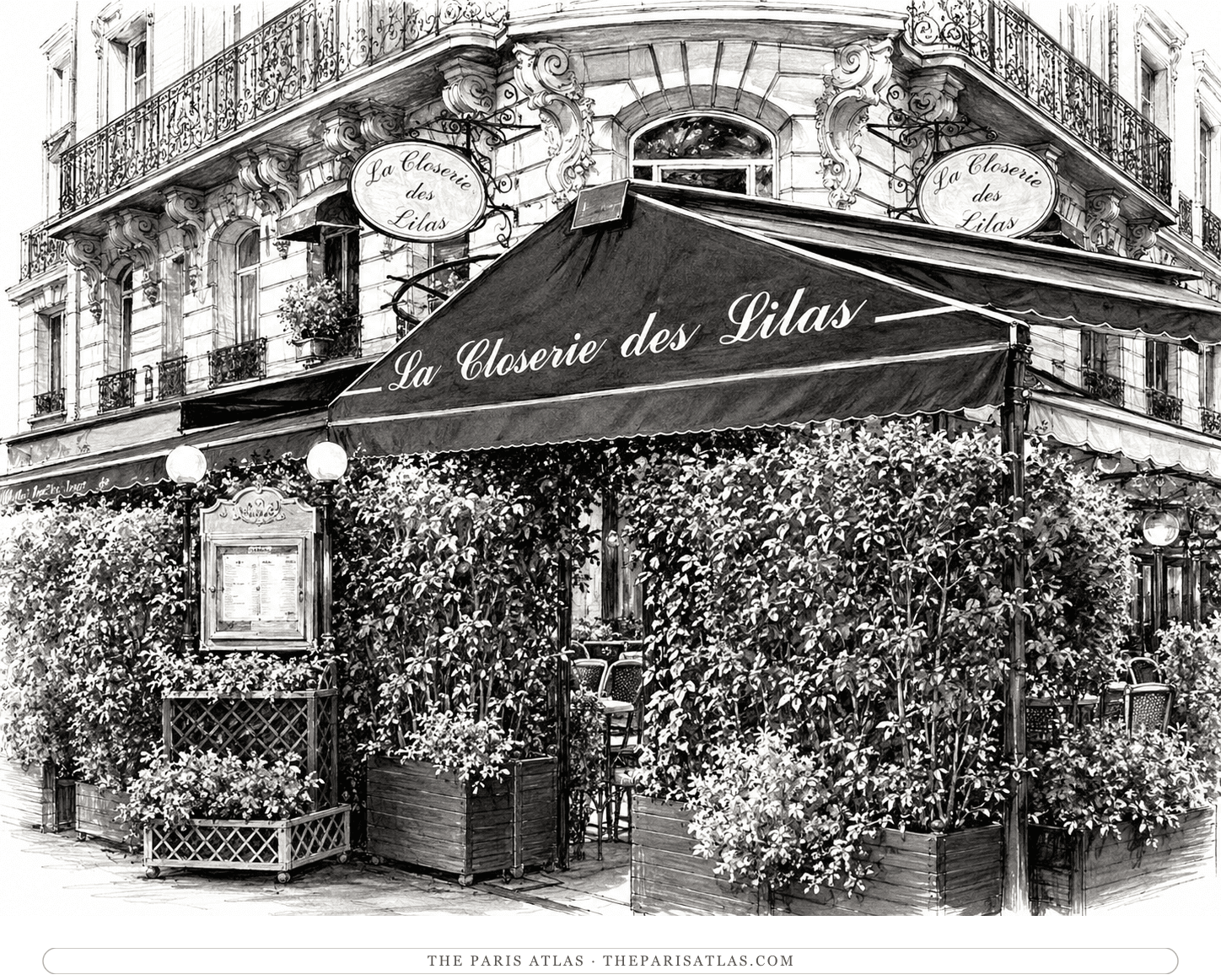
La Closerie des Lilas
Ernest Hemingway's favorite writing spot, where he drafted much of The Sun Also Rises. Quieter than the other cafés, which was the point.

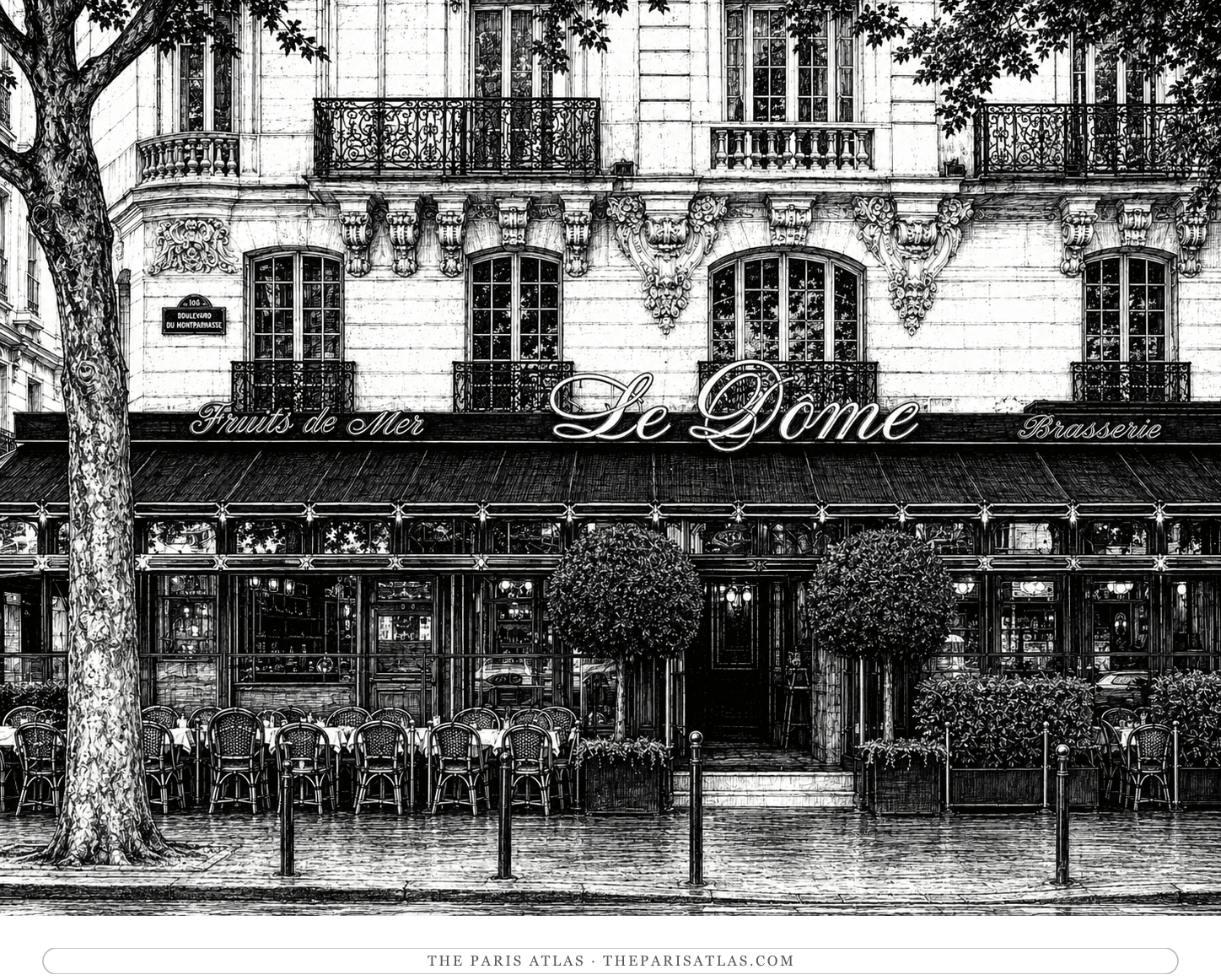
Le Dôme
The noisy common room of Montparnasse and the setting of 'With Pascin at the Dôme' — the café for watching the show, not for working.

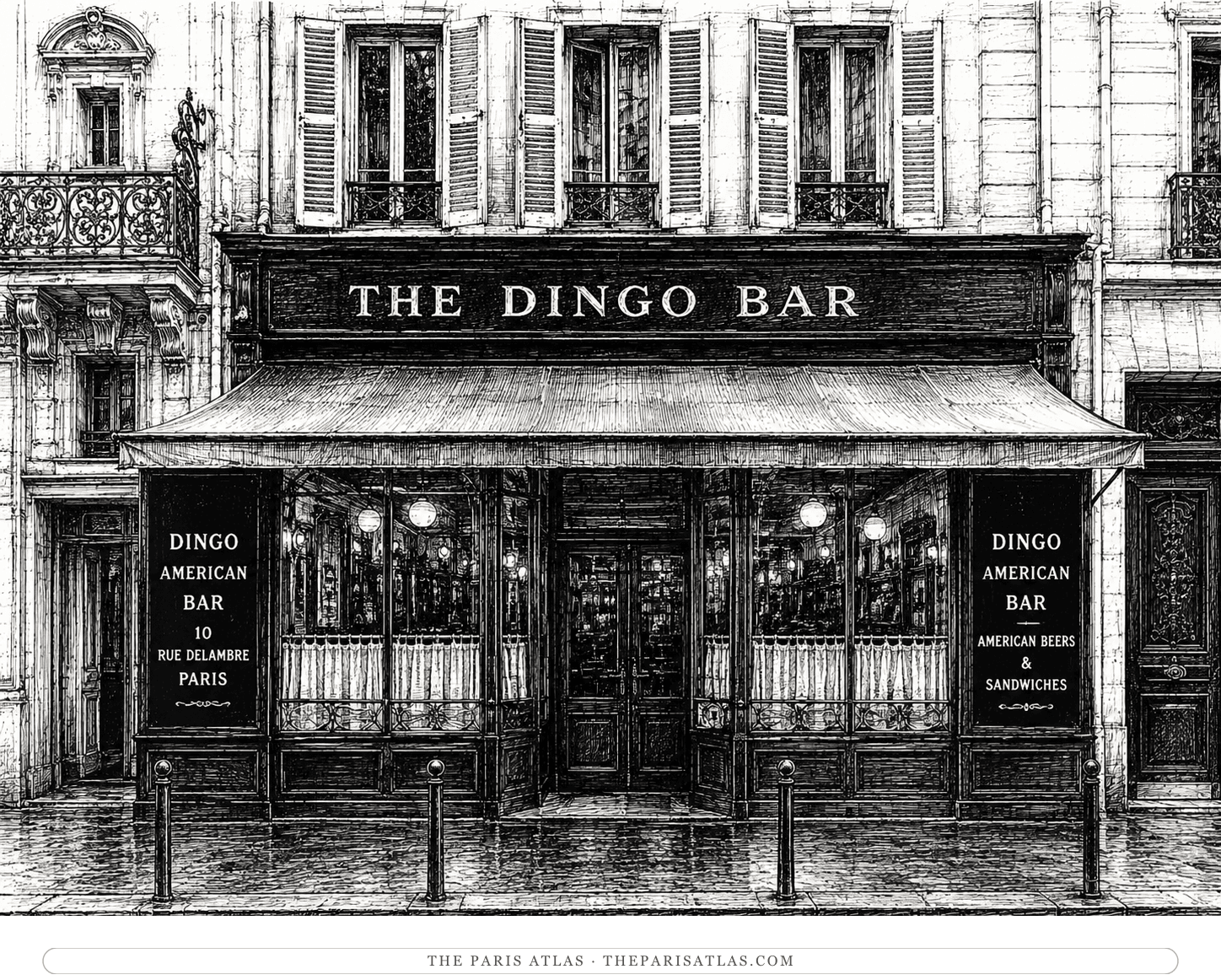
The Dingo Bar
The American bar where Ernest Hemingway met F. Scott Fitzgerald in late April 1925 — two weeks after The Great Gatsby was published.
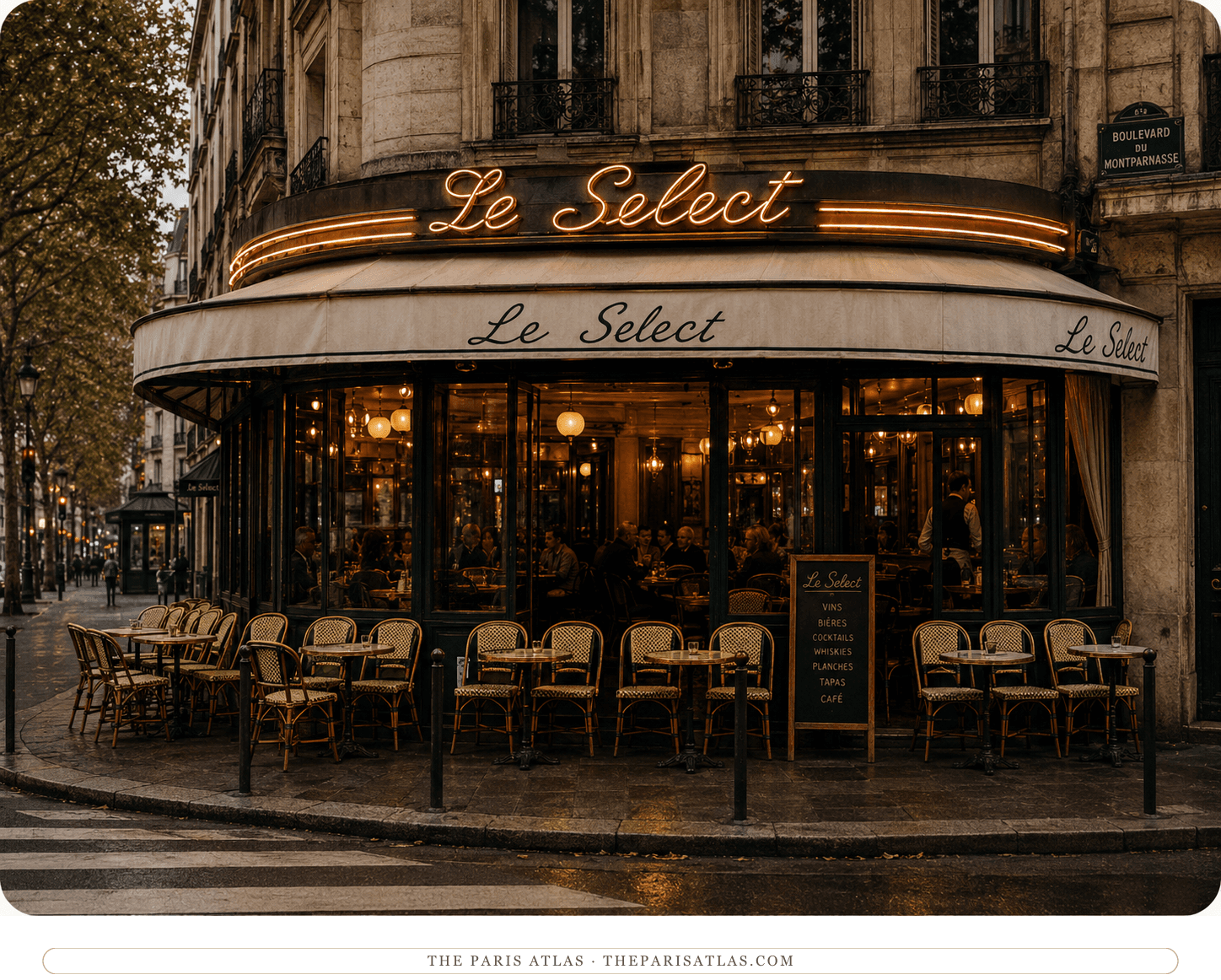
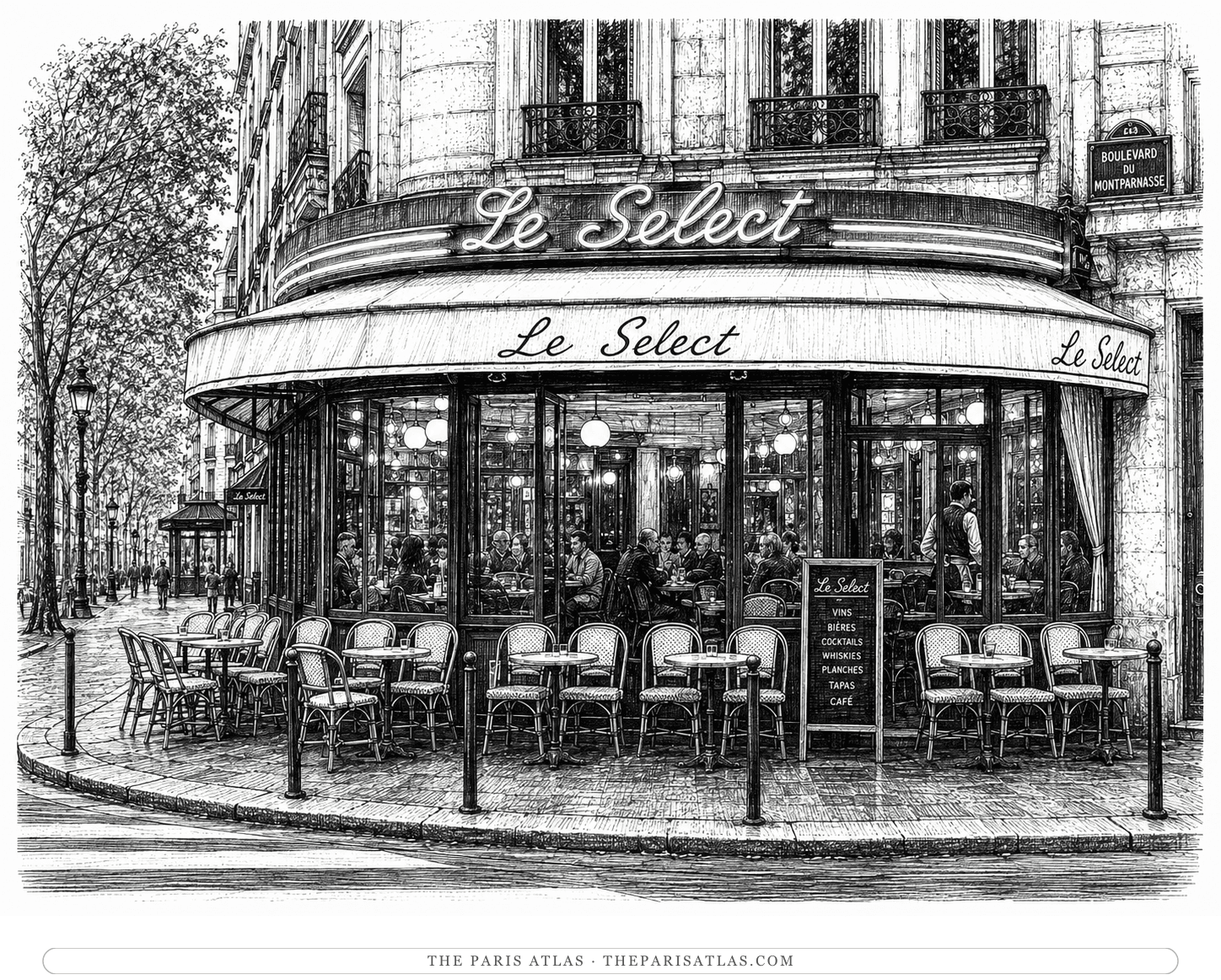
Le Select
The all-night café of the Vavin crossroads and the closest thing Ernest Hemingway's The Sun Also Rises has to a home address — the crowd always ends up at the Select.
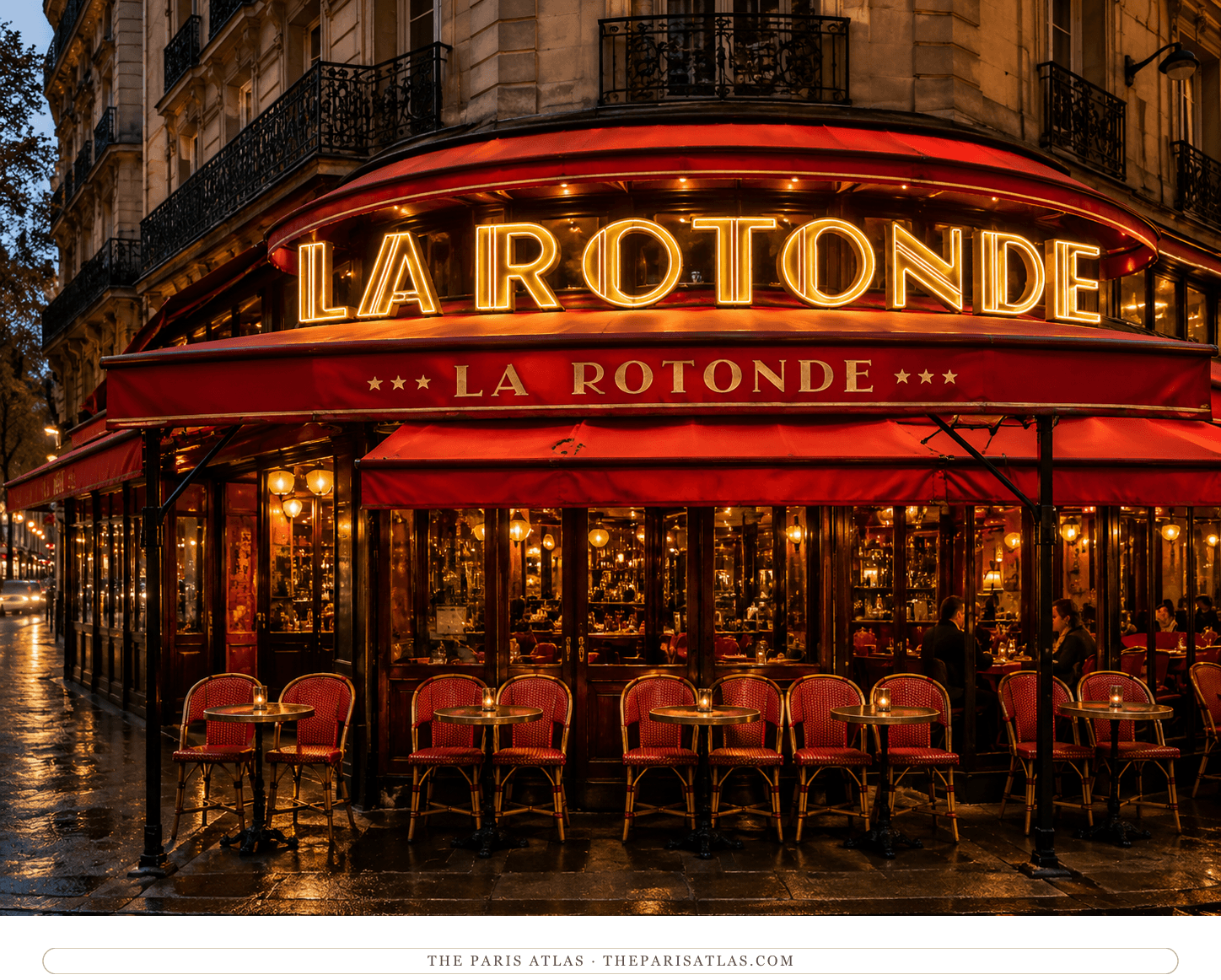
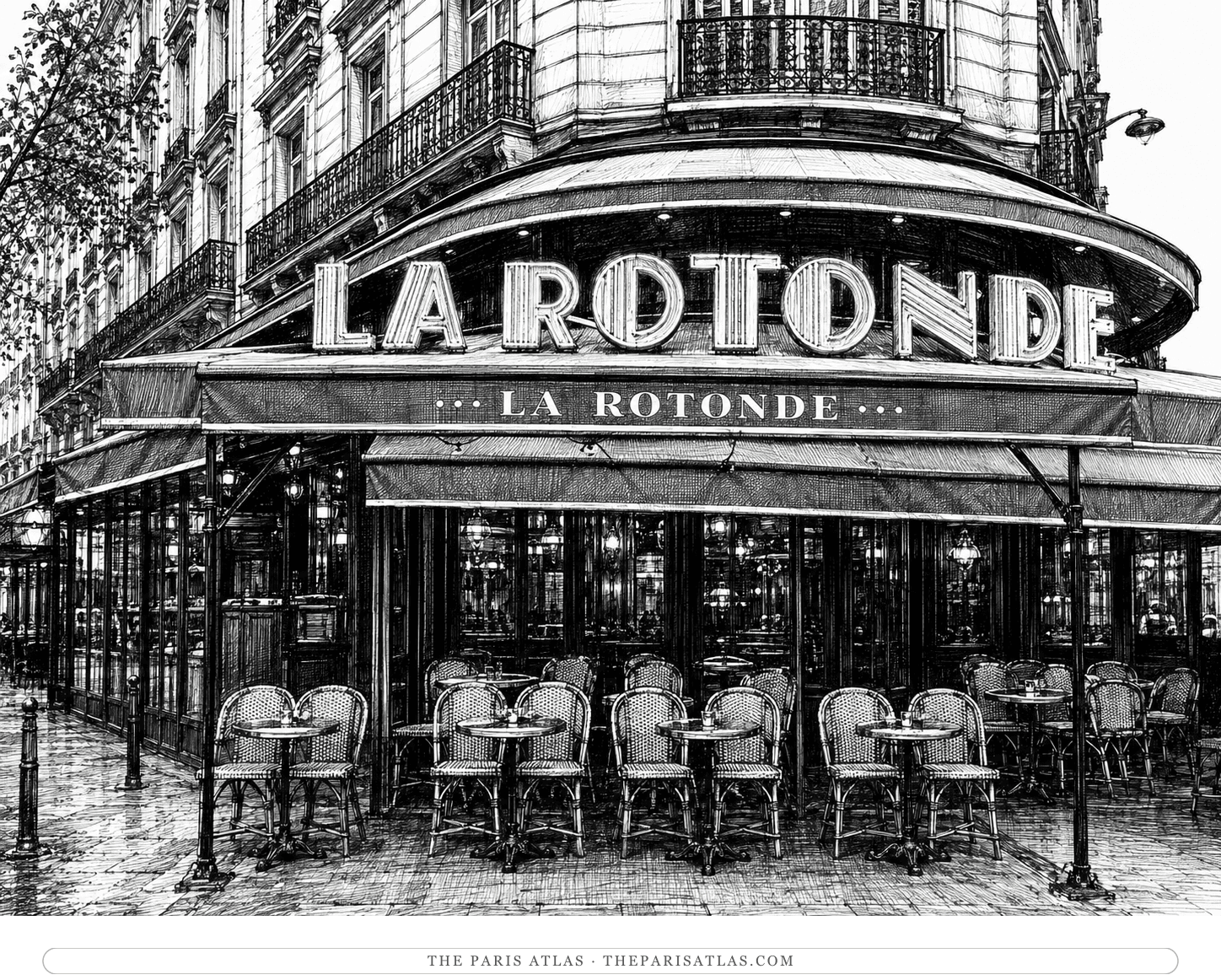
La Rotonde
The café every taxi driver delivered Americans to — the novel's driest Montparnasse joke, and before that the painters' living room, where the patron took drawings for drinks.

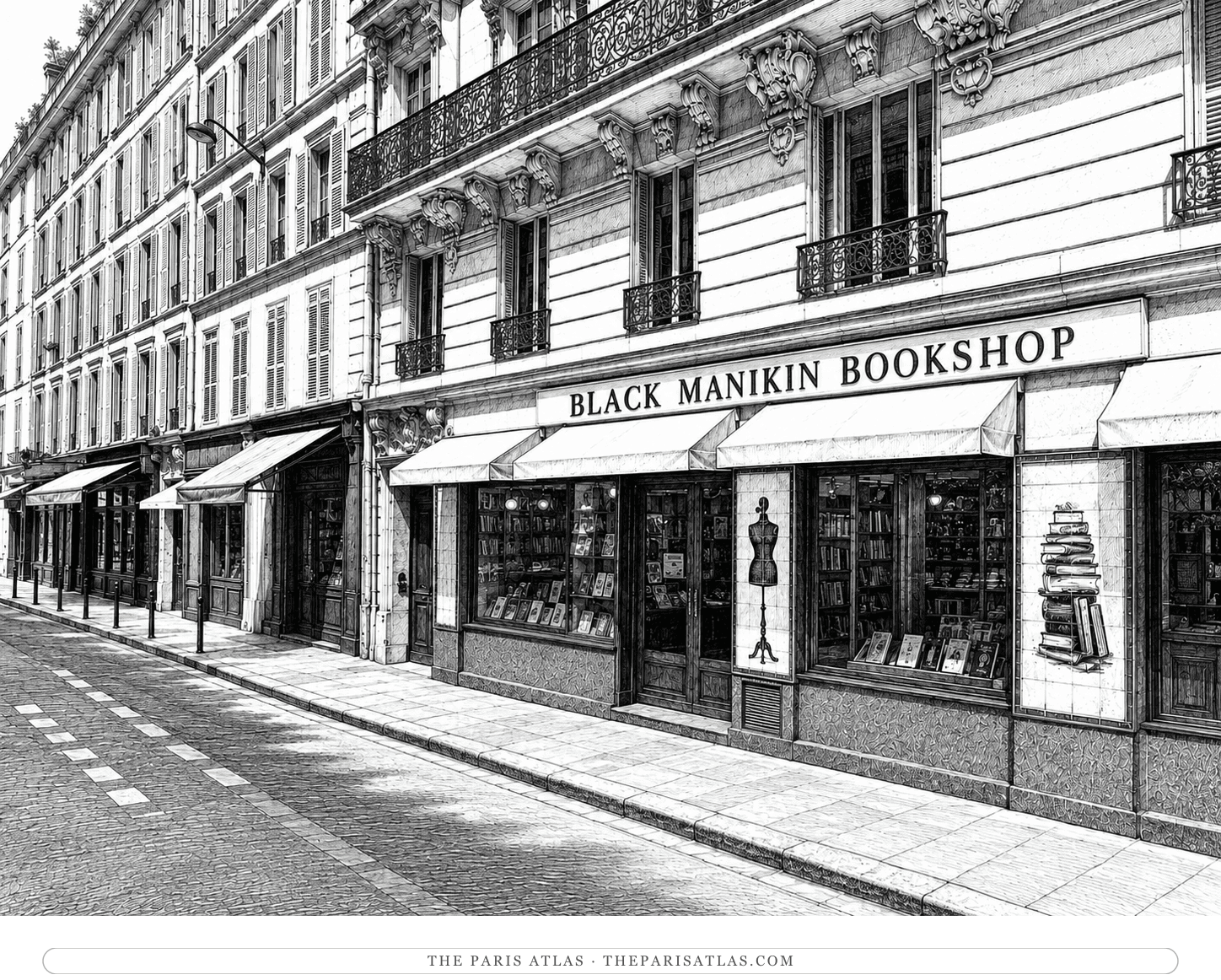
Black Manikin Press (4 Rue Delambre)
Edward Titus's Montparnasse bookshop and small press, where D. H. Lawrence settled terms on 5 April 1929 for the cheap Paris edition of Lady Chatterley's Lover that finally undercut the pirates.

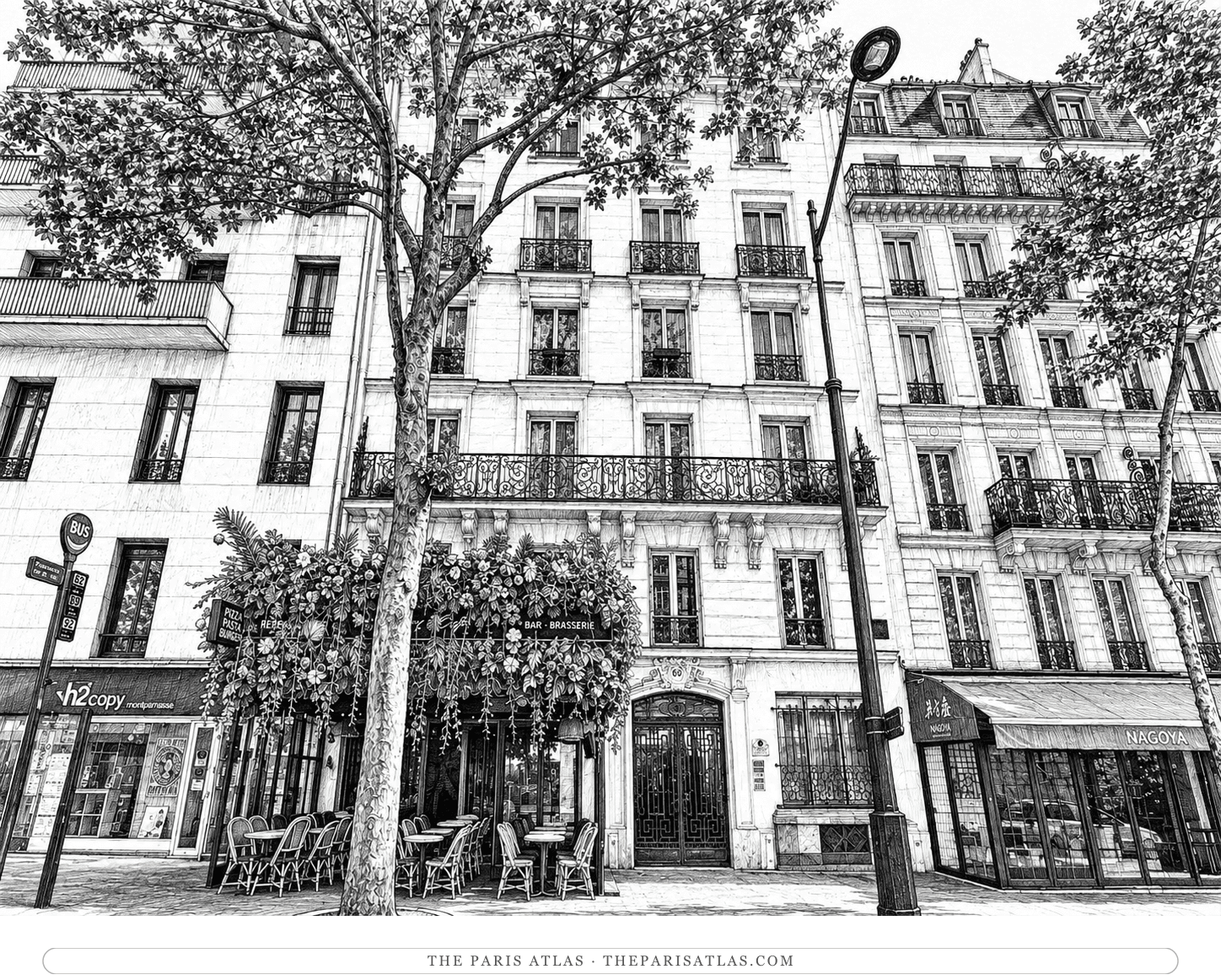
Grand Hôtel de Versailles (60 Boulevard du Montparnasse)
The Montparnasse hotel where D. H. Lawrence lived from 12 March to 7 April 1929 while he looked for a publisher willing to print Lady Chatterley's Lover cheaply enough to undercut the pirates. It is the only address in Paris that carries a plaque to him.
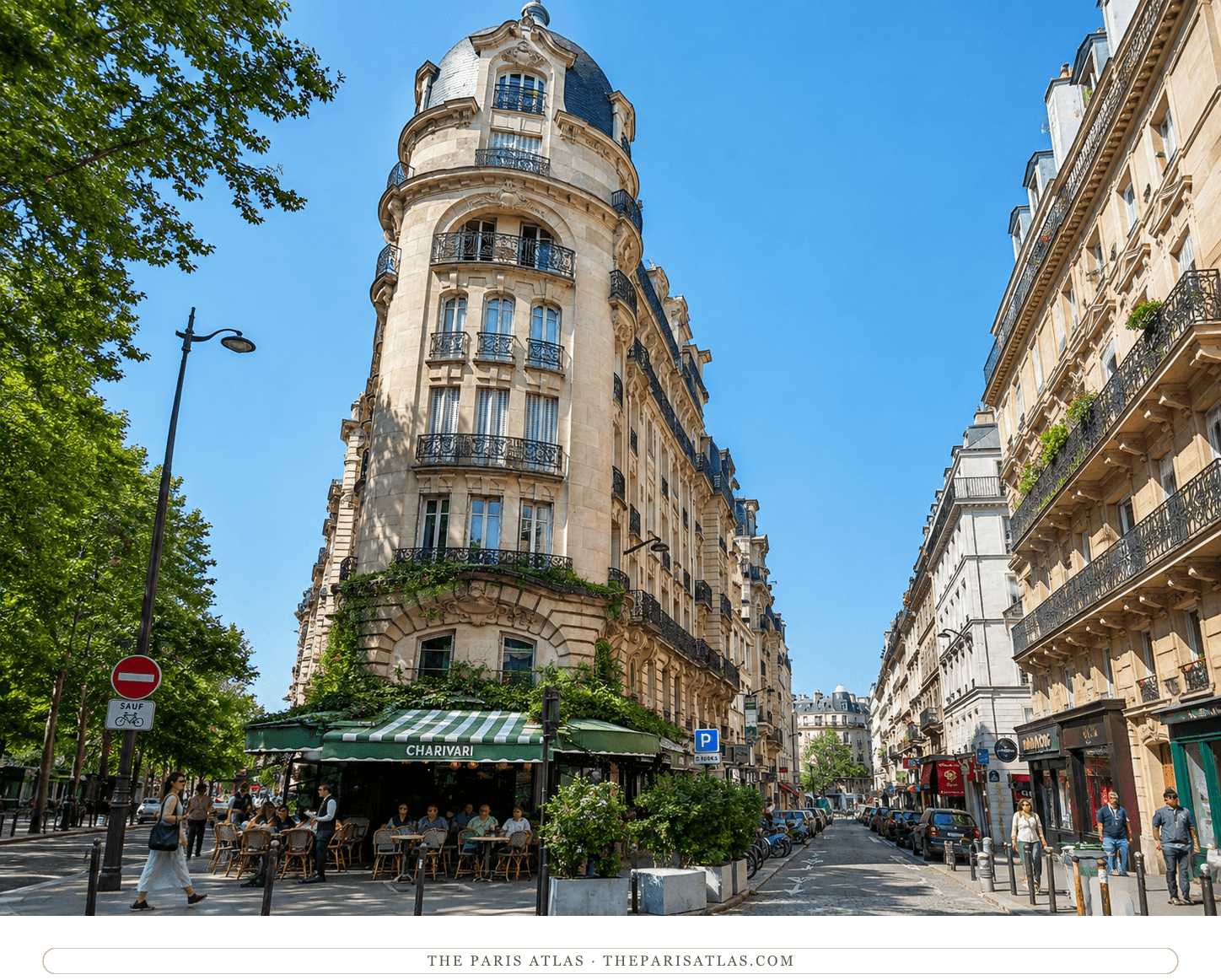
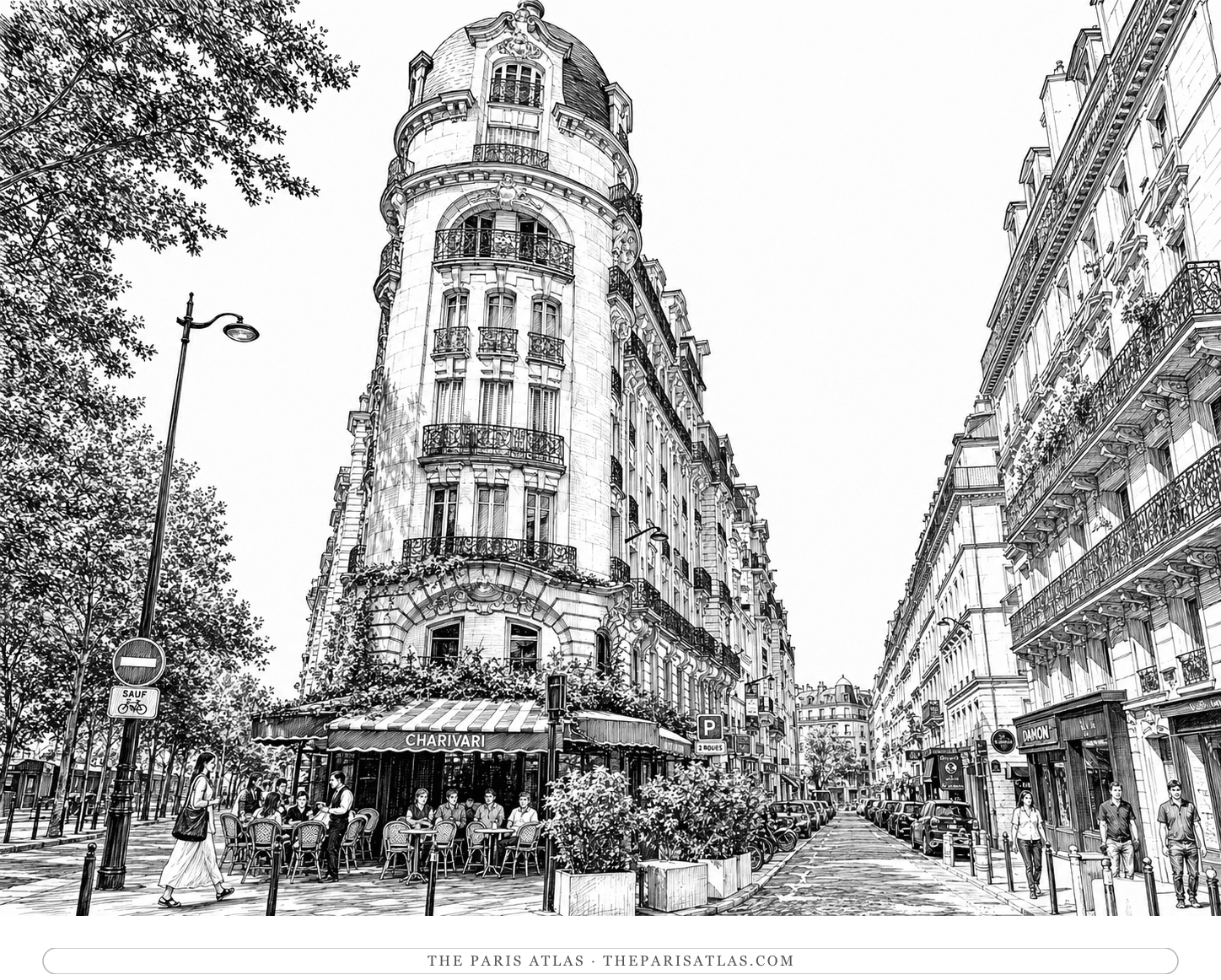
Montparnasse
The quarter that took the painters from Montmartre around 1910 and the American writers a decade later, built around four cafés on one crossroads.

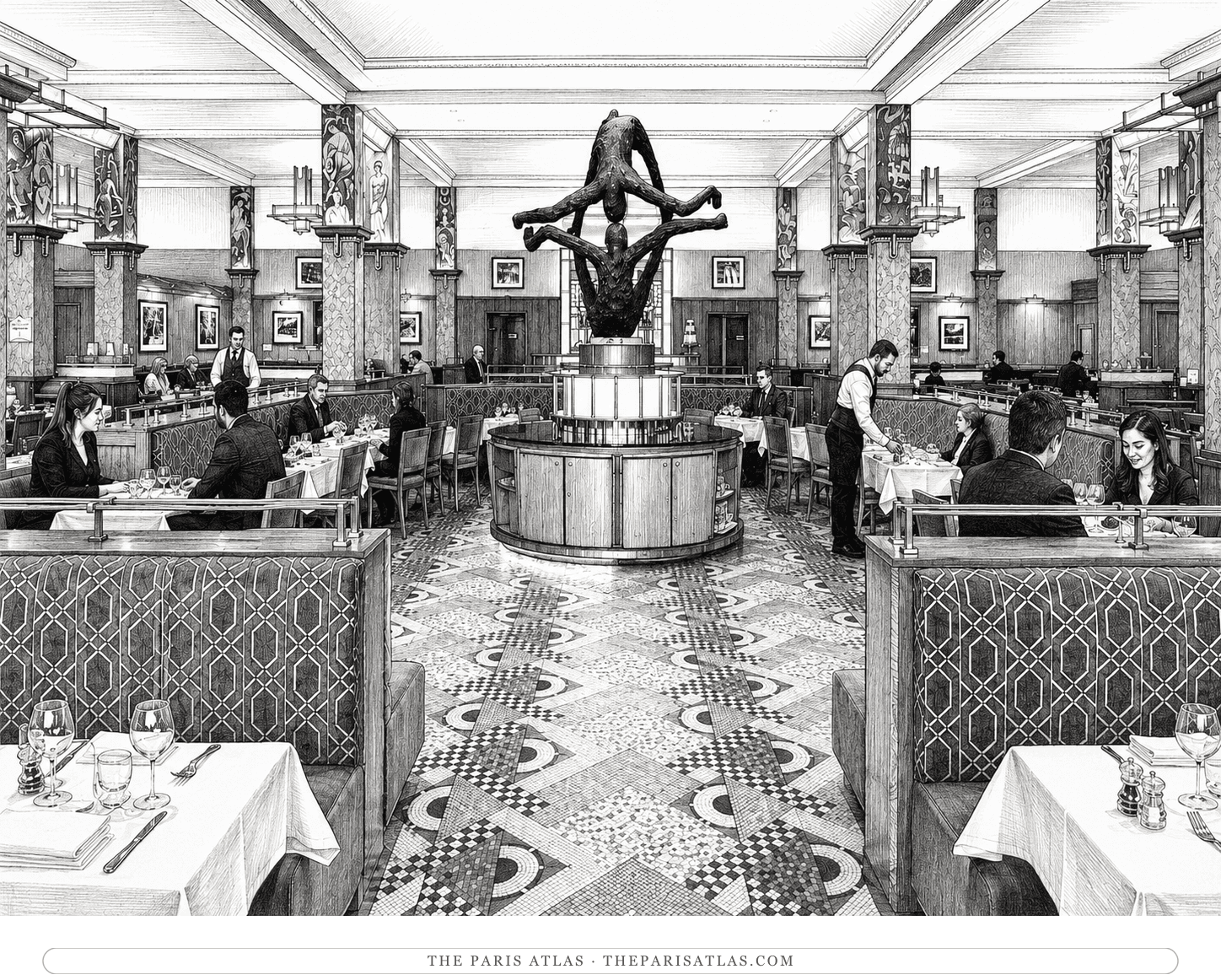
La Coupole
The giant brasserie of the Boulevard du Montparnasse, opened in December 1927 with a party the quarter never forgot — Blaise Cendrars was in the opening-night crowd.

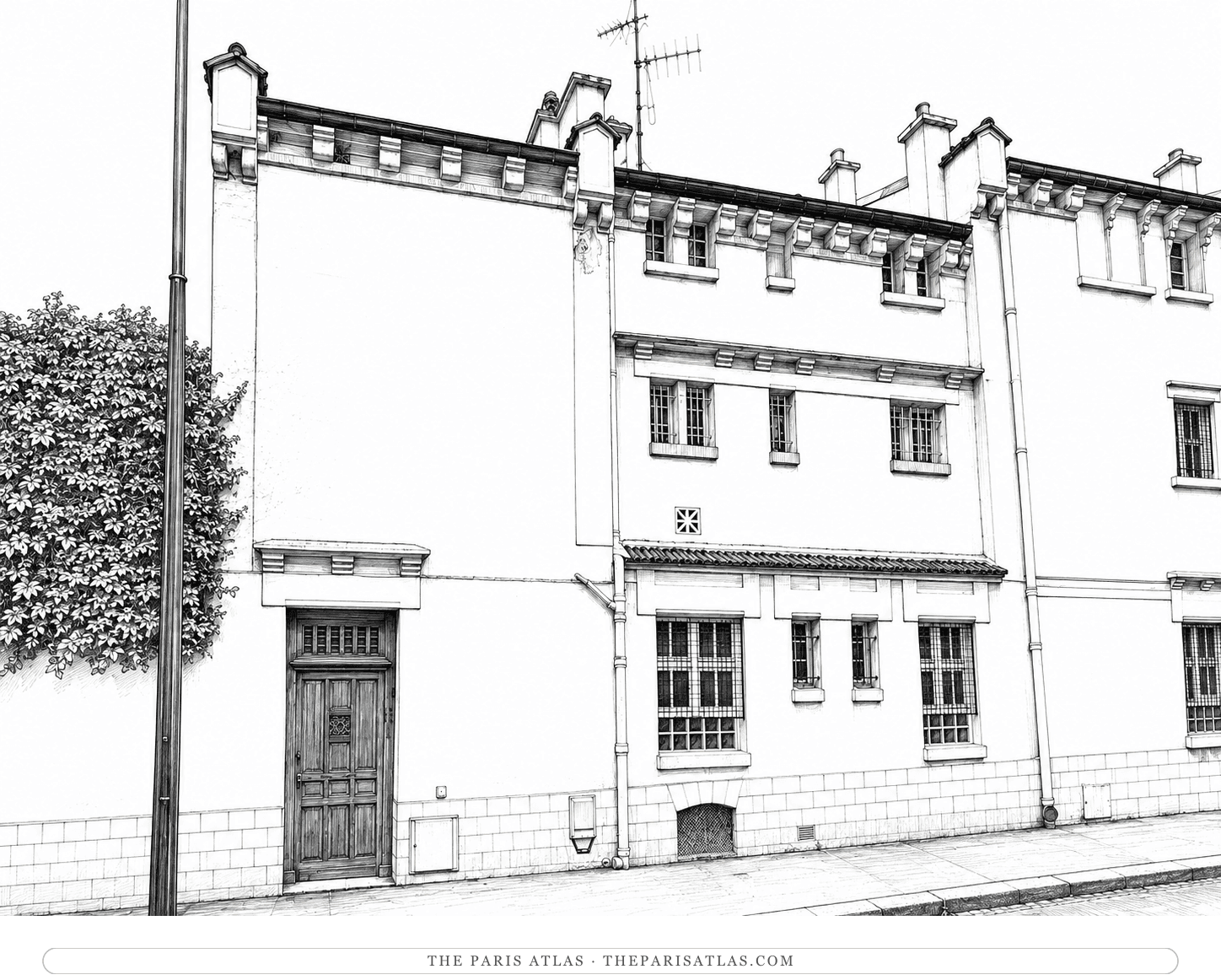
23 Rue Jean-Dolent
The Paris apartment where Blaise Cendrars and Raymone Duchâteau settled in 1950 after their marriage — his home for almost nine years, facing the rear wall of La Santé prison.
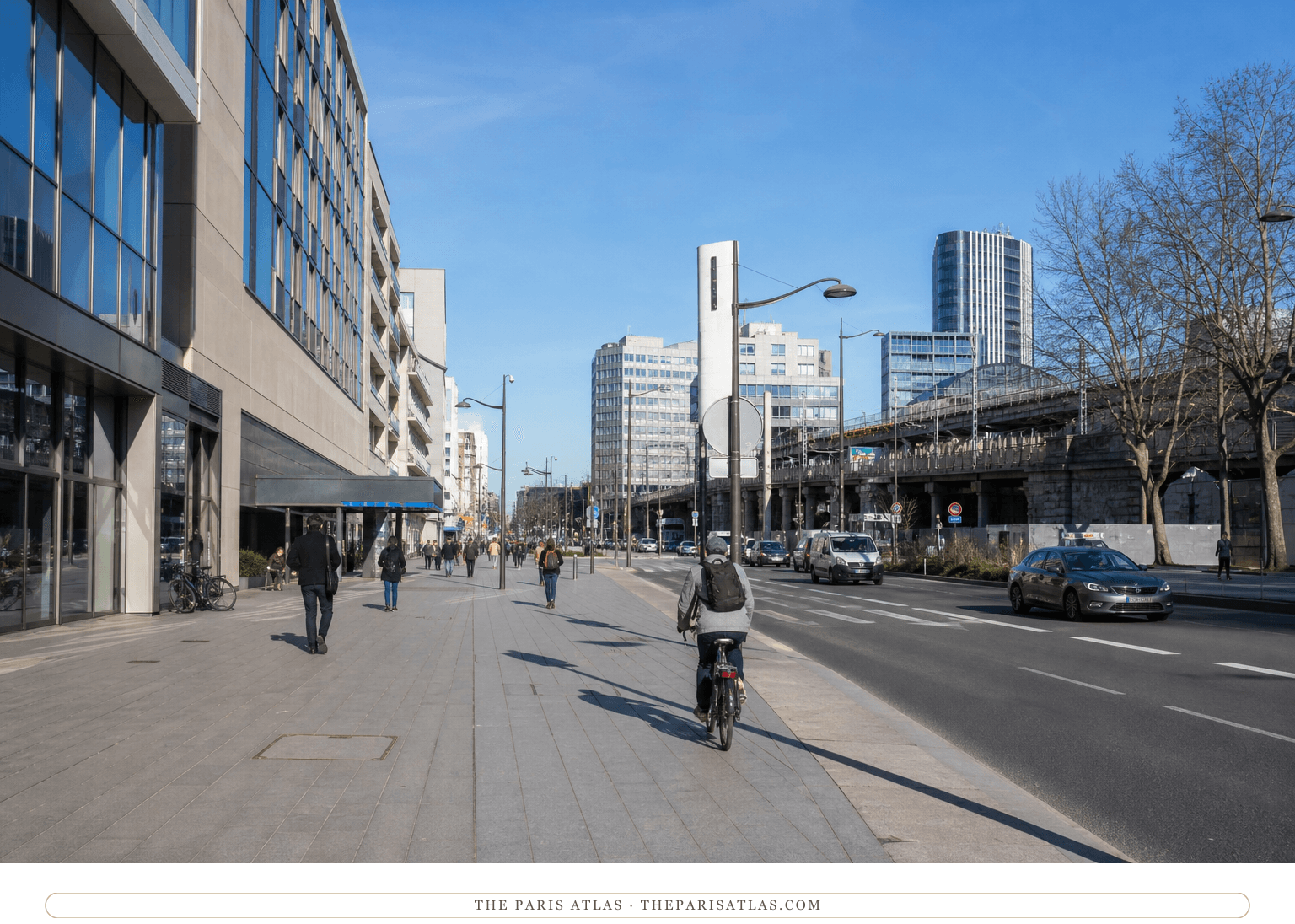
26 rue du Départ
The demolished Montparnasse studio building where Diego Rivera and Angelina Beloff lived from 1912 to 1919 and Piet Mondrian worked before and after the First World War.

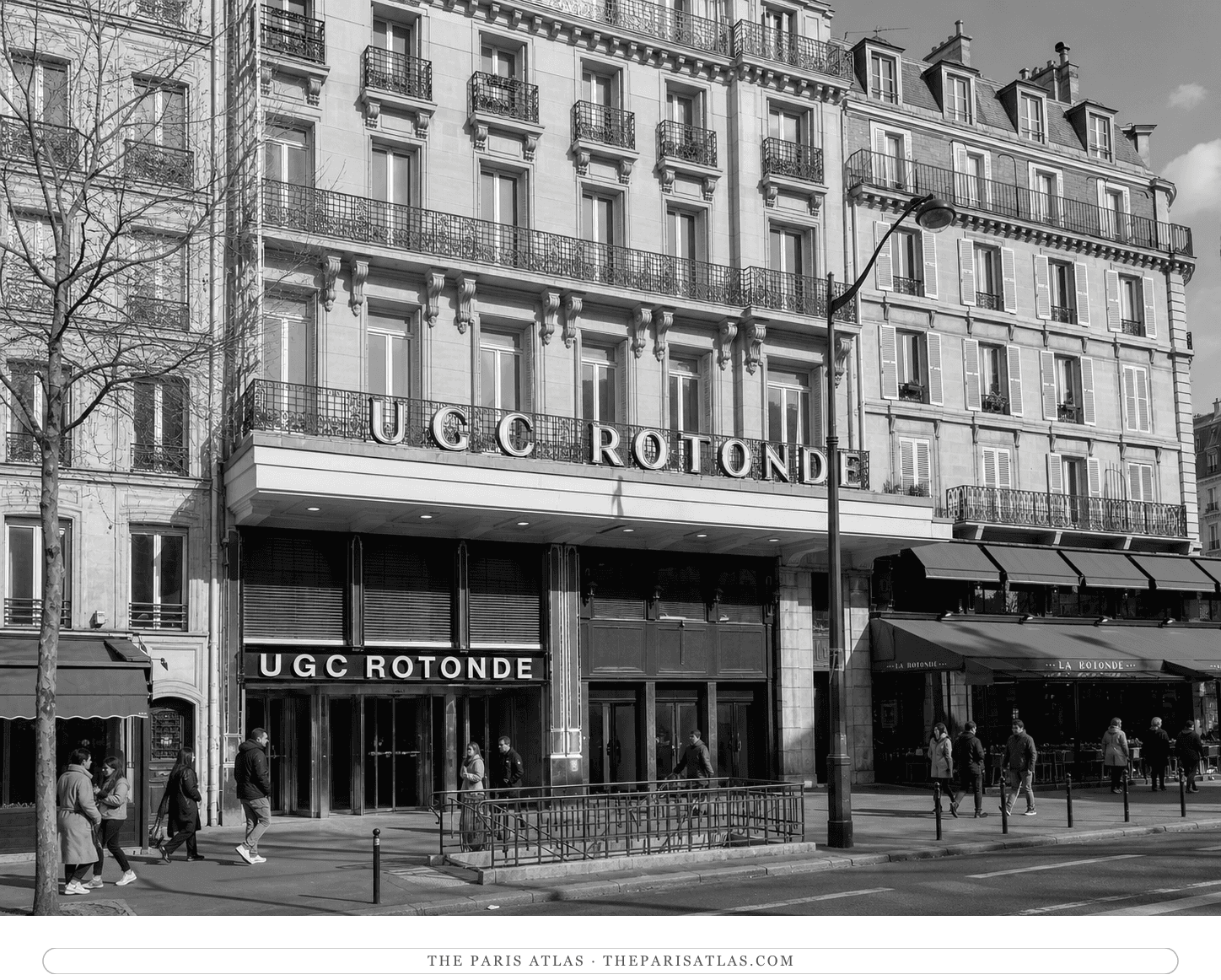
103 boulevard du Montparnasse
Where Simone de Beauvoir was born in 1908 and grew up with her sister Hélène — in the middle of Montparnasse, the quarter she would spend most of her life within a few streets of.

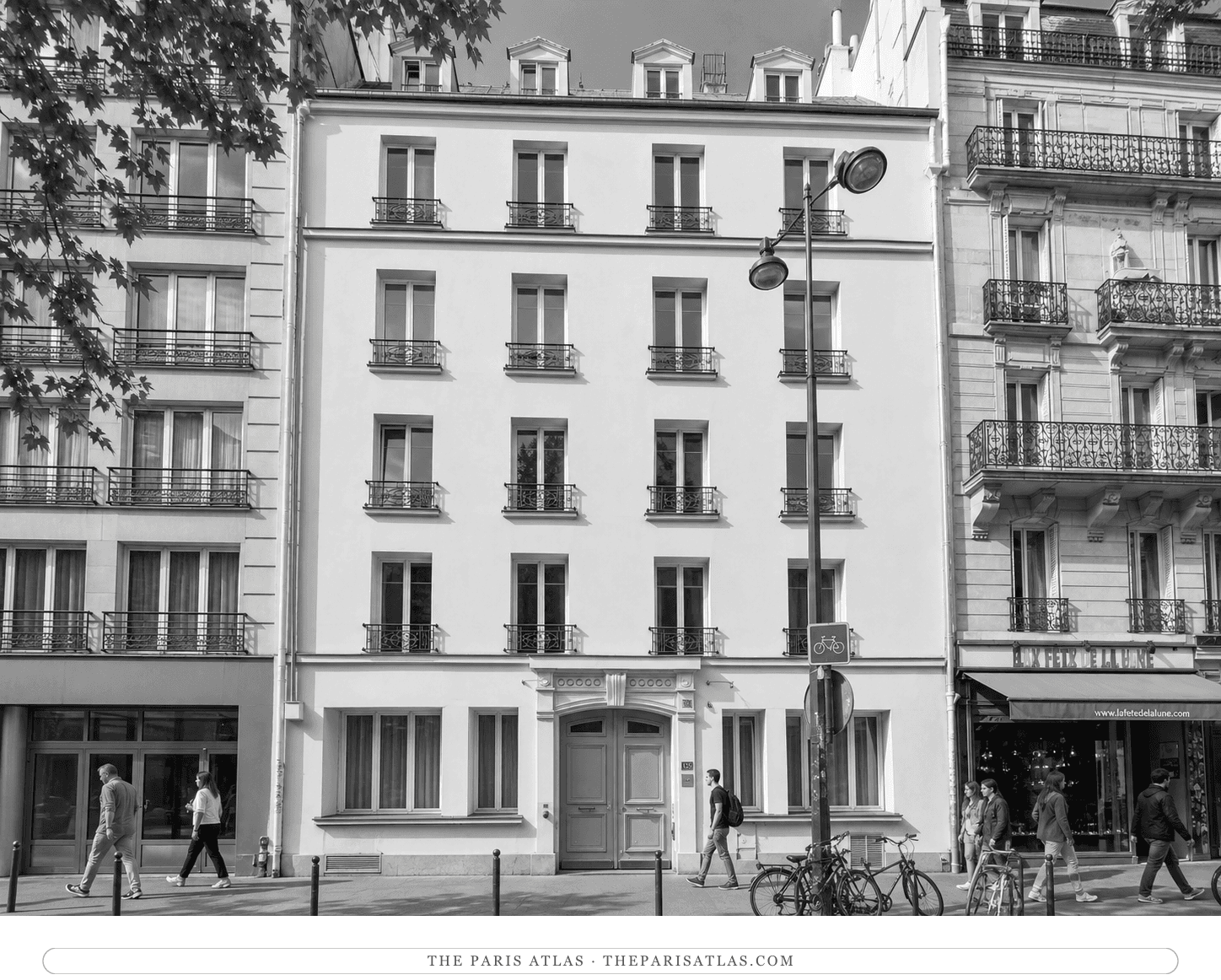
135 boulevard du Montparnasse
The former Hôtel des États-Unis, where Henry Miller lodged in the autumn of 1930 — the first months of the Paris decade that turned him into a writer. Now a student residence, in a building that predates his stay.

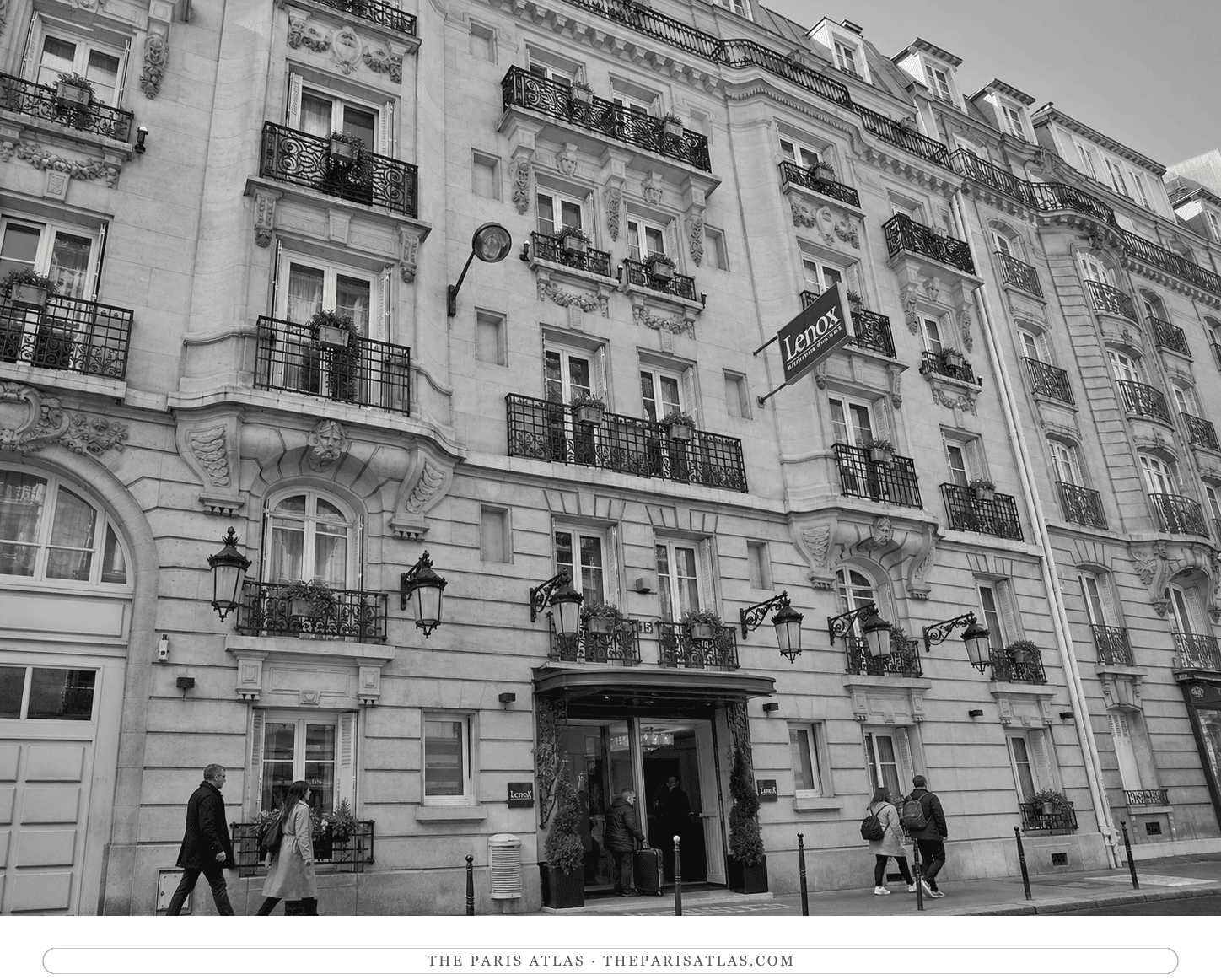
Hôtel Lenox Montparnasse
A Montparnasse hotel where Henry Miller and his wife June stayed briefly in 1930, in the unsettled first months of his Paris decade. It still operates at the same address as the Hôtel Lenox Montparnasse.

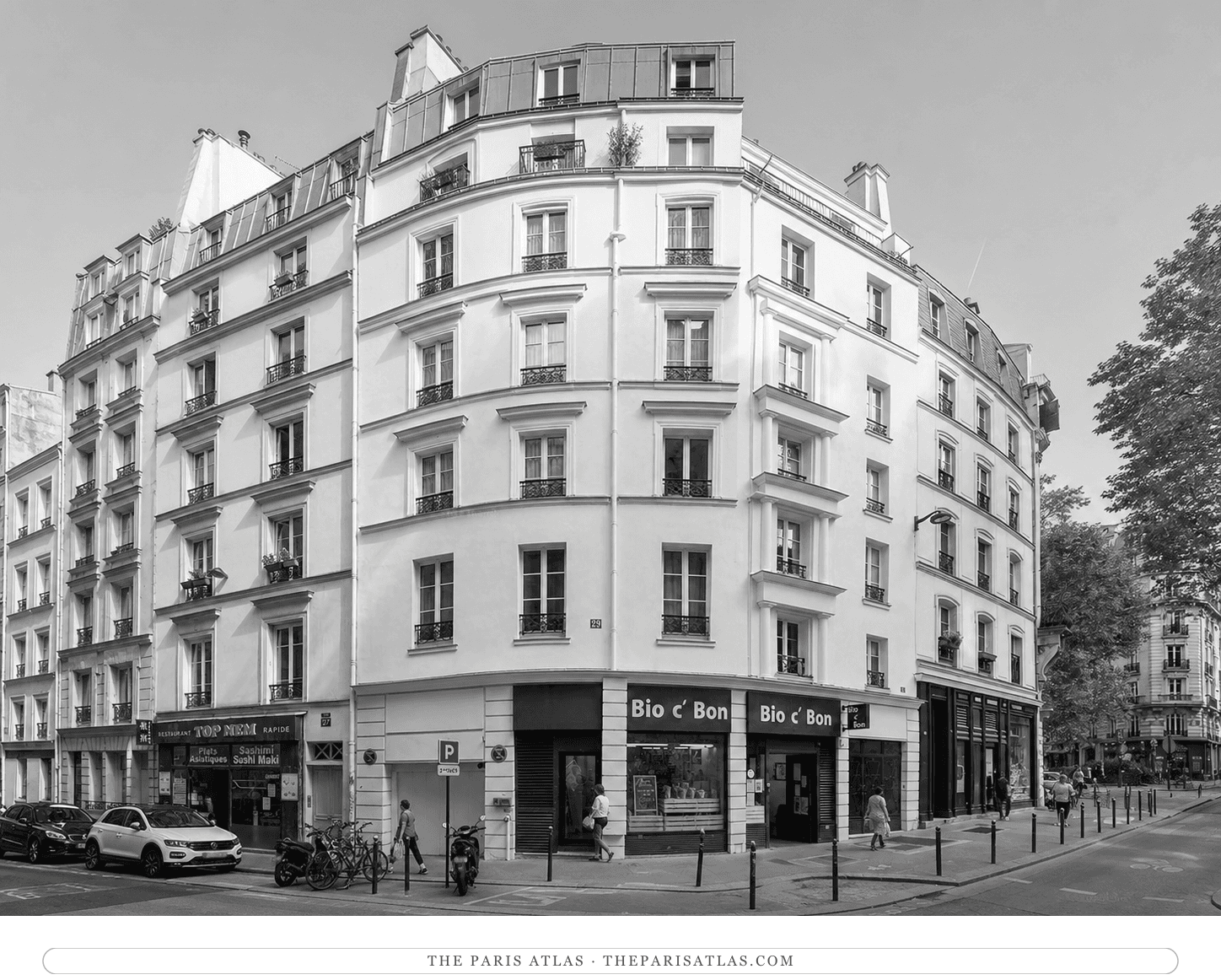
29–31 rue Vavin
The address of Chez les Vikings, a Scandinavian tavern in Montparnasse where Henry Miller and Anaïs Nin met regularly in the early 1930s. Miller headed a letter of 4 March 1932 from its tables. The café is gone; the buildings remain.

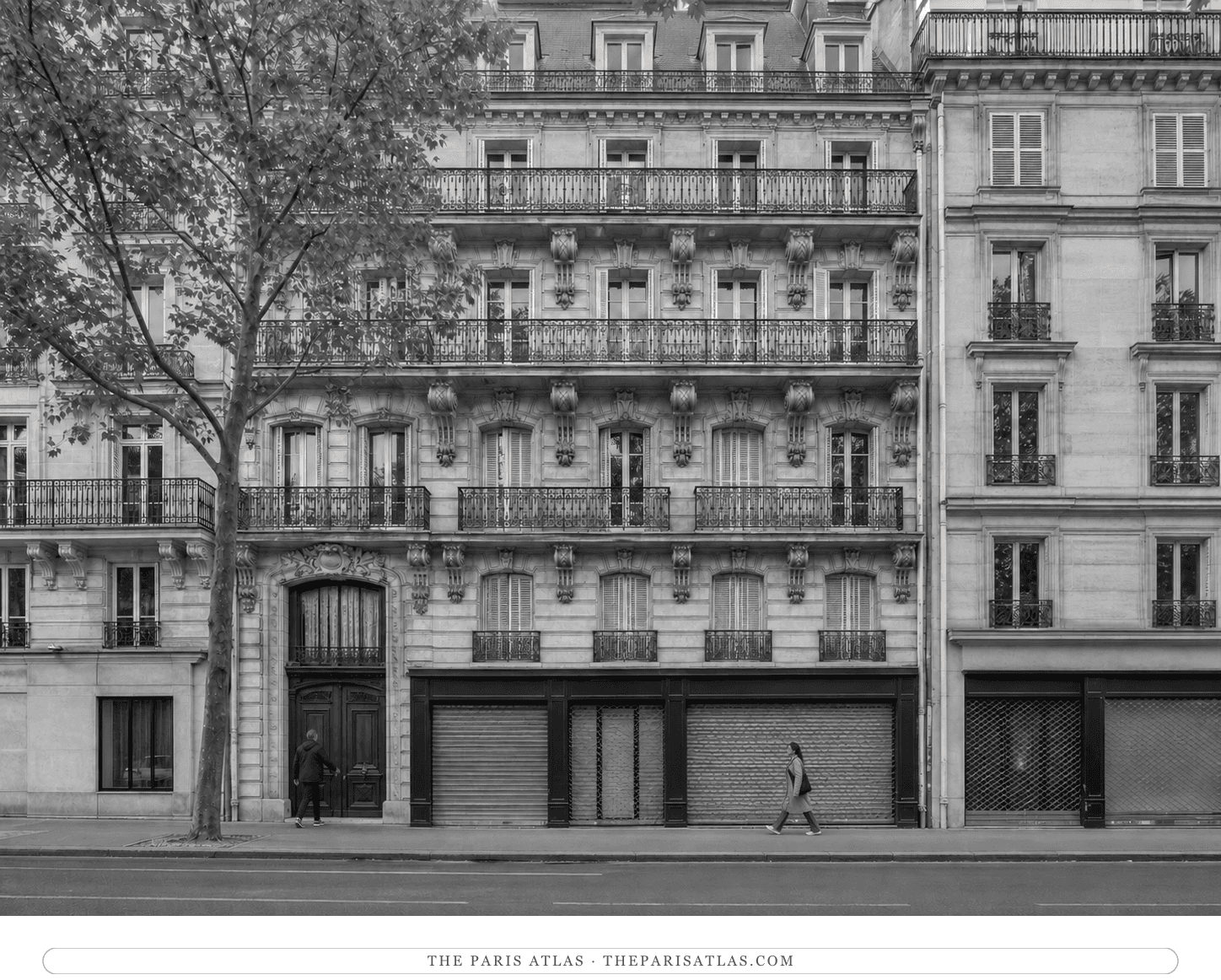
91 avenue Denfert-Rochereau
The building where Simone de Beauvoir rented a room in her grandmother's flat in July 1929, at twenty-one, to get out from under her parents — and where she studied for the philosophy agrégation she passed that year.

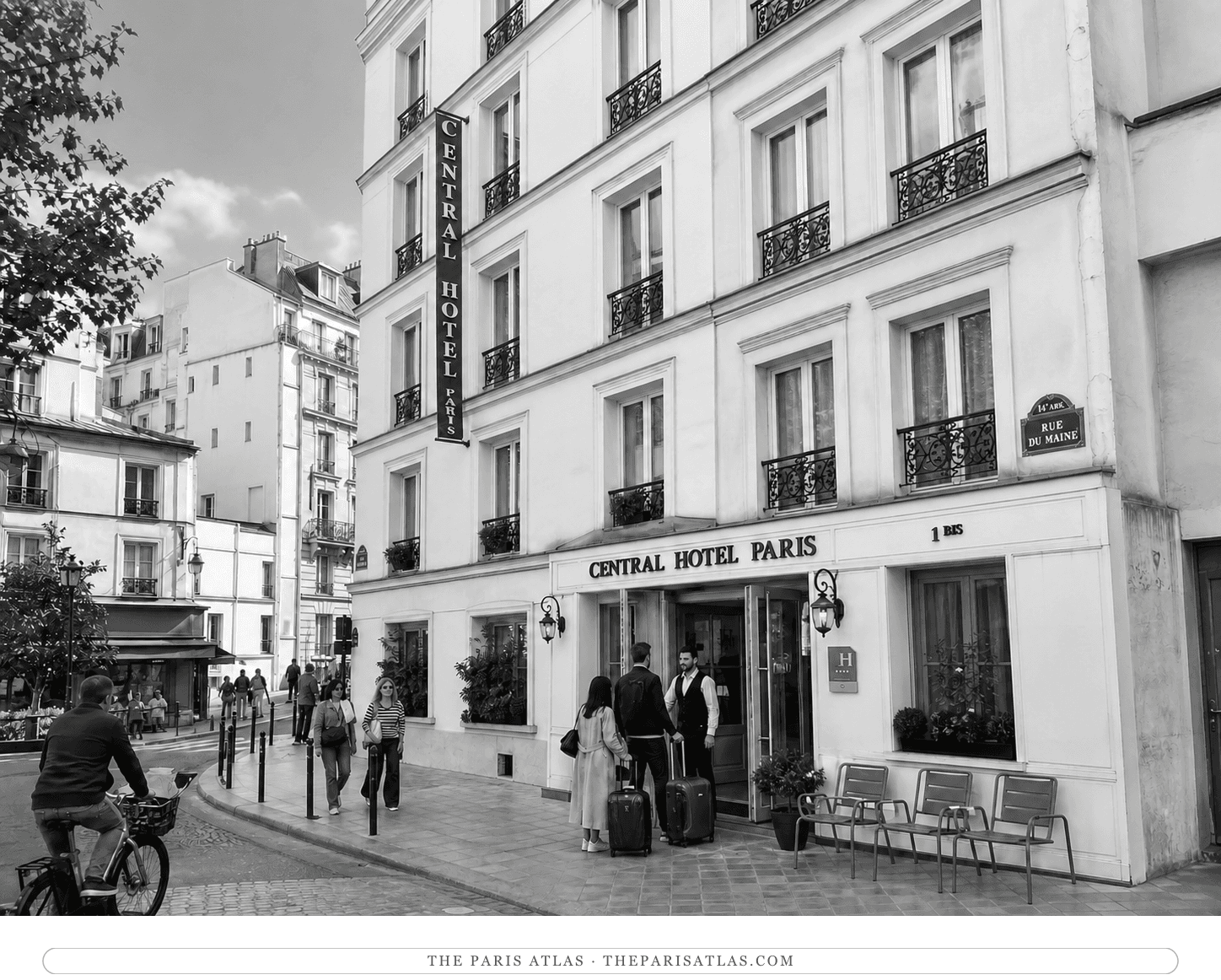
Hôtel Central
A small Montparnasse hotel where Henry Miller lodged during several stretches of 1931 and 1932, sharing a room with Alfred Perlès in the leanest part of his Paris decade. Still trading under the same name at the same address.
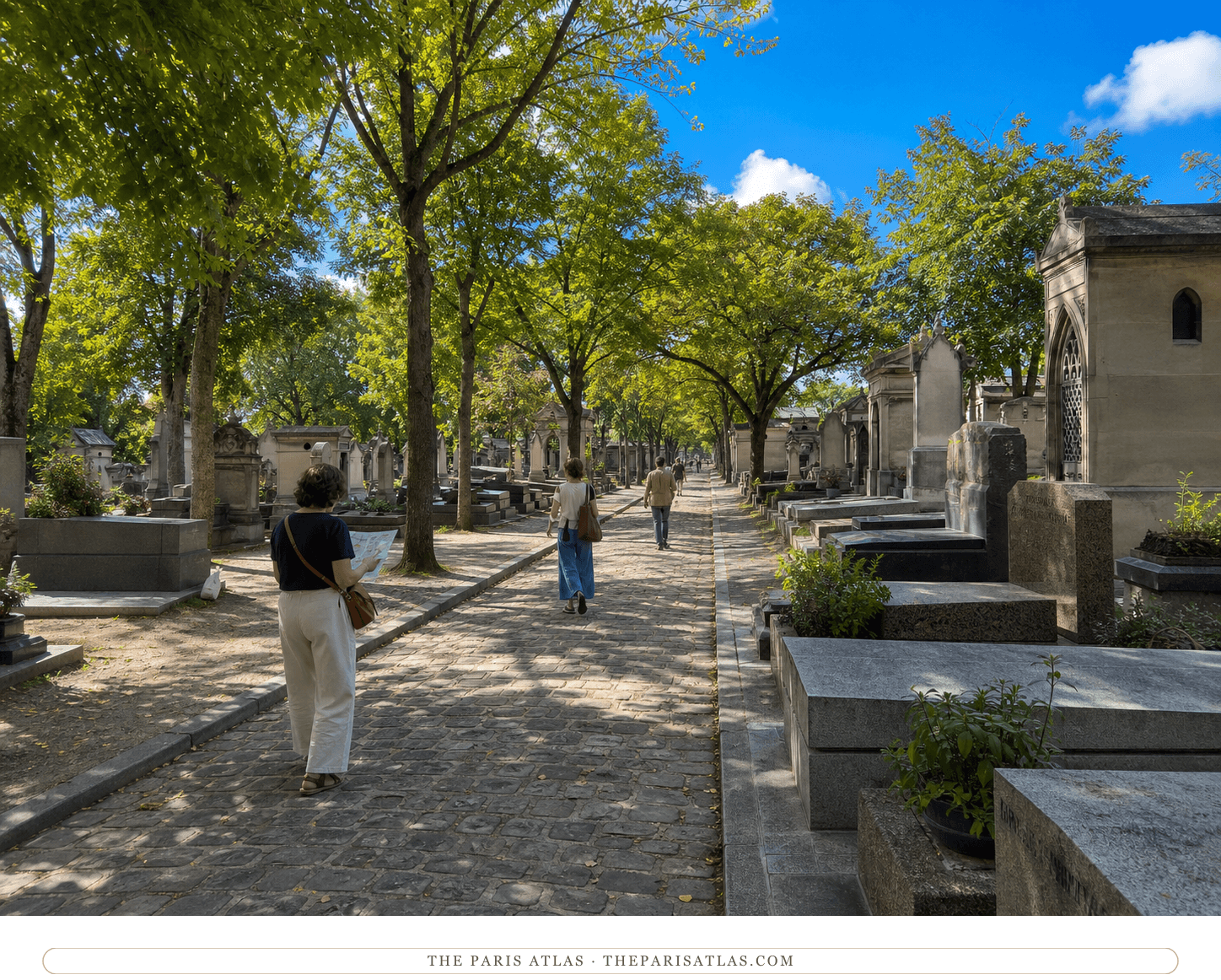
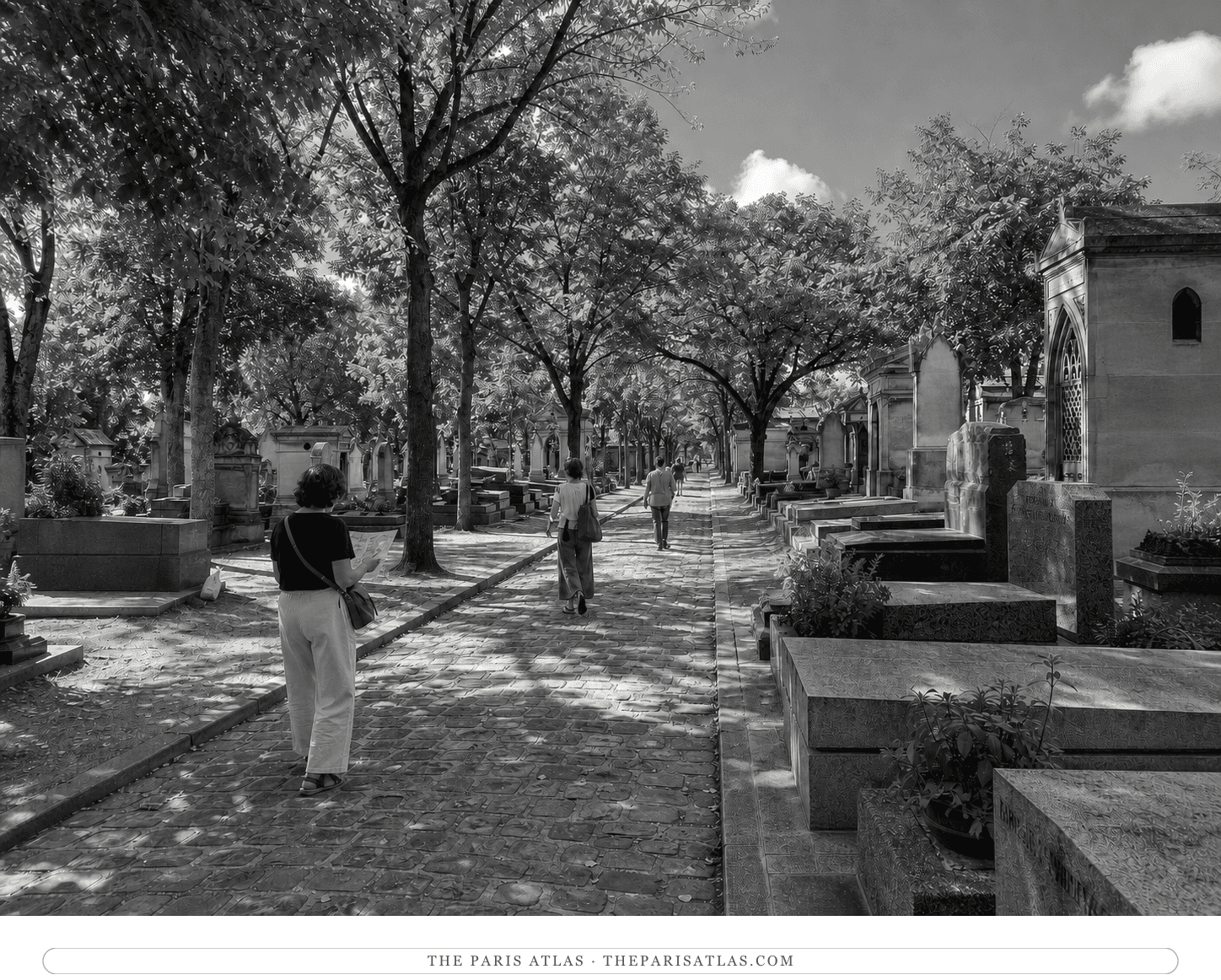
Montparnasse Cemetery
The second-largest cemetery inside Paris — nineteen flat, gridded hectares south of the boulevard du Montparnasse, holding the graves of Charles Baudelaire, Samuel Beckett, Jean-Paul Sartre and Simone de Beauvoir, Serge Gainsbourg, Man Ray, Guy de Maupassant, Constantin Brancusi and Marguerite Duras.

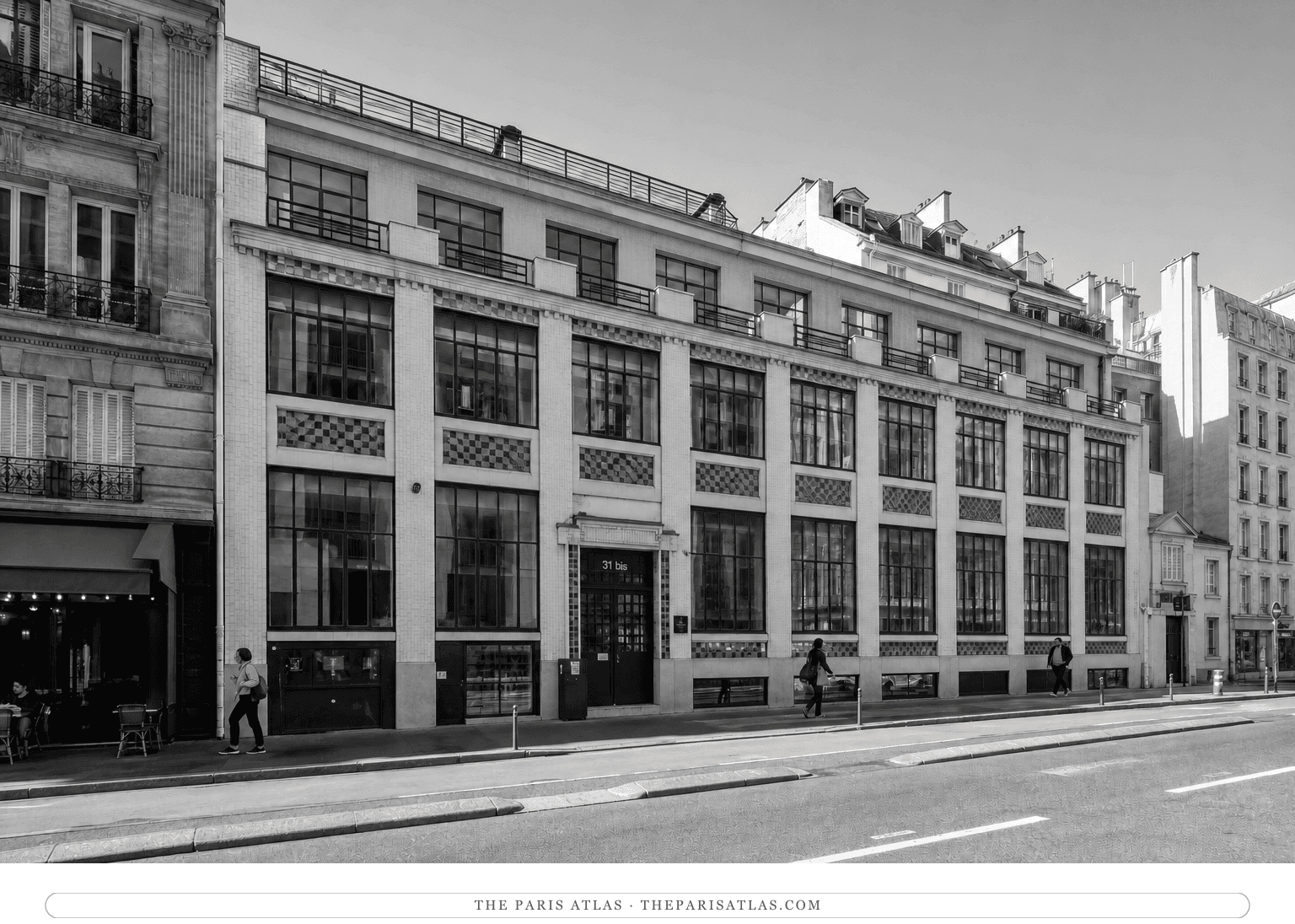
Man Ray's studio, 31 bis rue Campagne-Première
Man Ray's Montparnasse studio, where Berenice Abbott was working as his darkroom assistant in 1925 when she photographed Djuna Barnes.
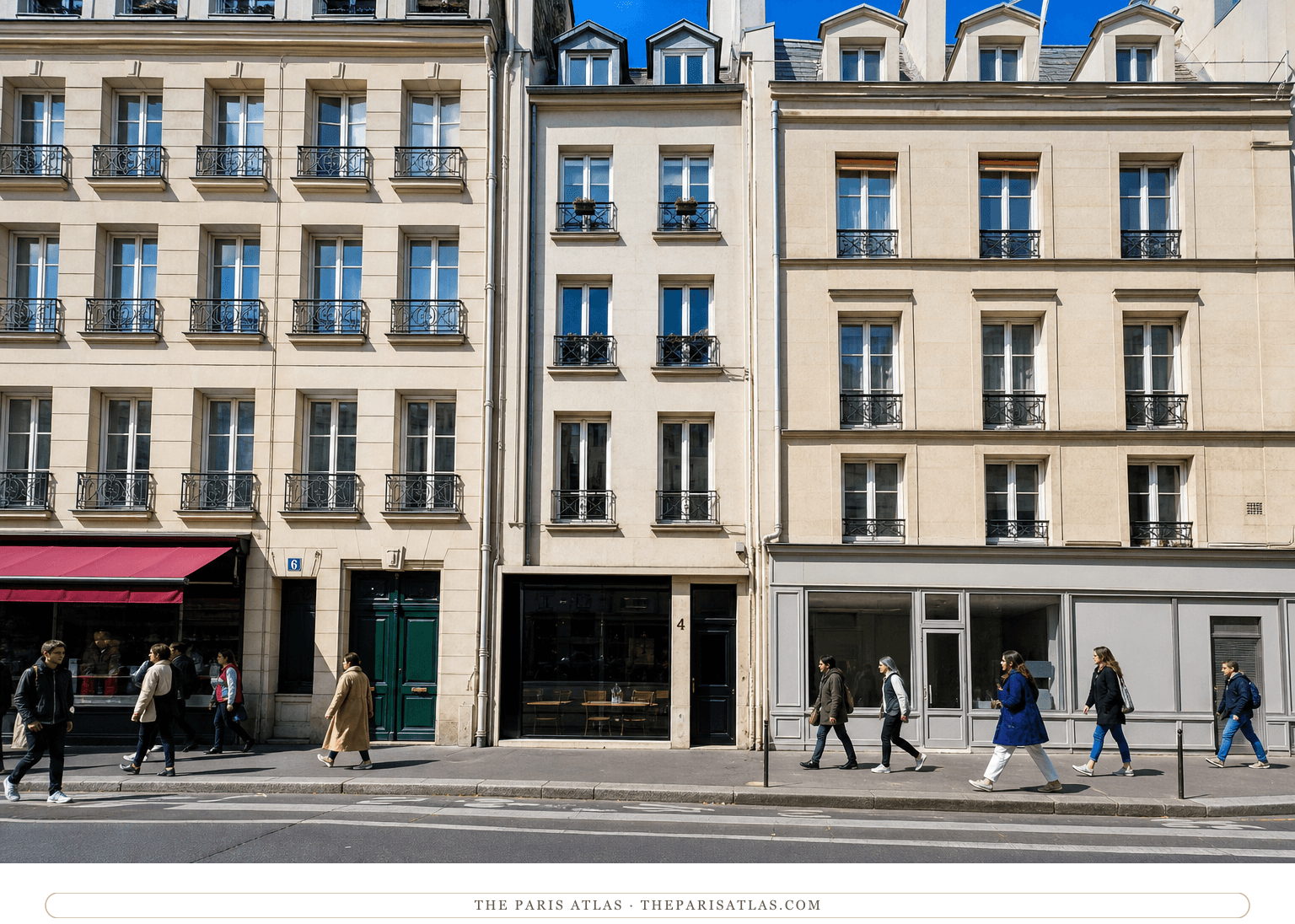
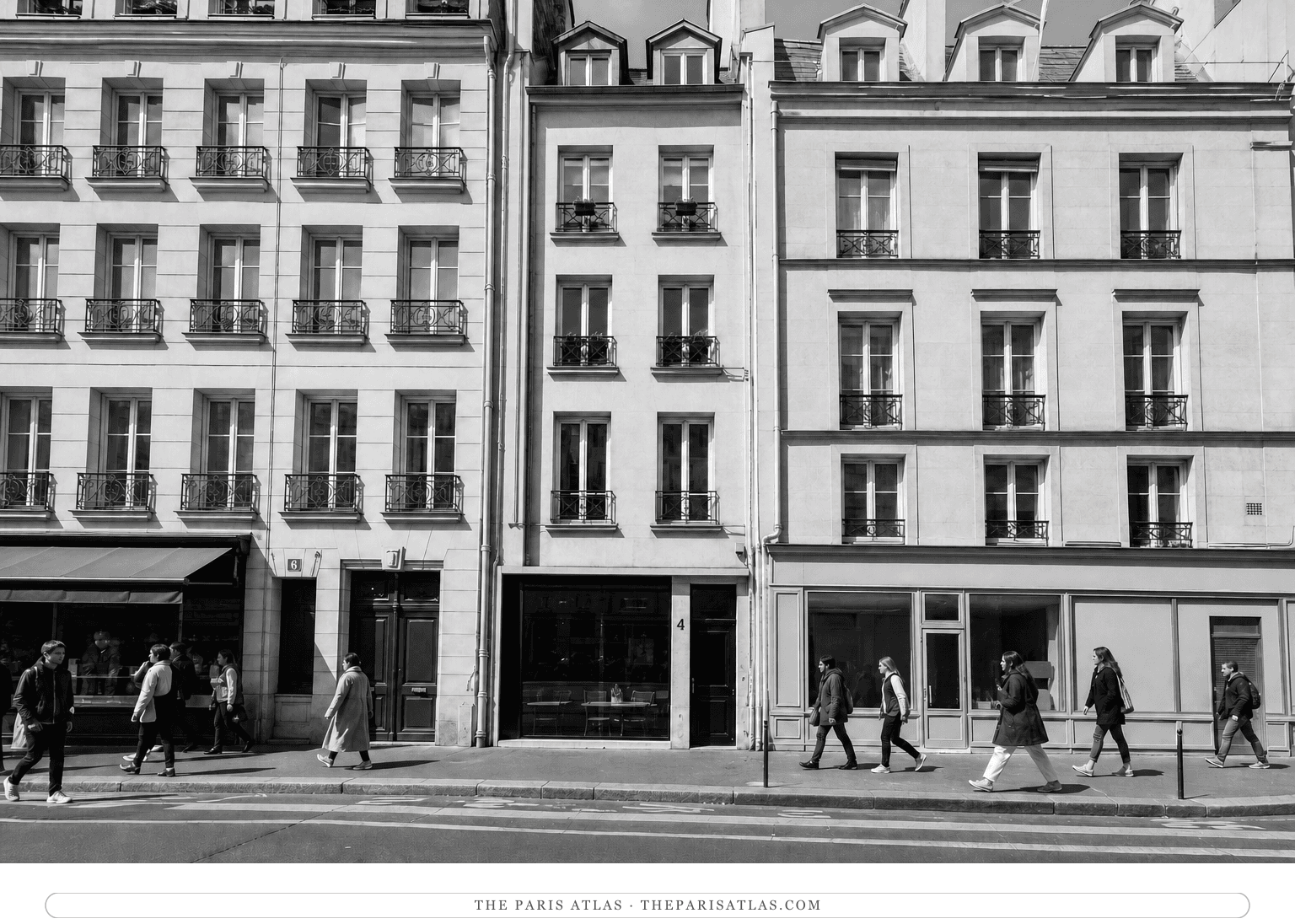
At the Sign of the Black Manikin, 4 rue Delambre
Edward Titus's Montparnasse bookshop and press, which sold copies of the privately printed first edition of Djuna Barnes's Ladies Almanack.

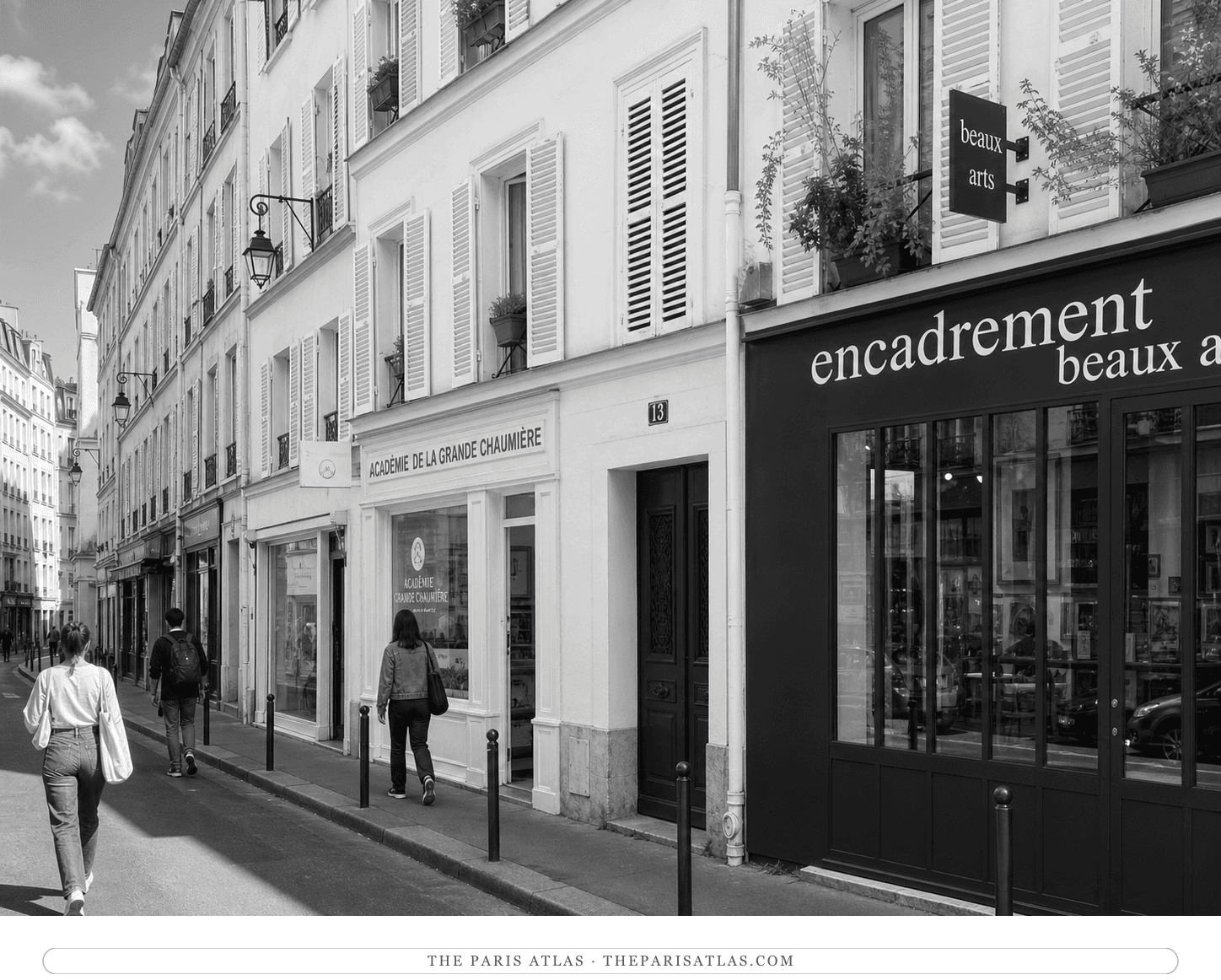
Madame Charlotte's crémerie, 13 rue de la Grande-Chaumière
The tiny dairy-restaurant run by Charlotte Futterer on the rue de la Grande-Chaumière, where broke artists ate on credit and sometimes settled the bill with a canvas — and where Paul Gauguin met Alphonse Mucha.

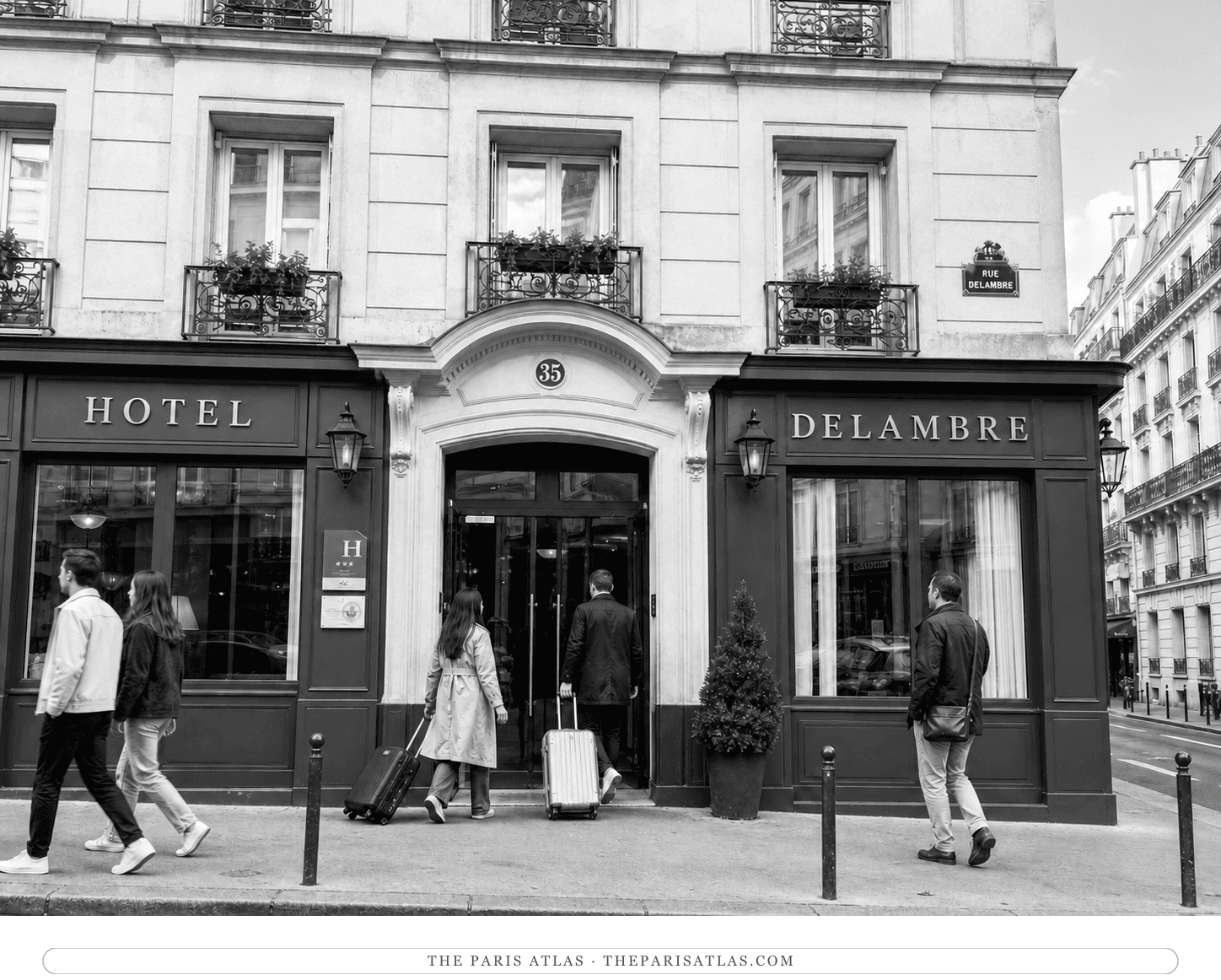
Hôtel Delambre, 35 rue Delambre
The Montparnasse hotel where Paul Gauguin stayed in 1891 in the weeks before he sailed for Tahiti — still trading, with a plaque inside the entrance recording it.

6 rue Vercingétorix
The studio Paul Gauguin took on returning from his first Tahitian voyage in 1893, painted chrome yellow and hung with Polynesian objects — a piece of theatre staged to sell a version of himself to Paris.

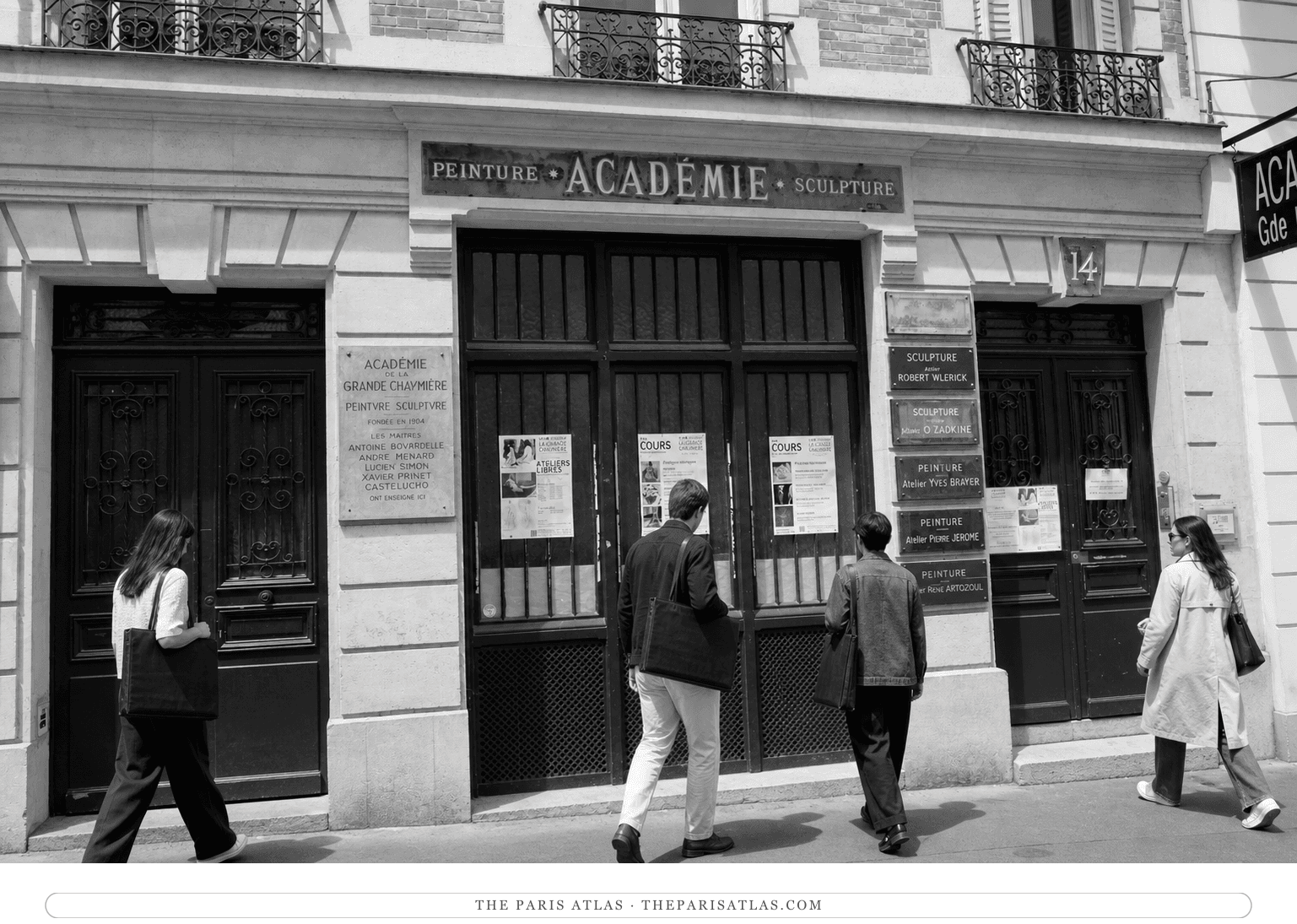
Académie de la Grande Chaumière
The Montparnasse drawing academy founded in 1904, where anyone could pay for a session with a model and no one asked for qualifications — the school that trained a substantial share of the École de Paris.

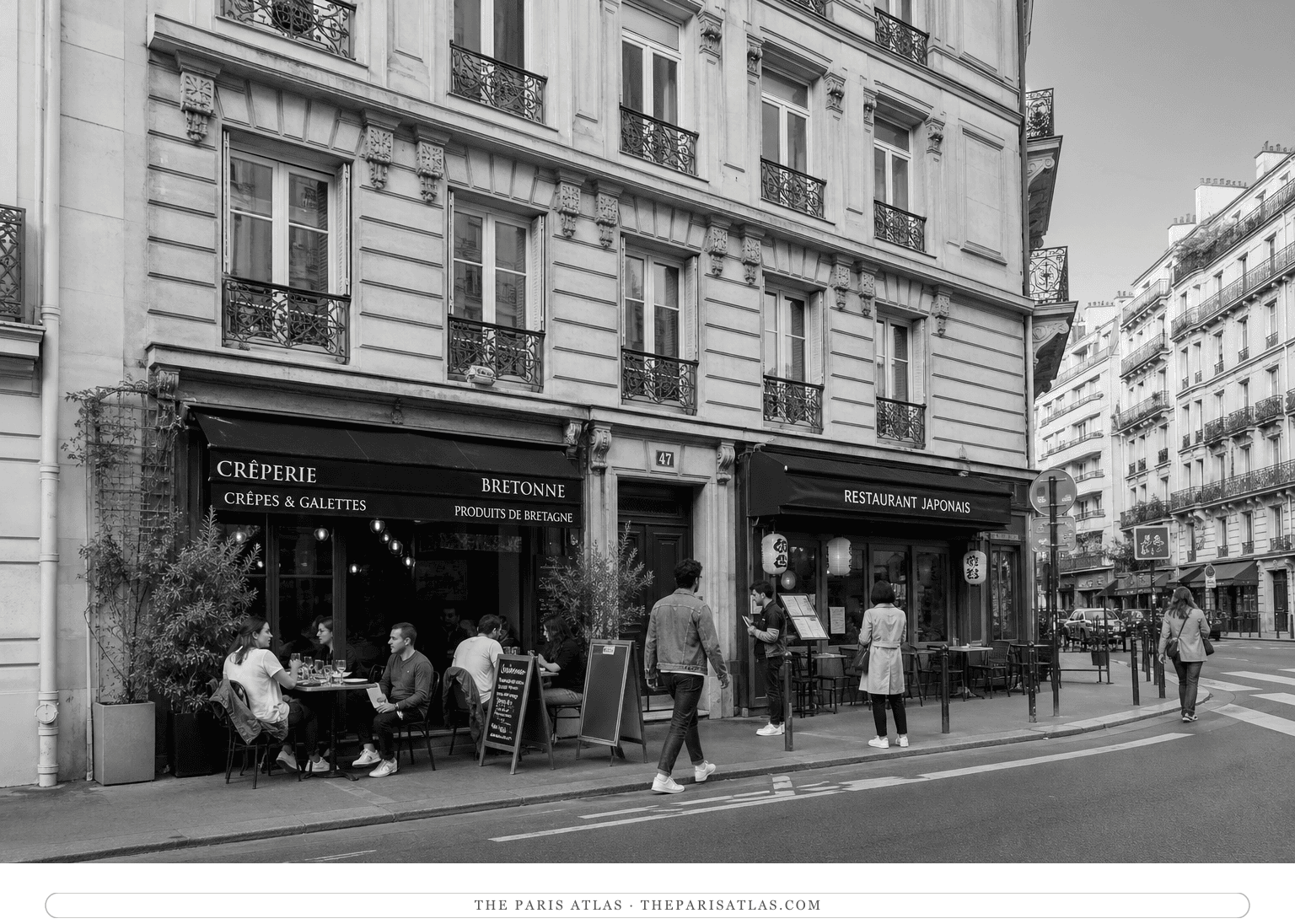
Atelier Mourlot, 47 rue du Montparnasse
The lithography workshop where Marc Chagall spent decades after the war making colour prints — the same presses that printed for Picasso, Matisse, Braque and Miró.
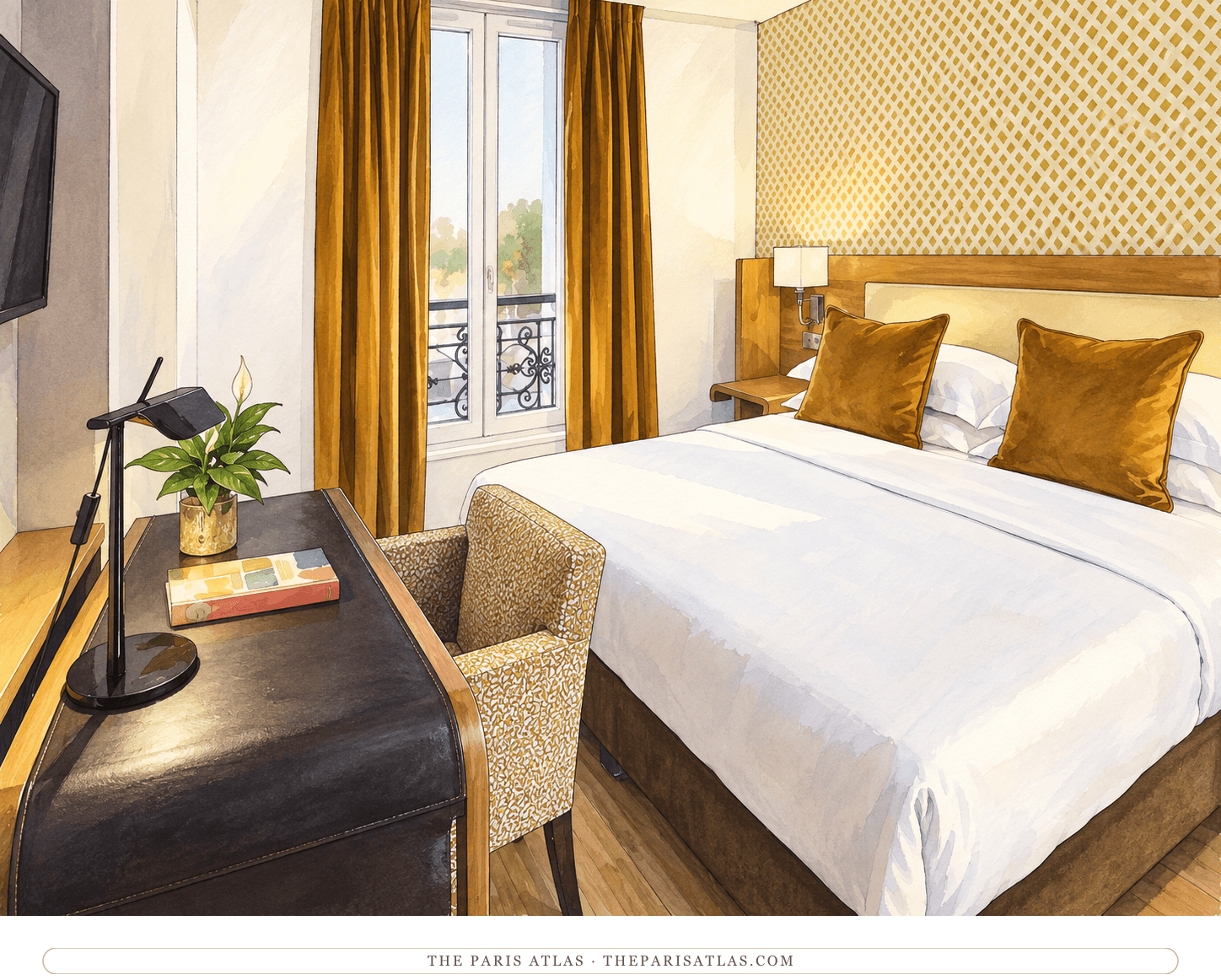
Le Six Paris Hôtel & Spa
A 41-room hotel on rue Stanislas, with a library bar, a glass-roofed winter garden and a small spa with a hammam.
Notre-Dame-des-Champs

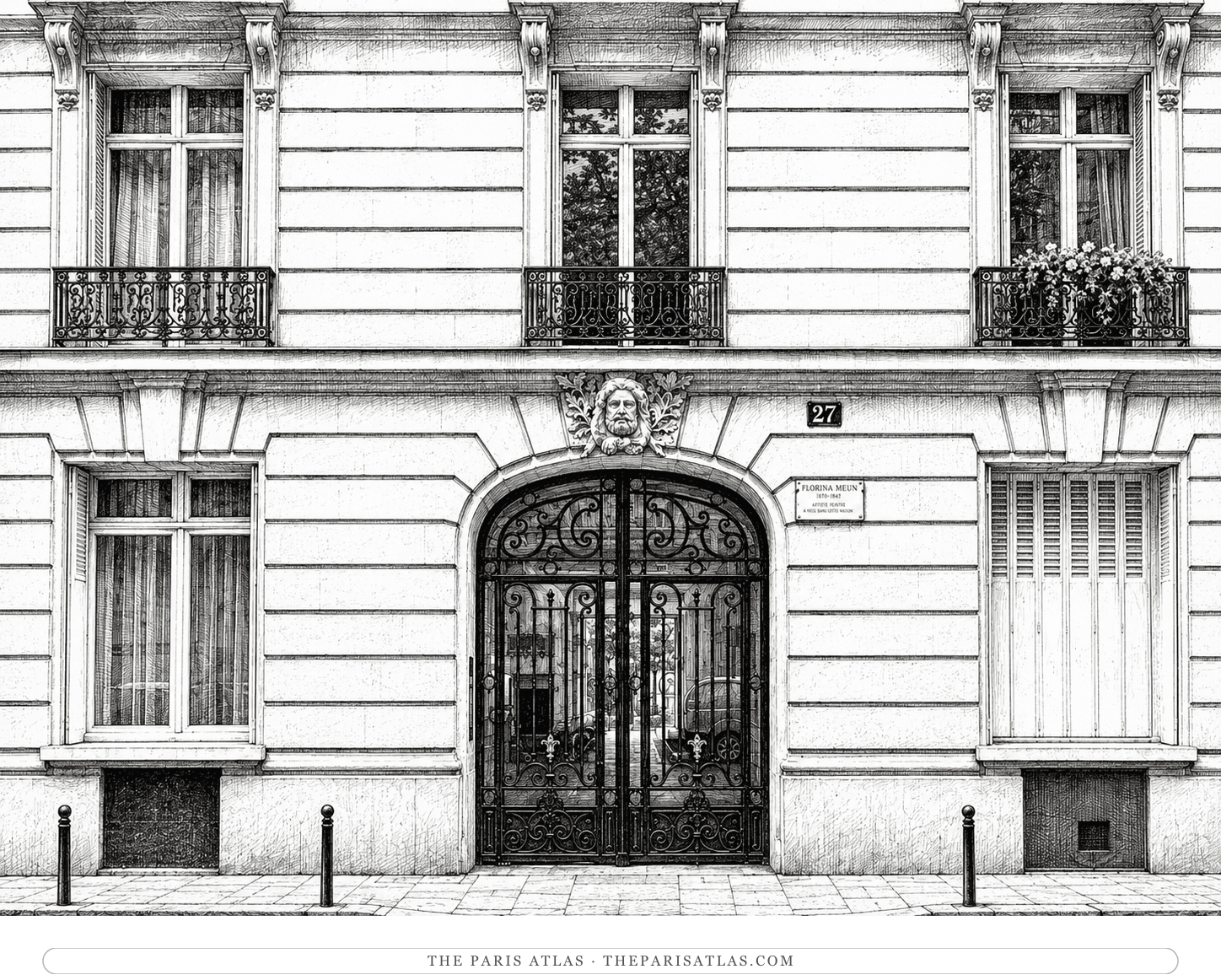
27 Rue de Fleurus
Gertrude Stein's apartment and salon — the drawing room of modernism, where Ernest Hemingway was instructed, encouraged, and eventually indicted as part of a lost generation.


113 Rue Notre-Dame-des-Champs
Ernest Hemingway's second flat, above a working sawmill — where the journalism stopped, The Sun Also Rises was finished, and the first marriage ended.


70 bis Rue Notre-Dame-des-Champs
Ezra Pound's courtyard studio — the workshop of modernism's impresario during his Paris years, a few doors down the street from Ernest Hemingway's later flat above the sawmill.

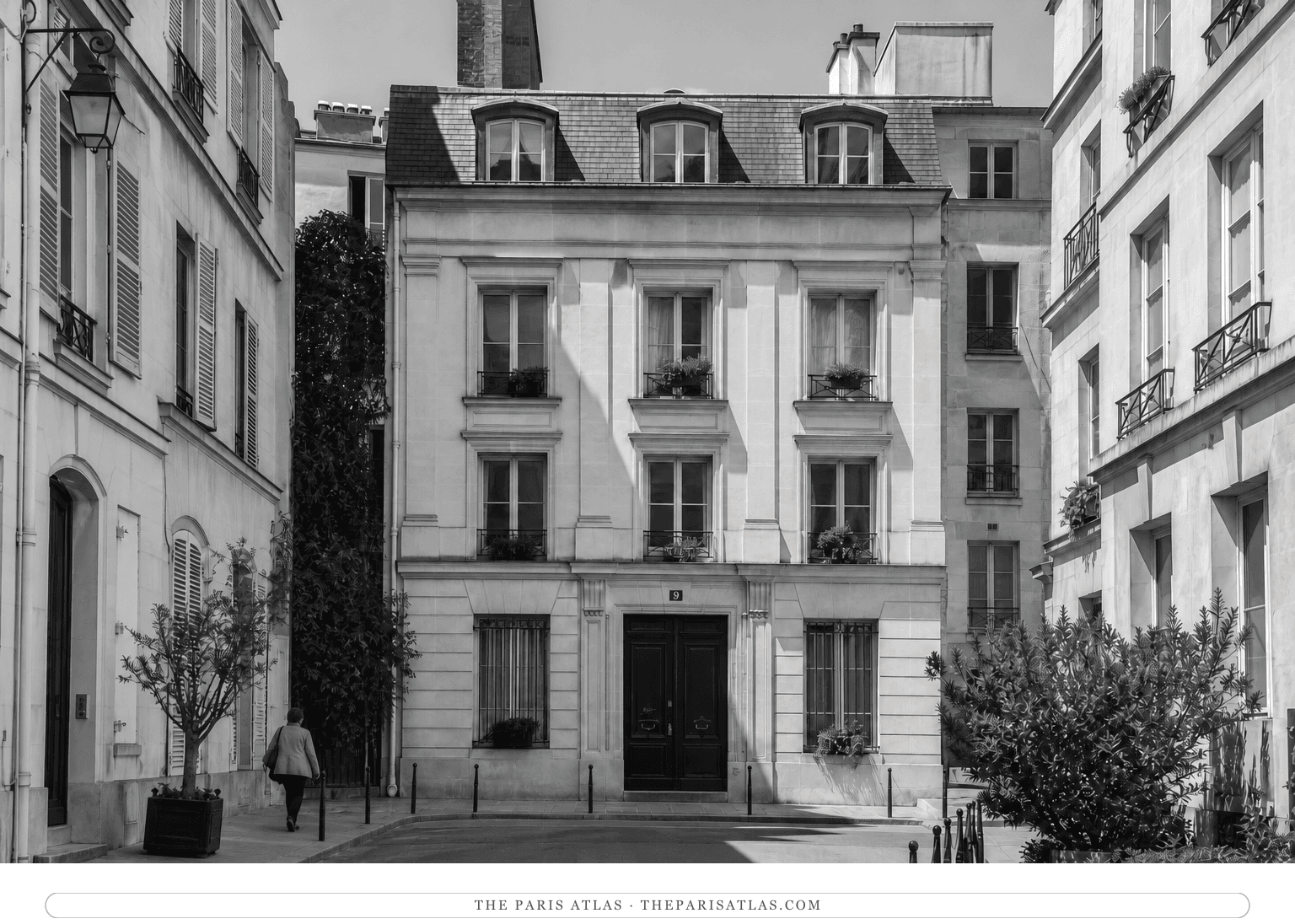
9 rue Saint-Romain
An address Djuna Barnes shared with Thelma Wood, documented by a surviving letter of 2 February 1928 that carries it as her correspondence address.


53 rue Notre-Dame-des-Champs
Where Paul Cézanne was living in 1870 with Hortense Fiquet — a relationship he concealed from his father for years, because the allowance he lived on depended on him being single.

Hôtel & Spa La Belle Juliette
Colourful interiors, a garden and a small spa give this rue du Cherche-Midi hotel a relaxed, romantic character.
Latin Quarter


74 Rue du Cardinal Lemoine
Ernest Hemingway and Hadley Richardson's first Paris apartment, on the fifth floor with no running water. He describes it in the opening pages of the book.
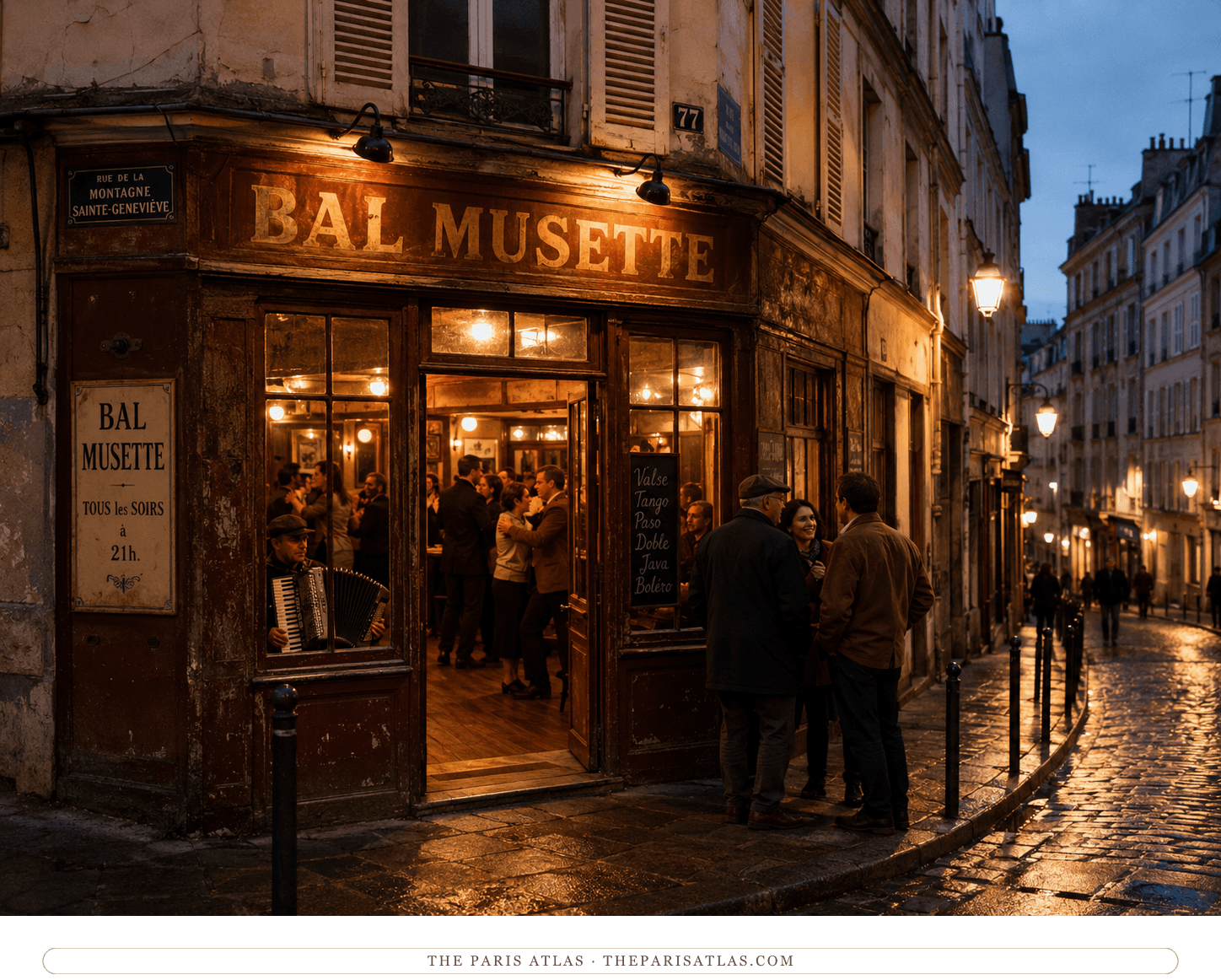

Bal Musette
A working-class accordion dance hall in the Latin Quarter — the neighborhood danced there most nights, and the expatriate crowd borrowed it on Mondays.

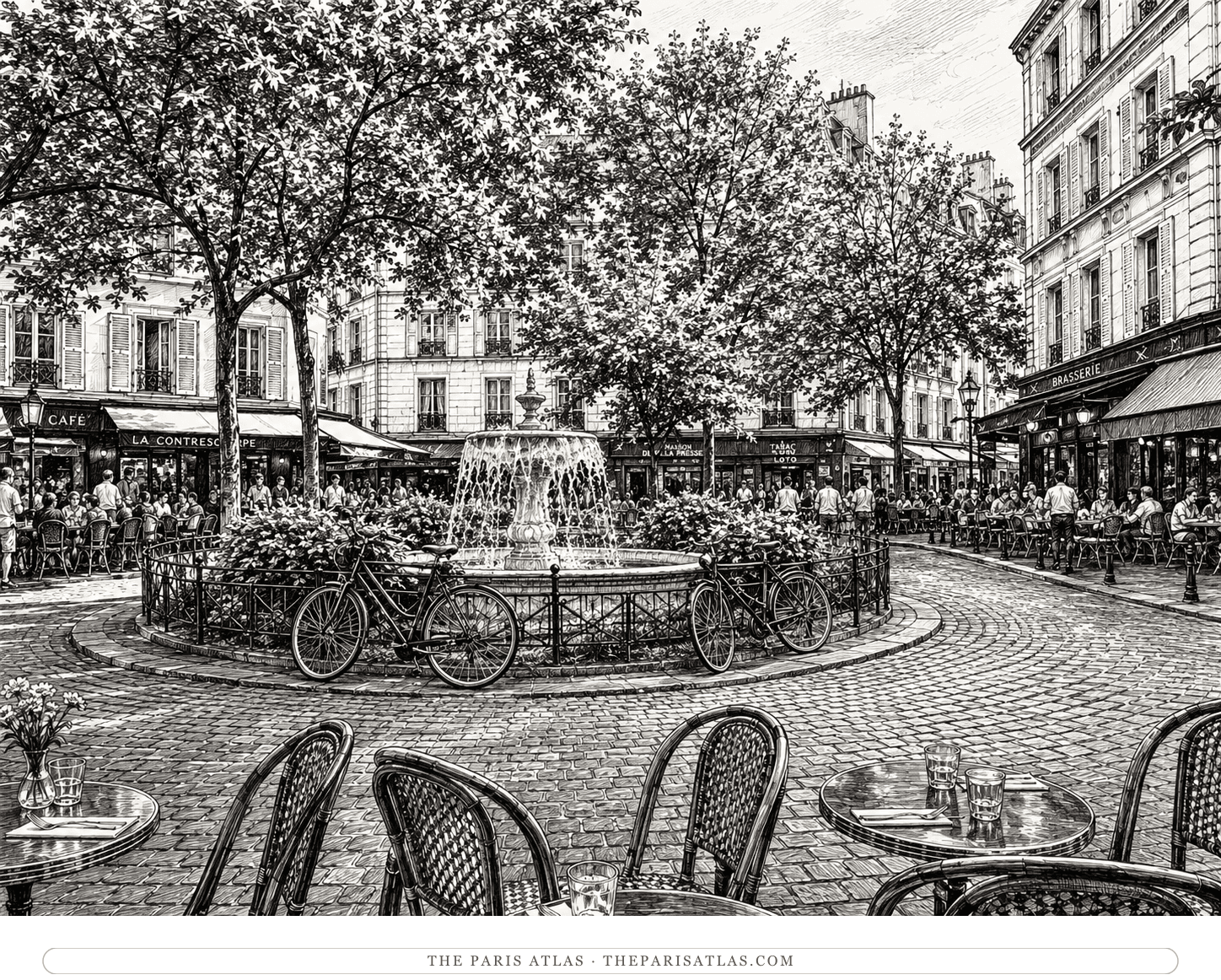
Place de la Contrescarpe
The small square at the top of the rue Mouffetard, a minute from Ernest Hemingway's first flat — now one of the quarter's prettiest corners. The novel visits it after dark.

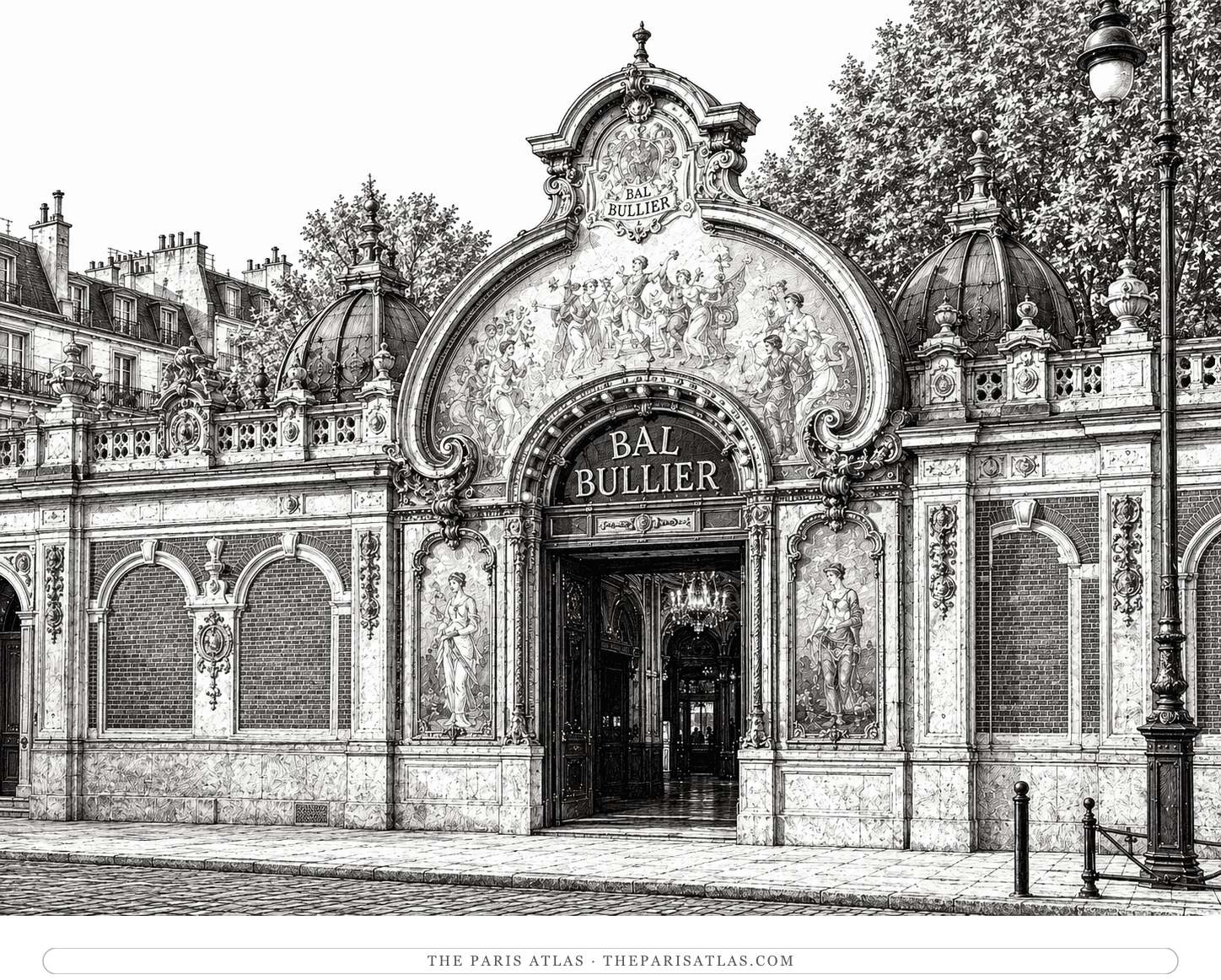
Bal Bullier
The students' dance hall behind the mock-oriental façade opposite the Closerie des Lilas — where the Latin Quarter danced for a century, and Robert and Sonia Delaunay painted the dancers.

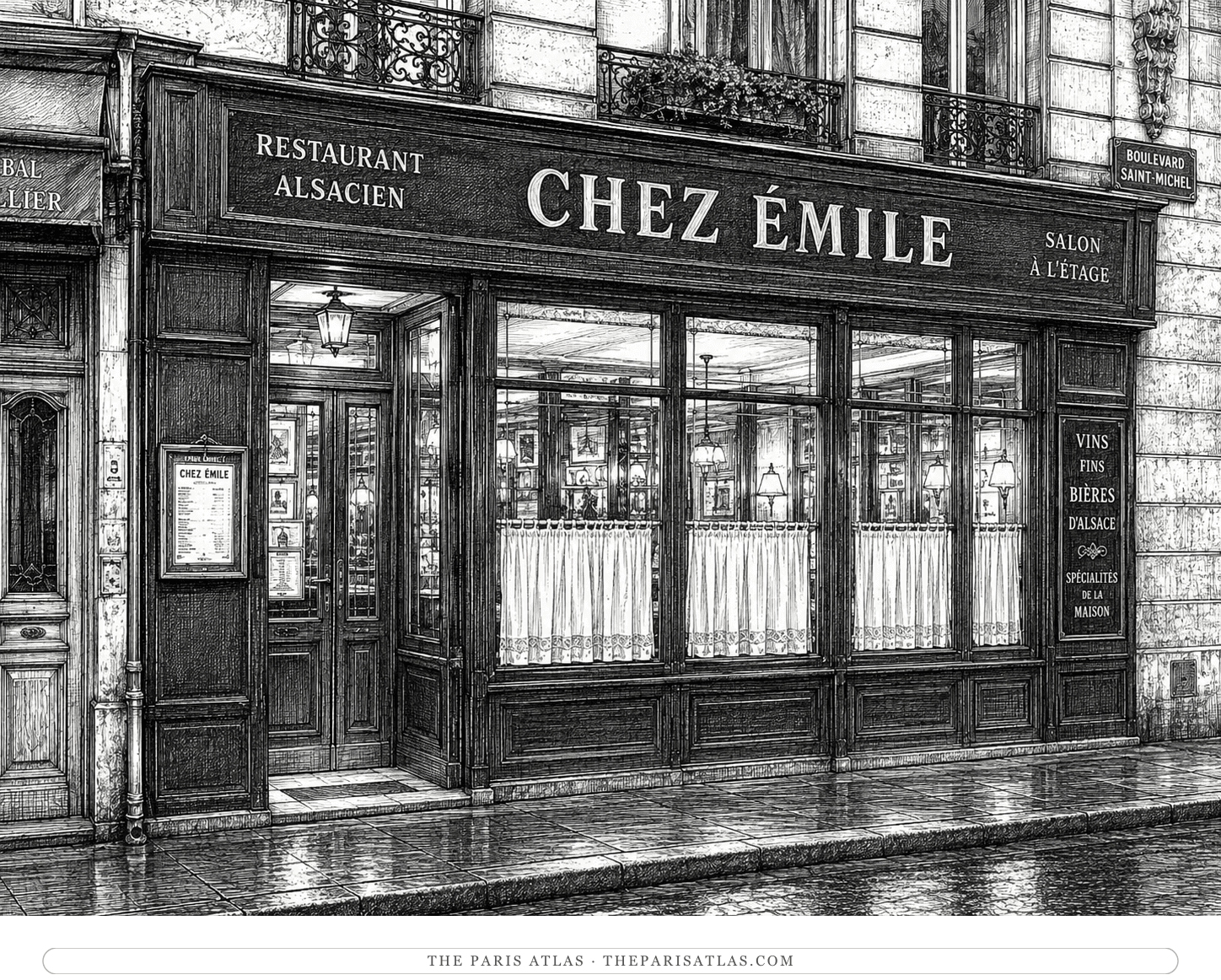
Chez Émile
An Alsatian restaurant with an upper room at the quiet end of the Boul' Mich' — where Ford Madox Ford, Ezra Pound, and Sisley Huddleston talked for hours, and only the memoir remembers it.
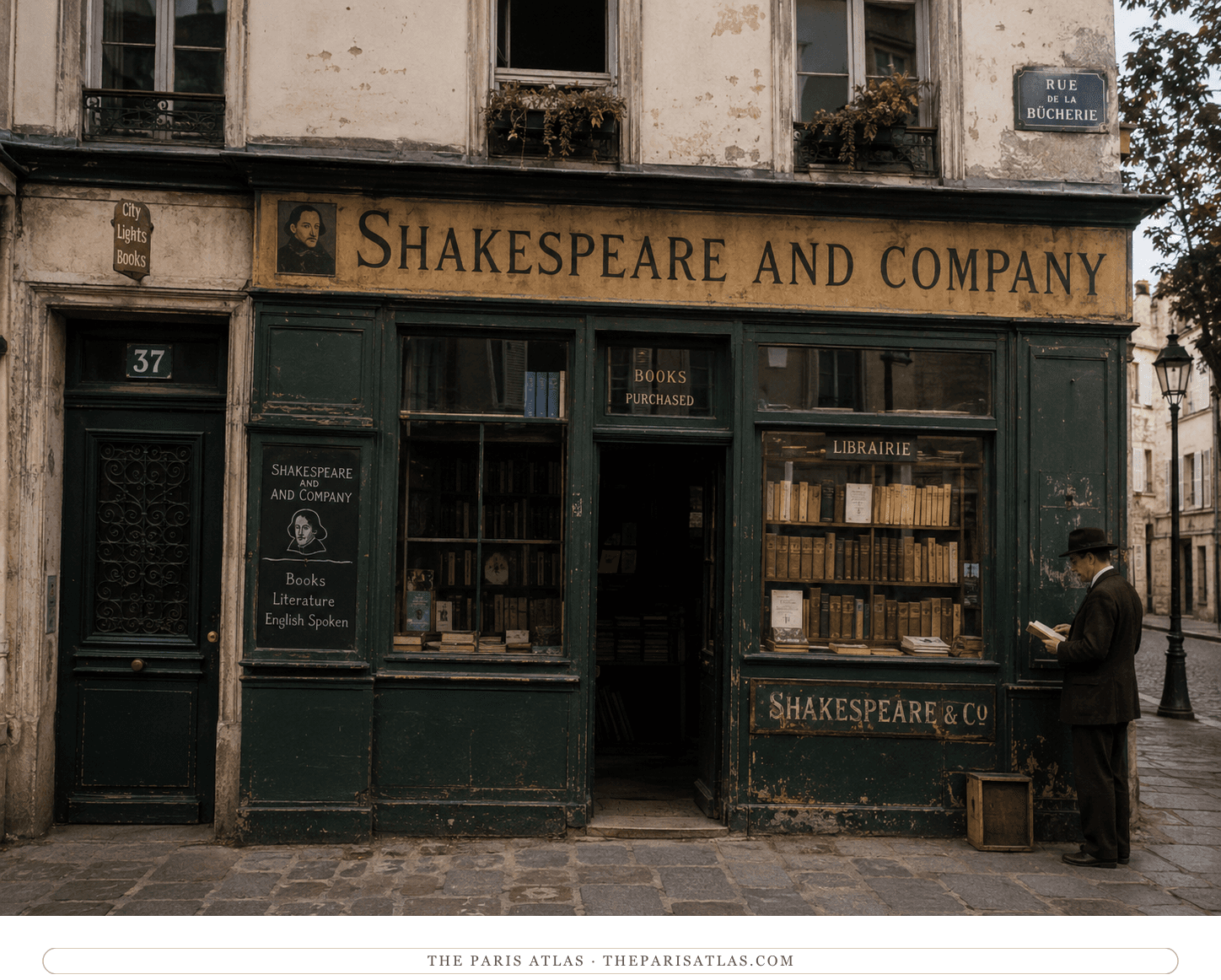

Shakespeare and Company (Rue de la Bûcherie)
George Whitman's bookshop by the Seine — opened as Le Mistral in 1951, renamed Shakespeare and Company in 1964 with Sylvia Beach's blessing, and still sleeping writers among its shelves.

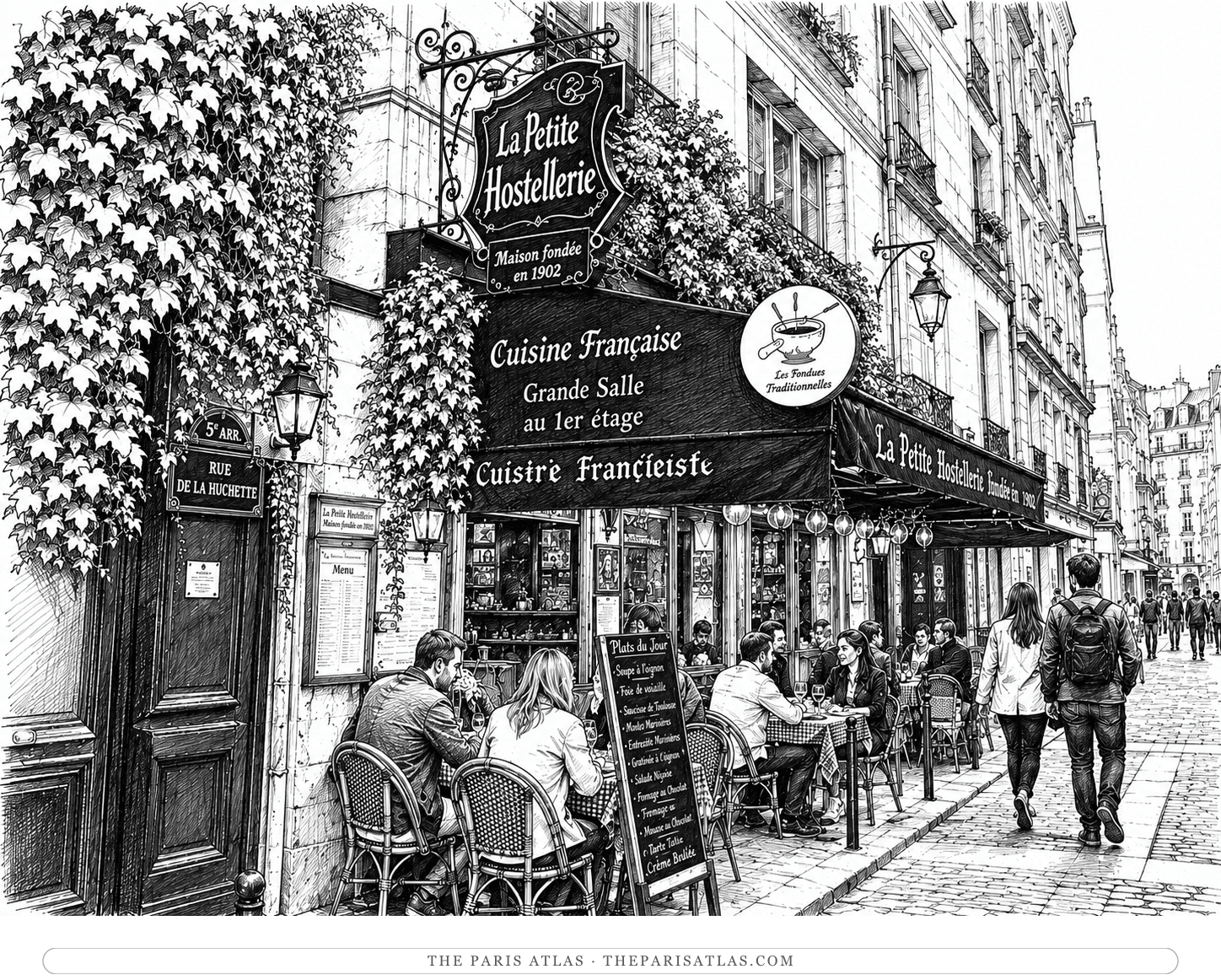
The Latin Quarter
The university quarter on the hill above the river, named for the language its students once spoke, and the address of Ernest Hemingway's first Paris flat.

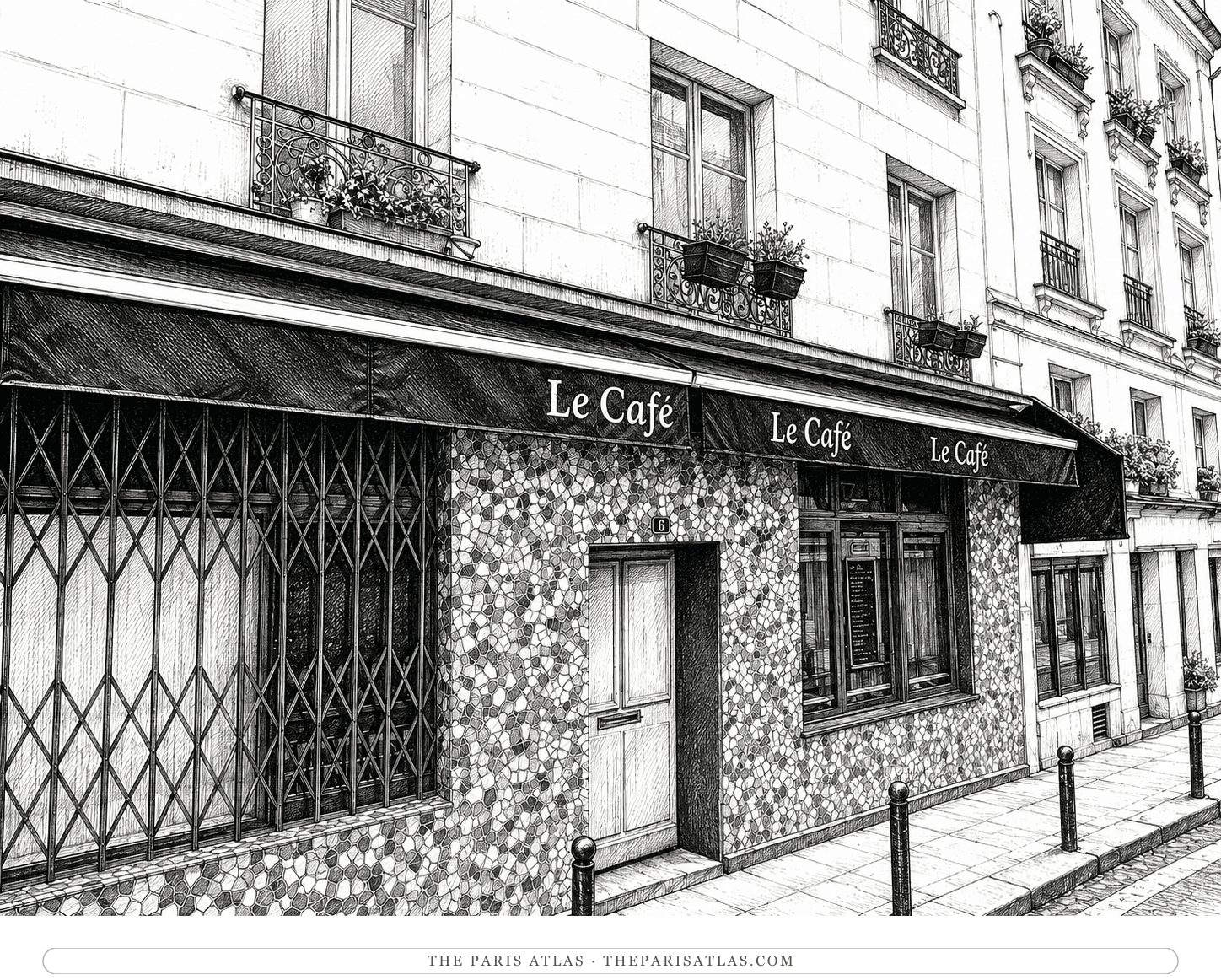
6 rue du Pot de Fer (Hotel des Bons Amis)
The cheap Latin Quarter lodging house where Eric Blair lived for eighteen months before he was George Orwell, and the raw material for the Paris half of Down and Out in Paris and London.

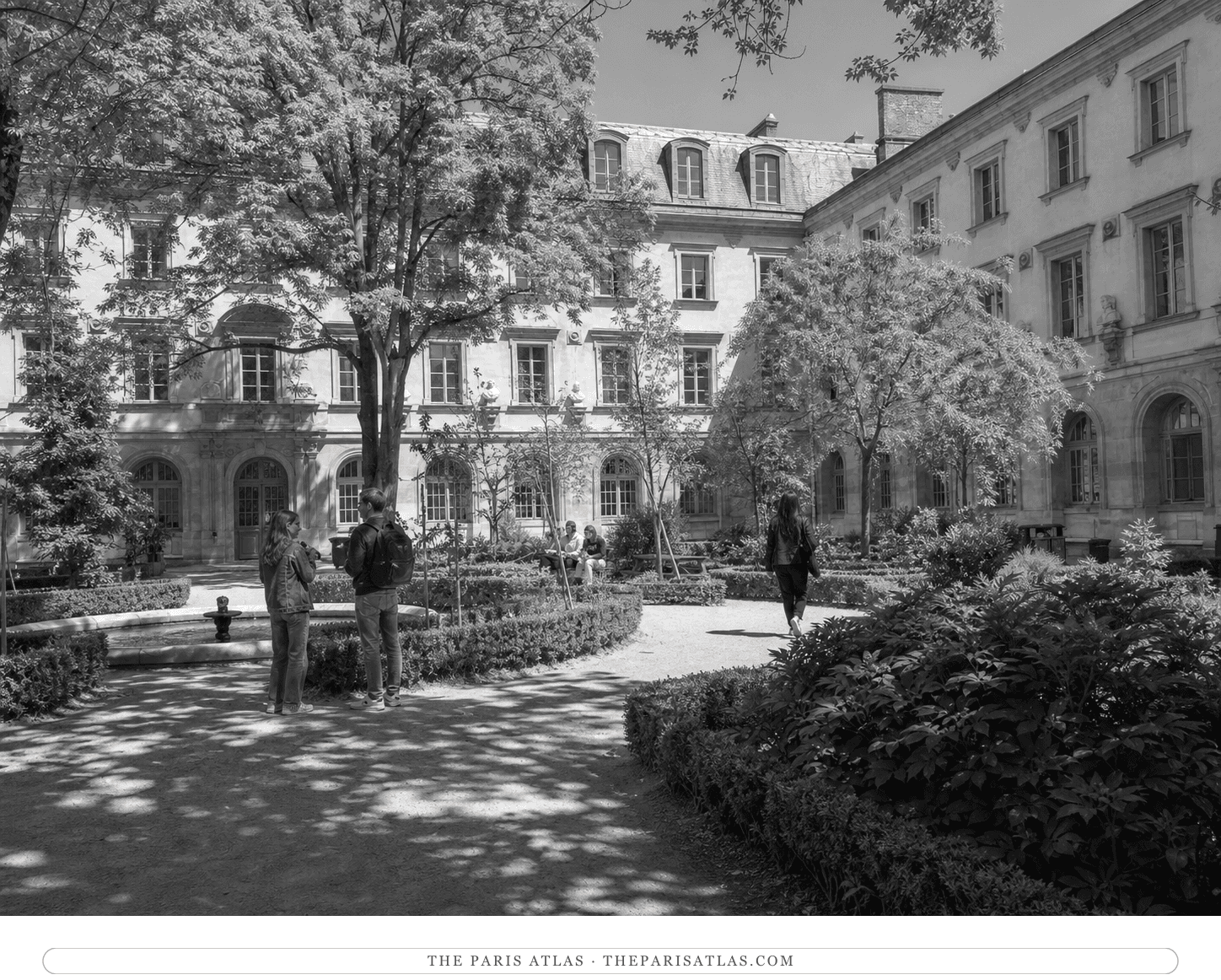
École normale supérieure
The grande école on the rue d'Ulm, behind the Panthéon — France's most selective humanities institution, and the building where Jean-Paul Sartre studied for the agrégation and Samuel Beckett arrived from Dublin in 1928 as a young English lecturer.
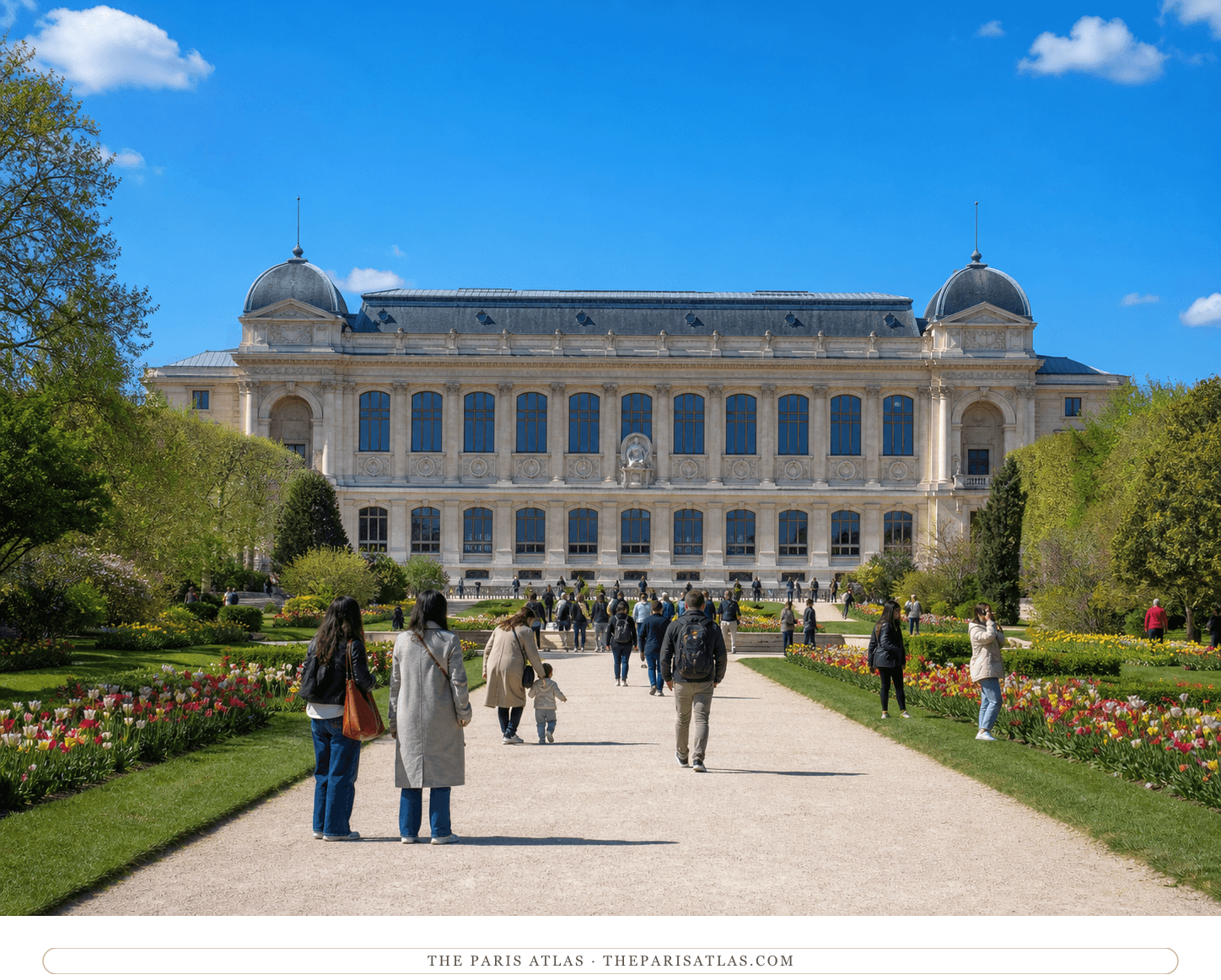
Jardin des Plantes
Paris's botanical garden, at the bottom of the Latin Quarter by the Seine — free to walk into, with the natural history galleries and a small menagerie inside it. It is also where George Orwell spent one of the worst days of his Paris poverty, too hungry to think about anything but food.

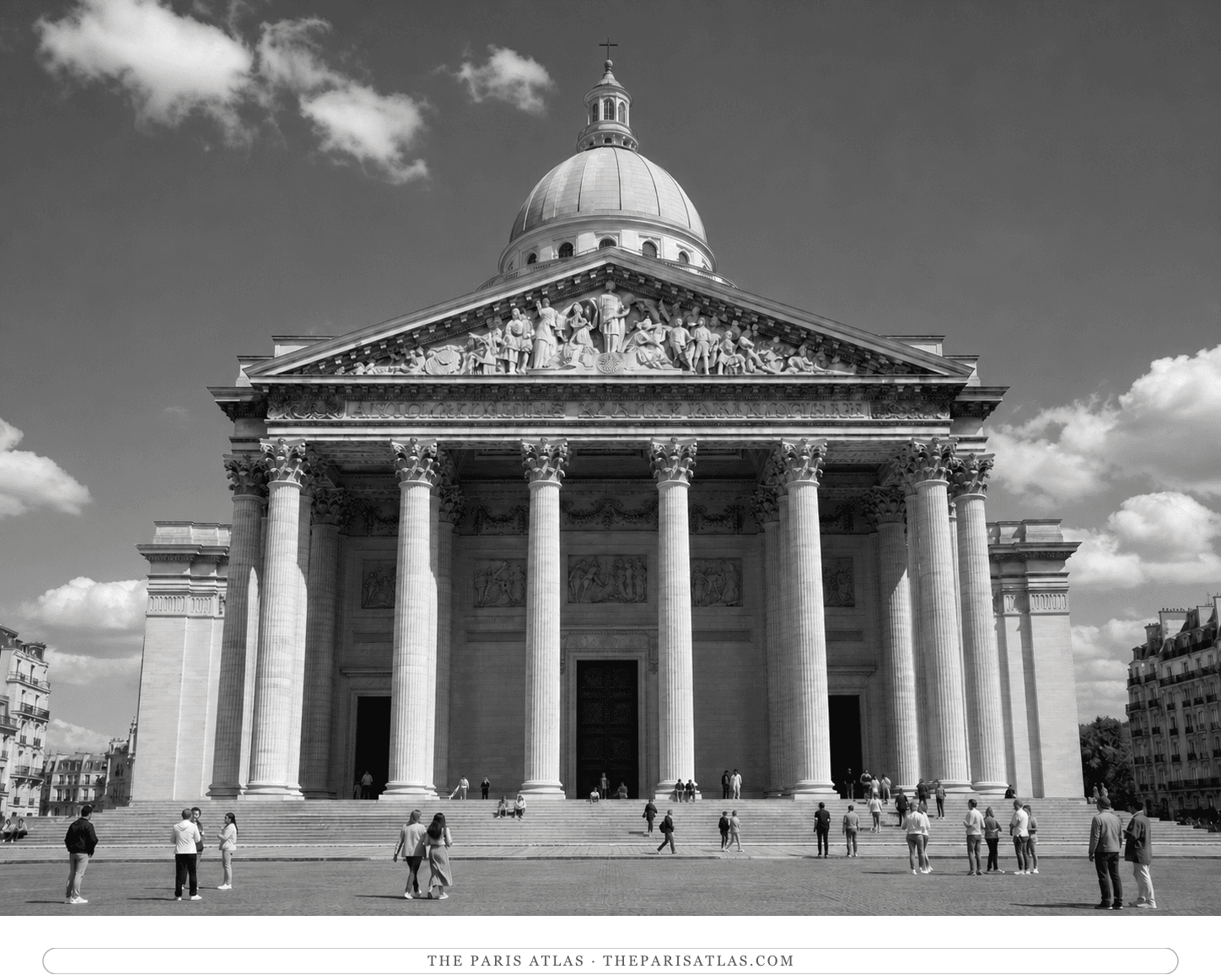
The Panthéon
A domed neoclassical building at the top of the Latin Quarter, begun as a church to keep a king's promise and turned into a mausoleum for the nation's great by the Revolution. Voltaire arrived in 1791, Hugo's funeral settled its purpose in 1885, Alexandre Dumas came in 2002 and Josephine Baker in 2021. Open 10 a.m.–6.30 p.m. in summer; €13–€16.

Hôtel des Grands Hommes
A small hotel facing the Panthéon, with Empire-style rooms and a literary history that includes André Breton and Philippe Soupault.

Hôtel Jardin de Cluny
A 40-room hotel on rue du Sommerard, with botanical wallpaper, colourful glass lighting and compact rooms near the Musée de Cluny.
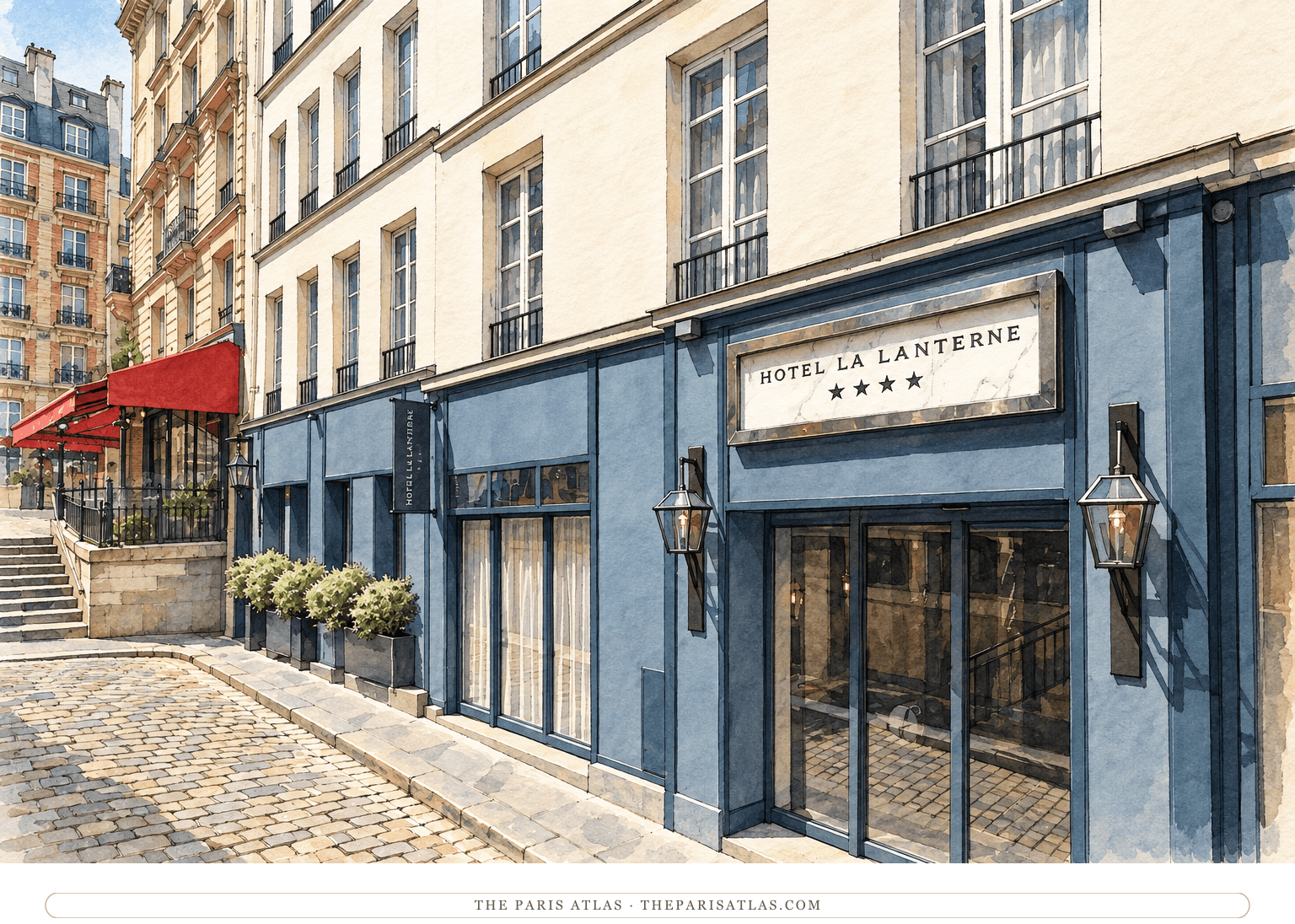
Hôtel La Lanterne & Spa
A Latin Quarter hotel with 39 rooms and three suites, a small garden, and an indoor pool and hammam beneath vaulted ceilings.
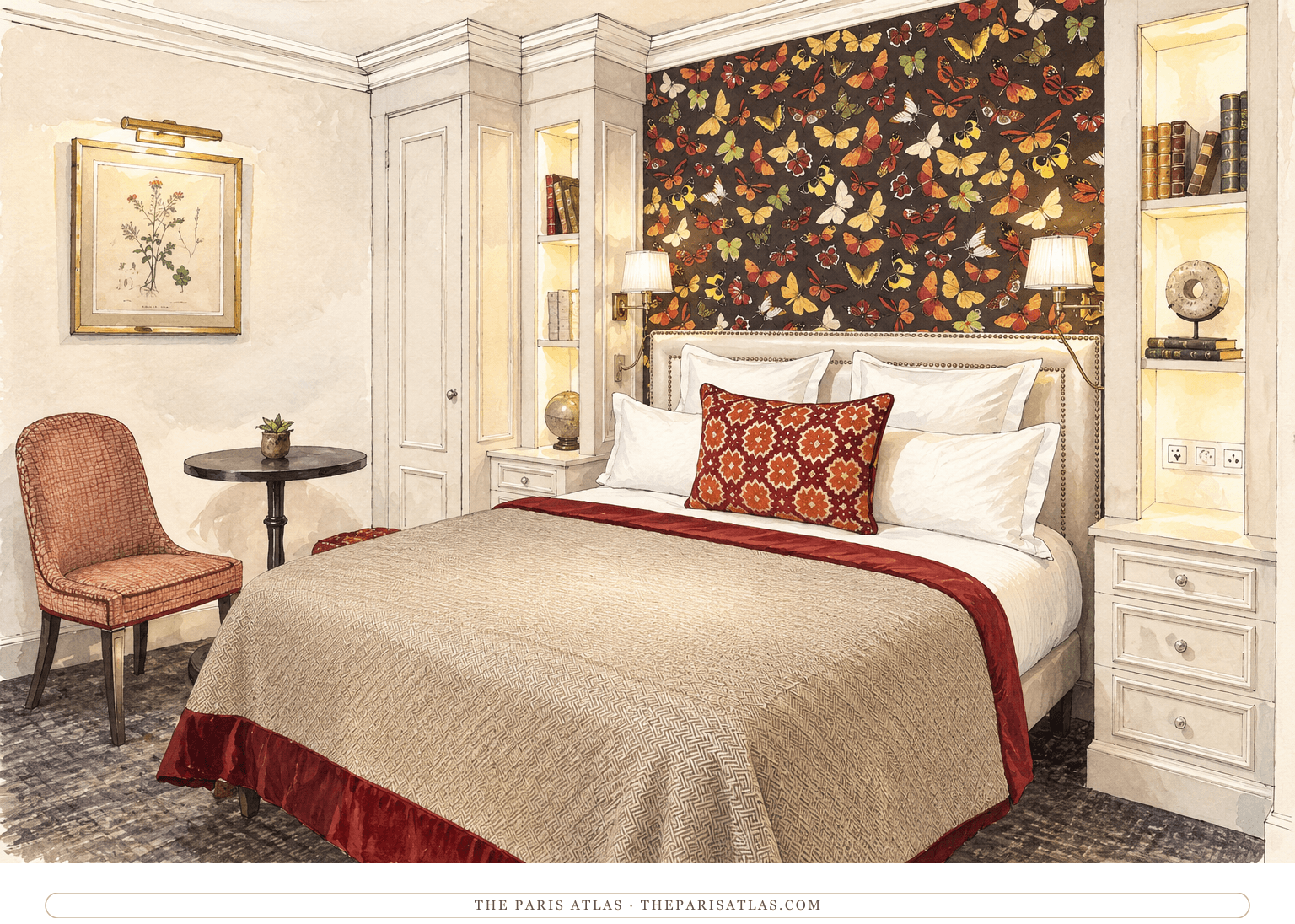
Hôtel Monge
A 30-room hotel on rue Monge, with natural-history-inspired interiors, a private hammam and a guest lounge serving tea and madeleines.
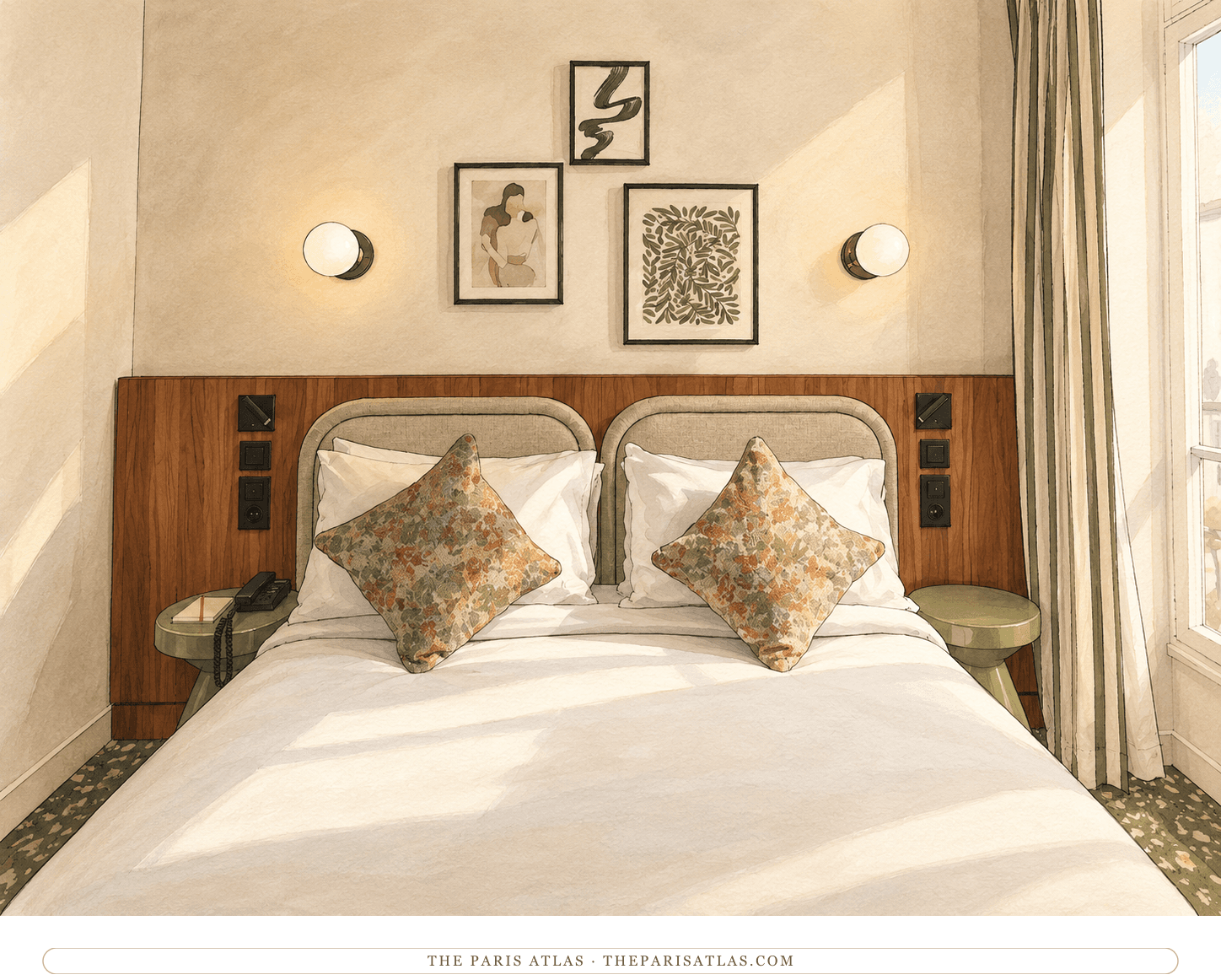
Hôtel Salvia
A 39-room hotel on rue Cujas, with a literary café that pairs a drink with a book selected by Librairie Pedone.
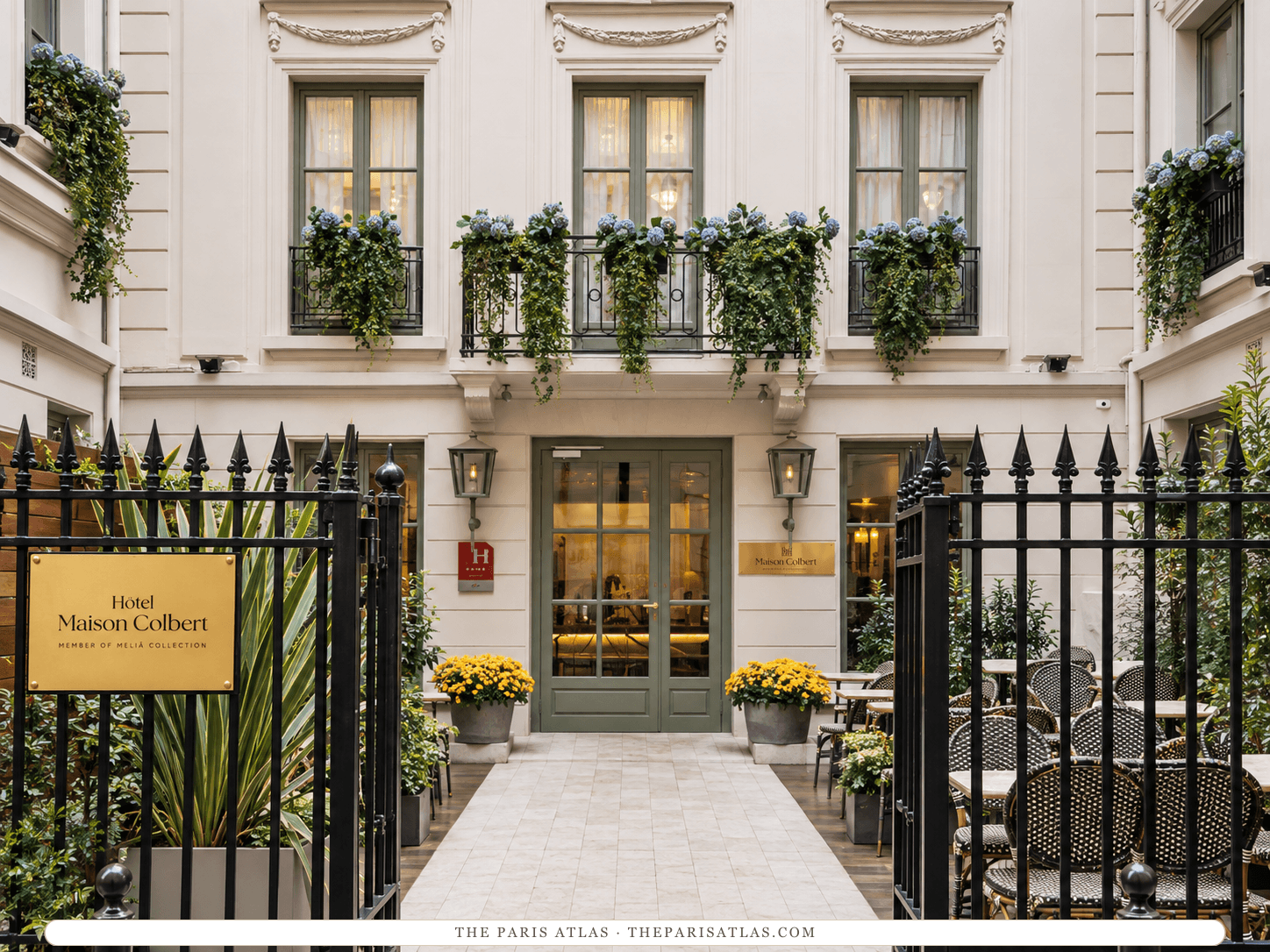
Maison Colbert
A 39-room five-star Meliá hotel in the Latin Quarter, about 200 meters from Notre-Dame across the Seine, decorated in homage to the Spanish painter Joaquín Sorolla. It occupies a listed late-18th-century corner house. The writer Simone de Beauvoir lived in this building from 1948 to 1955, in an apartment at 11 rue de la Bûcherie.

Hôtel Dame des Arts
A contemporary hotel in the Latin Quarter, with Raphael Navot interiors, a rooftop bar overlooking Paris and compact rooms whose terrace and Eiffel Tower views depend on the category.
Odéon

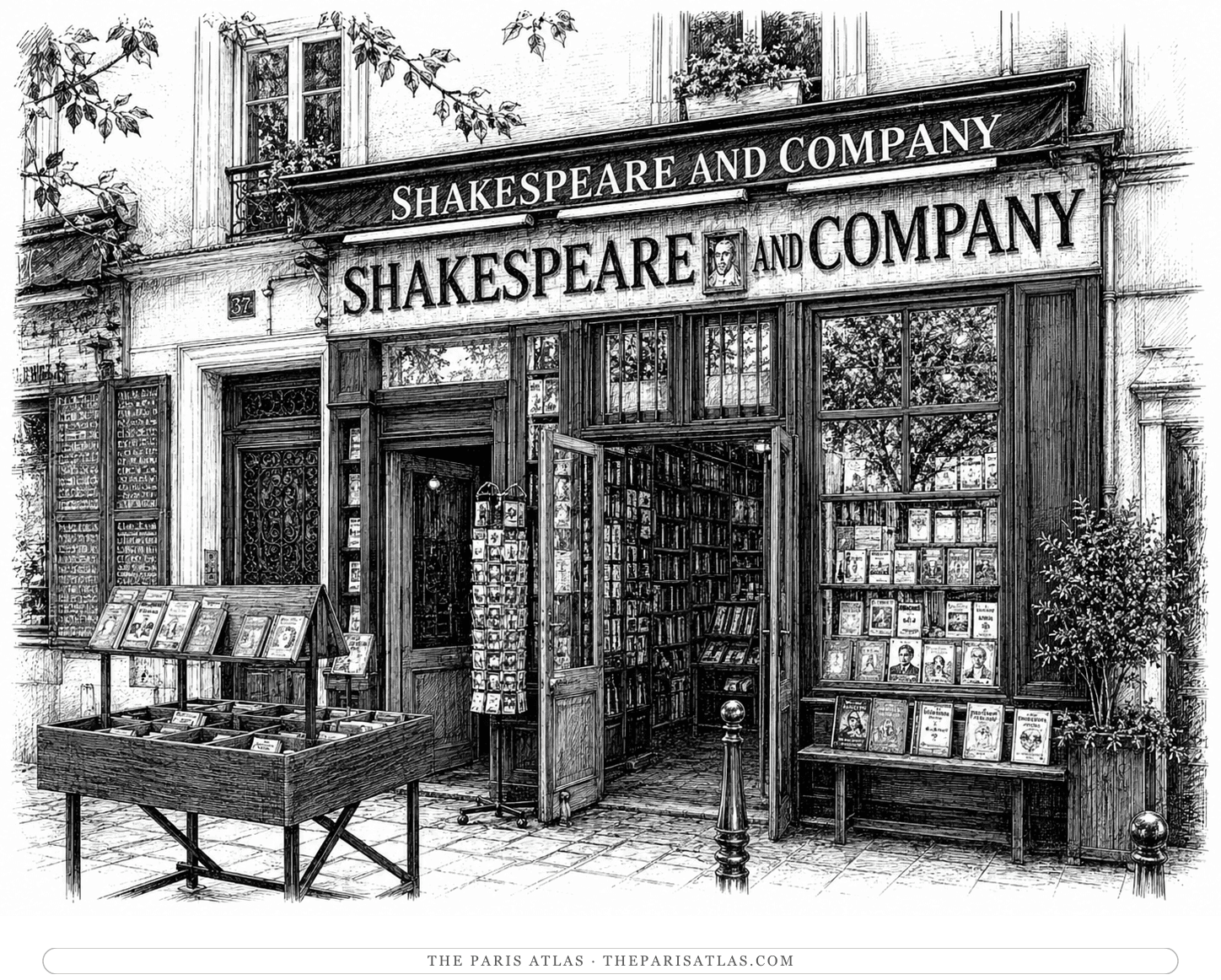
Shakespeare and Company (12 Rue de l'Odéon)
Sylvia Beach's original bookshop and lending library — Ernest Hemingway's home away from home, and where James Joyce's Ulysses was first published. The shop closed in 1941; the current Shakespeare and Company is a successor at a different address.

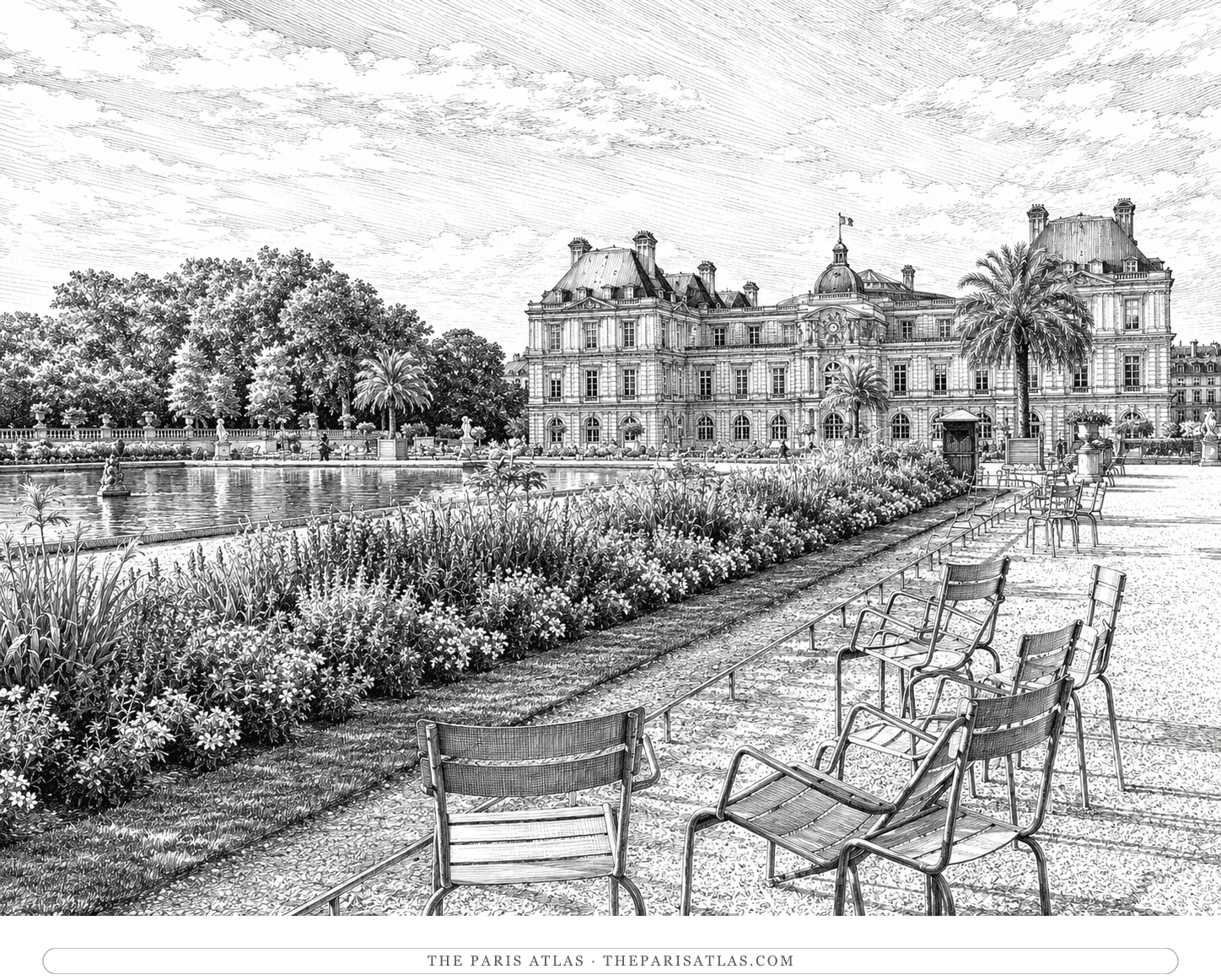
Jardin du Luxembourg
Ernest Hemingway's daily shortcut and his hungry-day refuge — the park where he walked to avoid the smell of food, and studied the Cézannes in its museum on an empty stomach.

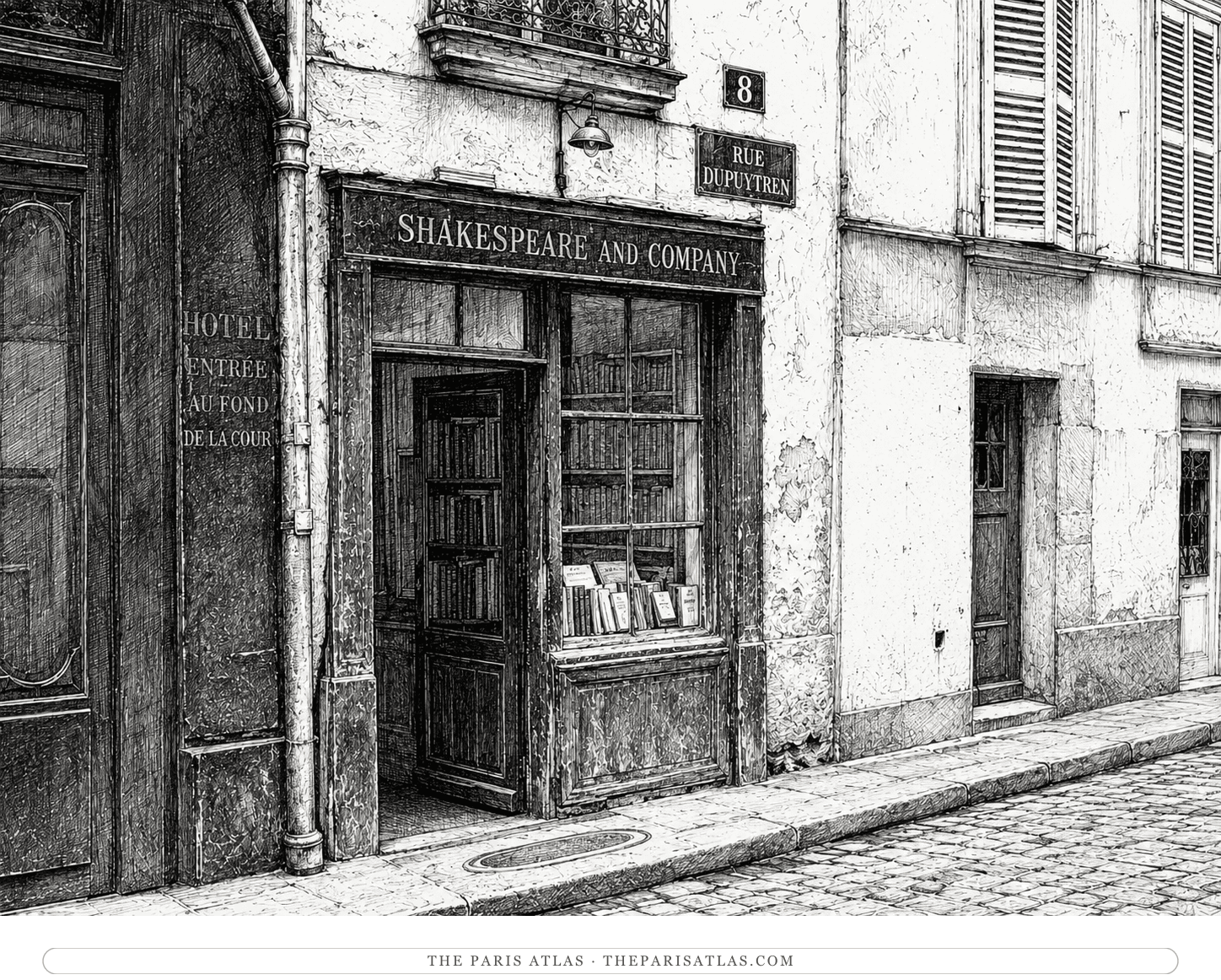
Shakespeare and Company (8 Rue Dupuytren)
Where Shakespeare and Company began: the tiny shop Sylvia Beach opened on 19 November 1919, two years before the move to the rue de l'Odéon.

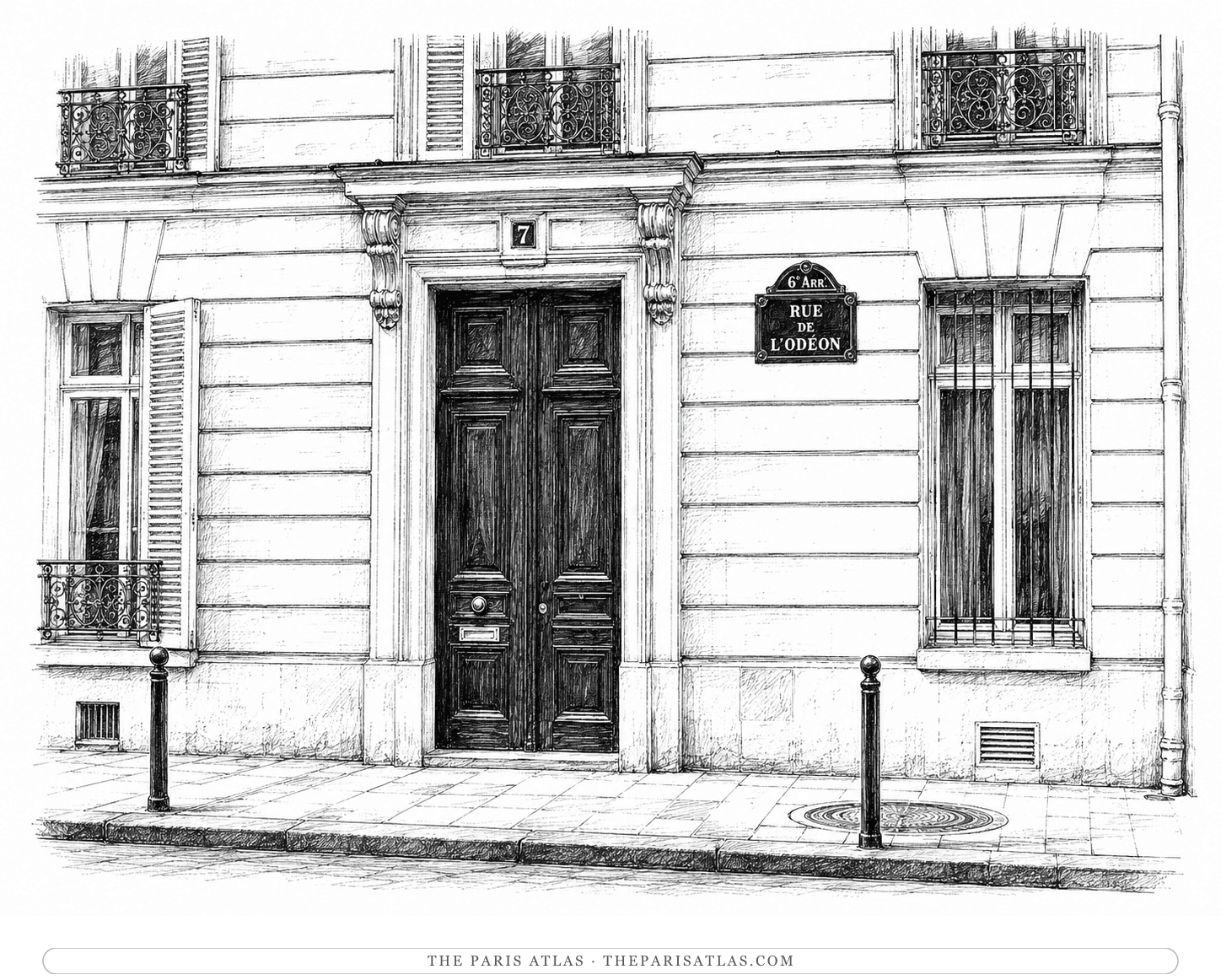
La Maison des Amis des Livres
Adrienne Monnier's bookshop and lending library — the French half of the rue de l'Odéon, where Ulysses was read aloud to Paris before it was a book.
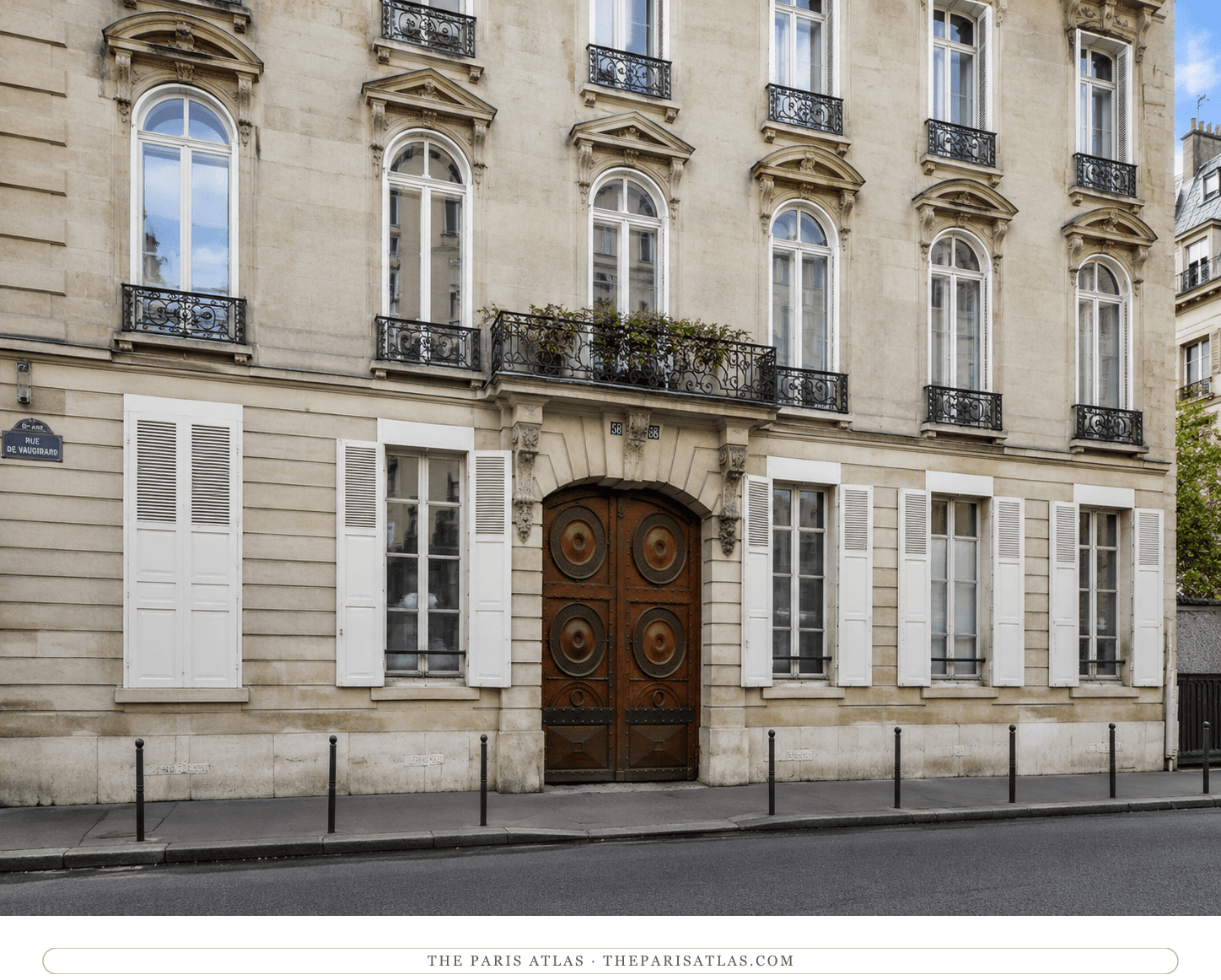
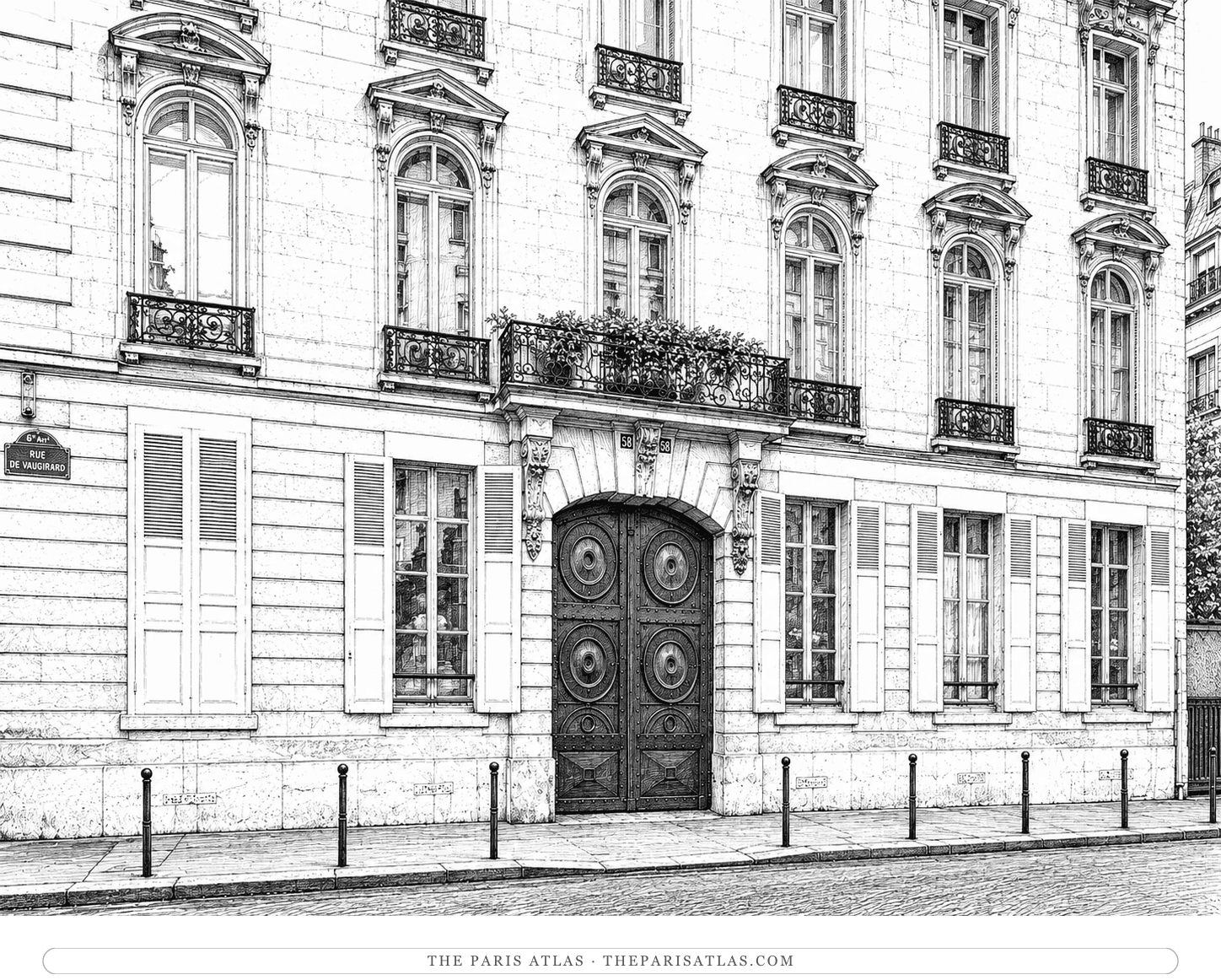
58 Rue de Vaugirard
F. Scott and Zelda Fitzgerald's Left Bank apartment in the summer of 1928, facing the Luxembourg Gardens — the address of Zelda's ballet discipline and Scott's stalled novel.

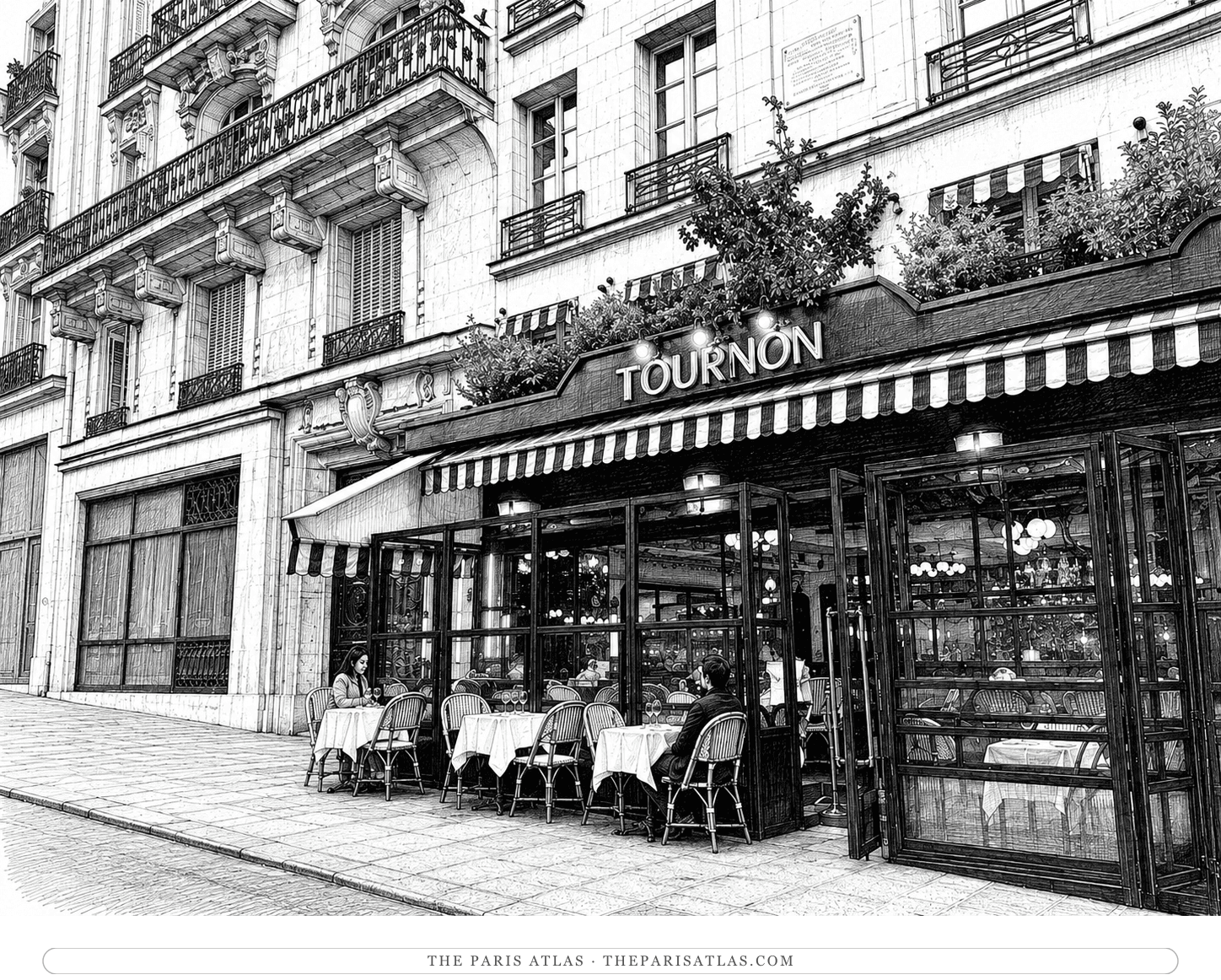
Le Tournon
The café below the Senate that served as the unofficial headquarters of Black American writers in postwar Paris, with Richard Wright at the center and James Baldwin among the regulars.


14 Rue Monsieur-le-Prince
Richard Wright's Paris address for eleven years — the apartment where he wrote the books of his exile, marked since 1992 by a marble plaque.
Saint-Germain-des-Prés
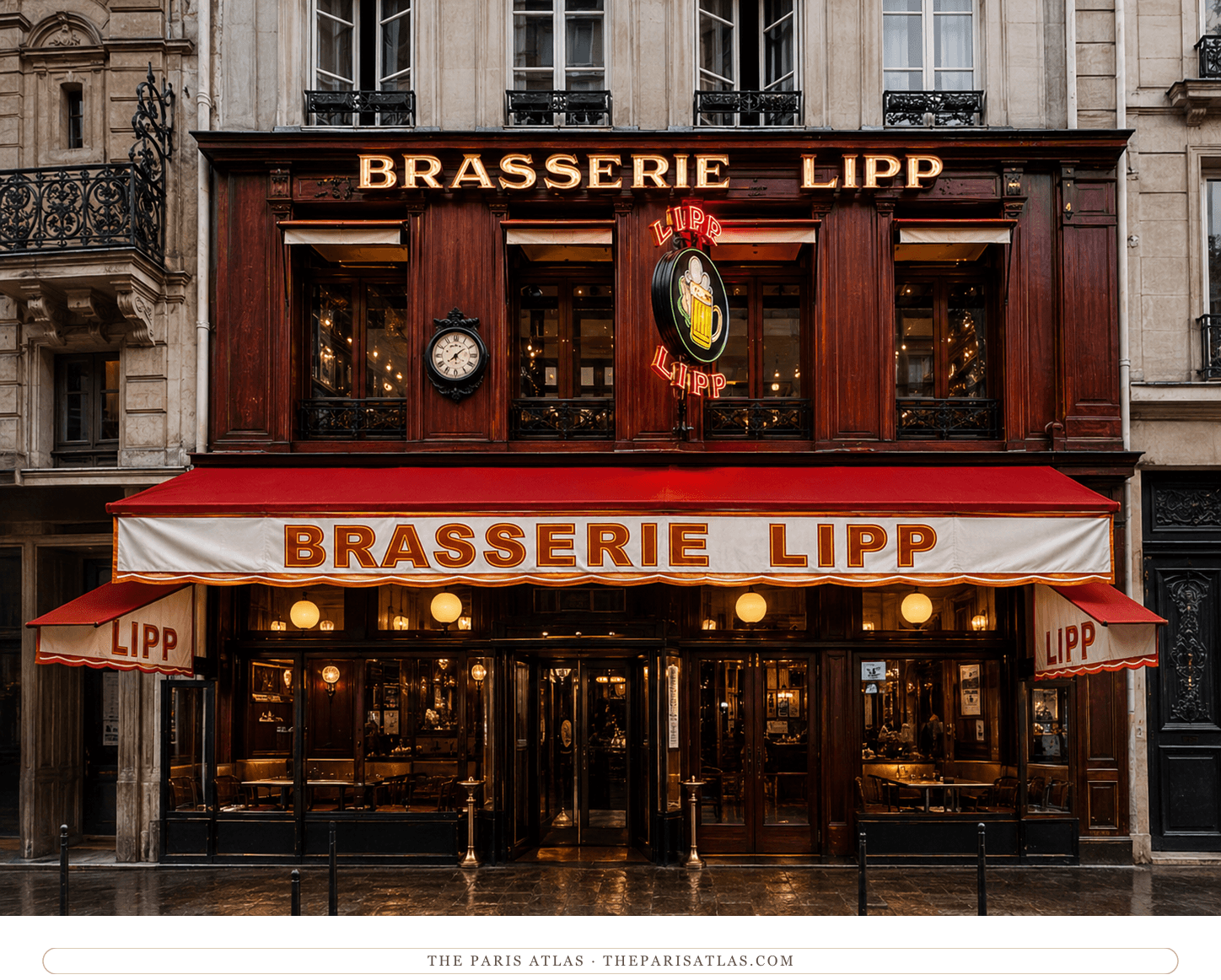
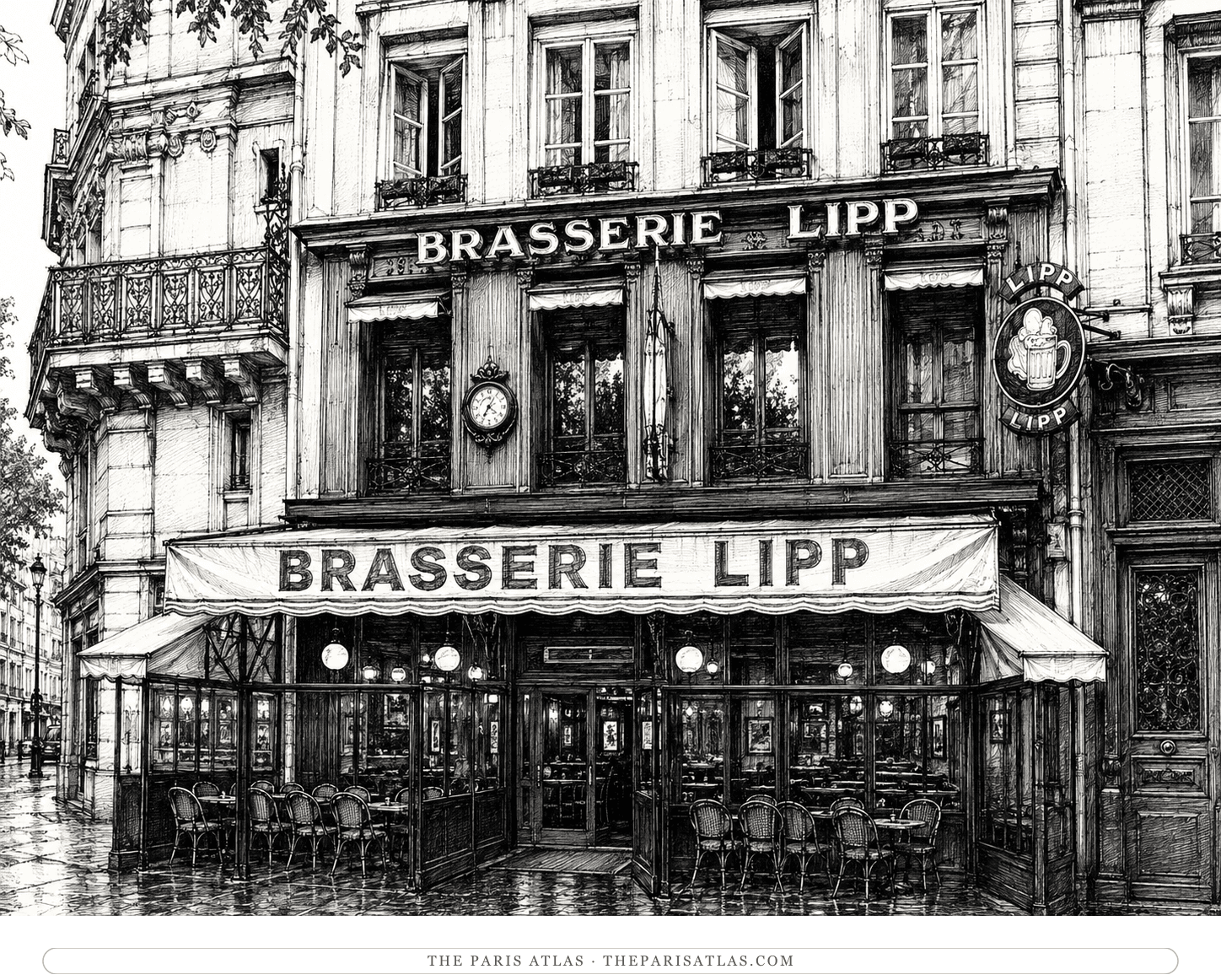
Brasserie Lipp
Beer, potato salad, and choucroute after a day's work. Ernest Hemingway considered it one of the best places in Paris.

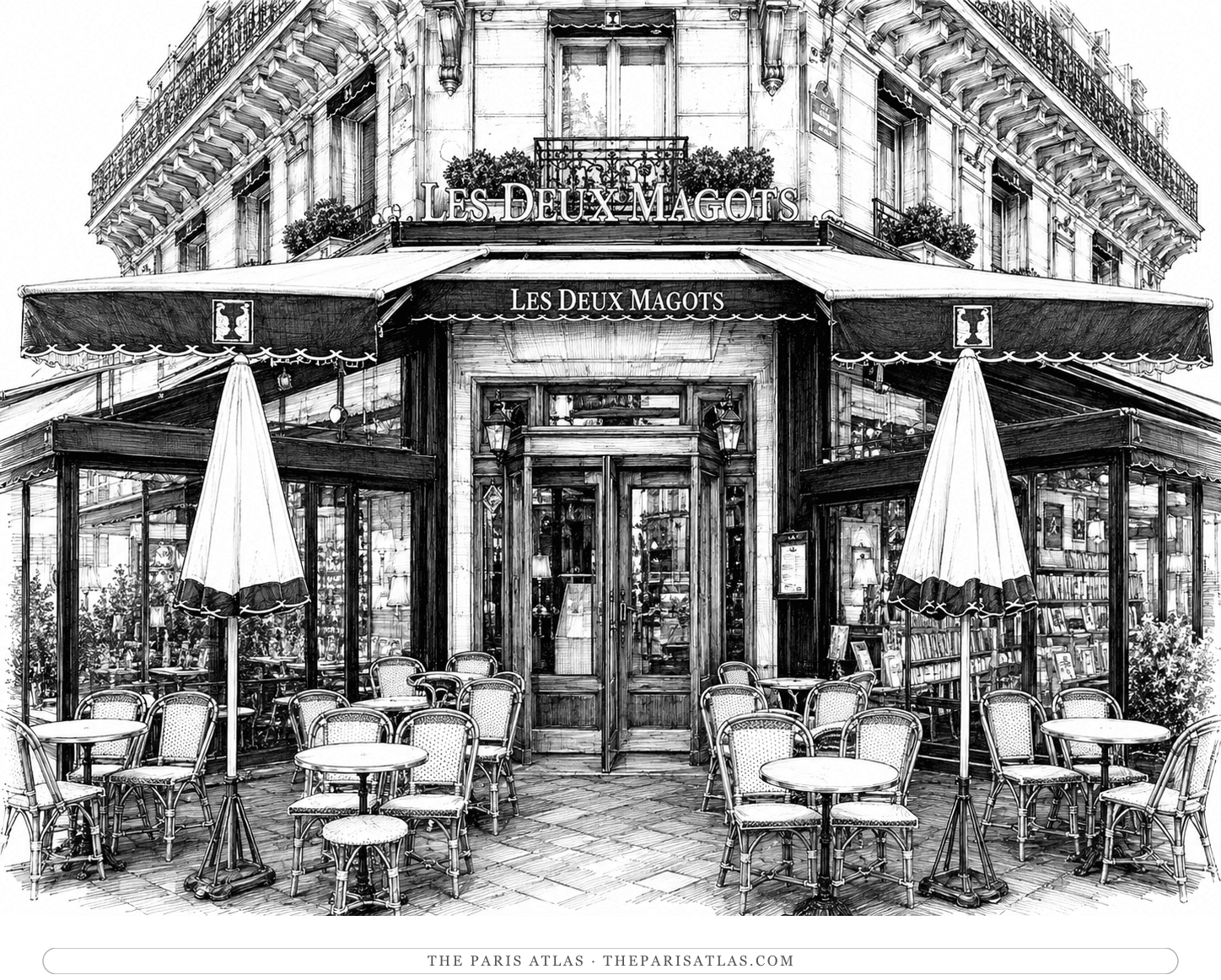
Les Deux Magots
The famous literary terrace where the expat crowd gathered. Ernest Hemingway came here, though he preferred La Closerie for actual work.
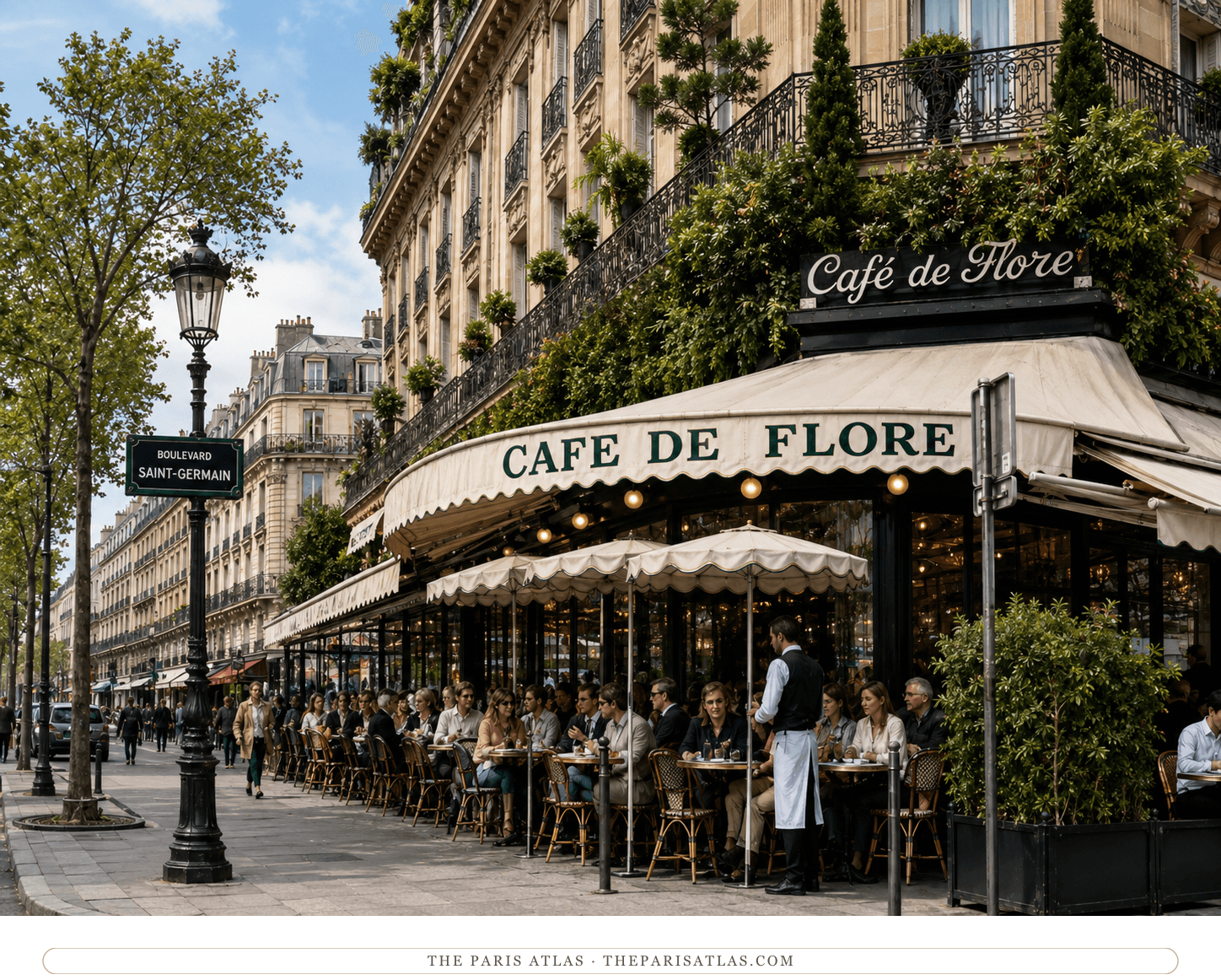
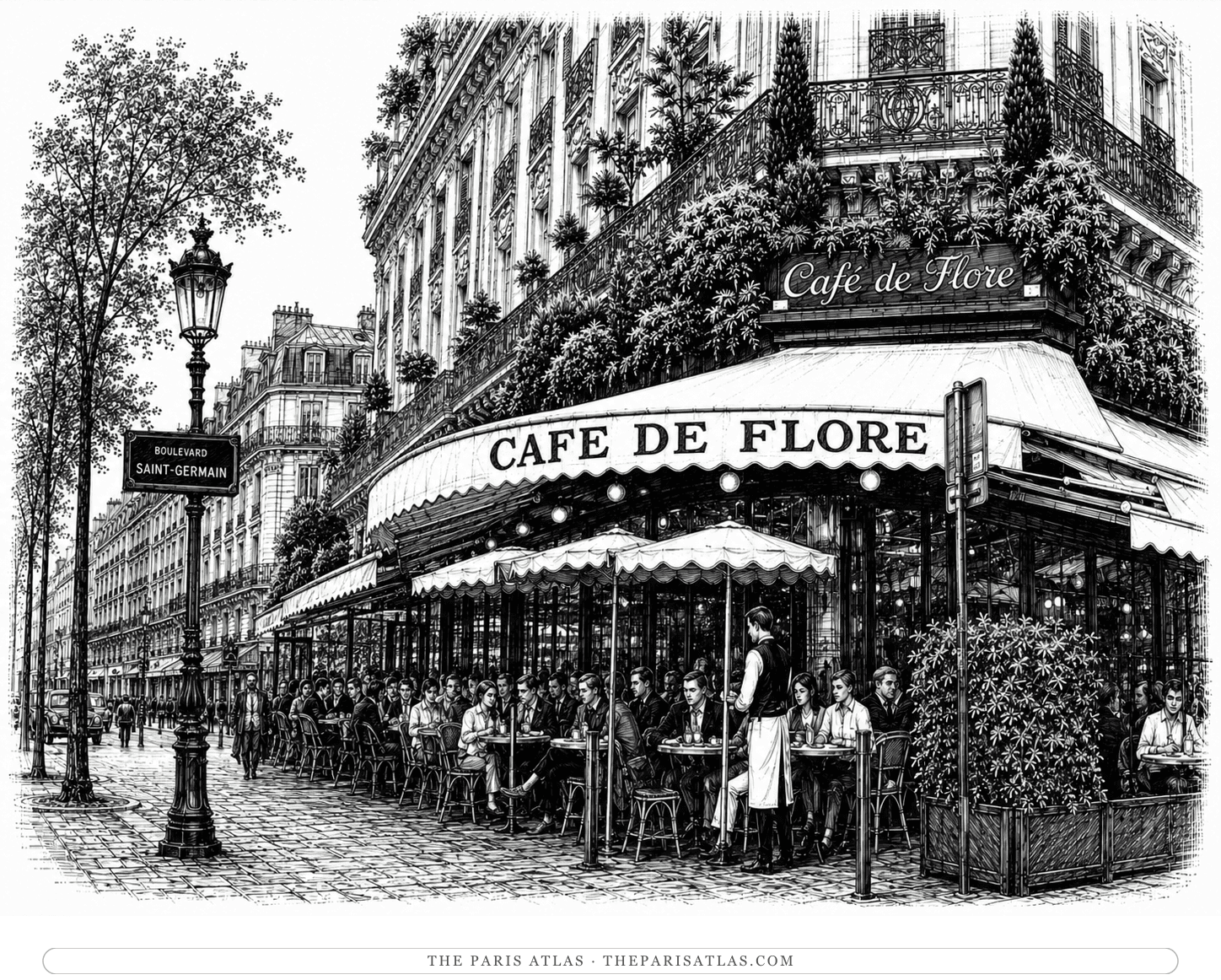
Café de Flore
A few doors from Les Deux Magots and part of the same Left Bank circuit. Later became more associated with Jean-Paul Sartre and Simone de Beauvoir.

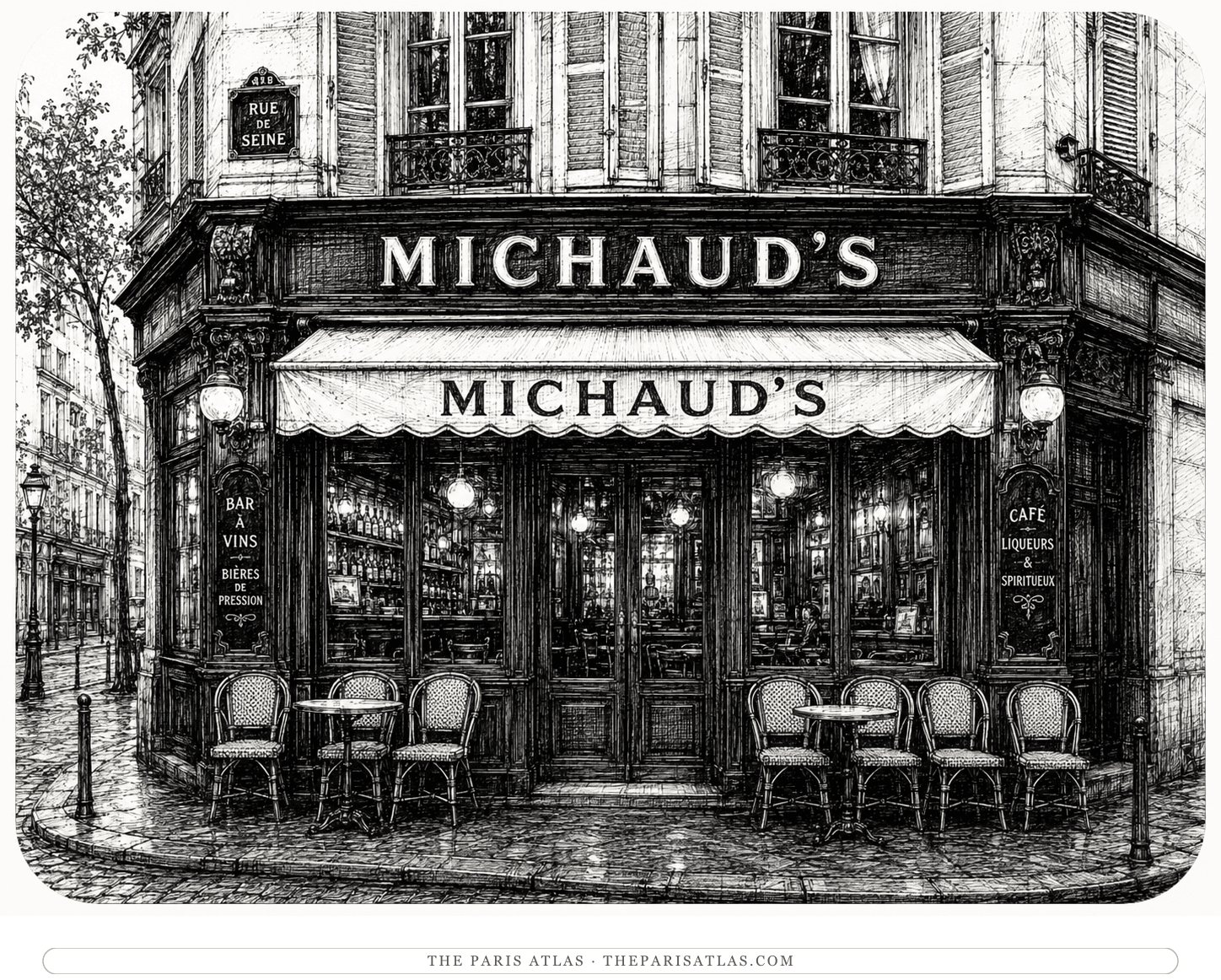
Michaud's
The smart restaurant of the quarter — where the hungry Hemingways watched the Joyce family dine, and where F. Scott Fitzgerald asked the question answered in 'A Matter of Measurements.'

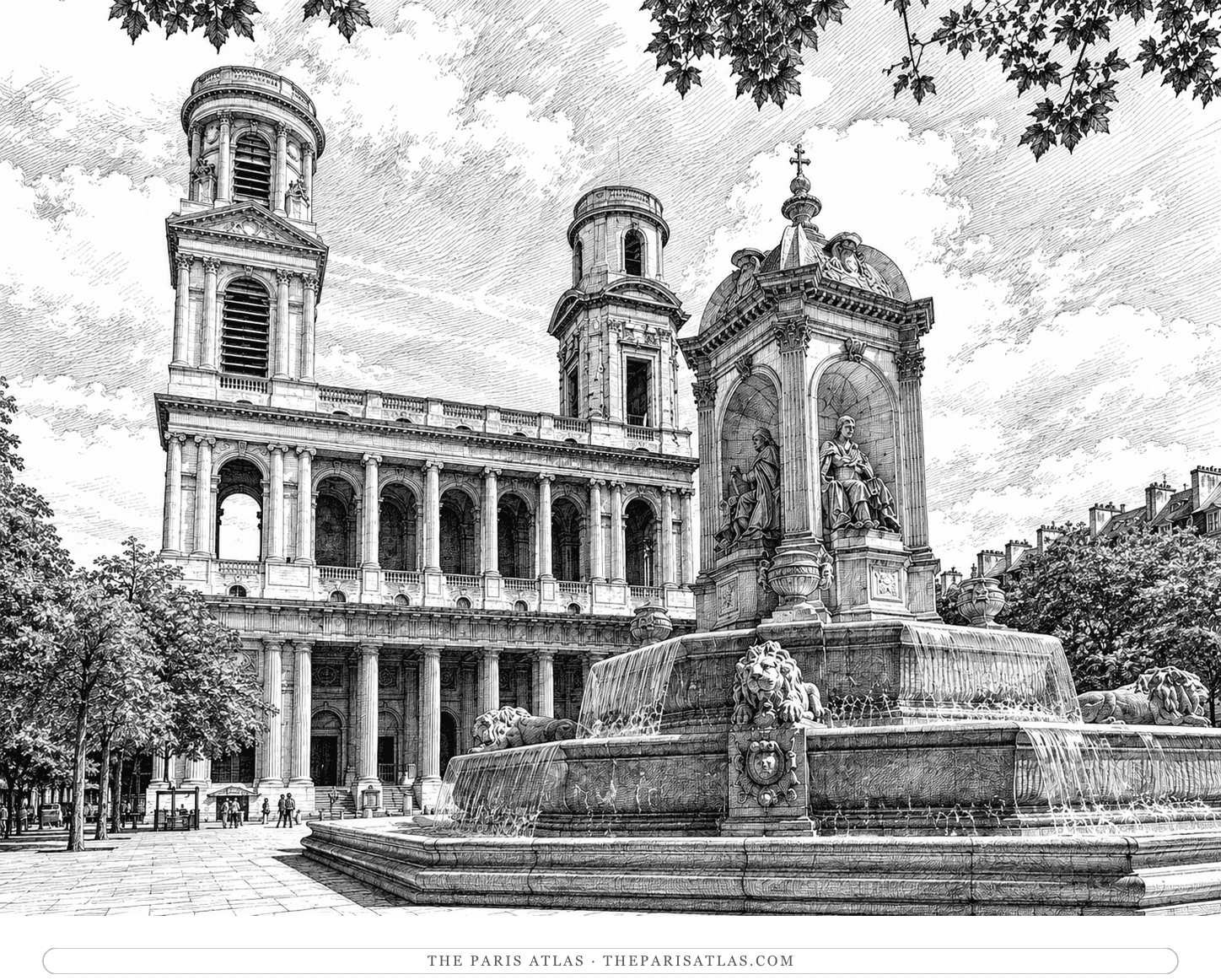
Place Saint-Sulpice
The quiet square between Saint-Germain and the Luxembourg — the fountain, the pigeons, the towered church, and a stillness three generations of writers noticed.

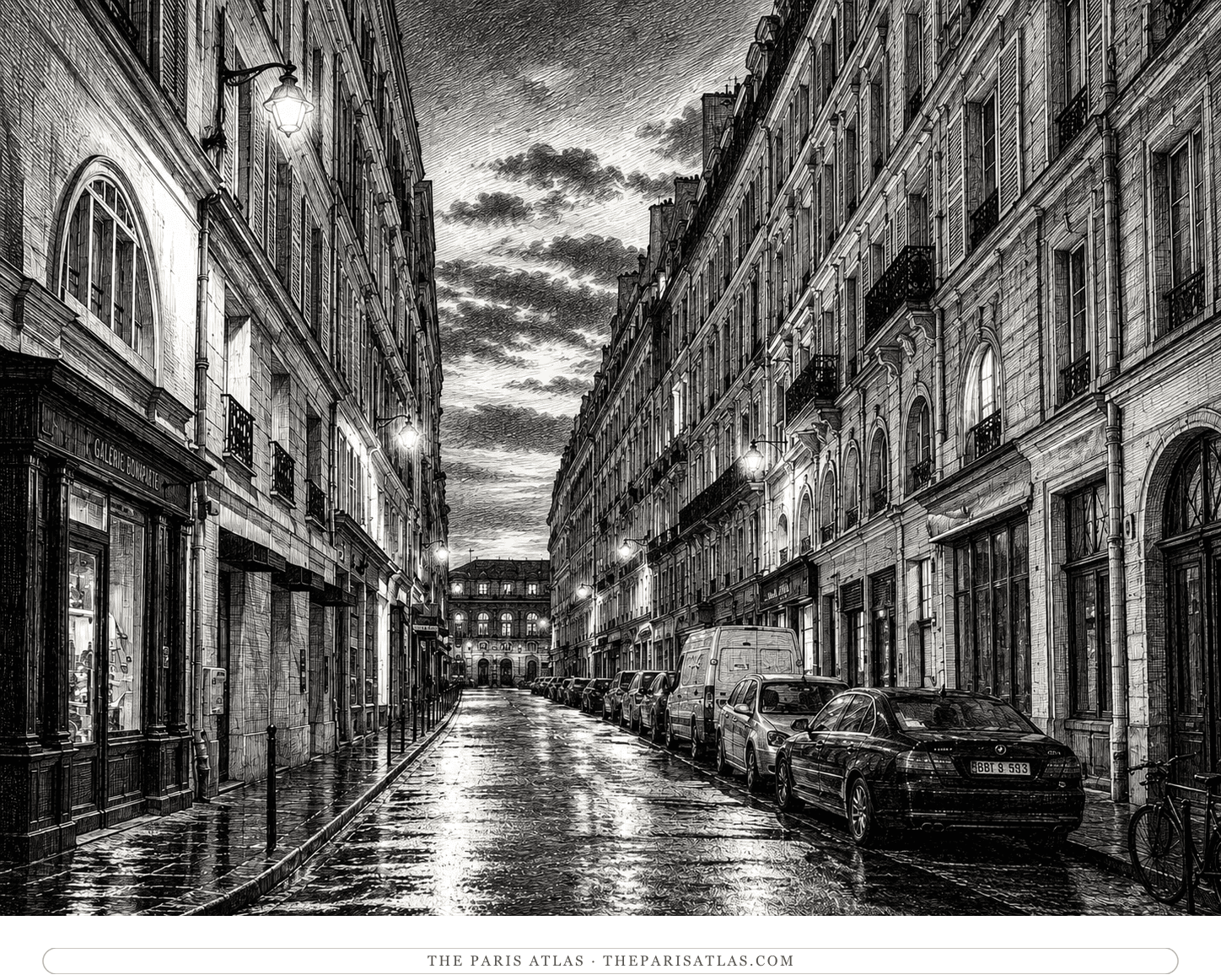
Rue Bonaparte
The street that stitches the Left Bank together — river to Beaux-Arts to Saint-Germain to Saint-Sulpice — and the nightly walk Henry Miller could not stop remembering.

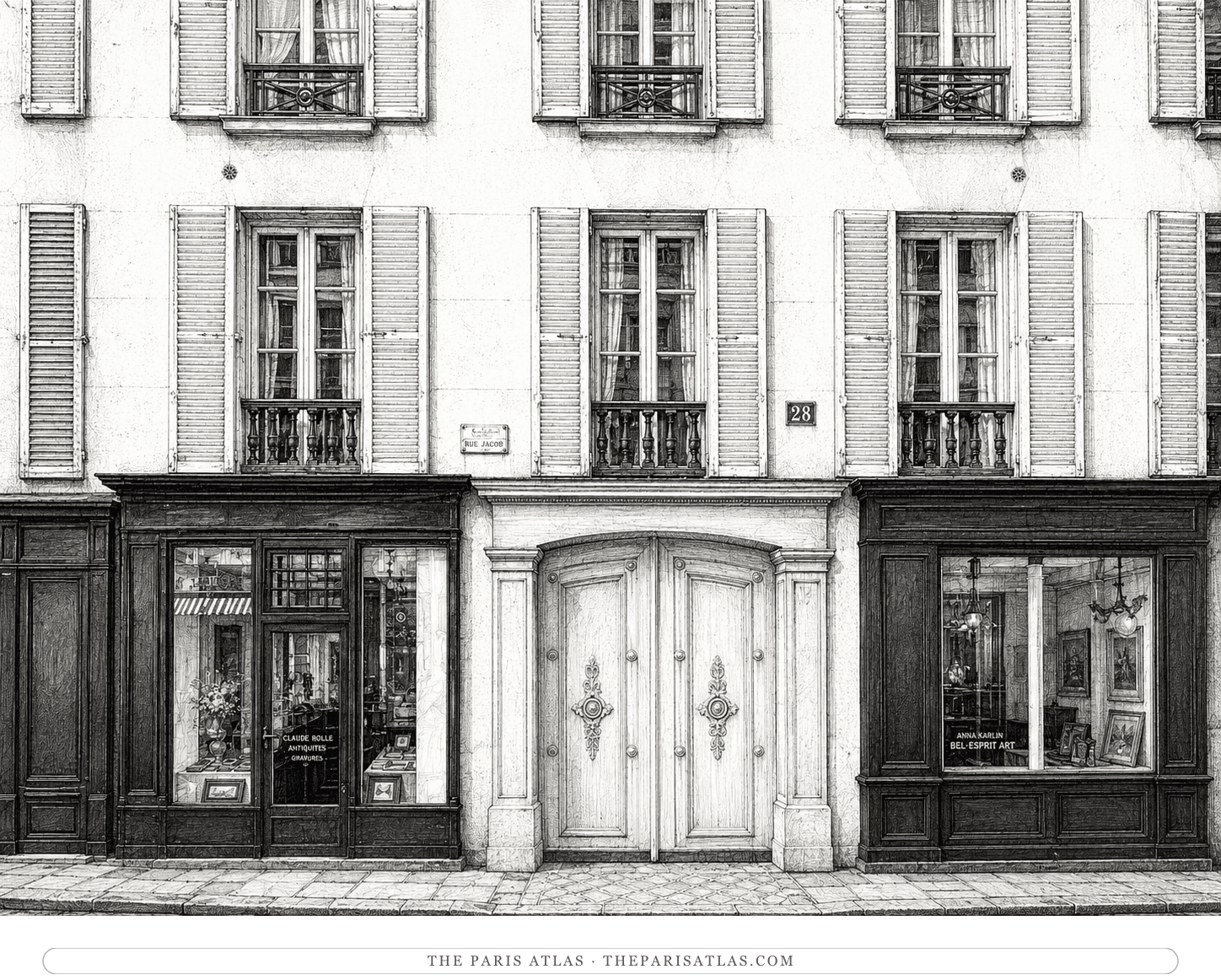
28 rue Jacob
Colette's first marital home in Paris, a third-floor apartment she took with her husband Willy in 1893.

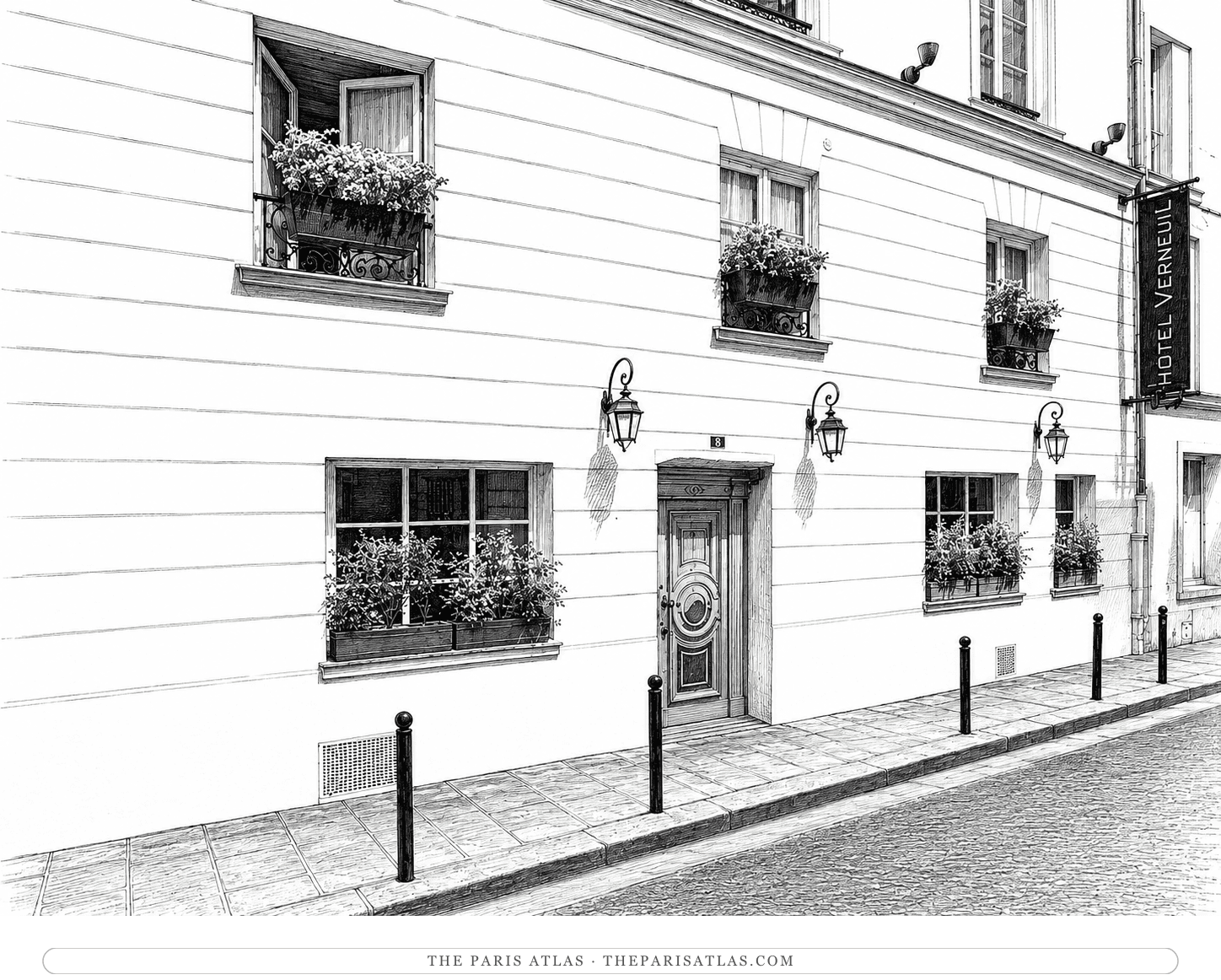
Hôtel Verneuil
The Left Bank hotel where James Baldwin settled after arriving in Paris in November 1948, and where his first published essays were written.

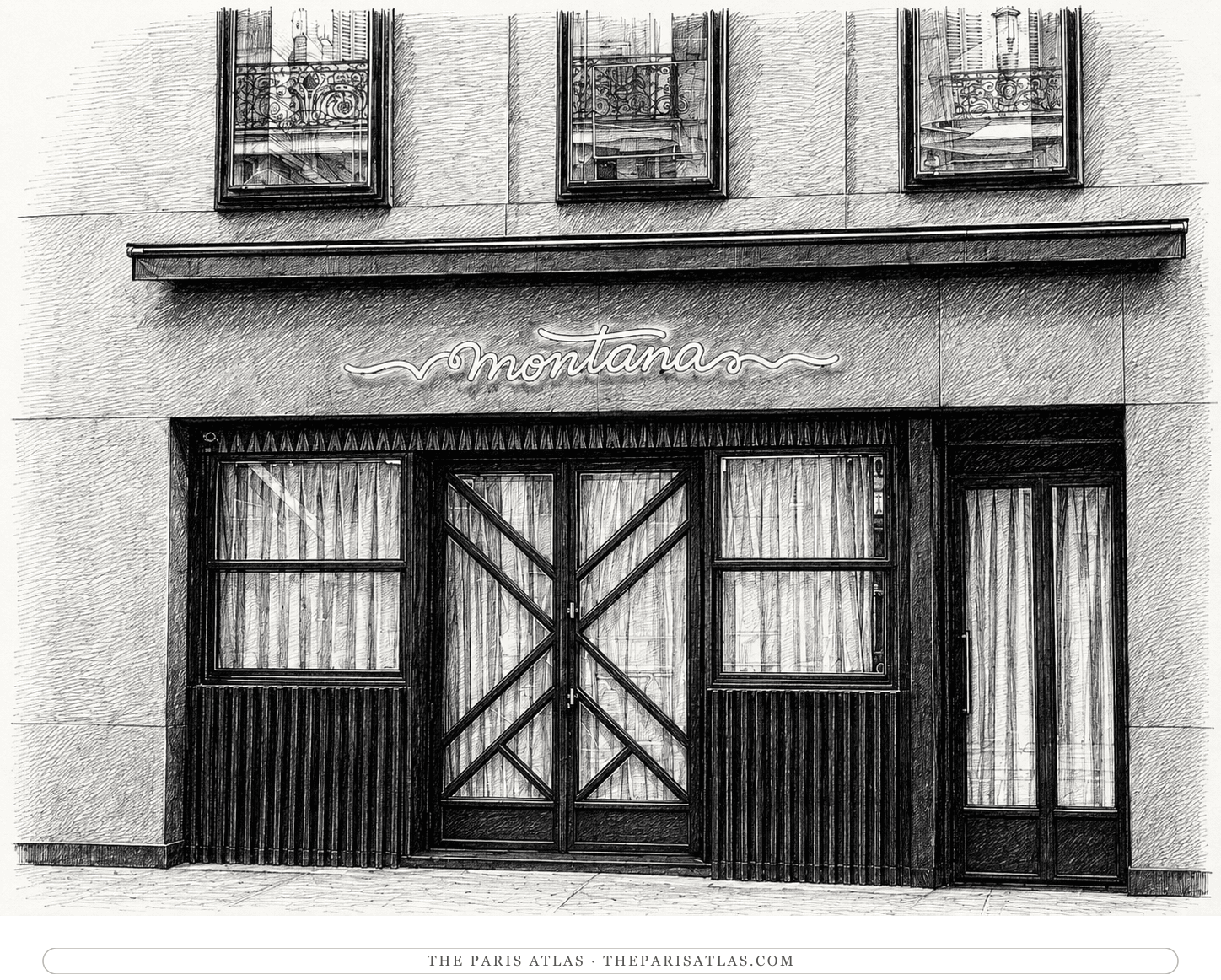
Le Montana
A Saint-Germain bar of the postwar years, steps from the Café de Flore, that the City of Paris counts among the gay clubs James Baldwin frequented.

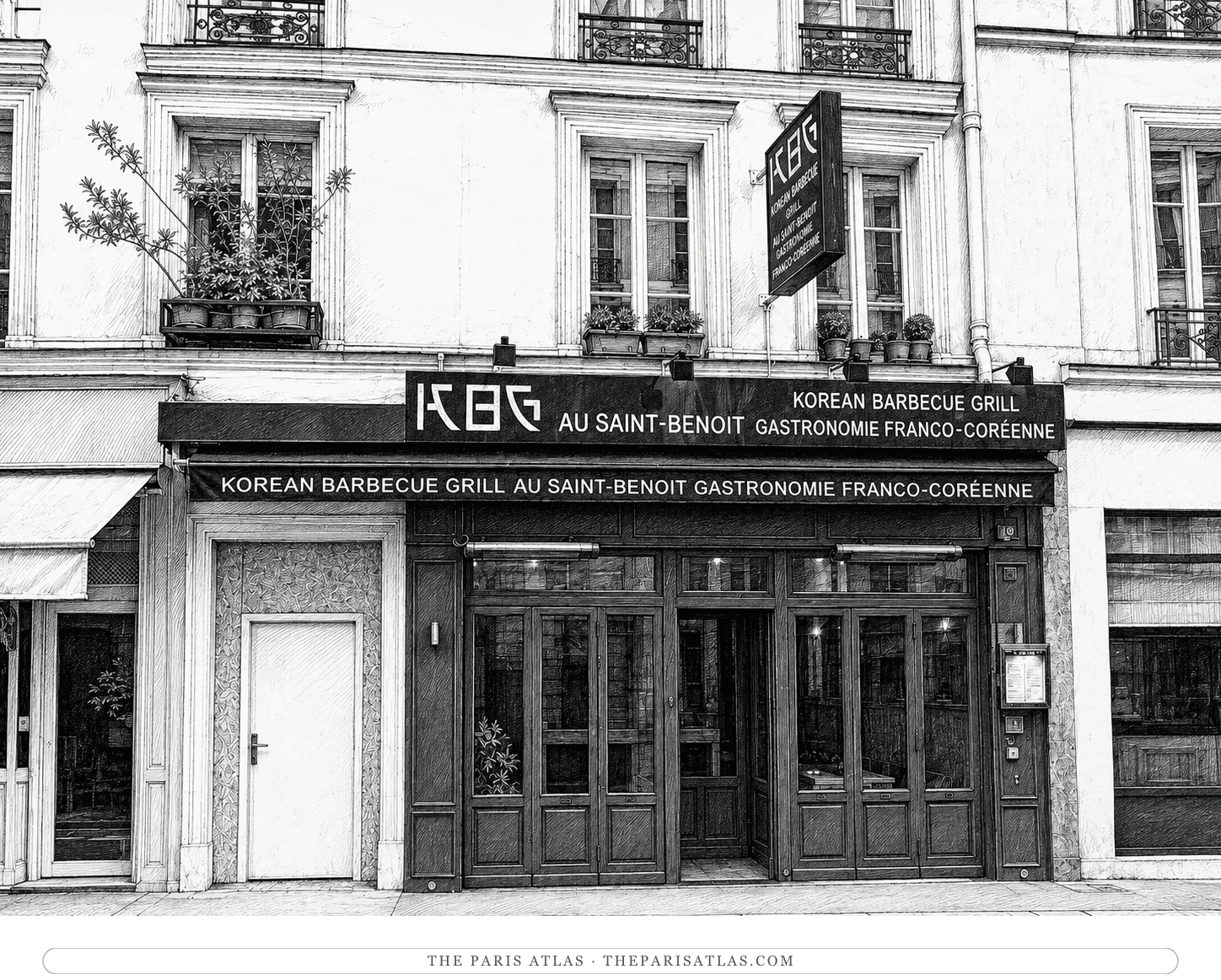
26 rue Saint-Benoît
The Saint-Germain address where the City of Paris places James Baldwin as a likely resident in the early 1950s, around the publication of Go Tell It on the Mountain.

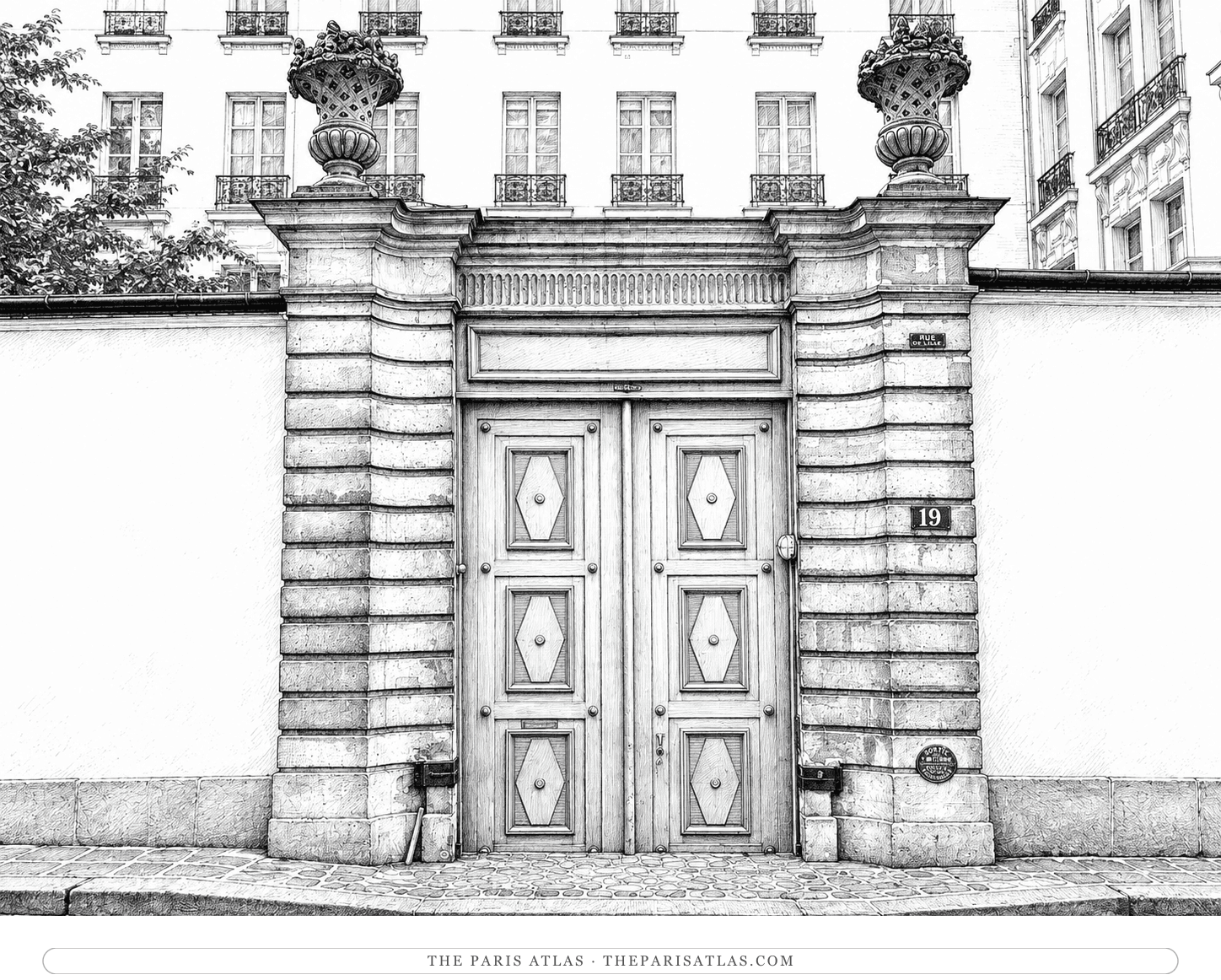
Black Sun Press (19 Rue de Lille)
The Paris town house of Harry and Caresse Crosby, and the address of the Black Sun Press, which published D. H. Lawrence, James Joyce, Hemingway and Hart Crane in editions made to be beautiful rather than to sell.

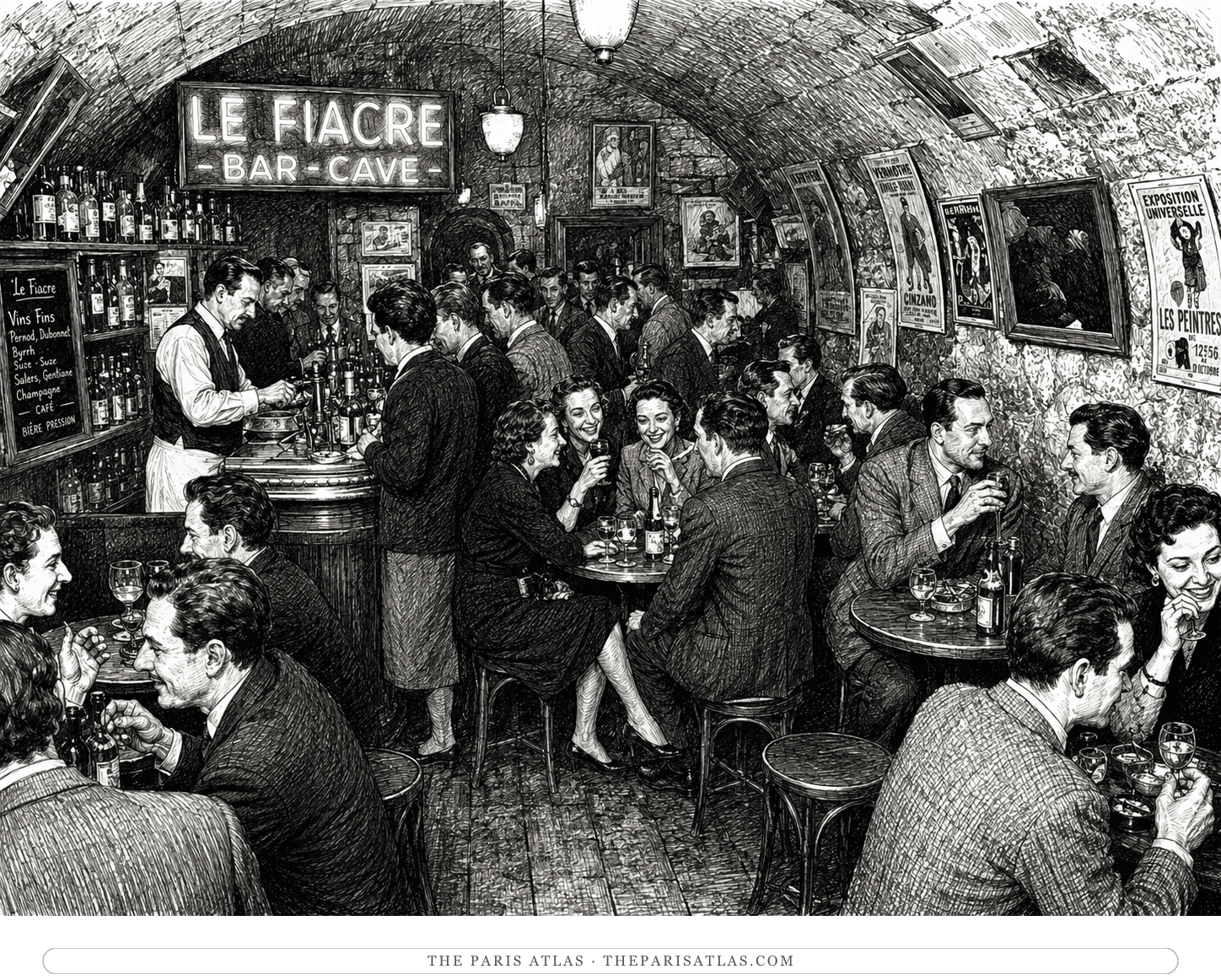
Le Fiacre (4 rue du Cherche-Midi)
The restaurant-above, bar-below house on the rue du Cherche-Midi that became the centre of gay Paris in the 1950s, and one of two bars named as models for Guillaume's bar in Giovanni's Room.

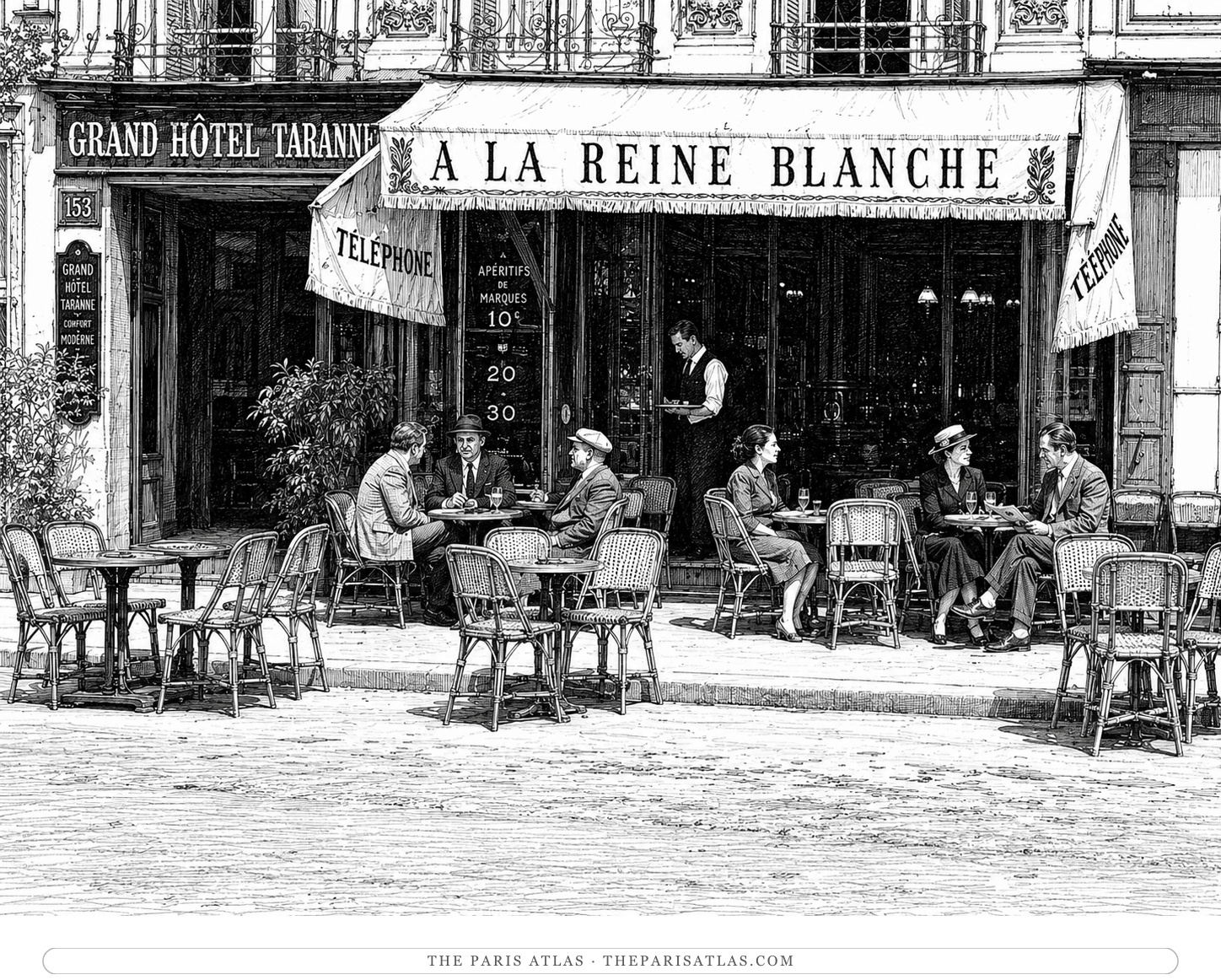
La Reine Blanche
The cheap bar across the boulevard from the Café de Flore where James Baldwin drank through his first Paris years, and where he met Lucien Happersberger in 1949.

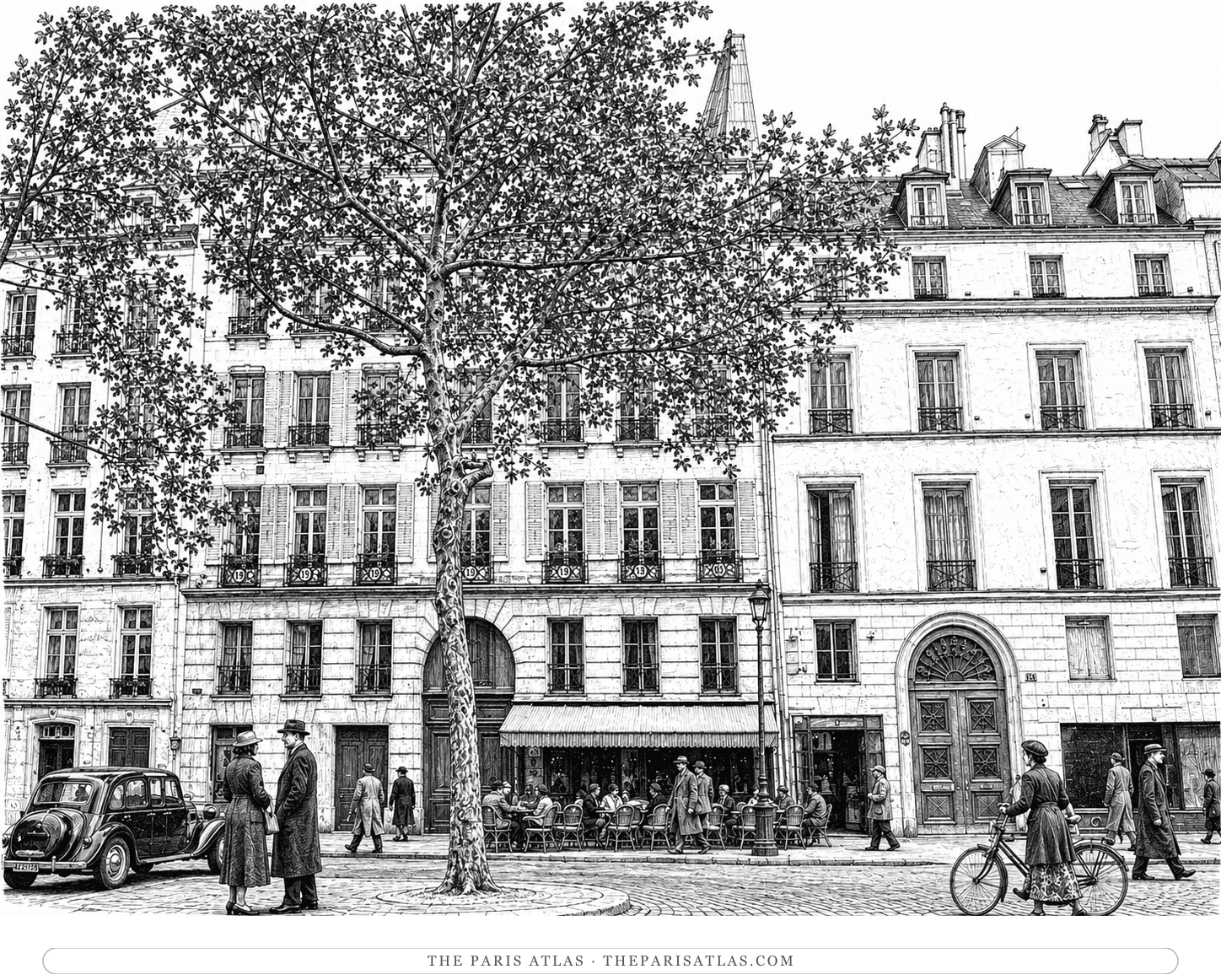
Saint-Germain-des-Prés
The Left Bank quarter around the abbey church, where the cafés doubled as offices and the bars above and below them ran the other half of post-war Paris.

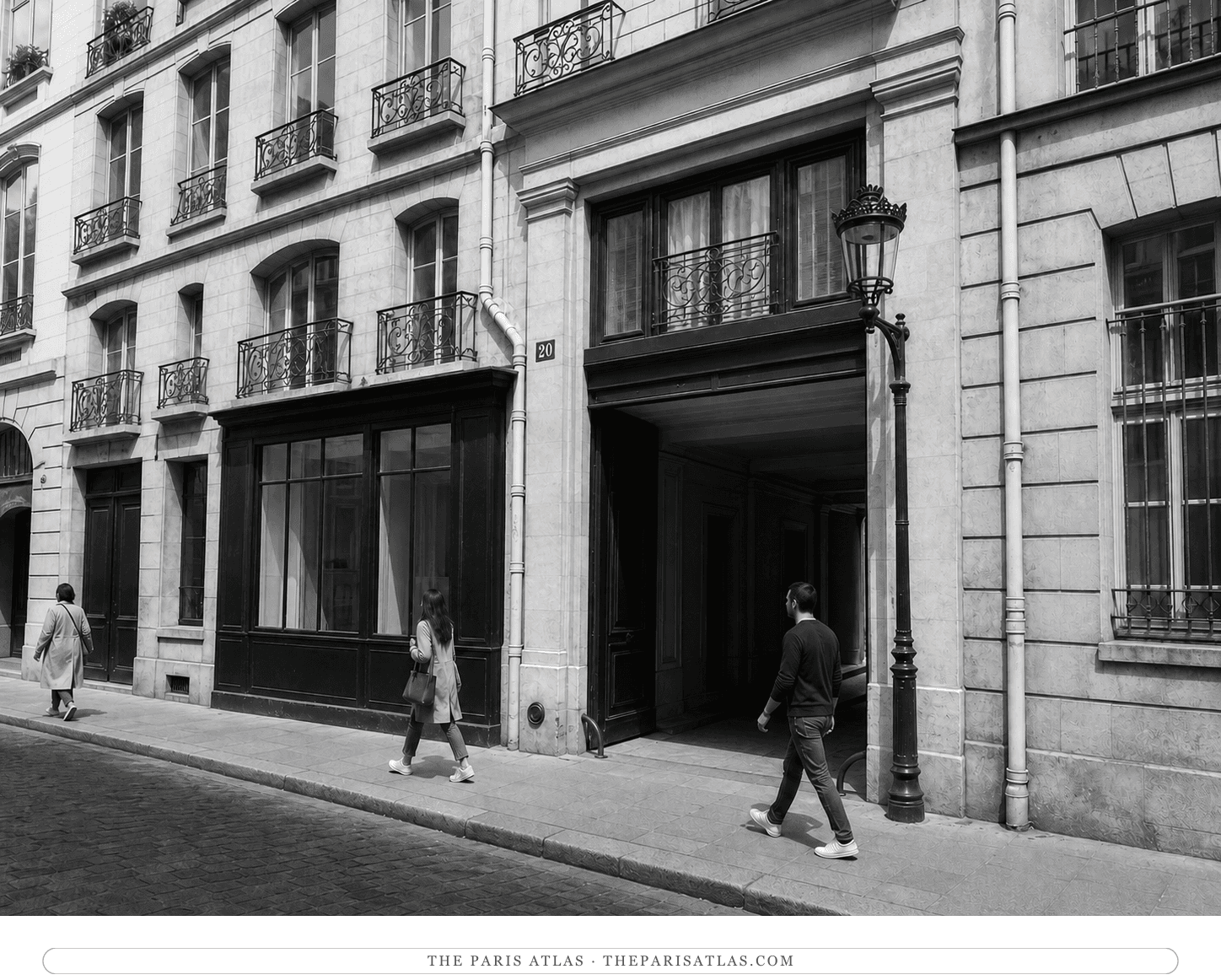
20 rue Jacob
The courtyard pavilion where Natalie Clifford Barney held her Friday salon for sixty years, and the small Doric temple in its garden.

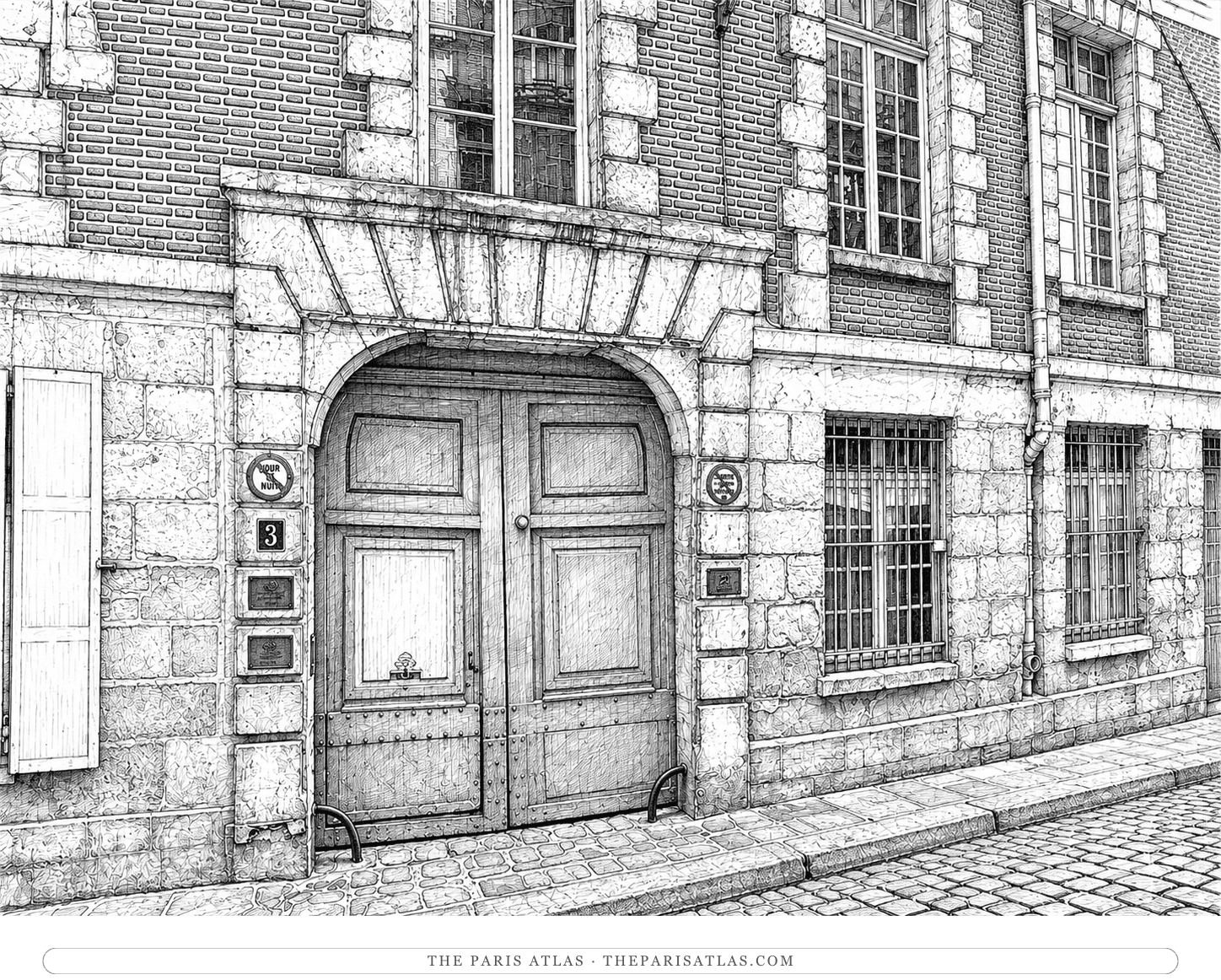
3 Rue des Grands-Augustins
Robert and Sonia Delaunay's apartment and studio from 1910 to 1935 — where La Prose du Transsibérien took its colors, and whose key Blaise Cendrars held while the couple waited out the First World War abroad.


4 Rue de Savoie
The attic room where Blaise Cendrars settled in 1912, back from New York — his home, the address of the one-man publishing house that issued La Prose du Transsibérien, and the room he came back to after losing his arm in the war.

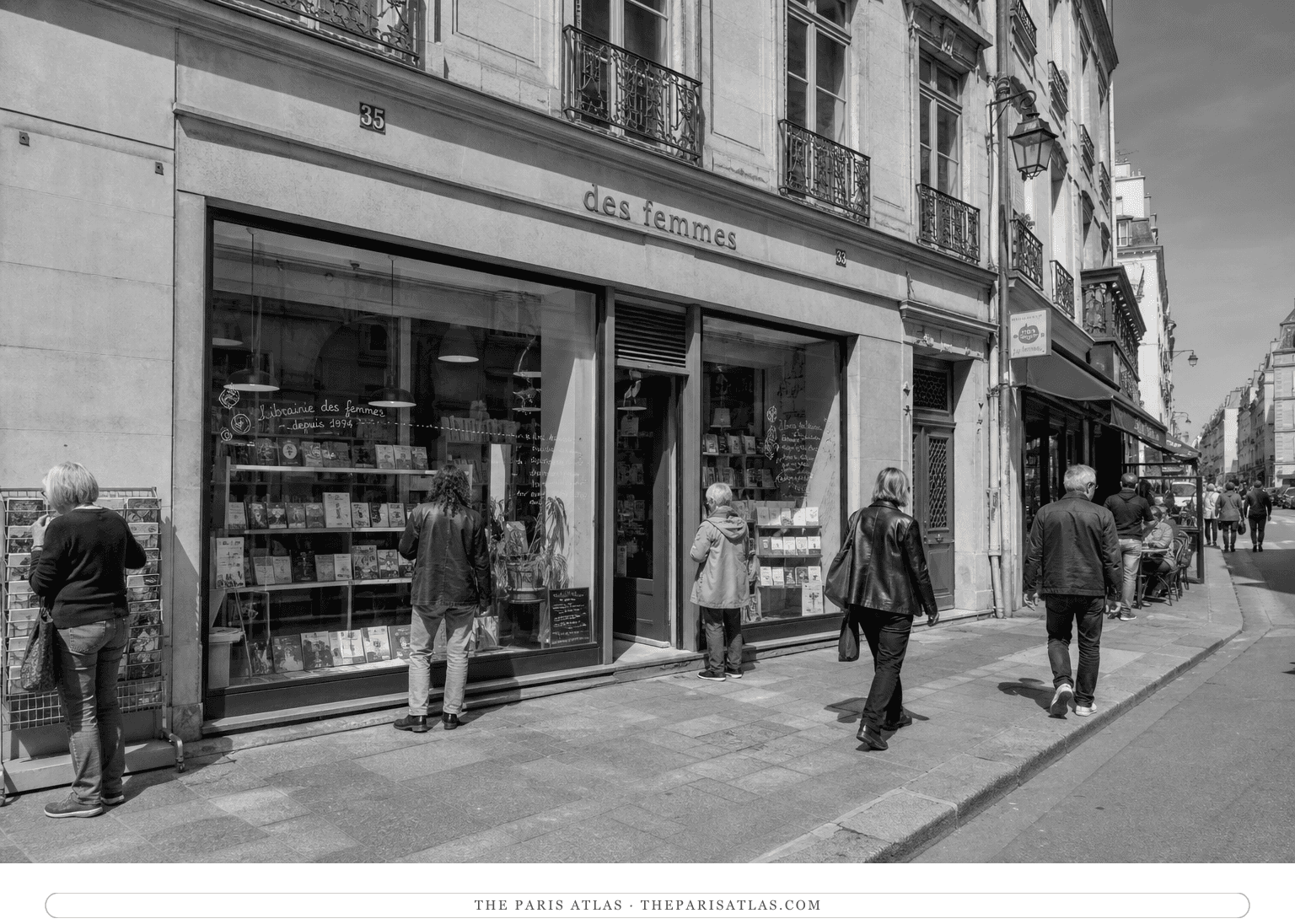
35 rue Jacob
The Catholic girls' school Simone de Beauvoir attended from the age of six until her baccalauréat. The address is now occupied by the Librairie des Femmes — the feminist bookshop and publishing house — which makes it the most improbable coincidence on any Paris literary walk.

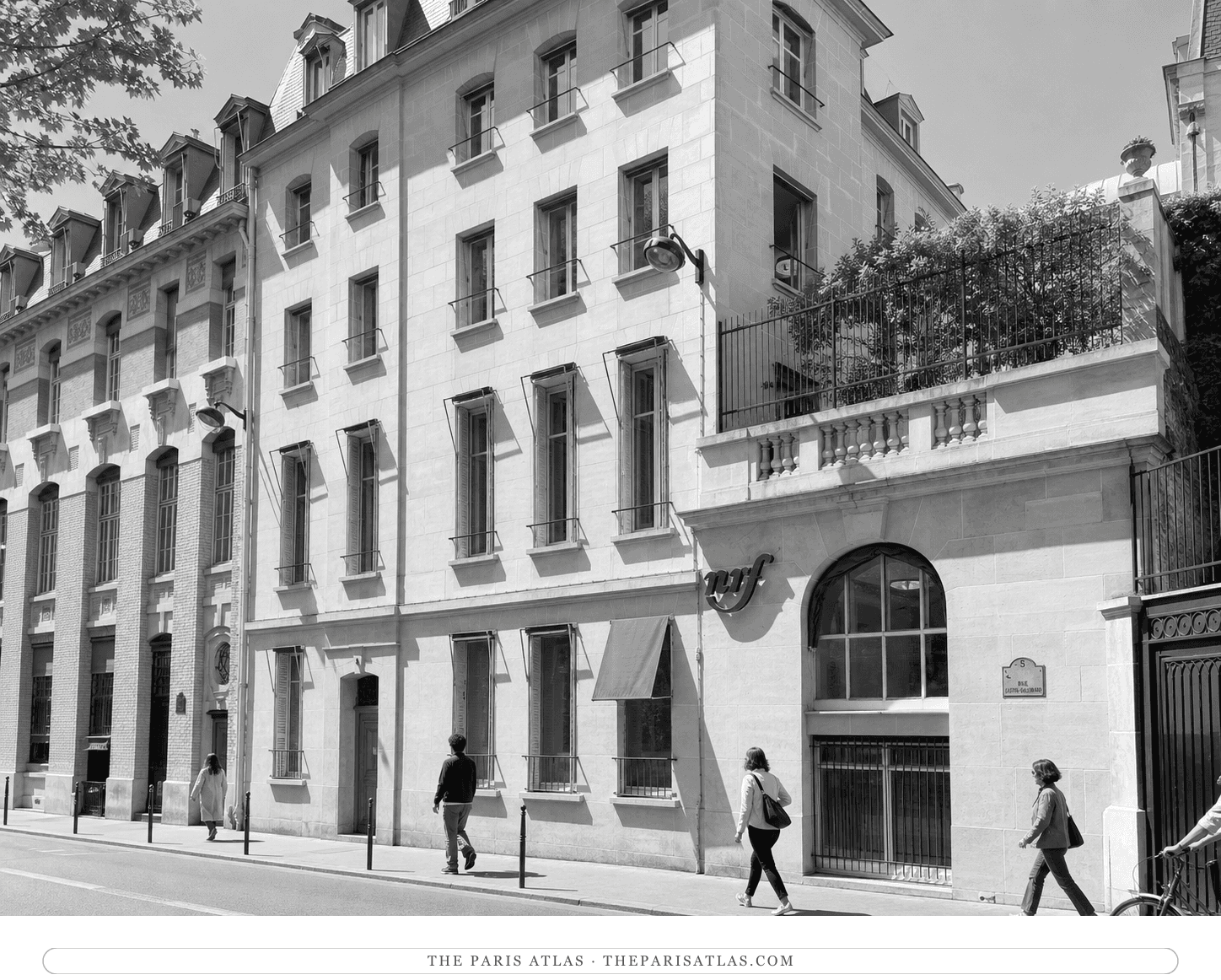
Éditions Gallimard
The headquarters of Éditions Gallimard, the publishing house that has issued a large share of modern French literature. Albert Camus worked here as director of a collection, and the street itself was renamed after the publisher's founder in 2011.

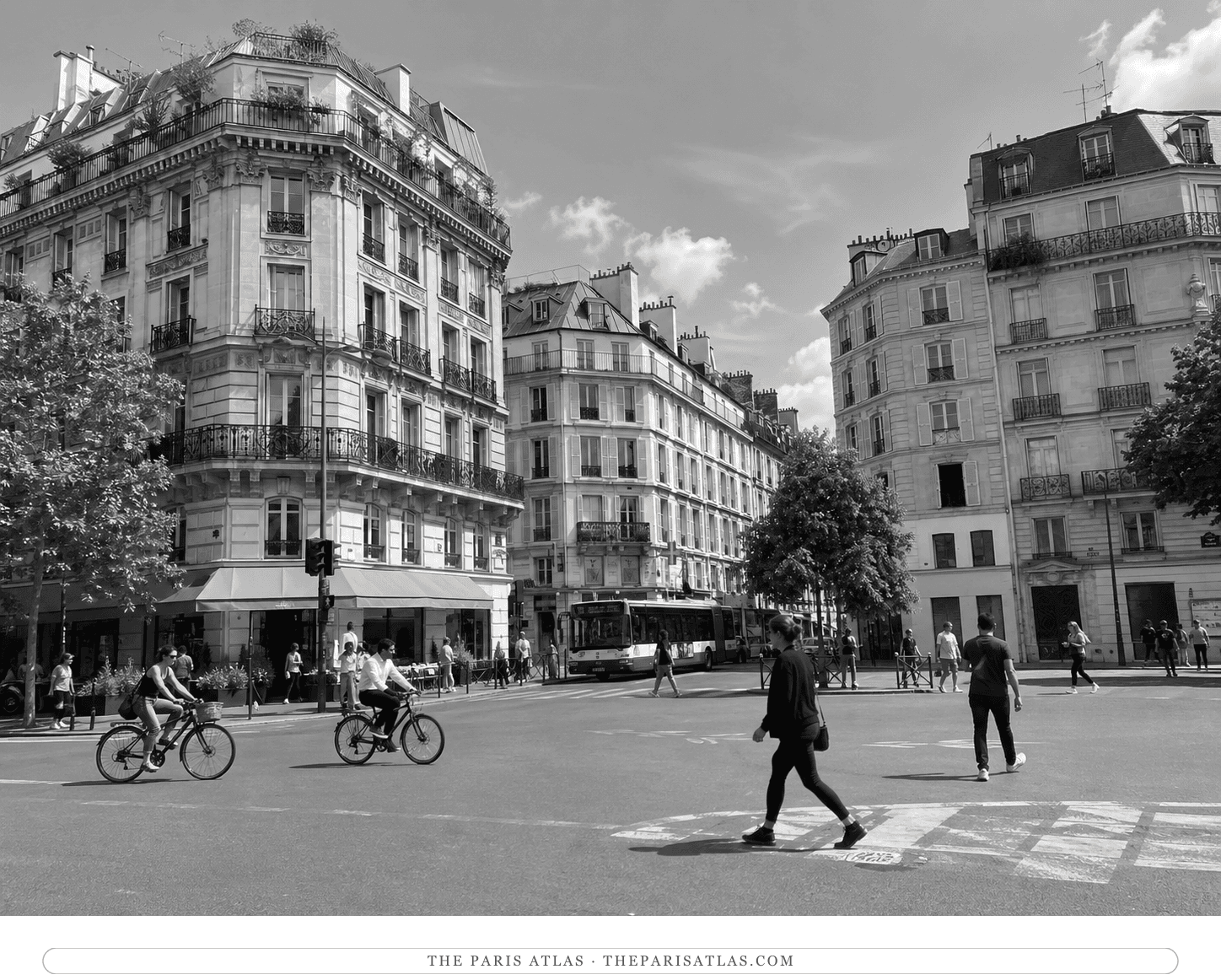
Place Jean-Paul-Sartre-et-Simone-de-Beauvoir
A small square in Saint-Germain-des-Prés, renamed in 2000 for Jean-Paul Sartre and Simone de Beauvoir together — a few steps from the Café de Flore and Les Deux Magots, where they worked.

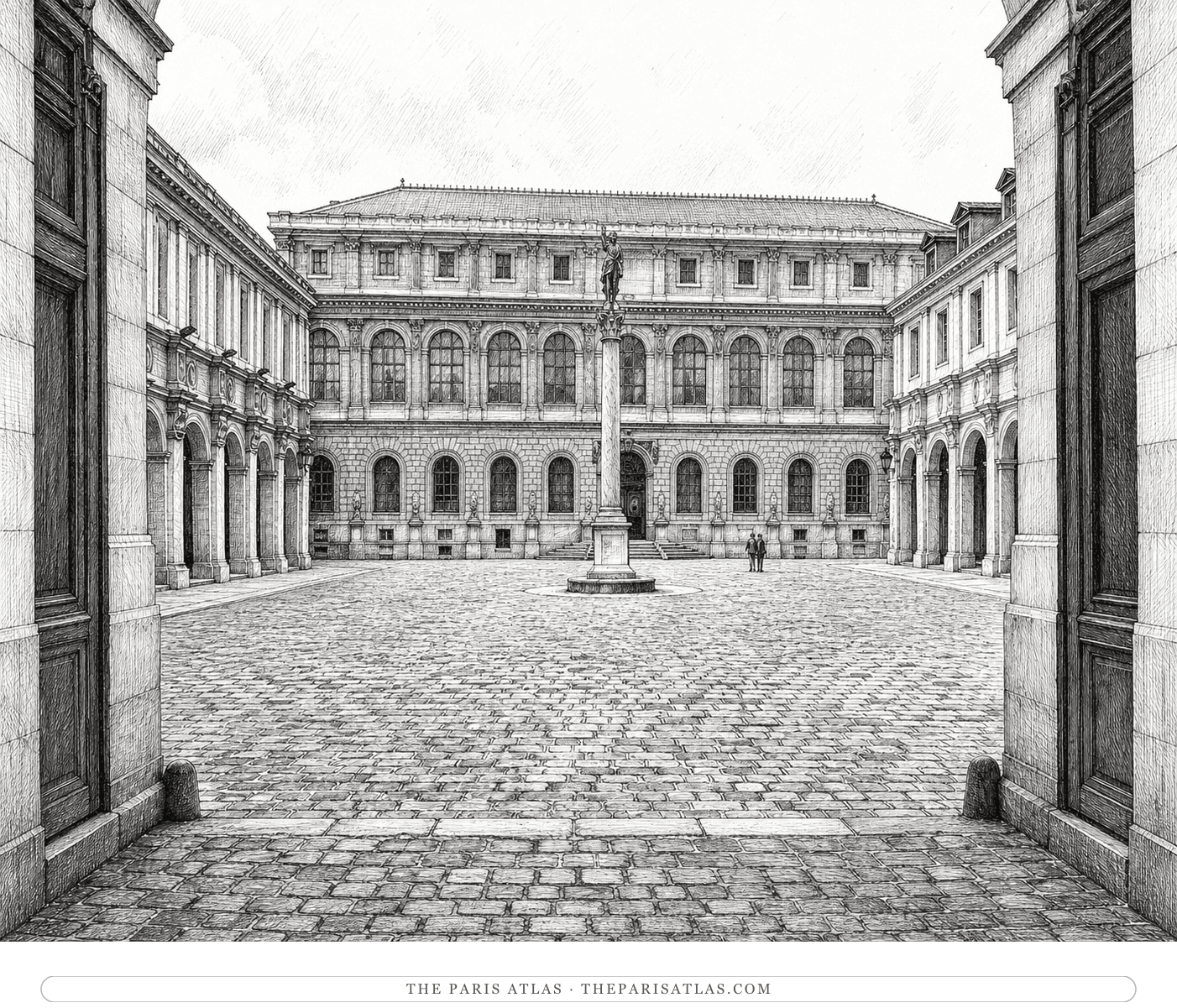
École des Beaux-Arts
France's national art school, on the rue Bonaparte across from the Louvre. Almost every French painter of the nineteenth century passed through it, argued with it, or defined themselves against it — Degas entered in the 1850s.

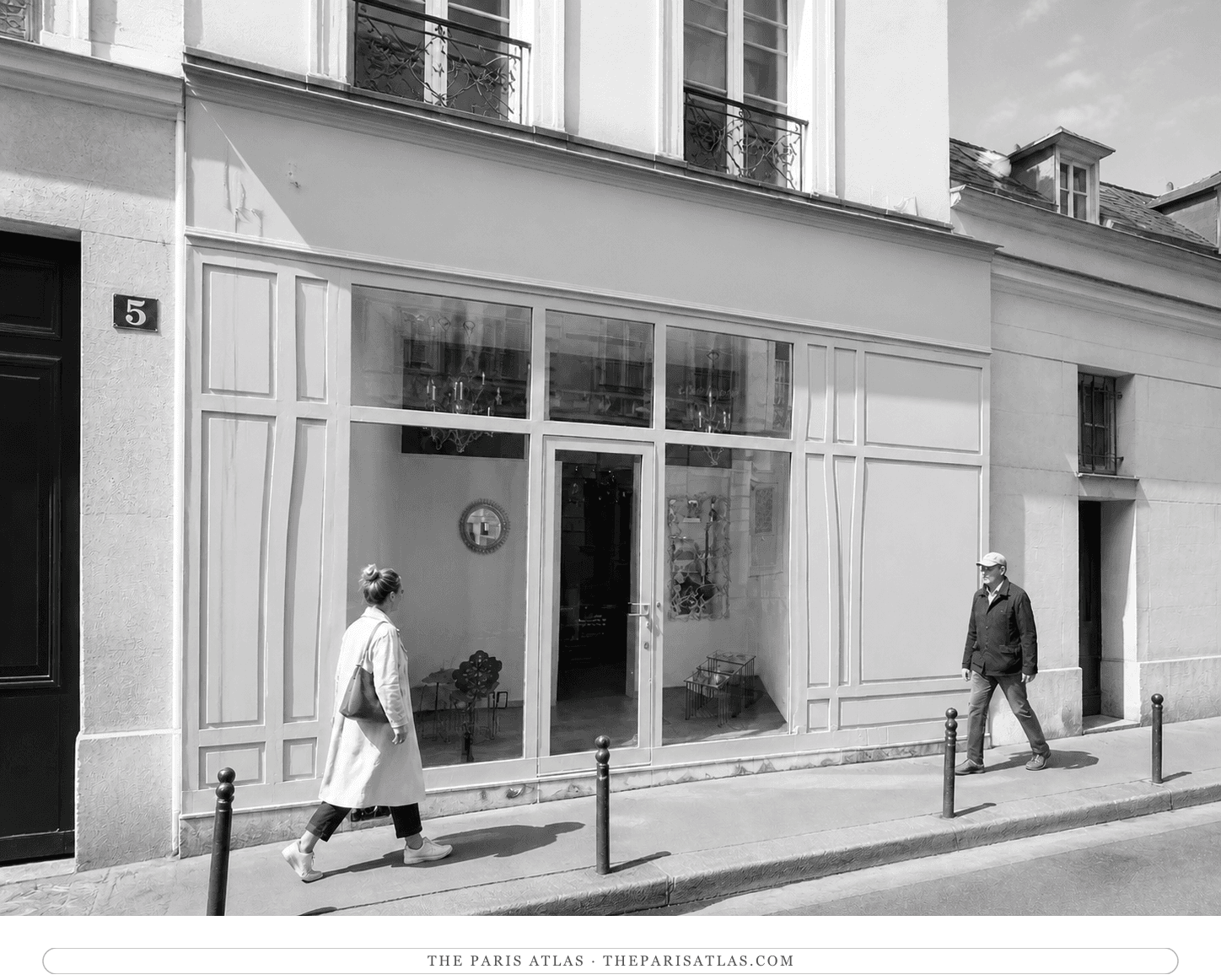
5 rue Bonaparte
The house where Édouard Manet was born on 23 January 1832, on a street then called the rue des Petits-Augustins — a few doors from the art school and a bridge from the Louvre.

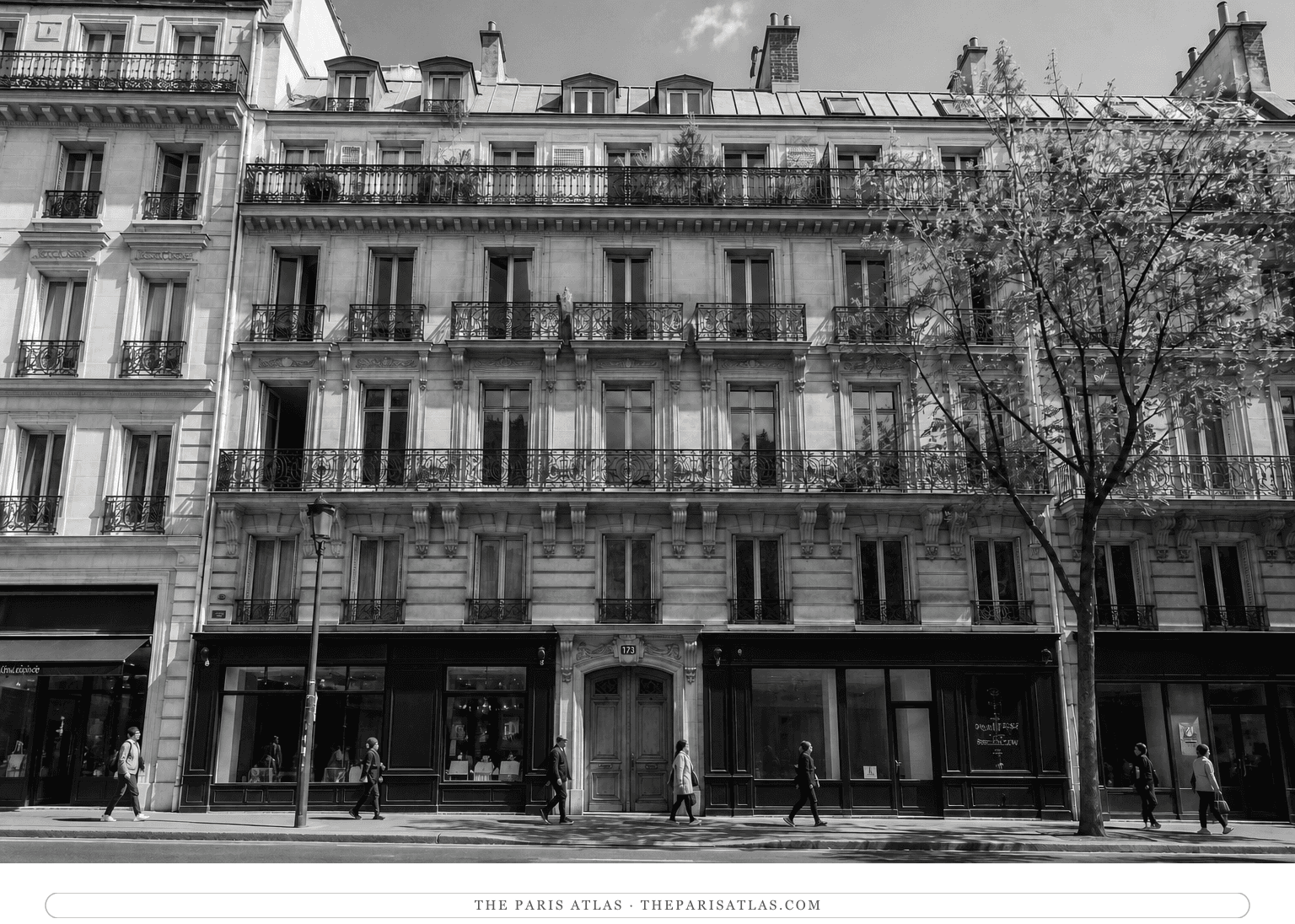
173 boulevard Saint-Germain
Where Djuna Barnes lived with the sculptor and silverpoint artist Thelma Wood during the 1920s — the relationship that Nightwood was written out of.

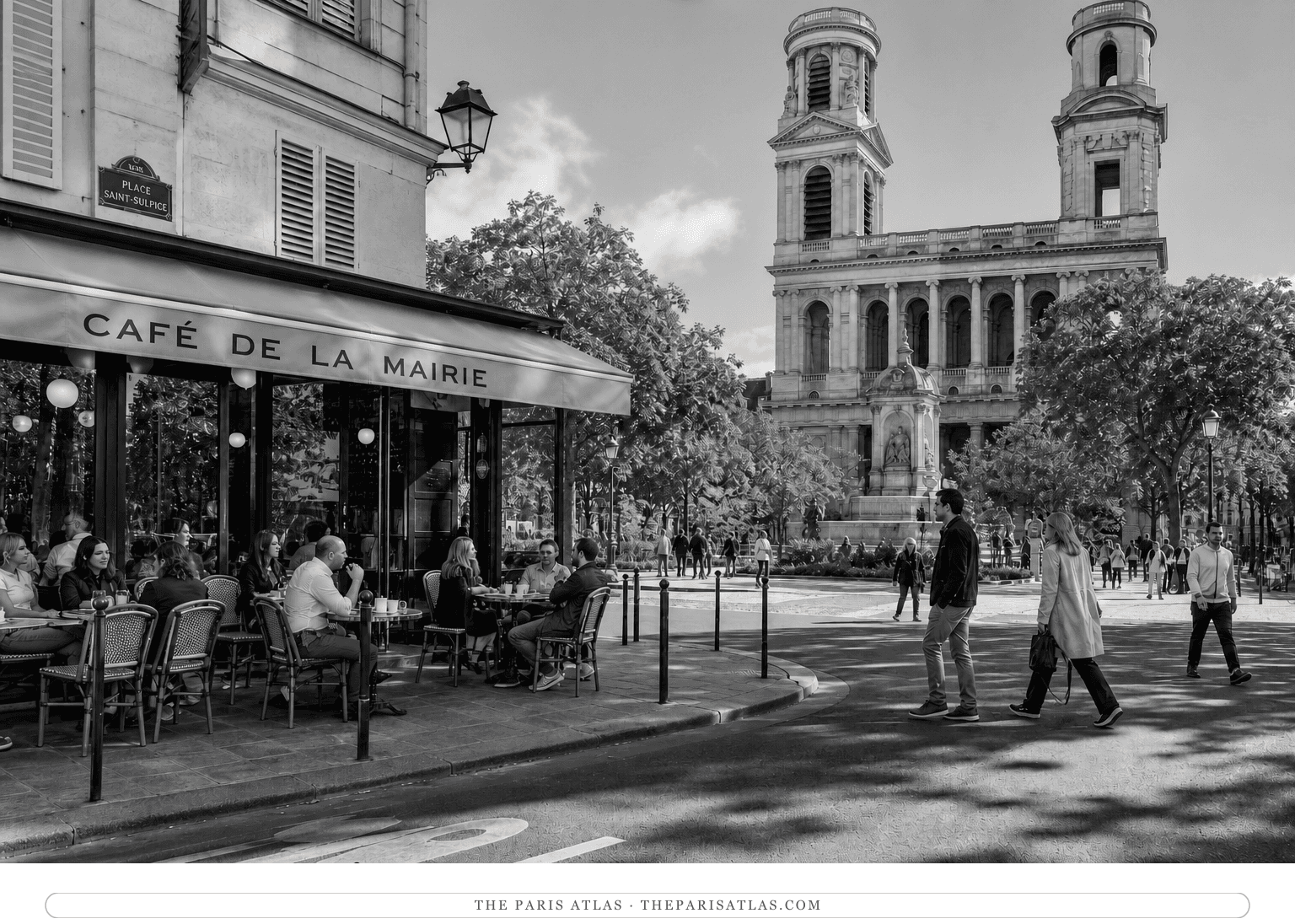
Café de la Mairie
The café on the place Saint-Sulpice that appears in the Paris geography of Djuna Barnes's Nightwood — and which is still, unremarkably, a café.

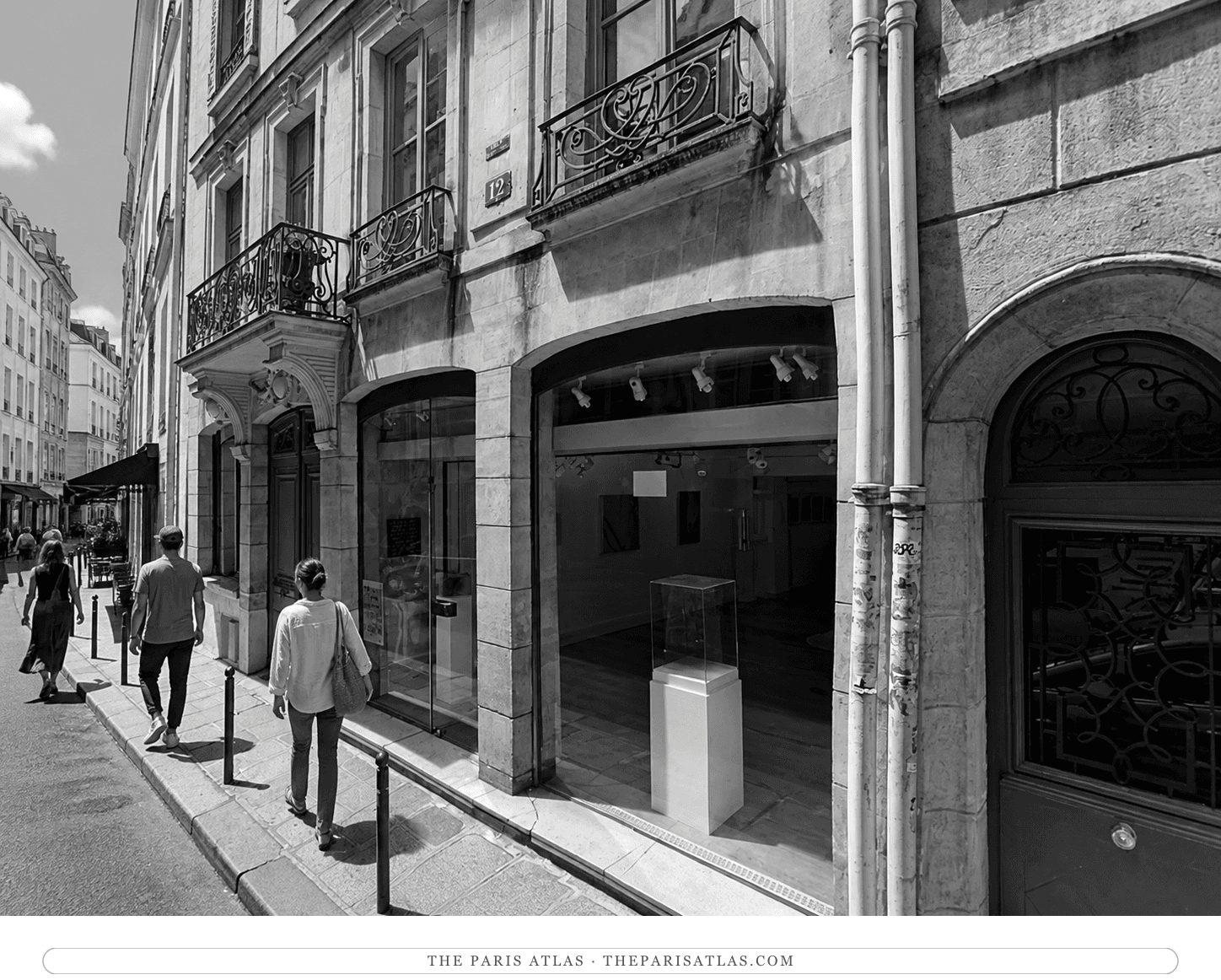
Galerie Jeanne Bucher, 12 rue Guénégaud
The gallery of Jeanne Bucher, who went on showing abstract painting in occupied Paris when it was neither profitable nor safe — including Kandinsky, in 1936, 1939 and 1942.

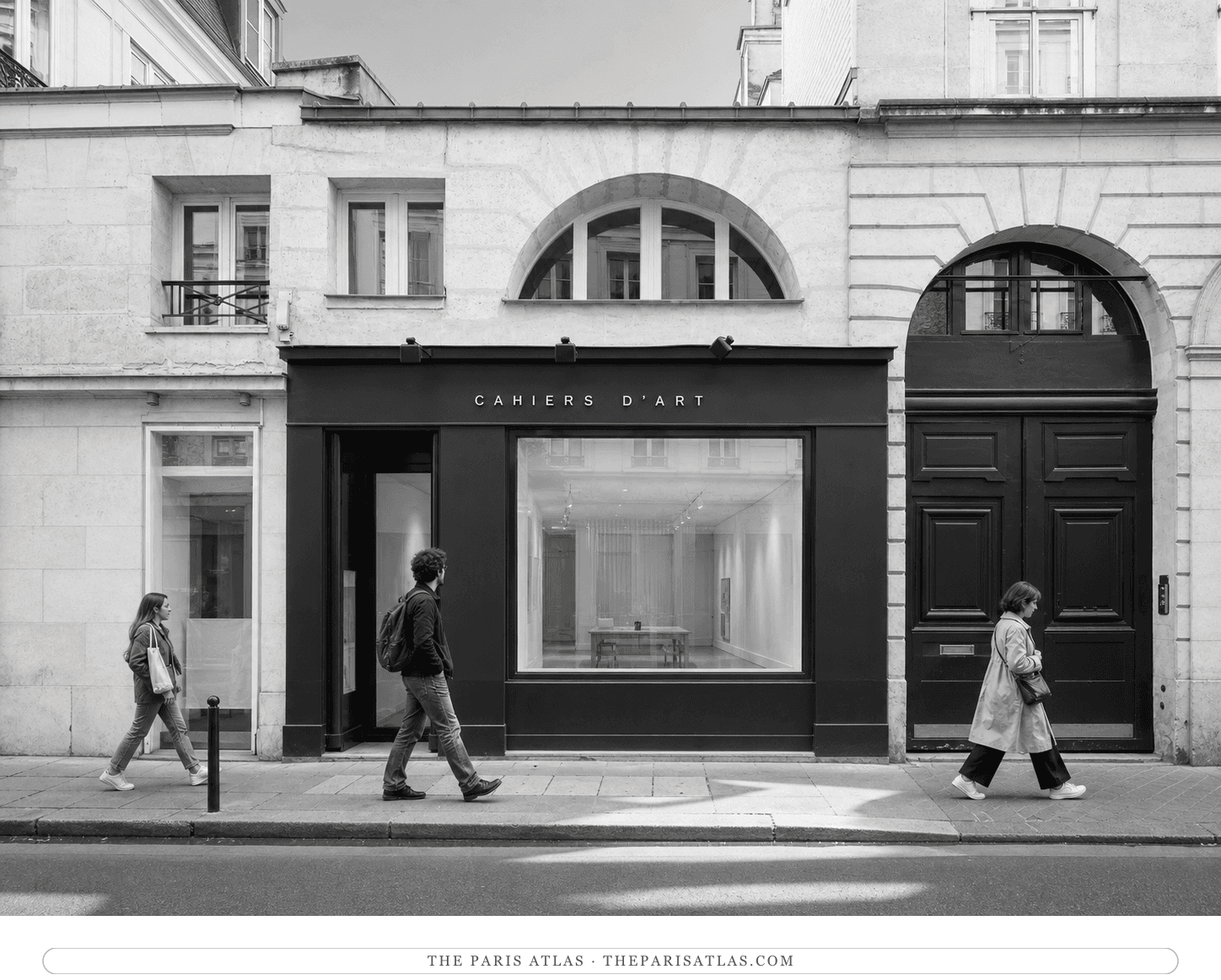
Galerie Cahiers d'Art, 14 rue du Dragon
Christian Zervos's hybrid of art magazine, publishing house and gallery on the rue du Dragon, where Kandinsky showed watercolours in 1935 — and where the Picasso catalogue raisonné was compiled.
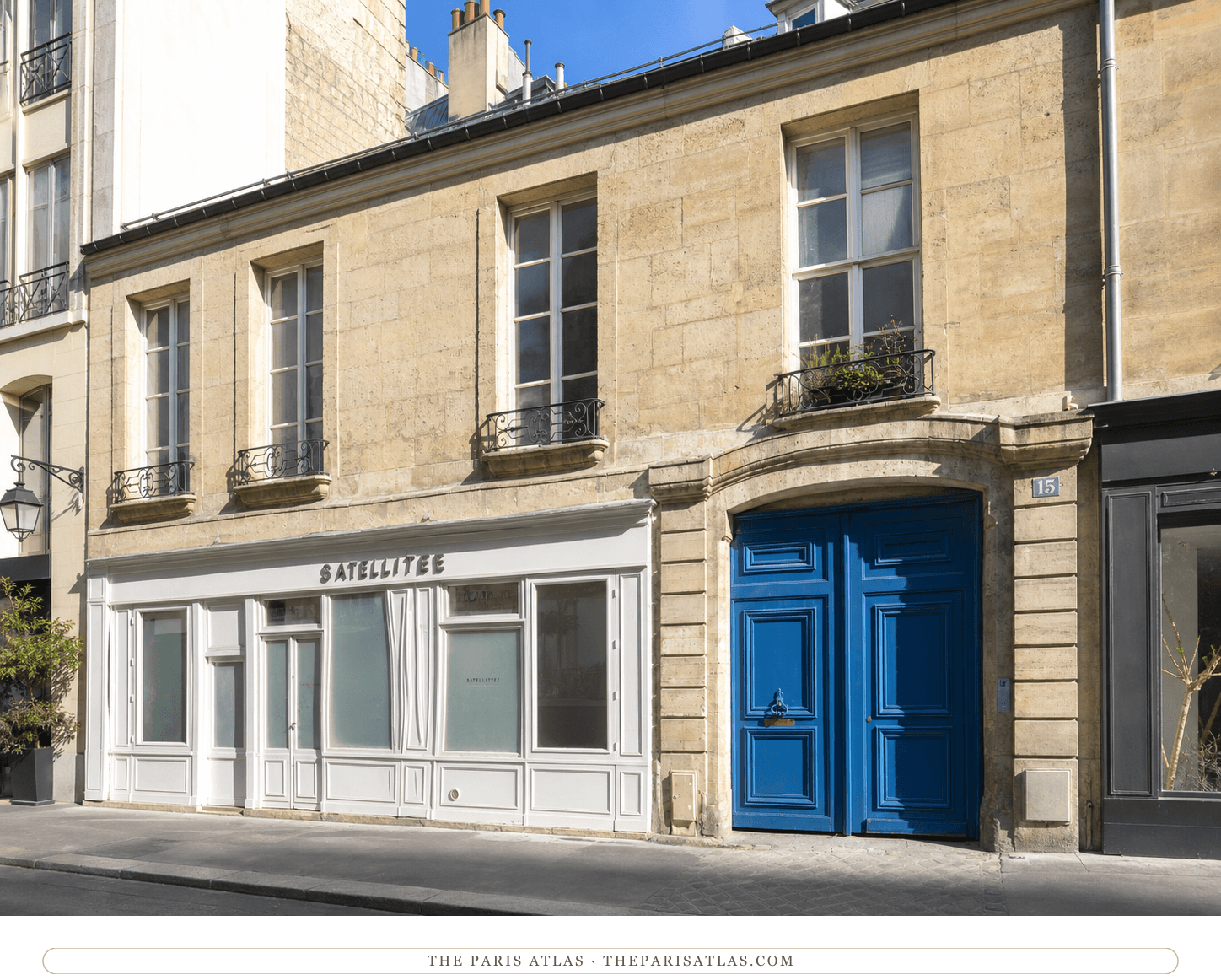
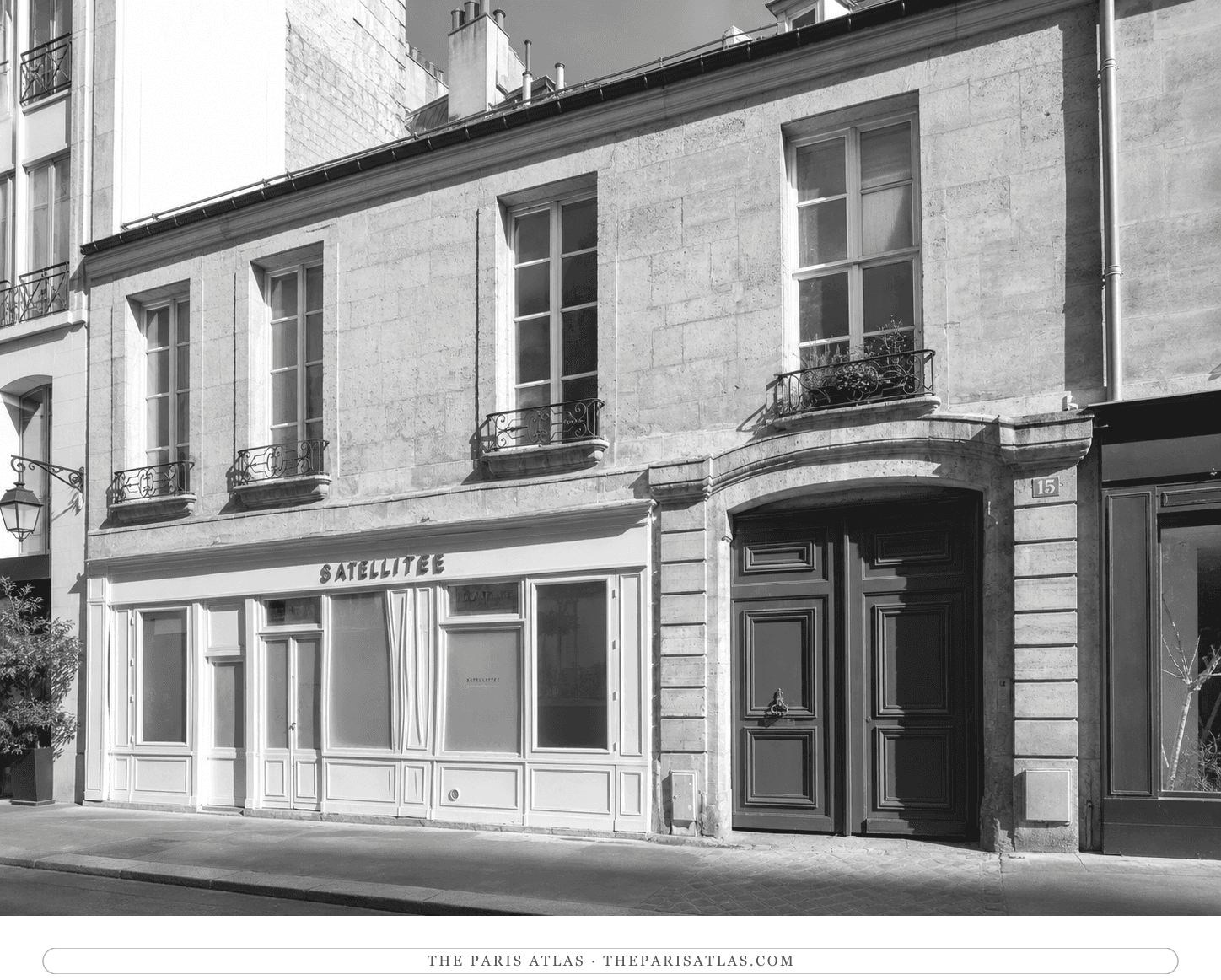
Madeleine Castaing's salon, 15 rue du Cherche-Midi
The shop and salon of Madeleine Castaing, the decorator and collector who kept Chaïm Soutine alive on a stipend and whose rooms Marc Chagall passed through in the interwar years.

Esprit Saint Germain
A small five-star hotel on rue Saint-Sulpice, with individually decorated rooms, comfortable lounges and a private wellness space.

Hôtel Baume
An Art Deco-inspired hotel by the Odéon, with a glass-roofed lounge, honesty bar and rooms drawn from the style of the 1930s.

Hôtel d’Aubusson
A five-star Saint-Germain hotel with jazz at Café Laurent, an interior patio and a 20-metre swimming pool.

Hôtel de Buci
An intimate rue de Buci hotel with rich fabrics, a winter garden and a private spa in the heart of Saint-Germain-des-Prés.

Hôtel Au Manoir Saint-Germain
A 28-room hotel on boulevard Saint-Germain, with Superior and Deluxe rooms, breakfast and the cafés of Saint-Germain-des-Prés close by.
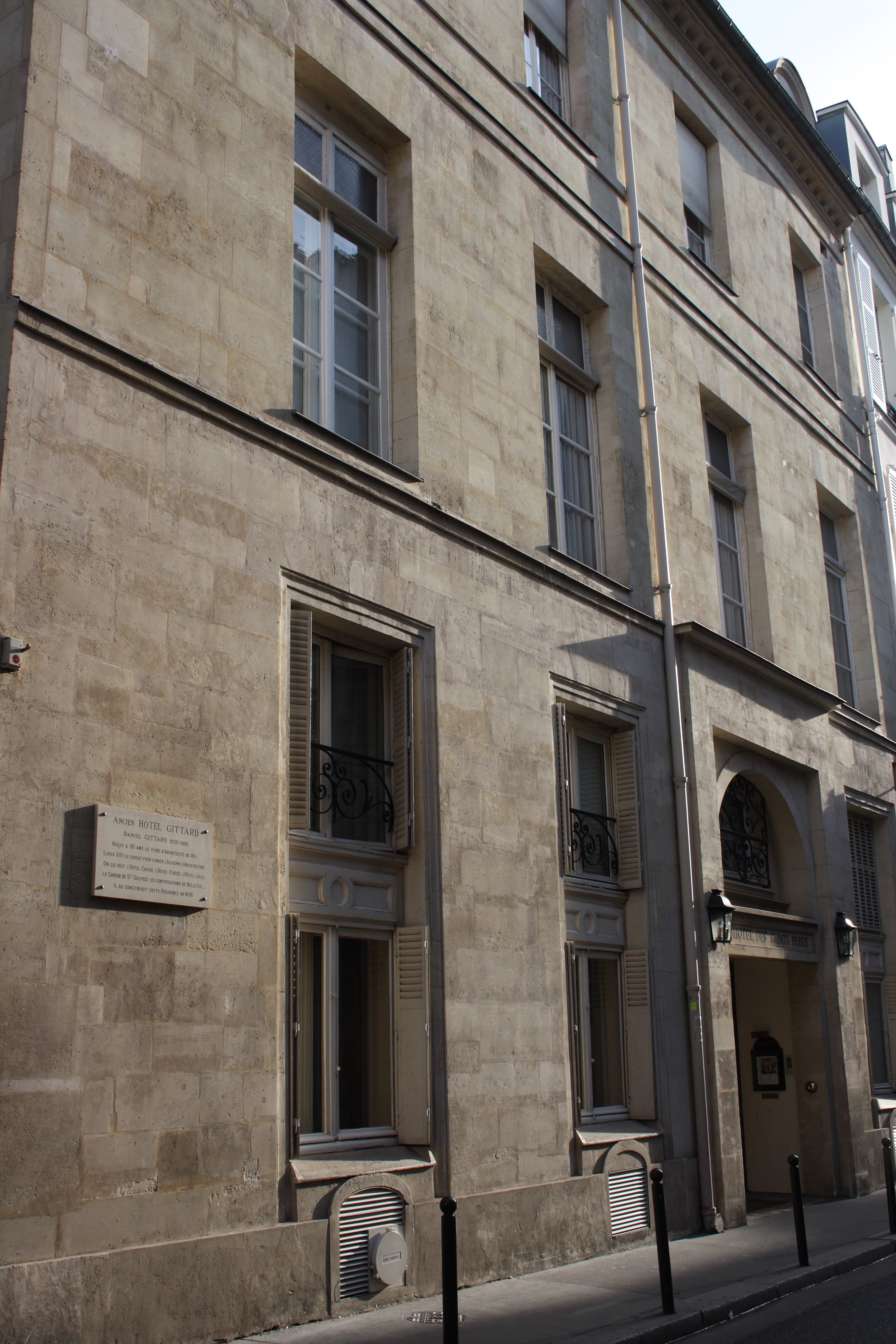
Hôtel des Saints Pères
A 38-room hotel on rue des Saints-Pères, with a planted courtyard, antique furnishings and a seventeenth-century ceiling fresco in its Signature Junior Suite.

Hôtel Luxembourg Parc
A small hotel opposite the Luxembourg Gardens, with Louis XV and Napoleon III-style rooms, a bar, a gym and a courtyard filled with sculpture.
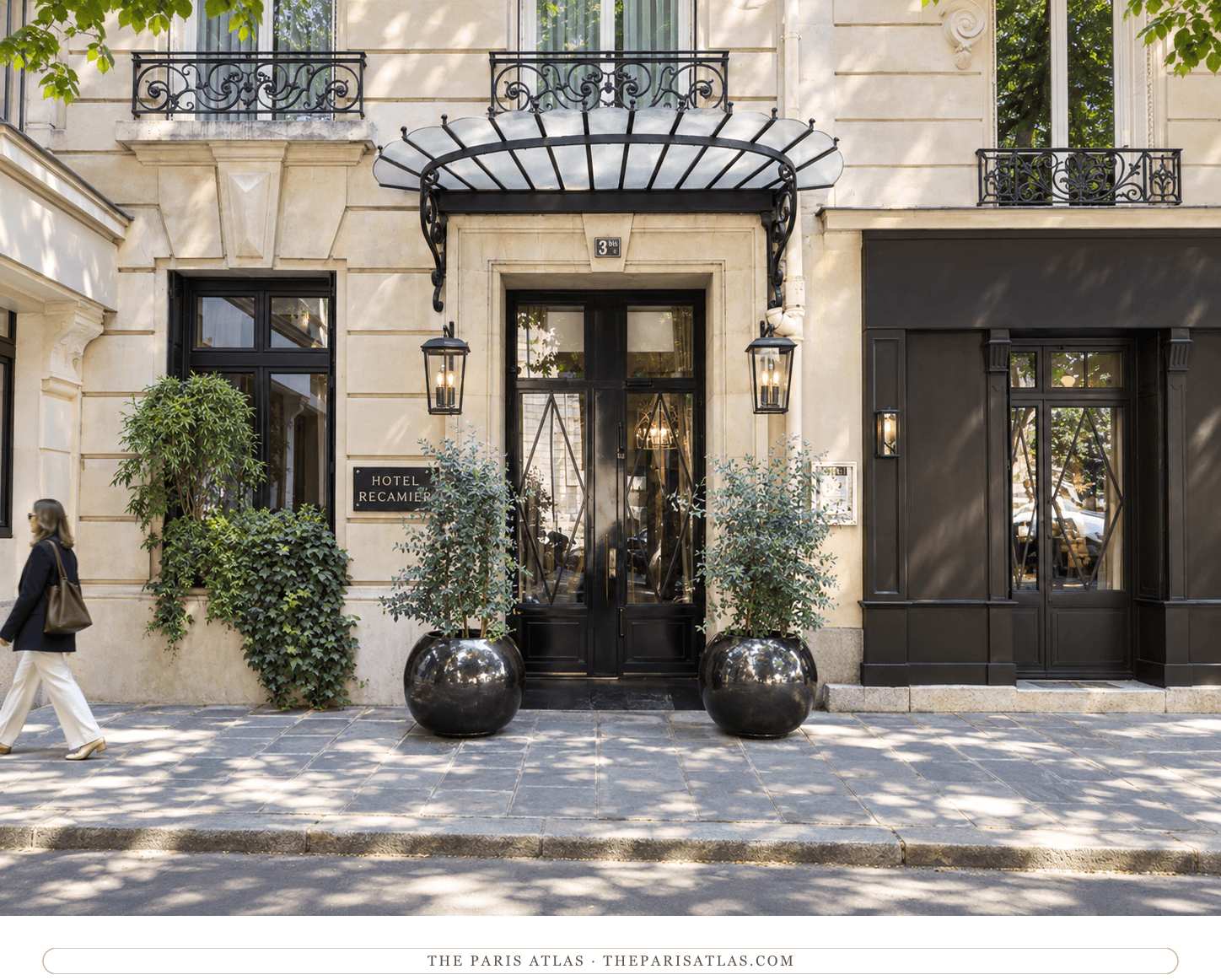
Hôtel Récamier
A 24-room hotel on place Saint-Sulpice, with interiors by Jean-Louis Deniot, a courtyard garden and complimentary afternoon tea.

Hôtel Saint-André des Arts
A 30-room hotel with colourful interiors by Chloé Nègre, a retro-style bar and a reservable whirlpool and treatment room in Saint-Germain-des-Prés.

La Villa Saint-Germain des Prés
A 22-room hotel on rue Jacob, with interiors by Bruno Borrione, a counter-current swimming pool, a sauna and a two-bedroom suite for four.
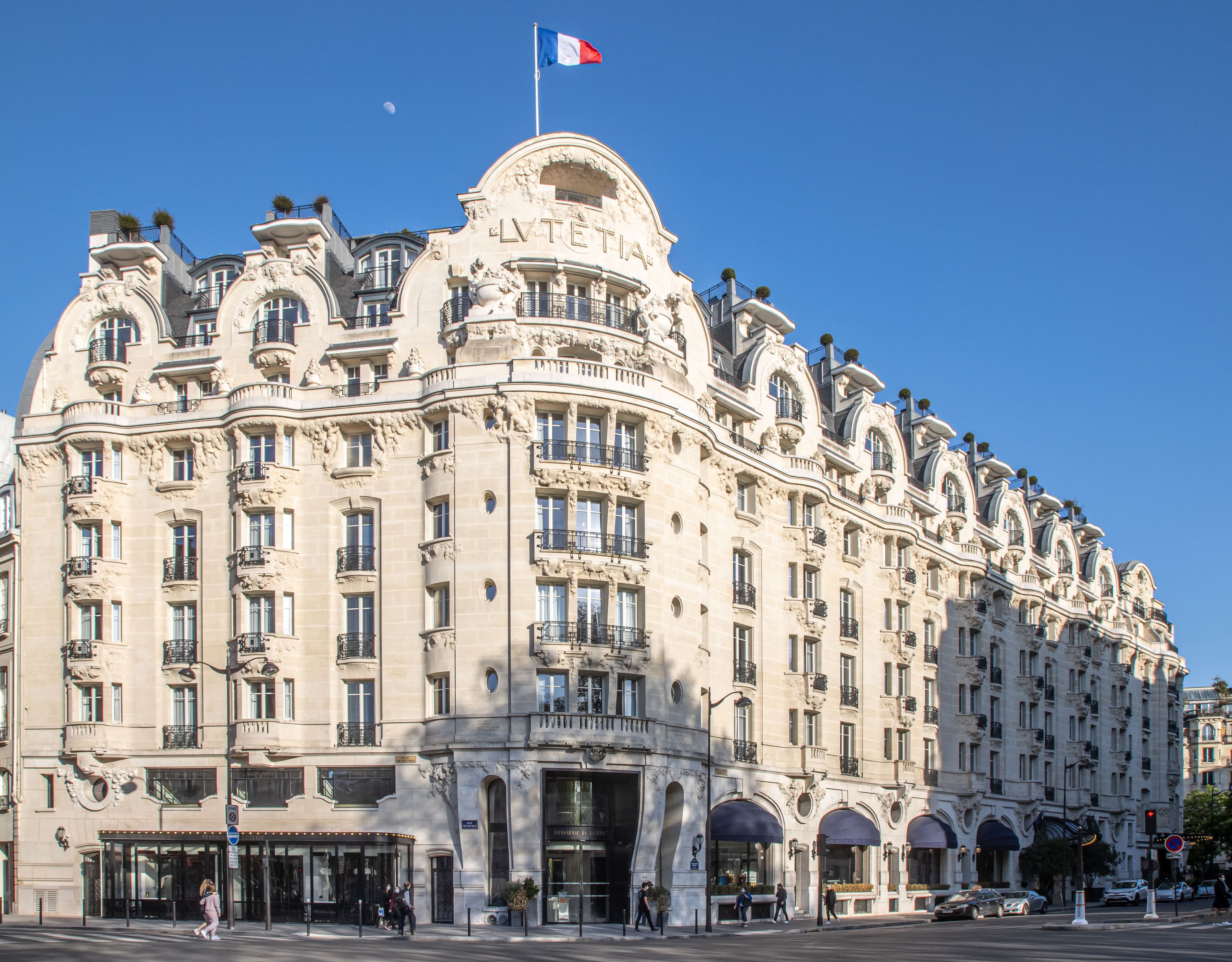
Mandarin Oriental Lutetia, Paris
The historic Lutetia on boulevard Raspail, with a 17-metre indoor pool, Bar Joséphine and rooms ranging from courtyard doubles to rooftop suites.

Relais Christine
A 48-room hotel behind a courtyard on rue Christine, with Laura Gonzalez interiors, garden suites and a Guerlain spa beneath medieval vaults.

Villa-des-Prés
A five-star hotel with 34 rooms and suites at 29 rue de Buci in Saint-Germain-des-Prés, opened in December 2023 in a building from the early 1910s. Bruno Borrione designed the interiors, original abstract artworks hang in every room, and guests have a 13-meter indoor pool.

Hôtel de l’Abbaye
Hôtel de l’Abbaye is a four-star hotel on rue Cassette, with 43 rooms and suites arranged around a garden and courtyard. Traditional fabrics, a fireside lounge and a small dining terrace make it a quiet base near Saint-Sulpice.

Le Relais Saint-Germain
A 22-room hotel on carrefour de l’Odéon, with individually furnished literary rooms, exposed beams and Le Comptoir bistro downstairs.
Île Saint-Louis
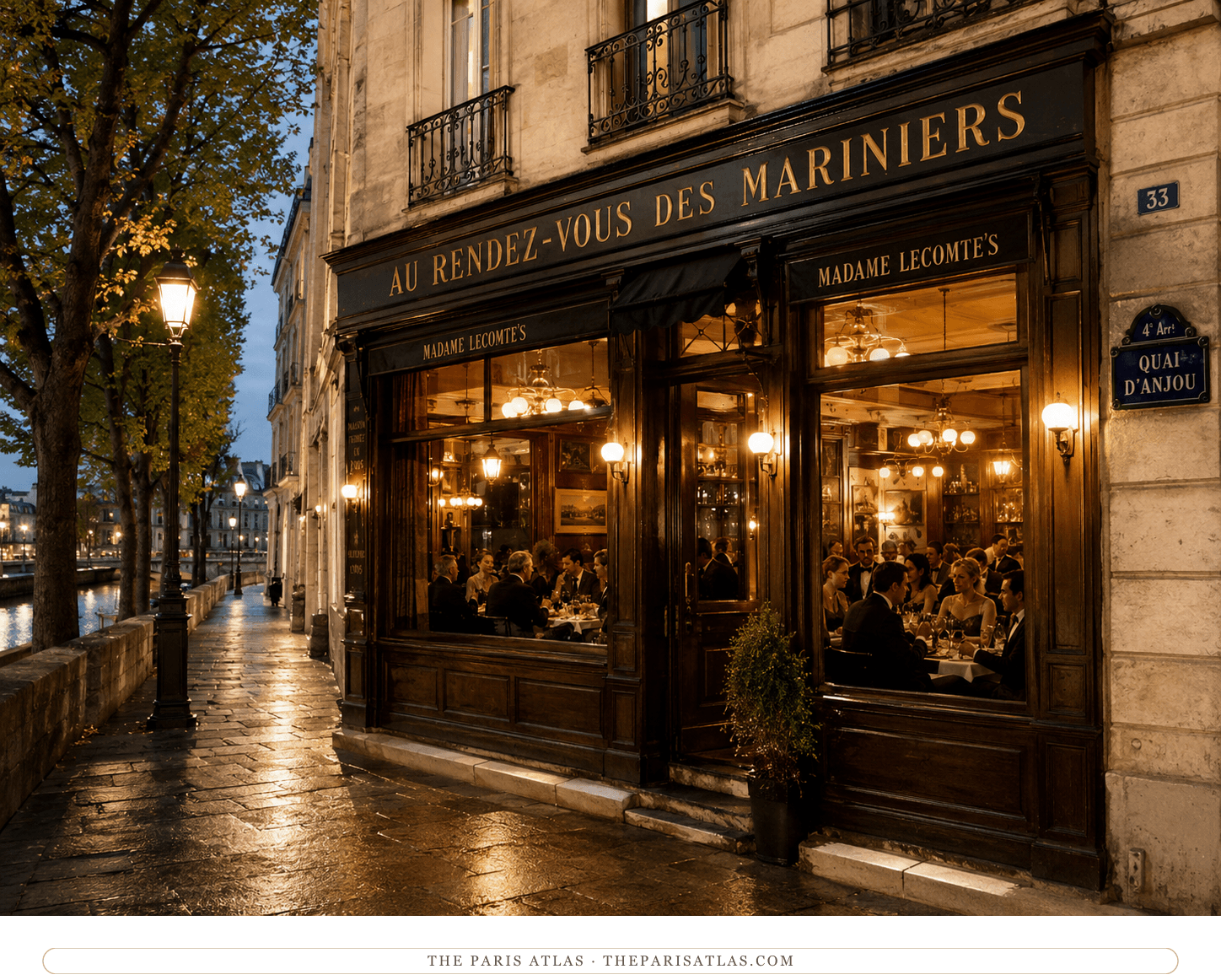
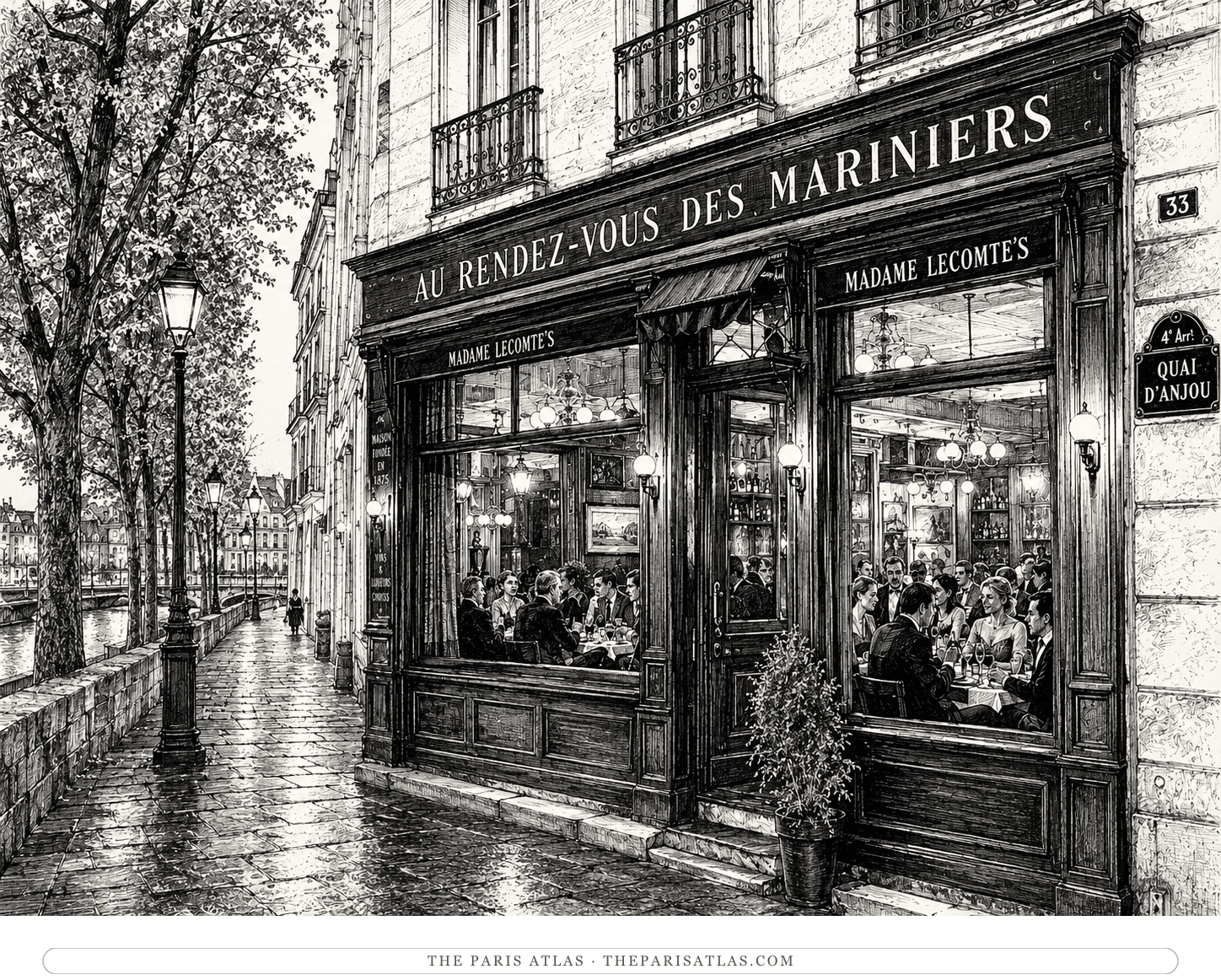
Madame Lecomte's
The riverside table on the far side of the Île Saint-Louis — wonderful food, Madame Lecomte at the door, and a forty-five-minute wait since the Americans found it.

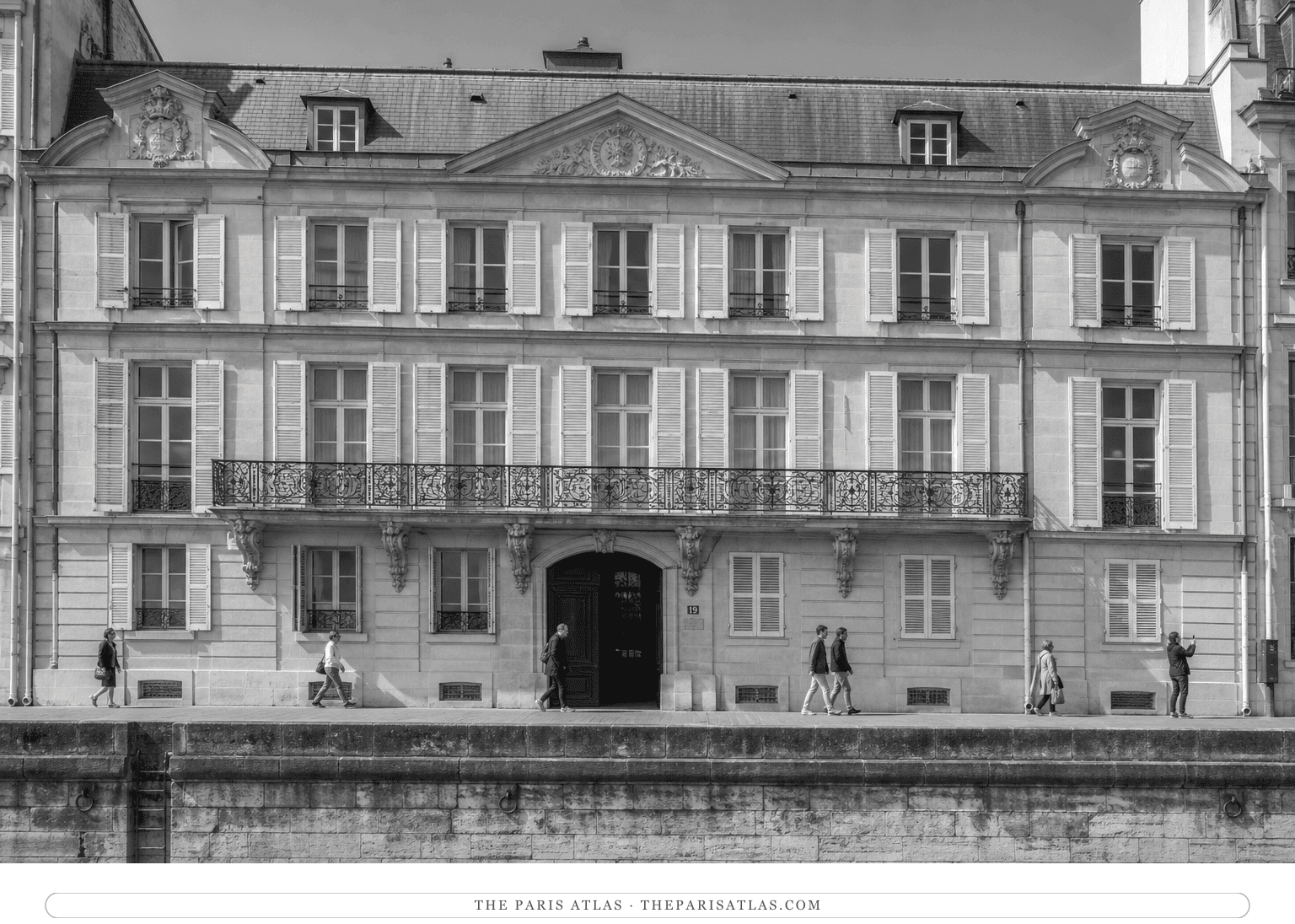
Camille Claudel's studio, 19 quai de Bourbon
The last place Camille Claudel lived and worked — a very small studio at the back of the courtyard of the Hôtel de Jassaud on the Île Saint-Louis, from January 1899 until she was committed in 1913. The building stands and carries a plaque; the studio is private.

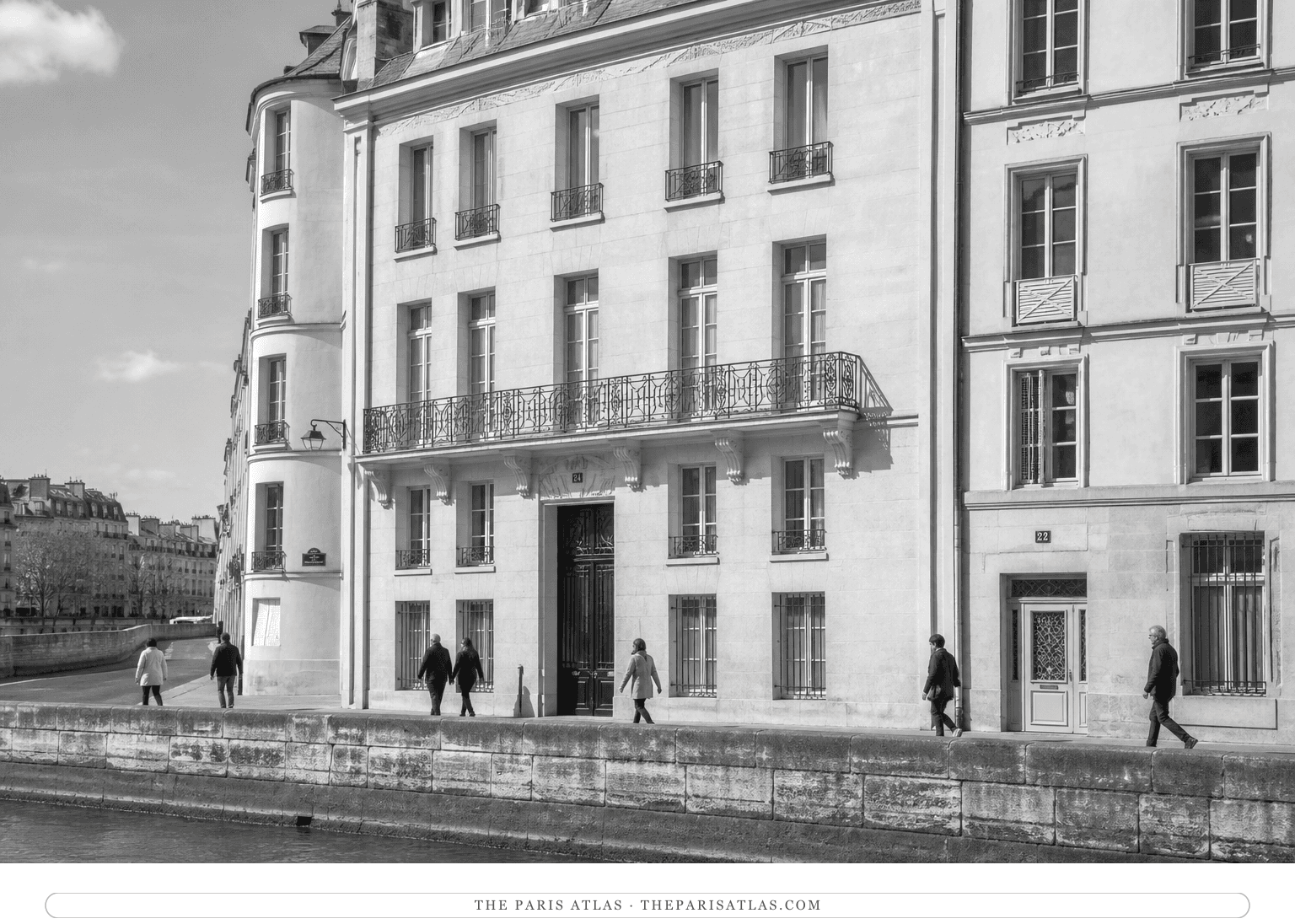
Helena Rubinstein's apartment, 24 quai de Béthune
The Île Saint-Louis apartment of the cosmetics magnate and collector Helena Rubinstein, whose gatherings Marc Chagall attended — one of the private rooms where the École de Paris was actually bought.

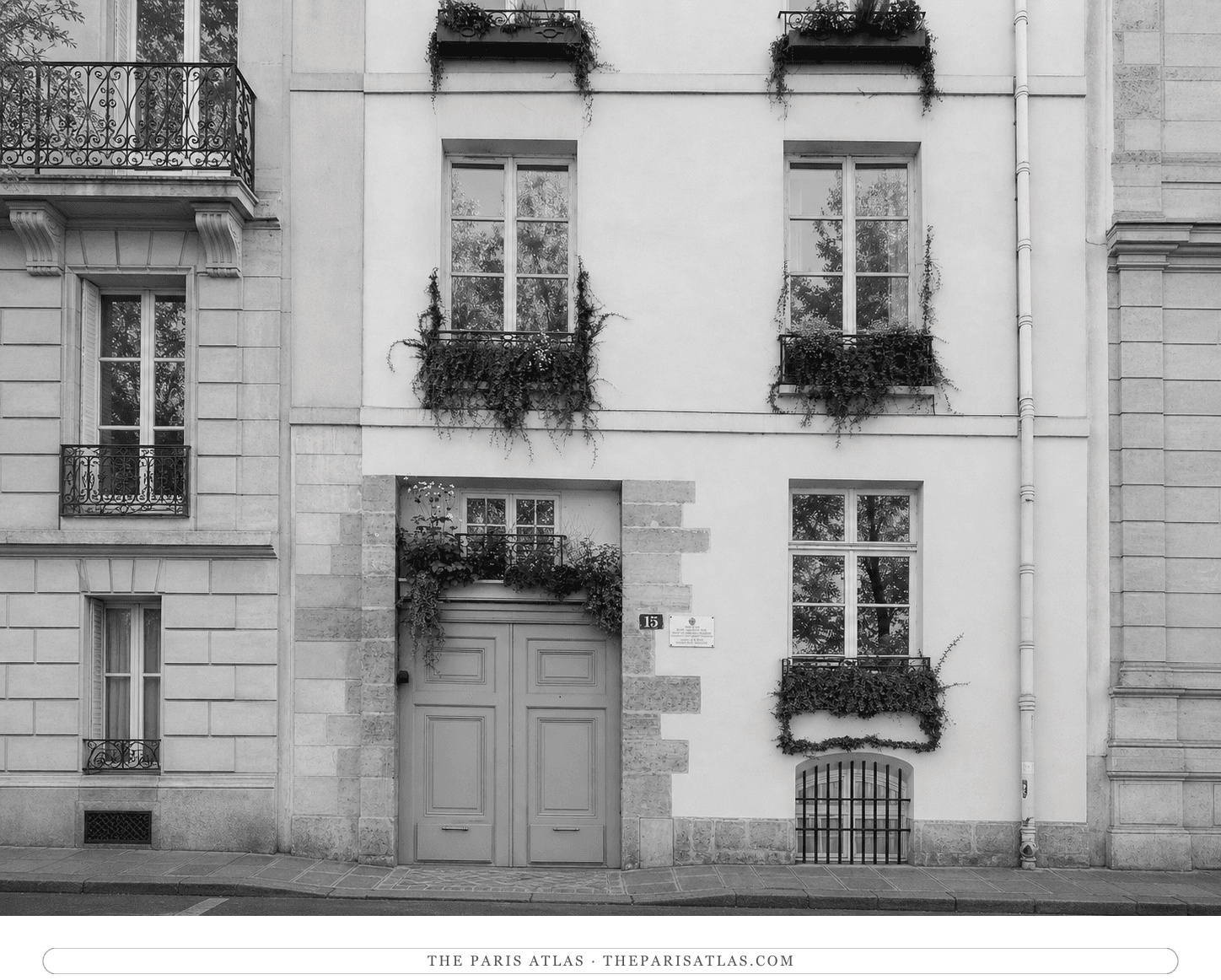
15 quai d'Anjou
The apartment Paul Cézanne took on the Île Saint-Louis at the end of 1888, in the years when he had money, no reputation to speak of, and was painting the pictures that would rearrange European art after his death.
Île de la Cité


Notre-Dame de Paris
The cathedral seen at night from the wooden footbridge off the Quai de Béthune — the still point of the finest walk in Ernest Hemingway's The Sun Also Rises, answered a decade later from the same river in Henry Miller's Tropic of Cancer.

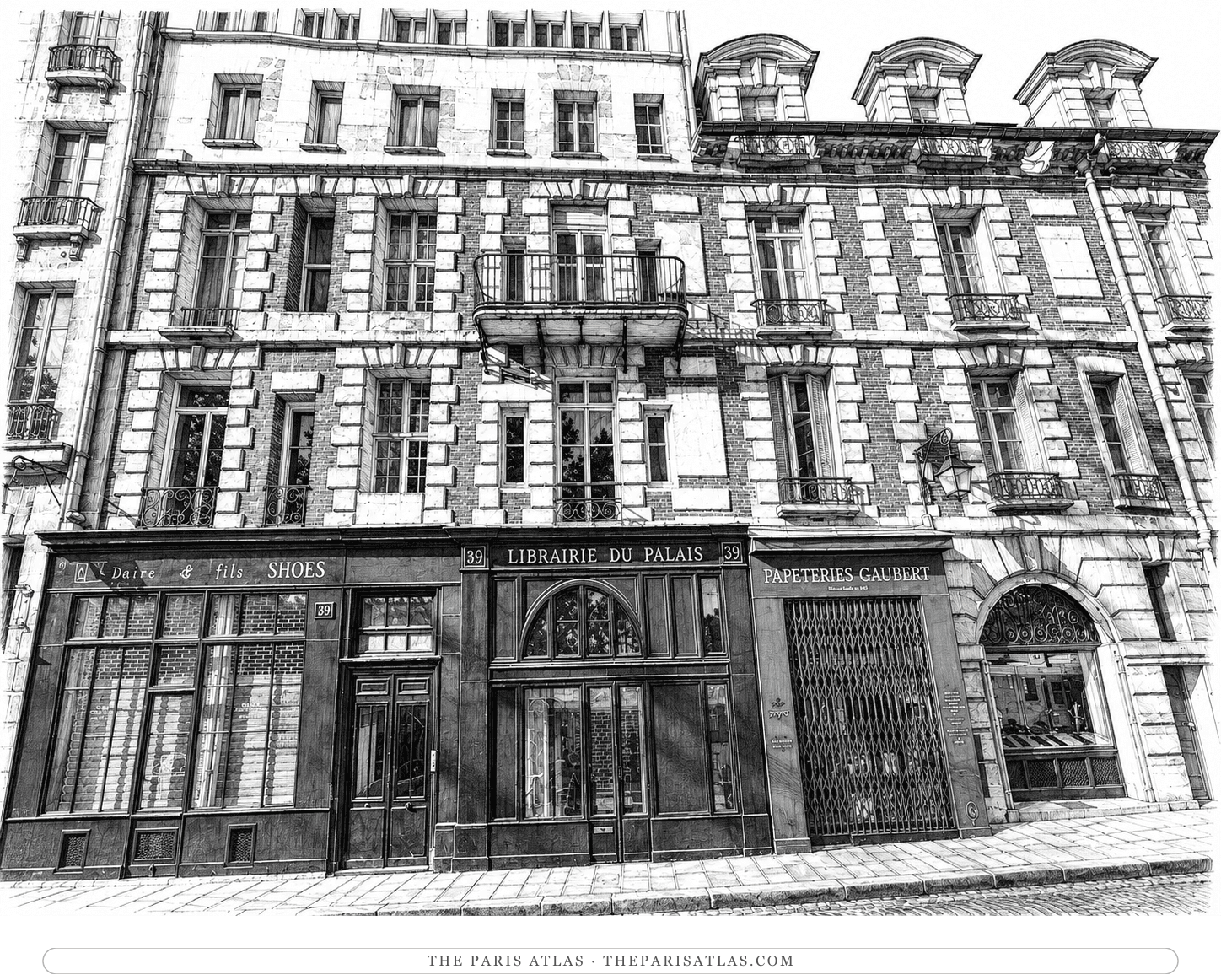
Daniel Halévy's Salon (39 Quai de l'Horloge)
Daniel Halévy's literary salon on the Île de la Cité, where D. H. Lawrence went to a tea in March 1929 and met François Mauriac. It produced the only line about Paris that anyone quotes him on.

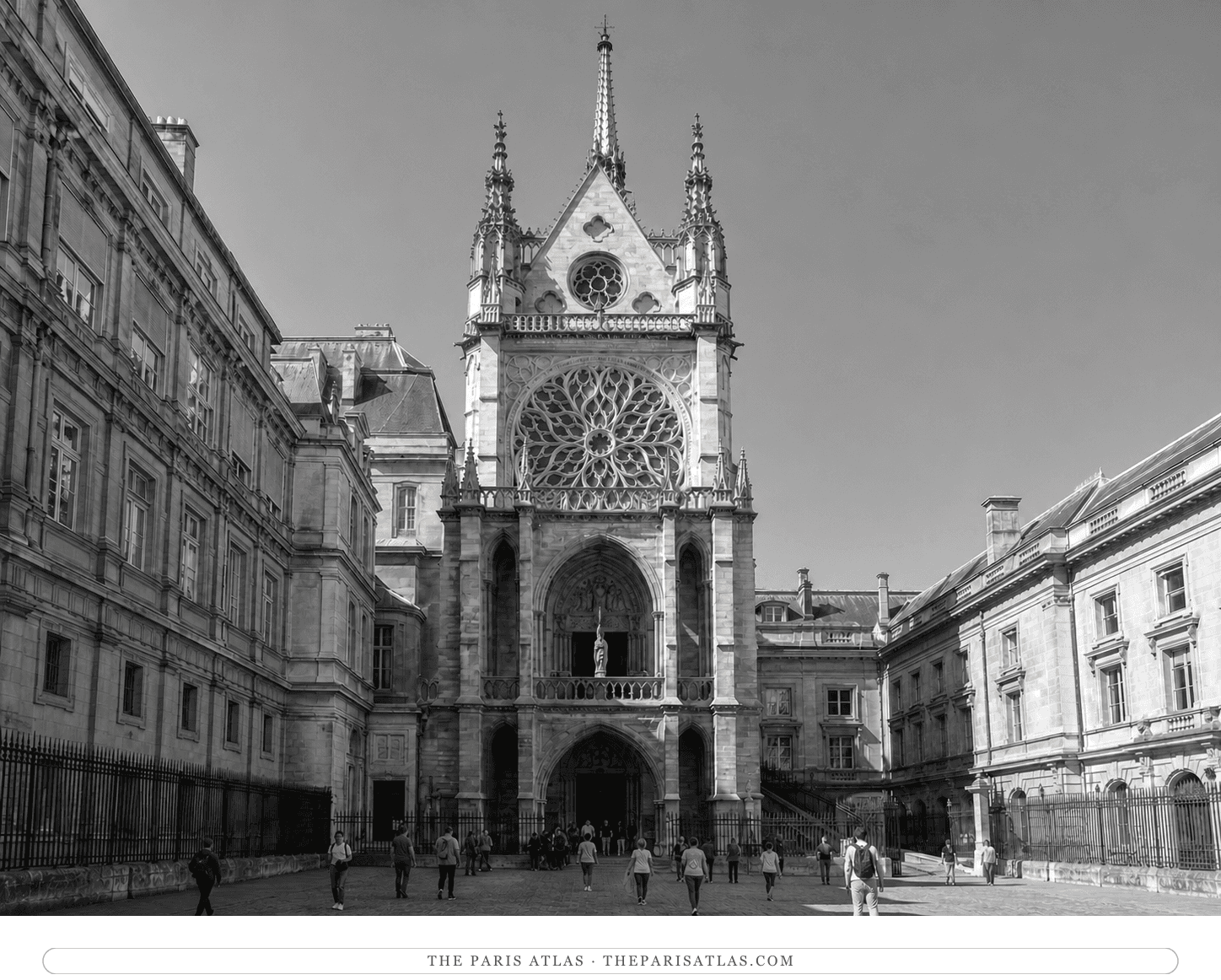
Sainte-Chapelle
A royal chapel on the Île de la Cité, built by Louis IX in under seven years to hold the Crown of Thorns — a relic that cost more than twice what the building did. Its upper chapel has fifteen windows carrying 1,113 stained-glass scenes, two-thirds of them medieval. Open 9 a.m.–7 p.m. in summer and 9 a.m.–5 p.m. in winter; €16 for EEA visitors, €22 otherwise.

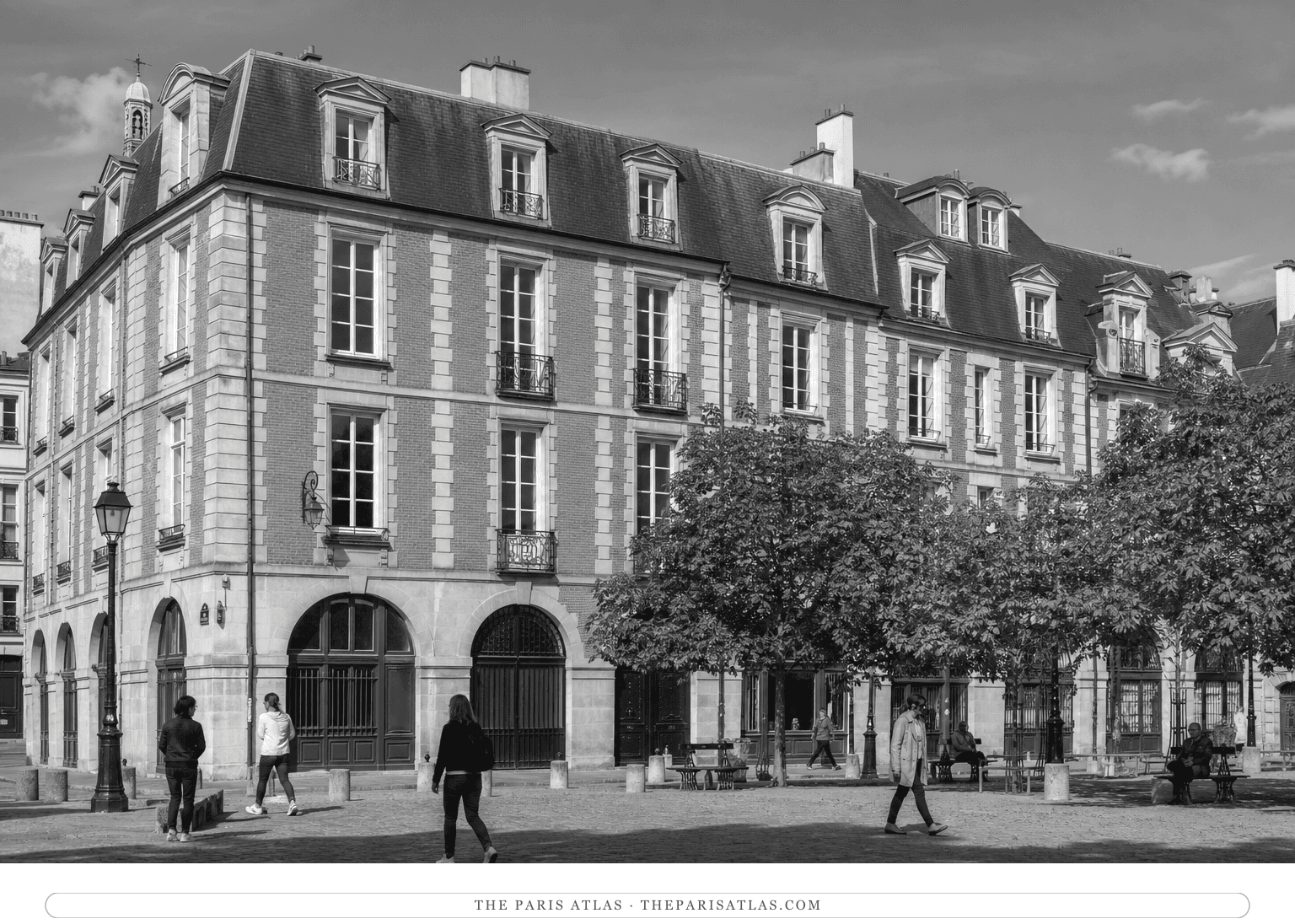
28 place Dauphine
The apartment on the Île de la Cité from which Camille Pissarro painted twenty-six canvases between October 1901 and May 1902 — the Seine, the Pont Neuf, the Louvre and the statue of Henri IV, all from one set of windows.

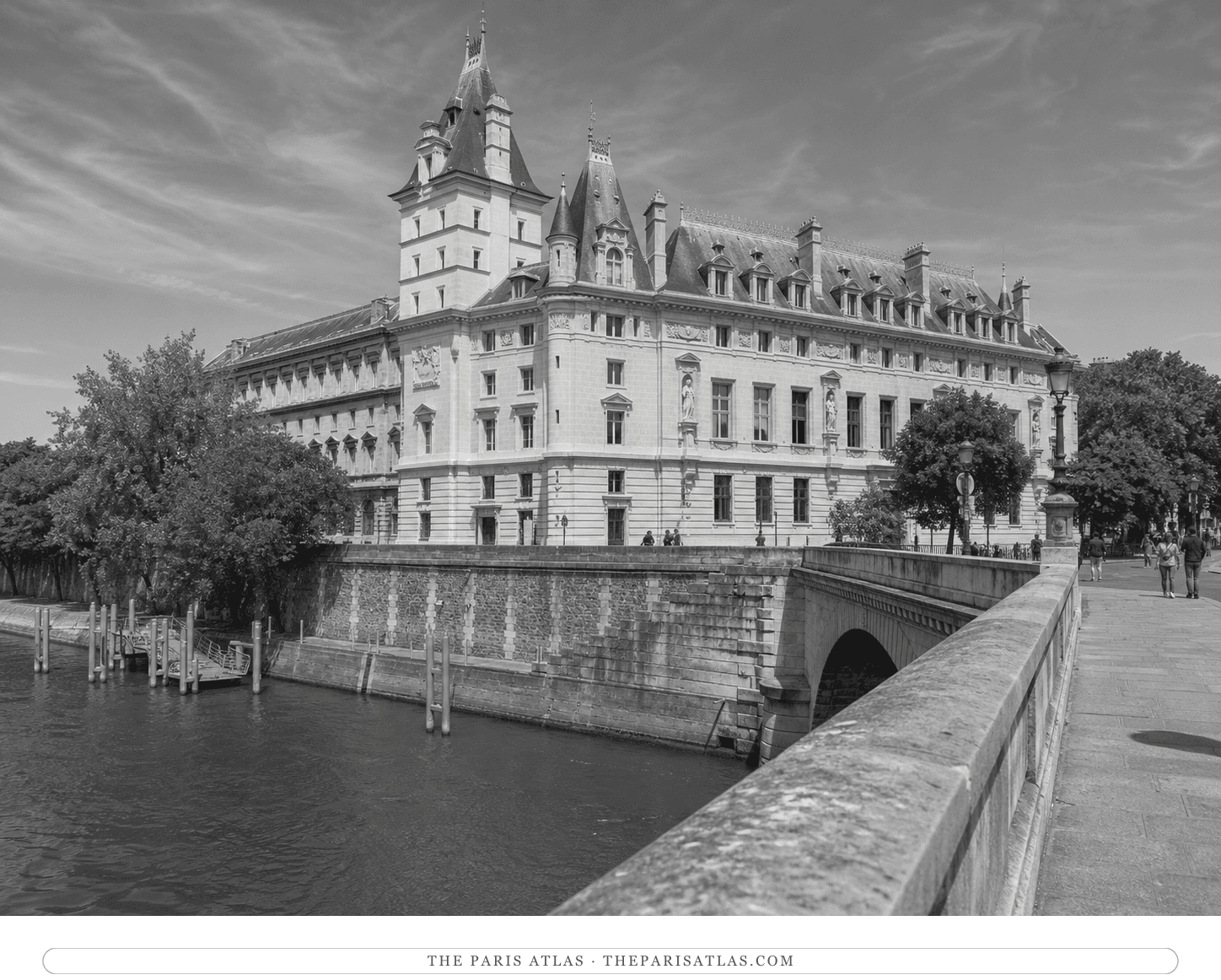
Académie Suisse
The informal life-drawing studio on the quai des Orfèvres where anyone could pay to draw from the model without an examination — and where Camille Pissarro met Paul Cézanne around 1861.
Faubourg Saint-Germain
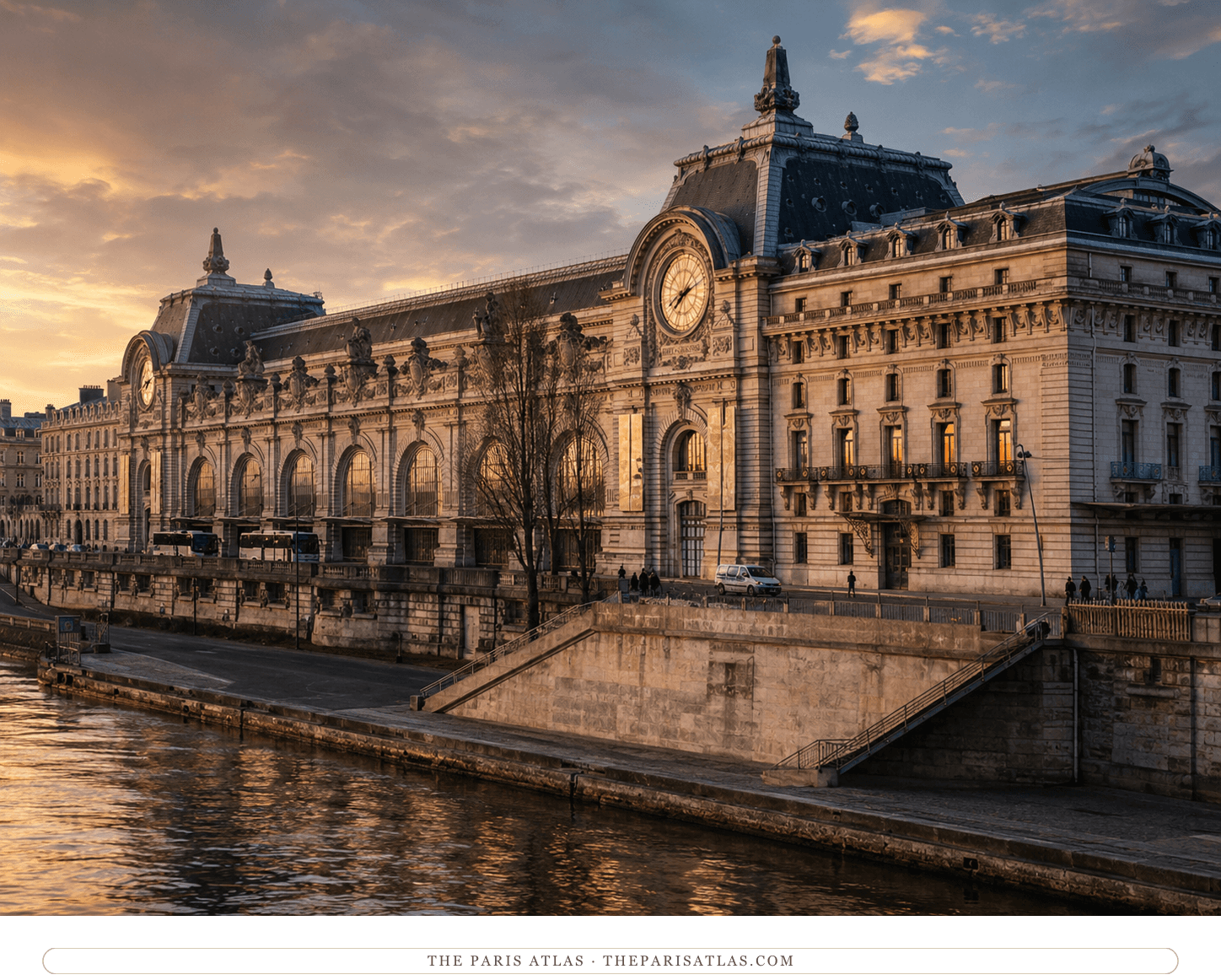
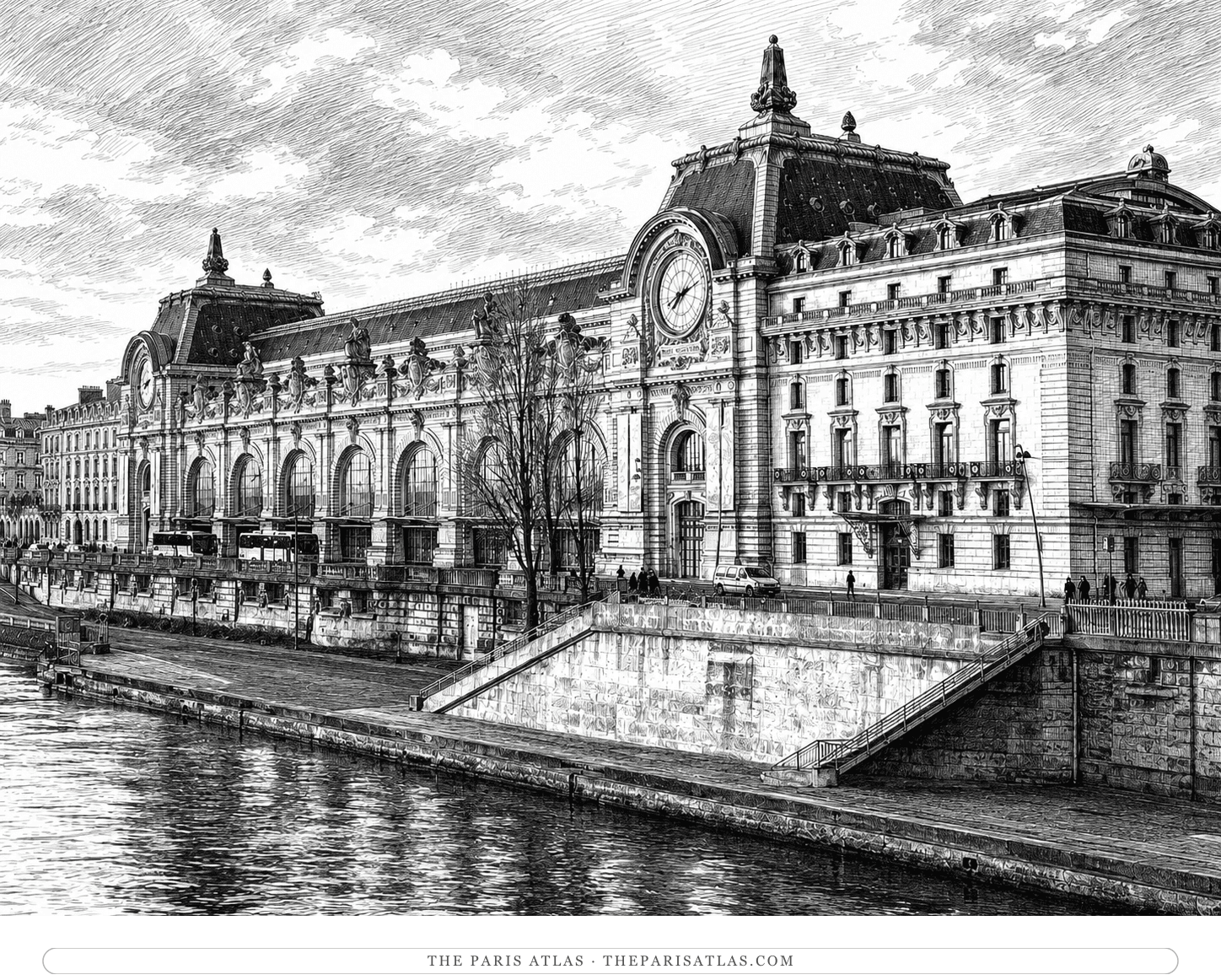
Gare d'Orsay
The Beaux-Arts terminus on the Seine where Jake Barnes and Bill Gorton, in Ernest Hemingway's The Sun Also Rises, board the morning train south toward Spain — today the Musée d'Orsay.

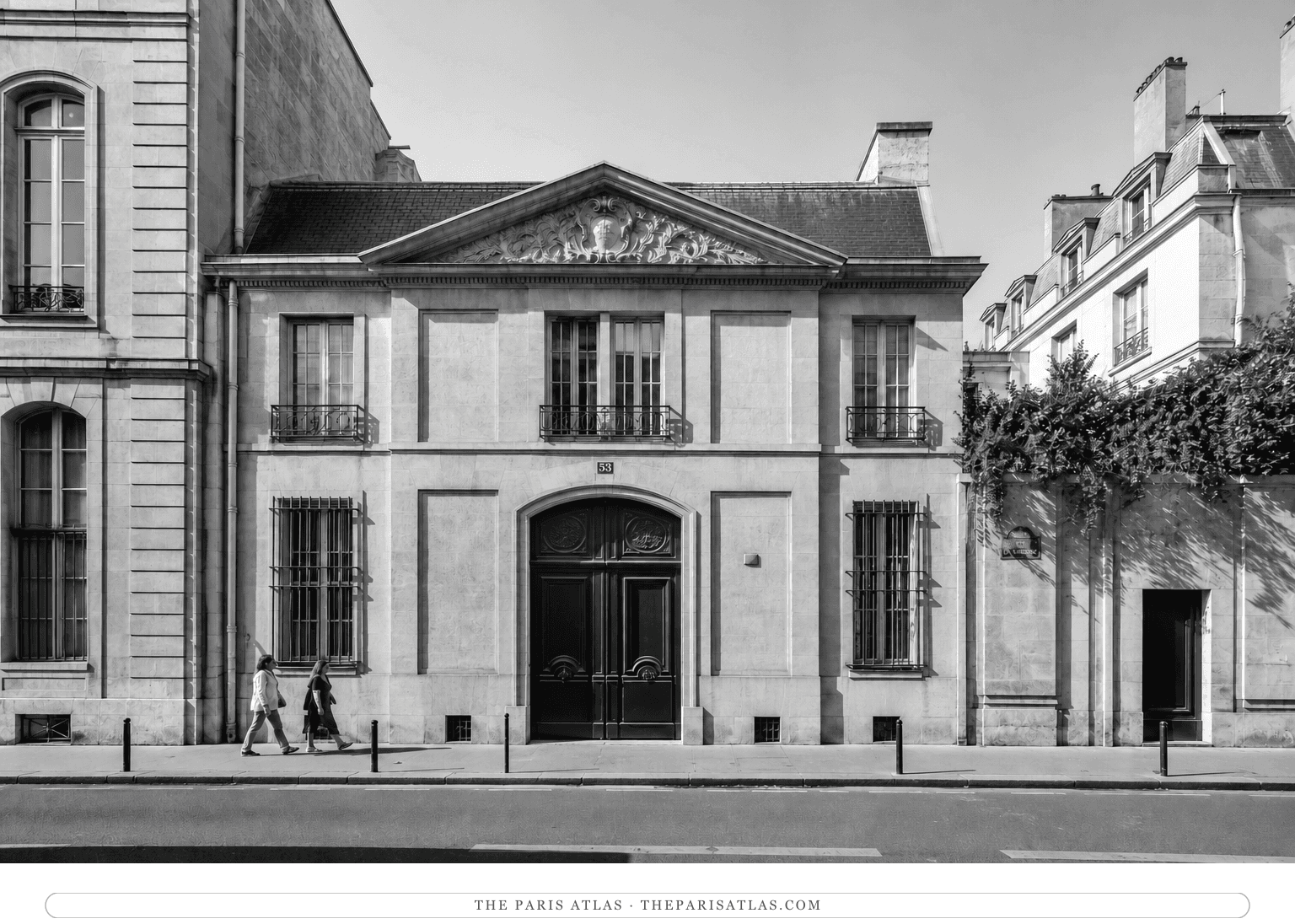
53 rue de Varenne
The apartment Edith Wharton took in January 1910 and made her principal Paris address — and which became, during the First World War, the headquarters of one of the largest private relief operations in France.

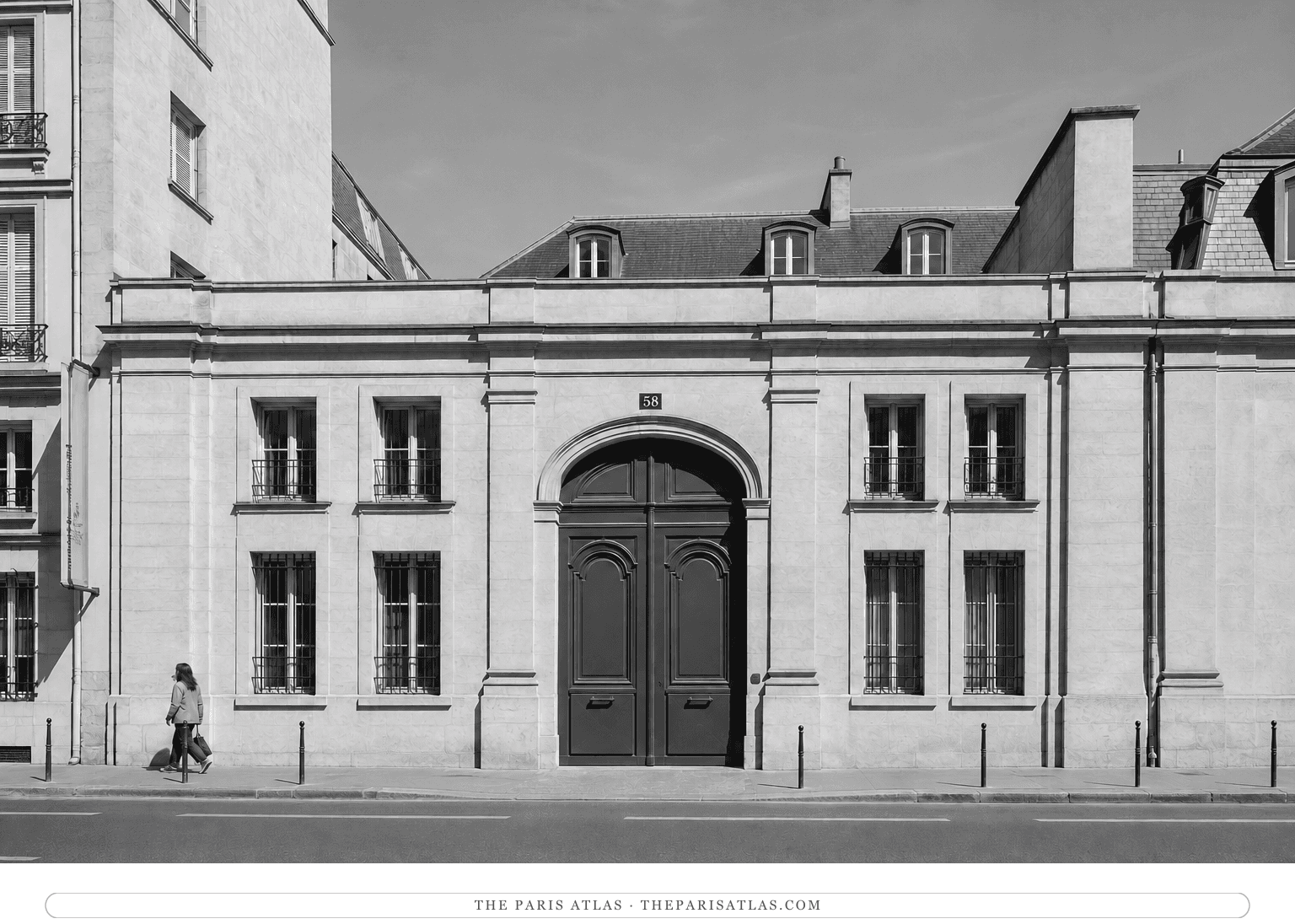
58 rue de Varenne
The apartment Edith Wharton rented from George Vanderbilt for the winters of 1907 and 1908 — her first real Paris home, a few doors from the address that would become her permanent one.
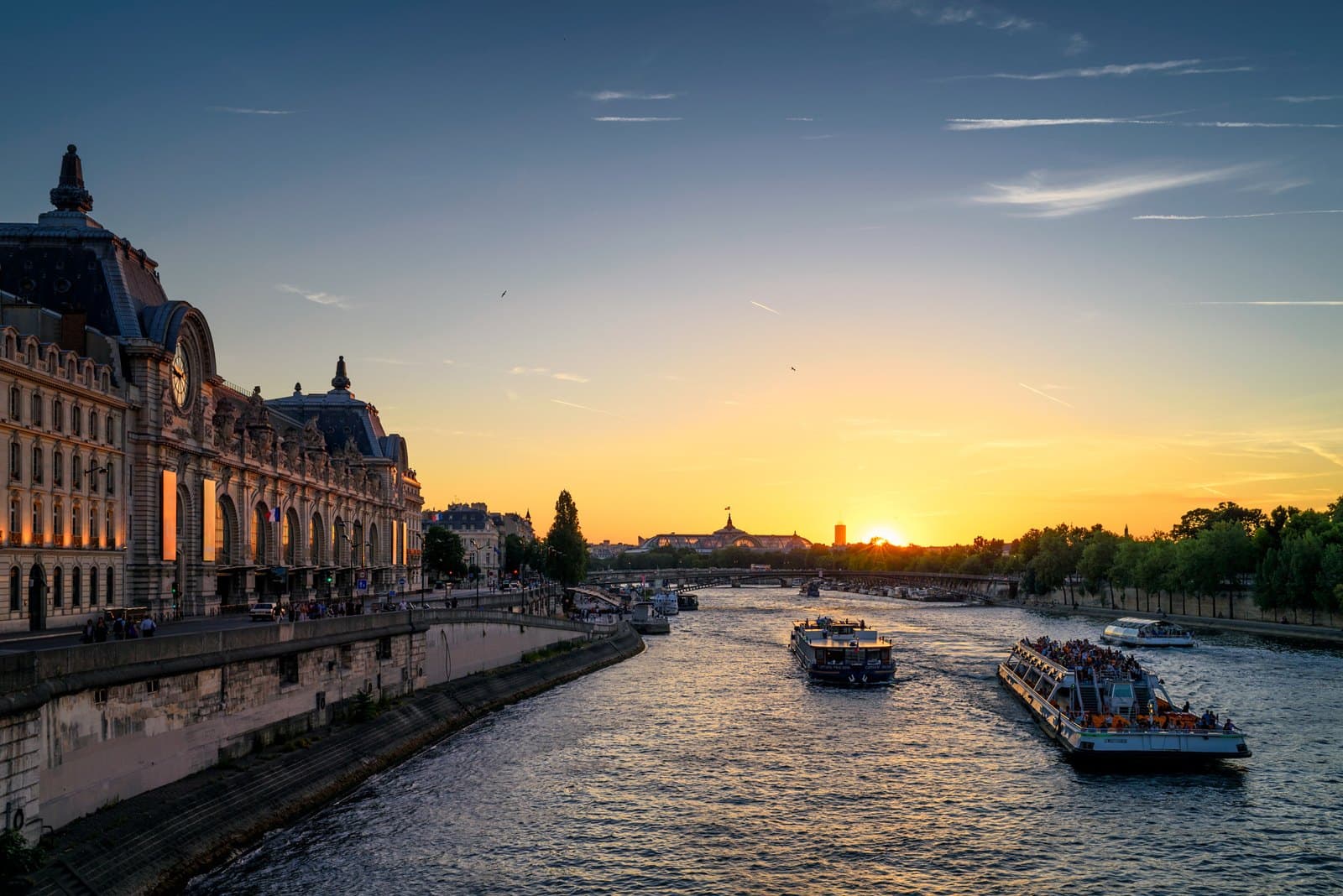
Musée d'Orsay
The national museum for art from 1848 to 1914, with the major Impressionist and Post-Impressionist collection inside Paris's former Orléans railway terminus.

Hôtel d'Orsay
A 42-room hotel near the Musée d’Orsay, with original artwork, an inner garden and room choices from a compact single to a 50 m² suite.
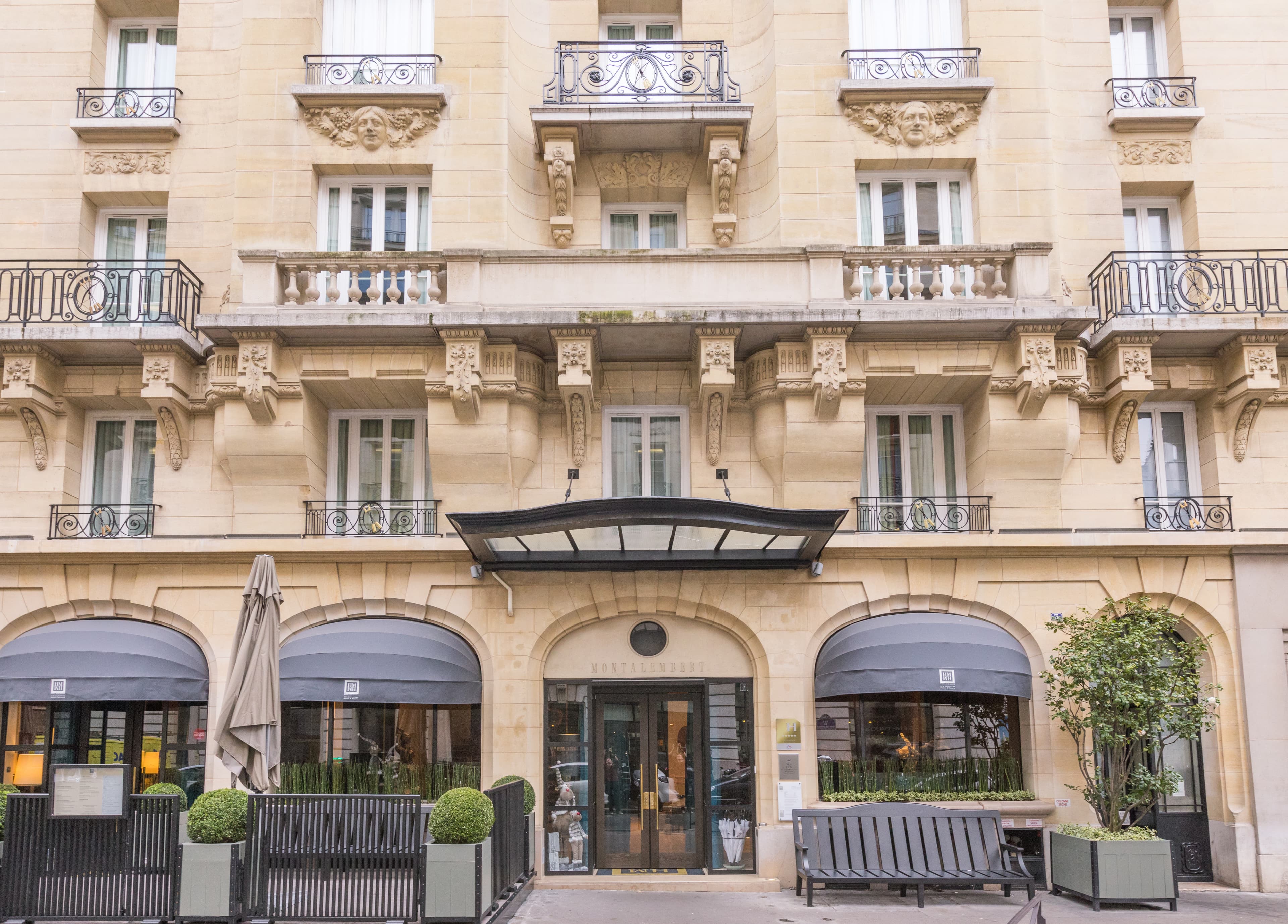
Hôtel Montalembert
A 50-room hotel opened in 1926, with Pascal Allaman interiors, a restaurant and bar, and a small wellness area near rue du Bac.
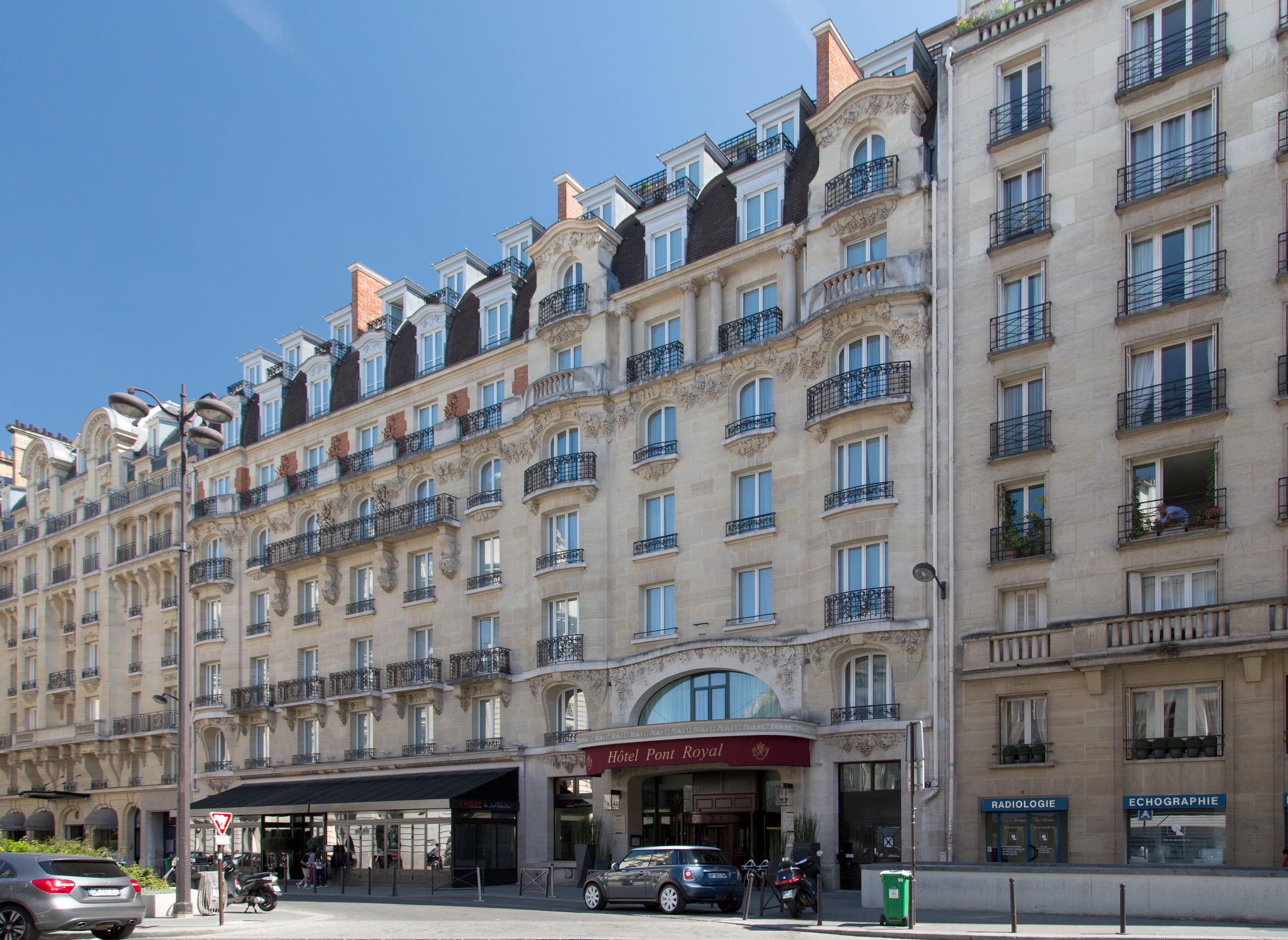
Hôtel Pont Royal
A 75-room hotel near rue du Bac, with a literary past, live jazz at Bar F-Sharp and selected rooms with balconies or Eiffel Tower views.

Pavillon Faubourg Saint-Germain
A 47-room hotel in Saint-Germain-des-Prés, with Les Parisiens restaurant, a James Joyce bar and a spa in vaulted cellars.

J.K. Place Paris
A 29-room five-star hotel at 82 rue de Lille in the 7th arrondissement, a short walk from the Musée d'Orsay. It belongs to J.K. Place, a hotel group founded in Florence, and has an Italian restaurant, a bar and a spa with an indoor pool.
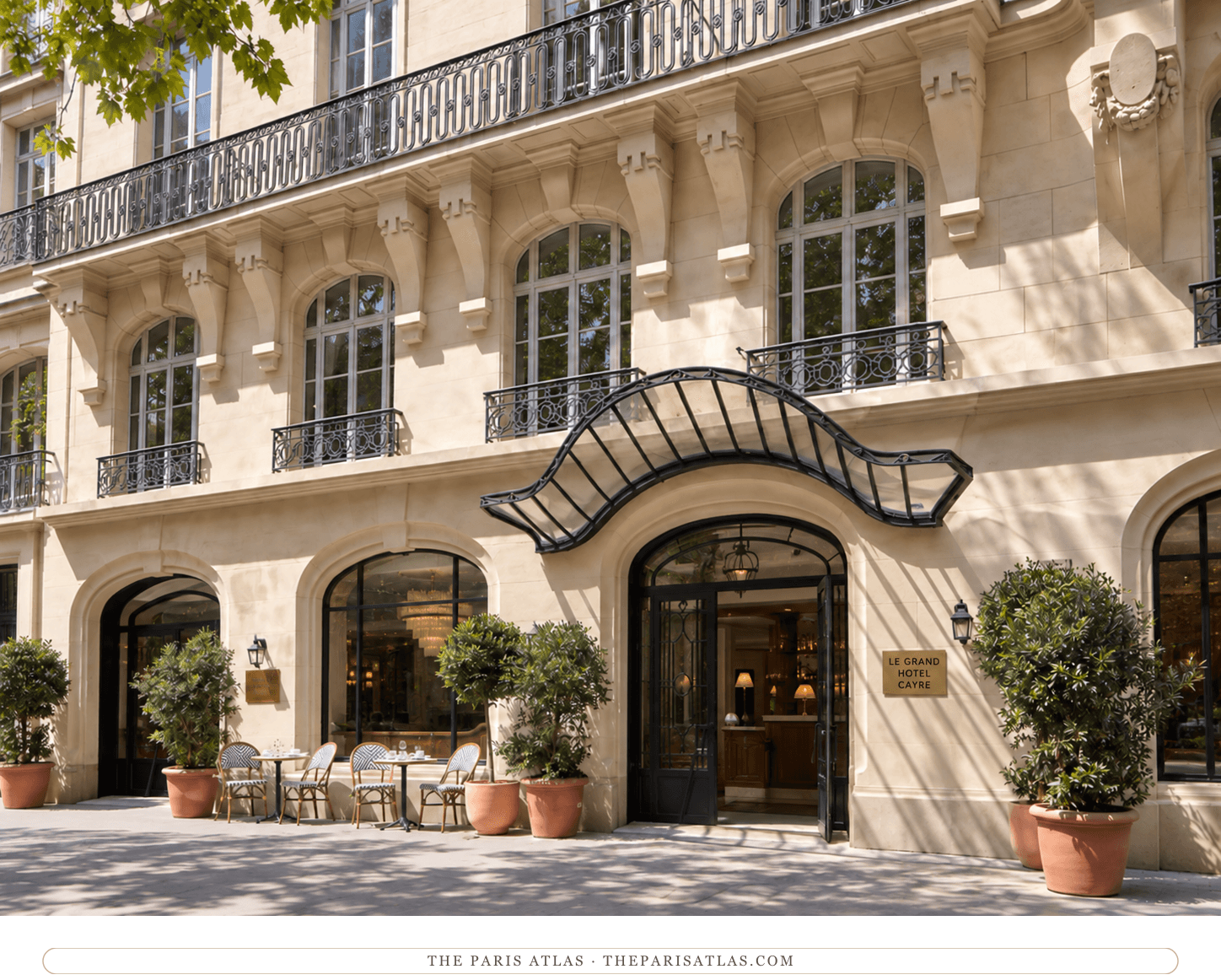
Miiro Le Grand Hôtel Cayré
A restored hotel at the meeting of boulevard Raspail and rue du Bac, with Michaelis Boyd interiors, 123 rooms and suites, a French brasserie and a bar in a former dispensary.
Place de la Concorde

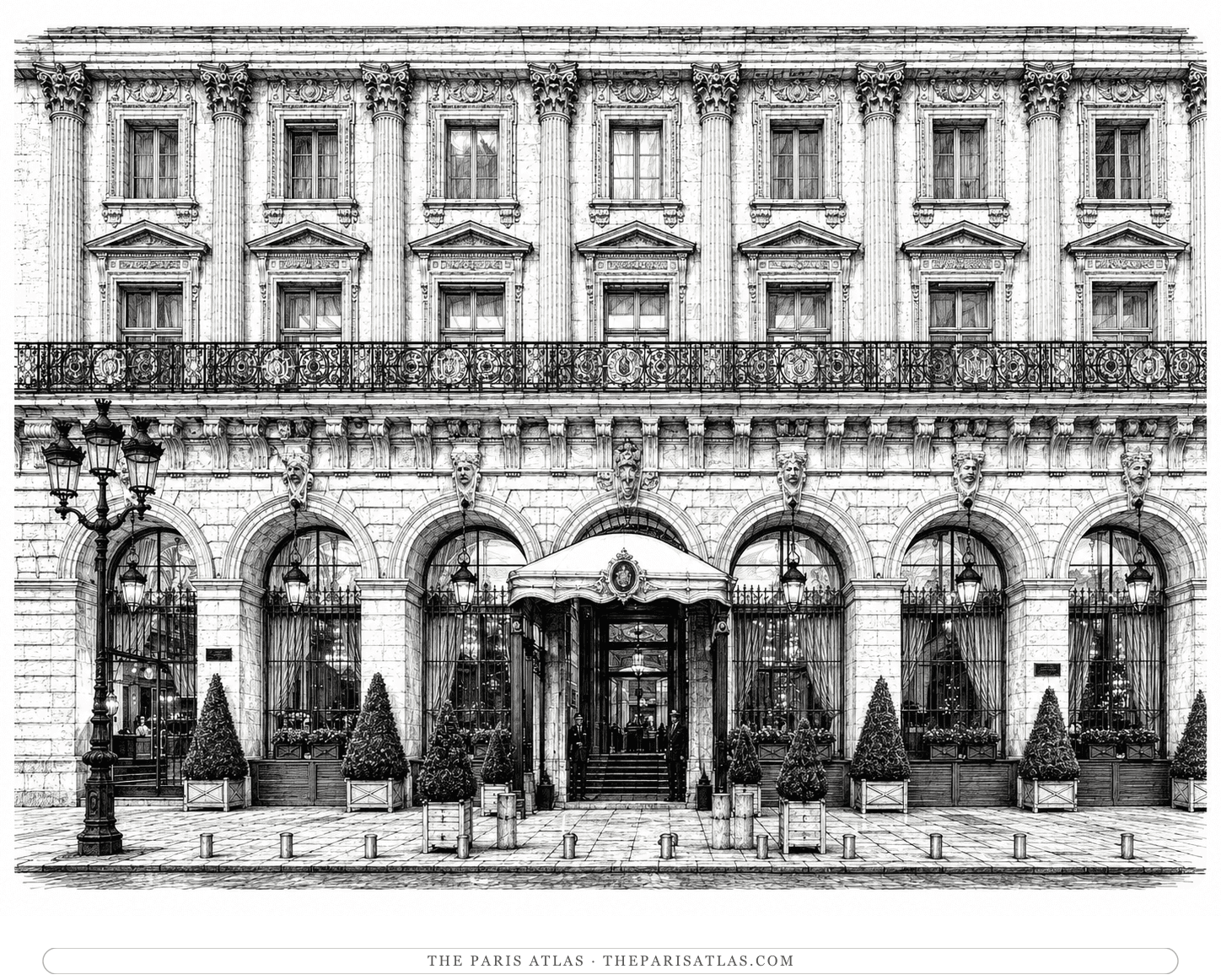
Grands Boulevards

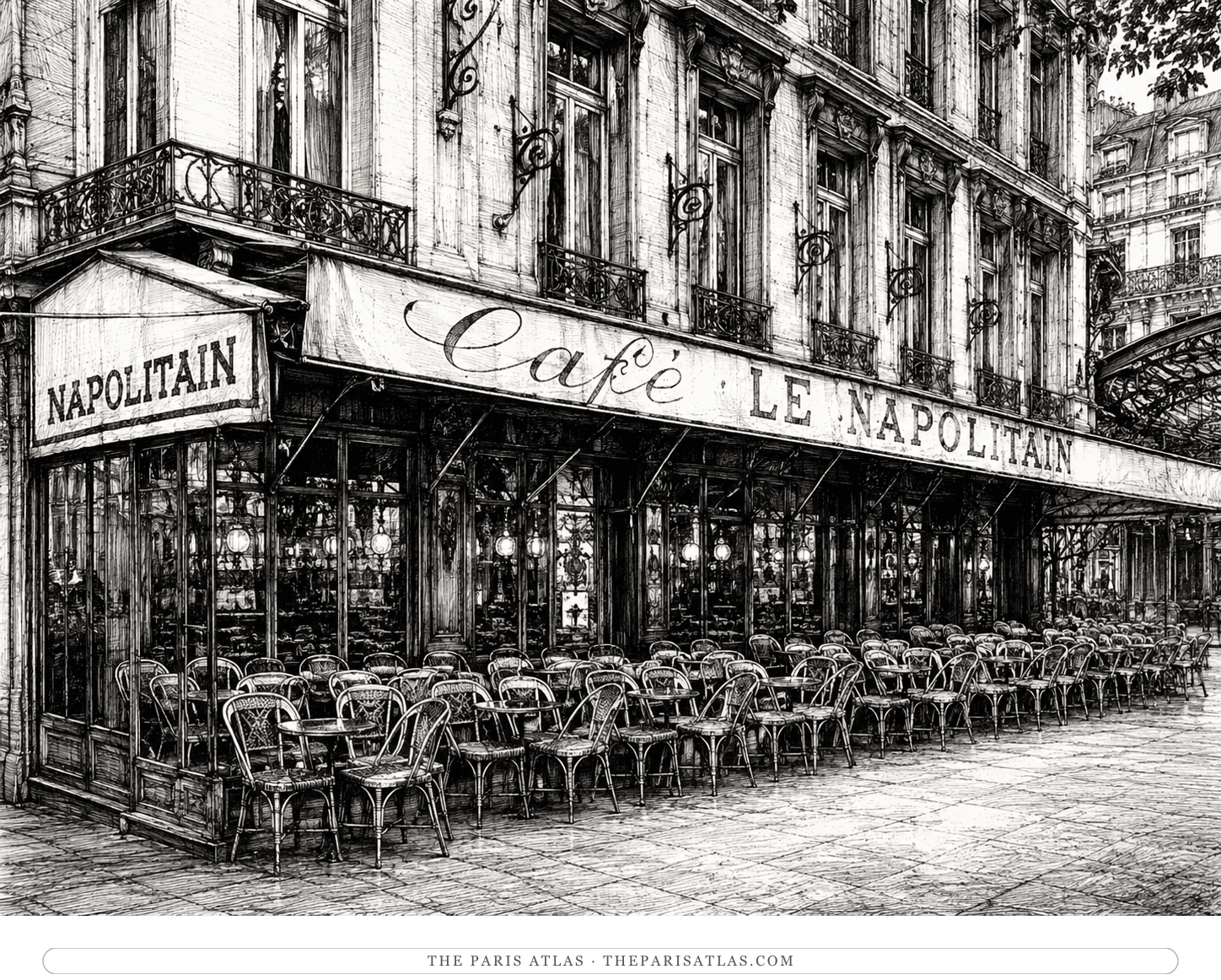
Café Napolitain
The boulevard terrace where the novel opens — an apéritif on the Right Bank, watching the evening crowd, the electric signs, and the last horse-cabs go by.

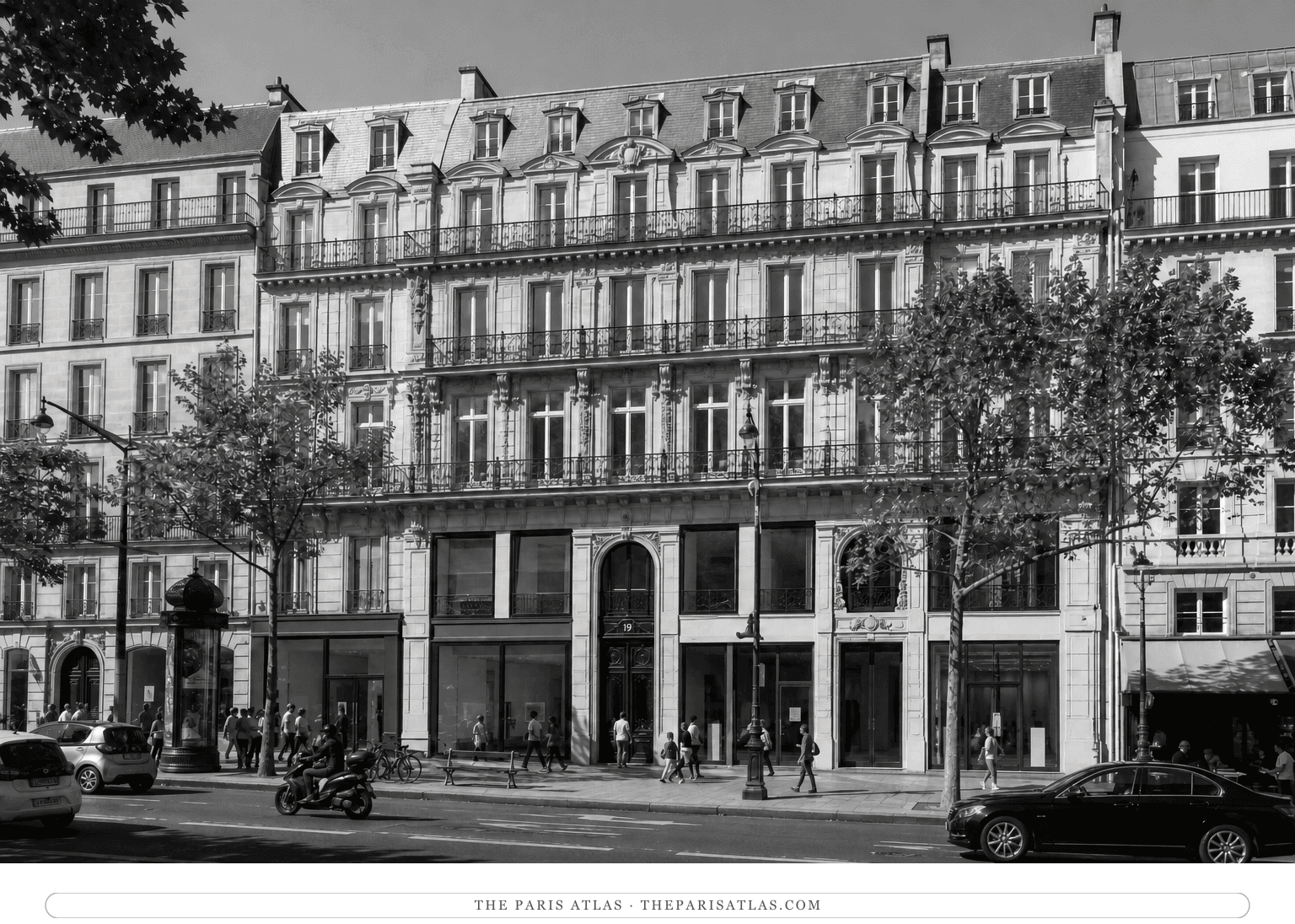
Boussod, Valadon & Cie, 19 boulevard Montmartre
The Boussod, Valadon gallery on the boulevard Montmartre, where Berthe Morisot was given her first solo exhibition in 1892 — at the age of fifty-one, and three years before her death.

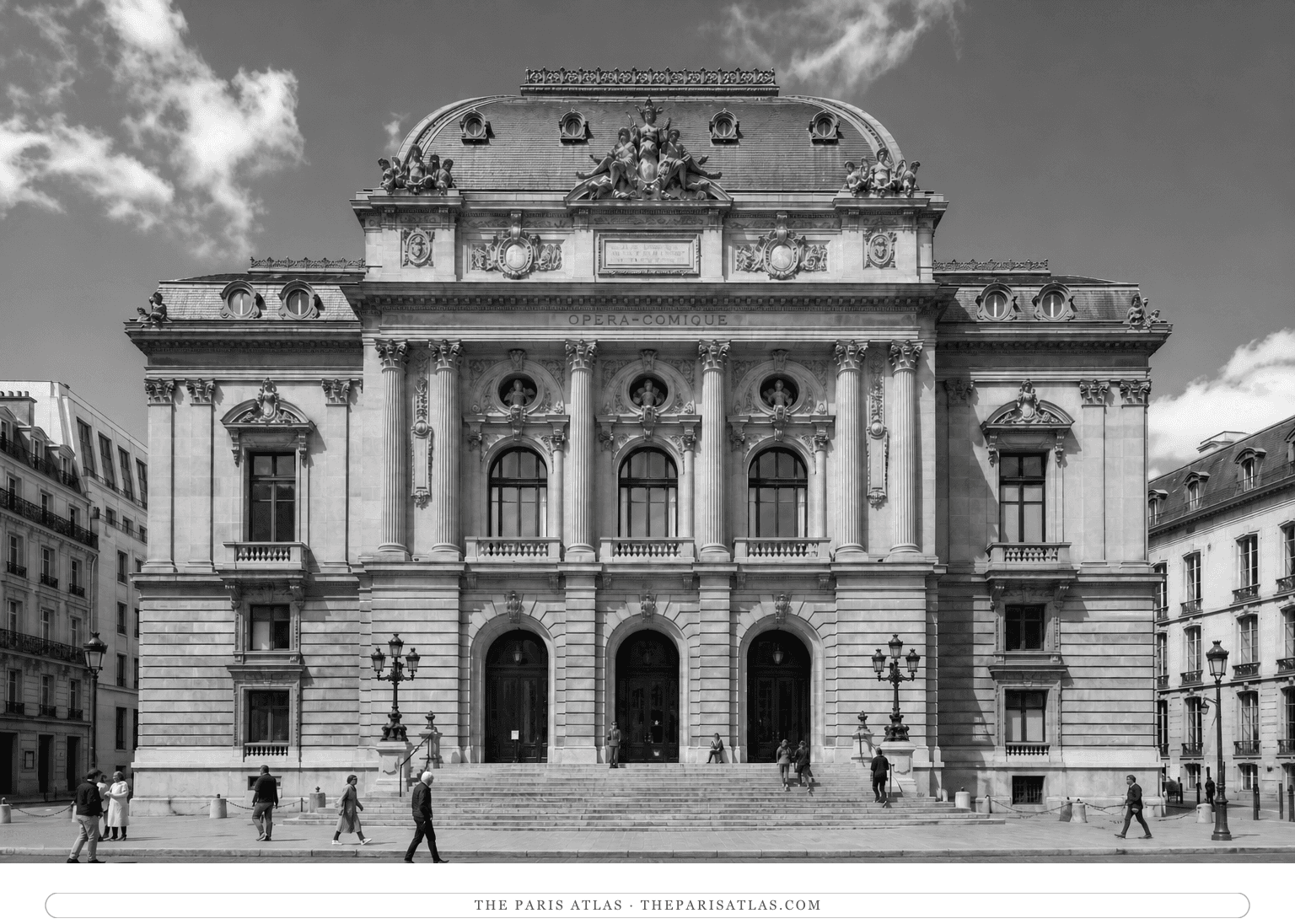
Opéra-Comique (Salle Favart)
The Salle Favart, where Debussy's only completed opera, Pelléas et Mélisande, was first performed on 30 April 1902 — after nearly a decade of work and a dress rehearsal that turned into a public row.

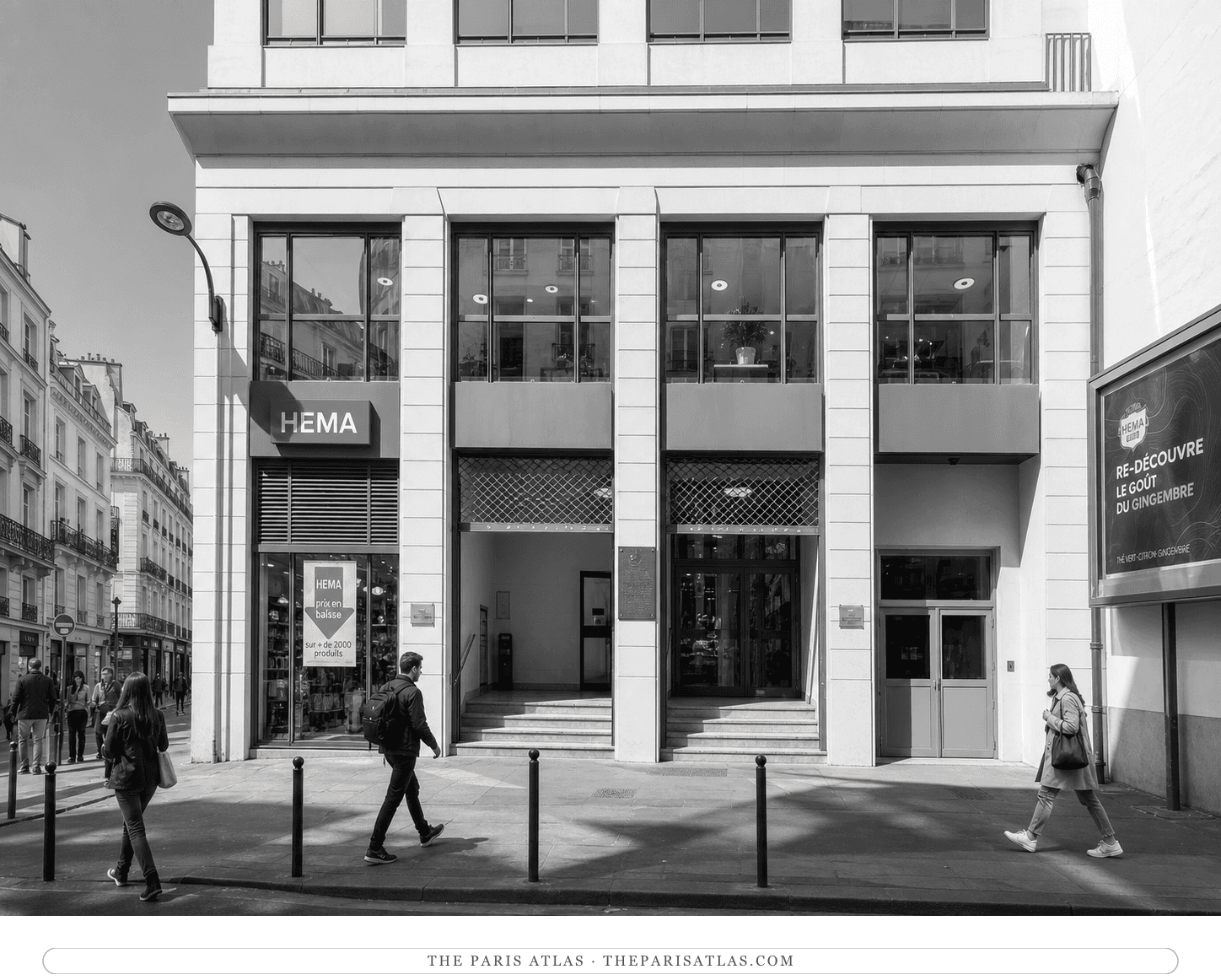
Grand Hôtel de Russie, 1 rue Drouot
The vanished hotel on the corner of the rue Drouot and the Grands Boulevards where Camille Pissarro took a large room in February 1897 and painted sixteen canvases of the boulevards below without moving.

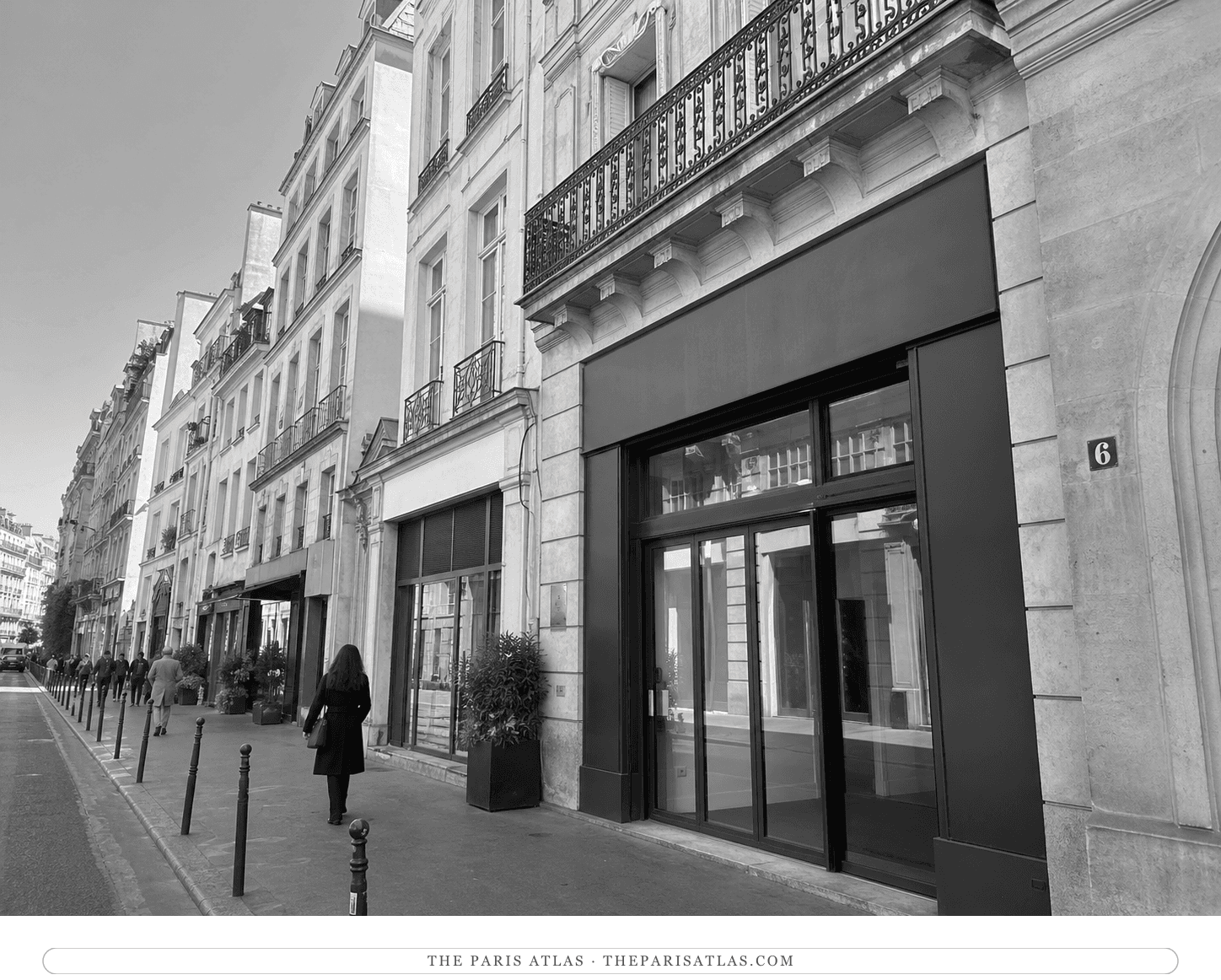
Galerie Ambroise Vollard, 6 rue Laffitte
Ambroise Vollard's gallery, where in 1895 a young and untested dealer gave the fifty-six-year-old Paul Cézanne his first solo exhibition — and turned a painter most of Paris had written off into the most influential artist of the next generation.

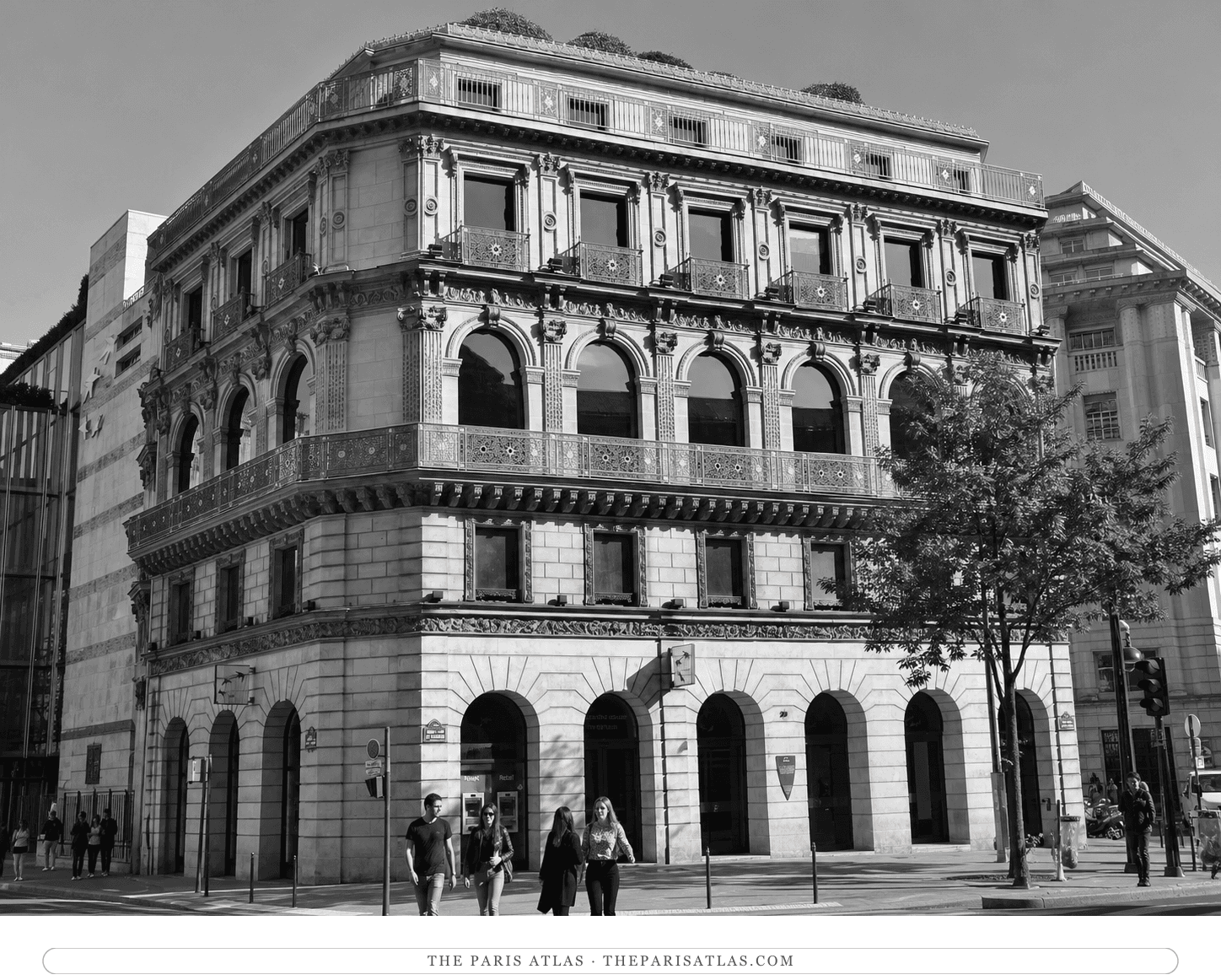
Maison Dorée
The luxury restaurant on the boulevard des Italiens whose upper rooms housed the eighth and last Impressionist exhibition in 1886 — the one Camille Pissarro helped organise, and where he brought the Neo-Impressionists into the group.
Montmartre

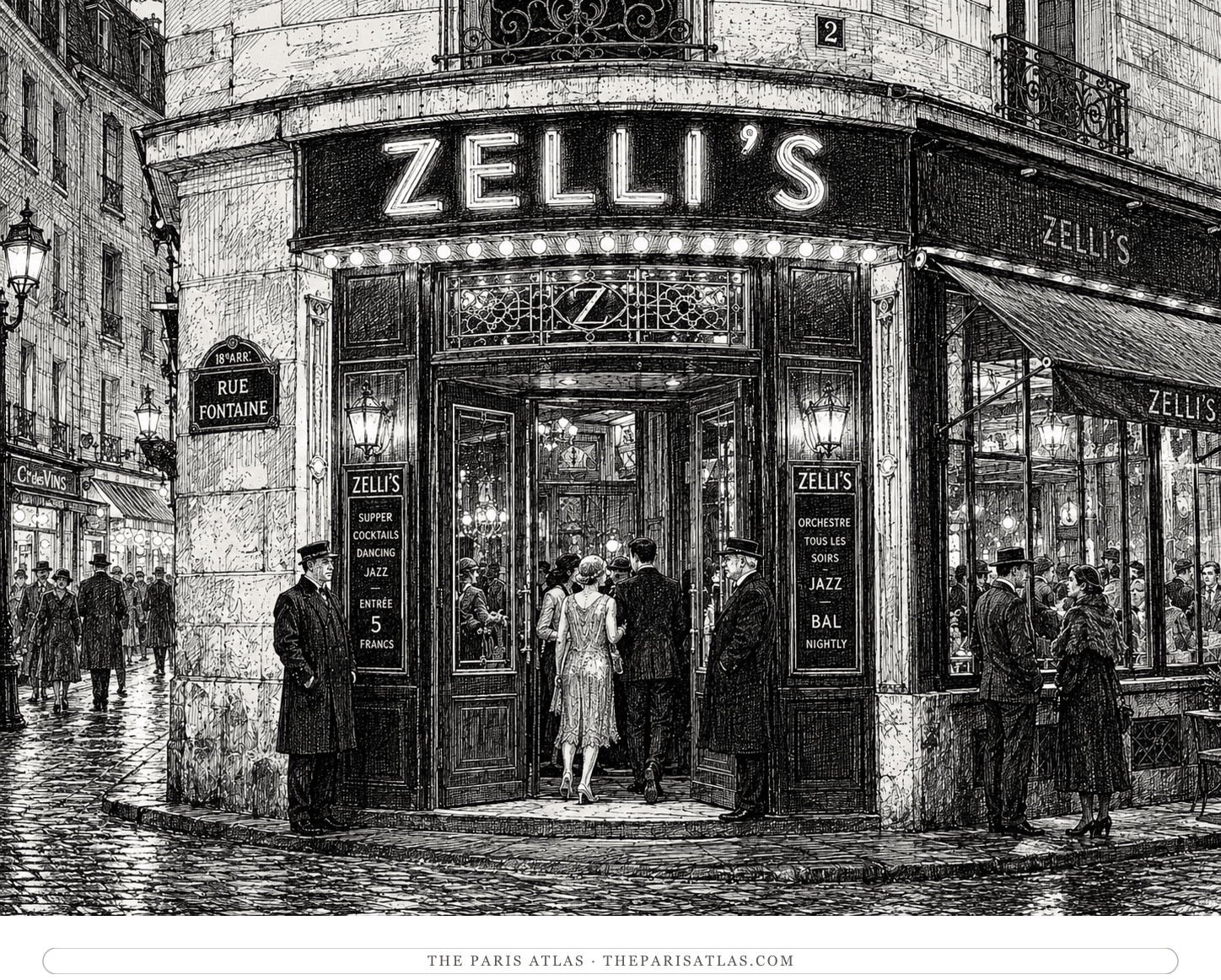
Zelli's
Crowded, smoky, and loud — Joe Zelli's Montmartre boîte, where the music hits you at the door and the novel's Paris nights go to end.

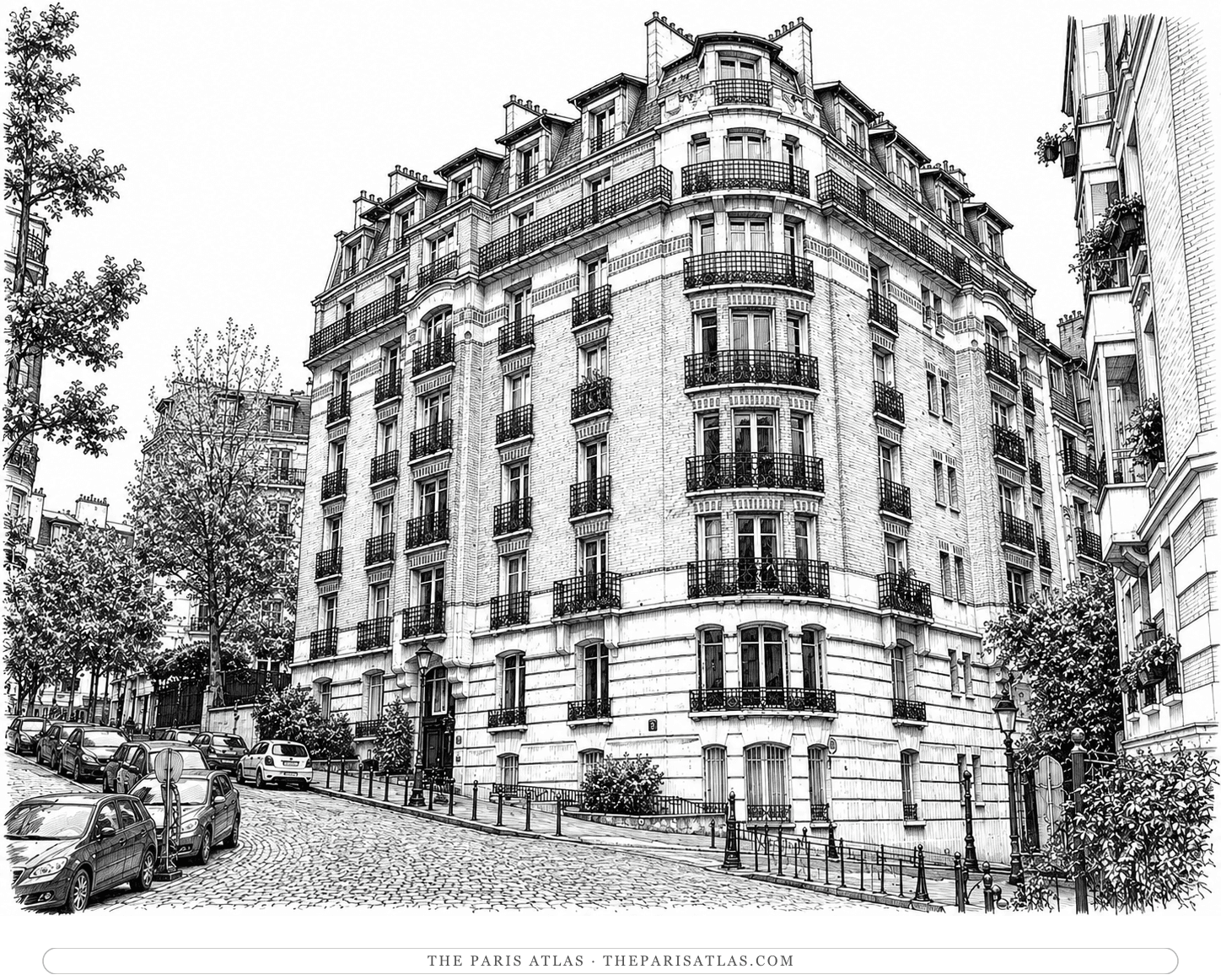
4 Rue Girardon
Louis-Ferdinand Céline's Montmartre apartment during the Occupation — where Gen Paul came up from his studio a few doors away, and where the manuscripts later famous as 'the lost trove' were left behind in June 1944.

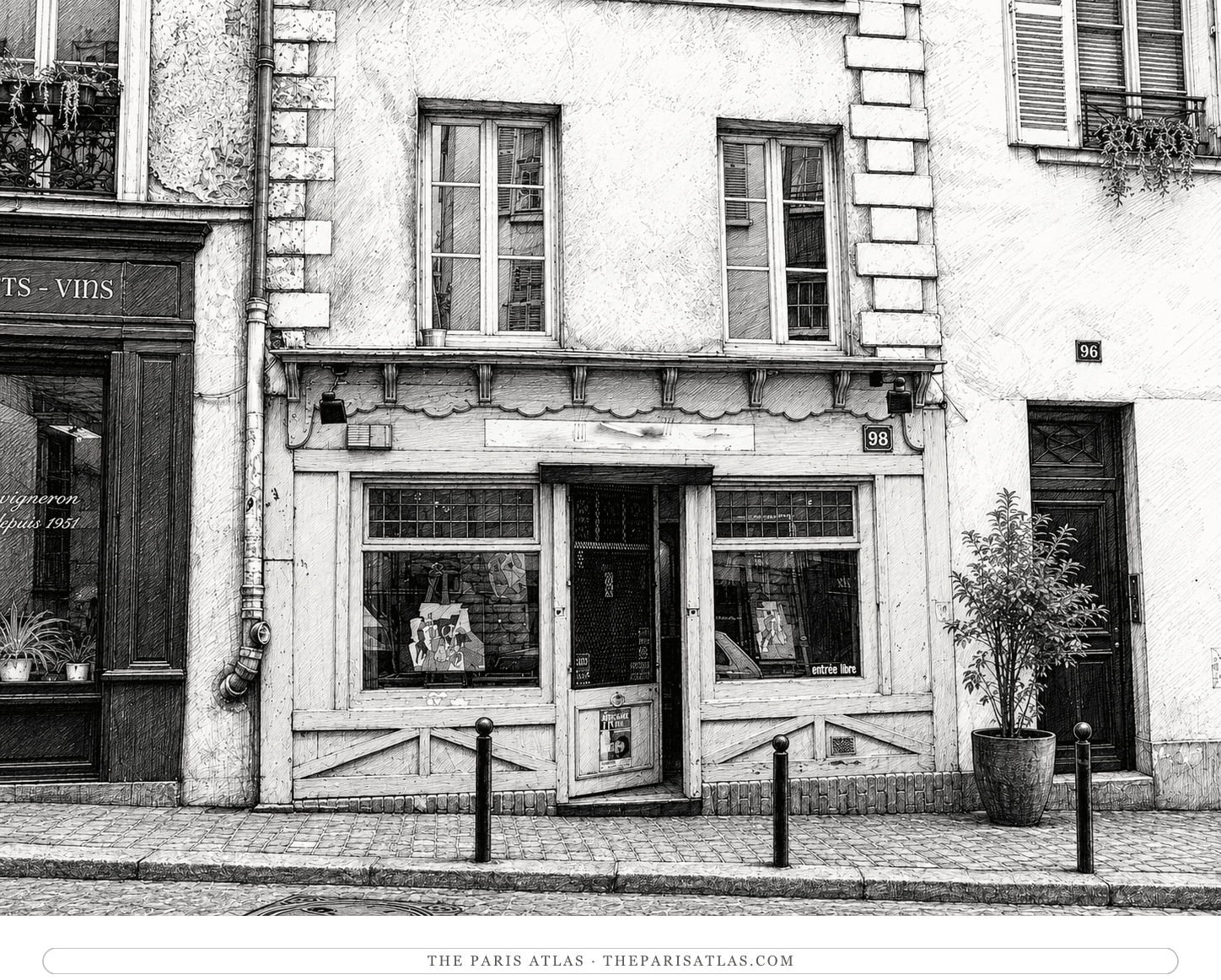
98 Rue Lepic
The Montmartre flat Louis-Ferdinand Céline kept for twelve years, and the desk behind both of his novels — Journey to the End of the Night and Death on the Installment Plan were written at this address.


Le Grand Duc
The tiny Montmartre nightclub where Langston Hughes washed dishes in 1924 and Bricktop began her Paris career — an eight-foot bar, a dance floor for a dozen couples, and the after-hours jam sessions that ended the quarter's nights.

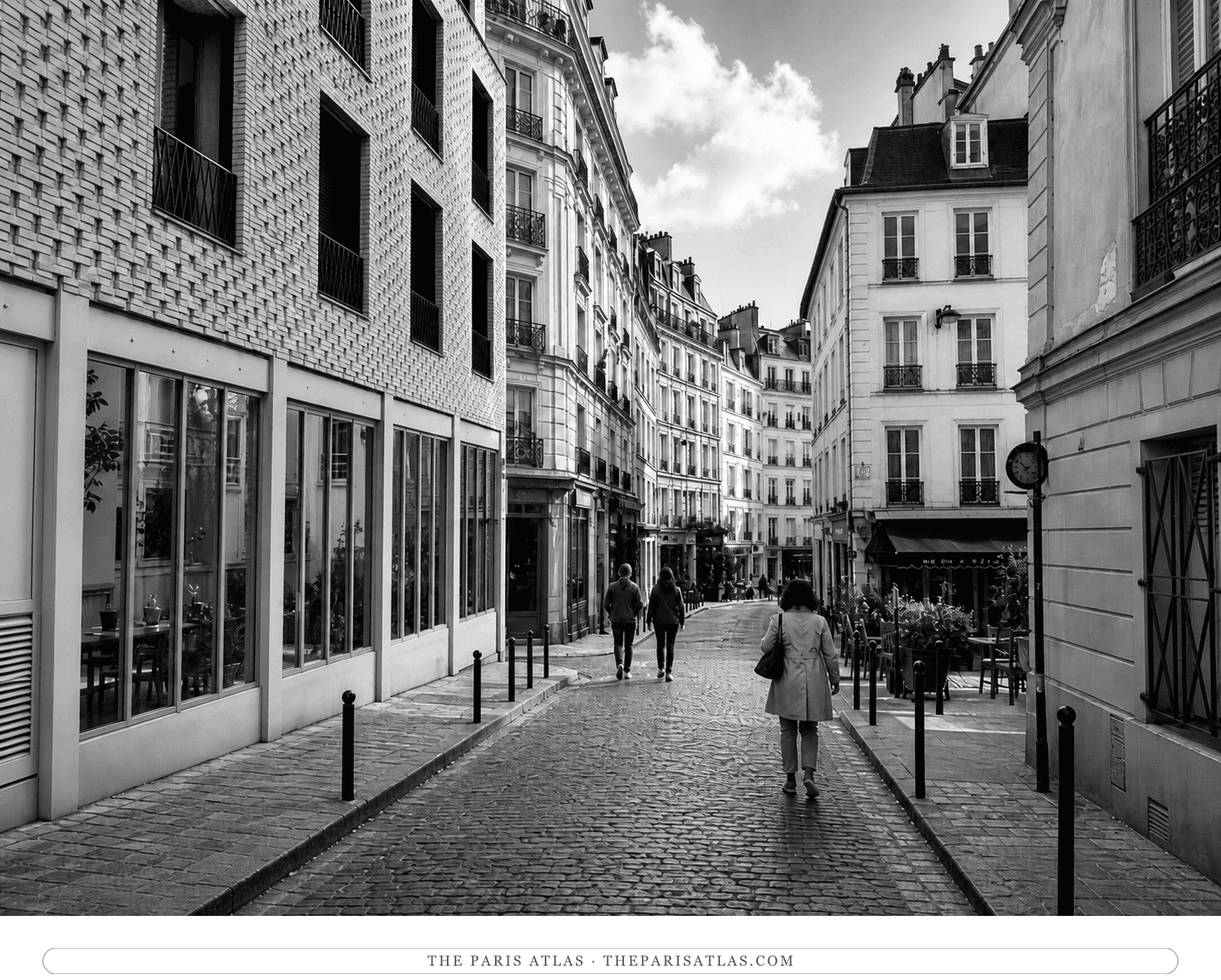
Rue des Trois Frères
A freely walkable nineteenth-century Montmartre street of slopes, cobbles and apartment façades, and the deliberately imprecise location of Langston Hughes's second Paris attic in 1924.

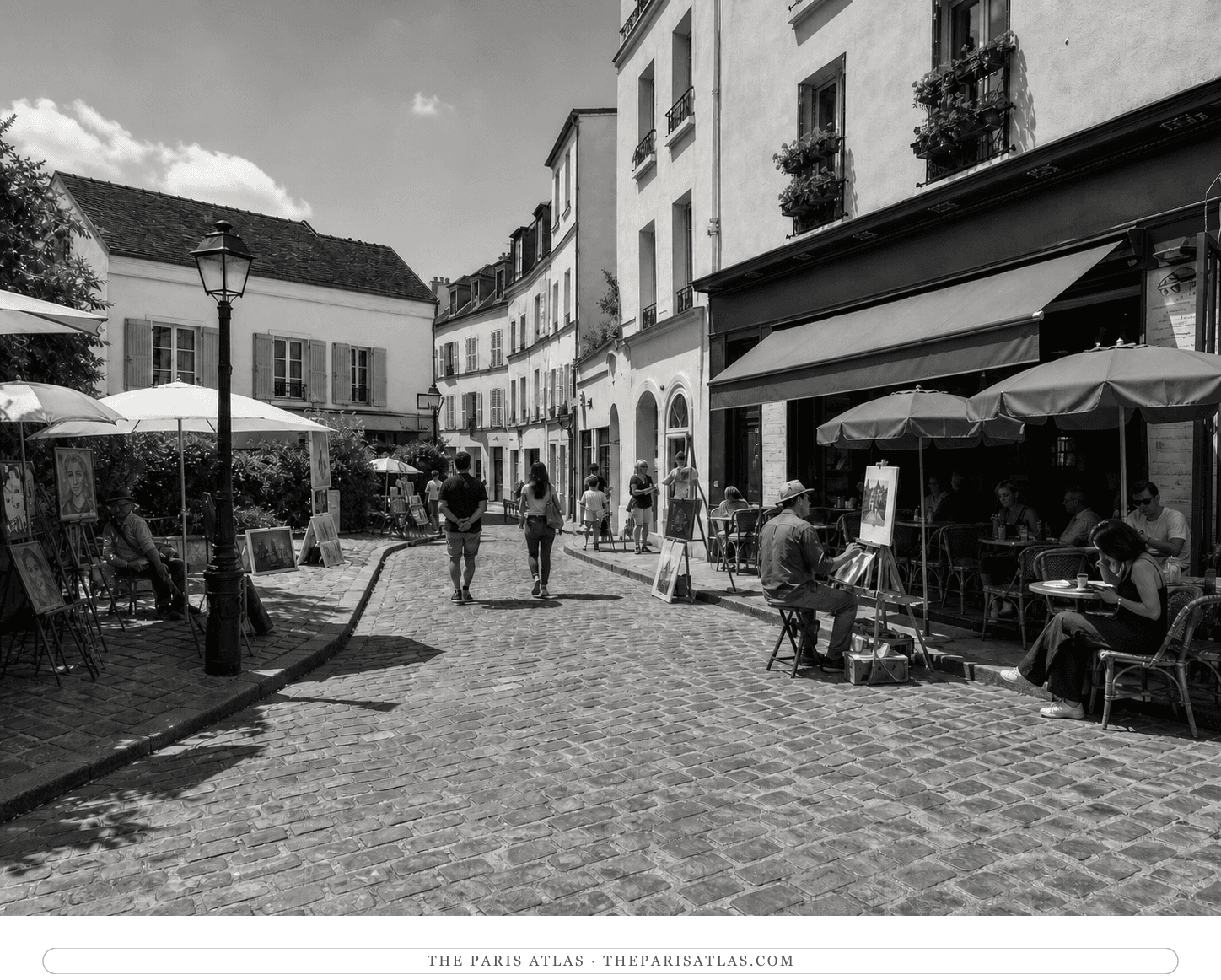
Place du Tertre
Montmartre's historic hilltop square, now shared by restaurant terraces and licensed artists—and the setting of Langston Hughes and Anne Marie Coussey's last Paris dinner together in 1924.

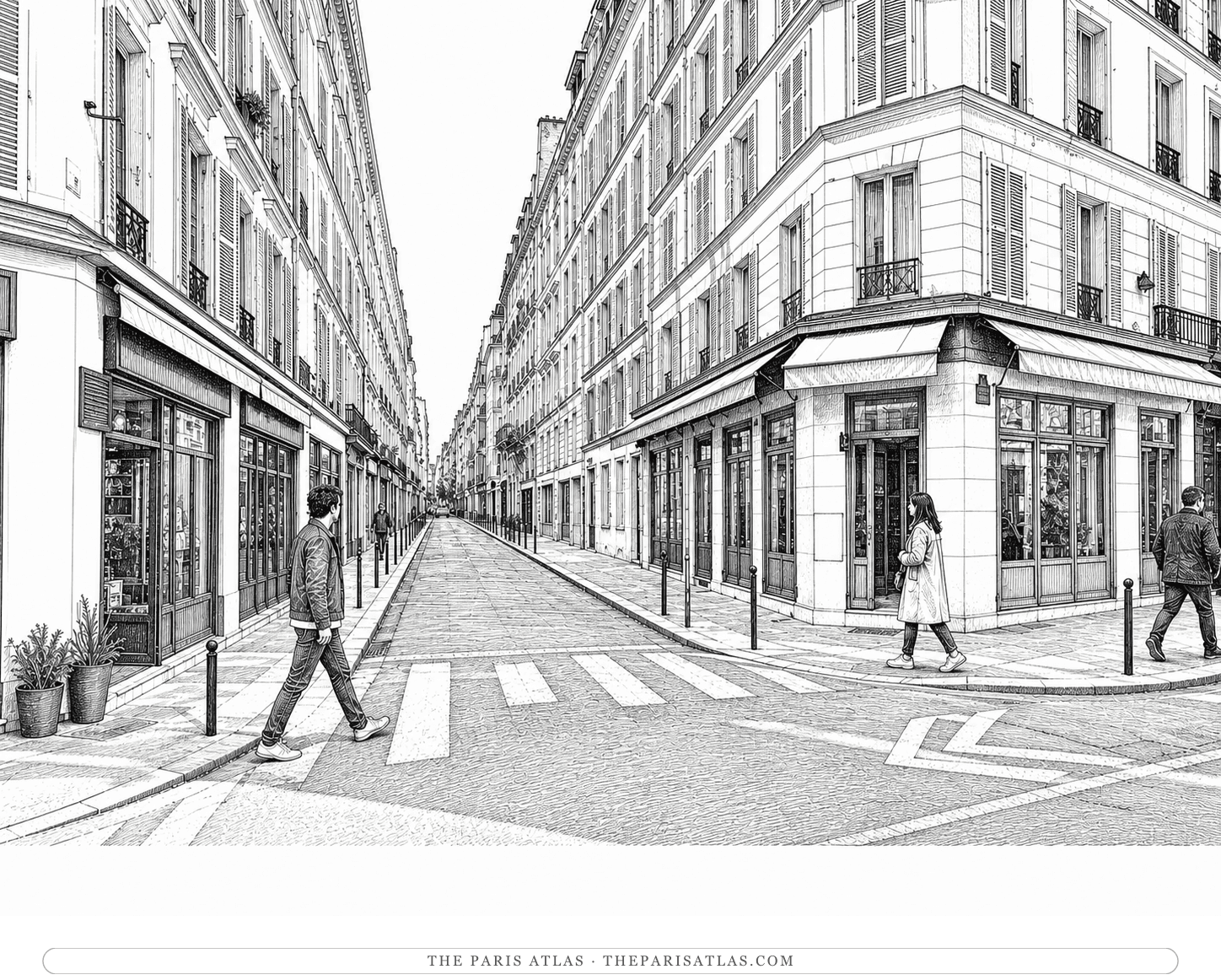
The Flea Pit
The vanished café at the La Bruyère and Pigalle corner where Black musicians and performers gathered, and where Langston Hughes watched Sonya hide beneath their table.

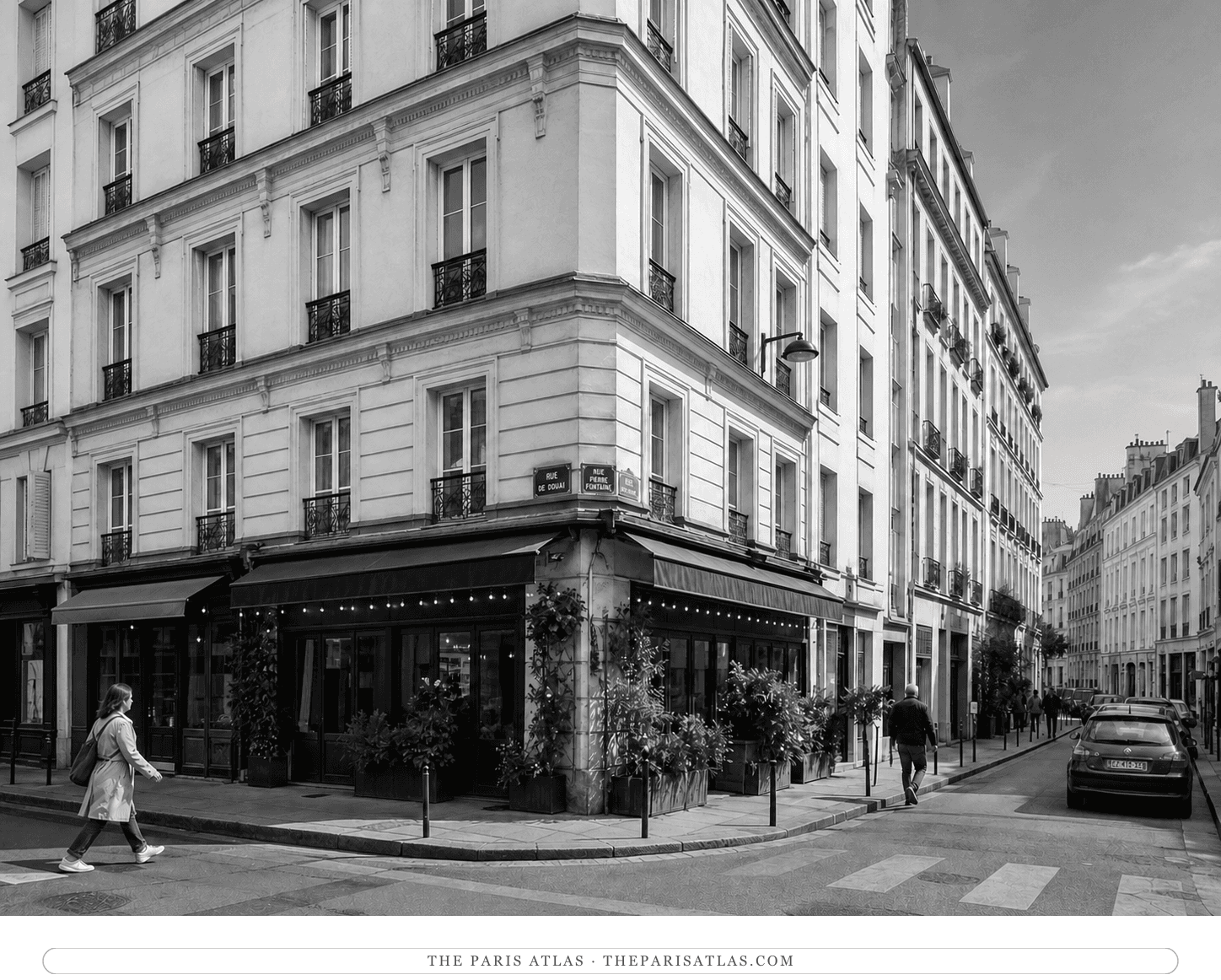
Hotel Liseux and Café Liseux
The surviving Pigalle corner where the vanished Café Liseux and Hotel Liseux stood, and where Langston Hughes lodged during his 1937 and 1938 returns to Paris.


Le Chat Noir
The legendary Montmartre cabaret where poets, singers, painters, cartoonists and musicians made the room itself an artistic creation — crowned by an extraordinary shadow theater.

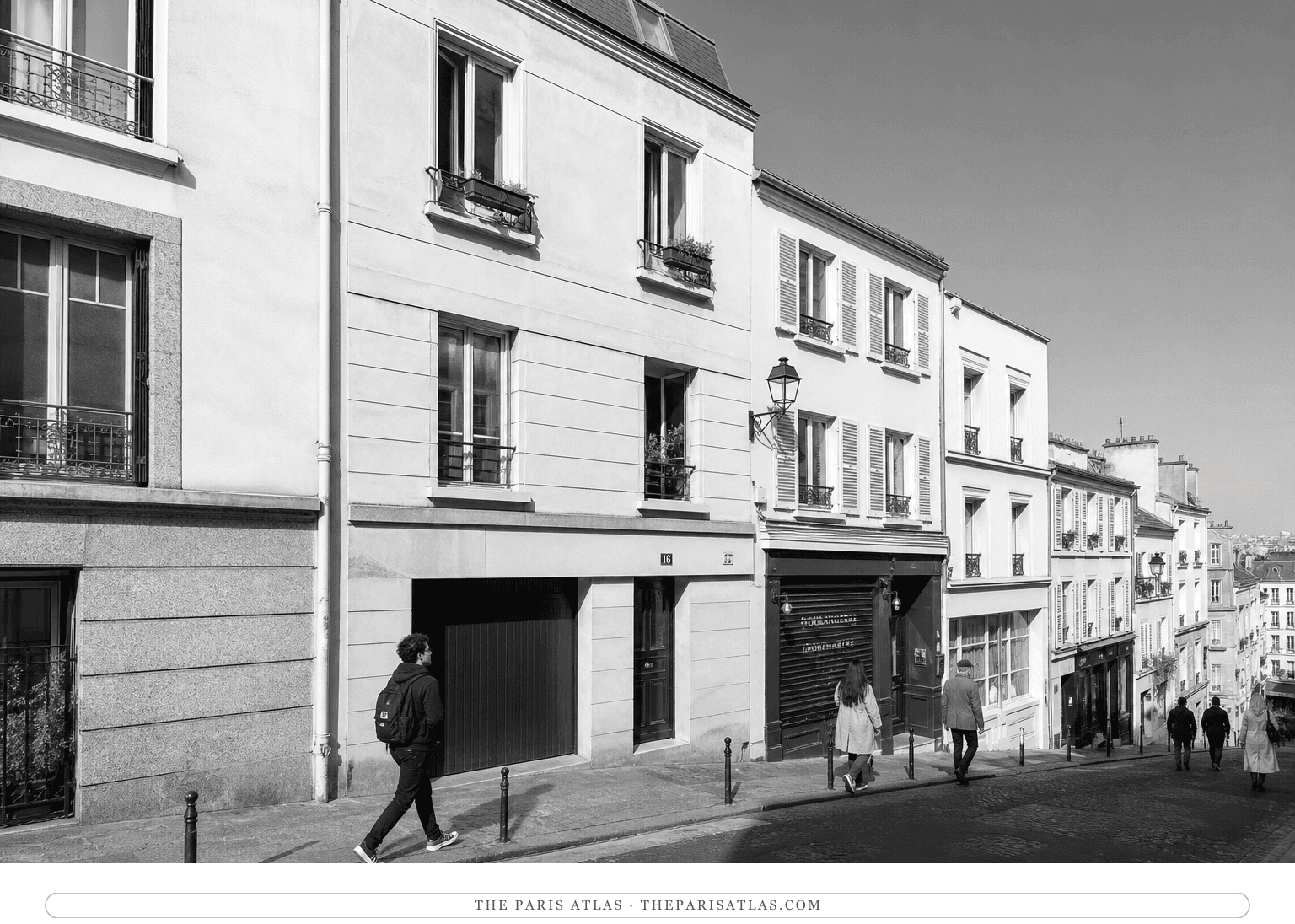
16 rue Ravignan
The site of the Hôtel du Poirier in Montmartre, where Albert Camus finished writing L'Étranger in early May 1940 — in a hotel room, at twenty-six, in the weeks before the German army reached Paris. The hotel is gone.

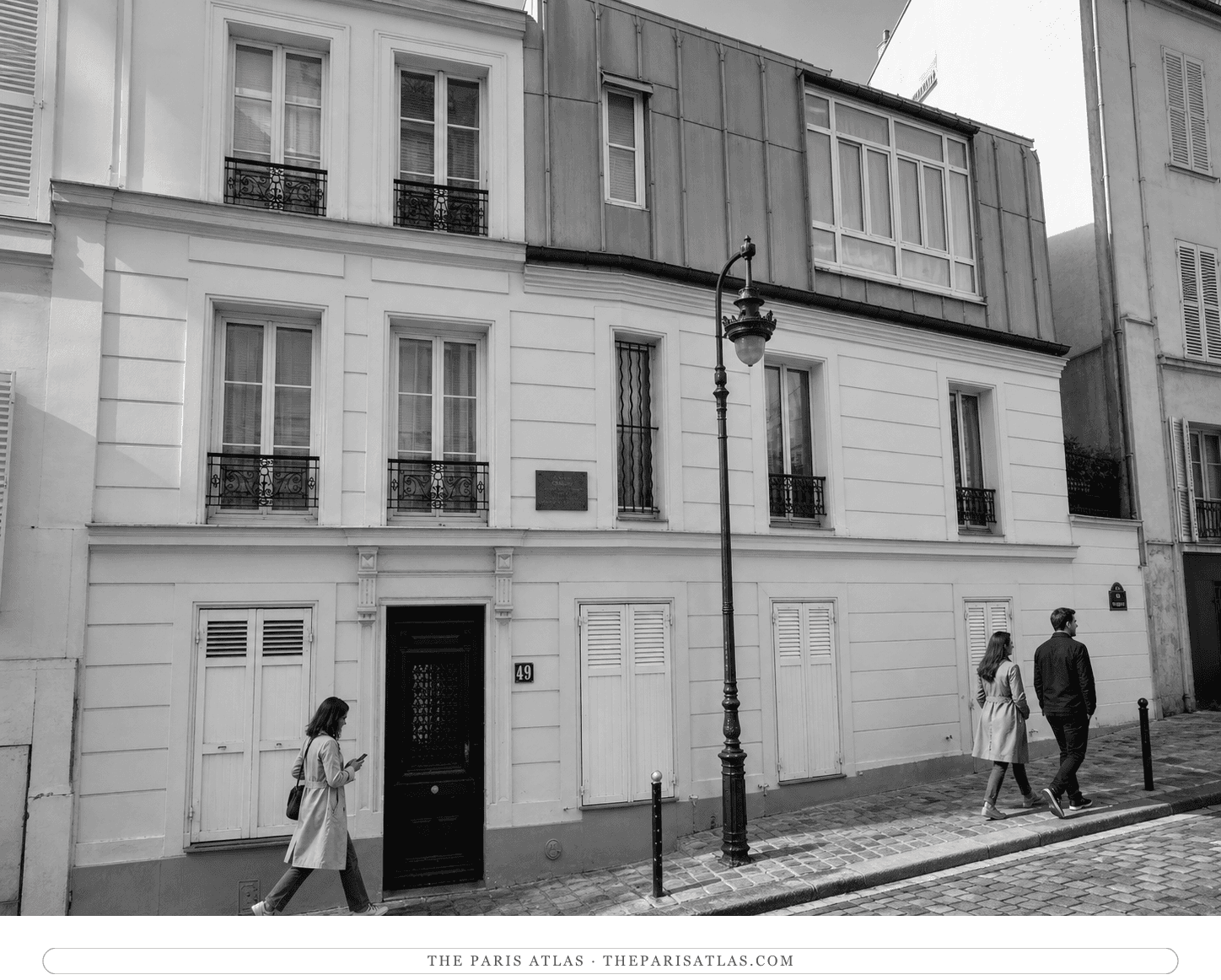
49 rue Gabrielle
Where Pablo Picasso set up his first studio in Paris, in 1900, at the age of eighteen — four years before the Bateau-Lavoir and seven before Les Demoiselles d'Avignon.

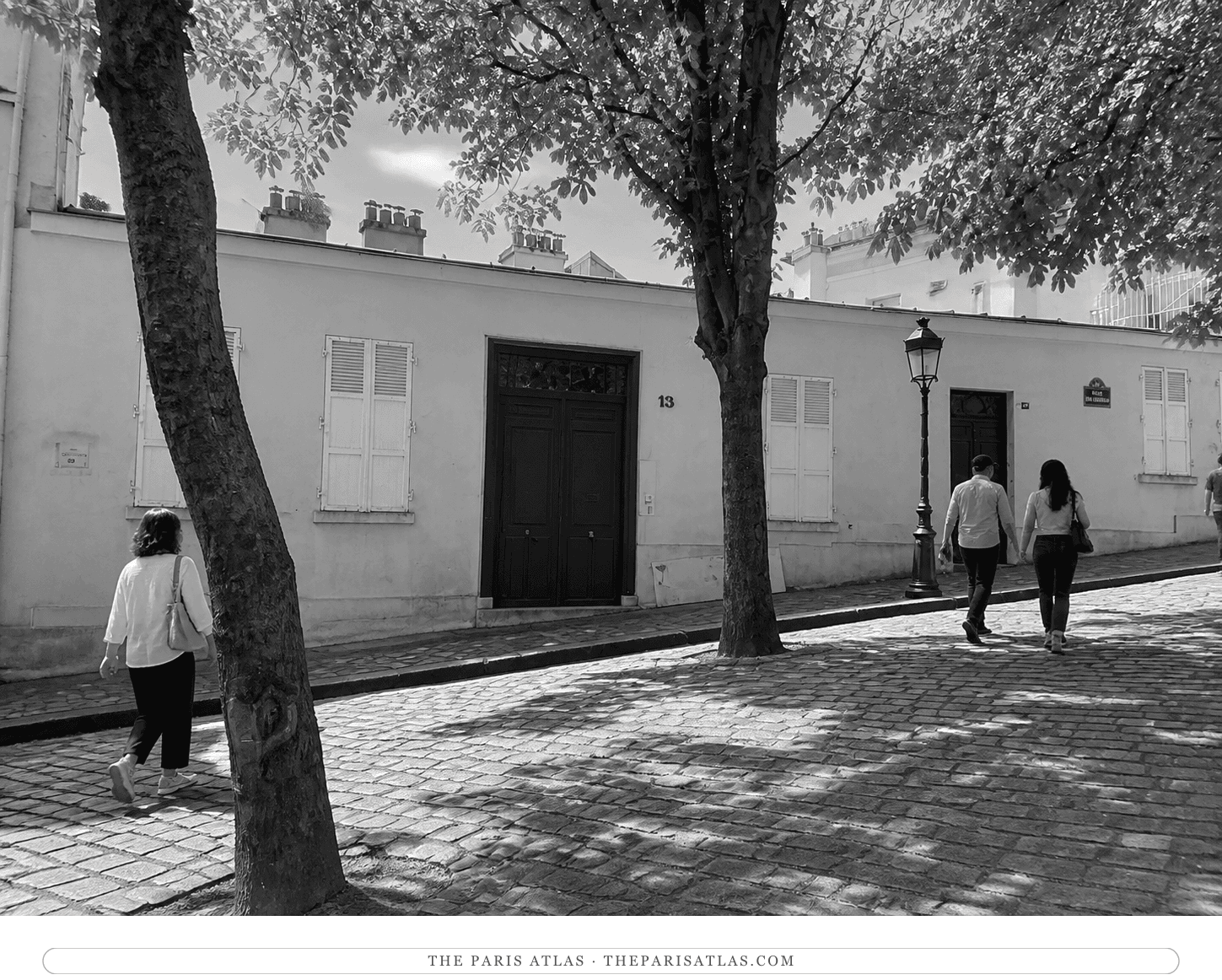
Le Bateau-Lavoir
A ramshackle Montmartre building of cheap artists' studios, where Pablo Picasso lived and worked from 1904 and painted Les Demoiselles d'Avignon in 1907 — the picture that broke the rules of European painting. The original burned down in 1970; the rebuilt version still holds studios.

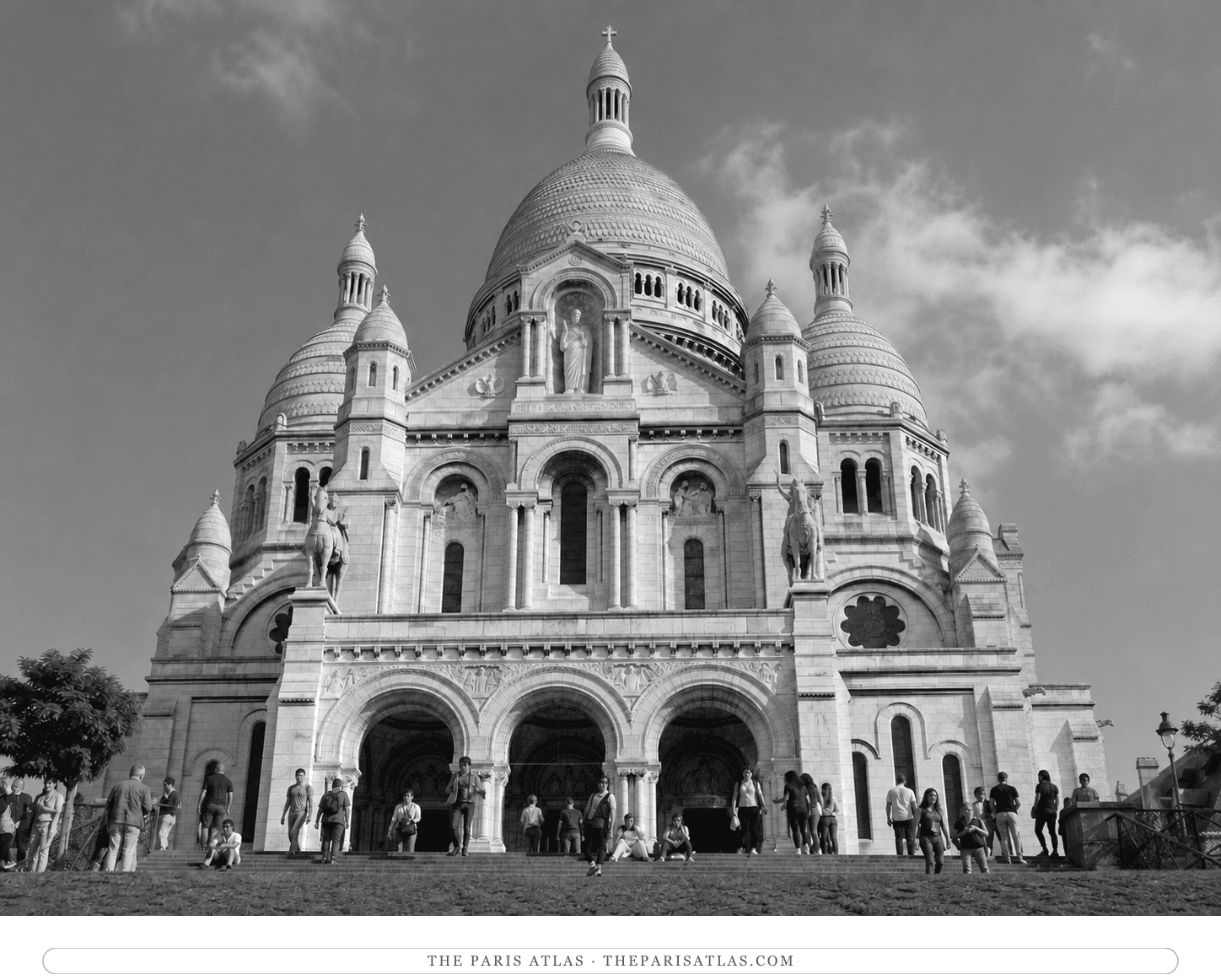
The Sacré-Cœur
The white basilica on the summit of Montmartre, built by public subscription after France's defeat in 1870 and consecrated in 1919 after nearly forty years of work. Entry is free, every day 6.30 a.m. to 10.30 p.m. The dome — 280 steps, no lift — costs €8 and gives a 360-degree view over Paris.
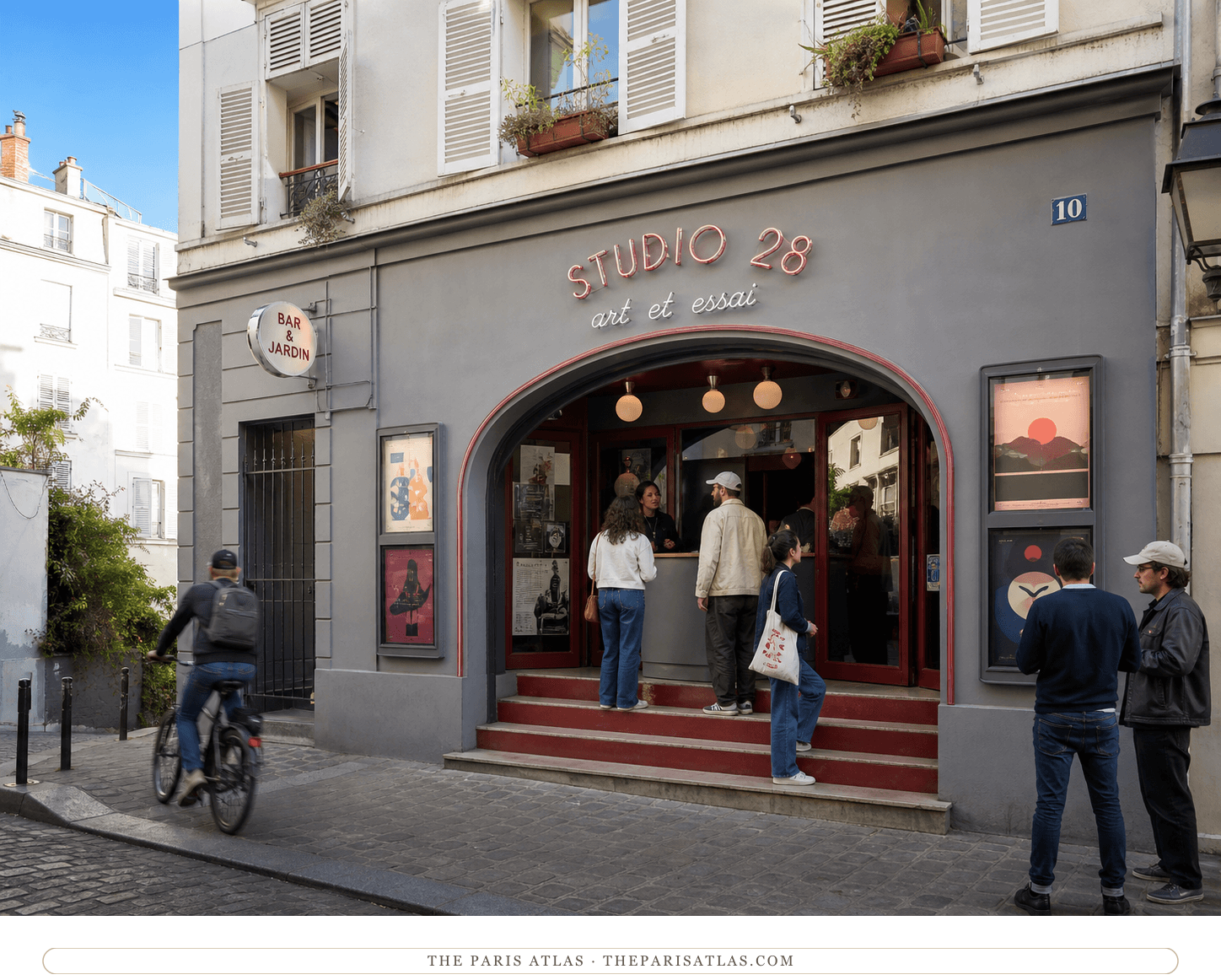
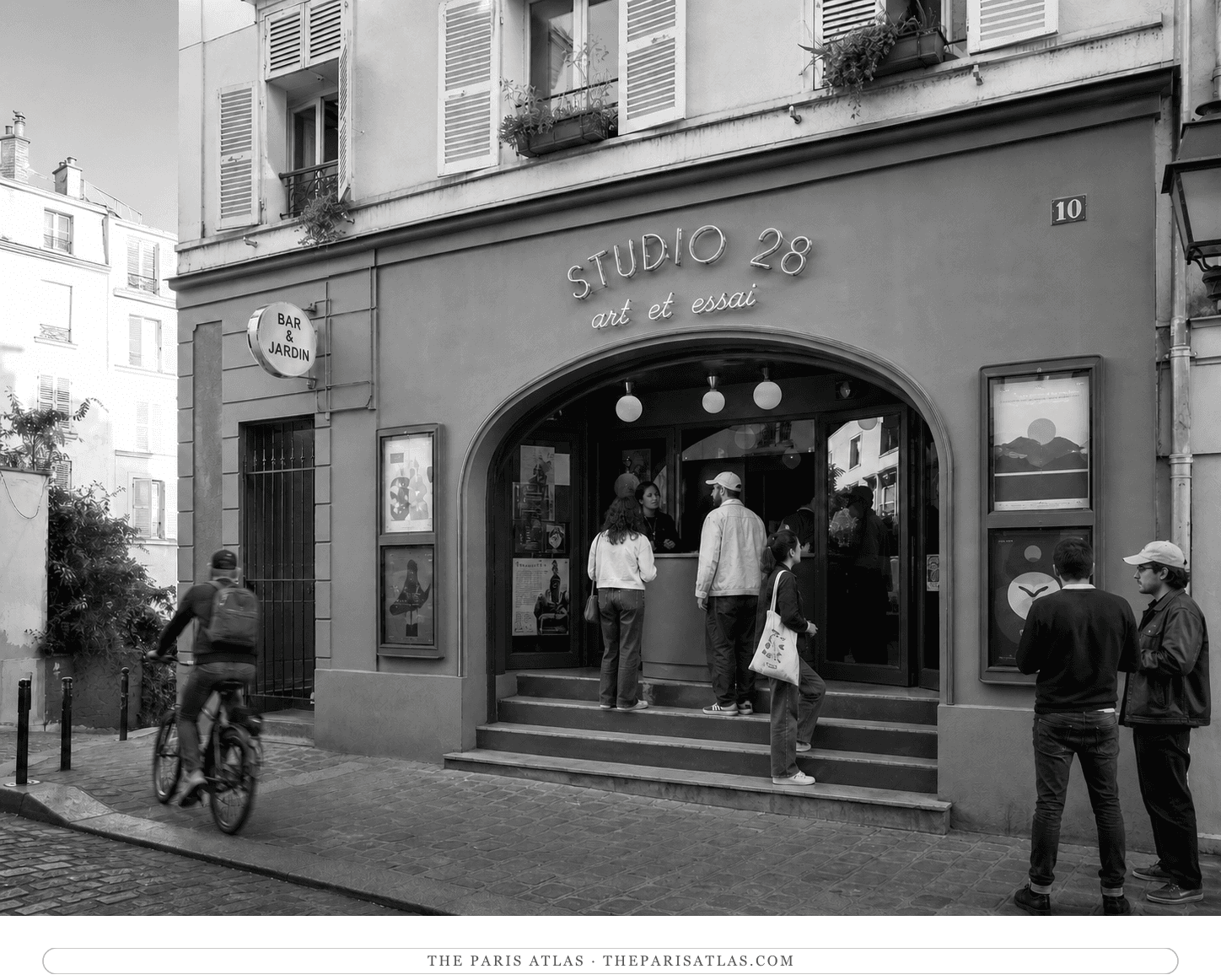
Studio 28
A small Montmartre cinema, opened in 1928 and still running. It gave Un Chien andalou an eight-month run from October 1929, and in December 1930 its screening of Buñuel and Dalí's L'Âge d'or ended with far-right groups attacking the auditorium and slashing the paintings hanging in the foyer.

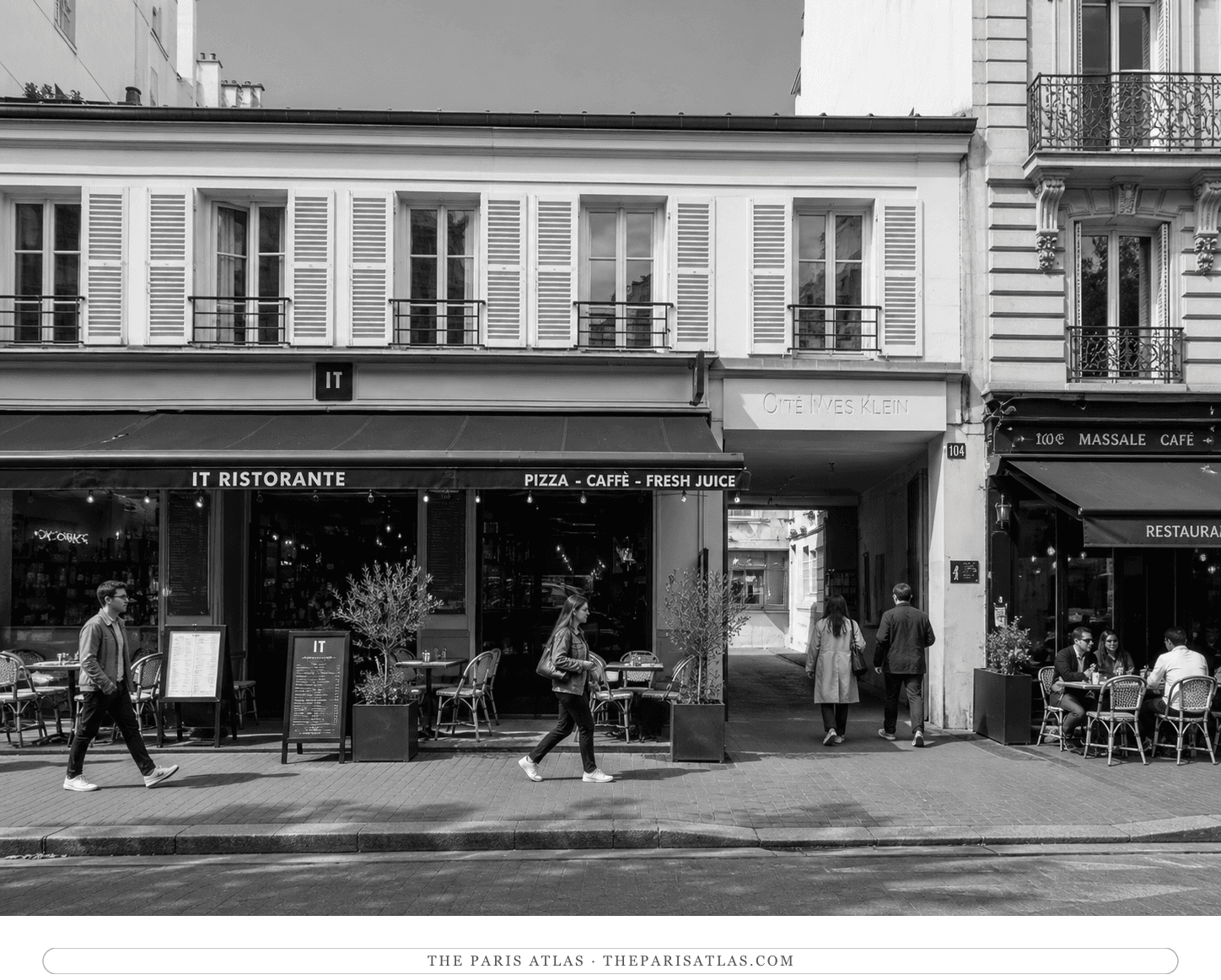
Atelier Cormon, 104 boulevard de Clichy
The open studio of the academic painter Fernand Cormon, on the ground floor at 104 boulevard de Clichy, where Vincent van Gogh worked from March 1886 alongside Toulouse-Lautrec, Émile Bernard and Louis Anquetin.

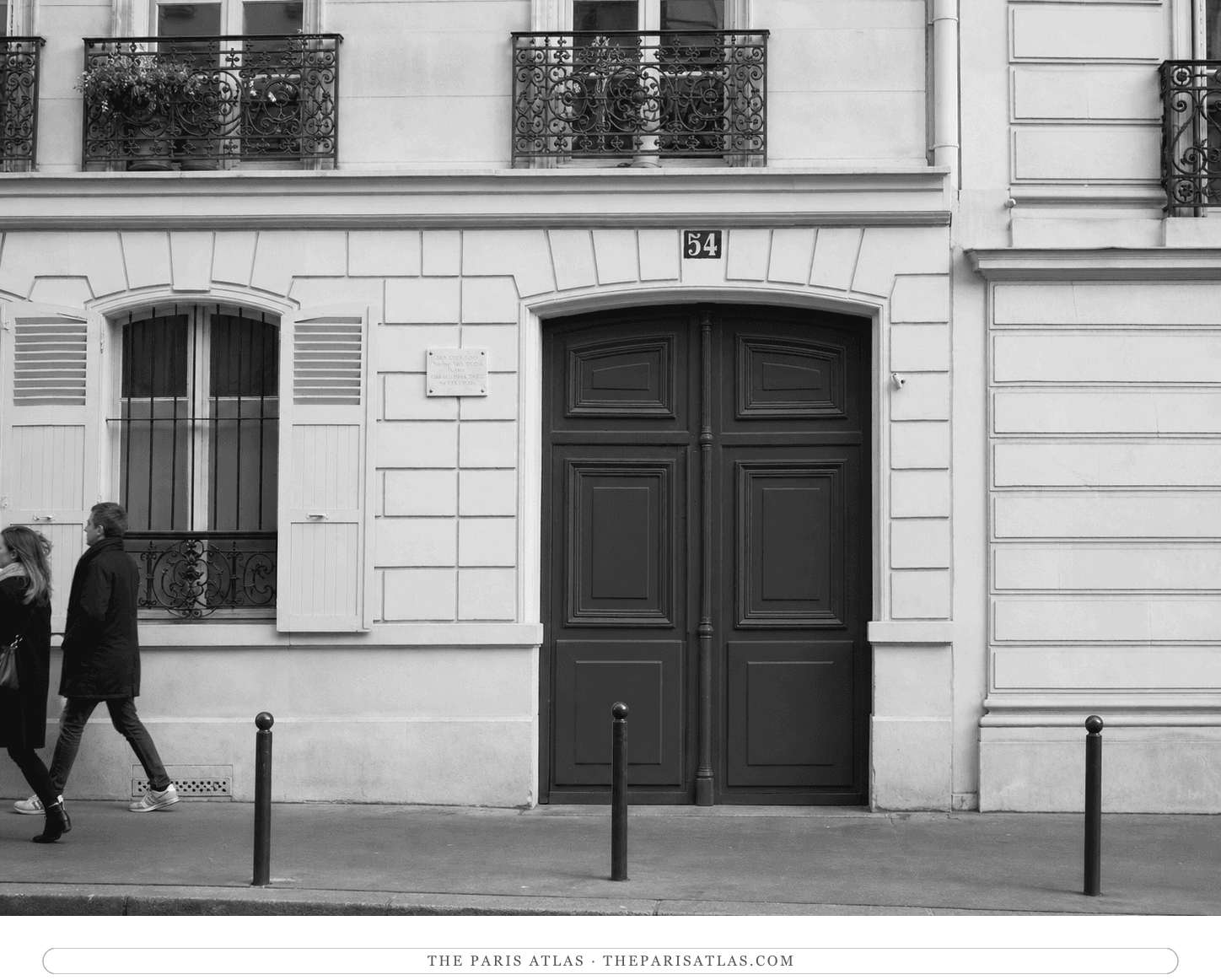
54 rue Lepic
The Montmartre flat Vincent van Gogh shared with his brother Theo from June 1886 until he left for Arles in February 1888 — the address where his palette turned from Dutch brown to the colour everyone now knows him for.

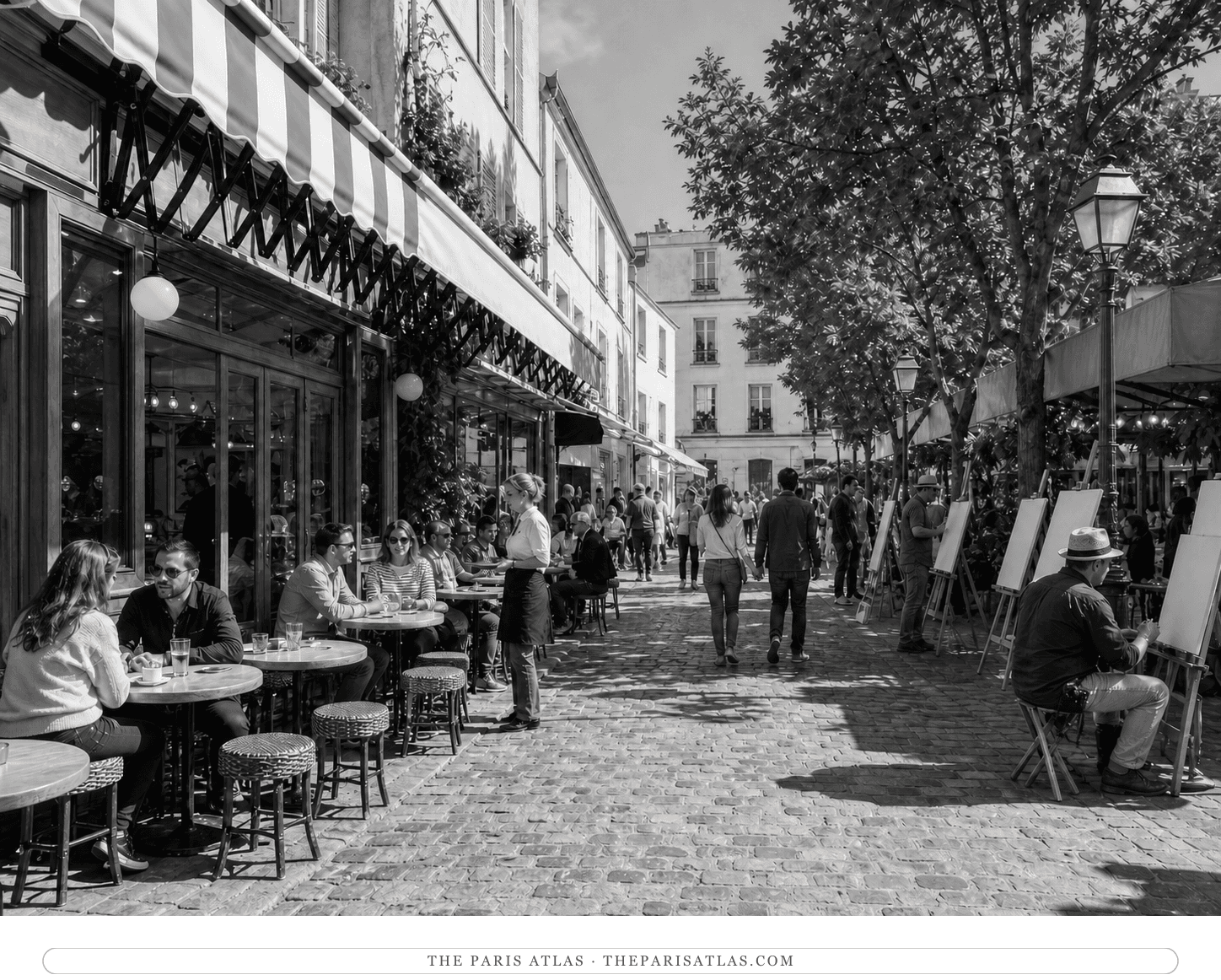
Montmartre
The hill north of Paris that was a separate village until 1860 and an artists' quarter until the First World War — the district of Van Gogh's two Paris years, Toulouse-Lautrec's posters, the Bateau-Lavoir and the Moulin Rouge.

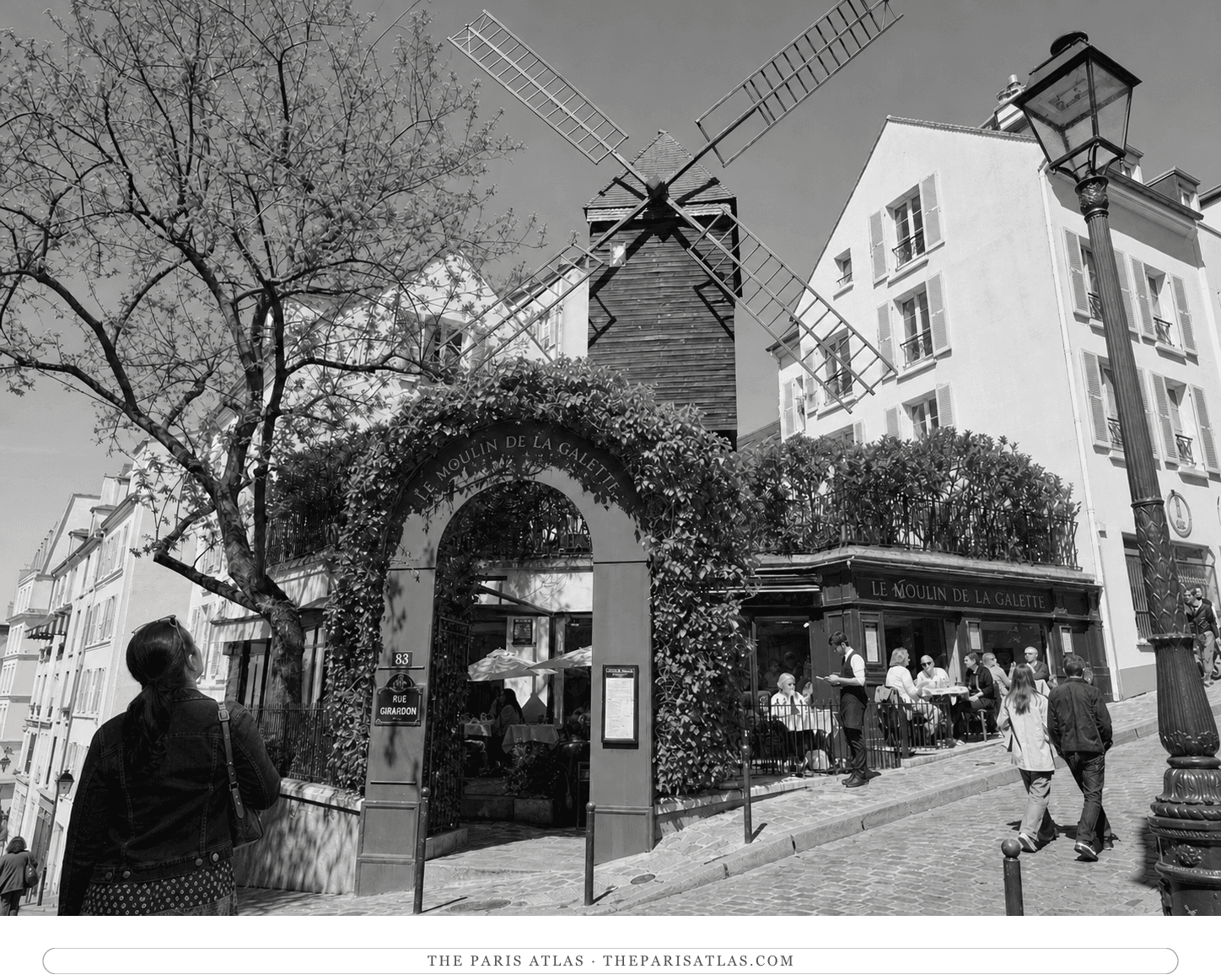
Moulin de la Galette
The last working windmills on the butte, turned into an open-air dance hall — painted by Renoir in 1876 and by Van Gogh repeatedly in 1886, a few minutes up the hill from his flat.

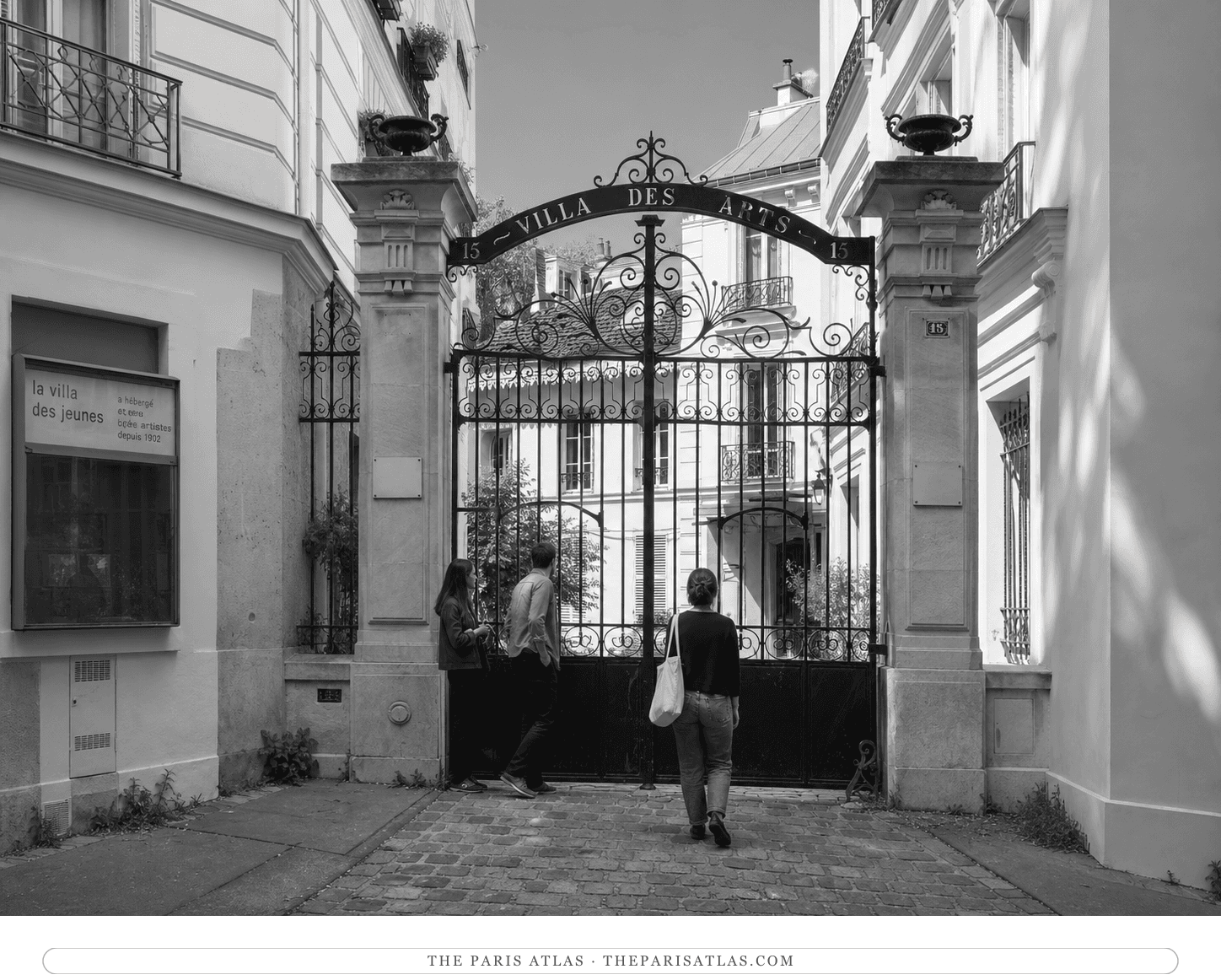
Villa des Arts, 15 rue Hégésippe-Moreau
The purpose-built studio complex below Montmartre where Paul Cézanne worked in 1898 and 1899 — one of his last Paris addresses, and where he painted the portrait of Ambroise Vollard.

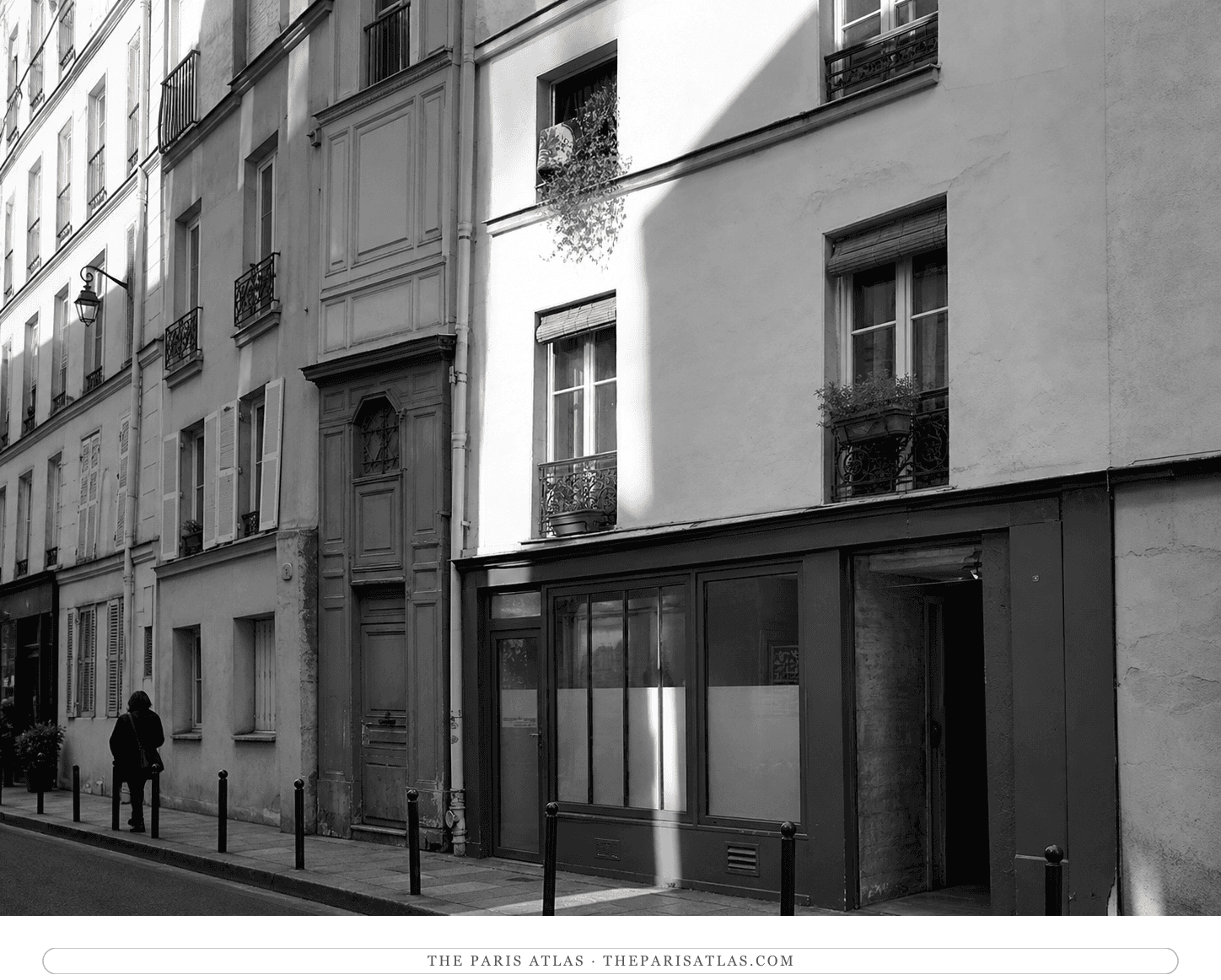
18 rue des Trois-Frères
The Montmartre address where the Pissarro family lodged in November 1878, and where Julie Pissarro gave birth — the subject of the pastel At the Window, rue des Trois-Frères.

Hôtel des Arts Montmartre
A 49-room family-run four-star hotel on rue Tholozé in Montmartre, near Abbesses Métro station, with small rooms, some looking over Paris, a hammam and a fitness room.

Hôtel Monsieur Aristide
A 25-room four-star boutique hotel on a short street off rue des Abbesses in Montmartre, built around an inner garden, with the Café Aristide restaurant and bar.

Hôtel Particulier Montmartre
A five-suite guesthouse in a house set back in a garden off avenue Junot in Montmartre, with suites of 35 to 85 m², a restaurant and a cocktail bar.

Terrass" Hôtel
A family-run four-star hotel in Montmartre, open since the 1910s, across the street from Montmartre Cemetery, with a 7th-floor restaurant and rooftop bar looking across Paris to the Eiffel Tower.
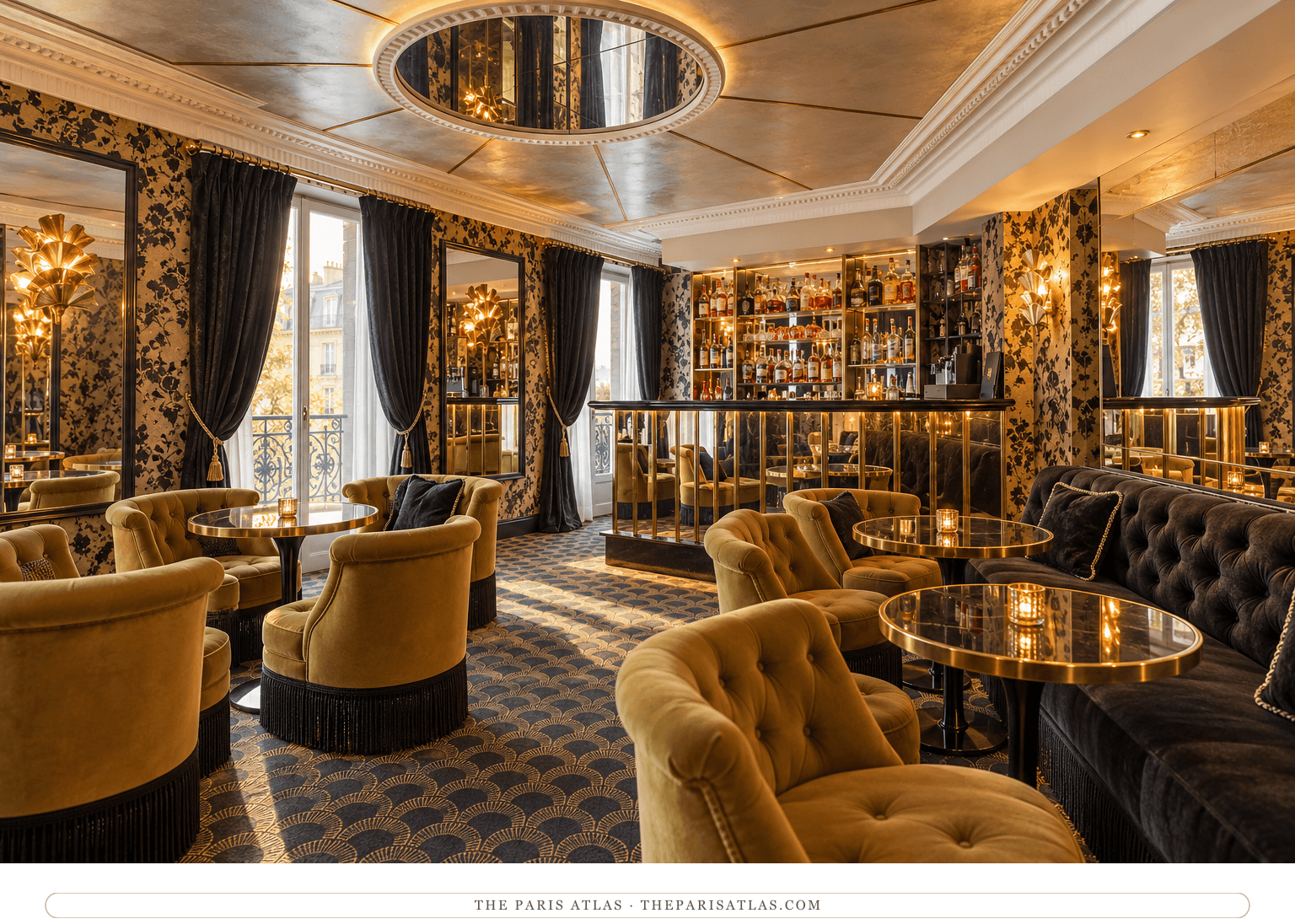
Hôtel Manolita Paris
A small five-star hotel on rue Lepic, close to the Moulin Rouge, with richly decorated rooms, a cocktail bar and selected balconies above the rooftops.
Alt Empordà, Catalonia
Cadaqués
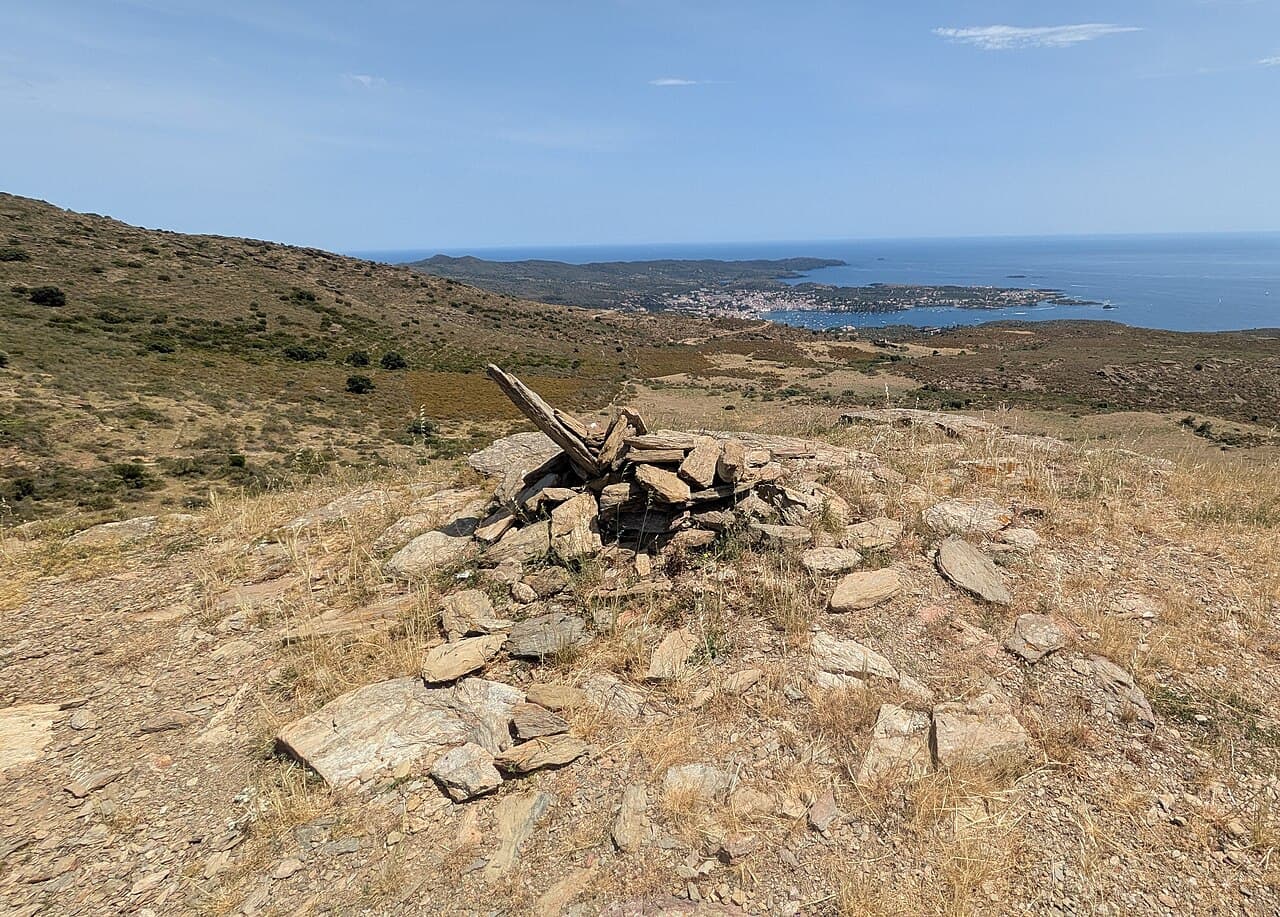
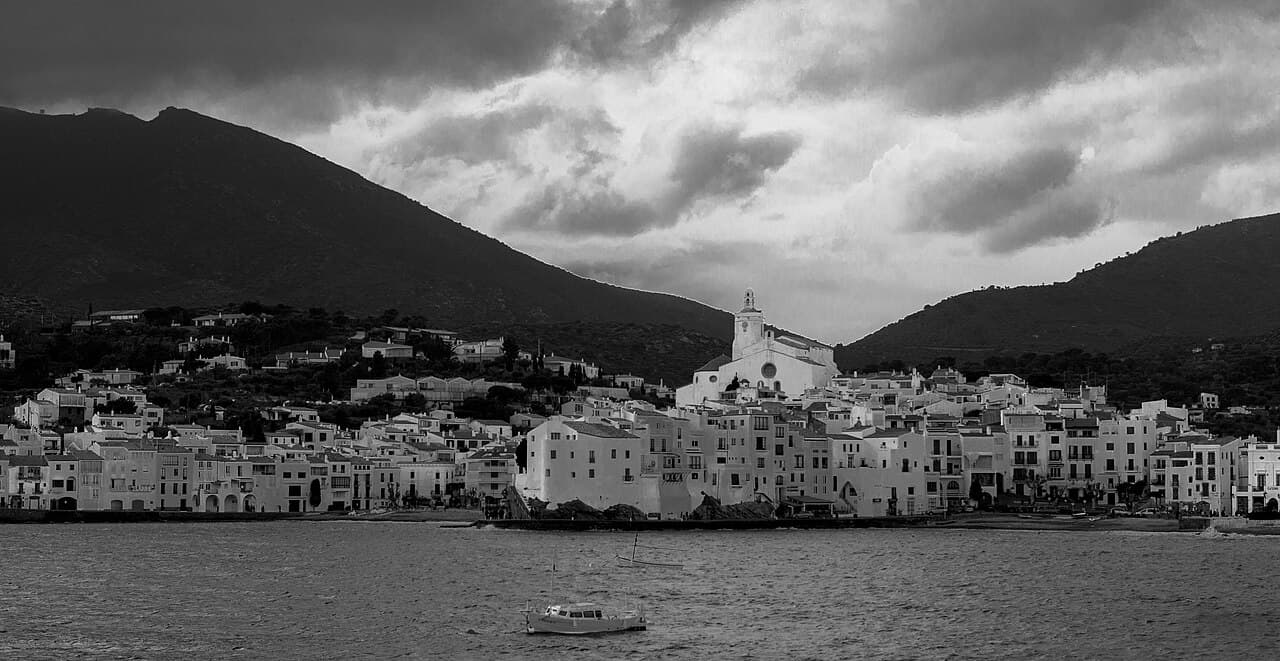
A white coastal town in northeastern Catalonia where a medieval centre, a sheltered bay, Portlligat, and the rocks of Cap de Creus meet the documented lives and work of Salvador Dalí and his circle.
Figueres
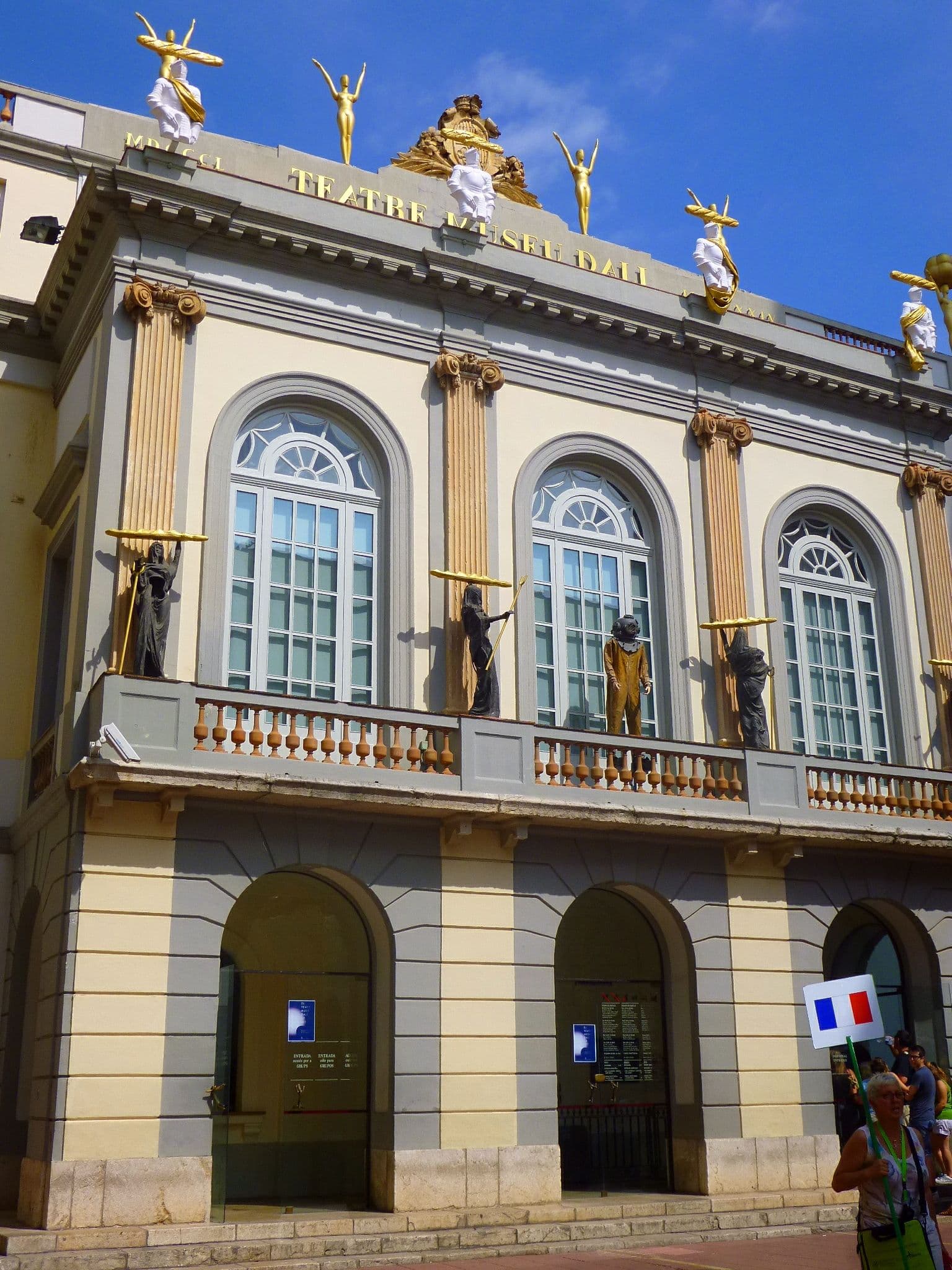
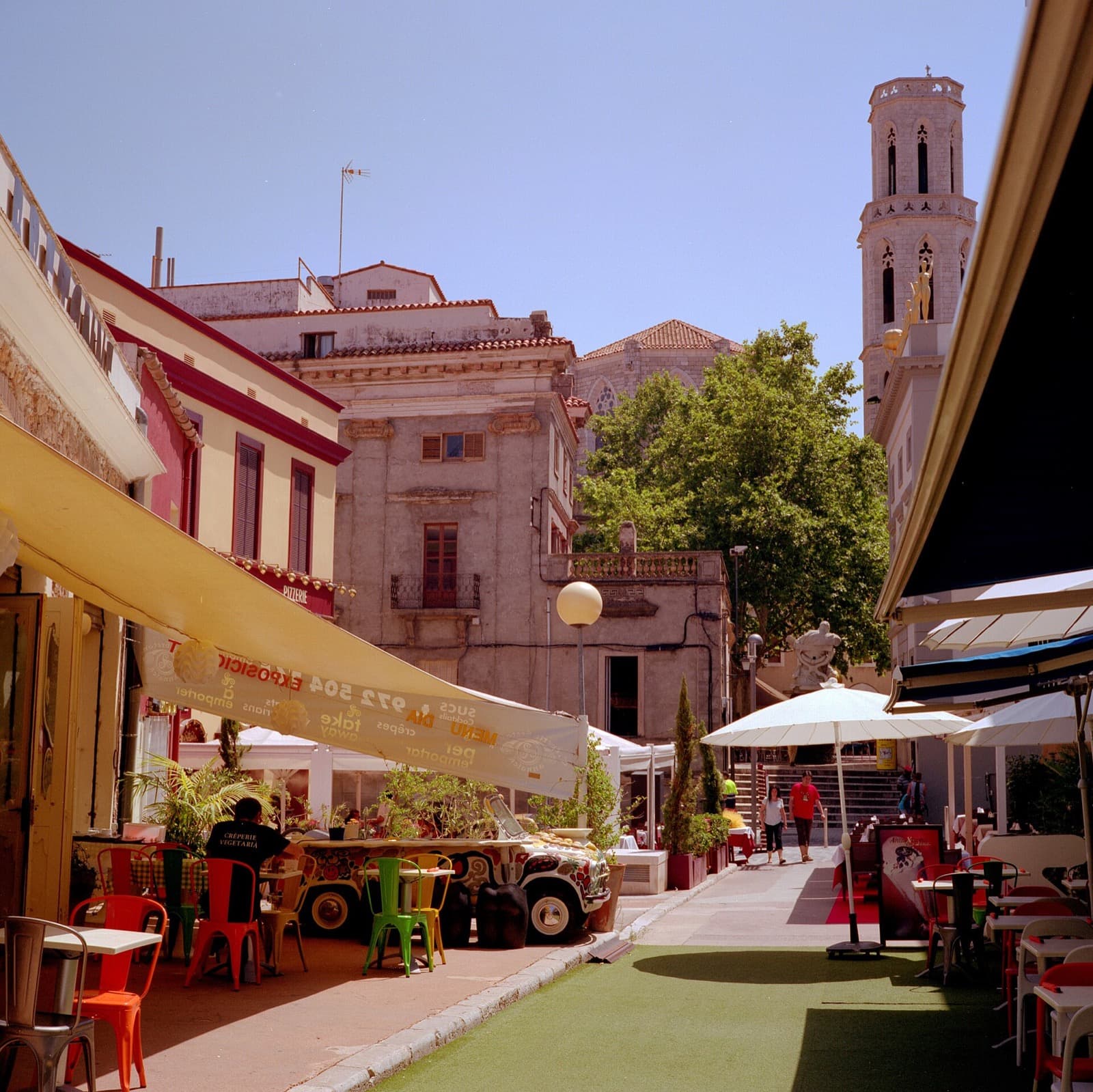
A practical guide to Figueres, the inland Catalan city where Salvador Dalí was born and buried, with a walkable centre, two rail stations, the Dalí Theatre-Museum, and the vast Sant Ferran fortress.
Alésia

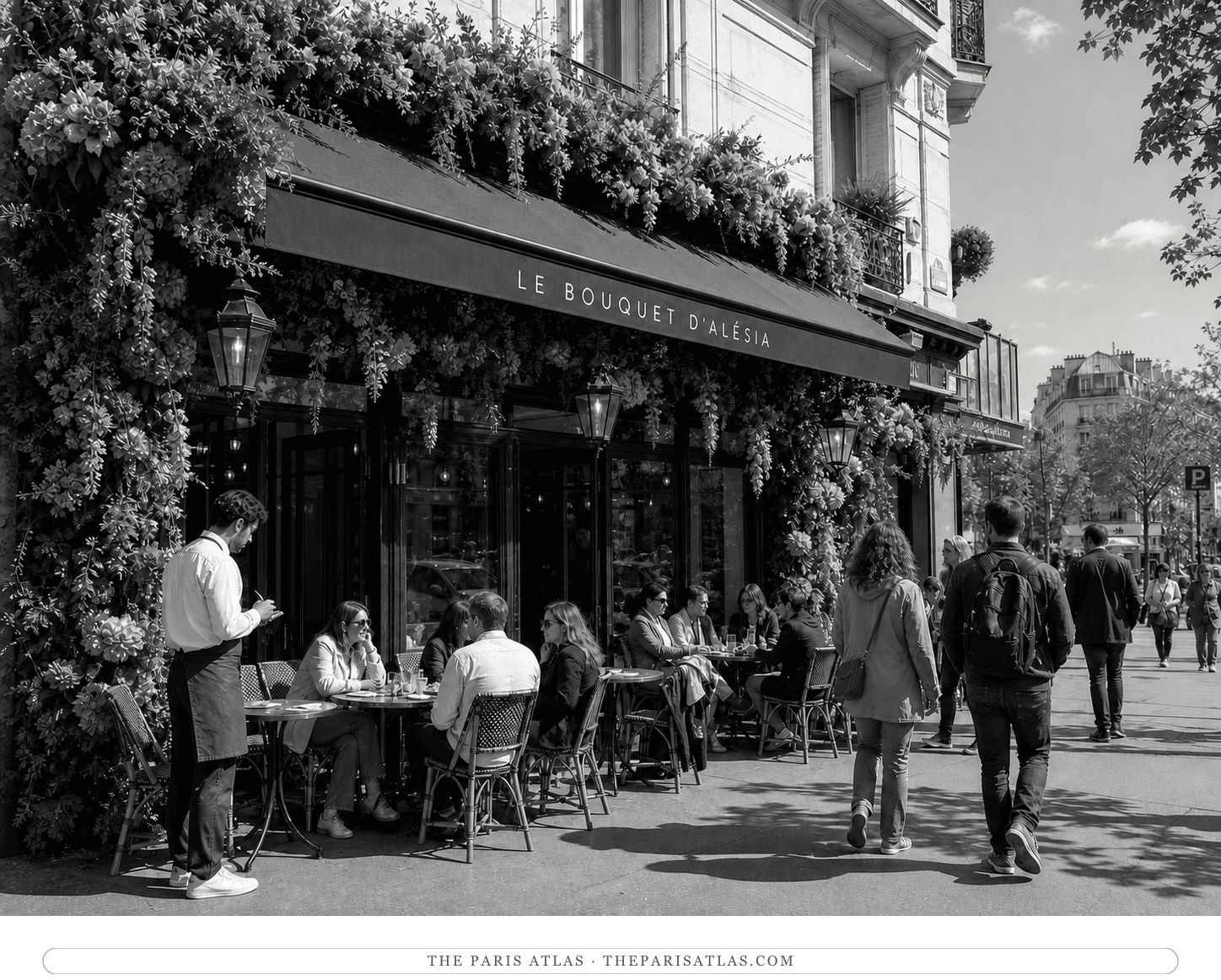
Le Bouquet d'Alésia
A corner café-brasserie in the 14th, and one of the few Paris addresses Henry Miller names himself. In a manuscript dated 17 March 1937 he places himself here, examining a section of the café's marble counter with the painter David Edgar.

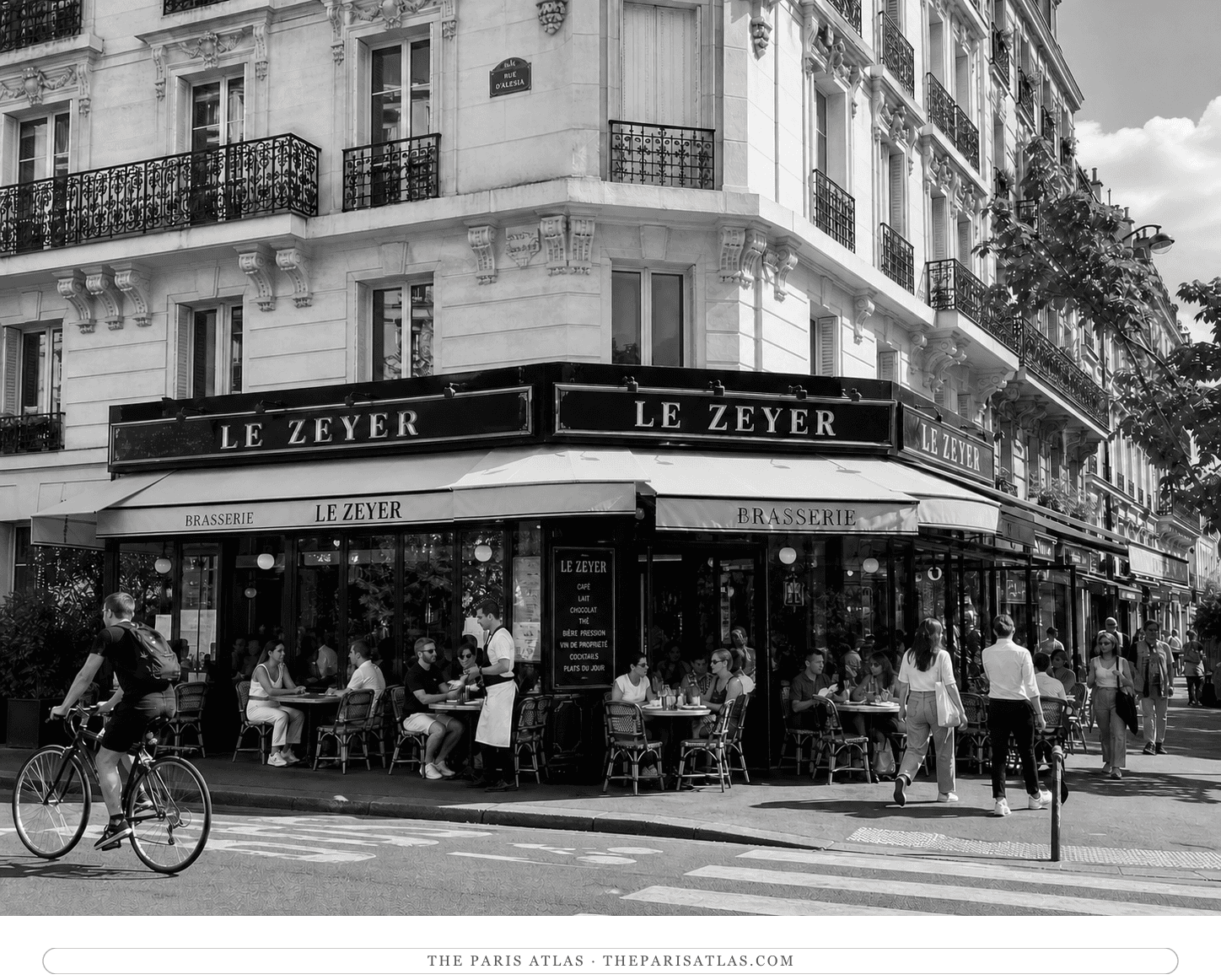
Le Zeyer
A corner café-brasserie in Alésia where Henry Miller met regularly with Alfred Perlès and Michael Fraenkel during the years that fed into Tropic of Cancer. Still trading on the same corner.
Arsenal

Auteuil
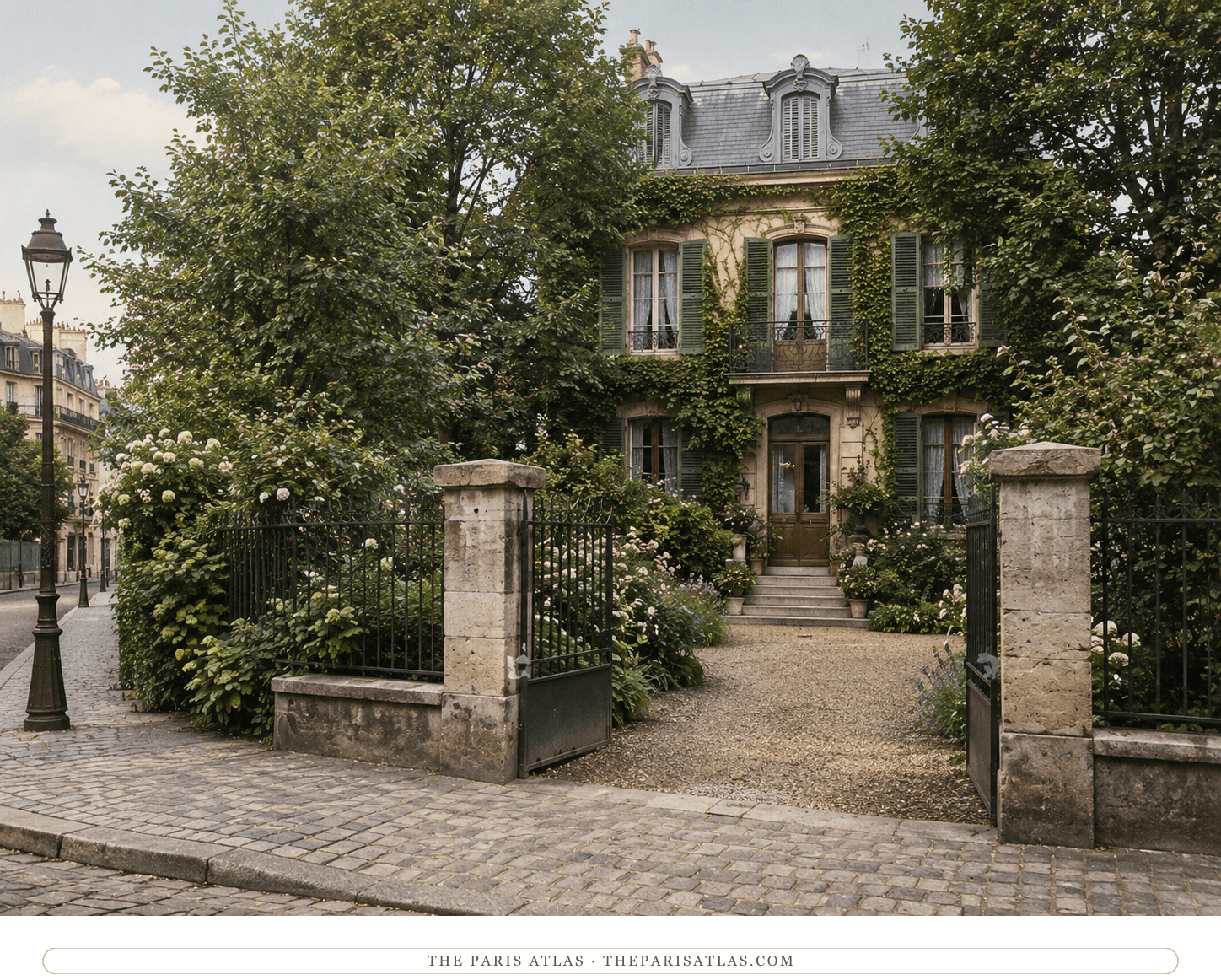
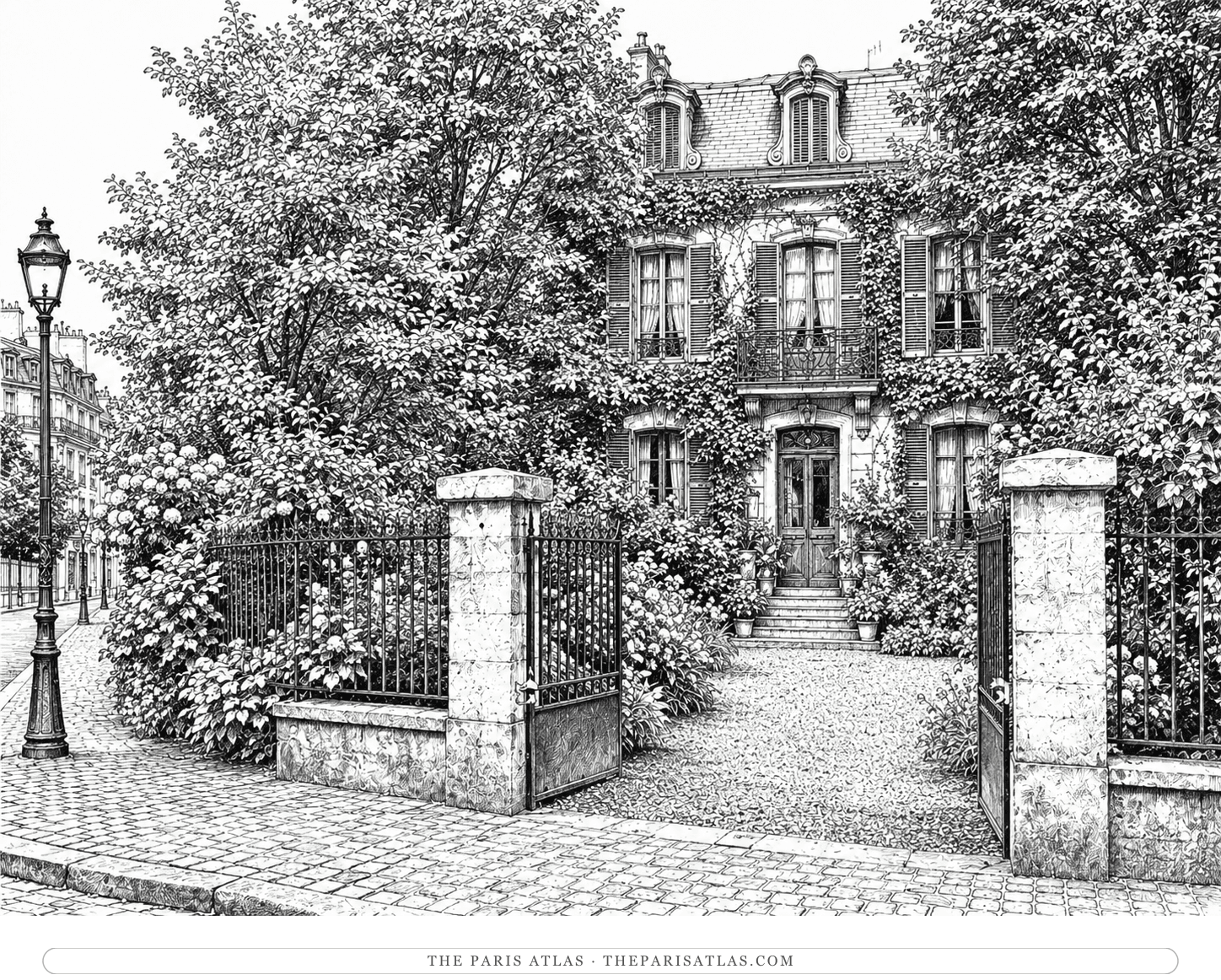
69 boulevard Suchet
Colette's long Auteuil home through the end of her second marriage — the address just before the Palais-Royal.


96 rue Jean de La Fontaine
The house in Auteuil where Marcel Proust was born on 10 July 1871 — at the time a village on the western edge of Paris rather than a city street, and the address his family had retreated to during the upheaval of the Commune.

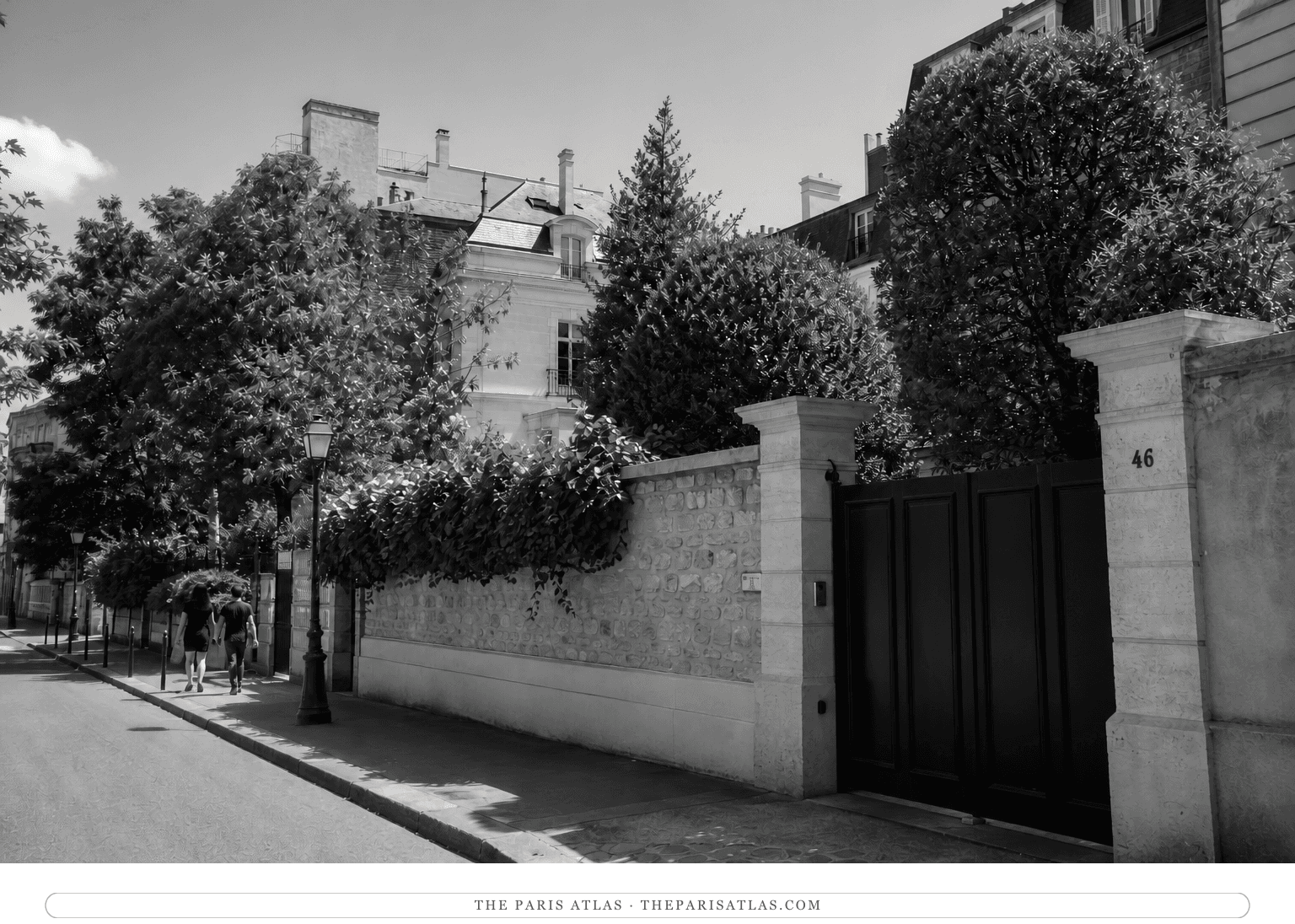
American Hostels for Refugees, Maison de Repos, 46 rue du Docteur-Blanche
A rest house of the American Hostels for Refugees, the organisation Edith Wharton ran with Royall Tyler for civilians displaced by the German advance into Belgium and northern France.

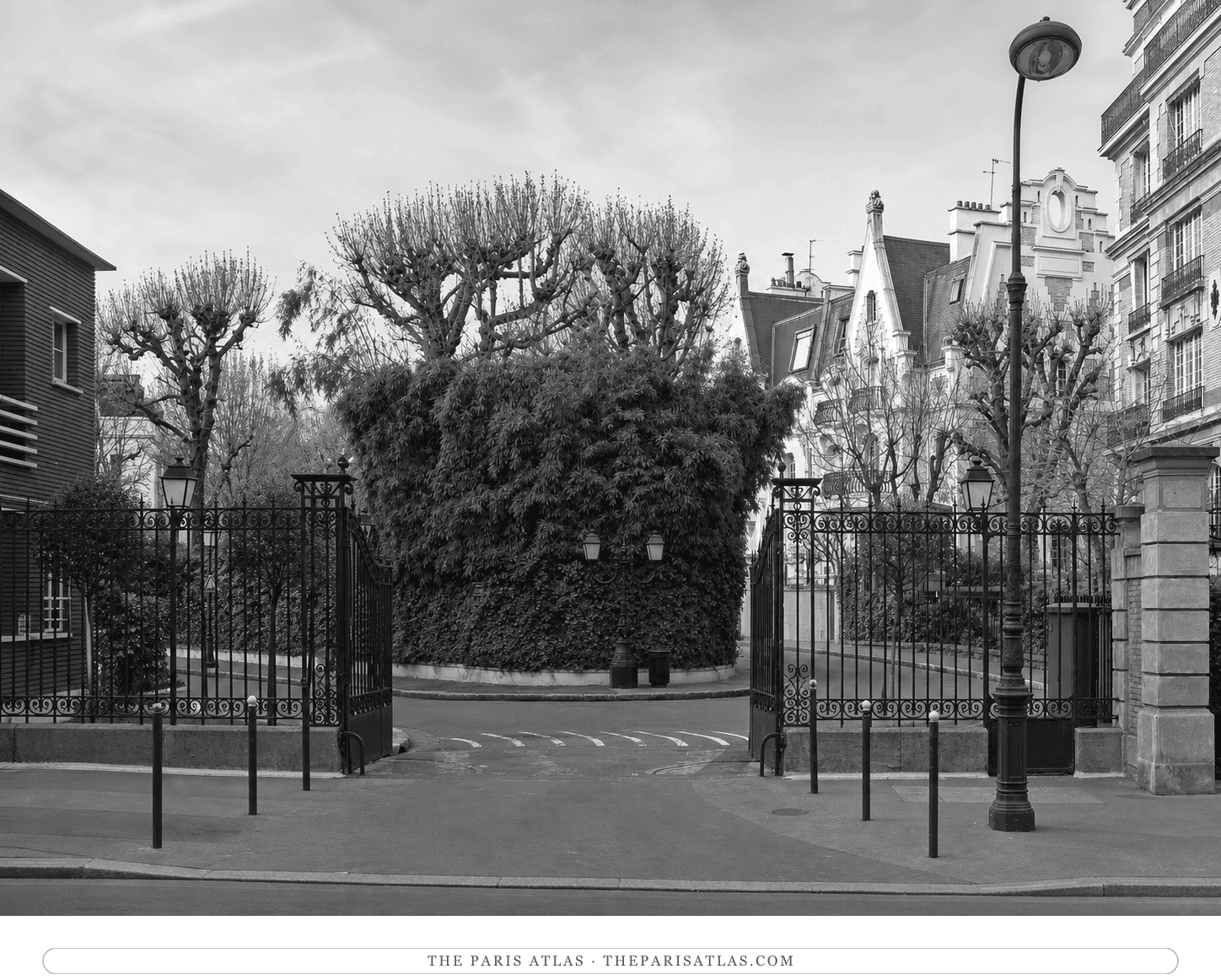
Villa Montmorency
The private gated estate in Auteuil, laid out on the grounds of an eighteenth-century château, where Marc Chagall kept a studio in the mid-1930s before the war forced him out of France.
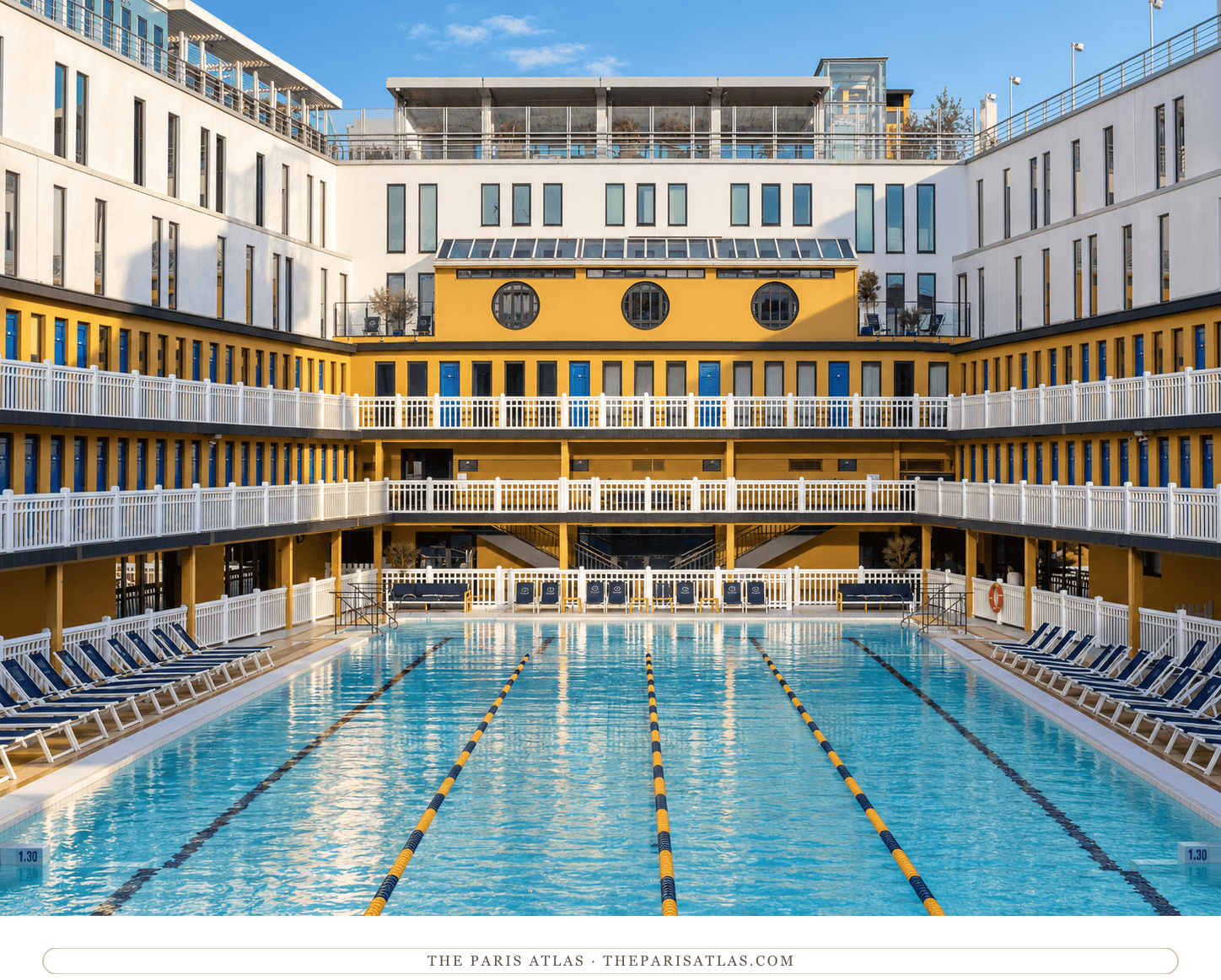
Hôtel Molitor
A five-star hotel built around Molitor’s reconstructed Art Deco swimming baths, with indoor and outdoor pools, contemporary rooms and a collection of street art.
Bas-Meudon, on the Seine below the hill

Bastille
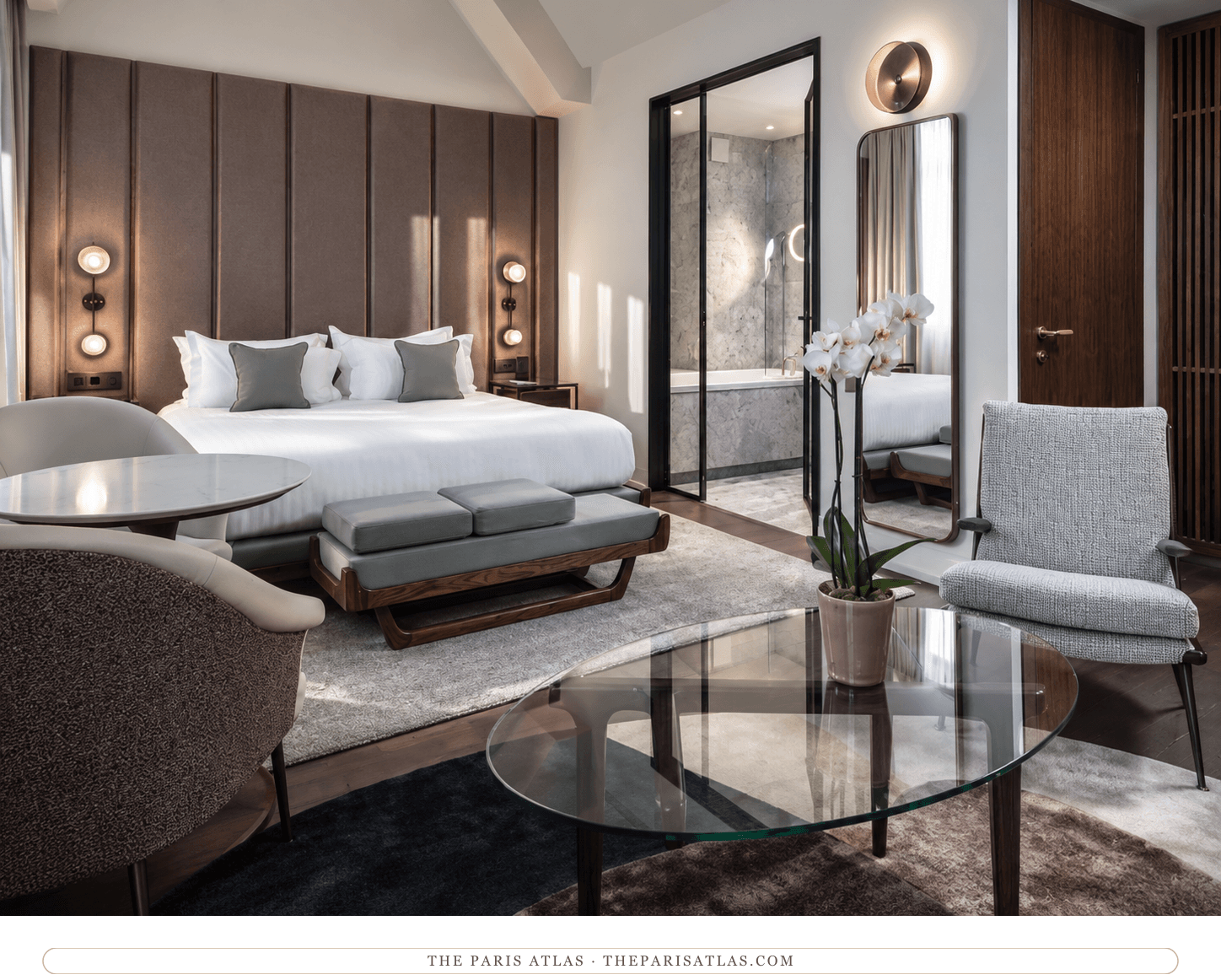
Maison Bréguet
A 50-room hotel in a former laundry-machine factory near Bastille, with a glass-roofed restaurant and an eight-meter indoor pool.

Boutet Bastille Hotel Paris – MGallery Collection
A five-star hotel in a former timber business and chocolate factory, with 80 rooms and suites, an indoor pool and eight private terraces.
Batignolles

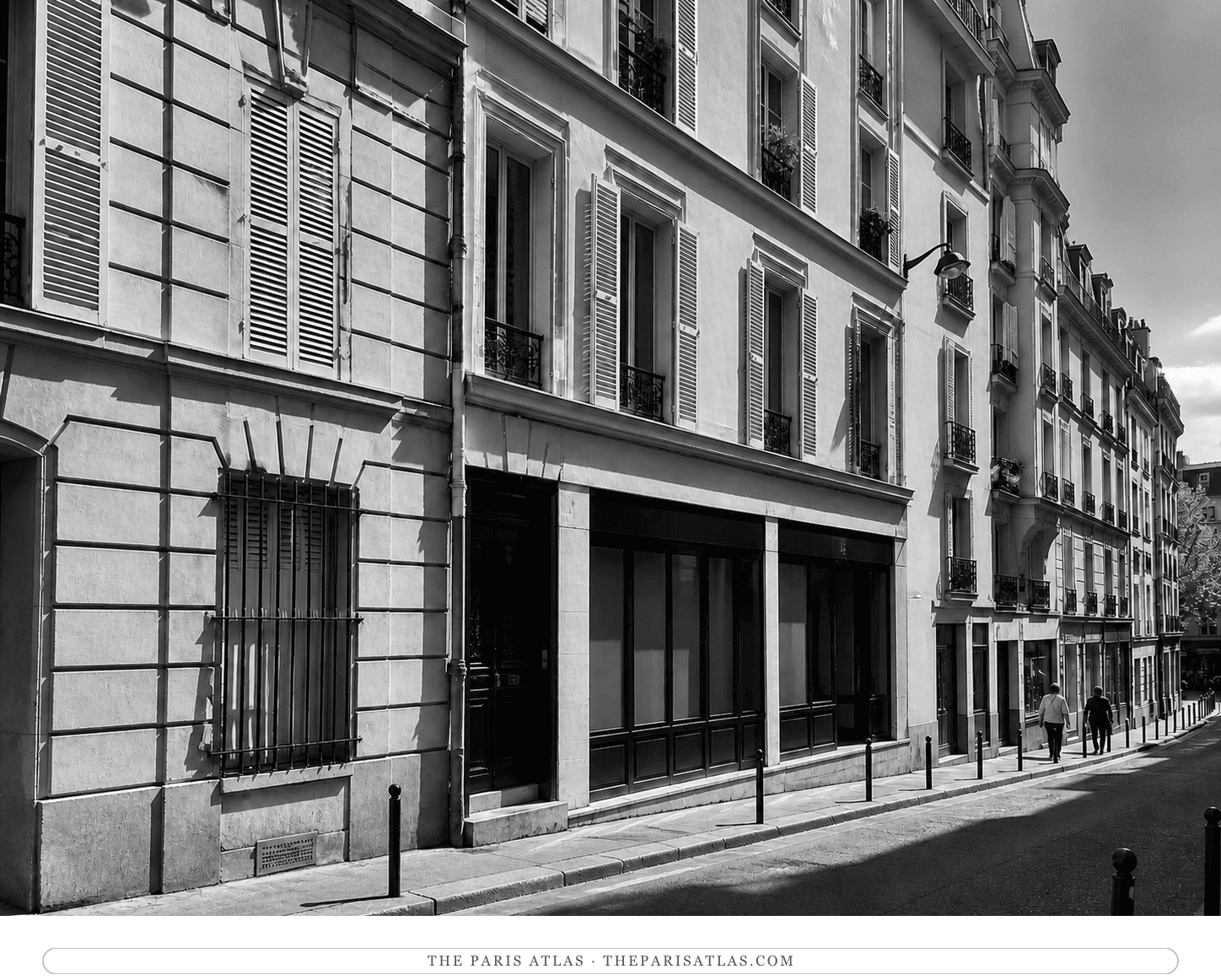
15 rue Nollet
A surviving private address in Batignolles where a vanished working people's hotel gave the young American poet Langston Hughes his real-life version of a Paris garret in 1924.
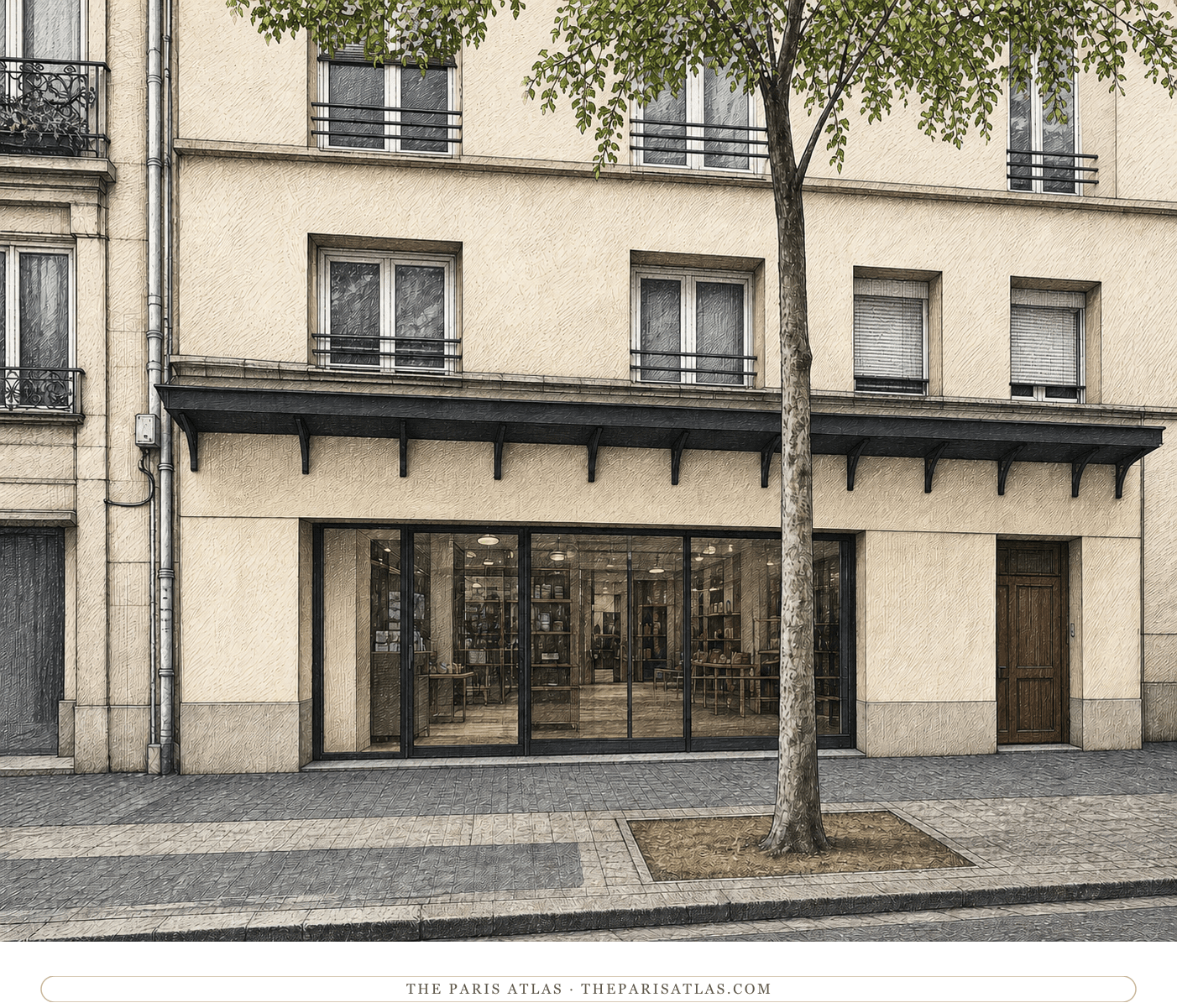
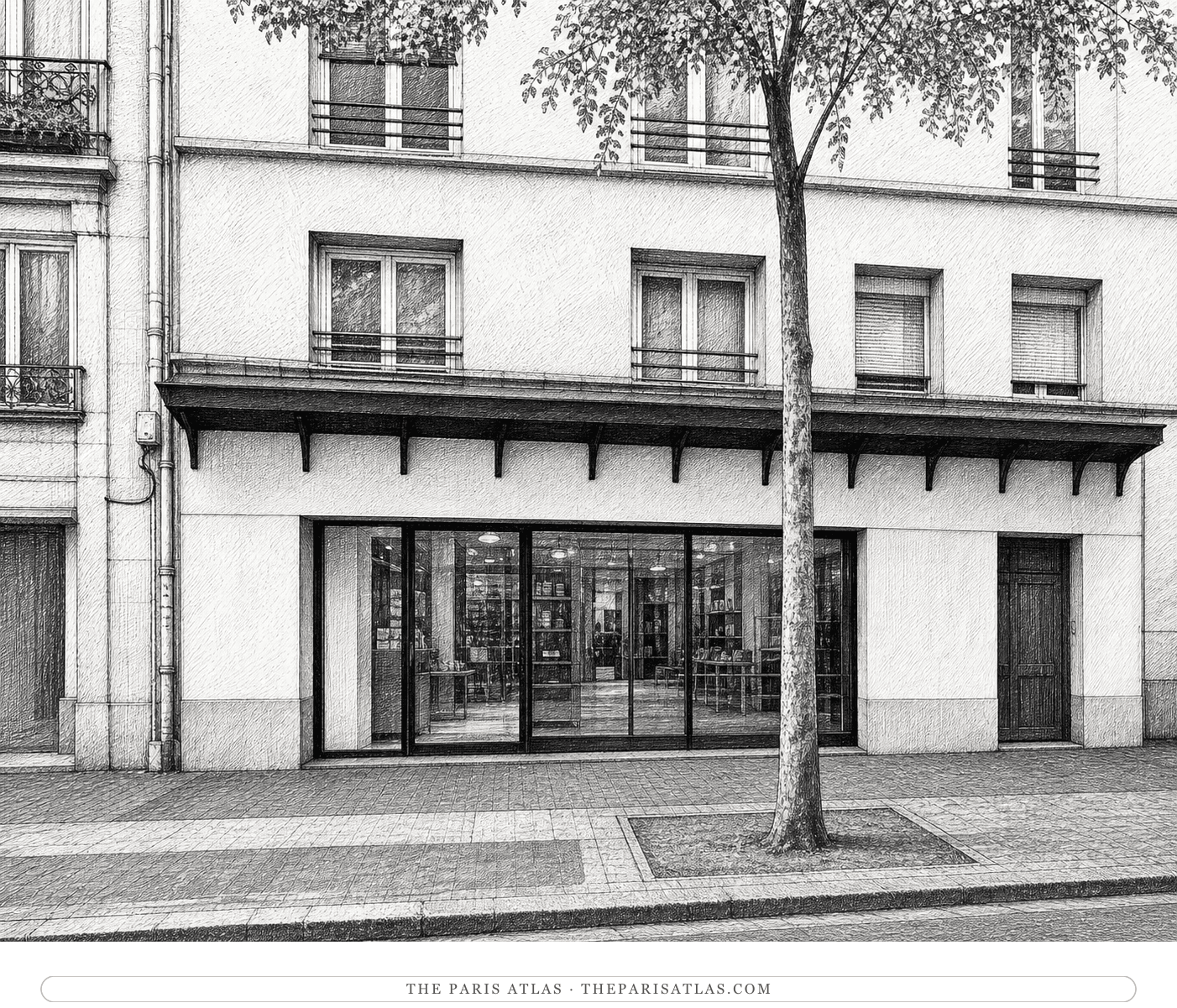
Café Guerbois
The Batignolles café where Édouard Manet held court through the 1860s and the painters who would become the Impressionists argued out what they were doing. Its address has since been renamed and renumbered, and nothing of it survives.

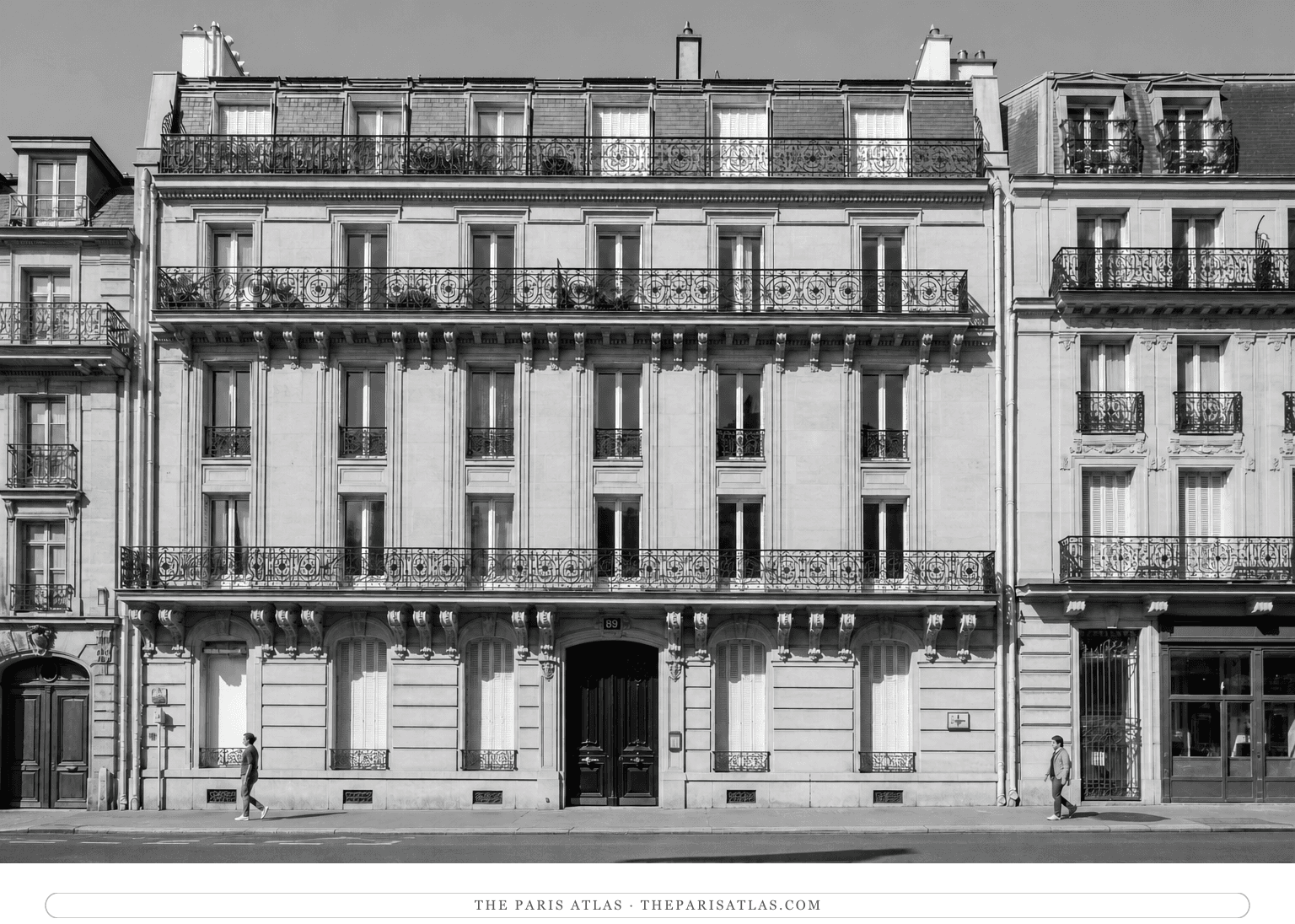
Mallarmé's salon, 89 rue de Rome
The small flat where Stéphane Mallarmé held the Tuesday evenings that drew most of literary and musical Paris — Debussy among them, and the source of the poem behind his Prélude à l'après-midi d'un faune.
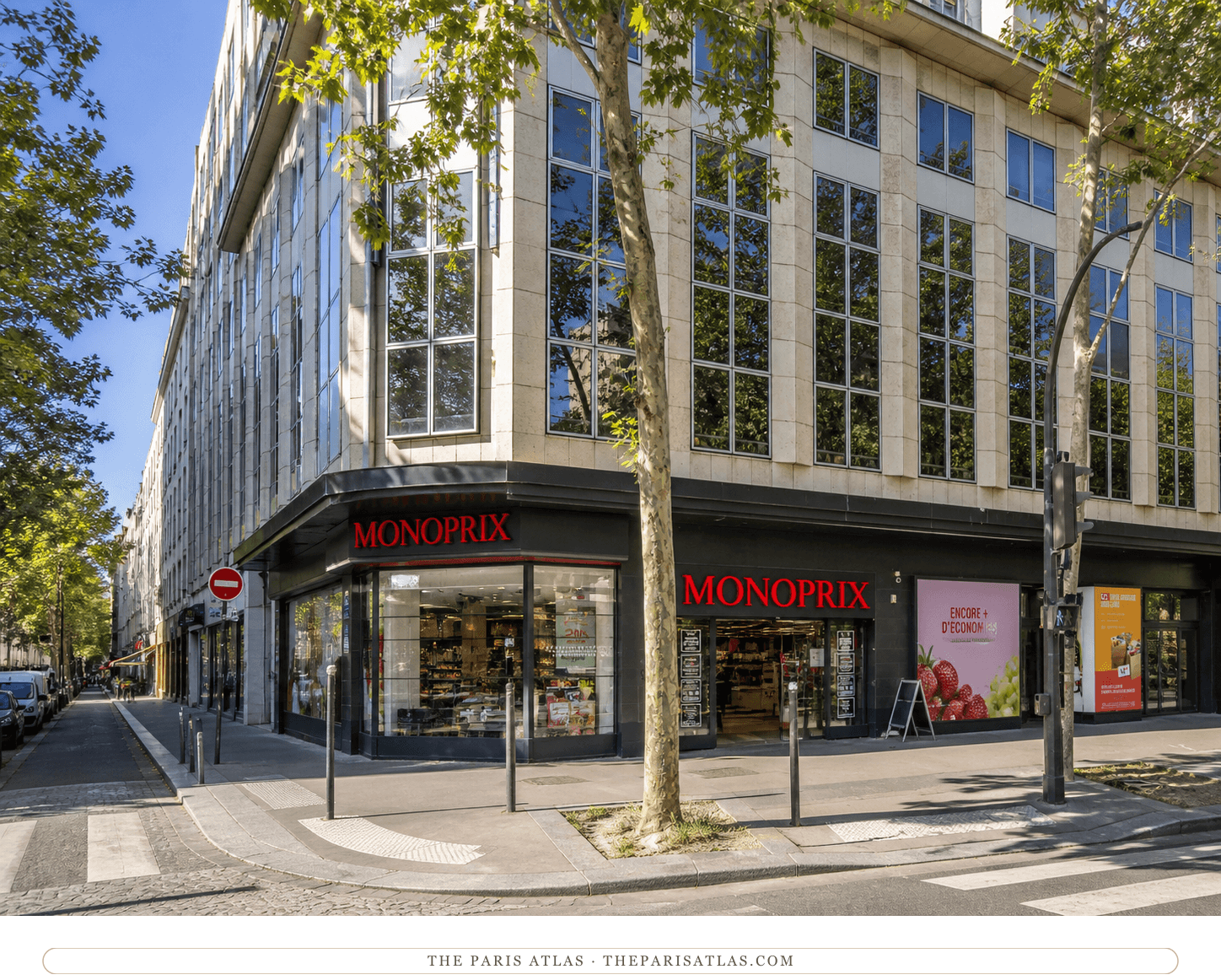
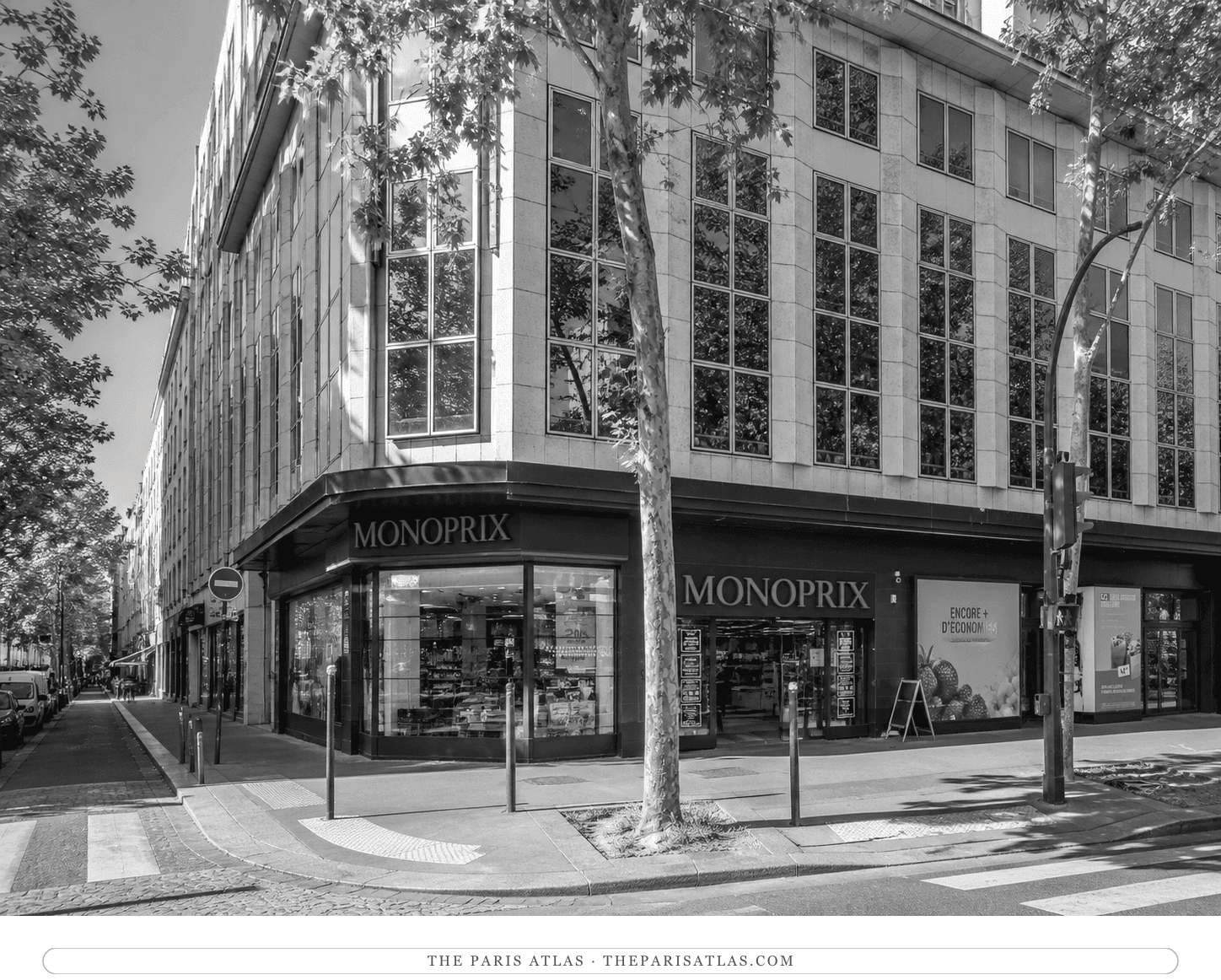
Grand Bouillon-Restaurant du Chalet, 43 avenue de Clichy
The cheap eating-house where Vincent van Gogh hung an exhibition of his own work and his friends' in November 1887 — the show at which Seurat and Gauguin turned up, and where the road to Arles effectively begins.

La Fondation
A five-star hotel with 58 rooms and suites on rue Legendre in the 17th arrondissement, between the Batignolles district and Parc Monceau. It opened in 2025 in a converted 1960s office building and has a sports club with a 25-meter indoor pool, two restaurants and a seasonal rooftop bar.

Paris j’Adore Hôtel & Spa
A small adults-only hotel in Batignolles built around romantic stays, individual room designs and an extensive spa.
Beaubourg

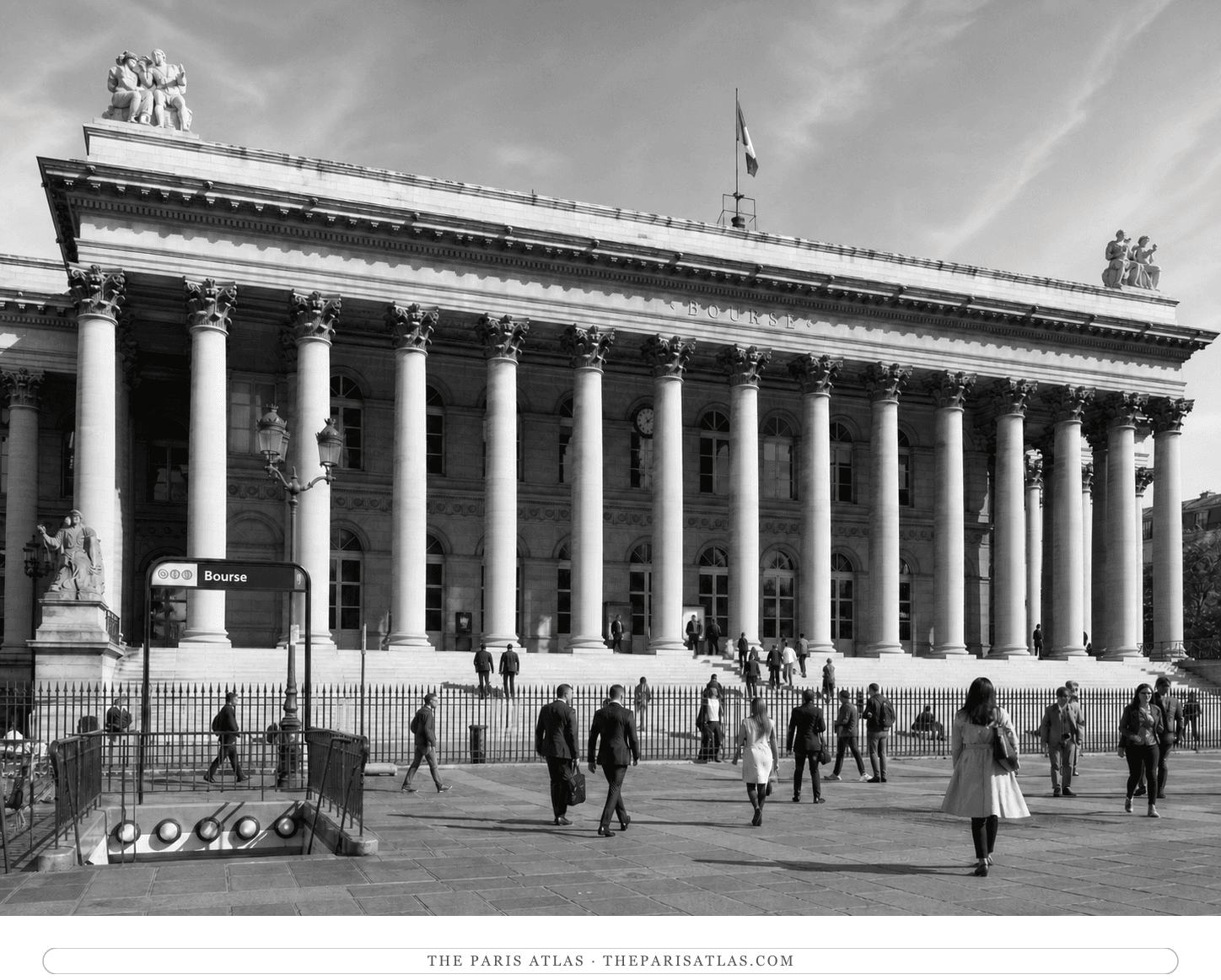
Bourse

Central Paris
Chaillot

2 rue Georges-Ville
The home of Mathilde de Morny — Missy — where Colette lived through much of their relationship after leaving Willy.

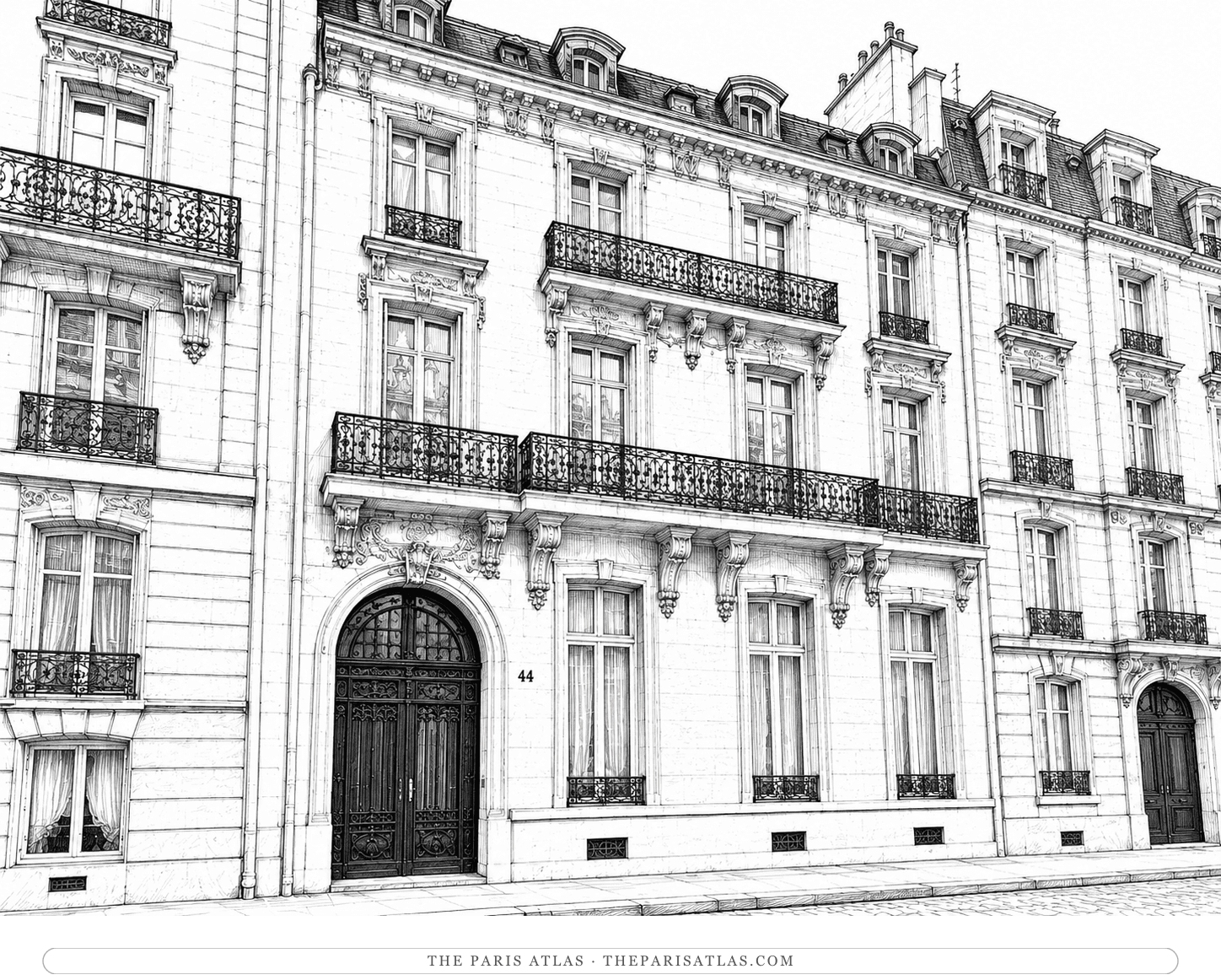
44 rue de Villejust
The ground-floor apartment Colette rented on her own after leaving Willy, remembered as a place of new independence. The building no longer exists.


44 rue de l'Amiral-Hamelin
Marcel Proust's last address, and the flat he hated. He moved here in 1919 when 102 boulevard Haussmann was sold out from under him, called it an ignoble hovel, finished correcting his novel here, and died in the building on 18 November 1922.

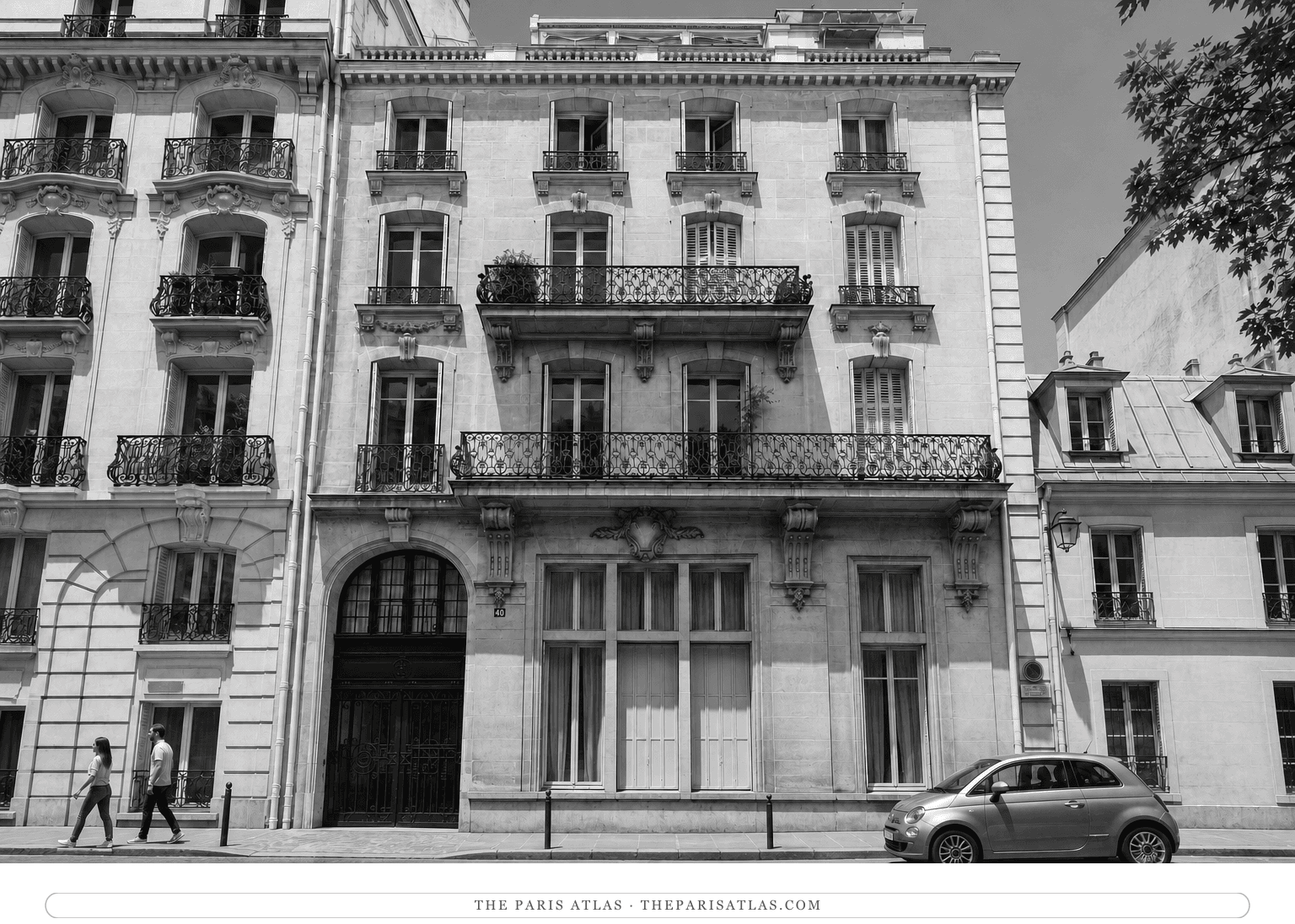
40 rue Paul-Valéry
The house Berthe Morisot and Eugène Manet had built for themselves in the early 1880s on what was then the rue de Villejust — her home, her studio, and the setting of a salon that drew Renoir, Degas and Mallarmé.

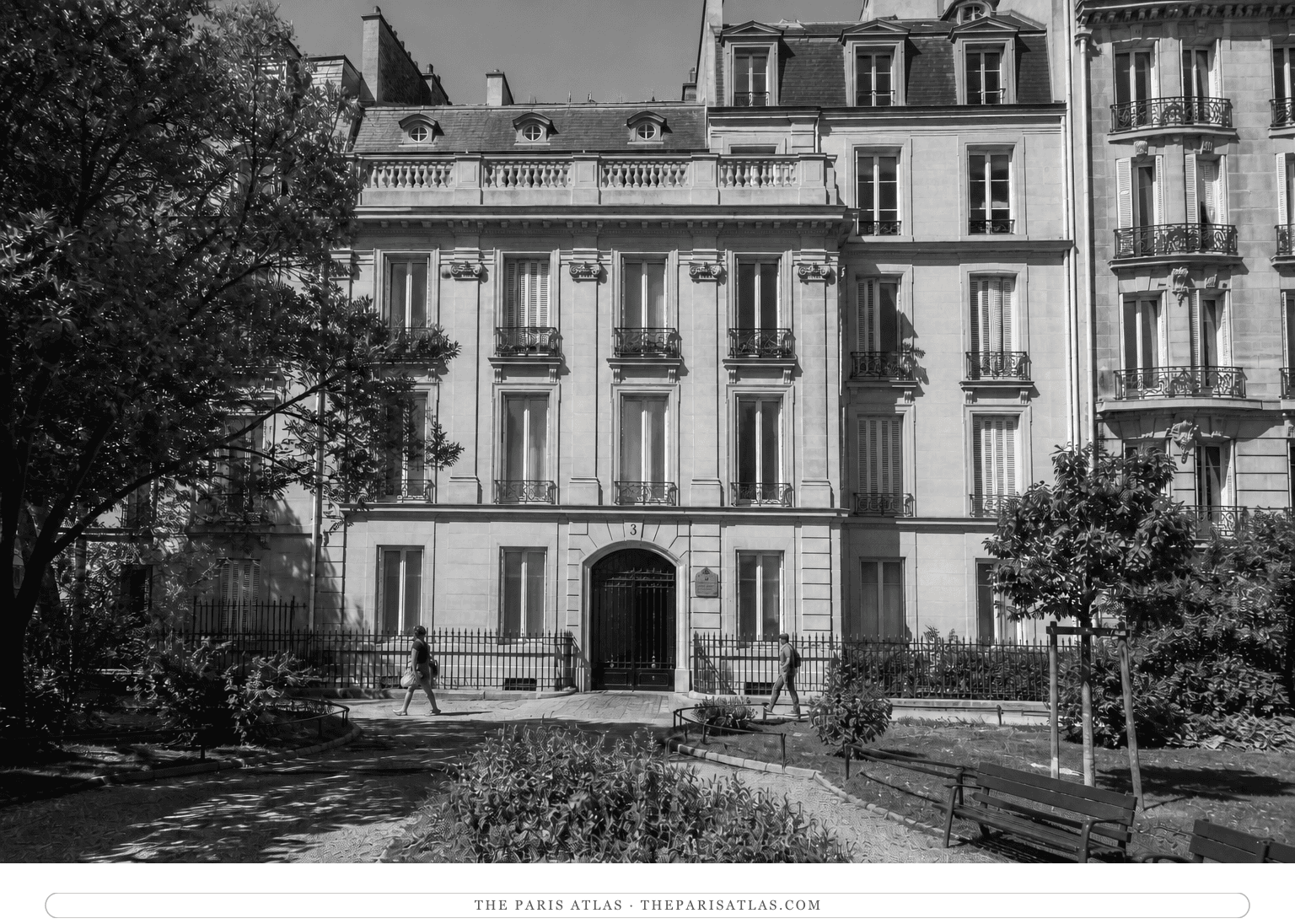
3 place des États-Unis
Where Edith Wharton stayed with her brother when she arrived in Paris in 1906 — the beginning of the move that would take her out of America permanently.

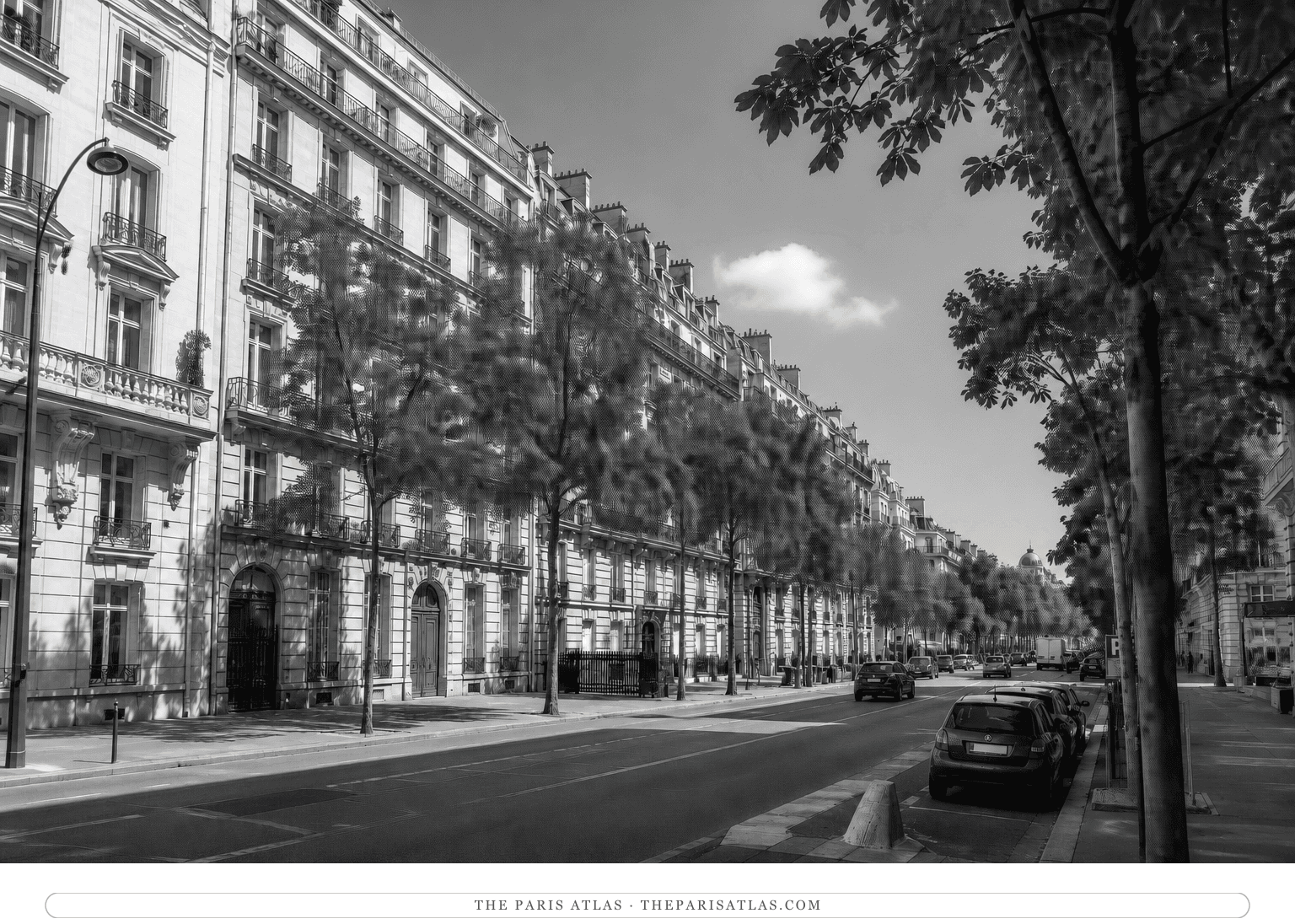
61 avenue Joséphine (now avenue Marceau)
The address where the Jones family lived around 1868 to 1870, when the future Edith Wharton was a child of six or seven — the years that gave her fluent French and a lifelong sense that Europe was home.

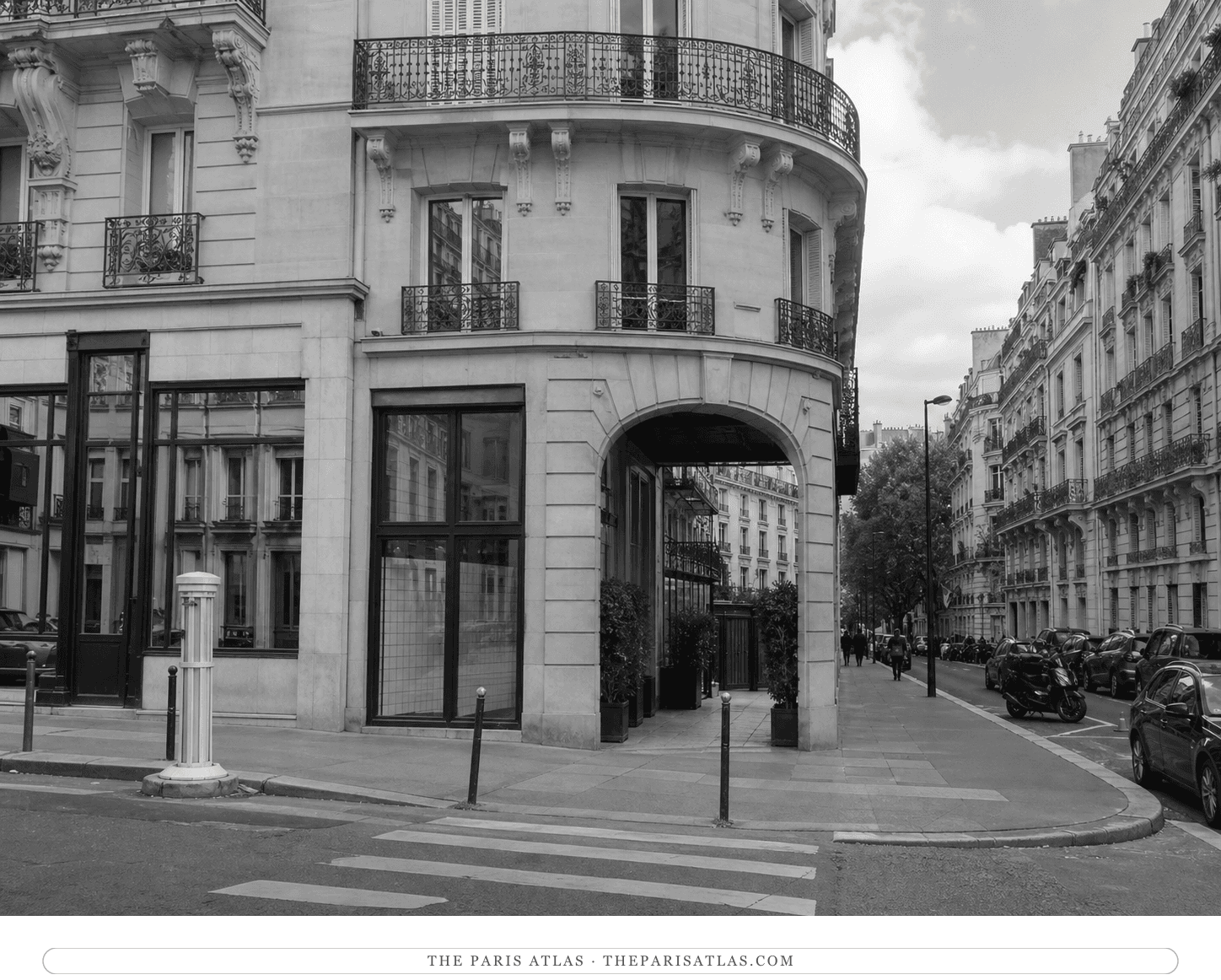
54 rue de Chaillot
The apartment Paul Gauguin and Mette Gad took after the birth of their first child — an expensive address near the Arc de Triomphe, and the setting of his 1875 portrait of his sleeping wife.
Champ de Mars


The Salon on the Avenue Charles Floquet
The drawing room by the Champ de Mars where Ezra Pound the composer made his debut — the Villon songs, heard by invitation before anyone believed he'd really done it.


2 Square de Robiac
James Joyce's longest Paris address — the family flat in a quiet cul-de-sac off the rue de Grenelle, with the cool quiet study where Work in Progress cost twelve hundred hours a chapter.

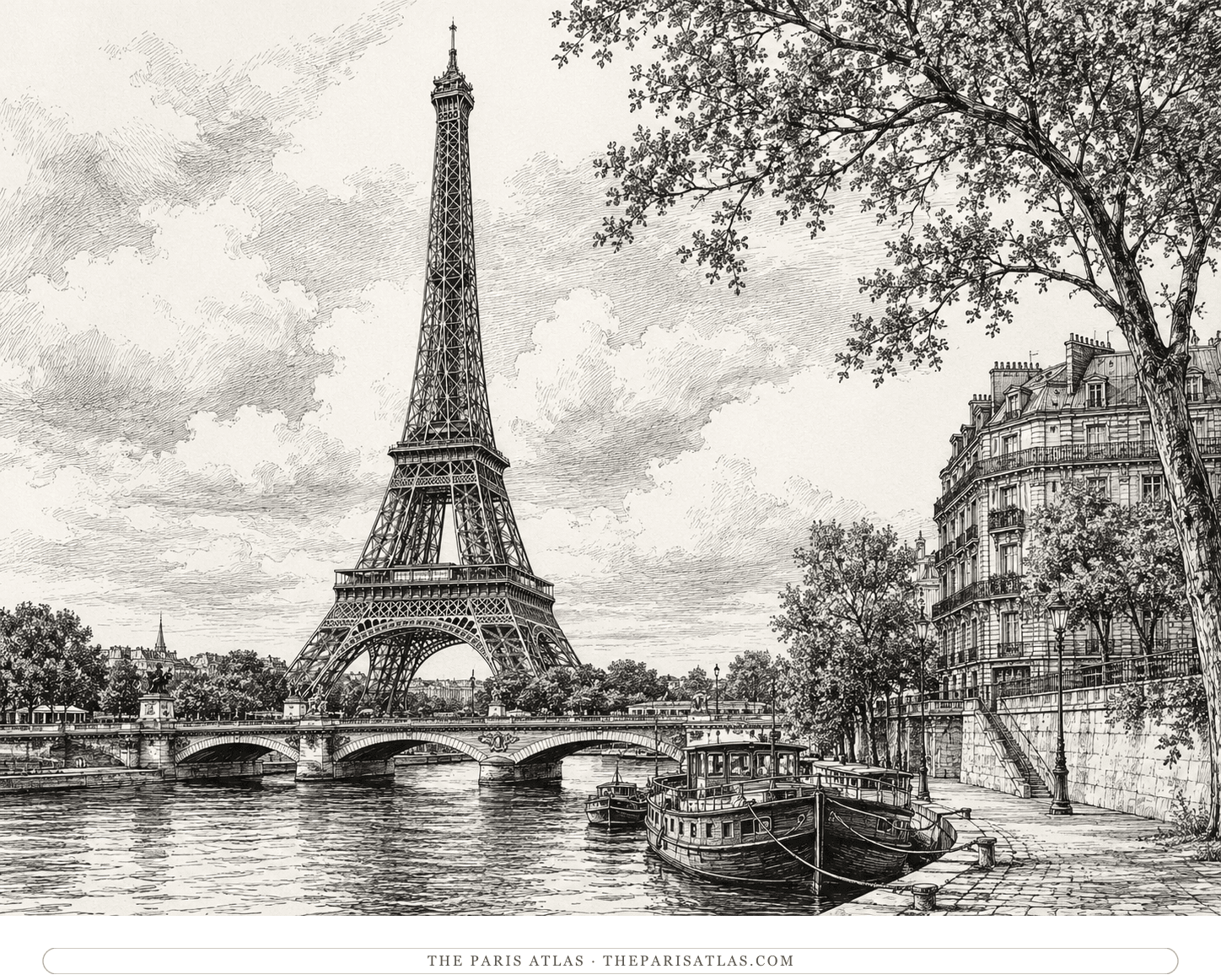
Eiffel Tower
The tower at the era's edge of vision — and in the twenties and thirties, a champagne advertisement three hundred meters tall, fizzing in lights over everyone's night walks.
Champs-Élysées


Théâtre des Champs-Élysées
The concrete temple of the avant-garde — where The Rite of Spring caused a riot in 1913, and the Ballet Mécanique caused another in 1926, with Ezra Pound shouting over the pianolas.

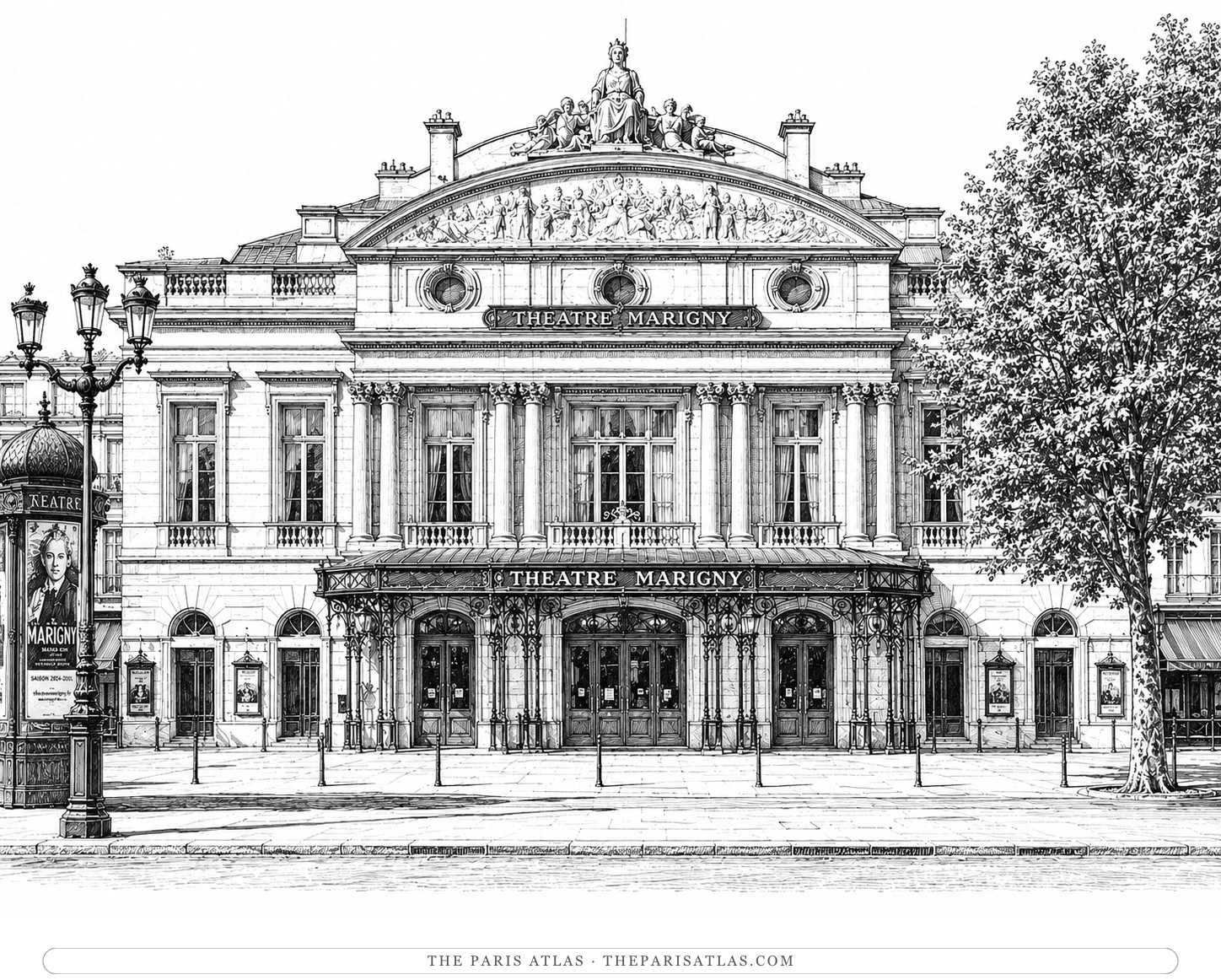
Théâtre Marigny
The theatre in the Champs-Élysées gardens where Colette played Paniska in Pan in 1906.
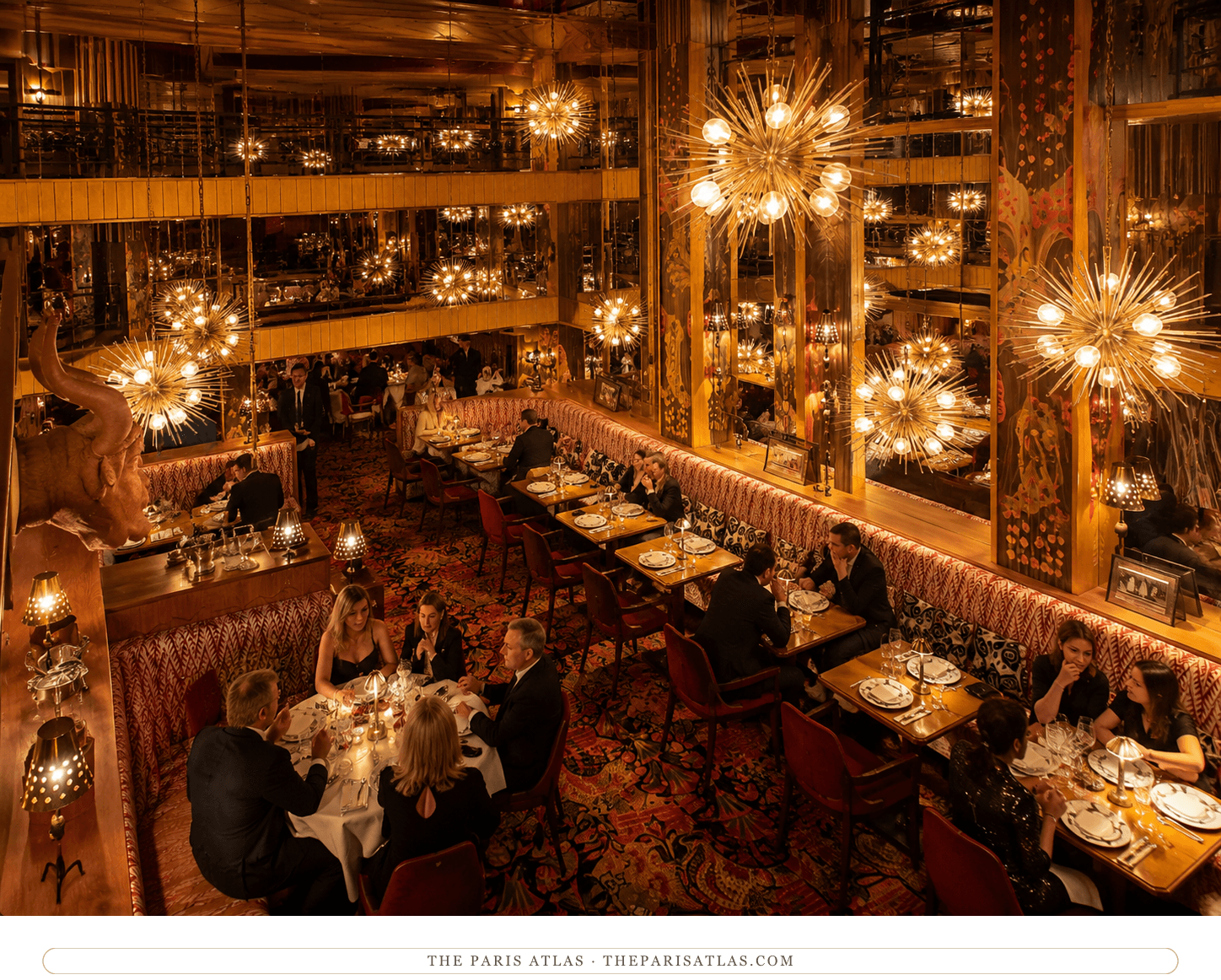

Le Bœuf sur le Toit
The bar-cabaret Louis Moysès opened in 1922, named for the Cocteau–Milhaud ballet — headquarters of the postwar avant-garde around Jean Cocteau, and one of Blaise Cendrars's regular Paris stops.

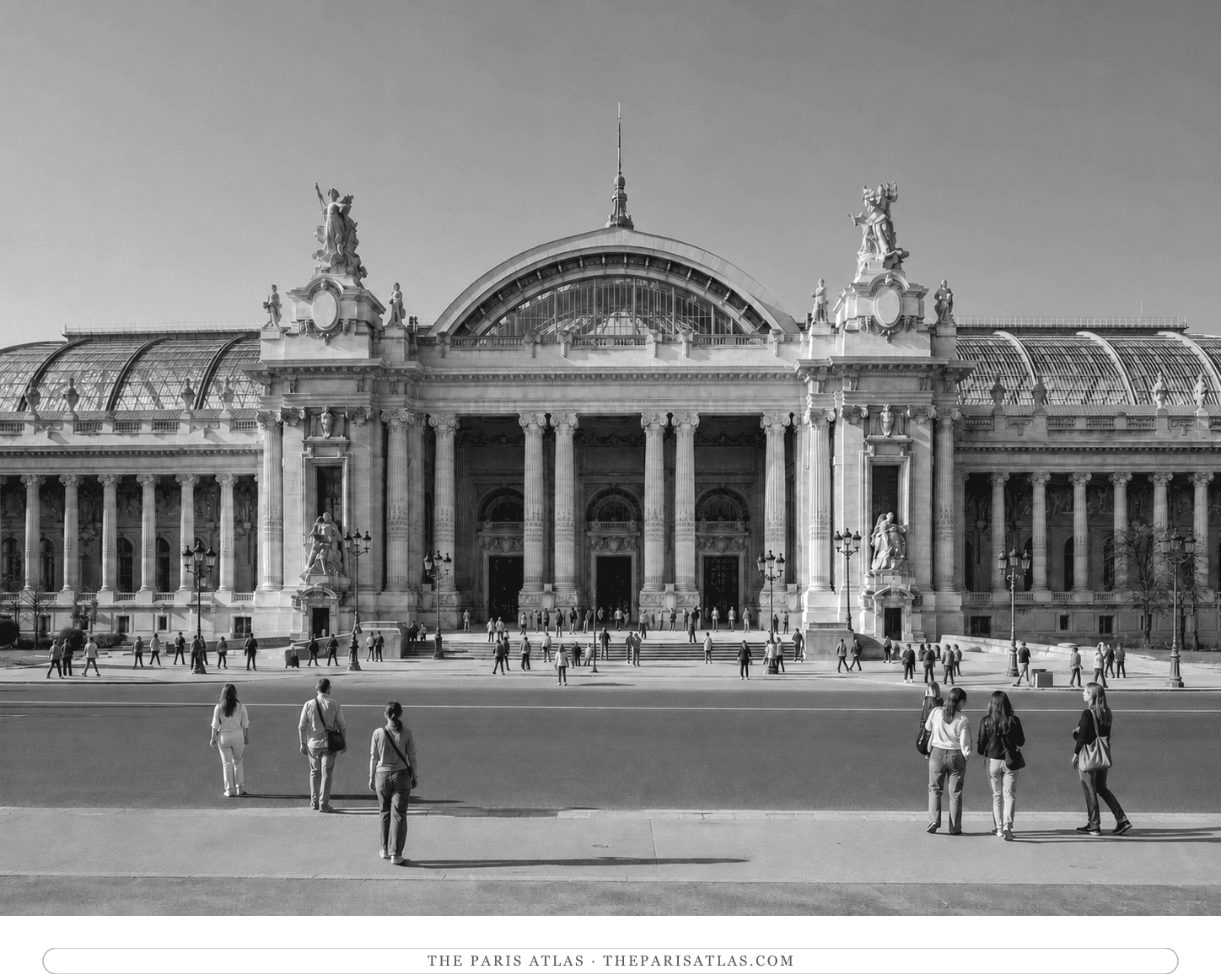
Grand Palais
The glass-vaulted exhibition hall on the Champs-Élysées, built for the World's Fair of 1900 and used ever since for the shows Paris wants to hold under one roof — art retrospectives, fashion collections, commissioned sculpture, and the fencing at the 2024 Olympic Games.

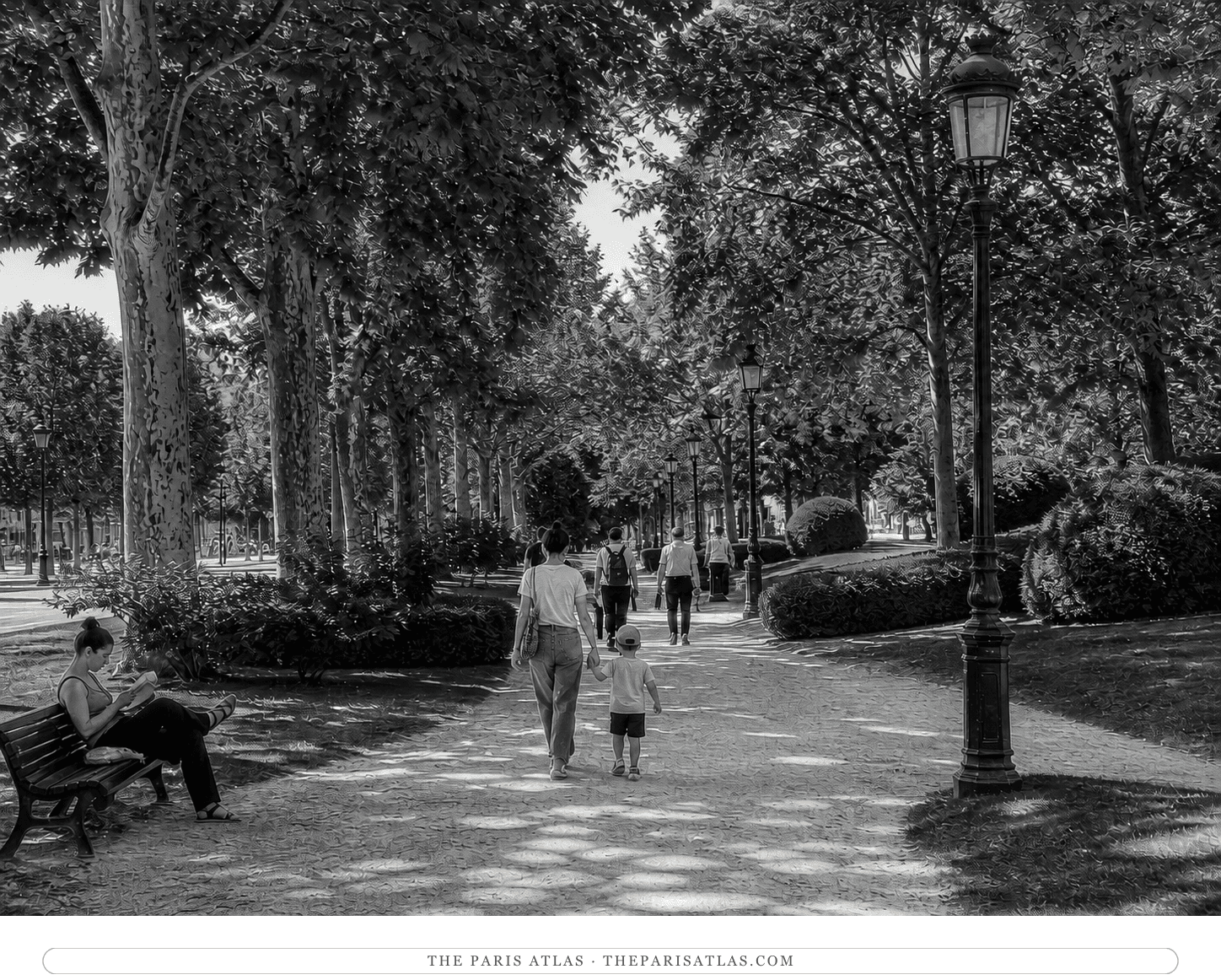
Jardins des Champs-Élysées
The gardens along the lower Champs-Élysées, between the Rond-Point and the Concorde — where the young Marcel Proust played, and where in July 1886 he met Marie de Bénardaky, his first love and a source for Gilberte in In Search of Lost Time. One of the paths is now officially the Allée Marcel-Proust.

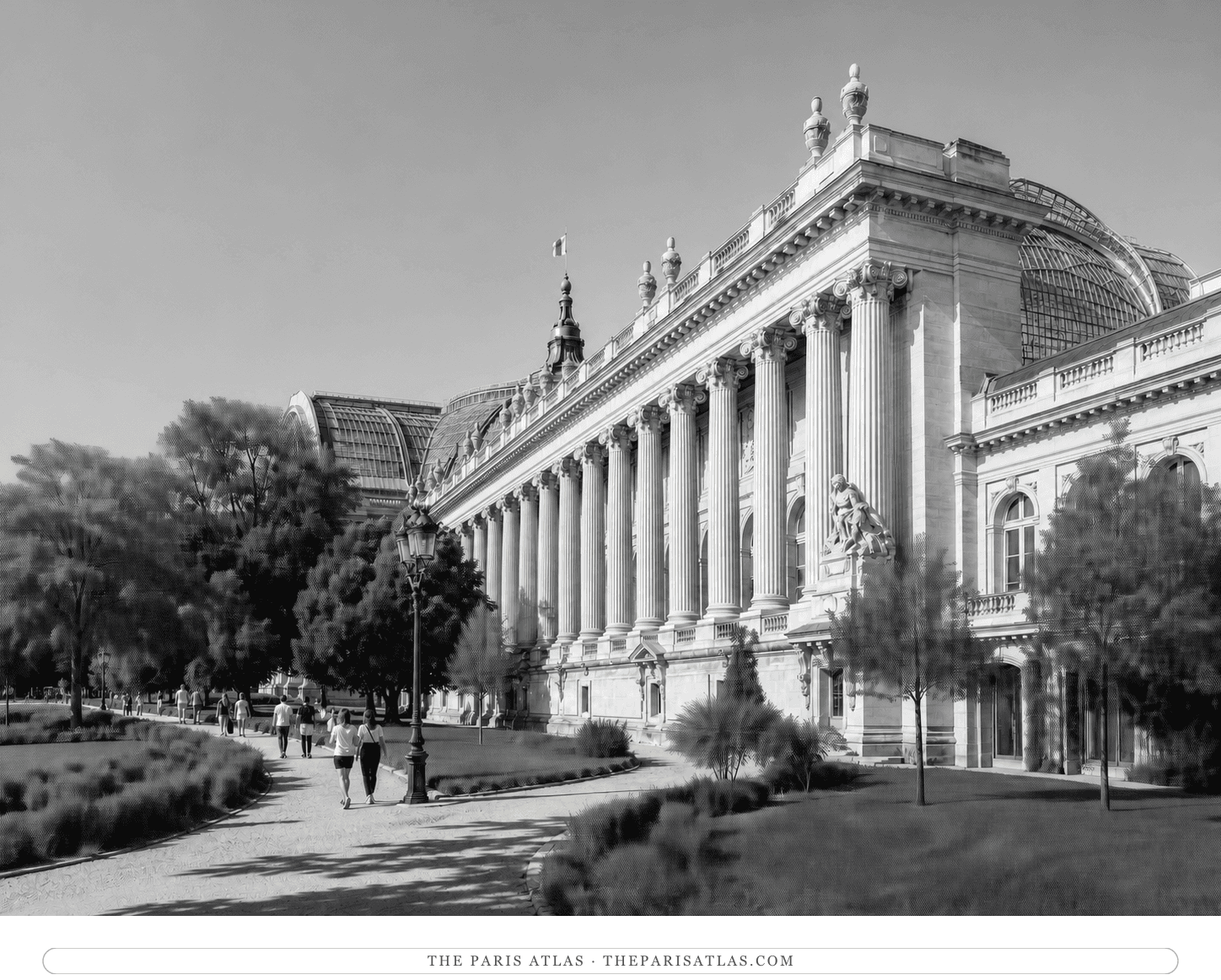
Palais de l'Industrie
The vast iron-and-glass exhibition hall on the Champs-Élysées that housed the annual Salon — and, in 1863, the Salon des Refusés, where Manet's Déjeuner sur l'herbe was hung and mocked. It was demolished to make way for the Grand Palais.

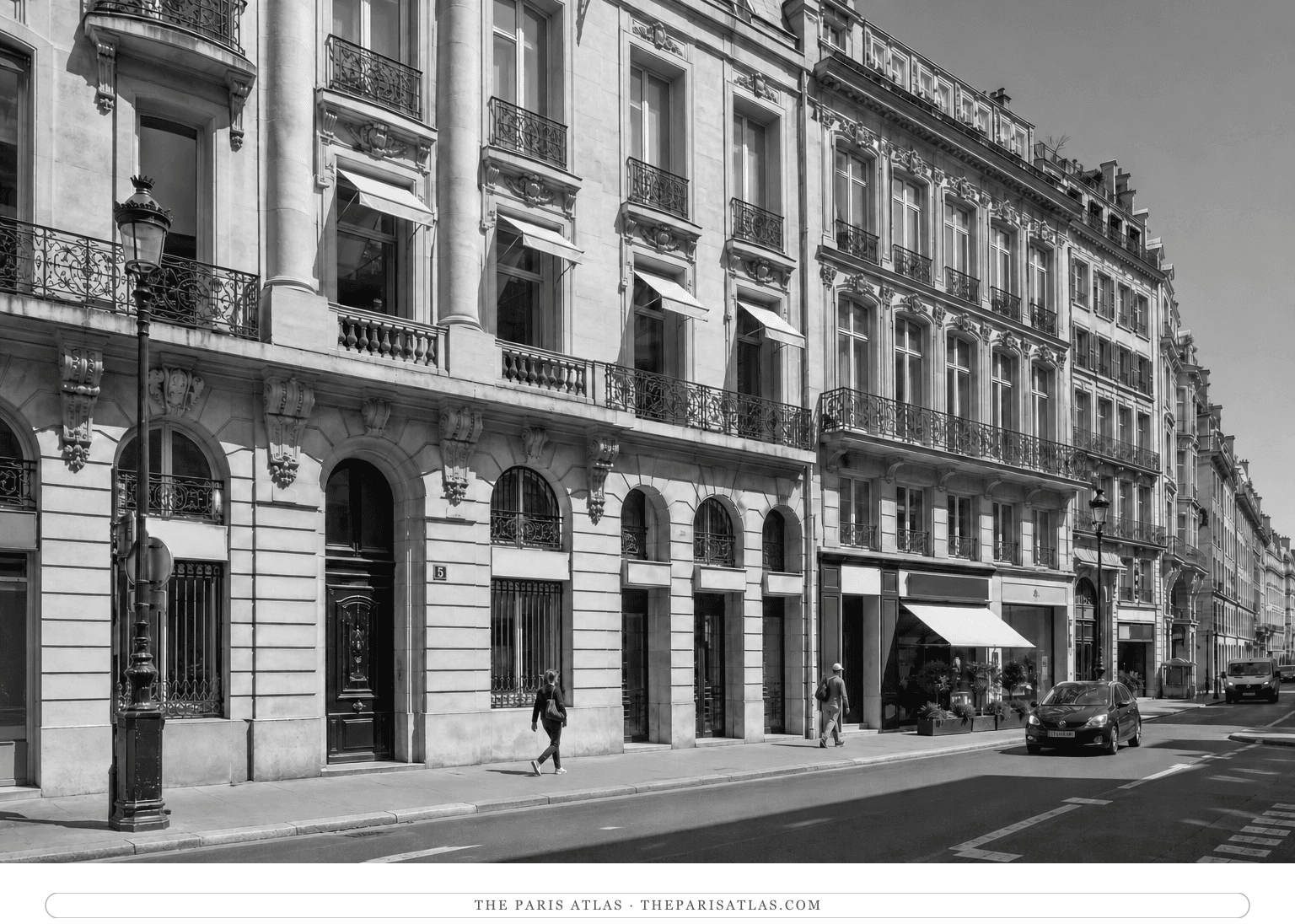
American War Relief Clearing House, 5 rue François-Ier
The Paris address to which Edith Wharton told readers of The Book of the Homeless to send donations in kind — the clearing house through which American war relief reached the French charities.

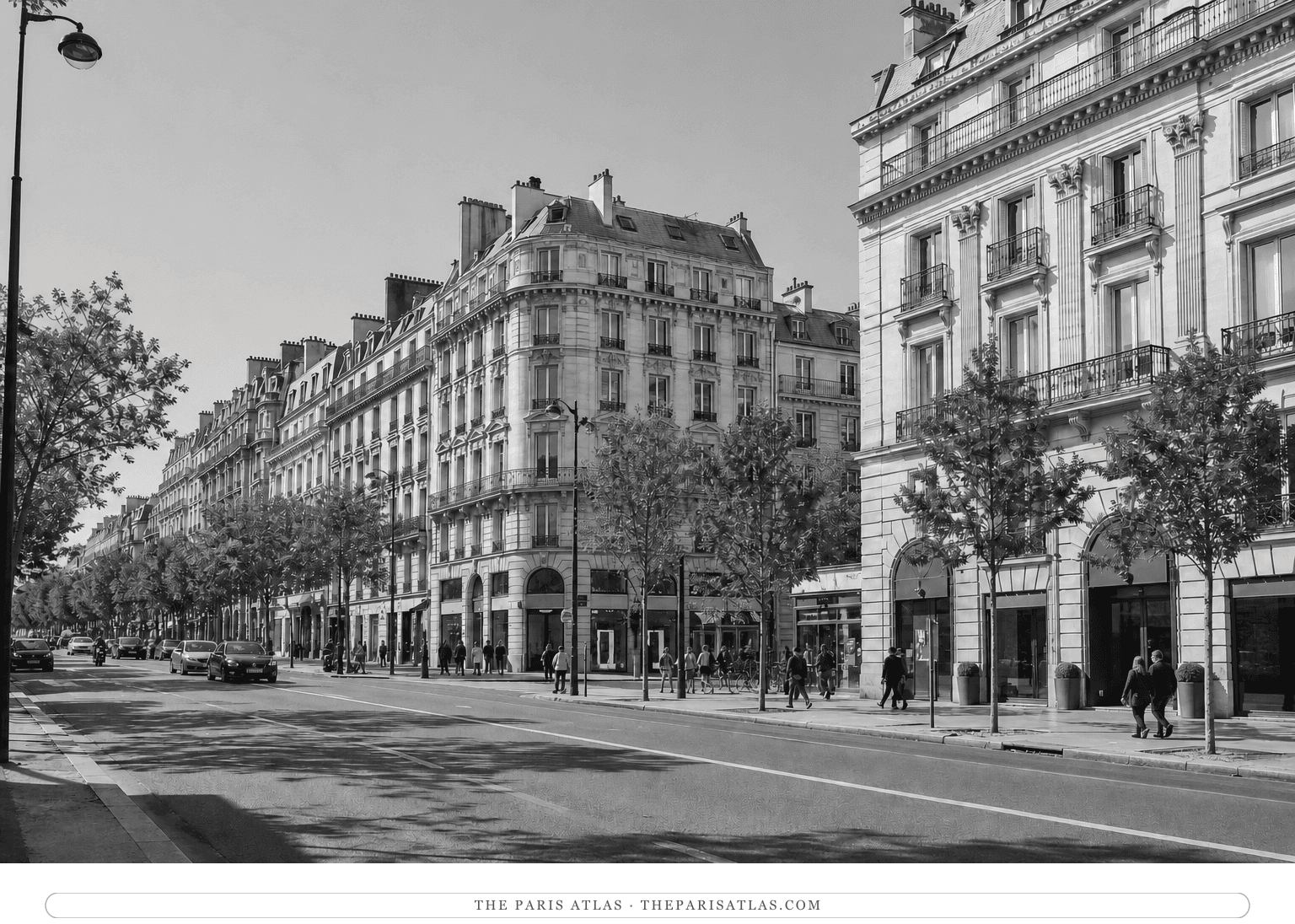
Rue Pierre-Charron
The street where Edith Wharton's refugee organisations ran a grocery depot during the First World War. No building number survives in the record, so this is a street-level entry rather than an address.

Bvlgari Hotel Paris
A 76-room hotel on avenue George V, opened in December 2021 by the hotel brand of the Italian jeweller Bvlgari. It holds France's Palace distinction, a rating above five stars, and has a 25-metre pool, a spa and an Italian restaurant in a private garden.

Four Seasons Hotel George V, Paris
A 243-room hotel on avenue George V, opened in 1928 and run by Four Seasons since 1999. It holds France's Palace distinction, a rating above five stars, and has three Michelin-starred restaurants, a spa with a pool and suites looking onto the Eiffel Tower.

Hôtel Balzac
A 58-room five-star hotel just off the Champs-Élysées, renovated by Festen Architecture and reopened in 2024, with a small spa and the chef Pierre Gagnaire's restaurant in the same building.

Hôtel de Sers
A 52-room five-star hotel near avenue George V, in a house where Paris directories list the Marquis de Sers in 1884, with top-floor suites facing the Eiffel Tower and a Mediterranean restaurant under a glass roof.
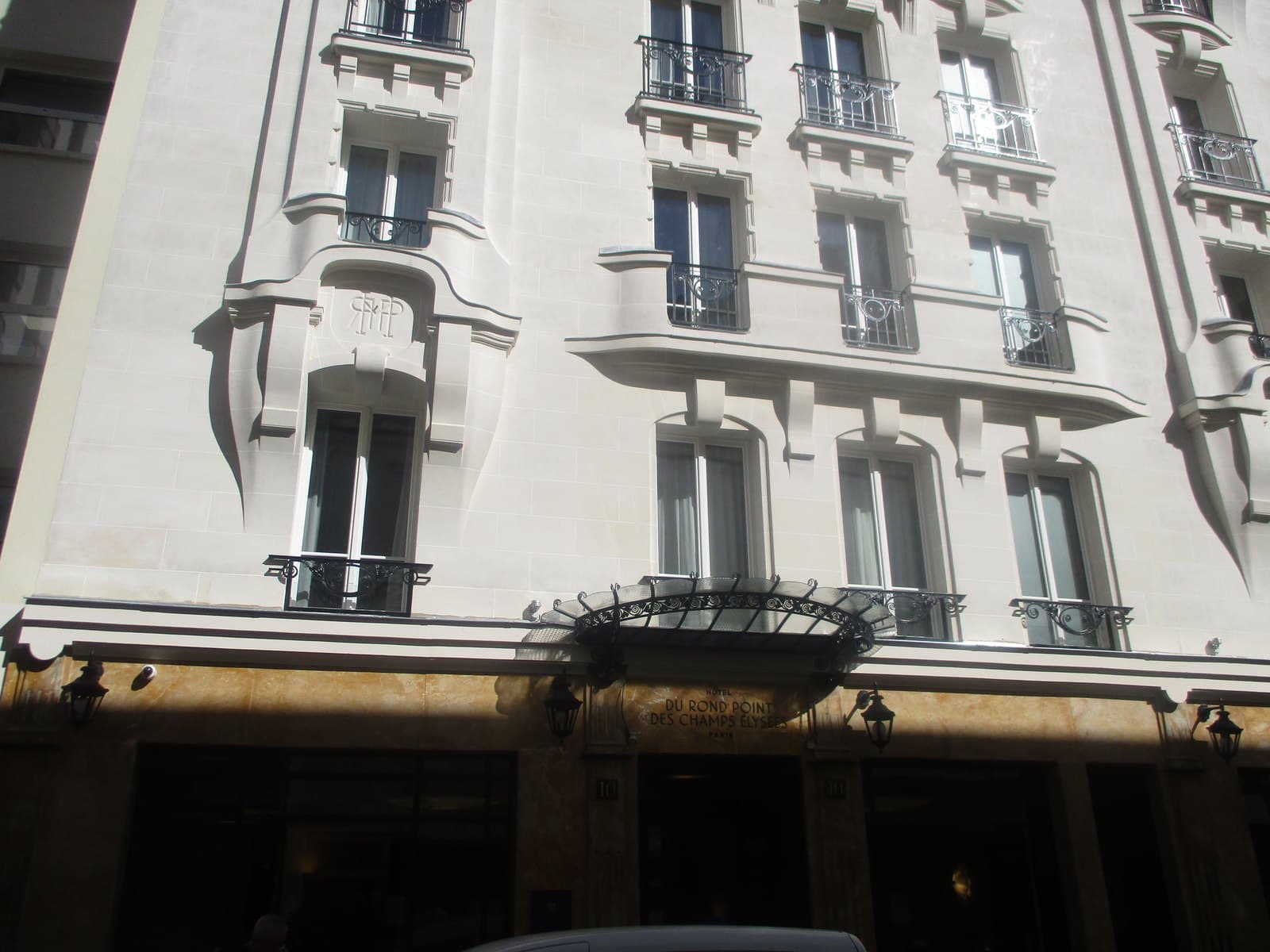
Hôtel du Rond-Point des Champs-Élysées
A 36-room four-star hotel on rue de Ponthieu, a few minutes from the Champs-Élysées, with an Art Deco front, interiors by Dimore Studio and a 13-metre basement pool.

Hôtel Lancaster
A 54-room five-star hotel on rue de Berri, a side street off the Champs-Élysées, in a building that has been a hotel since 1925. The film star Marlene Dietrich stayed here in the late 1930s, and its largest suite is named after her. It has a bistro restaurant, a cocktail bar and a small private spa on the top floor.
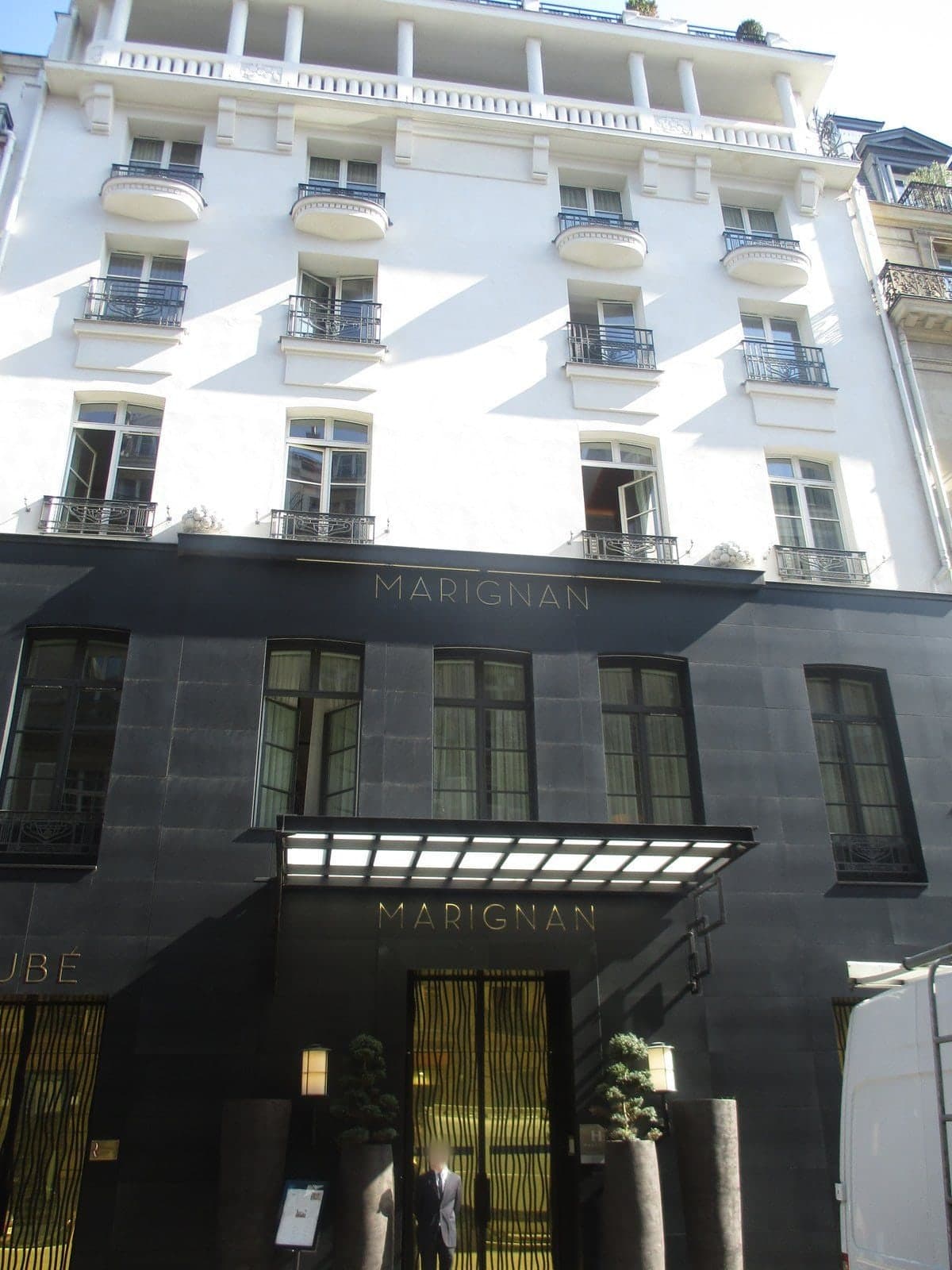
Hôtel Marignan Champs-Élysées
A 50-room five-star hotel on rue de Marignan, between the Champs-Élysées and avenue Montaigne, redesigned in 2012 by the decorator Pierre Yovanovitch. Some rooms have a partial view of the Eiffel Tower, and two suites have terraces facing it. It has a restaurant and bar, Ma Dame, and a private screening room, but no spa or pool.

Hôtel Plaza Athénée
A 208-room hotel on avenue Montaigne, opened in 1913 and run today by Dorchester Collection. It holds France's Palace distinction, the highest official rating for a hotel. It is known for the red awnings and geraniums on its façade, and it has five restaurants and a bar, including a Michelin-starred dining room and the Art Deco Relais Plaza, as well as a Dior spa.

Hôtel San Régis
A 42-room five-star hotel on rue Jean-Goujon, a minute's walk from avenue Montaigne, opened in about 1923 by André Terrail, the owner of the restaurant La Tour d'Argent. The Georges family has owned it since 1984. It has a restaurant under a glass roof, Les Confidences, and rooms furnished with antiques.
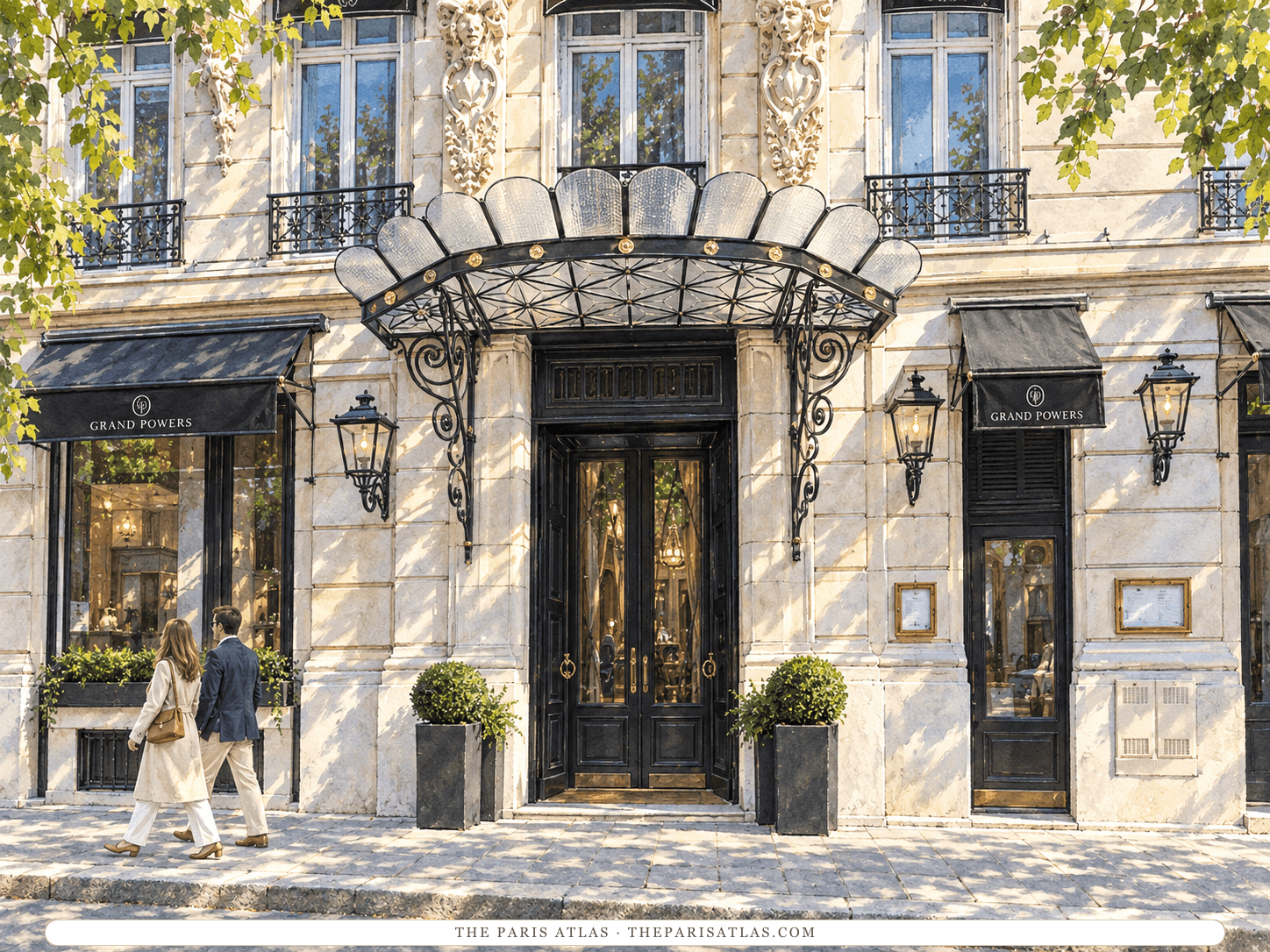
Hôtel Grand Powers
A 50-room five-star hotel in a stone corner building of 1890 on rue François-Ier, in the 8th arrondissement. It was called the Hôtel Powers from the 1920s until a renovation that ended in 2019. It has a restaurant and bar, Café 52, a small spa and suites that face the Eiffel Tower.

Hôtel Vernet
A 50-room five-star hotel on rue Vernet, a quiet street between the Champs-Élysées and avenue Marceau, about five minutes' walk from the Arc de Triomphe. Its restaurant, Le V, sits under a glass roof, and its bar has a ceiling fresco by the painter Jean-Michel Alberola. The hotel belongs to the B Signature group.
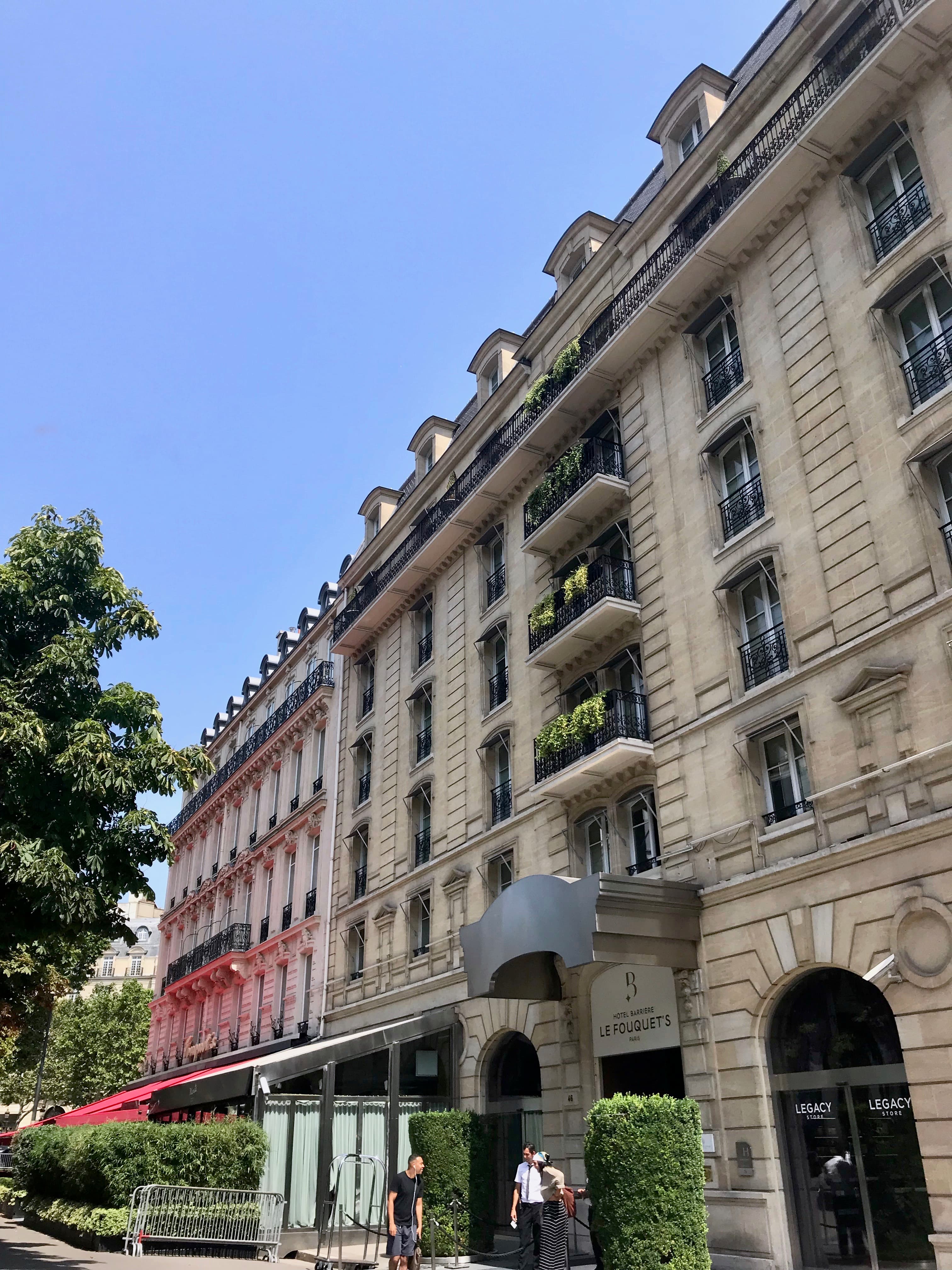
Hôtel Fouquet’s Paris
A Palace hotel at the corner of avenue George V and the Champs-Élysées, with Jacques Garcia interiors, the historic Fouquet’s brasserie and a 15-meter indoor pool.
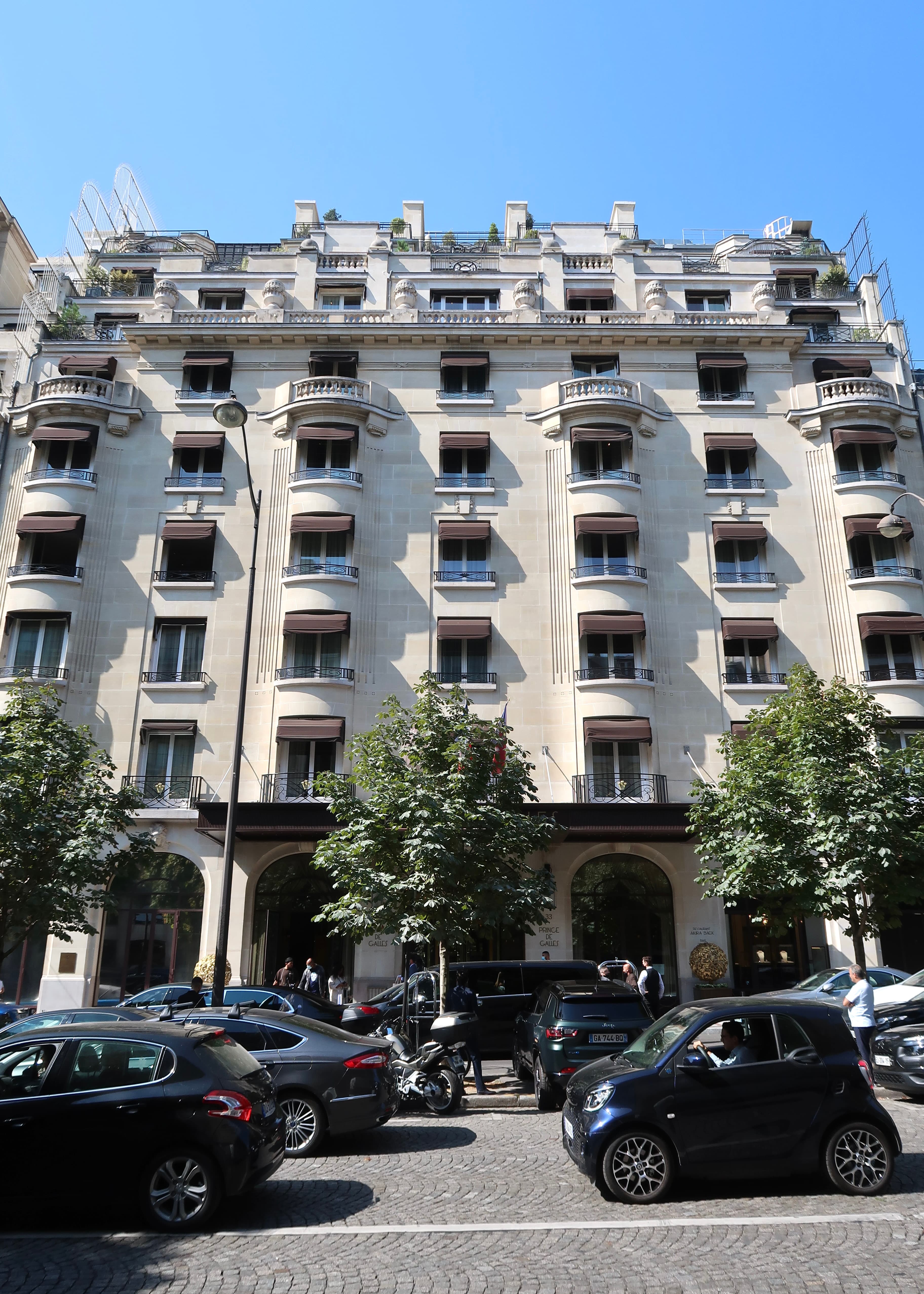
Prince de Galles
An Art Deco hotel on avenue George V, opened in 1929, with a mosaic courtyard, signature suites and a 24-hour fitness center.
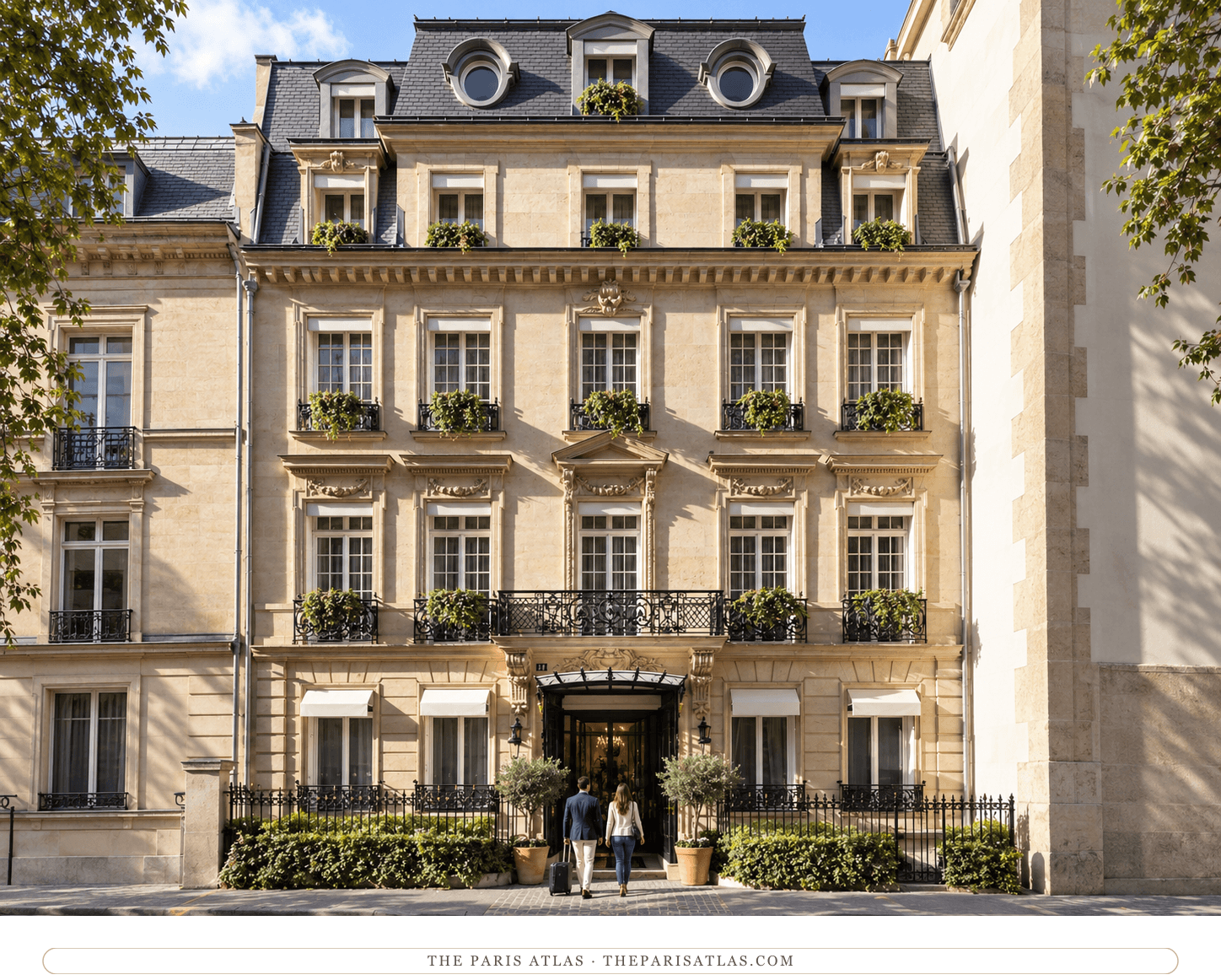
Maison Bauchart
An intimate collection of suites, apartments and lofts near the Champs-Élysées, with kitchens, butler service and a spa with an immersion pool and hammam.
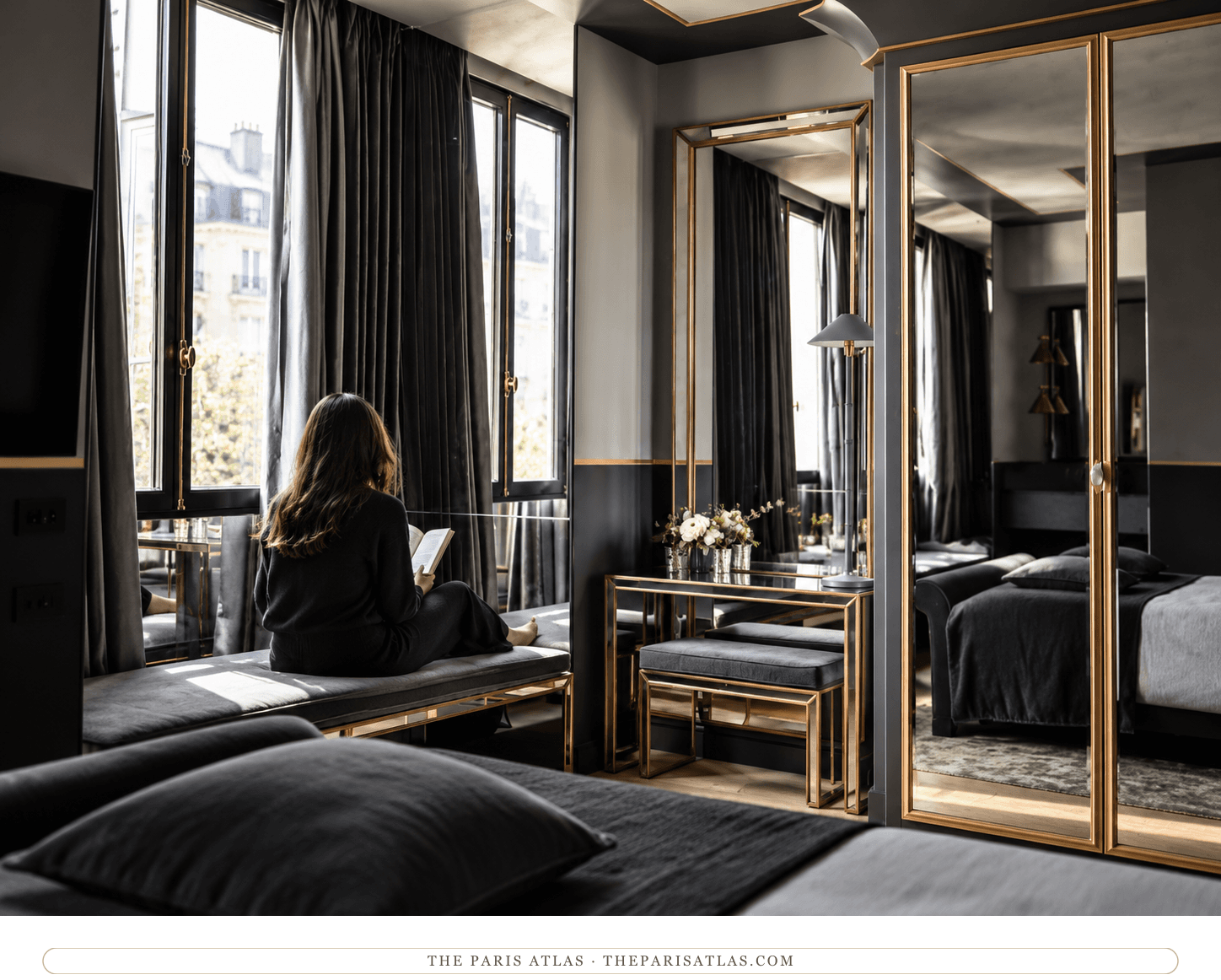
Monsieur George Hôtel & Spa
Anouska Hempel’s 46-room hotel just off the Champs-Élysées, with dark lacquer, mirrored interiors and a wellness area in former vaulted cellars.
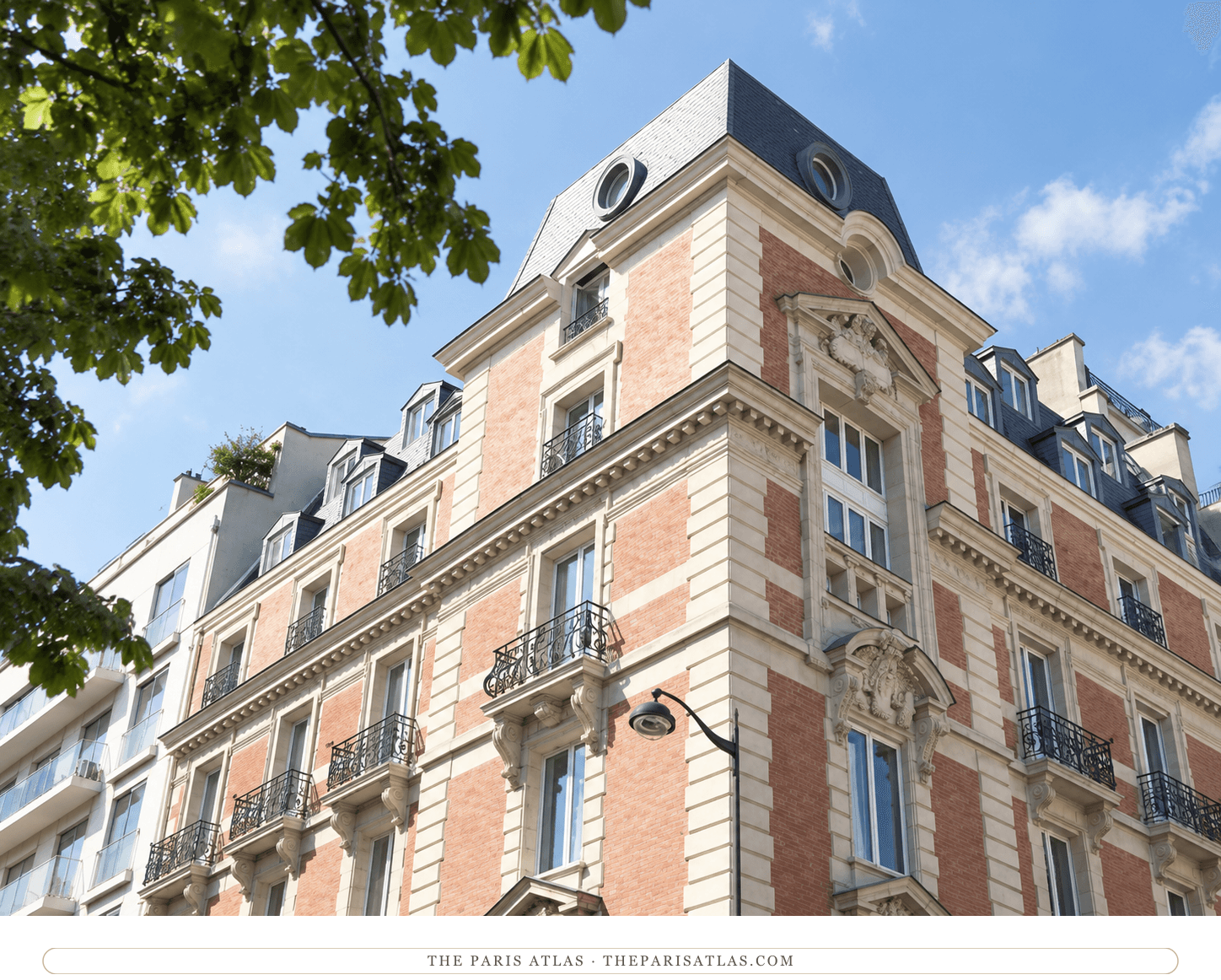
Le Damantin Hôtel & Spa
Le Damantin occupies a brick-and-stone mansion where rue Bayard meets the Seine-side setting of cours Albert Ier. Its 44 rooms combine a domestic scale with a spa, pool and a collection of salons.
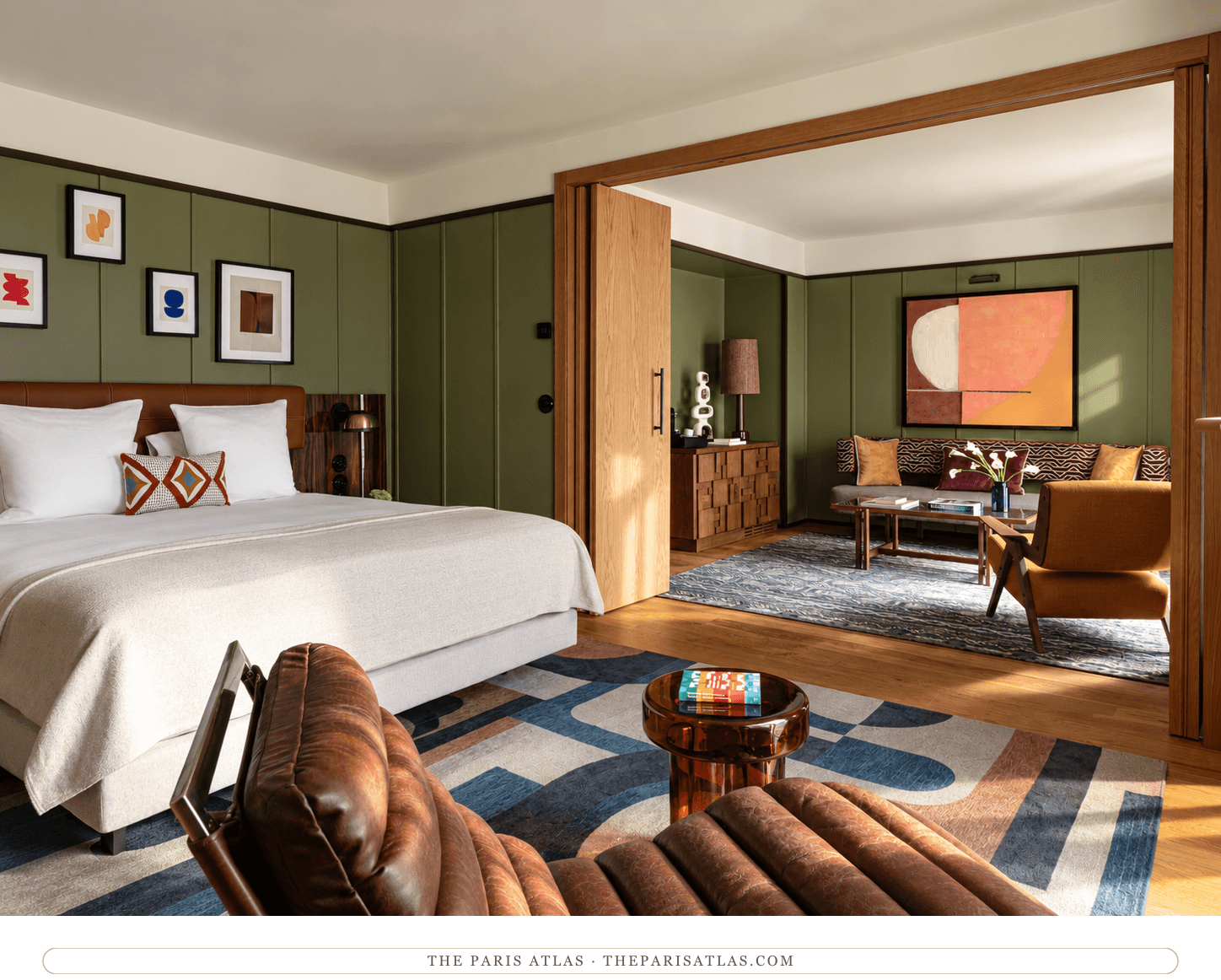
Hôtel Norman
A 37-room hotel off the Champs-Élysées, with interiors inspired by graphic artist Norman Ives, a spa and rooms with balconies.
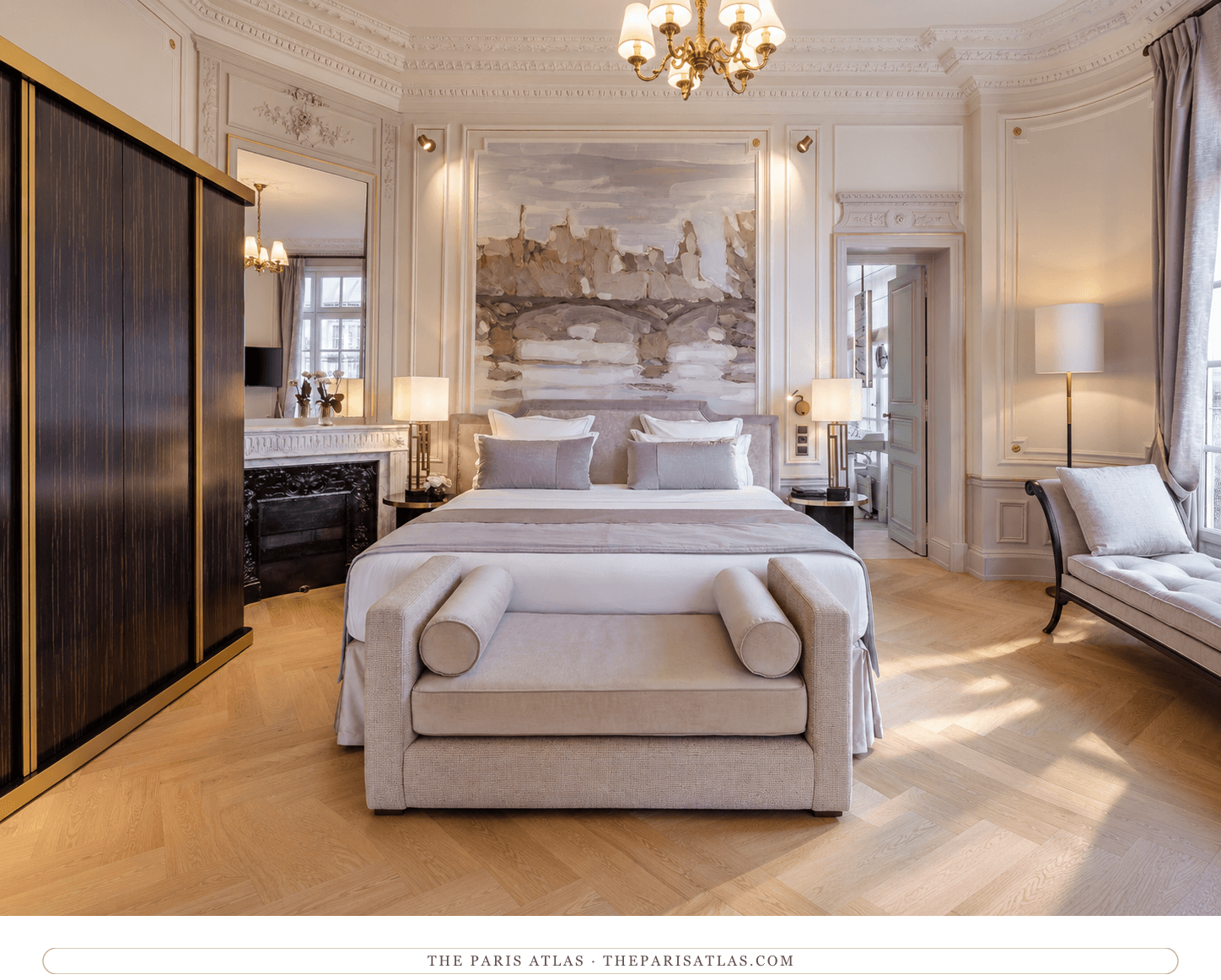
Hôtel Elysia
A 39-room hotel on rue de Berri, with apartment-style interiors, Le Bayadère restaurant and a spa with a private bath.

Le Royal Monceau - Raffles Paris
Le Royal Monceau - Raffles Paris is a five-star hotel with 149 rooms and suites at 37 avenue Hoche in the 8th arrondissement, between the Arc de Triomphe and the Parc Monceau. It holds the Palace distinction, which France gives to a small number of five-star hotels. The designer Philippe Starck redesigned its interiors before it reopened in 2010.

La Demeure Montaigne
A five-star hotel with 92 rooms and suites at 18 rue Clément-Marot in the 8th arrondissement, a short walk from avenue Montaigne and the Champs-Élysées. Every booking includes access to its indoor pool and spa, and its restaurant and bar sit under a glass roof.
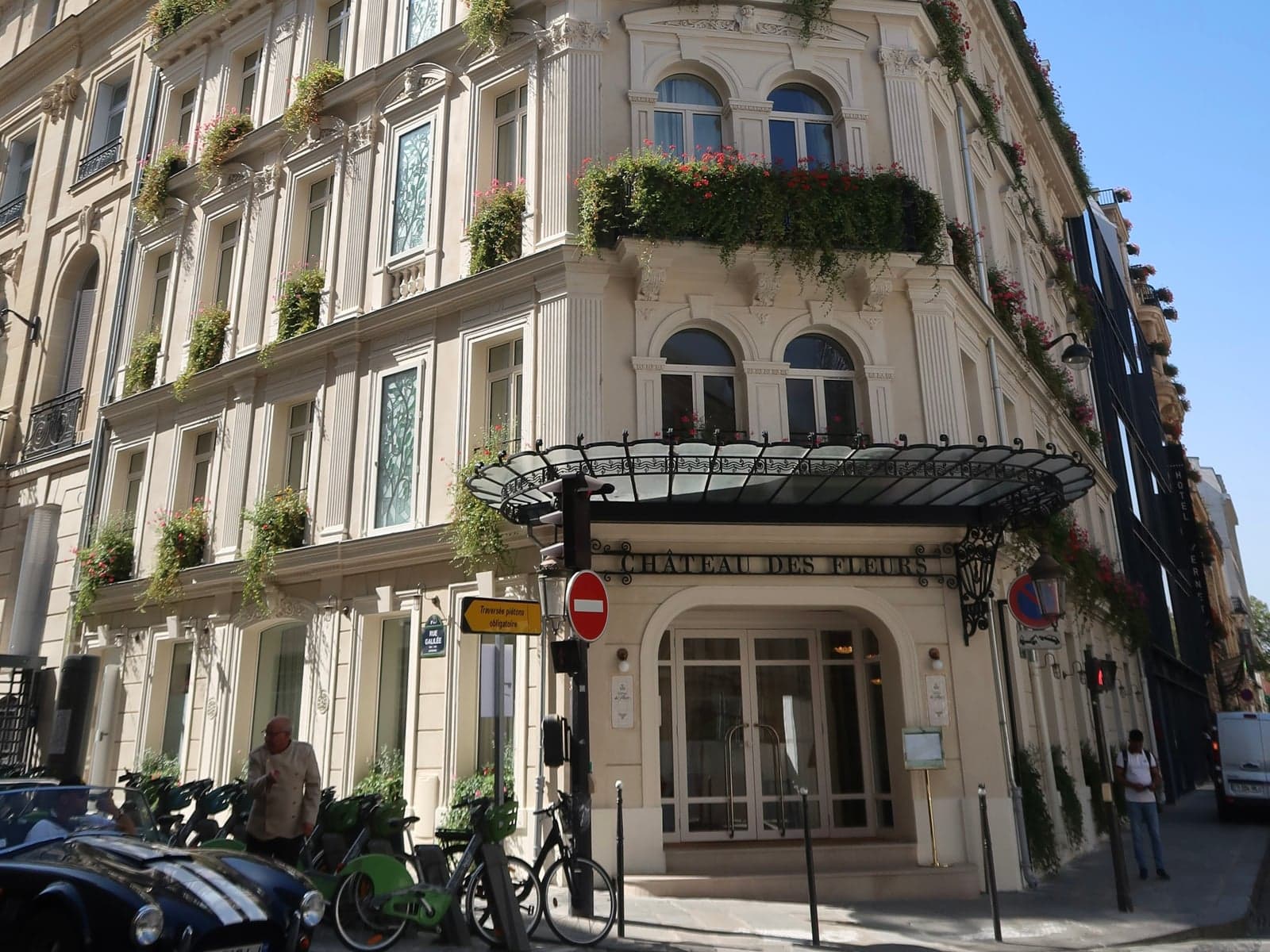
Hôtel Château des Fleurs
A five-star hotel with 37 rooms and suites at the corner of rue Vernet and rue Galilée in the 8th arrondissement, about 330 meters from the Arc de Triomphe. It opened in 2023 and has a lounge and bar, a small spa with a pool, and connecting rooms for families.

Hôtel de Berri
A 75-room five-star hotel on rue de Berri, a side street running north from the Champs-Élysées in the 8th arrondissement. It has a private garden and stands on the site of the house where the fashion designer Elsa Schiaparelli lived from 1937 to 1973.

La Clef Champs-Élysées Paris
La Clef Champs-Élysées Paris is a 70-room five-star hotel on rue de Bassano in the 8th arrondissement, a short walk from the Champs-Élysées. Several room types have a full kitchen, and both duplex apartments have terraces. The building dates from 1907, and the cognac distiller and politician James Hennessy lived there from 1908 into the 1920s.

Hôtel Napoléon
A five-star hotel with 96 rooms, 57 of them suites, at 40 avenue de Friedland in the 8th arrondissement, about 230 meters from the Arc de Triomphe. The hotel says a Russian businessman bought it soon after it opened in 1928 and gave it to his French wife as a wedding present.

La Maison Champs-Élysées
La Maison Champs-Élysées is a five-star hotel with 57 rooms and suites at 8 rue Jean-Goujon, between avenue Montaigne and the Grand Palais. The building began as a mansion for Anne Debelle, Duchess of Rivoli, in the 1860s, and the fashion house Maison Martin Margiela redesigned much of the hotel in 2010 and 2011.
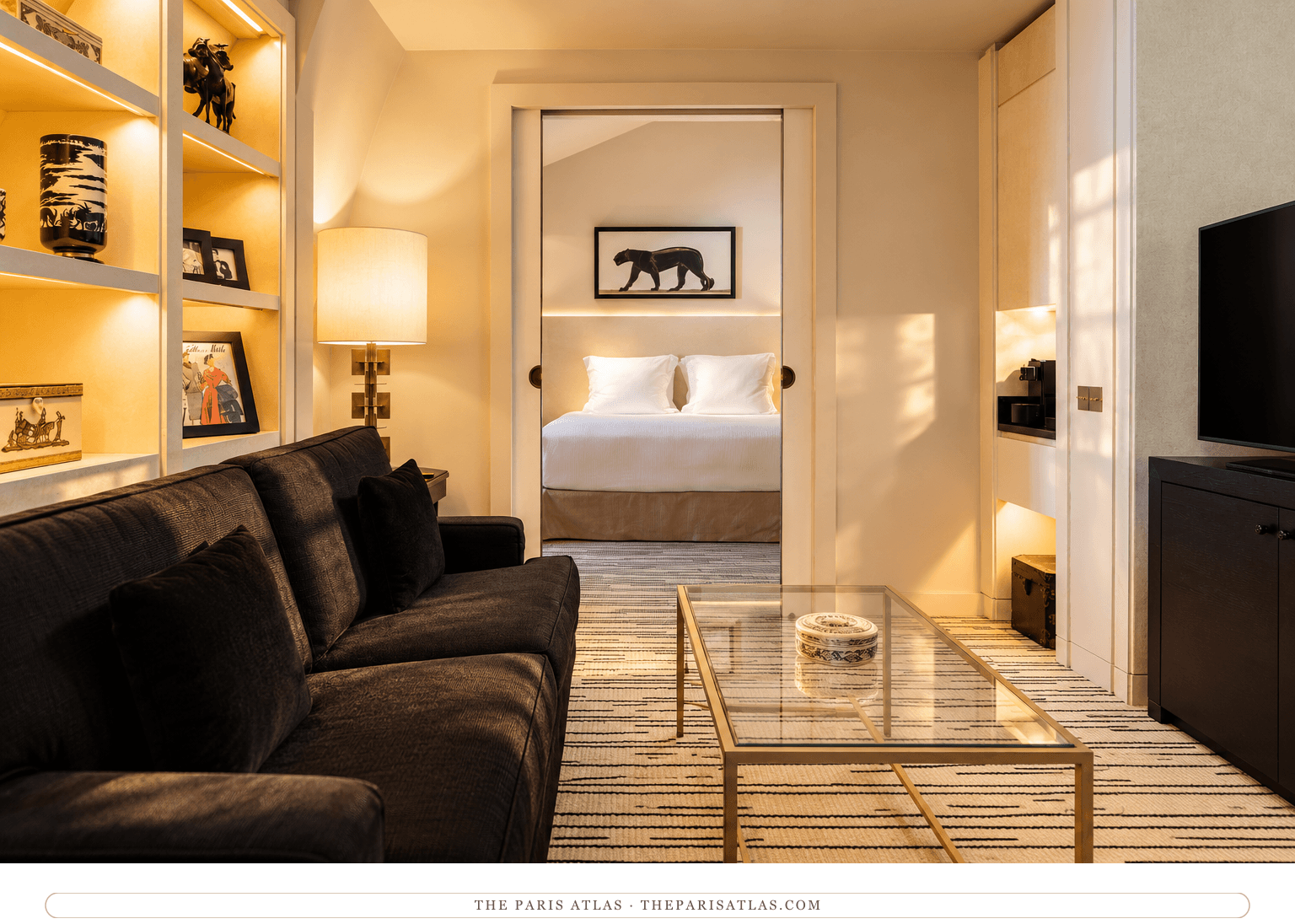
Hôtel Montaigne
A five-star hotel with 27 rooms and suites on avenue Montaigne, Pierre-Yves Rochon interiors, and a bar-restaurant serving meals throughout the day.

Hôtel de Montesquieu
An 18-room five-star hotel near the Champs-Élysées, with Persian-inspired interiors, a lounge honesty bar and suites with separate living rooms.

Villa Marquis Meliá Collection
A five-star boutique hotel near avenue Montaigne, with a French-Spanish restaurant, a 24-hour gym and selected rooms with balconies.

Sofitel Paris Arc de Triomphe
A five-star hotel near the Champs-Élysées with interiors by Studio Putman, French dining and connecting rooms for families.

Grand Hôtel Champs-Élysées
A five-star hotel with 46 rooms and suites near the Arc de Triomphe, a courtyard patio, and room categories that distinguish monument views from private balconies.

Paris Marriott Champs-Élysées Hotel
A five-star hotel directly on the Champs-Élysées, with newly renovated rooms, a glass-domed atrium and suites overlooking the avenue.

InterContinental Paris – Champs-Elysées Etoile
A five-star hotel with 55 rooms and suites on avenue Marceau, contemporary interiors behind a carved stone entrance, a Japanese and South American restaurant, and a fitness room.
Chaussée-d'Antin

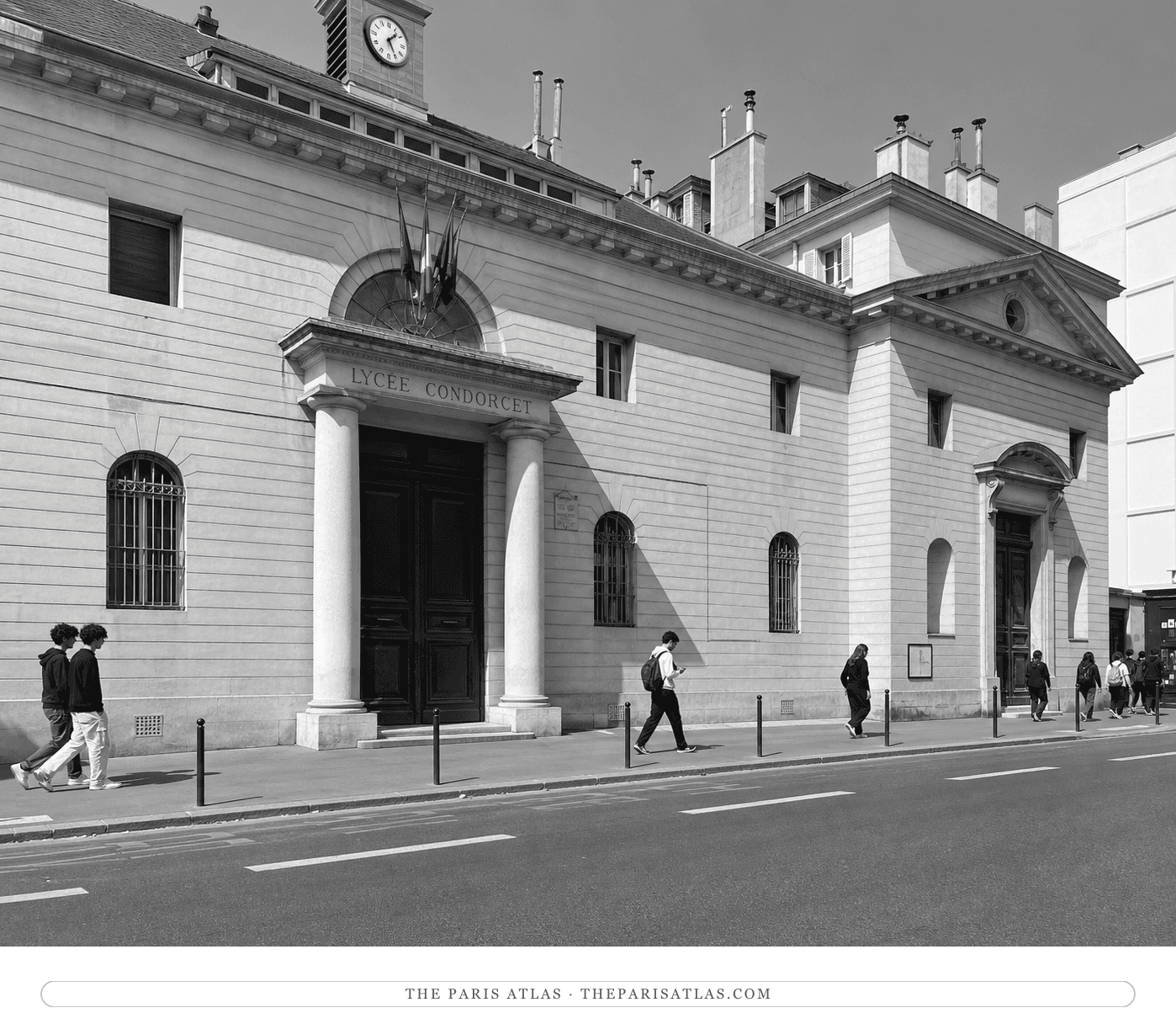
Lycée Condorcet
One of the oldest and most prestigious lycées in Paris, by the Gare Saint-Lazare. Marcel Proust was a pupil here, and it is where his first writing was done — in small magazines produced with schoolfriends.

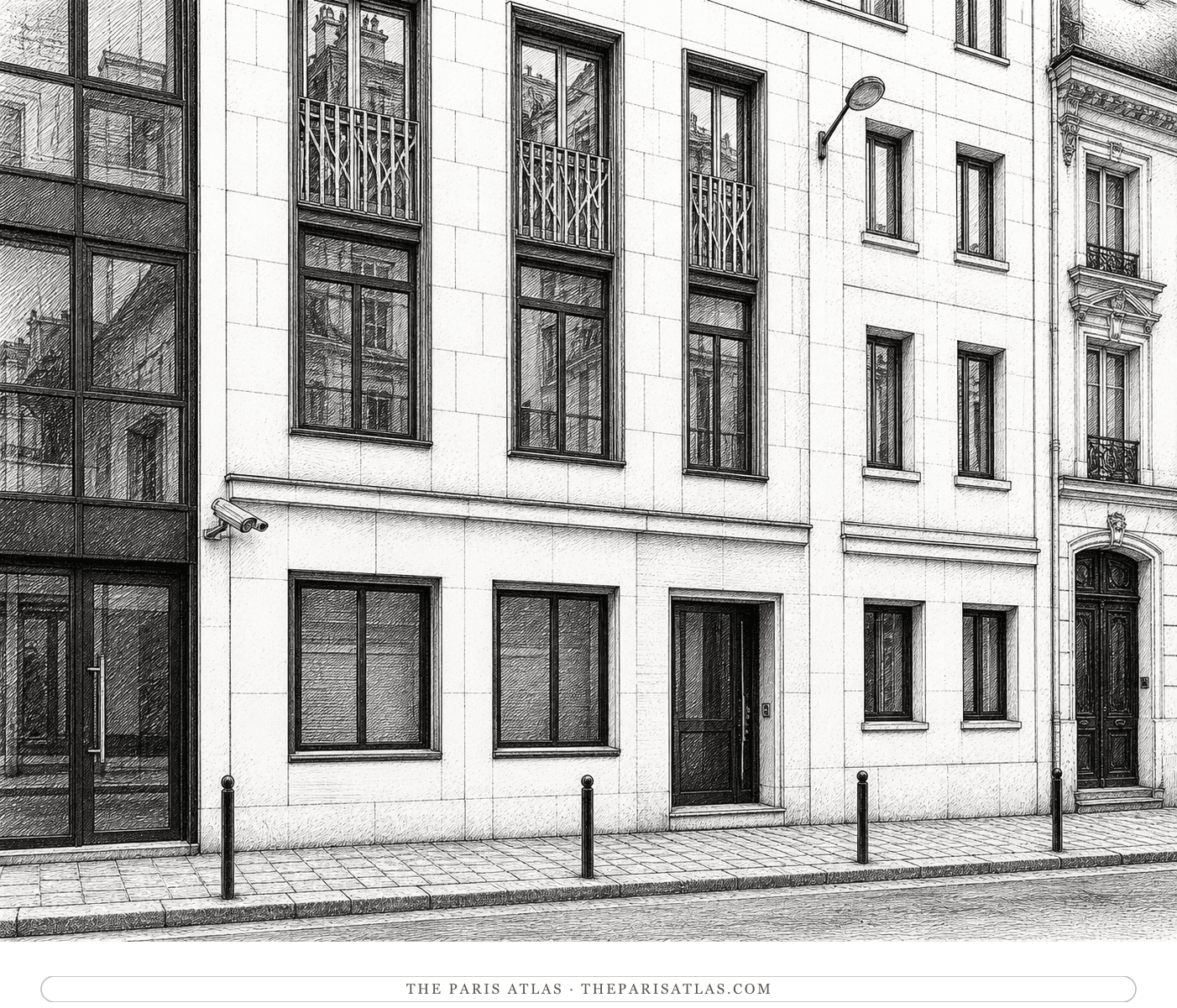
8 rue Saint-Georges
The house where Edgar Degas was born on 19 July 1834, on a quiet street in the 9th arrondissement — the district he would spend almost his entire life inside.

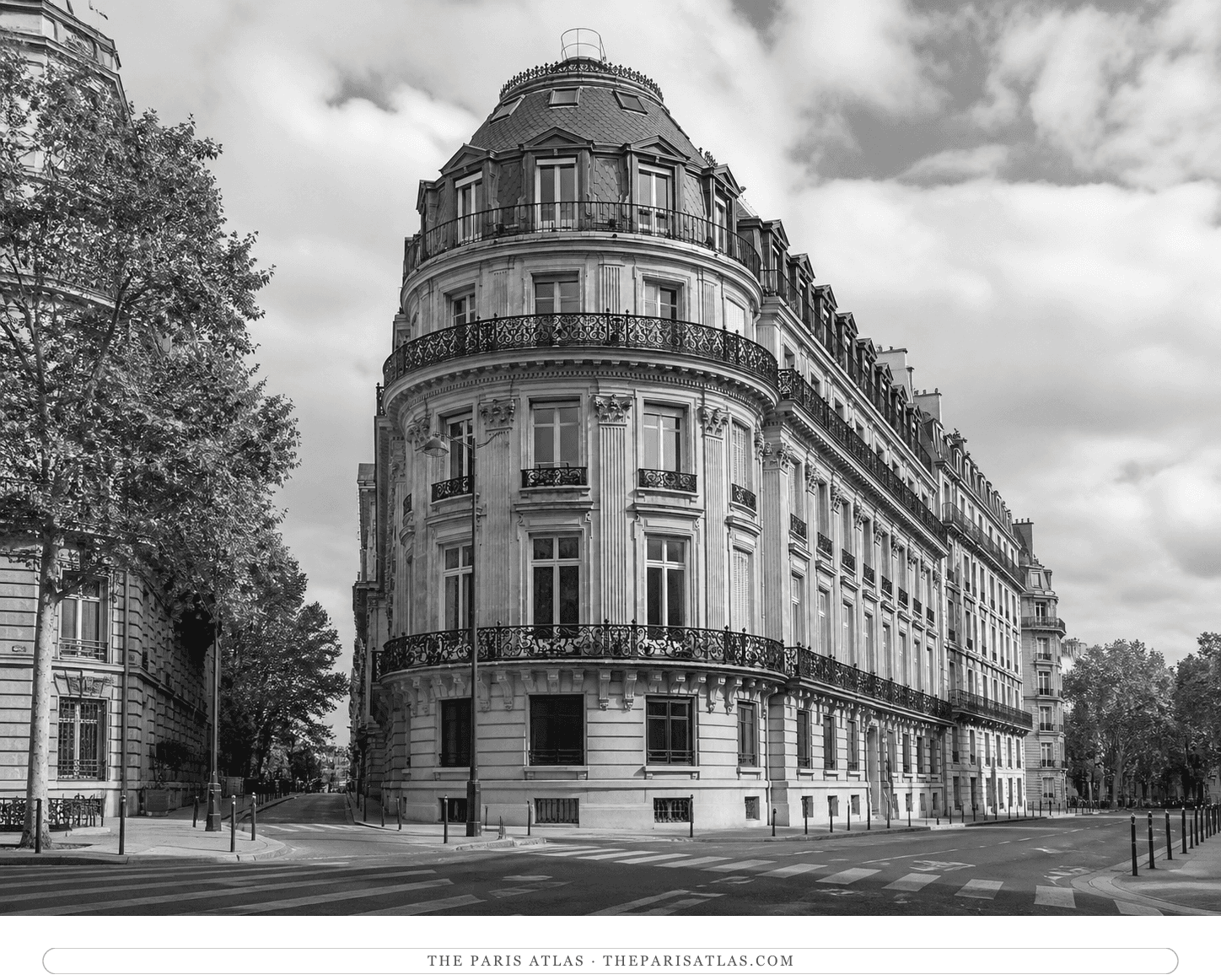
31 boulevard Haussmann
The sixth-floor apartment Gustave Caillebotte shared with his brother Martial after their mother's death — and the balcony from which he painted the boulevard looking almost straight down.
Clichy

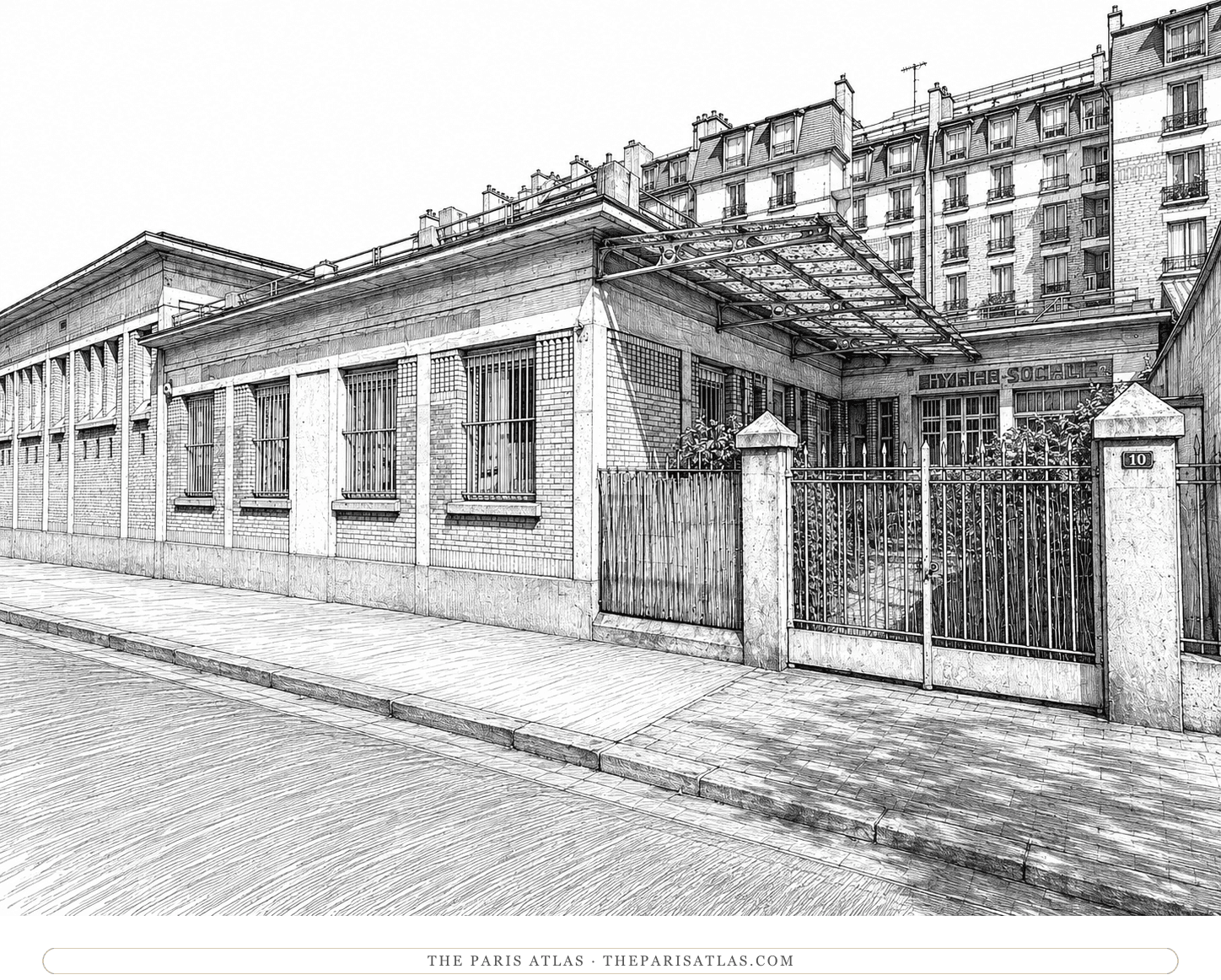
Clichy — Montmartre's edge

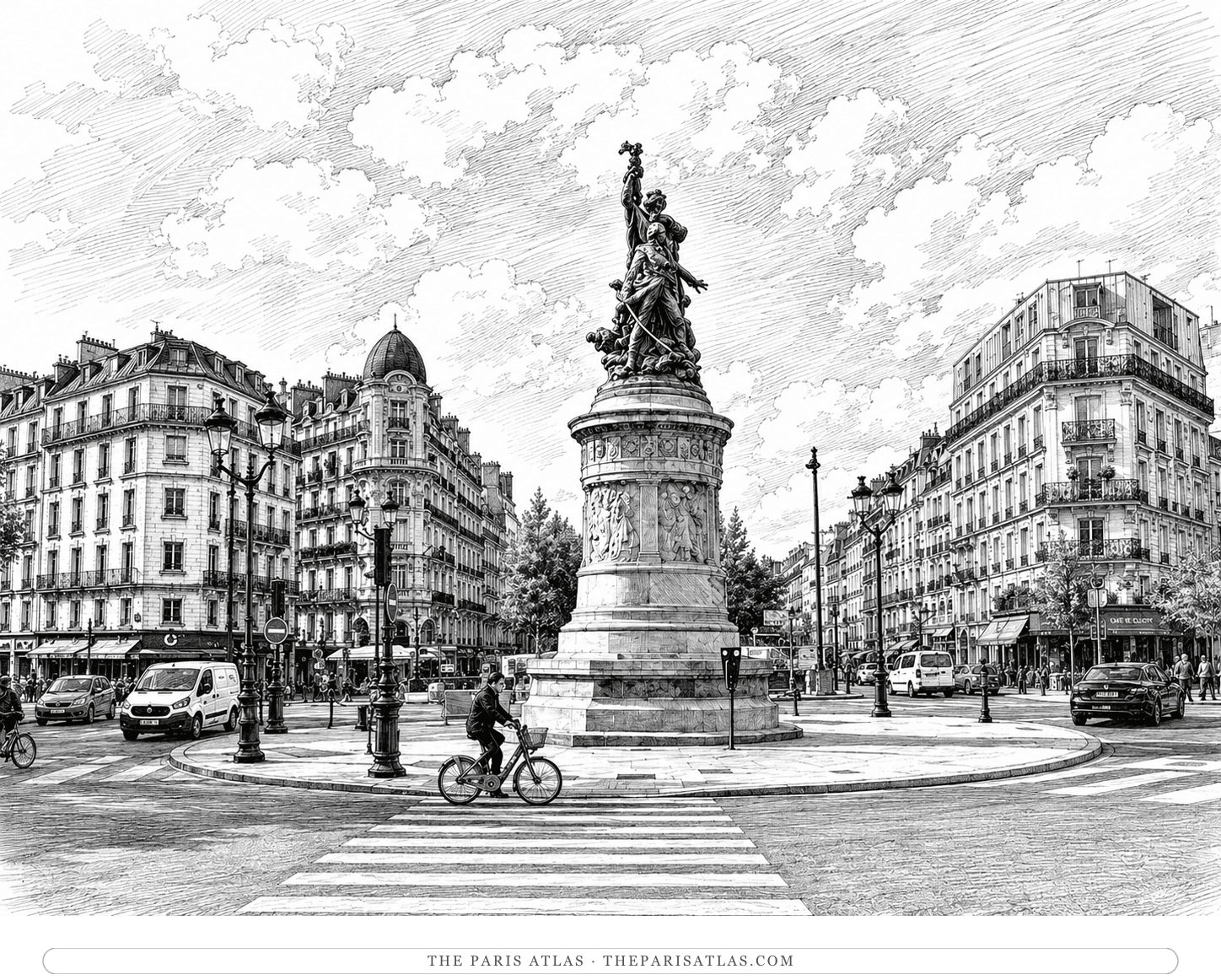
Denfert-Rochereau

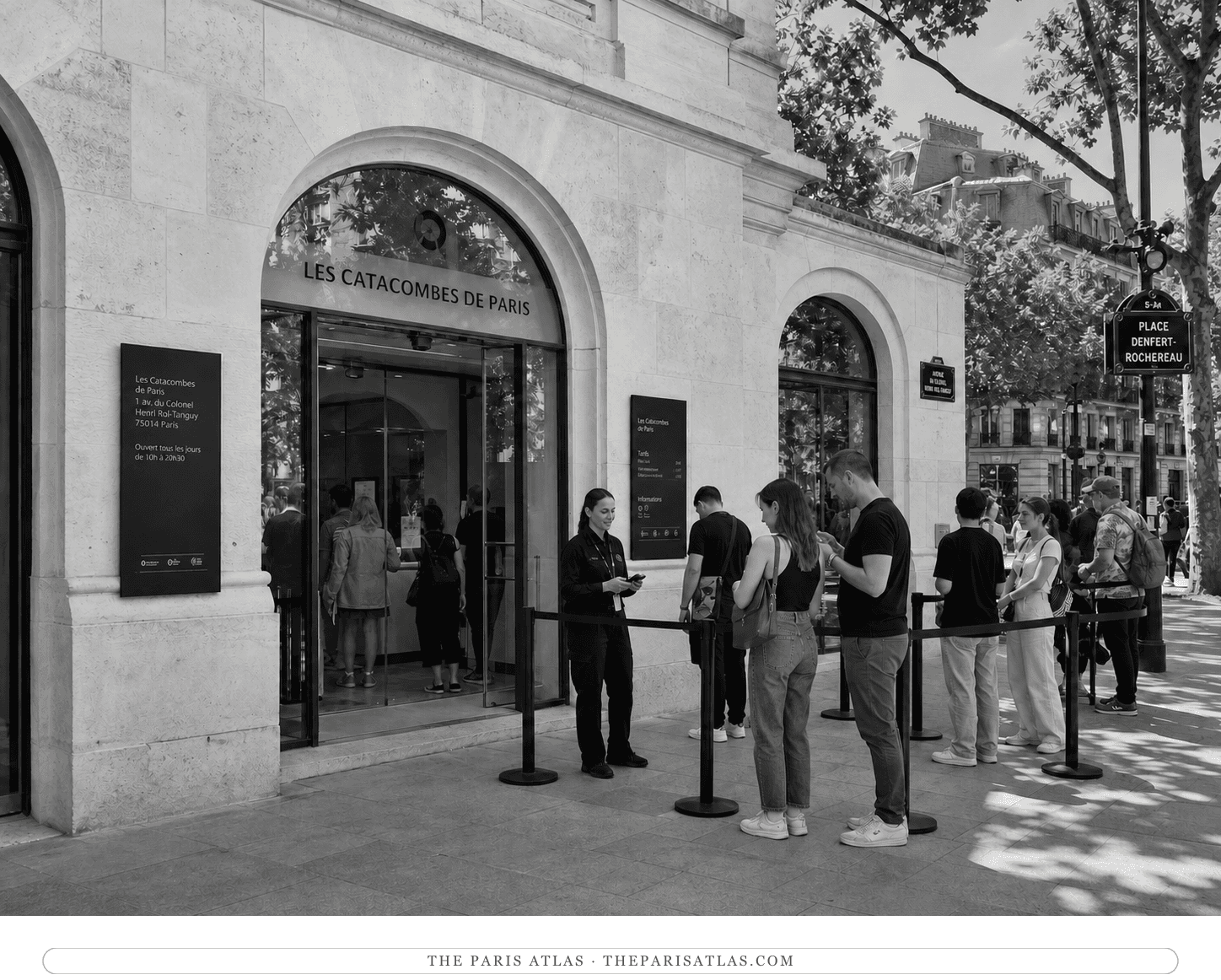
Eiffel Tower

Hôtel La Bourdonnais
A 53-room four-star hotel near the École Militaire and the Champ-de-Mars, reopened in 2026 after a redesign by Oscar Lucien Ono, with the Minuit Express cocktail bar.
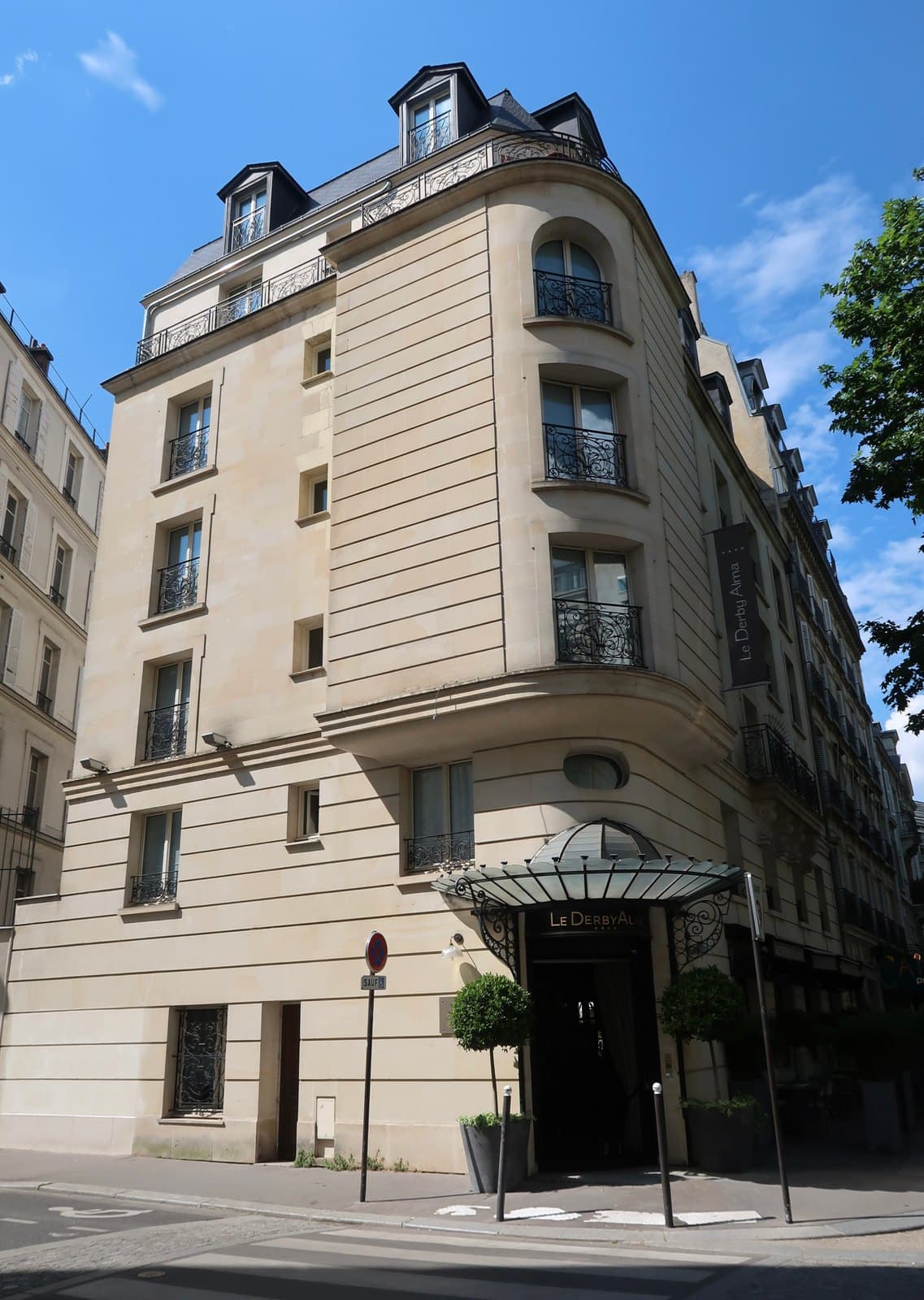
Hôtel Le Derby Alma
A 33-room four-star hotel near the Pont de l'Alma and the Eiffel Tower, on the corner of avenue Rapp and avenue Franco-Russe, with rooms on a Paris fashion theme and a bar with a terrace.

Hôtel Le Walt
A 25-room four-star hotel beside École Militaire Métro station, with a large painting reproduced above every bed, some Eiffel Tower views and a courtyard patio.

Le Cinq Codet
A 67-room five-star hotel in a 1930s telephone exchange near Les Invalides, with suites looking onto the dome of Les Invalides and the Eiffel Tower, a rooftop spa with an open-air hot tub, and the Chiquette restaurant.
Ermenonville, Oise

Faubourg Saint-Denis

Faubourg Saint-Honoré

23 rue La Boétie
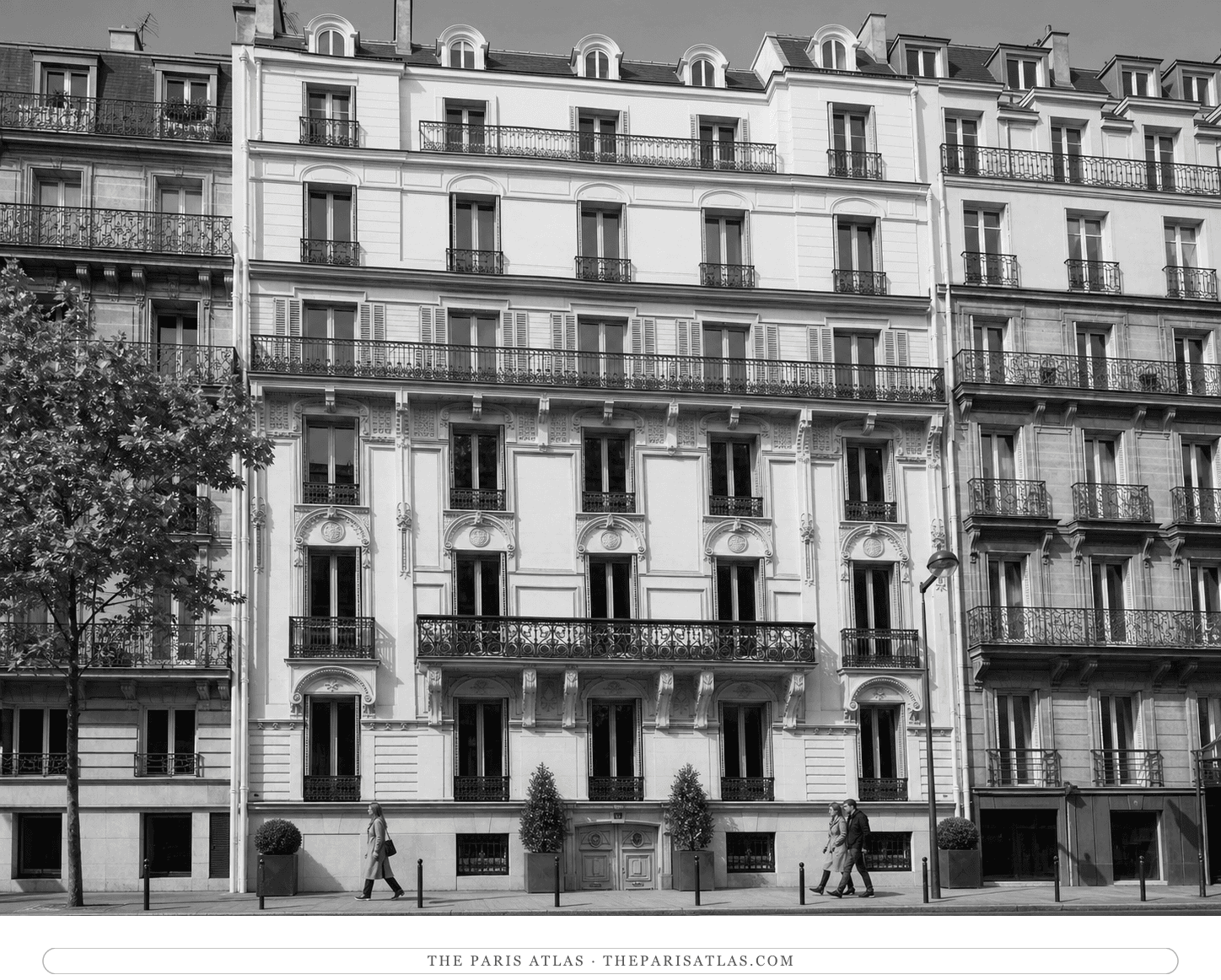
Where Pablo Picasso lived and worked from 1918 with Olga Khokhlova — the apartment in the gallery district that marks his arrival into wealth, with a cook, a chauffeur, a chambermaid and a nurse, and his dealer Paul Rosenberg two doors along.
Fauchon L'Hôtel Paris
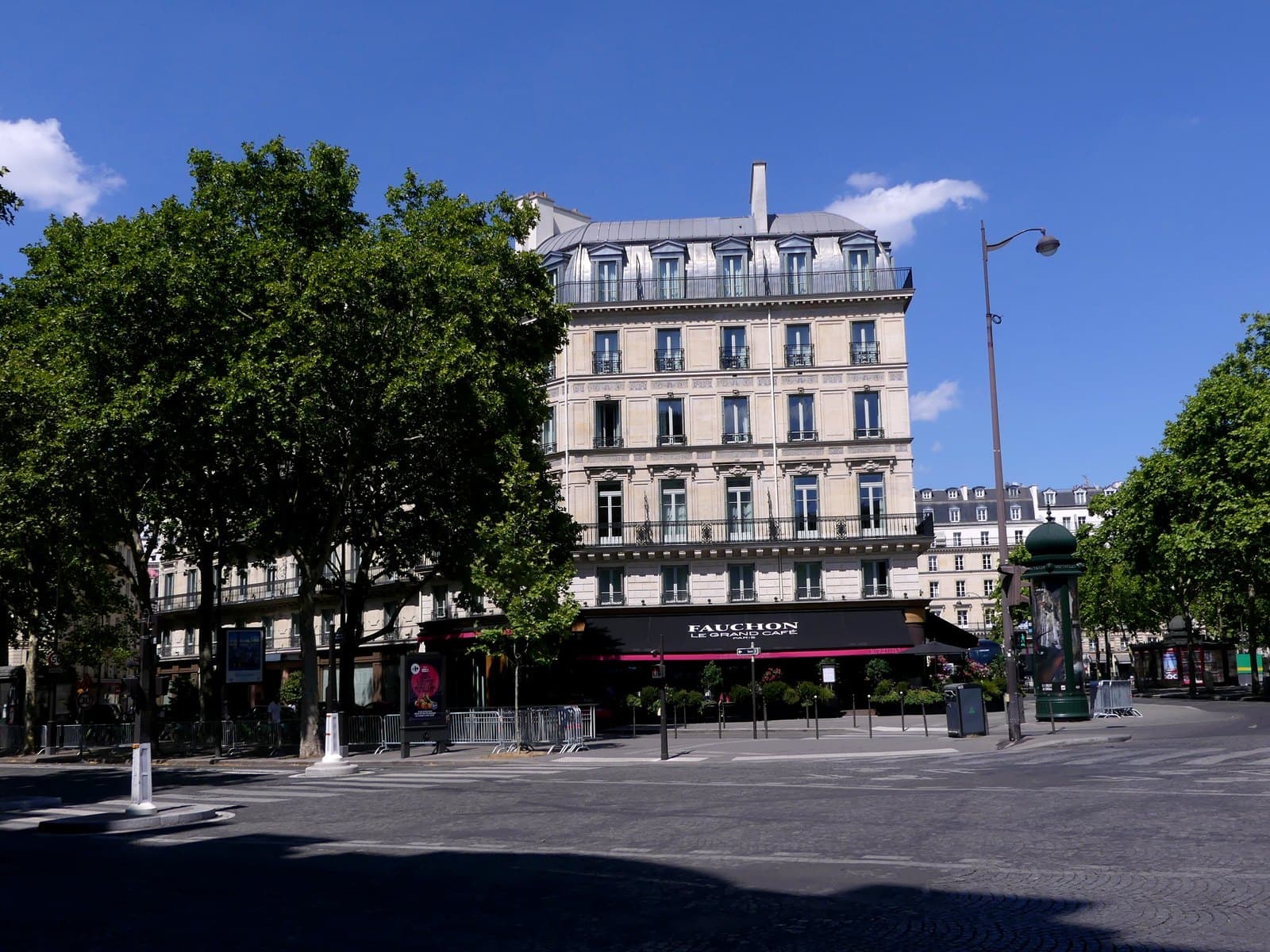
A 54-room five-star hotel from the Paris food house Fauchon on place de la Madeleine, with a gourmet minibar in every room, Le Grand Café Fauchon and a small spa.

La Réserve Paris – Hotel and Spa
A 40-room hotel on avenue Gabriel, near the Champs-Élysées, that holds France's Palace distinction, a rating above five stars. It opened in 2015, with interiors by Jacques Garcia, in a building where the couturier Pierre Cardin had run a hotel called the Résidence Maxim's. It has a three-Michelin-star restaurant and a spa with a pool.

Le Bristol Paris
A 188-room hotel on rue du Faubourg-Saint-Honoré, opened in 1925 and holding France's Palace distinction, a rating above five stars. It has a three-Michelin-star restaurant, a large garden and a sixth-floor pool looking towards the Eiffel Tower.
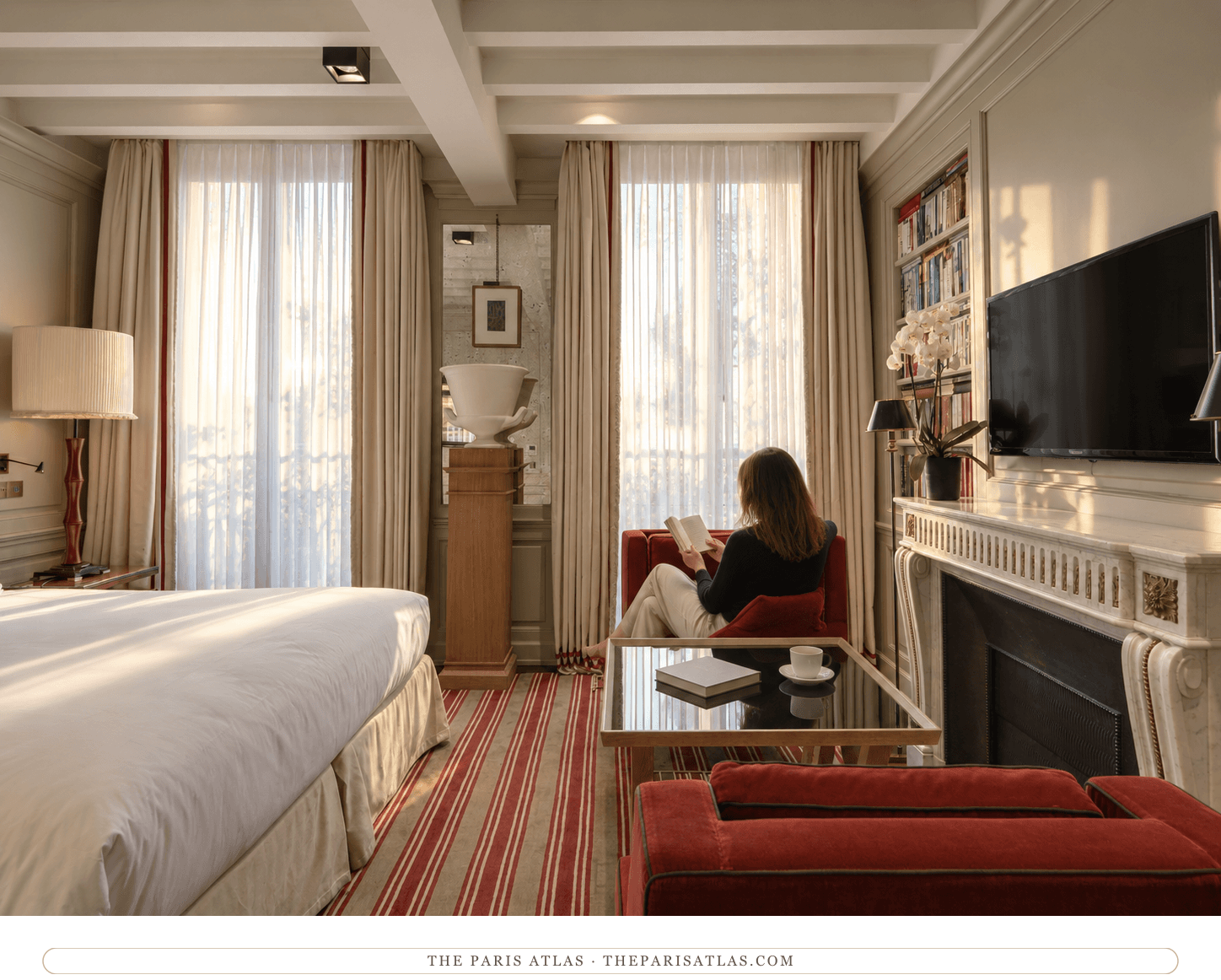
Marquis Faubourg Saint-Honoré
A 15-suite hotel in an eighteenth-century mansion, with Michele Bönan interiors, original marble fireplaces and a private gym under a vaulted ceiling.
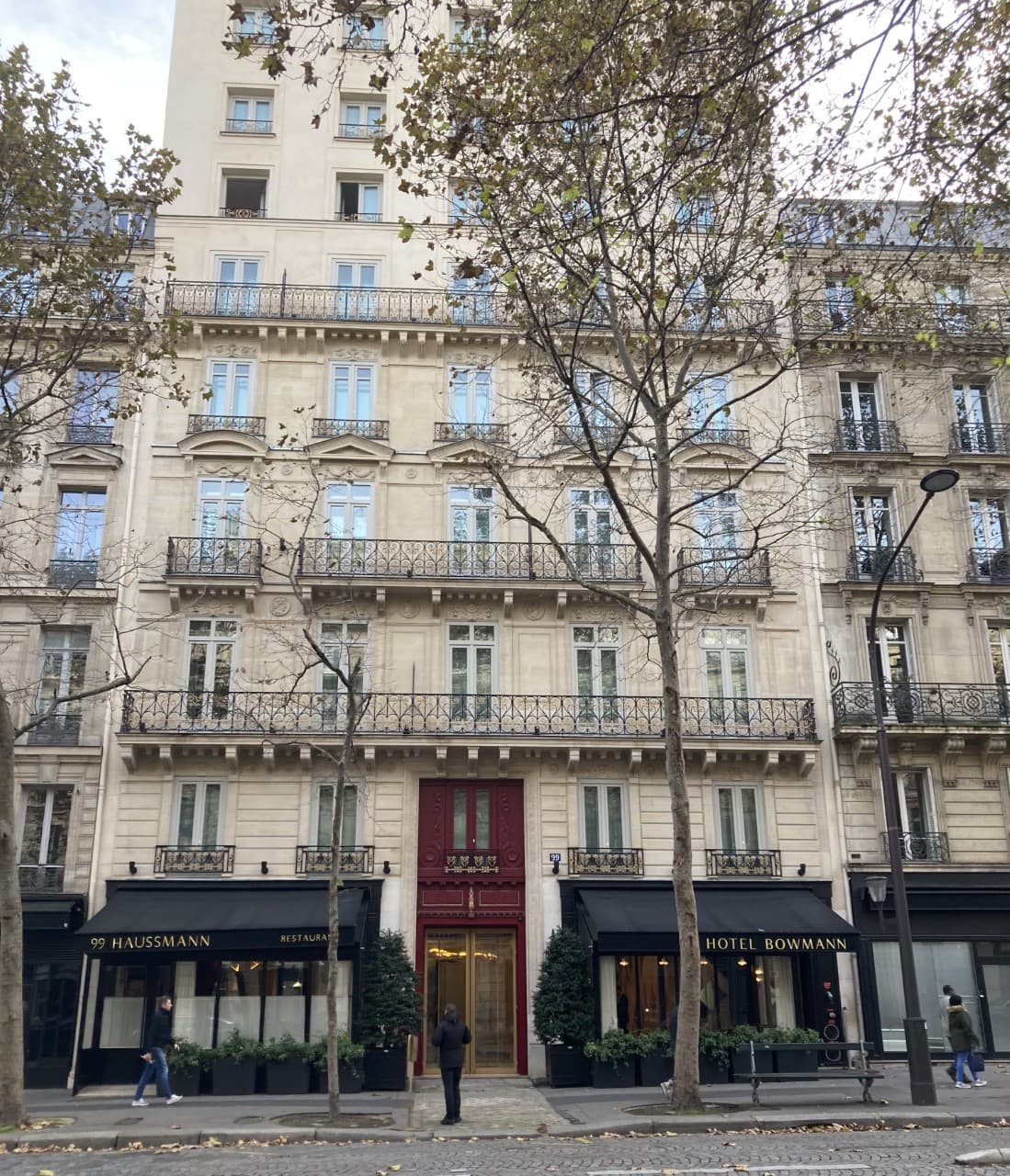
Hôtel Bowmann
On boulevard Haussmann, Hôtel Bowmann combines a carved-stone Parisian façade with contemporary interiors, a garden terrace and a spa. Its 48 rooms and five suites give this five-star address a comparatively intimate scale.
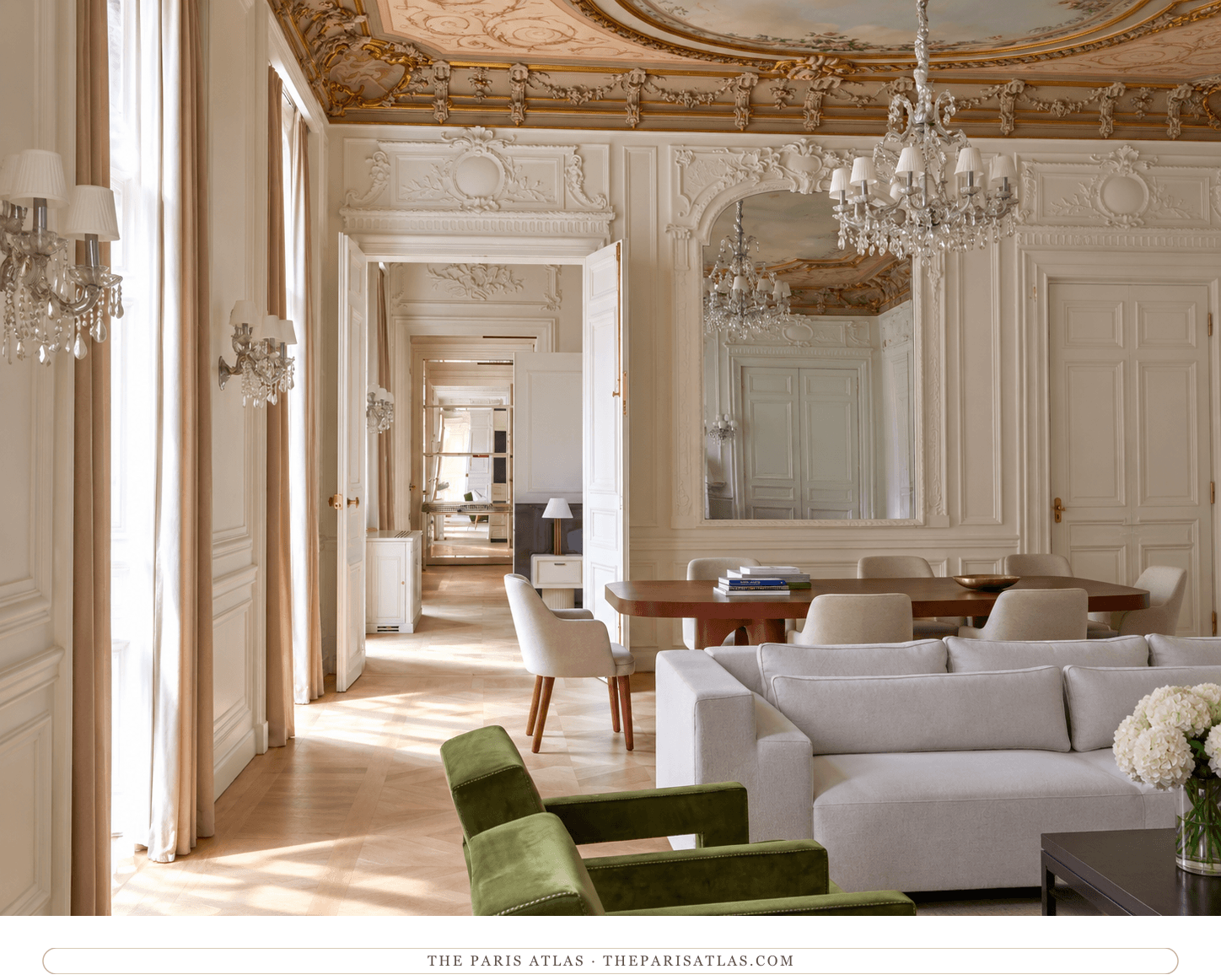
Maison Delano Paris
Maison Delano Paris occupies an eighteenth-century mansion on rue d’Anjou, with 56 rooms and suites arranged around a courtyard. Pale contemporary interiors sit within a building that retains fireplaces, mouldings and painted ceilings.
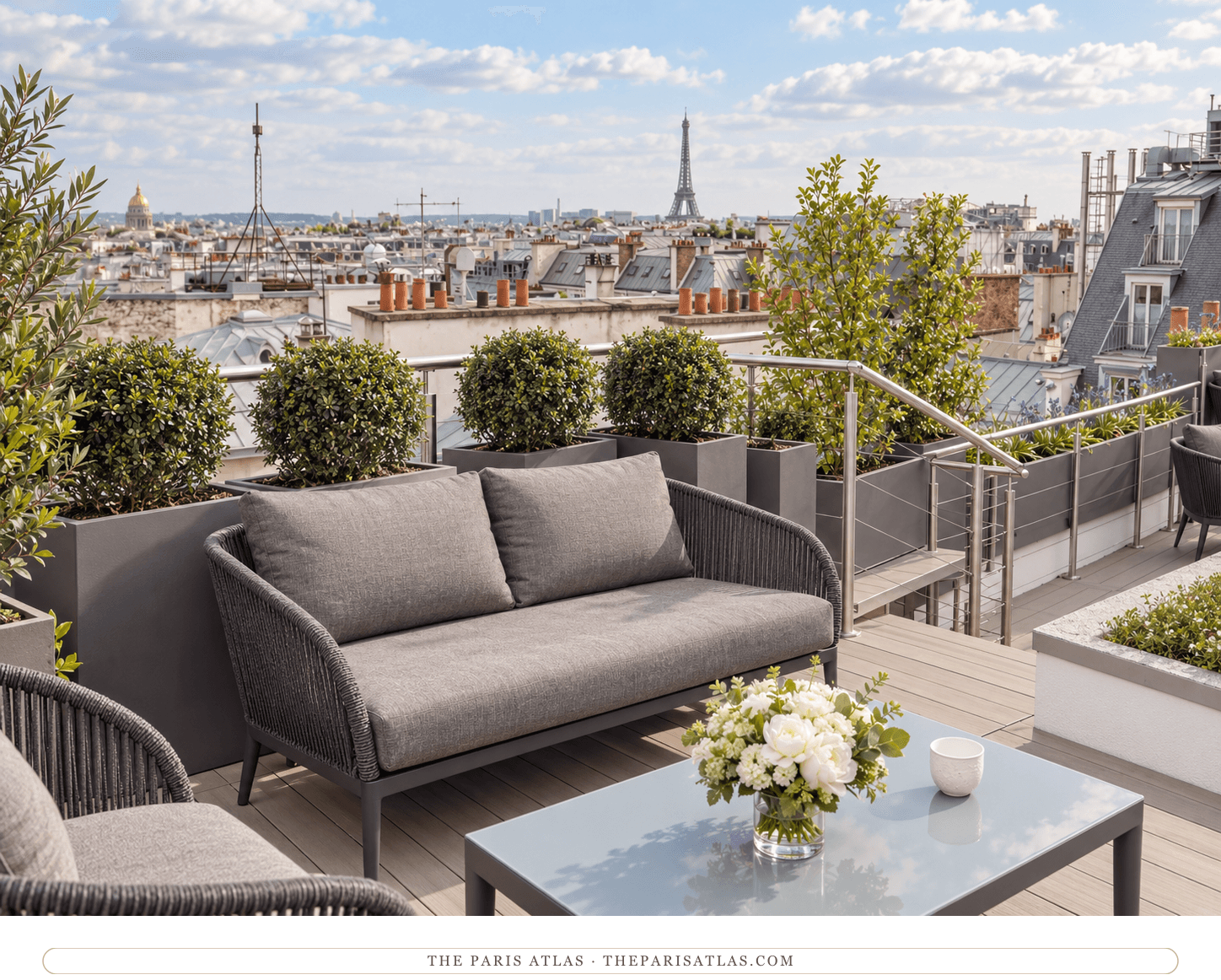
Hôtel Alfred Sommier
Hôtel Alfred Sommier occupies a former family mansion near the Madeleine, with a courtyard and private garden behind its cut-stone exterior. The hotel presents 80 rooms including 17 suites within a house still marked by fireplaces, mirrors and oak floors.
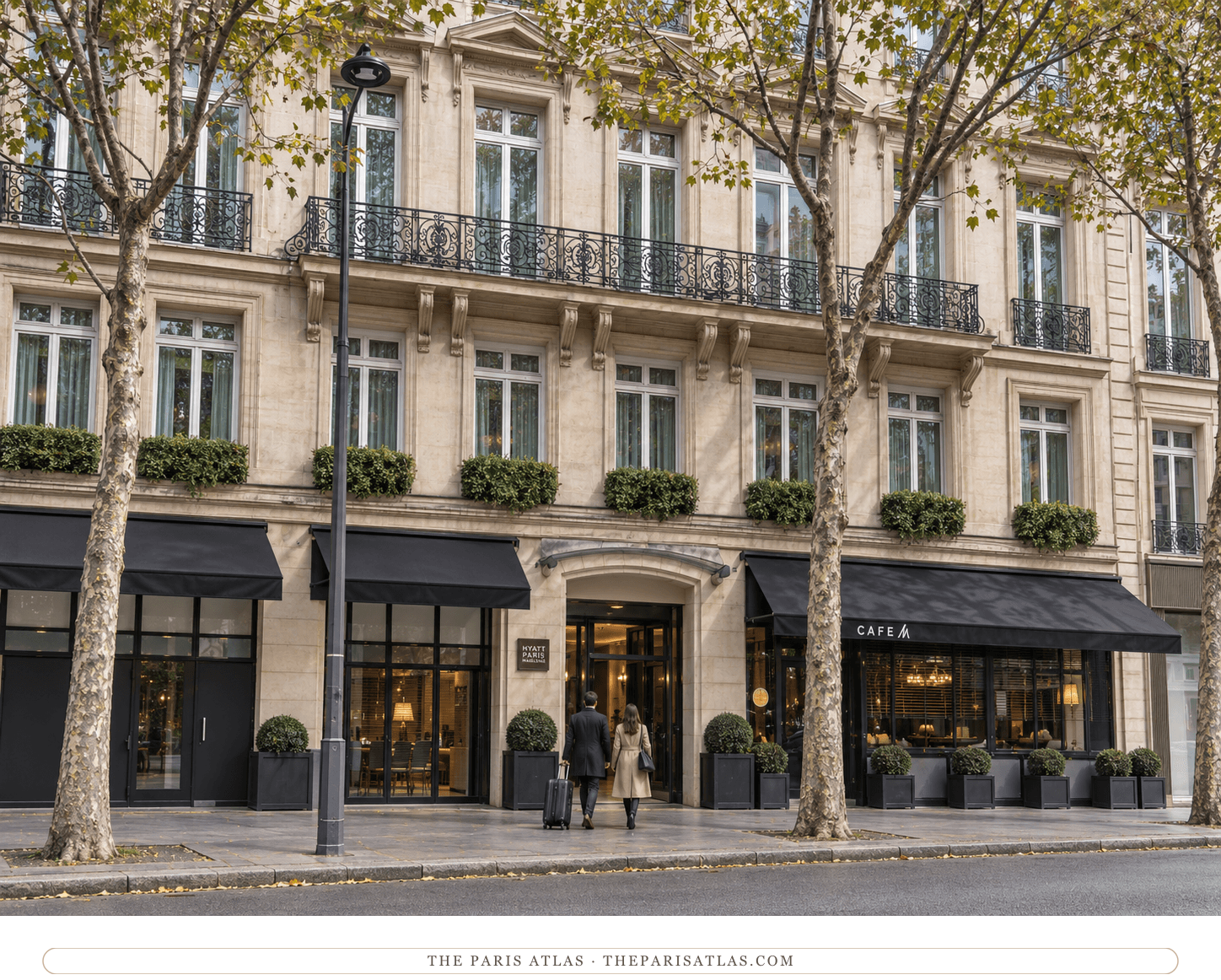
Hyatt Paris Madeleine
Hyatt Paris Madeleine is an 85-room hotel on boulevard Malesherbes, with 14 suites, two distinctive dining spaces and a wellness area. Its room choices contrast courtyard outlooks with views toward the boulevard or Saint-Augustin.
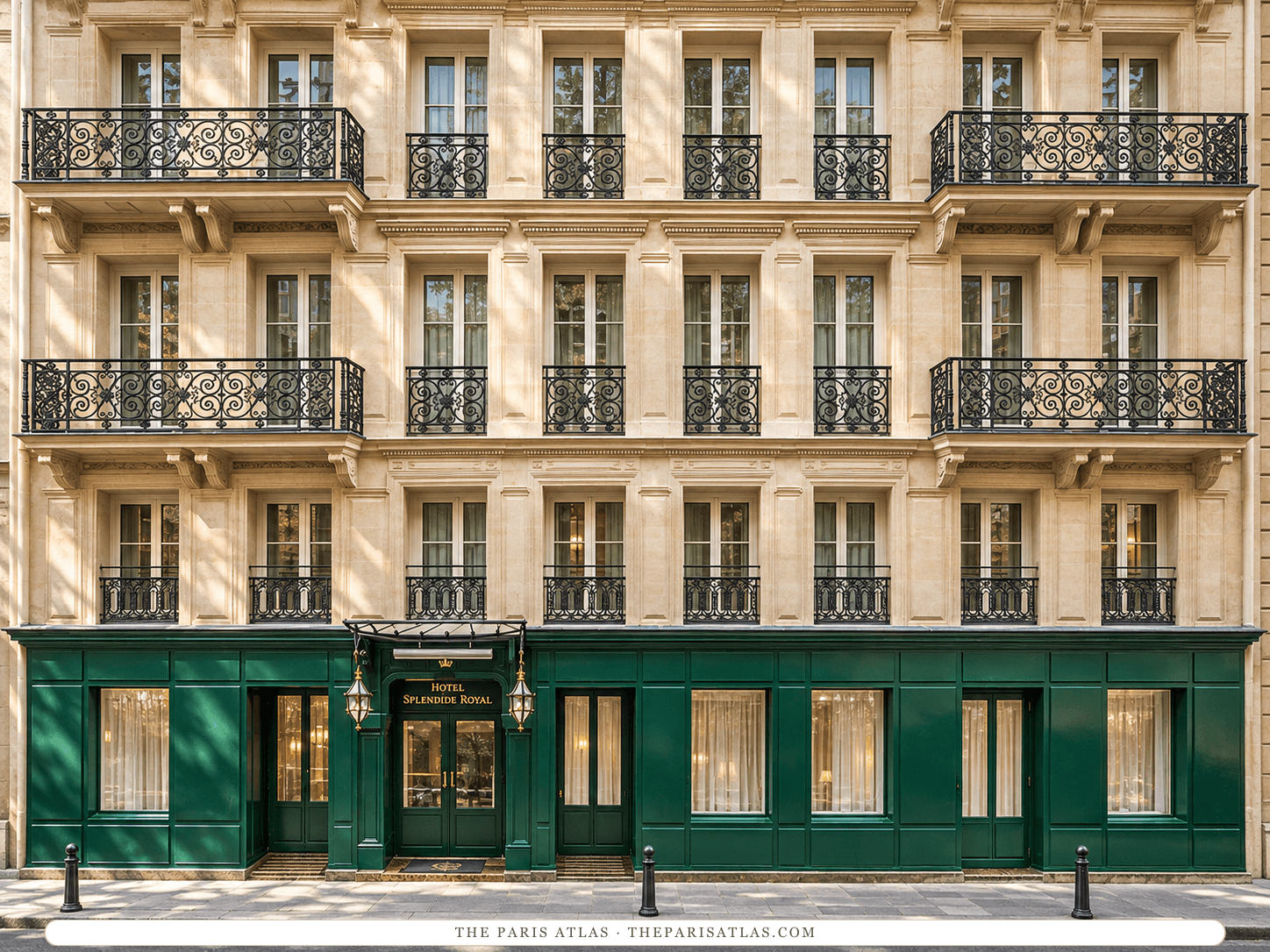
Hôtel Splendide Royal Paris
A five-star hotel with 12 suites on rue du Cirque, a quiet street in the 8th arrondissement near the Élysée Palace and the Champs-Élysées. The hotel dates its building to 1897, belongs to Relais & Châteaux, an association of independent hotels and restaurants, and has an Italian restaurant, Tosca.

Les Jardins du Faubourg
Les Jardins du Faubourg is a 36-room five-star hotel on rue d'Aguesseau in the 8th arrondissement, a few steps from rue du Faubourg Saint-Honoré. Opened in 2019, it has an inner garden, an Italian restaurant under a glass roof and a Shiseido spa with a 15-meter indoor pool.
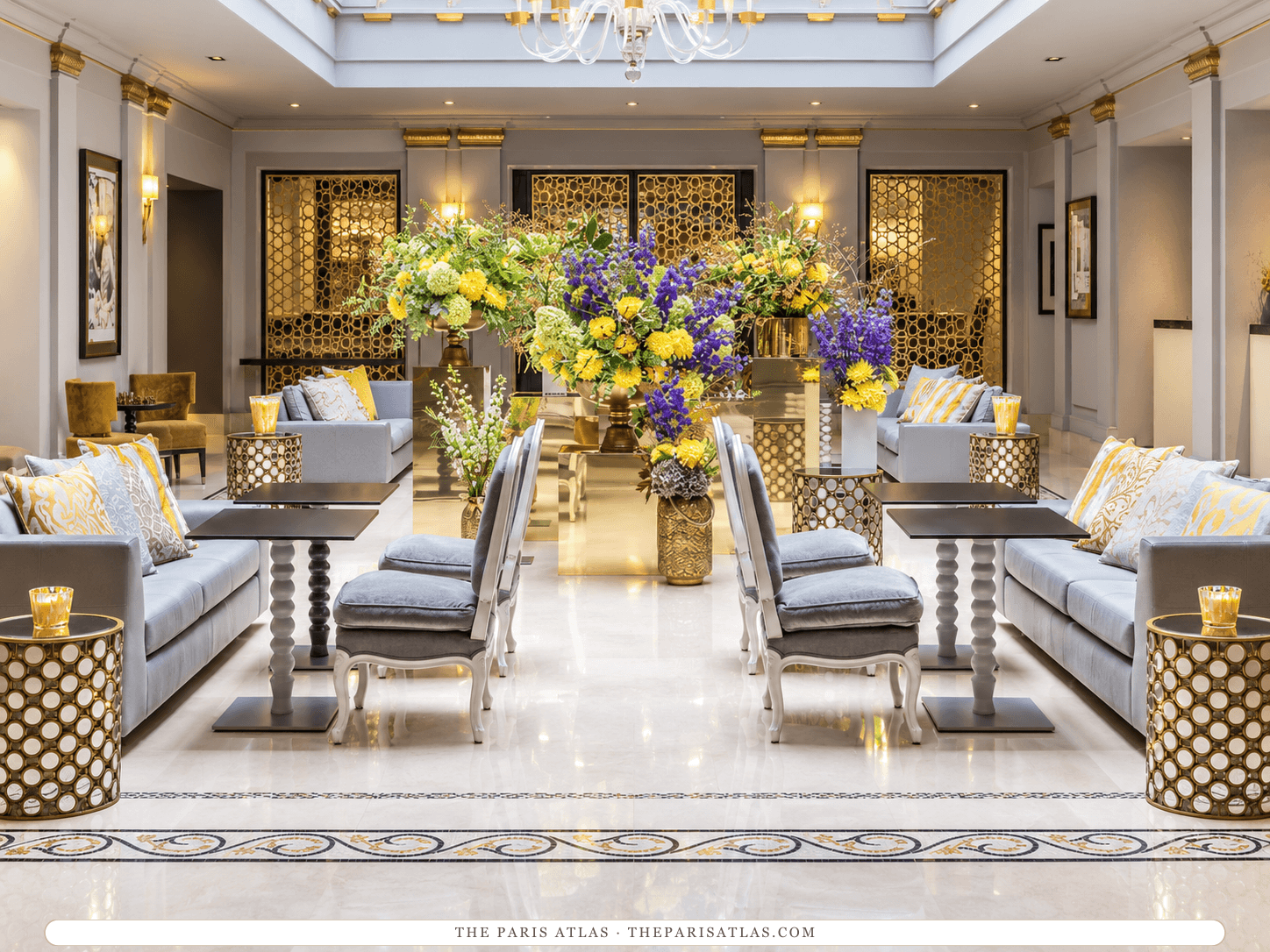
Sofitel Paris Le Faubourg
Sofitel Paris Le Faubourg is a 148-room five-star hotel on rue Boissy-d'Anglas, between Place de la Concorde and rue du Faubourg Saint-Honoré. The hotel says it joins two buildings: the former Hôtel Vouillemont and the former offices of Marie Claire magazine.

Le Pavillon des Lettres
A small literary hotel near the Élysée Palace, Le Pavillon des Lettres gives each of its 26 rooms an author’s name and pairs passages on the walls with a reading lounge and honesty bar.
Faubourg Saint-Jacques

Faubourg-Montmartre

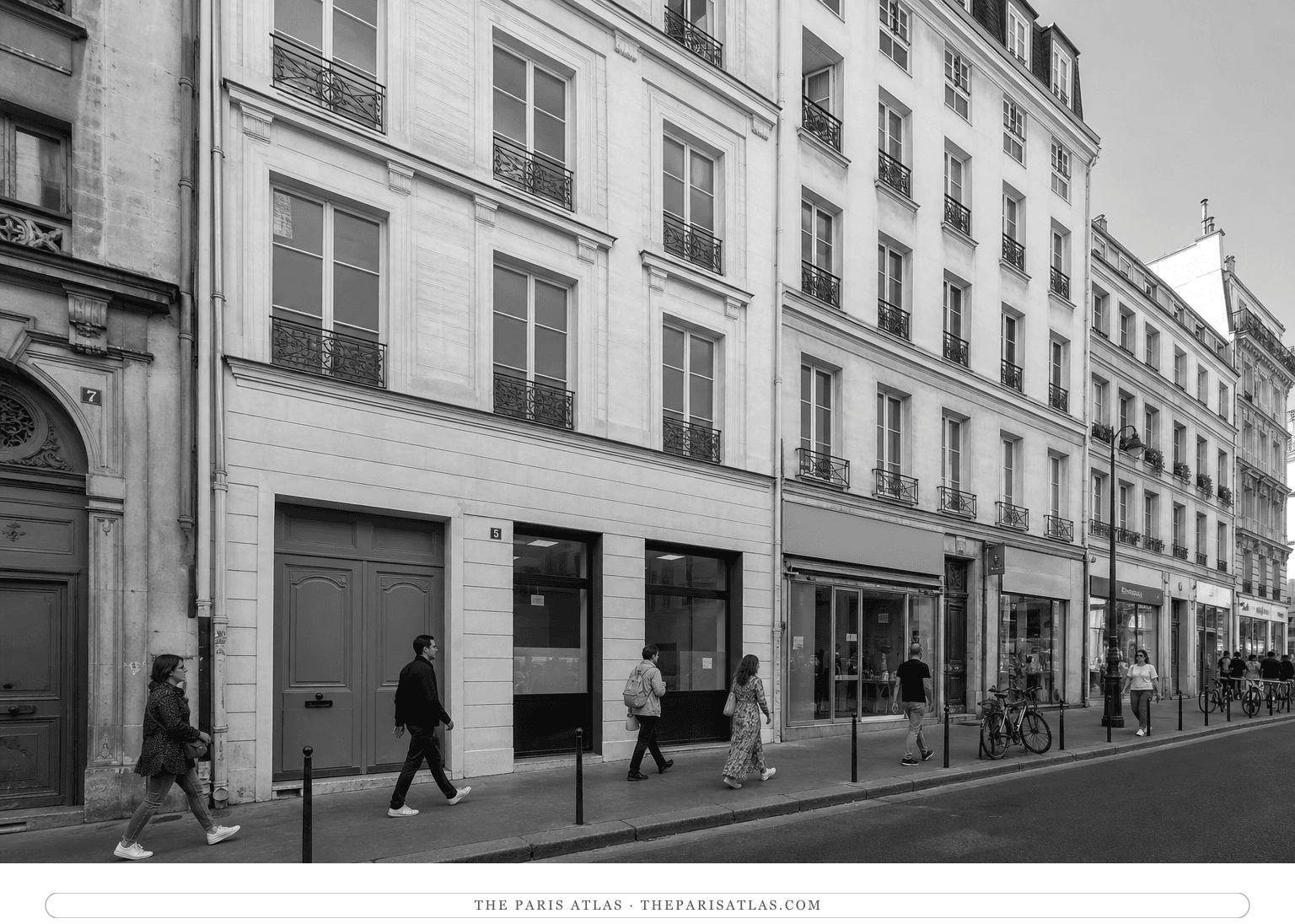
5 rue Lamartine
The Paris offices of the Chicago Tribune, where Henry Miller worked as a proofreader in 1931 — the only steady paid work of his Paris decade, taken on the night shift while he wrote Tropic of Cancer.

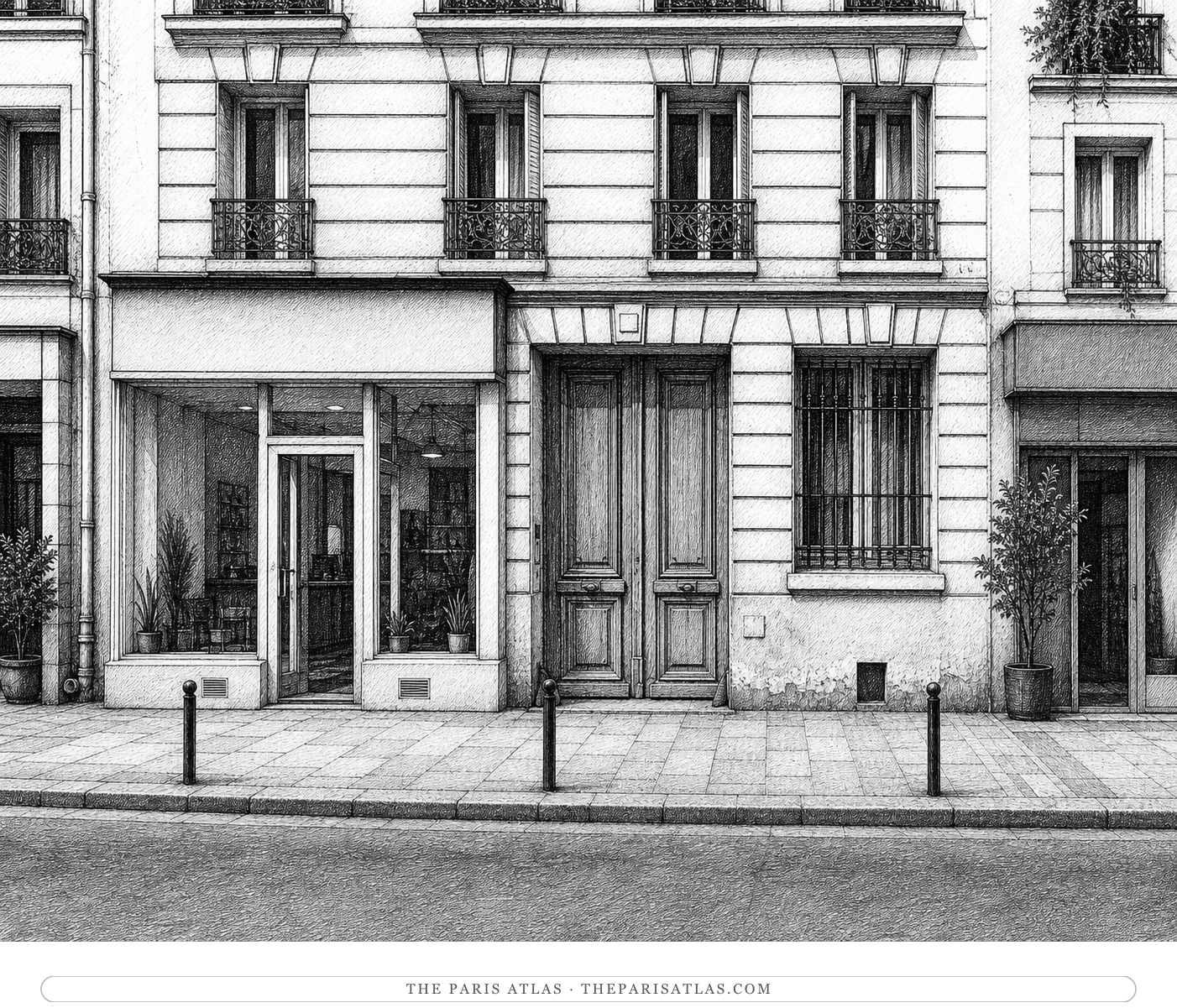
Salle Le Peletier
The theatre that housed the Paris Opera until it burned down in 1873. Its stage, rehearsal rooms and subscribers' foyer are the world behind Degas's dancers — and he went on painting it from memory long after it was ash.

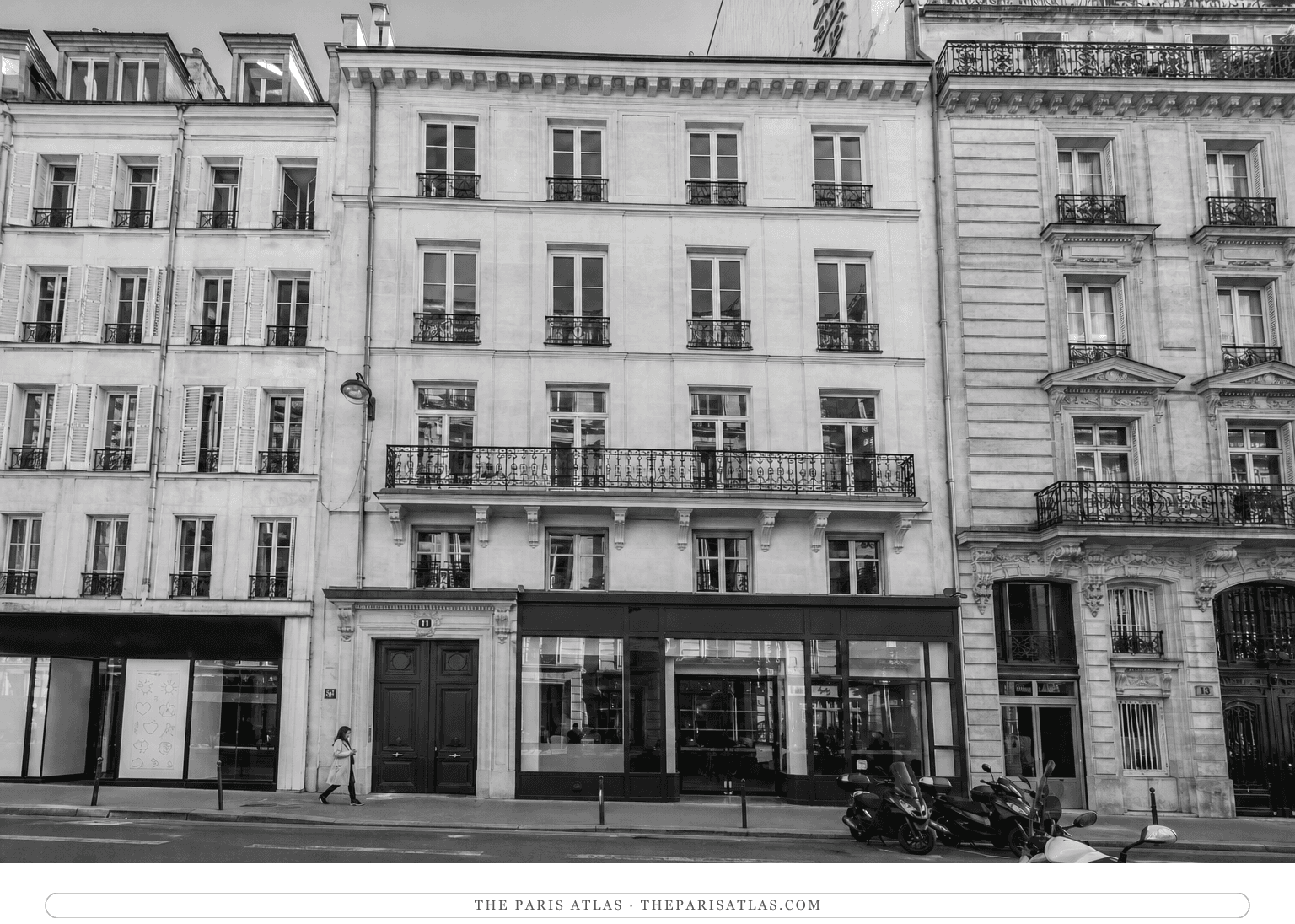
Galerie Durand-Ruel, 11 rue Le Peletier
Paul Durand-Ruel's gallery, where the second Impressionist exhibition was held in 1876 — the dealer who kept buying the group's work through the years when almost nobody else would.

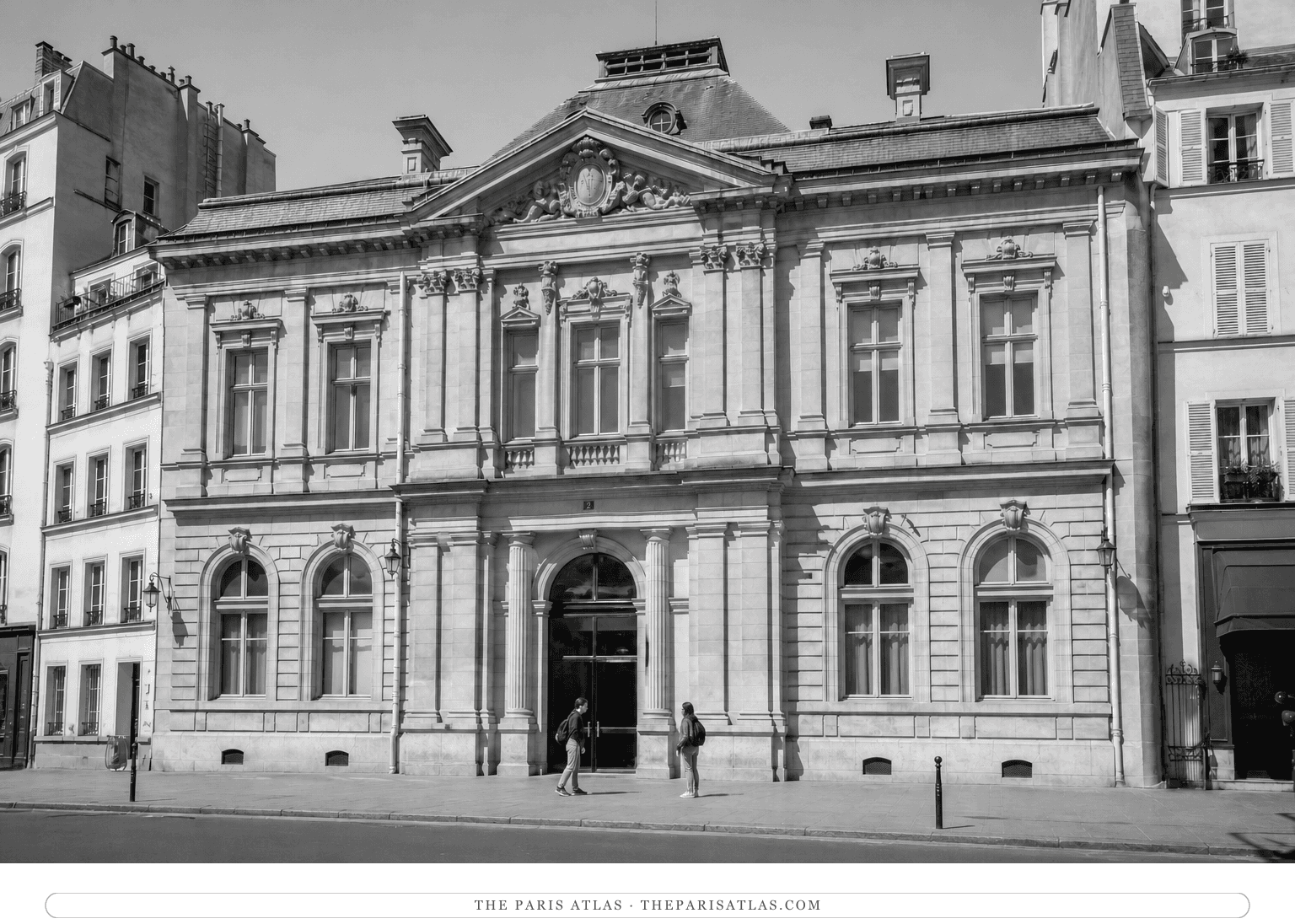
The historic Paris Conservatoire, 2 rue du Conservatoire
The old Paris Conservatoire, which Claude Debussy entered in 1872 at the age of ten and did not leave for more than a decade — the institution he spent the rest of his life arguing with.

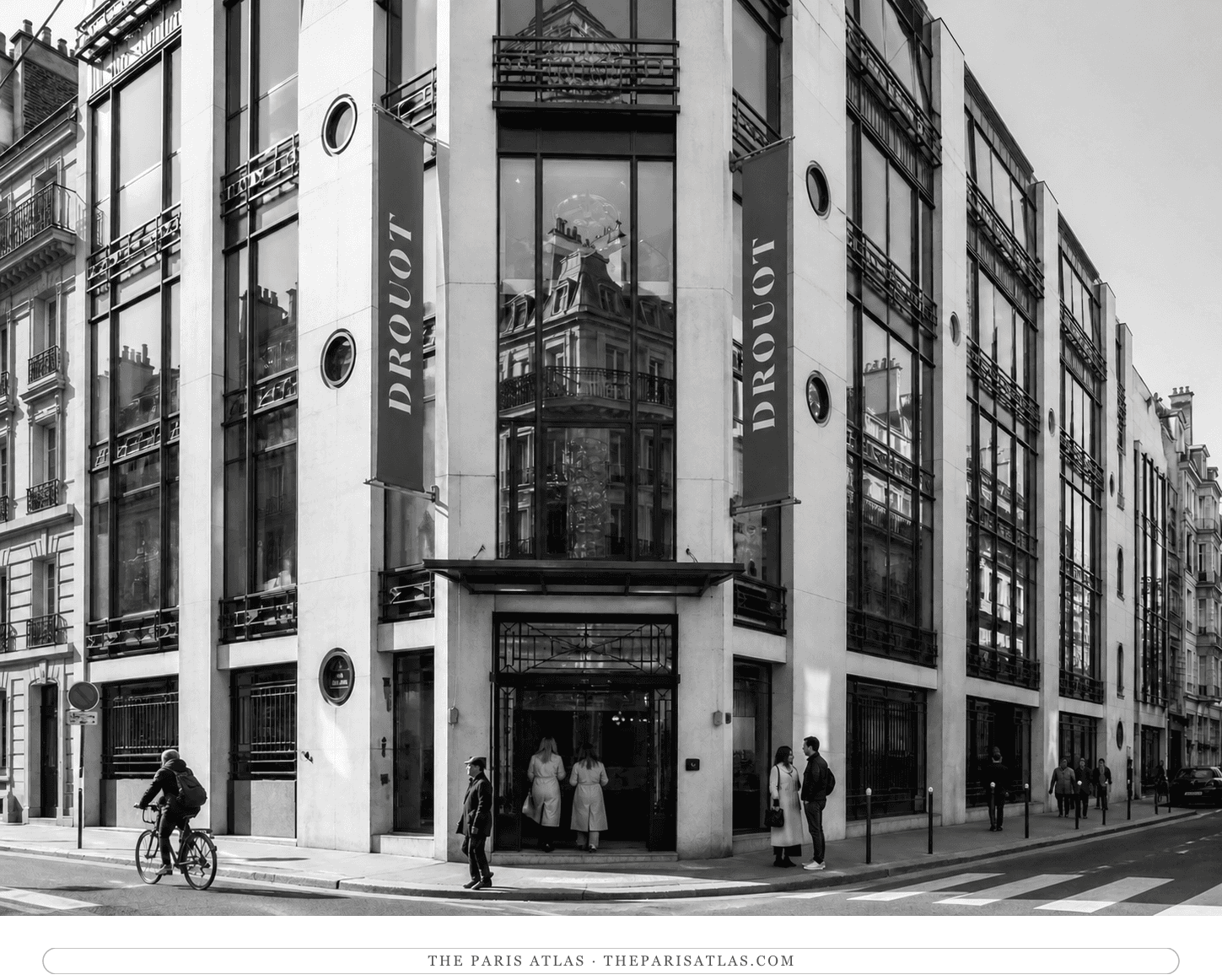
Hôtel Drouot
The Paris auction house where Gustave Caillebotte bid on his friends' unsellable pictures to keep prices up and money flowing — and where Paul Gauguin sold thirty of his own paintings to pay for Tahiti.
Faubourg-Poissonnière

Giverny

Grenelle

2 rue Auguste-Bartholdi
A seventh-floor walk-up near the Champ-de-Mars where Richard Osborn gave the almost penniless Henry Miller a room through the winter of 1930–31 — the hungriest stretch of his first Paris year.

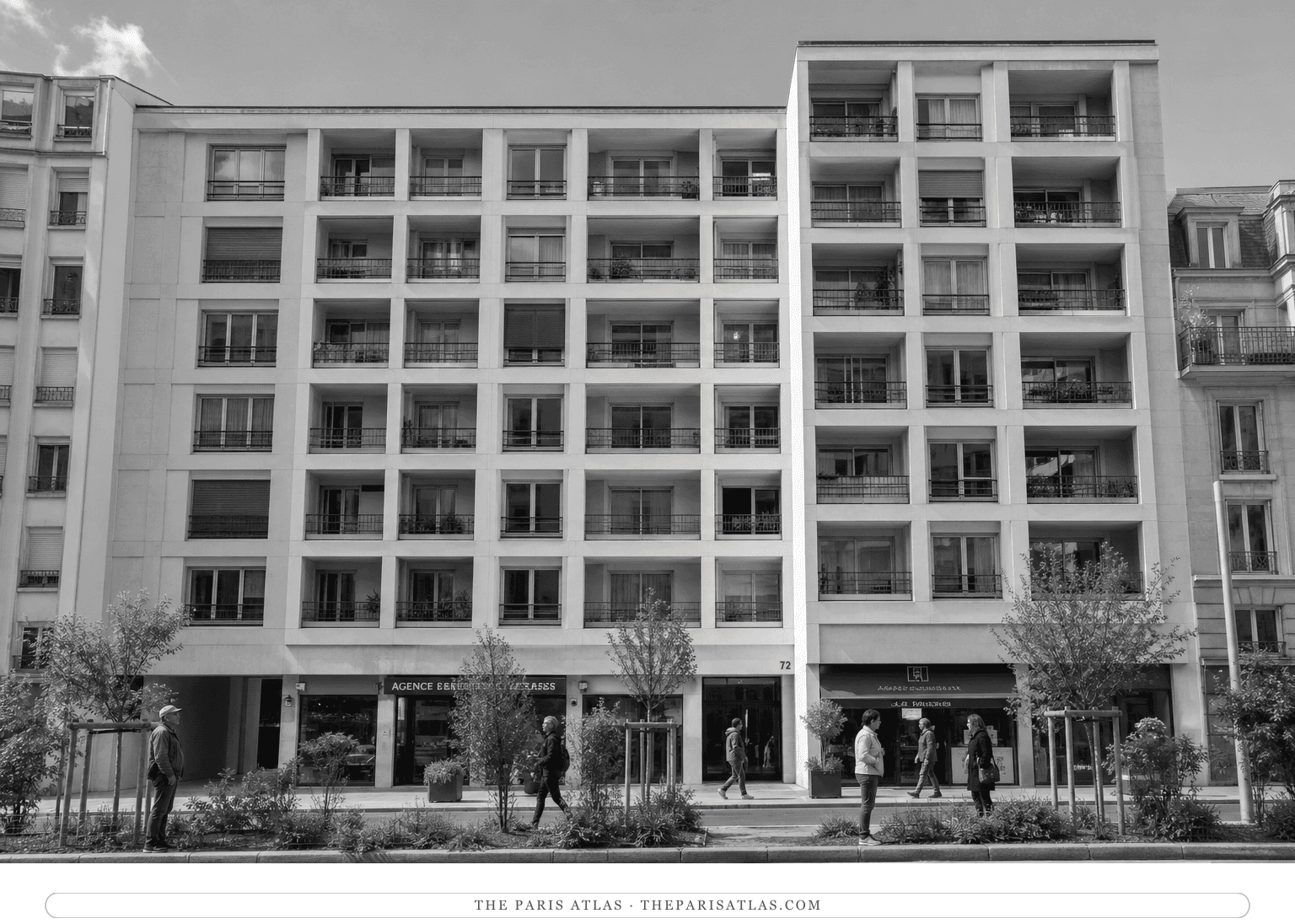
72 rue Fondary
The address of the Auberge de la Ferme, the small restaurant where George Orwell took his second Paris kitchen job in 1929 — the chaotic, filthy kitchen that fills the second half of Down and Out in Paris and London under the invented name "Auberge de Jehan Cottard". Identified by archival research in 2021.
Gros-Caillou

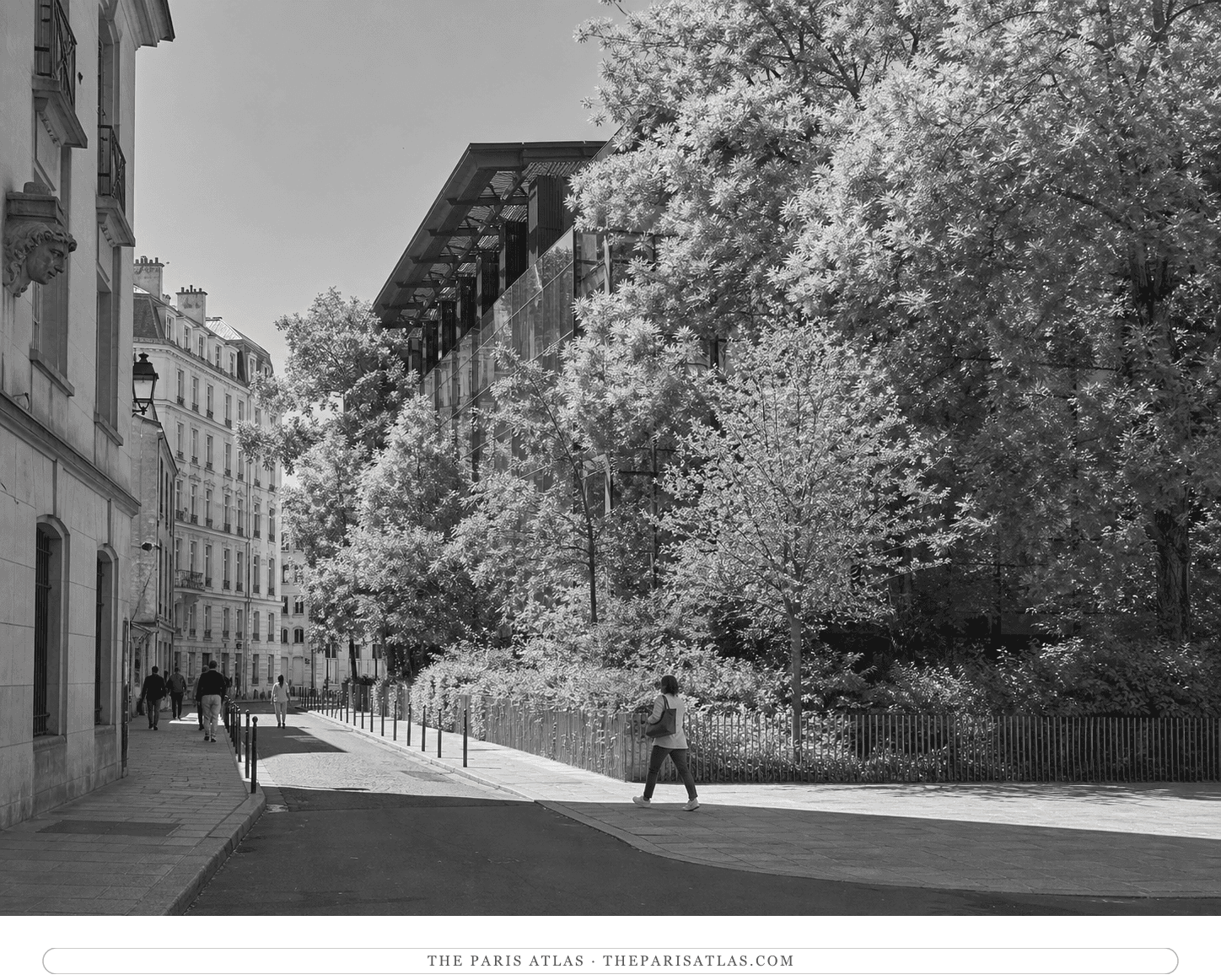
Auguste Rodin's studios at the Dépôt des Marbres
The state marble depot on the rue de l'Université where Auguste Rodin worked from 1880 until his death in 1917 — first in atelier M, later in ateliers H and J. It was his principal Paris studio, and where The Gates of Hell was developed. The compound is gone.

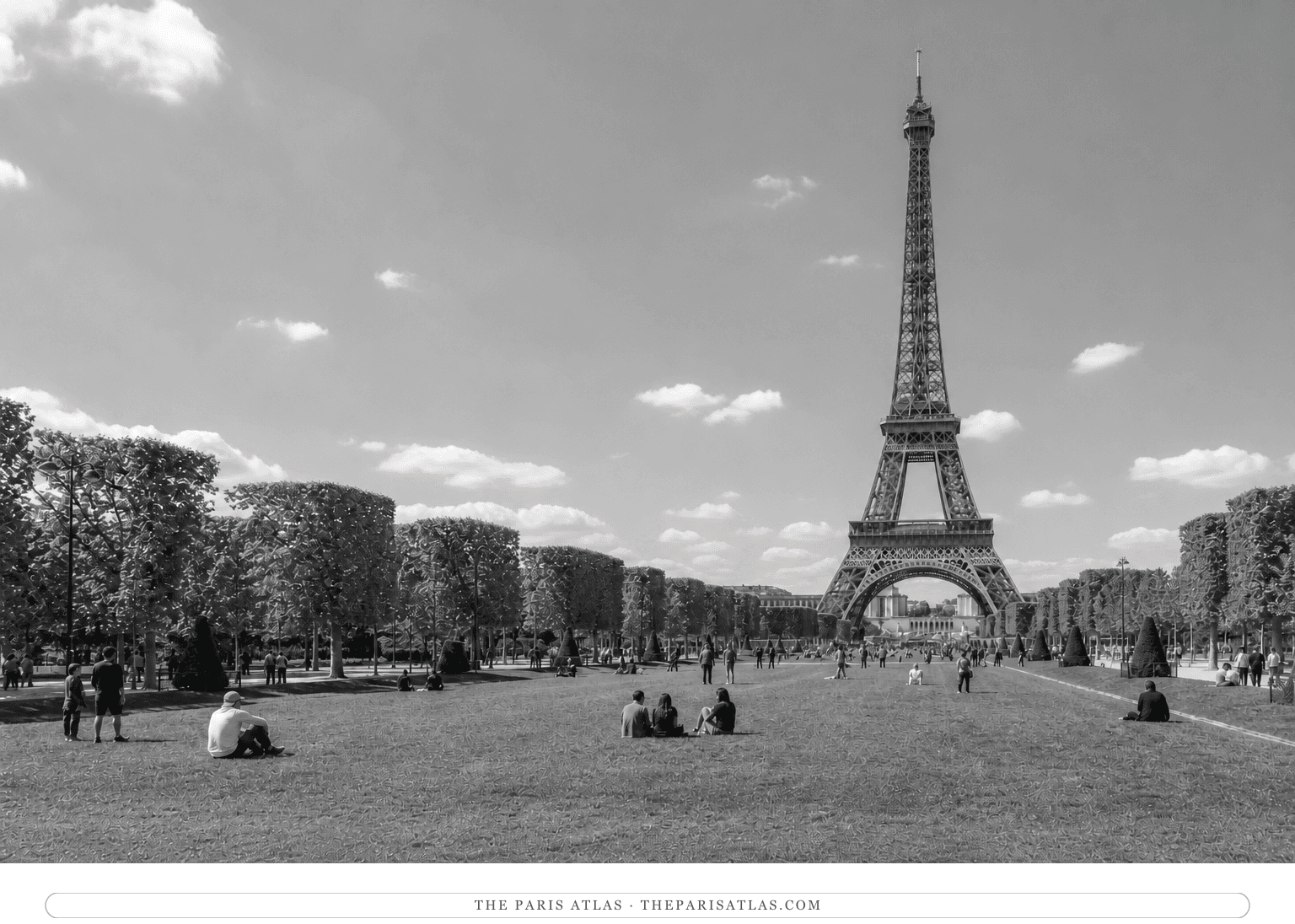
Champ-de-Mars
The great park below the Eiffel Tower, and the site of the 1889 Exposition Universelle — where Claude Debussy heard Javanese gamelan for the first time and never entirely got over it.

The One Alma Paris
A 40-room five-star hotel on rue Cognacq-Jay near the Pont de l'Alma, opened in 2015 as Hôtel Juliana, with a seventh-floor rooftop lounge facing the Eiffel Tower and a small spa.
Invalides

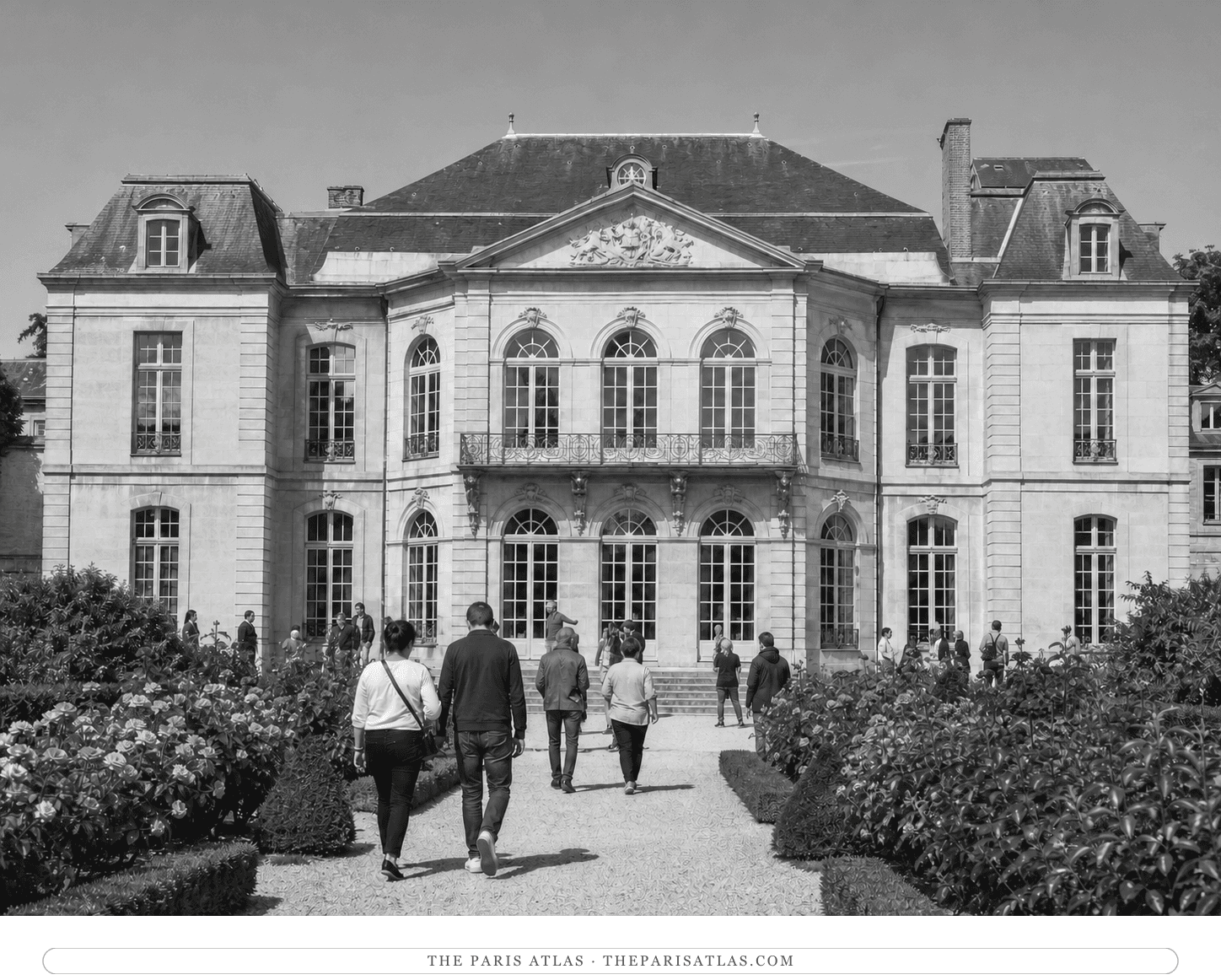
Musée Rodin
An eighteenth-century Paris mansion where Auguste Rodin rented four rooms in 1908, later took the whole building, and which he gave away in advance — donating his entire output to the French State on condition it buy the house and turn it into his museum. It opened in 1919, two years after his death.

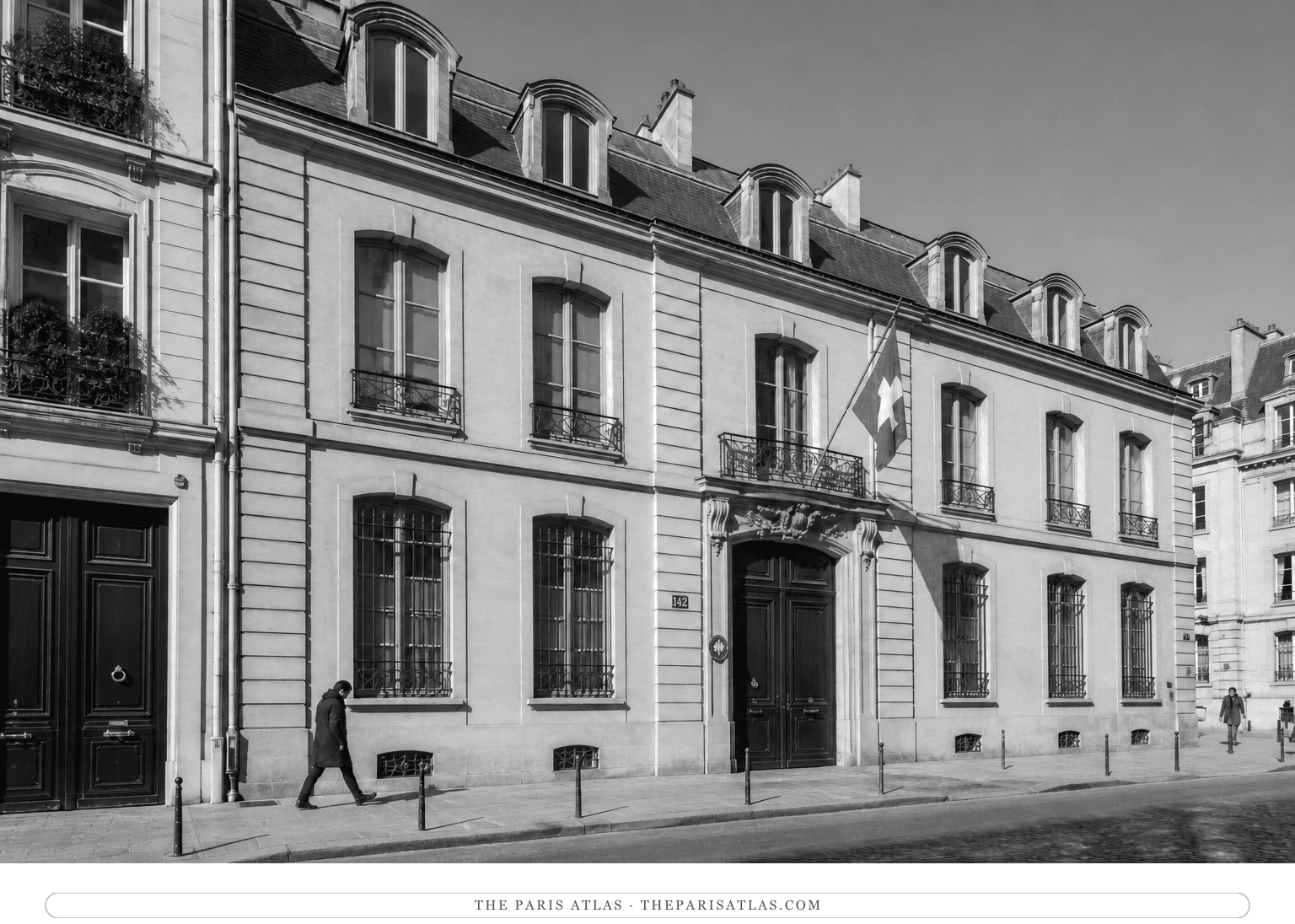
Comtesse Rosa de Fitz-James's salon, 142 rue de Grenelle
The Faubourg Saint-Germain salon where Edith Wharton found her Paris society — the Comtesse Rosa de Fitz-James's Tuesdays, and the circle in which her relationship with Morton Fullerton developed.

Le Narcisse Blanc Hôtel & Spa
A 37-room five-star hotel on boulevard de La Tour-Maubourg near Les Invalides, themed on the Belle Époque dancer Cléo de Mérode, with a basement pool and spa, the Cléo restaurant and the Léopold bar.
La Chapelle

La Muette

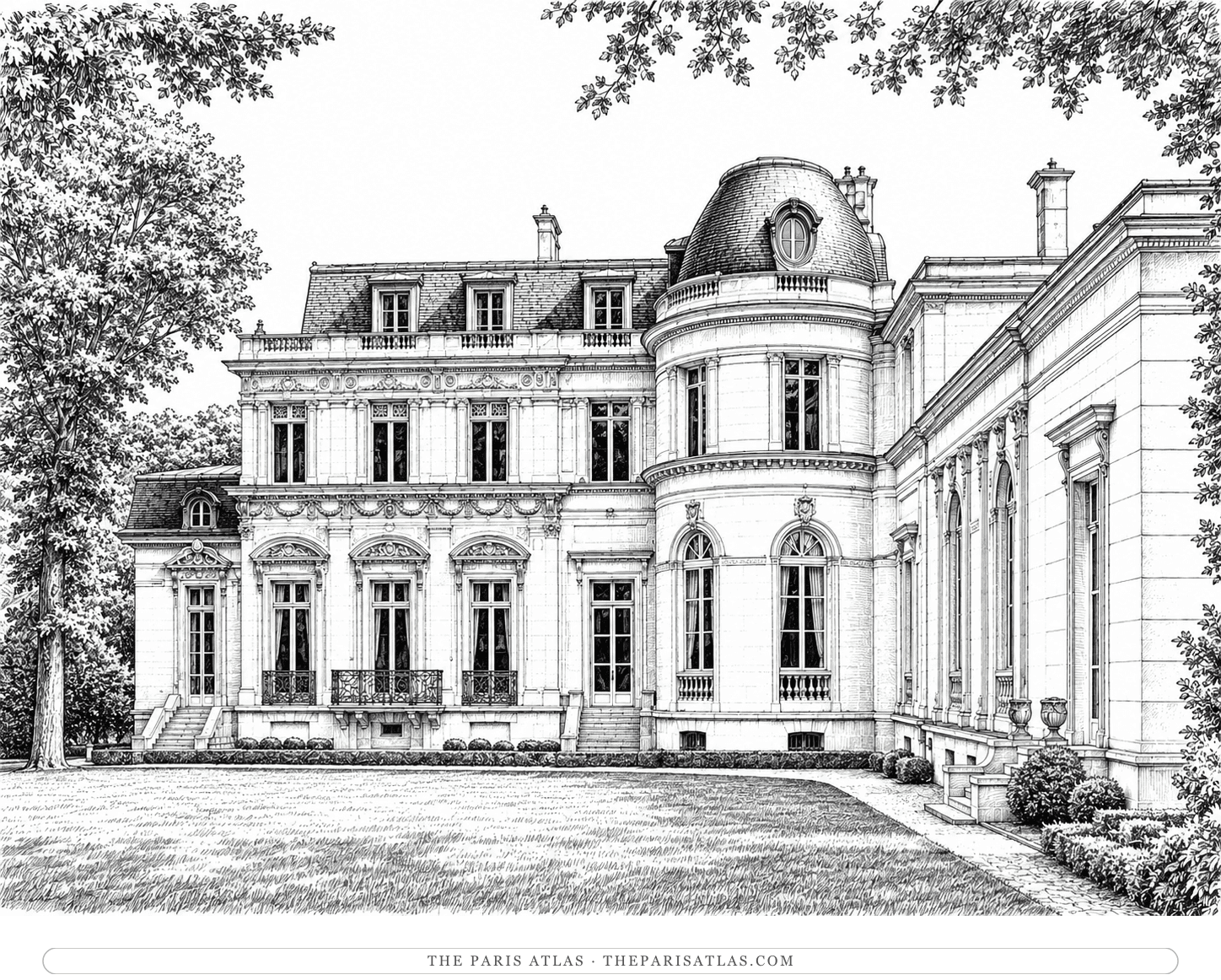
Musée Marmottan Monet
The former townhouse of the Duc de Valmy at the edge of the Ranelagh gardens, bought by Jules Marmottan in 1882 and opened as a museum in 1934.

Brach Paris
A 59-room five-star hotel in the 16th arrondissement, designed by Philippe Starck in a converted 1960s post office building. It has a sports club with a 22-metre pool, a Mediterranean restaurant and suites with rooftop hot tubs facing the Eiffel Tower.
Latin Quarter — its spine

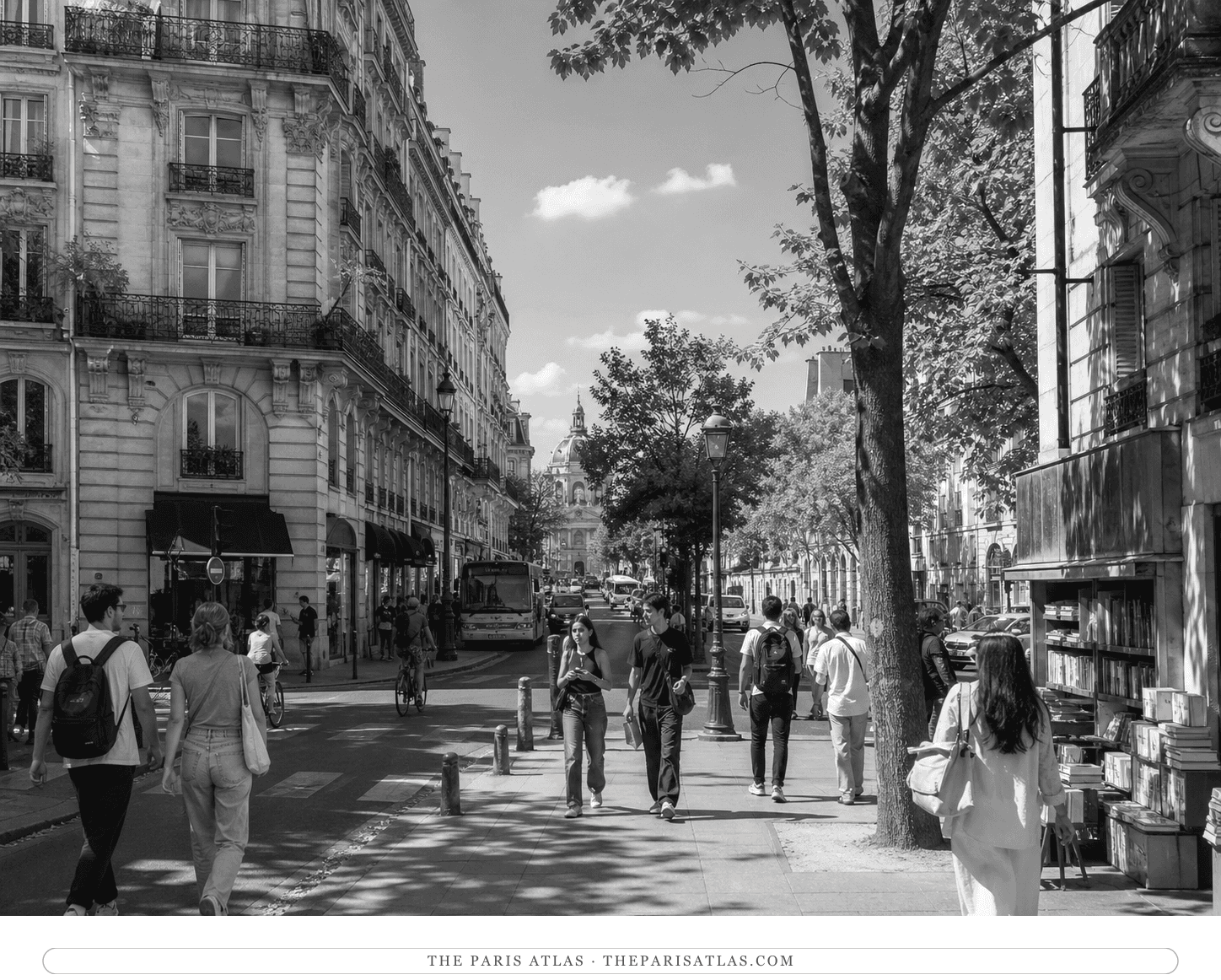
Latin Quarter, between the Luxembourg and the Panthéon

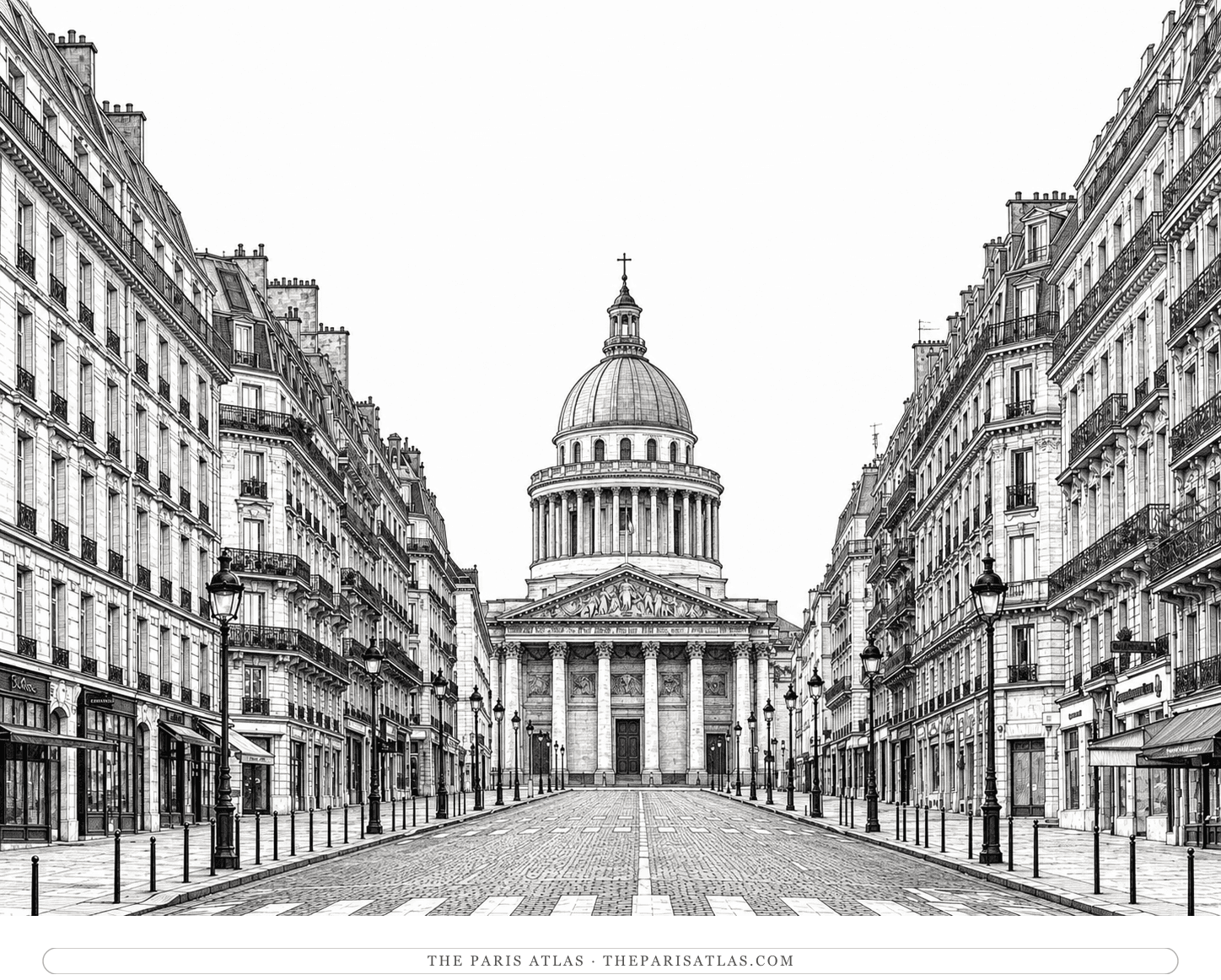
Le Marais

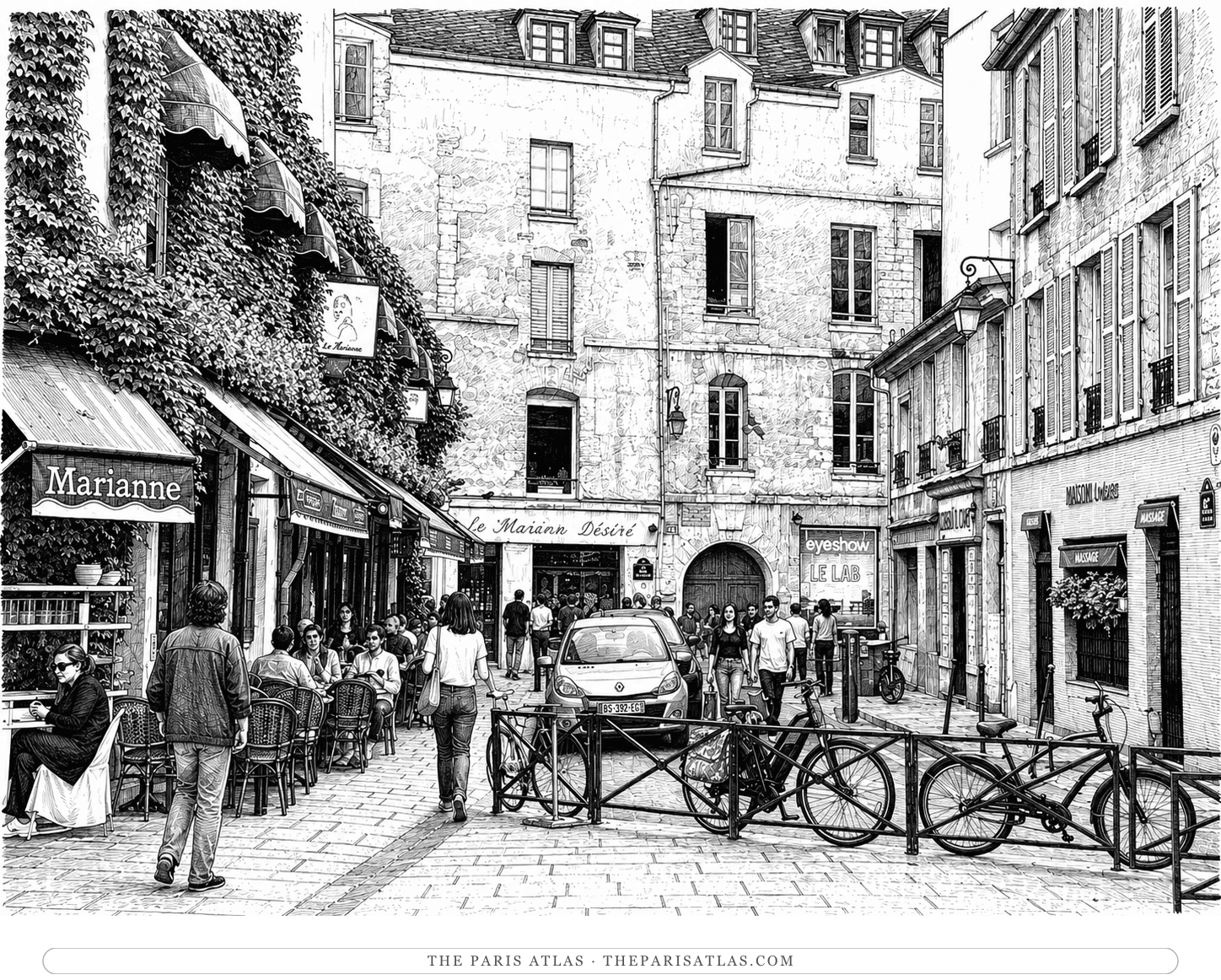
Le Marais
The old aristocratic quarter on the Right Bank that became the centre of gay Paris in the 1990s, at the end of a migration that started in Saint-Germain.

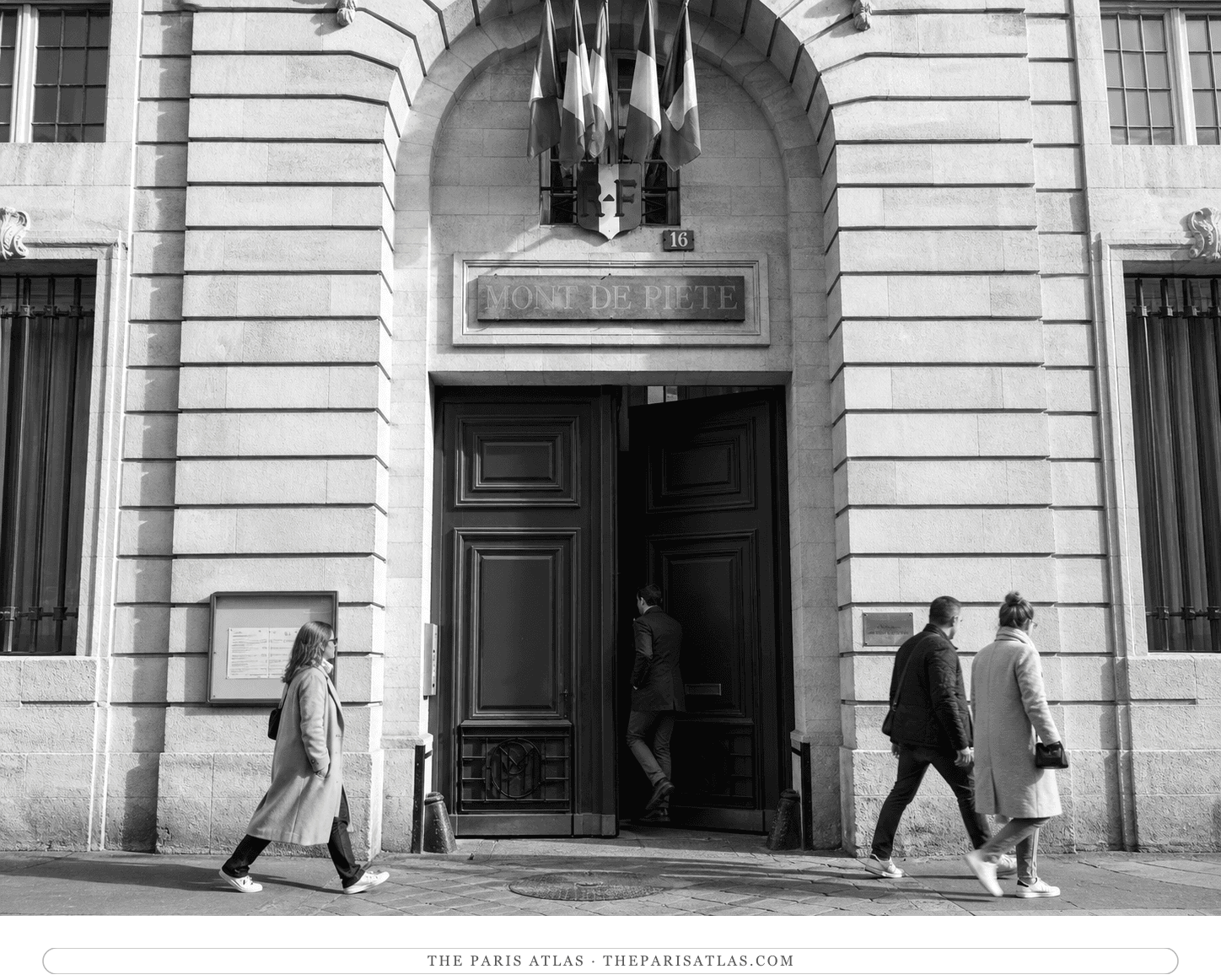
Crédit Municipal de Paris
The municipal pawnbroker of Paris, founded in 1777 and still trading from the same address in the Marais. Parisians called it ma tante — my aunt — and it is where George Orwell left his clothes for the money to eat during the poverty of Down and Out in Paris and London.

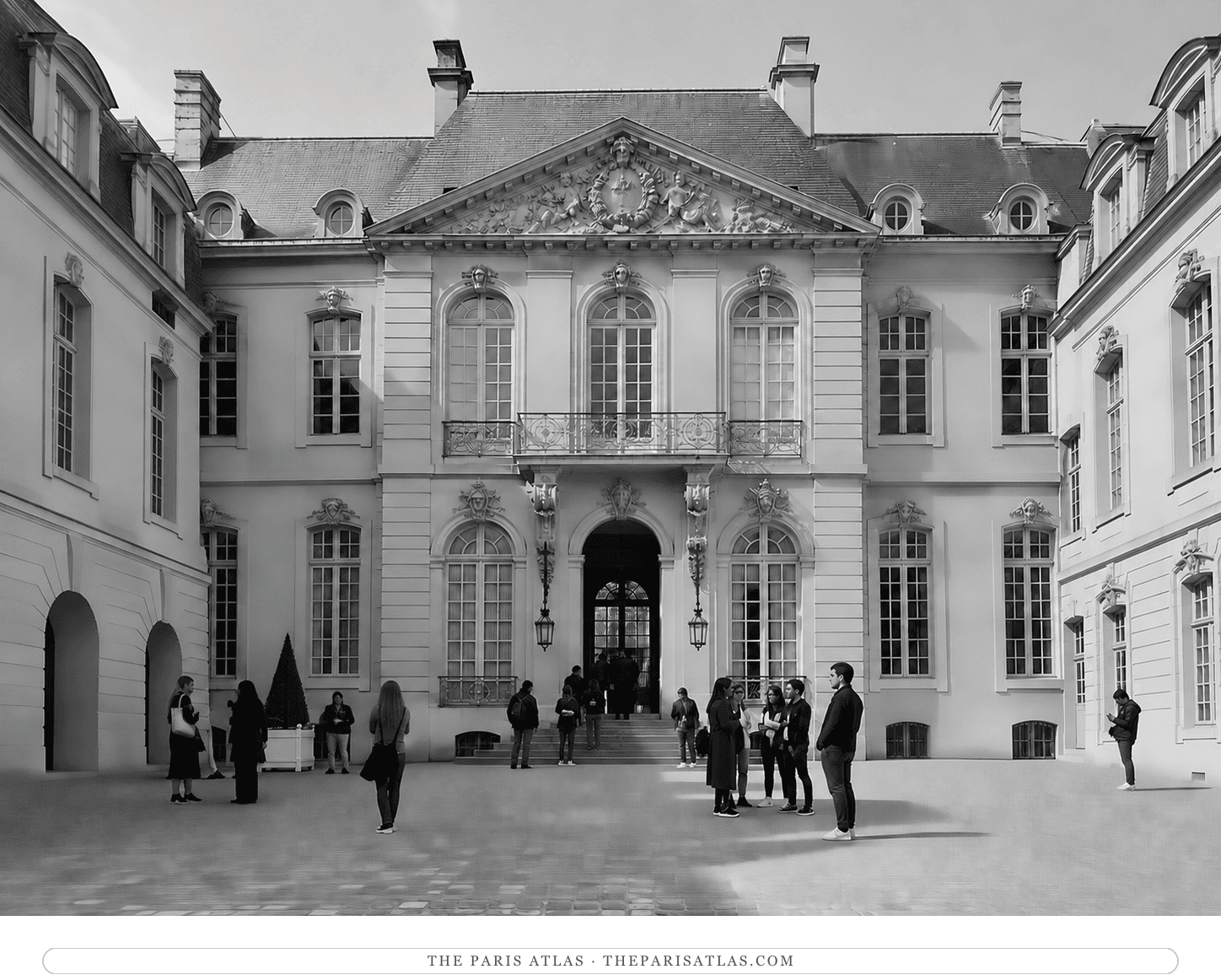
Musée national Picasso-Paris
The national Picasso collection, housed in the Hôtel Salé — a grand seventeenth-century Marais mansion built on the proceeds of the salt tax, which is where the nickname comes from. It holds the works Picasso kept for himself, which makes it a different kind of collection from any other.
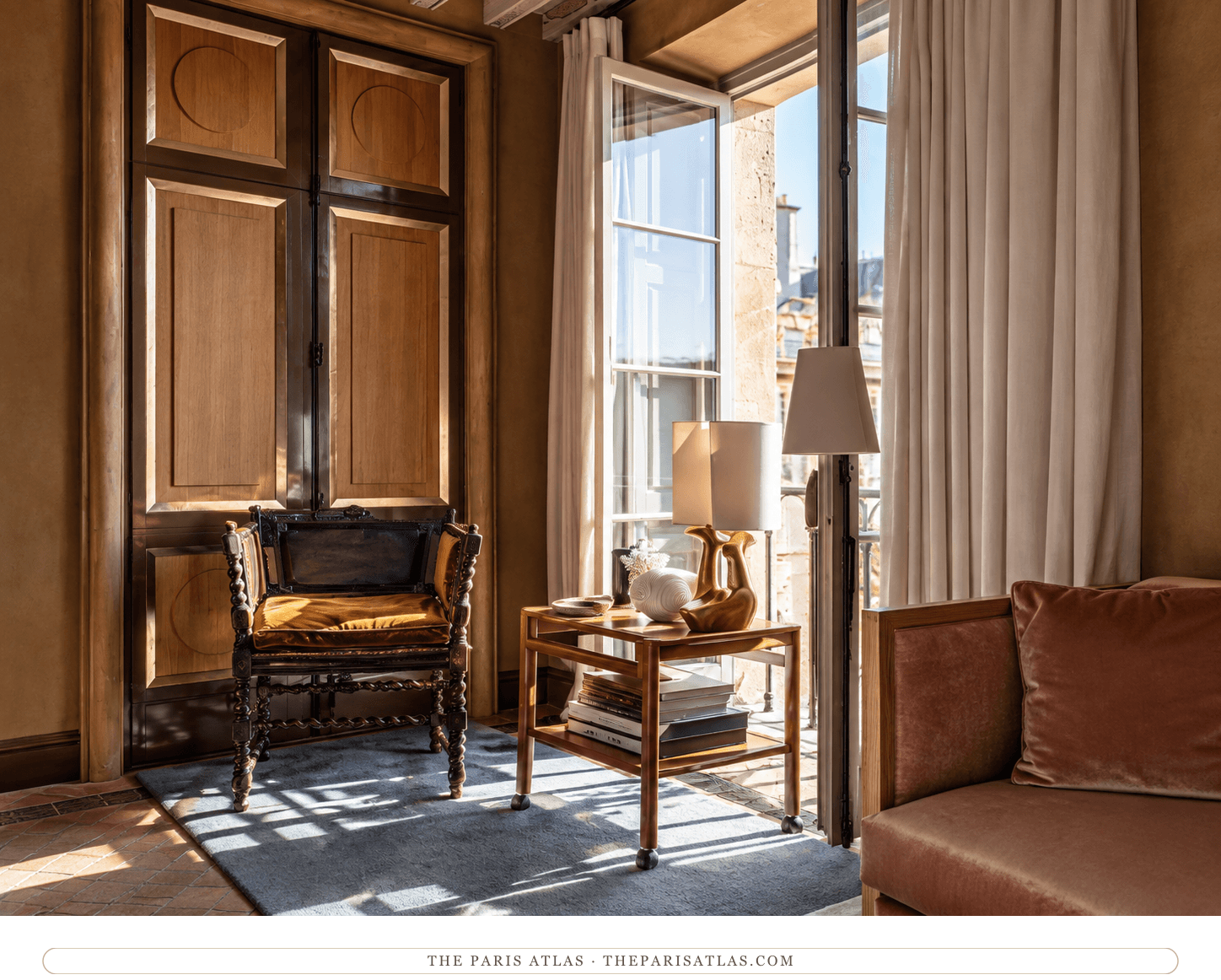
Cour des Vosges
Twelve rooms and suites in a seventeenth-century mansion on Place des Vosges, with a private Roman-style bath and a terrace café.
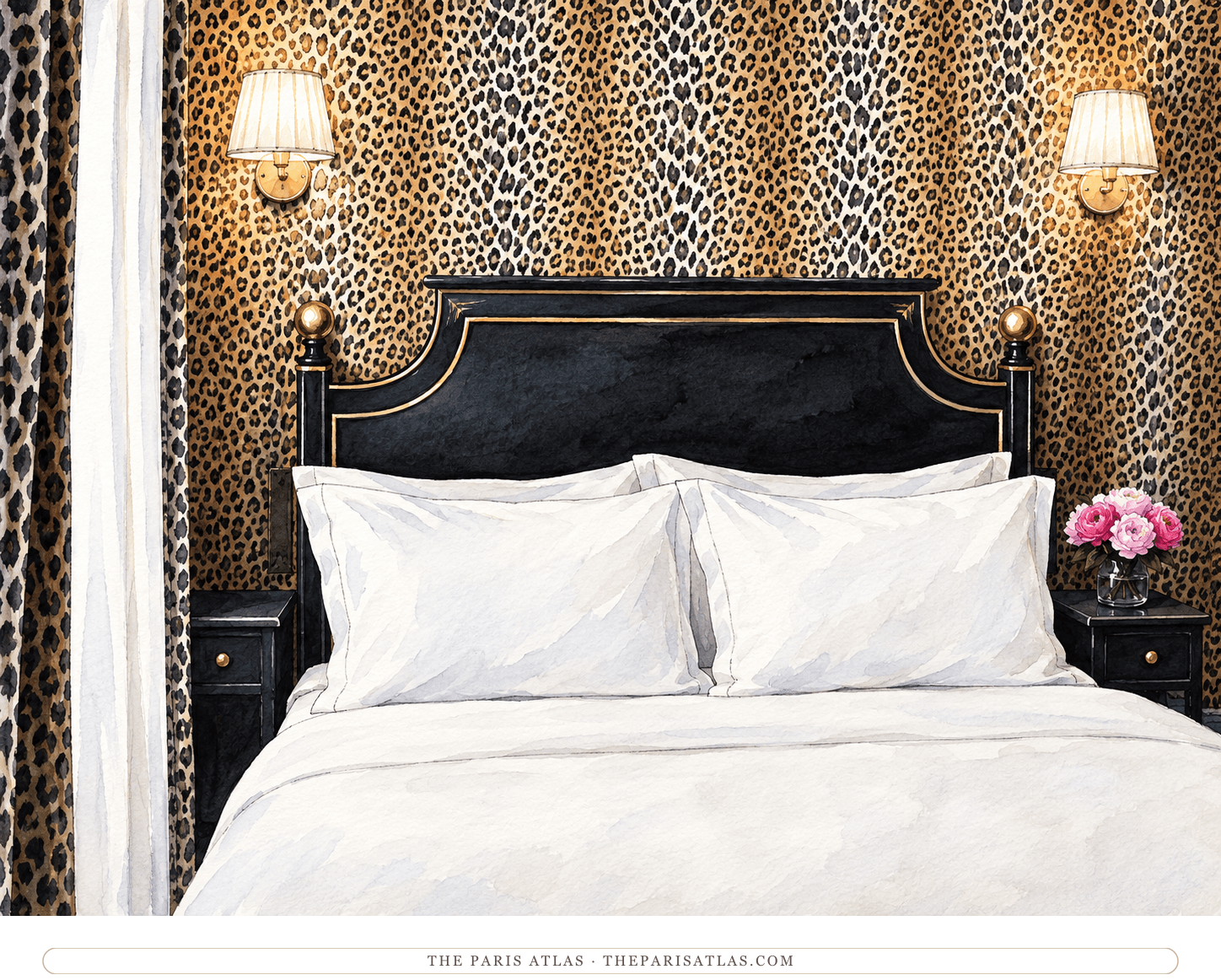
Hôtel de JoBo
A 24-room Marais hotel with rose-patterned interiors by Bambi Sloan, a courtyard and a lounge bar, inspired by Joséphine Bonaparte.
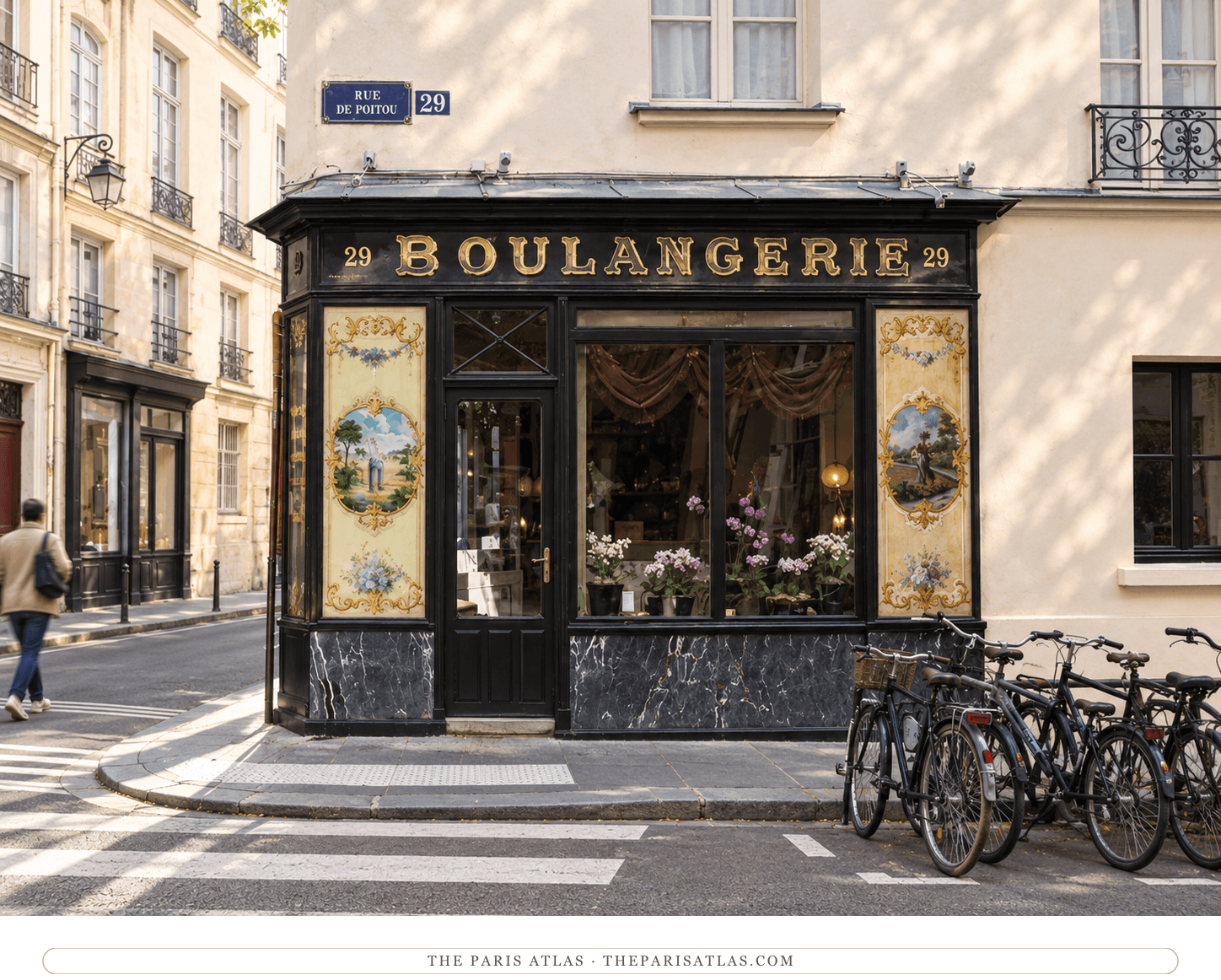
Hôtel du Petit Moulin
A 17-room hotel designed by Christian Lacroix, behind a preserved bakery storefront on rue de Poitou in Le Marais.
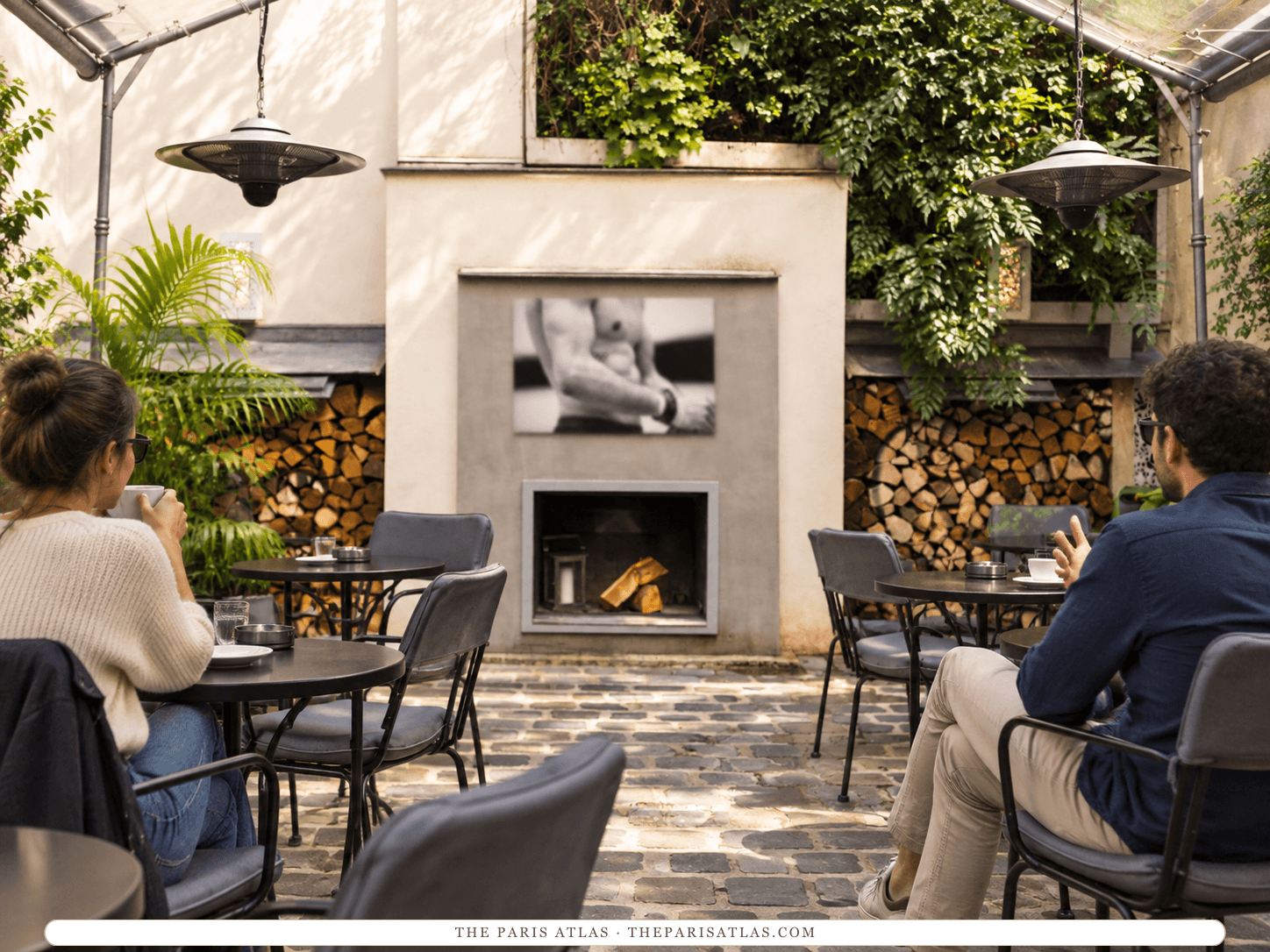
Hôtel Jules & Jim
Hôtel Jules & Jim is a 23-room, four-star hotel in the northern Marais, built in 2010 and 2011 on the site of a metal-treatment workshop. Thirteen rooms have the bed inside a backlit shell of HI-MACS, a stone-and-resin composite, and the courtyard cocktail bar is open to non-guests every evening.

Hôtel National des Arts et Métiers
Hôtel National des Arts et Métiers is a 64-room four-star hotel at the corner of rue Saint-Martin and rue Réaumur in the 3rd arrondissement, opened in 2017 in two Haussmann-style buildings with interiors by the designer Raphael Navot. It has an Italian restaurant under a retractable glass roof, a cocktail bar behind a hidden door and a seventh-floor rooftop bar.

Le Grand Mazarin
Le Grand Mazarin is a five-star hotel with 61 rooms in the Marais, on the corner of rue de la Verrerie and rue des Archives, opened in September 2023 by the family hotel group Maisons Pariente. The Swedish designer Martin Brudnizki designed the interiors, and the basement holds a heated 17-meter indoor pool.

Le Pavillon de la Reine & Spa
Le Pavillon de la Reine & Spa is a 56-room five-star hotel on the north side of the place des Vosges in the Marais, set back from the square behind its own courtyard. The Chevalier family runs it. It has a Michelin-starred restaurant, a 250 m² spa and free private parking.

Les Bains Paris
Les Bains Paris is a 39-room five-star hotel in the 3rd arrondissement, in the building that held the Bains Guerbois bathhouse from 1885 and the nightclub Les Bains Douches from 1978 to 2010. It has a restaurant and bar, a club, and a spa with a hammam and a pool, and it holds one Michelin Key.

Maison Proust
Maison Proust is a 23-room five-star hotel in the northern Marais, across the street from the Carreau du Temple, decorated by the interior designer Jacques Garcia as a tribute to the novelist Marcel Proust and the Belle Époque society salons he described in In Search of Lost Time. It has a spa with a 10-meter pool, run in partnership with the skincare brand La Mer, and salons and a bar open to non-residents until 1 am.
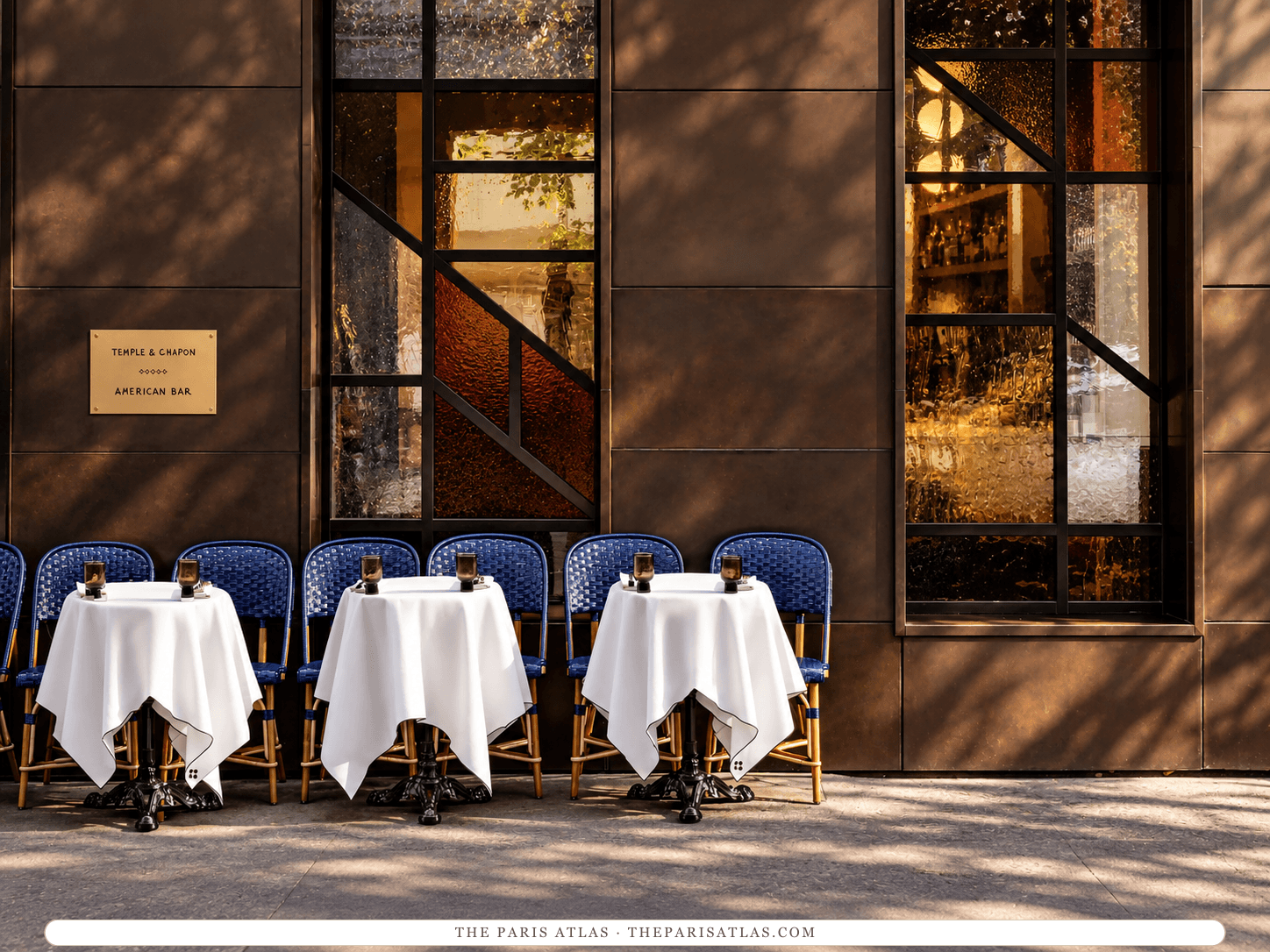
Experimental Marais
Experimental Marais is a 43-room five-star hotel at 116 rue du Temple in the northern Marais, known as Sinner from 2019 until early 2025. It has a New York-style restaurant under a glass ceiling, a cocktail bar and a spa with an indoor pool.
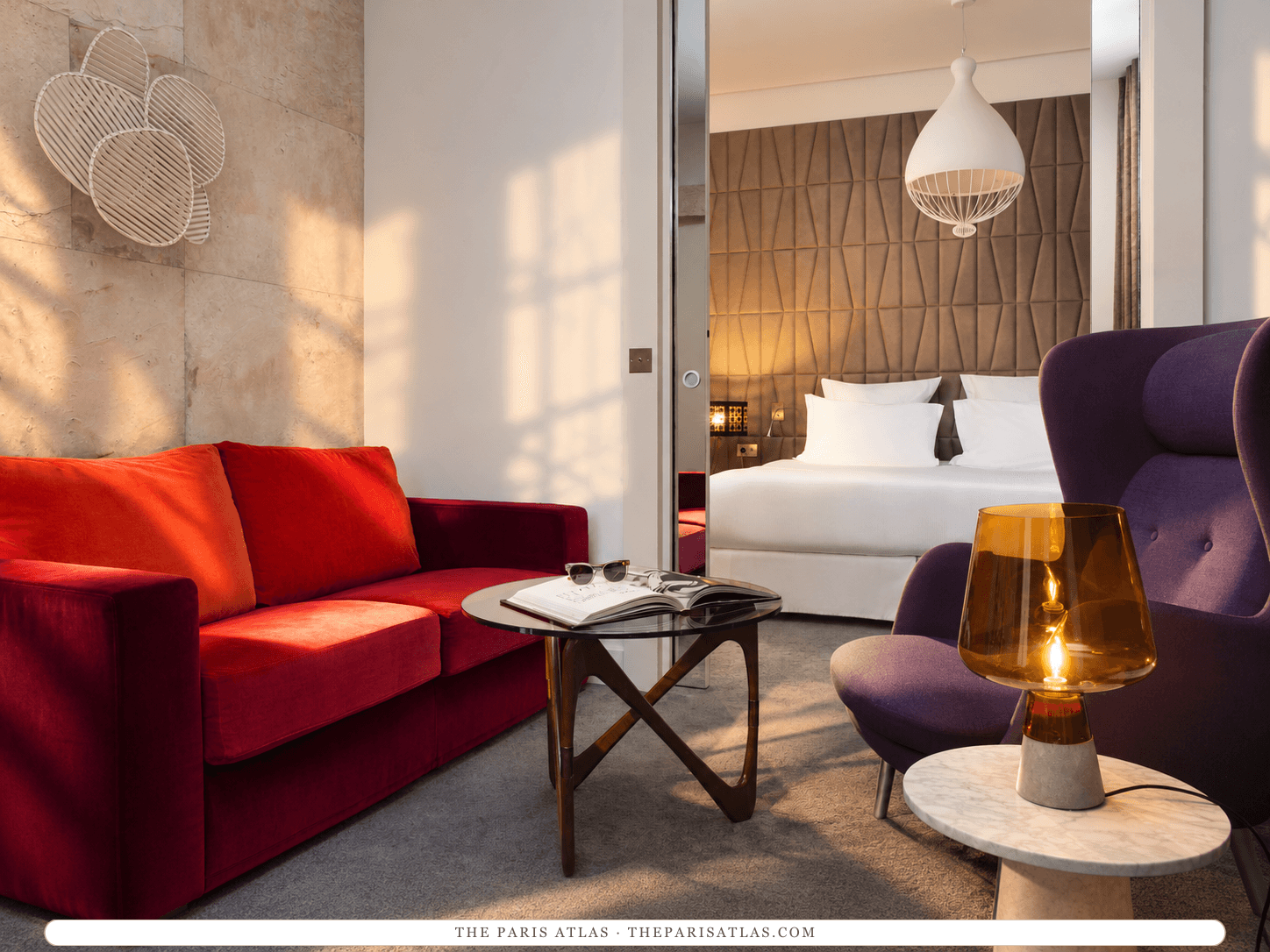
Hôtel Dupond-Smith
Hôtel Dupond-Smith is a five-star hotel with eight rooms and suites on rue des Guillemites in the Marais, in Paris's 4th arrondissement. Its rooms are named after pen names and aliases, and breakfast, meals and massages are all available in the room.
Le Village Anglais, Suresnes


Les Halles
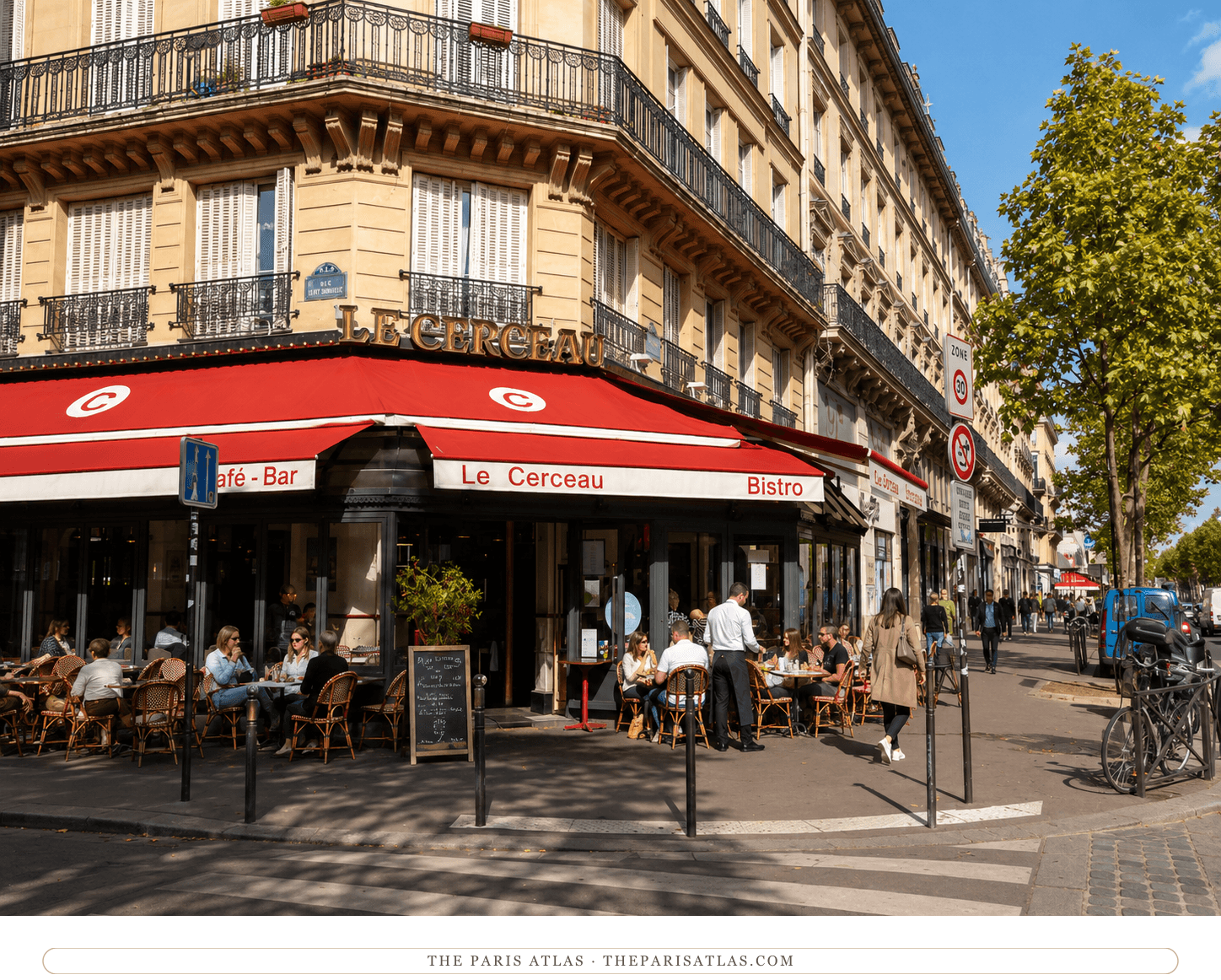
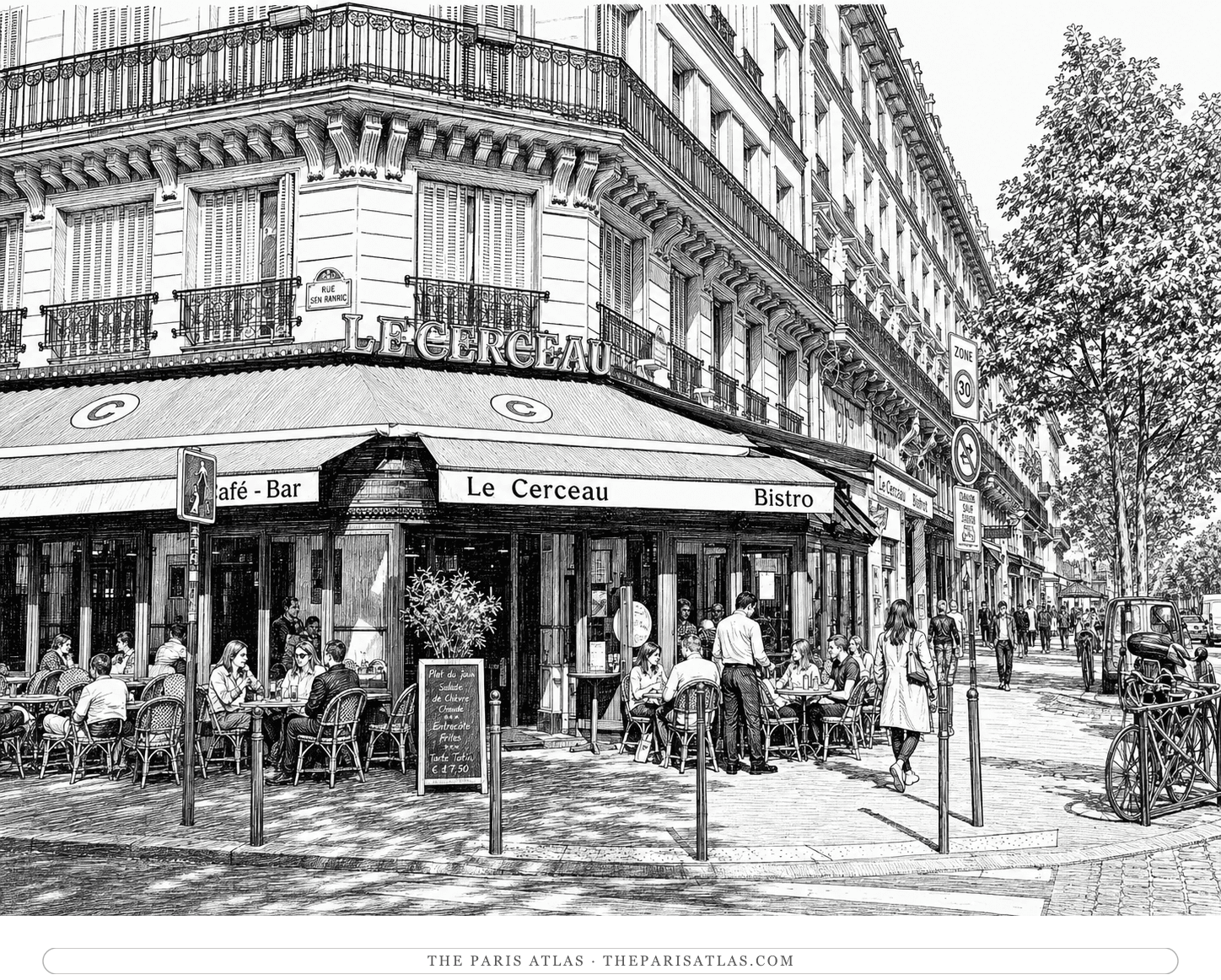
Boulevard de Sébastopol
The Haussmann boulevard running north from Châtelet, where David and Giovanni hail the cab that takes them to the room the novel is named for.

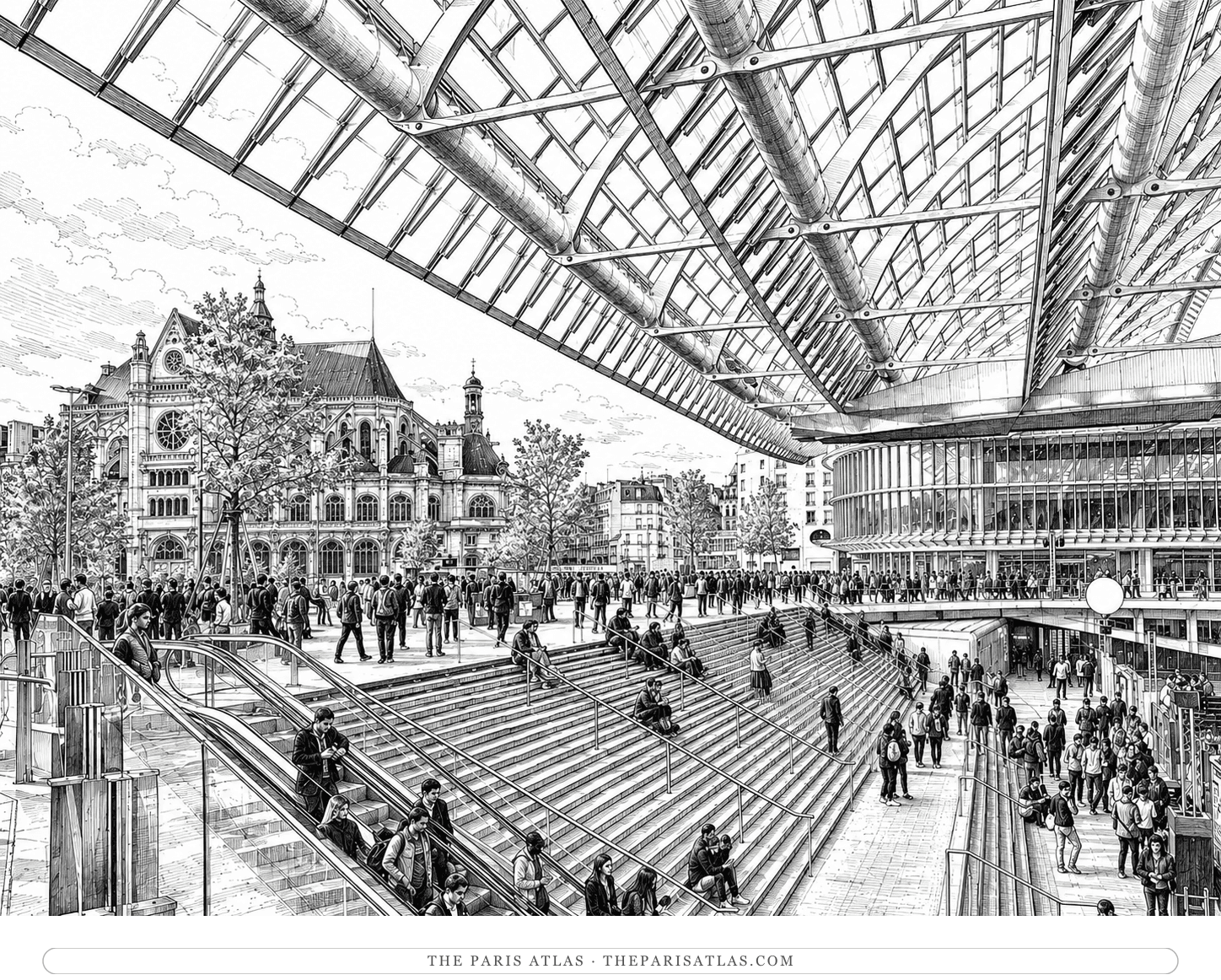
Les Halles
The wholesale food market that fed Paris for eight centuries, and where David and Giovanni eat oysters at sunrise on the morning after they meet.
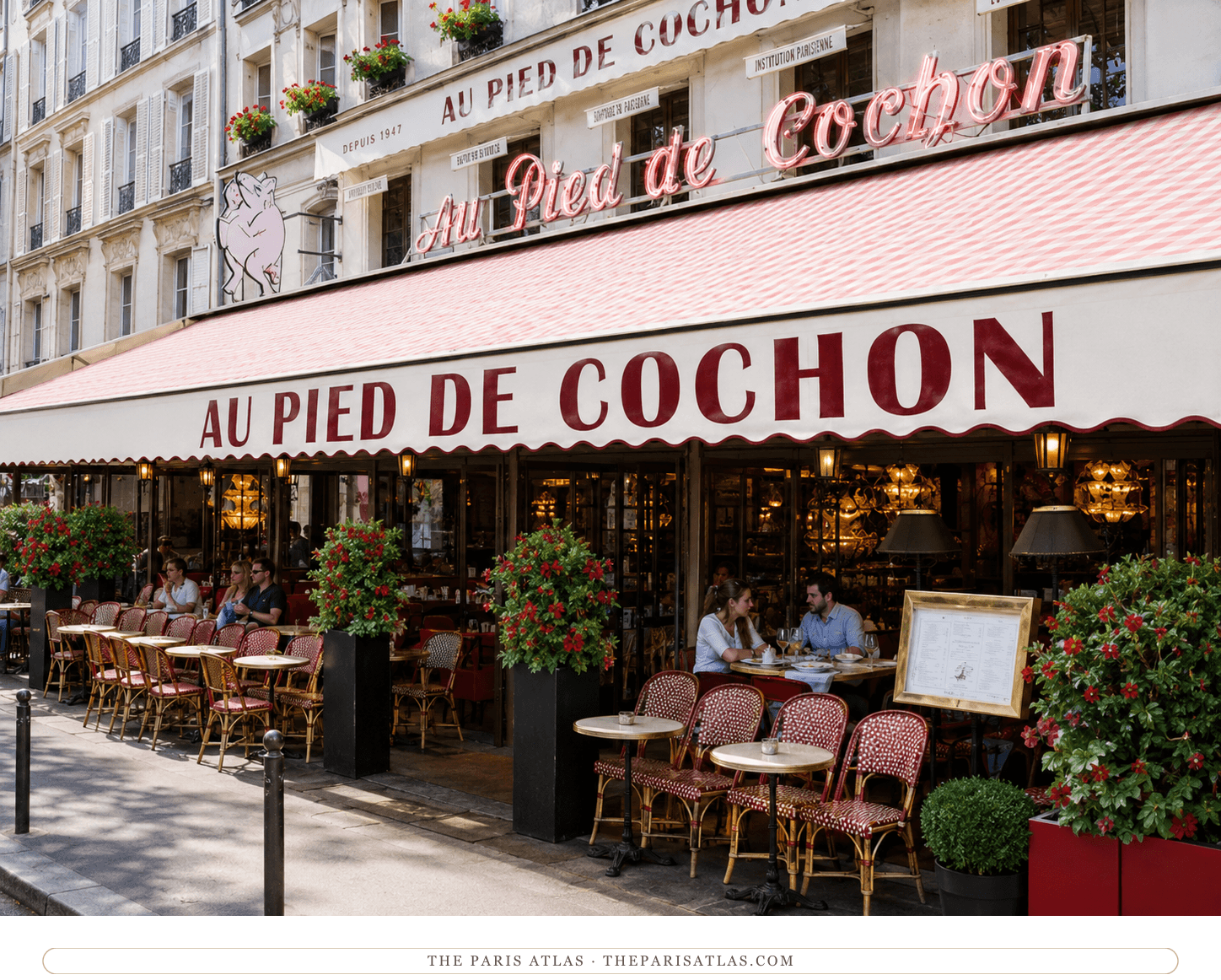
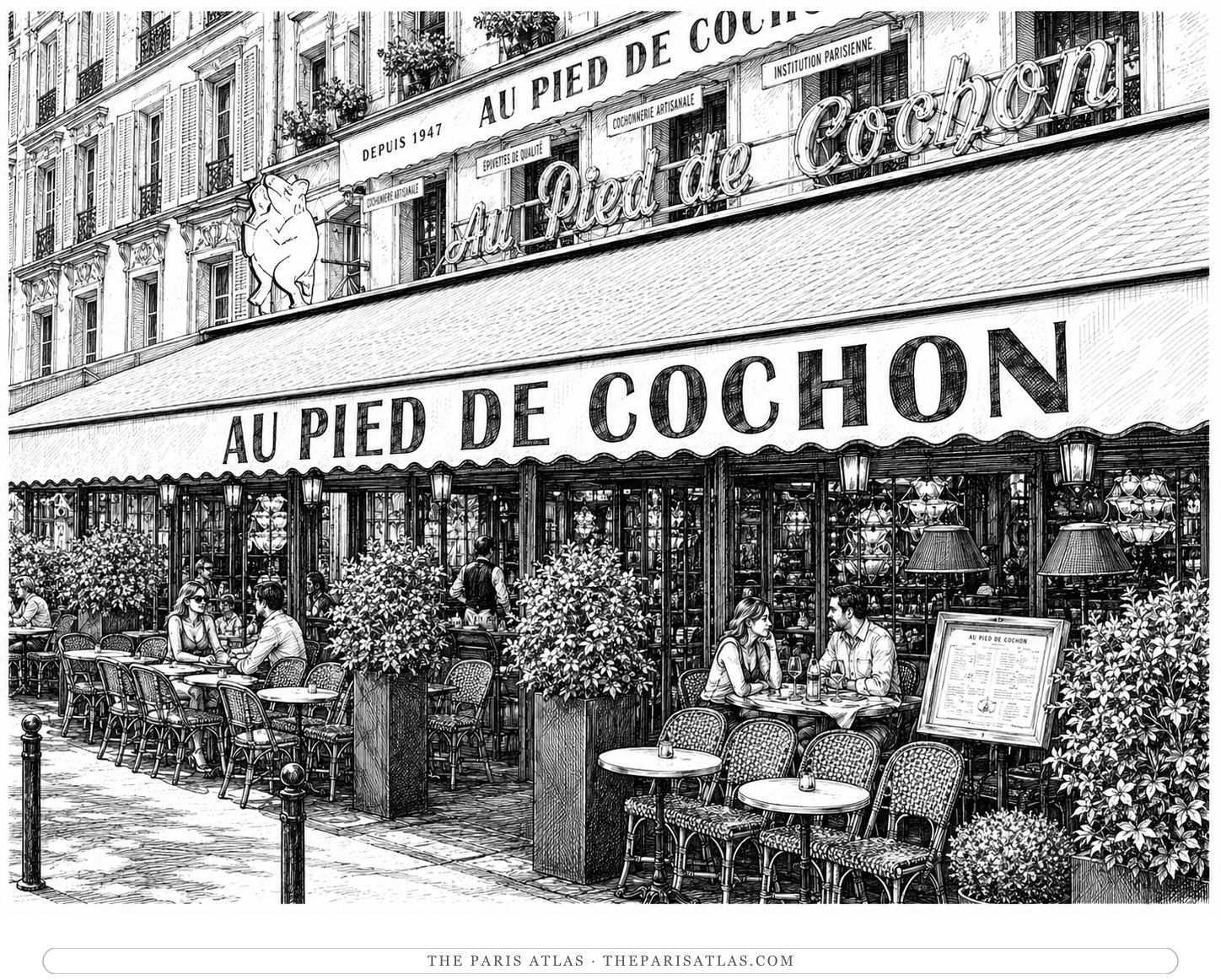
Au Pied de Cochon
The brasserie opened in 1947 to feed the porters of the old Les Halles food market, and the last place still serving at the address where they ate.

Hôtel Bachaumont
A 49-room four-star hotel on a short street off rue Montorgueil, with rooms by Dorothée Meilichzon, a restaurant and bar on the ground floor, and rooms from 17 m².

Maison Albar - Le Pont-Neuf
Maison Albar - Le Pont-Neuf is a 60-room five-star hotel on rue du Pont Neuf in the 1st arrondissement, between Les Halles and the Seine, in the building that was the head office of the fashion house Céline until 2014. It has an indoor pool under a skylight, a spa and the restaurant Odette, which is listed in the Michelin Guide.
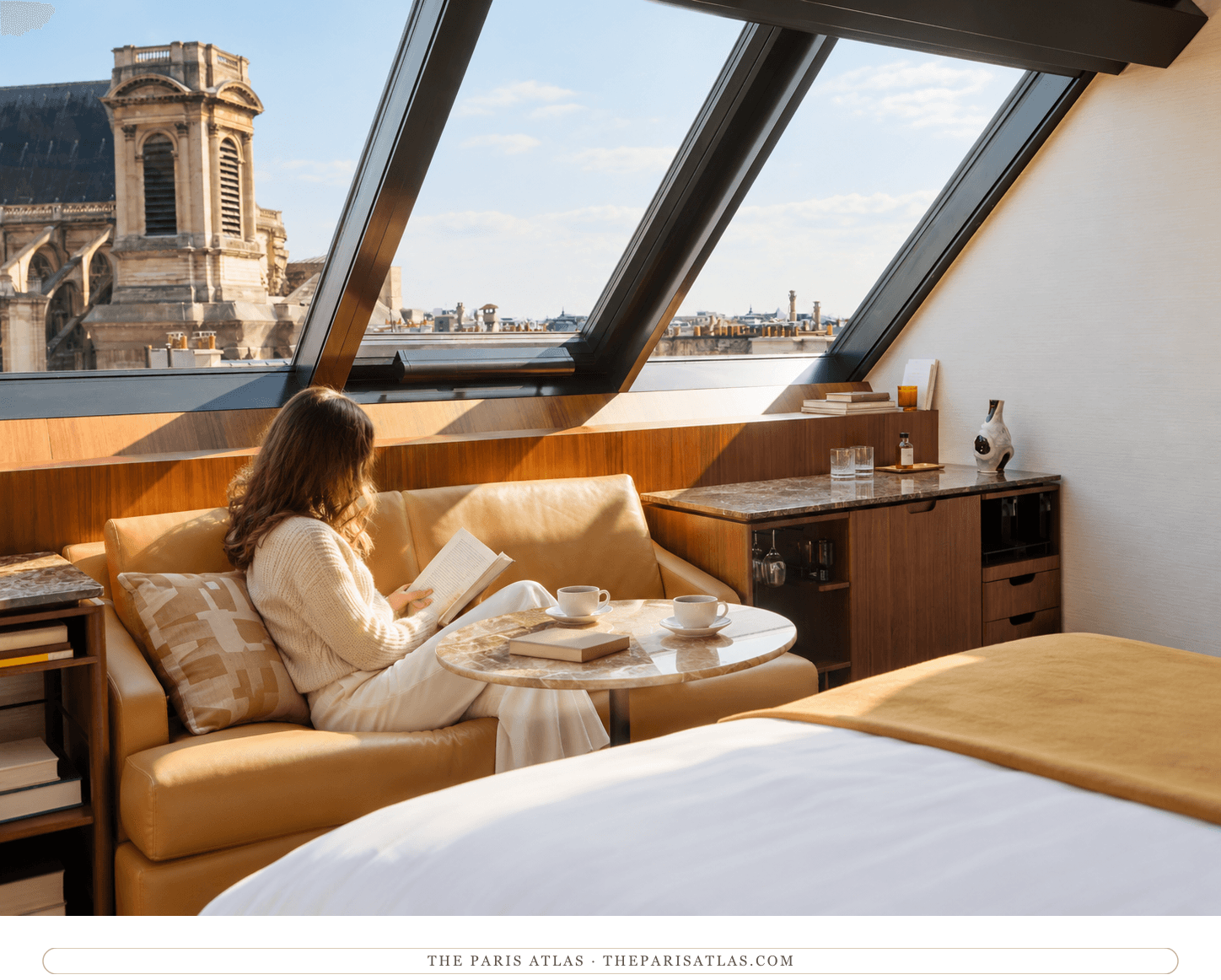
Hôtel Madame Rêve
A five-star hotel in the Louvre post-office building, with atelier-style windows, landmark-view terraces, a rooftop bar and warm wood-and-mosaic interiors.
Louveciennes

Louvre
Pont du Carrousel
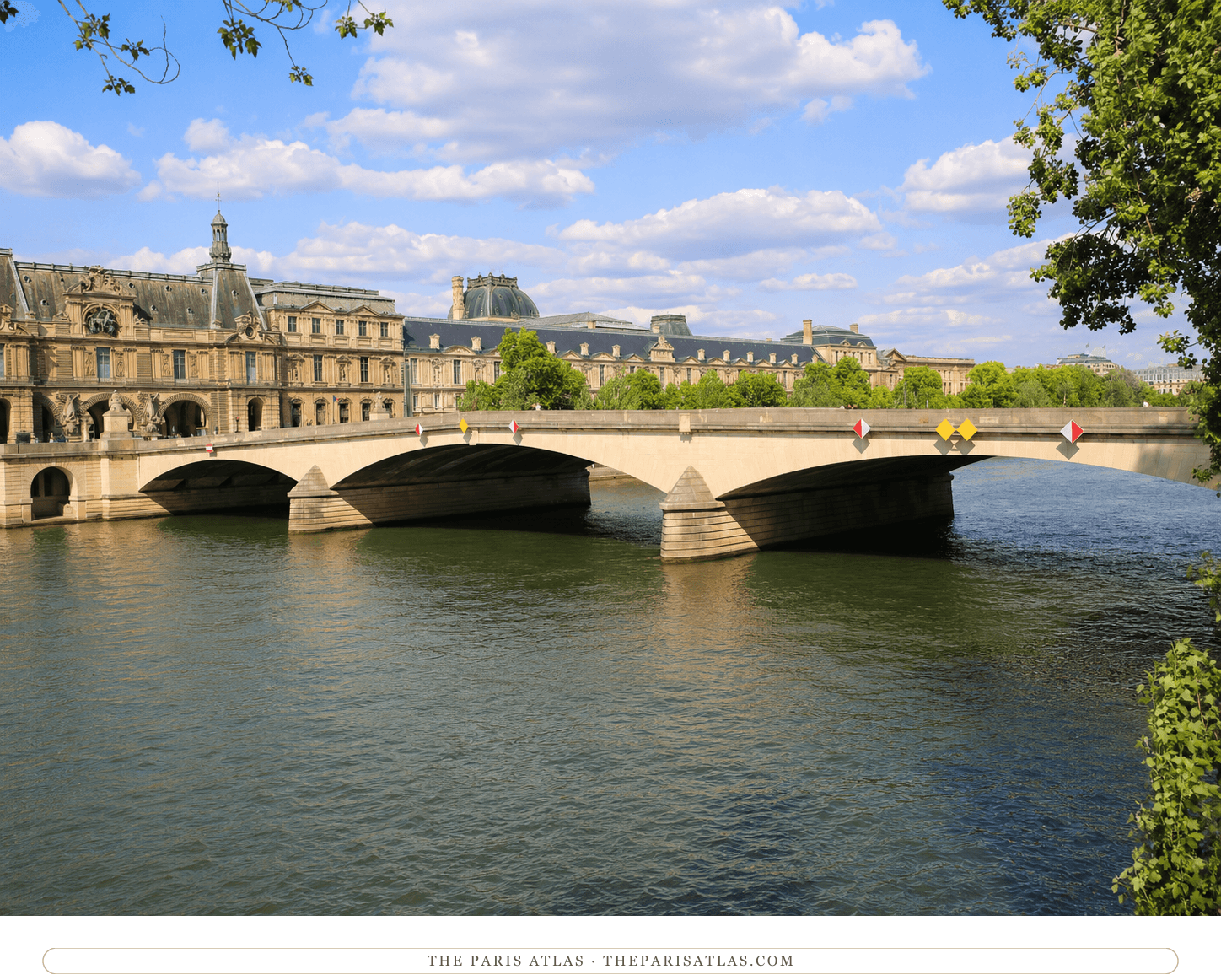
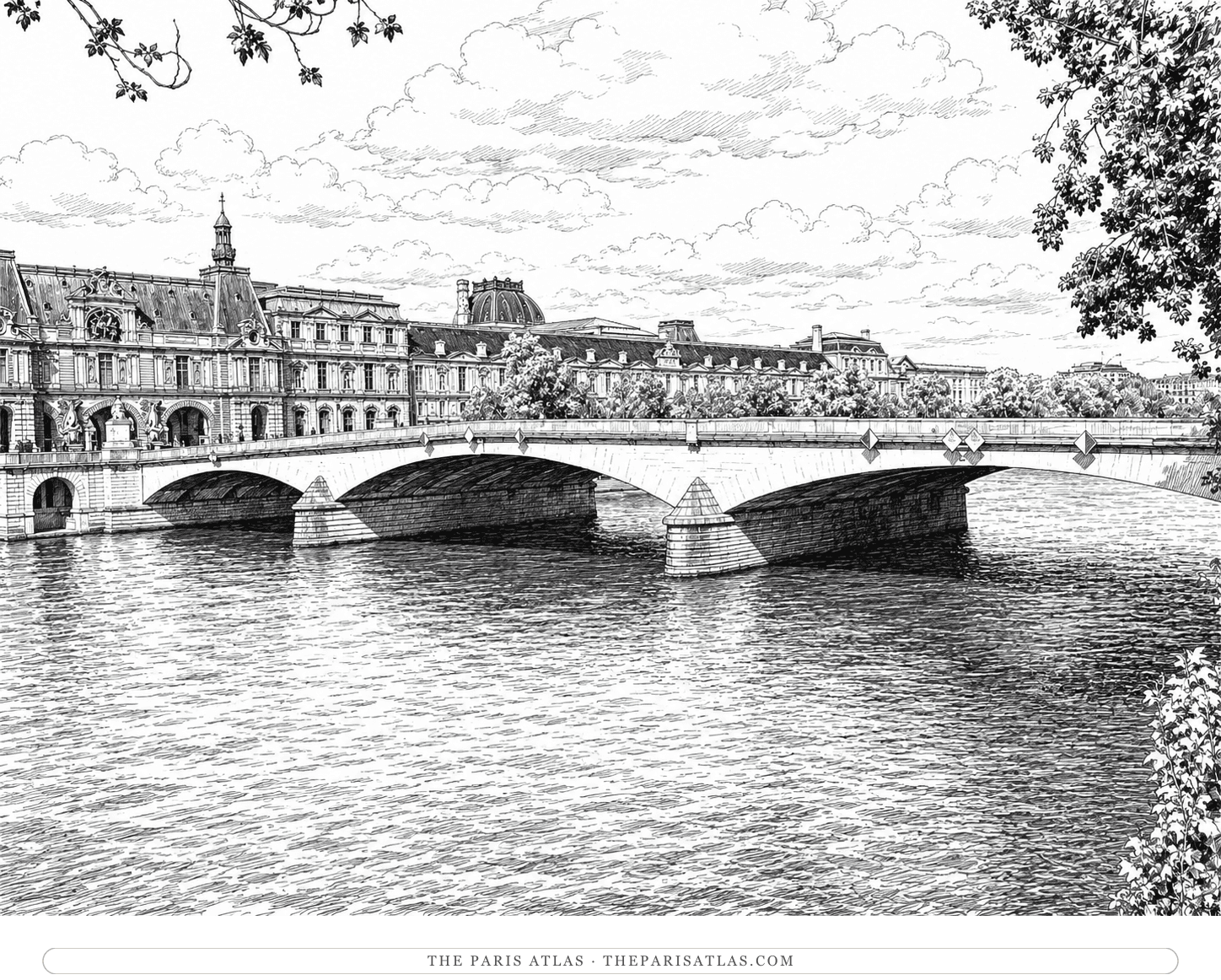
The crossing from the Louvre to the rue des Saints-Pères: an 1834 iron bridge replaced by a stone one in 1939, with distinctive telescoping streetlamps designed to rise after dark.

Musée du Louvre
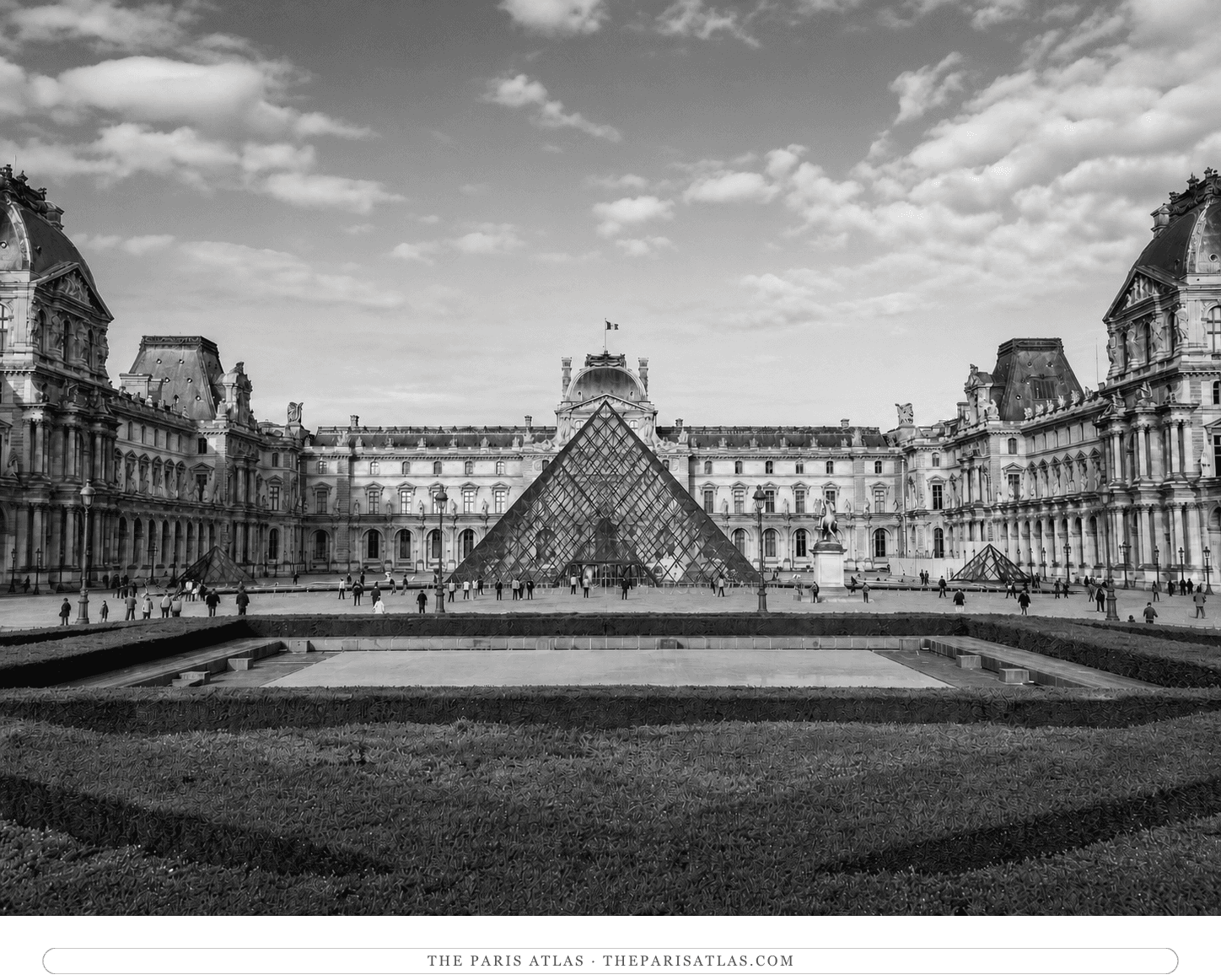
The Louvre is open 9 a.m.–6 p.m. Monday, Thursday, Saturday and Sunday, and 9 a.m.–9 p.m. Wednesday and Friday; it is closed Tuesday. Reserve a timed ticket, choose a short route before arriving, and check the live room schedule on the day of your visit.
Louvre and Palais-Royal

Nolinski Paris
A 45-room five-star hotel on avenue de l'Opéra, between the Louvre and the Palais Garnier, with Jean-Louis Deniot interiors, an indoor pool and the Charbone restaurant.

Cheval Blanc Paris
Cheval Blanc Paris is a 72-room five-star hotel at 8 quai du Louvre, facing the Pont Neuf, in the 1928 Seine-side building of the former Samaritaine department store. It opened in September 2021 and received France's Palace distinction in June 2026. Three of its four restaurants hold Michelin stars, six in all, and the Dior spa has a 30-meter indoor pool.

Grand Hôtel du Palais Royal
The Grand Hôtel du Palais Royal is a 59-room five-star hotel in a listed 18th-century building facing the Palais-Royal, at the corner of rue de Valois and place de Valois. The Louvre is about 200 meters away.

Hôtel Brighton
Hôtel Brighton is a 62-room four-star hotel in the Esprit de France collection, under the arcades of the rue de Rivoli facing the Jardin des Tuileries. The hotel says nearly half its rooms look across the garden to the Louvre and the Eiffel Tower. Charles Dickens stayed here with his family in November 1846.

Hôtel de la Place du Louvre
Hôtel de la Place du Louvre is a 20-room, four-star hotel on a 70-meter street in the 1st arrondissement, facing the church of Saint-Germain-l'Auxerrois, with the eastern colonnade of the Louvre at the end of the street. Rooms are 15 or 20 m², and breakfast is served in a vaulted cellar.

Hôtel La Tamise
Hôtel La Tamise is a 19-room four-star hotel at 4 rue d'Alger in the 1st arrondissement, a short street that meets rue de Rivoli opposite the Tuileries garden. The Paris trade directory lists a Hôtel de la Tamise at this address from 1876, and the house's 19th-century stained glass, cement tiles and parquet floors were kept in the 2014 renovation by the Esprit de France group.

Hôtel Lumen Paris Louvre
Hôtel Lumen Paris Louvre is a 39-room, four-star hotel at 13 rue des Pyramides in the 1st arrondissement, beside the Saint-Roch church and a short walk from the Louvre. It opened in 2007 in a Haussmann-style building that had been a bank, and it has a paved terrace between the building and the church.
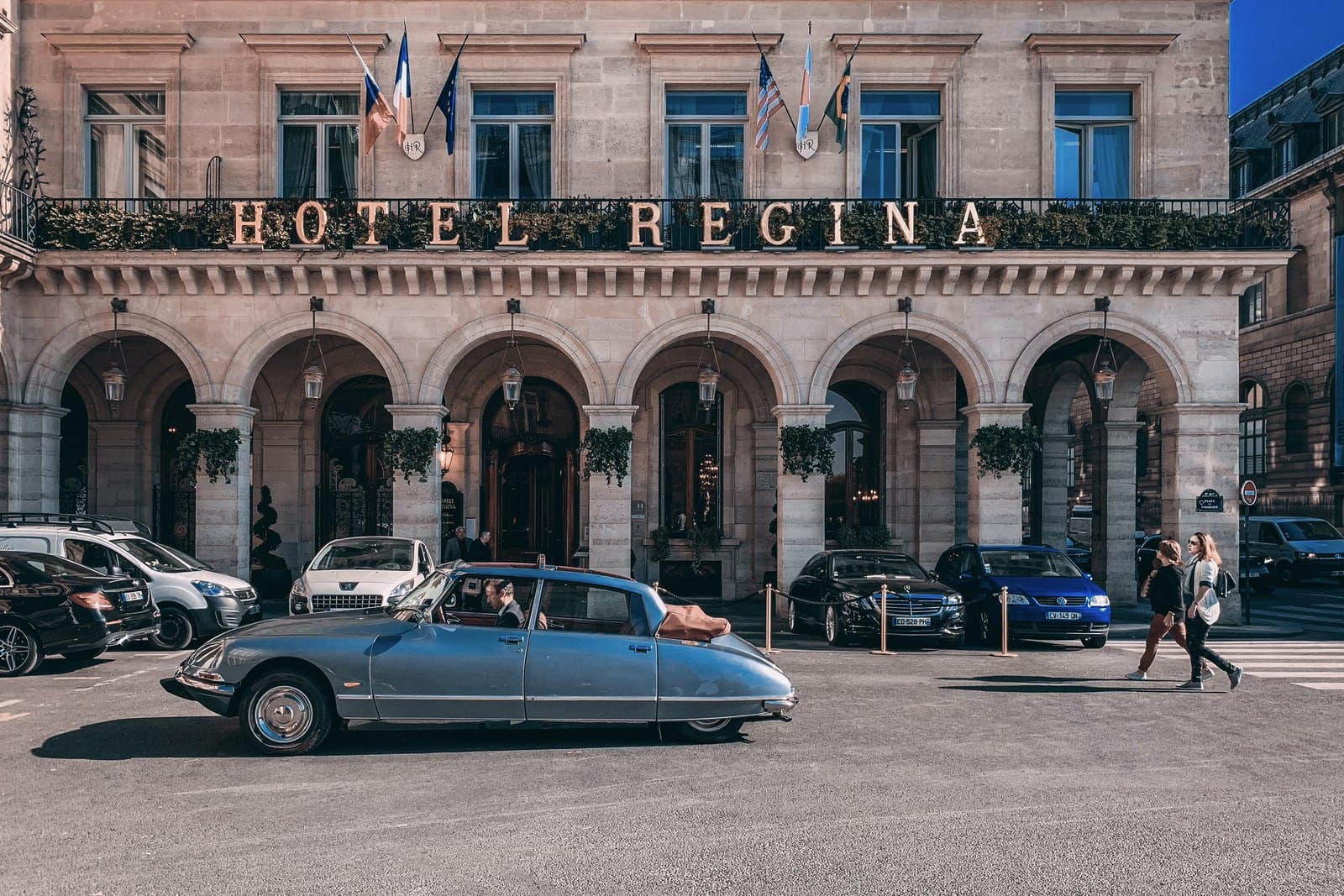
Hôtel Regina Louvre
Hôtel Regina Louvre is a 98-room five-star hotel, with 32 suites, on place des Pyramides facing the Tuileries garden and the Louvre. It opened in 1900 for the Exposition Universelle, is still run by the family of one of its founders, and some of its rooms look across the garden to the Eiffel Tower.

Hôtel Thérèse
Hôtel Thérèse is a 40-room four-star hotel run by the de Lattre family on rue Thérèse, a short street between the Palais-Royal and avenue de l'Opéra in the 1st arrondissement. Until 1880 the hotel's end of the street was called the rue du Hasard, a name said to come from a gaming house.
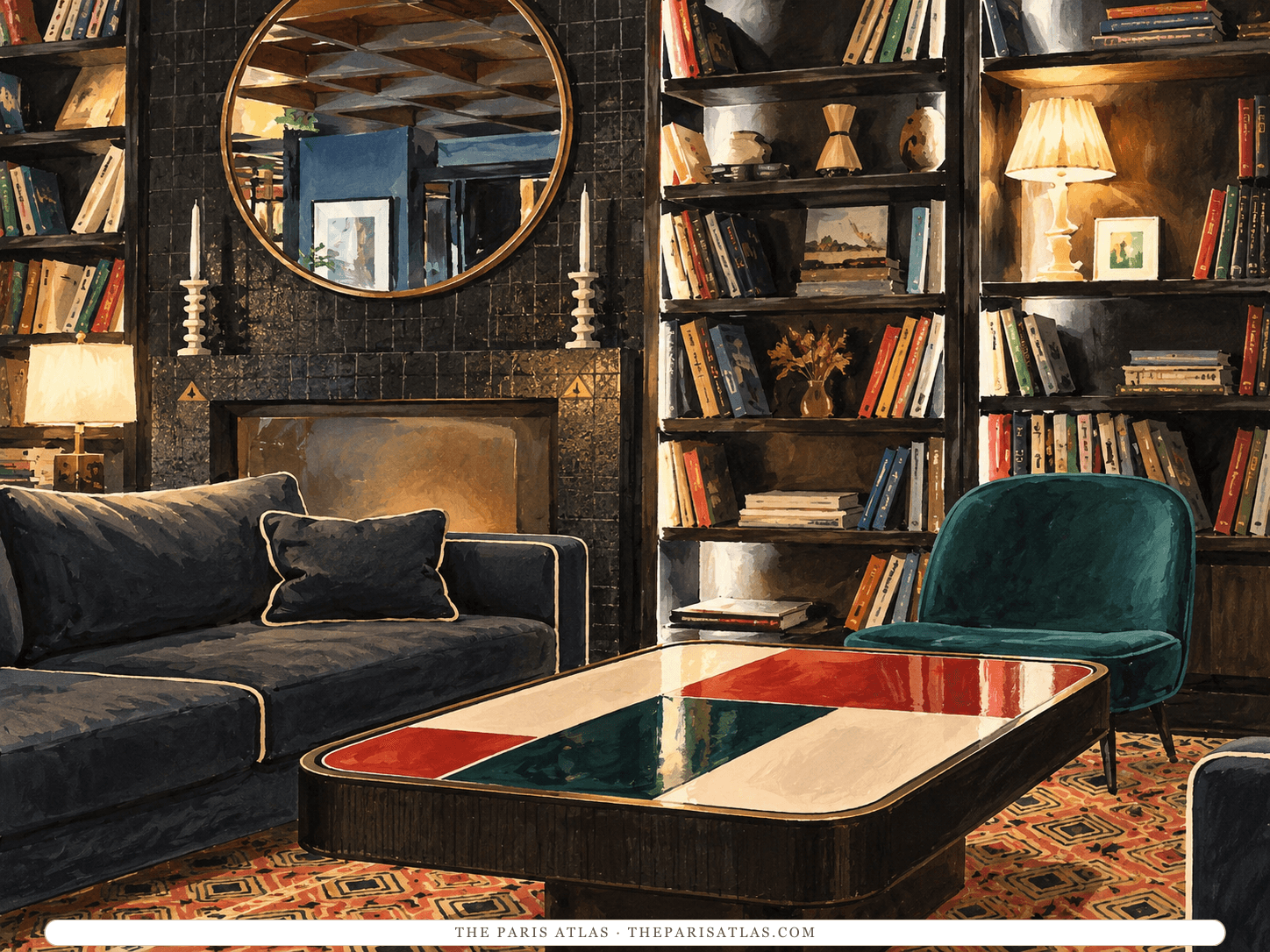
Le Roch Hôtel & Spa
Le Roch Hôtel & Spa is a 37-room five-star hotel at 28 rue Saint-Roch in the 1st arrondissement, a short walk from the Louvre and the Tuileries, with an indoor pool, a hammam and a spa run with the skincare brand Maison Codage. It opened on 14 July 2016 and was the first hotel designed by the Paris interior designer Sarah Poniatowski-Lavoine.

Maison Armance
Maison Armance is a four-star hotel with 20 rooms at 5 rue Cambon, between place de la Concorde and the Tuileries garden, set back from the street behind a carriage gateway and a tree-lined courtyard. It is named after Armance (1827), the first novel by Stendhal, the French writer best known for The Red and the Black.
Madeleine

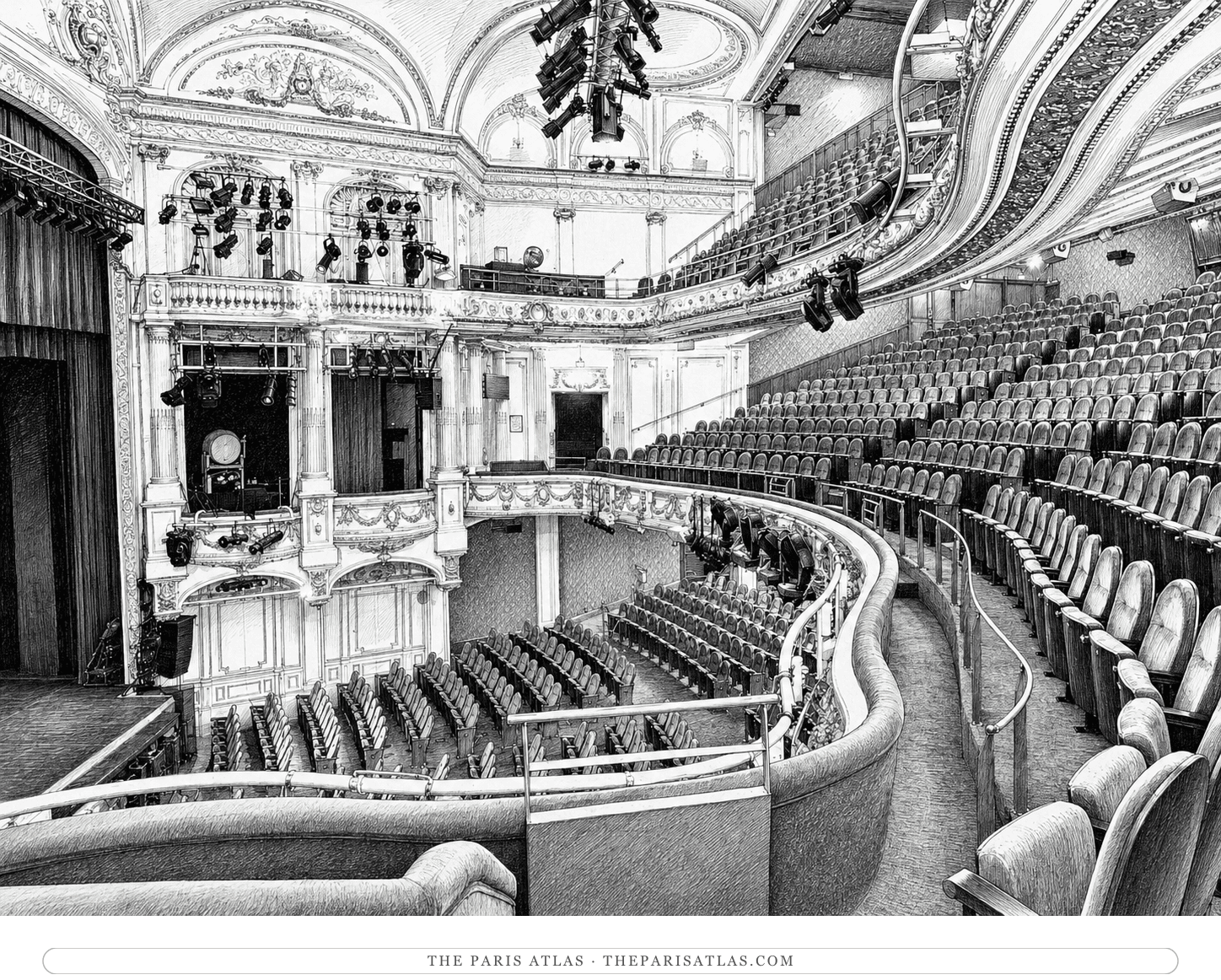
Théâtre des Mathurins
Where Colette made her public stage debut in 1906, the first step of the music-hall career that won her independence from Willy.

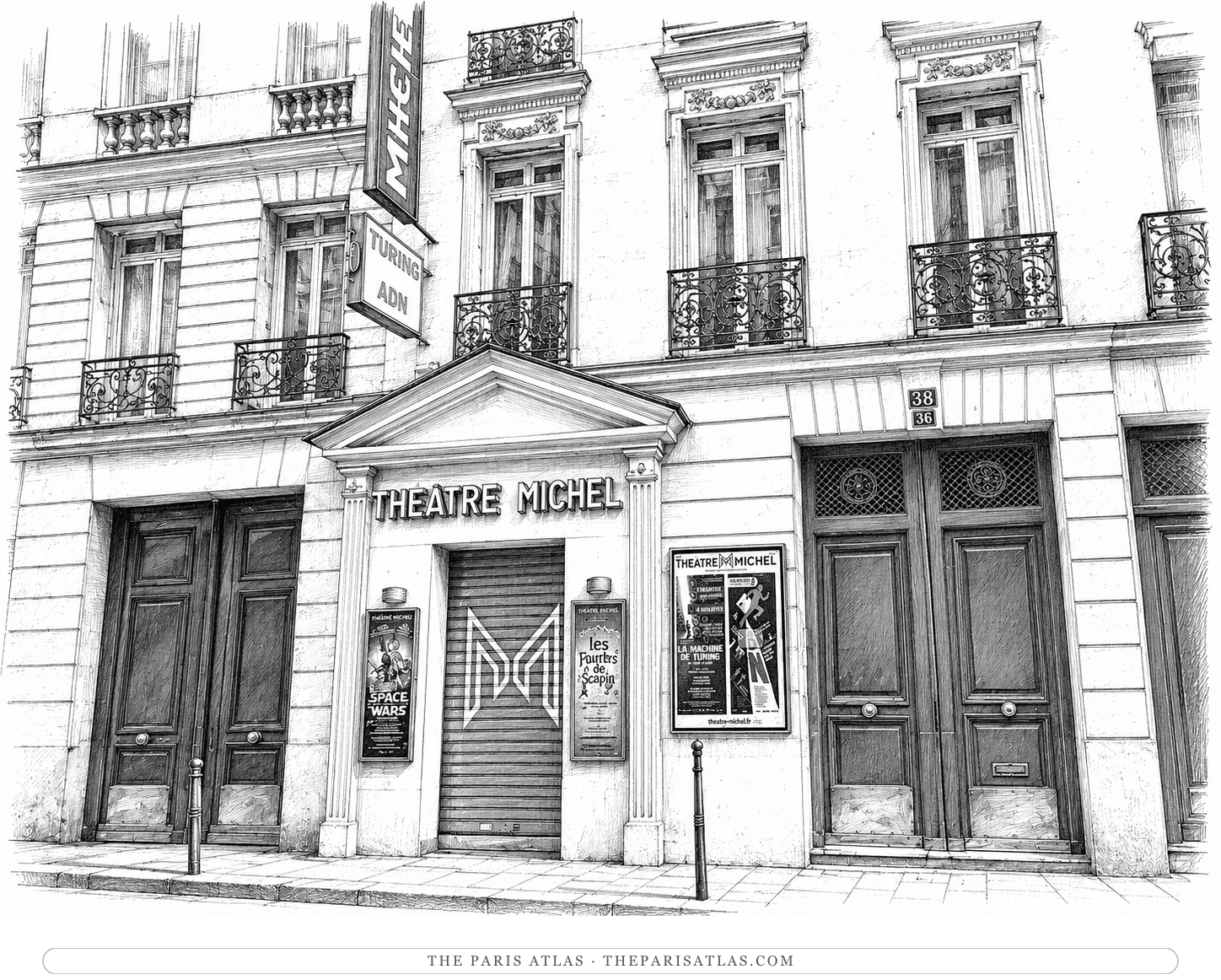
Théâtre Michel
Where the stage version of Chéri premiered in 1921, and where Colette herself played Léa at its hundredth performance.

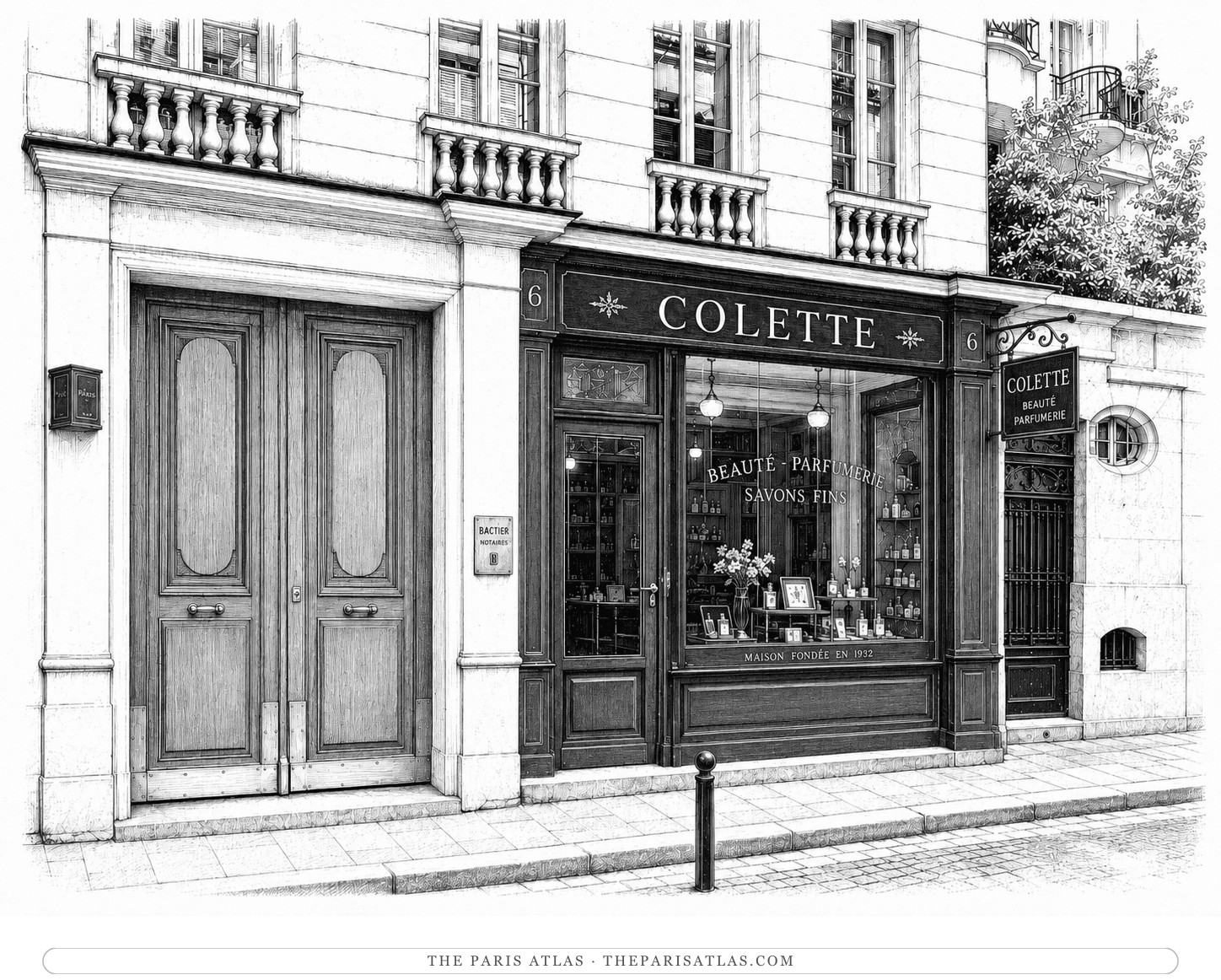
6 rue de Miromesnil
The beauty shop Colette opened in 1932, selling cosmetics she made herself — her attempt to turn her fame into a business.

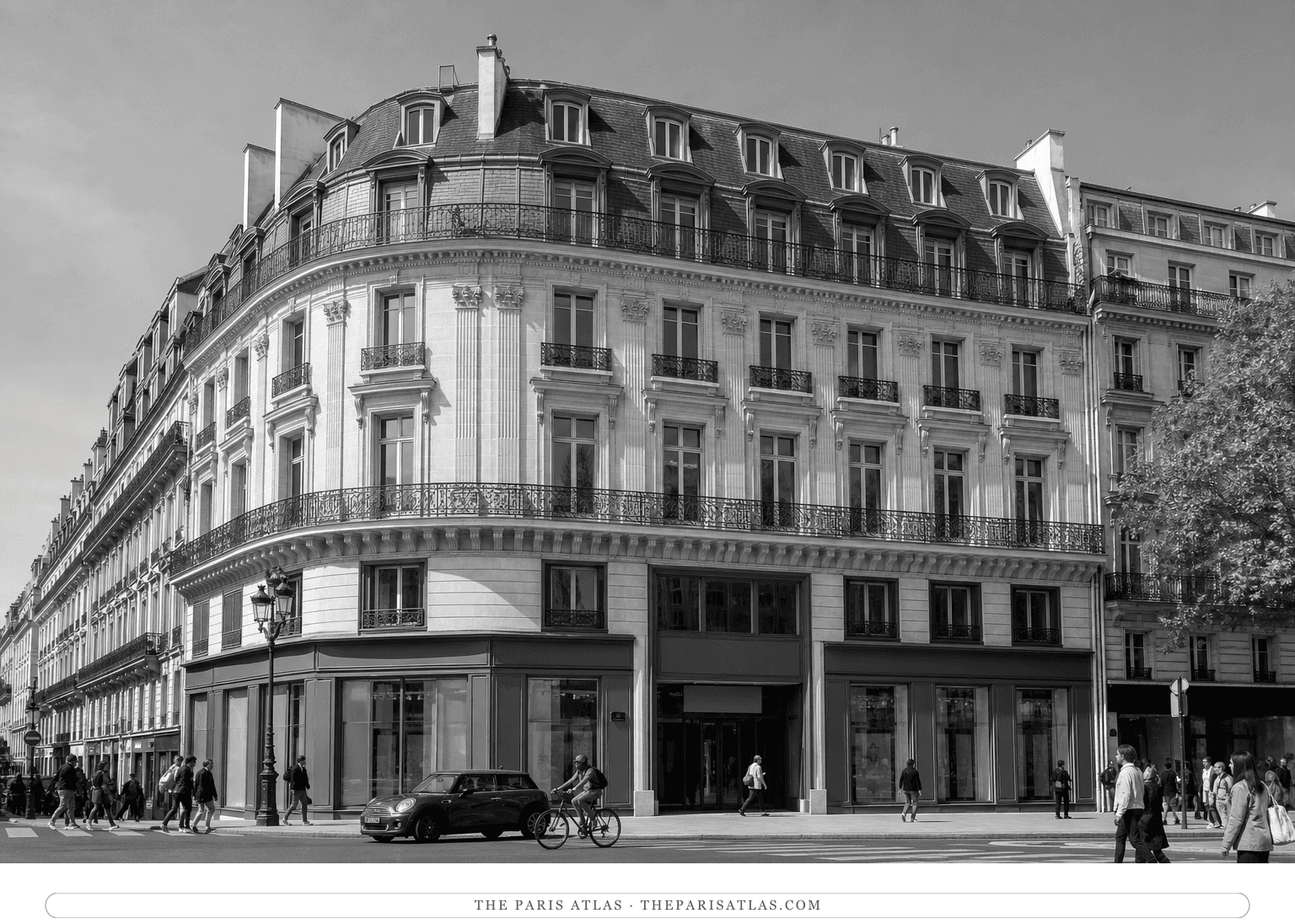
102 boulevard Haussmann
The flat where Marcel Proust wrote most of In Search of Lost Time, in a bedroom he had lined with cork to keep the noise of the boulevard out. He moved in on 27 December 1906, after his parents' deaths, and stayed thirteen years. The room itself is now reassembled at the Musée Carnavalet.
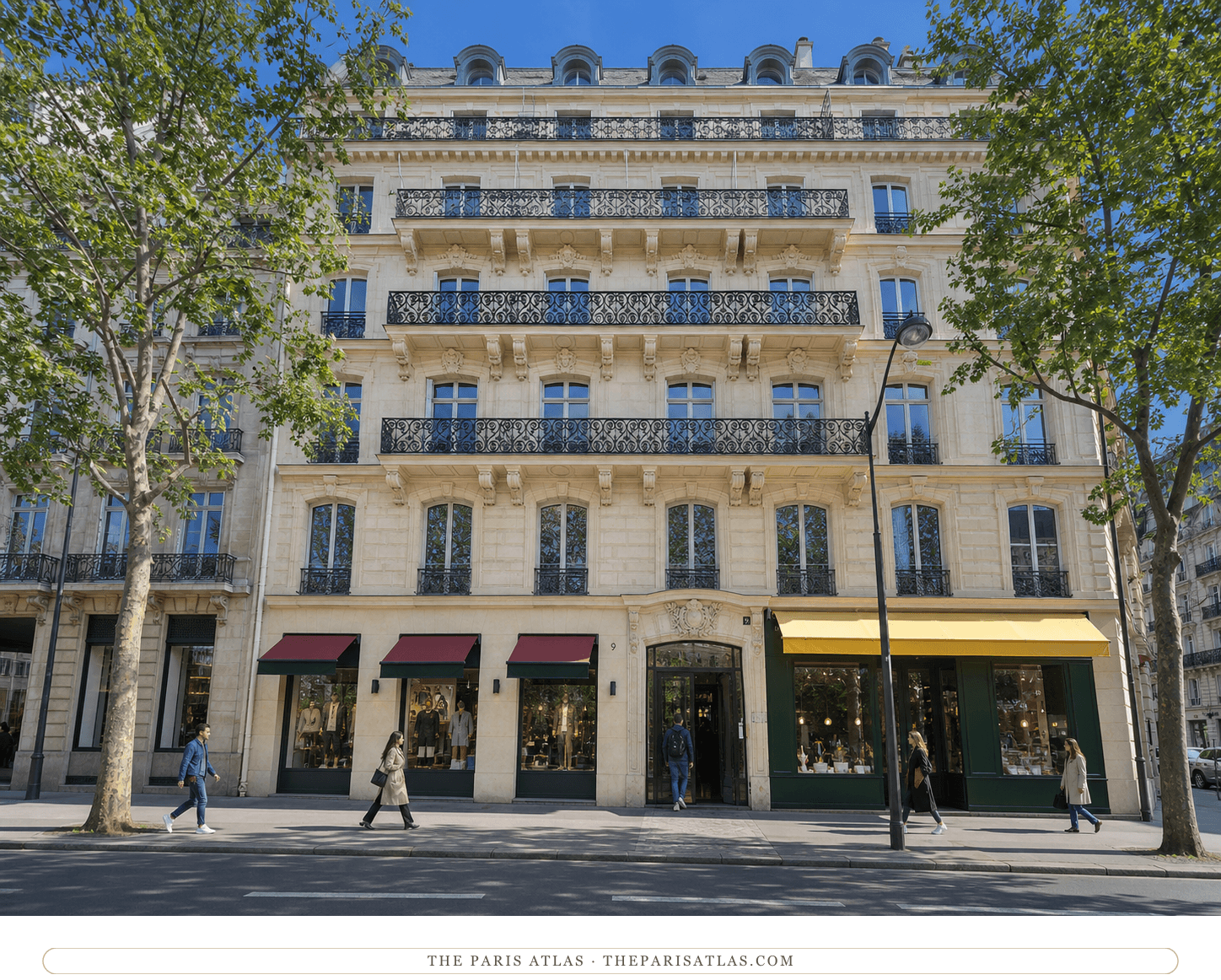
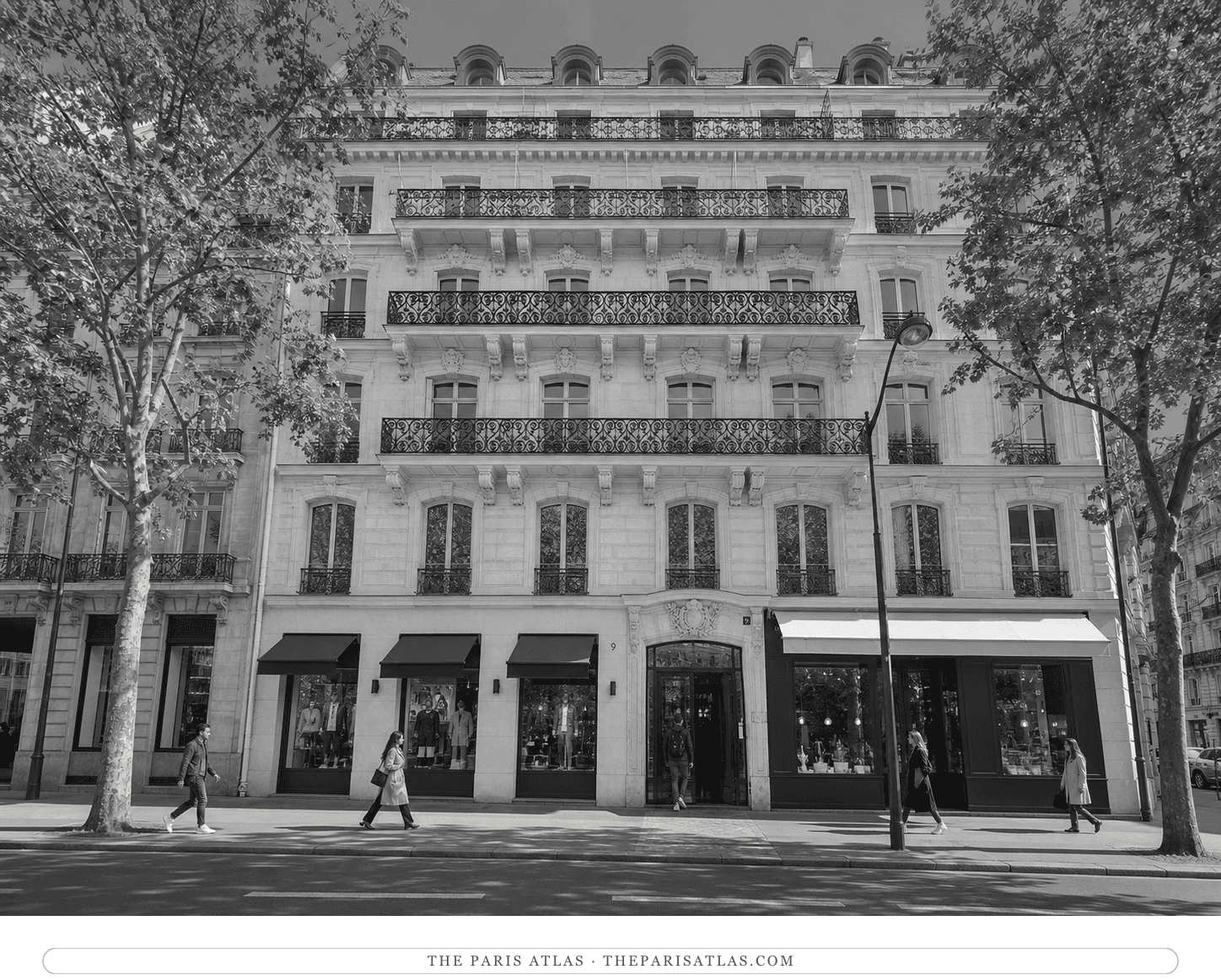
9 boulevard Malesherbes
The Proust family flat, where Marcel lived with his parents and his brother Robert for twenty-seven years — effectively his whole childhood, adolescence and early adulthood. The society he spent the rest of his life reconstructing from memory is the one he learned here.

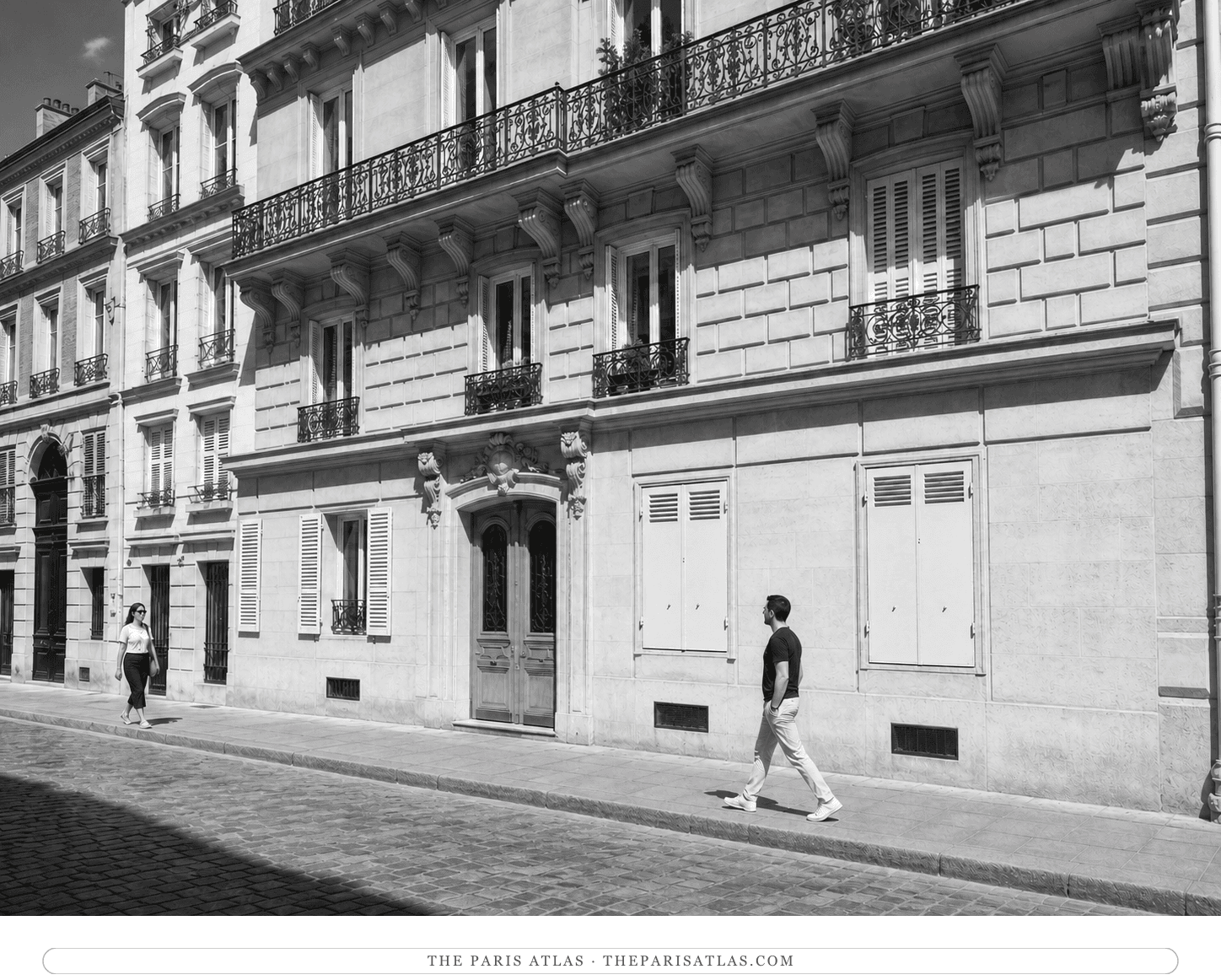
4 rue Lavoisier
The studio Édouard Manet kept from around 1856 to 1859, in the first years after he left Thomas Couture's teaching and began working on his own.

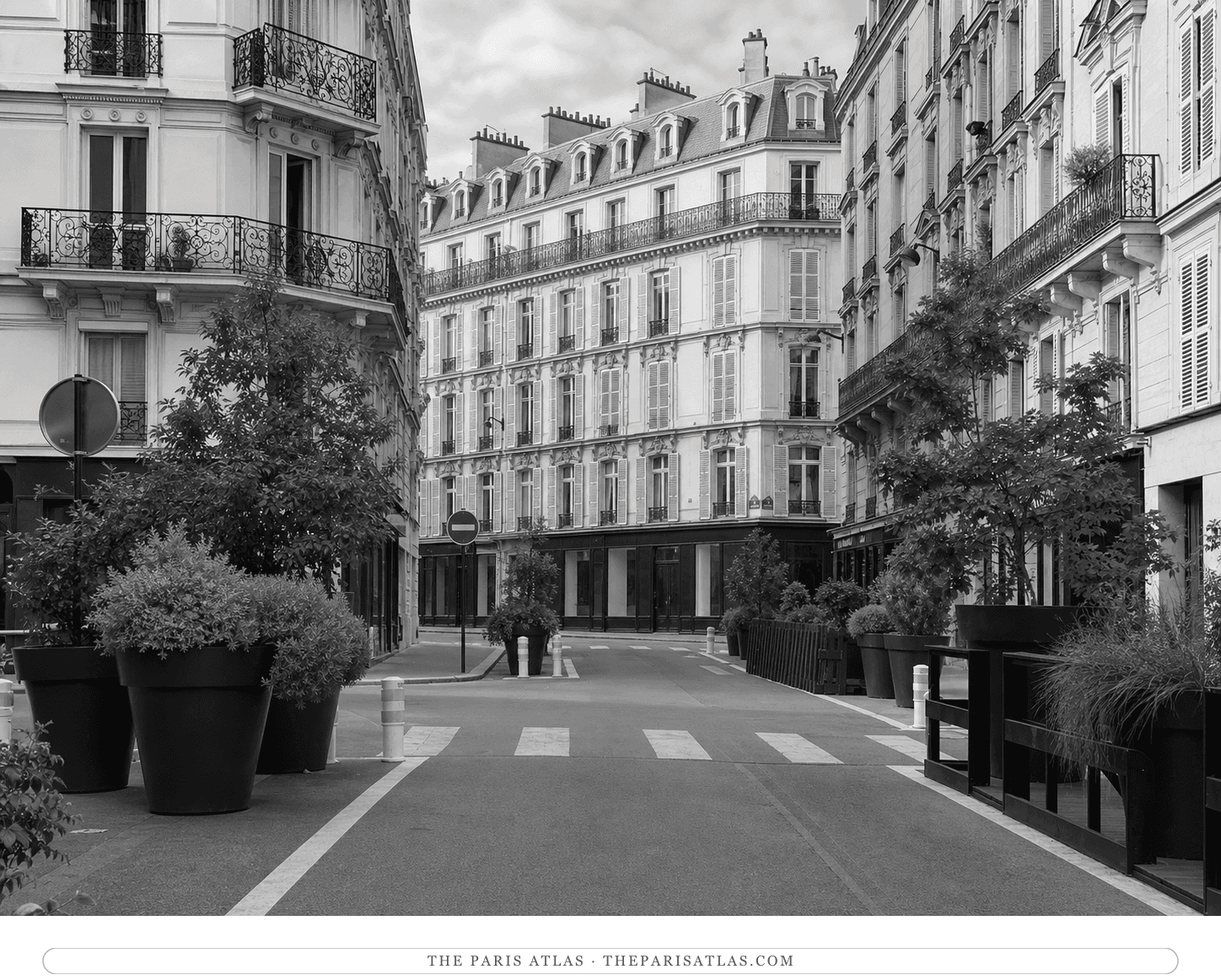
77 rue de Miromesnil
The corner house Gustave Caillebotte's father built, and the studio upstairs where he painted The Floor Scrapers and Young Man at His Window in 1875 — two pictures made by looking down at his own street.
Madeleine — the rue Royale, between the Concorde and the Madeleine

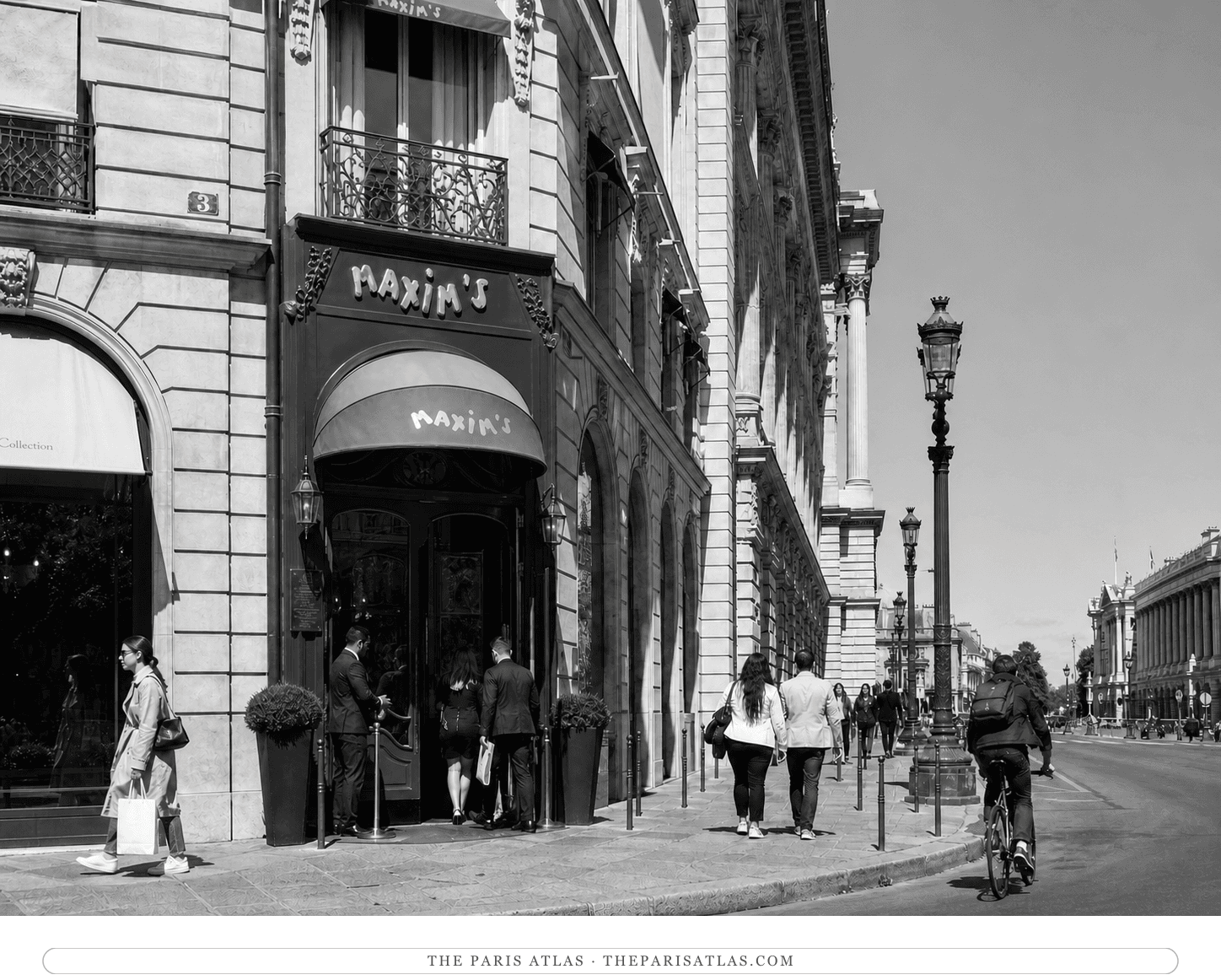
Madeleine–Élysée


Marais

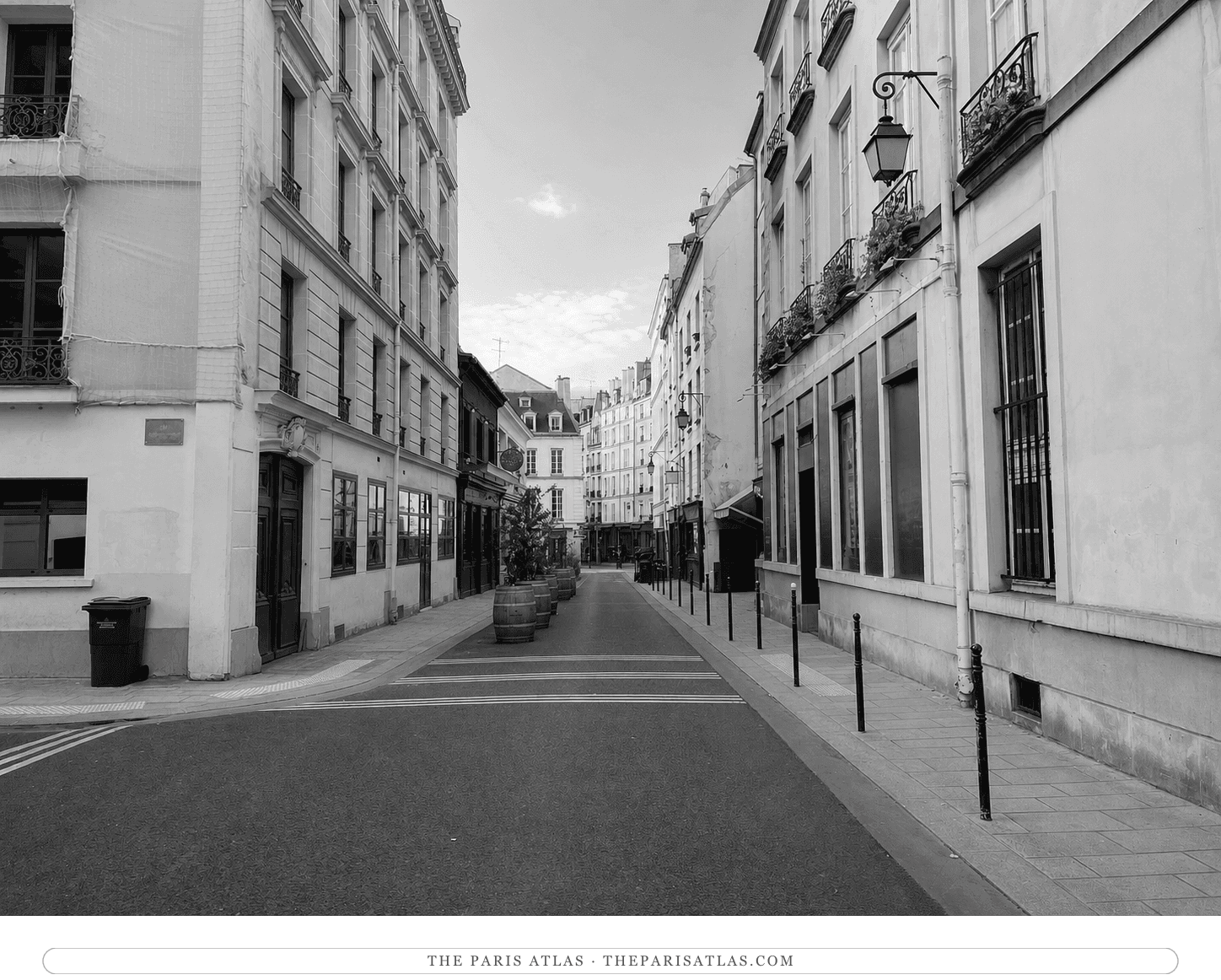
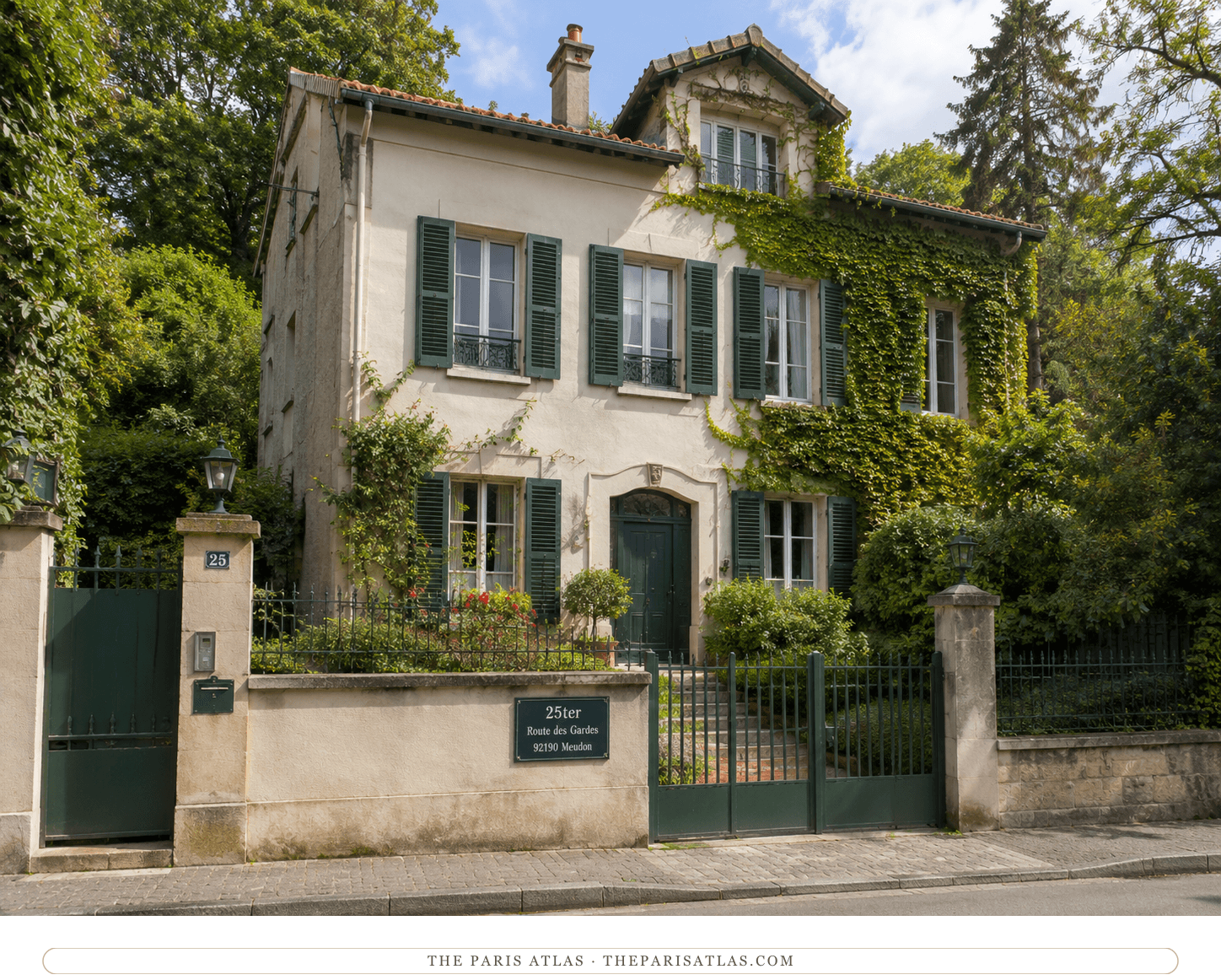
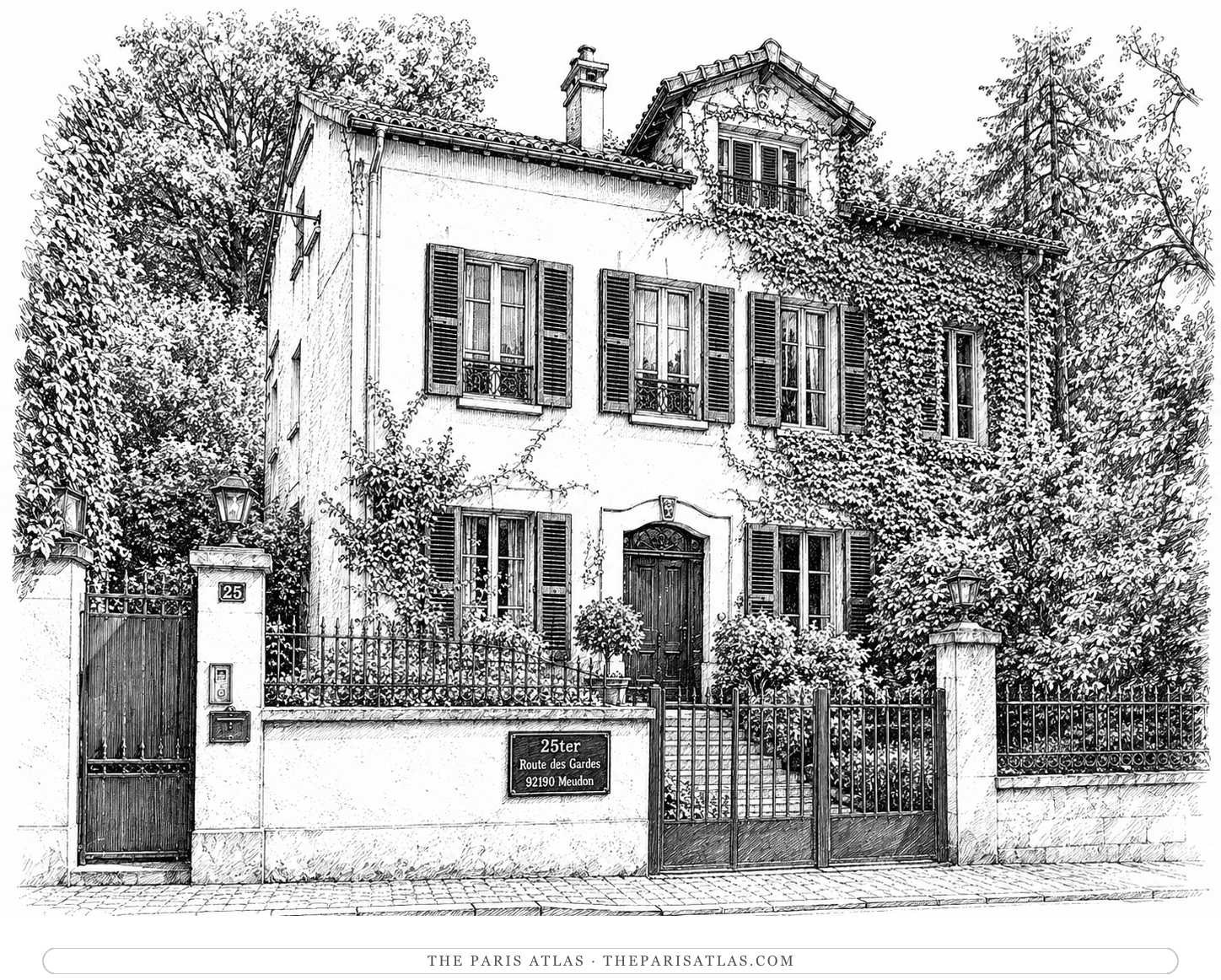
Meudon, above the Seine
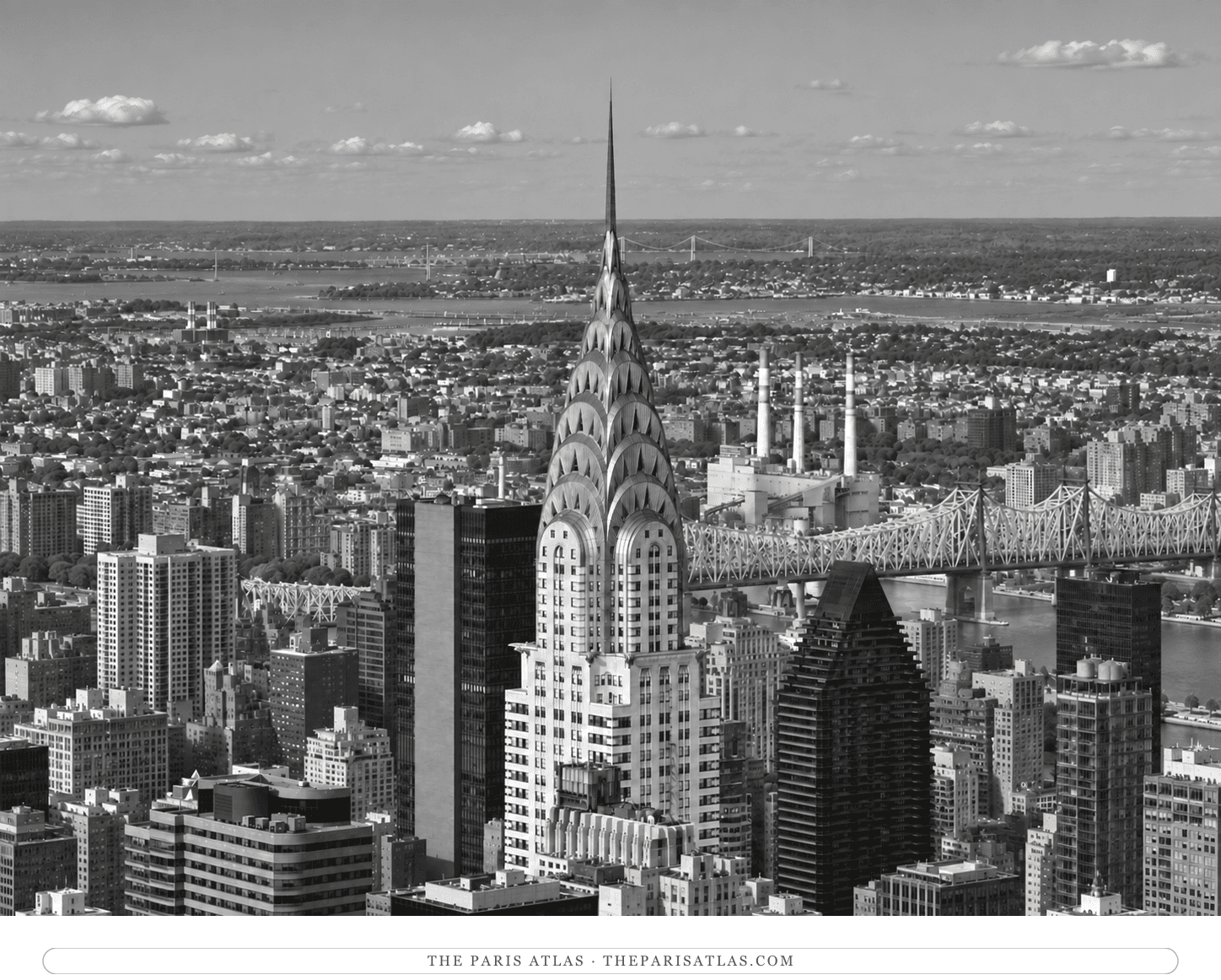
Midtown Manhattan



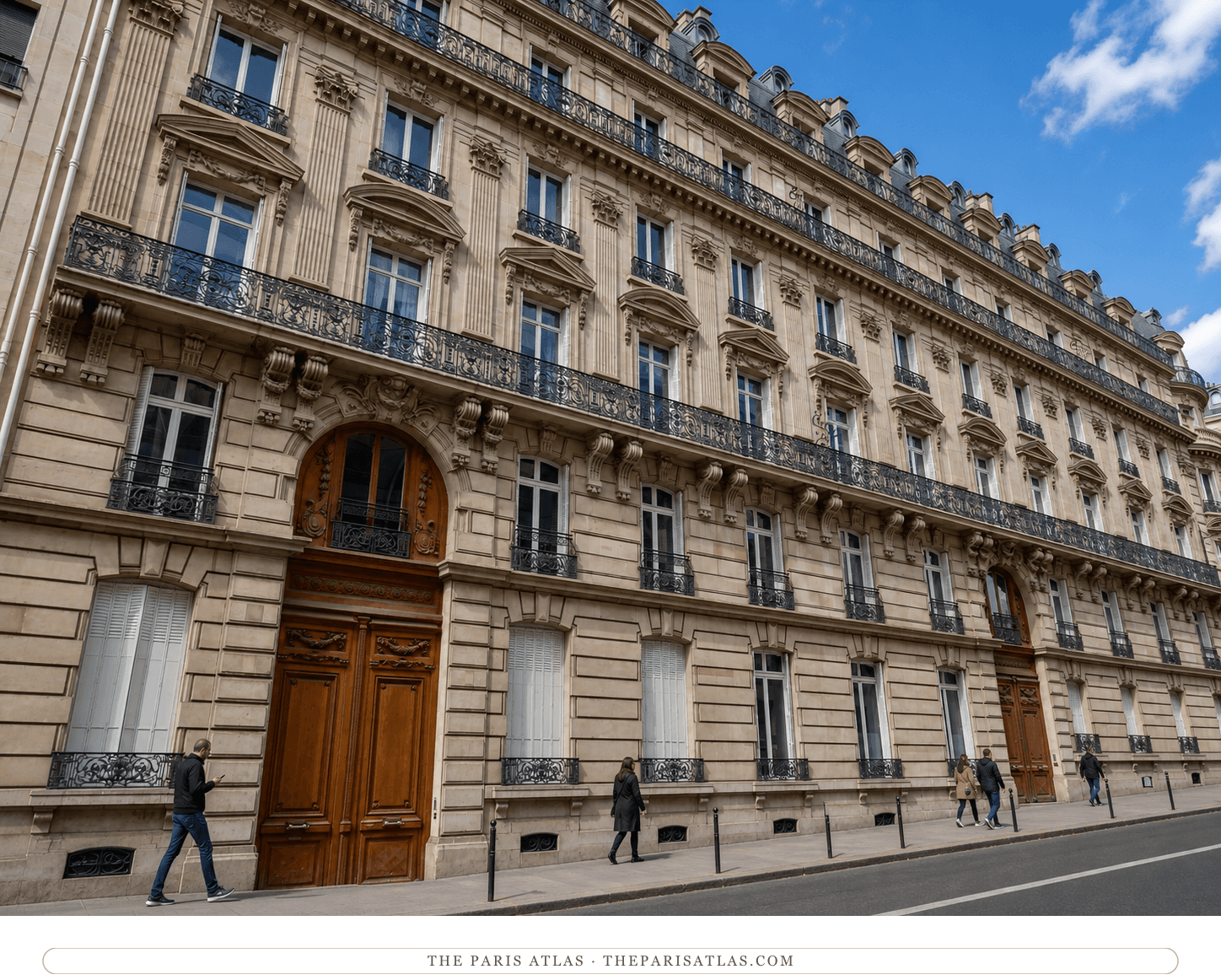
Monceau
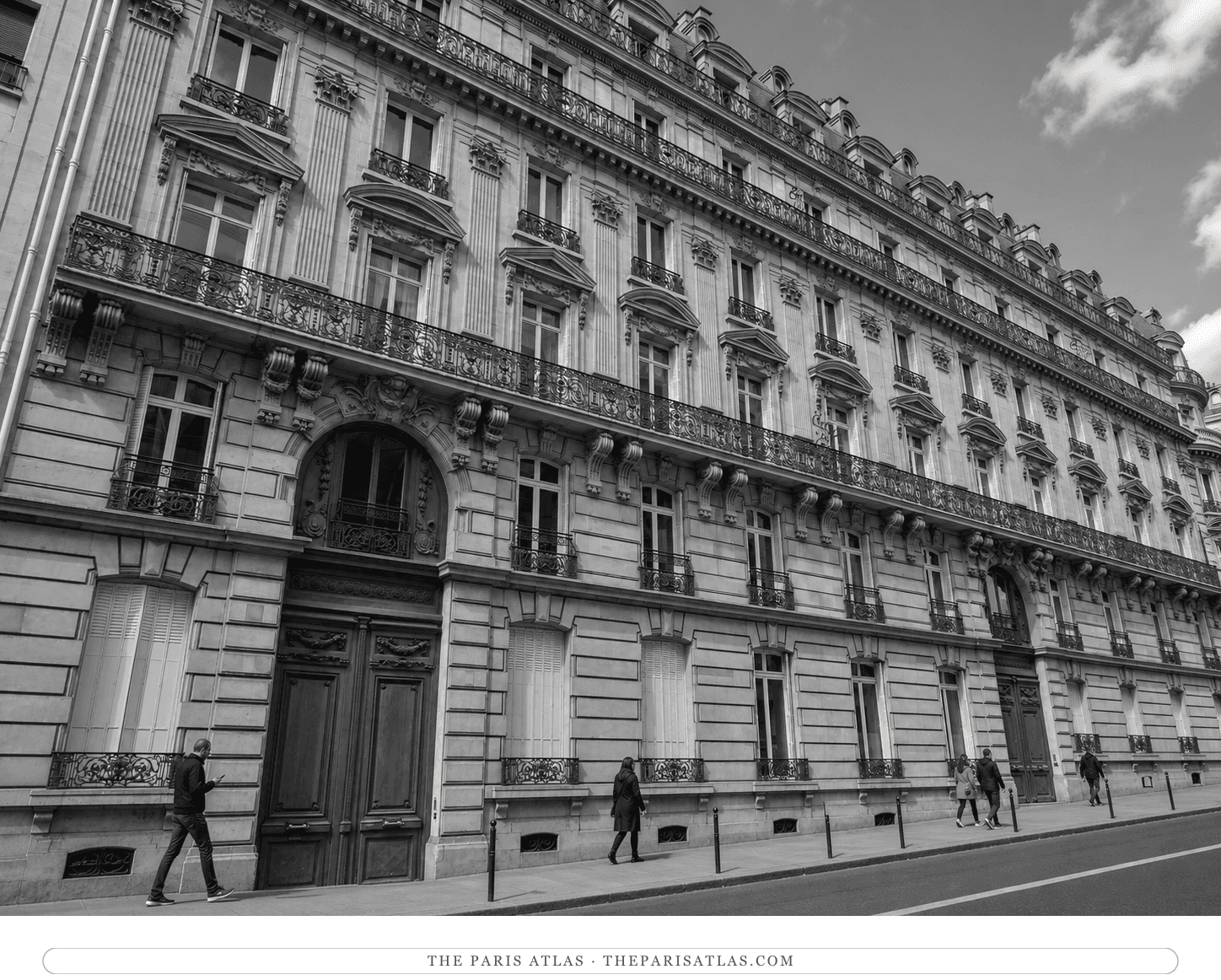
45 rue de Courcelles
Where the Proust family moved in 1900, and where Marcel lived until 1906 — the most socially active stretch of his life, receiving writers, artists and journalists and giving dinners. A commemorative plaque was installed by the City of Paris in 2022.

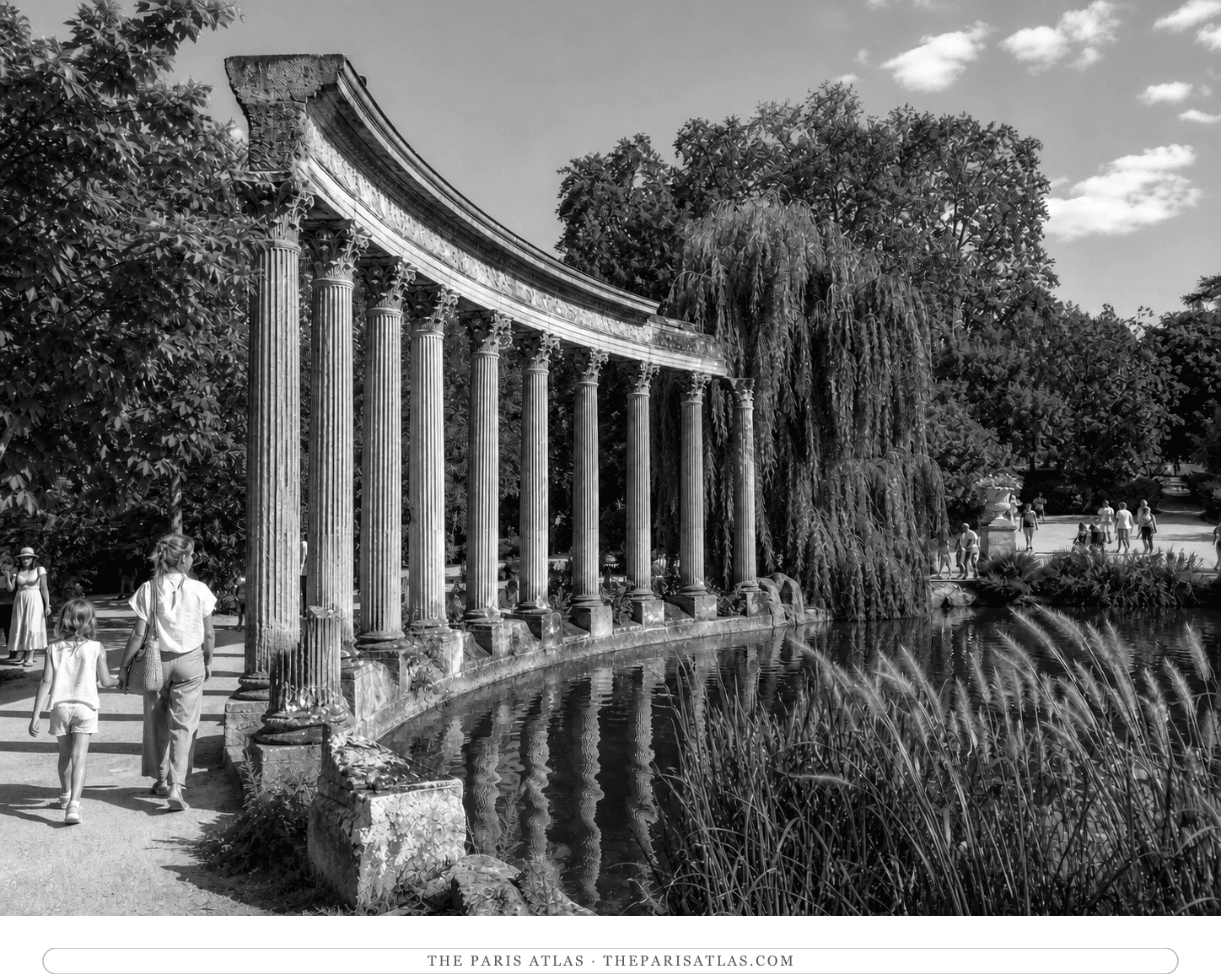
Parc Monceau
An unusually theatrical park in the 8th arrondissement, full of deliberate follies — a colonnade round a pond, a pyramid, fake ruins — laid out in the 1770s as a private garden and opened to the public in 1861. It is where the young Marcel Proust played, and where he met his first love in July 1886.
Montmartre, at the foot of the hill

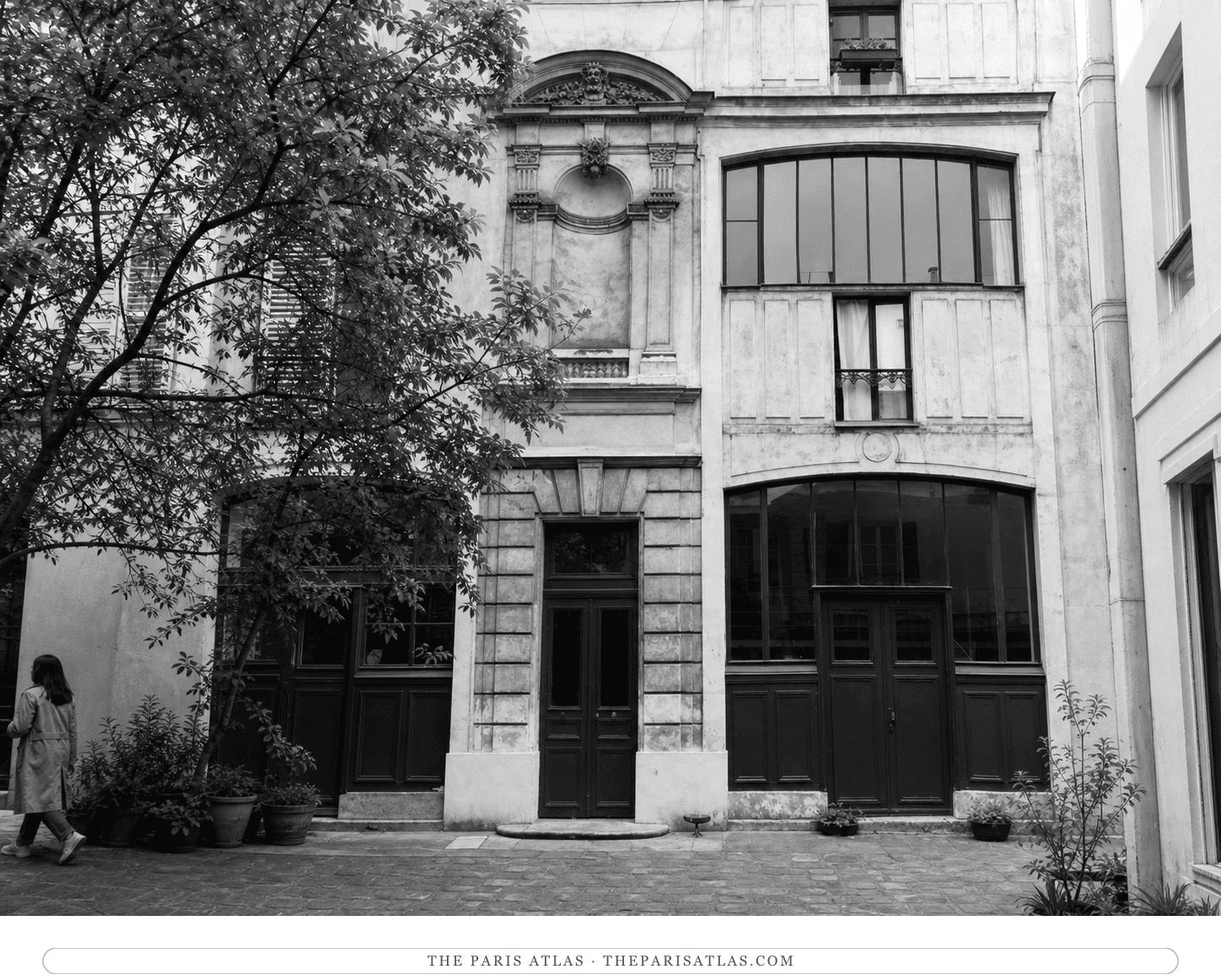
Montparnasse — facing the cemetery

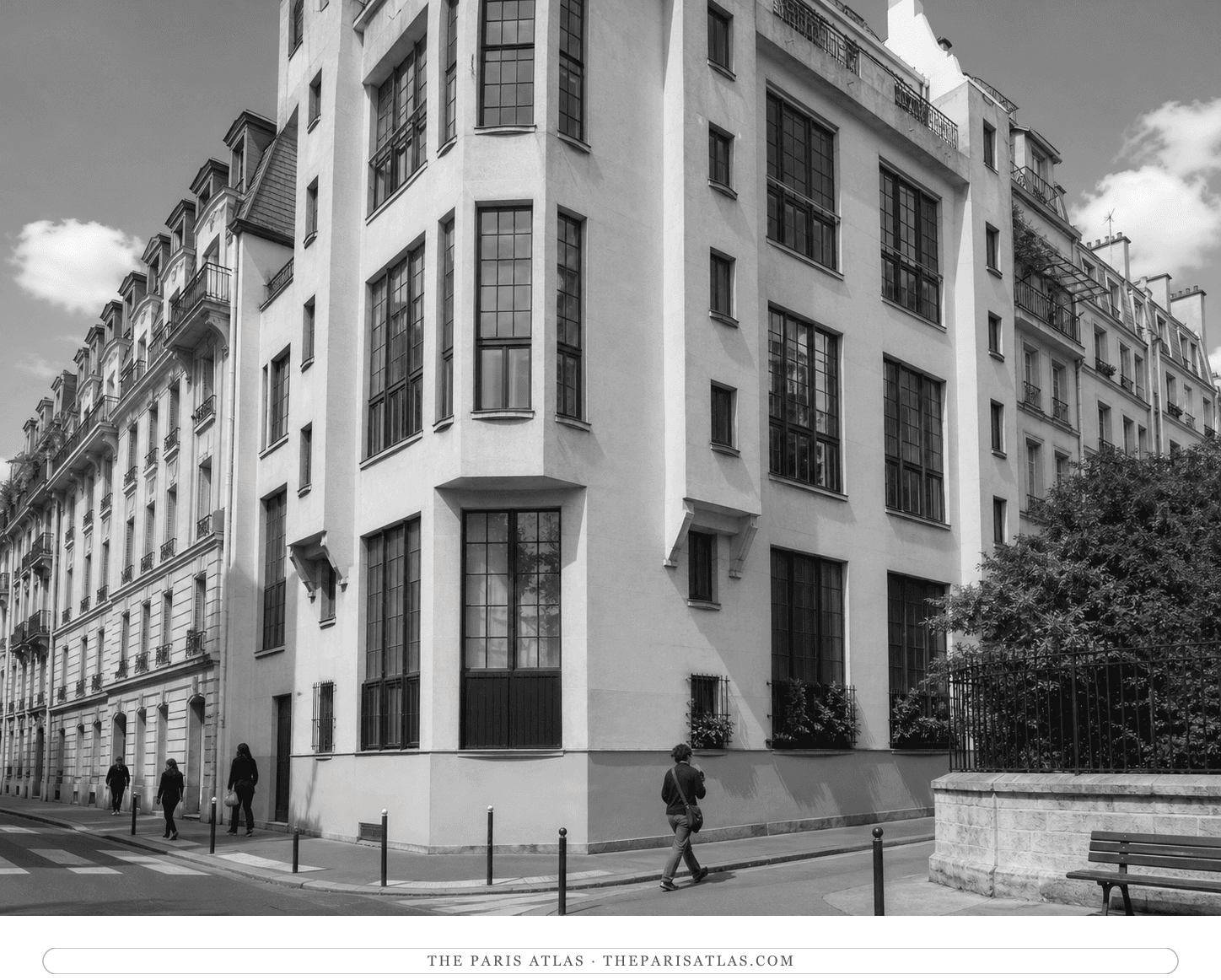
Montsouris

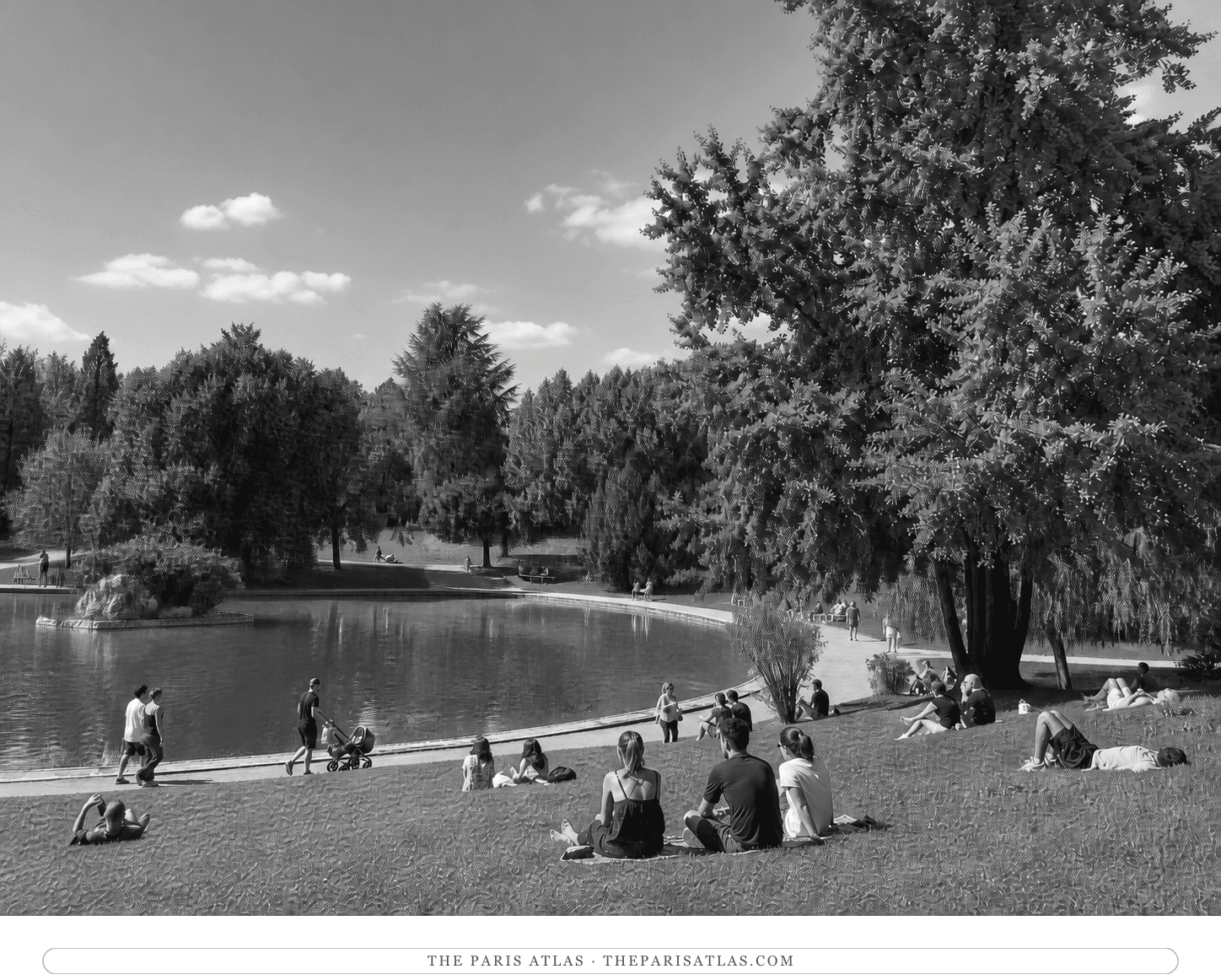
Ménilmontant

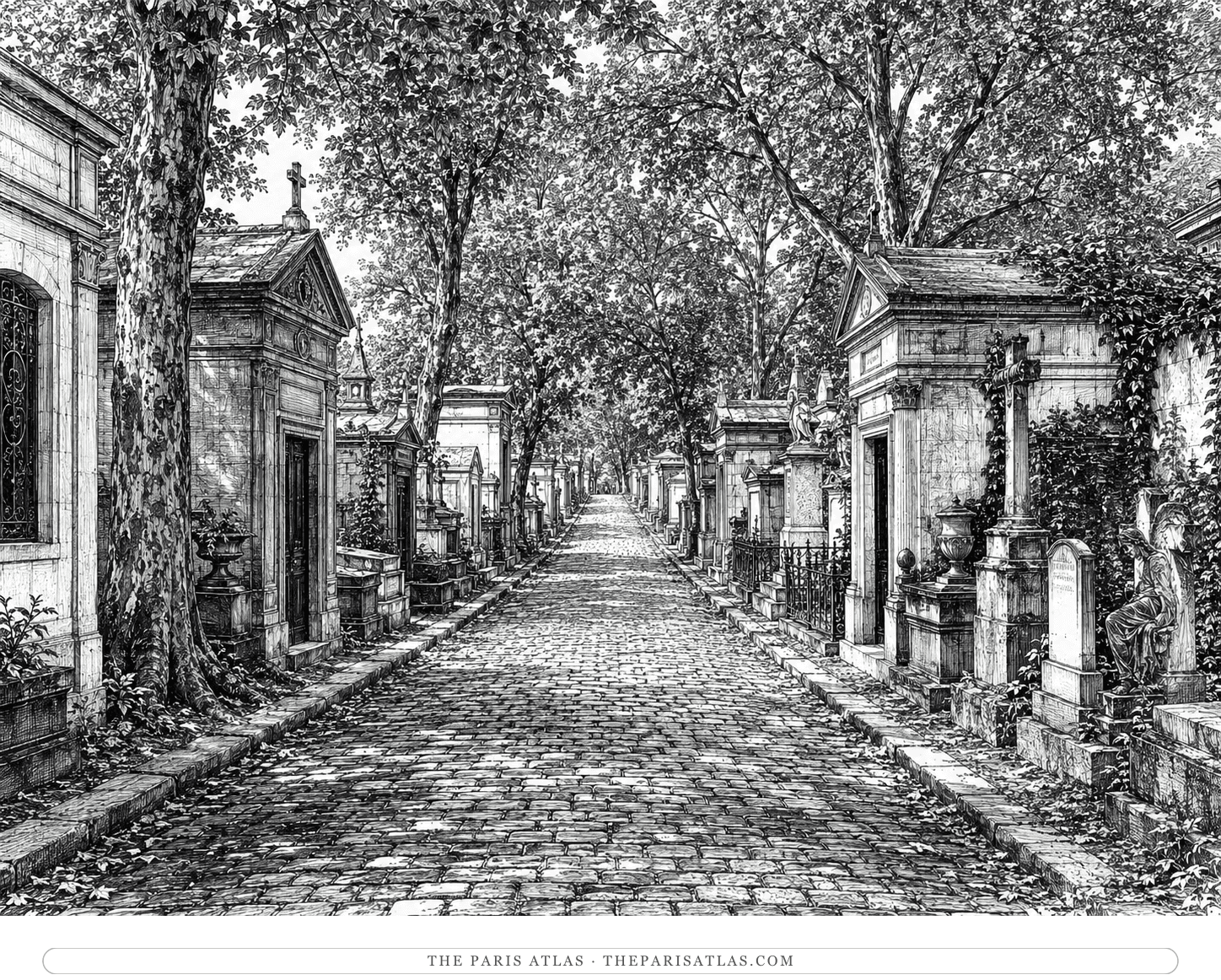
Nation

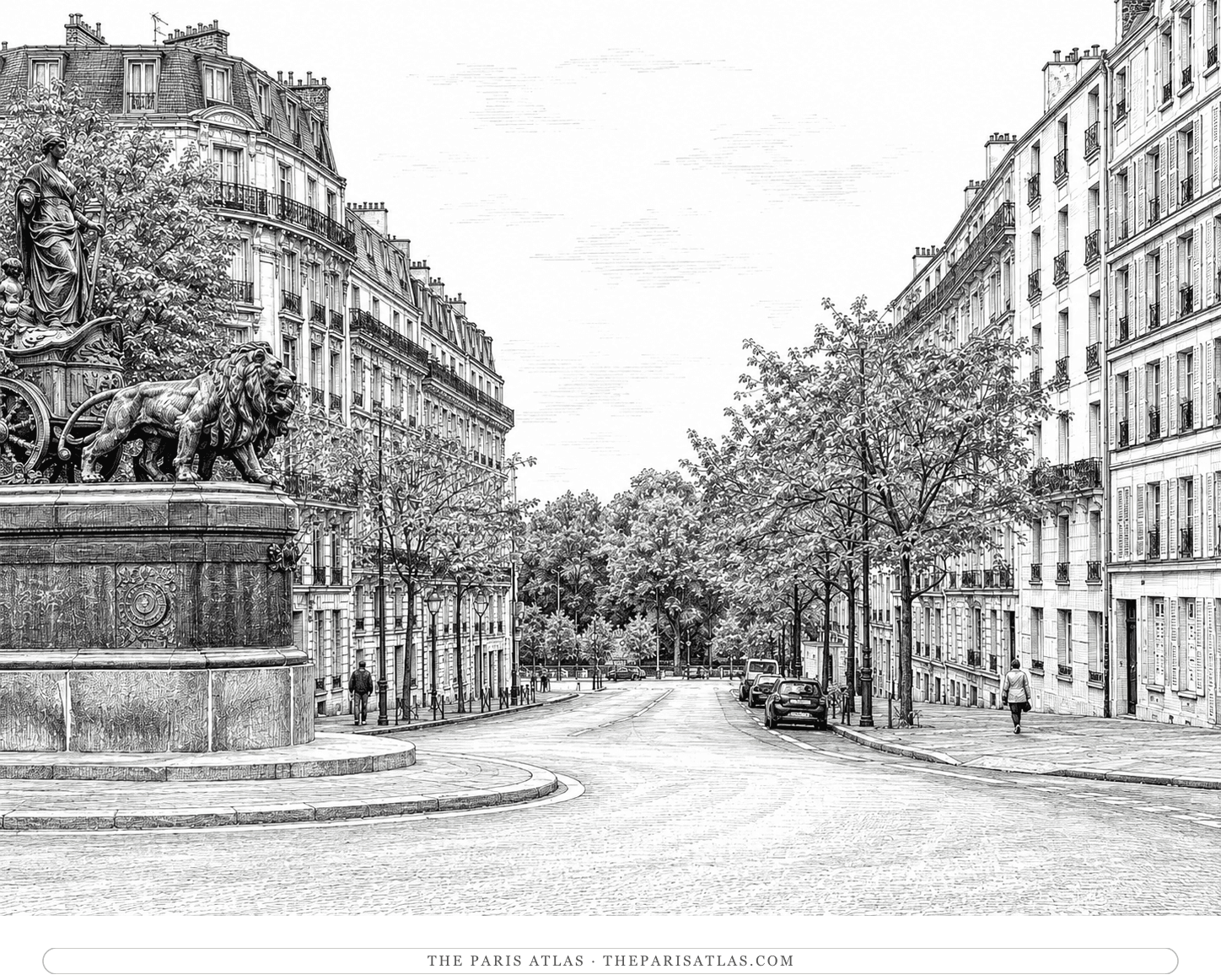
Navarre, below the Roncesvalles pass

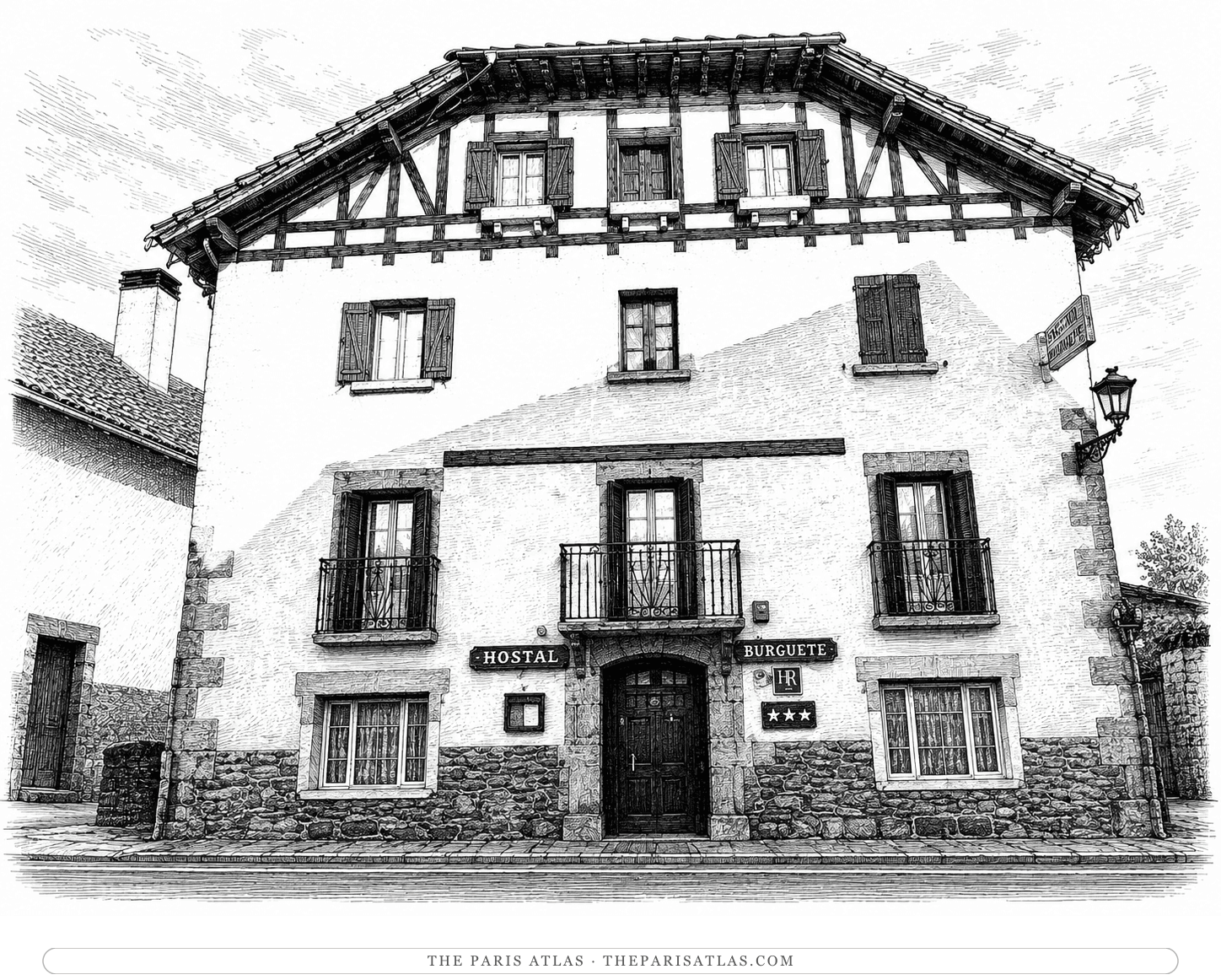
Necker

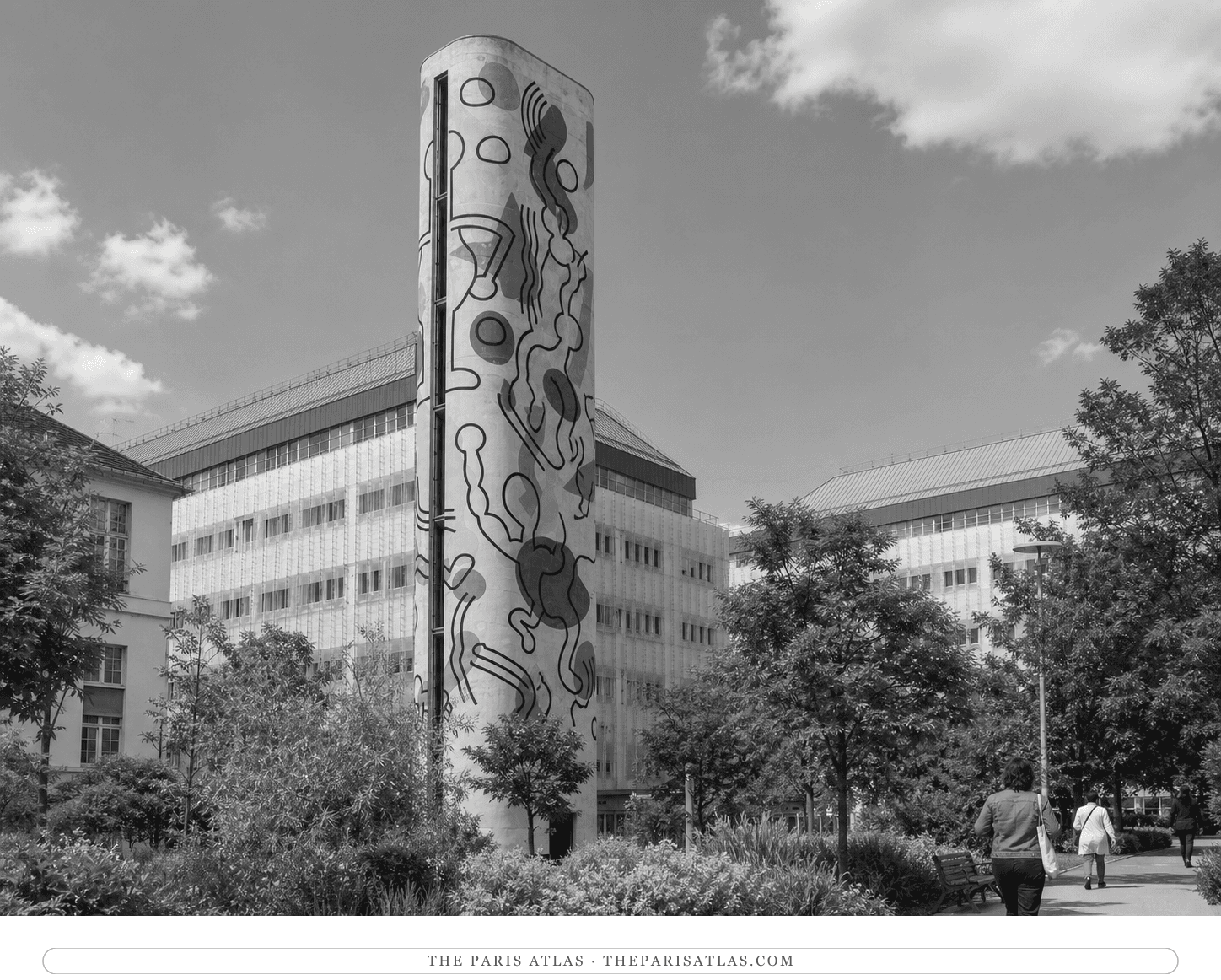
Neuilly-sur-Seine

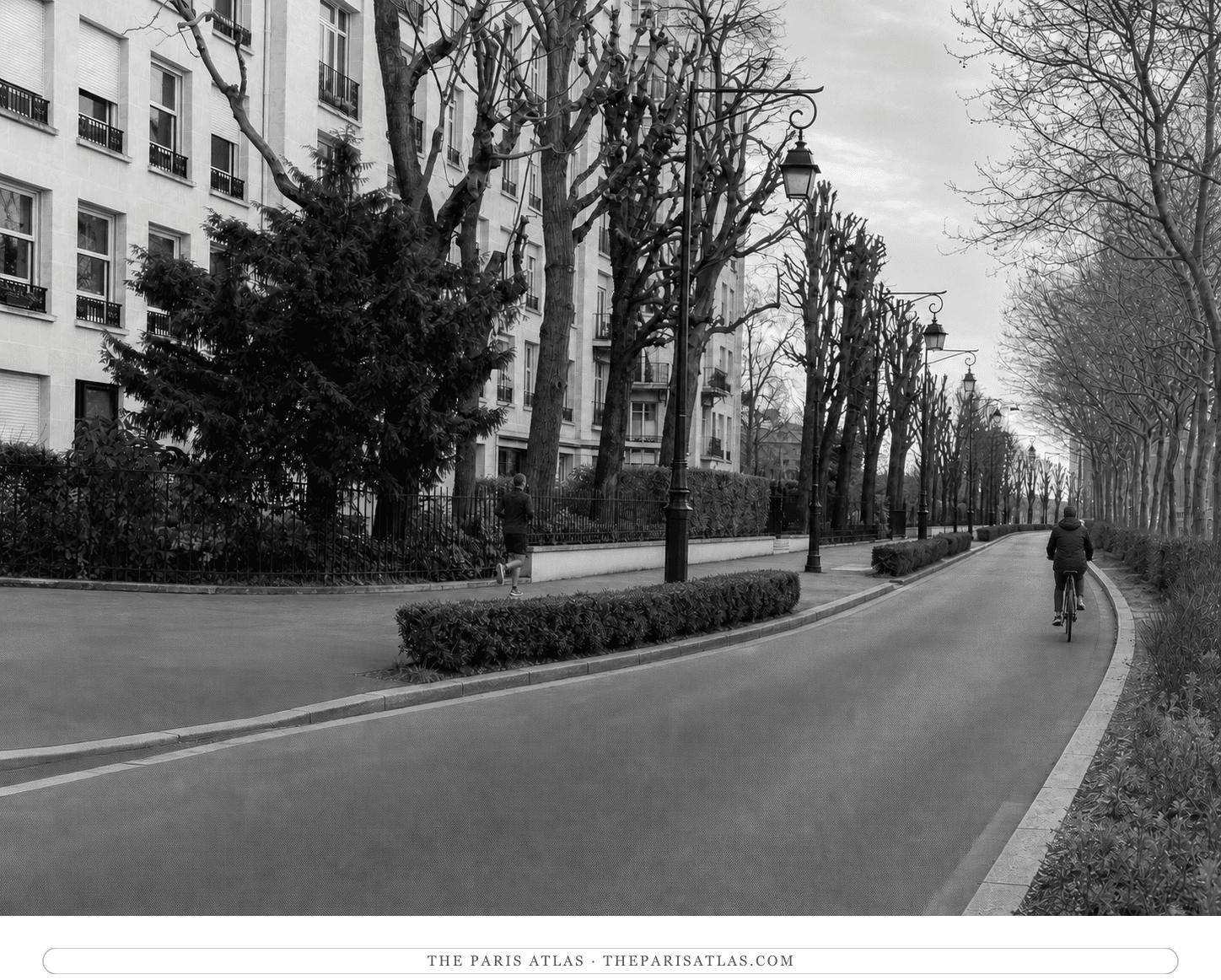
Notre-Dame quarter, at the head of the town of Versailles

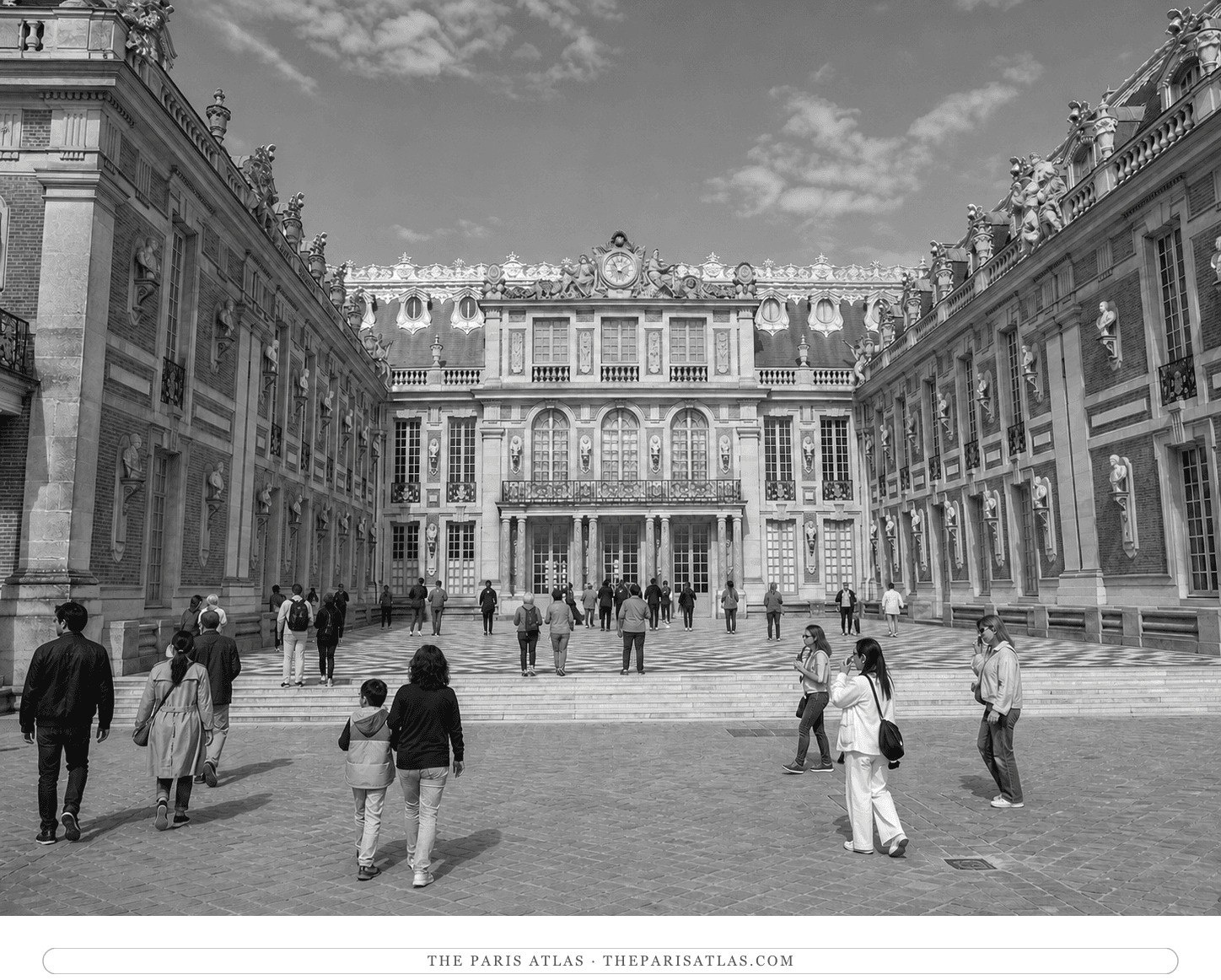
Oberkampf
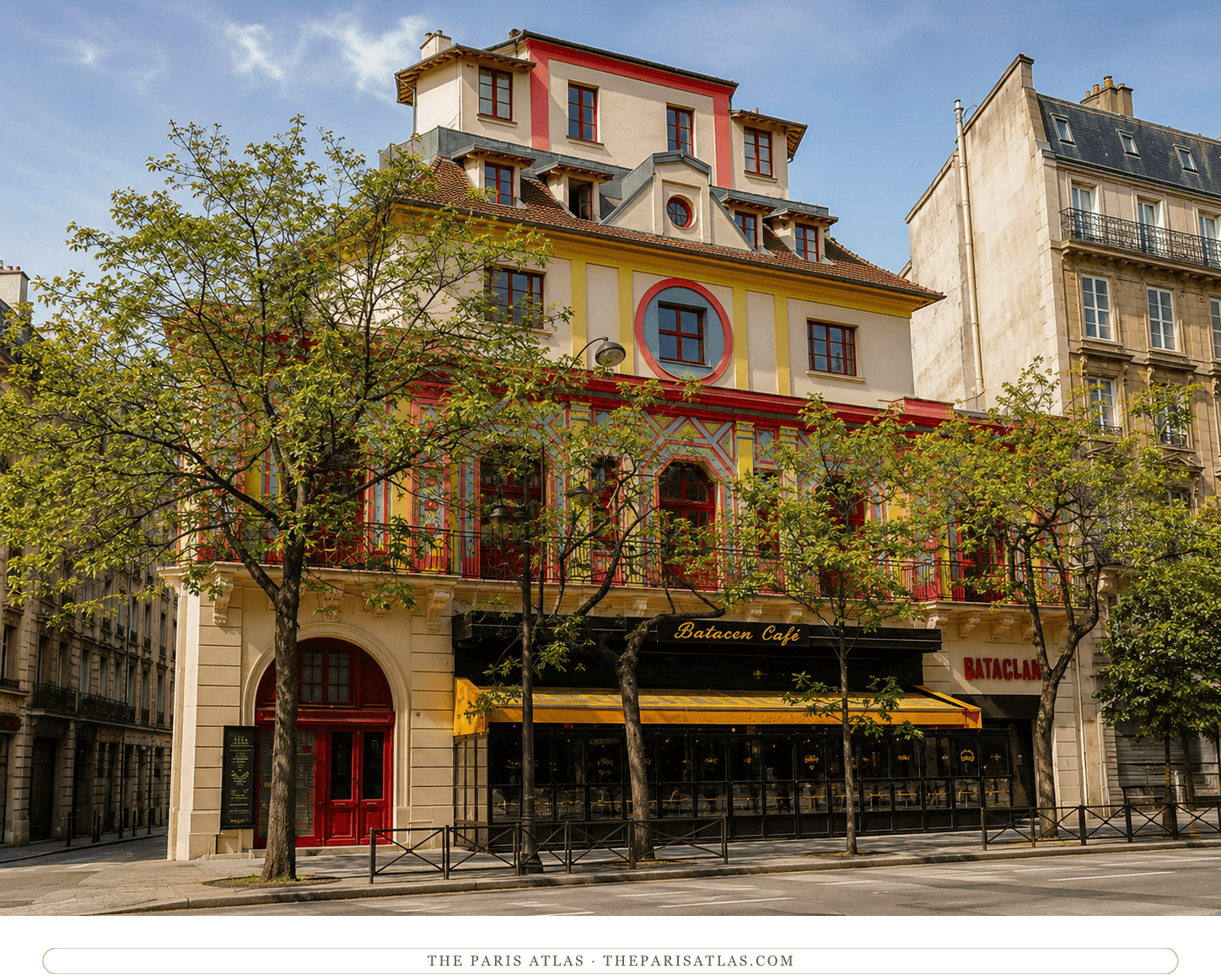
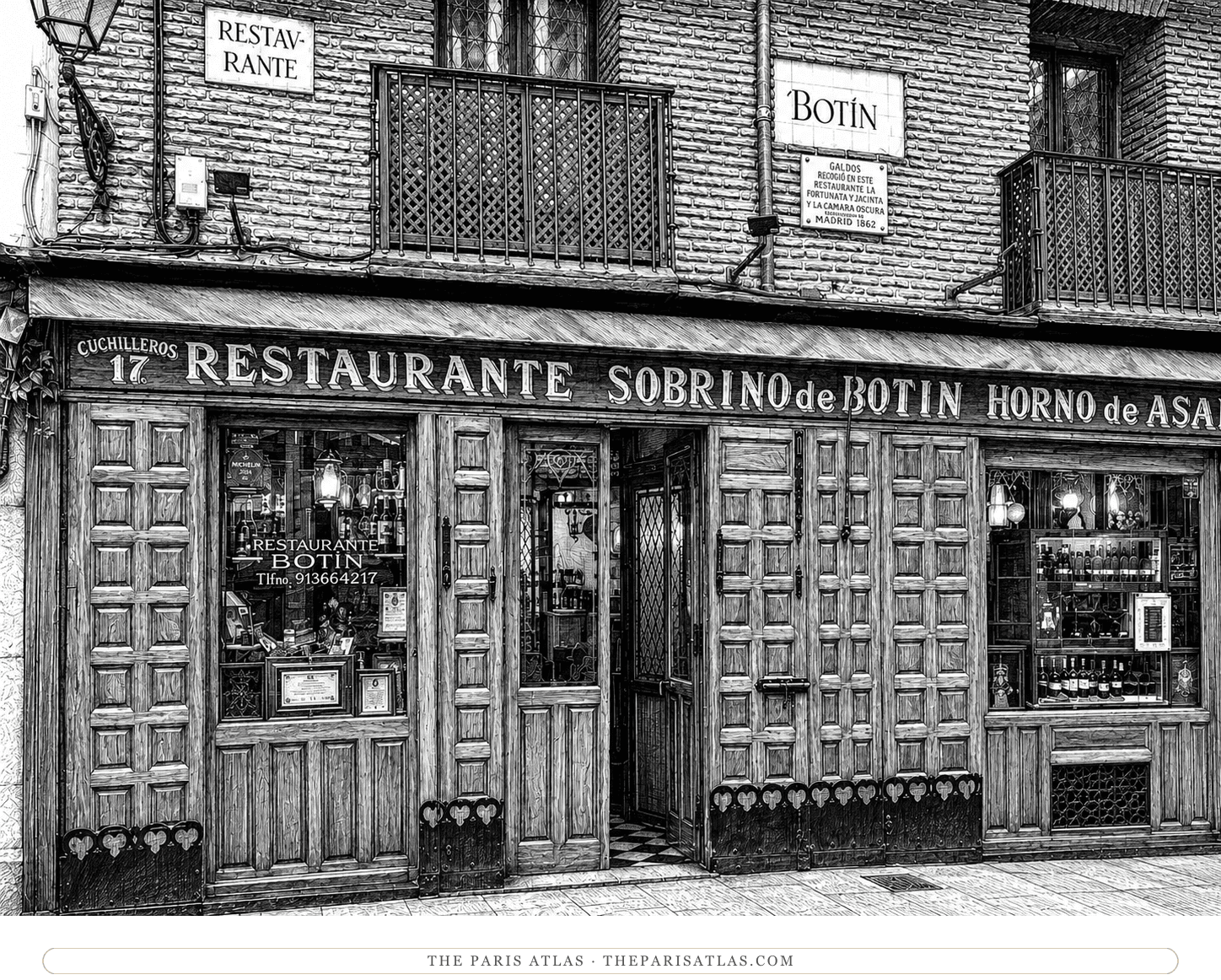
Off the Plaza Mayor

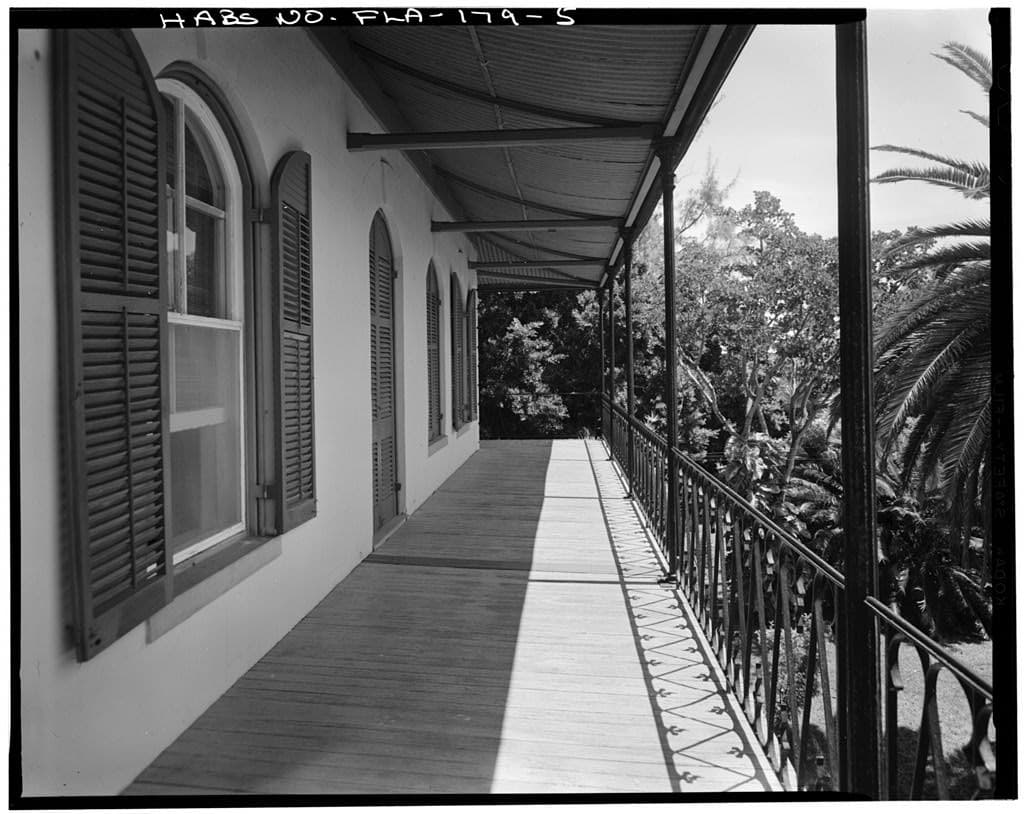
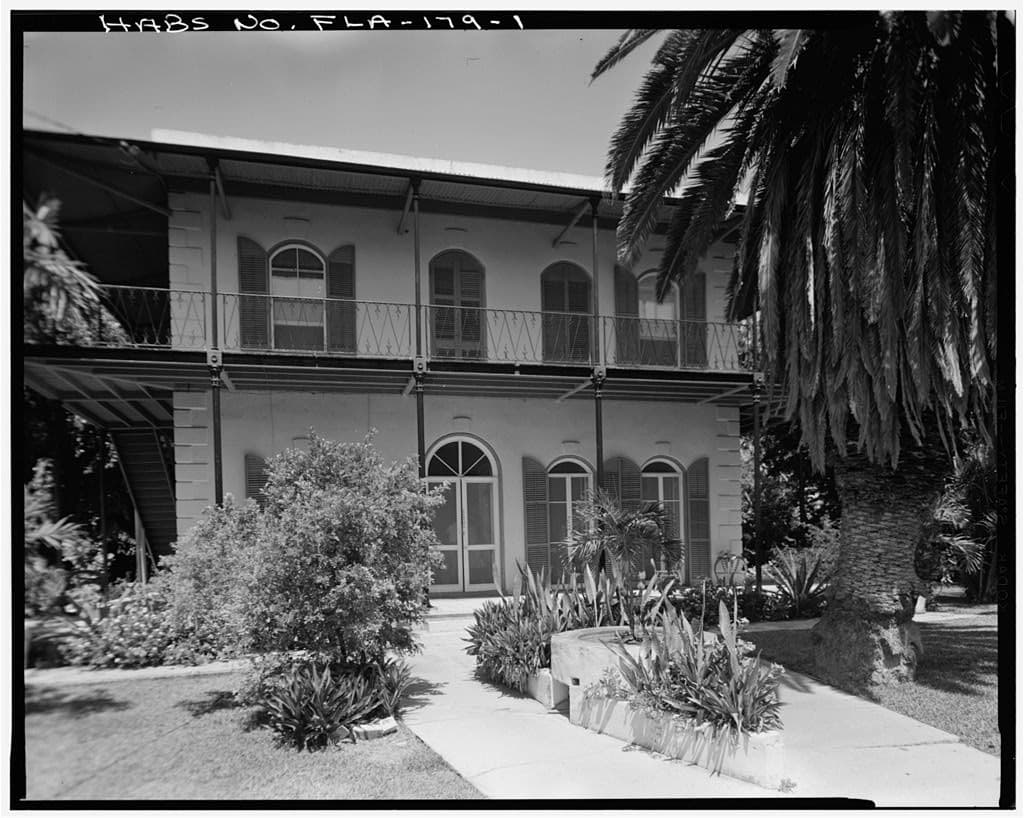
Old Town, Key West
Opéra

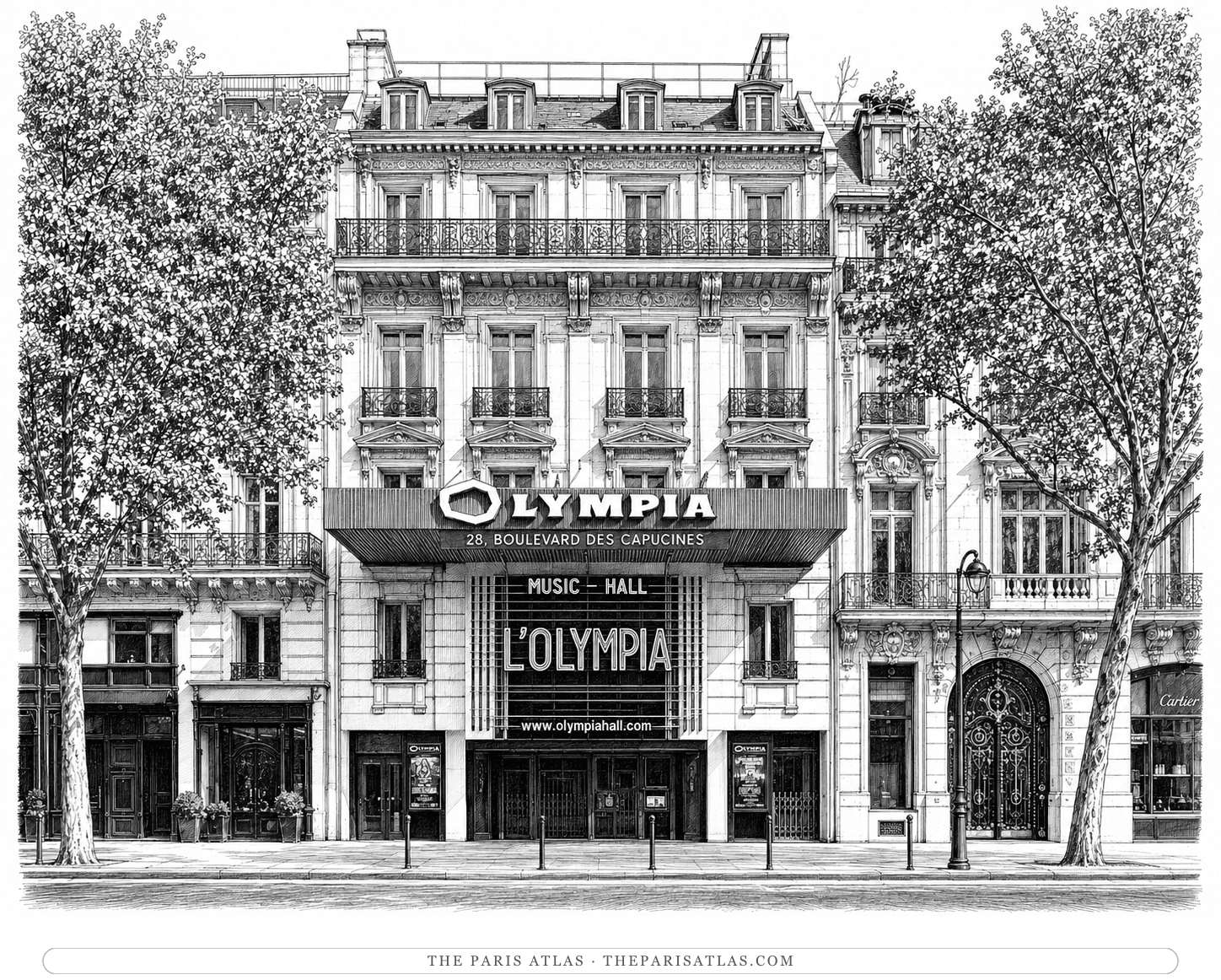
L'Olympia
The boulevard music hall where Colette played the title role in La Romanichelle in 1906, during her run as a professional performer.


American Express Office at Opéra
The office by the Opéra where American expatriates collected their mail and cashed their cheques, and where David goes to escape Giovanni's room in Baldwin's novel.

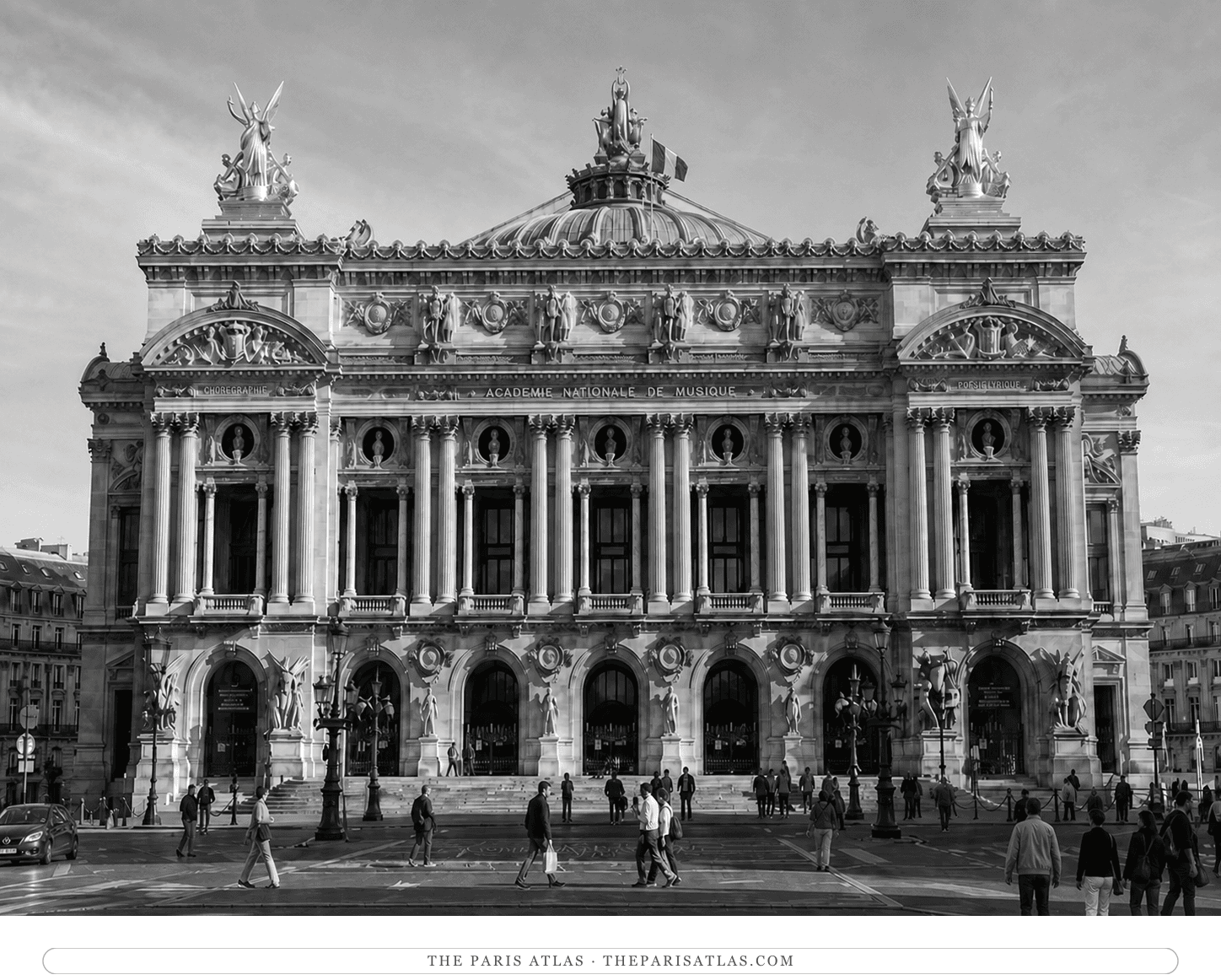
Palais Garnier
The Paris opera house — Charles Garnier's Second Empire palace on the place de l'Opéra, inaugurated on 5 January 1875 and the home of the Paris Opera ever since.

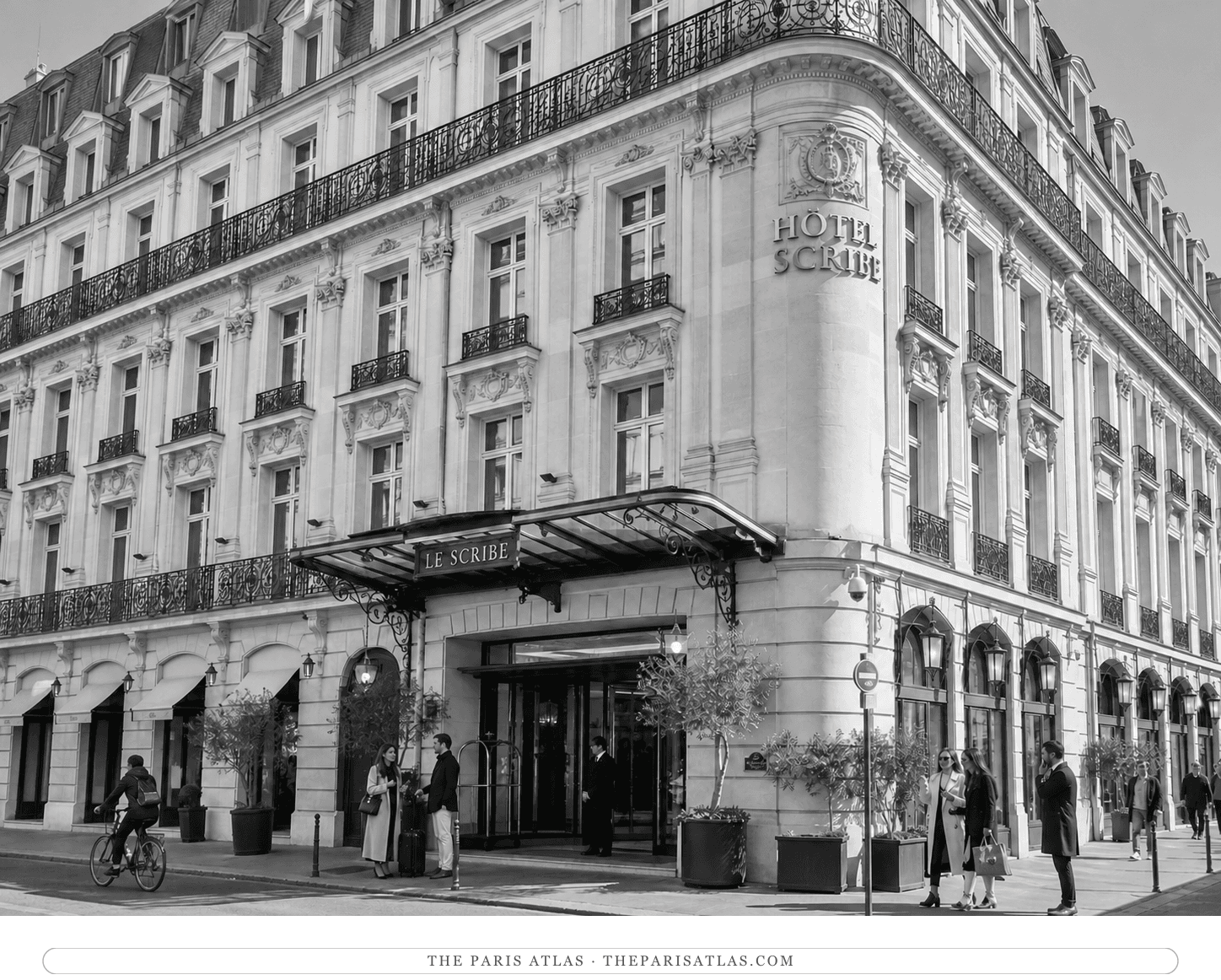
Hôtel Scribe
A grand hotel behind the Opéra, on the rue Scribe. In Down and Out in Paris and London it is the good job that keeps slipping away — where Boris earned a hundred francs a day in tips before he fell ill, and where he and George Orwell stood on the pavement for an hour hoping the manager would come out and hire them.

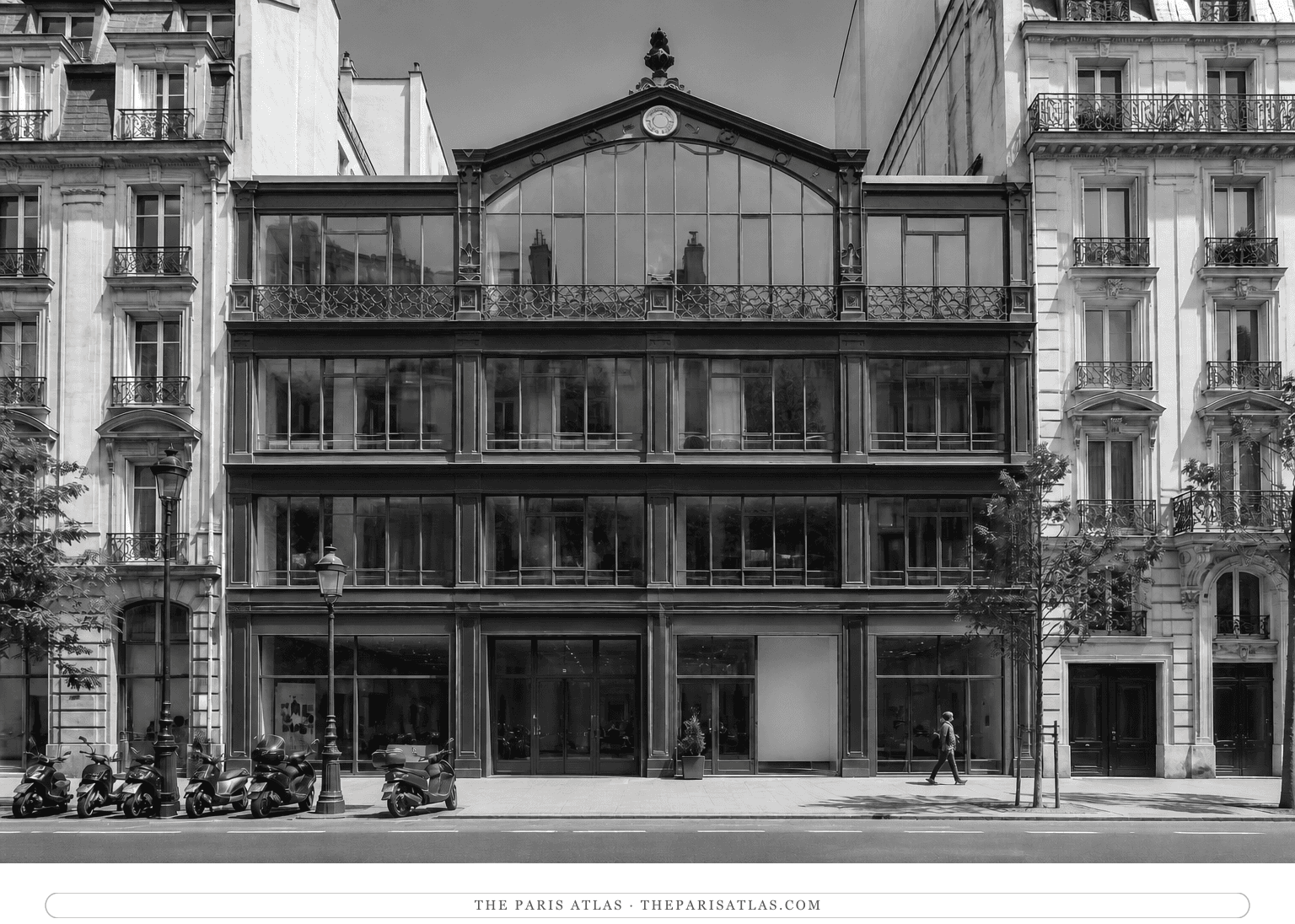
Nadar's studio, 35 boulevard des Capucines
The photographer Nadar's former studio, where thirty artists mounted the independent exhibition of April 1874 that got them the name Impressionists.

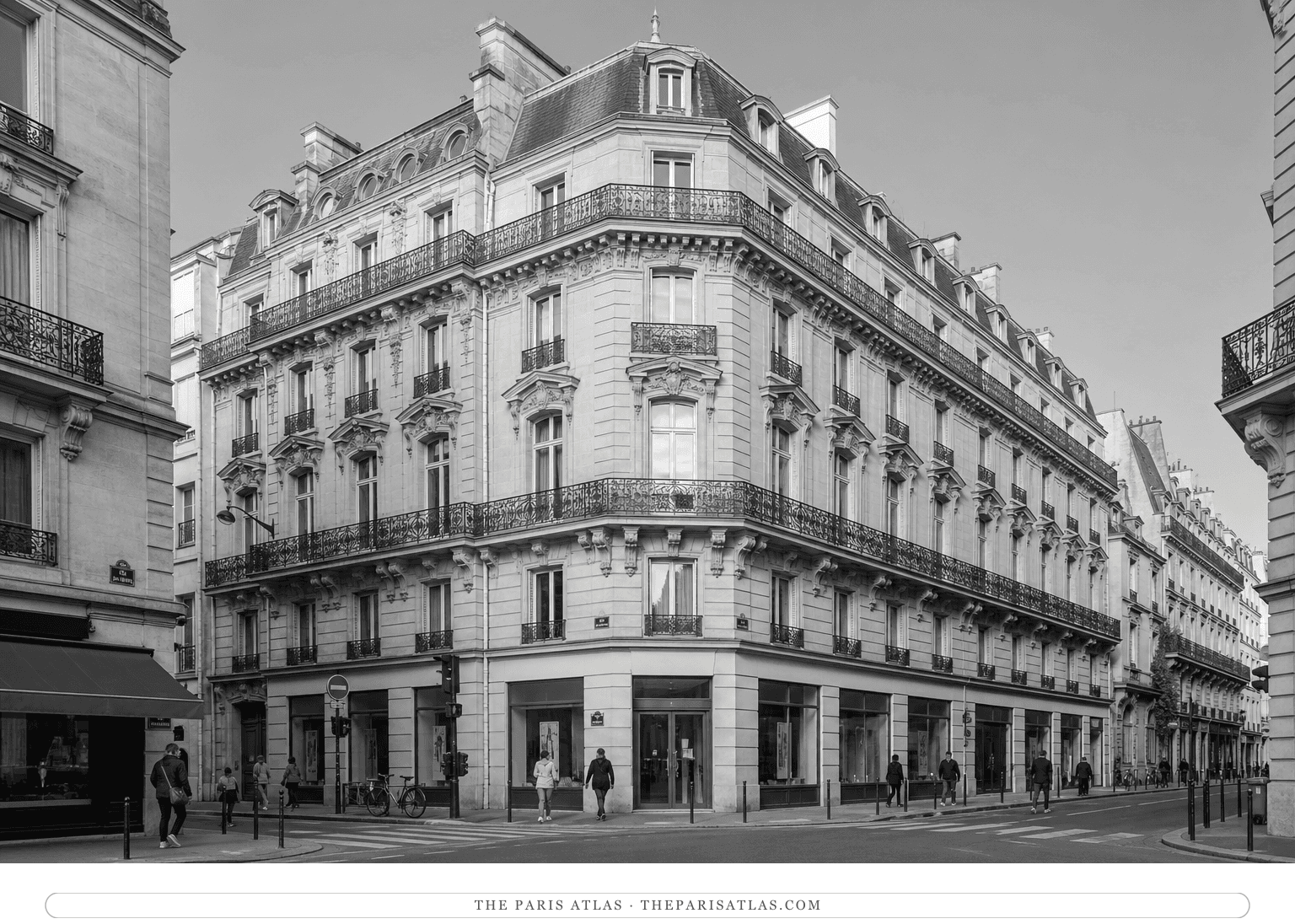
28 avenue de l'Opéra
The unfinished building where Gustave Caillebotte organised, hung and largely paid for the fourth Impressionist exhibition in 1879 — the year the group nearly fell apart.

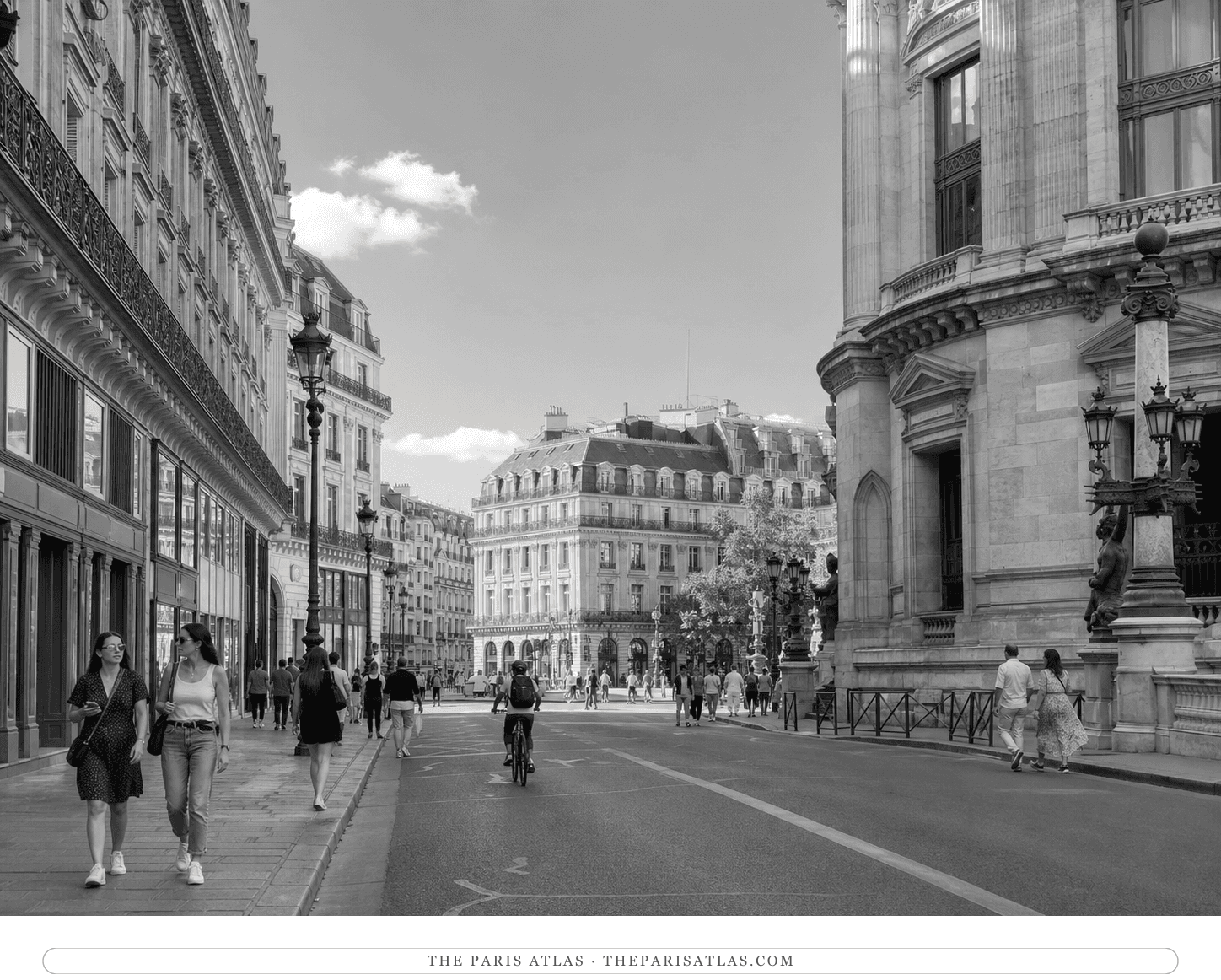
Rue Halévy
The short street running beside the Palais Garnier that Gustave Caillebotte painted in 1878, looking down from an upper window at the traffic and pedestrians below.

Chouchou Hôtel
A 63-room four-star hotel on rue du Helder near the Palais Garnier and the department stores, with a glass-roofed restaurant and bar and three private baths.

Hôtel Adèle & Jules
A 60-room four-star hotel in two sister buildings on a quiet private lane near the Grands Boulevards, with rooms from 15 m², a small gym and free afternoon tea.
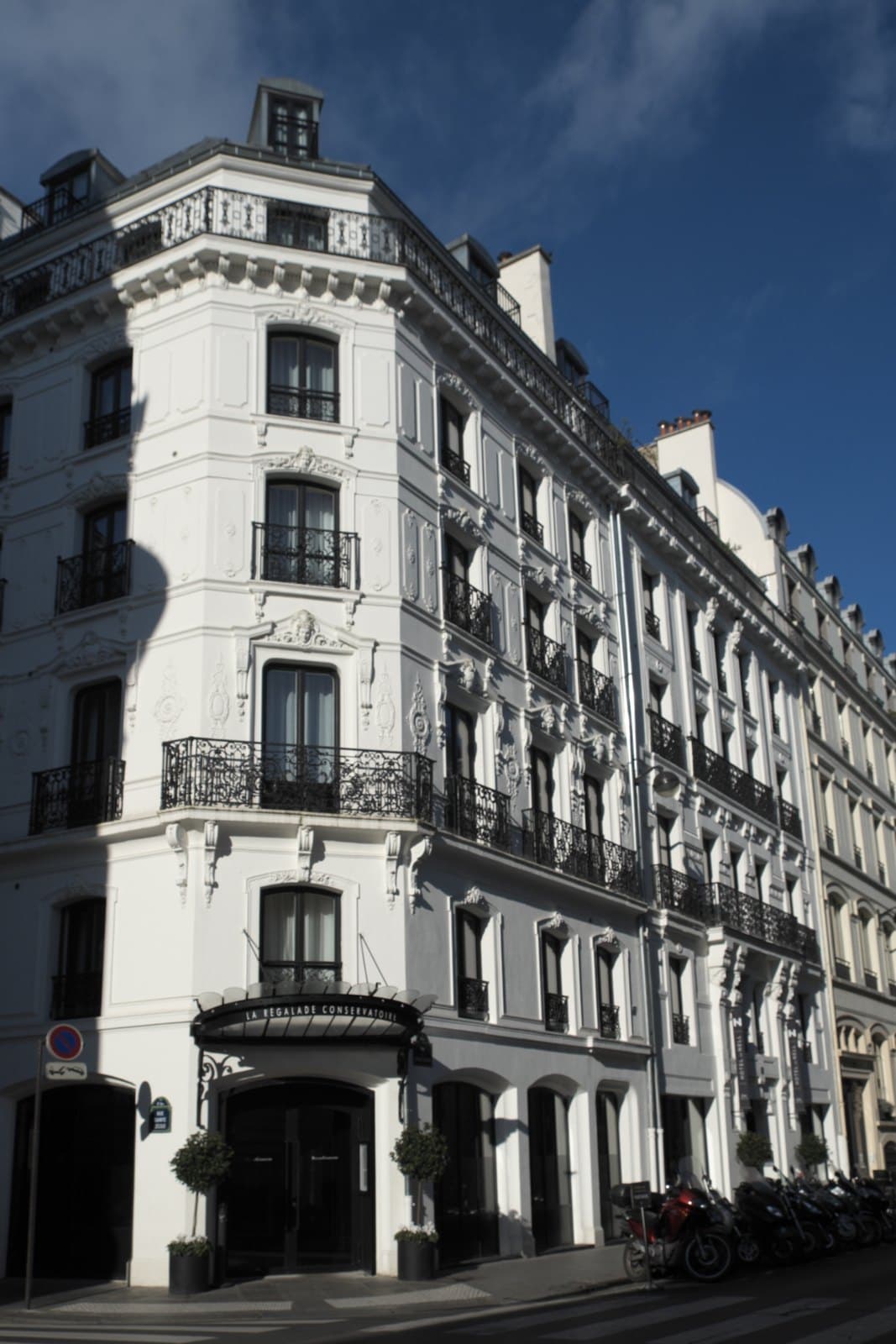
Hôtel de Nell
A 33-room five-star hotel in two 19th-century buildings on rue du Conservatoire, rebuilt inside by Jean-Michel Wilmotte, with rooms facing the church of Sainte-Cécile.
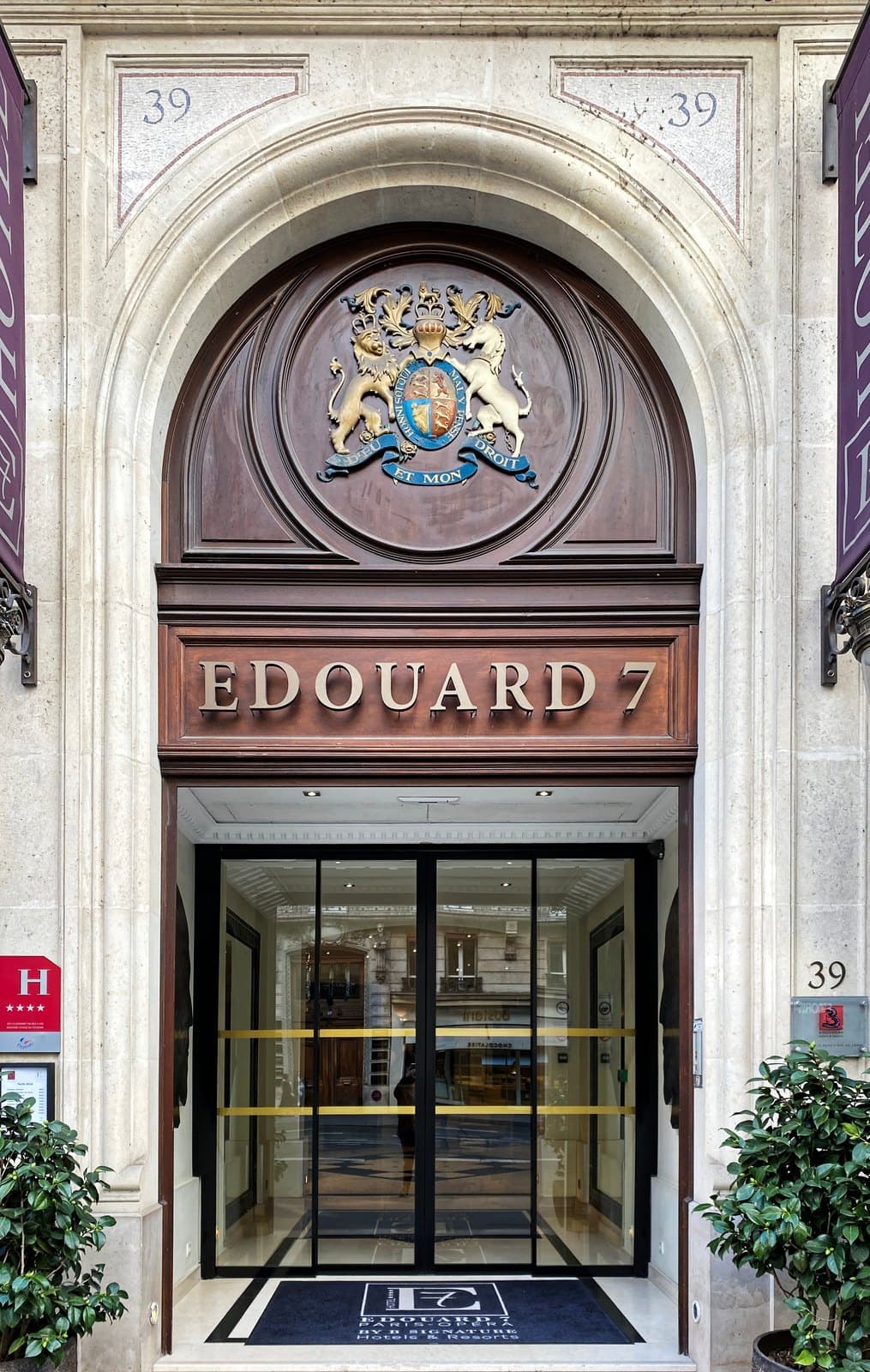
Hôtel Edouard 7
A 69-room four-star hotel at 39 avenue de l'Opéra, with rooms looking up the avenue to the Palais Garnier, a restaurant and bar, and interiors by Christophe Daudré.

InterContinental Paris Le Grand
A 458-room five-star hotel beside the Palais Garnier, opened in 1862 as the Grand Hôtel, with the Café de la Paix, a winter-garden restaurant, a spa and 24-hour room service.

Kimpton St Honoré Paris
A 149-room five-star Kimpton hotel in the former Samaritaine de Luxe store on boulevard des Capucines, with an indoor pool, a rooftop bar and the Montecito restaurant.

La Maison Favart
A 39-room four-star hotel facing the Opéra-Comique, in a listed 1780s building at the address where the painter Francisco Goya lodged in 1824.

Maison Athénée
A 20-room four-star hotel on rue de Caumartin between the Opéra and the Madeleine, decorated by Jacques Garcia with rooms themed on Italian operas, a bar and a smoking room.
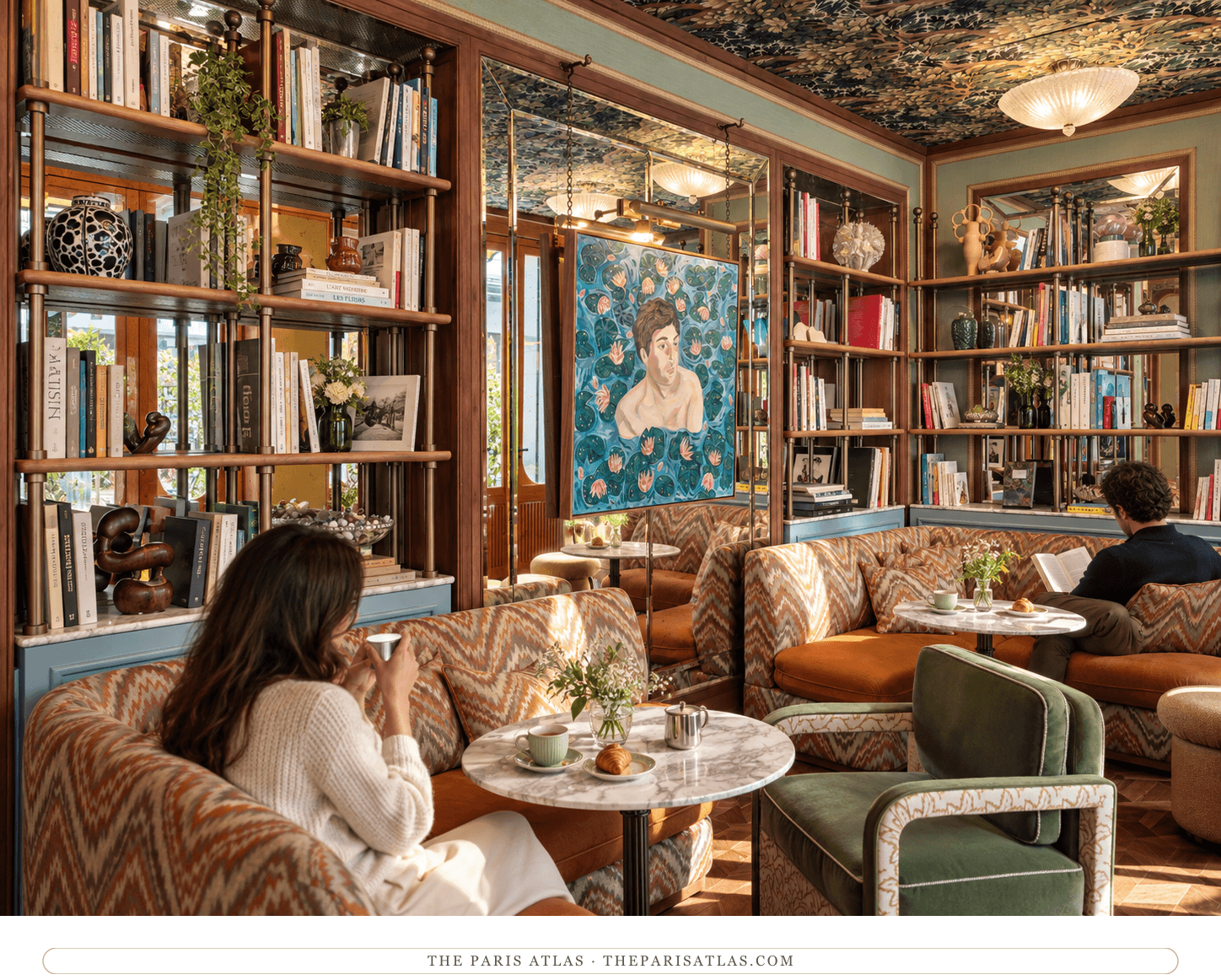
La Fantaisie
A garden-centered five-star hotel on rue Cadet, with colorful Martin Brudnizki interiors, a rooftop bar and a spa with thermal-style baths.
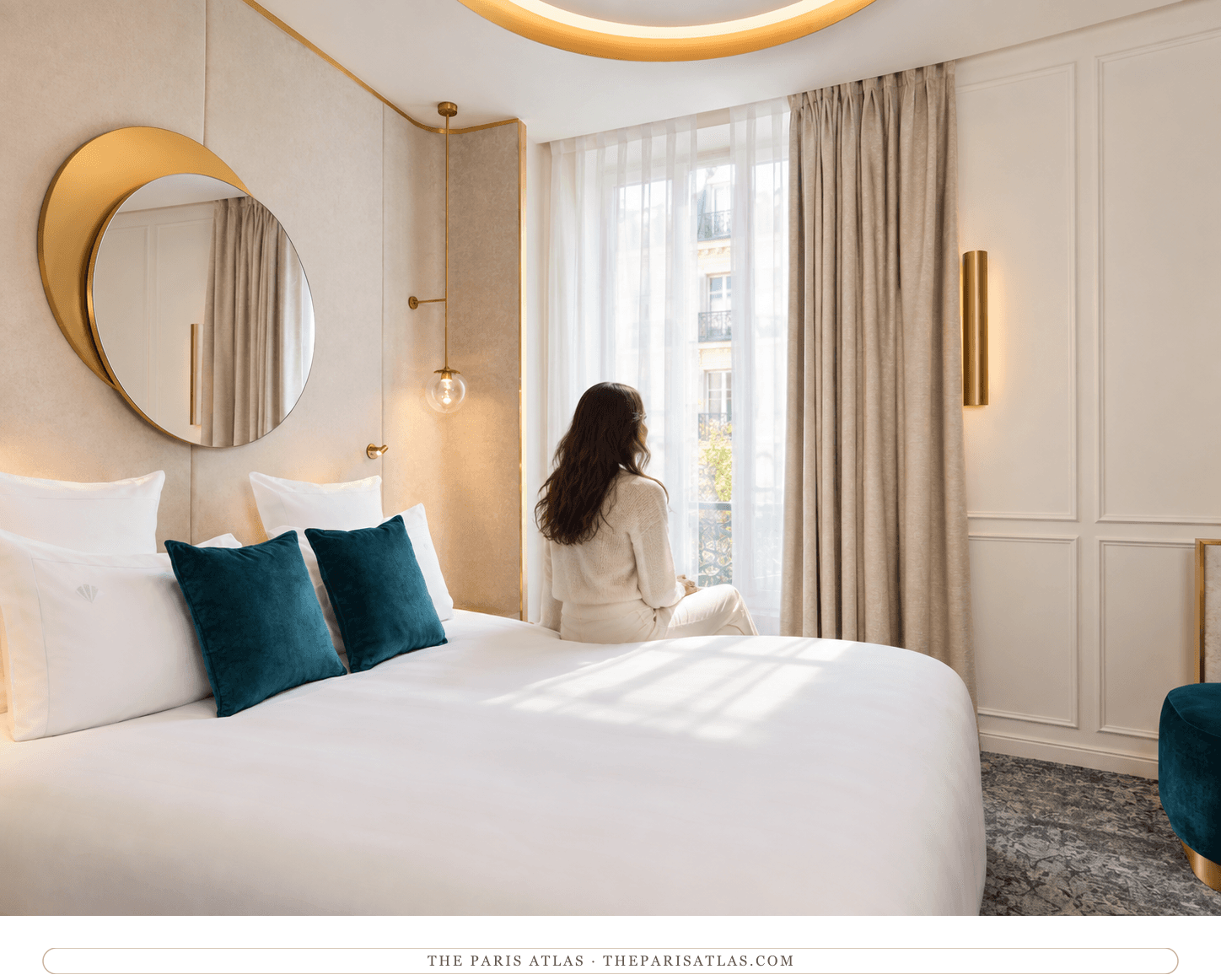
Maison Albar - Le Vendôme
Maison Albar - Le Vendôme is a 51-room-and-suite hotel on rue du Helder, with a garden, pool and spa behind an ornate nineteenth-century façade. Gold, emerald tones, marble and parquet give its interiors a theatrical character.
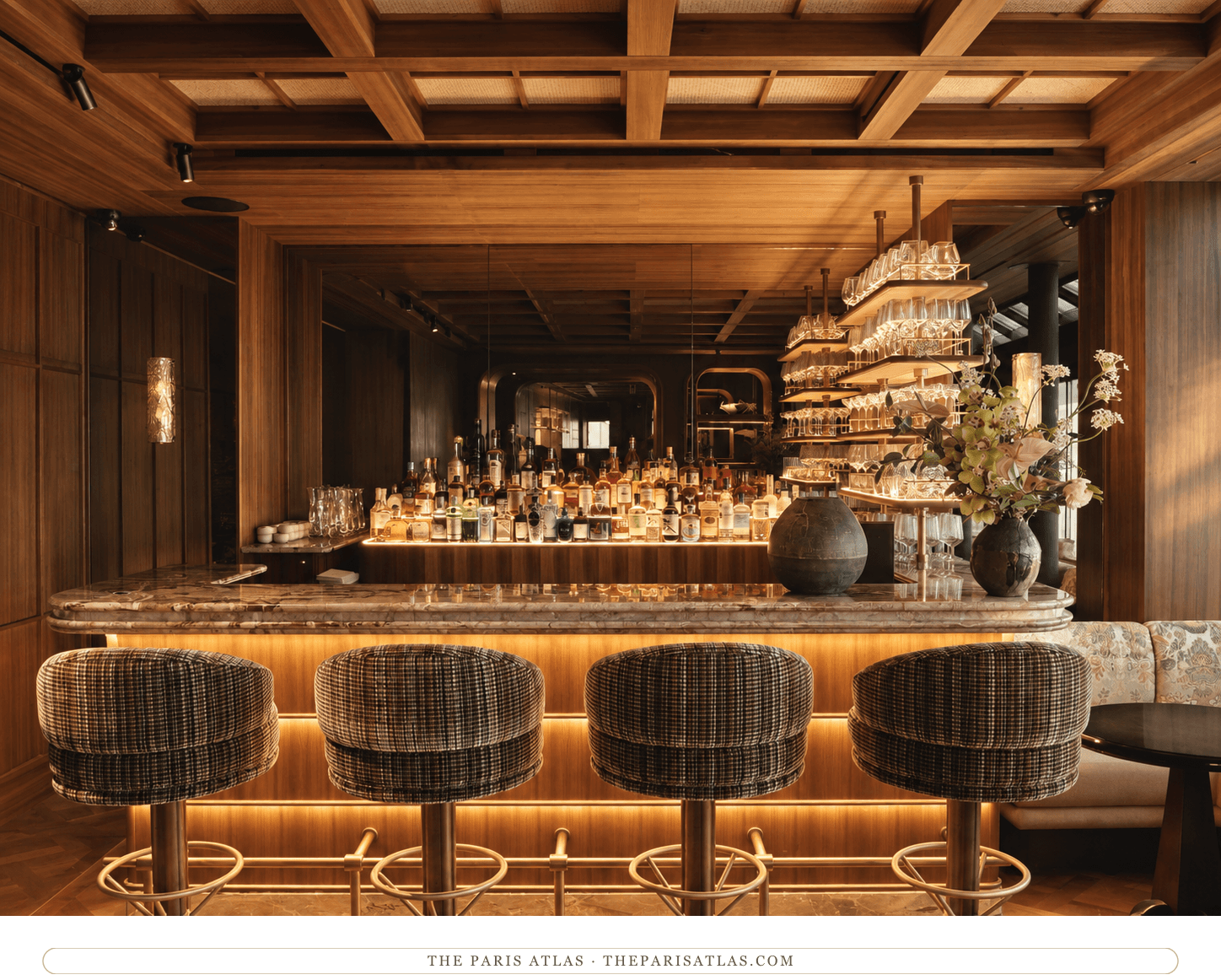
Hôtel Hana
A small five-star hotel near Opéra, with Laura Gonzalez interiors, Franco-Japanese dining and a counter-current pool.
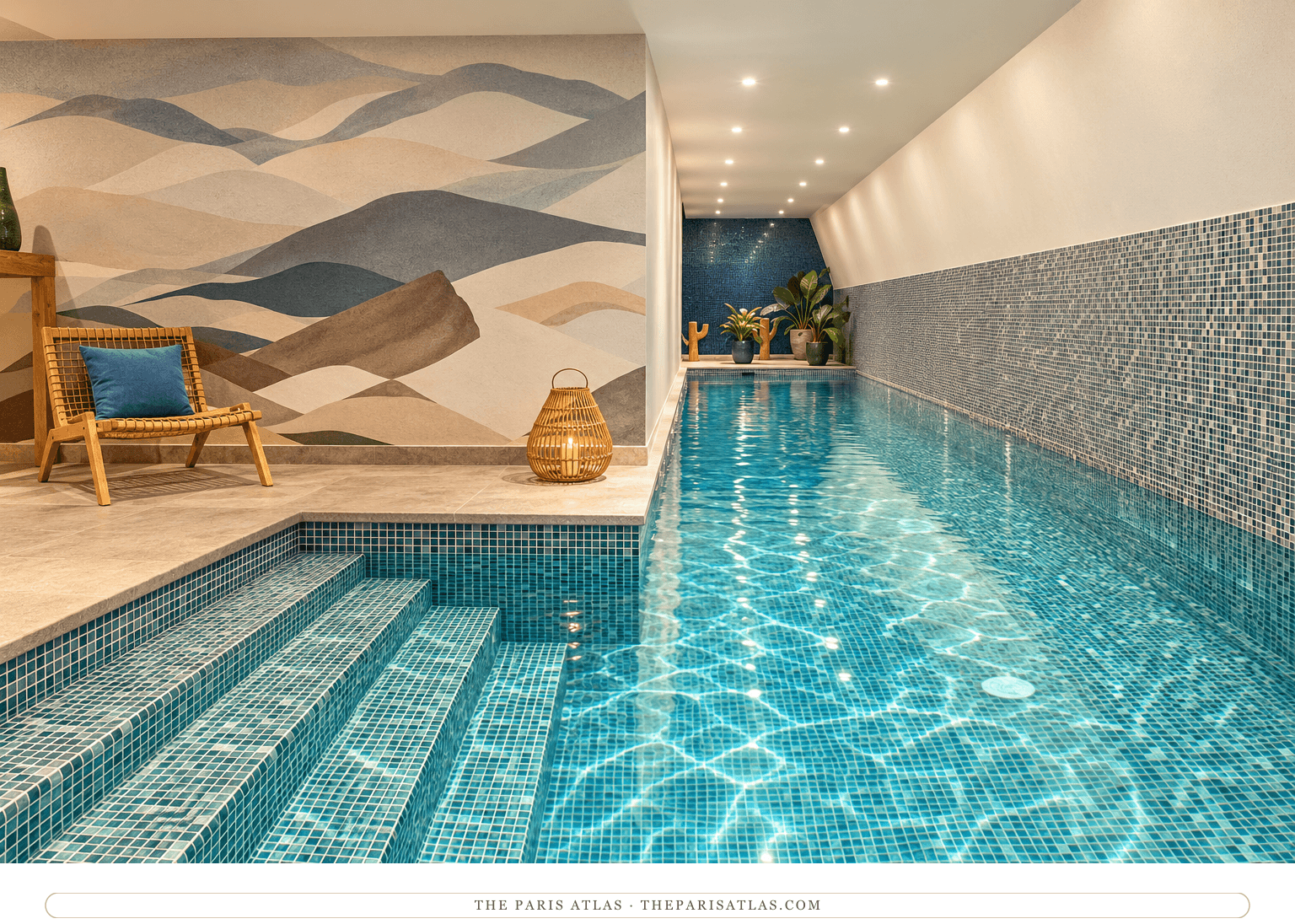
Hôtel Parister
A five-star hotel behind the Folies Bergère, with 45 rooms and suites, a long indoor pool, a planted courtyard and the restaurant and cocktail bar Les Passerelles.
Palais-Royal

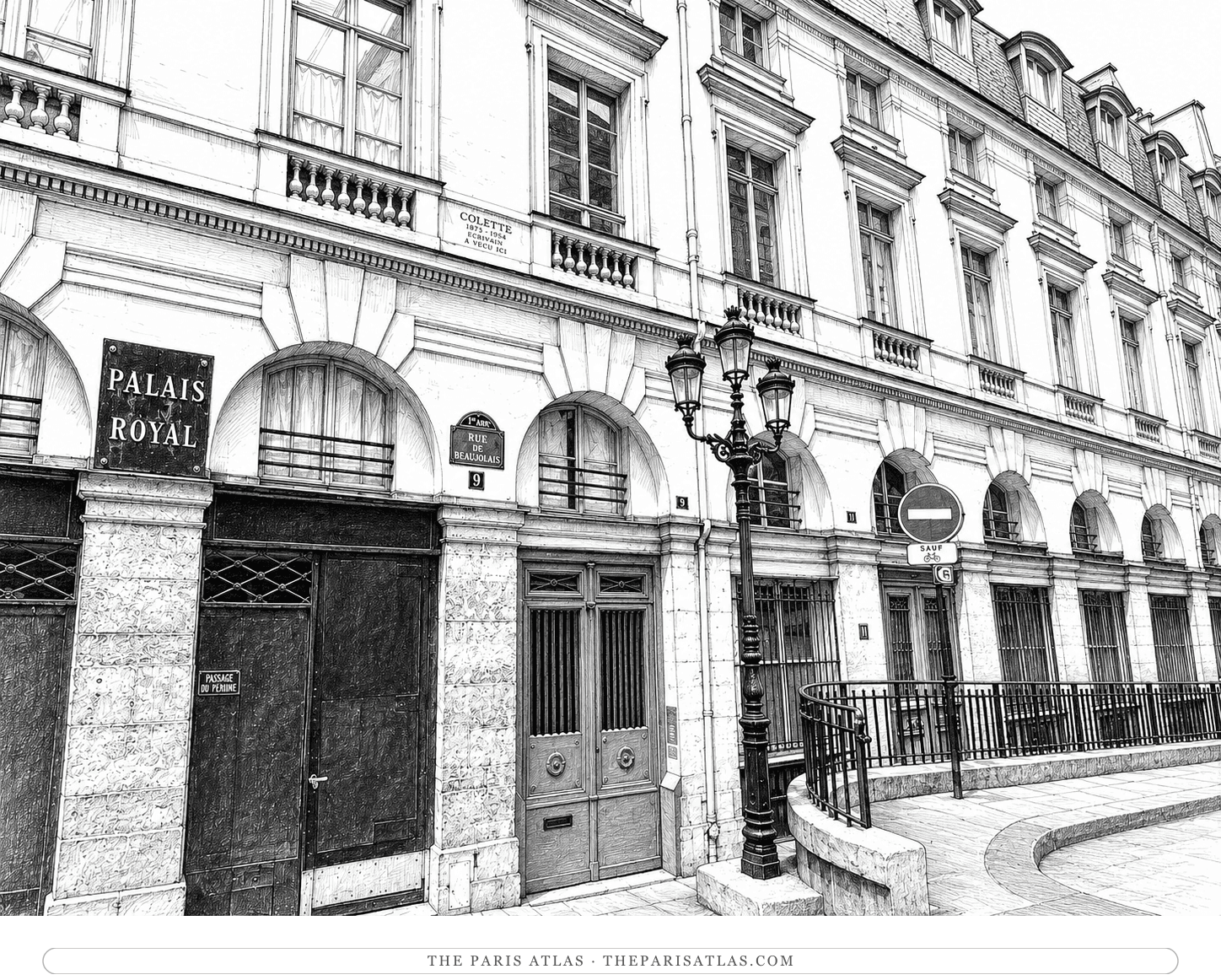
9 rue de Beaujolais
Colette's home above the Palais-Royal garden, and the address that made her its dame. She lived here from 1938 until her death in 1954.

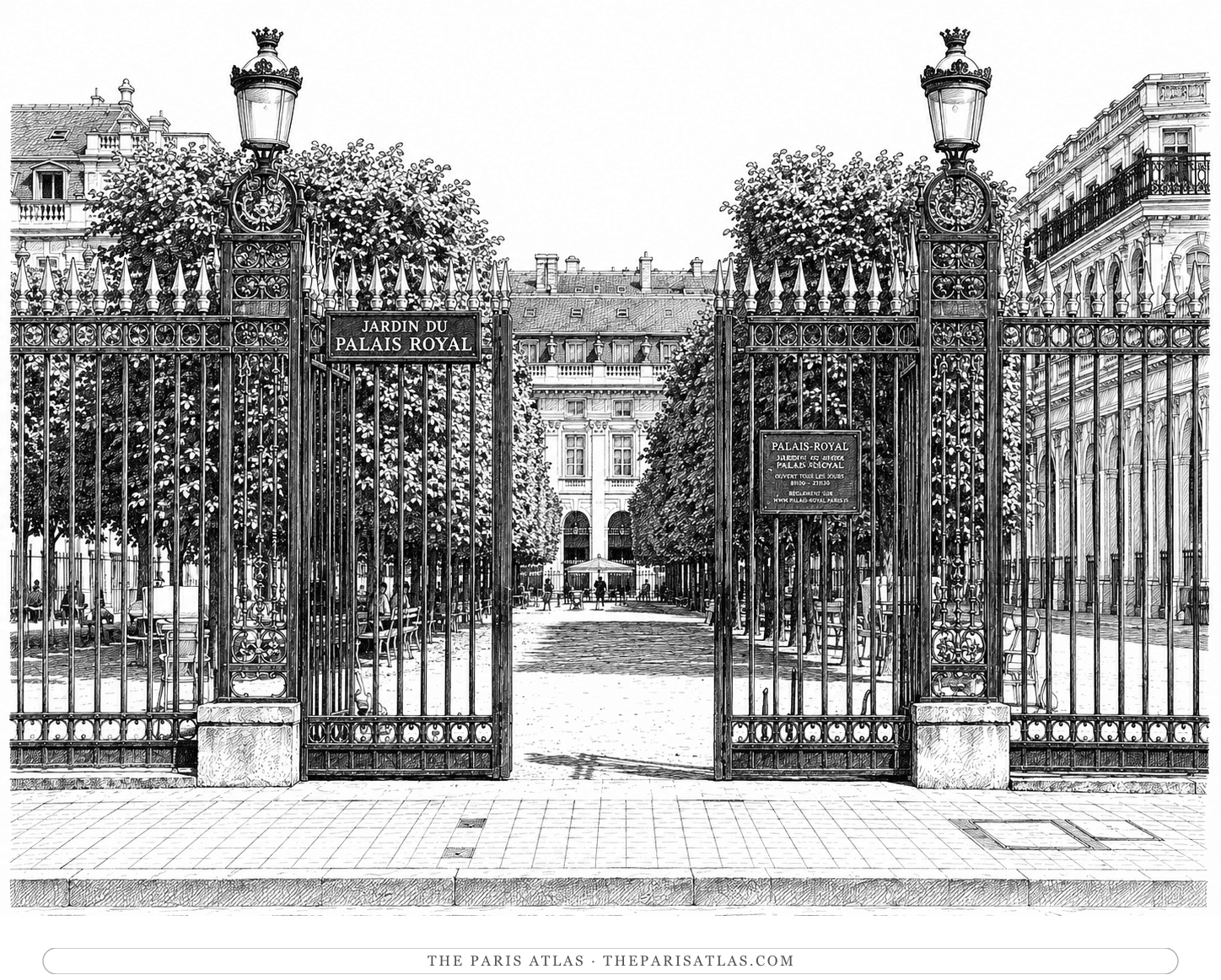
Jardin du Palais-Royal
The colonnaded garden Colette watched from her Palais-Royal windows for the last years of her life, and the setting of her 1954 state funeral.

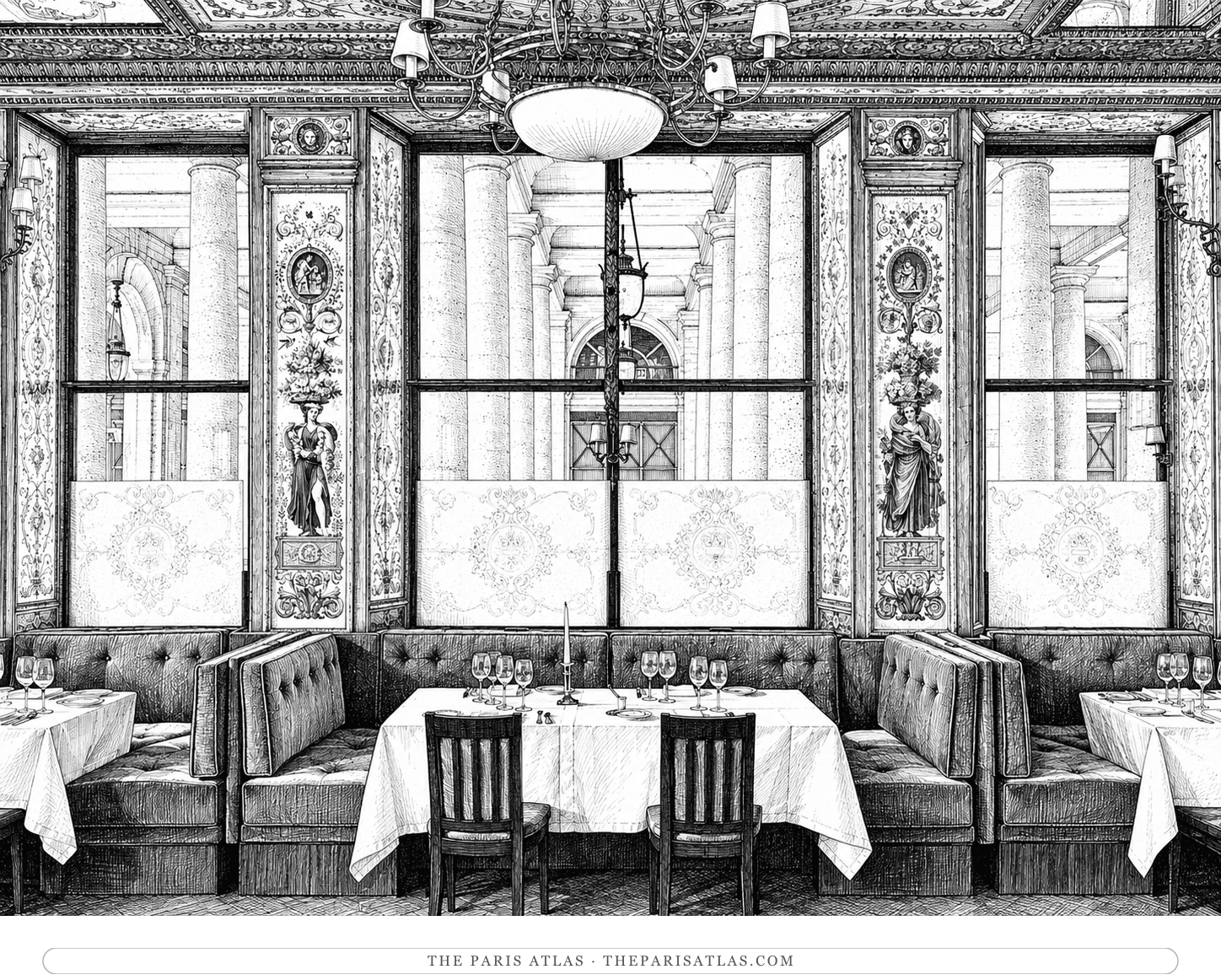
Le Grand Véfour
The Palais-Royal restaurant Colette favored in her last years, a few doors from her apartment. A brass plaque still marks her seat.

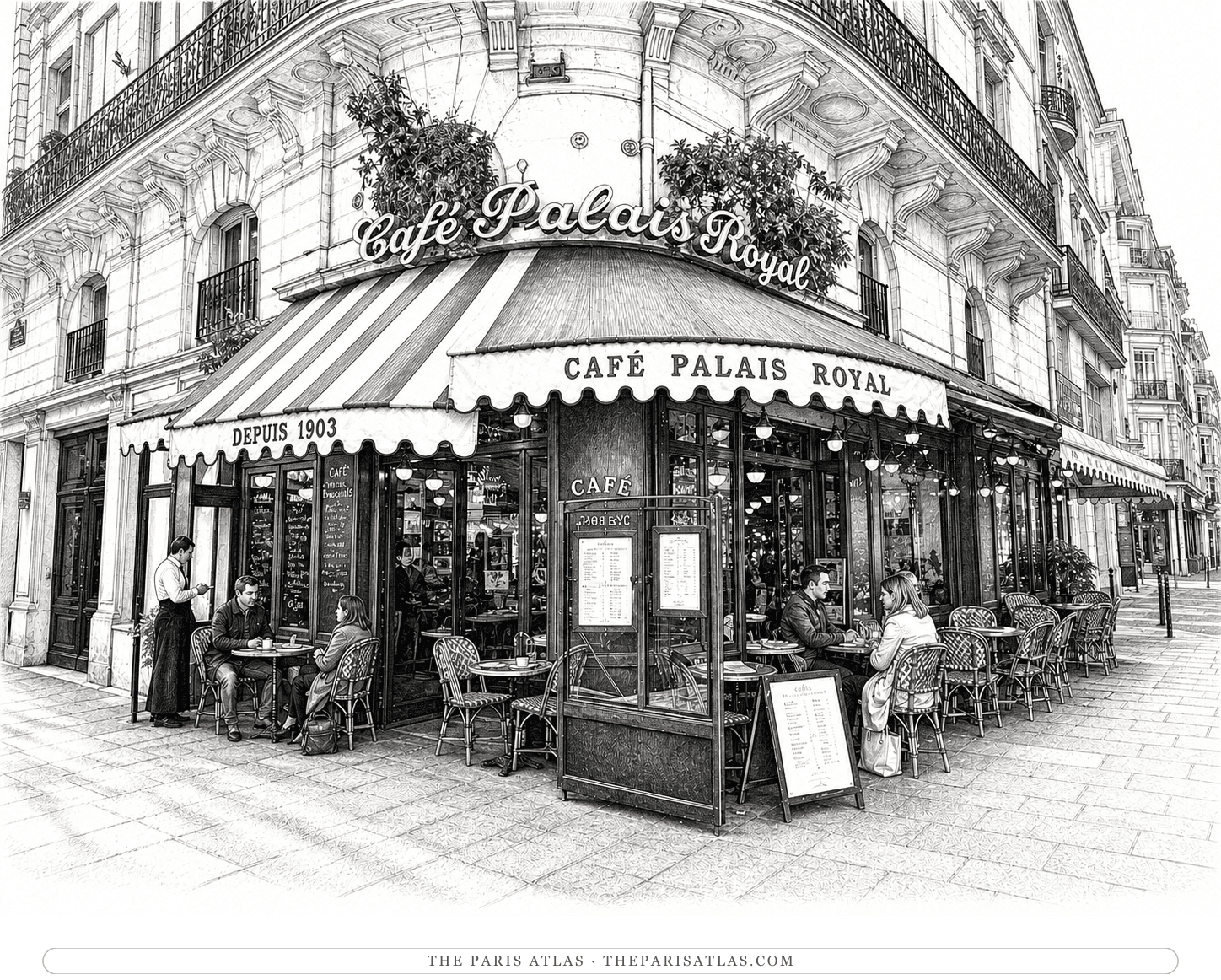
Café Royale near the Louvre
The probable site of the café where Langston Hughes lunched with collector Albert C. Barnes in 1924 — and an open brasserie a visitor can enter today.

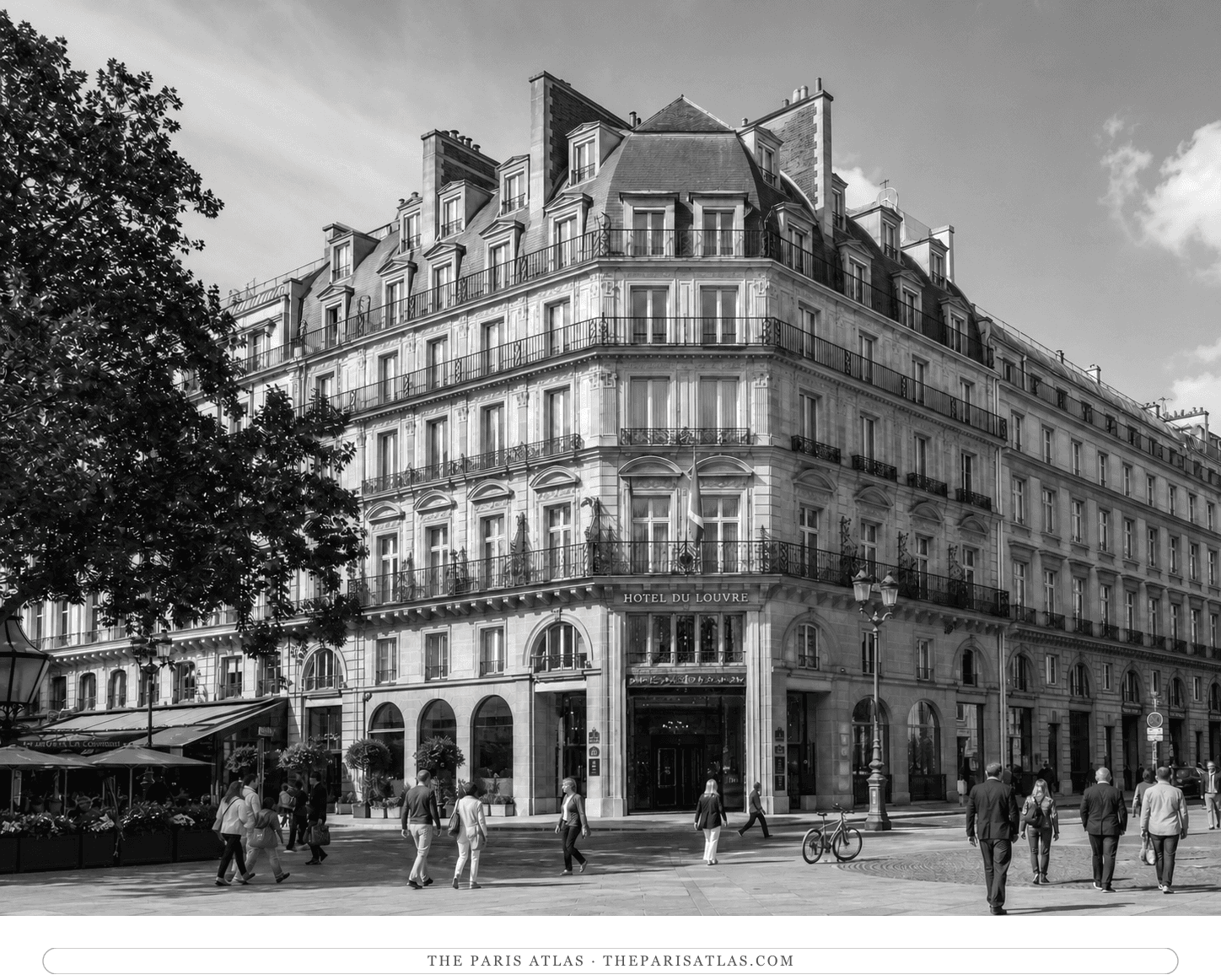
Hôtel du Louvre
The hotel on the place André-Malraux where Camille Pissarro took a room in late 1897 and painted the Avenue de l'Opéra, the place du Théâtre-Français and the rue Saint-Honoré from above. The hotel names a suite after him and still rents it.
Parc Monceau

Parc de Montsouris
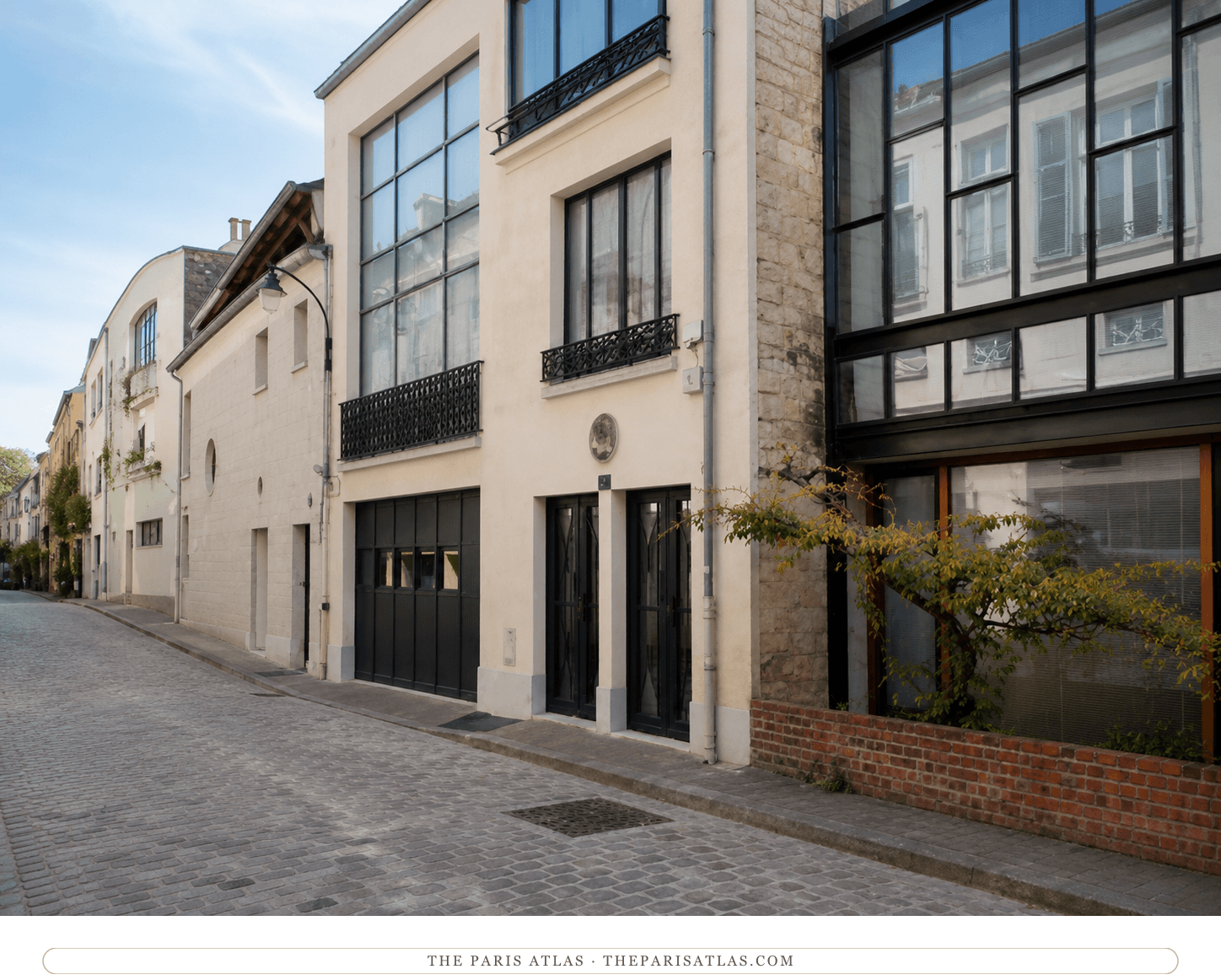
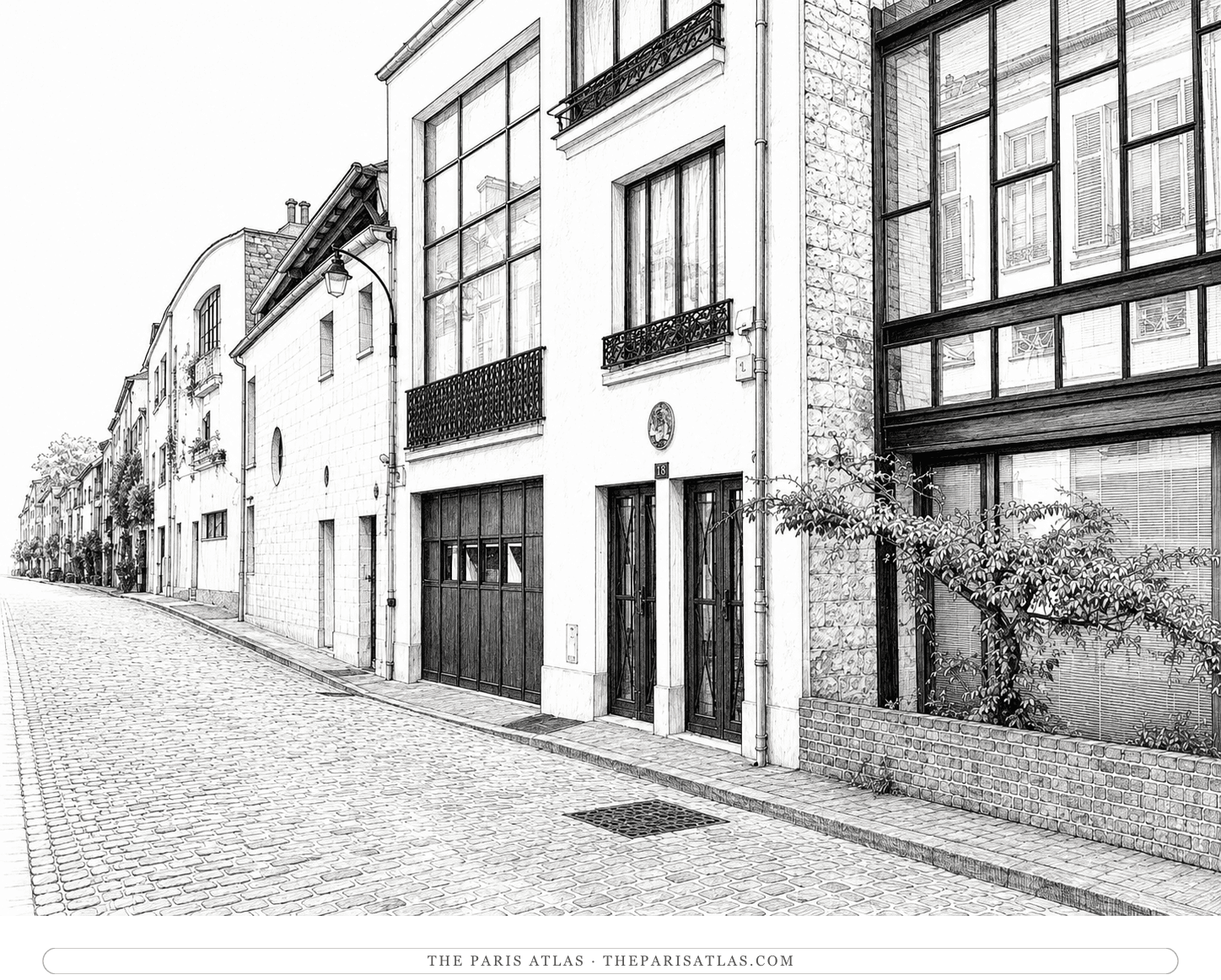
Passages couverts

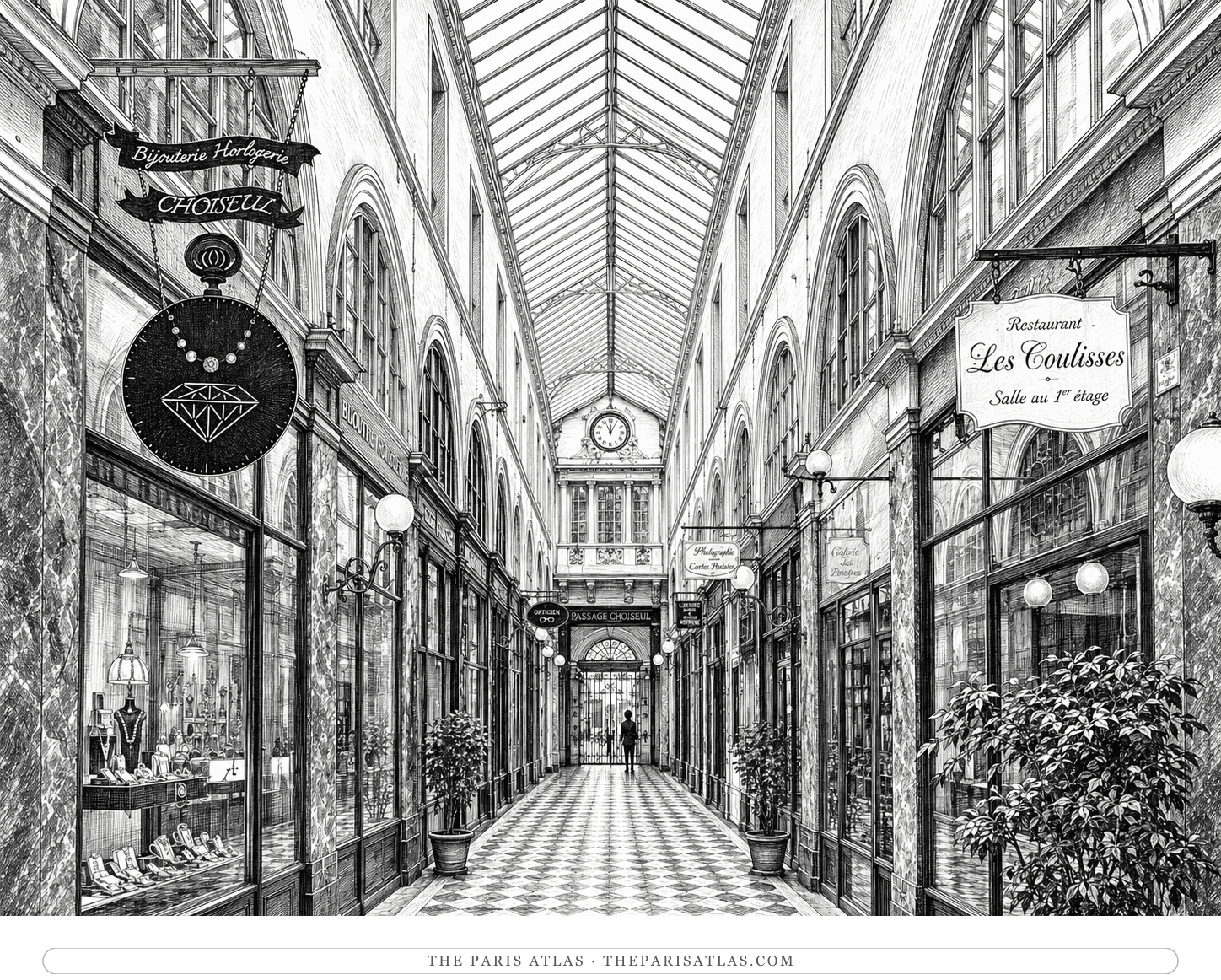
Passage Choiseul
The covered arcade where Louis-Ferdinand Céline grew up over his mother's lace shop — reborn in his novel Death on the Installment Plan as the Passage des Bérésinas, the gaslit 'gas jar' of its narrator Ferdinand's childhood.
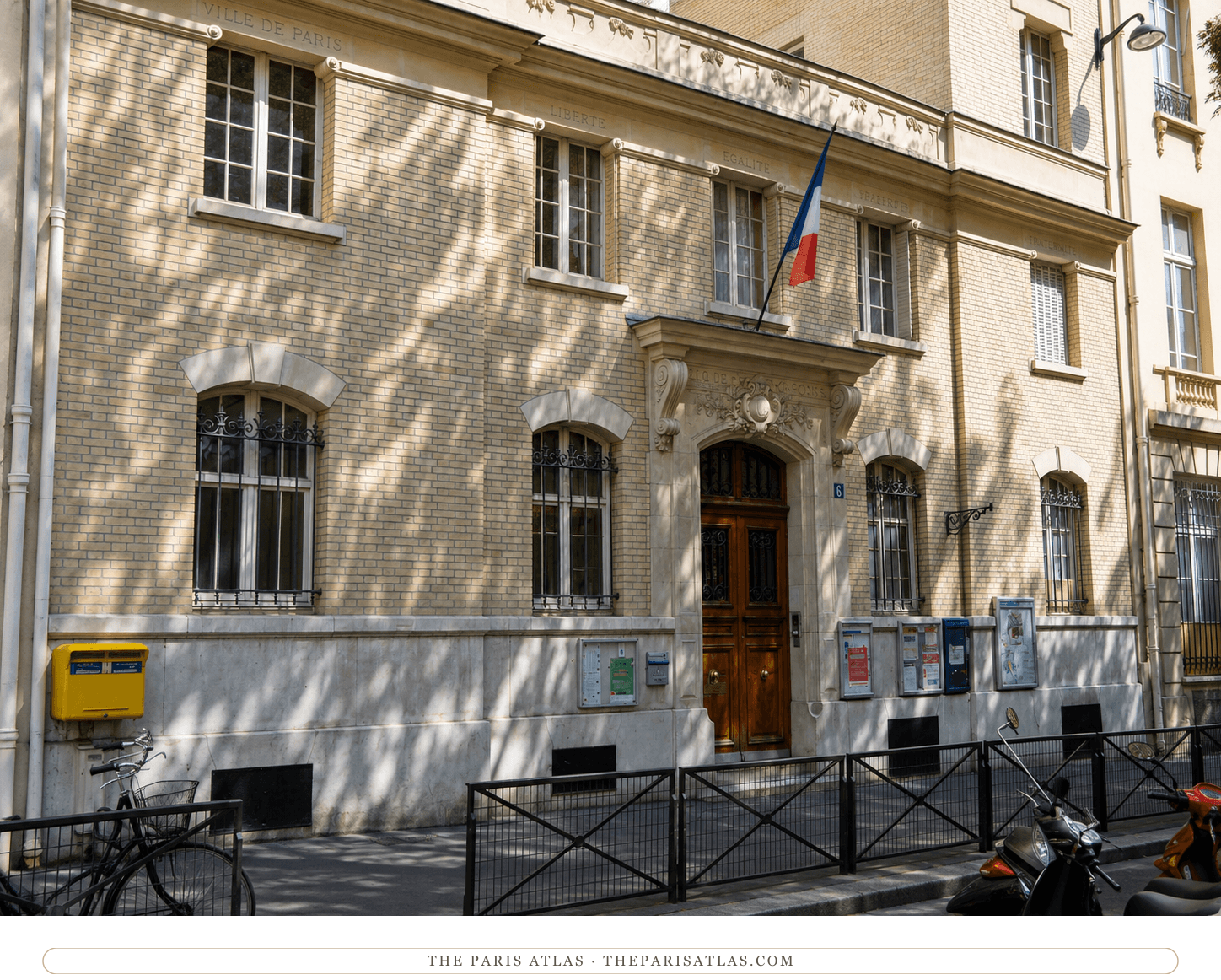
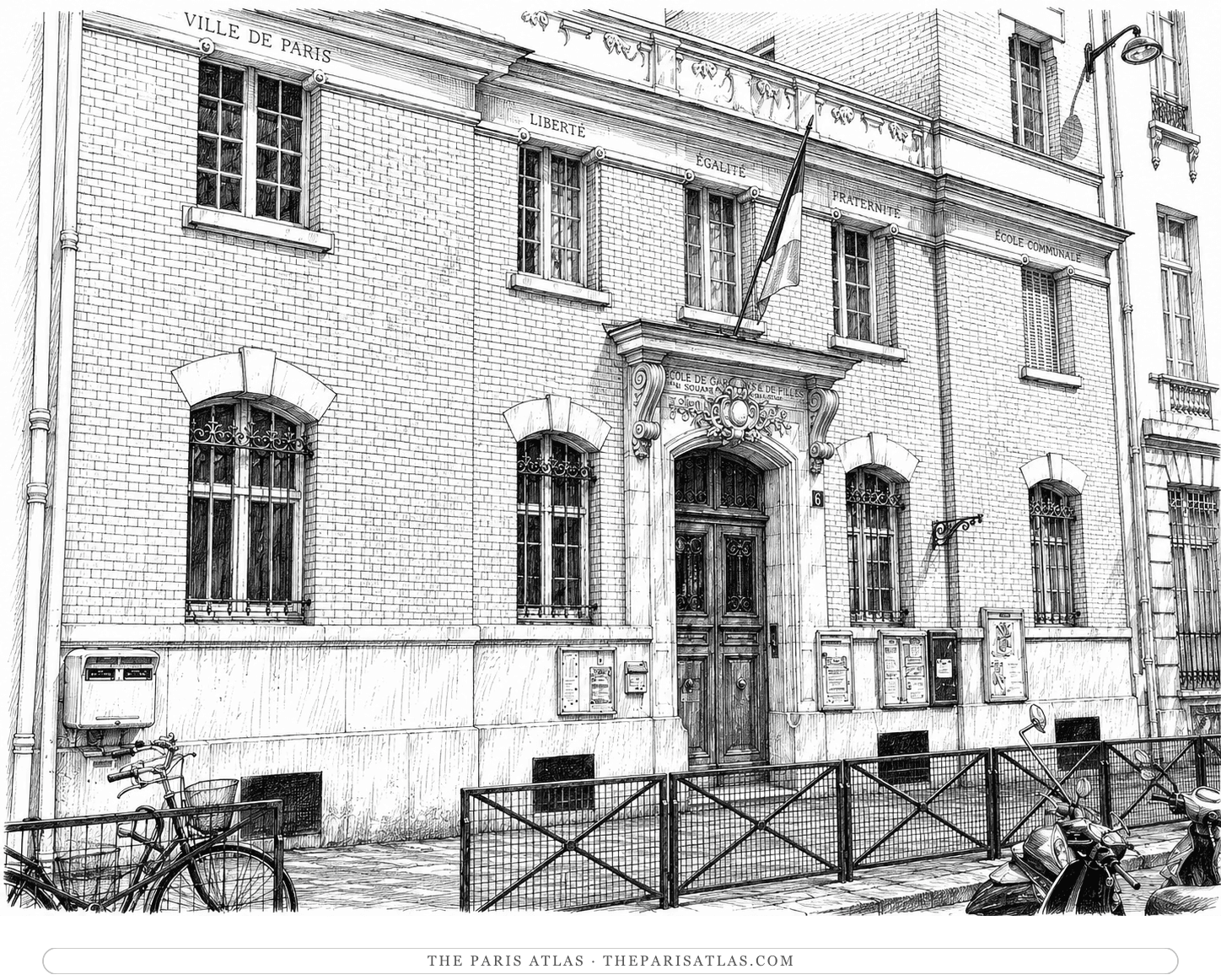
École du Square Louvois
The municipal school Louis-Ferdinand Céline attended from 1900 to 1905, two minutes' walk from the family shop in the Passage Choiseul — the first classroom of the boy then registered as Louis-Ferdinand Destouches.
Passy

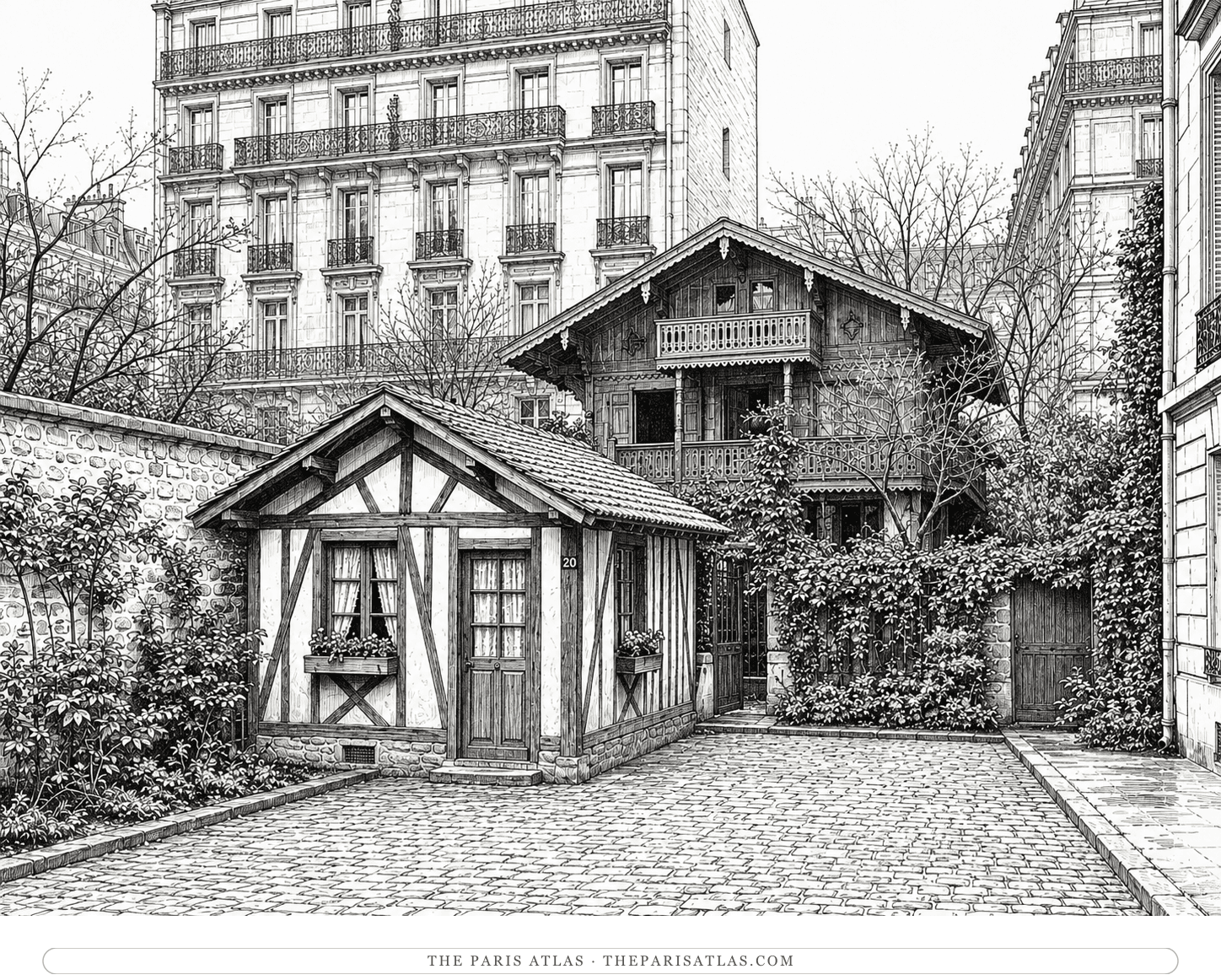
57 rue Cortambert
The wooden Swiss-style chalet in Passy, since demolished, where Colette lived through her second marriage and the birth of her daughter.

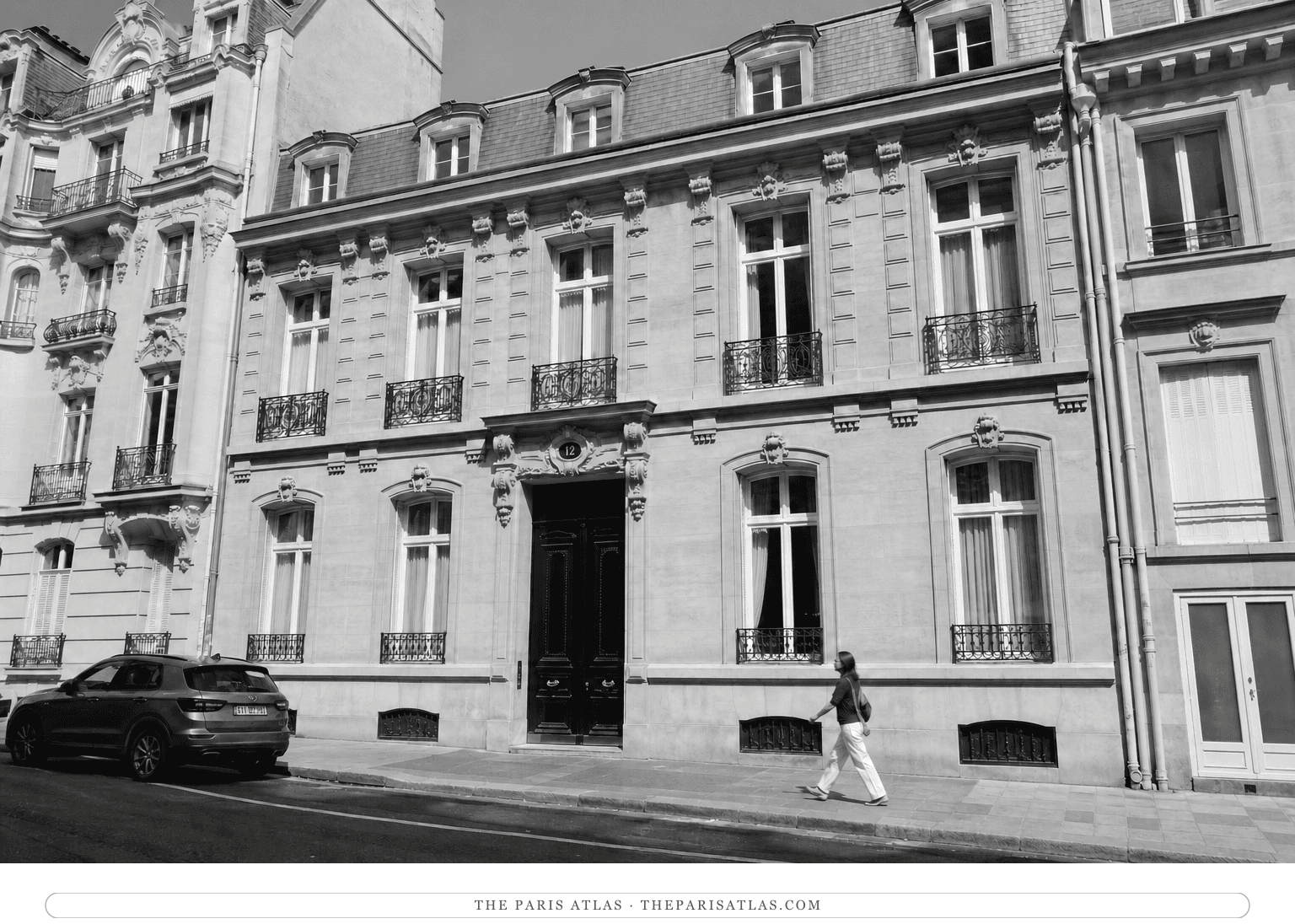
12 rue Benjamin-Franklin
One of the Morisot family's Passy addresses during the years when Berthe and Edma Morisot were training as painters, a few doors from the house where their garden studio was built.

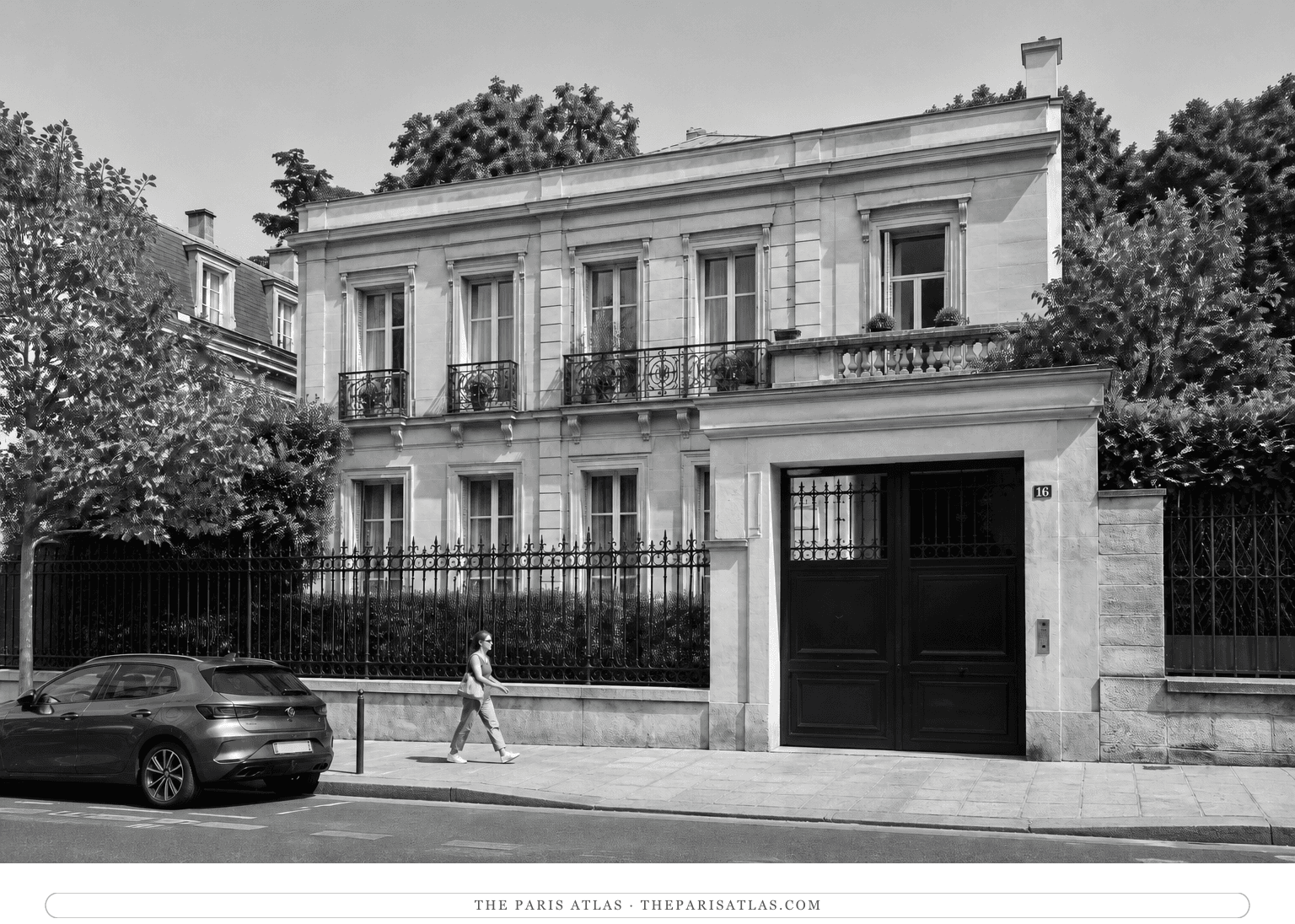
16 rue Benjamin-Franklin
The Morisot family house in Passy where a studio was built in the garden for Berthe and her sister Edma — an unusually serious commitment to two daughters' painting for a bourgeois family of the 1860s.

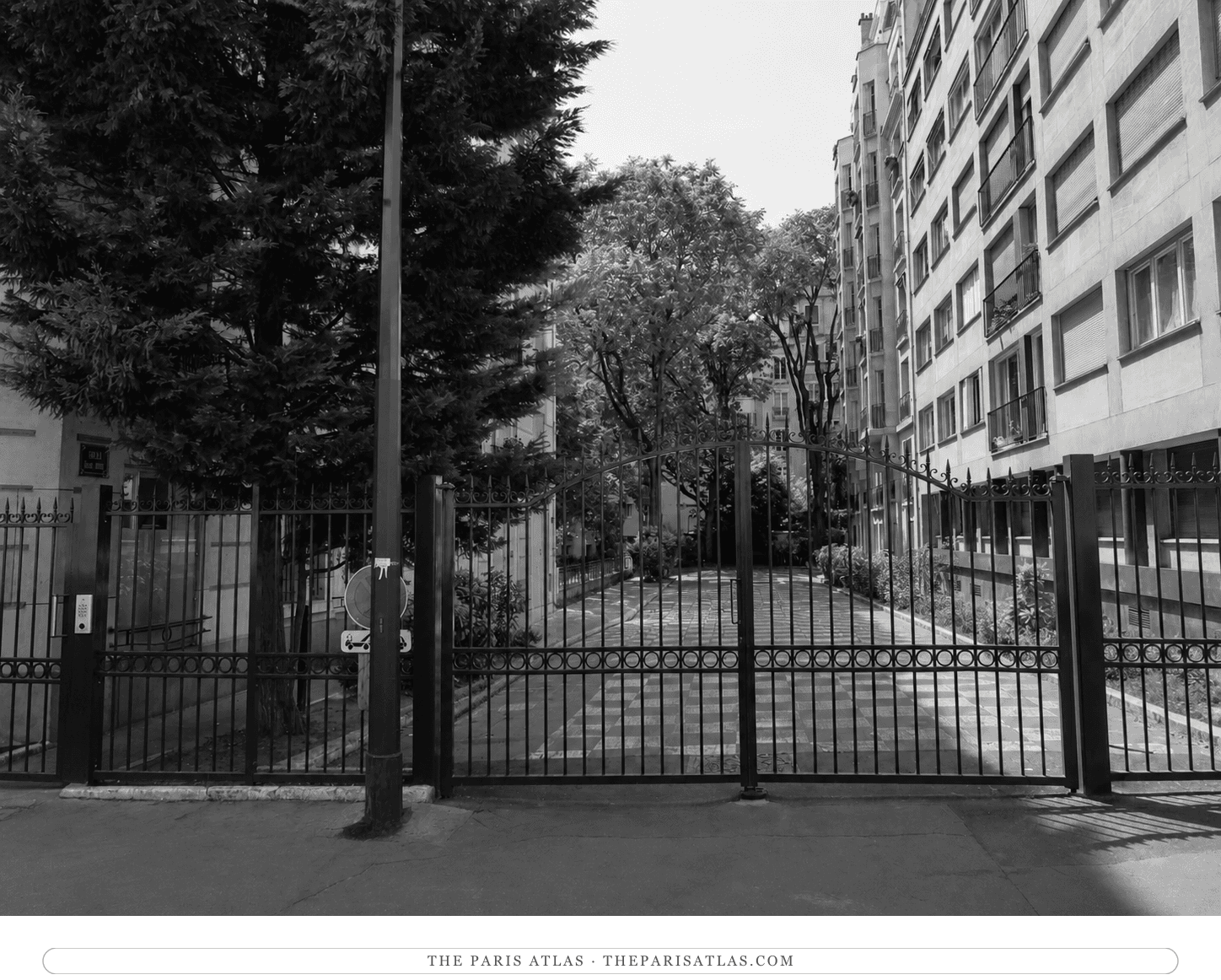
4 villa Eugène-Manuel
The Passy house with a large studio window that Marc Chagall took in the 1930s — twenty years and a world away from the unheated rotunda at La Ruche.
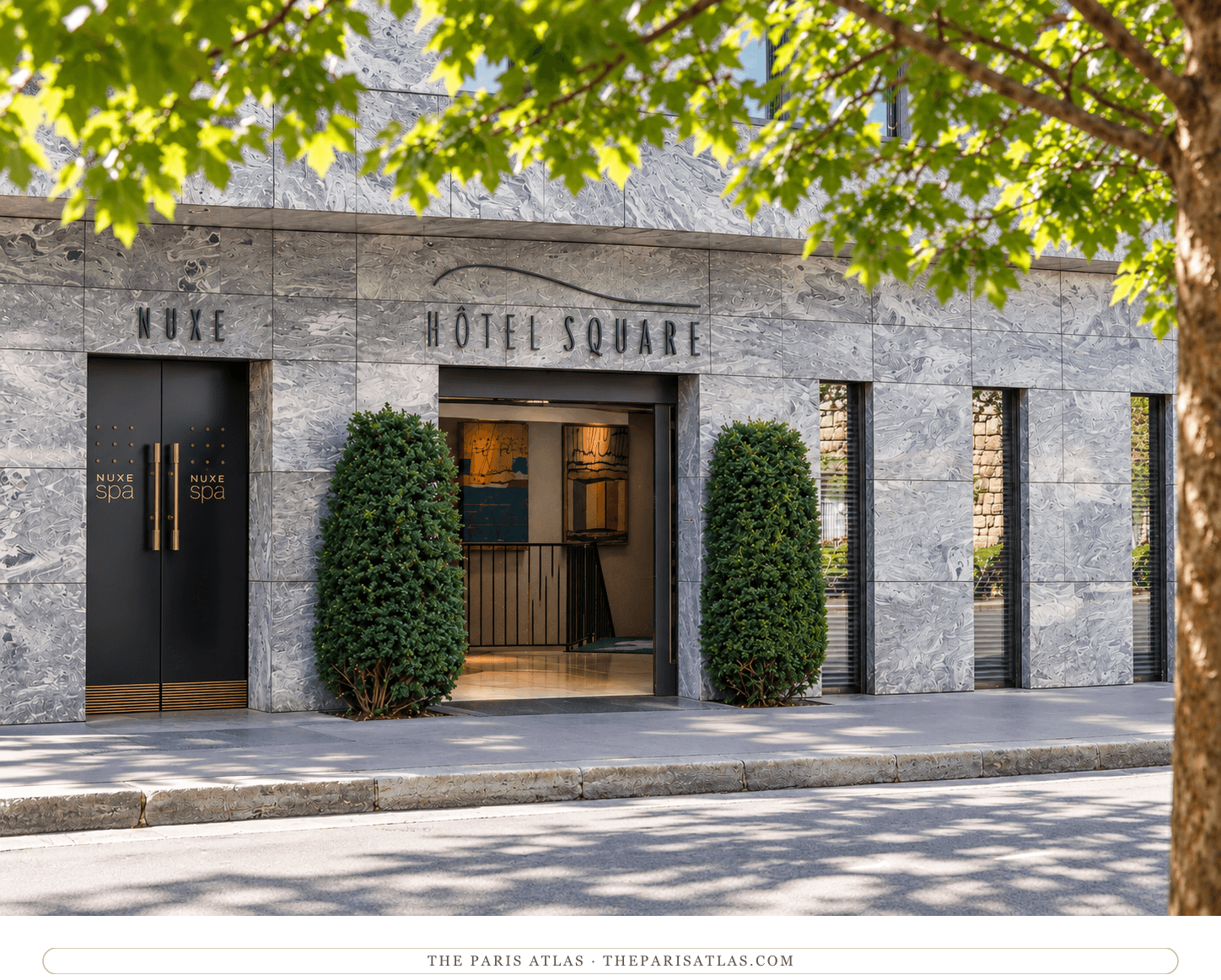
Hôtel Square
A five-star hotel with 22 rooms and suites near the Seine and Maison de la Radio, contemporary art, a Nuxe spa, and a private underground garage.
Pigalle

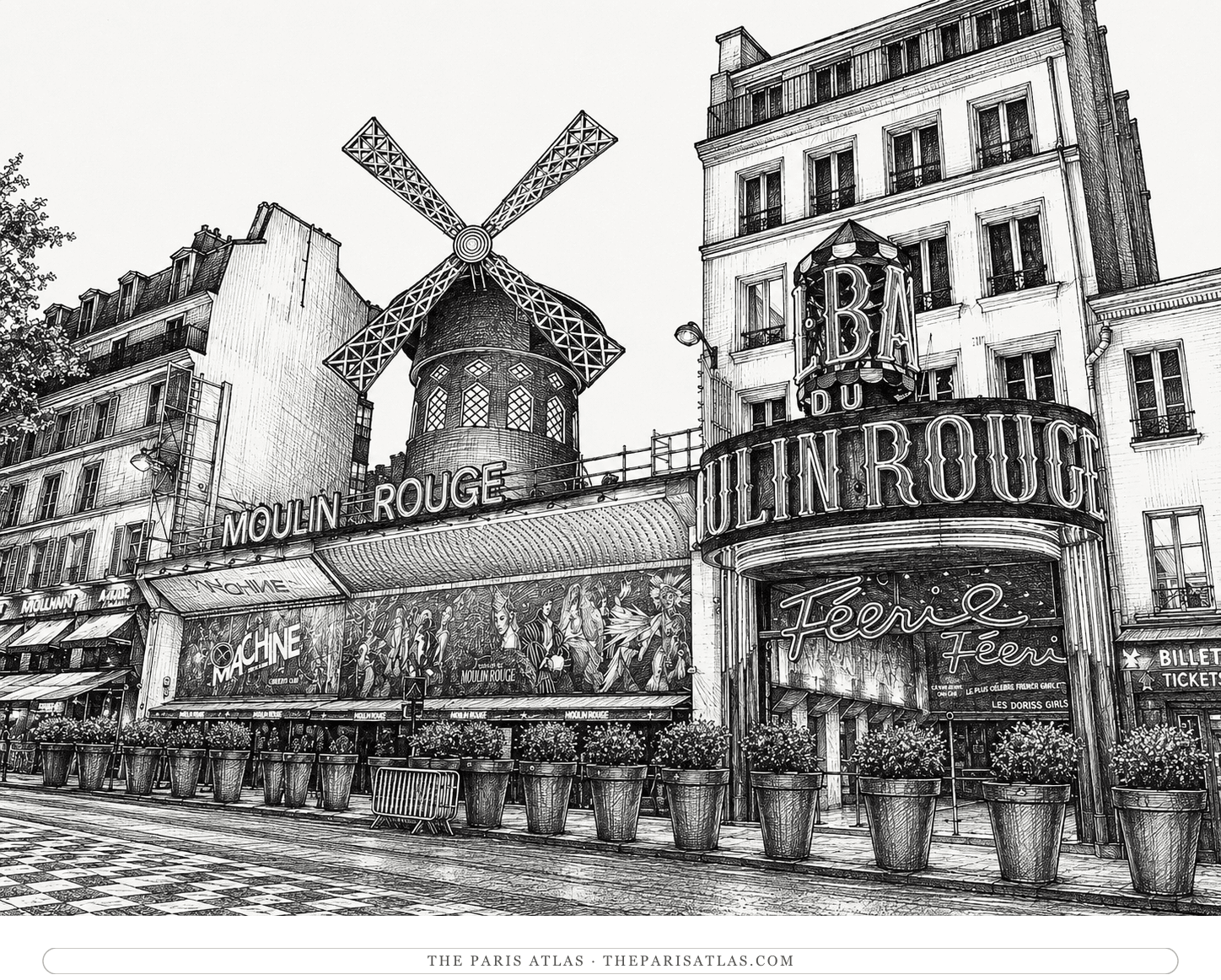
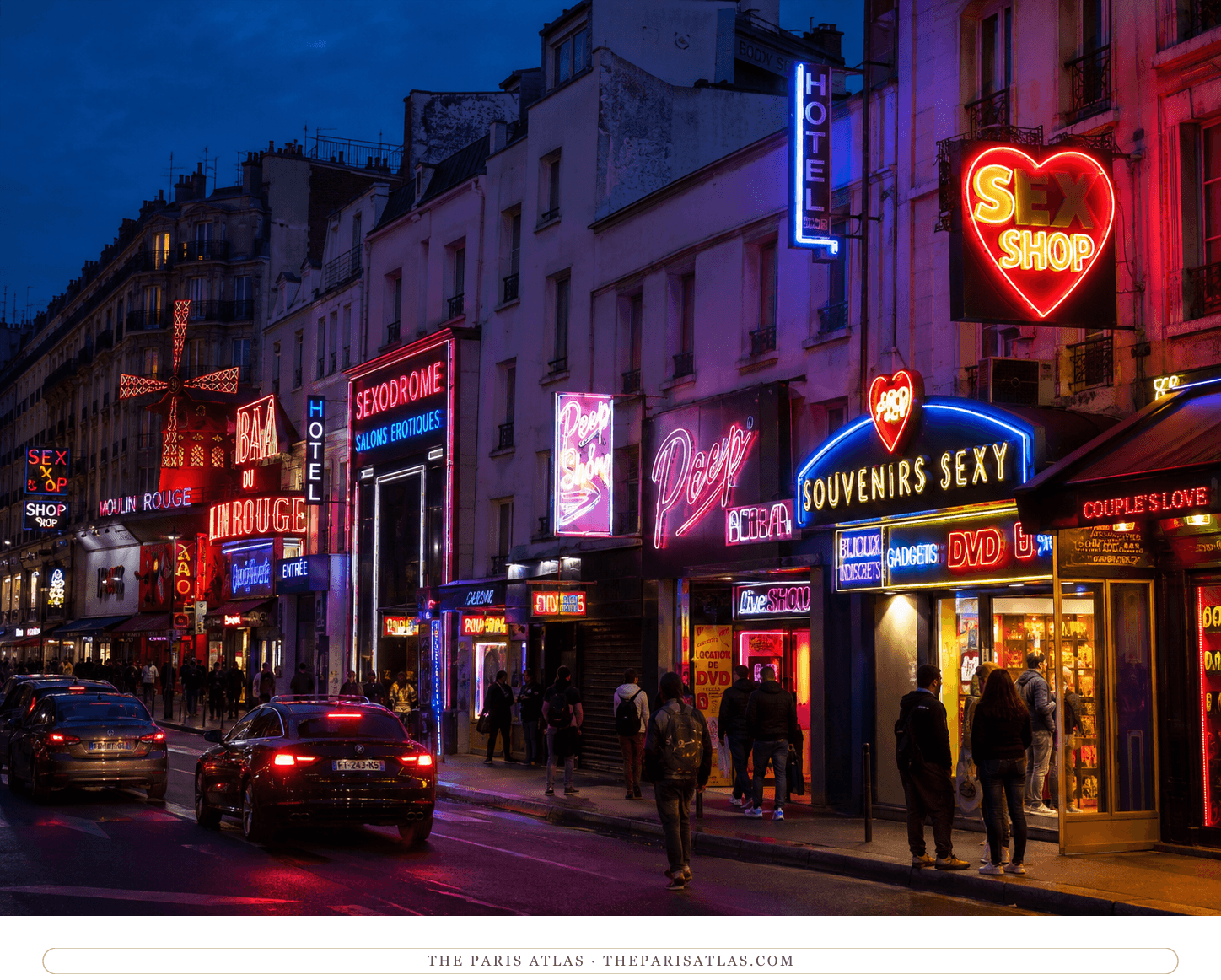
Moulin Rouge
Where Colette's 1907 mime with her lover Mathilde de Morny set off a riot and was banned by the police — her most notorious Paris performance.
Pigalle
The strip along the boulevard de Clichy below Montmartre, where the studios and the cabarets shared a pavement until only the second kind was left.

6 boulevard de Clichy
The apartment where Edgar Degas spent his last five years and died on 27 September 1917, aged eighty-three and almost blind. A Ville de Paris plaque marks the building.


Café de la Nouvelle Athènes
The café on the place Pigalle that took over from the Guerbois as the meeting place of Manet, Degas and their circle in the 1870s — and the room behind the painting usually called L'Absinthe.

Hôtel Le Ballu
A 35-room five-star hotel near place de Clichy, in two joined buildings on rue Ballu, one of them a painter's house of 1891, with a covered pool, a garden restaurant and apartments for families.
Maison Souquet
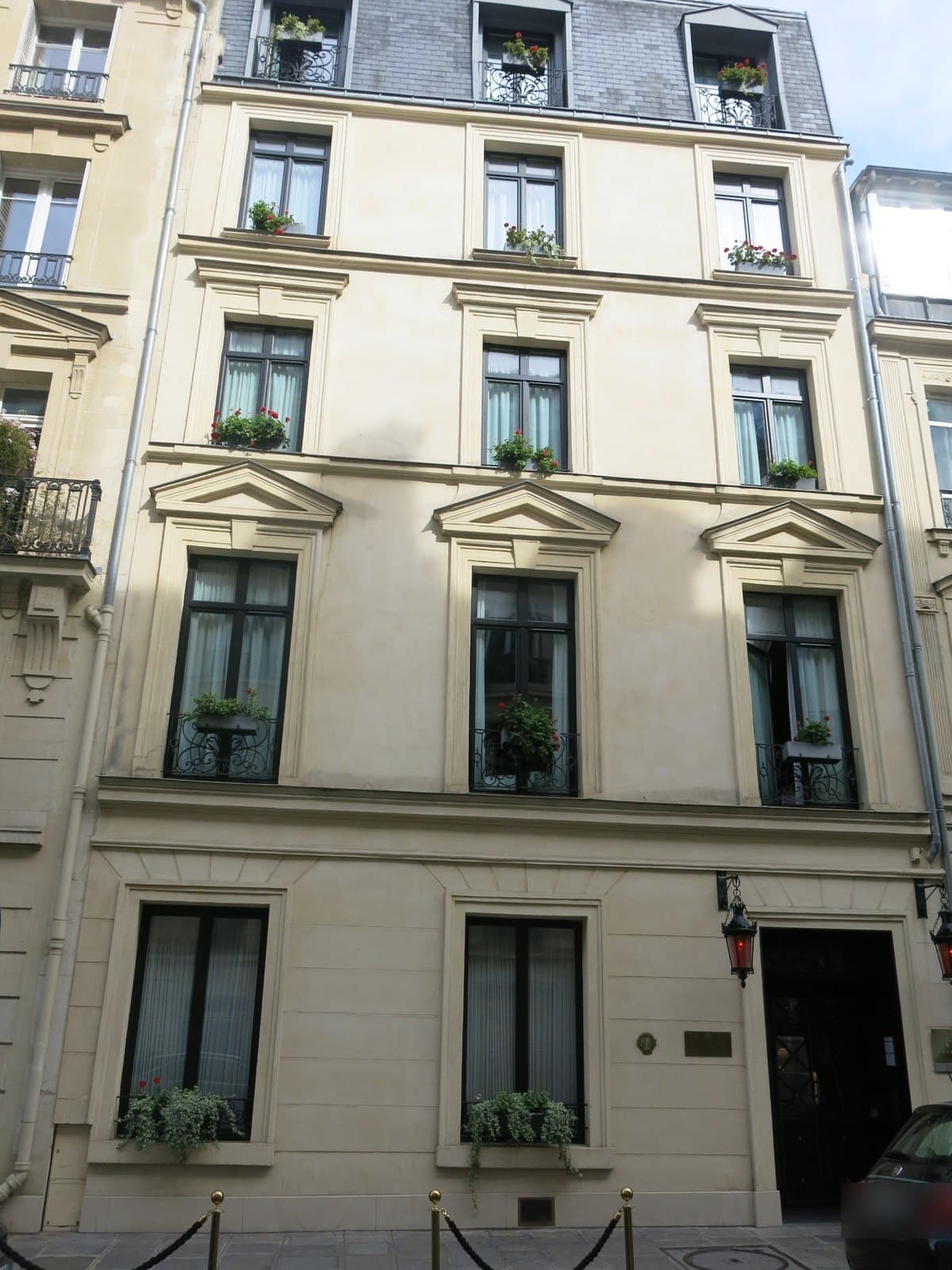
A 20-room five-star hotel near place Blanche and the Moulin Rouge, decorated by Jacques Garcia to recall a Belle Époque brothel, with a private pool that each guest can book for an hour a day.

Hôtel Bus Palladium
A five-star hotel built around Pigalle’s historic music club, with 35 rooms and suites, Studio KO interiors, a vinyl-lined restaurant and several categories with private outdoor space.
Place Vendôme

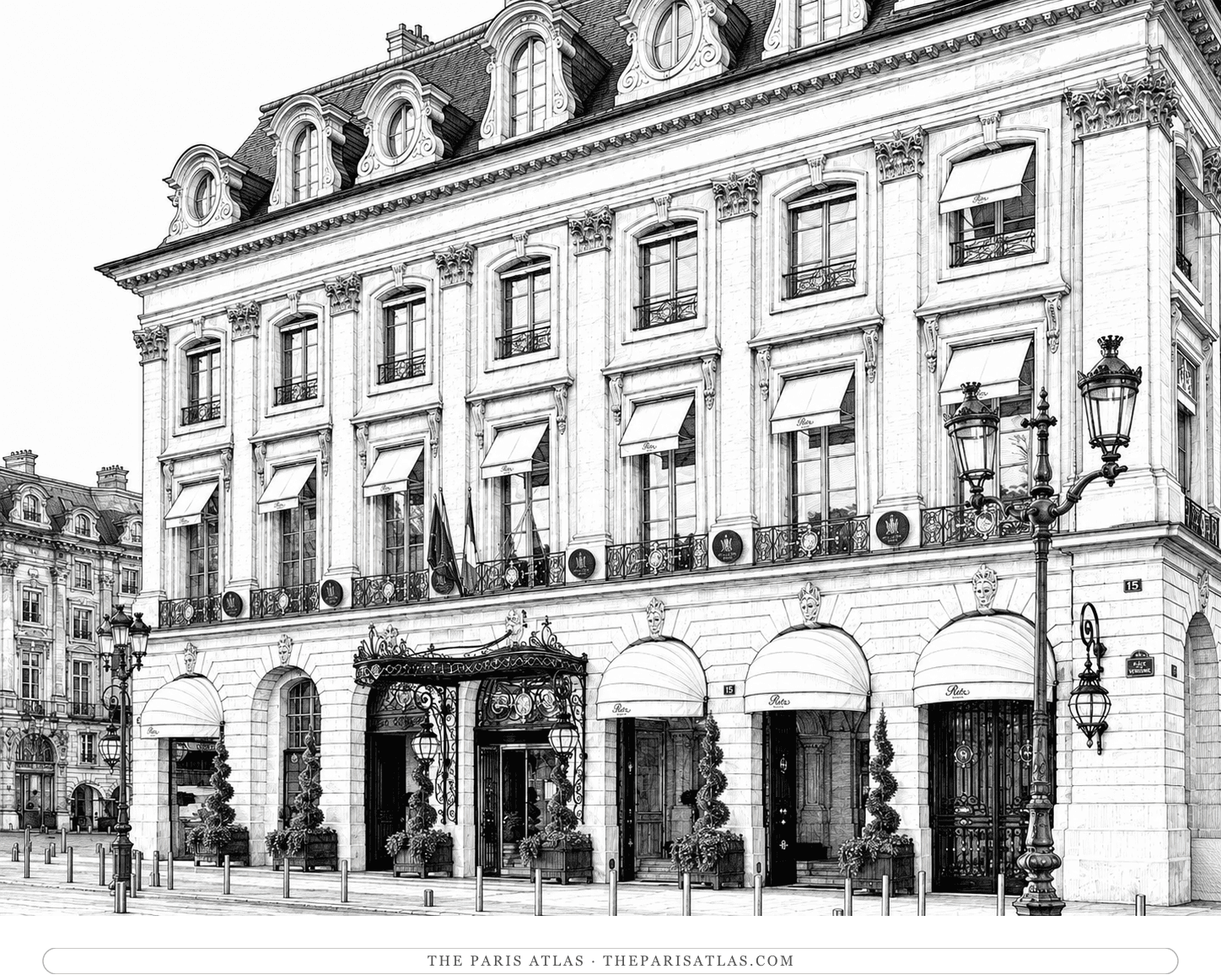
Hôtel Ritz
César Ritz's palace on the Place Vendôme — the fixed point of Right Bank luxury, where F. Scott Fitzgerald's bar legend, Tender Is the Night's longest bender, and Ernest Hemingway's two best Ritz stories all check in.

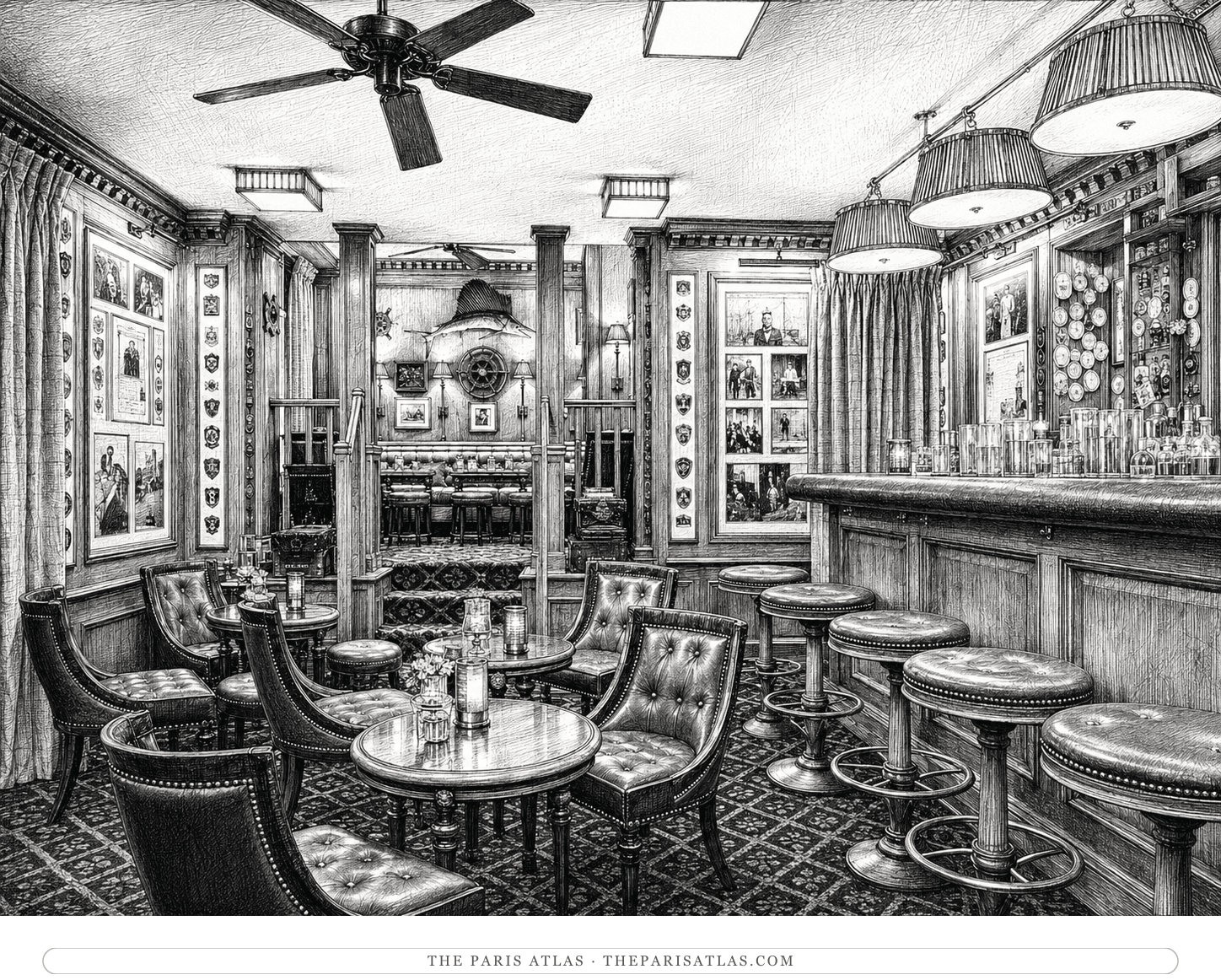
Bar Hemingway
A 25-seat cocktail bar at the rue Cambon end of the Ritz Paris, opened under Ernest Hemingway's name in 1994 in the former Le Petit Bar.

Hôtel Costes
A Paris hotel with two distinct design worlds: Jacques Garcia's Saint-Honoré rooms and Christian Liaigre's Castiglione collection, with a courtyard restaurant, bar, pool and spa.

Park Hyatt Paris-Vendôme
A five-star hotel on rue de la Paix, between Place Vendôme and the Palais Garnier, with rooms designed by Ed Tuttle, a spa, a 24-hour gym and several restaurants.

Castille Paris
Castille Paris is a 108-room five-star hotel at 33-37 rue Cambon in the 1st arrondissement, run by the Italian group Starhotels, a short walk from place Vendôme and the Tuileries Garden. Theodor Herzl, the Vienna journalist who founded the Zionist movement for a Jewish homeland, wrote his pamphlet The Jewish State in one of its rooms in 1895, according to his diary.

Château Voltaire
Château Voltaire is a five-star hotel with 31 rooms and one suite at the northern end of rue Saint-Roch in the 1st arrondissement, between the Jardin des Tuileries and the Opéra Garnier. Thierry Gillier, who founded the fashion brand Zadig & Voltaire, opened it in 2021 in the brand's former head office.
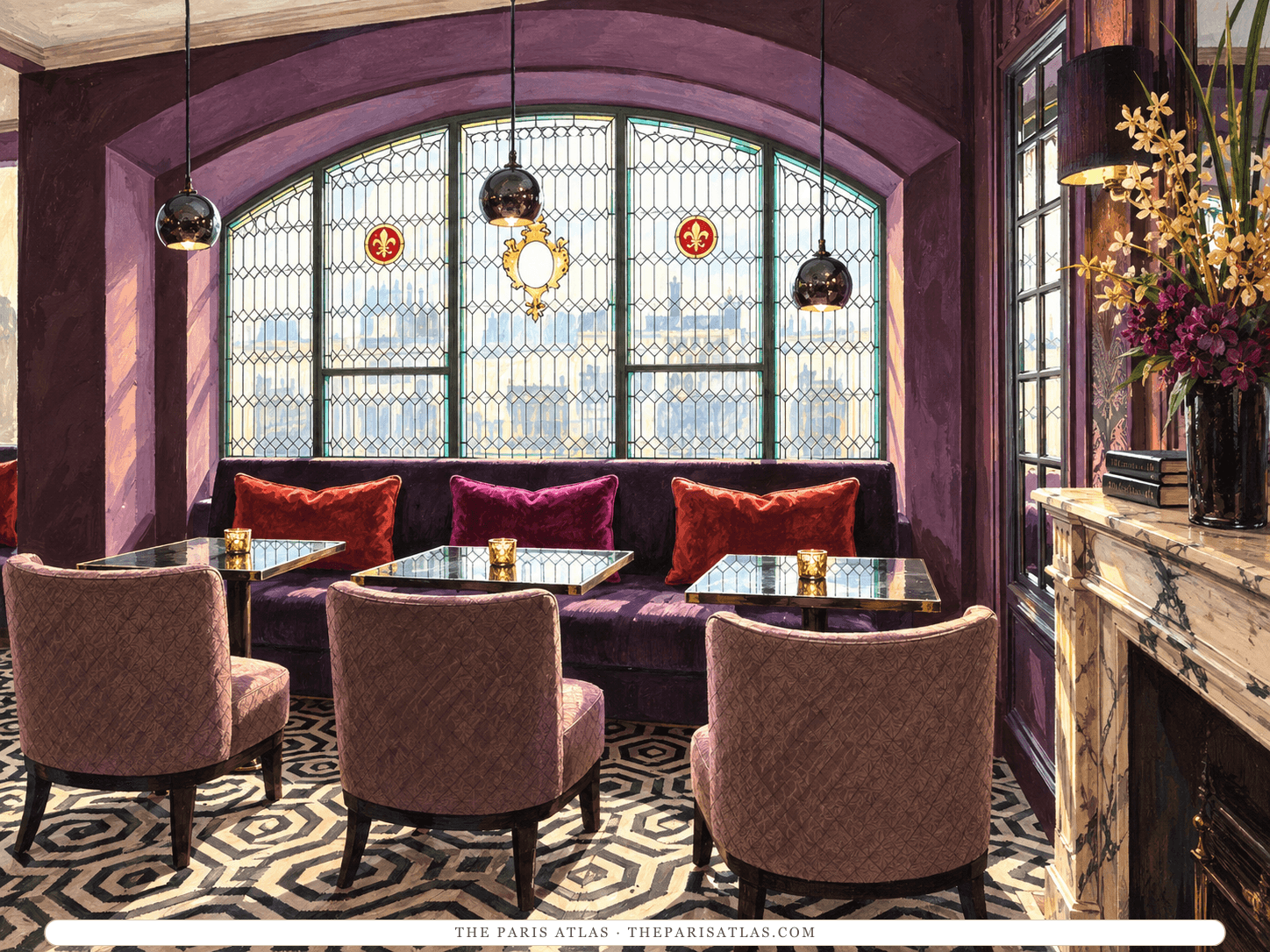
Hôtel Mansart
Hôtel Mansart is a four-star hotel with 57 rooms at 5 rue des Capucines, in the 1st arrondissement of Paris, a two-minute walk from place Vendôme. The rooms are decorated with antique furniture and period art.

Le Burgundy Paris
Le Burgundy Paris is a five-star hotel with 59 rooms and suites at 6-8 rue Duphot in the 1st arrondissement, near the Madeleine church and place Vendôme. It has a Michelin-starred restaurant, Le Baudelaire, and a 15-meter indoor pool.

Mandarin Oriental, Paris
Mandarin Oriental, Paris is a five-star hotel with 135 rooms and suites at 251 rue Saint-Honoré, between Place Vendôme and the Tuileries Garden. It opened in June 2011 in a converted 1930s office building, with a planted garden in its central courtyard.
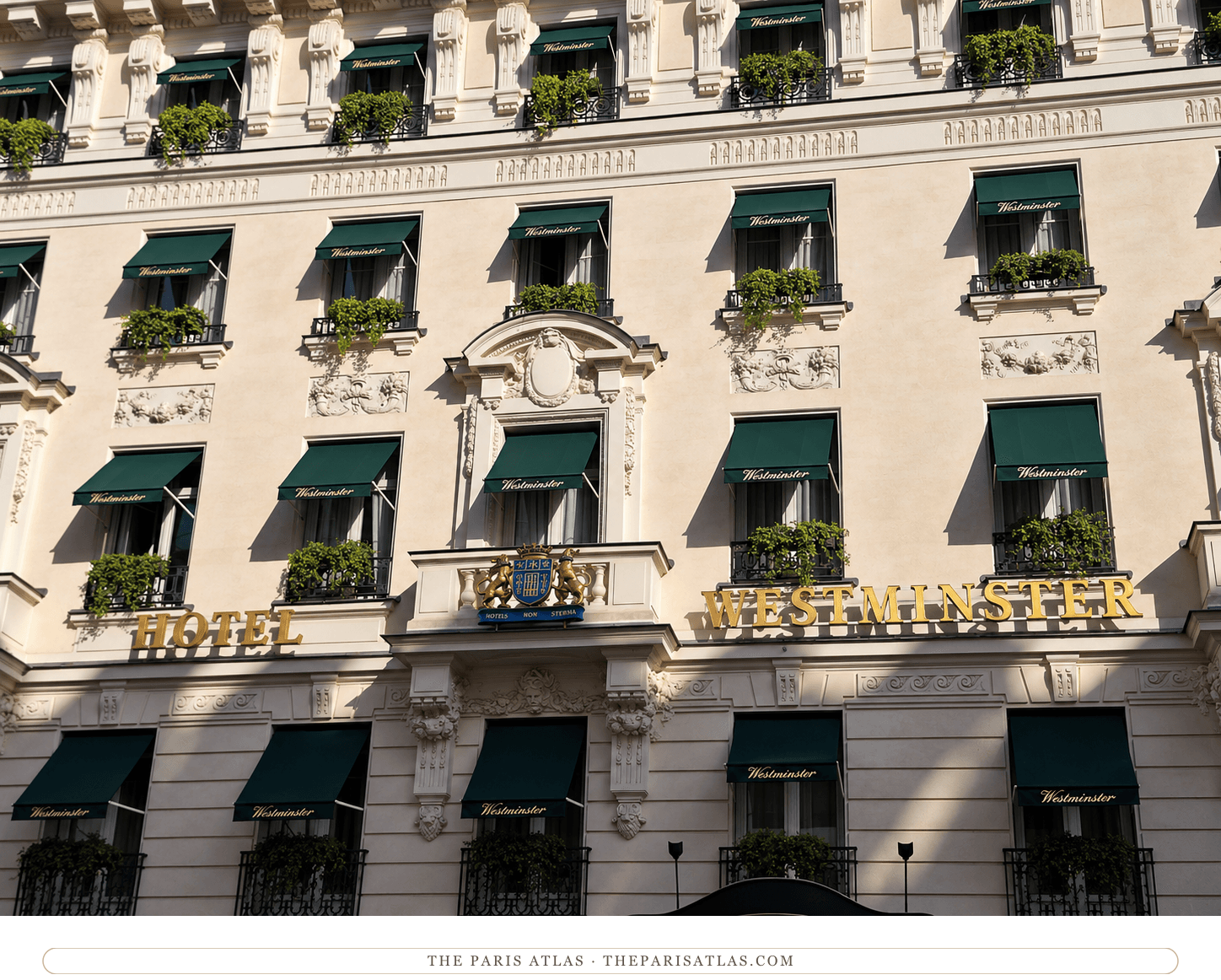
Hôtel Westminster
A historic hotel on rue de la Paix, with renovated rooms, the wood-panelled Duke’s Bar and a location between Place Vendôme and the Opéra.

Maison Barrière Vendôme
Maison Barrière Vendôme is a five-star hotel with 26 rooms, suites and apartments between Place Vendôme and the Tuileries Garden in central Paris. It opened in January 2025 in the former head office of the sportswear company Lacoste, and each room is dedicated to a woman with ties to Paris.
Place de Clichy

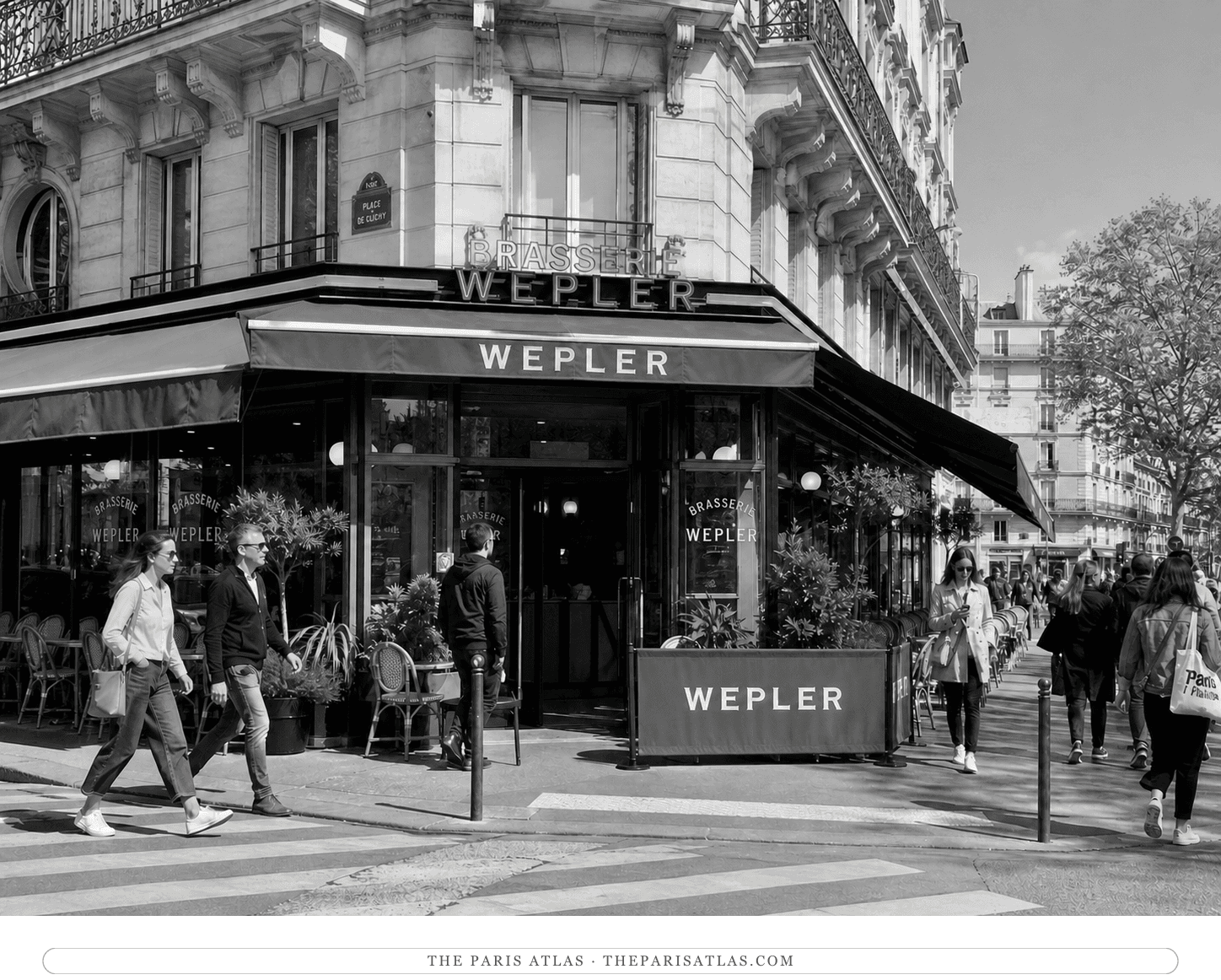
Place de l'Alma

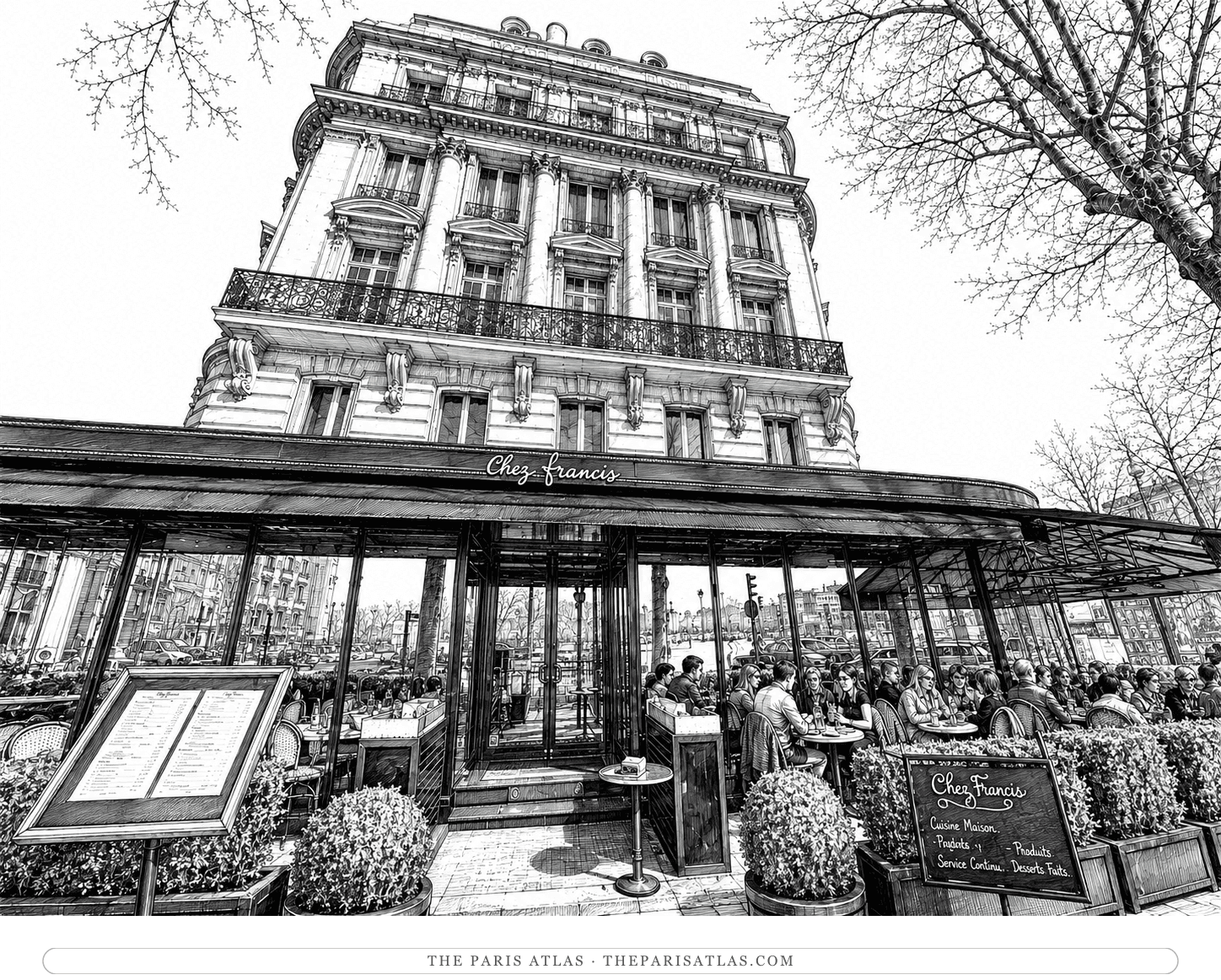
Place des Fêtes

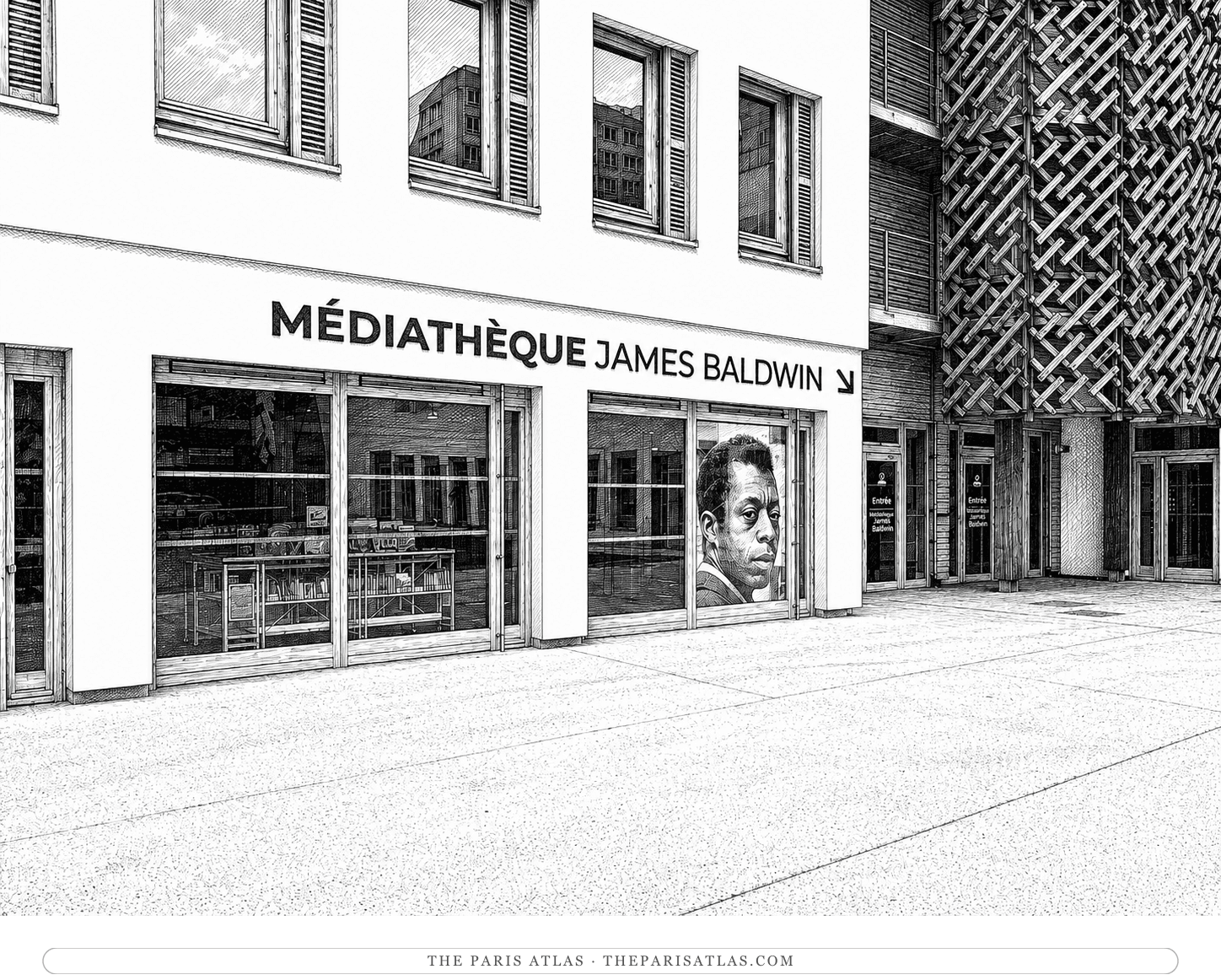
Plaine Monceau

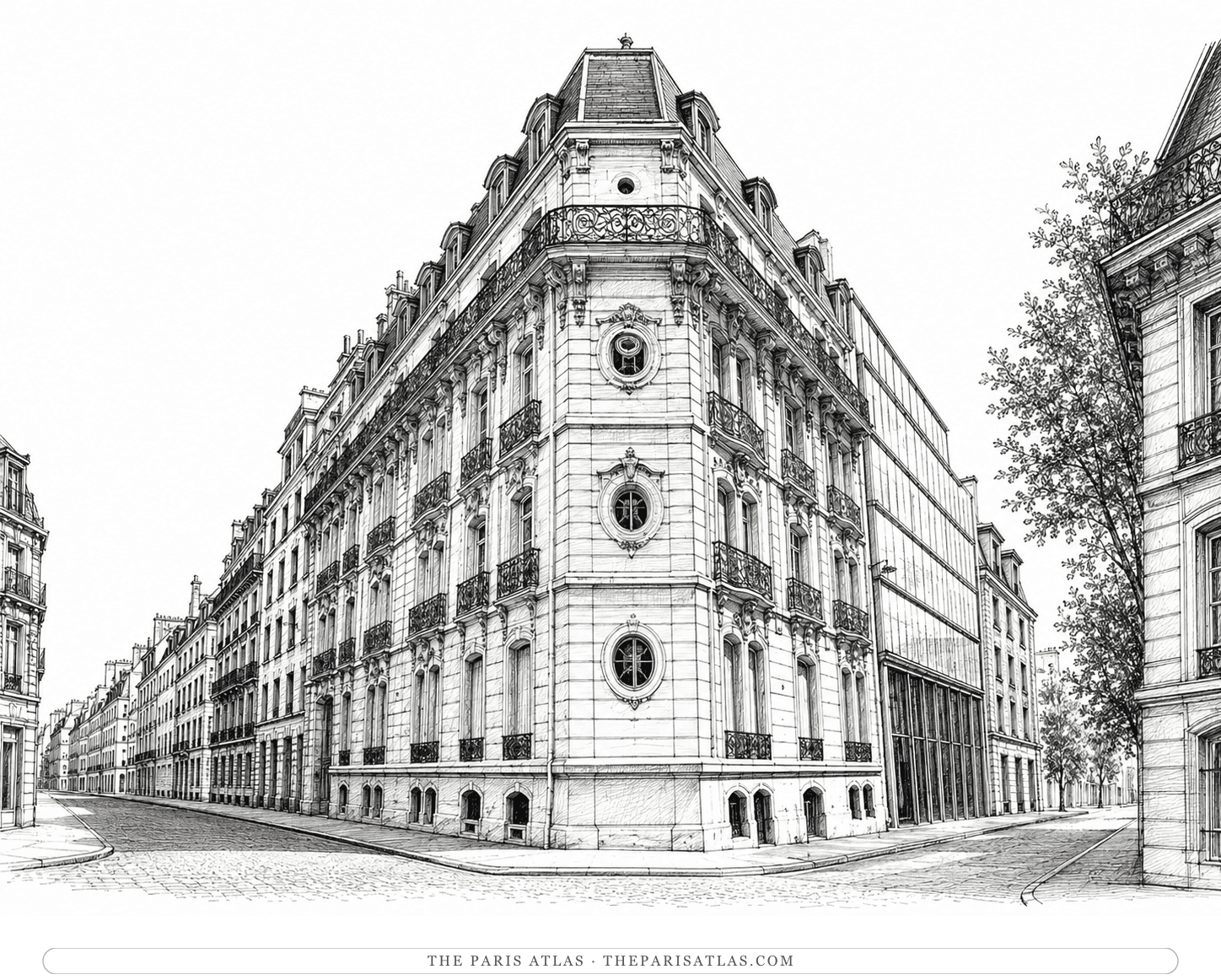
177 bis rue de Courcelles
The larger apartment of the Claudine years, where Colette kept a gymnasium and her marriage to Willy came apart.

93 rue de Courcelles
The sixth-floor former studio near Parc Monceau where Colette and Willy lived while the Claudine novels appeared under his name.

81 rue Guyot (now rue Médéric)
The studio Édouard Manet worked in through the 1860s, where Émile Zola sat for his portrait. The street has since been renamed rue Médéric and renumbered, so the modern address is a conversion rather than a certainty.

10 rue Gustave-Doré
One of Claude Debussy's documented Paris addresses, in the quiet Plaine Monceau district of the 17th arrondissement.

58 rue Cardinet
A documented Claude Debussy address in the 17th arrondissement, occupied before his move in 1905 to the avenue du Bois de Boulogne.
Plaisance

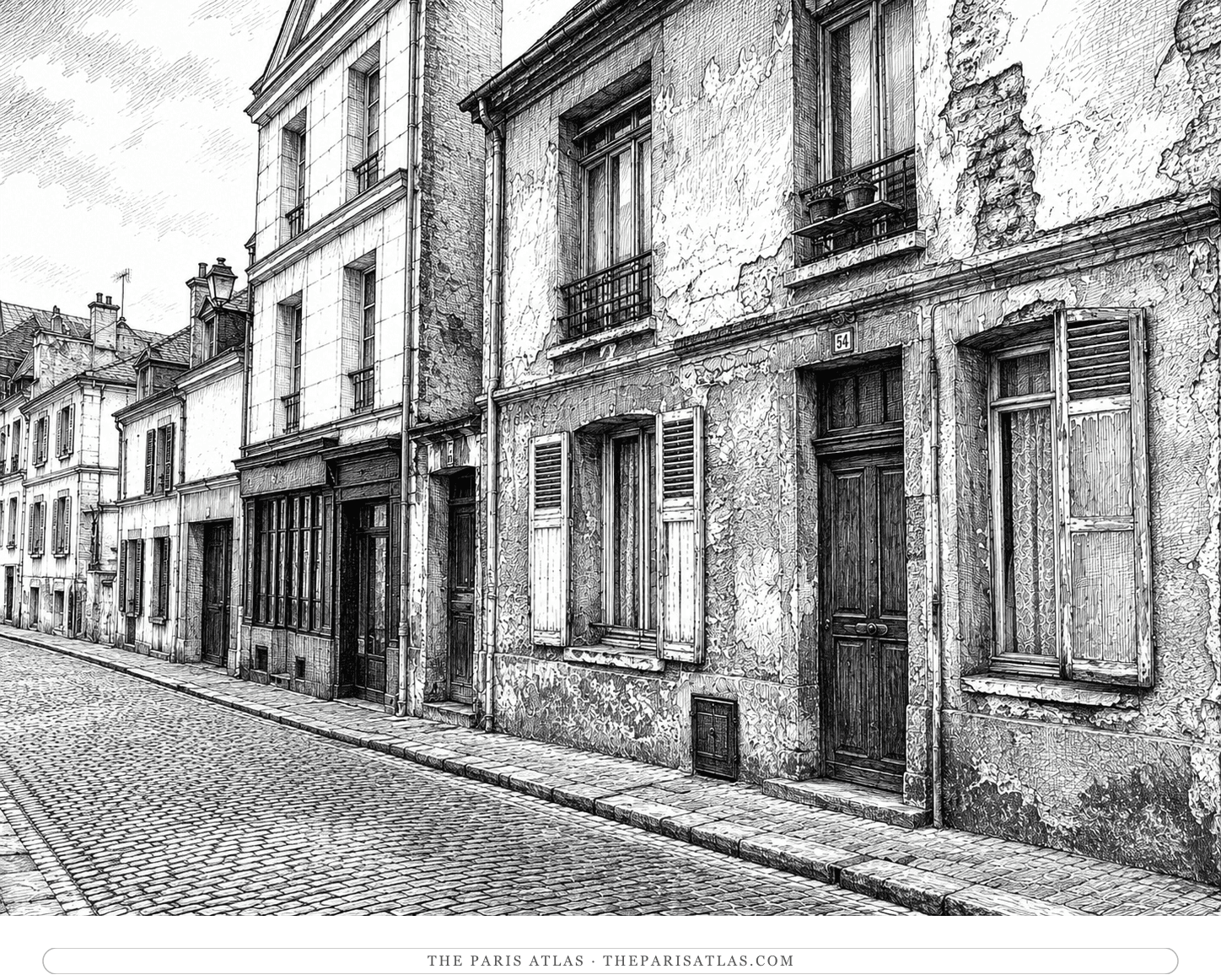
Rue du Château
A workers' street behind the Montparnasse yards with two literary lives — the surrealists' communal house at No. 54, and Henry Miller's broke wanderings looking for a friend and a meal.

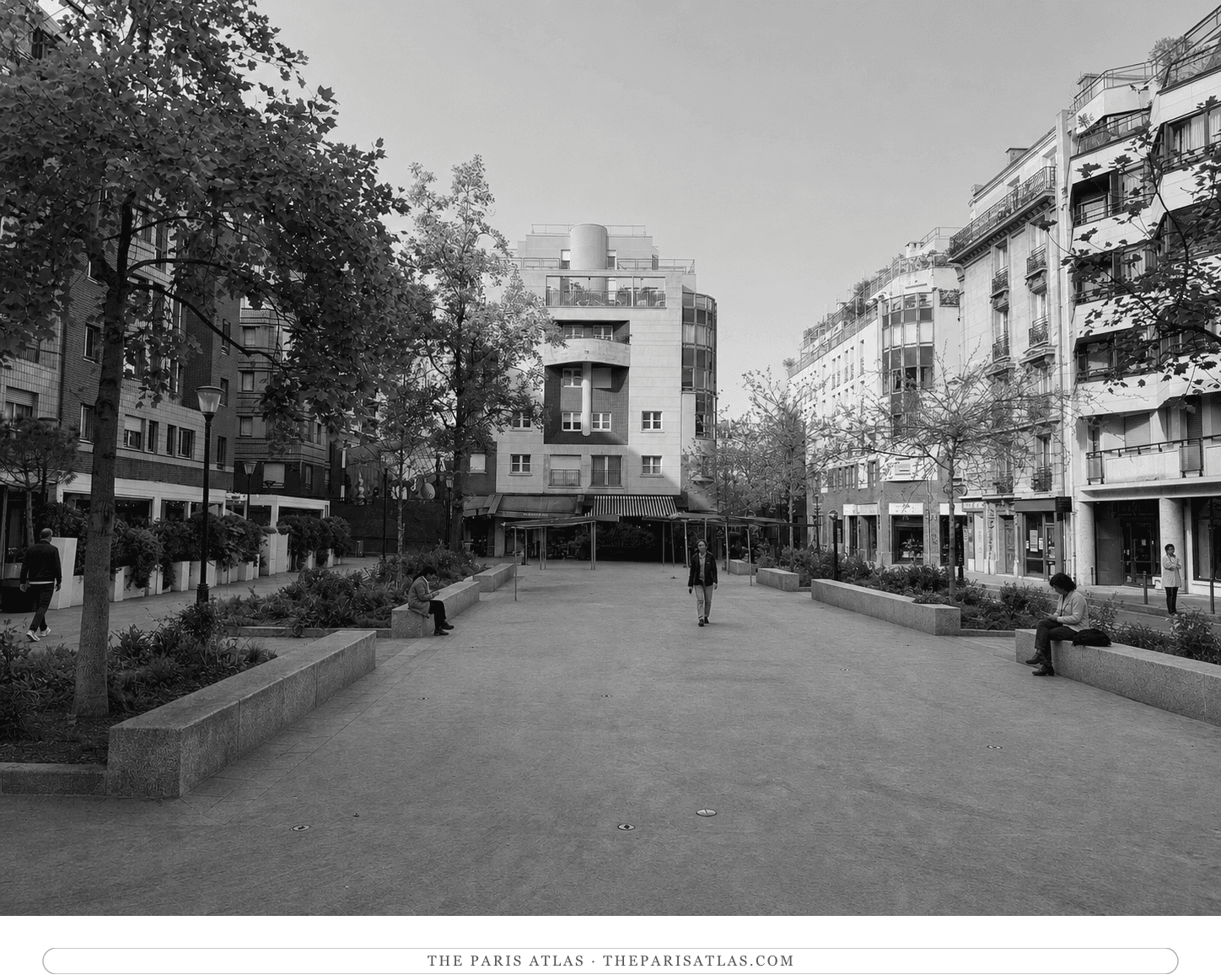
32 rue de l'Ouest
The second of Paul Cézanne's two apartments on the rue de l'Ouest, taken in April 1880 — the address he was using while Émile Zola was writing the novel that ended their friendship.

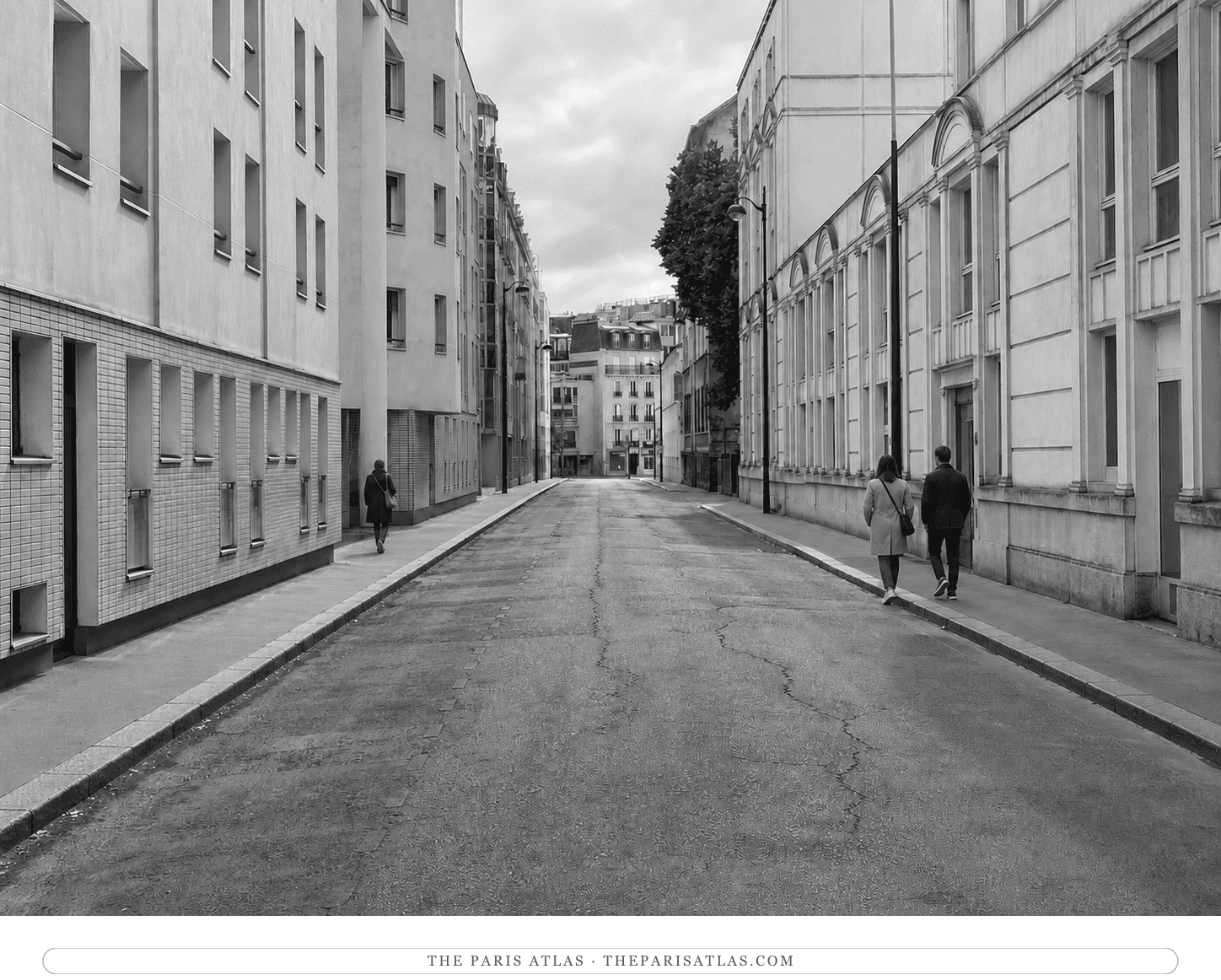
67 rue de l'Ouest
The fourth-floor Montparnasse apartment Paul Cézanne took in 1877, whose patterned wallpaper appears behind Hortense Fiquet in several of the portraits and stands in for a landscape in the still lifes.
Plaza del Castillo, in the old town
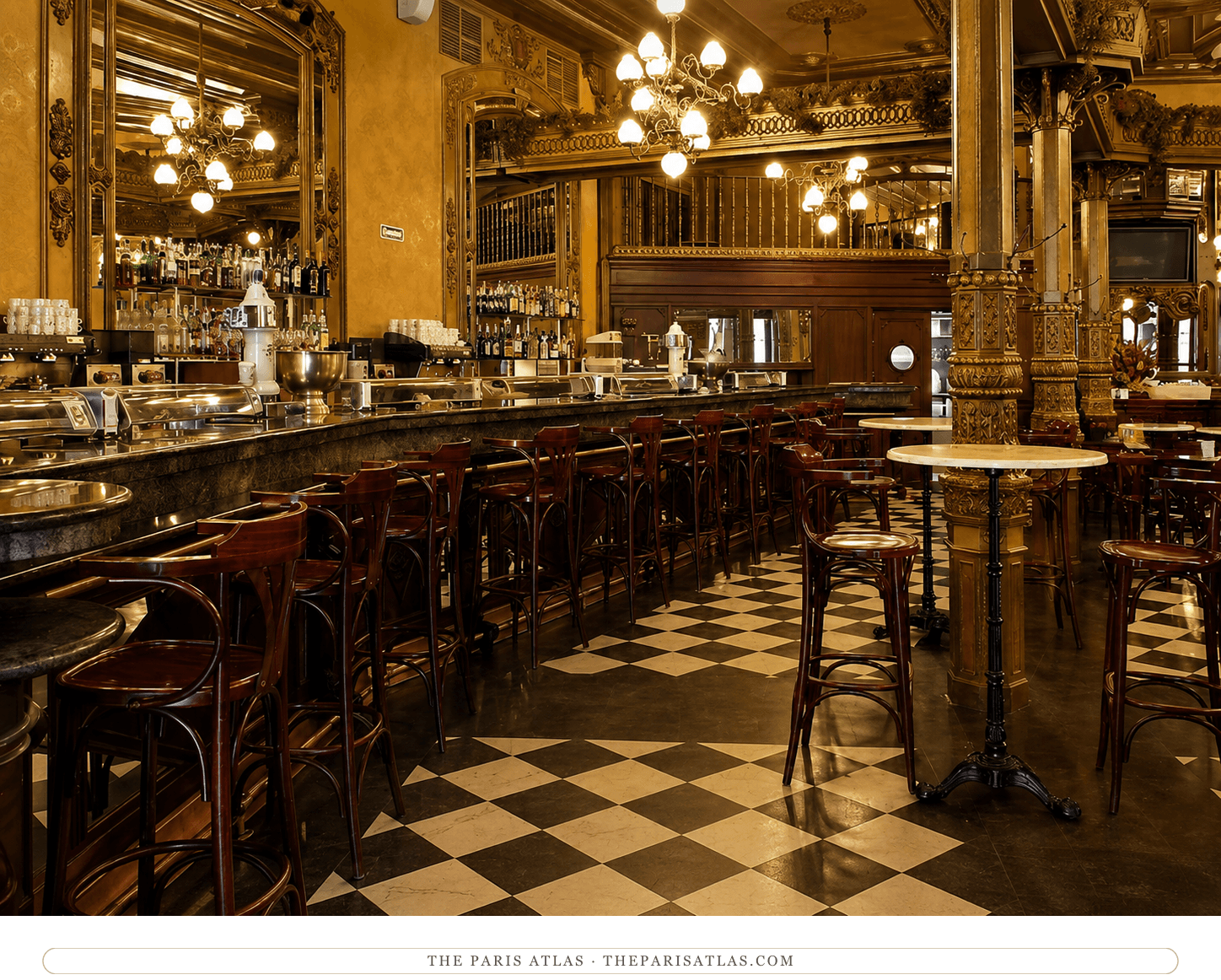

Porte Dauphine

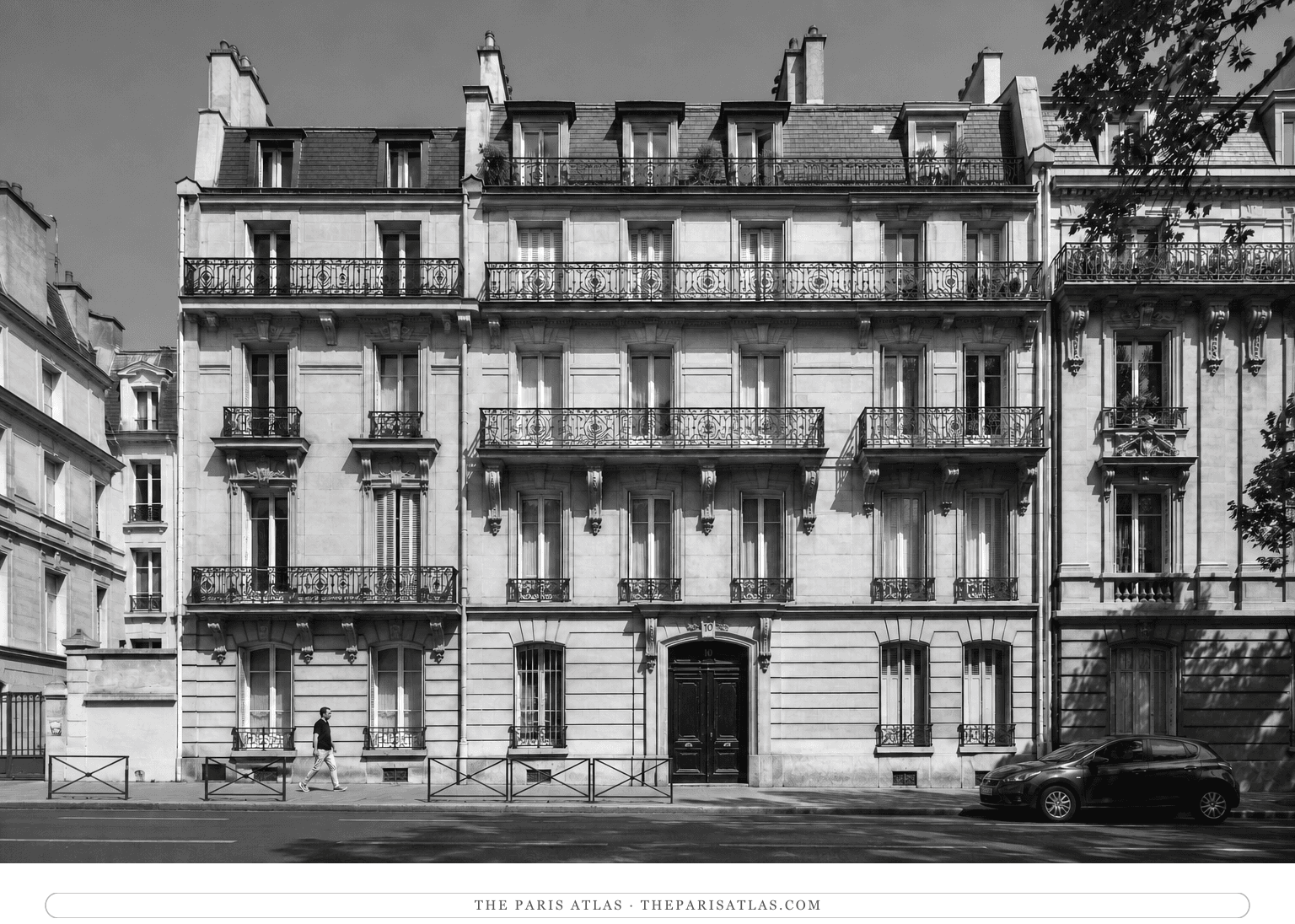
10 rue Weber
The apartment Berthe Morisot moved to after her husband's death in 1892, and where she worked hard through her final years — more than a hundred works came out of this address before she died in 1895.

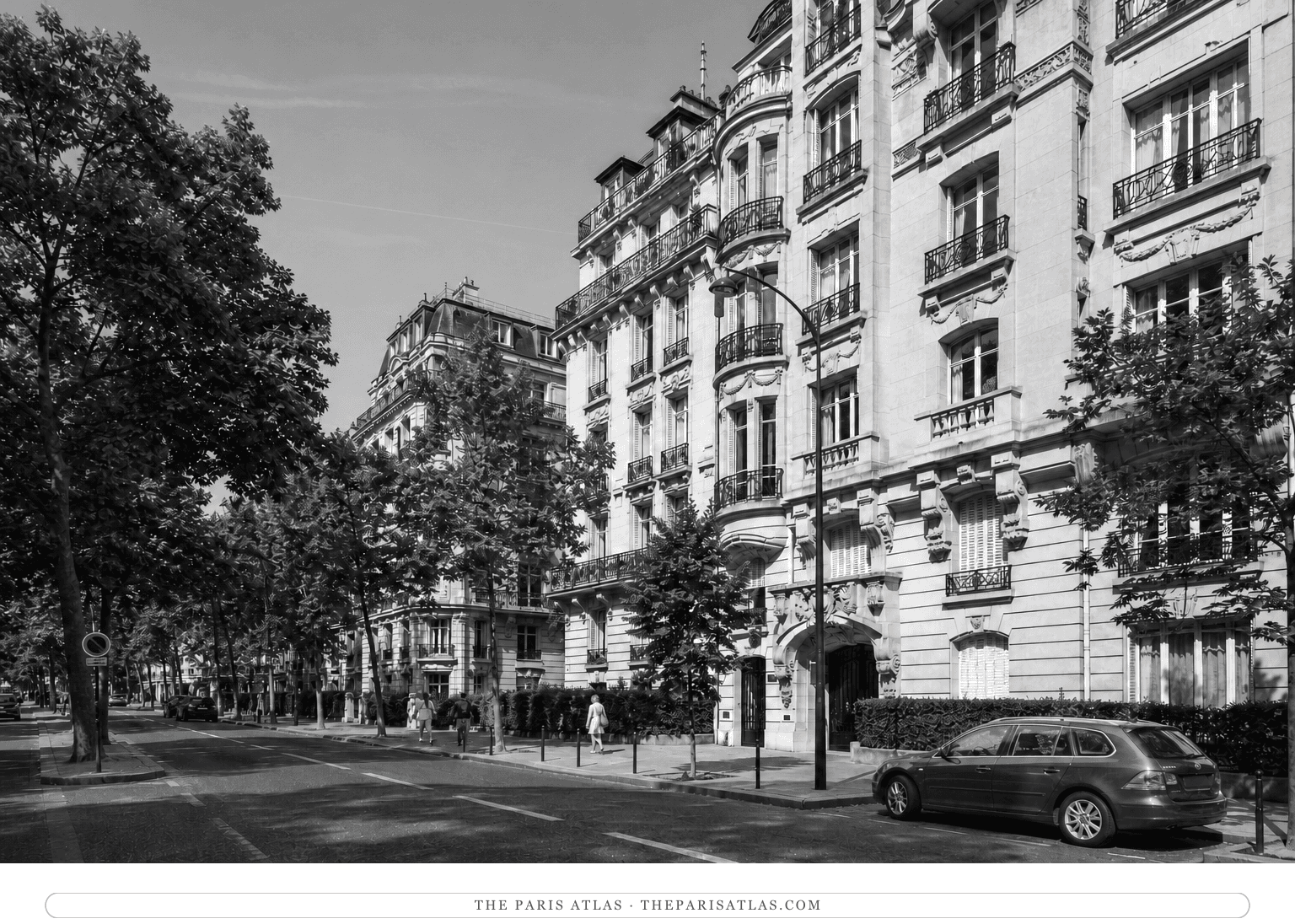
80 avenue Foch (formerly 64, then 80, avenue du Bois de Boulogne)
The house where Claude Debussy lived from 1905 until his death in 1918, and where he wrote most of his late music. Its address changed twice — the number was altered while he lived there, and the avenue was renamed afterwards.
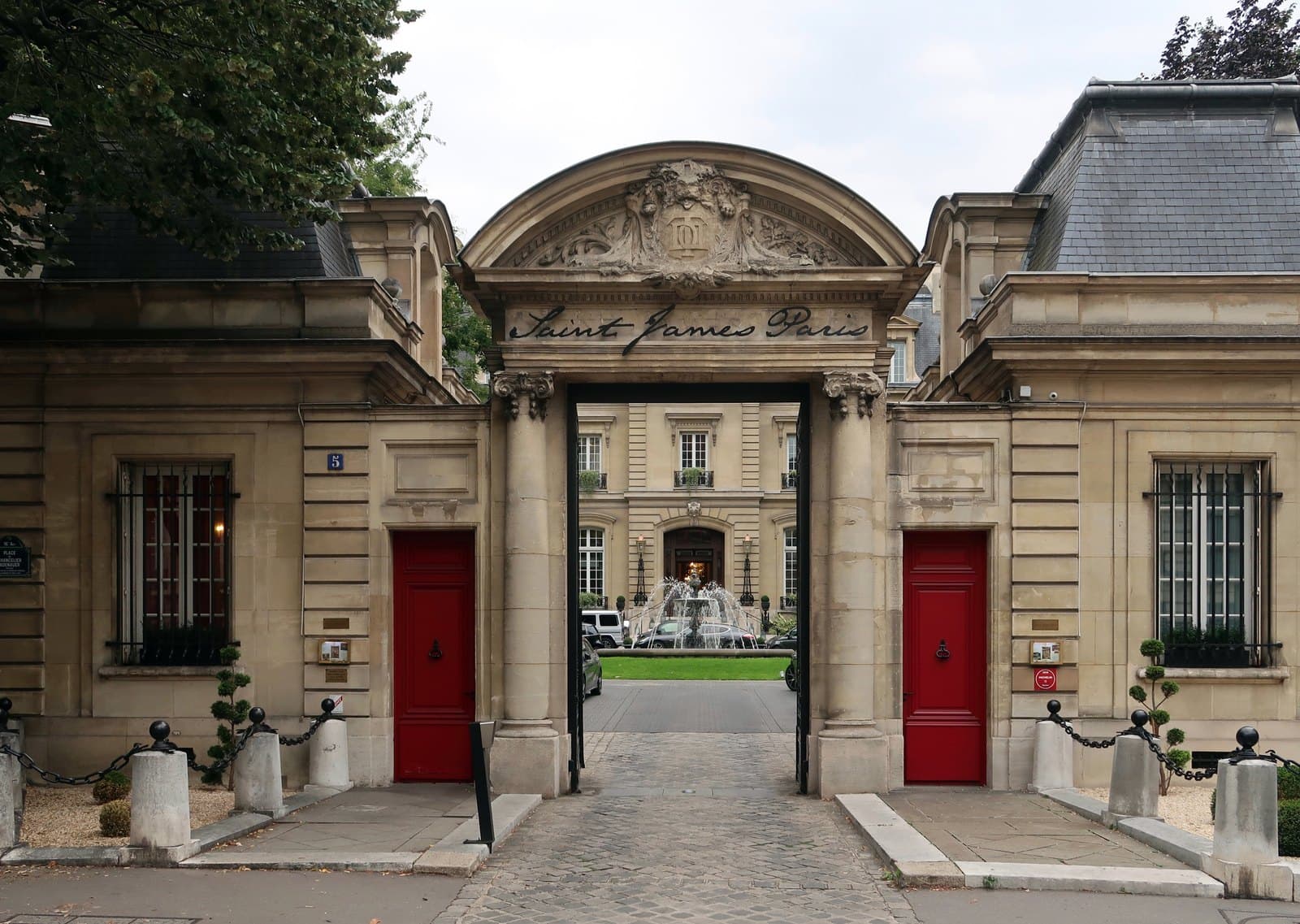
Saint James Paris
A 48-room five-star hotel and private club in the 16th arrondissement, in the former Fondation Thiers, a mansion of 1890–1892 set in a garden. It has a Michelin-starred restaurant, a library bar and a Guerlain spa with a pool.
Quai Saint-Michel

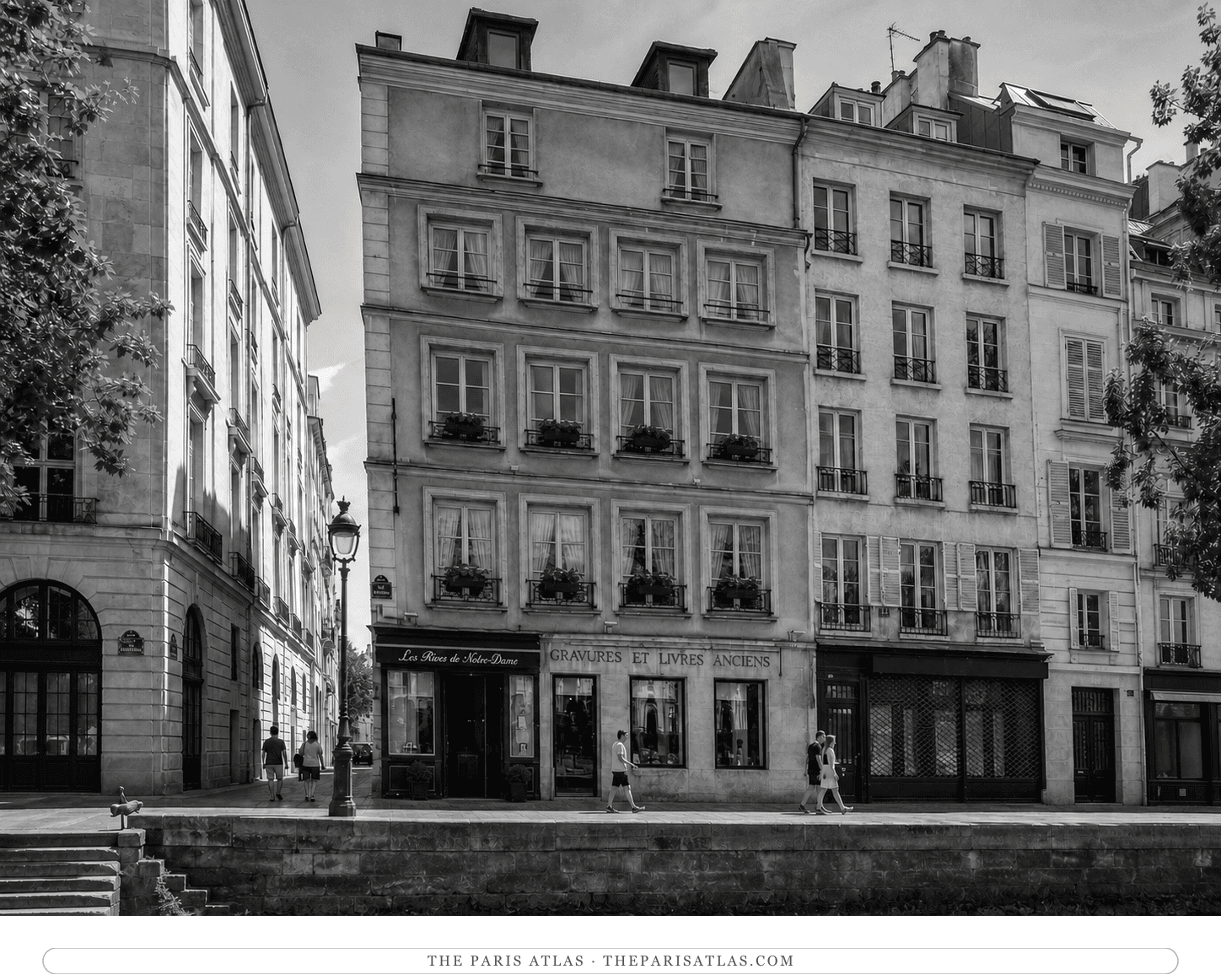
Quai des Tuileries, on the Right Bank below the garden

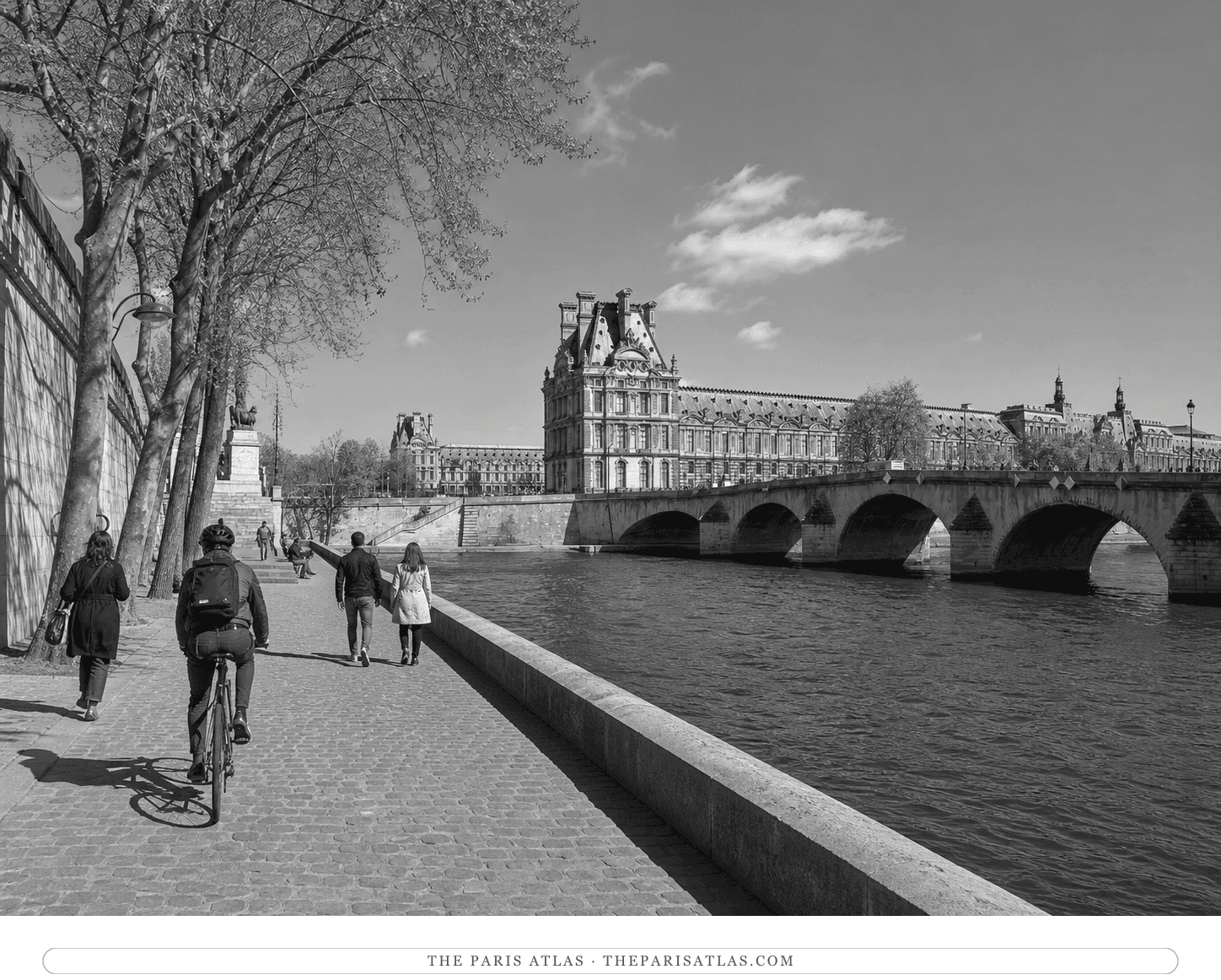
Quartier de l'Europe

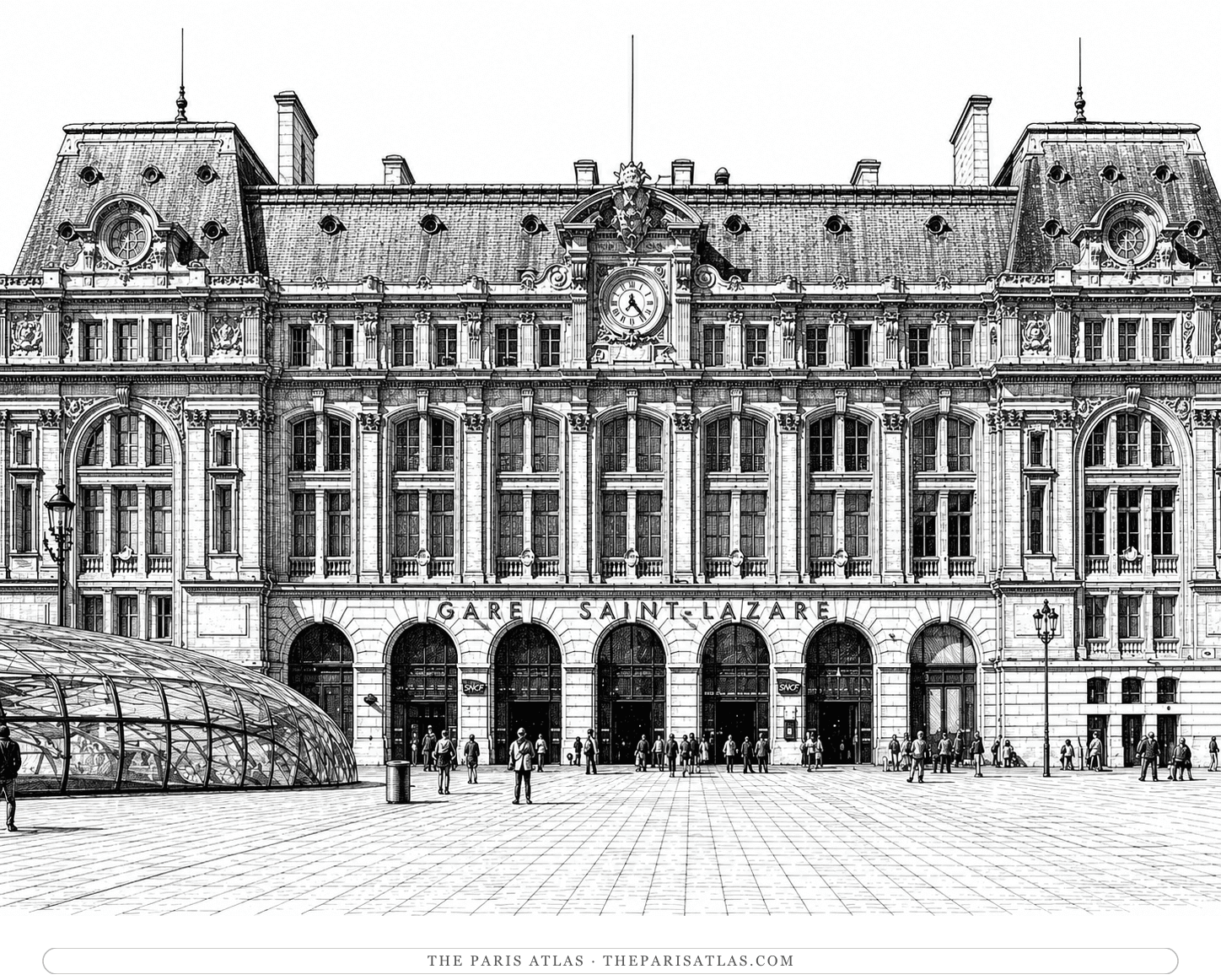
Gare Saint-Lazare
Paris's oldest terminus — Claude Monet's steam-filled train shed, the boat trains to the Atlantic liners, and the platform where the Paris chapters of F. Scott Fitzgerald's Tender Is the Night end in pistol shots.

39 rue de Saint-Pétersbourg
The apartment Édouard Manet moved to in 1878 and remained associated with until his death in 1883, in the last years when illness had reduced what he could physically paint.

4 rue de Saint-Pétersbourg
Manet's studio through the 1870s, whose windows looked down on what was then the rue Mosnier — the street he painted repeatedly, flags and all, in the summer of 1878.

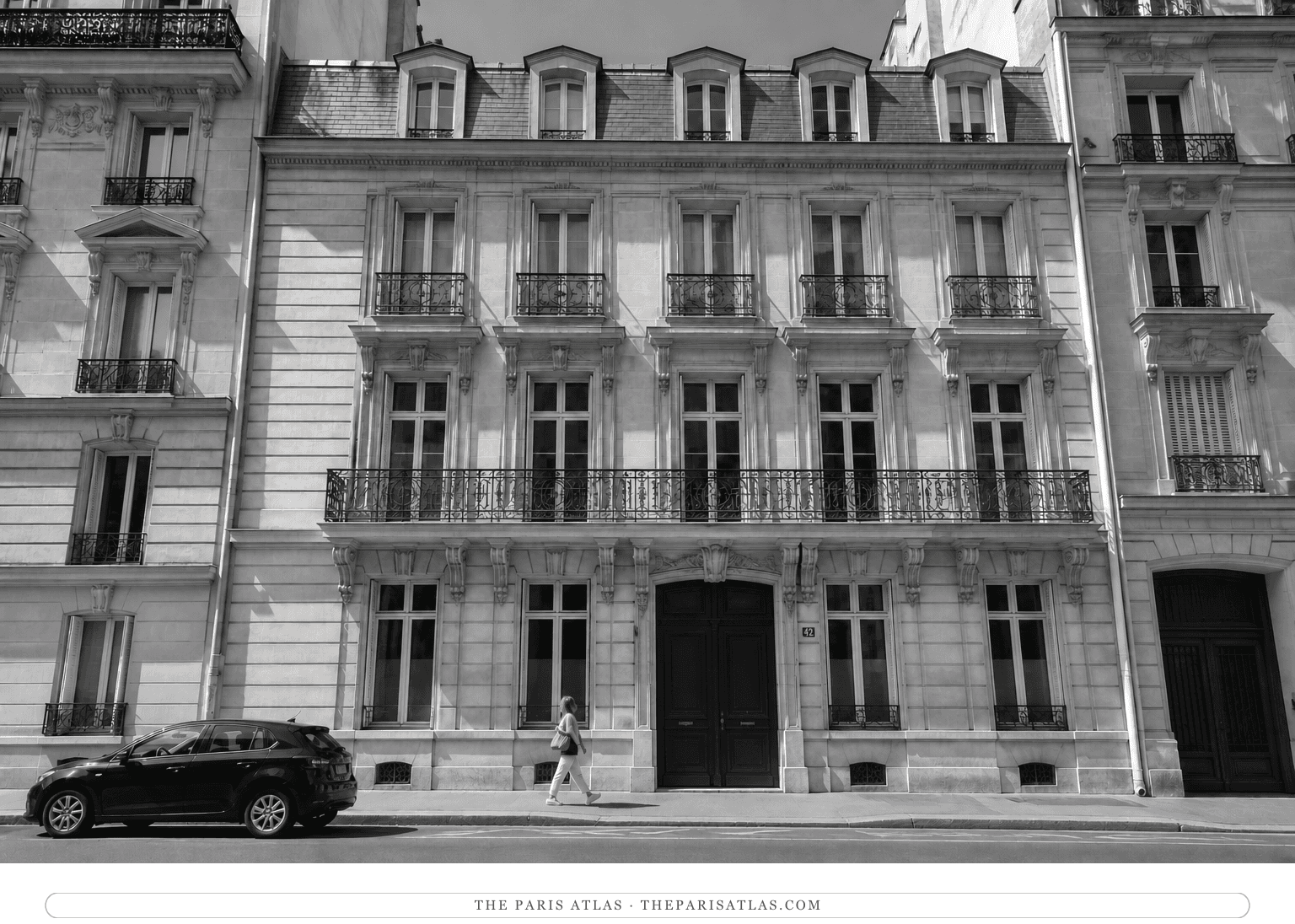
42 rue de Londres
One of Claude Debussy's documented Paris homes, and his address until around 1894 — the years in which he wrote the Prélude à l'après-midi d'un faune and began Pelléas et Mélisande.

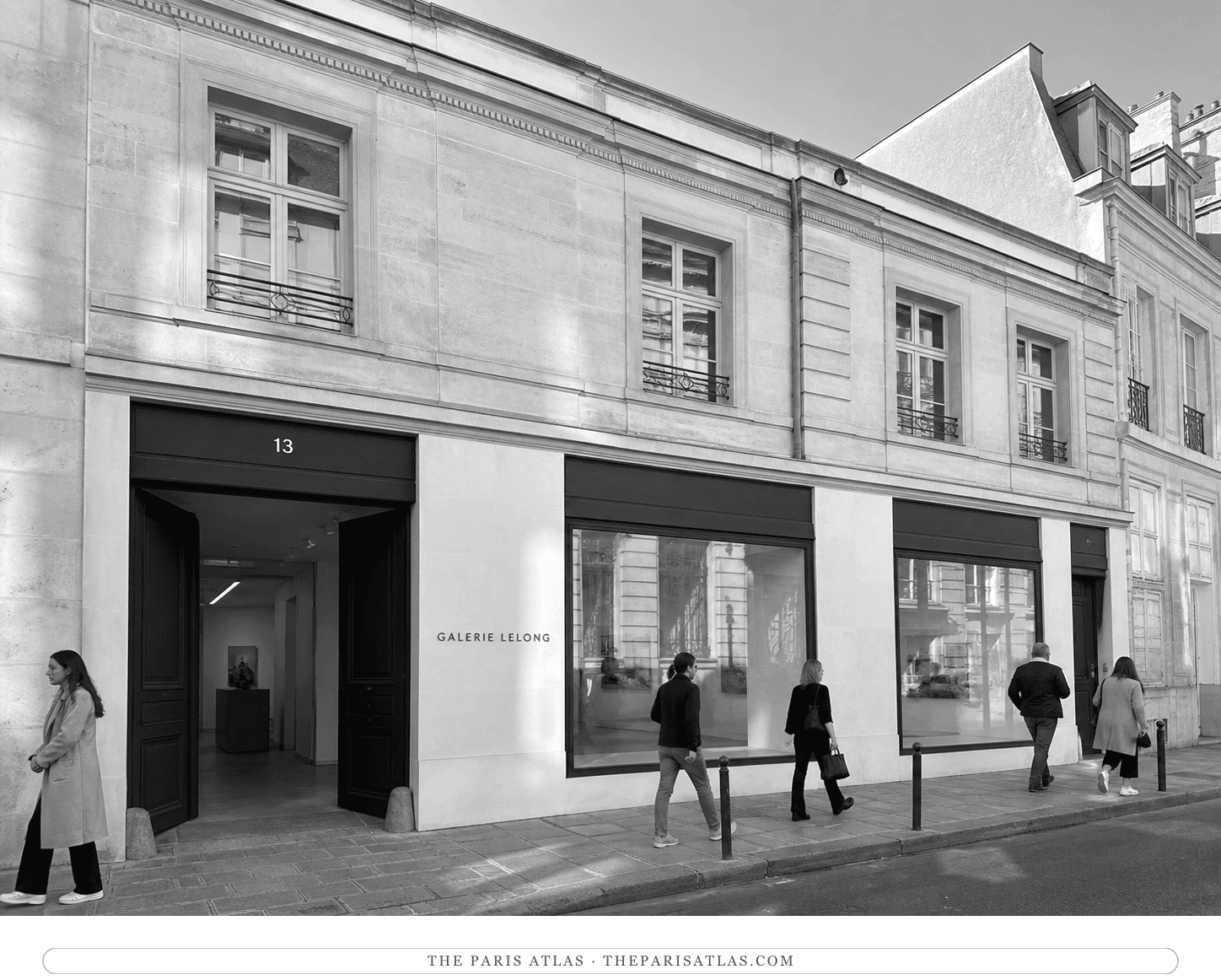
Galerie Maeght, 13 rue de Téhéran
The gallery Aimé and Marguerite Maeght opened in 1945–46 and ran as one of the most important dealerships of post-war French art — Marc Chagall's Paris dealer for decades. The original firm later became Maeght-Lelong and then Galerie Lelong, the current occupant.

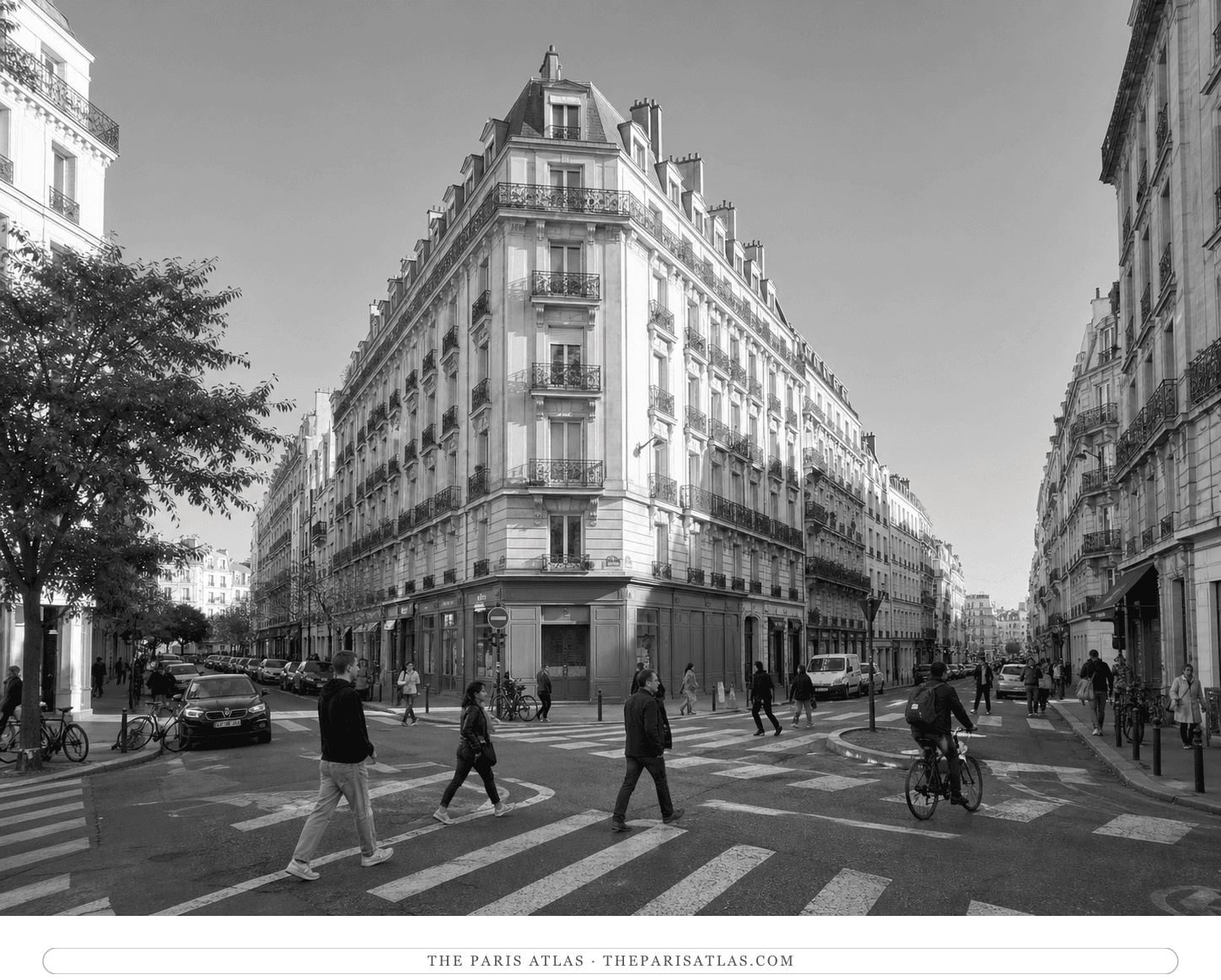
Place de Dublin
The star-shaped junction in the Quartier de l'Europe where Gustave Caillebotte set Paris Street; Rainy Day — and one of the few places in Paris where you can stand almost exactly where a famous painting was composed and recognise everything.

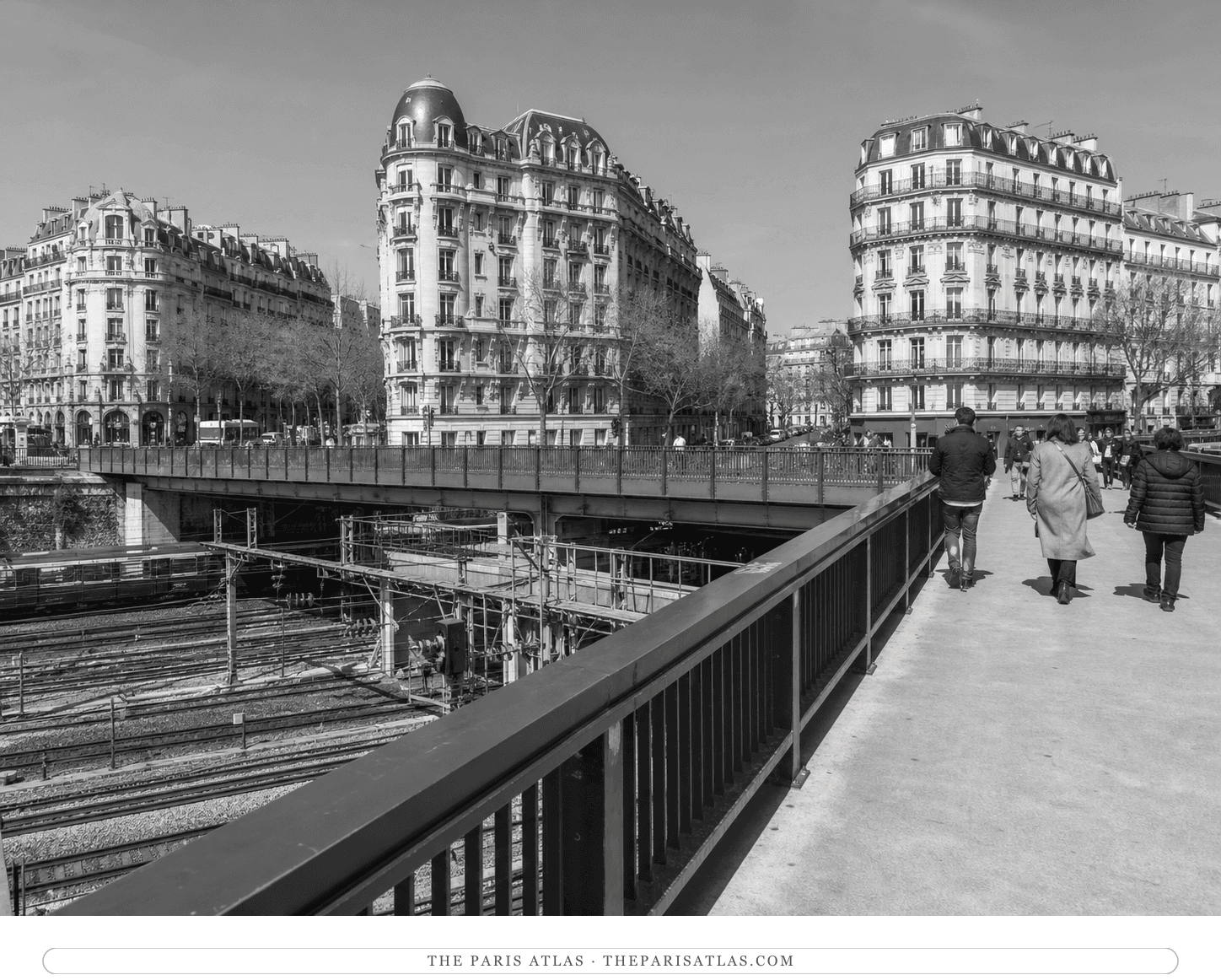
Pont de l'Europe
The iron bridge carrying six streets across the tracks behind Gare Saint-Lazare — the subject of Gustave Caillebotte's 1876 painting, and the spot where Impressionism looked hardest at industrial Paris.
Quartier de la Gare

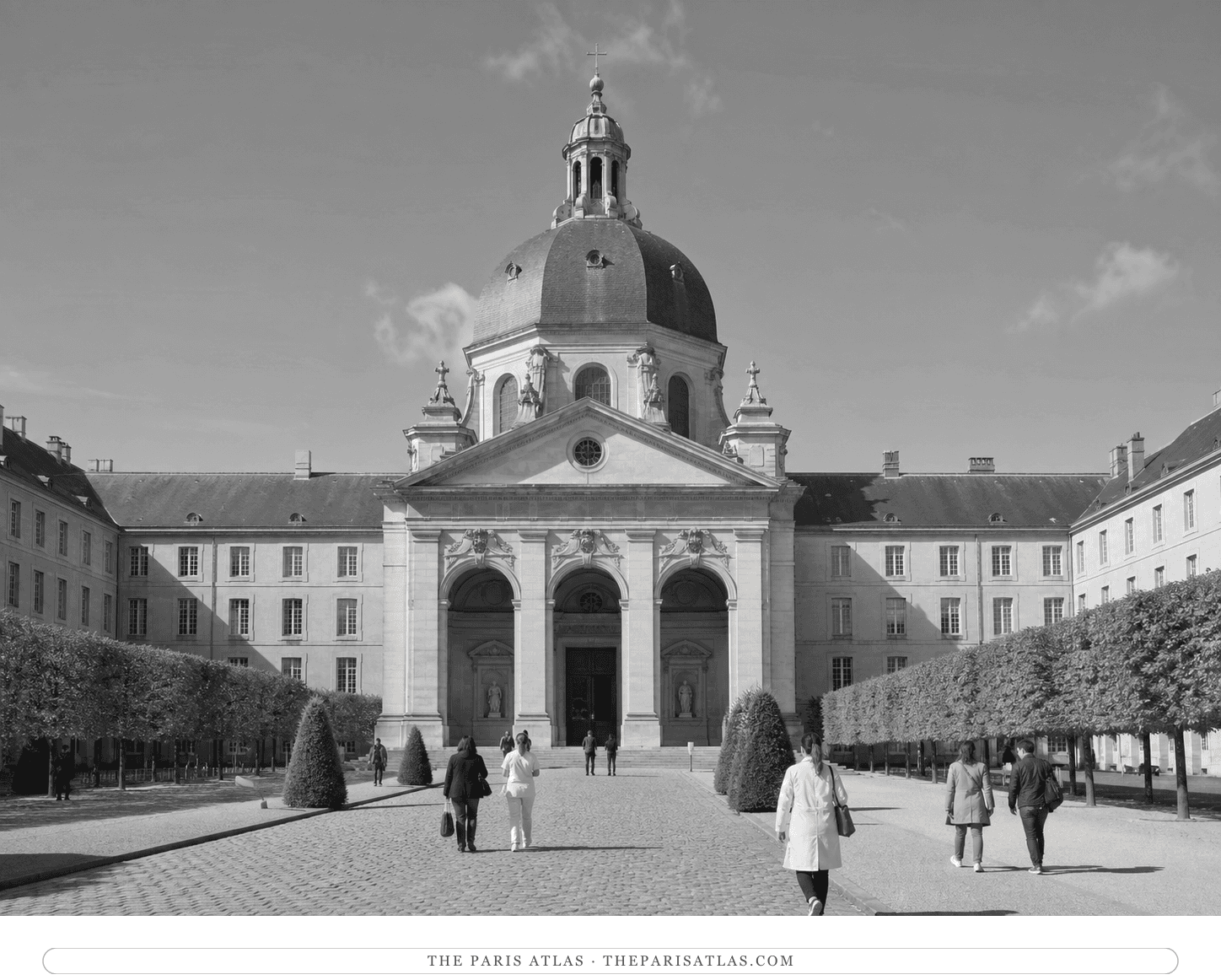
Quartier de la Monnaie

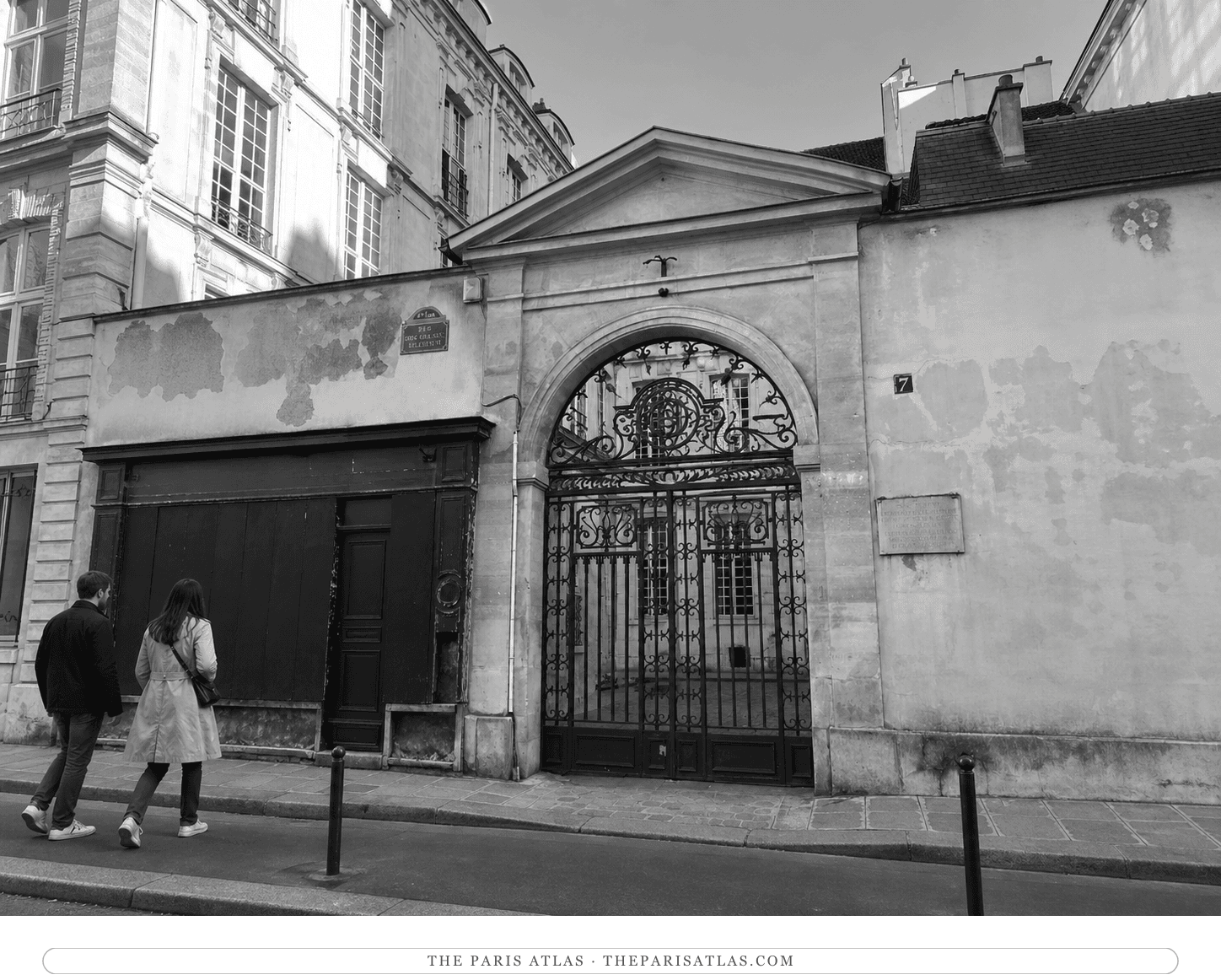
Quinze-Vingts


Rochechouart

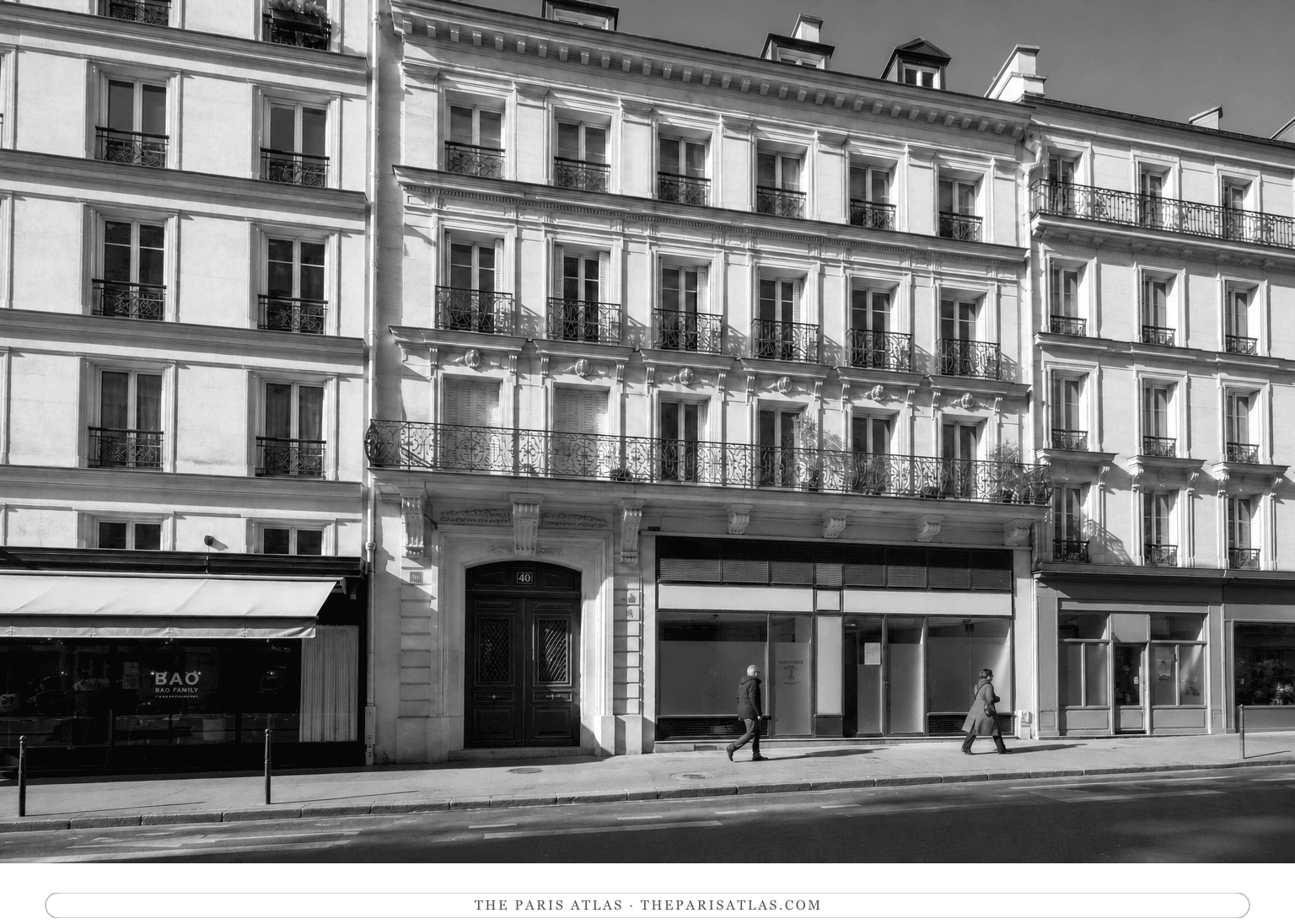
République

Saint-Georges

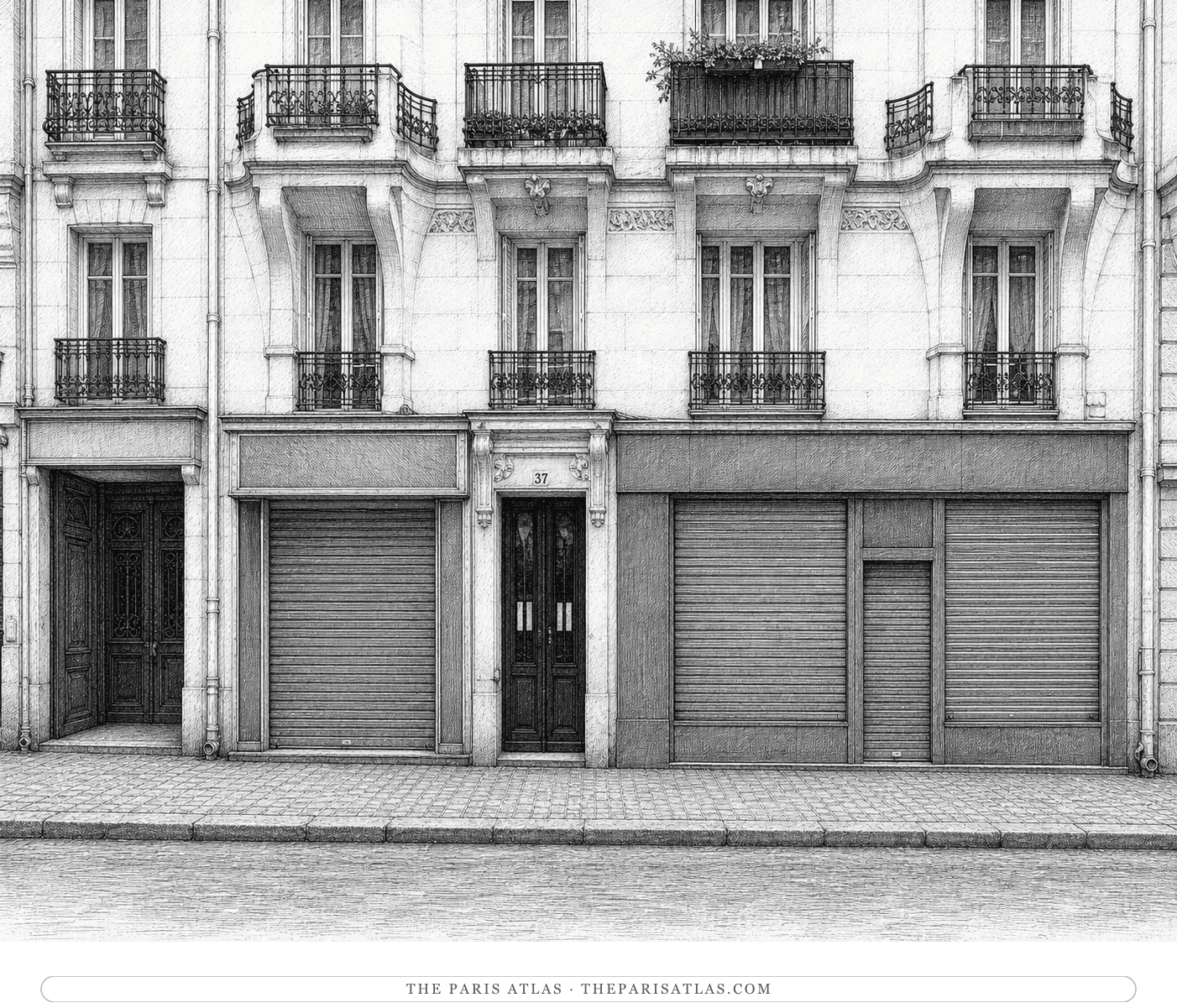
37 rue Victor-Massé
The apartment and studio where Edgar Degas worked for the last quarter-century of his career, on a street then called the rue de Laval. Paul Valéry was brought here to meet him in 1896. Degas was evicted in 1912 and never really worked again.

4 rue Frochot
The studio and apartment Edgar Degas settled into in 1877 — the year he was showing the ballet and café pictures that made his name, a few steps from the place Pigalle.

15 rue La Bruyère
A Paul Gauguin address in the 9th arrondissement during the years when he was still a stockbroker, painting on Sundays and quietly assembling one of the better private Impressionist collections in Paris.

28 place Saint-Georges
The first home Paul Gauguin shared with his Danish wife Mette Gad after their marriage in 1873, on a handsome small square — the address of a successful stockbroker rather than a painter.

5 rue Henri-Monnier
The house of Gustave Arosa — businessman, photographer and collector — who became Paul Gauguin's guardian, found him his job at the Bourse, and owned the Delacroix, Courbet and Pissarro canvases that started him painting.


56 rue Notre-Dame-de-Lorette
The house where Paul Gauguin was born on 7 June 1848, months before the family fled France for Peru — a departure that killed his father and shaped everything that came after.

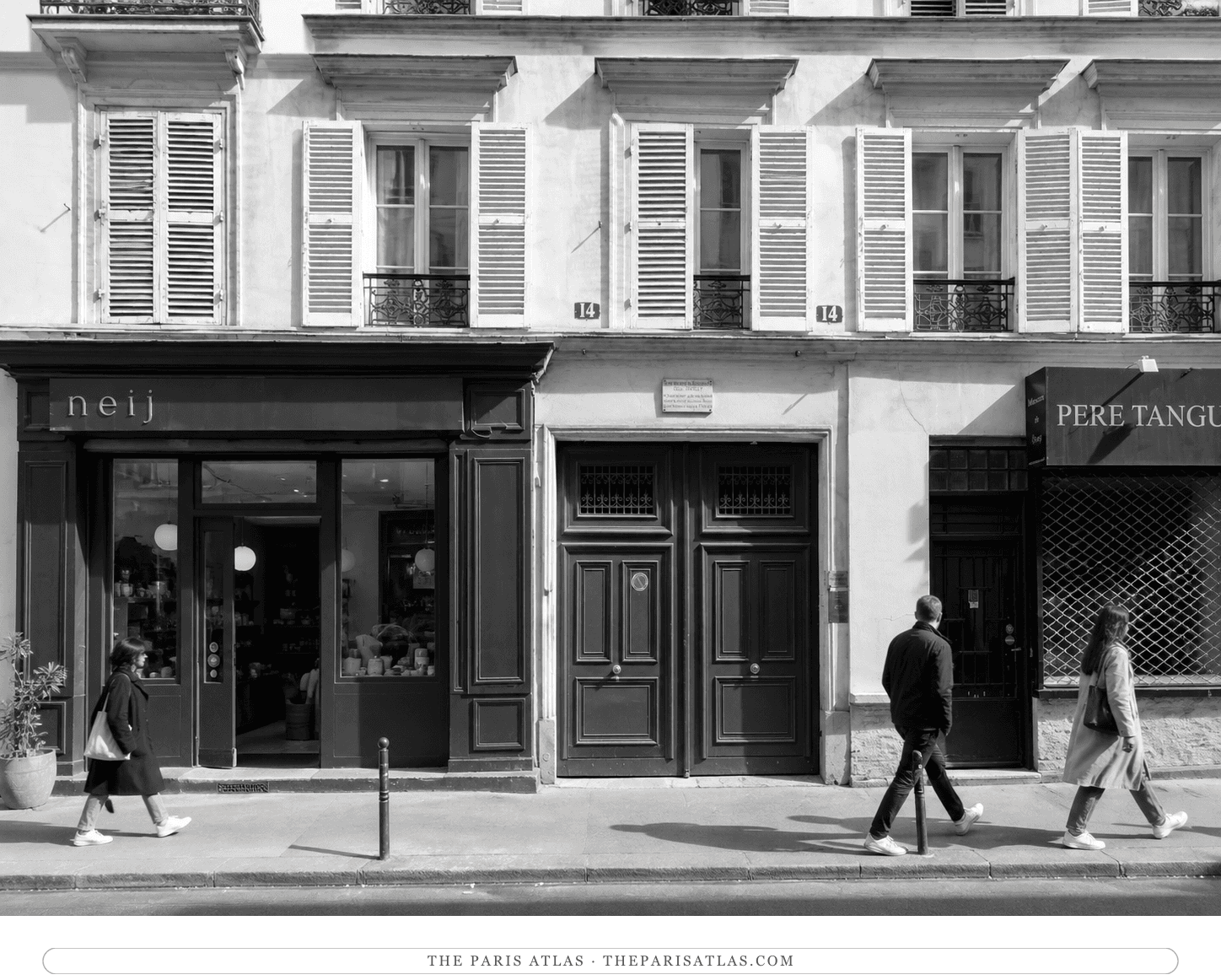
Père Tanguy's shop, 14 rue Clauzel
The tiny paint shop of Julien 'Père' Tanguy, who supplied the Impressionists on credit, hung their canvases in his window when no dealer would, and sat three times for Van Gogh's most affectionate portrait.
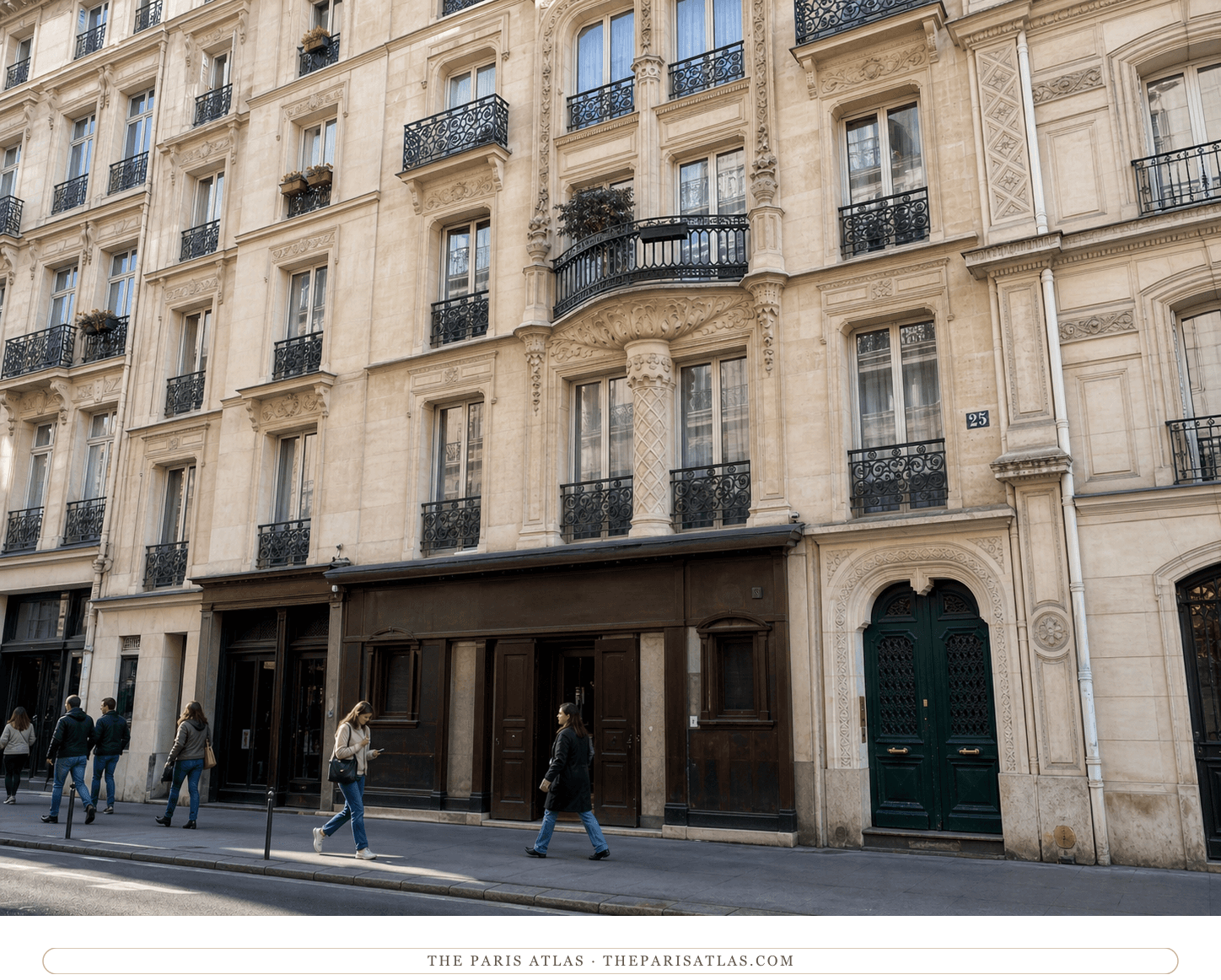
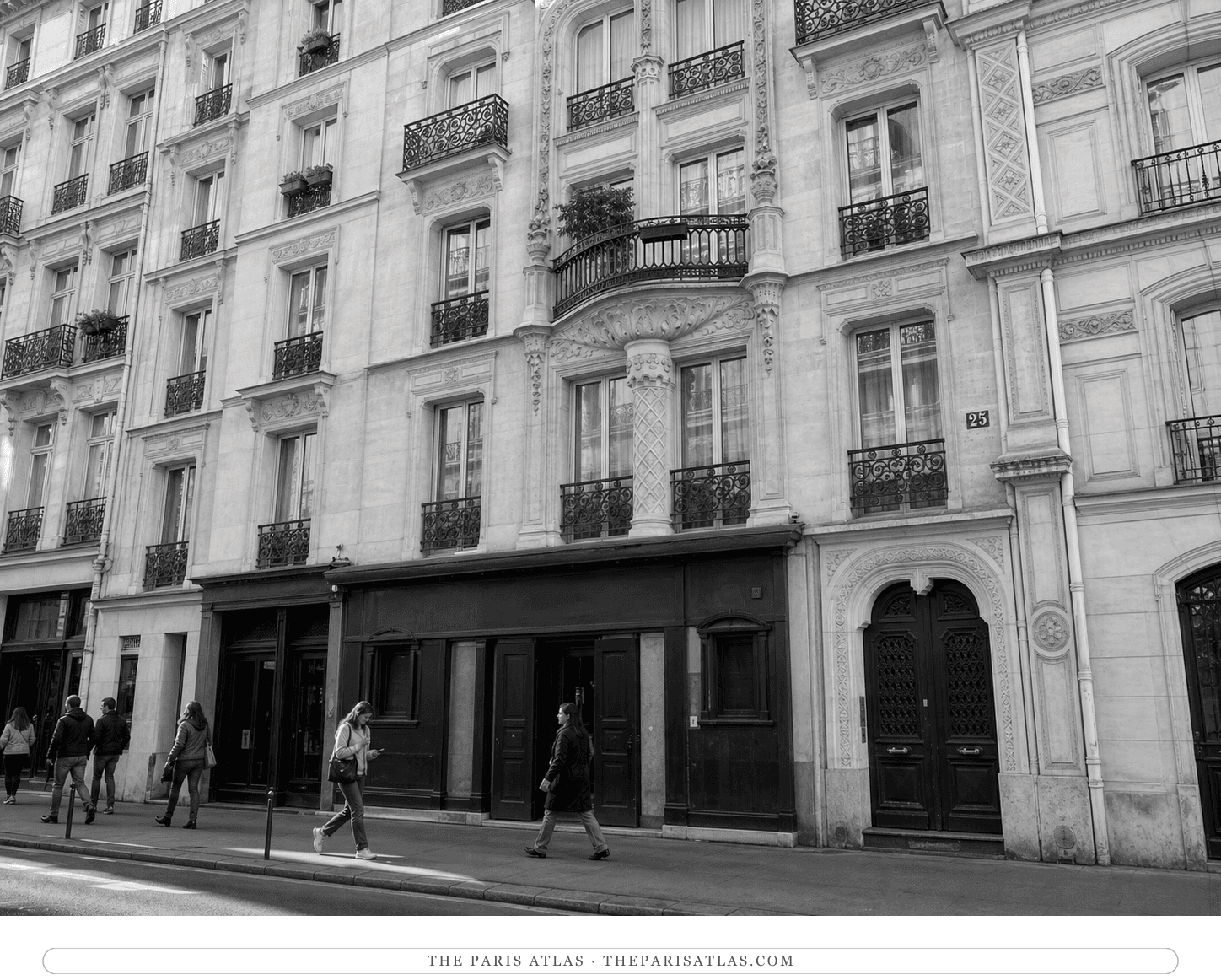
25 rue Victor-Massé
Theo van Gogh's small flat, where Vincent turned up unannounced from Antwerp in March 1886. It was too cramped to paint in, which is why the brothers moved to the rue Lepic three months later.

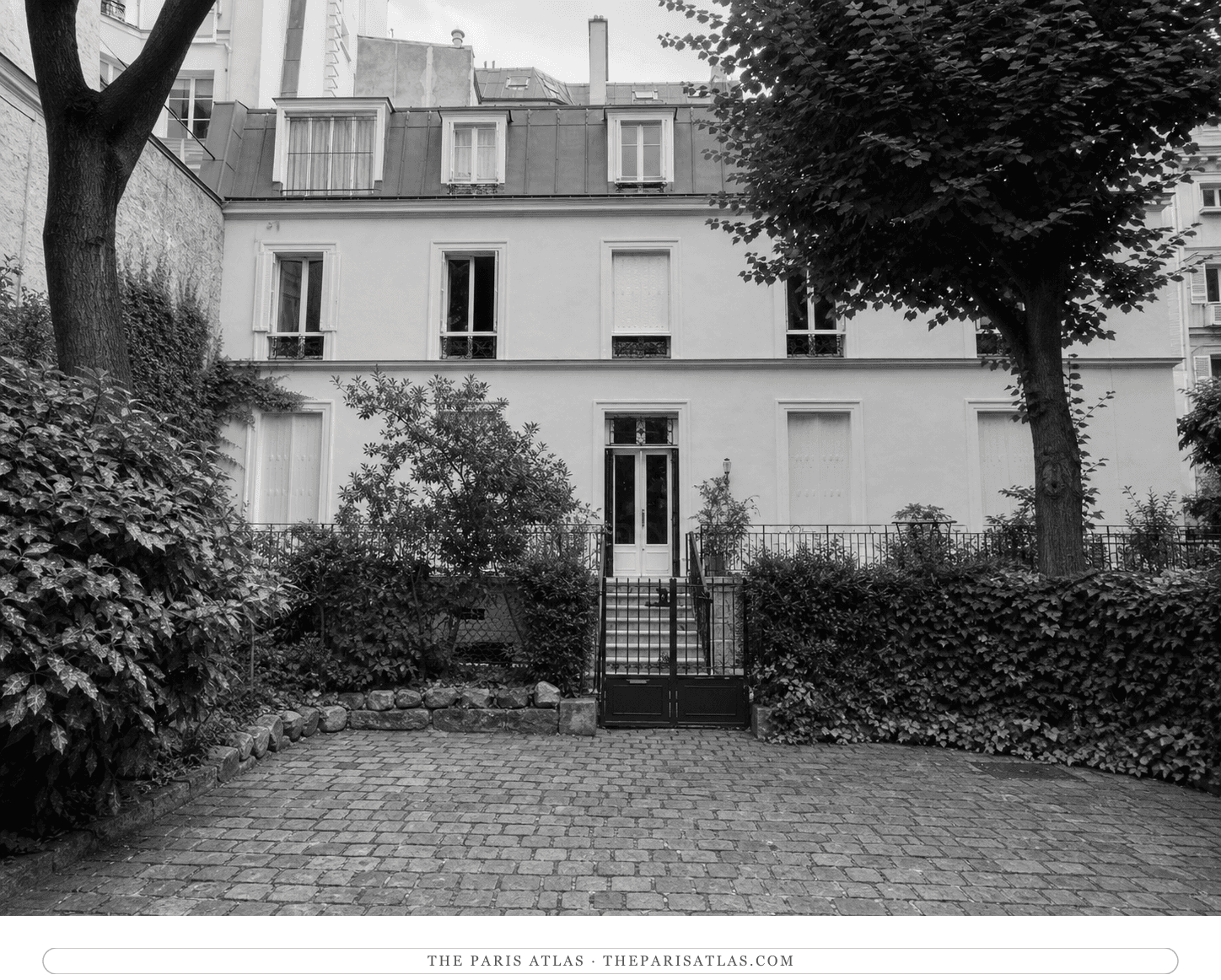
5 rue Victor-Massé
The apartment the young Stefan Zweig rented below Pigalle from November 1904 to June 1905 — the Paris year that runs through The World of Yesterday, on the same street where Degas kept his studio.

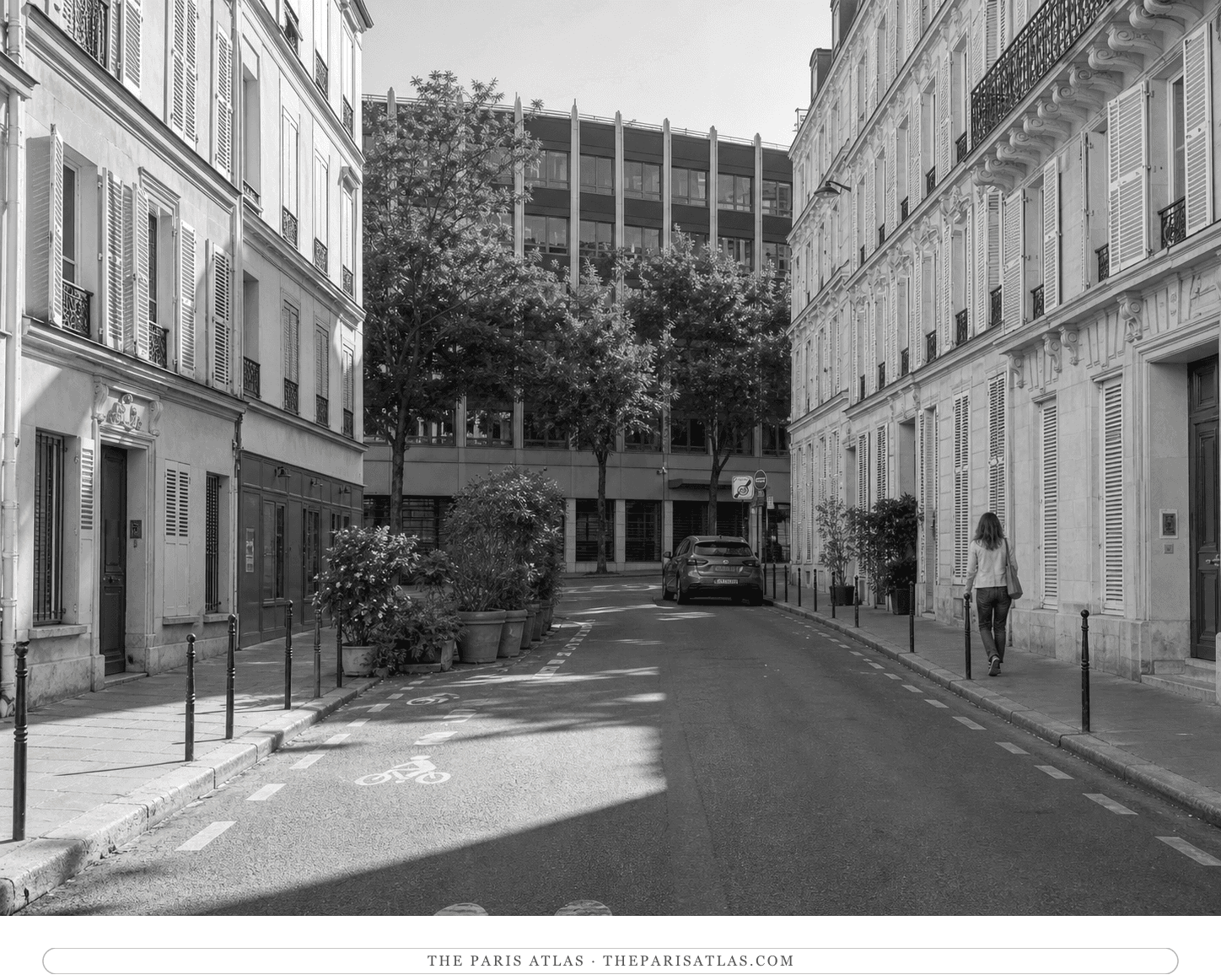
31 rue Ballu
The last address the record gives Paul Cézanne in Paris, taken on 21 October 1899. He left for Aix and spent the remaining seven years of his life painting the same mountain.
Saint-Germain
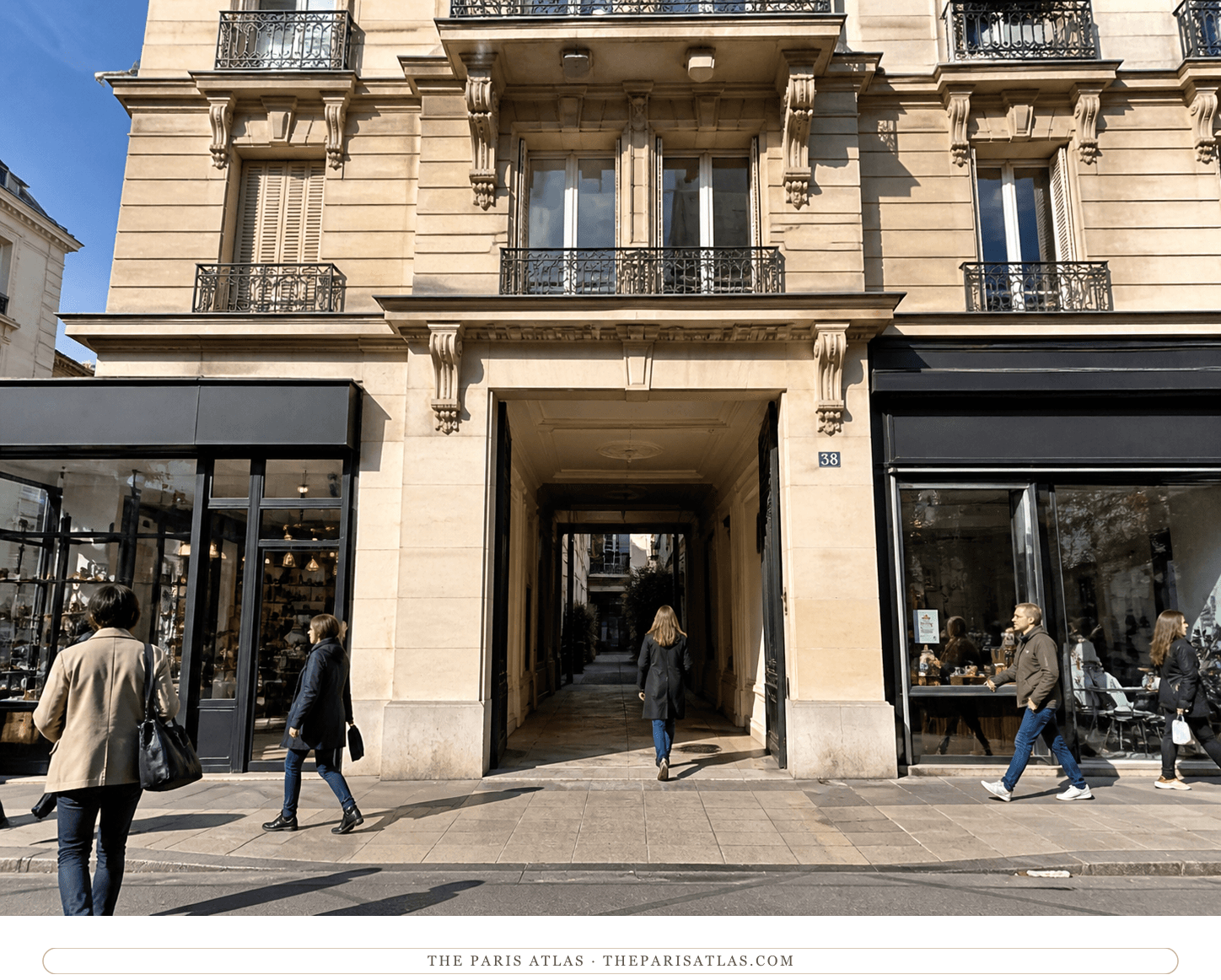
Saint-Germain-des-Prés, facing the church

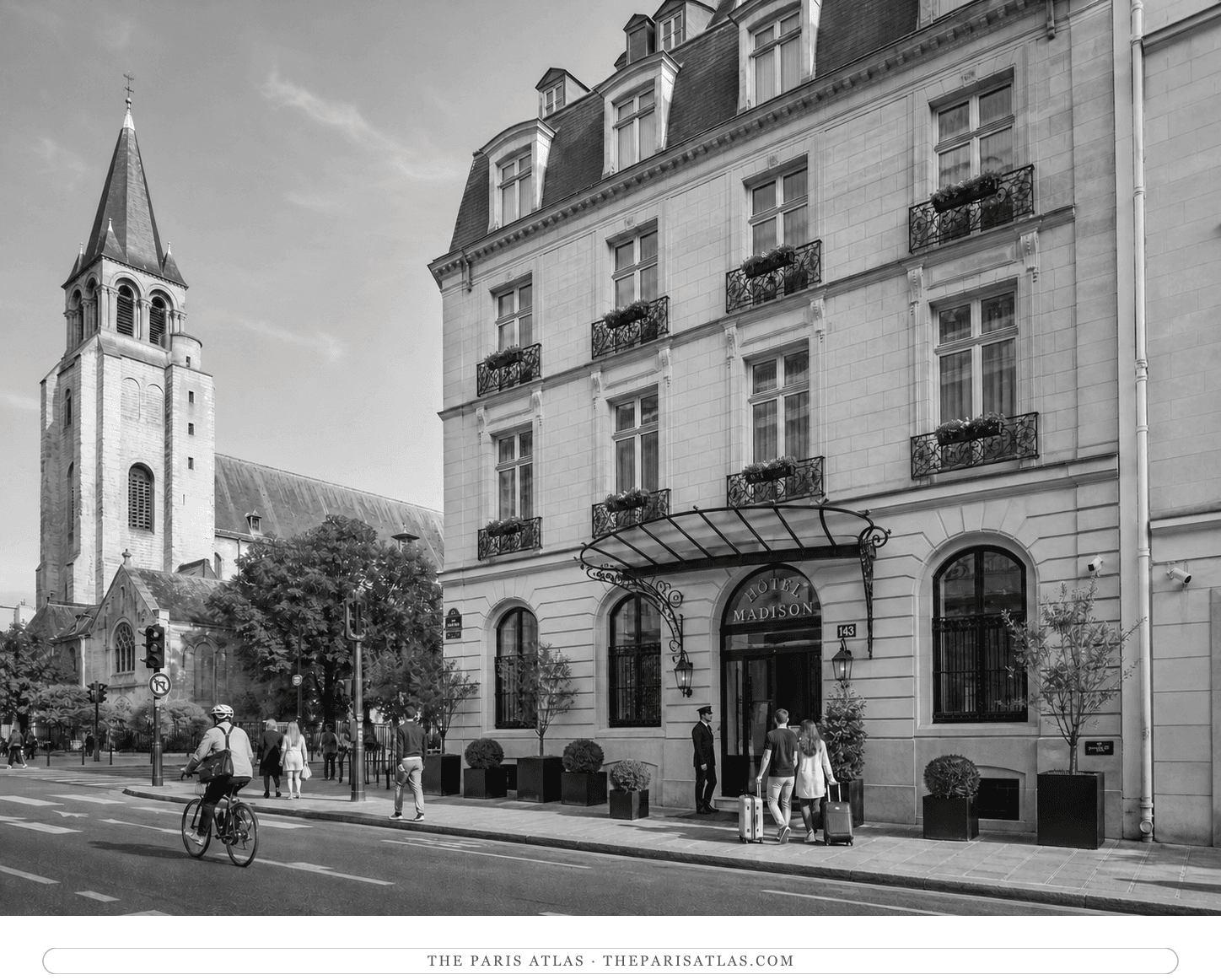
Saint-Germain-des-Prés, on the quai facing the Louvre

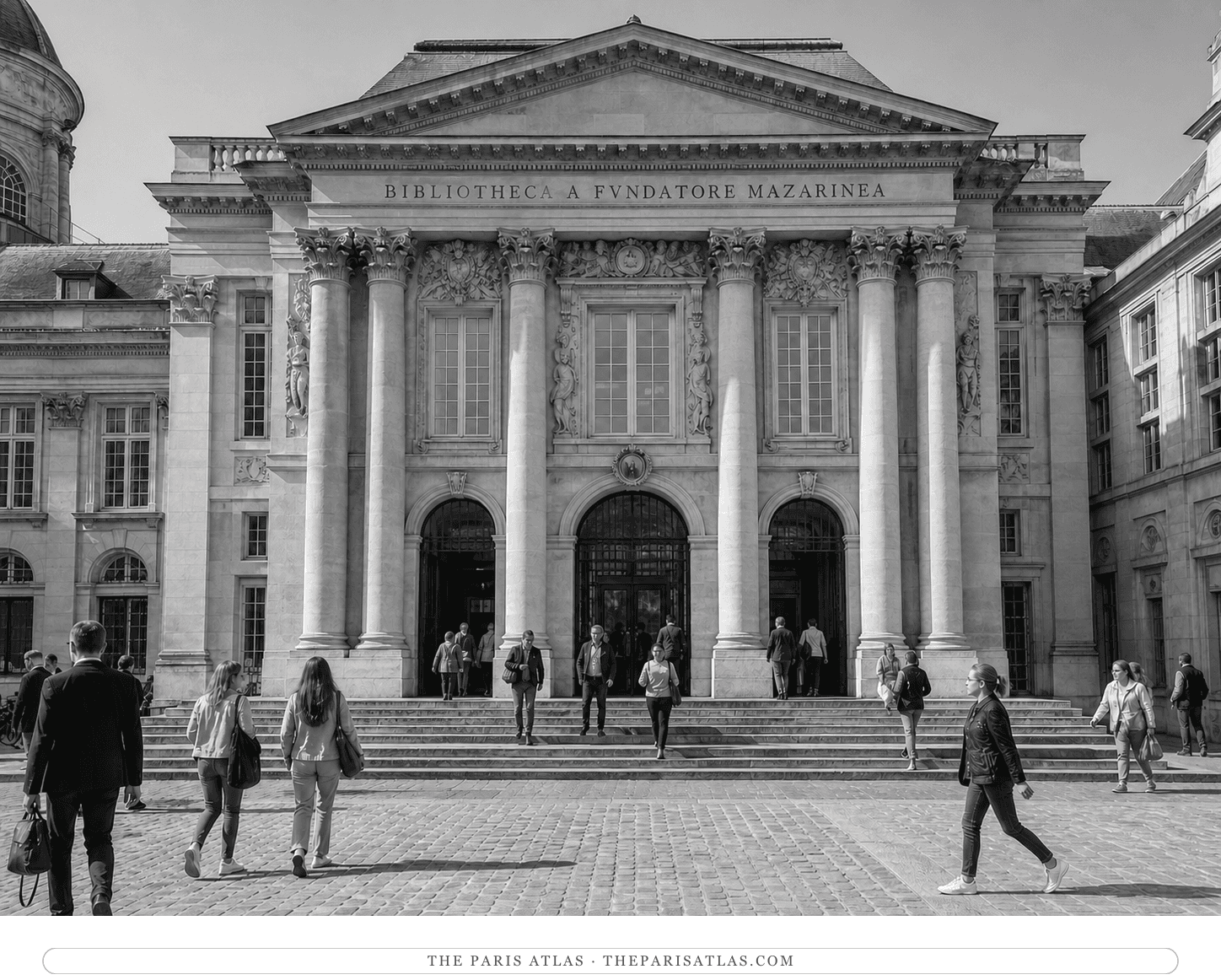
Saint-Lazare

Maison Albar – Le Diamond
Maison Albar – Le Diamond is a five-star hotel near Saint-Lazare with 72 rooms and suites, crystal-heavy interiors and a planted patio. Its practical strengths are a 24-hour gym, round-the-clock room service and several suites with steam showers.
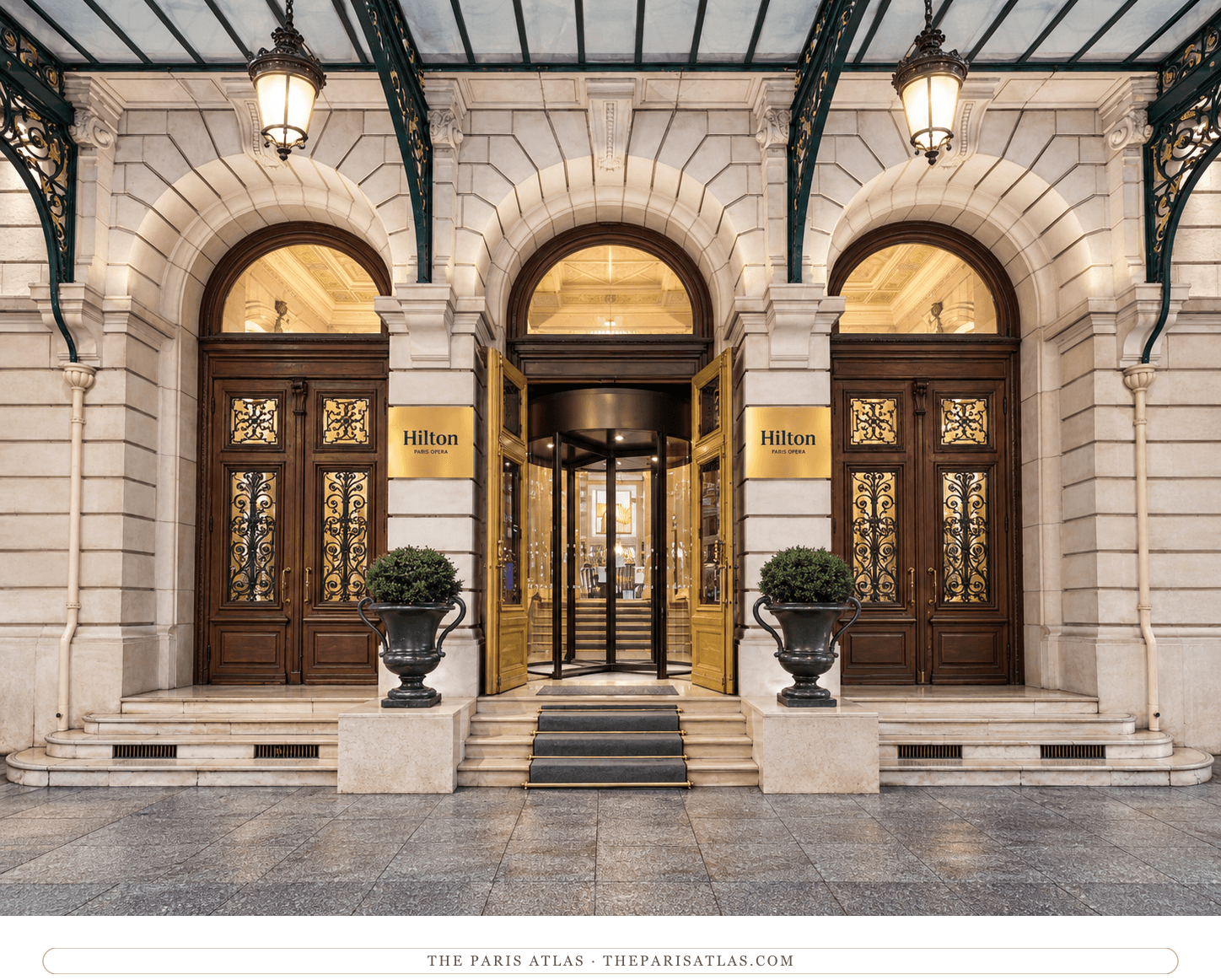
Hilton Paris Opéra
A grand hotel beside Gare Saint-Lazare, with an ornate nineteenth-century entrance and salon, contemporary rooms, a fitness center and an executive lounge.
Saint-Thomas-d'Aquin

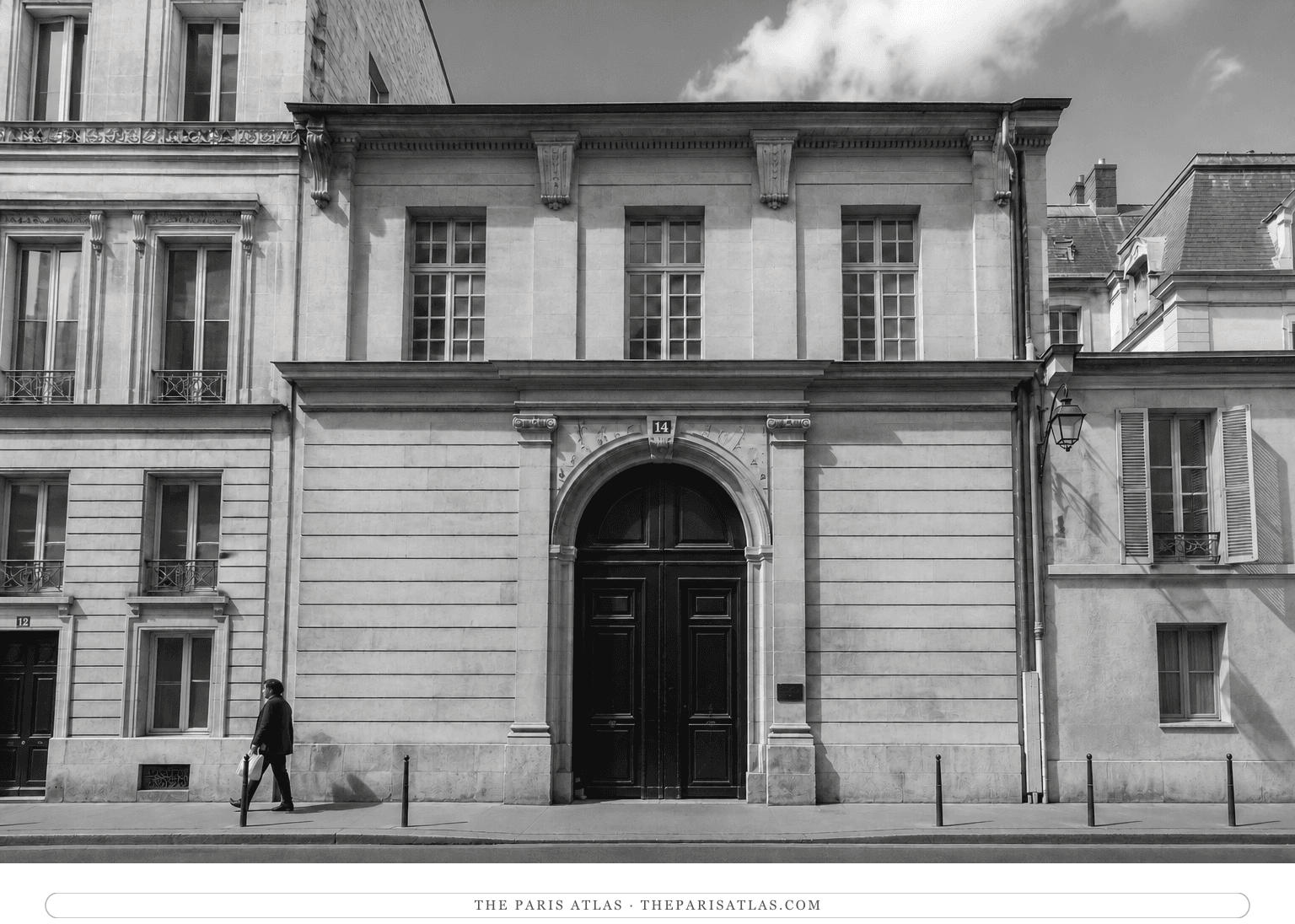
14 rue Saint-Guillaume
The Paris home of the lawyer Walter Berry, Edith Wharton's closest friend and literary adviser for forty years — and the man who eventually took over the lease of her apartment on the rue de Varenne.

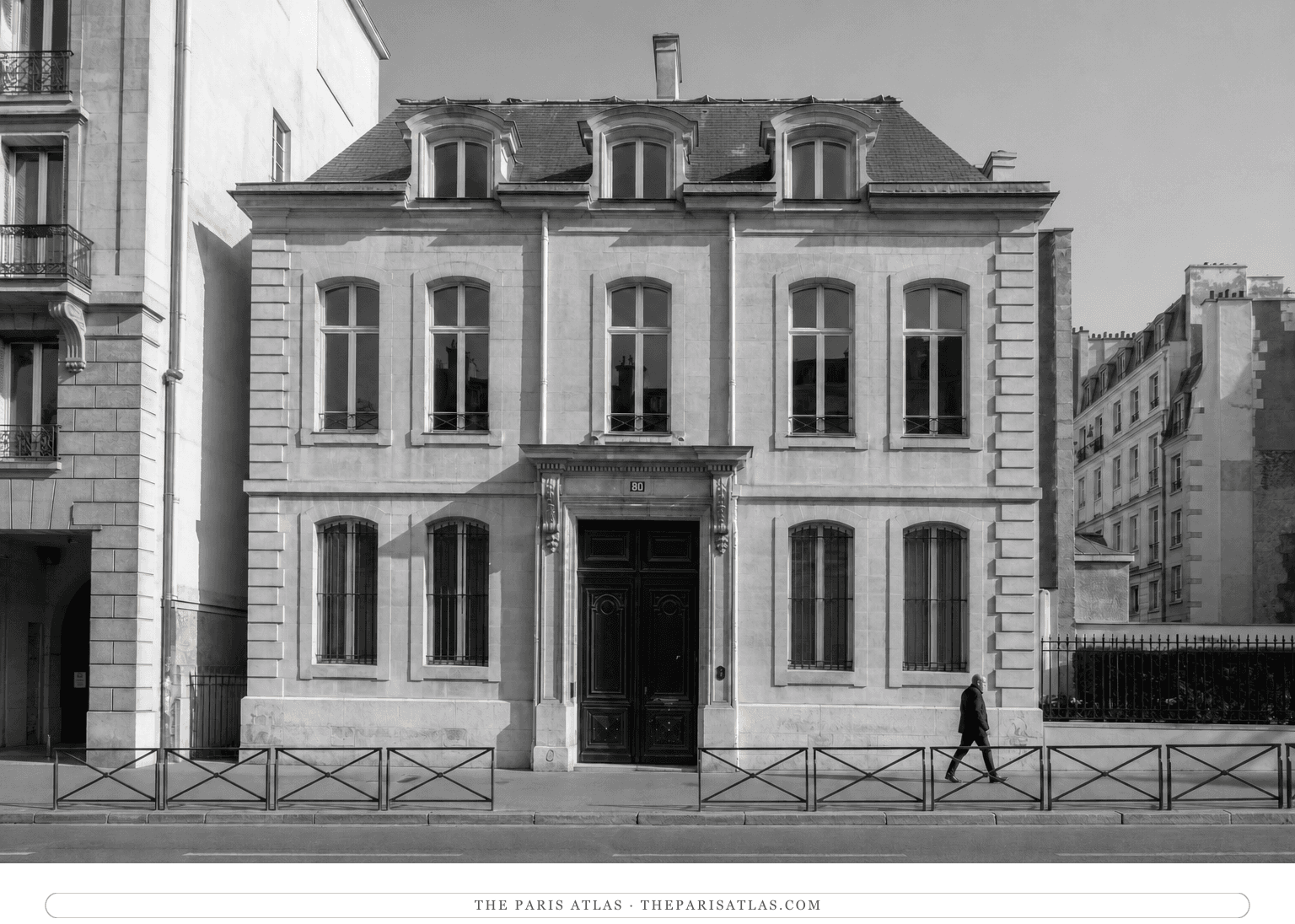
The Little Review Paris office, 80 rue de l'Université
The Paris office of The Little Review, the magazine that serialised Ulysses and published Djuna Barnes — a publication link rather than a place she is known to have worked in.

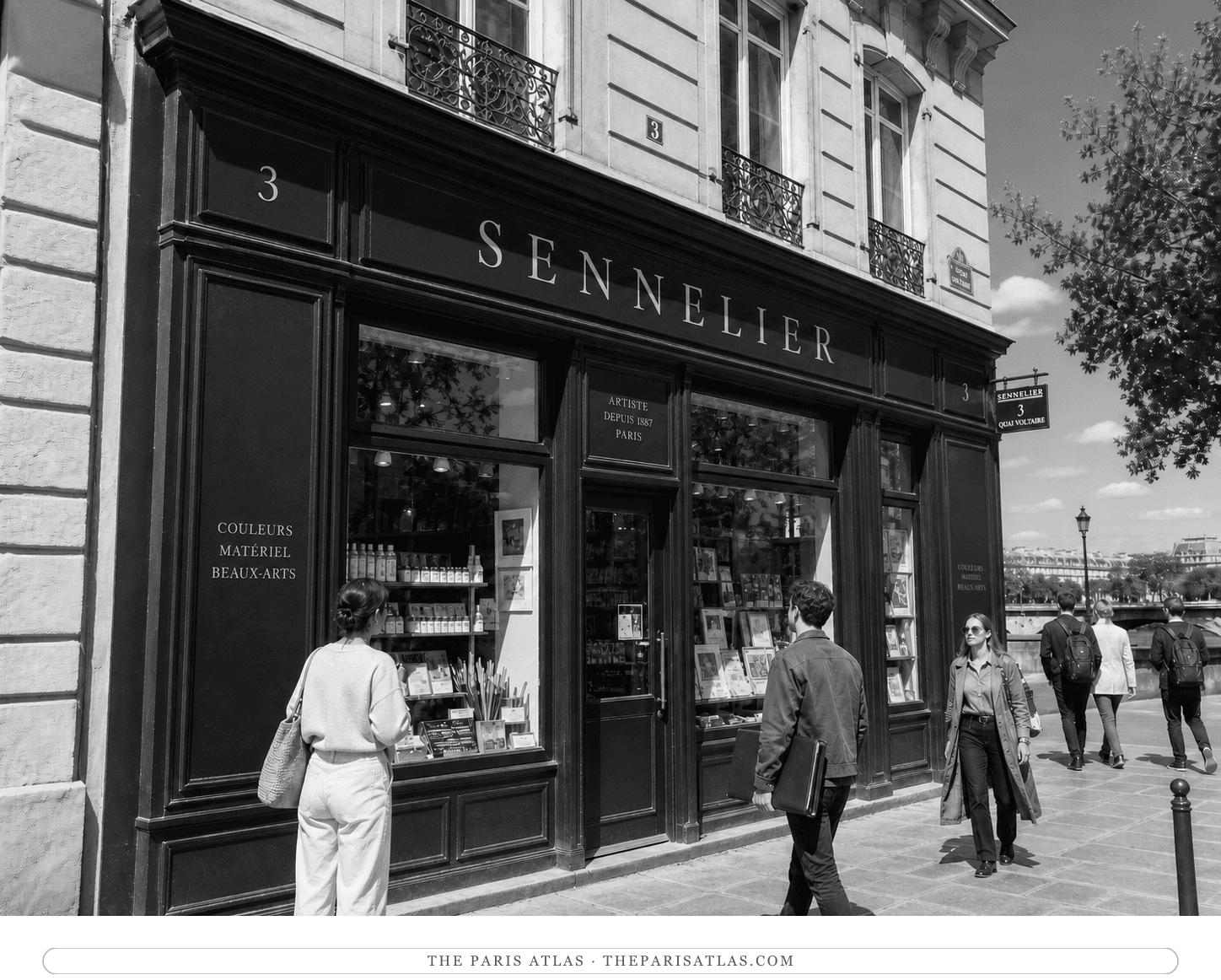
Sennelier, 3 quai Voltaire
The artists' colourman opened by Gustave Sennelier on the quai Voltaire in 1887, opposite the Louvre — still trading, still grinding pigment, and still looking very much as it did.

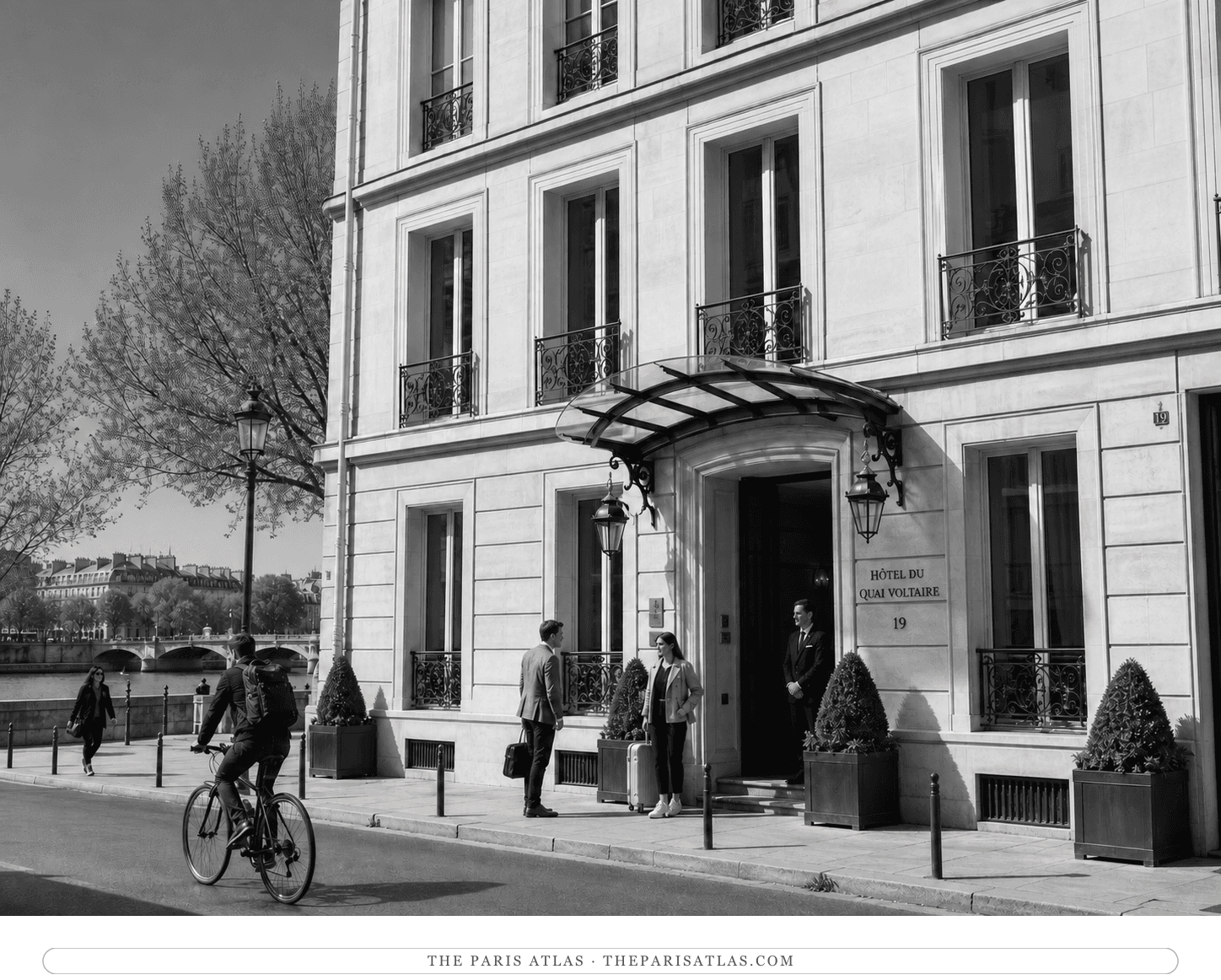
Hôtel du Quai Voltaire
The hotel facing the Louvre across the Seine where Camille Pissarro took a third-floor room in the spring of 1903 and painted the Pont Royal, the Pavillon de Flore and the river — the last series he made in Paris.
Saint-Victor

Sentier
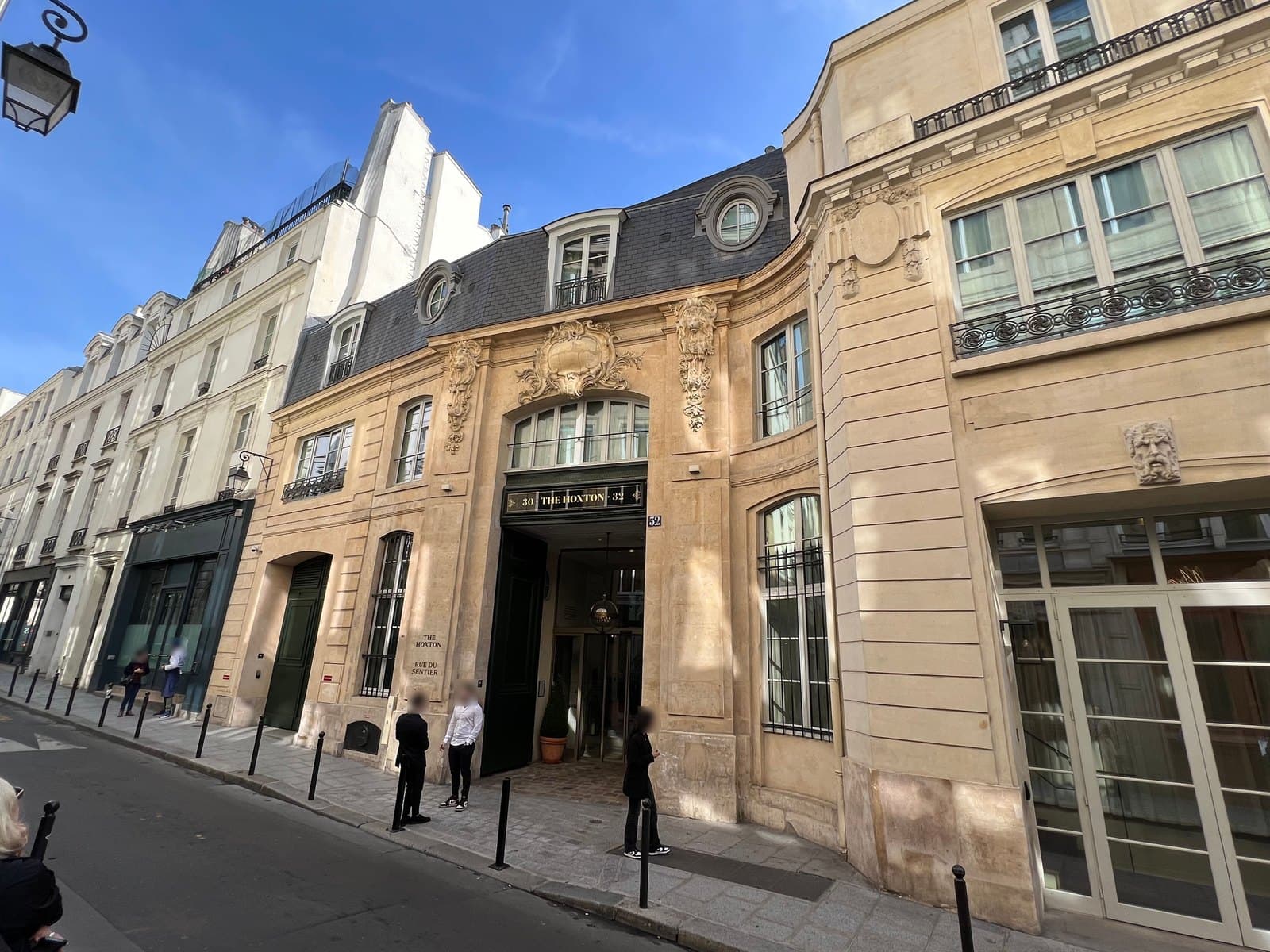
The Hoxton, Paris
A 172-room hotel in an 18th-century mansion on rue du Sentier, with rooms from compact to large, a brasserie, a cocktail bar and a summer courtyard pool.

Grands Boulevards Experimental
Behind a passage off boulevard Poissonnière, this 50-room hotel brings canopy beds, a glass-roofed restaurant and two cocktail bars to a building dating from before the French Revolution.
Ternes

Renaissance Paris Arc de Triomphe Hotel
A five-star hotel on avenue de Wagram with a curved-glass facade, rooms for four and suites with private terraces.

Maison Albar – Le Champs-Elysées
A 40-room five-star hotel on avenue Mac Mahon, beside the Arc de Triomphe, with Empire-inspired interiors, a glass-roofed bar and suites offering kitchenettes or private wellness facilities.
The western edge of Paris

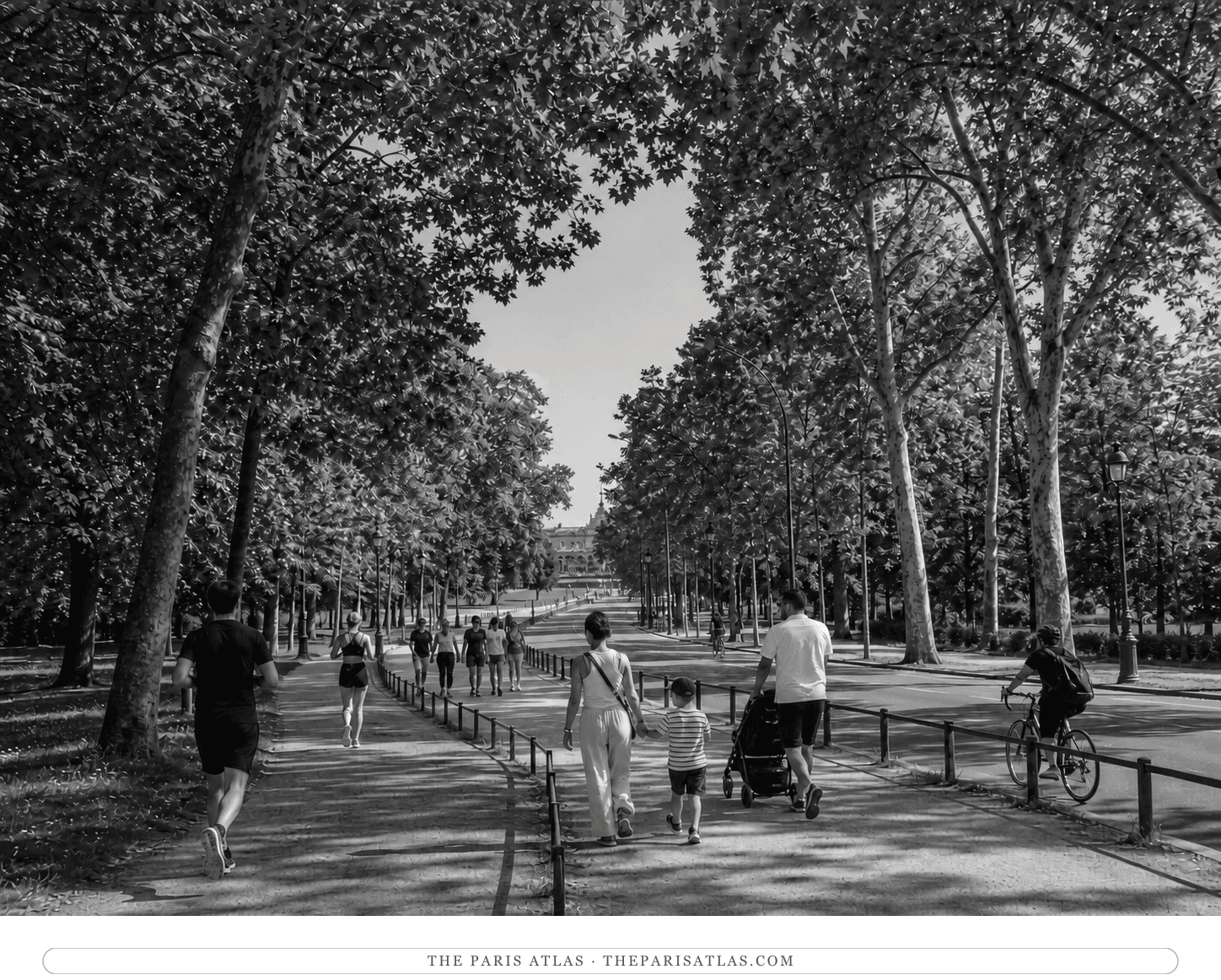
Trocadéro

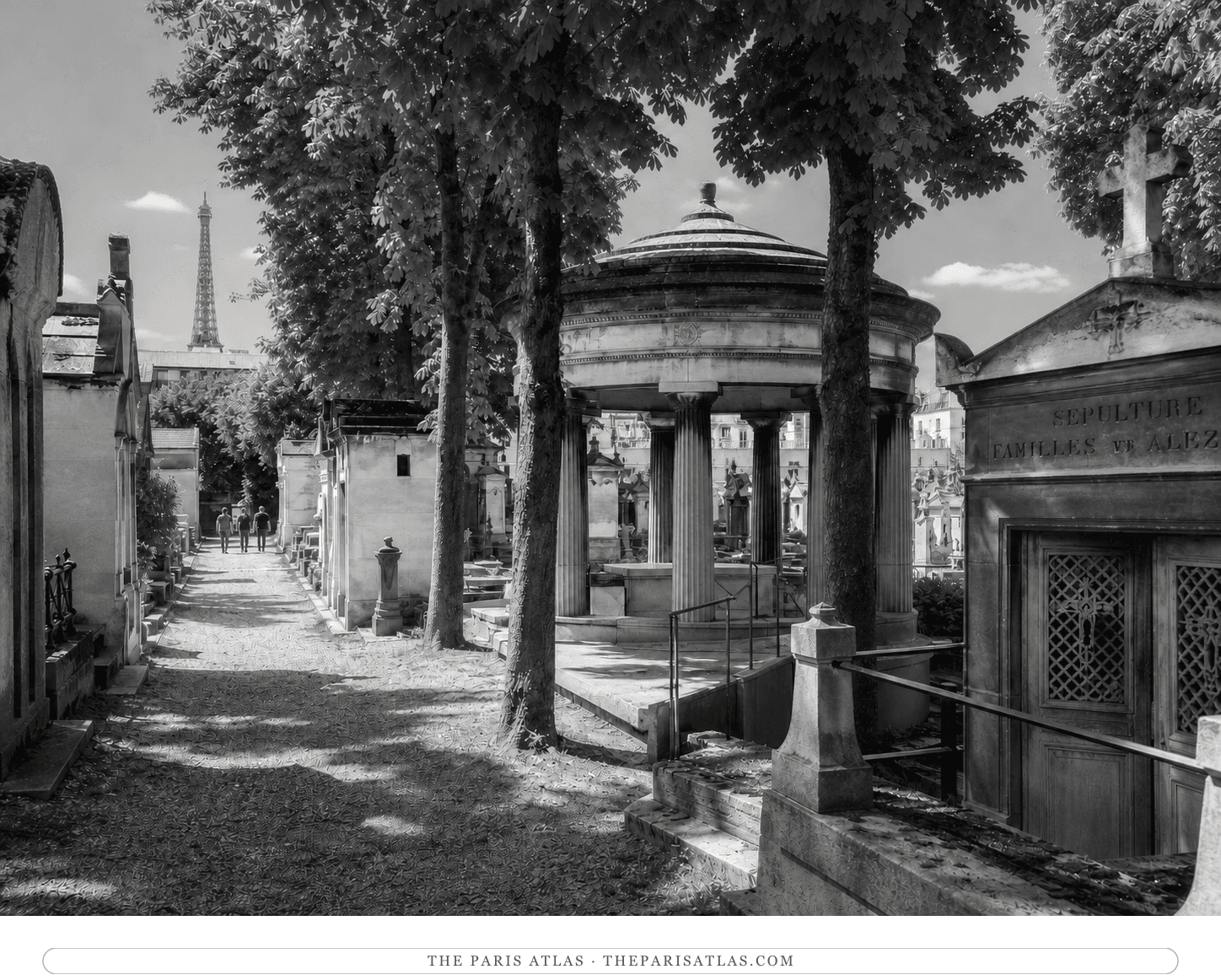
Passy Cemetery
The small, wealthy cemetery beside the Trocadéro where Édouard Manet is buried in the family tomb — together with his brother Eugène and Eugène's wife, the painter Berthe Morisot.

Shangri-La Paris
A 100-room hotel in Prince Roland Bonaparte's former house on avenue d'Iéna, facing the Eiffel Tower across the Seine. It holds France's Palace distinction, a rating above five stars, and has a 17-metre pool and many rooms with Eiffel Tower views.

Le Metropolitan
A 48-room five-star hotel on place de Mexico in the 16th arrondissement, 400 meters from Trocadéro Métro station. It has rooms and suites that face the Eiffel Tower, a heated indoor pool and a Japanese fusion restaurant, Hokusaï.

Le Dokhan’s
Striped awnings and a discreet rue Lauriston entrance lead to a small hotel of antiques, patterned fabrics and a candlelit champagne bar. Le Dokhan’s has 45 rooms and suites near Trocadéro, with an atmosphere closer to a decorated Parisian residence than a large international hotel.

Sofitel Paris Baltimore Tour Eiffel
A flower-lined corner building on avenue Kléber gives the Baltimore its distinctive Parisian face. Inside, this five-star Sofitel combines compact city rooms, larger suites and a restaurant inspired by the atmosphere of an English club.

La Clef Tour Eiffel Paris
A five-star hotel near Trocadéro with conventional rooms, family-sized apartments and the practical facilities for a longer Paris stay.

Renaissance Paris Nobel Tour Eiffel Hotel
A four-star hotel near Trocadéro, with 100 rooms and 22 suites arranged around a leafy courtyard and historic buildings associated with Alfred Nobel.
Tuileries

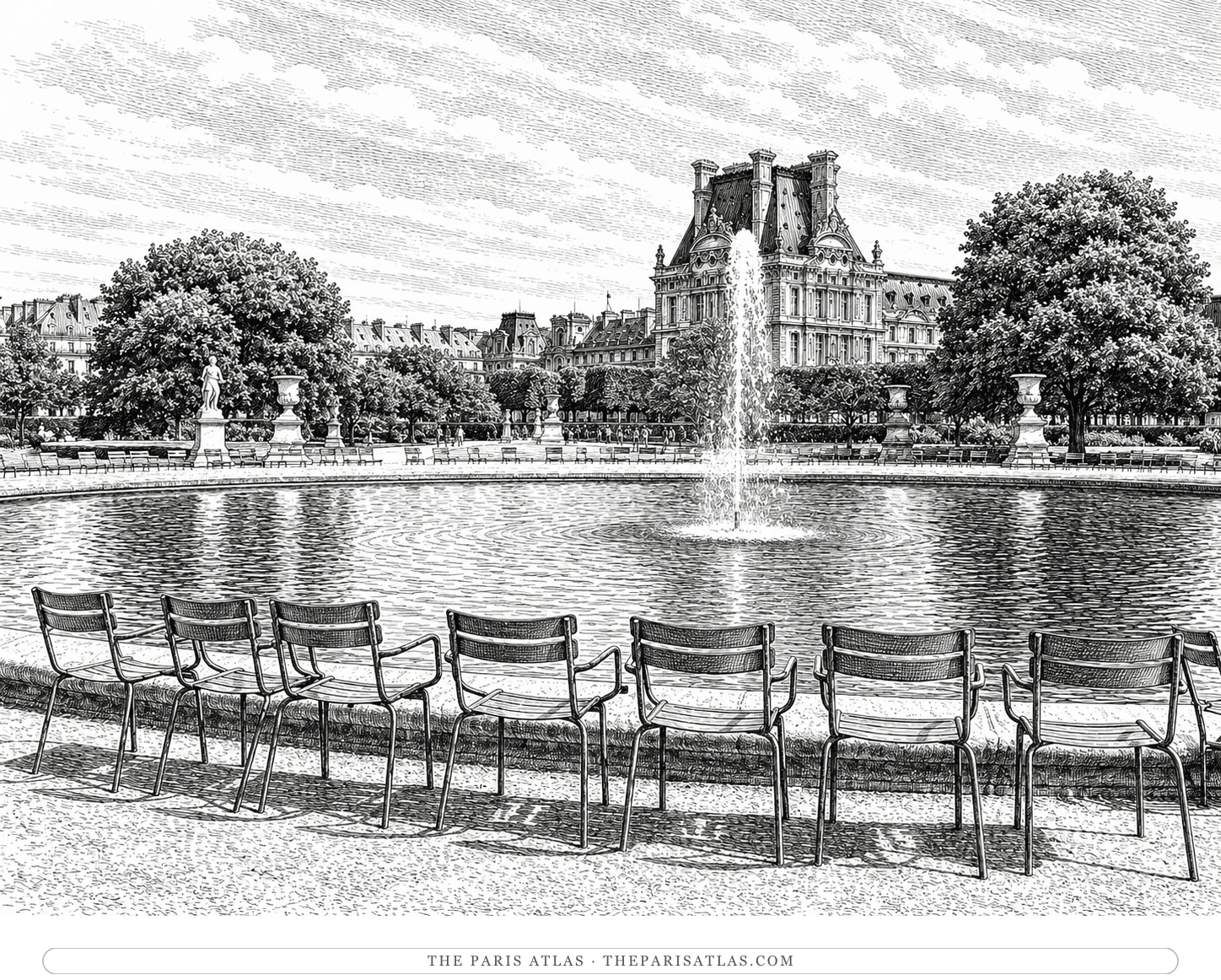
Jardin des Tuileries
André Le Nôtre's great axis between the Louvre and the Concorde — the garden every walker in these pages crossed sooner or later, palace or no palace.

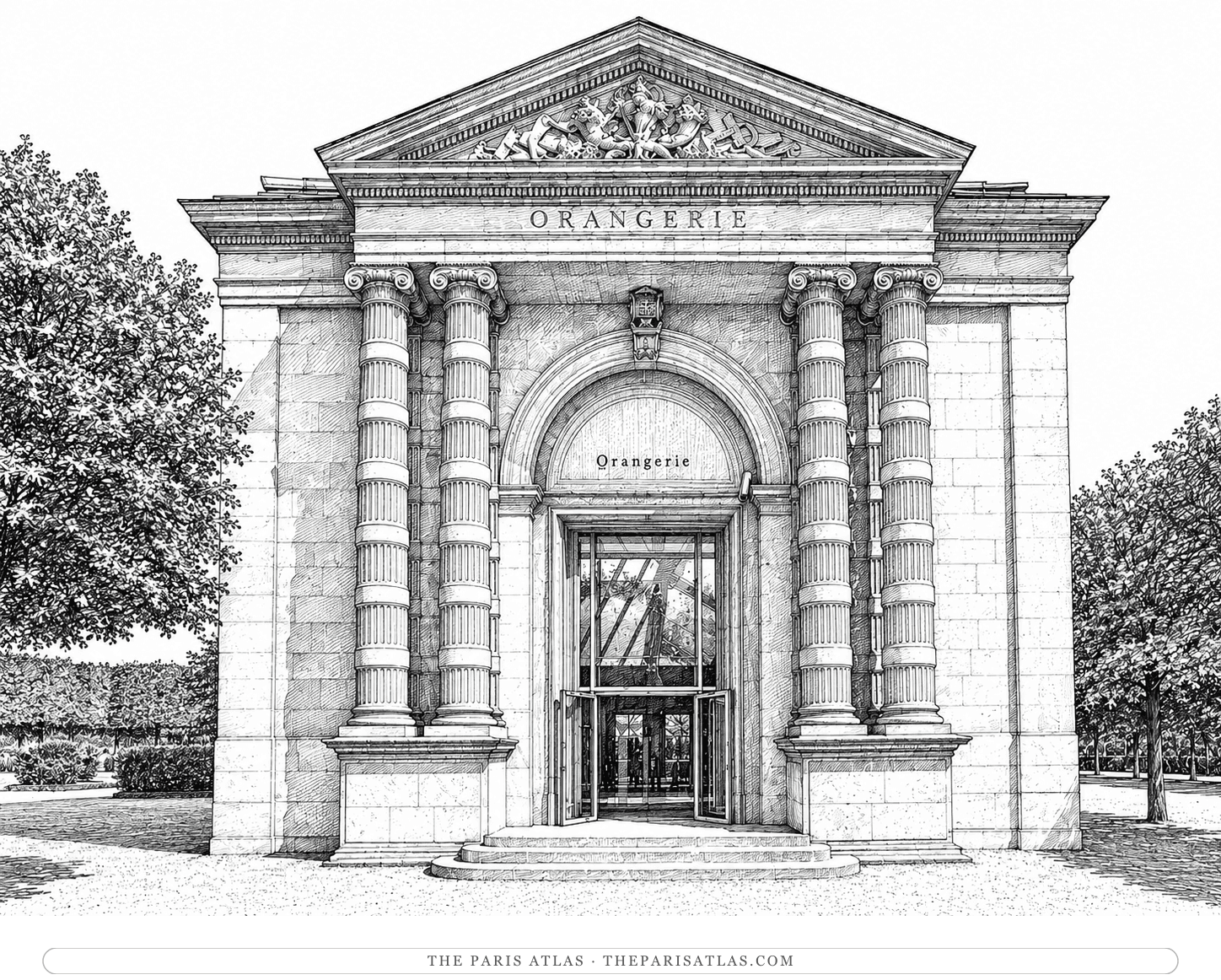
Orangerie des Tuileries
The 1852 orangery of the Tuileries garden, converted to Monet's specifications and opened in 1927 as the museum of the Water Lilies.

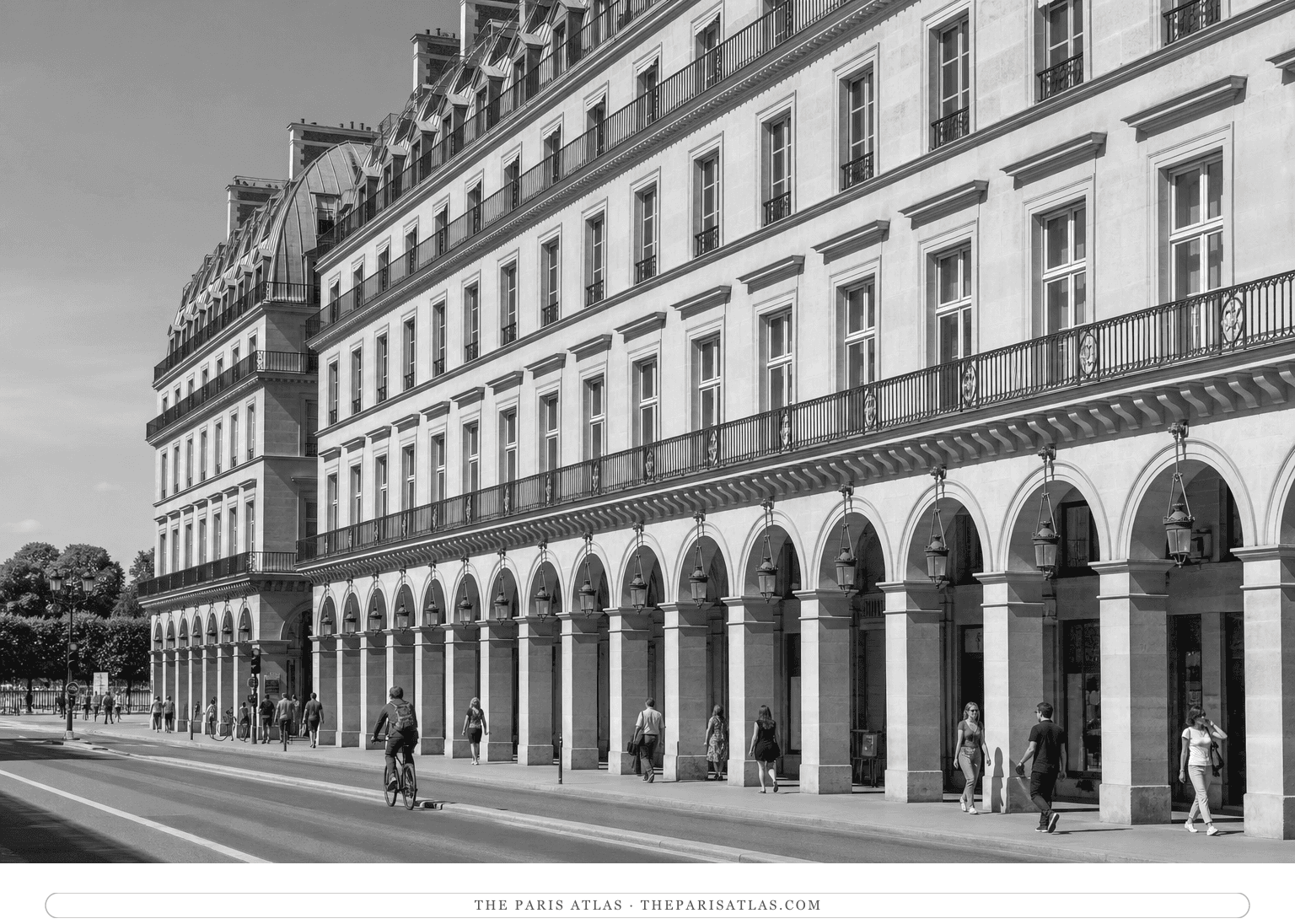
204 rue de Rivoli
The apartment Camille Pissarro took for the first half of 1899, facing the Jardin des Tuileries — at least six versions of the garden came out of its windows, sorted by weather, hour and season.
Tuileries — facing the garden on the rue de Rivoli

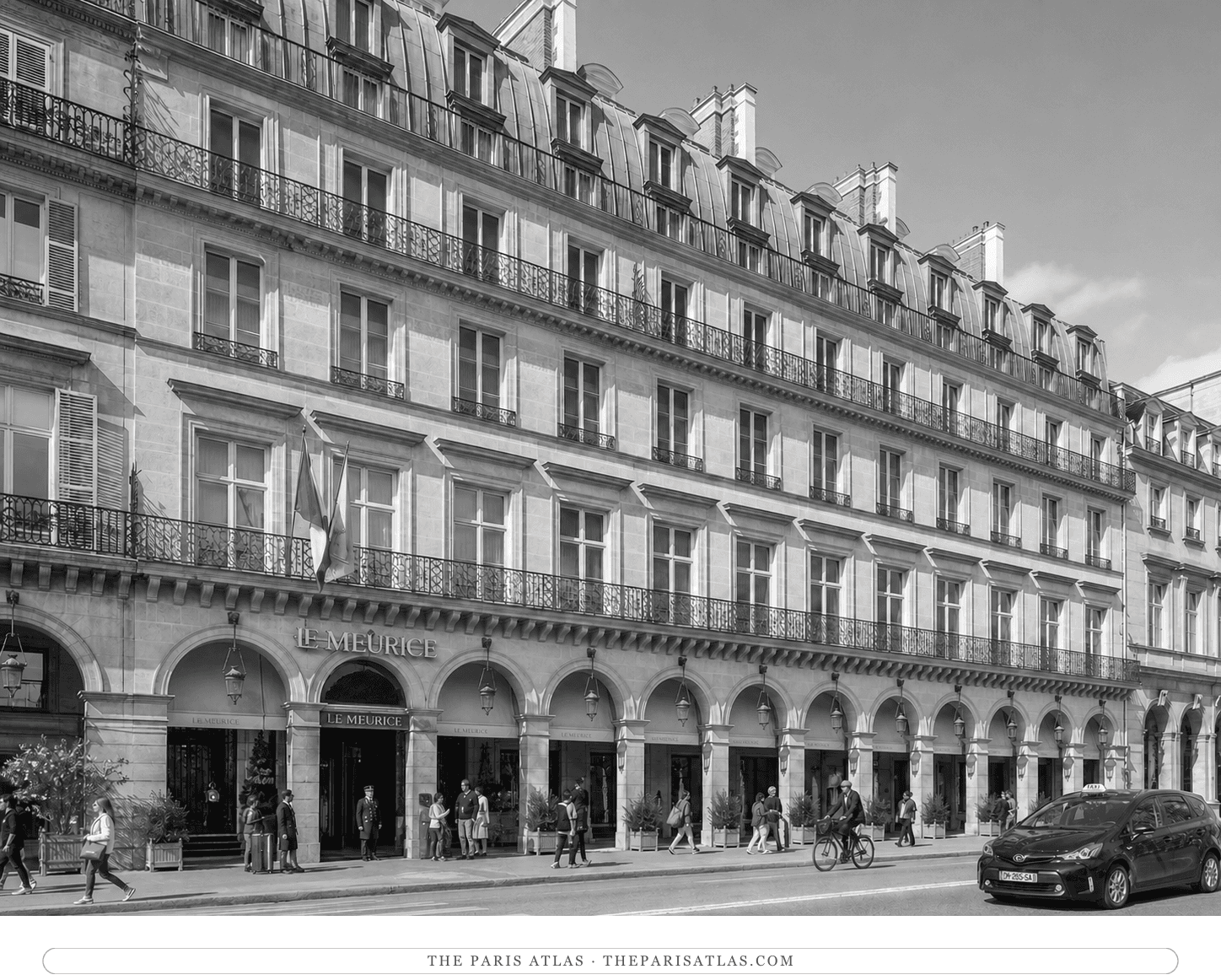
Val-de-Grâce

Boulevard de Port-Royal
A long boulevard along the southern edge of the Latin Quarter. In Down and Out in Paris and London it holds the pawnshop where George Orwell took his overcoats — and found it shut, on the day he had gone sixty hours without eating.

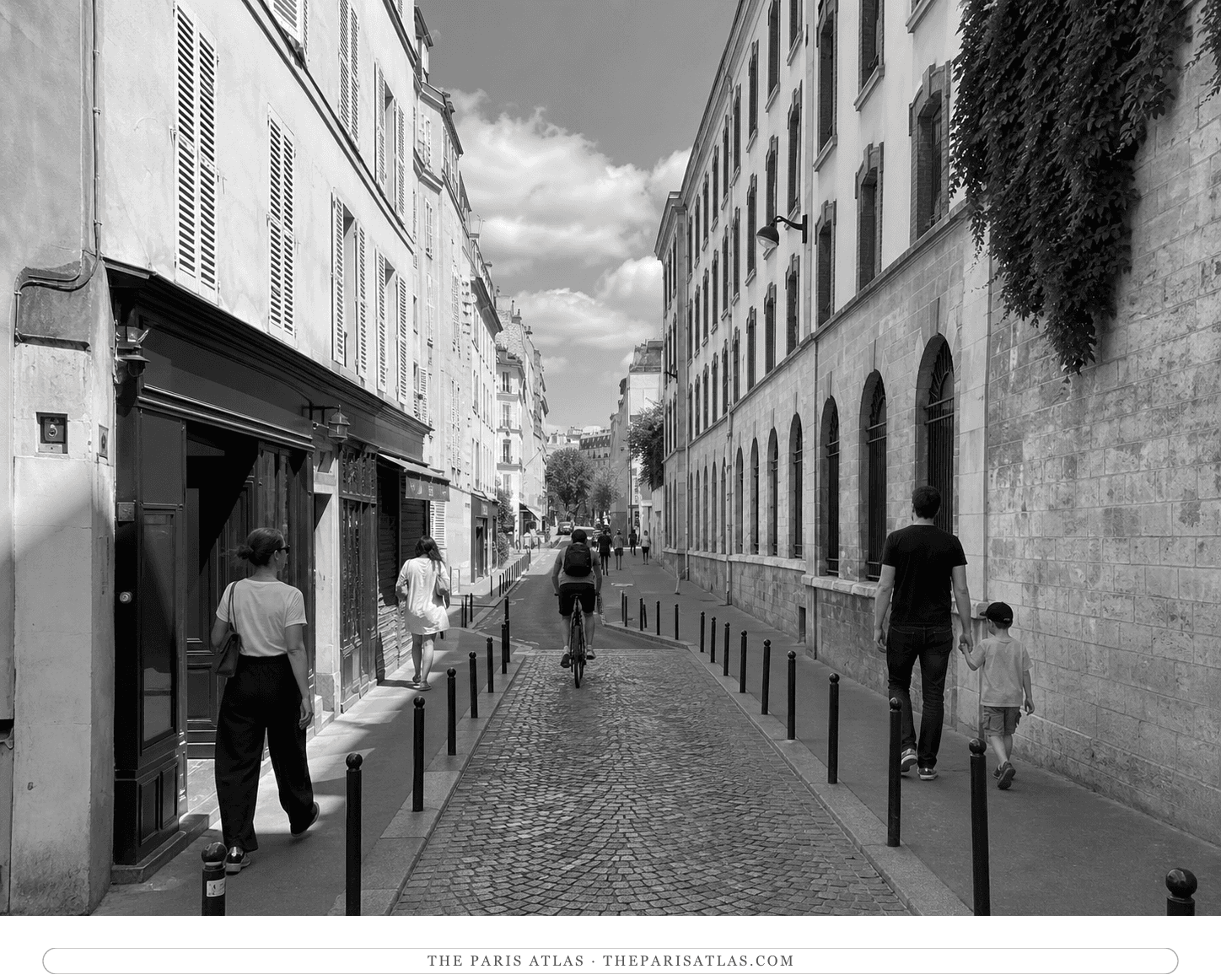
Rue Broca
A quiet street in the lower Latin Quarter, running down from the Val-de-Grâce towards the Gobelins. In Down and Out in Paris and London it is where George Orwell — sixty hours without food and twelve kilometres into a wasted walk — spots a five-sou piece glittering on the cobbles.

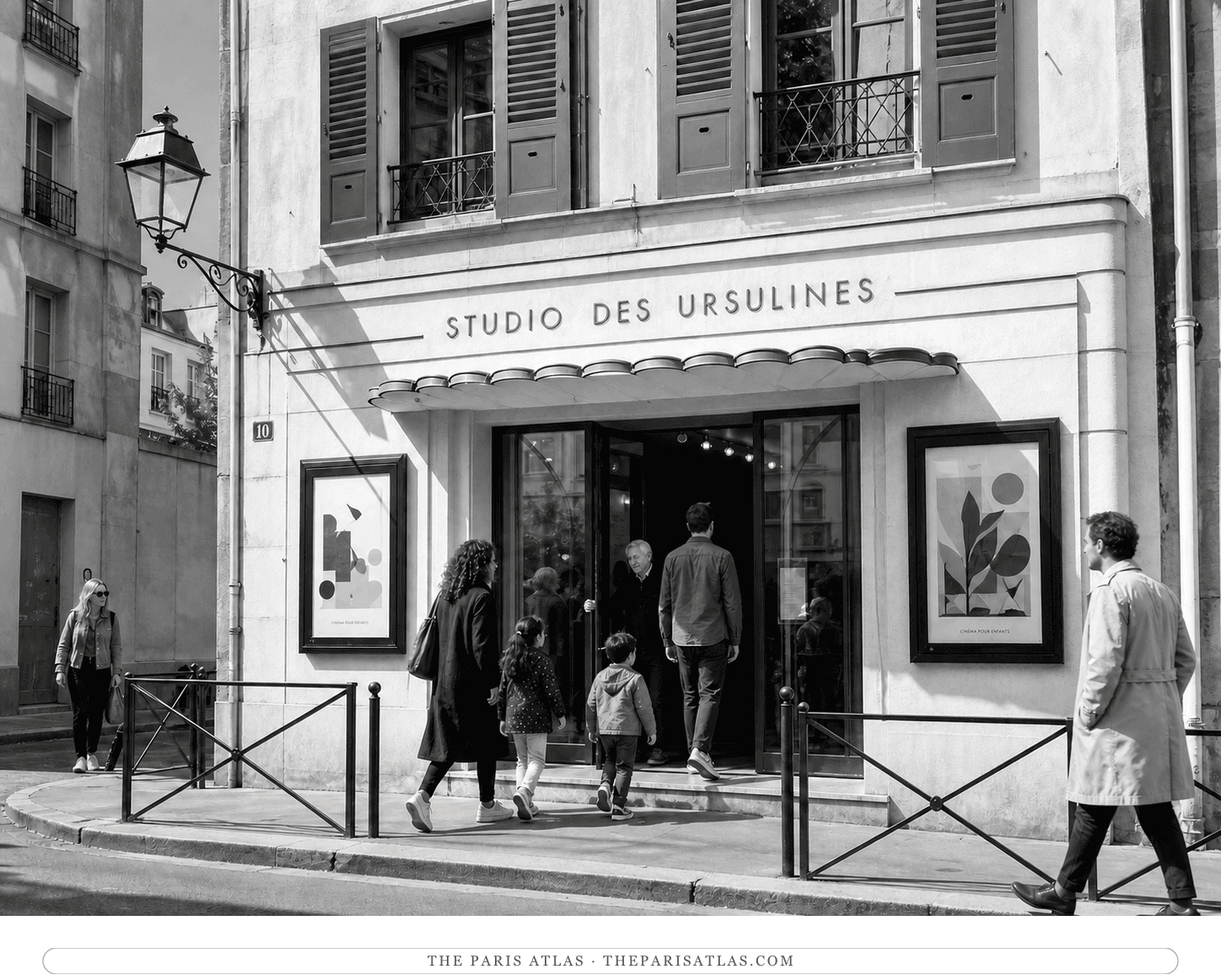
Studio des Ursulines
A small cinema in the Latin Quarter, opened in 1926 as one of the first art-house screens in Paris, and the room where Buñuel and Dalí's Un Chien andalou was first shown to the public in June 1929. It is still a working cinema.
Vaugirard

8 rue Carcel
The Vaugirard house Gauguin moved his family into in the late 1870s — the first of his homes with a studio in it, and the subject of the 1881 painting named after the street.

Cité Falguière
A narrow lane of nineteenth-century artists' studios in Vaugirard, worked in by Paul Gauguin and later by Amedeo Modigliani and Chaïm Soutine — cheap, cold and almost unchanged.

La Ruche, 2 passage de Dantzig
The circular studio building in Vaugirard — a wine rotunda from the 1900 Exposition rebuilt as cheap ateliers — where Marc Chagall lived from 1912 to 1914 alongside Modigliani, Soutine and Léger, and painted the pictures that made him.
Vendôme
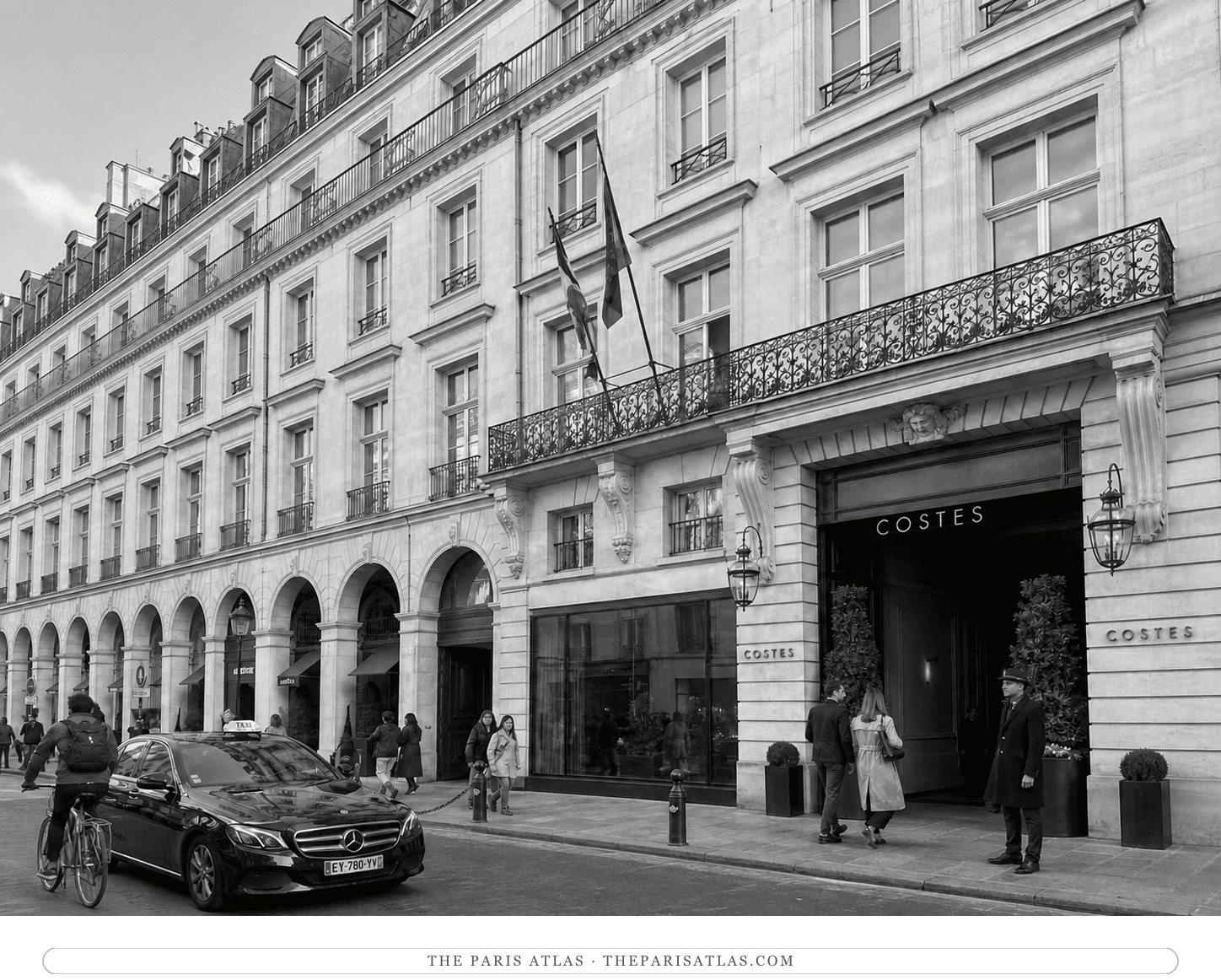
Vieux-Port

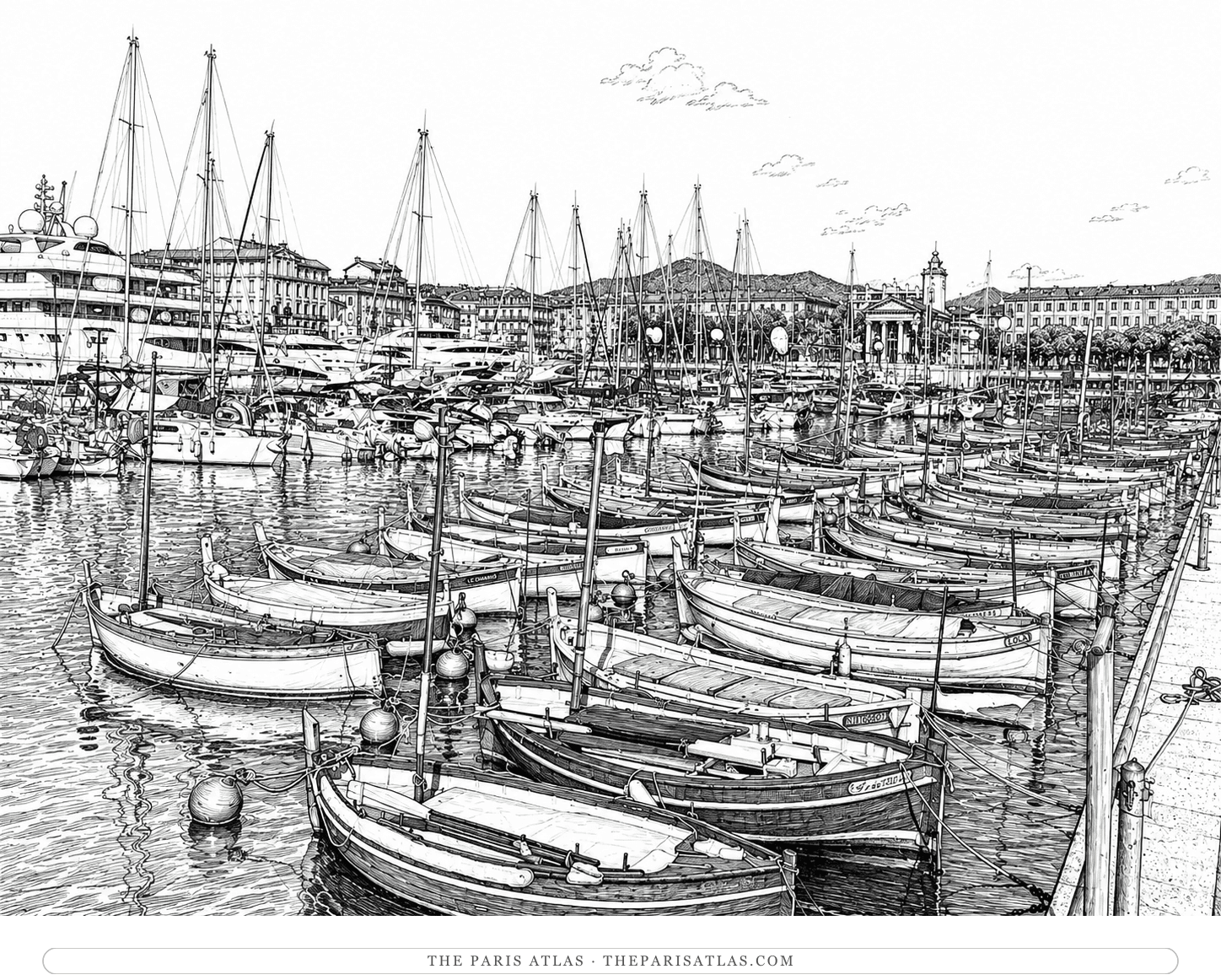
Vivienne

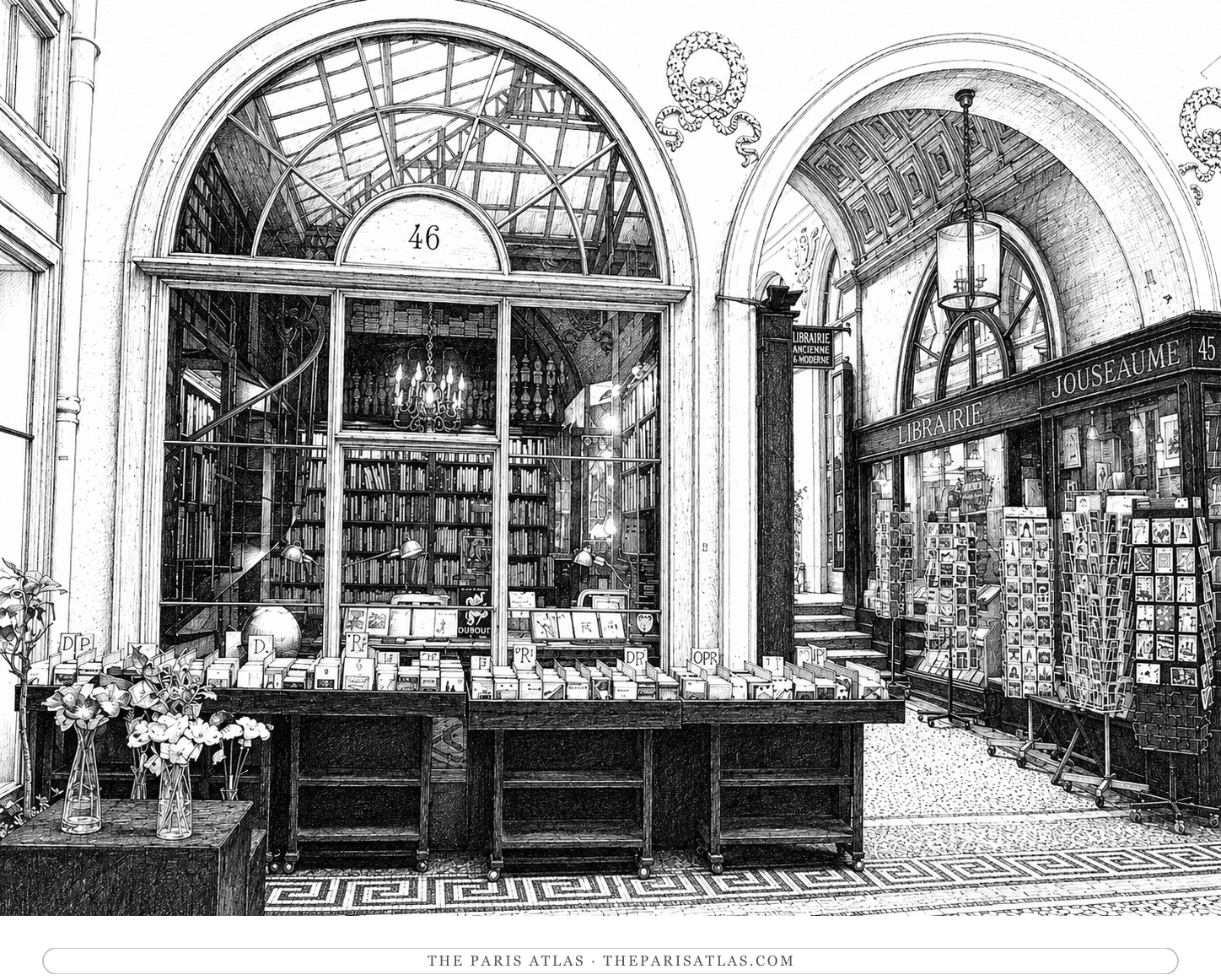
École Militaire
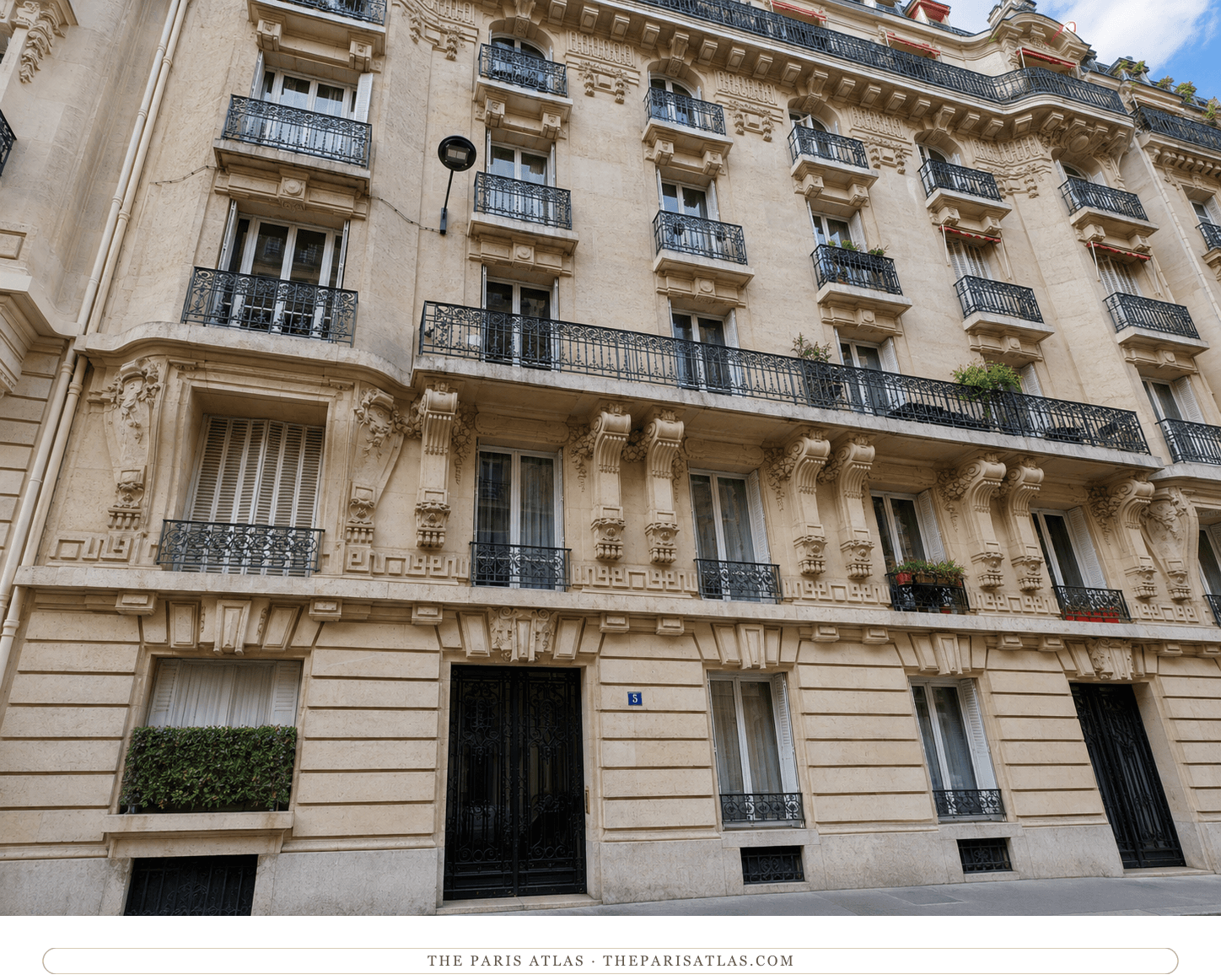

5 Rue José-Maria-de-Heredia
Blaise Cendrars's final home — the ground-floor apartment in the 7th arrondissement he moved to in August 1959 and where he died on 21 January 1961.
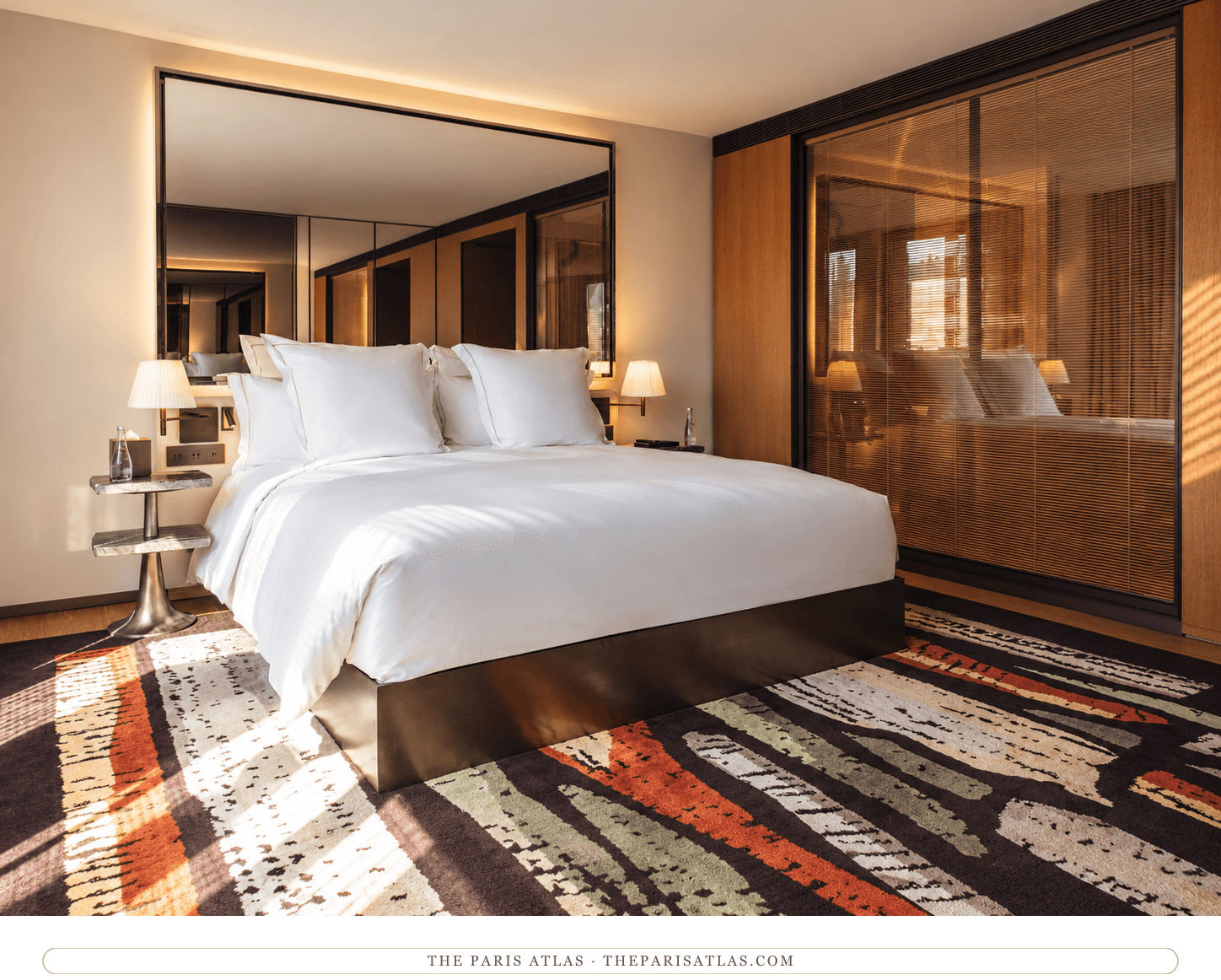
Hôtel SAX Paris
A 118-room hotel in the 7th arrondissement, with a garden pool, rooftop dining and a former telephone-exchange building.
Étoile

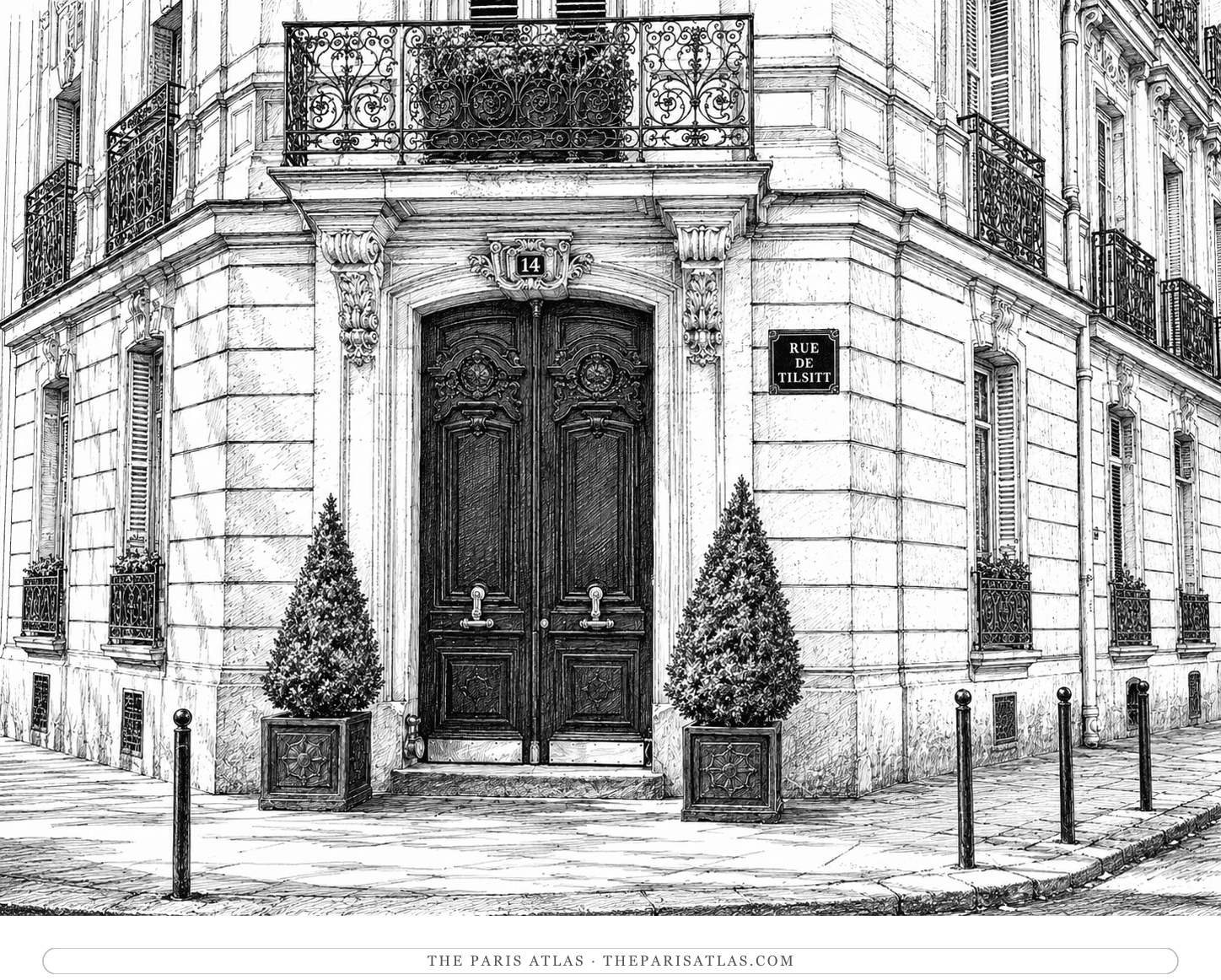
14 Rue de Tilsitt
F. Scott and Zelda Fitzgerald's Right Bank apartment in the year of Gatsby — a furnished fifth-floor flat by the Arc de Triomphe, and the address where Ernest Hemingway first came to lunch.

The Peninsula Paris
A 200-room hotel on avenue Kléber near the Arc de Triomphe, in the former Hôtel Majestic of 1908, later UNESCO's first Paris headquarters and the conference centre where the 1973 Vietnam peace agreement was signed. It holds France's Palace distinction, a rating above five stars.
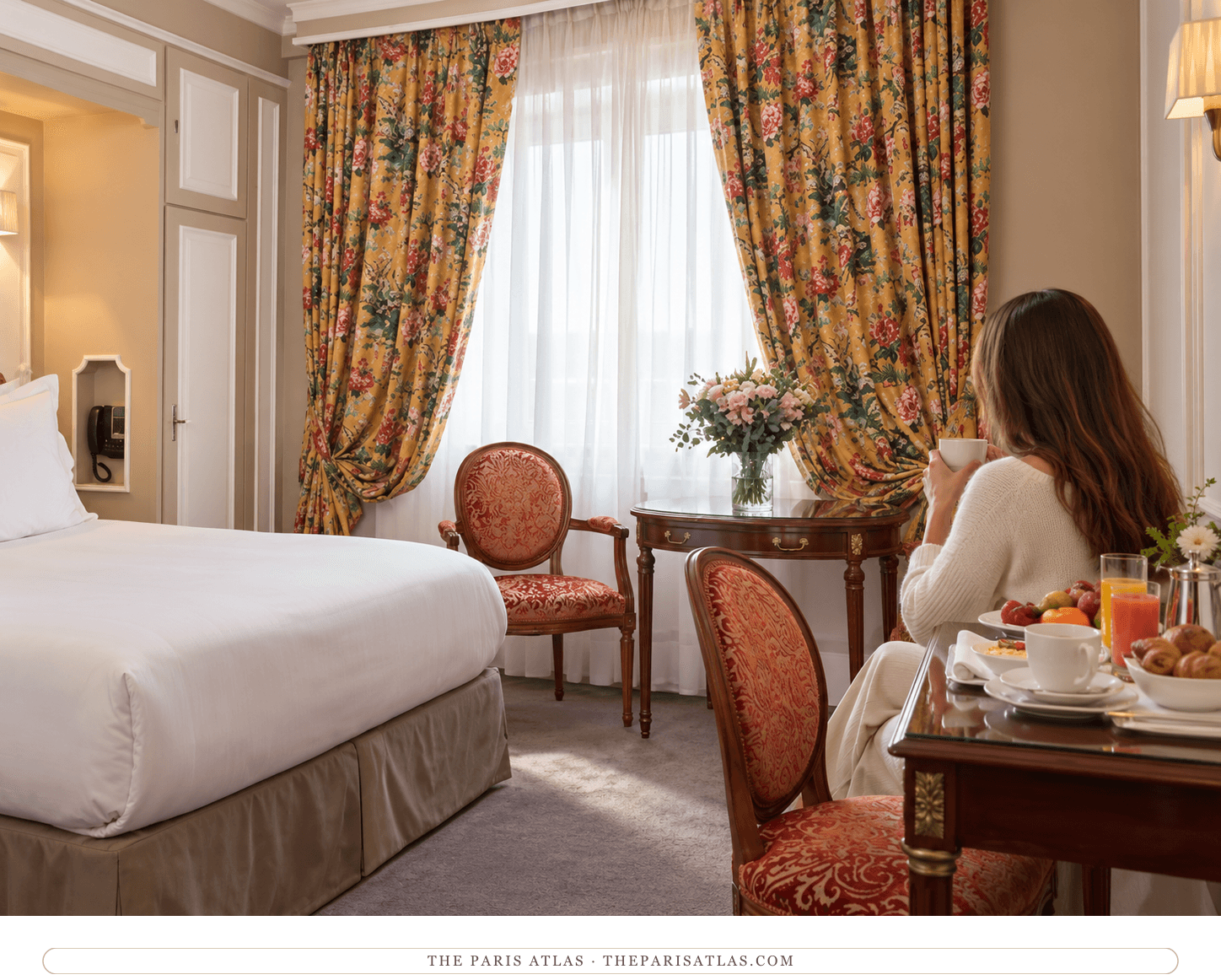
Majestic Hôtel Spa
Majestic Hôtel Spa is a 57-room hotel, including 15 suites, on rue La Pérouse in the 16th arrondissement. A 450 m² wellness area and accommodation with kitchen facilities give it an appeal for longer stays as well as short visits.

Hôtel L'Aventure
Hôtel L'Aventure is a five-star hotel with 15 rooms at 4 avenue Victor-Hugo, less than 200 meters from the Arc de Triomphe. It opened on March 3, 2026, with rooms decorated by the designer Vincent Darré. The building also holds L'Aventure restaurant and a private members' club, and the Beaumarly group runs all three.
Newsletter
Paris, one address at a time.
The cafés, studios, and walk-up flats where the work was made — one story from the map in every letter.