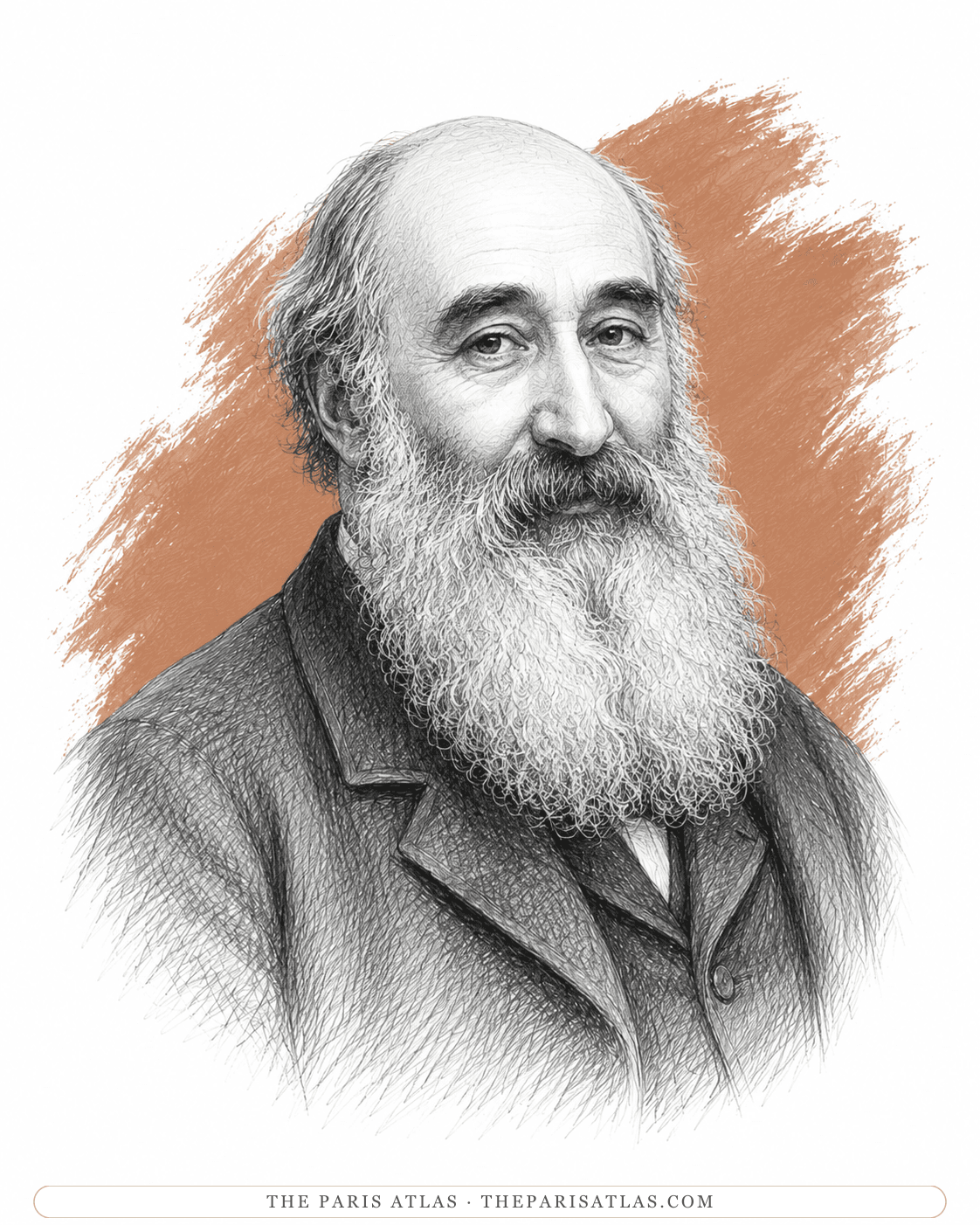
Camille Pissarro
The Pissarro family took a room on the rue des Trois-Freres in November 1878, where Julie Pissarro gave birth. The pastel At the Window, rue des Trois-Freres shows her at the apartment window.
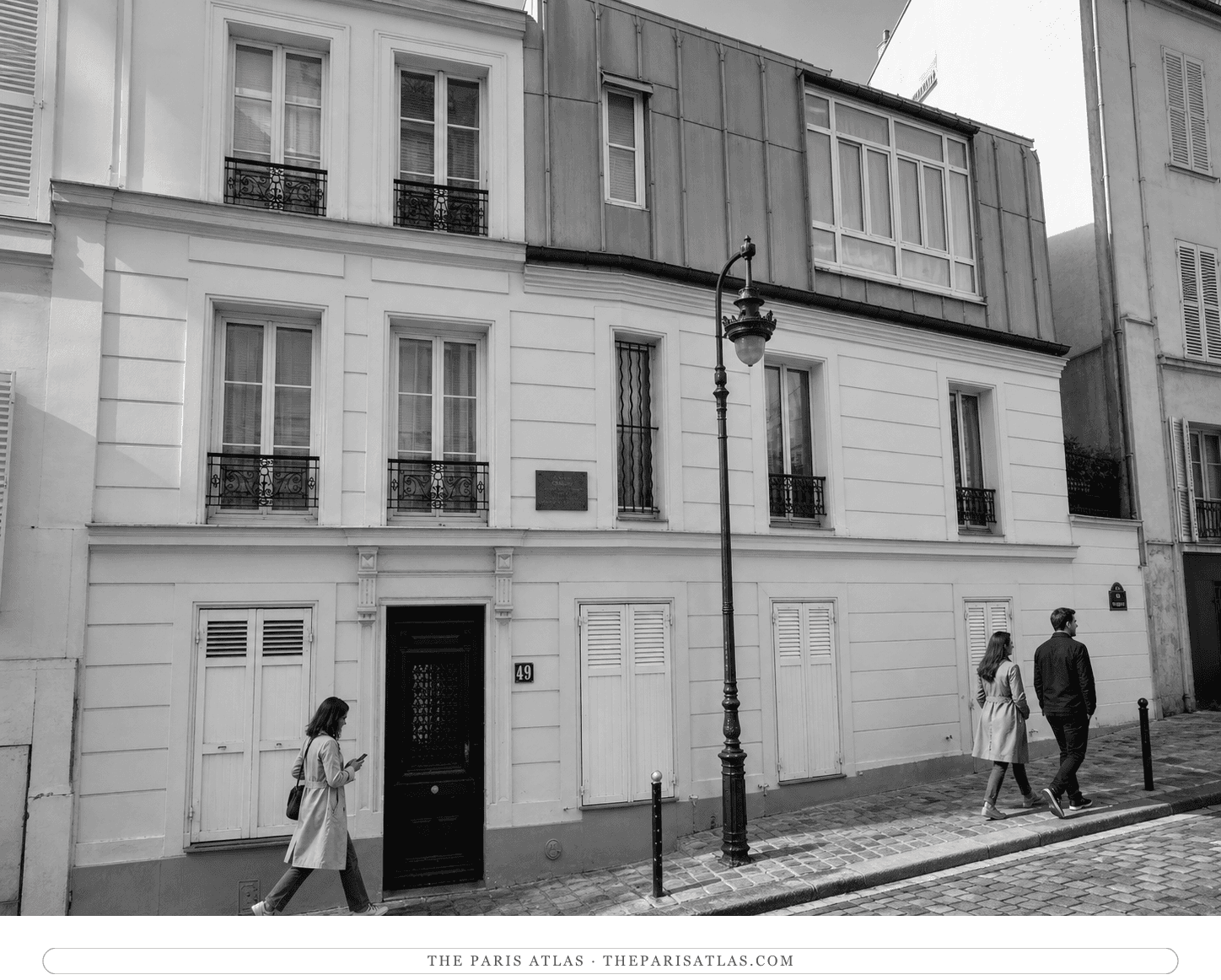
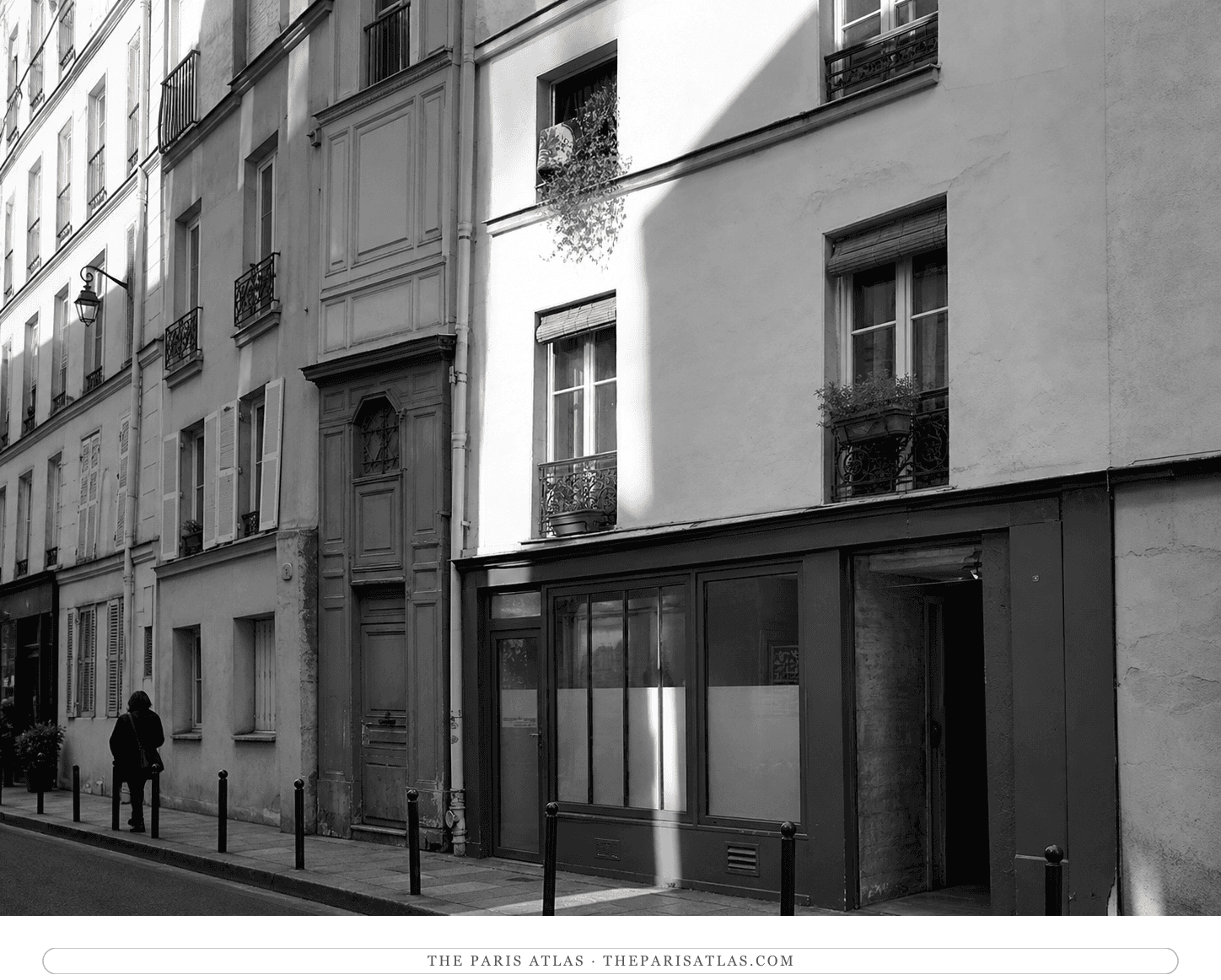
The Montmartre address where the Pissarro family lodged in November 1878, and where Julie Pissarro gave birth — the subject of the pastel At the Window, rue des Trois-Frères.

Camille Pissarro spent most of his working life outside Paris, in Pontoise and later Éragny, and came into the city in bursts. In November 1878 the family took a room on the rue des Trois-Frères, on the lower slope of Montmartre.
It is an unusually domestic entry in an artist's Paris record. Julie Pissarro gave birth at this address that November, and the pastel At the Window, rue des Trois-Frères — now at the Art Institute of Chicago — shows her at the window of the apartment. Most surviving artists' addresses in Paris are studios, cafés and galleries; this one is a room where a family lived through a difficult winter.
The window is also, two decades early, the thing his late work would come to depend on entirely. The boulevard Montmartre series, the Tuileries, the place Dauphine: all of it is a man painting what is on the other side of the glass.
The building is private and unmarked, and whether it stands unchanged from 1878 is not settled here.
The Pissarro family lodges on the rue des Trois-Frères in November; Julie gives birth there.
A pastel by Camille Pissarro showing his wife Julie at the window of the family's Montmartre apartment, made around their stay there in 1878. It is in the Art Institute of Chicago.
The Pissarro family took a room on the rue des Trois-Freres in November 1878, where Julie Pissarro gave birth. The pastel At the Window, rue des Trois-Freres shows her at the apartment window.

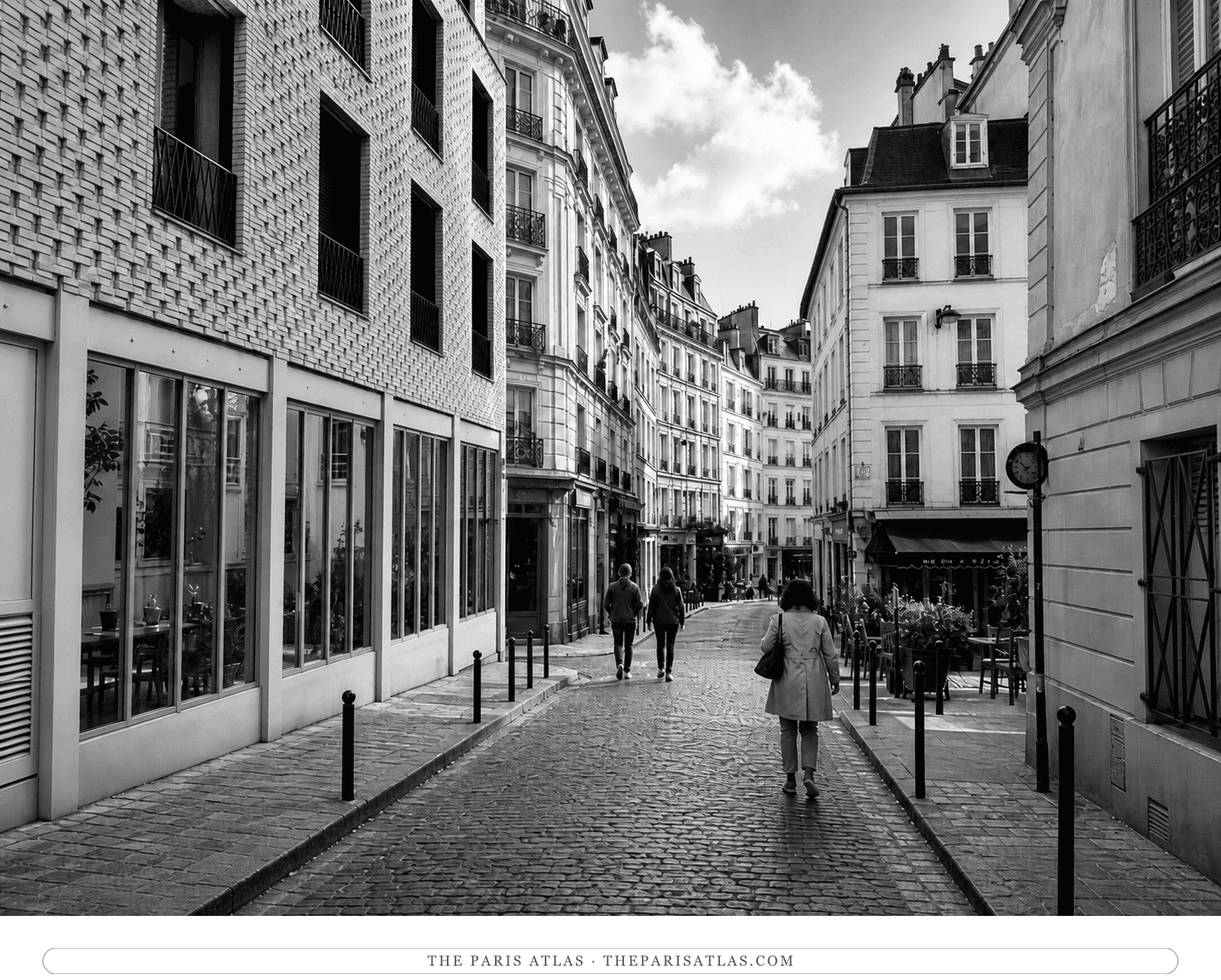
A freely walkable nineteenth-century Montmartre street of slopes, cobbles and apartment façades, and the deliberately imprecise location of Langston Hughes's second Paris attic in 1924.
Visit the place
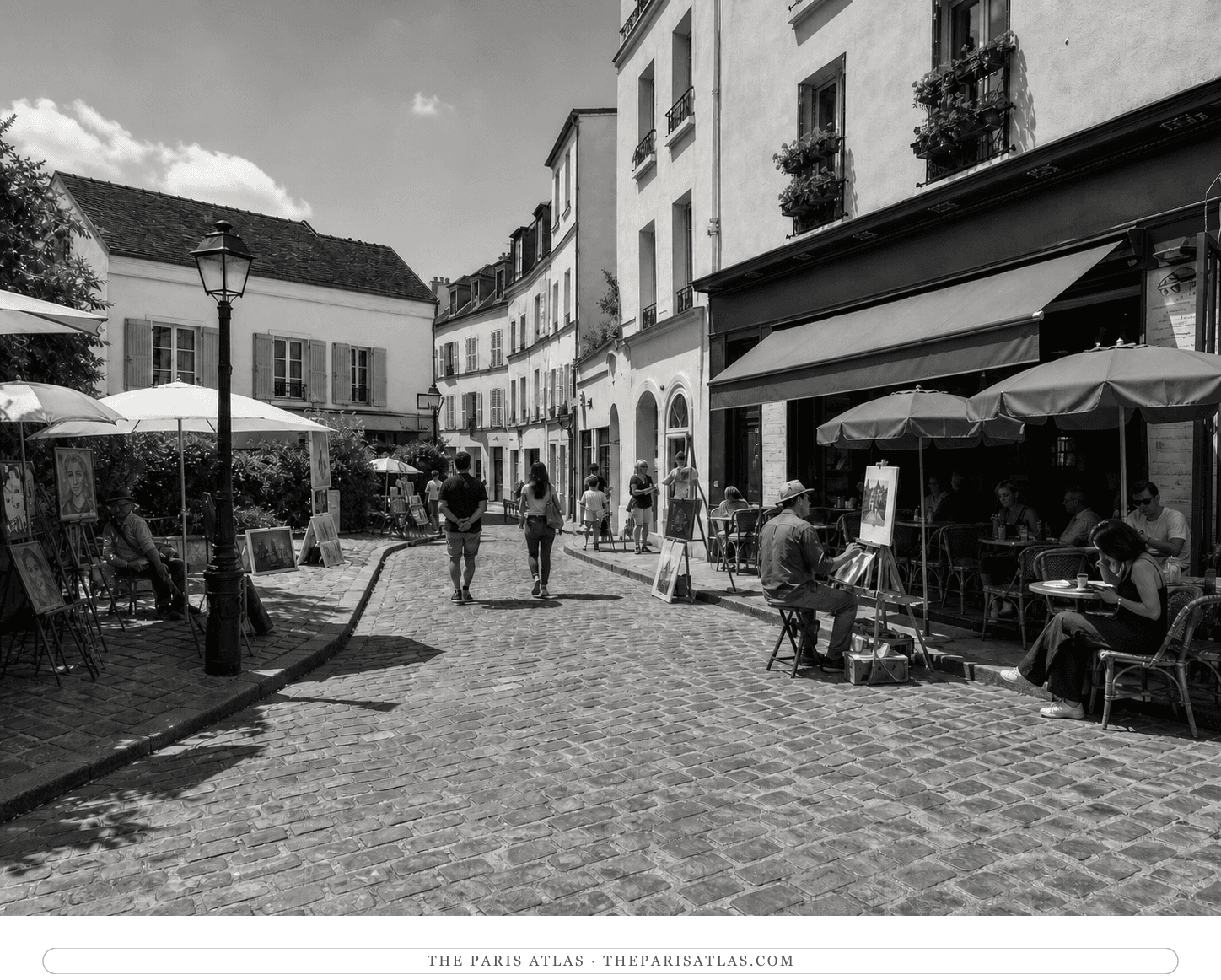
Montmartre's historic hilltop square, now shared by restaurant terraces and licensed artists—and the setting of Langston Hughes and Anne Marie Coussey's last Paris dinner together in 1924.
Visit the place
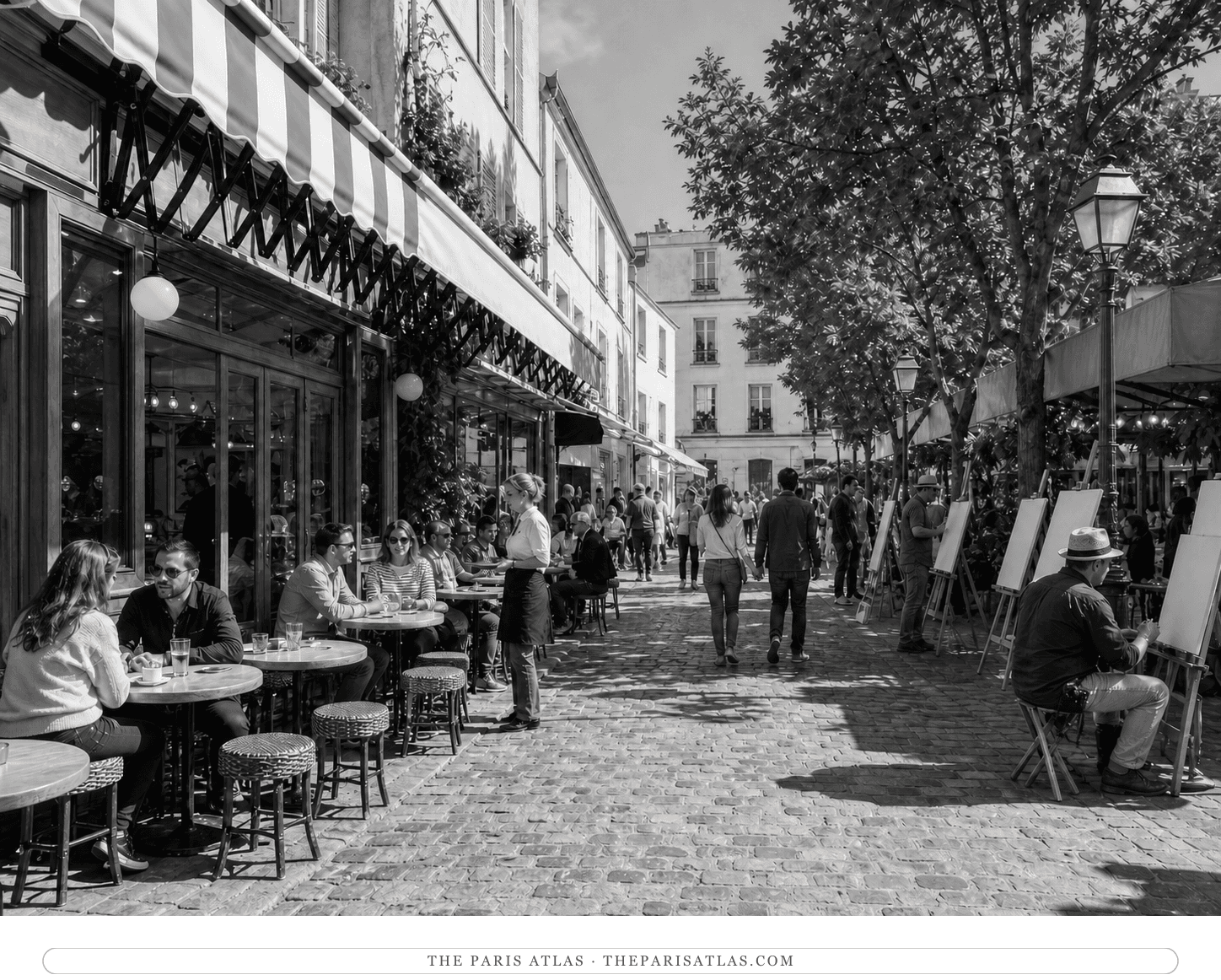
The hill north of Paris that was a separate village until 1860 and an artists' quarter until the First World War — the district of Van Gogh's two Paris years, Toulouse-Lautrec's posters, the Bateau-Lavoir and the Moulin Rouge.
Visit the place
Where Pablo Picasso set up his first studio in Paris, in 1900, at the age of eighteen — four years before the Bateau-Lavoir and seven before Les Demoiselles d'Avignon.
Visit the placeThe sources below include histories, archival materials, scholarly research, and official records that informed this page. They document 18 rue des Trois-Frères, the people connected to it, and its place in Paris.

Web source consulted for documented facts and historical context presented on the 18 rue des Trois-Frères page.
Web source consulted for documented facts and historical context presented on the 18 rue des Trois-Frères page.
Web source consulted for documented facts and historical context presented on the 18 rue des Trois-Frères page.
Web source consulted for documented facts and historical context presented on the 18 rue des Trois-Frères page.
These references provide the documented foundation for this page's history and context. Claim-level citations remain attached to the specific claims they support.
 Explore more resources
Newsletter
The cafés, studios, and walk-up flats where the work was made — one story from the map in every letter.