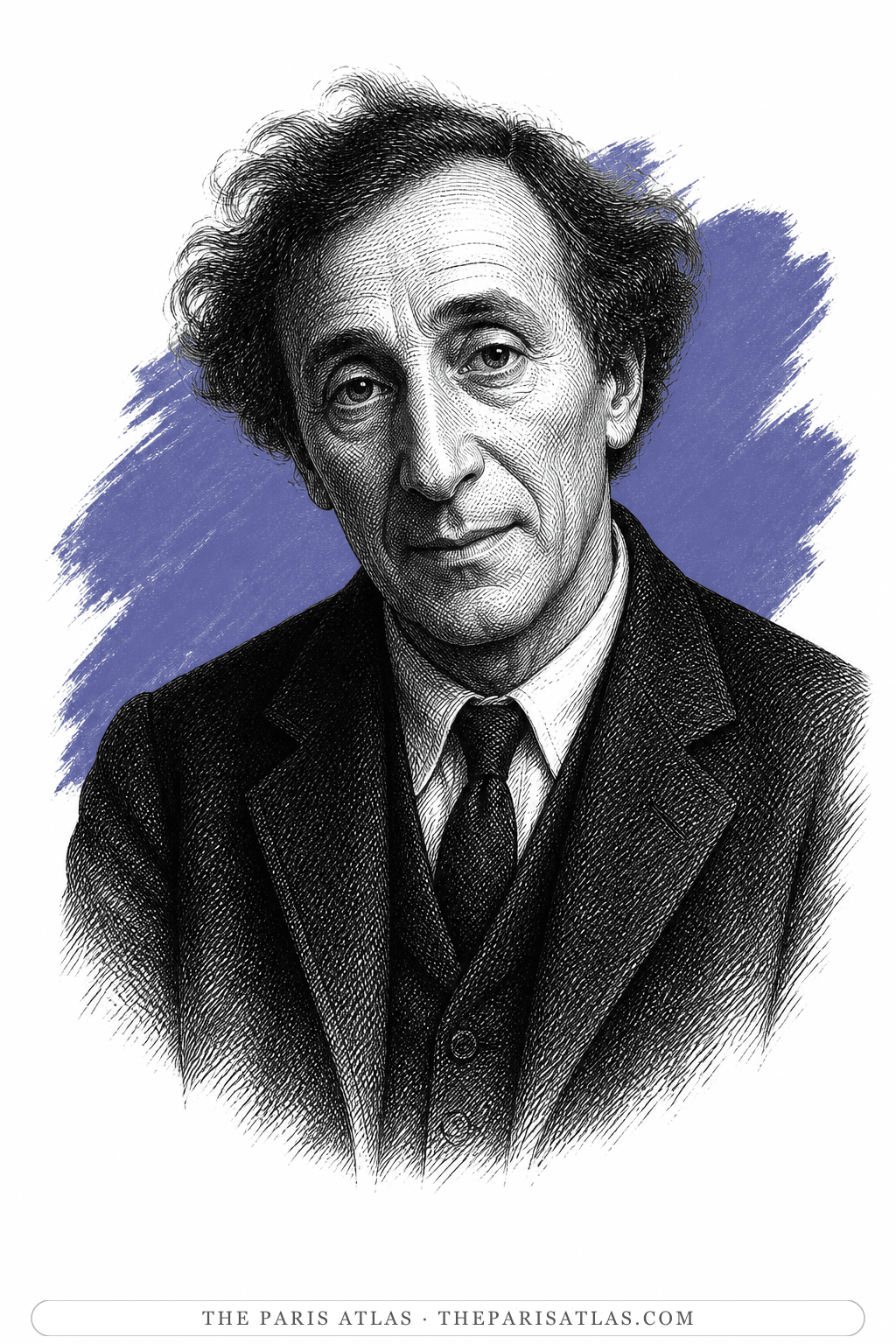
Marc Chagall
Chagall was known to Helena Rubinstein, who collected his work, and attended gatherings at her Ile Saint-Louis apartment.
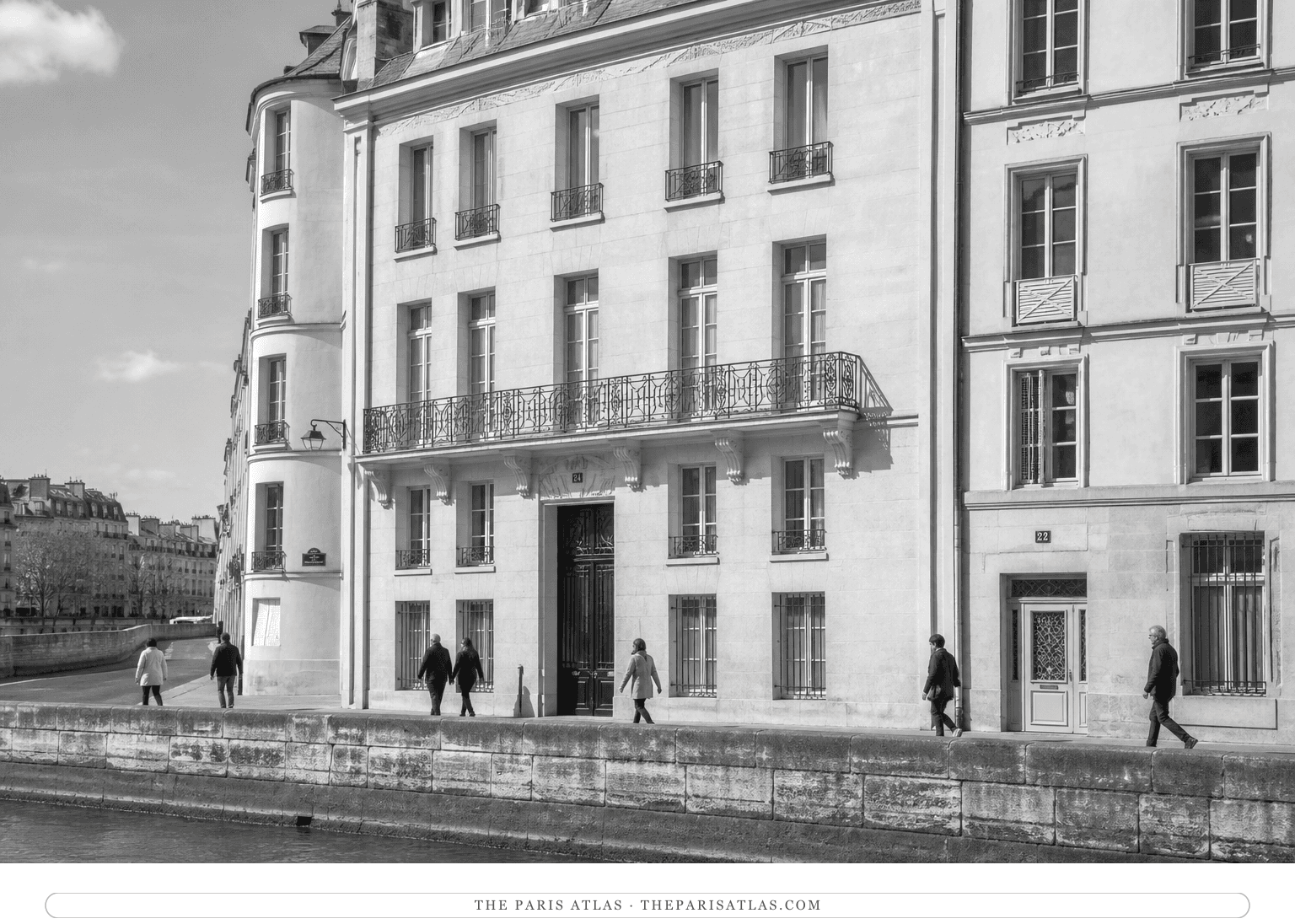
The Île Saint-Louis apartment of the cosmetics magnate and collector Helena Rubinstein, whose gatherings Marc Chagall attended — one of the private rooms where the École de Paris was actually bought.

Helena Rubinstein built a cosmetics fortune from nothing and spent a great deal of it on art. Her collections ran from African sculpture to modern painting, and her Paris apartment on the southern quay of the Île Saint-Louis was where much of it hung and where she entertained.[1]
The apartment was both home and instrument of self-presentation. Rubinstein arranged objects from different periods and cultures around modern paintings, using collecting to construct a public identity as deliberately as she used portraiture and fashion. Guests did not encounter a neutral display; they entered an interior in which business success, immigrant ambition and cultural judgement reinforced one another.[1]
Marc Chagall was among the artists she knew and collected, and he was a guest at her gatherings there. Rubinstein sat for a long line of painters — Dufy, Sutherland, Dalí among them — and treated portrait commissions as a form of patronage as much as vanity.[2]
Commissioning a portrait redistributed power in both directions. A famous artist gained a substantial client and access to her social world; Rubinstein gained another interpretation of the face through which her products and public image were already known. Displaying those portraits together turned the apartment into a record of relationships with artists rather than a collection acquired anonymously through dealers.
It is worth registering what these private rooms did. In the decades when French public institutions were slow and often hostile to the École de Paris, the market that kept those painters working was made up of dealers, decorators and self-made collectors, a striking number of whom were women and immigrants. Rubinstein was Polish-Jewish, arrived in Australia with nothing, and ended up on the Île Saint-Louis buying Chagalls.[1]
That social history is not incidental to Chagall. He returned to Paris as a foreign-born Jewish painter, eventually became a French citizen, and still had to flee the country under occupation. A collector with her own history of migration could recognise both the cultural and financial value of work that official definitions of French art handled uneasily.[3]
The Île Saint-Louis location amplified the contrast. An old, prestigious Paris address held art made by people whose routes into the city ran through Vitebsk, La Ruche, London, Melbourne and New York. The salon brought those trajectories into rooms overlooking the Seine and made private acquisition part of the way modern art established itself in Paris.[1]
The building is private.
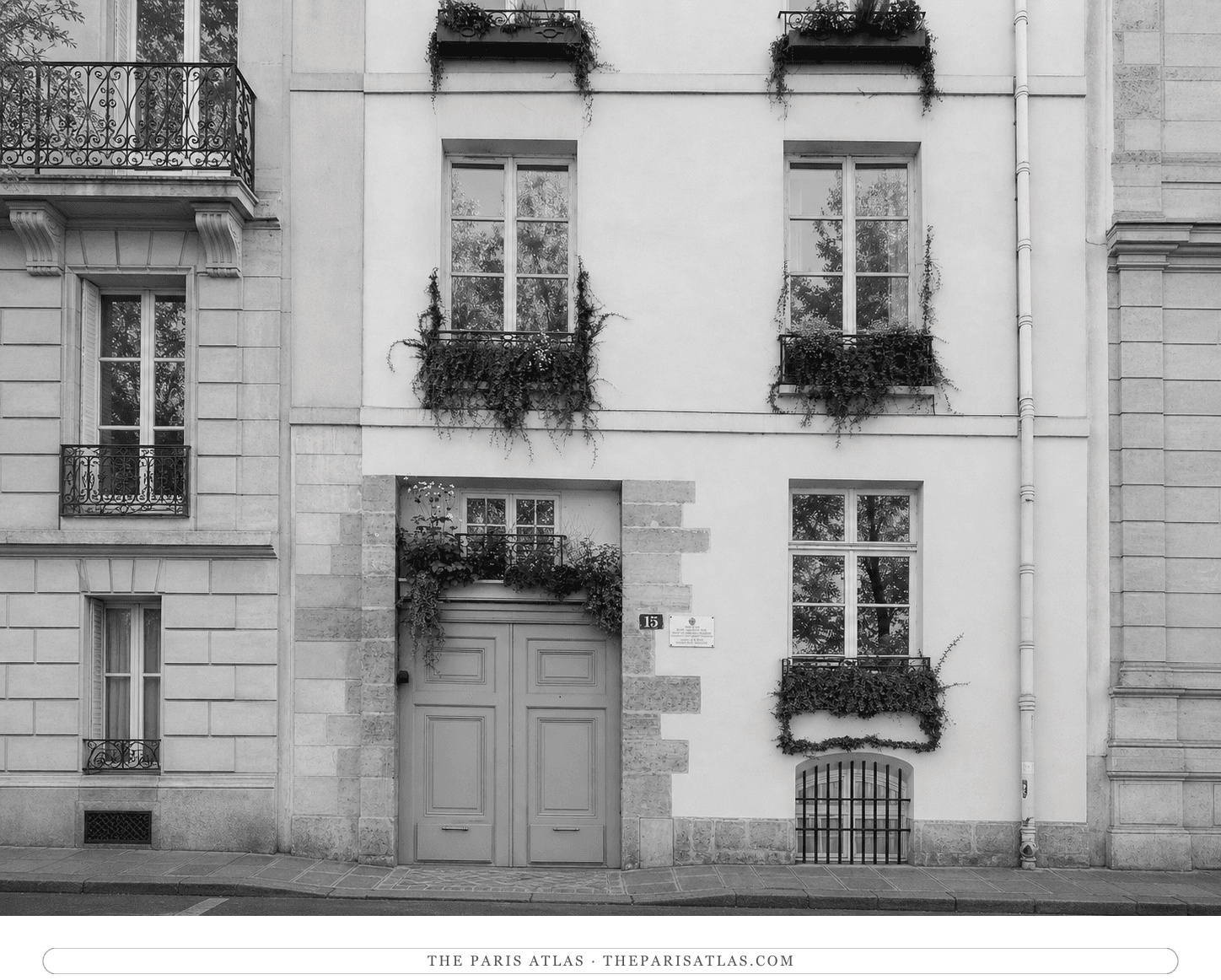
There is no Rubinstein apartment installation to visit today. The building stands on a public quay, and the island setting can be read from outside, but the interior is a residence rather than a museum. The page records the patronage network that once occupied the rooms without inviting entry into present private space.
Rubinstein's collecting crossed categories that museums and markets often kept apart. Modern European painting appeared beside African sculpture, Oceanic objects, decorative arts and the many portraits through which she examined her own image. That arrangement could be visually daring while also reflecting unequal colonial systems through which non-European objects reached wealthy European rooms. Admiration does not remove the need to ask how objects travelled and were labelled.
Her business career gave this patronage an unusual base. Cosmetics income, built through international companies and a carefully managed public identity, financed purchases without dependence on an inherited family collection. The apartment proclaimed that a self-made immigrant woman could exercise cultural authority in elite Paris. Artists benefited from the commissions and acquisitions, while Rubinstein used their prestige to strengthen the identity she presented to guests and the press.
Chagall's presence at gatherings should be understood as social circulation rather than continuous occupancy. He did not work here as in La Ruche or the Mourlot shop. He entered a collector's environment in which paintings, clients and other cultural figures met. Mapping that distinction prevents every artist-associated address from being flattened into a studio and shows how reputation moved through different kinds of rooms.
The quay remains publicly walkable and the building is a real surviving residential structure. Its façade and position on the Île Saint-Louis can be seen, but the former arrangement, collection and gatherings cannot. The correct present description is a private apartment building, not 'someone else' and not an open salon. That concrete status gives visitors useful boundaries without diminishing the historical importance of what happened inside.
Rubinstein's rooms also show why collecting belongs in an atlas of artistic production. Money from purchases supported careers, commissioned portraits generated new work, and gatherings created introductions that could lead to exhibitions or additional patrons. The apartment was not a studio, yet it affected the conditions under which studios operated. Chagall's route through Paris therefore includes not only where he painted but where his work was selected, displayed and discussed. Marking those different functions produces a fuller geography while keeping their boundaries exact: artist, collector and present resident should never be collapsed into one occupant.
Rubinstein keeps her Paris apartment and collection on the quai de Béthune.
A Polish-Jewish emigrant who built an international cosmetics business and became a major collector, with an apartment and salon on the Île Saint-Louis.
Chagall was known to Helena Rubinstein, who collected his work, and attended gatherings at her Ile Saint-Louis apartment.
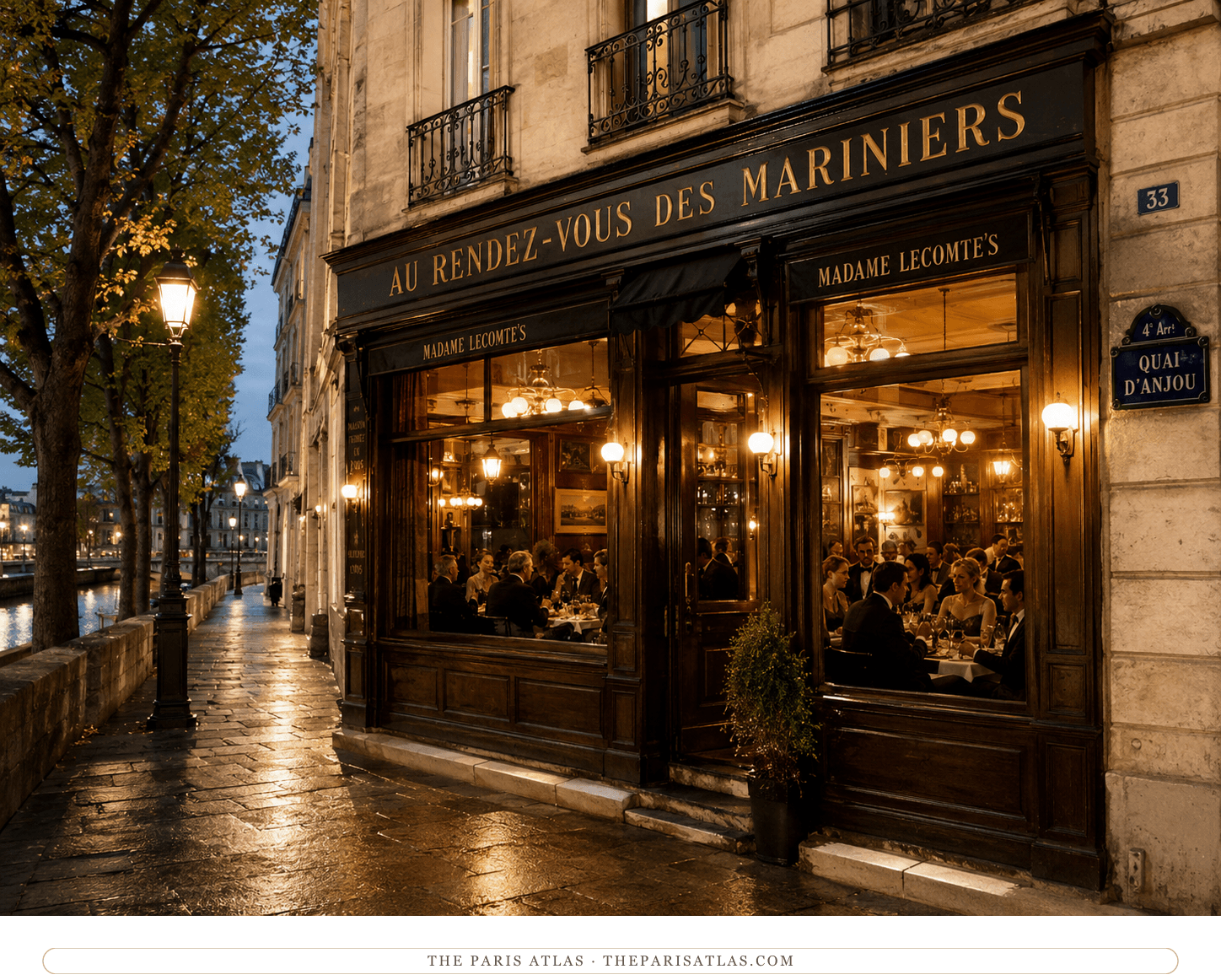
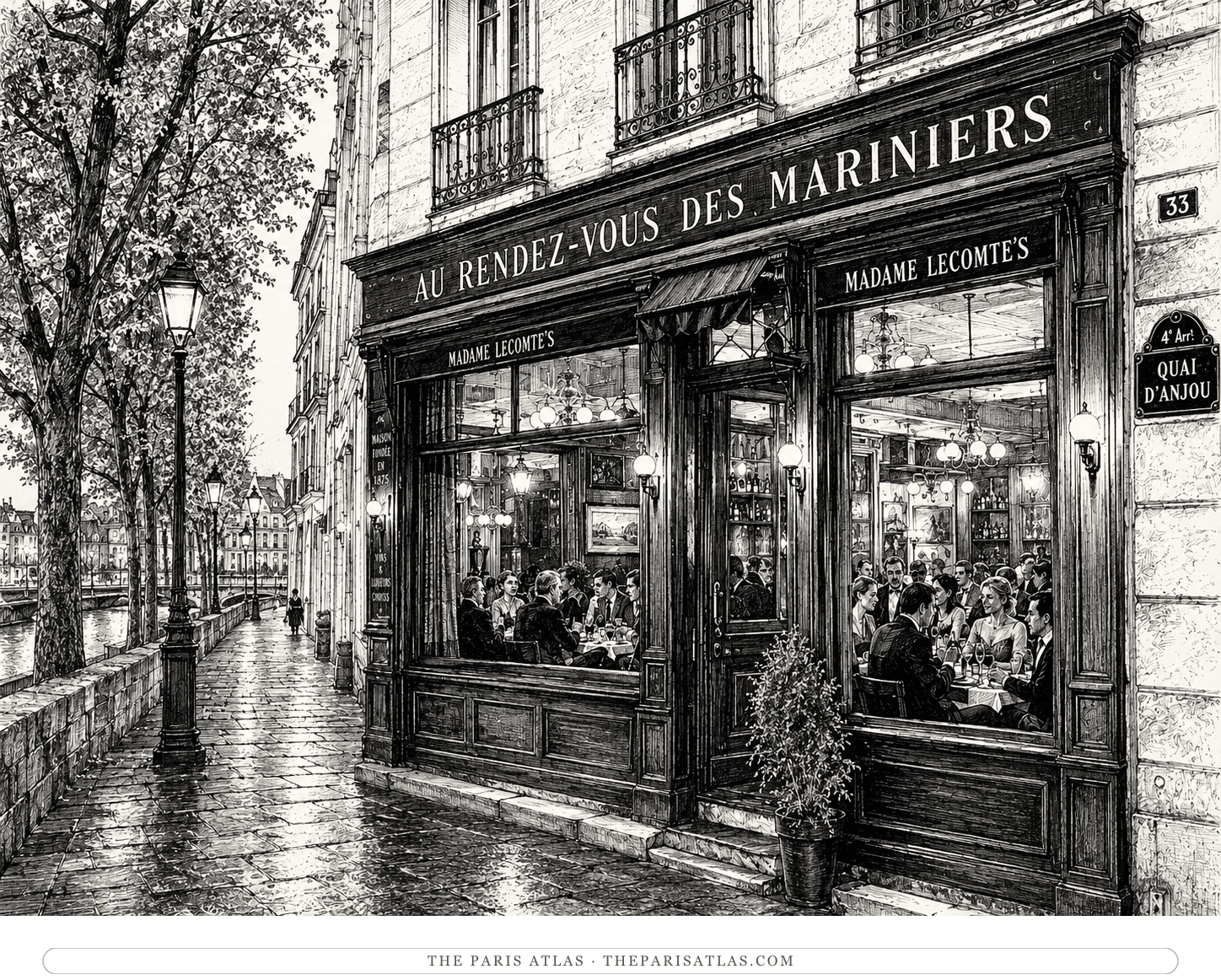
The riverside table on the far side of the Île Saint-Louis — wonderful food, Madame Lecomte at the door, and a forty-five-minute wait since the Americans found it.
Visit the place
The apartment Paul Cézanne took on the Île Saint-Louis at the end of 1888, in the years when he had money, no reputation to speak of, and was painting the pictures that would rearrange European art after his death.
Visit the place
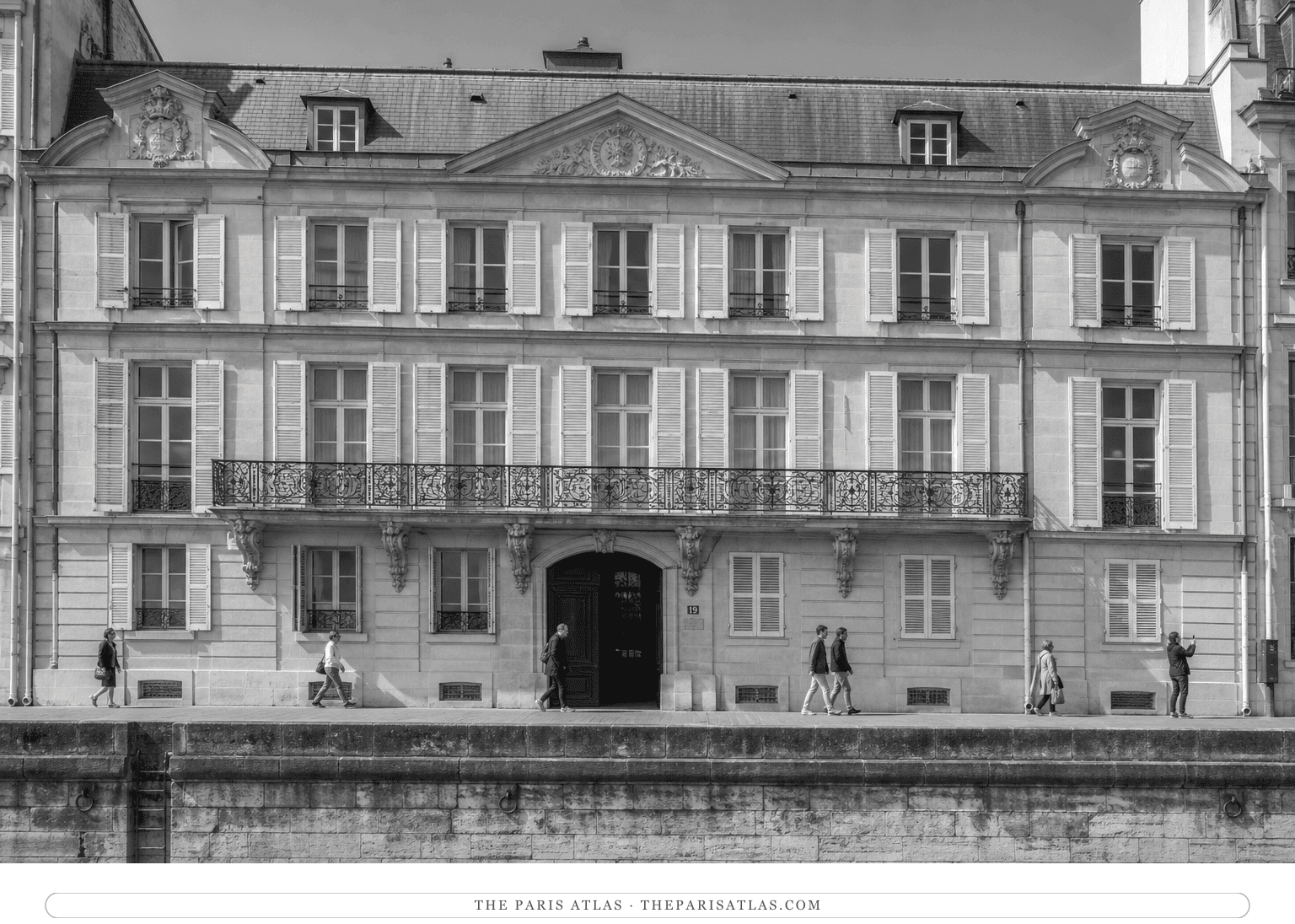
The last place Camille Claudel lived and worked — a very small studio at the back of the courtyard of the Hôtel de Jassaud on the Île Saint-Louis, from January 1899 until she was committed in 1913. The building stands and carries a plaque; the studio is private.
Visit the place
Paul Cézanne's Left Bank address in 1872 — the year his son Paul was born, and the year he went out to Pontoise to work beside Camille Pissarro, which changed his painting completely.
Visit the placeThe sources below include histories, archival materials, scholarly research, and official records that informed this page. They document Helena Rubinstein's apartment, 24 quai de Béthune, the people connected to it, and its place in Paris.

Web source consulted for documented facts and historical context presented on the Helena Rubinstein's apartment, 24 quai de Béthune page.
Web source consulted for documented facts and historical context presented on the Helena Rubinstein's apartment, 24 quai de Béthune page.

Contemporary reporting or criticism used to document the historical reception and context of Helena Rubinstein's apartment, 24 quai de Béthune.
Web source consulted for documented facts and historical context presented on the Helena Rubinstein's apartment, 24 quai de Béthune page.
These references provide the documented foundation for this page's history and context. Claim-level citations remain attached to the specific claims they support.
 Explore more resources
Newsletter
The cafés, studios, and walk-up flats where the work was made — one story from the map in every letter.