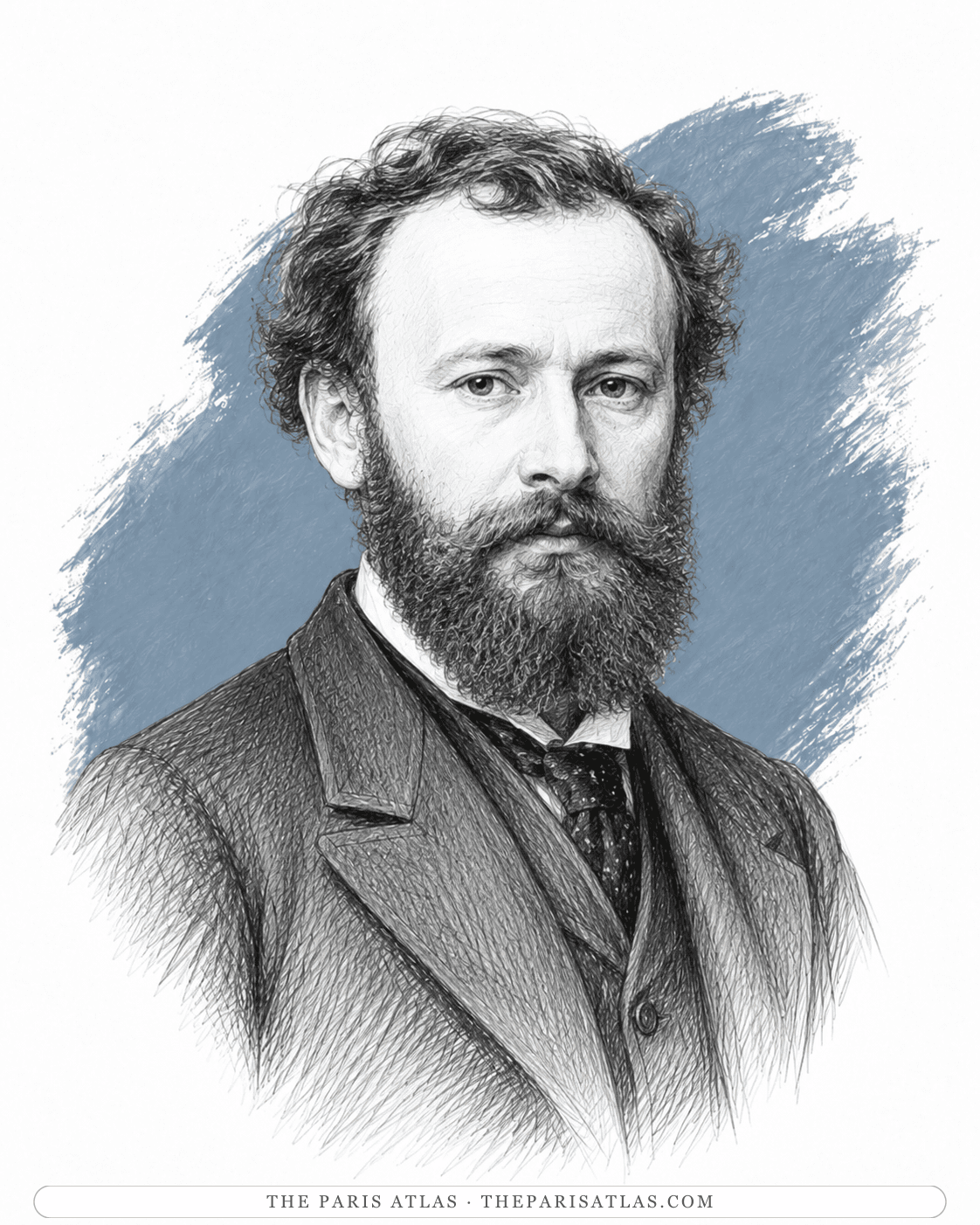
Édouard Manet
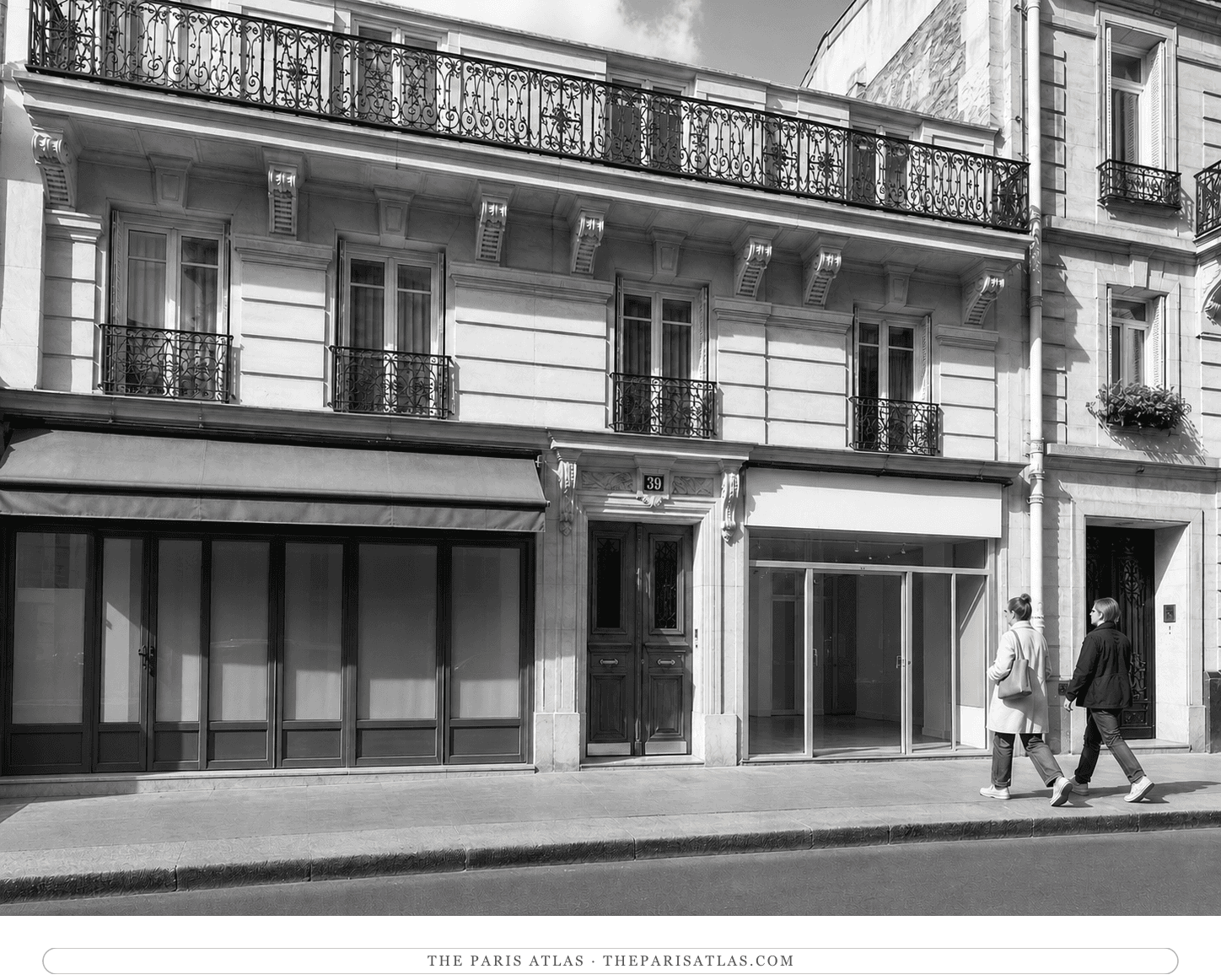
Manet moved to an apartment at 39 rue de Saint-Petersbourg in 1878 and remained associated with the address until his death in 1883.
The apartment Édouard Manet moved to in 1878 and remained associated with until his death in 1883, in the last years when illness had reduced what he could physically paint.

Édouard Manet took an apartment here in 1878, a few doors along the same street from the studio he had just given up, and the address stayed his until he died in 1883.
These were hard years. Manet was seriously ill — the illness is generally identified as locomotor ataxia arising from syphilis — and walking, standing and working all became progressively harder. The work adapted rather than stopped: the late still lifes of fruit and flowers, small and close at hand, come from a painter who could no longer stand at a large canvas for long.
The last major picture, A Bar at the Folies-Bergère, was shown at the Salon in 1882. Manet died on 30 April 1883, aged fifty-one, and is buried in the family tomb at Passy Cemetery.
Manet moves into 39 rue de Saint-Pétersbourg.
A Bar at the Folies-Bergère is shown at the Salon.
Manet dies on 30 April and is buried at Passy Cemetery.
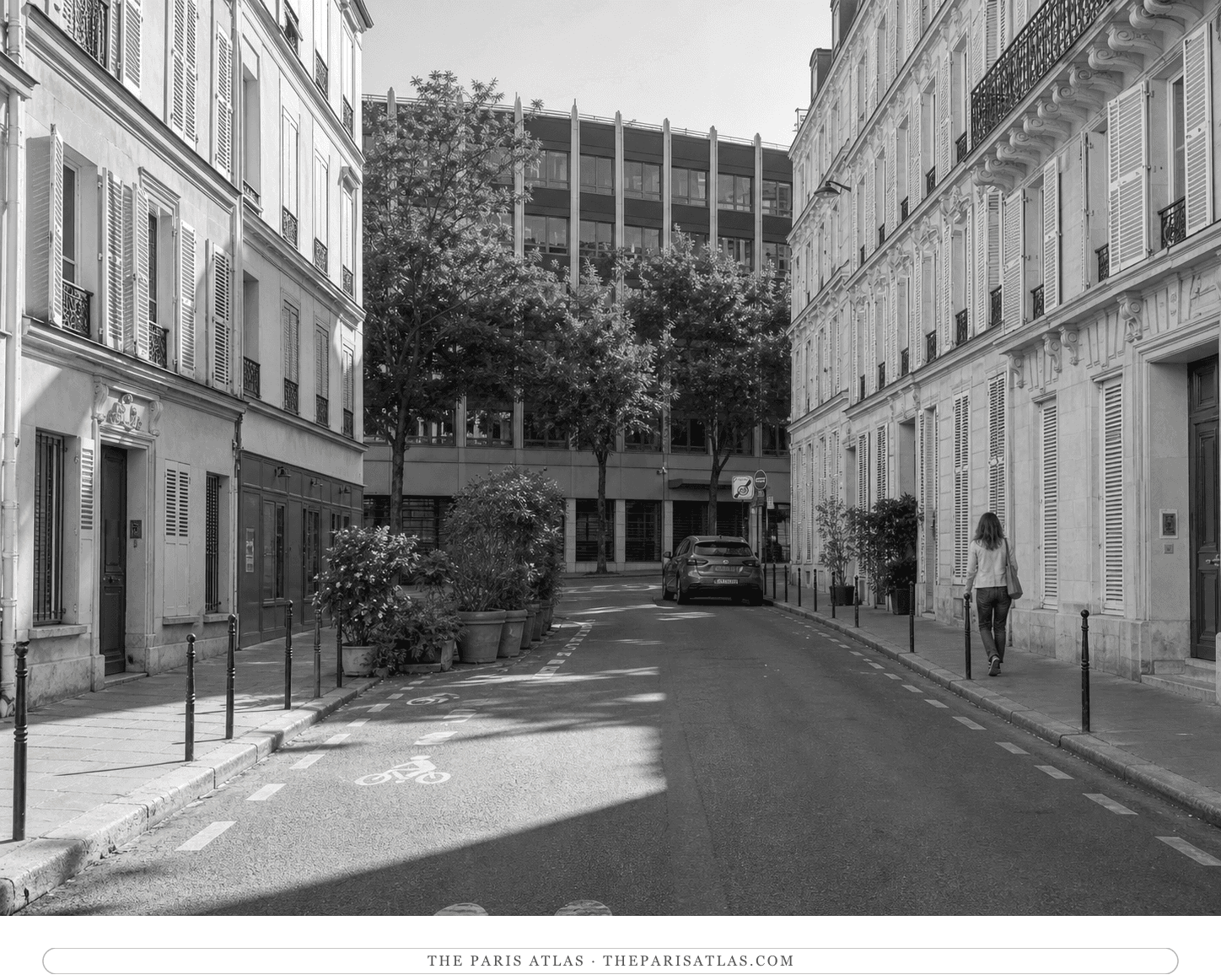
At 39 rue de Saint-Pétersbourg in the 8th arrondissement, from 1878 until his death on 30 April 1883.
Illness. In his last years he could not stand at a large canvas for long, and the late work concentrates on small, close subjects — particularly still lifes of fruit and flowers.
Manet moved to an apartment at 39 rue de Saint-Petersbourg in 1878 and remained associated with the address until his death in 1883.

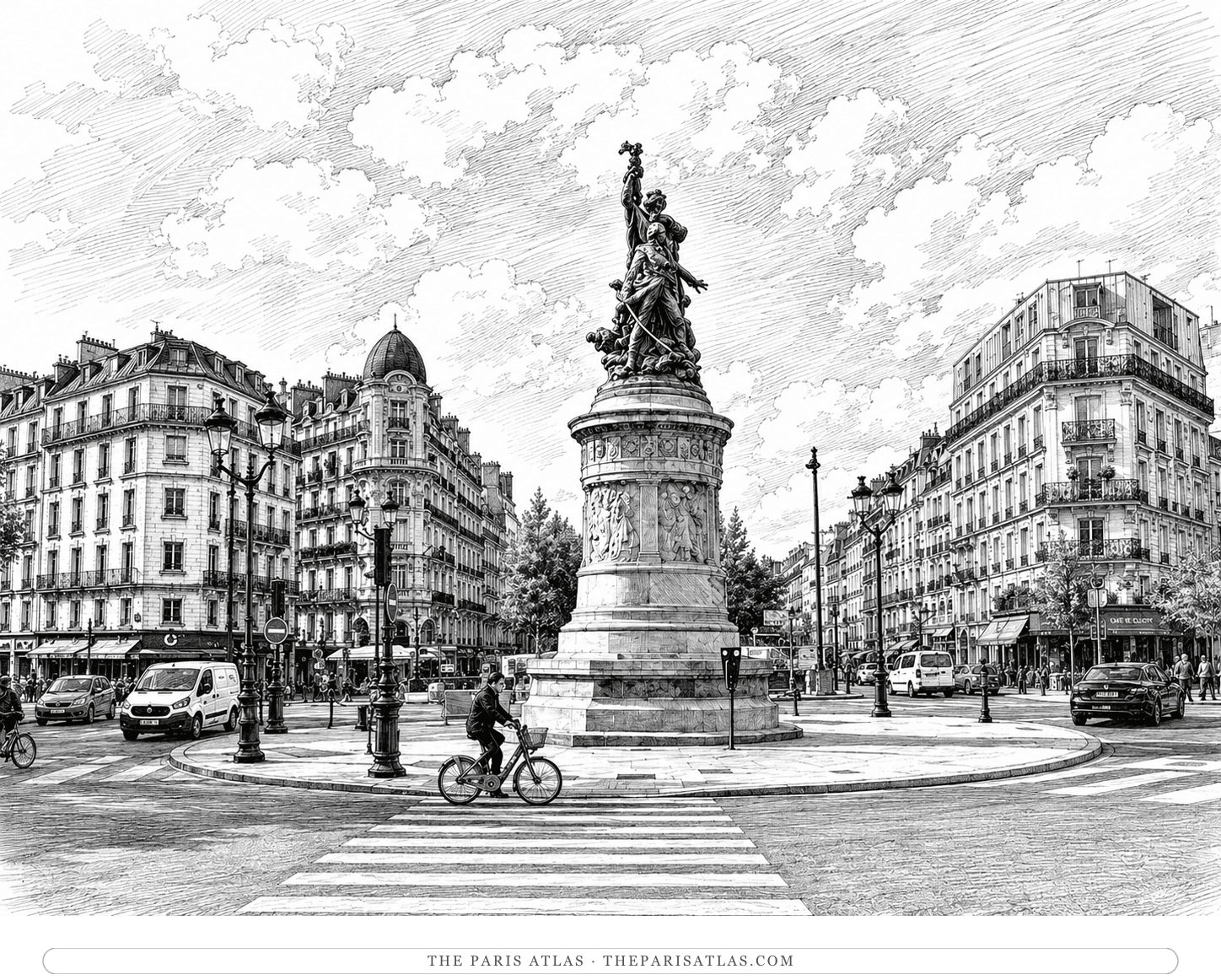
The crossroads where four arrondissements collide — and where Louis-Ferdinand Céline opens Journey to the End of the Night at a café table, with a recruitment parade passing and his narrator Bardamu jumping up to join the war.
Visit the place
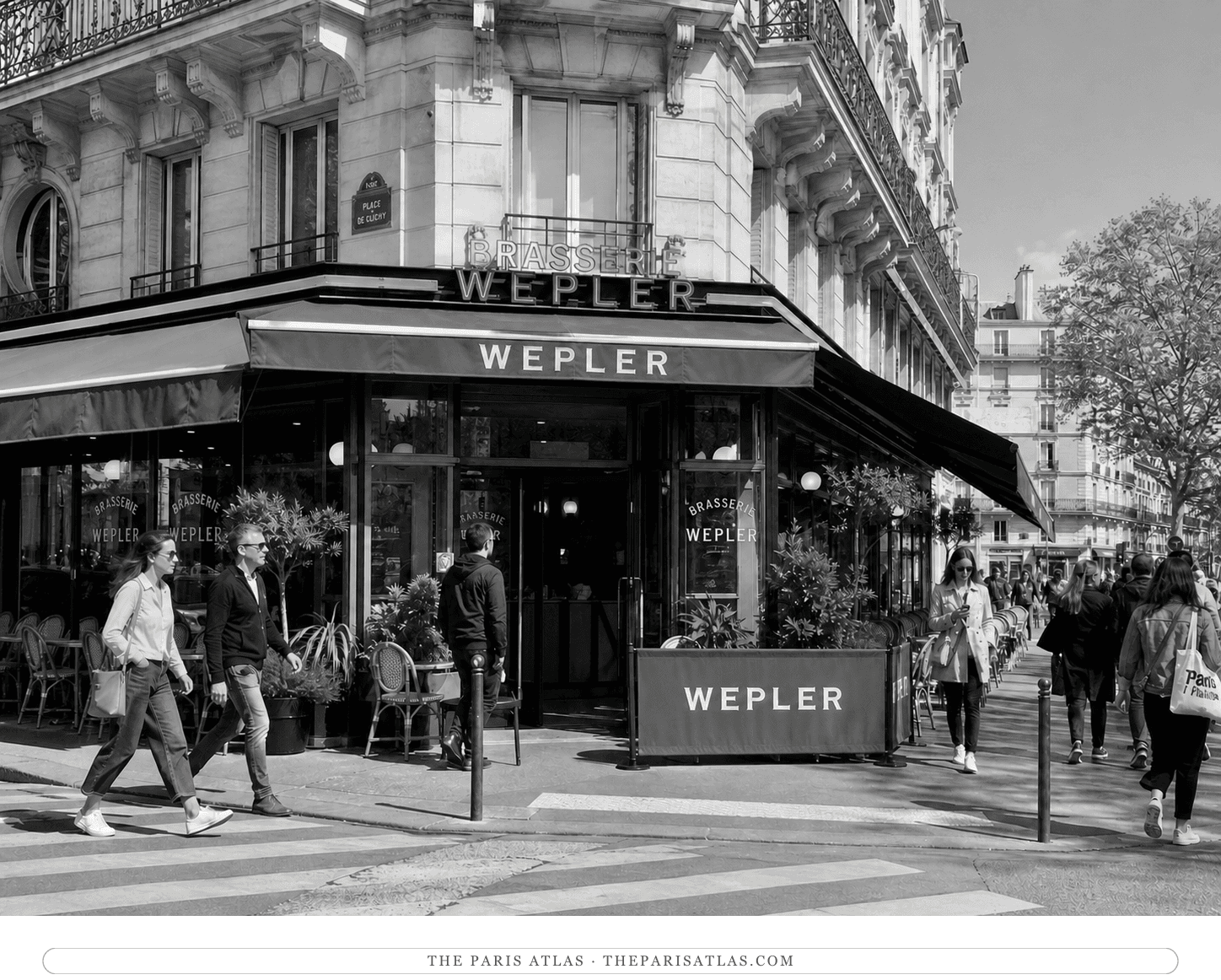
The big brasserie on the place de Clichy that Henry Miller used as his base during the Clichy years later recreated in Quiet Days in Clichy — somewhere to write, to wait for people, and to watch the square. Currently closed for renovation.
Visit the place
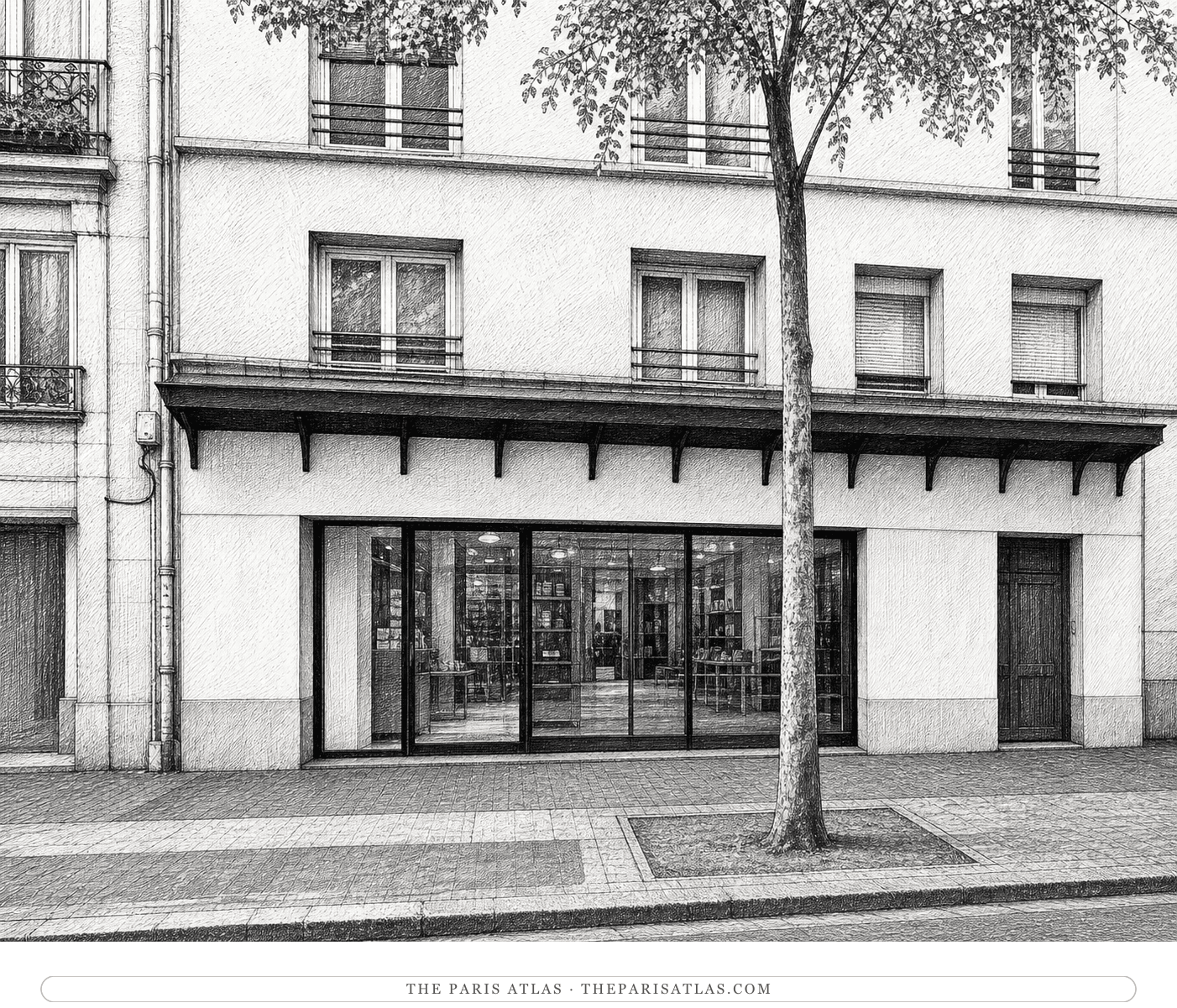
The last address the record gives Paul Cézanne in Paris, taken on 21 October 1899. He left for Aix and spent the remaining seven years of his life painting the same mountain.
Visit the place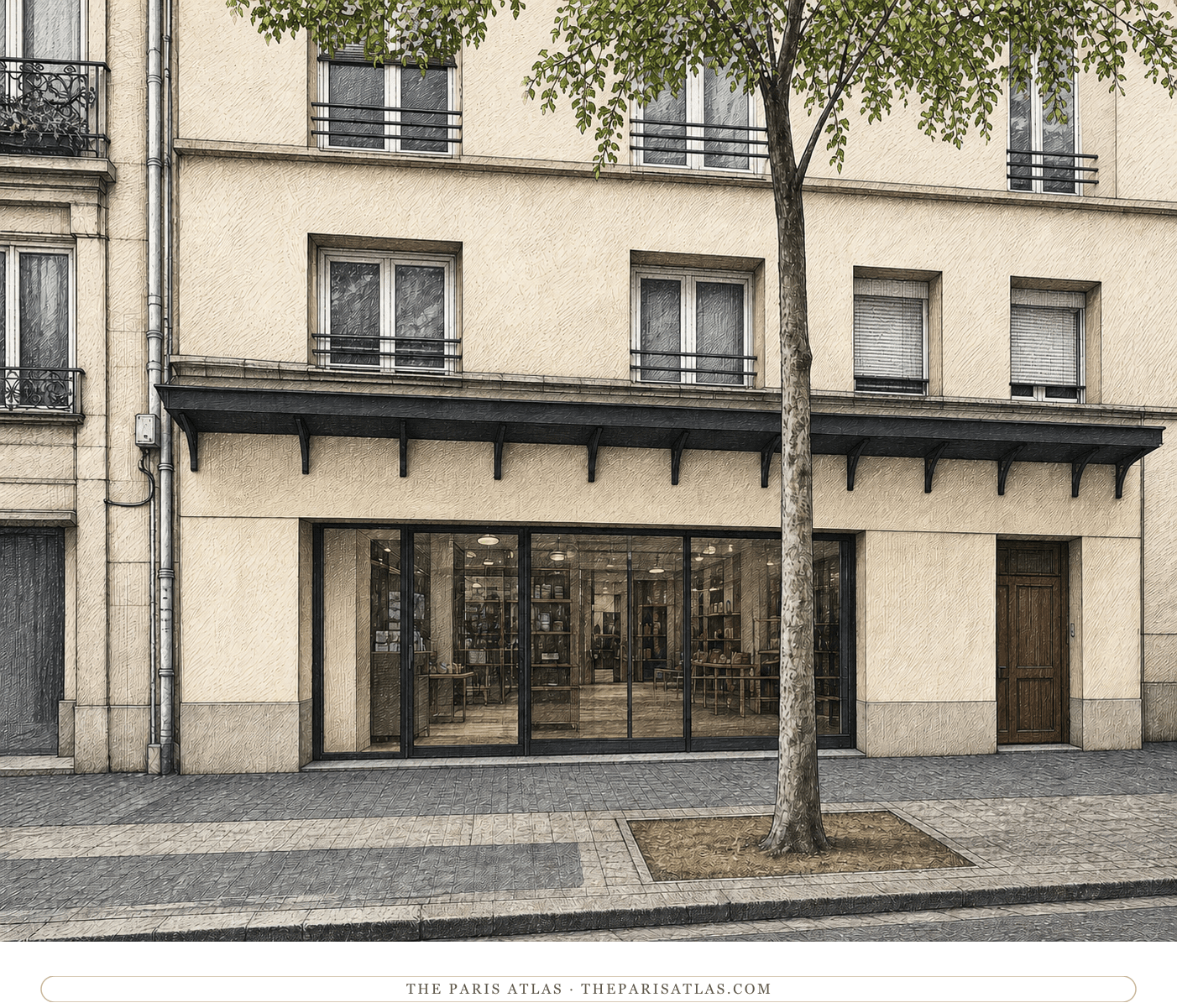
The Batignolles café where Édouard Manet held court through the 1860s and the painters who would become the Impressionists argued out what they were doing. Its address has since been renamed and renumbered, and nothing of it survives.
Visit the placeThe sources below include histories, archival materials, scholarly research, and official records that informed this page. They document 39 rue de Saint-Pétersbourg, the people connected to it, and its place in Paris.


Web source consulted for documented facts and historical context presented on the 39 rue de Saint-Pétersbourg page.
Web source consulted for documented facts and historical context presented on the 39 rue de Saint-Pétersbourg page.
Web source consulted for documented facts and historical context presented on the 39 rue de Saint-Pétersbourg page.
Web source consulted for documented facts and historical context presented on the 39 rue de Saint-Pétersbourg page.
These references provide the documented foundation for this page's history and context. Claim-level citations remain attached to the specific claims they support.
 Explore more resources
Newsletter
The cafés, studios, and walk-up flats where the work was made — one story from the map in every letter.