Paul Gauguin
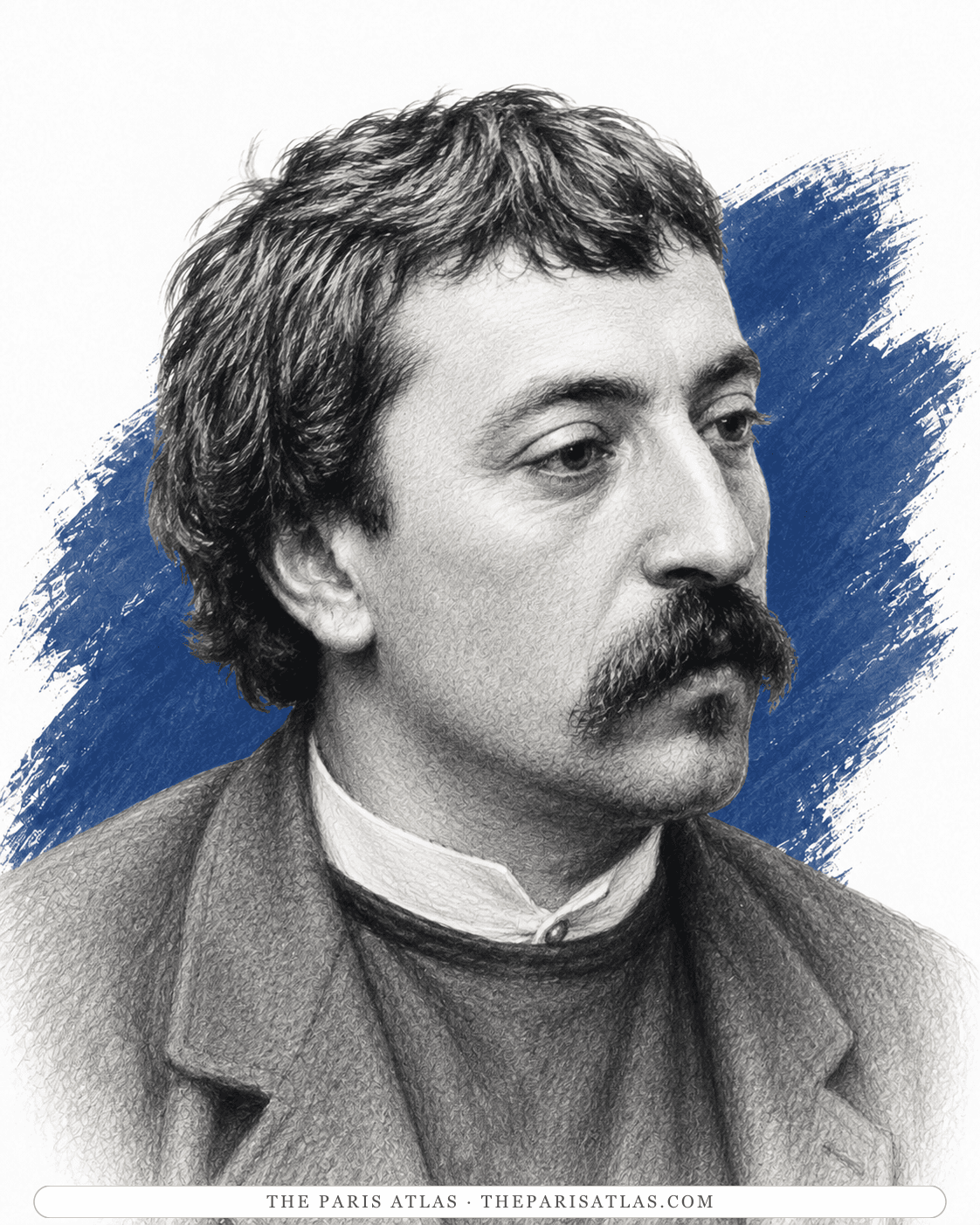
Paul Gauguin was born at 56 rue Notre-Dame-de-Lorette on 7 June 1848. The family left France for Peru soon after, and his father died during the voyage.
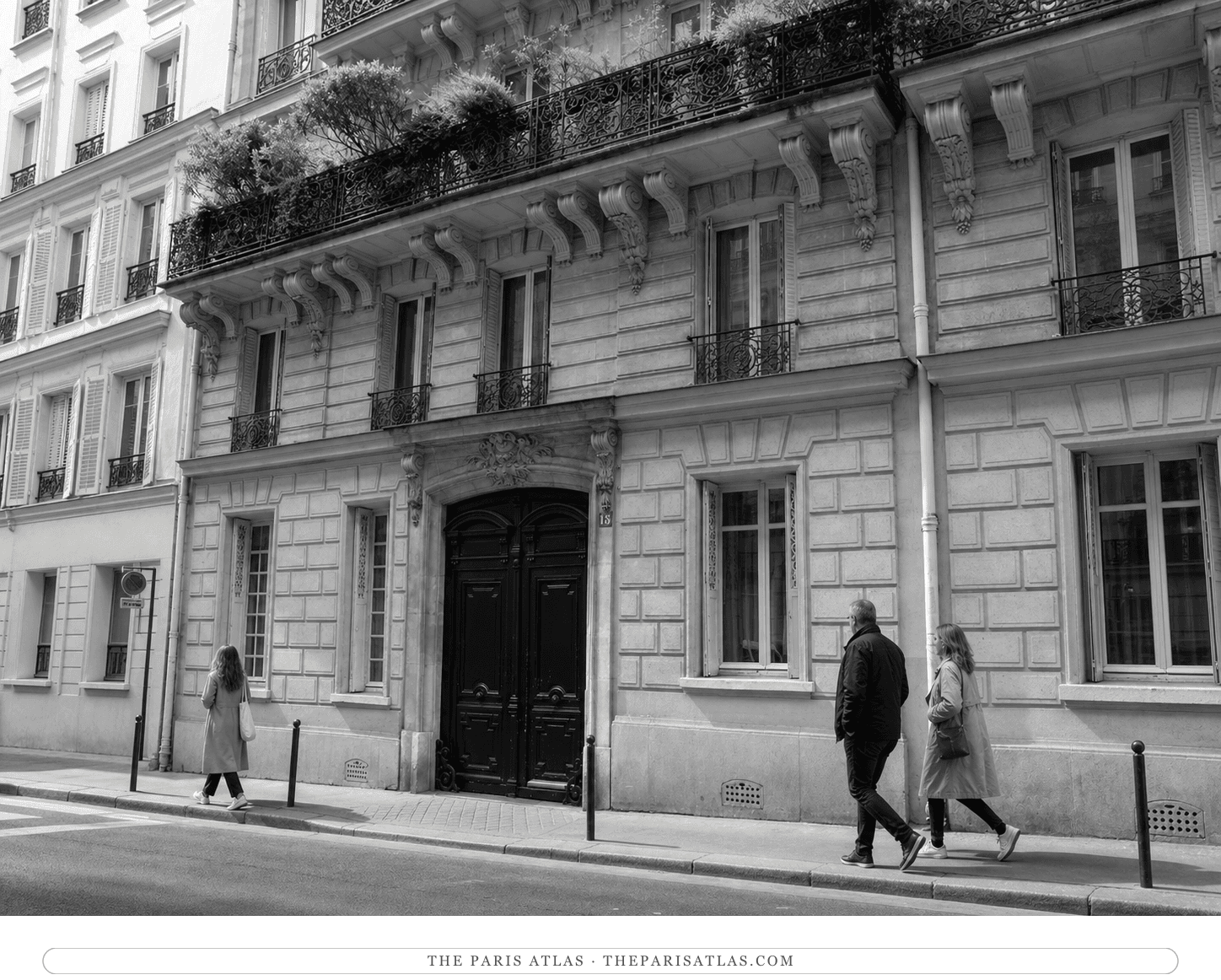
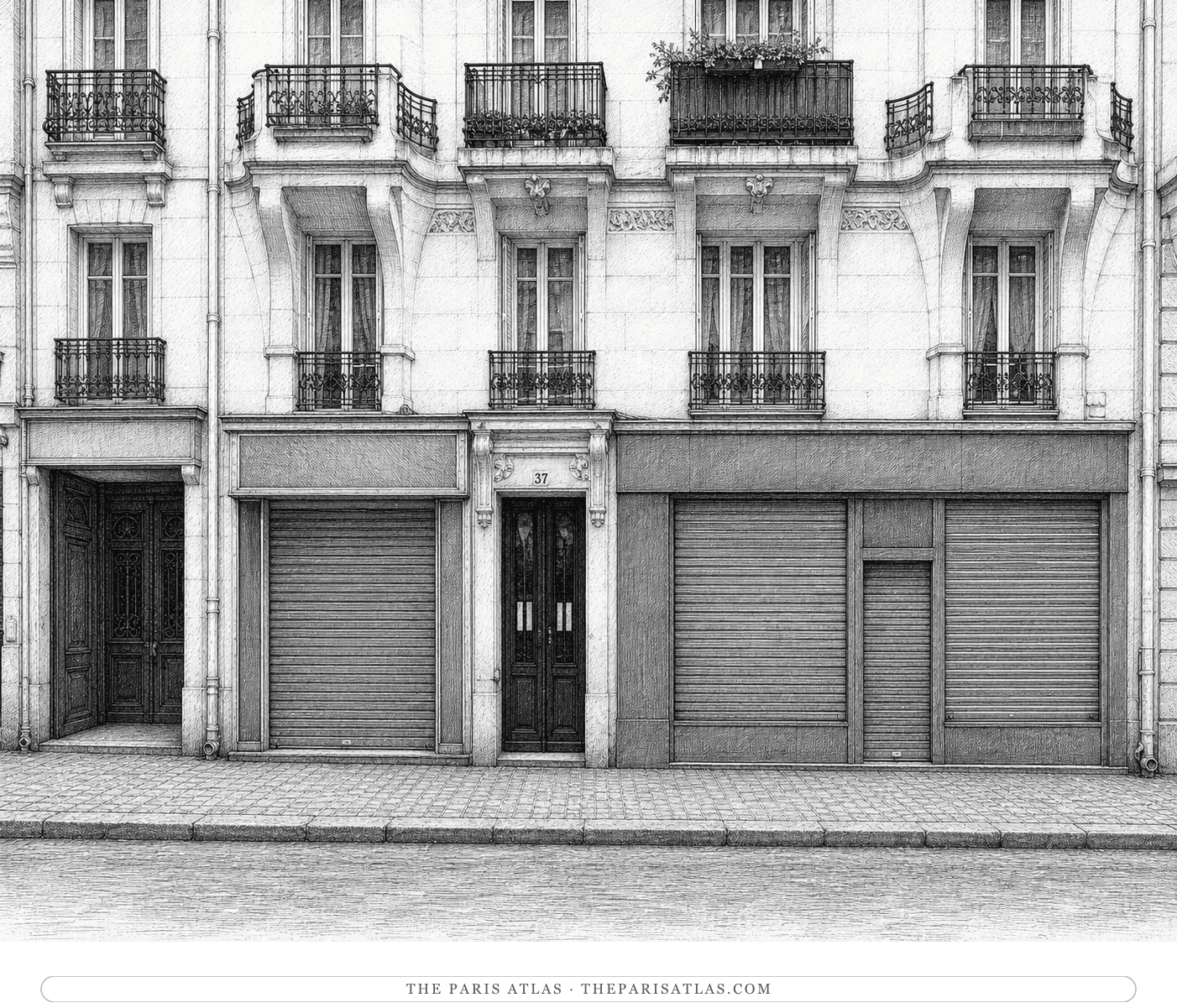
The house where Paul Gauguin was born on 7 June 1848, months before the family fled France for Peru — a departure that killed his father and shaped everything that came after.

Paul Gauguin was born here on 7 June 1848, in a year of revolution. His father Clovis was a republican journalist, and when Louis-Napoléon consolidated power the family judged France unsafe and sailed for Peru, where his mother Aline had relatives of some standing.[1]
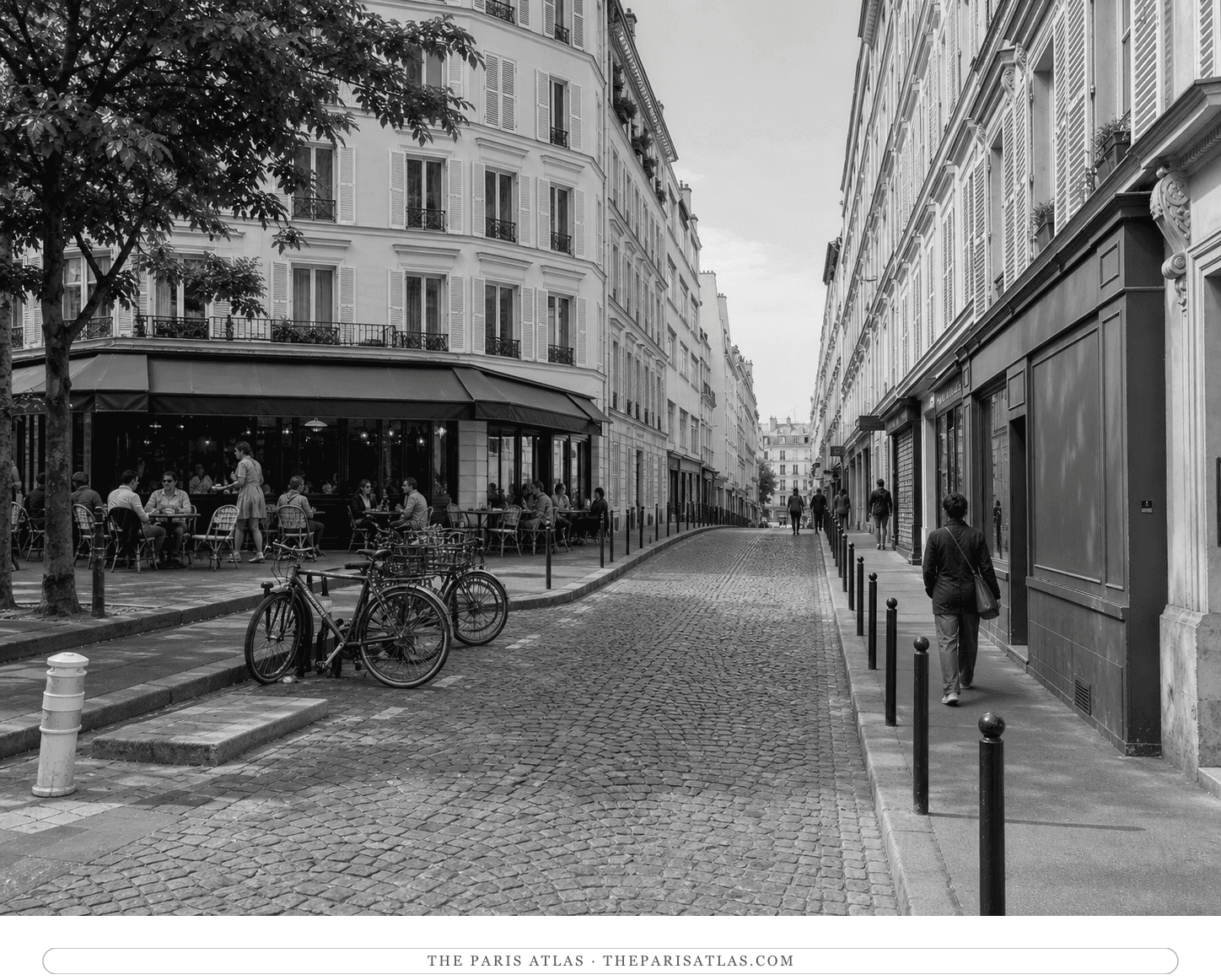
The address belonged to the dense new neighbourhood growing below Montmartre, not to an artists' quarter in the later sense. Gauguin entered a politically engaged family with connections extending beyond France: Aline's mother, the writer and socialist Flora Tristan, had Peruvian ancestry and had campaigned for workers' and women's rights. Those histories were present before Gauguin made them part of his own identity.
Clovis died of a heart attack during the crossing. Aline arrived in Lima a widow with two small children, and Gauguin spent his first years there among a wealthy Peruvian household — an early, formative stretch of childhood spent somewhere emphatically not European. He came back to France at six or seven.[1]
The Lima childhood gave him memories of climate, objects and family status that differed sharply from his later schooling in France. It did not place him outside European culture, and it should not be used to explain every later voyage. It did, however, make movement between countries part of his biography before he was old enough to choose it.[2]
It is tempting and slightly too neat to draw a straight line from that to Tahiti forty years later. But the pattern of his life — leaving, going further, not coming back — starts at this door, and he did not choose the first departure.[3]
Gauguin later exaggerated and reshaped his ancestry as he cultivated the role of a supposedly instinctive, non-European artist. The Met describes that self-fashioning as central to his career. The birthplace helps separate the facts from the persona: he was a Paris-born Frenchman with real Peruvian family connections and childhood experience, not the simplified 'Incan savage' he sometimes offered to the market.
The contrast with his adult Paris addresses is equally useful. Within a few streets are the home of his guardian Gustave Arosa, whose collection introduced him to modern painting, and one of the apartments from his prosperous stockbroking years. His origin and early artistic formation both belong to this compact section of the 9th, however insistently the mature artist looked elsewhere.
The building stands and carries a plaque. It is private.
The plaque makes this a straightforward exterior stop. There is no birth-room interior to visit and no reason to enter the private building. From the pavement, the marker and surviving street establish the fact of the address without turning a residence into a museum.
The revolution of 1848 provides more than a dramatic date. Republican hopes, press activity and the rise of Louis-Napoléon shaped the family's assessment of safety. Clovis Gauguin's journalism tied employment to politics, so emigration was not simply a private search for opportunity. The infant's first voyage began in decisions made under a changing French regime.
Flora Tristan had died before her grandson was born, but her life supplied a remarkable inheritance. She wrote from experience of France and Peru, argued for workers' organisation and women's rights, and refused the limits assigned to a separated woman. Gauguin later invoked ancestry selectively when constructing his own legend. Keeping Tristan's actual political and literary work visible prevents that inheritance from shrinking into a romantic claim of exotic blood.
The death of Clovis during the voyage altered the family before arrival. Peru offered Aline kinship and relative privilege, yet the move began with bereavement and dependence. Gauguin's childhood memories of Lima were therefore embedded in a household sustained by maternal relatives, not an autonomous encounter with an untouched culture. His later self-description simplified those unequal and cosmopolitan circumstances.
Returning to France placed the child in another set of institutions and expectations, including schooling and eventually maritime service. The repeated movement between family worlds may help explain why travel felt familiar, but biography should stop short of treating infancy as destiny. Gauguin made later choices under adult economic, artistic and colonial conditions that cannot be excused by a childhood crossing.
The surviving building and plaque establish a Paris origin that the mature persona often worked to displace. From this address, the nearby Arosa house and early family apartments can be reached on foot. That concentration shows that before voyages became his artistic brand, Gauguin's access to employment, collecting and modern art grew from local family networks in the 9th arrondissement.
A birthplace page can easily become thin because the occupant left before forming memories there. Here, the surrounding family history supplies the substance without pretending the infant acted as an artist in the room. The address anchors documented birth, republican parents, a transnational maternal line and the forced decision to depart France. Those facts create a responsible beginning while leaving the later adult accountable for the choices that were genuinely his.
Gauguin is born on 7 June.
The family sails for Peru; his father dies during the voyage.
Gauguin returns to France as a child.
At 56 rue Notre-Dame-de-Lorette in the 9th arrondissement, on 7 June 1848. A plaque marks the building.
His family left France for political reasons when he was an infant. His father died on the voyage and his mother raised the children in Lima for several years.
Paul Gauguin was born at 56 rue Notre-Dame-de-Lorette on 7 June 1848. The family left France for Peru soon after, and his father died during the voyage.

The tiny Montmartre nightclub where Langston Hughes washed dishes in 1924 and Bricktop began her Paris career — an eight-foot bar, a dance floor for a dozen couples, and the after-hours jam sessions that ended the quarter's nights.
Visit the place
The house of Gustave Arosa — businessman, photographer and collector — who became Paul Gauguin's guardian, found him his job at the Bourse, and owned the Delacroix, Courbet and Pissarro canvases that started him painting.
Visit the place
A Paul Gauguin address in the 9th arrondissement during the years when he was still a stockbroker, painting on Sundays and quietly assembling one of the better private Impressionist collections in Paris.
Visit the place
The apartment and studio where Edgar Degas worked for the last quarter-century of his career, on a street then called the rue de Laval. Paul Valéry was brought here to meet him in 1896. Degas was evicted in 1912 and never really worked again.
Visit the placeThe sources below include histories, archival materials, scholarly research, and official records that informed this page. They document 56 rue Notre-Dame-de-Lorette, the people connected to it, and its place in Paris.

Web source consulted for documented facts and historical context presented on the 56 rue Notre-Dame-de-Lorette page.
Web source consulted for documented facts and historical context presented on the 56 rue Notre-Dame-de-Lorette page.
Web source consulted for documented facts and historical context presented on the 56 rue Notre-Dame-de-Lorette page.
These references provide the documented foundation for this page's history and context. Claim-level citations remain attached to the specific claims they support.
 Explore more resources
Newsletter
The cafés, studios, and walk-up flats where the work was made — one story from the map in every letter.