Paul Gauguin
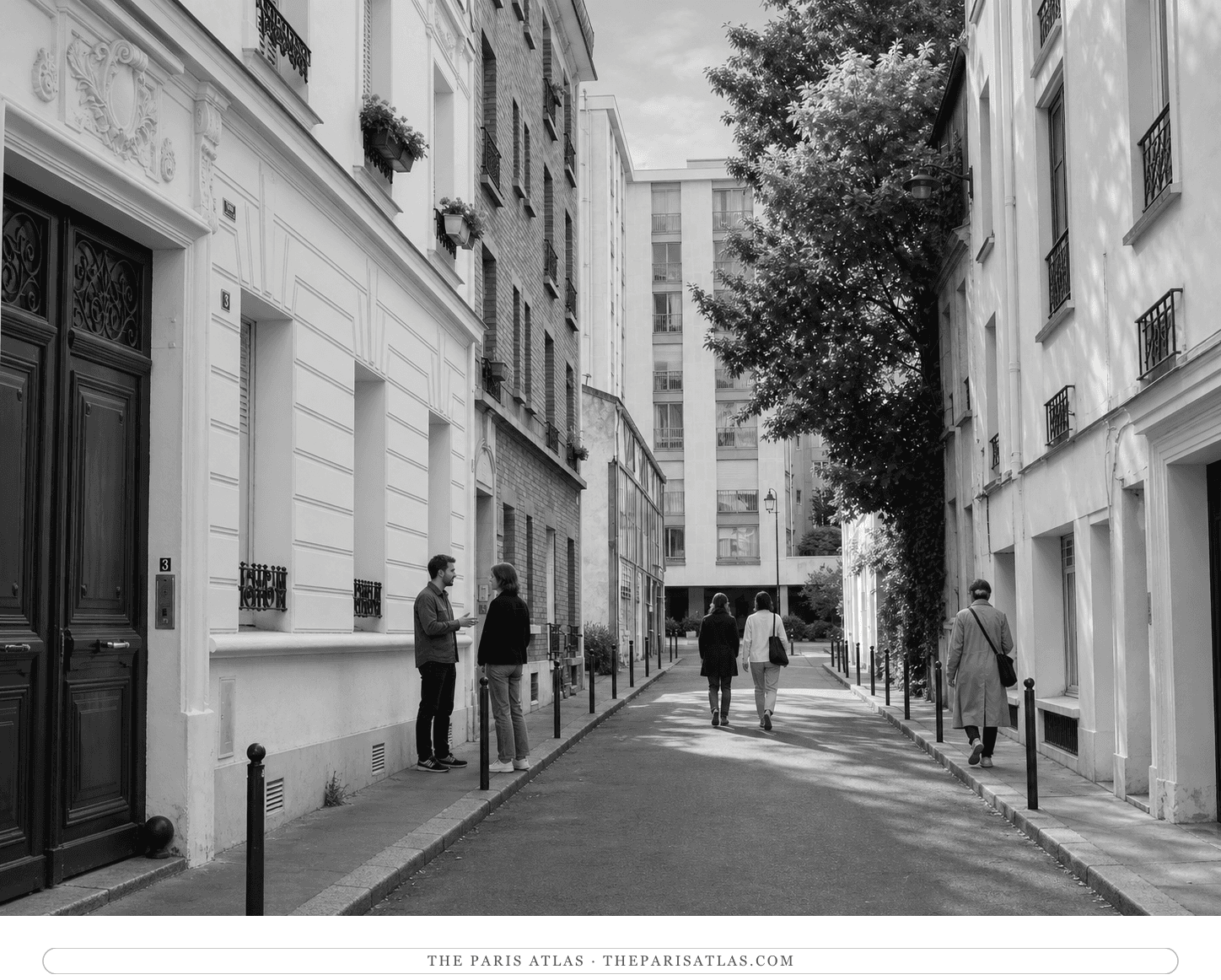
Paul Gauguin worked in the studio alley at the Cite Falguiere in Vaugirard, later occupied by Amedeo Modigliani and Chaim Soutine.
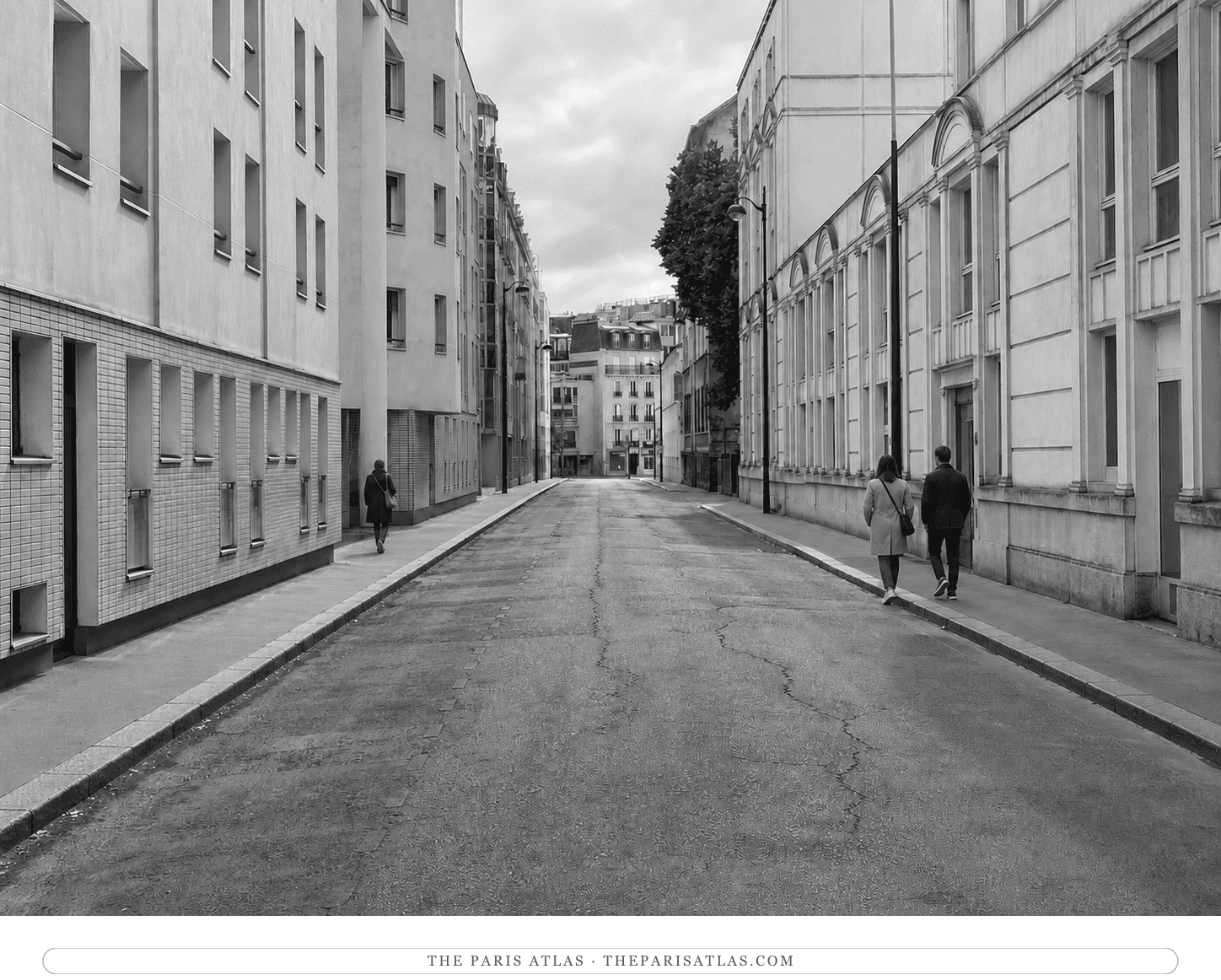
A narrow lane of nineteenth-century artists' studios in Vaugirard, worked in by Paul Gauguin and later by Amedeo Modigliani and Chaïm Soutine — cheap, cold and almost unchanged.

The Cité Falguière is a short private alley of purpose-built ateliers put up in the 1860s, when this part of the 15th was still cheap and half-industrial. Studios like these — high north windows, no comfort, low rent — are the physical precondition for most of what is now called the École de Paris.[1]
Purpose-built did not mean comfortable. The essential feature was volume and steady light: a tall room and broad window that allowed large work and reduced shifts in illumination. Heating, plumbing and domestic separation could remain rudimentary. The architecture prioritised production over ordinary housing because low rent was the reason artists came to the outer district.[1]
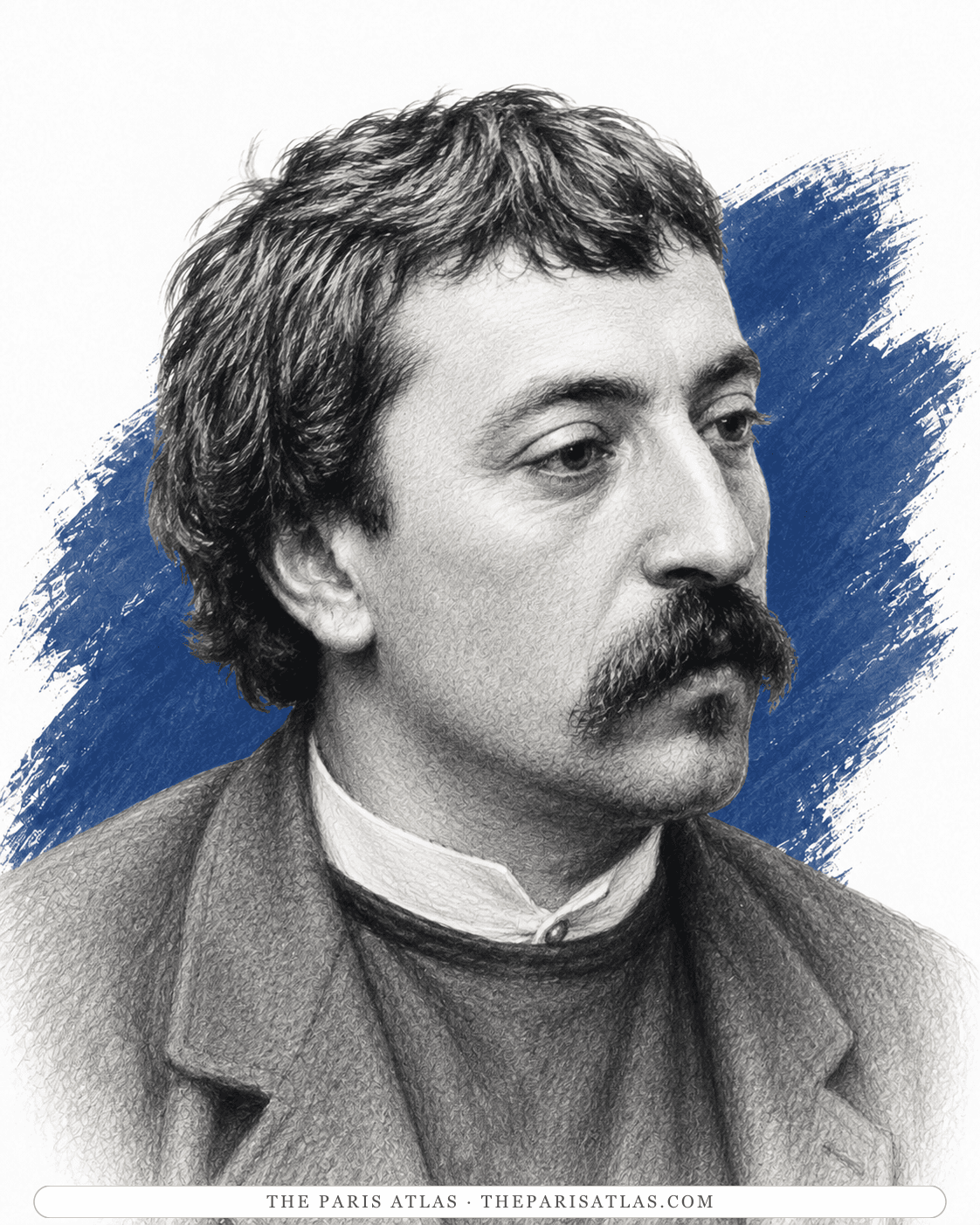
Paul Gauguin worked here. So, a generation later, did Amedeo Modigliani and Chaïm Soutine, both of whom lived in the alley in genuine poverty in the years before and during the First World War.[2]
Those names should not collapse into one continuous school. Gauguin's Paris career belonged to the Impressionist and Symbolist networks of the late nineteenth century; Modigliani and Soutine were immigrant artists in the pre-war and wartime Montparnasse scene. What the cité supplied across those differences was reusable cheap infrastructure. The rooms outlasted movements and reputations.[3]
The alley also shows why artistic geography shifted south from Montmartre. Around Vaugirard and Montparnasse, workshops and marginal land could still be adapted into studios while central rents rose. Academies, cafés and dealers followed the growing concentration of working artists. A studio address could become part of a network even when nothing was exhibited there publicly.
What makes it unusual is how little has happened to it. The alley has escaped the redevelopment that flattened Gauguin's rue Vercingétorix studio a kilometre away, and the buildings are still ateliers.[1]
Survival gives the cité a kind of evidence a commemorative plaque cannot. Window proportions, the narrowness of the access and the closeness of one workroom to another remain legible. At the same time, continuity of use deserves protection: these are not empty historic shells but private studios, and treating them as an attraction would interfere with the function that made the place significant.
It is private. It can be looked into from the entrance and no further.
The appropriate visit stops at that threshold. The entrance gives a view down the lane and establishes the scale of the ensemble. There is no public museum interior, and the absence of general access should not be tested by walking past the private boundary.
The high windows explain why these structures survived as desirable studios even after the district changed. North-facing light reduces dramatic movement of sun across a working surface, while height permits sculpture and large canvas. Those functional qualities are visible from the lane and distinguish an atelier from an ordinary small house, even when the private interior cannot be inspected.
Gauguin's presence belongs to an earlier layer than the artists most strongly associated with the cité. He moved through a Paris studio economy before and between voyages, using spaces that could be taken temporarily and fitted to work. Modigliani and Soutine later arrived under different political and migratory circumstances, but confronted the same basic equation of low rent, poor comfort and proximity to other artists.[4]
The phrase École de Paris was never the name of a single school housed here. It became a broad label for artists working in the city, many born elsewhere and connected more by place and market than by one style. Cité Falguière makes that looseness concrete: successive tenants shared architecture and hardship while producing radically different work.[5]
Preservation has required resistance to redevelopment and recognition that living studios are cultural infrastructure. Turning every room into display would end the continuity the site is valued for. The strongest conservation outcome is not unrestricted tourist access but continued artistic use, with exterior interpretation sufficient to explain why the ensemble matters.[1]
Its present status is therefore specific: a surviving private alley of studio buildings, still used and not generally open. Visitors can see the entrance from the public street and should stop there. That wording acknowledges both the physical survival the page celebrates and the boundary necessary to protect it.
The cité also demonstrates that an artist's address can be historically important without a single famous event attached to one day. Work accumulated through repeated use of light, floor space and contact with neighbours. Rent was paid or missed, materials arrived, canvases left, and successive tenants adapted the same architecture. That long duration is harder to dramatise than an exhibition opening, but it is closer to how art was actually made.
For Gauguin, placing the studio beside his other Paris addresses shows continual dependence on urban working space between claims of escape. For Modigliani and Soutine, the same lane belongs to the immigrant Montparnasse that followed. The buildings connect those histories without implying that the artists shared a programme or occupied them together.
The studios are built in what was then a cheap outer district.
Modigliani and Soutine work in the alley.
Not properly. It is a private alley of working studios; you can see into it from the entrance.
Amedeo Modigliani and Chaïm Soutine both lived and worked in the alley in the years around the First World War.
Paul Gauguin worked in the studio alley at the Cite Falguiere in Vaugirard, later occupied by Amedeo Modigliani and Chaim Soutine.

The fourth-floor Montparnasse apartment Paul Cézanne took in 1877, whose patterned wallpaper appears behind Hortense Fiquet in several of the portraits and stands in for a landscape in the still lifes.
Visit the place
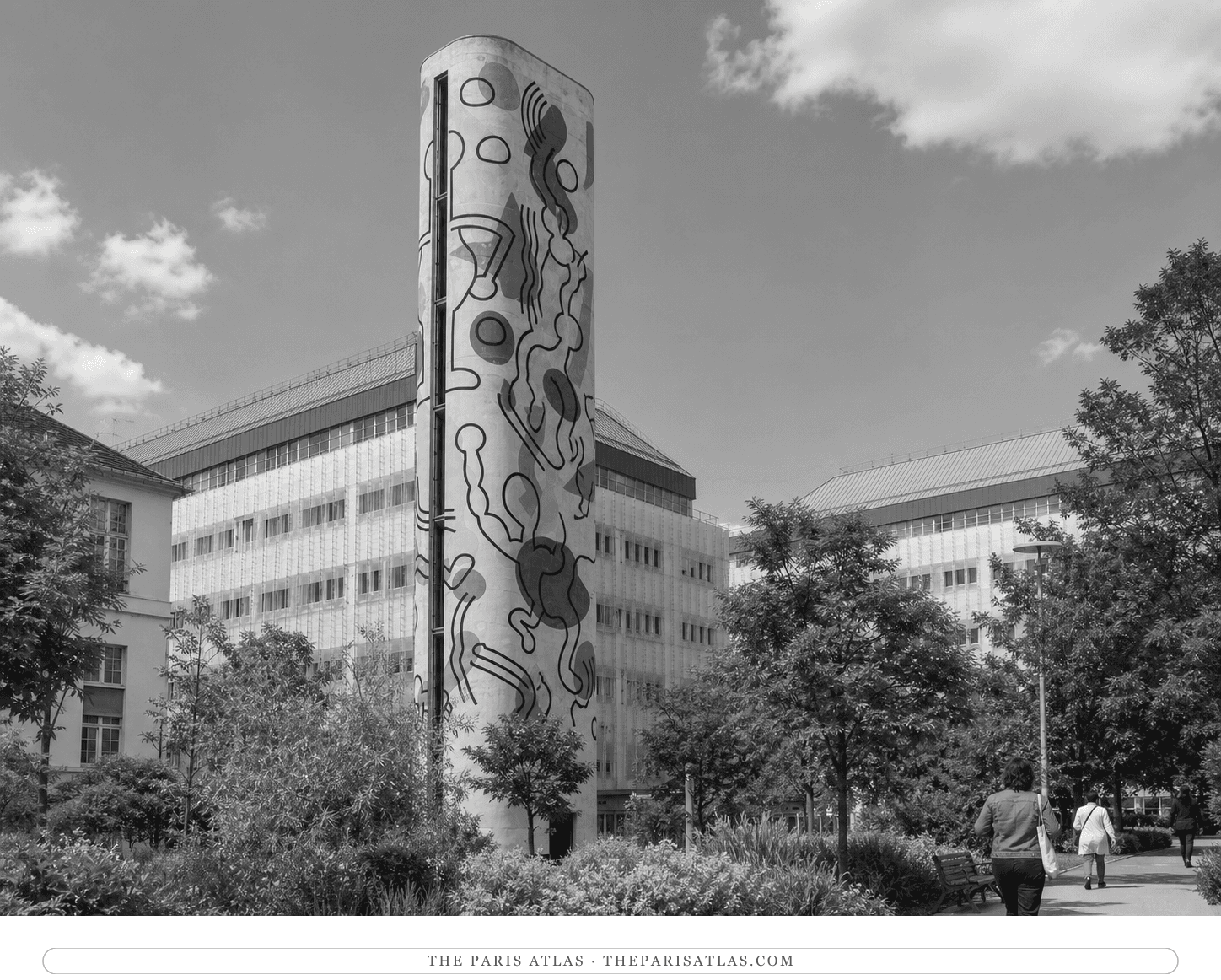
The 27-metre fire-stair tower Keith Haring painted freehand for the children of Hôpital Necker in April and May 1987 — his permanent Paris work, restored after a six-year conservation campaign.
Visit the place
The studio Paul Gauguin took on returning from his first Tahitian voyage in 1893, painted chrome yellow and hung with Polynesian objects — a piece of theatre staged to sell a version of himself to Paris.
Visit the place
The second of Paul Cézanne's two apartments on the rue de l'Ouest, taken in April 1880 — the address he was using while Émile Zola was writing the novel that ended their friendship.
Visit the placeThe sources below include histories, archival materials, scholarly research, and official records that informed this page. They document Cité Falguière, the people connected to it, and its place in Paris.


Web source consulted for documented facts and historical context presented on the Cité Falguière page.
Web source consulted for documented facts and historical context presented on the Cité Falguière page.
Web source consulted for documented facts and historical context presented on the Cité Falguière page.
Web source consulted for documented facts and historical context presented on the Cité Falguière page.
These references provide the documented foundation for this page's history and context. Claim-level citations remain attached to the specific claims they support.
 Explore more resources
Newsletter
The cafés, studios, and walk-up flats where the work was made — one story from the map in every letter.