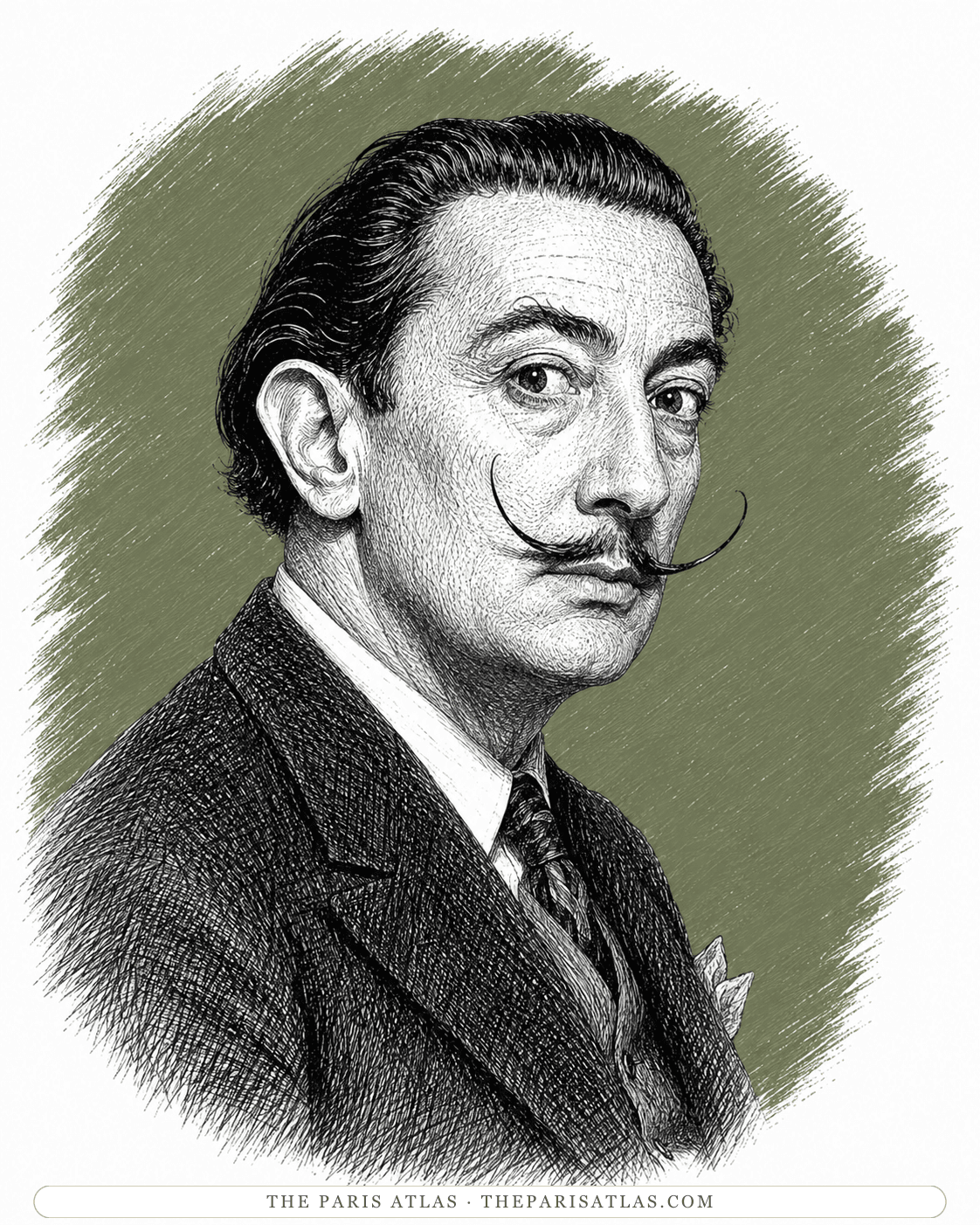
Salvador Dalí
Dalí's Paris base for roughly three decades, returning for long annual stays with Gala and an entourage. The suite served as studio and stage at once, at the point where his self-presentation had become part of the work.
Stay in Paris
Le Meurice offers rooms and suites opposite the Tuileries, with restaurants, Bar 228, a gym, and Spa Valmont. The view and layout depend on the category you choose.
Explore the history of Le Meurice
The hotel today
Open for stays
Accommodation in Paris.
Choose your room
Compare the options, then check your dates with the hotel for availability, current rates, and the exact room configuration.
A queen bed and a courtyard or street outlook.
These categories offer alternatives to the Classic room. Check the room description for the exact view; an Eiffel Tower view is not standard throughout.
Junior Suites, larger suites, and signature suites are available. Confirm occupancy and the layout of the selected category.
During your stay
Restaurant Le Dalí, Restaurant le Meurice Alain Ducasse, and Bar 228 offer different settings. Reservations and inclusions depend on the venue and rate.
Breakfast can be taken in the restaurant or in the room. Check current spa treatments, opening times, and any additional charges with the hotel.
Choose your dates to check room options and availability. Confirm breakfast, additional charges, and cancellation terms for the rate you choose.
+33 1 87 16 44 50The history of this address
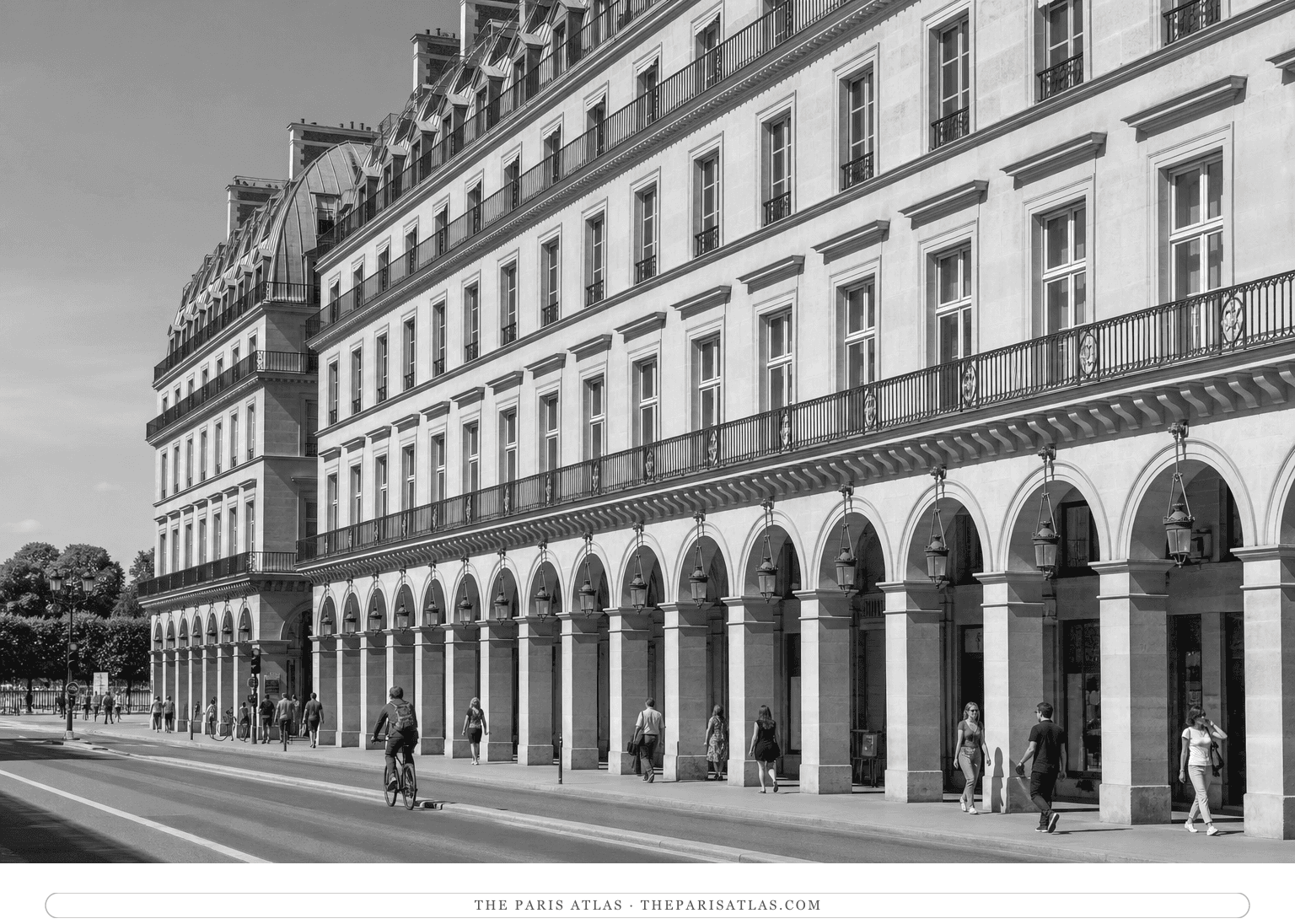
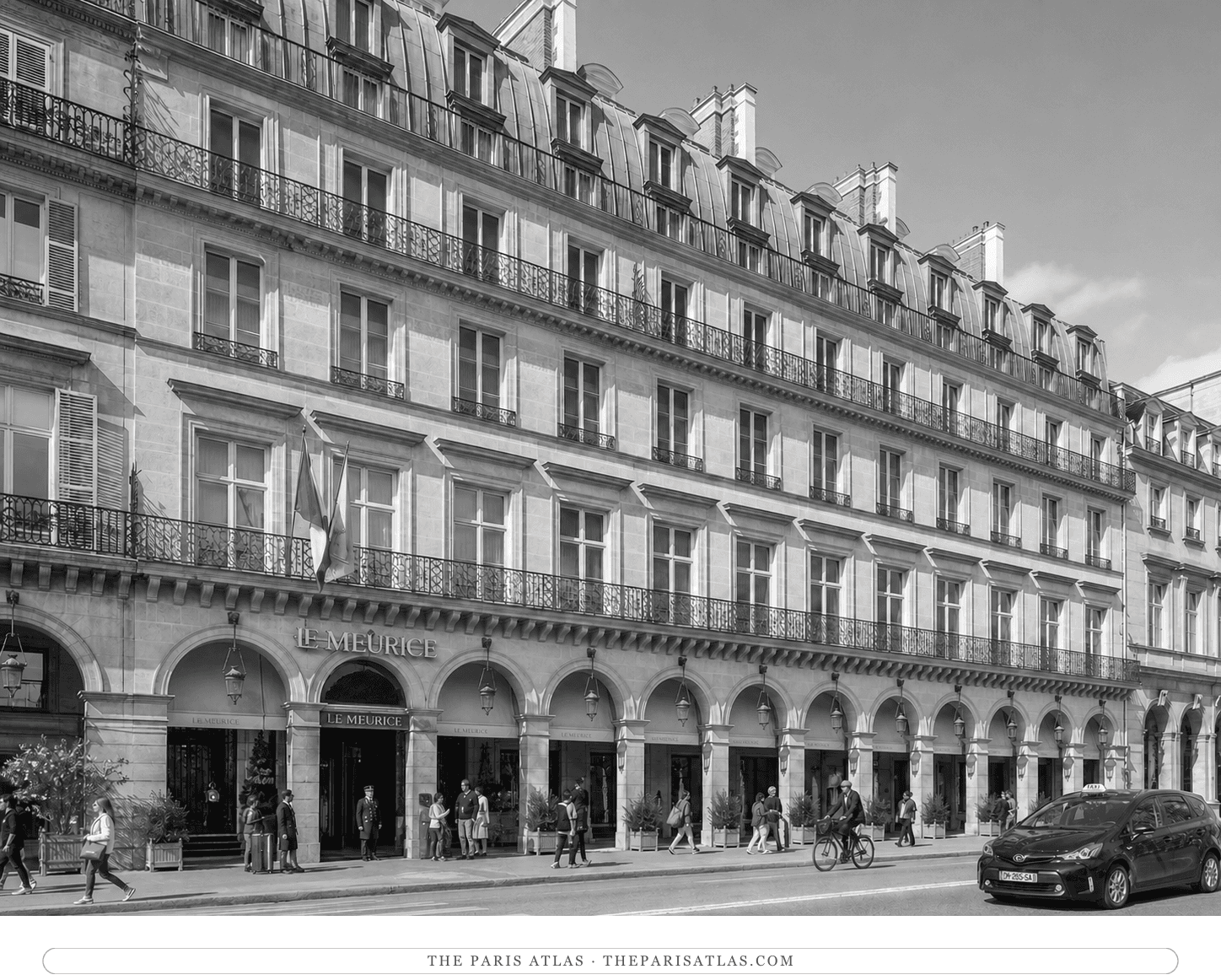
A grand hotel on the rue de Rivoli facing the Tuileries, and the Paris address Salvador Dalí returned to for roughly thirty years — arriving for a month at a time with a retinue, and treating the suite as a studio, a stage and a place to be seen.
The neighborhood
Le Meurice is in Louvre and Palais-Royal.
Le Meurice opened on the rue de Rivoli in the nineteenth century and has faced the Tuileries ever since — a hotel positioned, deliberately, on the axis between the Louvre and the Concorde.
Salvador Dalí made it his Paris base for about three decades from the 1930s onward, returning for long stays each year with Gala and an entourage. It was not a place he passed through. It was the fixed Paris address of a man whose life was otherwise divided between Catalonia and New York.
What matters is what he used it for. By the time the Meurice became his headquarters, Dalí had turned self-presentation into part of the work: the moustache, the entrances, the interviews, the demands made of staff, the animals. The suite functioned as studio and stage together — somewhere to paint, and somewhere to be observed painting.
That is the through-line from the Paris of his twenties to the Paris of his sixties. The young Dalí of 1929 arrived to make a film designed to be unwatchable and put on a first show that André Breton introduced. The older Dalí held court in a Rivoli hotel. Both are the same project — attention, provoked and then managed — carried out at different scales.
The hotel is still there and still trading. Unlike the galleries and cinemas of his early Paris, you can walk into the ground floor without an appointment.
Dalí begins staying at Le Meurice, which becomes his Paris base.
He returns for long stays each year with Gala and an entourage.
At Le Meurice, 228 rue de Rivoli, facing the Tuileries. It was his Paris base for roughly three decades from the 1930s, and he returned for long stays each year with Gala and an entourage rather than passing through.
Because by then his self-presentation was part of the art — the moustache, the entrances, the demands, the animals. The suite worked as studio and stage at the same time: somewhere to paint, and somewhere to be seen painting. The hotel is where the persona was staged.
Yes — it is still a hotel at the same address, and its restaurant and bar can be entered without taking a room. Among Dalí's Paris locations that is unusual; the galleries of his early years are gone.
Dalí's Paris base for roughly three decades, returning for long annual stays with Gala and an entourage. The suite served as studio and stage at once, at the point where his self-presentation had become part of the work.

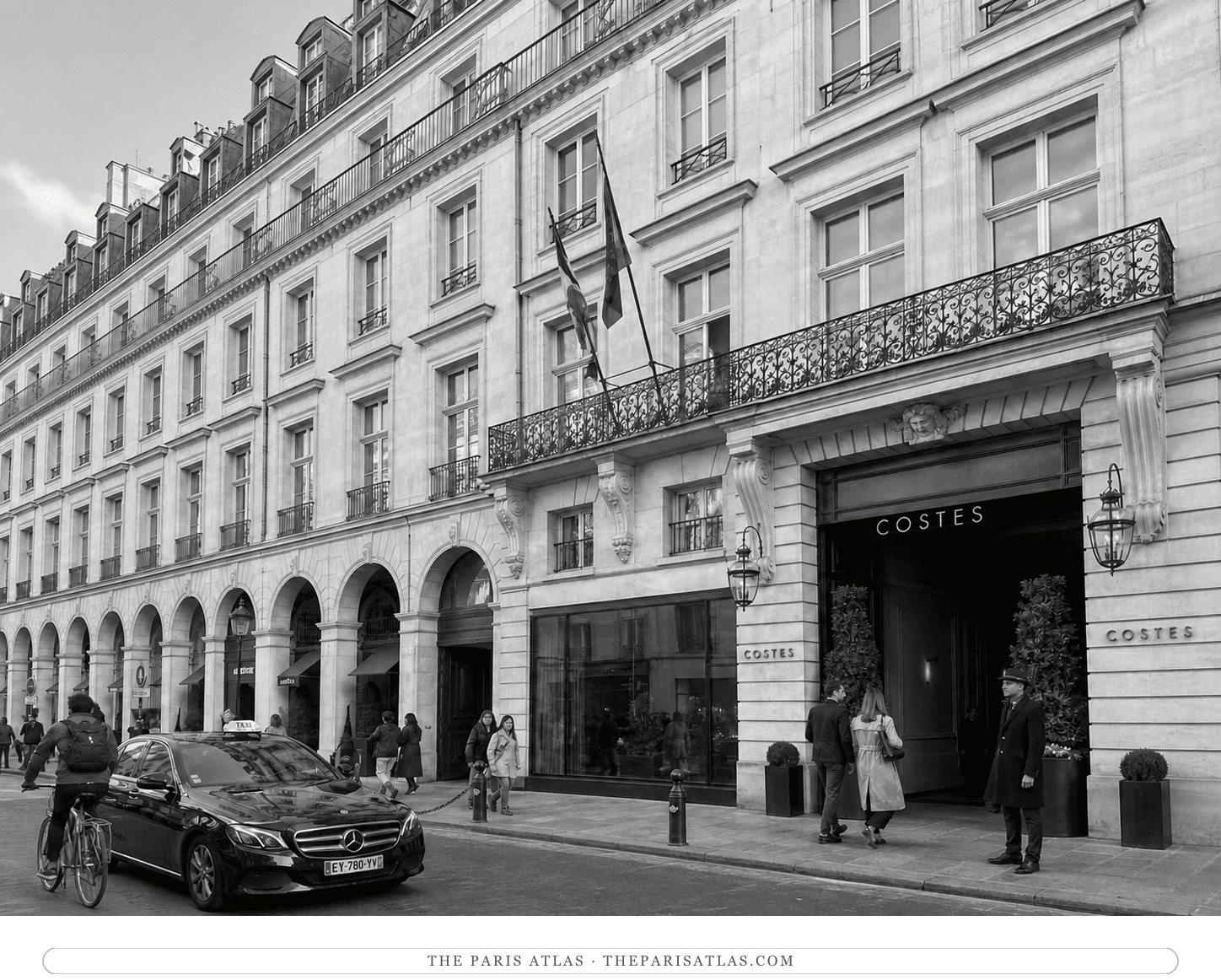
A luxury hotel on the rue de Castiglione, between the Tuileries and the place Vendôme. It is the strongest candidate for the "Hotel X" of Down and Out in Paris and London — the vast, filthy basement kitchen where George Orwell worked seventeen-hour days as a plongeur. It trades today as part of the Hôtel Costes.
Visit the place
The apartment Camille Pissarro took for the first half of 1899, facing the Jardin des Tuileries — at least six versions of the garden came out of its windows, sorted by weather, hour and season.
Visit the place
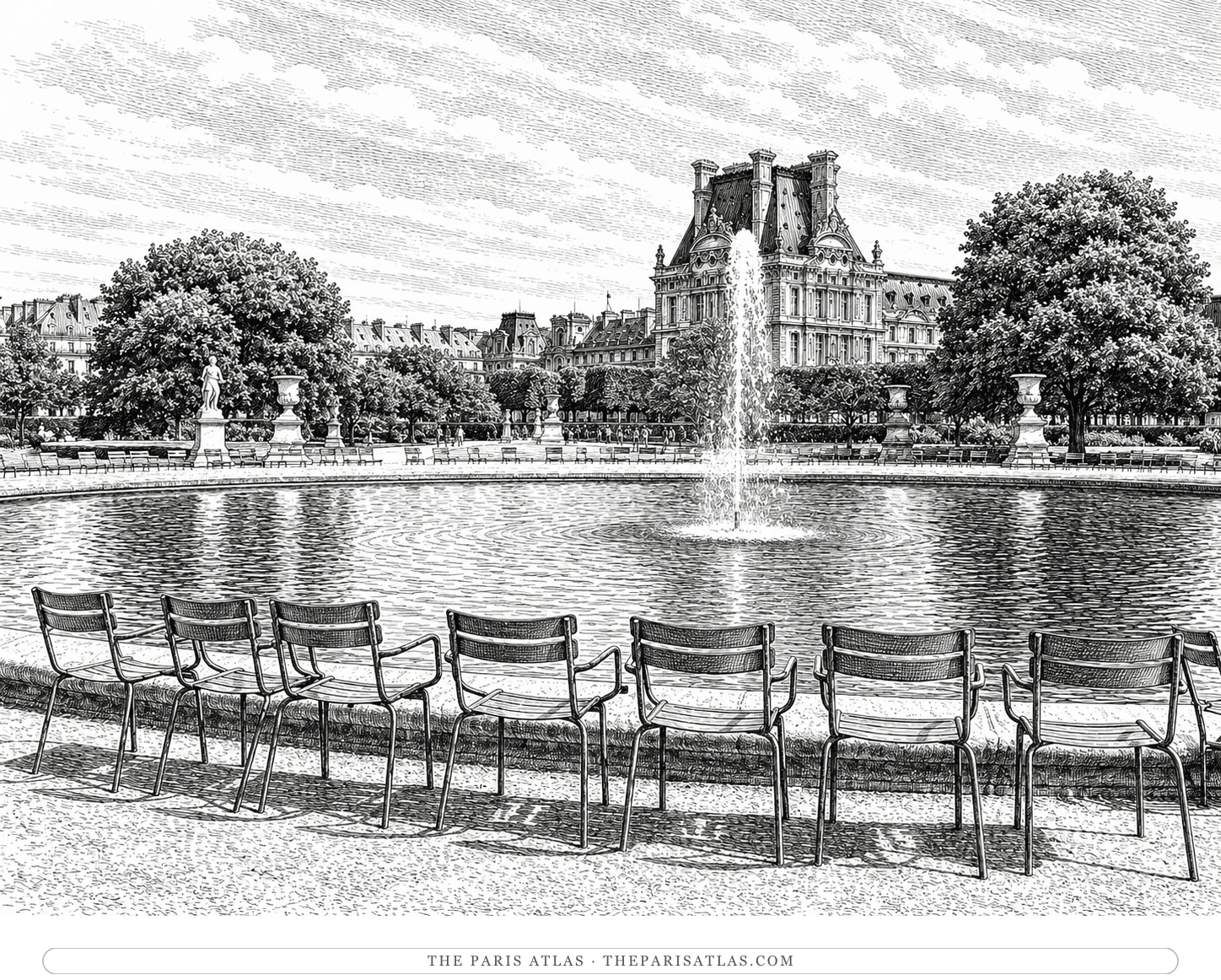
André Le Nôtre's great axis between the Louvre and the Concorde — the garden every walker in these pages crossed sooner or later, palace or no palace.
Visit the place
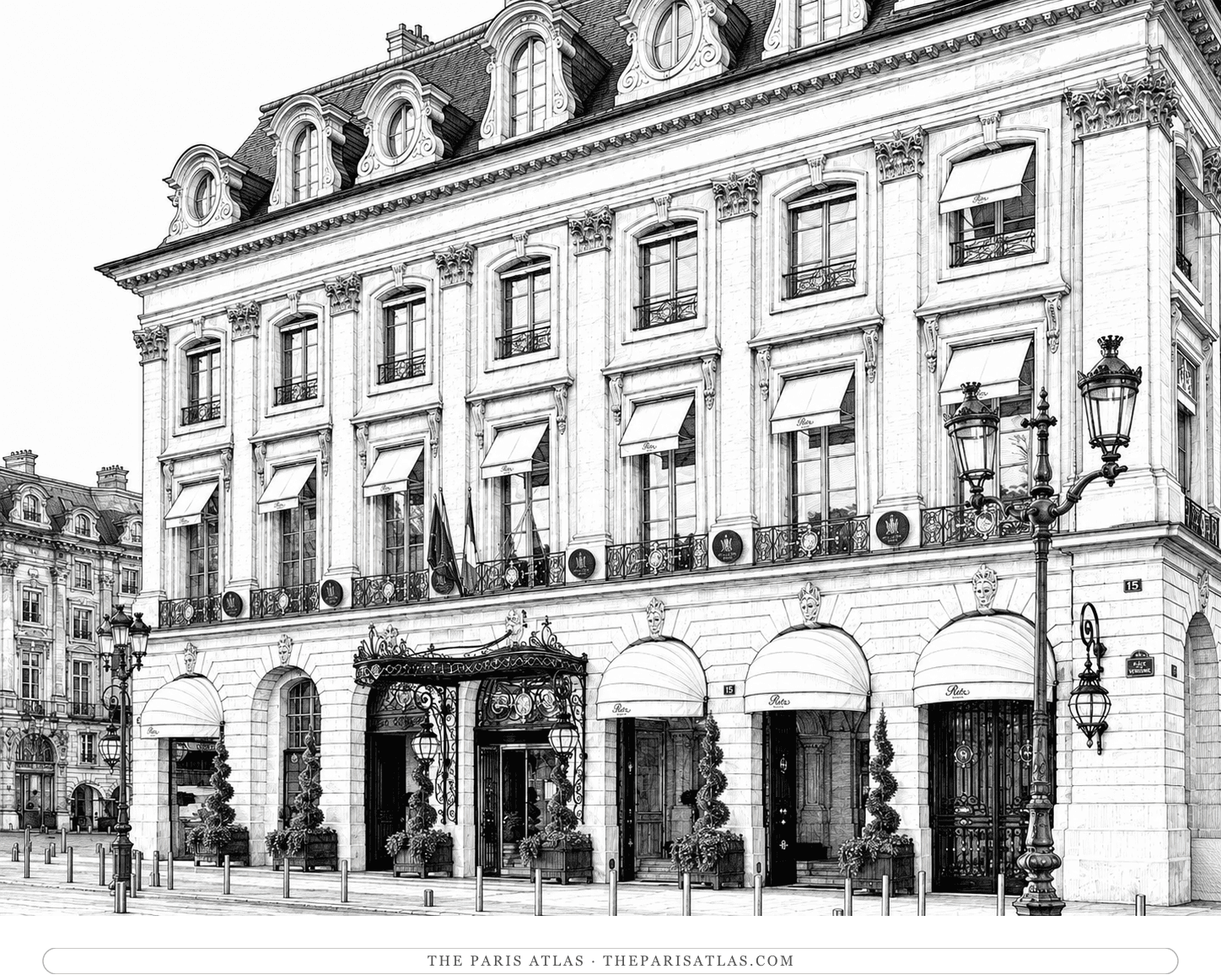
César Ritz's palace on the Place Vendôme — the fixed point of Right Bank luxury, where F. Scott Fitzgerald's bar legend, Tender Is the Night's longest bender, and Ernest Hemingway's two best Ritz stories all check in.
Visit the placeThe sources below include histories, archival materials, scholarly research, and official records that informed this page. They document Le Meurice, the people connected to it, and its place in Paris.


The Dalí Foundation's chronology of his Paris years and long residences.

Map data used to verify addresses, geographic coordinates, and the placement associated with Le Meurice.
Web source consulted for documented facts and historical context presented on the Le Meurice page.
First-person evidence and historical context used in preparing the Le Meurice page.
These references provide the documented foundation for this page's history and context. Claim-level citations remain attached to the specific claims they support.
 Explore more resources
Newsletter
The cafés, studios, and walk-up flats where the work was made — one story from the map in every letter.