The Paris AtlasCharting the artists, works, and places worth returning to.

Park · Champs-Élysées (8th) · 8e arrondissement

Jardins des Champs-Élysées

The buildingStill standing
Getting inWalk straight in
What's there nowStill the same

Public gardens, open at all hours and free. One of the paths is officially the Allée Marcel-Proust.

The gardens along the lower Champs-Élysées, between the Rond-Point and the Concorde — where the young Marcel Proust played, and where in July 1886 he met Marie de Bénardaky, his first love and a source for Gilberte in In Search of Lost Time. One of the paths is now officially the Allée Marcel-Proust.

Address
Allée Marcel-Proust, avenue des Champs-Élysées, 75008 Paris
Years
Proust played here as a boy; the meeting with Marie de Bénardaky, July 1886
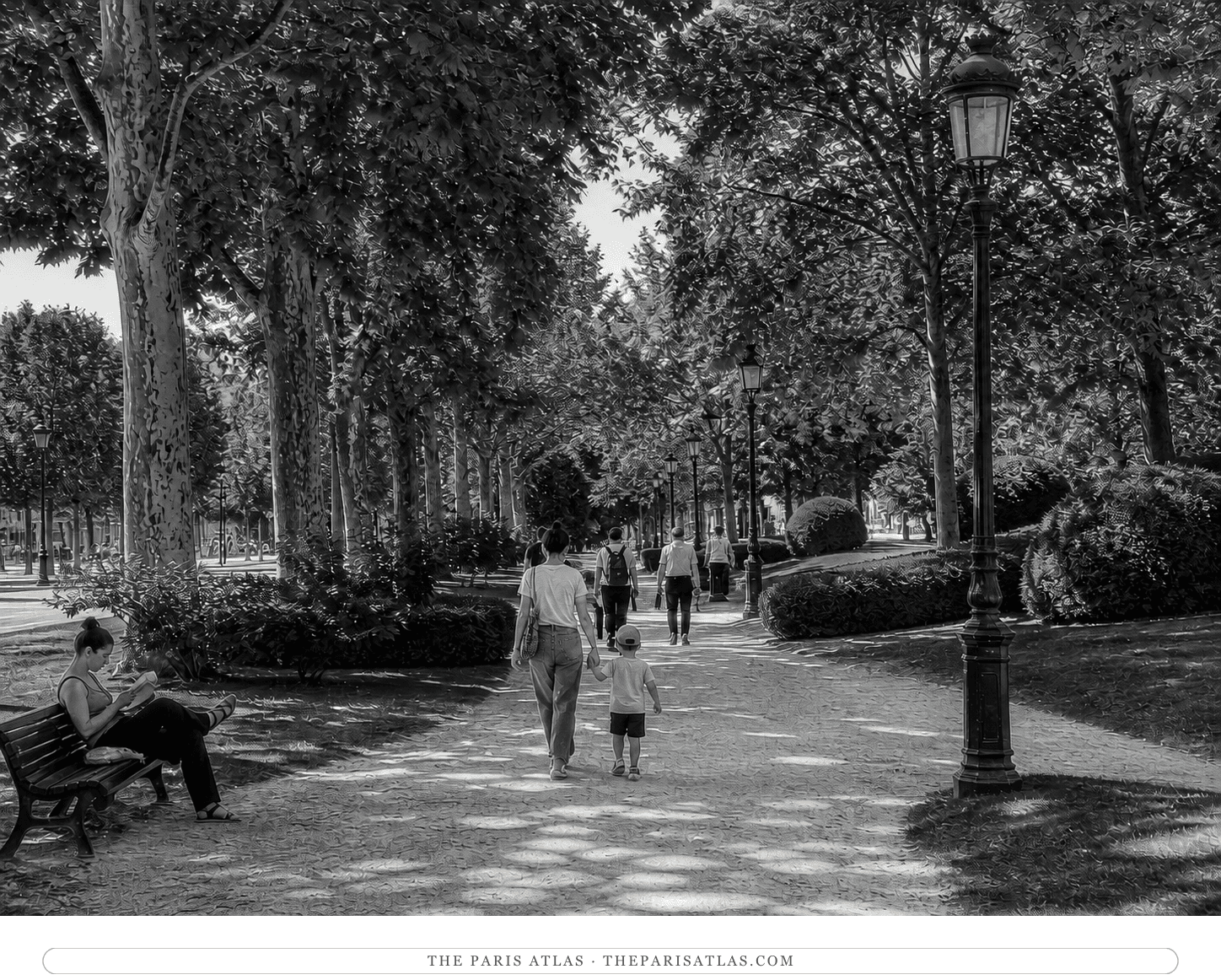
IllustrationFamilies and walkers using a leafy path in the Jardins des Champs-Élysées under a blue sky

The gardens in bright present-day daylight, with newly generated visitors among the lawns, lamps and mature trees.

Editorial illustration

The place, briefly

The lower stretch of the Champs-Élysées, below the Rond-Point, is not shops. It is gardens — lawns, chestnut trees, gravel paths and a scatter of pavilions — and in the late nineteenth century it was where the children of the eighth arrondissement were taken to play.

Marcel Proust was one of them. He lived a short walk away at 9 boulevard Malesherbes, and these gardens and the Parc Monceau were the two fixed points of his childhood outdoors.

In July 1886, aged fifteen, he met Marie de Bénardaky here. She was the daughter of a Polish-Russian family in the same social world, and she became his first love — and, by general agreement, the principal source for Gilberte Swann, the girl the narrator of In Search of Lost Time falls for and plays with in exactly these gardens.

That is an unusually direct line from life to book. Most of the novel transforms what it takes; here the setting is not even moved. The narrator's Gilberte is met in the Champs-Élysées gardens because that is where Proust met Marie de Bénardaky.

The city has marked it. One of the garden paths is officially named the Allée Marcel-Proust, which gives a visitor an exact point to stand on rather than a general association with a famous avenue. The gardens are free and open at any hour.

Key facts

Where
The gardens of the lower Champs-Élysées, below the Rond-Point, in the 8th
What happened here
Proust met Marie de Bénardaky in July 1886, aged fifteen
Who she became
Gilberte Swann, in In Search of Lost Time
How direct the transfer is
The novel keeps the setting — Gilberte is met in these same gardens
Marked by
The Allée Marcel-Proust, an officially named path
Admission
Free, open at all hours
A present-day path through the lower Champs-Élysées gardens, where lawns and promenades replace the shopping avenue above.Editorial illustration
The gardens in bright present-day daylight, with newly generated visitors among the lawns, lamps and mature trees.Editorial illustration
Historically informed editorial reconstruction of children at play in July 1886, based on a surviving view of the gardens around 1890.Artistic reconstruction
The gardens in natural summer color; the anonymous people and activity are interpretive, and neither Marcel Proust nor Marie de Bénardaky is depicted.Artistic reconstruction
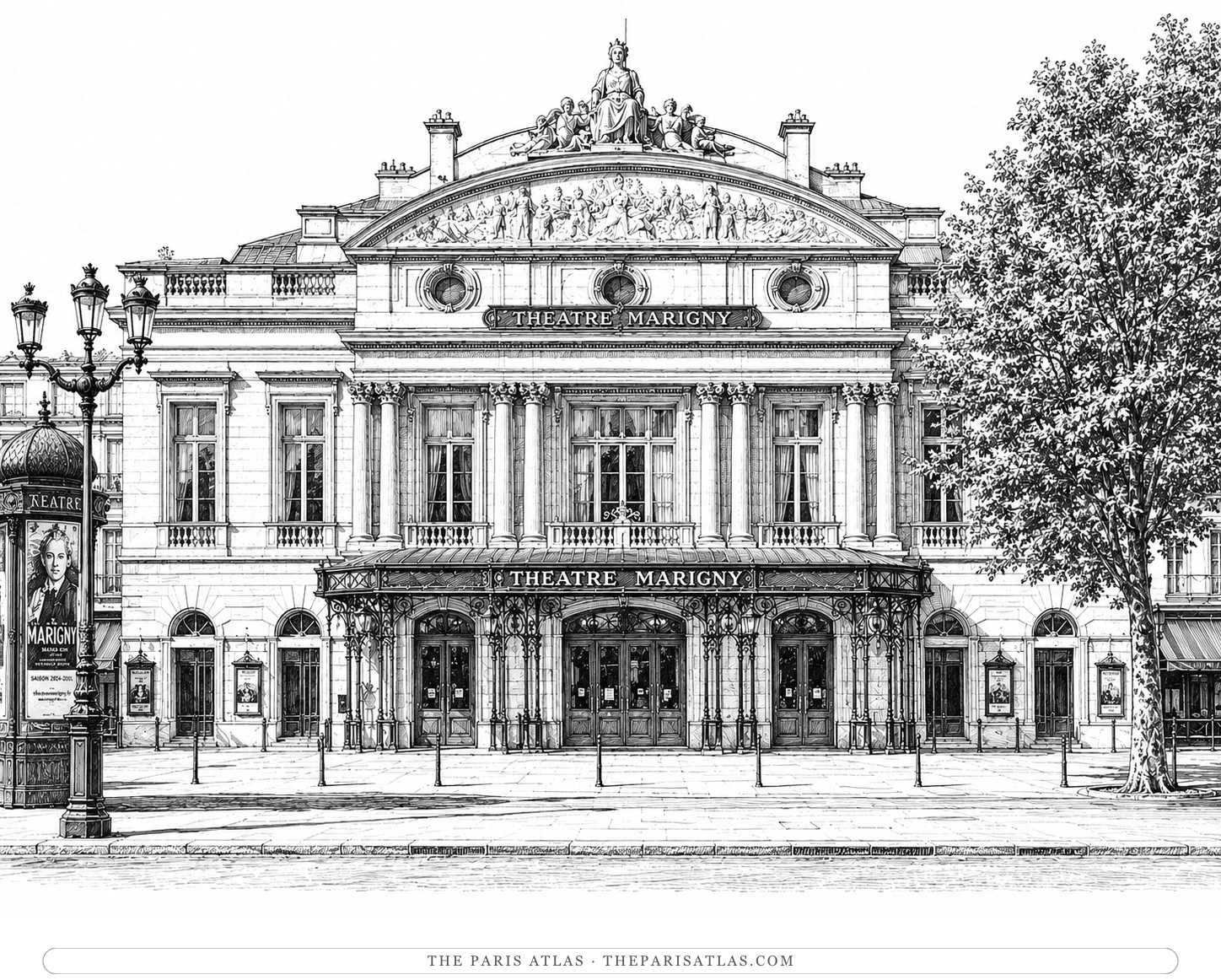
A landscaped walk near the Théâtre Marigny, where garden, fountain and nineteenth-century leisure architecture meet.Editorial illustration
A present-day music-kiosk area with newly generated families and visitors moving naturally through the garden.Editorial illustration
One of the quieter landscaped squares within the larger chain of twelve Champs-Élysées gardens.Editorial illustration

Timeline

  1. 1880s

    The young Proust plays in the gardens, a short walk from the family flat on the boulevard Malesherbes.

  2. July 1886

    He meets Marie de Bénardaky here, aged fifteen.

  3. 1913–1927

    In Search of Lost Time is published, with the narrator meeting Gilberte in these gardens.

On the map

Questions before you go

Where did Proust meet his first love?

In the gardens of the Champs-Élysées, in July 1886, when he was fifteen. She was Marie de Bénardaky, from a Polish-Russian family in the same social world, and she is generally taken to be the principal source for Gilberte Swann in In Search of Lost Time.

Is the Gilberte of the novel based on a real person?

Marie de Bénardaky is the accepted principal source. What makes the connection unusually clean is that the setting survives the transfer intact: the narrator meets and plays with Gilberte in the Champs-Élysées gardens, which is where Proust met Marie.

What is the Allée Marcel-Proust?

An officially named path in the Champs-Élysées gardens. It gives visitors a precise spot to stand rather than a vague association with the avenue as a whole, and it is free and accessible at any hour.

Are the Champs-Élysées gardens worth visiting?

Yes, and they are much quieter than the shopping stretch above them. The lower Champs-Élysées between the Rond-Point and the Concorde is lawns and chestnut trees, and it connects easily to the Petit Palais, the Grand Palais and the Tuileries.

Writers who knew this place

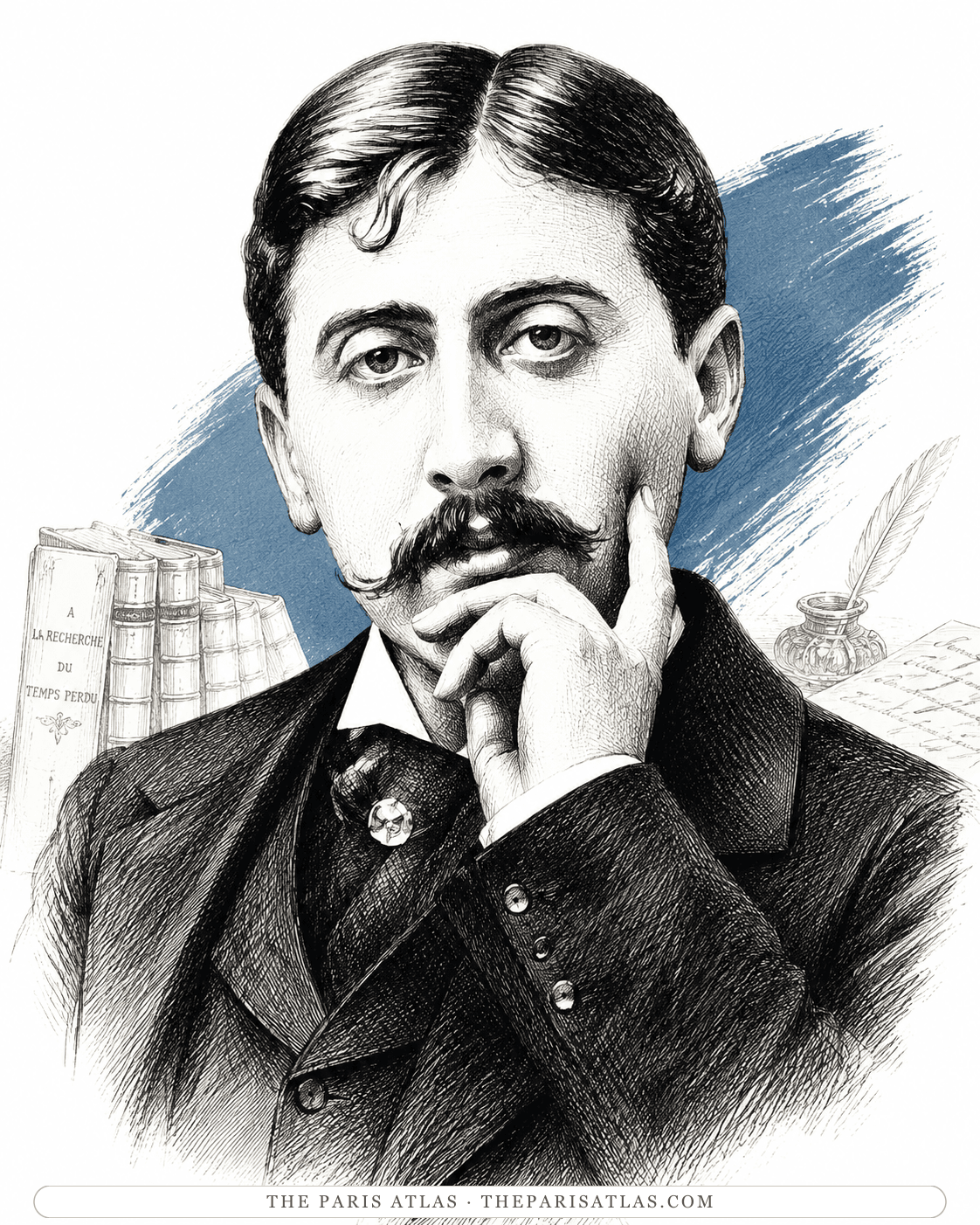
Illustrated portrait of Marcel Proust

Marcel Proust

French · French novelist of the seven-volume In Search of Lost Time, written at night in a cork-lined room — the book that made memory itself the story.

Frequented by · 1886

Proust played in these gardens as a boy and met Marie de Bénardaky here in July 1886, aged fifteen — his first love, and the accepted principal source for Gilberte Swann. The novel keeps the setting: the narrator meets Gilberte in the same gardens. A path here is now officially the Allée Marcel-Proust.

— Balade du côté de chez Proust

Within walking distance

References

References

The sources below include histories, archival materials, scholarly research, and official records that informed this page. They document Jardins des Champs-Élysées, the people connected to it, and its place in Paris.

  1. 1Balade du côté de chez Proust

    Website
    Ville de Paris
    Used for

    The city's Proust walk: the childhood in the Champs-Élysées gardens and the Parc Monceau, and the July 1886 meeting with Marie de Bénardaky.

    View source
  2. 2OpenStreetMap

    Map data
    Used for

    Map data used to verify addresses, geographic coordinates, and the placement associated with Jardins des Champs-Élysées.

    View source
  1. 3Proust Ink — Marcel Proust chronology (ed. William C. Carter)

    Website
    Used for

    Web source consulted for documented facts and historical context presented on the Jardins des Champs-Élysées page.

    View source
  2. 4Project Gutenberg text of Du côté de chez Swann (#2650), the French original

    Website
    Marcel Proust
    Used for

    Web source consulted for documented facts and historical context presented on the Jardins des Champs-Élysées page.

    View source
i
Why these sources are here

These references provide the documented foundation for this page's history and context. Claim-level citations remain attached to the specific claims they support.

Explore more resources

Newsletter

Paris, one address at a time.

The cafés, studios, and walk-up flats where the work was made — one story from the map in every letter.

Unsubscribe anytime.