The Paris AtlasCharting the artists, works, and places worth returning to.
  • Author
  • Editor
  • Politician
· French · 1901–1976

André Malraux

French novelist, art theorist, and political figure — winner of the 1933 Prix Goncourt for La Condition humaine, De Gaulle's Minister of Cultural Affairs from 1959 to 1969, and one of the two most influential twentieth-century French novelists Camus regarded as a peer.

Details

Lived
1901–1976
Born
1901
Died
1976
Nationality
French
Roles
AuthorEditorPolitician
Also known as
Georges André Malraux

People André Malraux Knew

Relationships with other people, with sources for each connection.

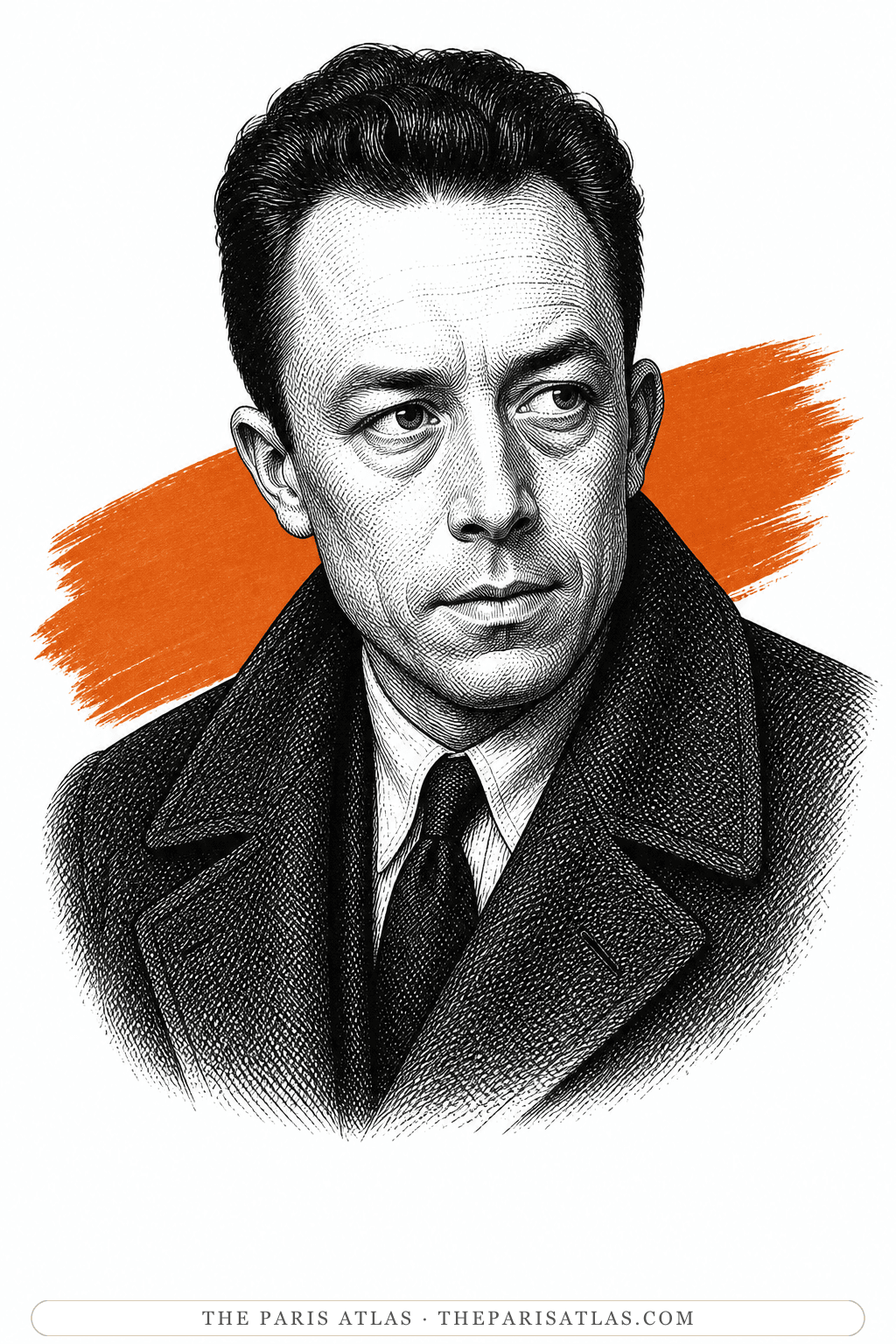
Illustrated portrait of Albert Camus

Albert Camus

  • Author
  • Journalist
  • Editor
  • +2

Met · 1941

Camus and Malraux first met in Marseille in 1941 through Pascal Pia, who had shown Malraux the manuscript of The Stranger. Malraux read the novel, wrote a favourable report to Gaston Gallimard, and effectively opened the doors of the Gallimard editorial board to Camus. The two men remained on friendly, respectful terms through the postwar years and Camus regarded Malraux — with Gide — as one of the two most important living French novelists.

— Albert Camus – Biographical (1957); Ronald Aronson, Albert Camus

André Malraux’s Places

The cataloged places connected to André Malraux — through the books, and through the documented record.

Places you can enter today appear first, followed by addresses to see from outside and sites that have vanished.

Connections and Sources

André Malraux’s connections to people, places, and works, with the sources behind each one.

Buried at · 1996

The Panthéon

Malraux was brought into the Panthéon in 1996 by President Jacques Chirac.

— Quelles sont les grandes figures du Panthéon ?, Read 24 August 2026

Met · 1941

Albert Camus

Camus and Malraux first met in Marseille in 1941 through Pascal Pia, who had shown Malraux the manuscript of The Stranger. Malraux read the novel, wrote a favourable report to Gaston Gallimard, and effectively opened the doors of the Gallimard editorial board to Camus. The two men remained on friendly, respectful terms through the postwar years and Camus regarded Malraux — with Gide — as one of the two most important living French novelists.
— Albert Camus – Biographical (1957); Ronald Aronson, Albert Camus

References

References

The sources below include biographies, scholarly essays, interviews, and primary materials that informed this page. They reflect both the historical record and ongoing critical conversations about André Malraux and their work.

  1. 1Albert Camus – Biographical

    Biography
    Nobel Prize Outreach, 1957
    Used for

    Biographical evidence used to verify chronology, relationships, and historical context connected to André Malraux.

    View source
  2. 2Albert Camus

    Essays
    Stanford Encyclopedia of Philosophy
    Used for

    Published analysis and historical context used in preparing the André Malraux page.

    View source
  1. 3Quelles sont les grandes figures du Panthéon ?

    Website
    Centre des monuments nationaux
    Used for

    Web source consulted for documented facts and historical context presented on the André Malraux page.

    View source
  2. 4André Malraux: biographical landmarks and cultural legacy

    Website
    Ministère de la Culture
    Used for

    Web source consulted for documented facts and historical context presented on the André Malraux page.

    View source
i
Why these sources are here

These references anchor the page in the documented record and in the scholarly conversations around André Malraux. Every claim on this page traces back to one or more of the works listed here.

Explore more resources