The Paris AtlasCharting the artists, works, and places worth returning to.
  • Architect
· French · 1903–1999

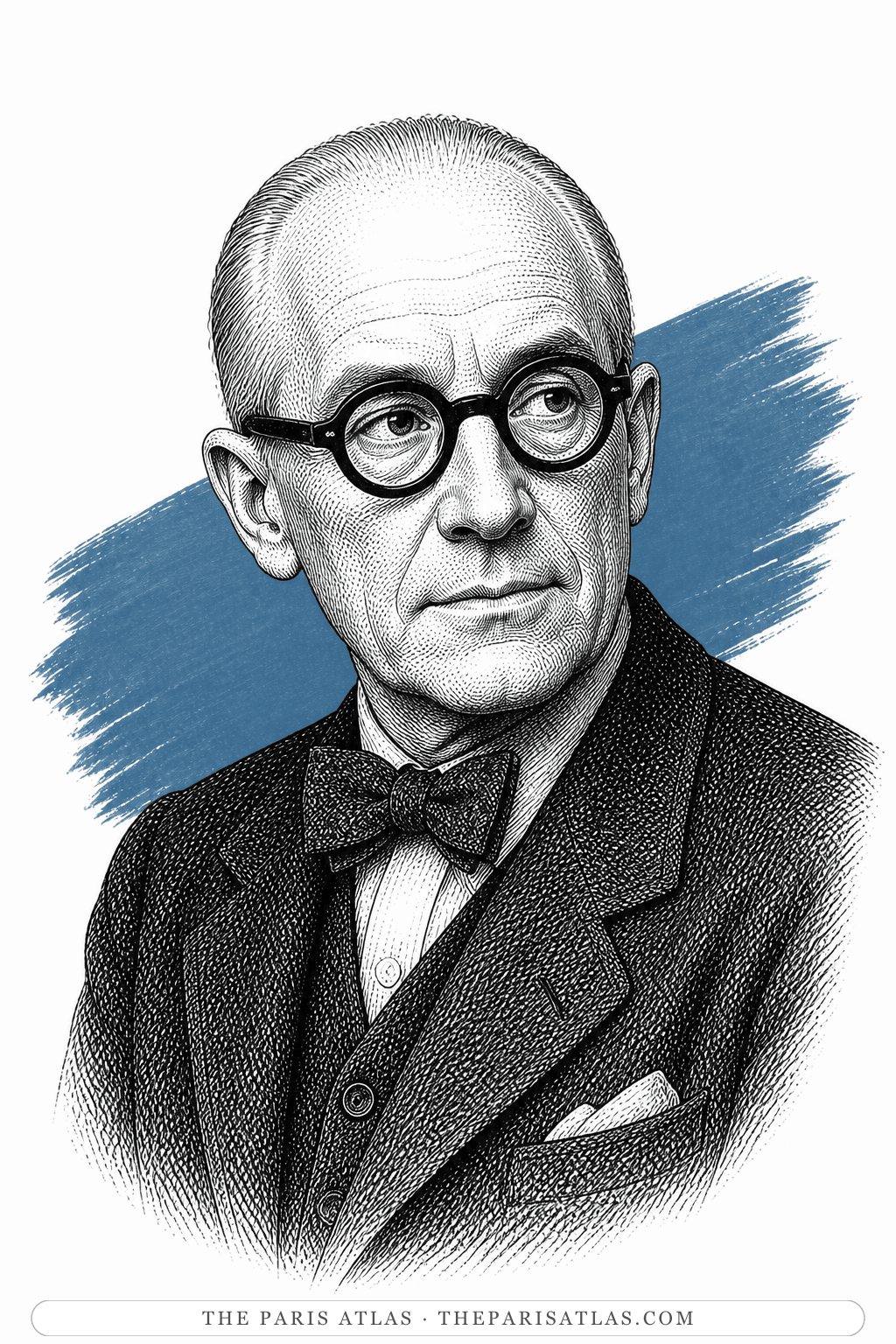
Charlotte Perriand

French architect and designer whose furniture, interiors and buildings helped define modern living, from the tubular-steel experiments of 1920s Paris to postwar student housing and the mountain architecture of Les Arcs.

In images

Details

Lived
1903–1999
Born
24 October 1903
Birthplace
Paris, France
Died
27 October 1999 · aged 96
Place of death
Paris, France
Nationality
French
Profession
Architect, furniture designer, and interior designer
Major works
Bar sous le toit (1927), LC furniture with Le Corbusier and Pierre Jeanneret, Maison du Brésil interiors, Les Arcs (1967 onward)
Married
Percy Kilner Scholefield · 1926–1930Jacques Martin · 1943–1986
Children
Pernette Perriand
Roles
Architect

About Charlotte Perriand

Charlotte Perriand spent more than seventy years asking a deceptively simple question: how should people actually live?

For her, good design did not begin with an attractive chair or a fashionable room. It began with the person using it. How does someone sit? Where do they put their shoes? How much space does a student need to sleep, study and store clothes? How should a kitchen work when several tasks happen at once? How can hundreds of vacation apartments share a mountain without destroying the landscape that people have come to enjoy?

Those questions carried Perriand from a small Paris apartment filled with chrome and aluminum in the 1920s to Le Corbusier's studio at 35 rue de Sèvres, then to workers' housing, experimental buildings, Japan, Indochina, postwar university residences and eventually the enormous ski resort of Les Arcs.

Her career also illustrates how easily collaborative design can distort authorship. For decades, several of the chairs she helped develop were popularly treated simply as “Le Corbusier furniture.” Museums today credit the best-known examples—including the 1928 chaise longue, tilting-back armchair and Grand Confort chair—to Le Corbusier, Pierre Jeanneret and Charlotte Perriand together, while recognizing Perriand's particular responsibility for the studio's furniture and interior-equipment program. Her own revolving chair grew directly from work she had begun before joining the studio.

Growing up in Paris

Charlotte Perriand was born in Paris on 24 October 1903 into a family connected to clothing and craftsmanship. Her father worked as a tailor and her mother as a seamstress associated with haute couture. She therefore grew up around an understanding that objects were made: fabric had to be cut, bodies measured, materials understood and skilled hands used correctly.[1]

She also spent time as a child in the countryside of Burgundy. Centre Pompidou identifies those experiences as important to her lifelong relationship with nature and space. The young designer famous for gleaming metal would eventually become just as interested in wood, bamboo, stone, snow, mountain landscapes and objects found on beaches.

From 1920 to 1925, Perriand studied at the École de l'Union Centrale des Arts Décoratifs in Paris. Decorative-arts education could easily have led her toward the luxurious handcrafted interiors still fashionable after the First World War, but she became increasingly interested in industry, metal, standardization and modern production. She graduated in 1925 and began exhibiting almost immediately.[2]

An attic apartment becomes a manifesto

Perriand's first great breakthrough came in 1927, when she was only twenty-four. She transformed the attic apartment she shared with her first husband, Percy Kilner Scholefield, into an intensely modern environment built around metal, glass and reflective surfaces. For the Salon d'Automne that year she developed the celebrated *Bar sous le toit — Bar under the Roof*.[3]

It looked nothing like a conventional bourgeois Paris interior. Chrome and aluminum replaced carved wood. Furniture was compact. Light reflected from polished surfaces. A bar suggested modern social life rather than the formal sitting room of an earlier generation.

Perriand also developed her swiveling chair, adapting the functional logic of an office chair for domestic life. Musée des Arts Décoratifs dates the model to Paris in 1927, before Perriand entered Le Corbusier's studio. Bar sous le toit attracted considerable attention. One of the people who eventually noticed it was Le Corbusier.[4]

“We don't embroider cushions here”

Perriand later told a story that has become famous in design history. She first approached Le Corbusier directly and asked to work in his studio. He looked at her portfolio and dismissed her with the remark, “We don't embroider cushions here.” Then he saw her work at the Salon d'Automne. He changed his mind.

MoMA records that after seeing Perriand's 1927 designs, Le Corbusier hired her, beginning a collaboration that lasted approximately ten years. The episode matters because Perriand did not enter the studio as an inexperienced assistant who needed to be taught modernism. She had already created the work that convinced Le Corbusier he had misjudged her.[5]

In October 1927, she joined the architectural office at 35 rue de Sèvres. That address became one of the defining places of her early career.[6]

35 rue de Sèvres

Perriand's principal responsibility in the Le Corbusier–Pierre Jeanneret studio was what the group called “equipment for habitation”: furniture and interior elements designed around the actual actions of the human body. A chair was not an ornamental object placed in a room because tradition required one. It was equipment for a particular posture: sitting upright, conversation, resting or reclining.

The studio's famous chairs grew from this analysis. The B301 tilting-back armchair, the Grand Confort armchair and the adjustable B306 chaise longue, now generally known through Cassina's later “LC” numbering, appeared during these years. MoMA today credits the 1928 chaise longue and tilting chair to Le Corbusier, Pierre Jeanneret and Charlotte Perriand jointly.[7][8]

The chaise longue's curved upper frame could slide across its base, allowing the person using it to change position rather than forcing the body into a single prescribed angle. This was the principle that interested Perriand throughout her career: furniture should adapt itself to people rather than people adapting themselves to furniture.[9]

The 1929 Salon d'Automne

The studio presented its ideas publicly in a major interior at the 1929 Salon d'Automne in Paris. Rather than arranging individual pieces as precious objects, Perriand and her collaborators proposed an entire modern habitat. Chairs, tables and storage belonged to a system.[10]

The result became one of the defining images of machine-age modernism: tubular steel, open space, leather, metal and objects reduced to clearly stated functions. Perriand was also among the modern designers who helped establish the Union des Artistes Modernes, or UAM. The group rejected ornamental luxury and advocated an architecture and design suited to contemporary life.

Modernism becomes political

During the 1930s, Perriand's thinking changed. She did not reject machines or modern materials. Instead, she began asking a harder question: modern for whom? Beautiful chrome furniture was of limited social value if ordinary people could not afford decent housing.

Her political sympathies moved left. The Depression, overcrowding and poor housing in Paris increasingly entered her work. She designed not only furniture but exhibitions and photomontages intended to make social conditions visible.

One of the most important was *La Grande Misère de Paris in 1936*, a large photographic installation addressing overcrowding, inadequate housing and poverty in the capital. This prevents Perriand from being reduced to a creator of expensive collectible furniture. She believed modern design had a social purpose.[11]

Photography and found objects

The 1930s also produced an unexpected change in Perriand's visual language. Beginning around 1933, she worked with Fernand Léger and Pierre Jeanneret on experiments involving what she called art brut: stones, pieces of wood, bones, shells and other objects whose shapes had been produced without a designer. Perriand photographed them both outdoors and in her Montparnasse studio.

That fascination loosened the machine aesthetic of her earlier work. The woman who had once filled an attic bar with gleaming metal began looking closely at weathered wood. Nature and industry no longer seemed like opposites. They became materials that could coexist.

The Maison du Jeune Homme

At the 1935 Brussels International Exhibition, Perriand worked with René Herbst, Louis Sognot, Georges-Henri Pingusson and Le Corbusier on ideas for modern housing and presented her celebrated *Maison du Jeune Homme*.

The room was conceived for a physically active young man living in a small space. It combined sleeping, storage and exercise rather than treating the interior as a display of furniture. Sporting equipment became part of the architecture, while a work by Fernand Léger entered the environment as art. Once again, Perriand was designing a way of living rather than simply a chair.

Mountains

Outside Paris, another obsession was becoming increasingly important: the mountains. Perriand was an enthusiastic skier and climber. The Alps offered her both physical freedom and an architectural problem: how little shelter does a person actually need, and how can a building be inexpensive, transportable and efficient?

During the 1930s she began experimenting with prefabricated holiday houses, mountain shelters and minimal dwellings. Projects included the Maison au Bord de l'Eau, conceived in 1934, as well as shelters and leisure buildings designed around standardized construction. The mountain projects anticipated the enormous work she would undertake decades later at Les Arcs.

Leaving Le Corbusier

Perriand left the rue de Sèvres studio in 1937. The separation did not end her relationships with Le Corbusier or Pierre Jeanneret; she would collaborate with both again. But after a decade, she wanted an independent practice.

That year she worked with Fernand Léger on the Paris International Exhibition. The collaboration reflected the “synthesis of the arts” that became increasingly important to her: architecture, furniture, painting and sculpture should not be isolated disciplines but parts of the same environment. When war approached, she also worked with Jean Prouvé and Pierre Jeanneret on prefabricated structures and emergency buildings.

Japan, 1940

In 1940, the Japanese government invited Perriand to become an adviser on industrial art. She left France in June aboard the Hakusan Maru, only days before the German occupation dramatically altered life in Paris.

Japan changed the way Perriand understood modernity. European modernists had spent years trying to eliminate clutter, open rooms and create flexible spaces. Japanese interiors had been doing some of those things for centuries. Tatami established human scale. Sliding partitions changed rooms according to need. Low furniture altered the relationship between bodies and space. Traditional materials could be light, renewable and technically sophisticated.

Perriand did not simply imitate Japanese design. She recognized that many ideas she considered modern were already embedded in another tradition.

Selection, Tradition, Creation

While in Japan, Perriand traveled extensively, studied crafts and worked with designers and manufacturers. In 1941, she organized the influential exhibition *Sélection, Tradition, Création* at Takashimaya department stores in Tokyo and Osaka. She displayed Japanese craft alongside modern designs, demonstrating how local materials and inherited techniques might serve contemporary life.

One of the most famous objects was a reinterpretation of the metal chaise longue she had developed with Le Corbusier and Pierre Jeanneret. This time the structure was made from bamboo. The transformation summarizes Perriand's mature philosophy. Modernity did not have to mean chrome. The important thing was the underlying relationship between body, material and function.

Trapped by war

The widening Second World War made it increasingly difficult for Perriand to return to Europe. She eventually left Japan but became stranded in French Indochina, spending the remaining war years in what is now Vietnam. Centre Pompidou records that she could not return to France until 1946.

The years were difficult, but they added another culture to her understanding of domestic life and craft. In Indochina she met Jacques Martin, whom she married in 1943. Their daughter Pernette was born in Hanoi in 1944. Pernette later became deeply involved in preserving and interpreting her mother's work.

Perriand finally returned to France in 1946. Paris had changed completely. So had she.

Postwar rebuilding

Postwar France faced a housing crisis. Cities needed apartments, schools, dormitories and furniture quickly and in enormous quantities. For Perriand, this was exactly the environment in which modern design could prove its usefulness.

She resumed working with Jean Prouvé, whose understanding of industrial production complemented her interest in adaptable interiors. Their projects combined standardized construction with furniture that could be manufactured repeatedly without becoming indifferent to human use.

Perriand also returned to work connected with Le Corbusier. MoMA credits her, Le Corbusier and ATBAT with the kitchen for the Unité d'Habitation in Marseille, one of the most influential postwar housing projects in Europe. The kitchen illustrates one of her lasting concerns: a small interior could work well if every gesture had been considered.

Student rooms in Paris

Some of Perriand's best postwar work can still be understood through the Cité Internationale Universitaire de Paris. In 1952, she helped furnish the Maison du Mexique, working with Jean Prouvé's workshops. Her modular bookshelf was produced for all 77 student rooms. It functioned not simply as storage but as a room divider, creating separate zones within a restricted space.

She also worked on the Maison de la Tunisie, where furniture again became part of the architecture rather than something added afterward. MoMA preserves a bench-bookshelf associated with the project, designed by Perriand with the Ateliers Jean Prouvé and incorporating work by Sonia Delaunay and Nicolas Schöffer.

These projects show Perriand at her best: color, storage, furniture, architecture and art combined inside rooms designed for people who did not have much space or money.

Maison du Brésil

The Maison du Brésil at the Cité Universitaire brought Perriand back into collaboration with Le Corbusier. Designed architecturally by Lúcio Costa and Le Corbusier, the building needed compact rooms for Brazilian students. Perriand was brought in to develop a modular interior scheme.

MoMA describes rooms in which color identified different activities—sleeping, washing, relaxing and studying—while furniture performed several jobs at once. A divider could contain a bedside compartment, reading light, bookshelves, wardrobe and storage. A couch became a bed at night. Industrial materials such as aluminum, linoleum, Formica and plastics were combined with wood.

More than thirty years after Bar sous le toit, she was still working on the same fundamental problem: how to make a small space feel generous. The materials had changed. The question had not.

Returning to Japan

Perriand returned to Japan during the 1950s. Her *1955 exhibition Proposition d'une Synthèse des Arts*** in Tokyo presented her work alongside that of Le Corbusier and Fernand Léger, bringing together furniture, architecture and visual art in the kind of total environment she had imagined for years.

Japan was no longer simply an influence. It had become part of a continuing conversation in her work.

Air France and a global modern interior

From 1957 into the early 1960s, Perriand designed interiors for Air France offices, including spaces outside France. The work suited an increasingly international designer. Her interiors could draw on industrial production, European modernism and lessons absorbed in Asia without collapsing those traditions into a single decorative style.

She also worked on interiors for the Musée National d'Art Moderne in Paris during the 1960s. Meanwhile, her furniture was increasingly presented through the Paris gallery of Steph Simon, which helped bring the work of Perriand and Jean Prouvé to a broader design audience.

Les Arcs

No project demonstrates the scale of Perriand's ambition better than Les Arcs. Beginning in the late 1960s, she became deeply involved in the development of the new ski resort in Savoie. The work continued for well over a decade and eventually encompassed architecture, urban planning, interiors, furniture, kitchens and bathrooms.

Perriand's goal was not to plant isolated luxury chalets across the mountainside. She wanted to accommodate large numbers of visitors while preserving the experience of the landscape. Buildings were integrated into the slopes. Apartments were compact because guests had come to spend time outside. Large windows directed attention toward the mountains. Built-in furniture reduced clutter. Standardized bathroom and kitchen units allowed thousands of interiors to be constructed efficiently.

The scale was enormous. Yet the underlying thinking was essentially the same as in a student bedroom or an attic bar: how does the person move, what do they actually need, what can be removed, and what should the window reveal?

Furniture as architecture

Perriand never treated furniture as isolated sculpture. A cabinet could divide a room. A shelf could become architecture. A bed could transform into daytime seating. A kitchen could be manufactured as a compact unit and inserted into housing.

The Metropolitan Museum's Cabinet on Base, designed around 1939 for Perriand's own Paris apartment, demonstrates this tendency. The museum describes it as “architectural furniture”: an enormous storage element whose scale gives it the presence of part of the building itself.

Her materials also continued changing. The chrome of the 1920s did not disappear, but Perriand increasingly used pine, oak, bamboo, straw, aluminum, plastics and rough wood. The mature work is therefore warmer than the machine-age interiors with which her career began.

The question of authorship

For many years, the fame of Le Corbusier overshadowed Perriand's contribution to their furniture. That history requires some nuance. The furniture developed at rue de Sèvres was genuinely collaborative. It should not simply be reassigned wholesale from Le Corbusier to Perriand. Current MoMA records credit the 1928 chaise longue, tilting-back armchair and Grand Confort to Le Corbusier, Pierre Jeanneret and Charlotte Perriand.

But Perriand was the member of the studio specifically working on furniture and interior equipment, and she had already demonstrated her independent mastery of tubular-steel furniture before she joined them. Her own revolving chair remains credited to Perriand alone.

The fuller historical record therefore changes the story. Instead of a great architect inventing furniture with the help of a young assistant, we see three designers working together, one of whom had already made furniture important enough to persuade the architect to hire her. That distinction matters.

A tea house in Paris

Perriand remained active extraordinarily late in life. In 1993, when she was nearly ninety, she created a tea house for UNESCO in Paris as part of a Japanese cultural event.

It formed an elegant final connection between the two places that had most transformed her thinking. Paris had given her modern design. Japan had shown her that modernity could also be ancient. By the 1990s, she no longer needed to choose between them.

Final years and death

Perriand spent her later years continuing to work, write and reconsider a career that stretched across nearly the entire twentieth century. Her memoir, *Une vie de création — A Life of Creation*, appeared near the end of her life and helped place her own voice back into a history in which she had often appeared underneath somebody else's name.

Charlotte Perriand died in Paris on 27 October 1999, three days after her ninety-sixth birthday.

In 2005–06, Centre Pompidou mounted the first major monographic exhibition devoted to her since her death. A much larger reassessment followed, including Fondation Louis Vuitton's 2019 exhibition *Le monde nouveau de Charlotte Perriand*, which presented her not merely as a furniture designer but as a creator working across architecture, photography, politics, art and the design of everyday life.

Charlotte Perriand and Paris

Paris runs through almost every period of Perriand's career. She was born there. She trained there. Her *1927 Bar sous le toit* made her reputation at the Salon d'Automne. At 35 rue de Sèvres**, she spent ten years developing furniture and interiors with Le Corbusier and Pierre Jeanneret.

In the 1930s, Paris became the subject of her social criticism through La Grande Misère de Paris. The Cité Internationale Universitaire later became a laboratory for some of her best postwar interiors at the Maison du Mexique, Maison de la Tunisie and Maison du Brésil. Near the end of her life, she returned to the relationship between Paris and Japan with her UNESCO tea house.

Yet Perriand's Paris is not really a story about prestigious addresses. It is a story about ordinary rooms: a student's bedroom, a tiny kitchen, a bar underneath a roof, a bookshelf that doubles as a wall, a chair that follows the position of a body. She helped make modern Paris not by designing monuments but by reconsidering what happened inside them.

Charlotte Perriand's place in modern design

Perriand is now regarded as one of the major designers of the twentieth century, but that reputation took time to separate itself from Le Corbusier's. Her importance lies partly in the furniture, certainly. The chaise longue and tubular-steel chairs remain icons of modern design. But her larger achievement was a way of thinking.

Perriand refused to accept the idea that modern design was simply a visual style. Chrome was not inherently modern. Neither was bamboo traditional. A machine-made object could be badly designed, while a centuries-old Japanese interior could contain radical ideas about flexibility and space. What mattered was how a design served life.

Her career therefore moved easily across boundaries that other designers treated as fixed: industry and craft, Europe and Asia, city and mountain, architecture and furniture, art and everyday use. That is why her later work does not look like a rejection of the tubular-steel furniture of her youth. It looks like an expansion of the same idea. The object was never the ultimate subject. The person using it was.

Life events

  1. 1903

    Born in Paris on 24 October into a family working in clothing and tailoring.

    — Charlotte Perriand

  2. 1920–1925

    Studies at the École de l'Union Centrale des Arts Décoratifs in Paris, developing an increasing interest in modern materials and industrial production.

    — Charlotte Perriand

  3. 1925

    Graduates and begins establishing herself through Paris exhibitions and interior-design commissions.

    — Charlotte Perriand

  4. 1926

    Marries Percy Kilner Scholefield. Their Paris apartment becomes an important laboratory for her early machine-age interiors.

    — Charlotte Perriand Obituary

  5. 1927

    Presents *Bar sous le toit at the Salon d'Automne in Paris*, using glass, metal and reflective surfaces to create a radically modern domestic bar.

    — Charlotte Perriand; Charlotte Perriand

  6. 1927

    Designs the swiveling chair associated with her apartment-bar.

    Perriand's swiveling chair, designed for her own apartment-bar in 1927 before she joined Le Corbusier's studio. (Sailko)

    — Charlotte Perriand in the Collection

  7. 1927

    After initially rejecting her application, Le Corbusier sees Perriand's Salon d'Automne work and hires her. She joins Le Corbusier and Pierre Jeanneret at 35 rue de Sèvres.

    — Charlotte Perriand — Revolving Armchair

  8. 1928

    Works on the tubular-steel furniture program that produces the *tilting-back armchair, Grand Confort armchair and adjustable chaise longue*.

    — Chaise Longue (LC/4); Armchair with a Tilting Back

  9. 1929

    The studio presents its modern interior and furniture at the Salon d'Automne. Perriand also participates in the emergence of the Union des Artistes Modernes.

    — Charlotte Perriand; Charlotte Perriand

  10. Early 1930s

    Works on interiors and furniture for projects including the Cité de Refuge and Pavillon Suisse in Paris.

    — Charlotte Perriand

  11. 1933

    Begins photographic research with Fernand Léger and Pierre Jeanneret, concentrating on objects and forms found in nature.

    — Charlotte Perriand and I

  12. 1934

    Develops prefabricated leisure architecture including the *Maison au Bord de l'Eau* and designs related to mountain shelters and minimal housing.

    — Charlotte Perriand and I

  13. 1935

    Presents the *Maison du Jeune Homme*, bringing together compact living, physical exercise and modern art.

    — Charlotte Perriand

  14. 1936

    Creates the political photomontage *La Grande Misère de Paris*, addressing housing and social conditions in the capital.

    — Charlotte Perriand — 2005–2006 Retrospective

  15. 1937

    Leaves Le Corbusier's studio after approximately ten years and works with Fernand Léger for the Paris International Exhibition.

    — Charlotte Perriand: Inventing a New World; Charlotte Perriand

  16. 1939–1940

    Works with Jean Prouvé and Pierre Jeanneret on prefabricated and emergency structures as Europe enters war.

    — Charlotte Perriand

  17. 1940

    Leaves France for Japan after being appointed an adviser on industrial art to the Japanese government.

    — Charlotte Perriand's 1940 Departure for Japan

  18. 1941

    Organizes *Sélection, Tradition, Création in Tokyo and Osaka, combining Japanese craft with modern design and presenting a bamboo reinterpretation of the chaise longue*.

    — Charlotte Perriand — Educational Dossier

  19. 1942–1946

    Unable to return to wartime France, lives in French Indochina, where she continues studying local craft and domestic traditions.

    — Charlotte Perriand — Educational Dossier; Charlotte Perriand

  20. 1943

    Marries Jacques Martin.

    — Charlotte Perriand Obituary

  21. 1944

    Gives birth to their daughter Pernette in Hanoi.

    — Charlotte Perriand Obituary

  22. 1946

    Returns to France and becomes deeply involved in postwar reconstruction, collective housing and industrially produced furniture.

    — Charlotte Perriand: Inventing a New World

  23. Early 1950s

    Collaborates again with Jean Prouvé and Le Corbusier on housing and interior projects, including the kitchen associated with the Unité d'Habitation in Marseille.

    — Kitchen from the Unité d'Habitation, Marseille

  24. 1952

    Designs modular furniture for 77 student rooms at the Maison du Mexique in the Cité Internationale Universitaire de Paris.

    — Bibliothèque de la Maison du Mexique

  25. 1952

    Works on furnishings for the Maison de la Tunisie, again combining furniture, architecture and visual art.

    — Maison de la Tunisie Bench-Bookshelf

  26. 1950s

    Develops interiors for the Maison du Brésil with Le Corbusier, creating compact student rooms in which furniture performs several functions at once.

    — Maison du Brésil Interior Element

  27. 1955

    Returns to Tokyo and presents *Proposition d'une Synthèse des Arts*, combining her designs with works by Le Corbusier and Fernand Léger.

    — Le monde nouveau de Charlotte Perriand — Press Material and Chronology

  28. 1957–1963

    Designs offices and interiors for Air France, extending her work into an increasingly international setting.

    — Charlotte Perriand: Inventing a New World

  29. 1960s

    Works on interior installations connected with the Musée National d'Art Moderne in Paris and continues developing her synthesis between architecture, design and art.

    — Charlotte Perriand: Inventing a New World

  30. 1967 onward

    Begins the enormous Les Arcs ski-resort project in Savoie, working across urban planning, architecture, apartments, furniture and modular kitchen and bathroom units.

    — Charlotte Perriand

  31. 1970s

    Develops standardized kitchen and bathroom units for Les Arcs, bringing decades of research into compact collective living to an unprecedented scale.

    — Charlotte Perriand

  32. 1993

    Creates a Japanese tea house for UNESCO in Paris, one of the final major works of her career.

    — Charlotte Perriand — 2005–2006 Retrospective

  33. 1998

    Publishes her memoir *Une vie de création*, helping establish her own account of her work and collaborations.

    — Charlotte Perriand: Inventing a New World

  34. 1999

    Dies in Paris on 27 October, aged ninety-six.

    — Charlotte Perriand Obituary; Charlotte Perriand: Inventing a New World

People Charlotte Perriand Knew

Relationships with other people, with sources for each connection.

Illustrated portrait of Le Corbusier

Le Corbusier

  • Architect
  • Painter
  • Author

Collaborated with · 1927–1937

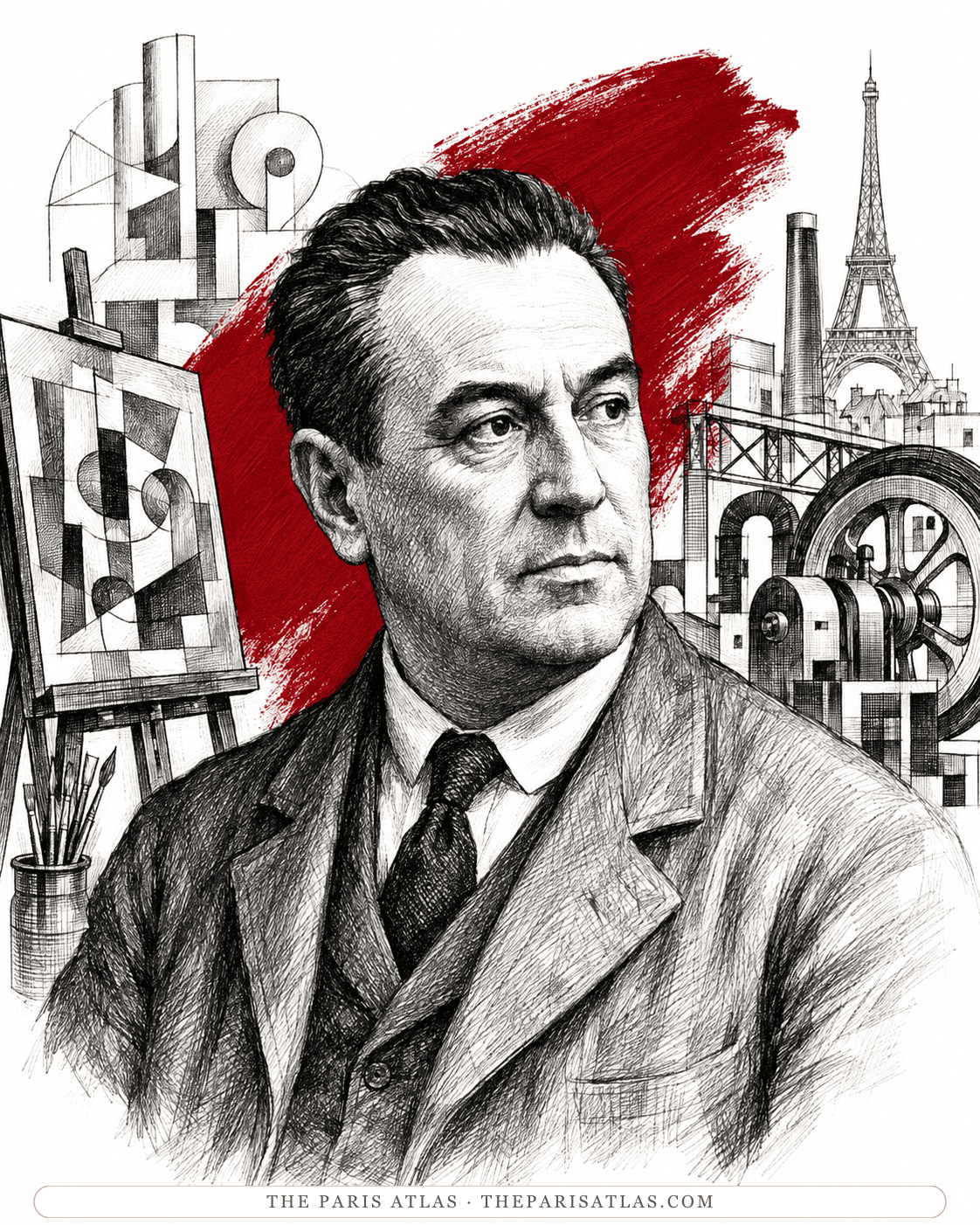
Le Corbusier hired Perriand in October 1927 to develop the furniture program at his Paris studio. She worked with Le Corbusier and Pierre Jeanneret on furniture and interiors for roughly a decade.
— Le Corbusier, 1926–1928: Charlotte Perriand joins the studio

Illustrated portrait of Fernand Léger

Fernand Léger

  • Painter
  • Filmmaker

Collaborated with · 1930

Perriand and Léger shared an interest in modern public life and collaborated across exhibitions, photomontage, and political projects.

— Charlotte Perriand: Inventing a New World

Illustrated portrait of Jean Prouvé

Jean Prouvé

  • Architect

Collaborated with · 1939–1952

Perriand worked with Prouvé on furniture, schools, and prefabricated interiors, combining her spatial planning with his production methods.

— Charlotte Perriand

Connections and Sources

Charlotte Perriand’s connections to people, places, and works, with the sources behind each one.

Collaborated with · 1927–1937

Le Corbusier

Le Corbusier hired Perriand in October 1927 to develop the furniture program at his Paris studio. She worked with Le Corbusier and Pierre Jeanneret on furniture and interiors for roughly a decade.

— Le Corbusier, 1926–1928: Charlotte Perriand joins the studio

Collaborated with · 1930

Fernand Léger

Perriand and Léger shared an interest in modern public life and collaborated across exhibitions, photomontage, and political projects.

— Charlotte Perriand: Inventing a New World

Collaborated with · 1939–1952

Jean Prouvé

Perriand worked with Prouvé on furniture, schools, and prefabricated interiors, combining her spatial planning with his production methods.

— Charlotte Perriand

References

References

The sources below include biographies, scholarly essays, interviews, and primary materials that informed this page. They reflect both the historical record and ongoing critical conversations about Charlotte Perriand and their work.

  1. 1↑Charlotte Perriand

    Website
    Centre Pompidou
    Used for

    Primary institutional biography and collection overview covering Perriand's education, politics, Japan, Les Arcs and career.

    View source
  2. 2↑Charlotte Perriand — Educational Dossier

    Essays
    Centre Pompidou
    Used for

    Detailed educational dossier on Perriand's Japanese period, wartime years and bamboo chaise longue.

    View source
  3. 3↑Charlotte Perriand — 2005–2006 Retrospective

    Exhibition catalogue
    Centre Pompidou
    Used for

    Centre Pompidou retrospective record covering Perriand's political photomontage, UNESCO tea house and posthumous reassessment.

    View source
  4. 4↑Charlotte Perriand — Revolving Armchair

    Official record
    The Museum of Modern Art
    Used for

    Museum record for Perriand's independently credited revolving armchair and her 1927 breakthrough.

    View source
  5. 5↑Charlotte Perriand

    Official record
    The Museum of Modern Art
    Used for

    MoMA artist record clarifying Perriand's role and the collaborative authorship of the LC furniture.

    View source
  6. 6↑Le Corbusier, 1926–1928: Charlotte Perriand joins the studio

    Website
    Fondation Le Corbusier
    Used for

    Existing archival source for Perriand's 1927 arrival at 35 rue de Sèvres.

    View source
  7. 7↑B301 Tilting-Back Armchair

    Official record
    The Metropolitan Museum of Art
    Used for

    Additional museum record for the B301 chair and its collaborative attribution.

    View source
  8. 8↑Armchair with a Tilting Back

    Official record
    The Museum of Modern Art
    Used for

    Museum record crediting the 1928 tilting-back armchair to the three collaborators.

    View source
  9. 9↑Chaise Longue (LC/4)

    Official record
    The Museum of Modern Art
    Used for

    Museum record crediting the adjustable chaise longue jointly to Le Corbusier, Pierre Jeanneret and Perriand.

    View source
  10. 10↑Charlotte Perriand in the Collection

    Official record
    Musée des Arts Décoratifs, Paris
    Used for

    Paris decorative-arts museum source dating Perriand's swiveling chair to her pre–Le Corbusier work.

    View source
  11. 11↑Le monde nouveau de Charlotte Perriand — Press Material and Chronology

    Exhibition catalogue
    Fondation Louis Vuitton
    Used for

    Exhibition chronology documenting Perriand's synthesis of the arts and return to Japan.

    View source
  12. 12Charlotte Perriand: Inventing a New World

    Website
    Fondation Louis Vuitton
    Used for

    Major retrospective source presenting Perriand across architecture, furniture, photography, politics and art.

    View source
  1. 13Charlotte Perriand and I

    Exhibition catalogue
    Fondation Louis Vuitton
    Used for

    Exhibition source for Perriand's photography, found objects, mountain shelters and relationship with nature.

    View source
  2. 14Charlotte Perriand's 1940 Departure for Japan

    Periodical
    Fondation Louis Vuitton
    Used for

    Fondation account of Perriand's June 1940 departure for Japan.

    View source
  3. 15Kitchen from the Unité d'Habitation, Marseille

    Official record
    The Museum of Modern Art
    Used for

    Museum record for Perriand, Le Corbusier and ATBAT's compact Unité d'Habitation kitchen.

    View source
  4. 16Maison du Brésil Interior Element

    Official record
    The Museum of Modern Art
    Used for

    Museum record documenting Perriand's modular interior scheme for the Maison du Brésil.

    View source
  5. 17Maison du Brésil Wall Bookcase and Blackboard

    Official record
    The Museum of Modern Art
    Used for

    Museum record for a multifunctional Maison du Brésil room element.

    View source
  6. 18Maison de la Tunisie Bench-Bookshelf

    Official record
    The Museum of Modern Art
    Used for

    Museum record for the Maison de la Tunisie furniture collaboration.

    View source
  7. 19Bibliothèque de la Maison du Mexique

    Official record
    Centre Pompidou
    Used for

    Museum record for the modular bookshelf installed in 77 Maison du Mexique student rooms.

    View source
  8. 20Focus on Charlotte Perriand's Maison du Mexique Bookshelf

    Essays
    Centre Pompidou
    Used for

    Detailed institutional account of the bookshelf as storage, divider and architecture.

    View source
  9. 21Charlotte Perriand — Cabinet on Base

    Official record
    The Metropolitan Museum of Art
    Used for

    Museum record describing Perriand's cabinet as architectural furniture.

    View source
  10. 22Charlotte Perriand

    Biography
    Design Museum
    Used for

    Biographical overview supporting Perriand's independent practice and wartime collaborations.

    View source
  11. 23Charlotte Perriand Obituary

    Periodical
    The Guardian
    Used for

    Contemporary obituary covering Perriand's family, Indochina years and death.

    View source
  12. 24Maison du Brésil, Paris, 1952–1959

    Website
    Fondation Le Corbusier
    Used for

    Existing architectural record for Perriand's Maison du Brésil work.

    View source
i
Why these sources are here

These references anchor the page in the documented record and in the scholarly conversations around Charlotte Perriand. Every claim on this page traces back to one or more of the works listed here.

Explore more resources