John Steinbeck quotes
25 quotations, each verified against its source and credited to the work it comes from — the wording as John Steinbeck wrote or said it, not as the internet passes it around.
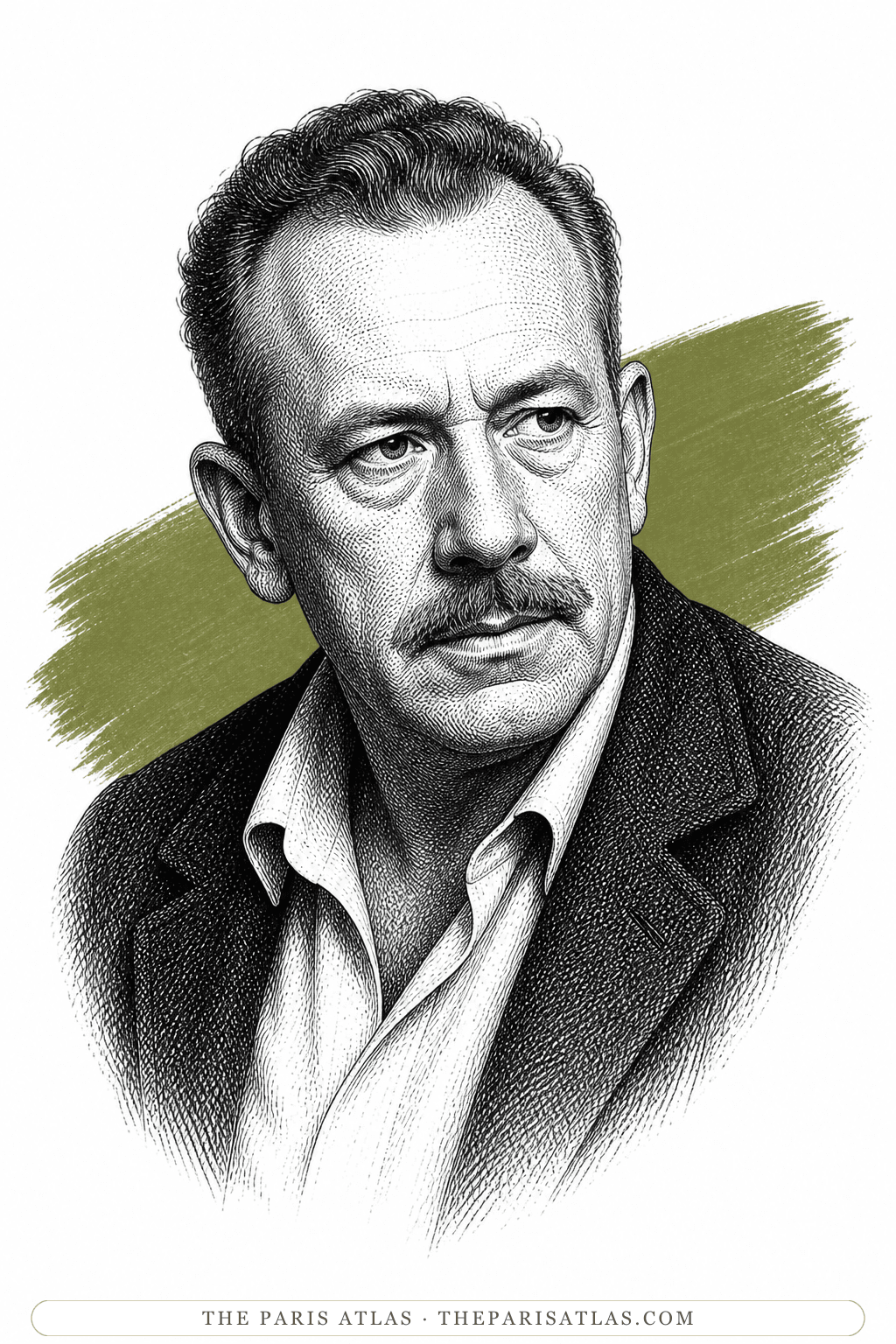
The writer is delegated to declare and to celebrate man's proven capacity for greatness of heart and spirit — for gallantry in defeat, for courage, compassion and love.
I hold that a writer who does not passionately believe in the perfectibility of man, has no dedication nor any membership in literature.
Having taken Godlike power, we must seek in ourselves for the responsibility and the wisdom we once prayed some deity might have. Man himself has become our greatest hazard and our only hope.
Literature is as old as speech. It grew out of human need for it, and it has not changed except to become more needed.
So that today, St. John the apostle may well be paraphrased: In the end is the Word, and the Word is Man — and the Word is with Men.
How can the poem and the stink and the grating noise—the quality of light, the tone, the habit and the dream—be set down alive?
And perhaps that might be the way to write this book—to open the page and to let the stories crawl in by themselves.
Lee Chong is more than a Chinese grocer. He must be.
the Virtues, the Graces, the Beauties of the hurried mangled craziness of Monterey
He wears a beard and his face is half Christ and half satyr and his face tells the truth.
The Salinas Valley is in Northern California. It is a long narrow swale between two ranges of mountains, and the Salinas River winds and twists up the center until it falls at last into Monterey Bay.
I remember my childhood names for grasses and secret flowers.
You can boast about anything if it's all you have. Maybe the less you have, the more you are required to boast.
But 'Thou mayest'! Why, that makes a man great, that gives him stature with the gods, for in his weakness and his filth and his murder of his brother he has still the great choice. He can choose his course and fight it through and win.
We are all descended from the restless, the nervous, the criminals, the arguers and brawlers, but also the brave and independent and generous.
Guys like us, that work on ranches, are the loneliest guys in the world.
I got you to look after me, and you got me to look after you
small and quick, dark of face, with restless eyes and sharp, strong features
S'pose you didn't have nobody. S'pose you couldn't go into the bunk house and play rummy 'cause you was black. How'd you like that?
You hadda, George. I swear you hadda.
She seemed to know, to accept, to welcome her position, the citadel of the family, the strong place that could not be taken.
66 is the path of a people in flight, refugees from dust and shrinking land, from the thunder of tractors and shrinking ownership
For man, unlike any other thing organic or inorganic in the universe, grows beyond his work, walks up the stairs of his concepts, emerges ahead of his accomplishments.
And they listened while the tales were told, and their participation made the stories great.
maybe all men got one big soul ever'body's a part of
From the books
Every book with a quote collection of its own, each line verified against the text.
- Cannery Row quotes · 5 lines (1945)
- East of Eden quotes · 5 lines (1952)
- Of Mice and Men quotes · 5 lines (1937)
- The Grapes of Wrath quotes · 5 lines (1939)
Newsletter
Join our newsletter
New stories about art, literature and famous places around the world.