The Paris AtlasCharting the artists, works, and places worth returning to.
  • Fashion designer
· French · 1889–1958

Lucien Lelong

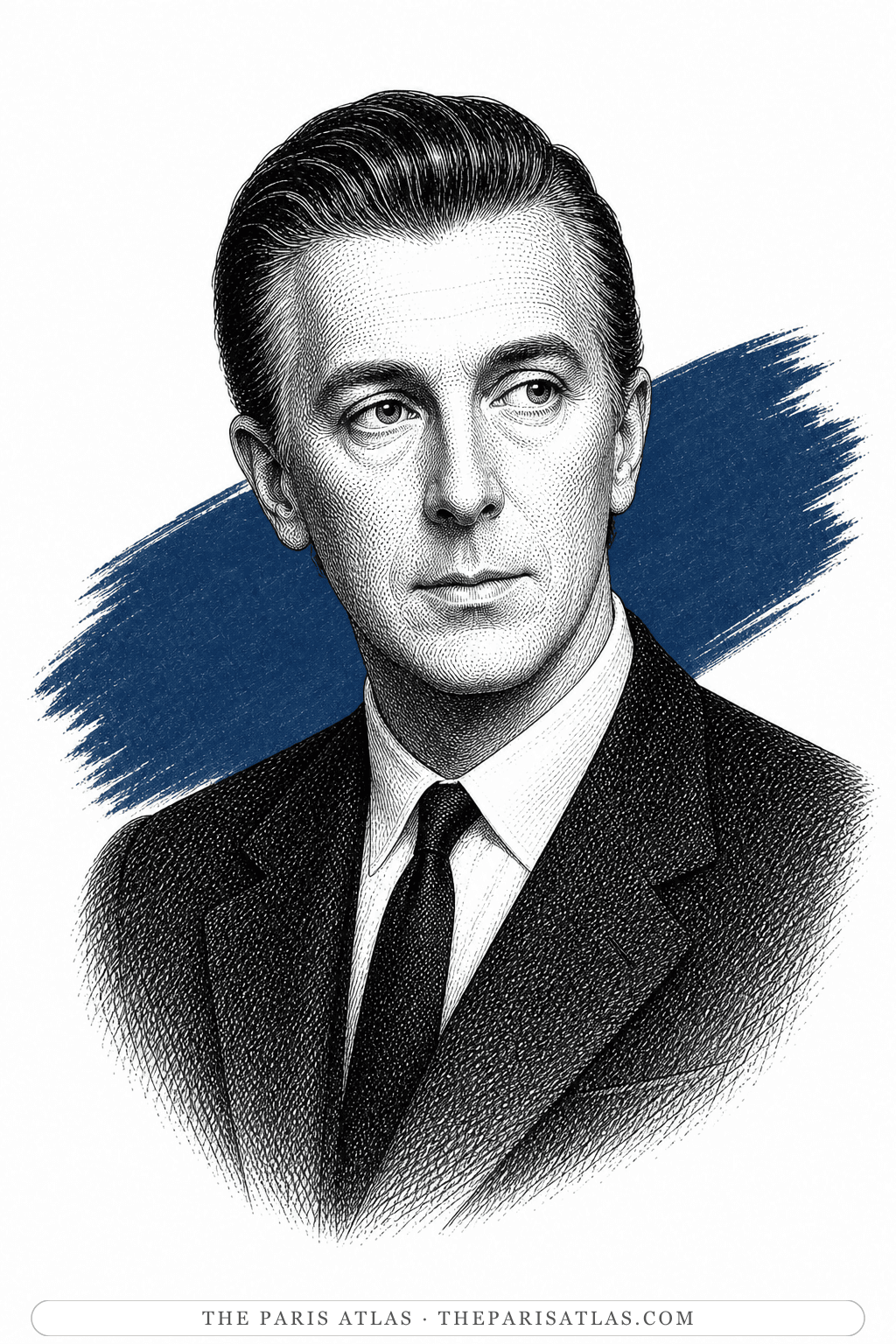
Paris couturier and fashion-industry leader whose elegant interwar house trained Christian Dior, Pierre Balmain and Hubert de Givenchy, and whose negotiations during the German occupation helped keep the infrastructure of French haute couture in Paris.

In images

Details

Lived
1889–1958
Born
11 October 1889
Birthplace
Paris, France
Birth name
Lucien-Célestin Lelong
Died
11 May 1958 · aged 68
Place of death
Anglet, France
Nationality
French
Profession
Couturier and president of the Chambre Syndicale de la Couture Parisienne
Major works
House of Lucien Lelong, Parfums Lucien Lelong, Sphinx ensemble (1925), Théâtre de la Mode (1945)
Married
Anne-Marie Audoy · 1919–1927Natalie Paley · 1927–1937Sanda Dancovici · 1954–1958
Roles
Fashion designer

About Lucien Lelong

Lucien Lelong is remembered less clearly than Chanel, Dior or Balenciaga, but for several decades his name belonged to the first rank of Paris couture. His house dressed wealthy international clients, sold perfume on both sides of the Atlantic and employed hundreds of skilled workers. More unusually, Lelong became one of the industry's most important organizers. As president of the Chambre Syndicale de la Couture Parisienne during the Second World War, he had to negotiate with German authorities who wanted to weaken or relocate the Paris fashion system.

Lelong's importance is also unusual because he was not a couturier in quite the same way as designers who personally dominated every sketch and fitting. Christian Dior later recalled that Lelong worked through a team of designers, and surviving museum objects sometimes distinguish between the House of Lucien Lelong and the individual designer responsible for a particular garment. A 1946 suit at the Metropolitan Museum, for example, carries the Lelong house name but identifies Dior as its designer. It is therefore more accurate to think of Lelong as the creative director, organizer and taste-maker at the head of an unusually sophisticated couture operation.

That structure became part of his legacy. Pierre Balmain and Dior worked together under Lelong during the war before opening their own houses. Hubert de Givenchy also passed briefly through the firm before joining Elsa Schiaparelli. The couture house that closed in 1948 therefore became one of the workshops in which the next generation of postwar Paris fashion learned how a major house actually functioned.

Growing up inside couture

Lucien Lelong was born in Paris on 11 October 1889. His parents, Arthur Camille Joseph Lelong and Éléonore Marie Lambelet, operated a modest couture business known as A. E. Lelong, associated with the Place de la Madeleine. Unlike many later designers, Lucien did not discover fashion from outside the trade. He grew up around customers, fabrics, fittings, workrooms and the business of selling clothes.[1]

Yet Lelong did not go to a fashion school. He studied business at the École des Hautes Études Commerciales, now HEC Paris. That education helps explain the shape of his later career. Lelong certainly cared about clothes, but he also understood fashion as an industry requiring publicity, distribution, employees, international buyers and careful financial management.

His entry into the family business was interrupted by the First World War. Lelong served in the French army, was wounded and returned from the war to a couture world very different from the one he had left. By 1920 he had assumed creative direction of the family firm. The following year, the establishment began operating under his own name. He was entering the trade as rigid prewar dress was disappearing and Paris fashion was adapting to shorter skirts, lighter fabrics and women who expected clothing to move.

Building the House of Lucien Lelong

The new house grew rapidly during the 1920s. Lelong moved beyond the modest scale of his parents' business and developed the company into a major Paris couture operation. By the middle of the decade, the firm was associated with 16 avenue Matignon, close to the Champs-Élysées. Surviving garments at the Palais Galliera still carry labels reading “Lucien Lelong / Modèle déposé / Made in France / 16 avenue Matignon Paris.” Avenue Matignon suited the image Lelong was building: a polished international house intended to receive wealthy customers, foreign buyers and the fashion press.[2]

Lelong's clothes were generally associated with a restrained, controlled elegance. The Metropolitan Museum describes the house's work as distinctly feminine, while surviving Galliera garments show his repeated use of silk crepe, velvet, mousseline, satin, draping and carefully placed volume. A Lelong evening dress could be elaborate without looking overloaded. The interest often came from the way fabric crossed the body, gathered at the shoulder or opened into a fluid skirt rather than from eccentric decoration.

He was also interested in the modern, active woman. In a 1925 statement later highlighted by fashion historian Olivier Saillard, Lelong argued that contemporary clothing needed to respond to a more “sporting” way of life. Even luxurious clothes were expected to function on a moving body rather than remain beautiful only when a woman stood still.

A house rather than a single designer

The modern fashion industry often encourages the idea that every object carrying a designer's name came directly from that person's hand. Lelong's house makes that assumption particularly misleading. He employed designers who developed models under his direction. The Museum at FIT cites Dior's recollection that Lelong did not personally design everything but worked through his designers. Balmain's career records describe a similar structure: Lelong supervised an atelier in which individual designers prepared models while the house maintained the overall identity.

That does not make Lelong unimportant as a designer. It makes his role closer to what would now be called the creative director of a large fashion house. He selected talent, decided what belonged in the collection and maintained the image customers associated with the label. At its height, contemporary research cited by former Palais Galliera director Olivier Saillard places the workforce at around 1,200 people. The name “Lucien Lelong” represented an entire organization: designers, premières d'atelier, seamstresses, embroiderers, models, salespeople, perfume staff and publicity workers.

Fashion plates and the international image

Lelong understood that couture depended on images almost as much as clothes. Fashion magazines reproduced his designs. Illustrators translated them into elegant silhouettes. Photographers placed the dresses on well-known women. The Sphinx design published in Très Parisien in 1925 belongs to this period in which the Lelong name was becoming recognizable beyond customers who could physically visit the Paris salon.[3]

The fashion plate shows how a couture house circulated before television or social media: through magazines, photographs and the appearance of fashionable women wearing the clothes in public. Lelong also understood the growing importance of the American market. This led him beyond couture into another business that could reach far more people than a hand-made Paris dress.

Perfume becomes part of the house

In 1924, Lelong established a perfume business. The decision placed him among the Paris couturiers who understood that a fashion house could sell an entire identity rather than clothing alone. Cooper Hewitt notes that Lelong considered fragrance an integral element of a woman's style. Perfume also had an obvious commercial advantage: thousands of people who could never afford a couture dress could still buy a bottle carrying the designer's name.[4]

The business became increasingly sophisticated. Lelong opened stores in Chicago in 1928 and New York in 1929, and commissioned René Lalique to design a striking perfume bottle aimed at his American clientele. The Musée Lalique describes the 1929 bottle as a frosted-glass, square-column design housed in chrome and enamel packaging, consciously suited to a modern world of skyscrapers. Fashion, perfume, packaging, architecture and international marketing all became parts of the same house identity.[5]

Natalie Paley

Lelong's personal life also entered the public image of the house. In 1927, he married Princess Natalie Paley, a member of the exiled Romanov family. Her father, Grand Duke Paul Alexandrovich of Russia, had been killed after the Russian Revolution. Natalie escaped into exile and eventually entered the glamorous social world of 1920s Paris.[6]

Paley became closely associated with Lelong's house and was photographed by many of the most important fashion photographers of the period. Hillwood Estate describes her as a central fashion figure whose image was created by photographers including George Hoyningen-Huene and Horst P. Horst. She became both Lelong's wife and one of the women through whom the house's idea of elegance was made visible. Their marriage ended during the 1930s, and Paley eventually moved to the United States.

Experimenting with a broader fashion market

Lelong was also interested in the problem that would eventually transform the entire couture industry: how could a Paris house reach customers beyond individually fitted couture? During the early 1930s, garments appeared with labels identifying them as “Modèle d'édition” rather than simply unique couture models. A surviving circa-1932 dress and belt at the Palais Galliera carries precisely such a label. In 1934, the New York Public Library recorded publicity for “Les robes d'édition de Lucien Lelong.”[7]

These experiments should not be confused with modern mass-market ready-to-wear. But they show Lelong trying to develop more standardized designs that could move beyond the traditional one-client, one-garment couture system. Not every experiment succeeded commercially. What is important is that Lelong understood early that the economics of fashion were changing.

President of Paris couture

In 1937, Lelong was unanimously elected president of the Chambre Syndicale de la Couture Parisienne, the professional body representing Paris couture houses. The position would eventually matter more to his historical reputation than any single dress. When Lelong took office, Paris still sat securely at the center of international fashion. Foreign buyers arrived for collections, American stores purchased models to reproduce under license, and an enormous network of specialist businesses supported the major couture houses.

Then war returned. Lelong remained president through 1945, meaning that he led the organization through the German occupation of Paris and the most serious threat the French couture system had yet faced.

The German plan for Paris couture

When German forces occupied Paris in 1940, fashion became an economic and political target. German officials considered moving the center of couture away from Paris, with plans involving Berlin and Vienna. The idea was not simply to relocate famous designers. French couture depended on an enormous supporting network: specialist seamstresses, embroiderers, feather workers, button makers, textile manufacturers, milliners, pleaters and other craftspeople. Moving or dismantling that network could have ended Paris's position as the world's couture capital.[8]

Lelong argued that this system could not simply be packed into trucks and recreated elsewhere. Couture, he maintained, was the result of generations of specialized labor concentrated in Paris. The Victoria and Albert Museum summarizes his answer to the German proposal with the famously concise declaration that couture existed in Paris or nowhere. His negotiations worked. The wholesale transfer did not happen.[8]

Couture under occupation

That achievement should not turn the Occupation years into a simple heroic story. Keeping Paris couture open meant operating inside an occupied economy. Materials were rationed. Export markets largely disappeared. German authorities monitored the industry. Wealthy German customers and women connected to the occupation became part of the remaining market for luxury clothing. Lelong, as the industry's representative, necessarily dealt with both occupation officials and the Vichy-controlled administrative system.

His position was therefore inherently compromised: maintaining employment and preserving Paris fashion required negotiation with the authorities controlling the city. After the Liberation, Lelong faced accusations concerning his wartime conduct. The surviving historical accounts describe his cooperation as being investigated and ultimately cleared on the grounds that his negotiations had been intended primarily to preserve the French industry and its workforce. The controversy is worth acknowledging because it reveals the uncomfortable reality behind the better-known story of “saving Paris fashion.” What is clear is that the couture infrastructure survived.

Pierre Balmain and Christian Dior

Pierre Balmain had first worked for Lelong before the war and returned in 1941. Around the same time, Christian Dior joined the house after earlier working for Robert Piguet. The Metropolitan Museum records Balmain at Lelong in 1939 and again from 1941 to 1945, working alongside Dior. The Design Museum dates Dior's return to Paris and employment by Lelong to December 1941.[9]

The pair were not minor apprentices. They became important designers within an enormous working couture house. They learned how collections were assembled, how fabrics behaved, how ateliers translated drawings into finished garments, how fittings worked and how a large label managed relationships with clients and buyers. Dior remained through 1946. A Lelong suit from that year preserved by the Metropolitan Museum is explicitly attributed to him as designer.

Balmain left first and opened Maison Balmain in 1945. Dior followed in 1946, backed by textile industrialist Marcel Boussac. His first collection in February 1947 produced what became known as the New Look. The sudden flowering of postwar couture therefore had roots inside Lelong's wartime workrooms.[10]

Hubert de Givenchy

A still younger Hubert de Givenchy also passed briefly through the House of Lelong during his rapid apprenticeship through Paris couture. Givenchy arrived in Paris as a teenager and worked successively with Jacques Fath, Robert Piguet and Lucien Lelong before joining Elsa Schiaparelli in 1947. He opened his own house in 1952. French cultural and biographical sources consistently place Lelong among the houses in which Givenchy trained, although exact month-by-month dating varies between chronologies.[11]

That sequence makes the larger point more important than the precise duration. Within a few years, Balmain, Dior and Givenchy all passed through Lucien Lelong's professional world. Three of the names that would define the next era of Paris couture had learned something inside a house that is now much less famous than theirs.

The Théâtre de la Mode

Paris was liberated in August 1944, but the end of occupation did not mean an immediate return to prosperity. France remained short of materials, electricity, food and money. Couture houses wanted to show the world that Paris fashion had survived, but producing lavish full-scale collections for international display was difficult. The solution was ingenious.

In 1945, the Chambre Syndicale helped organize the *Théâtre de la Mode, an exhibition of miniature mannequins wearing meticulously constructed couture clothes. Les Arts Décoratifs identifies the exhibition as organized by the Chambre Syndicale under Lelong's impetus, while its surviving archive dates the original Louvre presentation to 27 March–6 May 1945*.[12]

Nearly two hundred wire mannequins were dressed by dozens of Paris houses. The clothes were genuine couture in miniature: proper seams, embroidery, hats, shoes, gloves and accessories. Artists and designers including Christian Bérard and Jean Cocteau contributed theatrical settings. The small scale solved the problem of scarce fabric while allowing the industry to display the full range of its skills. The exhibition began in Paris and then traveled internationally, raising money for war relief and announcing that Paris couture was still alive.[13]

The house after Liberation

For a brief period after the war, the Lelong house contained both its old prestige and the beginnings of something new. Dior was still designing there in 1946. Givenchy passed through. Drawings preserved by the Palais Galliera show the house continuing to produce models through 1946 and 1947. But Lelong's health was becoming a problem, and the fashion world around him was changing quickly.

Balmain already had his own house. Dior's first collection in 1947 immediately captured international attention. The next generation no longer needed to remain under Lelong's name. In 1948, Lucien Lelong closed his couture house. The perfume business and the Lelong name continued beyond the couture closure, but the great workrooms of avenue Matignon were finished.

A legacy hidden inside other names

The disappearance of the house helps explain why Lelong is less familiar today. Chanel survived as a brand. Dior survived. Givenchy survived. Balmain survived. Lucien Lelong did not remain an operating couture house.

The clothes themselves survive in museums including the Metropolitan Museum of Art, Palais Galliera and Victoria and Albert Museum, where they show the controlled draping, fine materials and polished elegance that made the label important during its lifetime. But Lelong's less visible legacy may be even more significant. He demonstrated a model of the couture house as an organization that could combine business management, designers, skilled ateliers, perfume, publicity and international distribution. The careers of the people who worked for him carried parts of that system into the postwar fashion industry.[14][15]

Final years

After closing the couture house, Lelong withdrew increasingly from the professional fashion world. He later remarried and spent part of his final years away from Paris. He died in Anglet, in southwestern France, on 11 May 1958, aged sixty-eight. The Bibliothèque nationale de France records both his Paris birth on 11 October 1889 and his death at Anglet in 1958.

By then Christian Dior had already died, but the revolution associated with Dior's 1947 New Look had permanently changed fashion. Balmain and Givenchy had established major houses of their own. The teacher's house was gone. The generation trained inside it had taken over Paris.

Lucien Lelong and Paris

Lelong's career is inseparable from the geography of Paris couture. His parents' business belonged to the world around the Place de la Madeleine. His own house became established at 16 avenue Matignon, placing it in the luxury district between the Champs-Élysées and the couture houses of the 8th arrondissement. Surviving labels in the Palais Galliera collection still preserve that address.

Avenue Matignon was where clients came for fittings, designers developed collections and young talents such as Dior and Balmain learned the workings of a large couture house. Yet Lelong's most important Paris contribution happened beyond his own salon. As president of the Chambre Syndicale, he argued that haute couture did not reside in one famous couturier's imagination. It depended on Paris as a network.

The atelier needed the embroiderer. The dressmaker needed the silk merchant. The hat needed the milliner. The gown might require pleaters, feather workers, bead makers, button specialists and dozens of skilled hands whose names never appeared on the label. This is why the German proposal to transfer couture elsewhere represented such a serious threat. The system was local. Lelong understood that preserving Paris fashion meant preserving the people around it.

The Théâtre de la Mode made essentially the same argument after Liberation. Its tiny dresses were advertisements not merely for Dior, Balenciaga, Lelong or Schiaparelli but for the collective technical skill of Paris. In that sense, Lucien Lelong's greatest design may not have been a dress at all. It was helping a fashion ecosystem survive long enough for the next generation to inherit it.

Lucien Lelong's place in fashion history

Lelong occupies an unusual position because his legacy is distributed among several different histories. In the museum, he appears as the name sewn into elegant dresses from the 1920s, 1930s and 1940s. In perfume history, he appears as an early couturier who understood fragrance, packaging and international branding as extensions of fashion. In the history of Paris under occupation, he appears as the industry representative who negotiated to prevent the removal of couture and its skilled workers. And in the biographies of later designers, he repeatedly appears as the employer who came just before independence.

Pierre Balmain worked there. Christian Dior worked there. Hubert de Givenchy worked there. That pattern is too significant to dismiss as coincidence. Lelong's own label eventually disappeared, but his workrooms helped prepare the people who would make Paris fashion internationally dominant again after the Second World War.

Life events

  1. 1889

    Born in Paris on 11 October to Arthur Camille Joseph Lelong and Éléonore Marie Lambelet, who operate the couture house A. E. Lelong.

    — Lucien Lelong (1889–1958); Evening dress, Lucien Lelong, spring/summer 1938

  2. Early 1900s

    Grows up around the family couture business and begins learning the commercial side of the trade rather than entering a formal fashion school.

    — Evening dress, Lucien Lelong, spring/summer 1938

  3. 1911–1913

    Studies at the École des Hautes Études Commerciales in Paris, receiving a business education that later shapes his unusually managerial approach to couture.

    — Evening dress, Lucien Lelong, spring/summer 1938

  4. 1914–1918

    Serves France during the First World War; his entry into the family couture business is interrupted by military service.

    — Evening dress, Lucien Lelong, spring/summer 1938

  5. 1920

    Takes creative control of the family firm.

    — Evening dress, Lucien Lelong, spring/summer 1938

  6. 1921

    The establishment begins operating under the name Lucien Lelong.

    — Evening dress, Lucien Lelong, spring/summer 1938

  7. 1924

    Establishes Parfums Lucien Lelong, expanding the house from couture into fragrance and luxury branding.

    — Presentation for Lucien Lelong; Perfume Packaging by the French Couturier

  8. Mid-1920s

    Establishes the couture house at 16 avenue Matignon, which becomes its best-known Paris address.

    — Lucien Lelong dress, 1933

  9. 1925

    Designs such as Sphinx circulate internationally through fashion plates and magazines as the house's interwar reputation grows.

    Sphinx, a Lucien Lelong design published in Très Parisien in 1925, during the house's interwar expansion. (Très Parisien, Rijksmuseum)

    — Evening dress, Lucien Lelong, spring/summer 1938

  10. 1927

    Marries Princess Natalie Paley, the Russian émigrée and Romanov descendant who becomes closely associated with the public image of the house.

    — From Exile to Avant-Garde: The Life of Princess Natalie Paley

  11. 1928–1929

    Expands the perfume and fashion business internationally, opening stores in Chicago and New York.

    — Presentation for Lucien Lelong

  12. 1929

    Commissions René Lalique to create a modern perfume bottle and presentation case aimed at Lelong's fashionable American clientele.

    — Bottle for Lucien Lelong, 1929

  13. Early 1930s

    Experiments with modèles d'édition, standardized designs that point toward a broader market beyond conventional one-off couture.

    — Robe et ceinture assortie, modèle d'édition

  14. 1934

    Promotes Les robes d'édition de Lucien Lelong as part of this attempt to expand the house's reach.

    — Les robes d'édition de Lucien Lelong, 1934

  15. 1930s

    The house becomes a large Paris couture operation known for elegant draping, fine materials, evening wear and an international clientele.

    — Evening dress, Lucien Lelong, spring/summer 1938; Lucien Lelong dress, 1930–1935

  16. 1937

    Is unanimously elected president of the Chambre Syndicale de la Couture Parisienne.

    — Evening dress, Lucien Lelong, spring/summer 1938

  17. 1939

    Pierre Balmain works at Lelong before being mobilized for military service.

    — Suit, House of Balmain; Pierre Balmain biography

  18. 1940

    After the German occupation of Paris, becomes the principal representative of the couture houses in negotiations over the future of the industry.

    — Survivors

  19. 1940–1942

    Opposes German plans to transfer Paris couture and its skilled workforce to Berlin and Vienna.

    — The 'golden age' of couture; Survivors

  20. 1941

    Pierre Balmain returns to Lelong, and Christian Dior joins the house after previously working for Robert Piguet.

    — Suit, House of Balmain; Pierre Balmain biography; Christian Dior

  21. 1941–1945

    Lelong, Dior and Balmain work within the difficult wartime couture system while Lelong leads negotiations intended to keep the Paris industry operating.

    — Suit, House of Balmain; Pierre Balmain biography; Christian Dior (1905–1957); Survivors

  22. 1944–1945

    Faces criticism after Liberation over the compromises required to keep couture operating; his conduct is investigated and he is cleared of collaboration charges.

    — Fashion in Times of Scarcity (1944–1951); Survivors

  23. 1945

    Pierre Balmain leaves to establish his own couture house.

    — Suit, House of Balmain; Pierre Balmain biography

  24. 1945

    Helps initiate the Théâtre de la Mode, shown at the Louvre's Pavillon de Marsan, where miniature mannequins demonstrate that French couture survived the war.

    — Une histoire en images: Les Arts Décoratifs; Théâtre de la Mode, Pavillon de Marsan, 1945; The 'golden age' of couture

  25. 1946

    The Metropolitan Museum preserves a suit labeled Lucien Lelong and credited specifically to Christian Dior as designer.

    — Suit, House of Lucien Lelong, designed by Christian Dior, 1946

  26. Circa 1946–1947

    Hubert de Givenchy works briefly at Lelong during his early Paris apprenticeship, between Robert Piguet and Elsa Schiaparelli.

    — Hubert de Givenchy; Givenchy, Hubert de

  27. 1946

    Dior leaves Lelong and establishes his own couture house with the backing of Marcel Boussac.

    — Christian Dior (1905–1957); Christian Dior

  28. 1947

    Dior presents the collection that becomes known as the New Look while Balmain is already operating his own house.

    — Christian Dior (1905–1957); Suit, House of Balmain; Pierre Balmain biography

  29. 1948

    Closes the Lucien Lelong couture house.

    — Evening dress, Lucien Lelong, spring/summer 1938

  30. 1958

    Dies in Anglet on 11 May, aged sixty-eight.

    — Lucien Lelong (1889–1958)

People Lucien Lelong Knew

Relationships with other people, with sources for each connection.

Illustrated portrait of Hubert de Givenchy

Hubert de Givenchy

  • Collector

Collaborated with · 1946

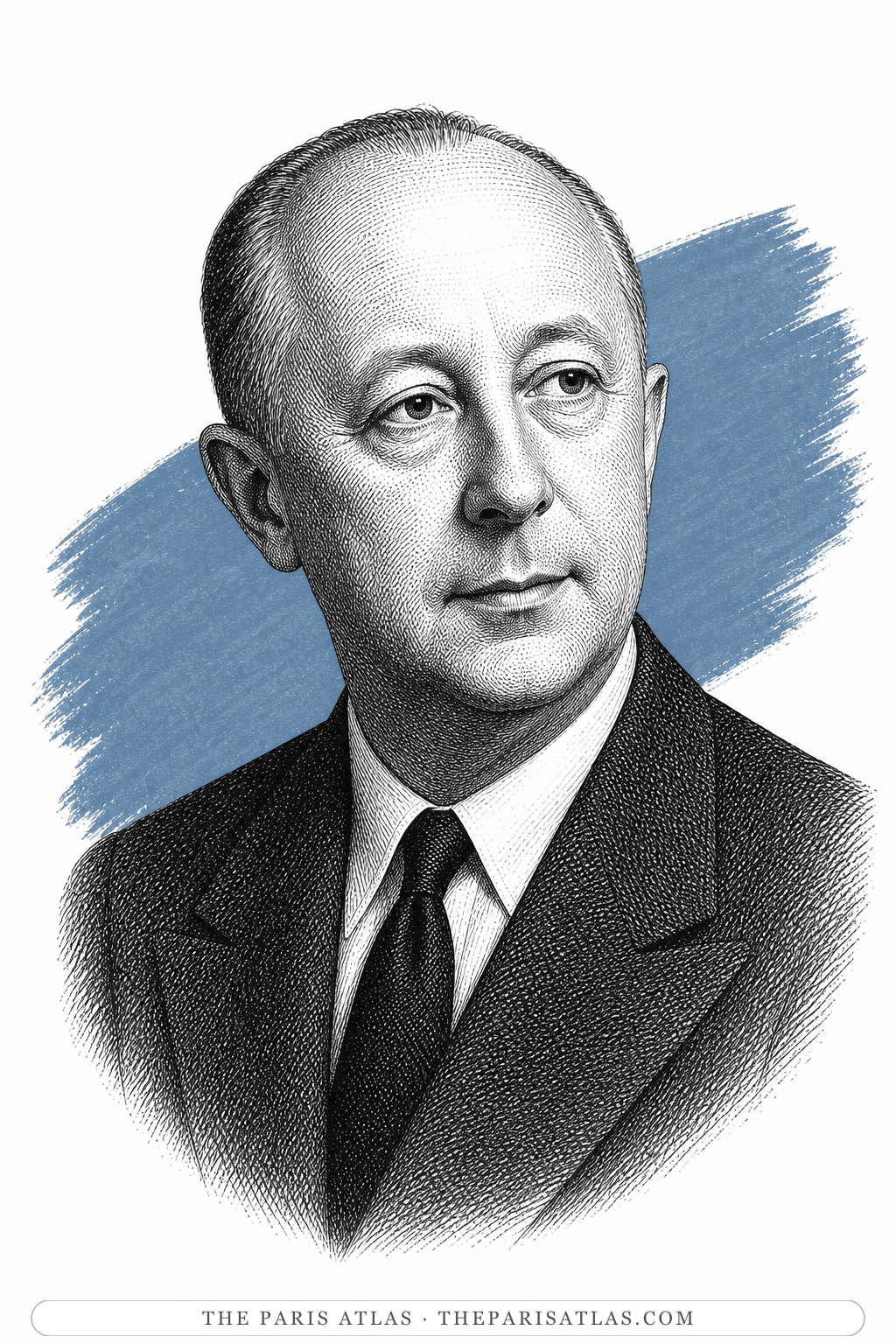
The Cristóbal Balenciaga Museoa's Givenchy chronology records six months working for Lucien Lelong in 1946, after Robert Piguet and before Elsa Schiaparelli. The relationship is limited to that documented employment and does not imply a longer partnership.
— Hubert de Givenchy; Givenchy, Hubert de; The Givenchiaga Family — exhibition press kit, with the museum's chronology of Cristóbal Balenciaga and Hubert de Givenchy and its account of their friendship

Illustrated portrait of Christian Dior

Christian Dior

  • Fashion designer
  • Art dealer
  • Illustrator

Mentored · 1941–1946

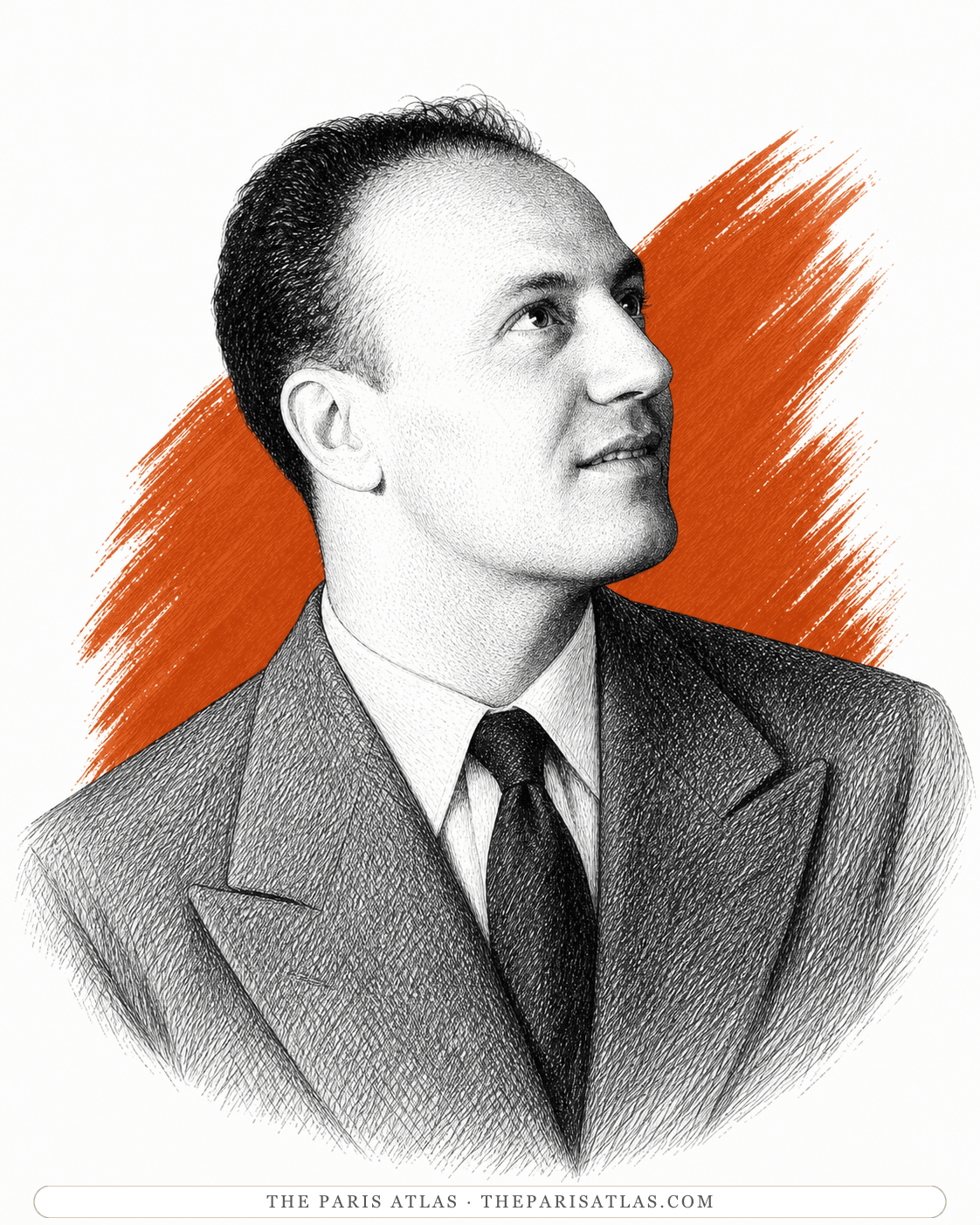
The employment is direct evidence; the mentorship is an editorial assessment. The Metropolitan Museum of Art records that Dior returned to Paris in 1941 to work at Lelong's large design house, while the Musée Christian Dior identifies him as Lelong's principal designer for four years. Dior's later account described how much he learned there before opening his own house.

— Christian Dior (1905–1957); Suit, House of Lucien Lelong, designed by Christian Dior, 1946; Dior, jardins enchanteurs: Dossier de presse

Illustrated portrait of Pierre Balmain

Pierre Balmain

  • Fashion designer

Mentored · 1939–1945

Balmain worked in Lelong's large Paris design studio before opening his own couture house in 1945.

— Suit, House of Balmain; Pierre Balmain biography; The 'golden age' of couture

Connections and Sources

Lucien Lelong’s connections to people, places, and works, with the sources behind each one.

Collaborated with · 1946

Hubert de Givenchy

The Cristóbal Balenciaga Museoa's Givenchy chronology records six months working for Lucien Lelong in 1946, after Robert Piguet and before Elsa Schiaparelli. The relationship is limited to that documented employment and does not imply a longer partnership.
— Hubert de Givenchy; Givenchy, Hubert de; The Givenchiaga Family — exhibition press kit, with the museum's chronology of Cristóbal Balenciaga and Hubert de Givenchy and its account of their friendship

Mentored · 1941–1946

Christian Dior

The employment is direct evidence; the mentorship is an editorial assessment. The Metropolitan Museum of Art records that Dior returned to Paris in 1941 to work at Lelong's large design house, while the Musée Christian Dior identifies him as Lelong's principal designer for four years. Dior's later account described how much he learned there before opening his own house.

— Christian Dior (1905–1957); Suit, House of Lucien Lelong, designed by Christian Dior, 1946; Dior, jardins enchanteurs: Dossier de presse

Mentored · 1939–1945

Pierre Balmain

Balmain worked in Lelong's large Paris design studio before opening his own couture house in 1945.

— Suit, House of Balmain; Pierre Balmain biography; The 'golden age' of couture

References

References

The sources below include biographies, scholarly essays, interviews, and primary materials that informed this page. They reflect both the historical record and ongoing critical conversations about Lucien Lelong and their work.

  1. 1↑Lucien Lelong (1889–1958)

    Official record
    Bibliothèque nationale de France
    Used for

    The Bibliothèque nationale de France authority record for Lelong's birth and death details.

    View source
  2. 2↑A Queer History of Fashion

    Website
    The Museum at FIT
    Used for

    The Museum at FIT material used for Dior's account of Lelong's team-based design system.

    View source
  3. 3↑Robe et ceinture assortie, modèle d'édition

    Website
    Palais Galliera / Paris Musées
    Used for

    The surviving circa-1932 modèle d'édition dress and belt, evidence for Lelong's broader-market experiment.

    View source
  4. 4↑Presentation for Lucien Lelong

    Website
    Musée Lalique
    Used for

    Musée Lalique on Lelong's American expansion and René Lalique's perfume presentation.

    View source
  5. 5↑Perfume Packaging by the French Couturier

    Website
    Cooper Hewitt, Smithsonian Design Museum
    Used for

    Cooper Hewitt on Lelong's view of fragrance and the house's modern perfume packaging.

    View source
  6. 6↑From Exile to Avant-Garde: The Life of Princess Natalie Paley

    Website
    Hillwood Estate, Museum & Gardens
    Used for

    Hillwood's exhibition biography of Princess Natalie Paley and her place in interwar fashion.

    View source
  7. 7↑Les robes d'édition de Lucien Lelong, 1934

    Website
    New York Public Library Digital Collections
    Used for

    The New York Public Library's 1934 record for Les robes d'édition de Lucien Lelong.

    View source
  8. 8abSurvivors

    Website
    The New Yorker
    Used for

    A detailed historical account of the German plan for couture and Lelong's occupation-era negotiations.

    View source
  9. 9↑Suit, House of Balmain; Pierre Balmain biography

    Website
    The Metropolitan Museum of Art
    Used for

    The Met's Balmain chronology, documenting his work at Lelong in 1939 and from 1941 to 1945.

    View source
  10. 10↑Christian Dior (1905–1957)

    Website
    The Metropolitan Museum of Art
    Used for

    The Met's Dior biography, including his wartime employment at Lelong and the founding of his own house.

    View source
  11. 11↑Hubert de Givenchy

    Website
    Ministère de la Culture
    Used for

    The French Ministry of Culture chronology of Givenchy's early Paris apprenticeships.

    View source
  12. 12↑Une histoire en images: Les Arts Décoratifs

    Website
    Musée des Arts Décoratifs, Paris
    Used for

    Les Arts Décoratifs on its history and Lelong's role in the Théâtre de la Mode.

    View source
  13. 13↑Théâtre de la Mode, Pavillon de Marsan, 1945

    Website
    Les Arts Décoratifs
    Used for

    The archive record establishing the Pavillon de Marsan dates for the 1945 exhibition.

    View source
  14. 14↑Evening dress, Lucien Lelong, spring/summer 1938

    Website
    The Metropolitan Museum of Art
    Used for

    The Met's substantial house biography, used for Lelong's background, education, house chronology, aesthetic and trade leadership.

    View source
  1. 15↑Lucien Lelong dress, 1933

    Website
    Palais Galliera / Paris Musées
    Used for

    A Palais Galliera record preserving the Lelong label and 16 avenue Matignon address.

    View source
  2. 16Suit, House of Lucien Lelong, designed by Christian Dior, 1946

    Website
    The Metropolitan Museum of Art
    Used for

    The museum record distinguishing the Lelong house from Christian Dior as the designer of this 1946 suit.

    View source
  3. 17Alaïa before Alaïa: Press kit

    Exhibition catalogue
    Palais Galliera, Fashion Museum of the City of Paris
    Used for

    Palais Galliera research on the Lelong atelier and the designers who worked within the house.

    View source
  4. 18Lucien Lelong dress, 1930–1935

    Website
    Palais Galliera / Paris Musées
    Used for

    A museum object record for the materials and construction of a 1930s Lelong dress.

    View source
  5. 19Cape et robe, Lucien Lelong, 1933

    Website
    Palais Galliera / Paris Musées
    Used for

    A second Galliera ensemble documenting the house's early-1930s couture output.

    View source
  6. 20Parfums Lucien Lelong, 1938

    Website
    Palais Galliera / Paris Musées
    Used for

    A 1938 archival photograph documenting the house's perfume business.

    View source
  7. 21The 'golden age' of couture

    Website
    Victoria and Albert Museum
    Used for

    The V&A's history of wartime couture and the Théâtre de la Mode, including Lelong's defense of the Paris trade.

    View source
  8. 22Bottle for Lucien Lelong, 1929

    Website
    Musée Lalique
    Used for

    The museum's object history of Lalique's 1929 bottle for Lucien Lelong.

    View source
  9. 23Ting-A-Ling: The Perfume Bottle That Sings

    Website
    Cooper Hewitt, Smithsonian Design Museum
    Used for

    A second Cooper Hewitt essay on the design and marketing of Lelong fragrance.

    View source
  10. 24Christian Dior

    Website
    Design Museum
    Used for

    The Design Museum chronology, used for Dior's December 1941 move to Lelong.

    View source
  11. 25Givenchy, Hubert de

    Website
    Cimetière de Passy
    Used for

    A complementary French source placing Givenchy at Lelong before Schiaparelli.

    View source
  12. 26Portfolio: Lucien Lelong

    Website
    System Magazine
    Used for

    Olivier Saillard's portfolio on Lelong's 1925 ideas about modern dress and the scale of his house.

    View source
  13. 27Fashion in Times of Scarcity (1944–1951)

    Website
    Modes pratiques / Institut national d'histoire de l'art
    Used for

    Scholarly context for wartime and immediate postwar French fashion, including scrutiny of Lelong after Liberation.

    View source
i
Why these sources are here

These references anchor the page in the documented record and in the scholarly conversations around Lucien Lelong. Every claim on this page traces back to one or more of the works listed here.

Explore more resources