The Paris AtlasCharting the artists, works, and places worth returning to.
  • Singer
  • Actor
  • Dancer
· French · 1888–1972

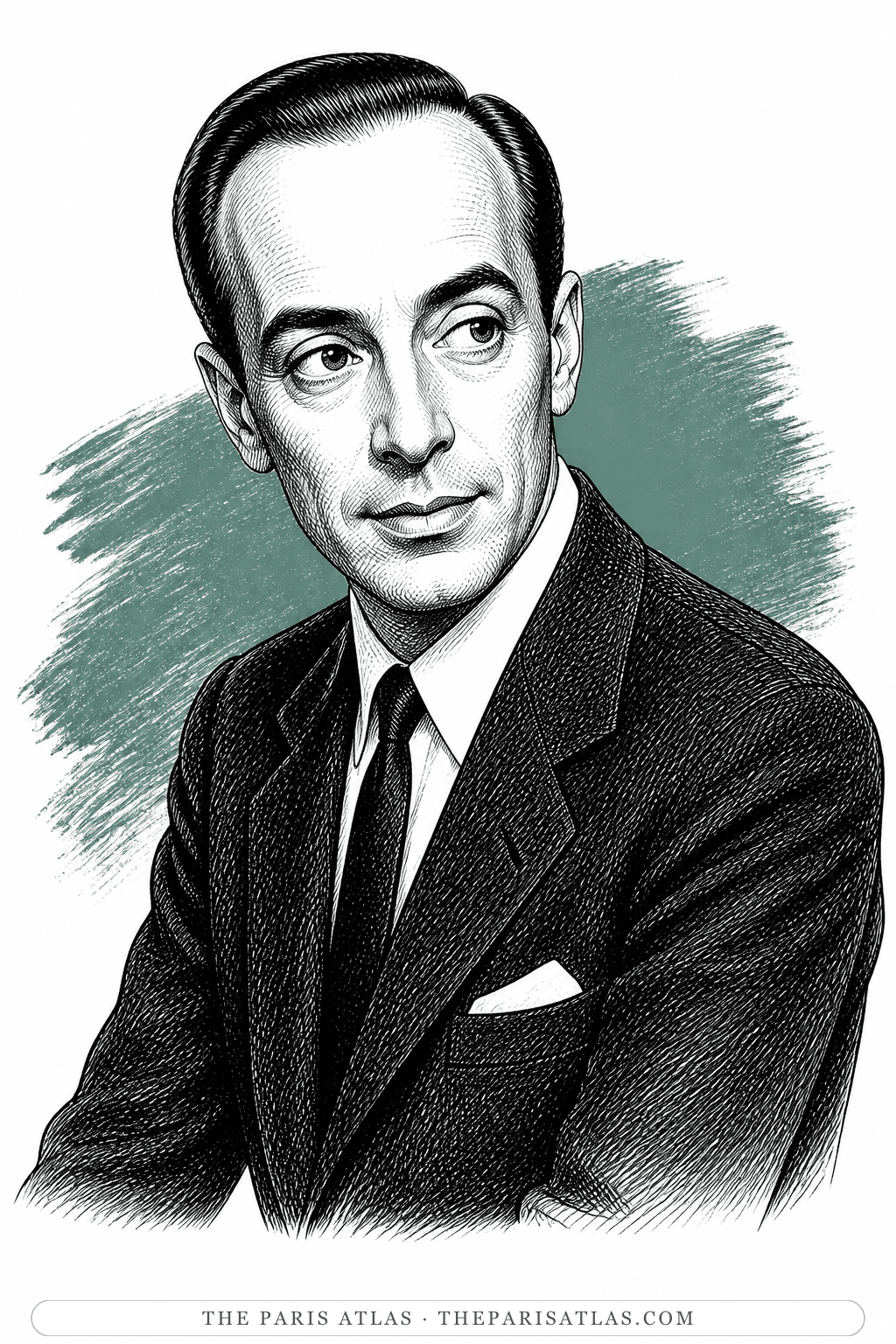
Maurice Chevalier

Paris-born singer, actor and music-hall performer whose canotier, tuxedo, smile and unmistakable accent turned a boy from working-class Ménilmontant into one of the twentieth century's most internationally recognizable images of France.

In images

Details

Lived
1888–1972
Born
12 September 1888
Birthplace
29 rue du Retrait, Ménilmontant, Paris, France
Birth name
Maurice Auguste Chevalier
Died
1 January 1972 · aged 83
Place of death
Hôpital Necker, Paris, France
Nationality
French
Profession
Singer, actor, dancer, and music-hall entertainer
Major works
Dans la vie faut pas s'en faire (1921), Valentine (1924), The Love Parade (1929), Gigi (1958)
Married
Yvonne Vallée · 1927–1932Nita Raya · 1937–1946
Roles
SingerActorDancer

About Maurice Chevalier

Maurice Chevalier spent nearly seventy years performing, long enough to move from neighborhood café-concerts before the First World War to Hollywood sound films, television and the international concert circuit of the 1960s. By the time he retired at eighty, the straw boater hat, tuxedo, bow tie and exaggerated Parisian accent had become recognizable almost anywhere in the world.[1]

The character looked effortless, but very little about it was accidental. Chevalier had spent years learning how to walk onto a stage, how long to pause before a joke, when to smile, how to make a modest singing voice entertaining and how to give an enormous theater the impression that he was speaking directly to one person. His greatest creation was ultimately not a particular song or movie character. It was Maurice Chevalier himself.

That public figure became intertwined with an international fantasy of Paris: cheerful, flirtatious, sophisticated but never intimidating, equally at home in a neighborhood café and an elegant hotel. Hollywood made extraordinary use of it in films directed by Ernst Lubitsch, Billy Wilder and Vincente Minnelli. In France, songs such as Valentine, Prosper, Ma pomme and La Marche de Ménilmontant connected him to the popular Paris from which he had actually come. Musée SACEM describes a career running from 1900 to 1968 and credits Chevalier with forty-three films as well as decades of music-hall performances around the world.

A childhood in Ménilmontant

Maurice Auguste Chevalier was born on 12 September 1888 at 29 rue du Retrait, in Ménilmontant, then a strongly working-class part of Paris's 20th arrondissement. His father, Victor Chevalier, was a house painter; his mother, Joséphine, worked in passementerie and was affectionately known in the family as La Louque. His father's alcoholism and eventual abandonment of the household left Joséphine struggling to support her children.[2]

There was little about this childhood that resembled the luxurious Paris Chevalier would later represent on American screens. Money was scarce, and he left school at about ten to work. He tried several jobs, including metal engraving and other apprenticeships, but was already determined to perform. At first he imagined becoming an acrobat; a serious fall ended that ambition, and his mother insisted that he find something safer.

Singing did not immediately reveal some hidden magnificent voice. Chevalier's earliest attempts could be rough and were sometimes mocked. What he discovered instead was that he could make an audience laugh. By around twelve, he was appearing in local café-concerts under names including Le Petit Chevalier, mixing songs with imitations, comic gestures and the streetwise manner of the Paris neighborhoods he knew. That combination became the foundation of his career.

Learning the Paris music hall

Chevalier gradually worked his way from small neighborhood rooms toward larger Paris stages. By 1907, he was high enough on the bill at the Eldorado to attract serious attention. During these early years he was involved with the singer Fréhel, already an important performer, but the relationship that transformed both his professional technique and his public life came shortly afterward.

In 1910, Chevalier joined a revue at the Folies Bergère where Mistinguett was the star. Thirteen years older, famous and far more experienced, she became his lover and stage partner. More importantly for his development, she taught him how a major music-hall performer worked, drilling him in movement, dancing, clothing, rehearsal and the relationship between a performer and an audience.[3]

Chevalier learned that charisma could be constructed through tiny decisions. A performer needed a recognizable silhouette. Clothing mattered, timing mattered, and the way he entered the stage mattered. The lessons stayed with him long after their relationship ended.

War and captivity

The First World War interrupted everything. Chevalier was mobilized in 1914, wounded early in the fighting and captured when the hospital in which he was being treated fell into German hands. He was sent to the prisoner-of-war camp at Altengrabow, near Magdeburg, and remained a prisoner until 1917.[2]

Captivity had an unexpected effect on his later career. Chevalier encountered British prisoners and improved his English, a skill that eventually helped him become one of the first French entertainers to build a sustained Anglo-American career. His release has often been credited entirely to Mistinguett, but the surviving story is more complicated: a prisoner exchange organized through the Red Cross secured his return, while she appears to have used her connection with King Alfonso XIII of Spain to help the process.

On 15 March 1917, Chevalier returned to the Casino de Paris with Mistinguett. The young café-concert singer who had gone to war came back with a sharper sense of what kind of performer he wanted to become.[4]

Separating from Mistinguett

After the Armistice, Chevalier and Mistinguett remained enormously popular, but their ambitions were beginning to diverge. Mistinguett was a queen of the revue, with huge productions, costumes, dancers and elaborate theatrical numbers. Chevalier increasingly wanted to stand alone in front of an audience and control the entire evening himself. Their professional disagreement contributed to the end of both their act and their romantic relationship.

The separation was essential to Chevalier's career. He always acknowledged Mistinguett's importance, but he needed to stop being known as her younger partner. In 1920, he accepted an engagement in London at the Palace Theatre with American performer Elsie Janis in Hello America. There the familiar image came together: he performed in a tuxedo and began using the straw boater, or canotier, that became inseparable from him.[3]

Dédé and the Paris of the 1920s

Back in Paris, Chevalier moved into operetta. On 10 November 1921, he opened at the Bouffes-Parisiens in Henri Christiné and Albert Willemetz's *Dédé. One of its songs, Dans la vie faut pas s'en faire*—roughly, “In life, don't worry too much”—became a defining number because it fit perfectly with the carefree persona he was developing.

He followed Dédé with another successful operetta, Là-haut, but years of relentless work eventually caught up with him. After a period of serious exhaustion and depression, he returned to the stage. In 1924, he helped inaugurate the Théâtre de l'Empire near the Arc de Triomphe and then introduced *Valentine* at the Casino de Paris. The song became one of the most durable hits of his career.

By now, the canotier, tuxedo, bow tie and smile were not a costume for one particular production but a visual signature. His Parisian accent worked the same way. Instead of trying to erase his origins as he became more sophisticated, Chevalier turned them into a commercial advantage.

Hollywood discovers his voice

Silent films had never been ideal for Chevalier because his appeal depended too heavily on rhythm, accent, singing and verbal timing. The arrival of sound cinema changed everything. Paramount signed him in 1928 and brought him to the United States. The studio understood that his French accent was an asset rather than an obstacle; Universal's biography notes that his contract even required him to retain it.

His first major American sound film, *Innocents of Paris (1929), included Louise and introduced the Chevalier persona to American audiences. Then Ernst Lubitsch cast him opposite Jeanette MacDonald in The Love Parade*. The 1929 film was Lubitsch's first full talking picture and one of the early movie musicals to integrate songs directly into its story. Chevalier's mixture of spoken comedy, songs, innuendo and continental charm fit Lubitsch's style almost perfectly.

A Frenchman at the birth of the Hollywood musical

Chevalier's timing could hardly have been better. Hollywood suddenly needed performers who could speak, sing and act naturally in front of microphones, and years of music-hall training had given him exactly those skills. He worked repeatedly with Lubitsch in *The Smiling Lieutenant (1931), One Hour with You (1932) and The Merry Widow* (1934), elegant and sexually playful films made before the Production Code was enforced strictly.

At the third Academy Awards, Chevalier received a Best Actor nomination covering his performances in both *The Big Pond and The Love Parade*. The achievement was remarkable for another reason: he was not trying to pass as American. Everything about him advertised France. He consciously played with American expectations of how a charming Frenchman should behave, performing not only a personality but a country.

Returning to Paris

By the middle of the 1930s, Chevalier's first sustained Hollywood period was winding down. He returned increasingly to France, where his music-hall career remained enormous. New songs reinforced his public image: *Prosper appeared in 1935, Ma pomme in 1936 and Ça fait d'excellents Français* in 1939. He headlined major revues at the Casino de Paris and remained one of the country's most commercially important entertainers.

The songs presented Chevalier as a character who knew how to enjoy life without taking himself too seriously. Behind that deceptively simple image was a performer known for intense preparation and almost obsessive attention to timing. Even after Hollywood had turned him into an international boulevardier, he kept returning to the language and identity of Ménilmontant.

The Occupation and a damaged reputation

The Second World War created the most difficult and controversial period of Chevalier's life. After the German invasion in 1940, he remained in France with his Jewish companion Nita Raya and members of her family. He initially withdrew to the south but later returned temporarily to occupied Paris for engagements at the Casino de Paris. He also participated for a limited period in broadcasts associated with Radio-Paris. Those decisions later became central to accusations that he had collaborated with the Germans.

The most damaging episode came in November 1941. Chevalier refused a commercial German tour but agreed to sing for French prisoners at Altengrabow, the same camp where he had been held during the First World War. He took no fee and asked in return for the release of ten prisoners. Reports then circulated that he had been entertaining Germans throughout the country, and propaganda distorted his public statements.

Chevalier stopped performing publicly in 1943 and spent part of the later war in hiding; accounts also document his efforts to protect Raya and members of her family. At the Liberation he was investigated and faced serious hostility. It would be misleading either to pretend that he had never worked in occupied Paris or to describe him simply as a Nazi collaborator. French authorities ultimately cleared him of collaboration in 1945, though the accusations followed him internationally for years.

Starting again after the war

Chevalier returned to the Paris stage after the Liberation and recorded *Fleur de Paris, a song associated with the return of the French tricolor. One of his strongest postwar film roles came in René Clair's Le Silence est d'or*** (1947), where he played an aging filmmaker in the early years of cinema and moved away from the endlessly youthful seducer he had portrayed before the war.

He also rebuilt his international concert career. A new political complication emerged after he signed the Stockholm Appeal, which called for a ban on nuclear weapons. Because the campaign was strongly associated with Communist organizations, the United States temporarily treated him as politically suspect and denied him entry. The situation eventually eased, and by the second half of the 1950s Hollywood had found a new version of the performer, now approaching seventy.

Love in the Afternoon and Gigi

Billy Wilder cast Chevalier opposite Audrey Hepburn and Gary Cooper in *Love in the Afternoon* (1957). As Hepburn's father, a Paris private detective specializing in adultery, Chevalier no longer needed to be the romantic center of the story; instead, his long familiarity with romantic intrigue became part of the joke.

A year later came *Gigi. Directed by Vincente Minnelli and set in Belle Époque Paris, the film used Chevalier almost as a living shorthand for Frenchness. He opened the film, sang several numbers and played Honoré Lachaille opposite Leslie Caron, Louis Jourdan and Hermione Gingold. Gigi won nine Academy Awards*, including Best Picture.

That awards season, Chevalier received an Honorary Academy Award for more than half a century of contributions to entertainment. The honor was especially appropriate: sound cinema had transformed his career nearly thirty years earlier, and he had survived long enough to appear in one of the Hollywood musical's most celebrated late studio-era productions.

A national institution

By the late 1950s, Chevalier had become something more than a popular entertainer. In 1956, the Paris Alhambra music hall was renamed the Alhambra-Maurice Chevalier. He inaugurated the new name with a recital accompanied by an orchestra led by the young Michel Legrand.

He continued making films, including *Fanny (1961), Disney's In Search of the Castaways (1962) and Monkeys, Go Home! (1967). His relationship with Walt Disney became particularly warm, and his final contribution to a feature film was singing the title song of The Aristocats* in 1970. By then, the boy from the café-concert had survived music hall, operetta, phonograph records, silent film, talking pictures, radio, television and postwar Hollywood.

The farewell tour

Chevalier decided to retire while he could still control the terms. During 1967 and 1968, he undertook a long farewell tour across Europe, the Americas and Asia. In New York he received a Special Tony Award in 1968, one of several honors marking the end of his career.

Then he came home. From 1 to 20 October 1968, the eighty-year-old Chevalier gave his final series of performances at the Théâtre des Champs-Élysées in Paris. Recordings of his final concert preserve songs, sketches, impressions and even some of the physical stage work that had characterized his act for decades.

The location was fitting. A career that began in small Paris café-concerts around 1900 ended less than five kilometers away on one of the city's grandest stages sixty-eight years later.

Final years

Retirement proved harder for Chevalier than he had expected. He had organized almost his entire adult life around performing, travel and applause; without them, he became increasingly isolated at his home in Marnes-la-Coquette, west of Paris. In March 1971, Chevalier attempted suicide and survived after hospitalization. His health remained weakened, and in December he was hospitalized again after serious kidney problems before being transferred to Hôpital Necker in Paris.

Maurice Chevalier died there on 1 January 1972, aged eighty-three. Le Monde reported that he died at Necker following cardiac arrest. His funeral was held at Marnes-la-Coquette, where he was buried near his mother, the woman he had always called La Louque.

Maurice Chevalier and Paris

Chevalier's relationship with Paris was unusually complete because he represented several different versions of the city during one lifetime. He began in Ménilmontant, among working-class streets, neighborhood cafés and tradesmen, far from the glamorous Paris that later appeared in his American films. He learned the profession in café-concerts, at the Eldorado and Folies Bergère; Mistinguett taught him how to become a music-hall star, the Casino de Paris helped turn him into one, and the Bouffes-Parisiens gave him Dédé.

American cinema transformed that Parisian into a fantasy of champagne, elegant apartments, romantic misunderstandings and sophisticated lovers. Yet Chevalier never completely abandoned the neighborhood boy beneath the image. Even late in life, *La Marche de Ménilmontant* remained one of the songs most closely associated with him; INA's surviving 1956 performance shows the international star leading an audience through an affectionate hymn to the district where he began.

Paris was therefore not merely where Maurice Chevalier was born and died. It was the material from which he constructed his stage character.

Why Maurice Chevalier mattered

Chevalier's enormous fame can make him seem simpler than he was. He did not possess the greatest voice, nor was he the greatest dancer, comic actor or dramatic actor of his generation. His unusual talent was the ability to combine all of those skills into a complete performance style. He understood something fundamental about modern celebrity very early: audiences remember a recognizable character. The canotier, tuxedo, grin, shrug, accent and songs worked together until “Maurice Chevalier” became almost a logo.

That image could become a stereotype, reducing Paris to charm, romance and flirtation, and Chevalier often played with the cliché deliberately. But his career also contains a much larger history: the café-concert era, imprisonment during the First World War, the Années folles, the birth of Hollywood sound cinema, the Occupation controversy, postwar concert culture and the late studio musical.

When Chevalier made his first appearances around 1900, cinema itself was still a novelty. When he gave his last Paris concert in 1968, France had just lived through the upheavals of May '68. The boy from Ménilmontant had spent almost the entire intervening history onstage.

Life events

  1. 1888

    Born Maurice Auguste Chevalier on 12 September at 29 rue du Retrait in Ménilmontant, Paris.

    — Maurice Chevalier; Chevalier, Maurice (1888–1972)

  2. Circa 1898–1900

    Leaves school around ten, works at several trades and attempts to become an acrobat before an accident turns him toward comic singing and café-concert performance.

    — Maurice Chevalier; Maurice Chevalier

  3. Circa 1900–1901

    Begins performing in Paris café-concerts, developing a mixture of song, mimicry and comedy.

    — Maurice Chevalier

  4. 1907

    Reaches the top of the bill at the Eldorado and becomes involved with singer Fréhel.

    — Maurice Chevalier

  5. 1910

    Joins the Folies Bergère and begins his professional and romantic partnership with Mistinguett, who trains him in movement, costume and stagecraft.

    Chevalier with Mistinguett around 1910; she became his stage partner, lover, and early career-making collaborator. (Unidentified photographer)

    — Maurice Chevalier; Mistinguett et Maurice Chevalier

  6. 1914

    Is mobilized, wounded and captured by German forces, then imprisoned at Altengrabow.

    — Maurice Chevalier

  7. 1917

    Is released through a prisoner exchange and returns to Paris, appearing with Mistinguett at the Casino de Paris on 15 March.

    — Maurice Chevalier

  8. 1919–1920

    Separates professionally and romantically from Mistinguett as he pursues an independent solo career.

    — Maurice Chevalier

  9. 1920

    Stars with Elsie Janis in Hello America at London's Palace Theatre; the tuxedo and straw canotier become recognizable parts of his persona.

    Chevalier around 1920 with the tuxedo, boater, and smile that became his stage signature. (Walery, Paris)

    — Maurice Chevalier

  10. 1921

    Opens in *Dédé at the Bouffes-Parisiens on 10 November and introduces Dans la vie faut pas s'en faire*.

    — Maurice Chevalier

  11. 1923–1924

    After exhaustion and depression, returns successfully to the Paris music hall.

    — Maurice Chevalier

  12. 1924

    Helps inaugurate the Théâtre de l'Empire and introduces *Valentine* at the Casino de Paris.

    — Maurice Chevalier

  13. 1927

    Marries singer and actress Yvonne Vallée, his stage partner.

    — Maurice Chevalier

  14. 1928–1929

    Signs with Paramount and moves into American sound cinema; *Innocents of Paris* introduces his French musical persona to American audiences.

    — Maurice Chevalier — biography

  15. 1929

    Stars opposite Jeanette MacDonald in Ernst Lubitsch's *The Love Parade*, one of the foundational Hollywood sound musicals.

    — The Love Parade (1929)

  16. 1930

    Receives an Academy Award nomination honoring his performances in both *The Big Pond and The Love Parade*.

    — The 3rd Academy Awards — 1931; Maurice Chevalier — Academy Awards Search

  17. 1931–1934

    Continues his collaboration with Ernst Lubitsch in The Smiling Lieutenant, One Hour with You and The Merry Widow.

    — Lubitsch Musicals: Continental Melody; The Smiling Lieutenant (1931)

  18. Mid-1930s

    Returns increasingly to France and creates major songs including *Prosper (1935) and Ma pomme* (1936).

    — Maurice Chevalier; Maurice Chevalier — biography

  19. 1939

    Records *Ça fait d'excellents Français* as Europe moves toward another war.

    — Maurice Chevalier — biography

  20. 1940–1942

    Lives largely in southern France with Nita Raya, while periodically returning to occupied Paris for performances and working briefly in occupied broadcasting.

    — Maurice Chevalier; Maurice Chevalier — biography

  21. 1941

    Travels to Altengrabow to sing for French prisoners, asking for the release of ten prisoners instead of payment; reports of the journey fuel collaboration accusations.

    — Maurice Chevalier

  22. 1943–1944

    Withdraws from regular performance and spends part of the later Occupation in hiding.

    — Maurice Chevalier; Maurice Chevalier — biography

  23. 1945

    Is cleared of collaboration by the French postwar investigation and resumes his career.

    — 1956: Maurice Chevalier interprète La marche de Ménilmontant; Maurice Chevalier — biography

  24. 1947

    Stars in *René Clair's Le Silence est d'or*** and resumes major international stage appearances.

    — Maurice Chevalier; Maurice Chevalier — biography

  25. 1951

    Is temporarily denied entry to the United States after signing the Stockholm Appeal calling for the prohibition of nuclear weapons.

    — Maurice Chevalier — biography

  26. 1956

    The Paris Alhambra is renamed the Alhambra-Maurice Chevalier; he inaugurates it with an orchestra led by Michel Legrand.

    — Maurice Chevalier

  27. 1957

    Appears with Audrey Hepburn and Gary Cooper in Billy Wilder's *Love in the Afternoon*, beginning a late-career Hollywood revival.

    — 1956: Maurice Chevalier interprète La marche de Ménilmontant

  28. 1958–1959

    Appears in Vincente Minnelli's *Gigi and receives an Honorary Oscar for more than half a century of contributions to entertainment*.

    — The 31st Academy Awards, 1959; Honorary Award

  29. 1962–1967

    Continues in international films including Disney's In Search of the Castaways and Monkeys, Go Home!.

    — Maurice Chevalier — Disney biography

  30. 1967–1968

    Undertakes an international farewell tour across Europe, Asia and the Americas.

    — Maurice Chevalier

  31. 1968

    Receives a Special Tony Award in New York.

    — 1968 Special Tony Award; Maurice Chevalier

  32. 1–20 October 1968

    Gives his final Paris recitals at the Théâtre des Champs-Élysées, with his last stage performance on 20 October.

    Chevalier in the Netherlands in February 1968, during the final year of his farewell tour. (Eric Koch / Anefo, Nationaal Archief)

    — Maurice Chevalier — Dernier Concert Inédit, octobre 1968; 1956: Maurice Chevalier interprète La marche de Ménilmontant

  33. 1970

    Records the title song for Disney's *The Aristocats*, his final contribution to a feature film.

    — Maurice Chevalier — Disney biography

  34. 1971

    Attempts suicide after struggling with retirement and declining health; later in the year he is hospitalized with serious kidney problems.

    — Maurice Chevalier — Final Unreleased Concert, October 1968

  35. 1972

    Dies at Hôpital Necker in Paris on 1 January, aged eighty-three, and is buried in Marnes-la-Coquette near his mother.

    — Le Monde archive — 4 January 1972; Maurice Chevalier

People Maurice Chevalier Knew

Relationships with other people, with sources for each connection.

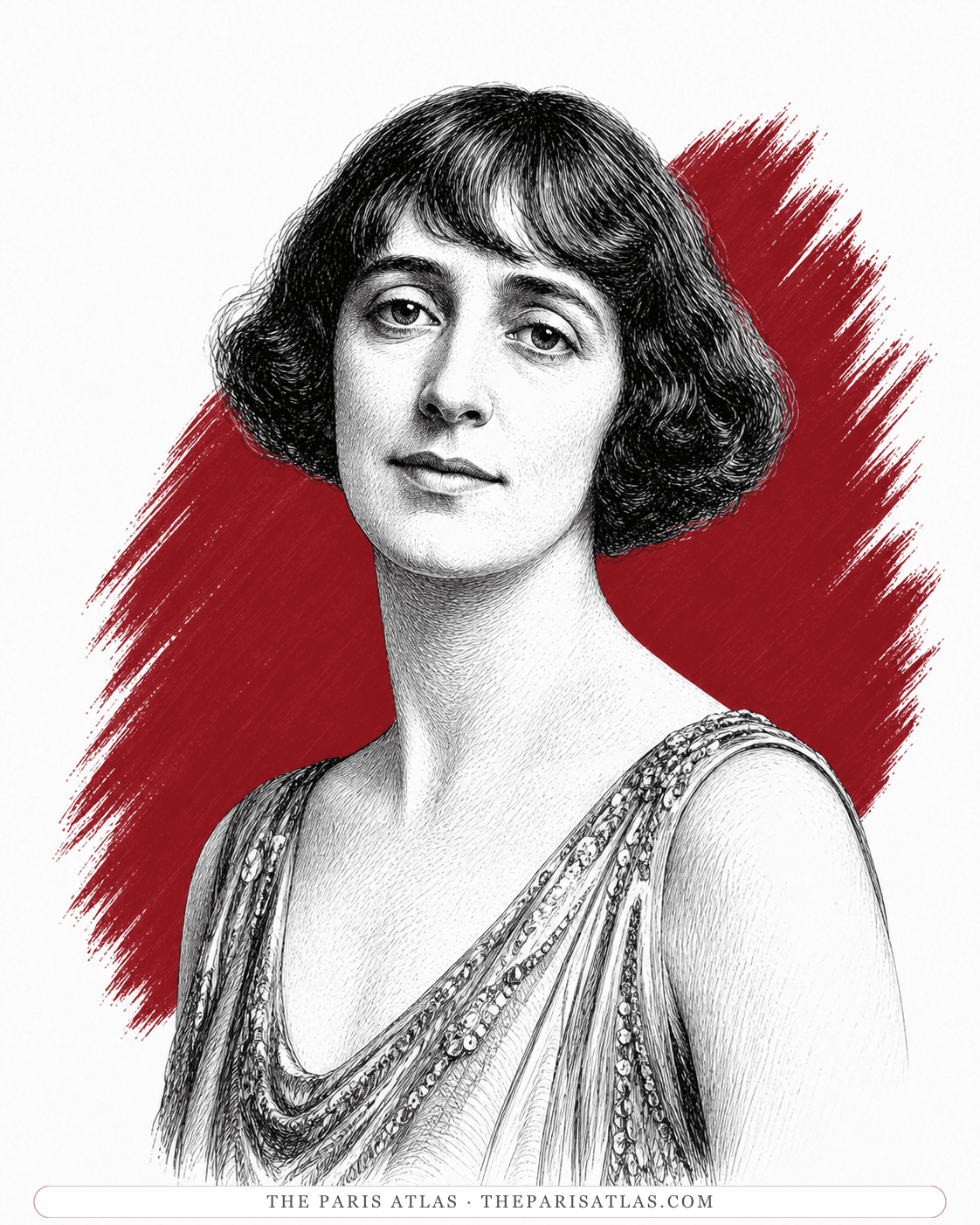
Illustrated portrait of Mistinguett

Mistinguett

  • Singer
  • Dancer
  • Actor

Collaborated with · 1910–1920

Mistinguett and Chevalier were romantic and stage partners. She trained him in movement, costume, rehearsal, dancing, and audience rapport; during his First World War captivity, her approaches through King Alfonso XIII appear to have helped the prisoner-exchange process that brought him home.
— Maurice Chevalier; Mistinguett et Maurice Chevalier

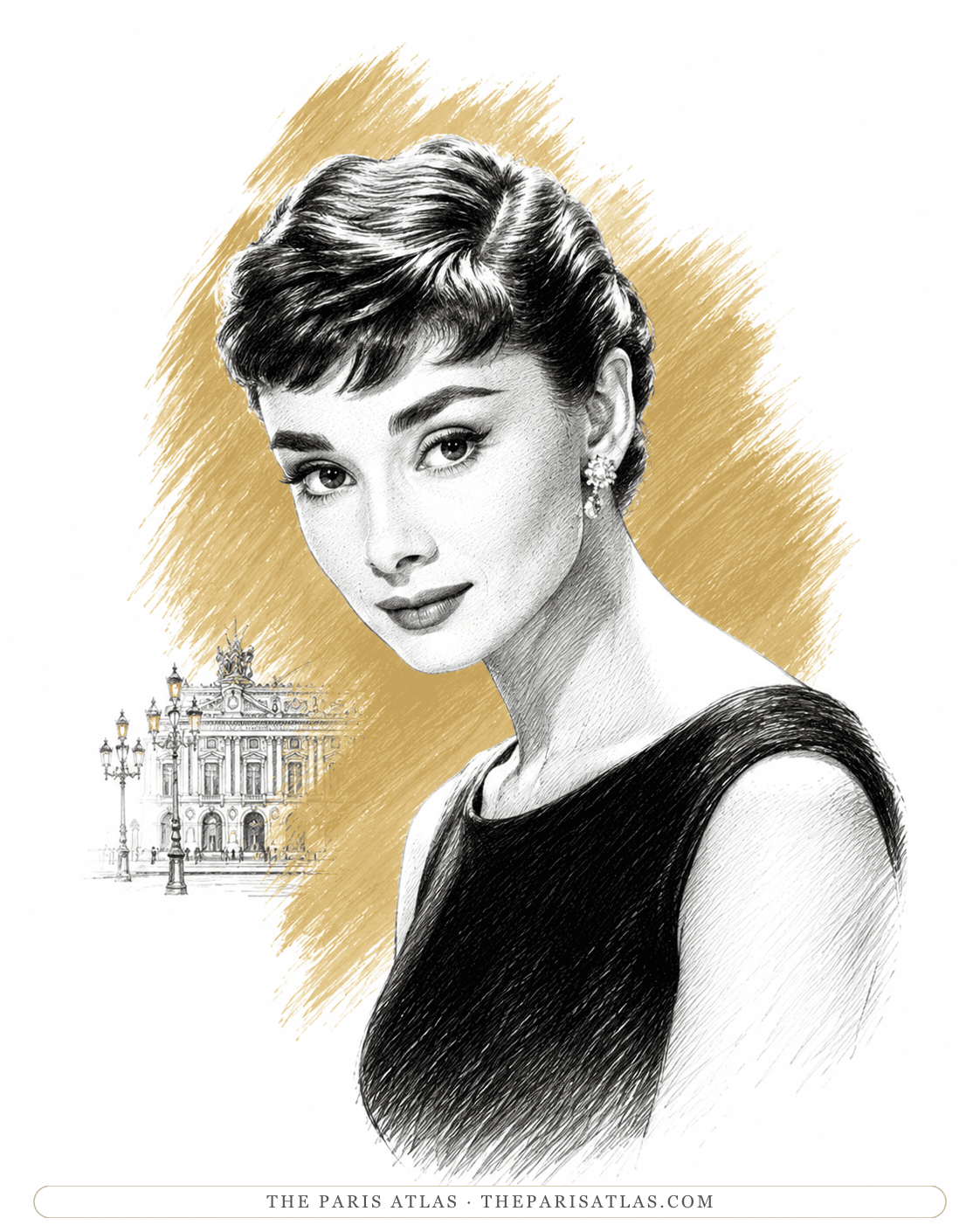
Illustrated portrait of Audrey Hepburn

Audrey Hepburn

  • Actor

Collaborated with · 1957

Chevalier played the private-detective father of Hepburn's character Ariane in Billy Wilder's Paris-set Love in the Afternoon.

— 1956: Maurice Chevalier interprète La marche de Ménilmontant

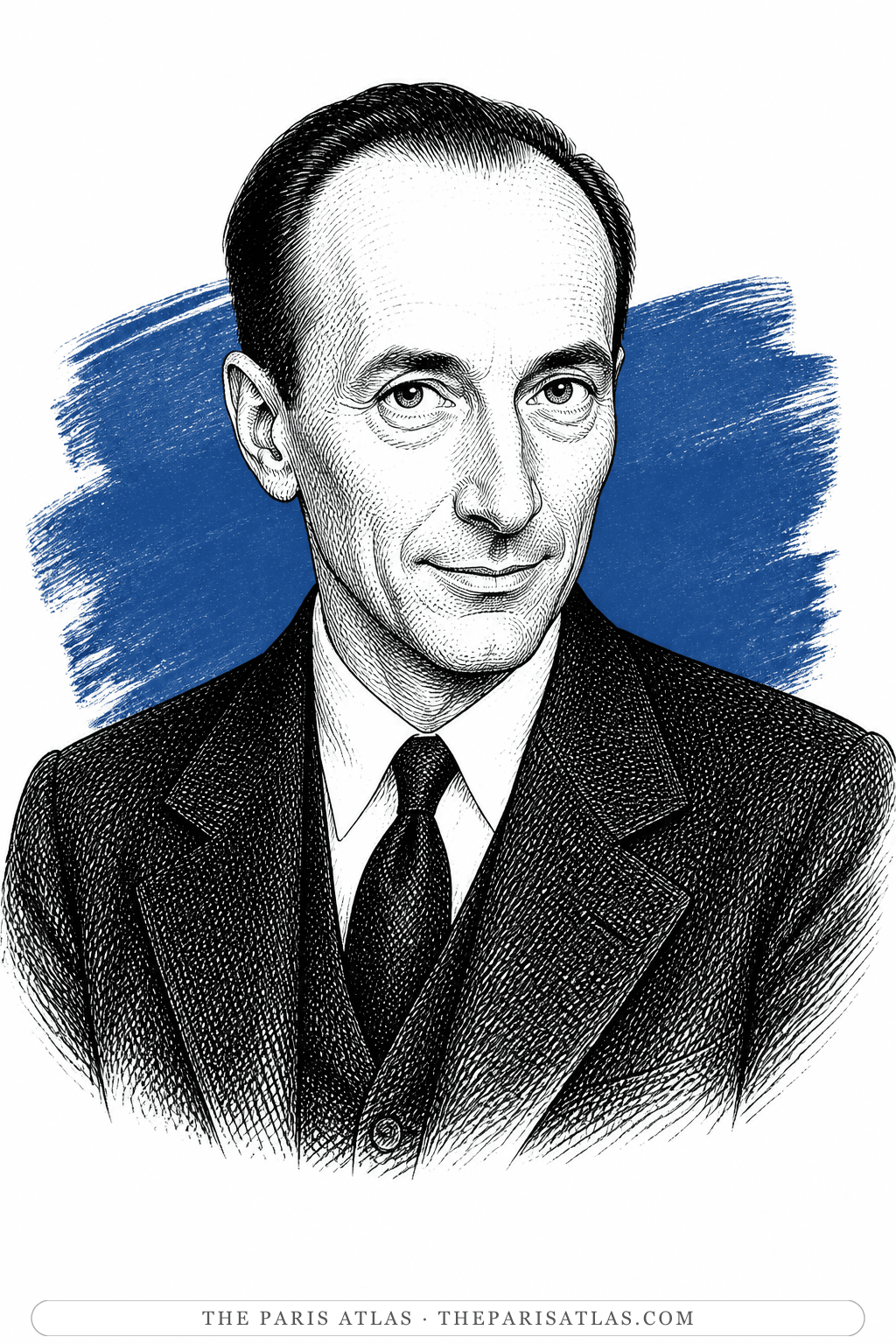
Illustrated portrait of René Clair

René Clair

  • Filmmaker

Collaborated with · 1947

Clair directed Chevalier as the aging early-cinema filmmaker Émile Clément in Le Silence est d'or, one of Chevalier's strongest postwar roles.

— Maurice Chevalier; Chevalier (Maurice)

Illustrated portrait of Vincente Minnelli

Vincente Minnelli

  • Filmmaker

Collaborated with · 1958

Minnelli directed Chevalier as Honoré Lachaille in Gigi, the Paris-set musical that won nine Academy Awards.

— The 31st Academy Awards, 1959

Maurice Chevalier’s Places

The cataloged places connected to Maurice Chevalier — through the books, and through the documented record.

Places you can enter today appear first, followed by addresses to see from outside and sites that have vanished.

Connections and Sources

Maurice Chevalier’s connections to people, places, and works, with the sources behind each one.

Collaborated with · 1910–1920

Mistinguett

Mistinguett and Chevalier were romantic and stage partners. She trained him in movement, costume, rehearsal, dancing, and audience rapport; during his First World War captivity, her approaches through King Alfonso XIII appear to have helped the prisoner-exchange process that brought him home.
— Maurice Chevalier; Mistinguett et Maurice Chevalier

Collaborated with · 1957

Audrey Hepburn

Chevalier played the private-detective father of Hepburn's character Ariane in Billy Wilder's Paris-set Love in the Afternoon.

— 1956: Maurice Chevalier interprète La marche de Ménilmontant

Collaborated with · 1947

René Clair

Clair directed Chevalier as the aging early-cinema filmmaker Émile Clément in Le Silence est d'or, one of Chevalier's strongest postwar roles.

— Maurice Chevalier; Chevalier (Maurice)

Collaborated with · 1958

Vincente Minnelli

Minnelli directed Chevalier as Honoré Lachaille in Gigi, the Paris-set musical that won nine Academy Awards.

— The 31st Academy Awards, 1959

Performed at · 1968

Théâtre des Champs-Élysées

Chevalier gave his final series of Paris recitals here from 1 to 20 October 1968; the last performance ended his sixty-eight-year stage career.

— Maurice Chevalier — Dernier Concert Inédit, octobre 1968; 1956: Maurice Chevalier interprète La marche de Ménilmontant

References

References

The sources below include biographies, scholarly essays, interviews, and primary materials that informed this page. They reflect both the historical record and ongoing critical conversations about Maurice Chevalier and their work.

  1. 1↑Maurice Chevalier

    Website
    Larousse
    Used for

    French reference biography used for the broad career chronology and postwar film work.

    View source
  2. 2abMaurice Chevalier

    Archive
    Musée SACEM
    Used for

    The principal biography for Chevalier's childhood, Mistinguett partnership, wartime captivity, Paris career, Hollywood years and farewell.

    View source
  3. 3abMistinguett et Maurice Chevalier

    Periodical
    France Musique
    Used for

    Broadcast history of Chevalier's personal and professional partnership with Mistinguett.

    View source
  4. 4↑1956: Maurice Chevalier interprète La marche de Ménilmontant

    Archive
    Institut national de l'audiovisuel
    Used for

    INA biography and surviving performance of *La Marche de Ménilmontant*, also supporting postwar clearance and the final-concert date.

    View source
  5. 5Maurice Chevalier — archival record

    Archive
    Musée SACEM
    Used for

    SACEM archival record for Chevalier's performing and songwriting career.

    View source
  6. 6Chevalier, Maurice (1888–1972)

    Official record
    Bibliothèque nationale de France
    Used for

    French national-library authority record confirming identity and life dates.

    View source
  7. 7Maurice Chevalier (1888–1972)

    Official record
    data.bnf.fr
    Used for

    BnF linked-data record for names, dates and bibliographic context.

    View source
  8. 8The Love Parade (1929)

    Official record
    The Criterion Collection
    Used for

    Film record for *The Love Parade* and its place in the early sound musical.

    View source
  9. 9Lubitsch Musicals: Continental Melody

    Website
    The Criterion Collection
    Used for

    Critical history of Chevalier's musical collaborations with Ernst Lubitsch.

    View source
  10. 10The Smiling Lieutenant (1931)

    Official record
    The Criterion Collection
    Used for

    Film record for Chevalier and Lubitsch's *The Smiling Lieutenant*.

    View source
  11. 11The 3rd Academy Awards — 1931

    Official record
    Academy of Motion Picture Arts and Sciences
    Used for

    Academy record for the ceremony recognizing Chevalier's performances in *The Big Pond* and *The Love Parade*.

    View source
  12. 12Maurice Chevalier — Academy Awards Search

    Official record
    Academy of Motion Picture Arts and Sciences
    Used for

    Academy database record clarifying the combined early acting nomination.

    View source
  1. 13The 31st Academy Awards, 1959

    Official record
    Academy of Motion Picture Arts and Sciences
    Used for

    Academy ceremony record for Chevalier's 1959 Honorary Award.

    View source
  2. 14Honorary Award

    Official record
    Academy of Motion Picture Arts and Sciences
    Used for

    Academy history and context for the Honorary Award.

    View source
  3. 15Maurice Chevalier — biography

    Website
    Universal Music France
    Used for

    Biographical account covering Chevalier's songs, Hollywood career, Occupation and postwar return.

    View source
  4. 16Maurice Chevalier

    Website
    Holocaust Music / World ORT
    Used for

    Focused account of Chevalier under the Occupation, including Altengrabow and the collaboration accusations.

    View source
  5. 171968 Special Tony Award

    Official record
    Tony Awards
    Used for

    Official record of Chevalier's 1968 Special Tony Award.

    View source
  6. 18Maurice Chevalier

    Official record
    Internet Broadway Database
    Used for

    Broadway performance and Special Tony Award record.

    View source
  7. 19Maurice Chevalier — Dernier Concert Inédit, octobre 1968

    Official record
    Frémeaux & Associés
    Used for

    Recording and historical notes for Chevalier's final concert on 20 October 1968.

    View source
  8. 20Maurice Chevalier — Final Unreleased Concert, October 1968

    Official record
    Frémeaux & Associés
    Used for

    English historical notes covering retirement and Chevalier's final years.

    View source
  9. 21Le Monde archive — 4 January 1972

    Periodical
    Le Monde
    Used for

    Contemporary newspaper archive reporting Chevalier's death at Hôpital Necker and funeral.

    View source
  10. 22Maurice Chevalier

    Website
    Encyclopedia.com
    Used for

    Supplementary biography for Chevalier's childhood work and failed acrobatics.

    View source
  11. 23Chevalier (Maurice)

    Website
    Mémoire d'encres
    Used for

    Supplementary French biography for *Le Silence est d'or* and the postwar career.

    View source
  12. 24Maurice Chevalier — Disney biography

    Website
    Chronique Disney
    Used for

    Biographical record for Chevalier's Disney films and *The Aristocats*.

    View source
i
Why these sources are here

These references anchor the page in the documented record and in the scholarly conversations around Maurice Chevalier. Every claim on this page traces back to one or more of the works listed here.

Explore more resources