The Paris AtlasCharting the artists, works, and places worth returning to.
  • Sculptor
  • Painter
  • Artists' model
· Swiss · 1913–1985

Meret Oppenheim

German-born Swiss artist who arrived in Paris in 1932 at eighteen and fell in with the Surrealists. In 1936 a lunch with Pablo Picasso and Dora Maar at the Café de Flore led directly to Object — a teacup, saucer and spoon covered in gazelle fur — which made her internationally famous at twenty-two and then followed her for the rest of her life, to her considerable irritation.

Details

Lived
1913–1985
Born
6 October 1913
Birthplace
Berlin, Germany
Died
15 November 1985 · aged 72
Place of death
Basel, Switzerland
Nationality
Swiss
Profession
Artist, sculptor, poet
Major works
Object (1936), the fur-covered cup, saucer and spoon in the Museum of Modern Art; Ma gouvernante (1936); the later sculpture, jewellery and poetry made after her return to work in the 1950s
Roles
SculptorPainterArtists' model

About Meret Oppenheim

Swiss artist of the Surrealist circle, maker of the fur-covered teacup

Meret Oppenheim was a Swiss-German artist who made one of the most famous objects of the twentieth century when she was twenty-two, and then spent the next fifty years working in its shadow. She was born in Berlin on 6 October 1913 and died in Basel on 15 November 1985.[1]

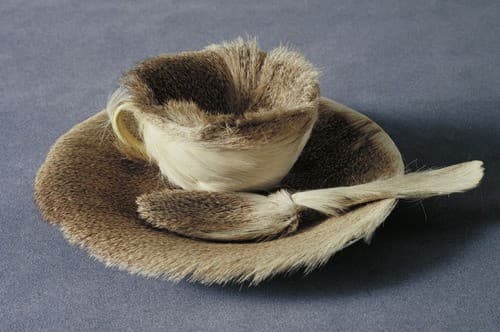
The object is a teacup, saucer and spoon covered in the fur of a Chinese gazelle. She made it in Paris in 1936. The Museum of Modern Art in New York showed it that winter and bought it from her, and it is generally described as the first work by a woman artist to enter the museum's collection.[2]

It came out of a conversation in a Paris café. Oppenheim was wearing a fur-covered brass bracelet of her own design; Pablo Picasso remarked that anything might be covered in fur, and she answered, pointing at her cup, that even this could be. She bought a cup and saucer at a department store that afternoon.[3]

Her later work — sculpture, painting, jewellery, poetry, furniture, a fountain in Bern — is much less known, which she resented, and it is now being reassessed.[4]

Berlin and Switzerland

Meret Elisabeth Oppenheim was born in Berlin on 6 October 1913. Her father was a German doctor, her mother Swiss; her paternal grandmother was Jewish. She was named after Meretlein, a wild child in Gottfried Keller's novel Der grüne Heinrich.[1]

The family moved between Germany and Switzerland, and when the Nazis came to power in 1933 her father was barred from practising. She grew up partly with her Swiss grandmother, the writer and illustrator Lisa Wenger, in a household at Carona full of women who worked and earned their own money.[5]

Her father was interested in the psychology of Carl Jung, and Oppenheim read Jung as a teenager. She began writing down her dreams at fourteen and kept doing it for the rest of her life. The dreams fed directly into the work, and a selection of them was published as a book the year after she died.[6]

Paris

In 1932, at eighteen, Oppenheim went to Paris with her friend the painter Irène Zurkinden to be an artist. She enrolled at the Académie de la Grande Chaumière and stopped attending almost immediately.[5]

She met Alberto Giacometti and Hans Arp in 1933, and they invited her to show with the Surrealists. She was nineteen, and she became the youngest member of the group.[1]

She modelled for Man Ray, and his photographs of her standing naked beside a printing press — the Erotique voilée series of 1933 — became famous. Being the group's beautiful young muse was a role she later described as damaging: it made her visible and made her work invisible.[5]

She earned her living from design. Elsa Schiaparelli manufactured a fur-covered bracelet she had drawn, and through the 1930s Oppenheim designed jewellery and accessories for the fashion houses.

Object

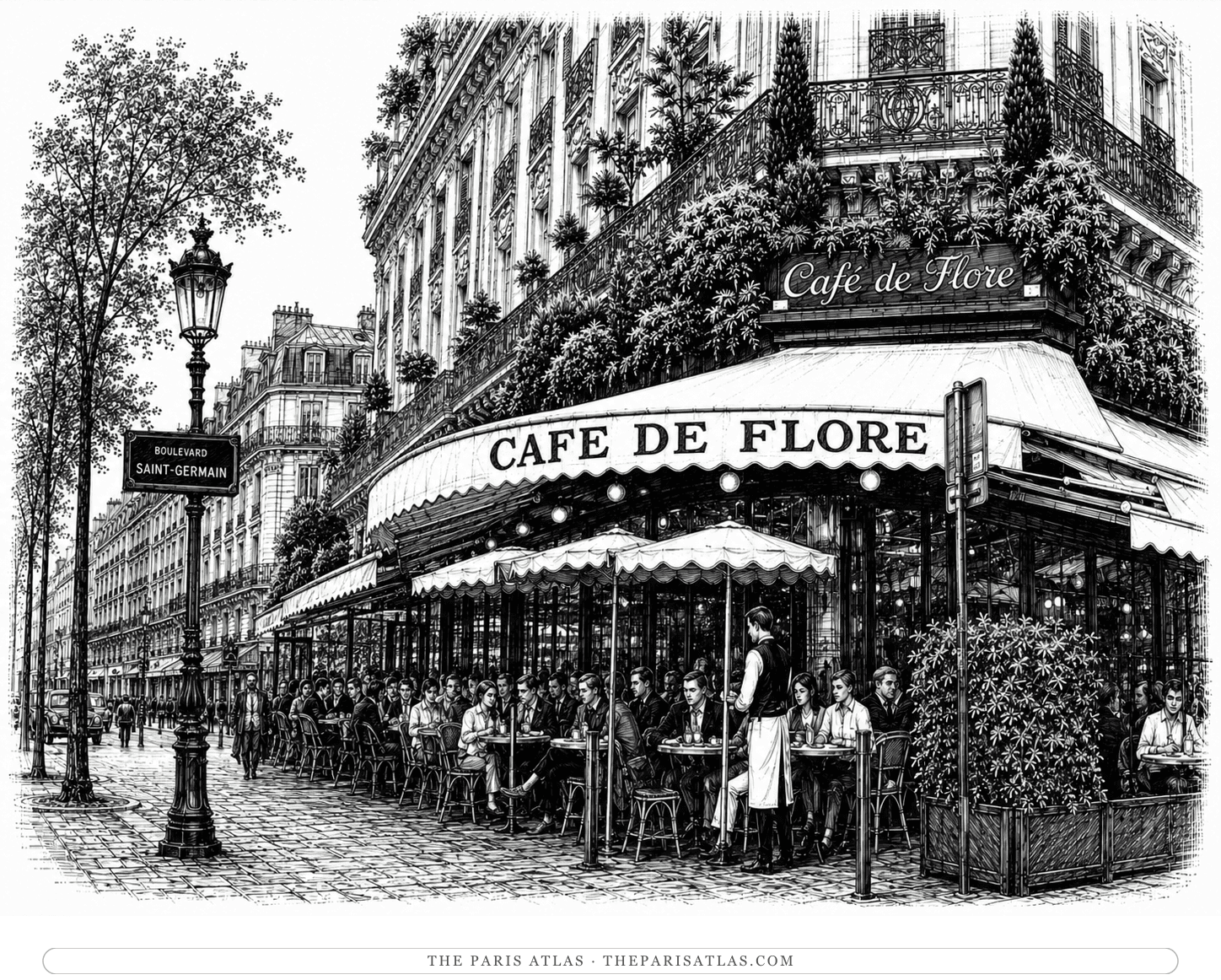
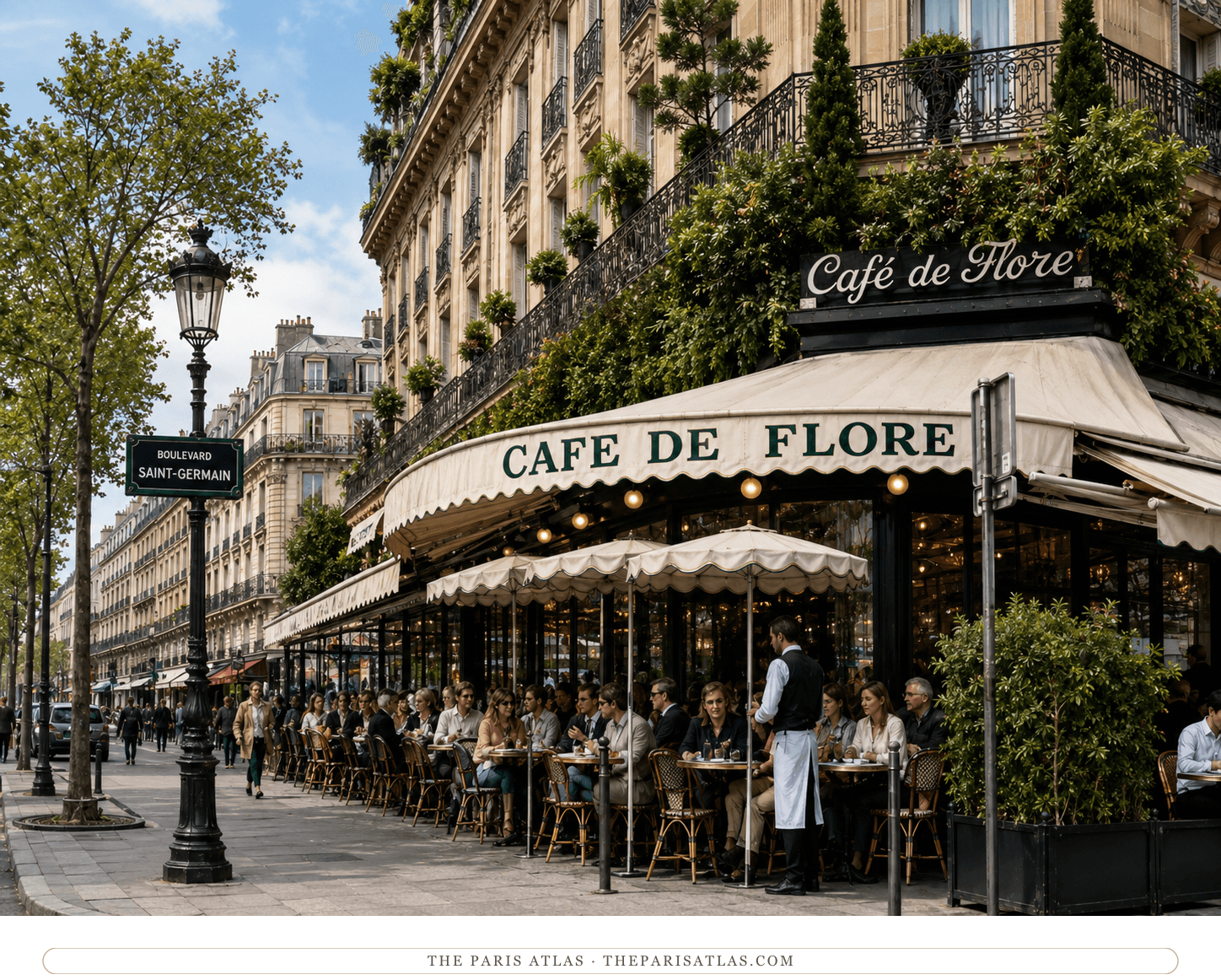
In 1936 Oppenheim was having coffee at the Café de Flore with Picasso and Dora Maar. She was wearing the bracelet she had designed for Schiaparelli: brass, covered in ocelot fur.

Picasso remarked that one could cover anything with fur. Oppenheim replied, indicating her cup, even this. The exchange was a joke, and she went to the Monoprix department store that afternoon, bought a cup, saucer and spoon, and covered them in the fur of a Chinese gazelle.

She called the work Object. André Breton titled it Le Déjeuner en fourrure — Luncheon in Fur — a play on Manet's Déjeuner sur l'herbe and Sacher-Masoch's Venus in Furs. It was first shown in Paris in May 1936, at a Surrealist exhibition of objects at the Galerie Charles Ratton, and then in New York that December in the Museum of Modern Art's exhibition Fantastic Art, Dada, Surrealism. Alfred Barr, the museum's director, bought it for fifty dollars; Oppenheim had asked a thousand francs.

The fur-covered cup works by a very simple mechanism: it makes the viewer imagine drinking from it. Everything else — the eroticism, the disgust, the argument about whether it is a joke or a threat — follows from that.

It was not the only object she made that year. Ma Gouvernante — My Nurse, also 1936, is a pair of white shoes turned soles up, trussed together with string like a roast, with paper frills on the heels, served on a silver platter. In 1939 she designed a table supported by gilded bird's legs and feet.

The long crisis

Object made Oppenheim famous at twenty-two, and the fame flattened her. She was the girl who made the fur cup. Her father could no longer send money after 1933, she had to earn a living from design work, and by 1937 she was in a depression that lasted, on and off, for nearly twenty years.

She went back to Switzerland, trained as a picture restorer in Basel, destroyed a good deal of her own work, and produced little that she was willing to show. She married the businessman Wolfgang La Roche in 1949, and from about 1954 was living and working between Bern and Paris.

She dated her own recovery to 1954, and said afterwards that what had paralysed her was the sense of carrying the whole weight of centuries of discrimination against women.

The later work

The work after 1954 is various and does not resemble a signature style, which is part of why it took so long to be understood. She made sculpture in wood, bronze and stone, painted, wrote poetry, and designed clothes and jewellery. She also went on building objects that behave like riddles: Squirrel, from 1969, is a glass beer mug with a foam head and a fur tail.

In 1959 she staged a Spring Banquet in Bern, a meal laid out on the body of a naked woman and eaten by her guests. André Breton asked to restage it at the Surrealist exhibition in Paris that December. She agreed, disliked the result, and said the Paris version had turned a private ritual into a spectacle.

In January 1975 she accepted the art prize of the City of Basel, and used the speech to say that freedom is not given, it must be taken — a line frequently quoted since. She showed at Documenta 7 in 1982.

Her largest public work is a fountain in the Waisenhausplatz in Bern, unveiled in 1983: a rough concrete column meant to be colonised by moss and plants and to change with the seasons. The city objected loudly to it for years.

Death and reassessment

Oppenheim died in Basel on 15 November 1985, aged seventy-two.

A large retrospective travelled from Bern to Houston and New York in 2021 and 2022. Since then the later work has been treated as the substance of her career rather than an appendix to the fur cup. She spent decades insisting that she was an artist with a long body of work rather than a Surrealist muse, and the exhibitions have finally been organised on those terms.

Why Meret Oppenheim matters

Object is one of a handful of works that define Surrealism for people who know nothing else about it. It also did something the movement's manifestos only described: it took an ordinary domestic thing and made it unbearable, using no technique at all.

The rest of her career is a case study in what fame does to an artist who peaks early and young and female. She was cast as a muse at nineteen, made a masterpiece at twenty-two, lost most of the next seventeen years to depression, and then worked for three more decades at things almost nobody looked at until she was dead.

Life events

  1. 1913

    Born Meret Elisabeth Oppenheim in Berlin on 6 October, to a German doctor and a Swiss mother, and named after a wild child in a Gottfried Keller novel.

  2. 1918

    The family moves between Germany and Switzerland after the First World War.

  3. 1927

    Begins recording her dreams at fourteen, a habit she keeps for life and which feeds directly into her work.

  4. 1928

    Reads Carl Jung as a teenager and stays interested in his ideas about dreams and symbols.

  5. 1930

    Spends time with her Swiss grandmother, the writer and illustrator Lisa Wenger, in a household full of women who worked.

  6. 1932

    Goes to Paris at eighteen to be an artist, enrolls at the Académie de la Grande Chaumière and stops attending almost at once.

  7. 1933

    Meets Alberto Giacometti and Hans Arp, who invite her to exhibit with the Surrealists. At nineteen she is the group's youngest member.

  8. 1933

    Models for Man Ray's Erotique voilée photographs, standing naked beside a printing press. The images make her famous as the group's muse.

  9. 1933

    The Nazis take power in Germany and her father's medical practice is closed. His financial support ends.

  10. 1935

    Designs jewellery and clothing accessories for the couturier Elsa Schiaparelli, among them a brass bracelet covered in ocelot fur.

  11. 1936

    Has coffee at the Café de Flore with Pablo Picasso and Dora Maar. Picasso remarks that anything could be covered in fur; Oppenheim, indicating her cup, says even this.

  12. 1936

    Buys a cup, saucer and spoon at the Monoprix that afternoon and covers them in the fur of a Chinese gazelle. She calls it Object; André Breton titles it Le Déjeuner en fourrure.

  13. 1936

    The Museum of Modern Art in New York buys Object for its exhibition Fantastic Art, Dada, Surrealism. It is the first work by a woman to enter the museum's collection.

  14. 1937

    Returns to Switzerland. A depression begins that lasts, on and off, for nearly twenty years.

  15. 1938

    Trains as a picture restorer in Basel and destroys a good deal of her own work.

  16. 1945

    Continues to produce little she is willing to exhibit.

  17. 1949

    Marries the businessman Wolfgang La Roche.

  18. 1954

    Begins working seriously again, living between Bern and Paris.

  19. 1956

    Designs costumes and masks for a production of Picasso's play How to Catch Wishes by the Tail.

  20. 1959

    Stages the Spring Banquet, a meal served on the body of a naked woman, first privately in Bern and then at the Paris Surrealist exhibition, where she disliked how Breton presented it.

  21. 1967

    Has her first retrospective, at the Moderna Museet in Stockholm.

  22. 1967

    Her husband Wolfgang La Roche dies.

  23. 1971

    Continues making sculpture in wood, bronze and stone, alongside painting, poetry and jewellery.

  24. 1975

    Receives the art prize of the City of Basel, and uses her speech to say that freedom is not given, it must be taken.

  25. 1982

    Exhibits at documenta 7 in Kassel.

  26. 1983

    Her fountain in the Waisenhausplatz in Bern is unveiled, a rough concrete column meant to be colonised by moss and to change with the seasons. The city objects to it for years.

  27. 1984

    Continues working and exhibiting in Switzerland, Germany and France.

  28. 1985

    Dies in Basel on 15 November, aged seventy-two.

  29. 1996

    The Meret Oppenheim prize is established in Switzerland, awarded annually for art and architecture.

  30. 2021

    A large retrospective travels from Bern to Houston and New York, presenting the later work as the substance of her career rather than an appendix to the fur cup.

Selected works

Cataloged from the holding institutions' records. Reproductions appear only where the rights are verified.

Sculptures

A teacup, saucer and spoon entirely covered in mottled brown and grey gazelle fur, the fur following the curve of the cup and the rim of the saucer, set against a plain pale background.

Artwork reproduction

Sculpture · Surrealism

Object

1936 · Fur-covered cup, saucer and spoon

Meret Oppenheim made Object in Paris in 1936 by covering a bought cup, saucer and spoon in gazelle fur. The set is instantly recognizable as tableware and immediately impossible to imagine drinking from. It is at the Museum of Modern Art in New York, and André Breton gave it a second title, Le Déjeuner en fourrure.
Museum of Modern Art

Meret Oppenheim, Object, 1936. Museum of Modern Art. Image © the rights holder, shown under fair use.

Movements

The artistic and literary currents this life ran through.

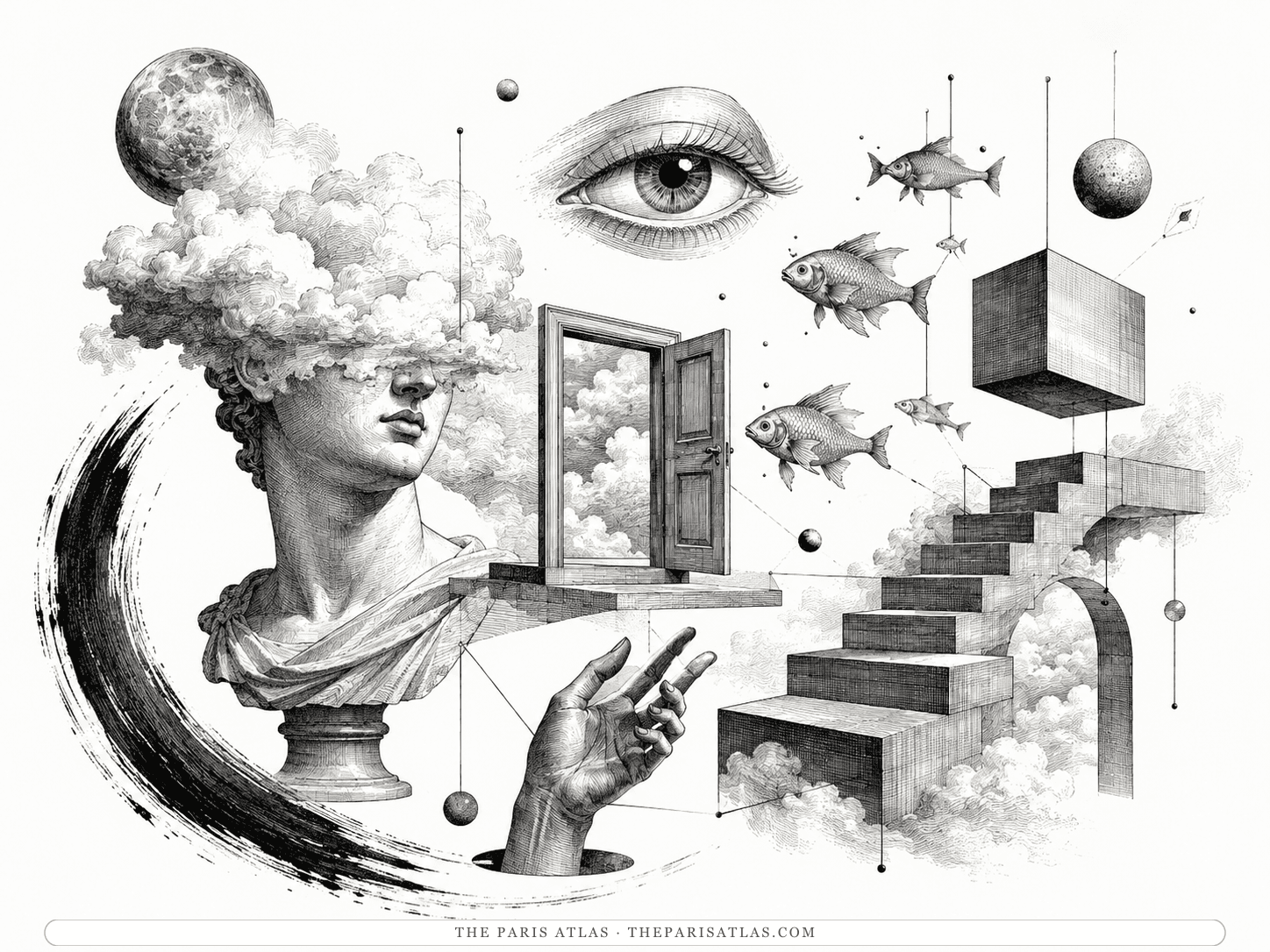
Pen-and-ink dream collage — a classical bust with clouds for eyes, a floating eye, a door opening onto sky, fish swimming through air, and an impossible staircase

Art & literary movement · 1924–1966

Surrealism

Oppenheim arrived in Paris in 1932 at eighteen and was absorbed into the Surrealist group around Andre Breton, who exhibited Object at the Charles Ratton gallery in 1936 under the title Le Dejeuner en fourrure.

— Meret Oppenheim, Object (Paris, 1936)

Meret Oppenheim’s Places

The cataloged places connected to Meret Oppenheim — through the books, and through the documented record.

Places you can enter today appear first, followed by addresses to see from outside and sites that have vanished.

Questions about Meret Oppenheim

Who was Meret Oppenheim?

A Swiss-German artist, born in Berlin in 1913 and died in Basel in 1985. At twenty-two she made Object, the fur-covered teacup that became one of the defining works of Surrealism. She went on working until her death, in sculpture, painting, poetry, jewellery and public art.

What is the fur teacup?

Object, made in 1936: a teacup, saucer and spoon covered in the fur of a Chinese gazelle. André Breton retitled it Le Déjeuner en fourrure. It works by making the viewer imagine putting it in their mouth, and everything else about it follows from that.

How did she come up with it?

At the Café de Flore in Paris in 1936, wearing a fur-covered brass bracelet she had designed for Elsa Schiaparelli. Picasso remarked that one could cover anything with fur, and Oppenheim, pointing at her cup, said even this. She bought a cup and saucer at the Monoprix that afternoon.

Was Object the first work by a woman at MoMA?

Yes. The Museum of Modern Art bought it in 1936 for its exhibition Fantastic Art, Dada, Surrealism, and it was the first work by a woman to enter the museum's collection.

What happened to her after 1936?

The fame flattened her. She was known as the girl who made the fur cup, and her father's money stopped when the Nazis closed his practice. From 1937 she went through a depression lasting nearly twenty years, during which she trained as a picture restorer and destroyed much of her own work. She began working seriously again in the mid-1950s.

Why is her later work less known?

Because it has no signature style: sculpture, painting, poetry, jewellery, furniture and public art, made across three decades. She was also cast as the Surrealists' beautiful young muse at nineteen, a role she said made her visible and her work invisible. Retrospectives since 2021 have started to treat the later work as the substance of her career.

Connections and Sources

Meret Oppenheim’s connections to people, places, and works, with the sources behind each one.

Associated with · 1932

Surrealism

Oppenheim arrived in Paris in 1932 at eighteen and was absorbed into the Surrealist group around Andre Breton, who exhibited Object at the Charles Ratton gallery in 1936 under the title Le Dejeuner en fourrure.

— Meret Oppenheim, Object (Paris, 1936)

Frequented · 1936

Café de Flore

In 1936 Oppenheim was at lunch with Pablo Picasso and Dora Maar at the Cafe de Flore, wearing a fur-covered bracelet of her own design. Picasso's remark that anything could be covered in fur led directly to Object, the fur-covered cup, saucer and spoon now at the Museum of Modern Art.

— Looking Beyond Surrealist Meret Oppenheim's Famous Furry Teacup; Why Meret Oppenheim's Furry Teacup 'Object' Still Provokes and Puzzles

References

References

The sources below include biographies, scholarly essays, interviews, and primary materials that informed this page. They reflect both the historical record and ongoing critical conversations about Meret Oppenheim and their work.

  1. 1abcMeret Oppenheim

    Website
    Encyclopaedia Britannica
    Used for

    Reference entry on her life, Object, and the later sculpture and design work.

    View source
  2. 2↑Meret Oppenheim, Object (Paris, 1936)

    Website
    The Museum of Modern Art
    Used for

    The museum's record of the work it bought in 1936, the first by a woman to enter its collection.

    View source
  3. 2↑Meret Oppenheim, Object (Paris, 1936)

    Website
    The Museum of Modern Art
    Used for

    Web source consulted for documented facts and historical context presented on the Meret Oppenheim page.

    View source
  4. 3↑Le Déjeuner en fourrure

    Website
    Wikipedia
    Used for

    Reference article on the object, the Café de Flore conversation and Breton's title.

    View source
  5. 4↑Inside Meret Oppenheim's show at MoMA

    Website
    Artnet News
    Used for

    Report on the 2022 retrospective and the reassessment of the post-1954 work.

    View source
  6. 5abcMeret Oppenheim

    Website
    AWARE: Archives of Women Artists, Research and Exhibitions
    Used for

    Research database entry on her career, the depression years and the Basel prize speech.

    View source
  7. 6↑The art of retrospection: Meret Oppenheim's Imaginary Exhibition drawings, 1983

    Website
    Museum of Modern Art
    Used for

    Museum essay on her late drawings and her own account of her career.

    View source
  8. 7Meret Oppenheim: My Exhibition

    Website
    Museum of Modern Art
    Used for

    Museum record of the 2021-23 retrospective organised with the Kunstmuseum Bern and the Menil Collection.

    View source
  1. 8Meret Oppenheim: My Exhibition

    Website
    The Menil Collection
    Used for

    Museum record of the Houston leg of the retrospective.

    View source
  2. 9Seeing Meret Oppenheim whole

    Website
    Glasstire
    Used for

    Review of the retrospective used for the range of the later work and the Bern fountain.

    View source
  3. 10Why Meret Oppenheim's Furry Teacup 'Object' Still Provokes and Puzzles

    Periodical
    Artnet News
    Used for

    Account of the work's making, its reception and Oppenheim's later resentment of it.

    View source
  4. 10Why Meret Oppenheim's Furry Teacup 'Object' Still Provokes and Puzzles

    Periodical
    Artnet News
    Used for

    Contemporary reporting or criticism used to document the historical reception and context of Meret Oppenheim.

    View source
  5. 11MoMA's first work by a female artist was a fur-lined teacup

    Website
    Artsy
    Used for

    Article on the 1936 acquisition and its significance.

    View source
  6. 12Meret Oppenheim, Object (fur-covered cup, saucer and spoon)

    Website
    Renaissance Through Contemporary Art History
    Used for

    Teaching resource on Oppenheim's career, the Man Ray photographs and the later work.

    View source
  7. 13Looking Beyond Surrealist Meret Oppenheim's Famous Furry Teacup

    Periodical
    Smithsonian Magazine
    Used for

    Contemporary reporting or criticism used to document the historical reception and context of Meret Oppenheim.

    View source
  8. 14Meret Oppenheim — artist profile

    Website
    The Museum of Modern Art
    Used for

    Web source consulted for documented facts and historical context presented on the Meret Oppenheim page.

    View source
i
Why these sources are here

These references anchor the page in the documented record and in the scholarly conversations around Meret Oppenheim. Every claim on this page traces back to one or more of the works listed here.

Explore more resources