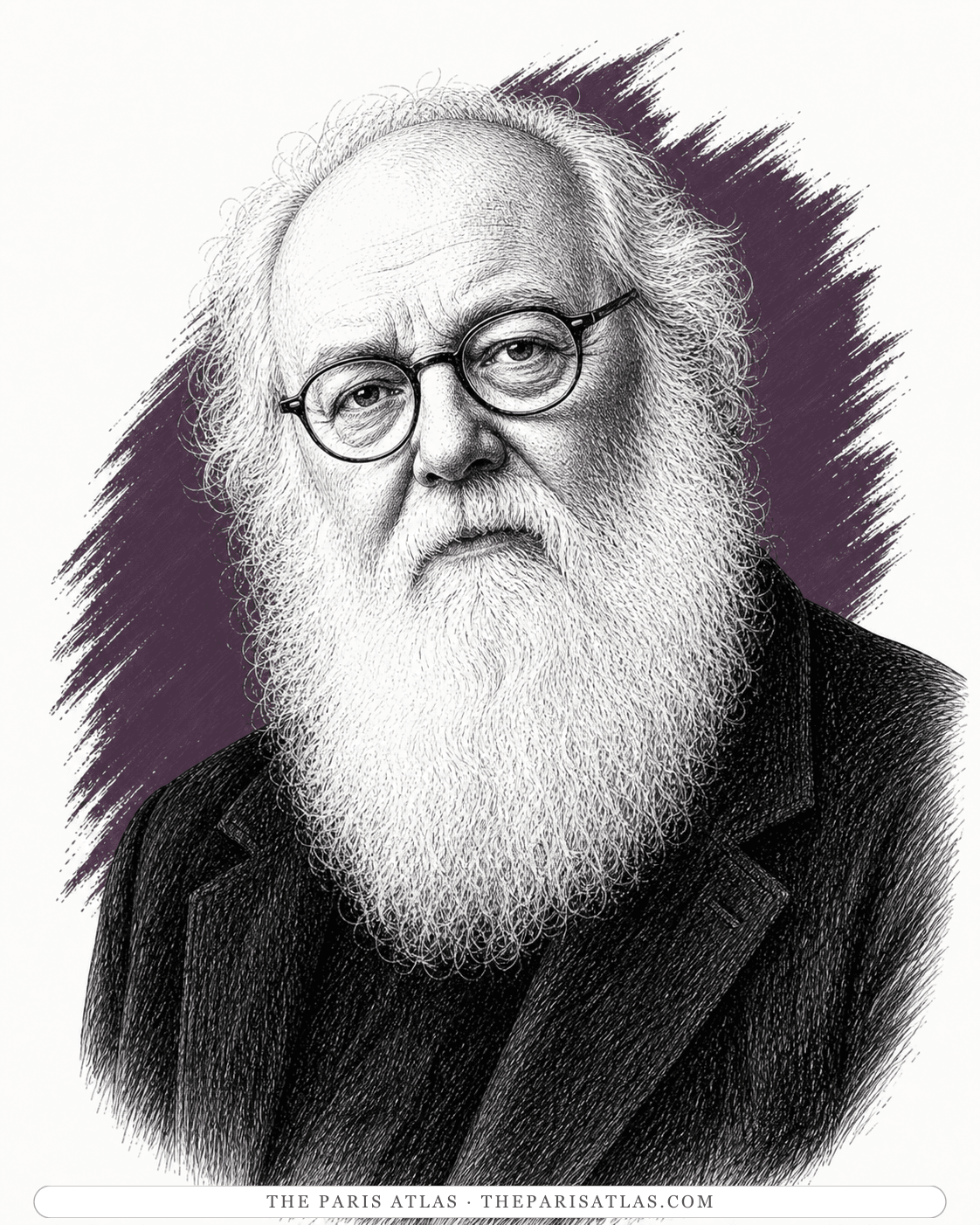
Pierre Restany
- Critic
Collaborated with · 1955–1962
Klein met Restany at his 1955 monochrome exhibition in Paris. Restany wrote for later exhibitions, named the Anthropometries, and worked with Klein in founding New Realism.
French artist who made the monochrome, empty gallery, body print, fire, and pure pigment into central materials of postwar art during a brief Paris career.
Yves Klein was a French artist who spent most of his short career working in a single colour. He was born in Nice on 28 April 1928 and died in Paris on 6 June 1962, aged thirty-four.
The colour was a deep ultramarine he developed with a Paris paint supplier and called International Klein Blue. Ordinary ultramarine loses its intensity when it is bound into paint; Klein's binder kept the powdered pigment looking like powder, so the surface stays as saturated as raw colour. He painted canvases, sponges, plaster casts and a globe with it.
He is equally known for three works that left almost nothing to hang on a wall. In 1958 he exhibited an empty white gallery and called it The Void. In 1960 he had models coated in blue paint press themselves against canvas while an orchestra played a single chord. That same year he produced a photograph of himself apparently leaping from a wall into an empty street.
His working life lasted about eight years. He died of a heart attack on 6 June 1962, at thirty-four, and his son was born that August.
Yves Klein was born in Nice on 28 April 1928. Both his parents were painters: his father, Fred Klein, worked in a figurative style, and his mother, Marie Raymond, was an abstract painter who exhibited regularly in Paris and ran a weekly salon for other painters at their flat.
He grew up around painting and did not train as a painter. He went to the École Nationale de la Marine Marchande and the École Nationale des Langues Orientales in Nice, and did not finish either.
The story he told about the origin of his work is from his teens: lying on a beach at Nice with two friends, the three of them divided the world between them, and Klein took the sky. He repeated the story throughout his life as the origin of his work in blue.
From about 1948 he read the Rosicrucian writings of Max Heindel, and kept at them for years. The vocabulary he used for his art afterwards — immaterial space, sensibility, the void — comes out of that reading rather than out of any art school.
From his late teens Klein was serious about judo, and for several years it was his profession rather than art. He trained in France and Spain, and in 1952 he went to Tokyo and spent over a year at the Kodokan, the sport's central institute.
He came back in 1954 with a fourth-dan black belt, which at that time few Europeans held, and published a book on judo technique.[1] He taught in Madrid and then opened his own school in Paris, where he hung monochromes on the walls, and he expected to make his living at it. The French judo federation did not recognise his Japanese grade, which effectively closed that career.
Judo stayed in the work. Klein described his art in terms of energy, breath and immateriality that come out of the training. When Leap into the Void was photographed, it was judo colleagues who held the tarpaulin he landed on.
Klein began exhibiting single-colour paintings in 1955, at the Club des Solitaires in Paris: canvases covered edge to edge in one flat colour, with no image, no composition and no visible brushwork. Early shows used orange, yellow, pink and green as well as blue. It was there that he met the critic Pierre Restany, who wrote for his exhibitions from then on.
Viewers treated them as decoration. Klein concluded that showing several colours at once made people compare them, so the works were read as compositions instead of as single colours. From 1957 he showed blue alone.
With the paint chemist Édouard Adam he worked out a synthetic binder that carried dry ultramarine pigment without dulling it, so the finished surface holds the intensity of loose powder. He called it International K[1]lein Blue, and in 1960 he lodged the formula with the French patent office so that it would be recorded as his.
In April 1958 Klein held an exhibition at the Galerie Iris Clert in Paris.[2] He had the gallery emptied, cleaned and painted white, put a blue curtain in the entrance and blue cocktails at the door, and stationed Republican Guards outside.
There was nothing in the room. The work, which he called The Specialization of Sensibility in the Raw Material State into Stabilized Pictorial Sensibility, is usually known as The Void. About three thousand people queued to get in.
The empty-gallery show was widely mocked. It is also one of the founding works of conceptual art: the work was the empty room, the visitors and the occasion, and there was nothing in it to buy.
In March 1960, at a gallery in Paris, Klein staged the first public Anthropometries. Three naked models coated themselves in blue paint and pressed or dragged themselves across paper on the floor and walls, following his instructions. Klein, in evening dress, directed and did not touch the paint.
An orchestra played his Monotone-Silence Symphony: a single chord held for twenty minutes, followed by twenty minutes of silence. An invited audience watched in evening dress.
Klein described the models as living brushes. The works have been read since as a mystical exercise and as an artist using women's bodies as tools. Klein's own statements about the models, and the way he directed the sessions, have been quoted in support of both readings.
In October 1960 Klein produced the photograph he is best known for. It shows him in a dark suit in mid-air above a suburban Paris street, arms out, head up, about to hit the pavement, with a cyclist riding away in the distance.
It is a composite. Klein really jumped, repeatedly, from a first-floor wall onto a tarpaulin held below by a group of judo colleagues. The photographers Harry Shunk and János Kender then printed the negative of his [3]jump together with a second negative of the empty street.
Klein published it in November 1960 in a single-issue fake newspaper, laid out like the French daily France-Soir and distributed to Paris news-stands, under the headline "A Man in Space!".[3] The photograph was staged, and it has been reproduced ever since as a picture of a real fall.
In October 1960 Klein signed the founding declaration of Nouveau Réalisme with the critic Pierre Restany and artists including Arman, Jean Tinguely and Raymond Hains. Their common ground was using the real world directly — objects, junk, machines, bodies, fire — instead of representing it.
Klein worked quickly over the next two years. He made paintings with fire from a gas burner, paintings made by rain and wind on a canvas strapped to a car roof, sponge sculptures, blue plaster casts of his friends, and a globe painted in International Klein Blue. He also worked in gold leaf and in dry pink pigment, so that the last works run in three colours rather than one.
Klein married the German artist Rotraut Uecker in January 1962.[4] In May, at the Cannes film festival, he watched the documentary Mondo Cane, which included a sequence of his Anthropometries that he felt made a fool of him. He had a heart attack that evening.
He had two more heart attacks within weeks and died in Paris on 6 June 1962, aged thirty-four.[5] His son, Yves, was born that August.
Klein had about eight working years. Several things he did in them became normal practice for other artists within twenty years. He exhibited an empty room. He directed a work rather than making it, and staged art as a performance for an audience. He left a work that survives only as a photograph and a story.
The colour is the other reason he is remembered. International Klein Blue is one of the very few colours attached to a single artist's name, and the monochromes are still what most people know him for.
Born in Nice on 28 April, the son of two painters, Fred Klein and Marie Raymond.
Enters the École Nationale de la Marine Marchande and the École Nationale des Langues Orientales at Nice, finishing neither.
Begins training in judo. Tells the story afterwards of dividing the world with two friends on a Nice beach and taking the sky.
Meets Arman and the poet Claude Pascal in Nice; the three become close and remain so.
Travels in Italy, and begins the wandering years that take him to Britain, Spain and Japan.
Works in England, including a spell in a picture-framer's workshop in London where he learns about pigments and gilding.
Travels to Ireland, intending to learn to ride, and then to Spain, where he teaches judo.
Goes to Tokyo and trains at the Kodokan, the central judo institute, for over a year.
Teaches judo in Madrid while still training and competing.
Returns to Europe with a fourth-dan black belt and publishes a book on judo technique. The French federation does not recognise the grade.
Shows his first monochrome paintings in Paris, in orange, yellow, pink, green and blue.
Holds his second Paris exhibition, of monochromes in several colours, at the Galerie Colette Allendy.
Shows blue alone from this year, after concluding that several colours in one room turn the paintings back into pictures.
Exhibits an emptied, whitewashed gallery at Galerie Iris Clert in April. About three thousand people queue for The Void.
Sells Zones of Immaterial Pictorial Sensibility — receipts for nothing — for gold, half of which he throws into the Seine when the buyer burns the receipt.
Lectures at the Sorbonne on his idea of an art of pure sensibility.
Stages the first public Anthropometries in March, with models coated in blue paint pressing themselves to paper while an orchestra holds a single chord for twenty minutes.
Deposits the formula for International Klein Blue in May to establish the colour as his.
Signs the founding declaration of Nouveau Réalisme in October with the critic Pierre Restany, Arman, Jean Tinguely and others.
Makes Leap into the Void in October with the photographers Harry Shunk and János Kender, and publishes it in November in a single-issue fake newspaper distributed to Paris news-stands.
Has his first large retrospective at the Museum Haus Lange in Krefeld, Germany, and works in fire, making paintings with a gas burner.
Visits the United States for the first time. His New York exhibition is poorly received.
Publishes the Chelsea Hotel Manifesto in New York, setting out his account of his own work.
Makes blue plaster casts of his friends, among them Arman, and a globe painted in International Klein Blue.
Marries the German artist Rotraut Uecker in January.
Has a heart attack in May at the Cannes film festival after watching the documentary Mondo Cane, which uses footage of his Anthropometries.
Dies in Paris on 6 June, aged thirty-four, after two further heart attacks.
His son Yves is born in August, two months after his death.
Makes his last works, including the blue globe and the plaster casts of his friends.
The first large retrospectives after his death begin to establish his reputation outside France.
Collaborated with · 1955–1962
Klein met Restany at his 1955 monochrome exhibition in Paris. Restany wrote for later exhibitions, named the Anthropometries, and worked with Klein in founding New Realism.
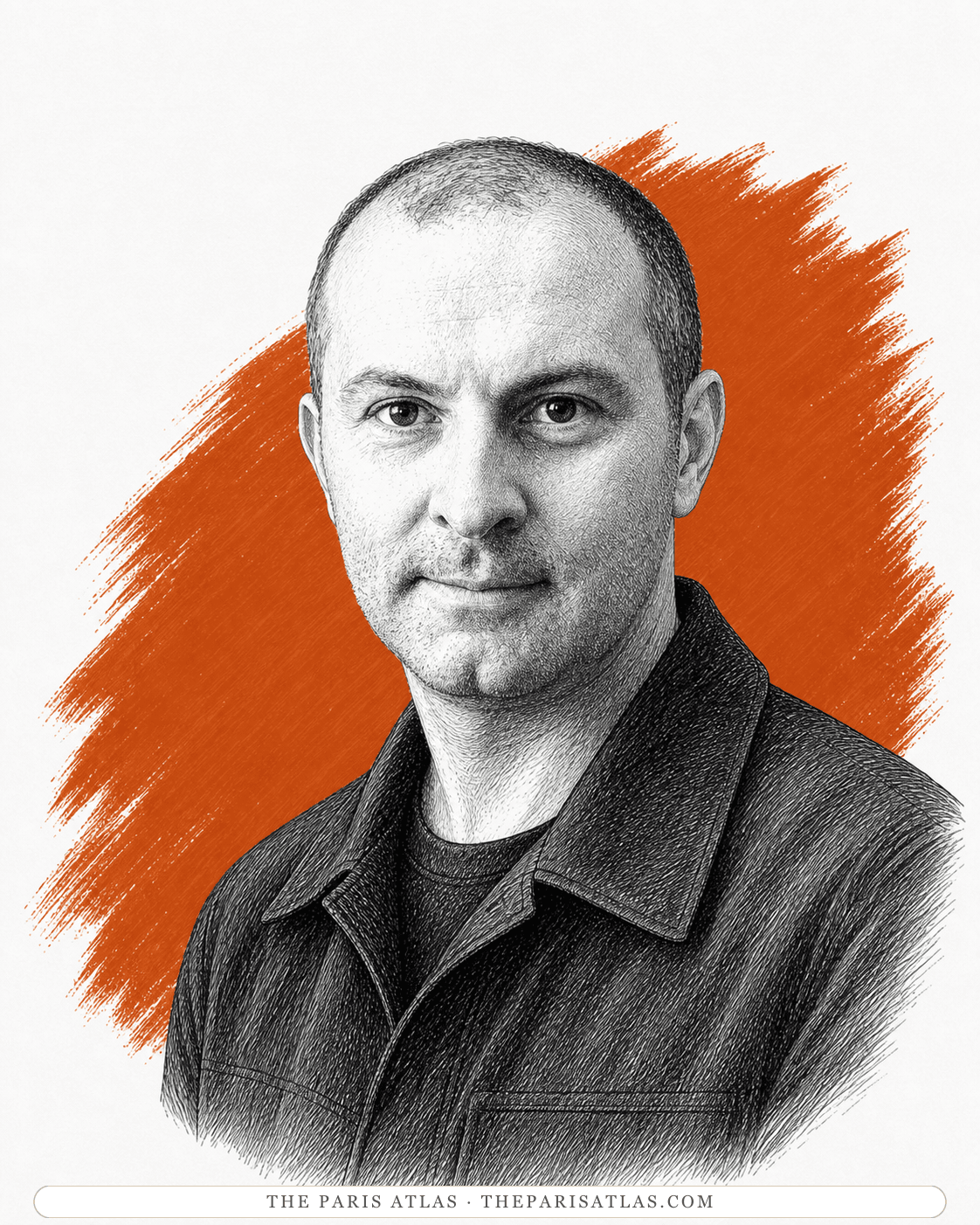
Collaborated with · 1947–1962
Klein and Arman were childhood friends in Nice and later became fellow signatories of Pierre Restany's founding declaration of New Realism.
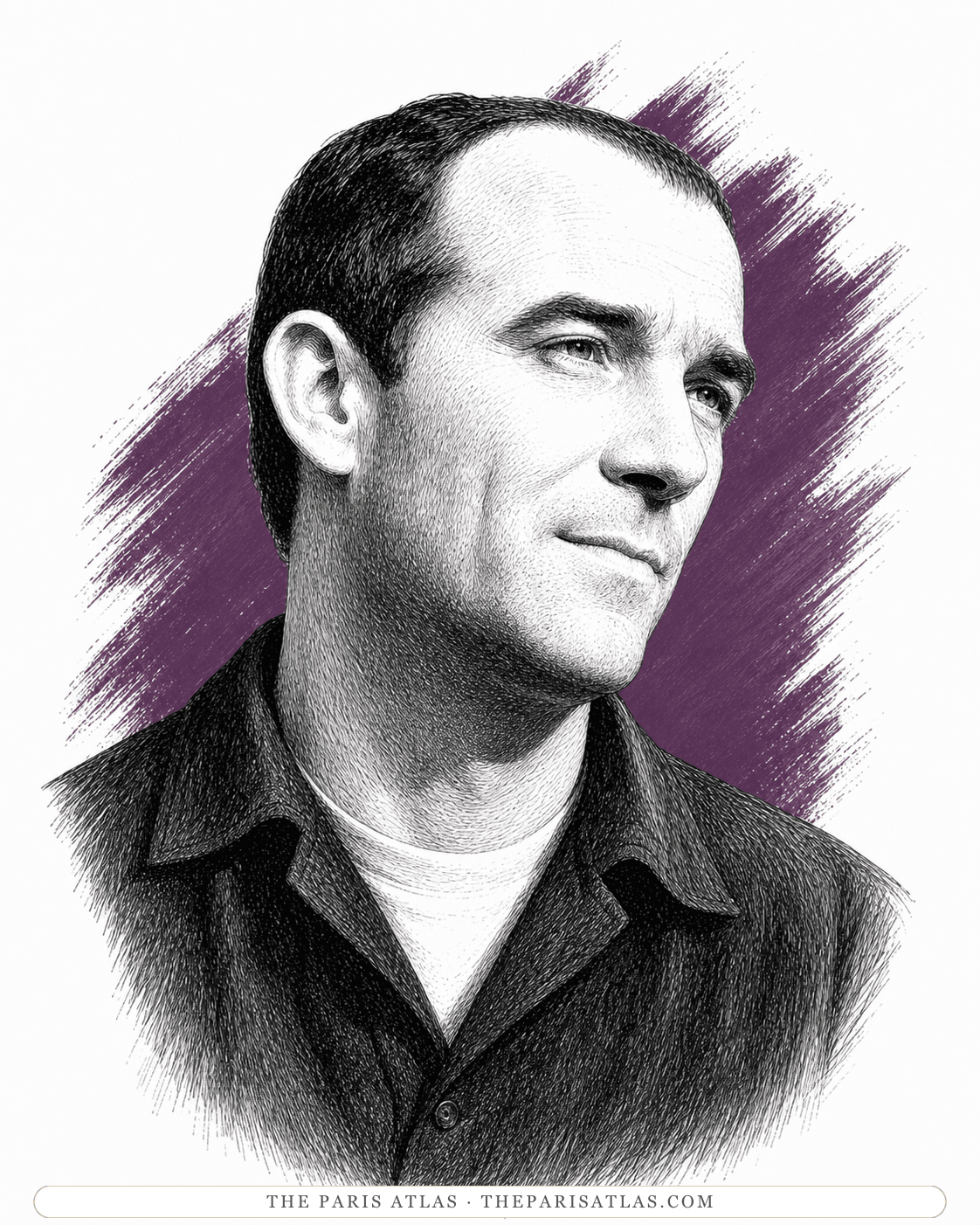
Collaborated with · 1958–1962
Klein and Tinguely exhibited and experimented together in Paris before both signed the 1960 founding declaration of New Realism.
Yves Klein was a French artist, born in Nice in 1928 and died in Paris in 1962 at thirty-four. He is best known for painting in a single deep blue of his own making, and for works that contain almost no object at all.
A deep ultramarine Klein developed with the Paris paint chemist Édouard Adam. Ordinary binders dull ultramarine; Klein's synthetic binder holds the dry pigment without dulling it, so the paint keeps the intensity of loose powder. He deposited the formula in 1960 to establish the colour as his.
An exhibition at the Galerie Iris Clert in Paris in April 1958. Klein emptied the gallery, painted it white, put a blue curtain at the entrance and guards at the door, and showed nothing. About three thousand people queued to see it.
No. It is a composite of two negatives. Klein really jumped, repeatedly, from a first-floor wall onto a tarpaulin held by judo colleagues; the photographers Harry Shunk and János Kender then combined that image with a second shot of the empty street.
Works made from 1960 by having models coat themselves in blue paint and press or drag themselves across paper, following Klein's instructions while he stayed in evening dress and did not touch the paint. At the first public performance an orchestra held a single chord for twenty minutes.
Of heart attacks. The first came in May 1962 at the Cannes film festival, after he watched a documentary that used footage of his Anthropometries in a way he felt ridiculed him. Two more followed within weeks, and he died in Paris on 6 June 1962, aged thirty-four.
Collaborated with · 1955–1962
Klein met Restany at his 1955 monochrome exhibition in Paris. Restany wrote for later exhibitions, named the Anthropometries, and worked with Klein in founding New Realism.
Collaborated with · 1947–1962
Klein and Arman were childhood friends in Nice and later became fellow signatories of Pierre Restany's founding declaration of New Realism.
Collaborated with · 1958–1962
Klein and Tinguely exhibited and experimented together in Paris before both signed the 1960 founding declaration of New Realism.
The sources below include biographies, scholarly essays, interviews, and primary materials that informed this page. They reflect both the historical record and ongoing critical conversations about Yves Klein and their work.
The museum's artist record, used for the Paris exhibitions and the Nouveau Réalisme group.
The artist's own archive, used for the final two years, the marriage and the circumstances of his death.
Reference article cross-checked for the birth and death dates, the judo years, the monochromes and the 1962 heart attacks.
Web source consulted for documented facts and historical context presented on the Yves Klein page.
Web source consulted for documented facts and historical context presented on the Yves Klein page.
Web source consulted for documented facts and historical context presented on the Yves Klein page.
Web source consulted for documented facts and historical context presented on the Yves Klein page.
These references anchor the page in the documented record and in the scholarly conversations around Yves Klein. Every claim on this page traces back to one or more of the works listed here.
 Explore more resources