The Paris AtlasCharting the artists, works, and places worth returning to.
  • Painter
· French-American · 1900–1955

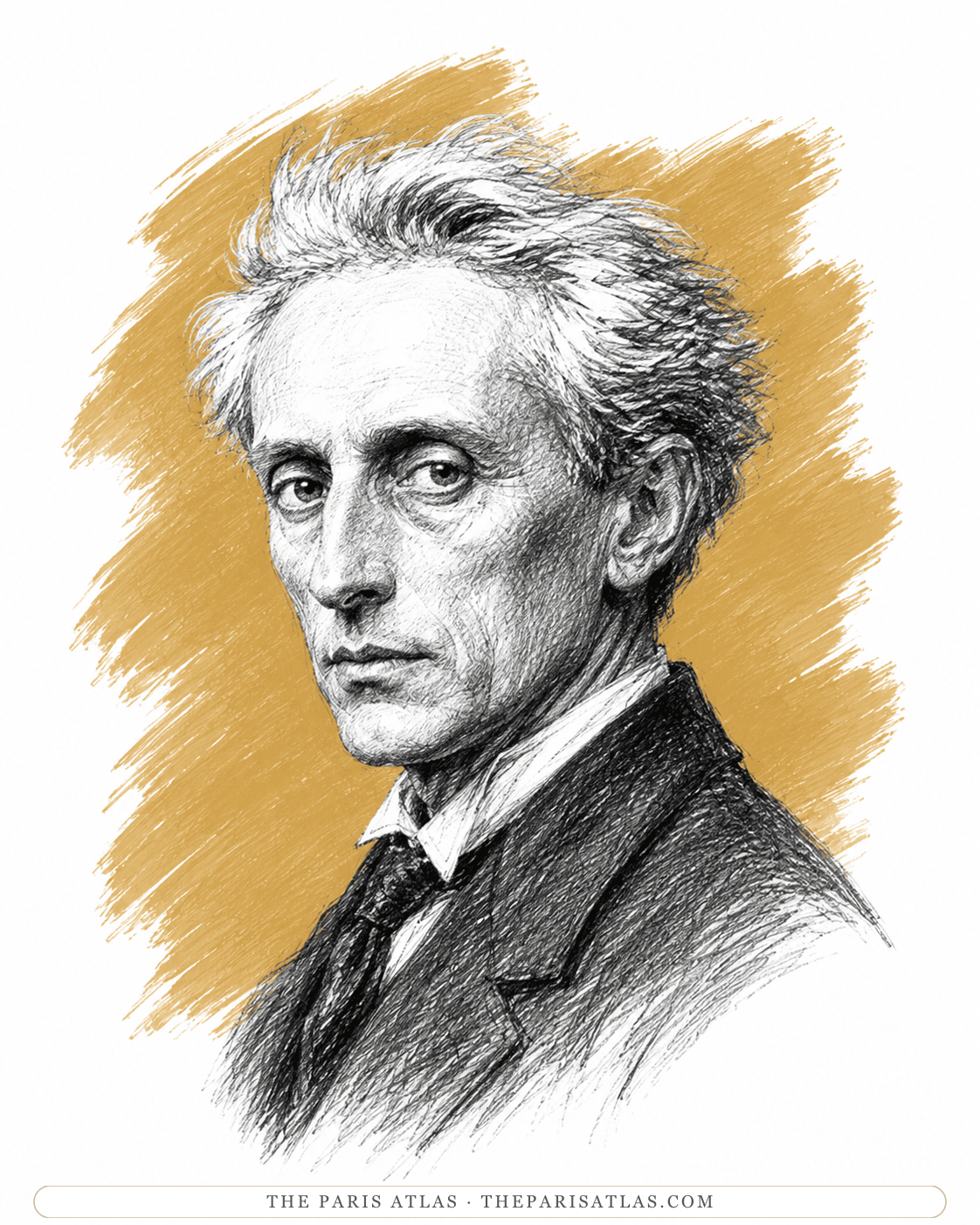
Yves Tanguy

Paris-born Surrealist painter whose meticulously rendered dream landscapes turned stones, bones, plants and invented objects into some of the most recognizable imaginary worlds of twentieth-century art.

In images

Details

Lived
1900–1955
Born
5 January 1900
Birthplace
Paris, France
Birth name
Raymond Georges Yves Tanguy
Died
15 January 1955 · aged 55
Place of death
Woodbury, Connecticut
Nationality
French-American
Profession
Surrealist painter
Major works
Mama, Papa Is Wounded! (1927), He Did What He Wanted (1927), The Sun in Its Jewel Case (1937), Slowly Toward the North (1942), Nombres imaginaires (1954)
Married
Jeannette Ducrocq · 1927–1938Kay Sage · 1940–1955
Roles
Painter

About Yves Tanguy

Yves Tanguy became a painter almost by accident. He had no formal art-school training and did not grow up planning an artistic career. By his early twenties he had worked at sea, completed military service and taken a series of ordinary jobs in Paris. Then he saw a painting by Giorgio de Chirico in a gallery window and decided that he wanted to paint.

Within only a few years, Tanguy had developed a style that was unmistakably his own. His pictures usually open onto enormous, empty spaces under pale skies. Across the ground sit objects that resemble stones, bones, shells, machines, organs or prehistoric creatures without ever becoming any one of them. They cast convincing shadows and seem to possess real weight, yet there is no way to determine their purpose or even their size. A form might be microscopic or monumental. A landscape might be a beach, a desert, the bottom of the sea or a place that has never existed.

That uncertainty made Tanguy particularly important to Surrealism. Unlike Salvador Dalí, René Magritte or Max Ernst, he rarely needed recognizable people, rooms or everyday objects to make reality strange. He invented almost everything from the ground up. André Breton regarded him as one of the painters who came closest to giving visual form to the unconscious. The Metropolitan Museum of Art notes that by 1927 Tanguy had already established the dreamlike landscape he would explore for the rest of his life.

Paris was essential to that development. It was where Tanguy saw de Chirico, lived with Jacques Prévert and Marcel Duhamel at one of the legendary gathering places of early Surrealism, met Breton, participated in collective games and experiments, held his first solo exhibition and became part of the movement's inner circle. He left France in 1939, but the pictorial world he carried to America had already been invented there.

A Paris childhood with Breton roots

Raymond Georges Yves Tanguy was born in Paris on 5 January 1900 to a family with deep roots in Brittany. His father had been a sea captain and later worked for the French Ministry of the Navy. A Centre Pompidou chronology records that Tanguy was born at the Ministry's premises near the Place de la Concorde. His childhood, however, was divided between Paris and repeated stays in Locronan in Finistère, where his family had connections and his mother later owned a house.[1]

The landscapes of Brittany made a lasting impression on him. The coast around Finistère offered granite rocks, prehistoric standing stones, stretches of sea and objects washed onto beaches. It would be too simple to treat Tanguy's later paintings as disguised pictures of Brittany, but museums and scholars have long noted the resemblance between those coastal forms and the strange stones and bones of his mature landscapes.

In Paris, Tanguy attended the Lycée Montaigne and later the Lycée Saint-Louis. One of his schoolmates was Pierre Matisse, son of Henri Matisse. At the time this was simply a school friendship. Decades later, Pierre Matisse would become one of the most important dealers of Tanguy's American career. Tanguy still showed little sign of becoming a professional artist. The sea attracted him more immediately than painting.

Merchant ships and military service

In 1918, at eighteen, Tanguy joined the merchant marine. Cargo ships took him to places including South America, Africa and England. The experience gave him years of visual memories far removed from the Paris streets in which he had grown up.[2]

Military service followed. In 1920, while serving with the 37th Infantry Regiment at Lunéville, he met another young Parisian named Jacques Prévert. Neither man was yet famous. Prévert had not become the poet and screenwriter of Paroles and Children of Paradise, and Tanguy had not become a painter.

The friendship proved decisive. After military service, Tanguy returned to Paris in 1922 and reconnected with Prévert. They became close to Marcel Duhamel, who would later found Gallimard's Série Noire crime-fiction collection. Tanguy supported himself through a succession of small jobs while the three friends spent enormous amounts of time together. The National Gallery of Art records that his occupations included work as a newsboy, packer and streetcar driver.[1]

The painting that changed his life

Around 1923, Tanguy saw a painting by Giorgio de Chirico displayed in the window of the dealer Paul Guillaume in Paris. The encounter became one of the famous conversion stories of modern art. The painting was *The Child's Brain*, an unsettling image of a half-nude man with closed eyes standing in an empty architectural space. De Chirico's picture looked realistic but obeyed a psychological rather than ordinary logic. It suggested that something important was happening without explaining what that something was.[3]

Tanguy was overwhelmed. The National Gallery of Art describes the encounter as the event that abruptly persuaded him to become a painter. MoMA's scholarship on de Chirico adds an extraordinary detail: The Child's Brain was the same picture that had earlier deeply affected André Breton, and when Tanguy saw it in Paul Guillaume's window, it was there on loan from Breton himself.[2]

Tanguy began drawing and painting without enrolling in an academy. He taught himself. His first pictures were awkward and experimental. Some contained distorted Paris streets and architecture still visibly indebted to de Chirico. MoMA's early catalogue reproduces his *Rue de la Santé* of 1925, a strange Paris street receding between warped buildings, and notes how close these paintings remained to de Chirico's mysterious Italian squares. Very quickly, however, Tanguy stopped painting recognizable streets. He began inventing places of his own.[4]

54 rue du Château

One of the most important addresses in Tanguy's life was 54 rue du Château, near Montparnasse. Around 1924, Marcel Duhamel rented the modest house and lived there with Tanguy and Jacques Prévert. The Maison Jacques Prévert records the three friends sharing the address from 1924 to 1928. The house became one of the informal laboratories of Paris Surrealism.[1]

Friends came constantly. Visitors included figures who would become central to the movement, among them Robert Desnos, Benjamin Péret, Michel Leiris, Antonin Artaud, Raymond Queneau and eventually André Breton. The group ate, argued, made jokes, drew and experimented with collective games. The famous Surrealist game known as the cadavre exquis — exquisite corpse developed in this social environment. One participant wrote or drew part of something, concealed it and passed it to another person, who continued without knowing exactly what had come before.

The method suited Tanguy. His mature paintings would contain similarly unexpected combinations: forms appearing to generate one another according to rules the conscious mind had not completely planned. Tanguy also painted directly on the house itself. A surviving panel known as *Le Testament de Jacques Prévert* originally formed part of Prévert's door at rue du Château. Georges Sadoul later recalled that Tanguy had made much of the house's furniture and decoration himself.

The address no longer survives. It was demolished in the 1930s as railway infrastructure around Montparnasse expanded. But for several years, it had been one of the places where Surrealism was becoming a way of living rather than simply a theory.

Meeting André Breton

Tanguy met André Breton in 1925. Breton had published the first Manifesto of Surrealism the previous year and was rapidly becoming the movement's central organizer and theorist. He recognized something unusual in the self-taught painter almost immediately. Tanguy joined the Surrealist group and participated with unusual loyalty, remaining closely involved in collective activities until his departure for the United States in 1939.[5]

The group gave him companionship and an intellectual structure for instincts he already possessed. Surrealism valued dreams, chance, automatic creation and images that escaped ordinary rational explanations. Tanguy's paintings increasingly did all of those things without illustrating dreams literally.

He also joined collective drawing experiments. MoMA preserves an **exquisite corpse made by Tanguy, Joan Miró, Max Morise and Man Ray in 1926–27, while Centre Pompidou preserves later examples involving Tanguy, Breton and Jacqueline Lamba. Around 1929, Tanguy and other Surrealists also used the newly popular Photomaton** booths, allowing an automatic machine rather than a portrait photographer to produce sequences of their faces.[6]

Inventing the Tanguy landscape

The transformation in Tanguy's painting between 1925 and 1927 was remarkably fast. Early street scenes gave way to vast plains populated by objects that could not be named. The technique also became unexpectedly precise. Tanguy might have been self-taught, but his mature pictures are not technically crude. Smooth gradations make objects appear almost sculptural. Tiny shifts in shadow convince the eye that an impossible form occupies real space. The contradiction is central to his art: the more impossible the object, the more carefully he painted it.

Works such as *Mama, Papa Is Wounded! and Extinction of Useless Lights*, both from 1927, already contain the basic Tanguy world. A low horizon or ambiguous expanse recedes into enormous distance. Strange biomorphic forms stand, hover or sprout from the ground. Their surfaces are recognizable—smooth, hard, hairy, transparent—while the things themselves remain unidentified.[7]

Even the titles refuse ordinary explanation. They sound as though they belong to stories, but there are no stories. For his first solo exhibition, Tanguy and Breton selected several titles using phrases found in Charles Richet's Treatise of Metapsychics, a book about unusual psychological phenomena. MoMA notes that the title *He Did What He Wanted* came from Richet's discussion of hypnotized subjects who refused commands. The titles create another mystery instead of solving the image.

The first solo exhibition

Tanguy's first solo exhibition opened at the Galerie Surréaliste in Paris in 1927. The exhibition confirmed that he had moved from enthusiastic amateur to one of the movement's distinctive painters in only a few years. André Breton wrote the catalogue introduction and praised Tanguy's ability to produce images of an unknown world.[8]

The paintings included *He Did What He Wanted and the large Un grand tableau qui représente un paysage*. Both already possessed the geological expanses and invented beings that would dominate Tanguy's career. The following year, he showed alongside Jean Arp, Max Ernst, André Masson, Joan Miró, Pablo Picasso and other artists in a Surrealist exhibition at the Galerie au Sacre du Printemps in Paris. Tanguy had arrived unusually late at painting and unusually quickly at artistic maturity.[9]

What are Tanguy's objects?

Trying to identify the things inside a Tanguy painting is almost irresistible. Some look like vertebrae. Others resemble shells, coral, melted clocks, machine components, sea creatures, bones, genital forms, pieces of vegetation or stones worn smooth by water. But the moment one seems recognizable, another detail makes the identification collapse. Tanguy carefully avoided giving viewers a dictionary.

That ambiguity distinguished him from several other Surrealists. Magritte often made familiar objects behave impossibly. Dalí rendered recognizable bodies and landscapes in hallucinatory states. Tanguy invented objects that had never existed in the first place. The National Gallery of Art describes his mature images as precisely rendered biomorphic forms occupying barren, infinite landscapes. The Met similarly stresses that the forms remain fantastical and rocklike even though they are rendered with almost academic precision.

The empty spaces matter as much as the objects. A Tanguy landscape can feel peaceful at first and increasingly unsettling the longer one looks. There are usually no people. There is almost no recognizable vegetation. Weather rarely changes. Time seems to have stopped. Yet something has happened there. The viewer simply arrives too late to know what it was.

North Africa

In 1930, Tanguy traveled to North Africa with his first wife, Jeannette Ducrocq. Recent Menil research identifies probable travel in Morocco and Tunisia and notes Tanguy's fascination with the eroded geological formations of the Atlas region. His paintings soon developed stronger mineral forms, clearer light and monumental structures that resemble cliffs, plateaus and rock towers.

The paintings were not documentary landscapes of Africa. Tanguy showed little interest in picturesque local subjects. Instead, geology entered his existing imaginary world. MoMA's retrospective scholarship notes that the harsh light and unusual rock formations resulted in a small group of particularly architectural pictures in 1930–31. In works such as *Neither Legends nor Figures and The Armoire of Proteus*, strange tablelands and fortress-like formations rise from empty spaces. The trip strengthened one of the defining qualities of Tanguy's art: his landscapes seem simultaneously natural and impossible.

A world becomes denser

During the 1930s, Tanguy continued exhibiting throughout Paris and internationally. His paintings changed gradually rather than through dramatic stylistic breaks. The early atmospheric emptiness became more populated. Forms grew harder and more sculptural. Their shadows lengthened. At times the ground and sky became difficult to distinguish, so objects seemed to float in a continuous space rather than rest securely on land.

*The Sun in Its Jewel Case of 1937* is one of the best-known examples of this mature Paris period. The title suggests something cosmological, but the painting offers no literal sun or jewel box. Instead, a collection of small forms sits in an immense dream space governed by its own internal physics. The Peggy Guggenheim Collection preserves the painting as one of the central works of its Tanguy holdings.

Tanguy's work was now instantly identifiable. That consistency sometimes made critics assume he was repeating himself. In reality, he kept changing the relationships among scale, density, color, horizon and object. The vocabulary remained stable while the world constructed from it continued evolving.

Kay Sage

In the late 1930s, Tanguy met Kay Sage, an American painter who had lived for years in Europe and entered the Surrealist circle in Paris. Sage's paintings were very different from Tanguy's. Her mature landscapes became filled with rigid architectural structures, scaffolds, towers and draped forms. Yet both painters shared an interest in empty, psychologically charged spaces rendered with meticulous realism.

They became partners as Europe moved toward war. In 1939, Tanguy left France with Sage and went to the United States. The decision ended the Paris period that had shaped virtually his entire artistic identity. They married in 1940 and eventually settled in Woodbury, Connecticut, where they built a life that combined relative rural isolation with regular contact with displaced European artists and the growing American Surrealist community.

Surrealism in exile

Tanguy's arrival in America placed him among the many European artists displaced by the Second World War. New York suddenly contained an extraordinary concentration of Surrealists and modernists, including André Breton, Marcel Duchamp, Max Ernst and André Masson. American artists encountered their work more directly than ever before.

Tanguy participated in the *1942 Artists in Exile* exhibition at Pierre Matisse Gallery in New York. The dealer was the same Pierre Matisse whom he had known decades earlier as a schoolmate in Paris. Pierre Matisse continued showing Tanguy's work frequently through 1950. MoMA's Slowly Toward the North** of 1942 belongs to this American period. The forms are larger and more complicated than many of the tiny objects scattered across his earlier spaces, but the underlying world remains unmistakably Tanguy's. He had crossed an ocean without abandoning the landscape he had invented in Paris.

Tanguy and Sage in Connecticut

Tanguy and Sage eventually settled into a house and studios in Woodbury, a small Connecticut town. Their relationship was both personal and artistic, but they protected their separate identities as painters. Sage in particular resisted being treated merely as the wife of the more famous Surrealist and sometimes avoided joint exhibitions for precisely that reason.

Their home nevertheless became part of a broader émigré network. Friends included Alexander Calder, André Masson, Marcel Duchamp, Max Ernst and Dorothea Tanning. Tanguy visited Ernst and Tanning in Arizona, and the desert landscape naturally invited comparisons with the imaginary expanses he had been painting for years. The American environment did not suddenly explain his art—Tanguy's worlds had existed long before he saw the American West—but his paintings became increasingly monumental and crowded during the 1940s and 1950s.

Still connected to Paris

Emigration did not sever Tanguy's relationship with French Surrealism. In 1947, his work appeared in *Le Surréalisme en 1947 at Galerie Maeght in Paris*, the major postwar exhibition organized by André Breton and Marcel Duchamp. Tanguy contributed alongside artists including Joan Miró, Max Ernst, Dorothea Tanning and Kay Sage.

He became an American citizen in 1948, but continued to identify strongly with his French and Breton background. In 1953, Tanguy returned to Europe for exhibitions in Rome, Milan and Paris. It was one of his final opportunities to see the city in which he had become a painter. The following year, he and Sage shared an exhibition at the Wadsworth Atheneum in Hartford. Tanguy was only fifty-four, but his career was nearing its end.

Nombres imaginaires

In 1954, Tanguy painted *Nombres imaginaires — Imaginary Numbers*, one of the major works of his final year. The field is densely populated with precisely modeled forms that appear simultaneously mineral, biological and mechanical. Their cast shadows suggest real bodies occupying real space, but nothing can be identified with certainty.

The title is particularly appropriate. An imaginary number in mathematics is something that can be rigorously manipulated even though it does not correspond to an ordinary real number. Tanguy's objects behave in almost the same way. They are impossible things governed by an exact visual logic.

Death in Connecticut

Yves Tanguy died suddenly at his home in Woodbury, Connecticut, on 15 January 1955, only days after his fifty-fifth birthday. Museum records differ over the precise date: the Peggy Guggenheim Collection lists 18 January, but contemporary Museum of Modern Art documentation and the Musée d'art et d'histoire de Genève give 15 January. The contemporary record supports using 15 January 1955.

Only eight months later, the Museum of Modern Art in New York mounted a major Tanguy retrospective, confirming the international stature of an artist who had begun painting only about three decades earlier. Kay Sage survived him until 1963. His death affected her profoundly and entered the increasingly bleak landscapes she painted afterward. The Metropolitan Museum of Art notes that Sage stopped painting for several months after Tanguy's sudden death before producing works such as *Tomorrow is Never*.

Yves Tanguy and Paris

Tanguy was born in Paris, but the city's importance to his art goes much further than birthplace. Paris is where he decided to become a painter. The crucial de Chirico painting appeared in the window of Paul Guillaume's gallery. At 54 rue du Château, he lived with Jacques Prévert and Marcel Duhamel while one of the city's liveliest Surrealist circles formed around them.

It was in Paris that he met André Breton, joined the Surrealists and experimented with exquisite corpses, automatic games and photobooth portraits. The Galerie Surréaliste gave him his first solo exhibition in 1927. Other Paris galleries placed him beside Arp, Ernst, Masson, Miró and Picasso. Even his decision to leave France belongs to the city's history. Tanguy departed in 1939 as the European world in which Surrealism had developed was being destroyed by war.

What is striking is how little recognizable Paris appears in his mature paintings. There is no Eiffel Tower. No boulevard. No café. No Montparnasse studio. Once Tanguy had absorbed the freedom Paris Surrealism offered him, he stopped needing to paint the visible city at all. He created another geography.

Yves Tanguy's place in Surrealism

Tanguy occupies an unusual position within Surrealism because his work is both extremely consistent and almost impossible to imitate convincingly. His paintings do not depend on elaborate stories. They contain few recognizable symbols. He rarely explained what individual forms meant, and there is no stable mythology comparable to Dalí's melting clocks or Magritte's bowler-hatted men.

Instead, Tanguy built a visual system: deep space, uncertain horizons, hard shadows, smooth carefully modeled forms and objects without names. That system allowed him to paint the feeling of encountering a world whose rules existed but had not been explained. His self-taught background mattered. The National Gallery of Art emphasizes that he achieved his mature style without formal instruction and with remarkable speed after the de Chirico encounter.

But Tanguy should not be mistaken for a naïve painter. His mature works are extraordinarily controlled. He learned to make impossible forms believable through careful modeling, perspective and light. That precision is what makes them unsettling. If the objects were loosely painted fantasies, they would remain dreams. Tanguy paints them as evidence. They seem to insist that somewhere—just beyond ordinary perception—this place actually exists.

Life events

  1. 1900

    Born Raymond Georges Yves Tanguy in Paris on 5 January to a family with Breton roots; spends childhood holidays in Locronan, Finistère.

    — Yves Tanguy: chronology and retrospective press dossier

  2. 1909–1918

    Studies at the Lycée Montaigne and Lycée Saint-Louis; his schoolmates include the future dealer Pierre Matisse.

    — Yves Tanguy: chronology and retrospective press dossier; Selections from the Pierre and Maria-Gaetana Matisse Collection (2004)

  3. 1918

    Joins the merchant marine, traveling by cargo ship to South America, Africa and England.

    — Yves Tanguy: chronology and retrospective press dossier; The Satin Tuning Fork

  4. 1920

    Begins military service at Lunéville and meets Jacques Prévert.

    — Yves Tanguy: chronology and retrospective press dossier; Vie et œuvre de Jacques Prévert

  5. 1922

    Returns to Paris after military service and works at varied jobs while spending increasing time with Prévert and Marcel Duhamel.

    — Untitled, Yves Tanguy

  6. 1923

    Sees Giorgio de Chirico's The Child's Brain in Paul Guillaume's gallery window and decides to become a painter.

    — Untitled, Yves Tanguy; De Chirico

  7. 1924–1928

    Lives with Jacques Prévert and Marcel Duhamel at 54 rue du Château, an important gathering place for emerging Surrealists.

    — Vie et œuvre de Jacques Prévert; 54 rue du Château and the Surrealist circle

  8. 1925

    Paints works including Rue de la Santé and meets André Breton, who welcomes him into the Surrealist group.

    — Yves Tanguy; Yves Tanguy: retrospective 1925–1955

  9. 1926

    Participates in collective drawing and automatic experiments with artists including Joan Miró, Man Ray and Max Morise.

    — Cadavre Exquis with Yves Tanguy, Joan Miró, Max Morise, Man Ray; Yves Tanguy

  10. 1927

    Holds his first solo exhibition at the Galerie Surréaliste in Paris; André Breton writes the introduction.

    — Un grand tableau qui représente un paysage; Yves Tanguy: biography and works

  11. 1927

    Paints major early Surrealist works including Mama, Papa Is Wounded! and He Did What He Wanted.

    — He Did What He Wanted, 1927; Yves Tanguy

  12. 1928

    Exhibits with Arp, Ernst, Masson, Miró, Picasso and others at the Galerie au Sacre du Printemps in Paris.

    — Yves Tanguy: biography and works

  13. Circa 1929

    Makes a four-frame Photomaton self-portrait during the Surrealists' experiments with automatic and machine-produced images.

    Tanguy's photobooth self-portrait around 1929, made in the years when the Paris Surrealist group used automatic games and machines as creative tools. (Yves Tanguy, Centre Pompidou)

    — Autoportrait dans un photomaton, circa 1929

  14. 1930

    Travels through North Africa, probably including Morocco and Tunisia; geology and clear light influence increasingly monumental landscapes.

    — The history of Yves Tanguy's Neither Legends nor Figures; Yves Tanguy

  15. 1930

    Paints Neither Legends nor Figures, marking the transition toward harder mineral forms and more dramatic light.

    — Neither Legends nor Figures

  16. 1931–1938

    Exhibits regularly in Surrealist exhibitions in Paris, New York, London and Brussels while refining his precise biomorphic landscapes.

    — Yves Tanguy: biography and works

  17. 1937

    Paints The Sun in Its Jewel Case, one of the defining landscapes of his mature Paris period.

    — Yves Tanguy: biography and works

  18. Late 1930s

    Meets American Surrealist painter Kay Sage in Paris; they become partners as Europe approaches war.

    — Yves Tanguy: biography and works; Kay Sage

  19. 1939

    Leaves France with Kay Sage for the United States shortly after the outbreak of the Second World War.

    — Yves Tanguy: biography and works

  20. 1940

    Marries Kay Sage and begins establishing an American career.

    — Yves Tanguy: biography and works

  21. 1941

    Settles with Sage in Woodbury, Connecticut, where both maintain separate studios.

    — Yves Tanguy: biography and works

  22. 1942

    Participates in Artists in Exile at Pierre Matisse Gallery and paints Slowly Toward the North.

    — Yves Tanguy: biography and works; Slowly Toward the North, 1942

  23. 1940s

    His American paintings become generally larger and denser while retaining the imaginary landscapes first developed in Paris.

    — From Green to White; Sans titre, 1946

  24. 1947

    Participates in Le Surréalisme en 1947, organized by Breton and Duchamp at Galerie Maeght in Paris.

    — Yves Tanguy: biography and works

  25. 1948

    Becomes a United States citizen.

    — Yves Tanguy: biography and works

  26. 1951

    Travels to Arizona to visit Max Ernst and Dorothea Tanning.

    — Yves Tanguy: biography and works

  27. 1953

    Returns to Europe for exhibitions in Rome, Milan and Paris.

    — Yves Tanguy: biography and works

  28. 1954

    Exhibits jointly with Kay Sage at the Wadsworth Atheneum and appears in Hans Richter's film 8 x 8.

    — Yves Tanguy: biography and works

  29. 1954

    Paints Nombres imaginaires — Imaginary Numbers, one of the major works of his final year.

    Nombres imaginaires (1954), a late example of Tanguy's precisely modeled, unlocatable landscapes. (Yves Tanguy)

    — Terrafilia: exhibition work list including Imaginary Numbers

  30. 1955

    Dies suddenly at his home in Woodbury, Connecticut, on 15 January, aged fifty-five.

    — Museum collection documentation, 1955; Tanguy, Yves

  31. 1955

    Eight months after his death, the Museum of Modern Art mounts a major Yves Tanguy retrospective.

    — Yves Tanguy retrospective, 1955

Selected works

Cataloged from the holding institutions' records. Reproductions appear only where the rights are verified.

Paintings

A flat grey-brown plain running back to a high horizon under a pale blue sky. A green upright slab stands at the left with a small dark curl at its head and fine white threads running out across the ground. A rust-red stalk bristled with fine hairs rises the full height of the canvas at the right, flaring into a dark brush at its base and throwing a long black shadow. Beside it a bank of grey smoke is drawn in tight concentric wavy lines. Small tan, black, turquoise and grey shapes lie scattered on the plain

Artwork reproduction

Painting

Mama, Papa Is Wounded!

1927 · Oil on canvas

A flat grey plain runs back to a high horizon under a pale blue sky. A green slab stands at the left trailing white threads across the ground. A rust-red bristled stalk rises the full height of the canvas at the right, throwing a long black shadow, and a bank of grey smoke is drawn beside it in tight contour lines. Yves Tanguy painted it in Paris in 1927. The Museum of Modern Art bought it nine years later.

The Museum of Modern Art

Yves Tanguy, Mama, Papa Is Wounded!, 1927. The Museum of Modern Art. Image © the rights holder, shown under fair use.

A dark nocturnal landscape with a wide band of luminous pale blue across the upper third and a dark brown headland below it. Two thin white stalks rise from the far ground, each topped by a small puff of white smoke. Crusted white ridges cross the middle in chevrons. At the left a salmon-pink segmented form stands above a pale sage-green shield, with a small orange two-lobed shape beside them and a rust-orange feathery tuft lower down on a grey striped mound

Artwork reproduction

Painting

Paysage avec nuages roses

1928 · Oil on canvas

A dark landscape under a band of luminous blue, with white crusted ridges running across it like frost and two thin stalks trailing smoke from the far shore. A salmon-pink segmented form stands at the left above a pale green shield. Yves Tanguy painted it in 1928, in the years he was living at 54 rue du Château in Paris. Museum Boijmans Van Beuningen in Rotterdam bought it in 2007.

Museum Boijmans Van Beuningen

Yves Tanguy, Paysage avec nuages roses, 1928. Museum Boijmans Van Beuningen. Image © the rights holder, shown under fair use.

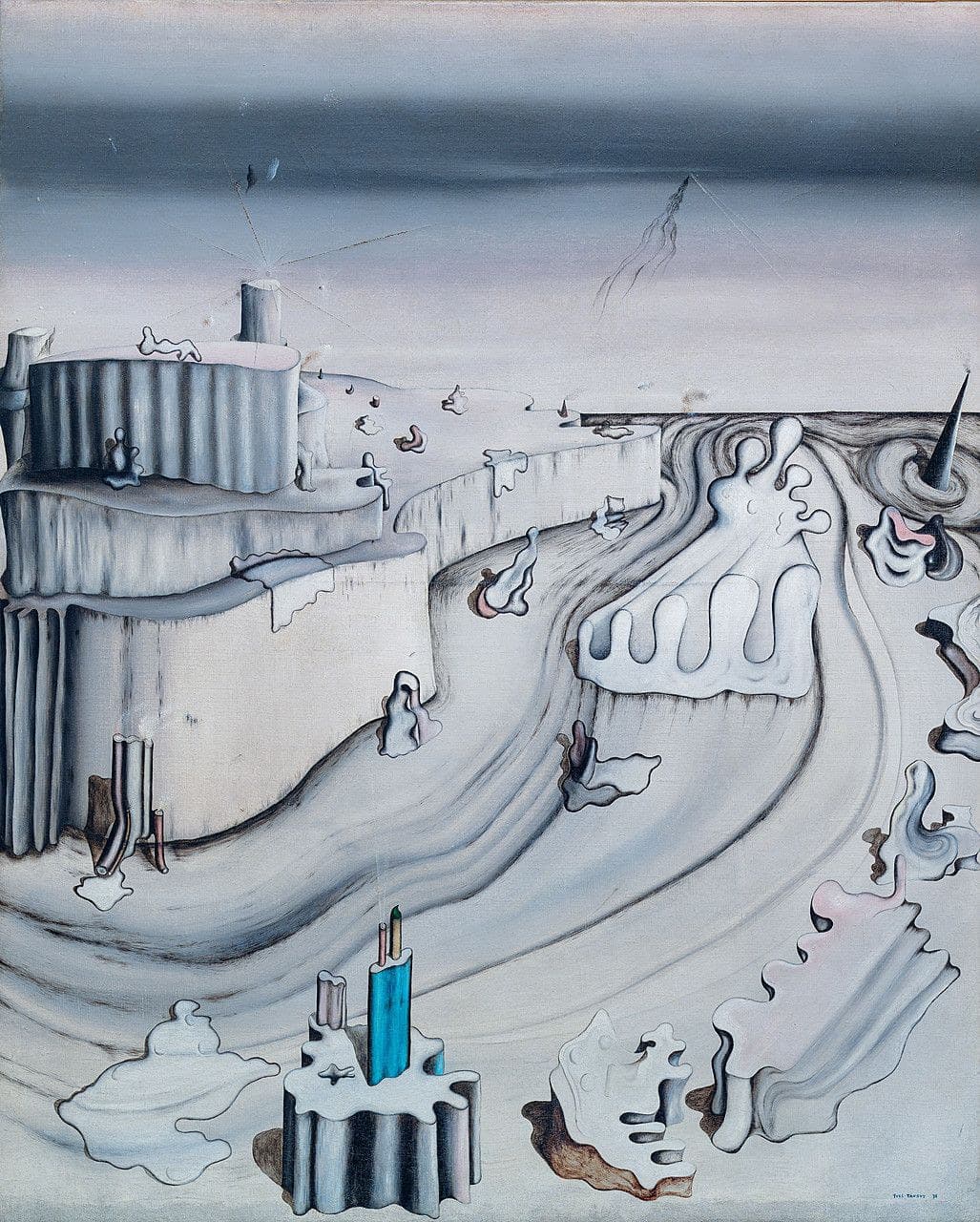
A pale grey landscape in which a flat-topped mesa, fluted in vertical grooves and standing on columnar legs, occupies the left of a wide plain. A narrow tower on its summit throws off fine radiating lines. Three pale pipes give off steam at the foot of the cliff. A white mass with five rounded lobes hangs at the centre right, and a fluted drum at the bottom holds a bright turquoise block with two pencil-like uprights standing in it

Artwork reproduction

Painting

Promontory Palace

1931 · Oil on canvas

A grey fluted mesa stands on the left of a wide pale plain, with a thorn-like tower on its summit throwing off fine sparks. Everything around it appears to be melting. A five-lobed white mass hangs at the centre right, pipes smoke at the foot of the cliff, and a turquoise block with two pencil-like uprights stands on a fluted drum at the bottom. Yves Tanguy painted it in 1931, and it belongs to the Peggy Guggenheim Collection in Venice.

Peggy Guggenheim Collection

Yves Tanguy, Promontory Palace, 1931. Peggy Guggenheim Collection. Image © the rights holder, shown under fair use.

A wide grey-green plain in horizontal bands under a pale grey-lilac sky that turns soft pink-mauve at the horizon. In the foreground stand pale invented objects throwing long black shadows: a grey-white screen with a dark oval opening near its top at the centre, a cluster of uprights with a yellow bow shape and red and white striped posts at the left, small blocks in yellow, pink and pale green stacked below them, and a pink and white ribbon curling on a white slab at the right

Artwork reproduction

Painting

The Furniture of Time

1939 · Oil on canvas

A wide grey plain under a sky that turns mauve at the horizon, with pale objects standing in the foreground and throwing long black shadows. A screen with a dark oval opening stands at the centre, and painted blocks in yellow, pink and green are stacked at the left. Yves Tanguy painted it in 1939, the year he left France. It is the largest of the three canvases James Thrall Soby left to the Museum of Modern Art.

The Museum of Modern Art

Yves Tanguy, The Furniture of Time, 1939. The Museum of Modern Art. Image © the rights holder, shown under fair use.

A near-black painting with a pale grey churning ground along the bottom. A bright vermilion cone stands at the right with white spray at its foot. A brown boulder with a white ring set into it rests at the lower left beside a red starfish shape with beaded arms. A blue ribbon curls at the upper left beside a small white plume, a row of white cloud-blobs steps down the right edge, and a run of red-orange darts crosses the middle diagonally

Artwork reproduction

Painting

The Storm (Black Landscape)

1926 · Oil on canvas

A near-black canvas with a pale churning ground along the bottom and a crowd of small invented things scattered across the dark. A vermilion cone stands on the right. A brown boulder with a white eyelet sits on the left. Yves Tanguy painted it in 1926, his second year of painting and the year after he joined the Surrealist group in Paris. It belongs to the Philadelphia Museum of Art as part of the Louise and Walter Arensberg Collection.

Philadelphia Museum of Art

Yves Tanguy, The Storm (Black Landscape), 1926. Philadelphia Museum of Art. Image © the rights holder, shown under fair use.

People Yves Tanguy Knew

Relationships with other people, with sources for each connection.

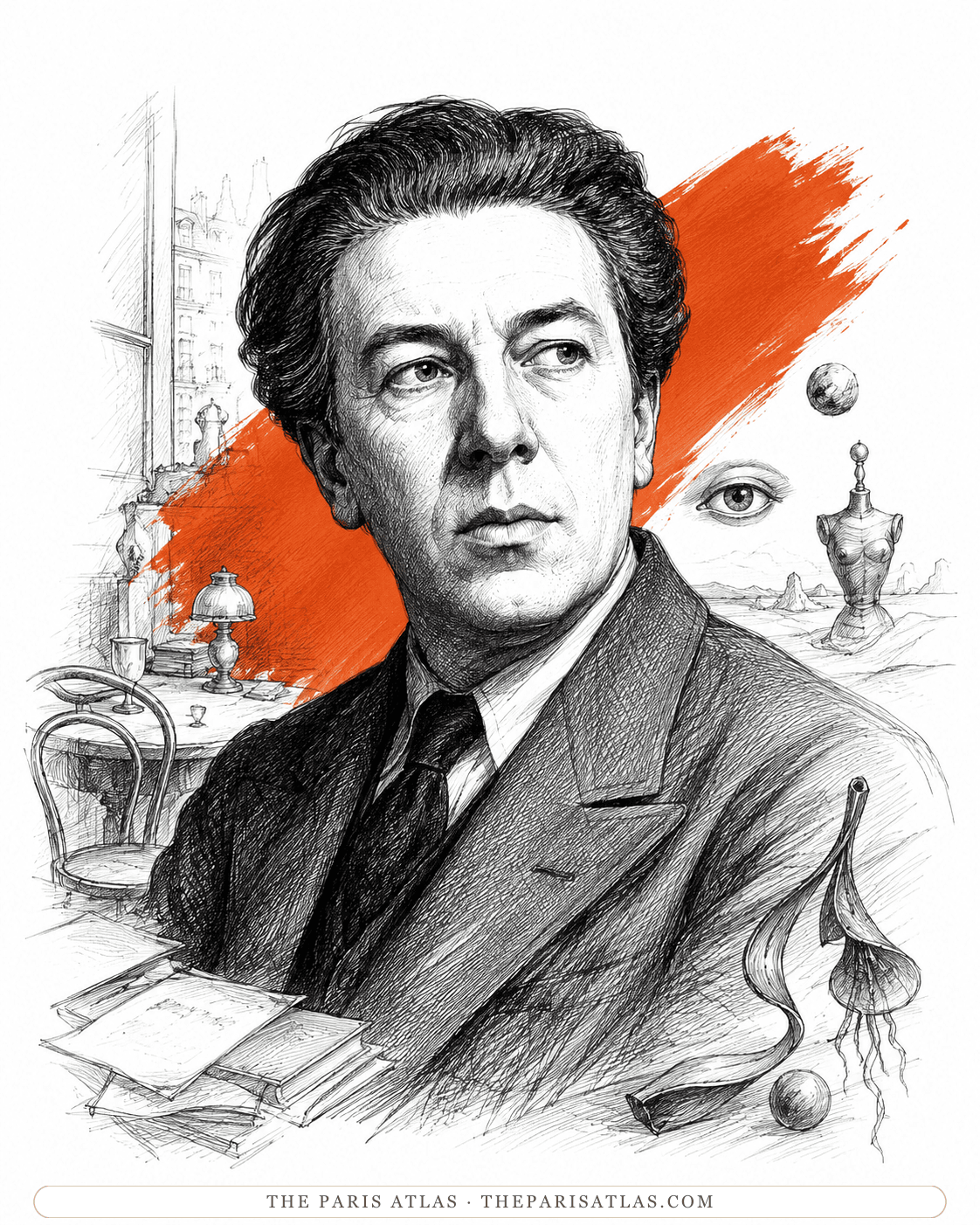
Illustrated portrait of André Breton

André Breton

  • Author
  • Poet
  • Critic
  • +1

Met · 1925

Tanguy met Breton in Paris in 1925 and joined the Surrealist group led by him.

— Yves Tanguy: retrospective 1925–1955; Selections from the Pierre and Maria-Gaetana Matisse Collection (2004)

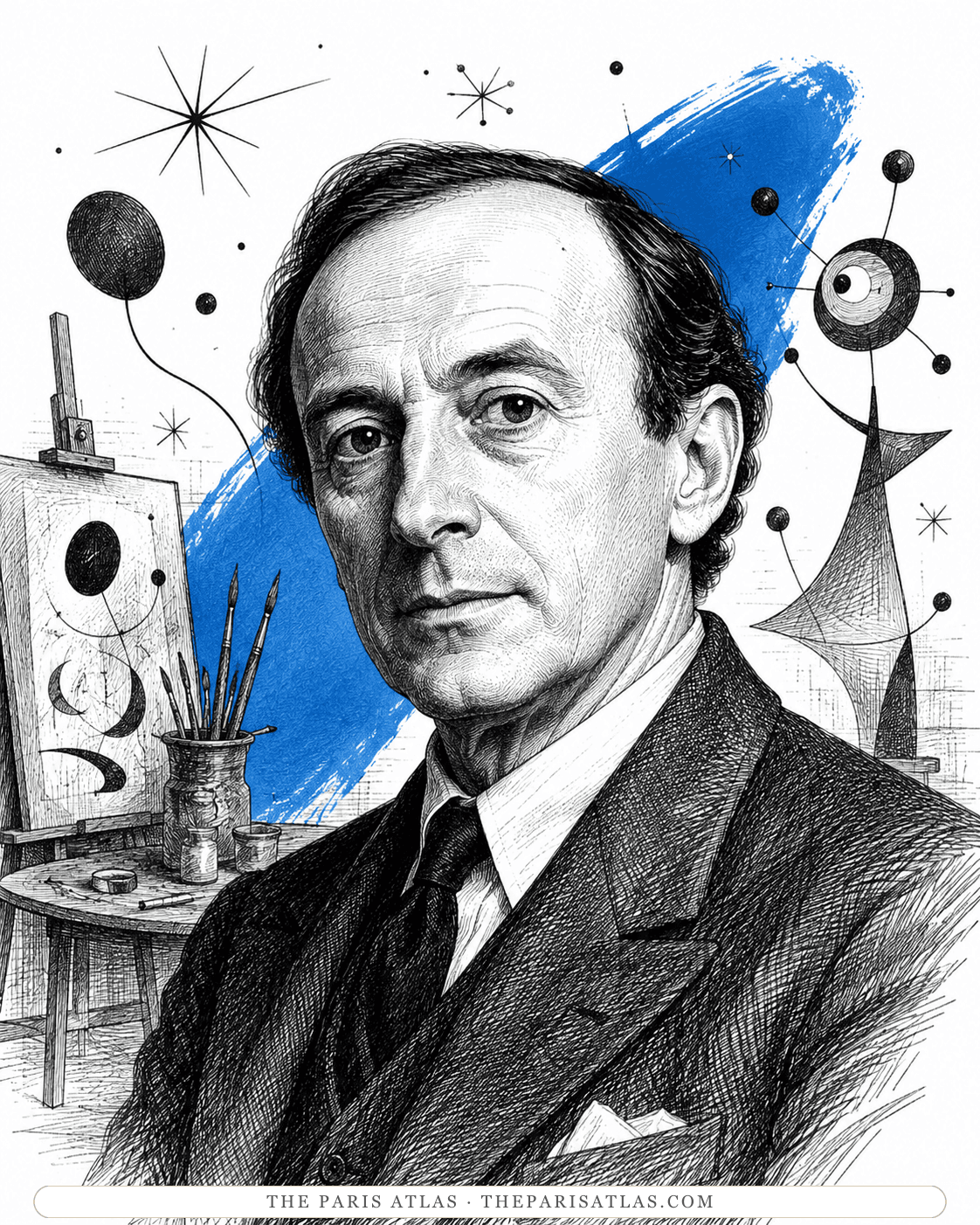
Illustrated portrait of Joan Miró

Joan Miró

  • Painter
  • Sculptor

Collaborated with · 1925

Tanguy and Miró jointly made an exquisite-corpse drawing with Man Ray and Max Morise in Paris in 1926–1927.

— Cadavre Exquis with Yves Tanguy, Joan Miró, Max Morise, Man Ray

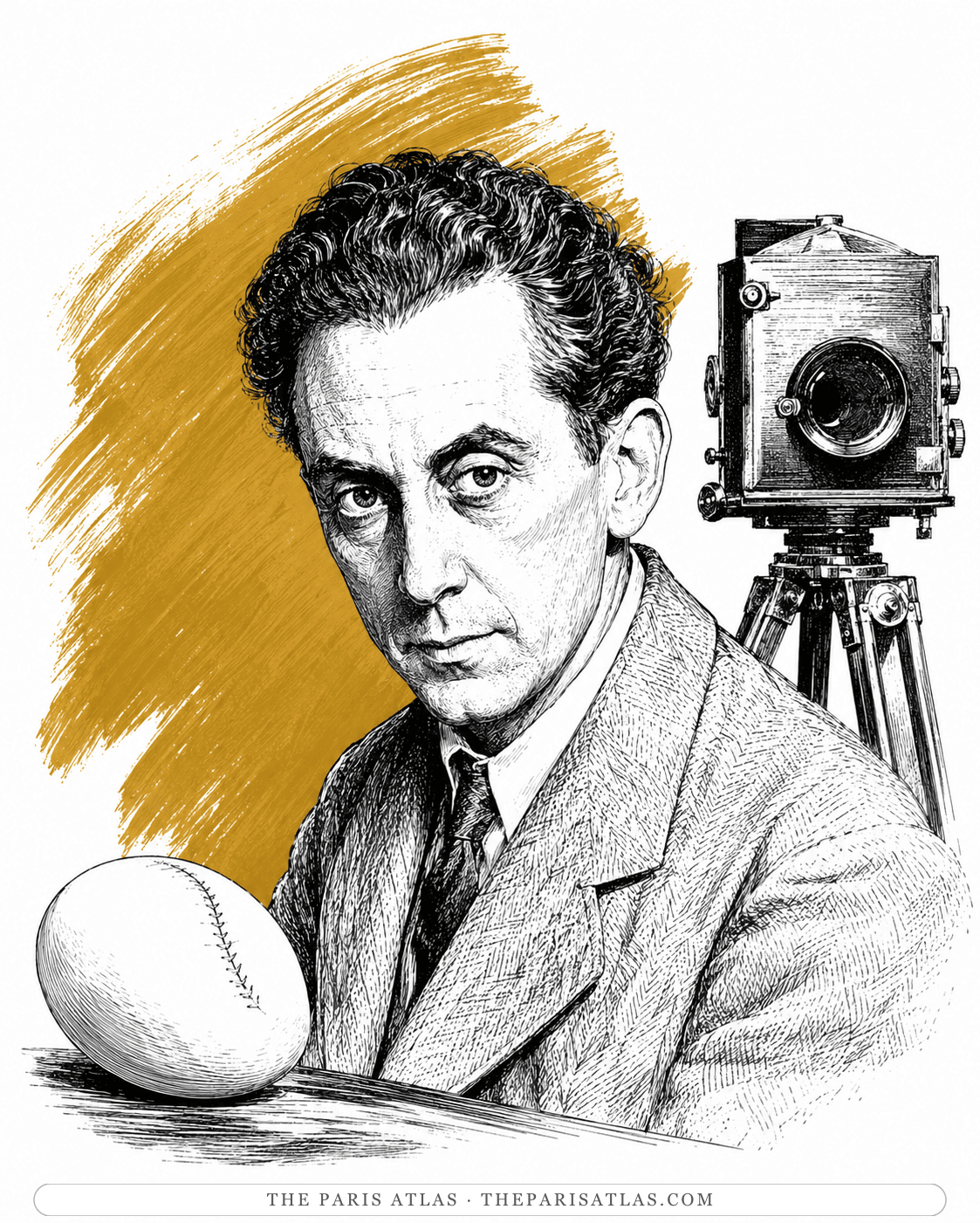
Illustrated portrait of Man Ray

Man Ray

  • Photographer
  • Painter
  • Filmmaker

Collaborated with · 1925

Tanguy and Man Ray jointly made an exquisite-corpse drawing with Joan Miró and Max Morise in Paris in 1926–1927.

— Cadavre Exquis with Yves Tanguy, Joan Miró, Max Morise, Man Ray

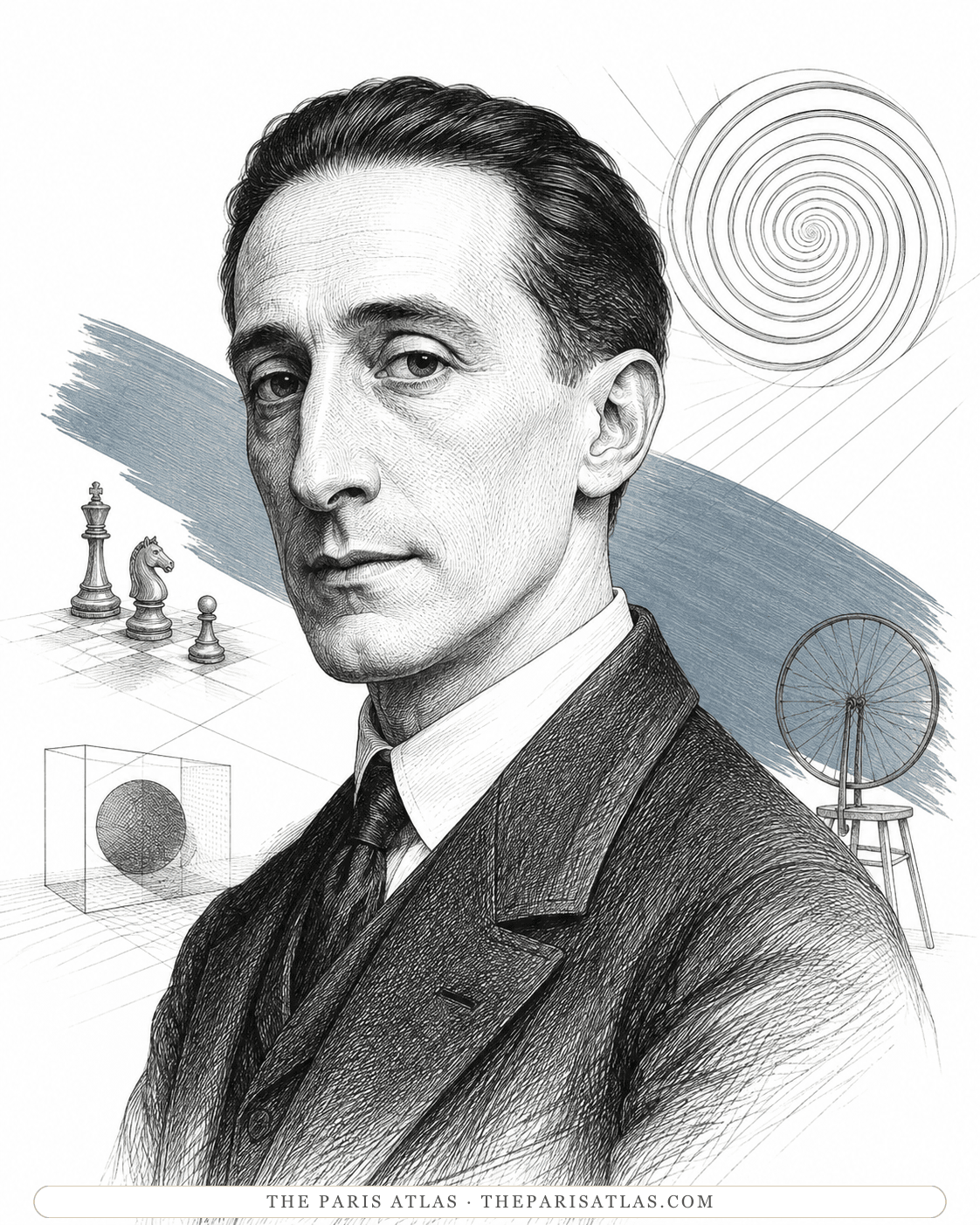
Illustrated portrait of Marcel Duchamp

Marcel Duchamp

  • Painter
  • Sculptor
  • Filmmaker

Met · 1942

Tanguy and Duchamp belonged to the Surrealist community in exile in New York; Tanguy later participated in Le Surréalisme en 1947, the Galerie Maeght exhibition organized by Breton and Duchamp.

— Yves Tanguy: biography and works

Illustrated portrait of Max Ernst

Max Ernst

  • Painter
  • Sculptor

Met · 1928

Tanguy and Ernst exhibited together in the Paris Surrealist movement, belonged to the wartime émigré network in the United States, and Tanguy visited Ernst and Dorothea Tanning in Arizona in 1951.

— Yves Tanguy: biography and works

Connections and Sources

Yves Tanguy’s connections to people, places, and works, with the sources behind each one.

Met · 1925

André Breton

Tanguy met Breton in Paris in 1925 and joined the Surrealist group led by him.

— Yves Tanguy: retrospective 1925–1955; Selections from the Pierre and Maria-Gaetana Matisse Collection (2004)

Collaborated with · 1925

Joan Miró

Tanguy and Miró jointly made an exquisite-corpse drawing with Man Ray and Max Morise in Paris in 1926–1927.

— Cadavre Exquis with Yves Tanguy, Joan Miró, Max Morise, Man Ray

Collaborated with · 1925

Man Ray

Tanguy and Man Ray jointly made an exquisite-corpse drawing with Joan Miró and Max Morise in Paris in 1926–1927.

— Cadavre Exquis with Yves Tanguy, Joan Miró, Max Morise, Man Ray

Met · 1942

Marcel Duchamp

Tanguy and Duchamp belonged to the Surrealist community in exile in New York; Tanguy later participated in Le Surréalisme en 1947, the Galerie Maeght exhibition organized by Breton and Duchamp.

— Yves Tanguy: biography and works

Met · 1928

Max Ernst

Tanguy and Ernst exhibited together in the Paris Surrealist movement, belonged to the wartime émigré network in the United States, and Tanguy visited Ernst and Dorothea Tanning in Arizona in 1951.

— Yves Tanguy: biography and works

References

References

The sources below include biographies, scholarly essays, interviews, and primary materials that informed this page. They reflect both the historical record and ongoing critical conversations about Yves Tanguy and their work.

  1. 1abcYves Tanguy: chronology and retrospective press dossier

    Exhibition catalogue
    Centre Pompidou
    Used for

    The detailed museum chronology for Tanguy's birth, education, travels, relationships and exhibitions.

    View source
  2. 2abUntitled, Yves Tanguy

    Website
    National Gallery of Art
    Used for

    The National Gallery of Art's biography, including Tanguy's ordinary jobs, lack of formal training and de Chirico conversion story.

    View source
  3. 3↑De Chirico

    Exhibition catalogue
    The Museum of Modern Art
    Used for

    MoMA scholarship on de Chirico's The Child's Brain and its decisive effect on both Tanguy and Breton.

    View source
  4. 4↑The Inquiring Eye: Early Modernism

    Nonfiction
    National Gallery of Art
    Used for

    The NGA teaching publication on Tanguy's self-taught technique and precisely rendered biomorphic landscapes.

    View source
  5. 5↑Yves Tanguy

    Website
    Centre Pompidou
    Used for

    Centre Pompidou's artist record, used for Tanguy's work within the Paris Surrealist group and museum holdings.

    View source
  6. 6↑Cadavre Exquis with Yves Tanguy, Joan Miró, Max Morise, Man Ray

    Website
    The Museum of Modern Art
    Used for

    The collaborative exquisite-corpse drawing documenting work with Miró, Man Ray and Max Morise.

    View source
  7. 7↑Yves Tanguy

    Exhibition catalogue
    The Museum of Modern Art
    Used for

    James Thrall Soby's 1955 retrospective catalogue, a foundational account of Tanguy's life, early Paris paintings and artistic development.

    View source
  8. 8↑Yves Tanguy: biography and works

    Website
    Peggy Guggenheim Collection
    Used for

    The Peggy Guggenheim Collection's extensive biography and chronology, used throughout for exhibitions, emigration, marriage and later career.

    View source
  9. 9↑He Did What He Wanted, 1927

    Official record
    The Museum of Modern Art
    Used for

    MoMA's object research on a major 1927 work and the literary source of its title.

    View source
  10. 10Yves Tanguy: retrospective 1925–1955

    Website
    Centre Pompidou
    Used for

    The Pompidou retrospective history, especially useful for Tanguy's Paris years and continuing Surrealist activity.

    View source
  11. 11Autoportrait dans un photomaton, circa 1929

    Official record
    Centre Pompidou
    Used for

    The museum object record for Tanguy's circa-1929 Photomaton self-portrait.

    View source
  12. 12Sans titre, 1946

    Official record
    Centre Pompidou
    Used for

    A Pompidou collection record documenting Tanguy's changing forms during the American period.

    View source
  13. 13Yves Tanguy

    Website
    The Museum of Modern Art
    Used for

    MoMA's artist record and collection overview for Tanguy's works and collective Surrealist experiments.

    View source
  14. 14Yves Tanguy retrospective, 1955

    Official record
    The Museum of Modern Art
    Used for

    The exhibition record for MoMA's major retrospective mounted eight months after Tanguy's death.

    View source
  15. 15Slowly Toward the North, 1942

    Official record
    The Museum of Modern Art
    Used for

    The collection record for Slowly Toward the North and the development of Tanguy's American paintings.

    View source
  16. 16Museum collection documentation, 1955

    Archive
    The Museum of Modern Art
    Used for

    Contemporary 1955 documentation supporting 15 January as Tanguy's death date.

    View source
  17. 17Five Surrealists from the Menil Collection

    Website
    National Gallery of Art
    Used for

    National Gallery and Menil scholarship placing Tanguy within the larger Surrealist movement.

    View source
  18. 18The Satin Tuning Fork

    Official record
    The Metropolitan Museum of Art
    Used for

    The Met's substantial object biography, including Tanguy's mature dream landscape and early life.

    View source
  19. 19From Green to White

    Official record
    The Metropolitan Museum of Art
    Used for

    A second Met object record documenting the scale and density of Tanguy's postwar painting.

    View source
  1. 20Selections from the Pierre and Maria-Gaetana Matisse Collection

    Exhibition catalogue
    The Metropolitan Museum of Art, 2004
    Used for

    The Met's Pierre Matisse collection catalogue, used for the school friendship, dealer relationship and Paris Surrealist chronology.

    View source
  2. 21Neither Legends nor Figures

    Official record
    Menil Collection
    Used for

    The Menil collection record for Neither Legends nor Figures, a key 1930 painting.

    View source
  3. 22The history of Yves Tanguy's Neither Legends nor Figures

    Website
    Menil Collection
    Used for

    Recent Menil research connecting Tanguy's 1930 North African journey to the geology and light of his paintings.

    View source
  4. 23Surrealism collection

    Website
    Menil Collection
    Used for

    The Menil's institutional overview of Surrealism and the collection context for Tanguy's work.

    View source
  5. 24I Await You, 1934

    Official record
    Los Angeles County Museum of Art
    Used for

    LACMA's collection research on Tanguy's biomorphic forms and memories of Brittany's coast and Celtic ruins.

    View source
  6. 25Yves Tanguy

    Website
    Whitney Museum of American Art
    Used for

    The Whitney Museum's artist record for Tanguy's American career and works.

    View source
  7. 26Kay Sage

    Website
    Whitney Museum of American Art
    Used for

    The Whitney's biography of Kay Sage and her distinct architectural Surrealist language.

    View source
  8. 27The Wish

    Official record
    Whitney Museum of American Art
    Used for

    A Whitney collection record for one of Tanguy's later American paintings.

    View source
  9. 28Tomorrow is Never, Kay Sage

    Official record
    The Metropolitan Museum of Art
    Used for

    The Met's object history of Tomorrow is Never and the effect of Tanguy's death on Sage's painting.

    View source
  10. 29Vie et œuvre de Jacques Prévert

    Website
    Maison Jacques Prévert
    Used for

    Maison Jacques Prévert's biography documenting Prévert, Tanguy and Marcel Duhamel at 54 rue du Château.

    View source
  11. 3054 rue du Château and the Surrealist circle

    Archive
    André Breton Archive
    Used for

    The André Breton archive on the rue du Château circle and its place in Paris Surrealism.

    View source
  12. 31Le Testament de Jacques Prévert (La Rue du Château)

    Website
    Christie's
    Used for

    Research on the painted door panel from 54 rue du Château and the house's collective life.

    View source
  13. 32Un grand tableau qui représente un paysage

    Website
    Christie's
    Used for

    Research on a painting from Tanguy's 1927 first solo exhibition at the Galerie Surréaliste.

    View source
  14. 33Paysage avec nuages roses

    Official record
    Museum Boijmans Van Beuningen
    Used for

    Museum research connecting a Tanguy landscape to his Paris development and rue du Château period.

    View source
  15. 34Yves Tanguy

    Website
    National Galleries of Scotland
    Used for

    The National Galleries of Scotland's general artist biography and institutional context.

    View source
  16. 35Le Ruban des excès

    Official record
    National Galleries of Scotland
    Used for

    The collection record for Le Ruban des excès and its place in Tanguy's mature work.

    View source
  17. 36Terrafilia: exhibition work list including Imaginary Numbers

    Exhibition catalogue
    Museo Nacional Thyssen-Bornemisza
    Used for

    Museum documentation for Nombres imaginaires, the 1954 painting retained in the timeline.

    View source
  18. 37Tanguy, Yves

    Official record
    Musée d'art et d'histoire de Genève
    Used for

    The Musée d'art et d'histoire de Genève artist record, used as an independent source for the 15 January 1955 death date.

    View source
i
Why these sources are here

These references anchor the page in the documented record and in the scholarly conversations around Yves Tanguy. Every claim on this page traces back to one or more of the works listed here.

Explore more resources