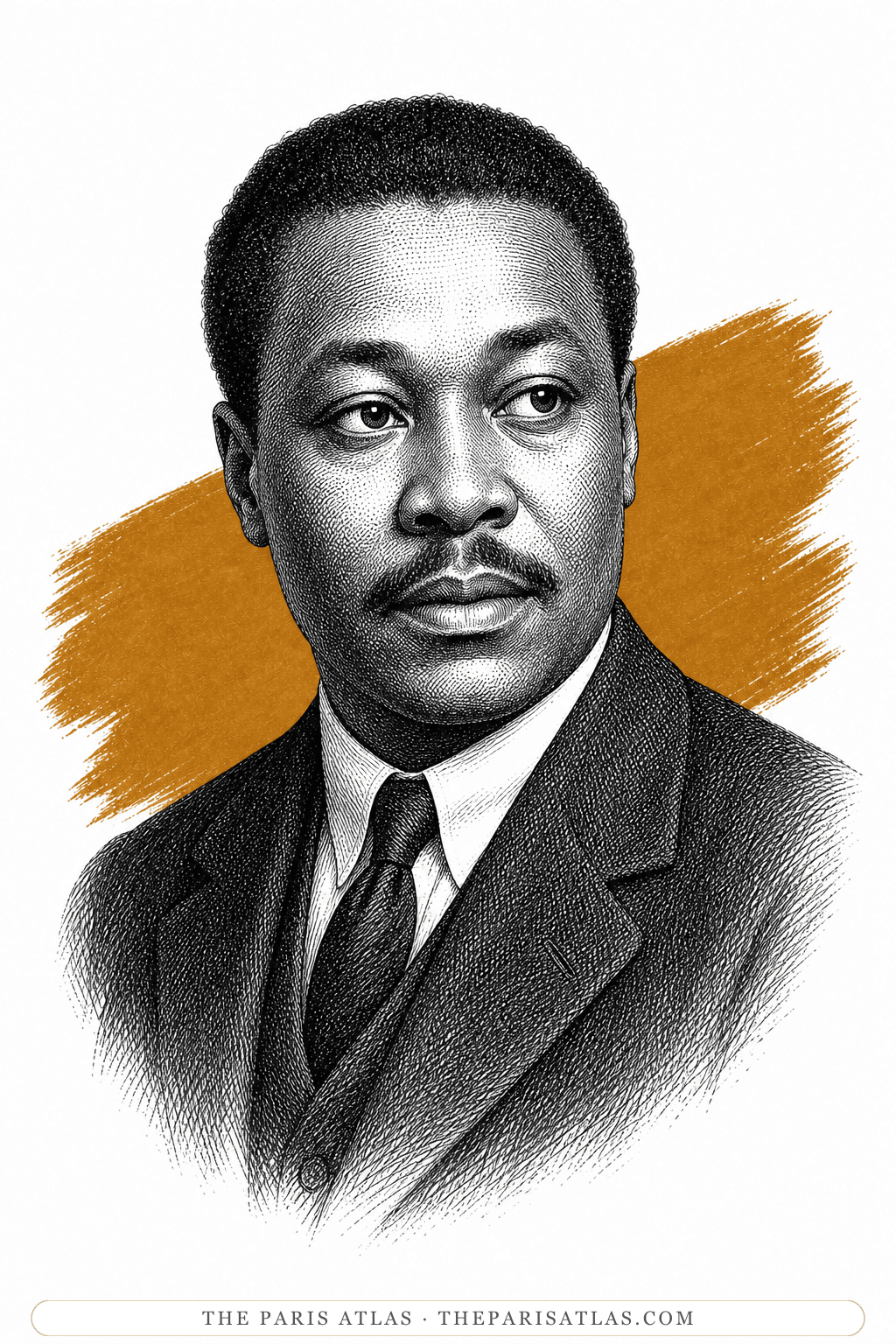

Banjo
Black seamen, drifters and musicians on the Marseille waterfront — the novel that gave Négritude its vocabulary, written by a Jamaican who preferred the docks to literary Paris.
Read our take
by Claude McKay
Claude McKay's account of two decades of travel — Harlem, London, Moscow, Berlin, Paris, Marseille, Morocco — by a writer who refused to settle anywhere or belong to anyone's programme.
A Long Way from Home covers the years from Claude McKay's arrival in the United States to his return in the mid-1930s, and it is the essential source for his French period. He writes about Harlem before the Renaissance had a name, about the reception he was given in the Soviet Union in 1922, about Berlin, Paris, the Marseille waterfront and Morocco. It is also a sustained argument: against the expatriate literary scene, against being told what a Black writer owes his race, and against every organisation that tried to claim him.
The memoir opens with McKay's arrival in America and his early Harlem years, then follows him to London, where he read Marx and worked on a socialist paper, and back to New York and the editorship of The Liberator alongside Max Eastman.
The Soviet section is the strangest and most vivid. McKay went to Moscow in 1922 and was received as a celebrity — carried through crowds, addressed to the Comintern, sculpted and photographed. He writes about it with a mixture of pleasure and unease, aware that he was being used as an exhibit and enjoying it anyway.
Then Europe: Berlin, and the long French years from 1923 to 1928. He is candid about being poor and often ill, about working as an artist's model, and about disliking the wealthy, largely white expatriate circles of literary Paris — the same Paris, in the same years, that produced the Lost Generation memoirs. His interest is in Marseille instead, where Banjo came from. The book closes after Morocco and his return to the United States.
Running underneath is the refusal. McKay would not be the Communist Party's writer, or the Harlem Renaissance establishment's, or anyone's representative Negro artist, and much of the memoir is him explaining why with considerable bite.
McKay's opening gives railway work a double rhythm. The train carries him toward a meeting with an editor, but another assignment postpones it. His play on waiter and waiting joins paid service to the wish for literary recognition. He keeps his writing secret from his fellow workers because becoming their professor might cost him the ordinary equality of being a friend. Ambition does not simply lift him above the crew: his hope for a different audience coexists with his attachment to the one already around him.
The broken window brings political travel down to the scale of a body trying to stay warm. McKay buys protection and complains, then his neighbor's reminder of worse housing makes him reassess his grievance. He recalls a German train where his request for cream exposed another scarcity he had not understood. Linking these episodes, the memoir tests sympathy against everyday expectations. His own embarrassment becomes part of learning to see deprivation; that correction neither warms the room nor settles his dispute with the delegation.
If you want McKay on Paris and Marseille in his own words, this is where it is.
Same city, same decade, entirely different Paris — and written by someone who found the famous version tedious and said so.
His account of being received as a celebrity by the young Soviet state is unlike anything else in the period's memoirs.
McKay was in France from 1923 to 1928 — precisely the Hemingway and Fitzgerald years — and wrote about the port of Marseille rather than the cafés of Montparnasse.
1912
McKay leaves Jamaica for the United States.
1922
He travels to the Soviet Union and is received as a celebrity.
1923–1928
The French years — Paris, Marseille and the material behind Banjo.
1934
He returns to the United States.
1937
Lee Furman publishes A Long Way from Home.
Black seamen, drifters and musicians on the Marseille waterfront — the novel that gave Négritude its vocabulary, written by a Jamaican who preferred the docks to literary Paris.
Read our take
The first bestseller by a Black American novelist — written in France, set in Harlem, and denounced by the movement it belonged to.
Read our take
The collection that opened the Harlem Renaissance, written in strict sonnets by a Jamaican who refused to soften either the form or the anger.
Read our takeThat McKay liked the city's cosmopolitanism and had little patience for its expatriate literary circles, which he found rich, white and tiresome. He was there for the same years as the Lost Generation and wrote about the Marseille docks instead.
It is a memoir written a decade later with scores to settle, so it should be read as testimony rather than record. It remains the primary first-person source for his European years.
No. It is McKay’s memoir of travel, work, political encounters, and literary life. Its judgments belong to a participant looking back on his own experiences.
The account moves through the United States, the Soviet Union, Germany, France, and Morocco. Marseille is especially important to its account of Black life beyond the American expatriate circles of Paris.
No. McKay also examines the political organizations, racial expectations, and claims of belonging that he encountered abroad. His disagreements with those who wanted to speak for him shape the book.
Explore authors with a similar voice, perspective, and influence.
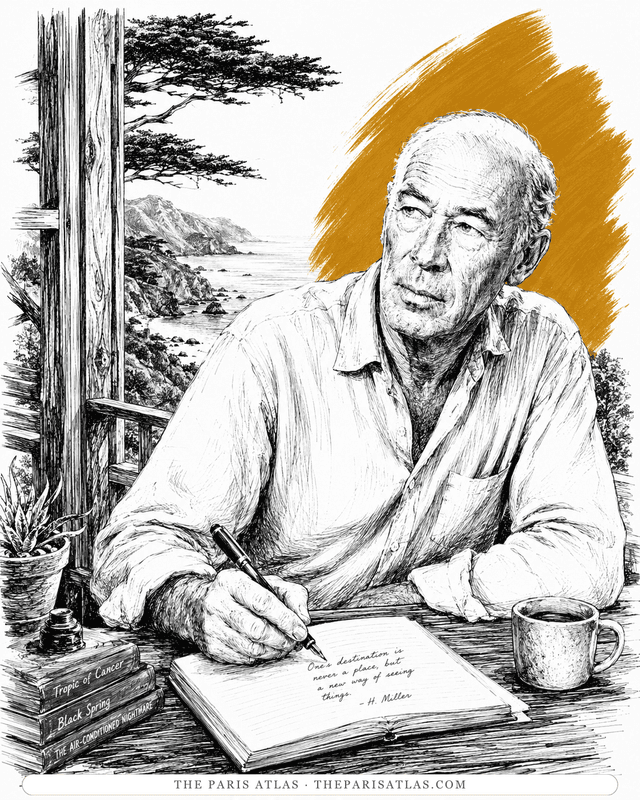
The Brooklyn dropout who arrived in Paris broke at thirty-eight and wrote the exuberant, banned books that ended American censorship.
View author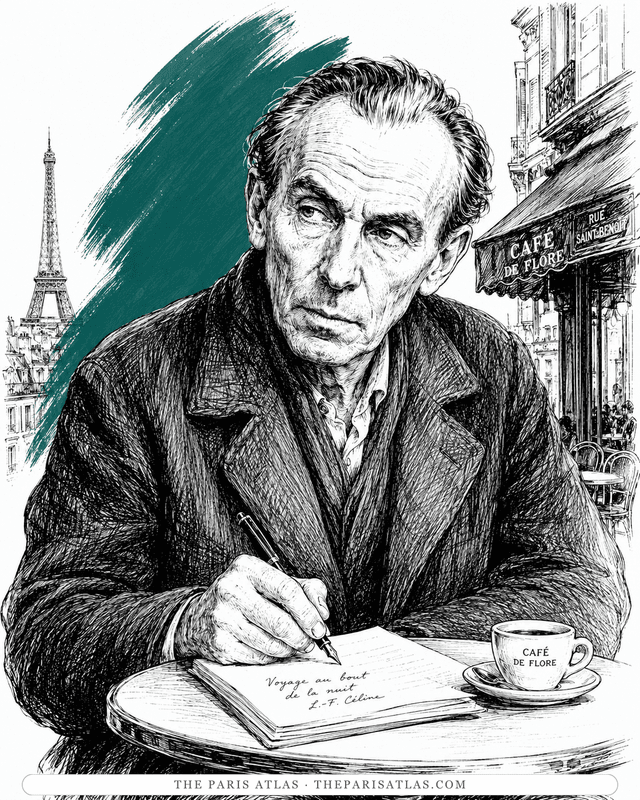
The doctor of the Paris slums who wrote the century's blackest, funniest novel — and changed the sound of French prose.
View author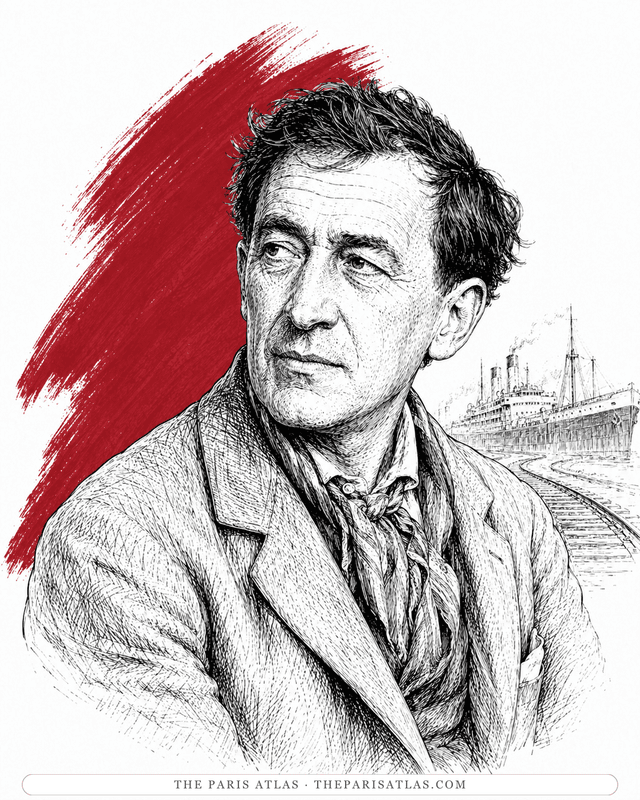
The one-armed adventurer-poet of the Paris avant-garde — La Prose du Transsibérien, Moravagine, the memoir tetralogy — and the living writer Henry Miller ranked above all others.
View authorThe sources below include the primary text, editions, scholarship, archival materials, and other records that informed this page. They document A Long Way from Home, its publication, and its place in literary history.


Page markers in the transcription; no facsimile collation.
Used to place A Long Way from Home within Claude McKay's published work and verify its bibliographic context.

Used for independent biographical, archival, or historical context surrounding Claude McKay's career and the period in which A Long Way from Home appeared.
Used to cross-check authorship, chronology, and the work's place in Claude McKay's wider catalogue.
Used to verify Claude McKay's bibliography and place A Long Way from Home within the broader chronology of Claude McKay's career.
The primary text is the baseline reference for every book page. Additional references document publication history, interpretation, and historical context where that evidence is available.
 Explore more resources