

Paris 1928: Nexus II
by Henry Miller
Miller and June’s first Paris trip, recovered from an unfinished manuscript before the city became part of his legend.
- 2012
- 176
About Henry Miller
The story, briefly
Spoiler-freeParis 1928 is the unfinished continuation of Nexus, not another title for the trilogy’s third volume. Its narrator, Val, travels to Europe with Mona, Miller’s fictional version of June. The first visit to Paris opens onto artistic encounters and further travel while the couple’s difficult marriage follows them abroad. Indiana University Press published the abandoned draft in English in 2012, with illustrations by Garry Shead.
The unfinished story
Val and Mona leave the New York life recalled in Nexus for their first European journey together. Paris offers new acquaintances and a different setting for Val’s ambitions; travel farther east brings encounters with Mona’s family. This is the 1928 visit, not Miller’s later move to Paris in 1930.
Because Miller abandoned the draft, the book does not have the final form of a completed fourth installment. Its value is the additional perspective it offers on the marriage and the beginnings of the European experience, rather than a definitive resolution of the trilogy.
Themes and analysis
What happens on the first European journey
Henry Miller revisits his first trip to Europe with his second wife, June, who appears as Mona. The narrator is called Val. He arrives with a writer’s ambitions and an unsettled marriage, before the years of poverty described in Tropic of Cancer.
The journey begins in the shadow of the life the couple has left in New York. In Paris, meetings with artists and acquaintances give Val reasons to question American expectations about work and respectability. The manuscript also follows travel into Eastern Europe and encounters with Mona’s family. These passages complicate the idea of Europe as a single place of escape.
An unfinished continuation of Nexus
Nexus closes the published Rosy Crucifixion trilogy. Paris 1928 continues beyond that book’s boundary, but Miller abandoned the draft. Its unfinished condition matters: readers are encountering a further attempt to tell the story, without the revisions and final shape of a completed novel.
The book therefore belongs beside Nexus, not under it as an alternate title. Nor should the trip be confused with Miller’s move to Paris in 1930. In 1928, he and June were visiting Europe together; the later move began a different phase of his life.
Memory, marriage, and the writing
The account uses the freedom of autobiographical fiction. Val and Mona have real-life models, but their conversations and actions belong to Miller’s retrospective narrative. June’s own explanation of the marriage is not supplied by the way her husband portrays Mona.
The draft combines travel episodes with reflections on becoming a writer. Its unevenness gives readers another version of material Miller returned to across several books. Comparing these versions can reveal changes in emphasis; it cannot establish that the most vivid version is the most historically accurate.
The illustrated English edition
Indiana University Press published the first English edition in 2012. Australian artist Garry Shead supplied the illustrations, and the edition contains two color plates and eighty-five black-and-white drawings. These images were made for the published edition, rather than drawn by Miller as part of his draft.
Read the book after Nexus if you want the continuation of the trilogy’s chronology. Read Tropic of Cancer for the finished work about the later Paris years. Paris 1928 is especially useful between those books, where it makes the difference between the first visit and the eventual expatriate life clear.
Why we recommend it
Before the Paris mythology
The unfinished manuscript catches Miller and June at the beginning of the European story he spent a lifetime retelling.
The first European visit
Val and Mona’s journey offers a different view of Europe from the Paris life depicted in Tropic of Cancer.
An unfinished continuation
The fragment lets readers see where Miller took the story after Nexus, while its incomplete form remains visible.
What this book explores
Timeline
1928
Miller and June visit Europe together, the journey later reworked in this unfinished narrative.
1960
Nexus completes the published Rosy Crucifixion trilogy; the unfinished continuation extends its story beyond that volume.
2012
Indiana University Press publishes the first English edition of Paris 1928, illustrated by Garry Shead.
Book editions

- Paperback
- Indiana University Press
- 2012
- 9780253008312
Reader reviews
Readers may also like

Nexus
The fragment continues the autobiographical territory of the trilogy’s final volume.
Read our take
Paris 1928: Nexus II: frequently asked questions
Is Paris 1928 another title for Nexus?
No. It is a separate, unfinished continuation of Nexus, often identified as Nexus II.
Who are Val and Mona?
Val is Miller’s autobiographical narrator; Mona is his fictional representation of June Mansfield.
Does the book describe Miller’s move to Paris?
It describes the couple’s 1928 European visit, before Miller settled in Paris in 1930.
Who made the illustrations?
Garry Shead illustrated the 2012 English edition; the drawings are not Miller’s manuscript illustrations.
Is Paris 1928 a finished novel?
No. It is an unfinished continuation of Nexus, published separately rather than presented as a completed new novel.
If you like Henry Miller
Explore authors with a similar voice, perspective, and influence.

Louis-Ferdinand Céline
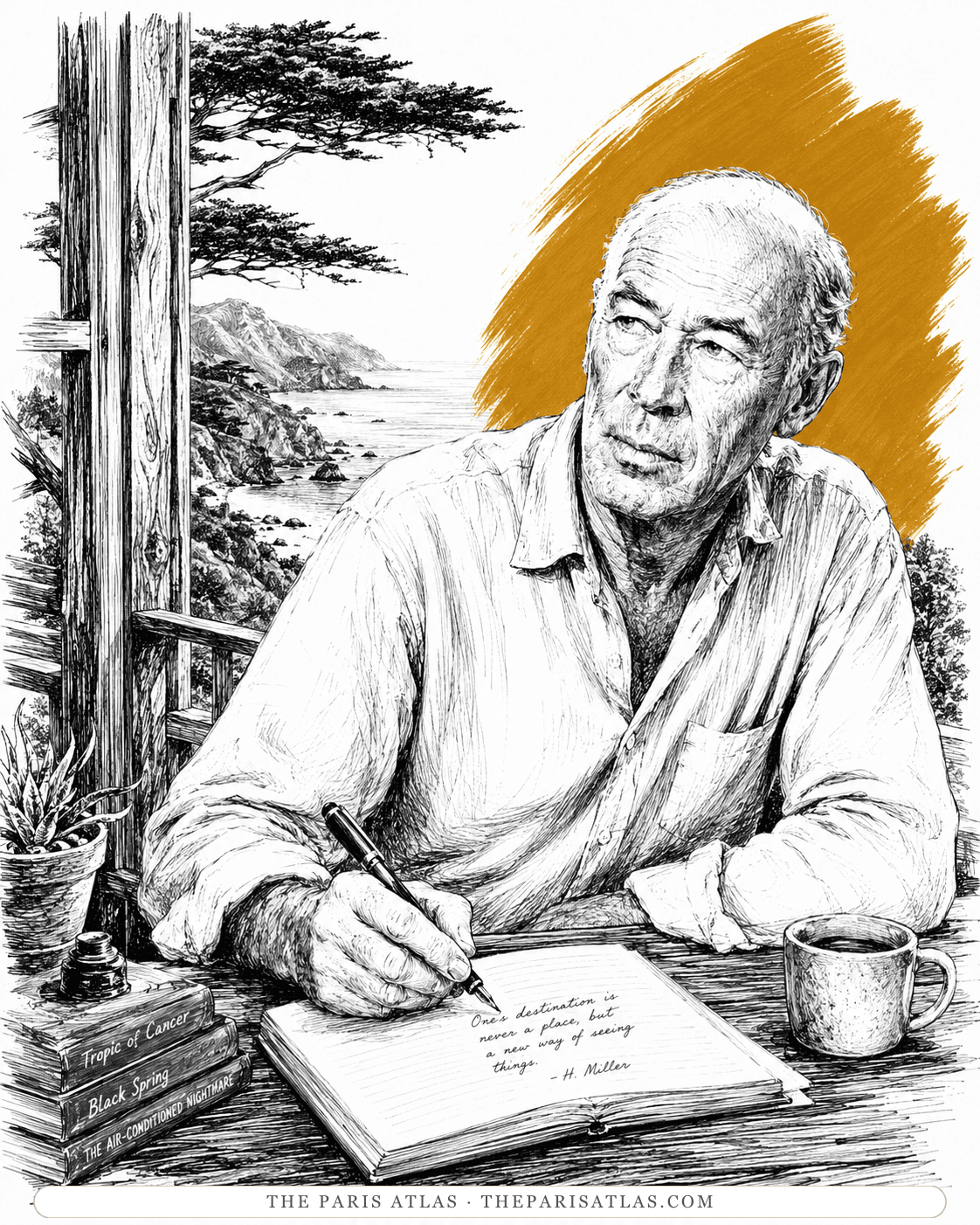
Miller's acknowledged master at making literature out of the gutter. Journey gave him permission; Cancer is what he did with it.
View author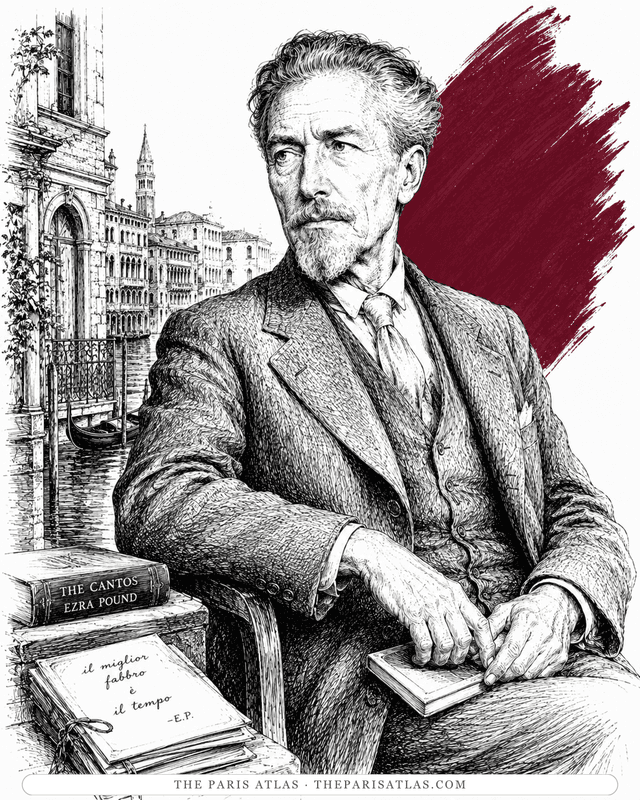
Ezra Pound
Pound read Cancer and sent Miller a famously backhanded postcard. Both believed literature's job was to wake the reader by any means necessary.
View author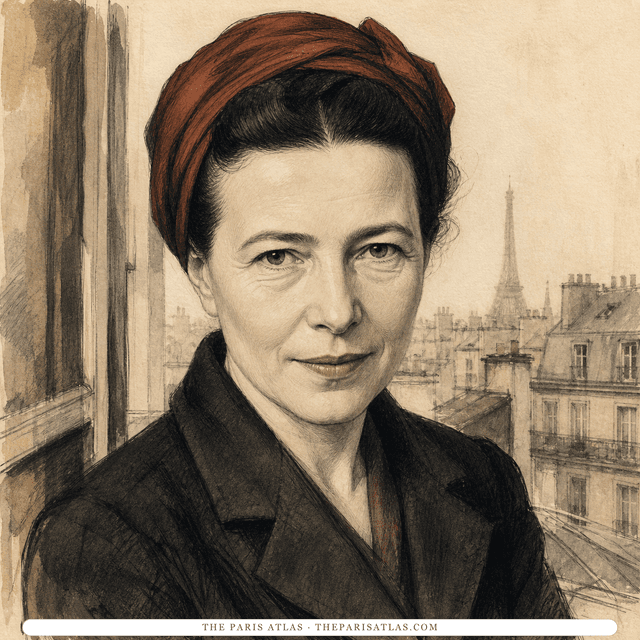
Simone de Beauvoir
French writer and philosopher whose novels, memoirs, and social analysis examined freedom, gender, responsibility, aging, and the material conditions that shape a life.
View author
References
References
The sources below include the primary text, editions, scholarship, archival materials, and other records that informed this page. They document Paris 1928: Nexus II, its publication, and its place in literary history.


1Paris 1928 — edition and illustrator information
WebsiteIndiana University PressUsed forWeb source consulted for documented facts and historical context presented on the Paris 1928: Nexus II page.
2Paris 1928 (Nexus II) — review
WebsitePublishers WeeklyUsed forWeb source consulted for documented facts and historical context presented on the Paris 1928: Nexus II page.

3Paris 1928: Nexus II — Open Library ISBN catalogue
Official recordOpen Library, Internet ArchiveUsed forOfficial record used to verify names, dates, institutional details, or other factual information on this page.
4Paris 1928: Nexus II — Google Books edition record
Official recordGoogle BooksUsed forOfficial record used to verify names, dates, institutional details, or other factual information on this page.
5Paris 1928: Nexus II — Internet Archive ISBN catalogue
Official recordInternet ArchiveUsed forOfficial record used to verify names, dates, institutional details, or other factual information on this page.
6Paris 1928: Nexus II — Library of Congress books catalogue
Official recordLibrary of CongressUsed forOfficial record used to verify names, dates, institutional details, or other factual information on this page.
i
Why these sources are here
The primary text is the baseline reference for every book page. Additional references document publication history, interpretation, and historical context where that evidence is available.
 Explore more resources