
A Moveable Feast
Hemingway and Stein remember their shared Paris circle from opposite sides of a long friendship and quarrel.
Read our take
Gertrude Stein tells the story of her Paris life and artistic circle in the voice of her partner, Alice B. Toklas.
Despite its title, this is Gertrude Stein’s account of her own life, written as though Alice B. Toklas were telling it. The book moves through their Paris home and salon, where painters and writers including Picasso, Matisse, Hemingway, and Fitzgerald gathered. It is both a record of the modernist art world and a playful act of self-portraiture.
The book begins with Toklas’s early life and arrival in Paris, then turns toward her life with Stein. From their home on the rue de Fleurus, the couple meet and host many of the painters and writers who shaped early twentieth-century modernism.
Stein uses Toklas’s voice to describe Stein’s own work, friendships, arguments, travels, and growing reputation. The unusual point of view is part of the book’s joke and part of its argument about who gets to tell a life.
The salon’s artistic prestige meets a different standard in Hélène’s kitchen. In chapter 2, the cook objects to Matisse staying unexpectedly for dinner after asking what she will serve. Her answer is to fry his eggs instead of making an omelette: identical ingredients can convey less respect. The joke gives someone outside the celebrated circle a way to judge its members. Hospitality depends on her work and decisions, not simply on the hosts’ welcome. Through this small refusal, the memoir makes artistic distinction coexist with the ordinary obligation to behave considerately in another person’s workplace.
At the end of chapter 1, the narrator explains how she recognizes genius: meeting Stein makes an inward bell sound, an experience she associates only with Stein, Picasso and Alfred Whitehead. She twice insists that this instinct has never misled her. The repetition supplies certainty without offering readers an argument they could test. Because Stein writes this declaration in Toklas’s voice, praise of the author arrives disguised as someone else’s independent judgment. The opening thus teaches us to notice not just whom the memoir admires, but how it creates the authority to admire them.
The title announces Alice B. Toklas, but Gertrude Stein wrote the book and constructed its first-person voice. That device lets Stein make herself both subject and object: Toklas appears to narrate their shared life while the author stages a witty, deliberately indirect self-portrait.
Toklas’s later memoir and the couple’s surviving papers provide an important counterpoint. They preserve Toklas as a historical person and writer, not only as the narrative mask Stein created in 1933.
It places the reader in the Paris home where Stein and Toklas received painters, writers, friends, and rivals.
Several people from A Moveable Feast appear here from Stein’s very different perspective.
Stein writes about herself in Toklas’s voice, making the form part of the book’s meaning.
1907
Alice B. Toklas arrives in Paris, where she meets Gertrude Stein and becomes her lifelong partner.
1933
Harcourt, Brace and Company publishes The Autobiography of Alice B. Toklas.
1963
Toklas publishes What Is Remembered, her own later memoir of their shared life.

Hemingway and Stein remember their shared Paris circle from opposite sides of a long friendship and quarrel.
Read our take
An earlier and more demanding entry into Stein’s fiction and experimental prose.
Read our take
Toklas’s own memoir-like book, written through meals and recipes after Stein’s death.
Read our takeNo. Gertrude Stein wrote it in a voice presented as Toklas’s. The unusual authorship is central to the book’s humor and self-portraiture.
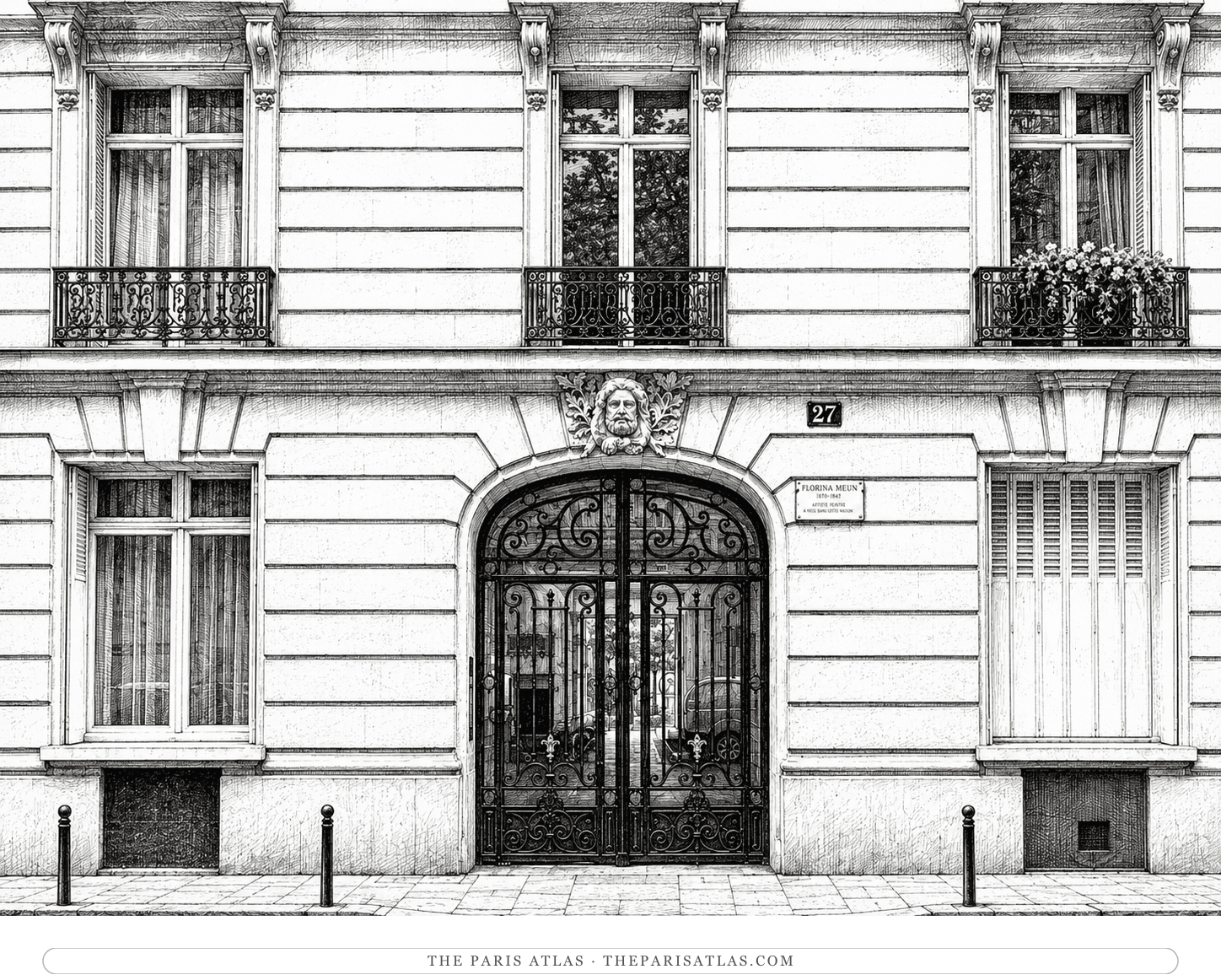
Stein and Toklas’s home at 27 rue de Fleurus is the book’s principal Paris center, where their salon brought together painters, writers, friends, and rivals.
Harcourt, Brace and Company published it in 1933. It became Stein’s most commercially successful book.
It is more approachable than much of her other writing. Anecdotes about people, paintings, and the salon give readers a clear route through its unusual act of self-portraiture.
No. Stein selects and judges the people in her circle while writing through Toklas’s supposed voice. The book is valuable testimony, but also a deliberately self-interested literary performance.
Explore authors with a similar voice, perspective, and influence.

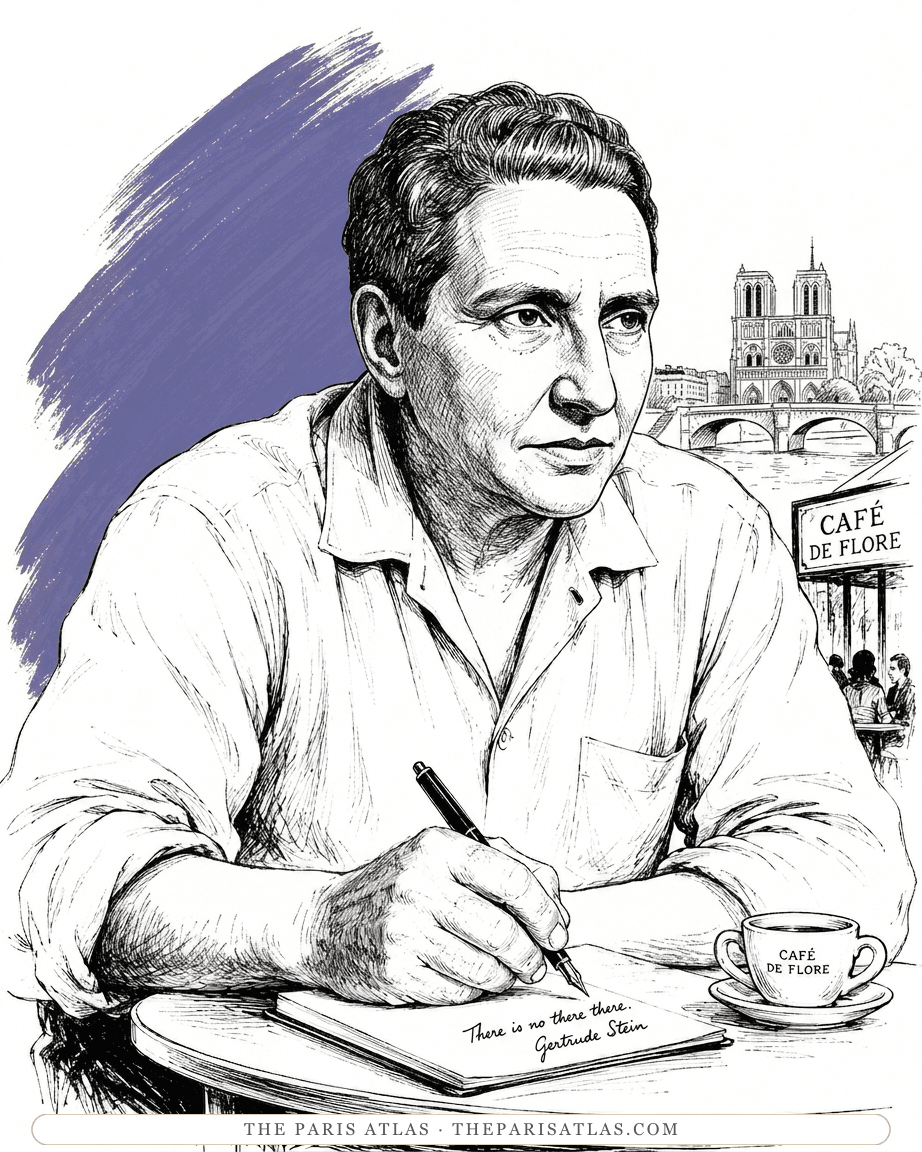
Her most famous pupil — the tutorials at the rue de Fleurus, the godmother years, and the 'lost generation' epigraph all passed through her studio before the celebrated falling-out.
View author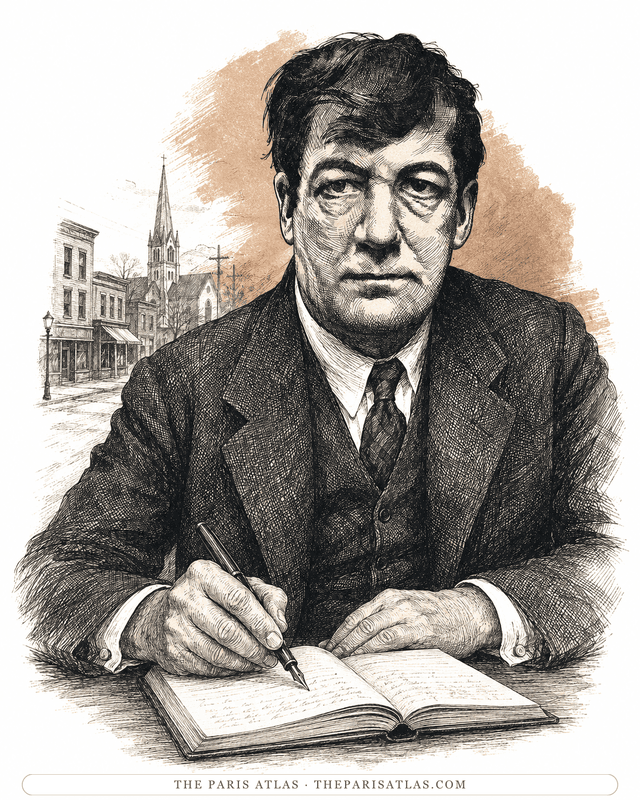
Her loudest American champion — he wrote the introduction to her Geography and Plays, and it was his letter that first brought Hemingway to her door.
View author
The Brooklyn dropout who arrived in Paris broke at thirty-eight and wrote the exuberant, banned books that ended American censorship.
View authorThe sources below include the primary text, editions, scholarship, archival materials, and other records that informed this page. They document The Autobiography of Alice B. Toklas, its publication, and its place in literary history.


Primary-text basis for the added reading of household labor and respect.
Primary-text basis for the added reading of self-certifying narrative authority.
The primary text is the source for the book’s narrative voice, salon portraits, and account of Stein and Toklas’s life together.

The Beinecke finding aid supplies independent archival context for Stein and Toklas’s papers, manuscripts, and correspondence.
The Jewish Women’s Archive encyclopedia supplies independent biographical context for Toklas and her life with Stein.
Toklas’s own later memoir supplies a second primary perspective on the shared life the 1933 book narrates in her voice.
The primary text is the baseline reference for every book page. Additional references document publication history, interpretation, and historical context where that evidence is available.
 Explore more resources