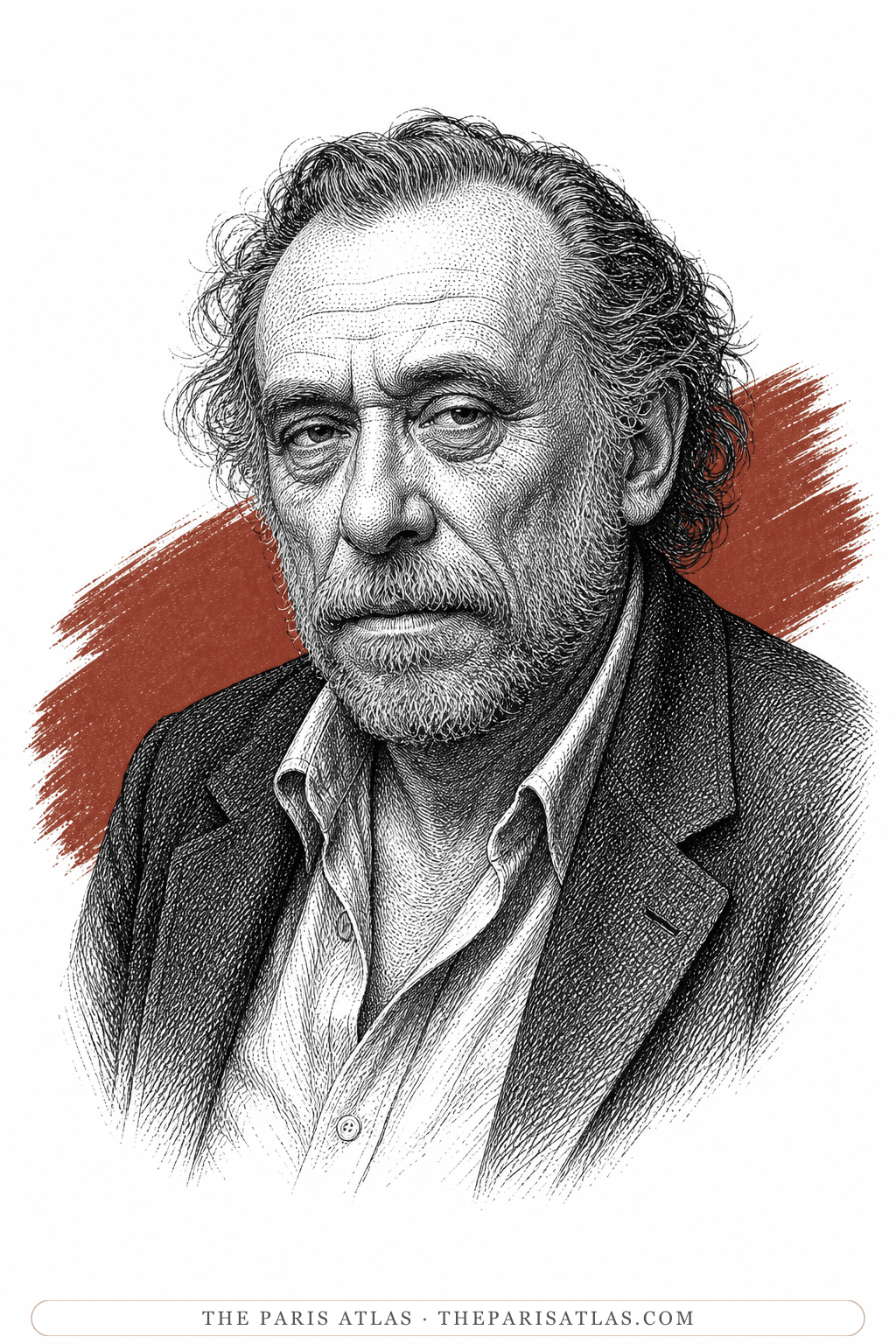


The Mathematics of the Breath and the Way
The other book about writing: stories, essays, interviews and introductions, edited by the scholar who recovered his uncollected prose.
- 2018
About Charles Bukowski
The story, briefly
Spoiler-freeThe Mathematics of the Breath and the Way, published by City Lights in 2018, gathers Charles Bukowski's writing about writing from everywhere except his letters. David Stephen Calonne — who had already assembled the two volumes of uncollected prose — drew on short stories, essays, interviews and the introductions Bukowski wrote for other people's books. Across 250 pages it produces a fuller picture than the letters alone: Bukowski explaining himself to interviewers, praising writers he admired in print, and turning the subject of writing into fiction. It is the companion to Ecco's On Writing rather than a competitor, and the two have different editors and different material.
The story, in more detail
Bukowski wrote introductions for other writers, gave interviews for thirty years, and put writers and writing into his stories. Calonne's gathering shows a man who thought about the craft constantly and in public, which sits oddly against the reputation for indifference. The introductions are the most surprising part. Praising another writer in print gave him nothing to defend, and he wrote those pieces without the pose.
Themes and analysis
The newspaper seller outside the track
The title essay defends Hemingway by comparing literary detractors with a newspaper seller mocking the jockey Bill Shoemaker. Racing supplies a model of demonstrable achievement against which a bystander’s ridicule seems cheap. But the argument also exposes an uneasy measure of worth: Bukowski declares money unimportant, then imagines the wealthy jockey purchasing the seller’s entire stock indefinitely. Talent’s defense borrows the language of purchasing power. The anecdote is therefore more revealing as a combative writer’s account of resentment than as proof that successful artists must be right and their critics merely jealous.
The visitor with black notebooks
The visiting poet’s notebooks and literary appearance make authorship something visibly displayed. His boast that he can reproduce Bukowski’s writing treats style as a transferable technique; the essay instead connects it to feeling and an individual manner of watching. Bukowski says he leaves the boast unanswered, but retelling it lets him deliver a public reply on his own terms. That discrepancy complicates his dismissal of the visitor’s appetite for self-glory. The passage argues for simplicity while also showing how quickly a discussion of craft becomes a contest over personal distinction.
Why we recommend it
The subject from every angle but letters
Stories, essays, interviews and introductions — the material Ecco's letters volume by definition could not hold.
Bukowski without a pose
The introductions he wrote for other writers' books are among the few places he had nothing to defend.
A comparison of public voices
Interviews, fiction, and essays show how Bukowski changes his way of discussing writing for different audiences.
What this book explores
Timeline
1960s–1993
The span of the interviews, essays and introductions the volume draws on.
2015
Ecco publishes On Writing, the letters volume.
2018
City Lights publishes Calonne's gathering of everything else.
Book editions

- Paperback
- City Lights
- 2018
- 9780872867598

- Paperback
- Canongate
- 2018
- 9781786894434
Reader reviews
Readers may also like

More Notes of a Dirty Old Man
The City Lights gathering of uncollected columns, from the same recovery effort.
Read our take
Notes of a Dirty Old Man
The column book whose prose these essays and interviews sit alongside.
Read our takeThe Mathematics of the Breath and the Way: frequently asked questions
What is The Mathematics of the Breath and the Way?
A 2018 City Lights collection of Charles Bukowski's writing about writing, drawn from short stories, essays, interviews and introductions, and edited by David Stephen Calonne.
How is it different from On Writing?
On Writing (Ecco, 2015) is letters only, edited by Abel Debritto. This one takes the same subject from everything except letters, and has a different editor.
Who edited it?
David Stephen Calonne, who also edited Portions from a Wine-Stained Notebook and Absence of the Hero, and wrote a critical biography of Bukowski.
Why does the British edition have a different subtitle?
City Lights published it as On Writers and Writing; Canongate sells it in Britain as The Writing Life. The contents are identical.
Does it include his opinions of other writers?
Yes — including introductions he wrote for other people's books, which are among the least guarded things he published.
If you like Charles Bukowski
Explore authors with a similar voice, perspective, and influence.
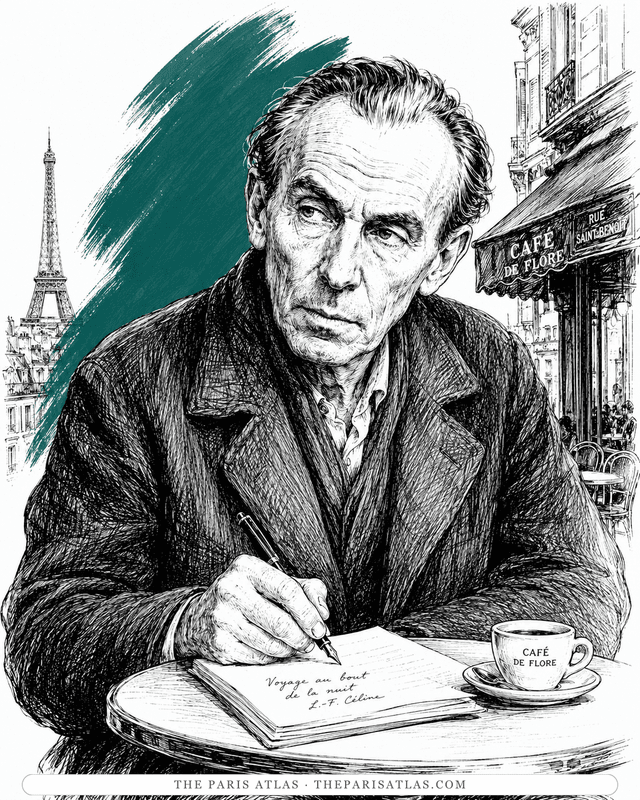
Louis-Ferdinand Céline
The doctor of the Paris slums who wrote the century's blackest, funniest novel — and changed the sound of French prose.
View author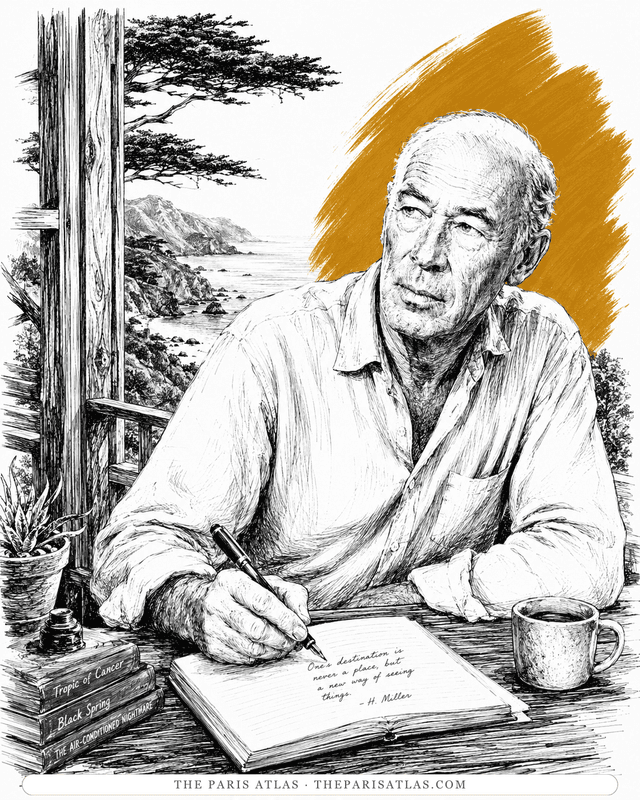
Henry Miller
The Brooklyn dropout who arrived in Paris broke at thirty-eight and wrote the exuberant, banned books that ended American censorship.
View author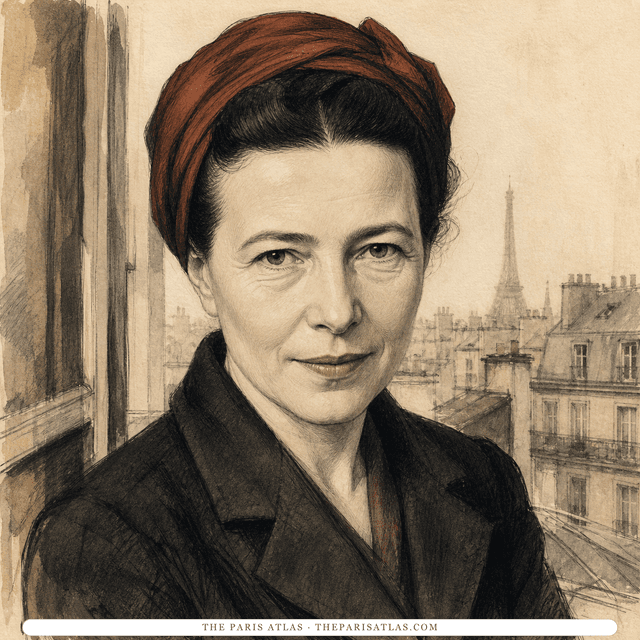
Simone de Beauvoir
French writer and philosopher whose novels, memoirs, and social analysis examined freedom, gender, responsibility, aging, and the material conditions that shape a life.
View author
References
References
The sources below include the primary text, editions, scholarship, archival materials, and other records that informed this page. They document The Mathematics of the Breath and the Way, its publication, and its place in literary history.

1The Mathematics of the Breath and the Way
EssaysCharles Bukowski, 2018Used forThe primary text represented by this page, used for descriptions of the work’s contents and for any quoted passages shown here.

2Charles Bukowski
BiographyReaktion Books, 2012Used forThe editor's critical biography and his account of Bukowski's reading.
3Charles Bukowski timeline (bukowski.net)
WebsiteUsed forPublication year, editions and editor.
4Charles Bukowski (Poetry Foundation)
WebsiteUsed forCareer context for the interviews and introductions.
5Charles Bukowski: books and chapbooks (Verdant Press checklist)
WebsiteUsed forBibliographic details checked against the checklist.
6The Mathematics of the Breath and the Way: The Writing Life — publisher extract
EssaysCanongate (extract distributed by Waterstones), 2018Used forComplete title essay read in the public UK extract; the two illustrated passages on pp. 27–28 were also visually checked. No full-volume or cross-edition collation claimed.
i
Why these sources are here
The primary text is the baseline reference for every book page. Additional references document publication history, interpretation, and historical context where that evidence is available.
 Explore more resources