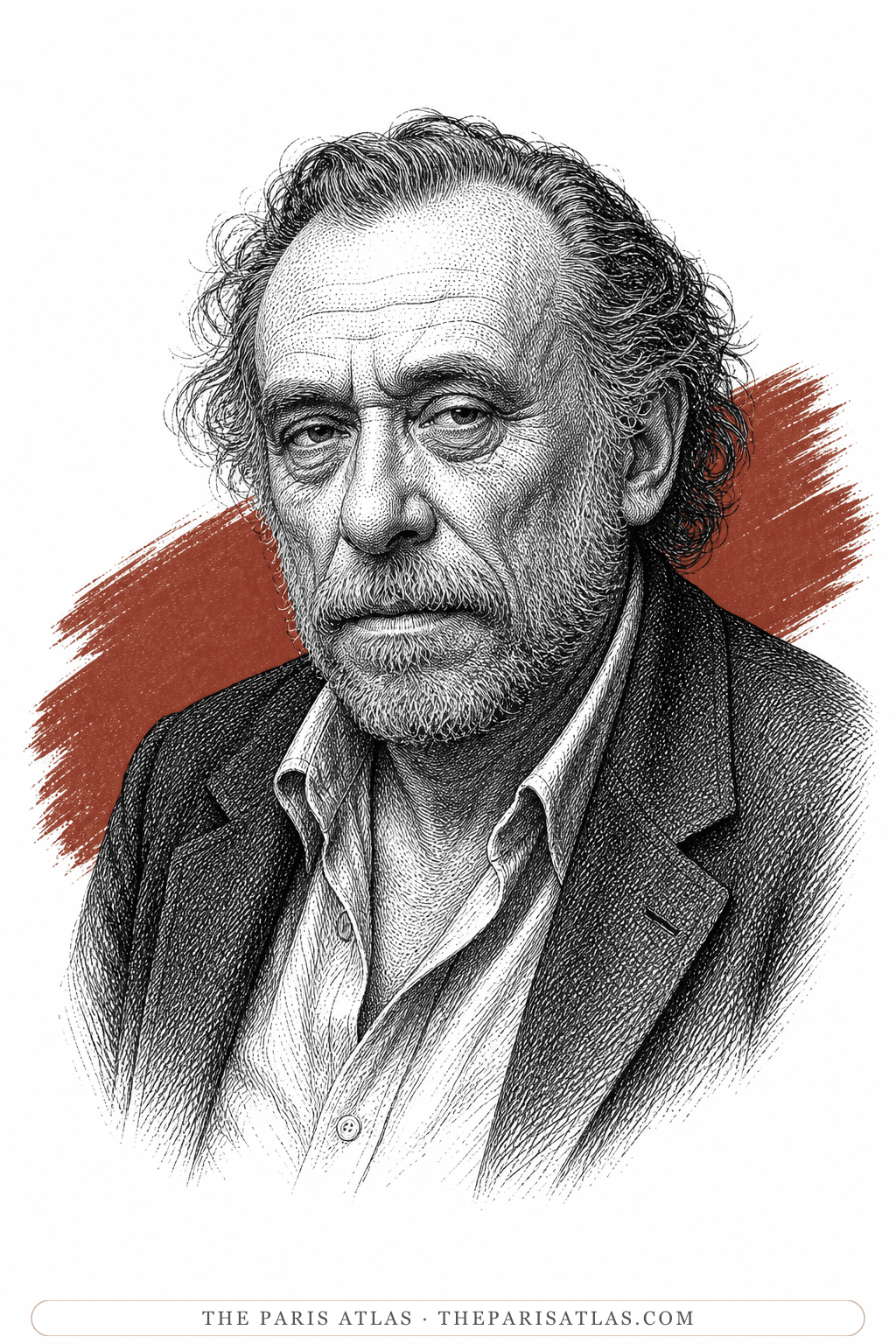


There's No Business
The second Crumb collaboration: one story about an aging comedian who has lost whatever he had.
- 1984
- Savage
- Melancholy
- Wry
- voice-driven
- dark
- spare
- funny
About Charles Bukowski
The story, briefly
Spoiler-freeThere's No Business, published by Black Sparrow Press in 1984, is the second Charles Bukowski story to be issued as a book illustrated by Robert Crumb, following Bring Me Your Love the year before. Its subject is an aging comedian named Manny whose act no longer works — a man performing a routine that used to land and now does not, in front of people who can tell. Bukowski was in his mid-sixties when it appeared, six years after Women and the European trips had made him famous, and by then he was giving readings to audiences who came for the performance.
The story, in more detail
Crumb draws unflattering bodies better than almost anyone, which suits a story about a man whose act has stopped working. The book is short and the comedian is not redeemed at the end of it.
Themes and analysis
A warning in the dressing room
The opening measures Manny’s career in years without converting endurance into achievement. Four decades in entertainment have left him poor and performing in a small hotel lounge. His scrutiny of his aging face makes the dressing-room mirror an uncomfortable counterpart to public applause: neither offers reassurance. Yet the story also places his difficulties within a changing entertainment economy, with money moving elsewhere. Personal decline and commercial decline overlap, complicating the convenient judgment that a performer’s failure must be entirely his own fault.
The silence beyond the microphone
Joe’s ultimatum turns laughter into a condition of employment. Manny cannot secure his position by continuing to work; other people must produce the response that makes his work saleable. This gives the distance between stage and audience an economic as well as an emotional significance. The opening’s contrast between his professional comic identity and private anxiety also prevents comedy from meaning uncomplicated pleasure. The man expected to make an audience feel better goes onstage needing reassurance that the audience has no obligation to provide.
Why we recommend it
Crumb drawing a failing performer
The artist who spent a career drawing bodies that betray their owners, given a story about exactly that.
A pointed subject
A story about an act that stops working, written during Bukowski's own years of paid public readings.
The vulnerability of performing
Manny’s failing act makes dependence on an audience’s response the story’s immediate problem.
What this book explores
Timeline
1983
Bring Me Your Love, the first Bukowski–Crumb book.
1984
There's No Business follows.
1997
Crumb illustrates the posthumous journals.
Book editions

- Hardcover
- Black Sparrow Press
- 1984
- 9780876855911
Reader reviews
Readers may also like


There's No Business: frequently asked questions
What is There's No Business?
A single Charles Bukowski story published as an illustrated book by Black Sparrow Press in 1984, with drawings by Robert Crumb.
What is it about?
An aging comedian named Manny whose act no longer works, performing for people who can tell.
How does it relate to Bring Me Your Love?
It is the second of the two Bukowski–Crumb story books, published a year after the first.
Did Crumb and Bukowski work together again?
Once. Crumb illustrated The Captain Is Out to Lunch, the journals published in 1997, three years after Bukowski's death.
Why does the subject matter?
He was in his mid-sixties and internationally famous, and giving readings himself, when he published a story about a performer who has lost whatever he had.
If you like Charles Bukowski
Explore authors with a similar voice, perspective, and influence.
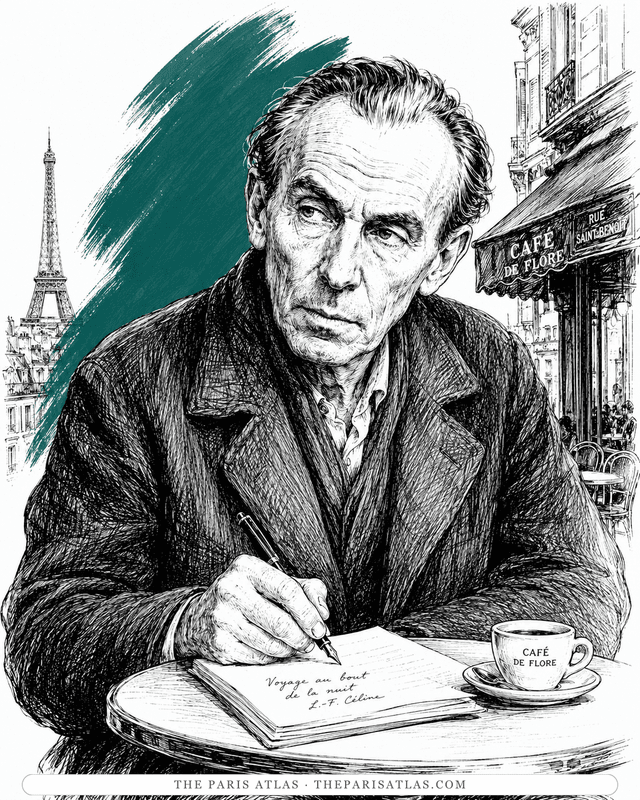
Louis-Ferdinand Céline
The doctor of the Paris slums who wrote the century's blackest, funniest novel — and changed the sound of French prose.
View author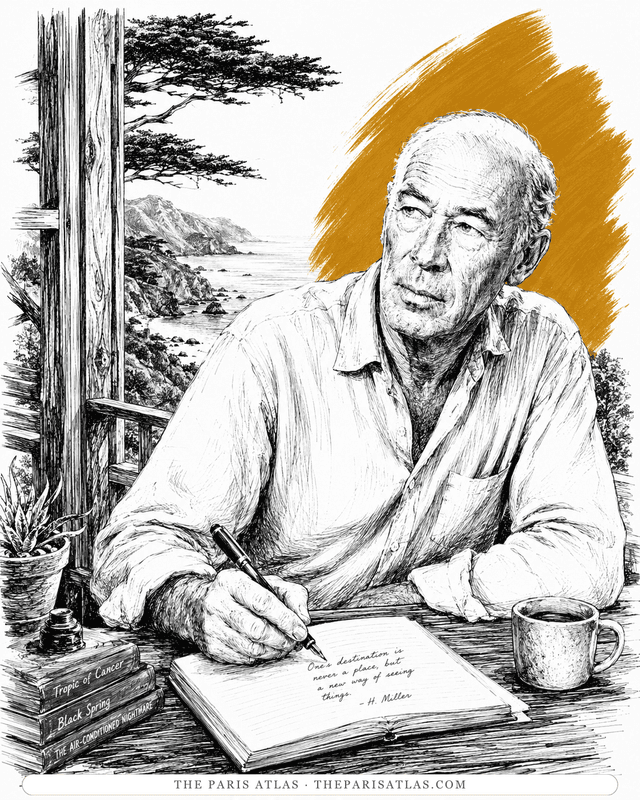
Henry Miller
The Brooklyn dropout who arrived in Paris broke at thirty-eight and wrote the exuberant, banned books that ended American censorship.
View author
Simone de Beauvoir
French writer and philosopher whose novels, memoirs, and social analysis examined freedom, gender, responsibility, aging, and the material conditions that shape a life.
View author
References
References
The sources below include the primary text, editions, scholarship, archival materials, and other records that informed this page. They document There's No Business, its publication, and its place in literary history.


1There's No Business
NovelCharles Bukowski, 1984Used forThe primary text represented by this page, used for descriptions of the work’s contents and for any quoted passages shown here.
2Charles Bukowski timeline (bukowski.net)
WebsiteUsed forPublication details and the Crumb collaborations.
3Charles Bukowski: books and chapbooks (Verdant Press checklist)
WebsiteUsed forBibliographic details of the Black Sparrow edition.
4Charles Bukowski
BiographyReaktion Books, 2012Used forThe mid-1980s period in the career narrative.

6There’s No Business — opening excerpt and publisher’s synopsis
PeriodicalÉditions du sous-sol, Feuilleton no. 15Used forPublisher’s opening excerpt in Jean-Luc Fromental’s French translation, with a synopsis of Joe’s ultimatum.
i
Why these sources are here
The primary text is the baseline reference for every book page. Additional references document publication history, interpretation, and historical context where that evidence is available.
 Explore more resources