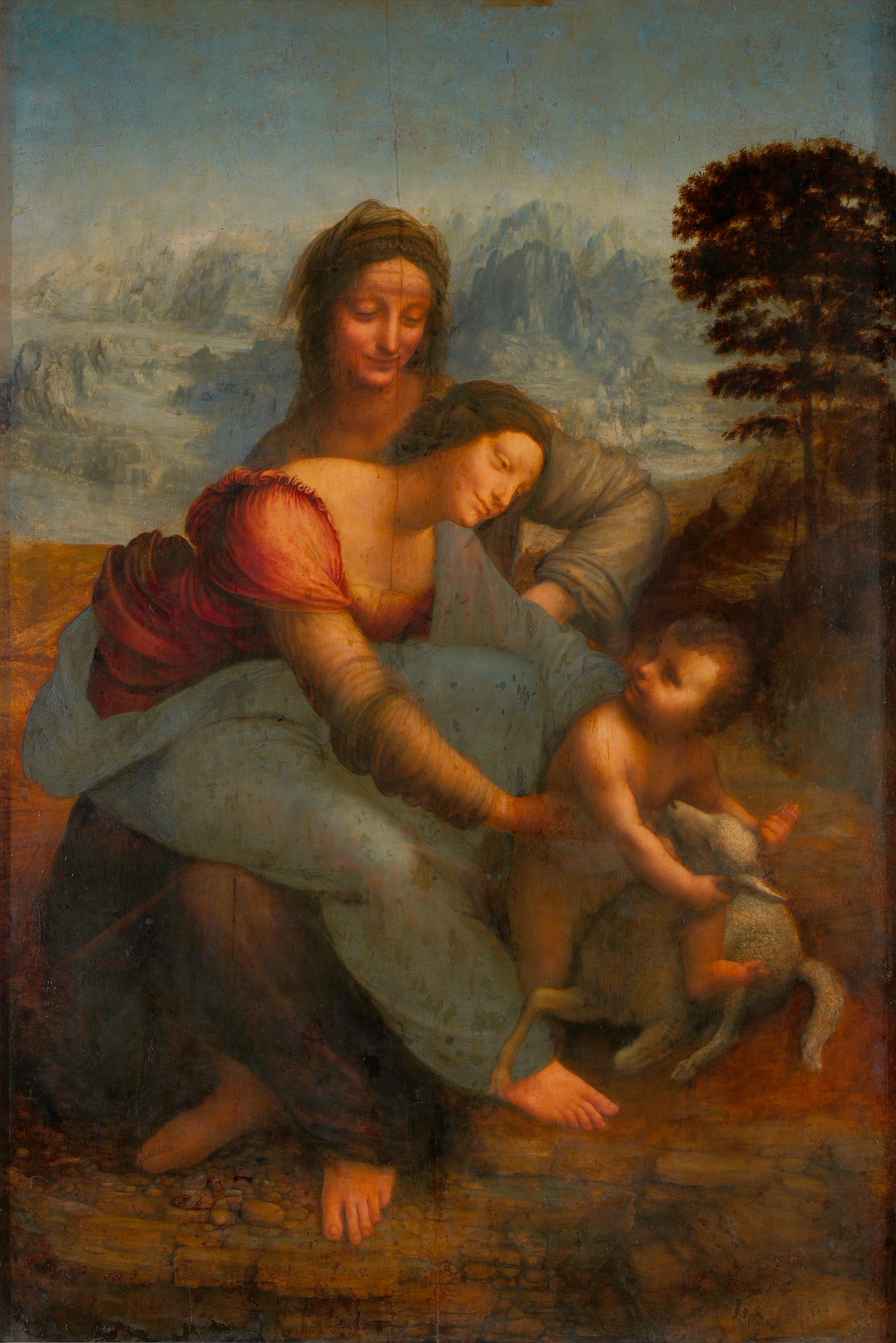
The Virgin and Child with Saint Anne
Saint Anne, her adult daughter Mary, and the infant Christ form one interlocking group while the child wrestles with a lamb. Leonardo worked on the composition over many years and carried it into his final period in France.
- c. 1503–1519
- Oil on poplar panel
About Leonardo da Vinci
Three generations arranged as one body
Saint Anne sits at the back, Mary leans forward from her lap, and the infant Christ reaches down toward a lamb. The figures overlap so closely that the first glance reads them as one turning mass. Only afterward do the separate relationships become clear: grandmother, daughter, and child.
The movement runs diagonally from Anne's face through Mary's shoulders and arms to the child. Behind them, a blue mountain landscape opens into distance. Leonardo balances a complicated family group against a setting that feels almost weightless.
Why the child embraces a lamb
In Christian imagery the lamb anticipates Christ's sacrifice. Mary reaches toward the child as if to draw him back, while he twists toward the animal. The action makes the theological meaning physical: a mother trying to restrain a child who moves willingly toward his future.
Anne does not intervene. Her smile and steady position hold the composition together while Mary and Christ pull in opposite directions. Leonardo turns an abstract idea about destiny into a small family drama made of hands, weight, and glances.
A composition Leonardo kept revising
The Louvre dates the panel broadly from 1503 to 1519. Drawings connected to the composition document repeated changes, and the museum notes that some of the final studies were made in France. The work therefore belongs to a long process rather than a single campaign with a neat completion date.
The painting is now INV 776 in the Louvre and is displayed in Room 710. Its scale—168 by 130 centimetres—makes it substantially larger than the Mona Lisa while keeping the intimacy of a close family group.
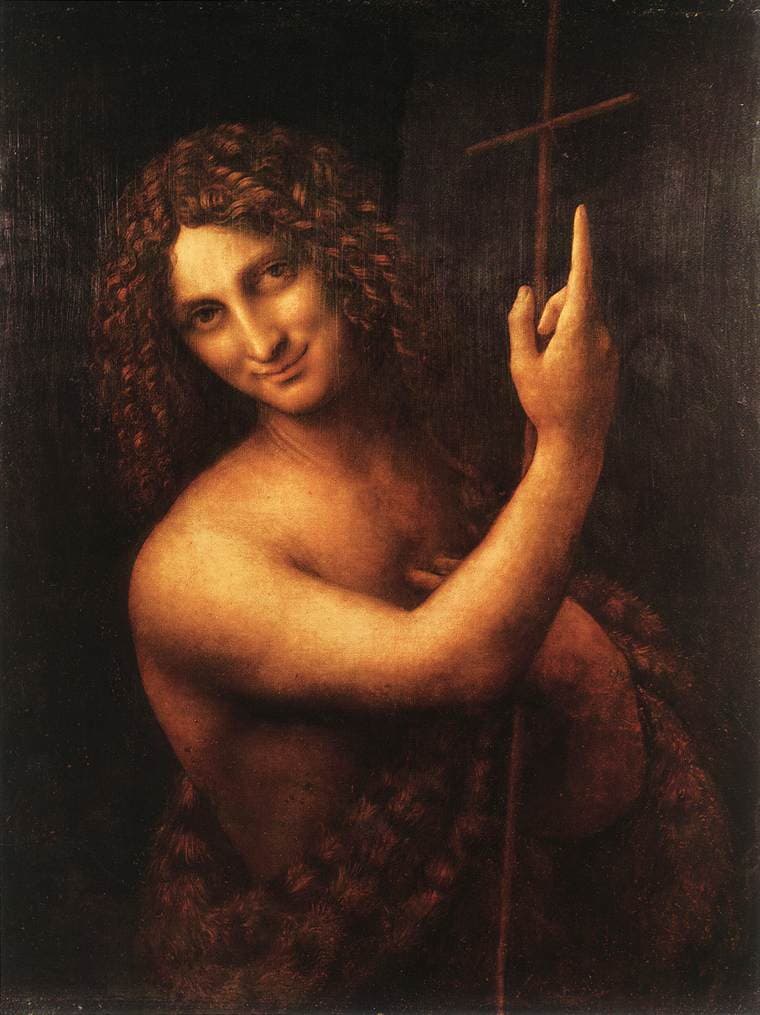
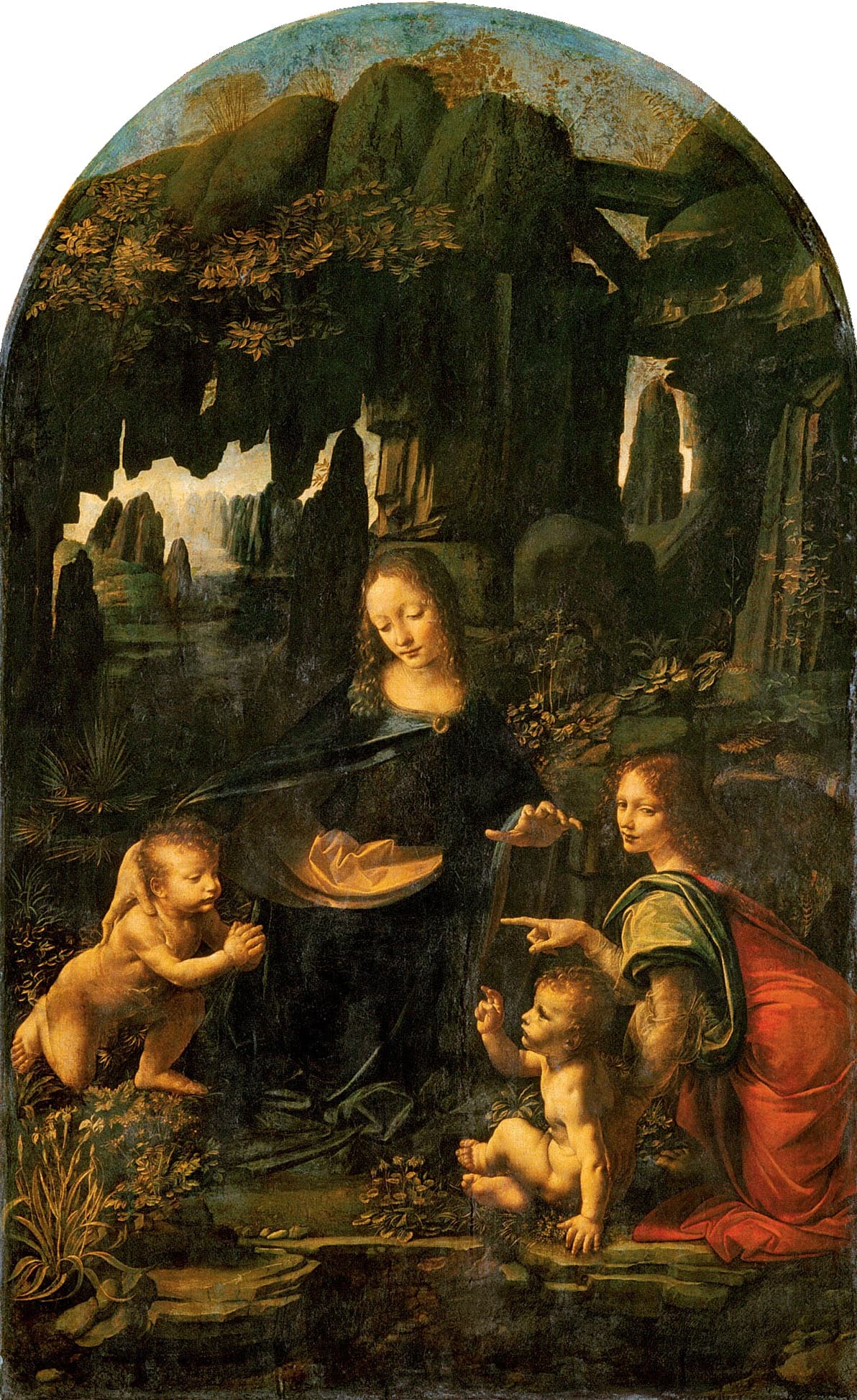
In the same gallery, Virgin of the Rocks shows an earlier solution to joining four sacred figures through gesture, while Saint John the Baptist strips the problem down to one body and one pointing hand.
Close reading
Reading the work, detail by detail
Leonardo binds grandmother, mother, child, and lamb into one turning structure. The details clarify how overlapping bodies carry a theological story through touch, restraint, and the child's determined movement.
1.Two generations are joined before they are separated
Anne's face rises behind Mary's while Mary's body appears to sit across her lap. Their contours interlock so tightly that kinship is first understood as a shared physical form.
2.The child embraces the sign of his sacrifice
Christ twists toward the lamb as Mary extends an arm to restrain or steady him. The theological symbol becomes an immediate family action: attraction and protection pull in opposite directions.
3.The distant landscape answers the figures' curves
Ridges, water, and atmospheric blue recede behind the compact group. Their winding forms extend the figures' turning movement outward while giving the intimate scene an immense setting.
4.Anne's quiet smile steadies the movement below
Anne remains composed while Mary leans and Christ twists toward the lamb. Her expression and upright position provide emotional and structural stability behind the more urgent action.
5.Mary's reaching arms turn concern into physical action
Mary does not merely look worried; her body extends toward the child as if to pull him back. The gesture makes a theological idea about sacrifice understandable as a mother's immediate response.
6.Blue distance releases pressure behind the compact figures
The family group is densely interlocked, but the landscape opens into cool, nearly weightless distance. That contrast gives the bodies room to turn without requiring a large interior setting.
Timeline
c. 1503
Leonardo begins developing the Saint Anne composition through studies and painted work.
1516–1519
The final phase continues after Leonardo moves to France.
Today
The painting is Louvre inventory INV 776 and is displayed in Room 710.
Where to see it

Musée du Louvre, Paris
Rue de Rivoli, 75001 Paris, France
Displays and loans can change. Check whether this work is on view before making a special trip.
Plan your visitFrequently asked questions
Who is shown in The Virgin and Child with Saint Anne?
Saint Anne sits behind her daughter, the Virgin Mary, while the infant Christ reaches toward a lamb. Leonardo compresses the three generations into one interlocking group.
What does the lamb mean in Leonardo's Saint Anne?
The lamb anticipates Christ's future sacrifice. Mary's reaching gesture can be read as an attempt to pull her child away while he continues toward the animal.
Where is Leonardo's Virgin and Child with Saint Anne?
It belongs to the Musée du Louvre in Paris as inventory INV 776 and is currently displayed in Room 710 of the Denon wing.
How large is The Virgin and Child with Saint Anne?
The oil-on-poplar panel measures 168 by 130 centimetres, or about 5.5 by 4.3 feet. Its substantial scale gives the tightly interlocked family group a physical presence while preserving the intimacy of their gestures.
Did Leonardo complete the Saint Anne painting quickly?
No. The Louvre dates its development across roughly 1503–1519, and related drawings record repeated changes. Leonardo continued working on the composition into his final years in France rather than completing it in one short campaign.
More by Leonardo da Vinci
If you like Leonardo da Vinci
Explore painters from the same movements and circles.

Tarsila do Amaral
Brazilian painter who spent the 1920s moving between São Paulo and Paris, studied Cubism under André Lhote, Albert Gleizes and Fernand Léger, and used what she learned to paint Brazilian towns, railways, plants and bodies. Her 1928 painting Abaporu prompted the manifesto that gave the Anthropophagic movement its name.
View artist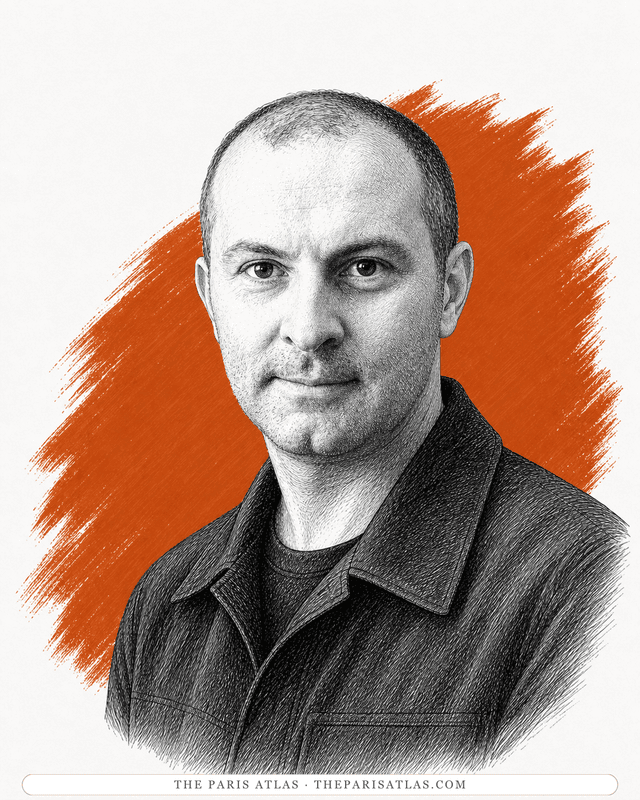
Arman
French-American artist, lifelong friend of Yves Klein, and a founder of New Realism.
View artist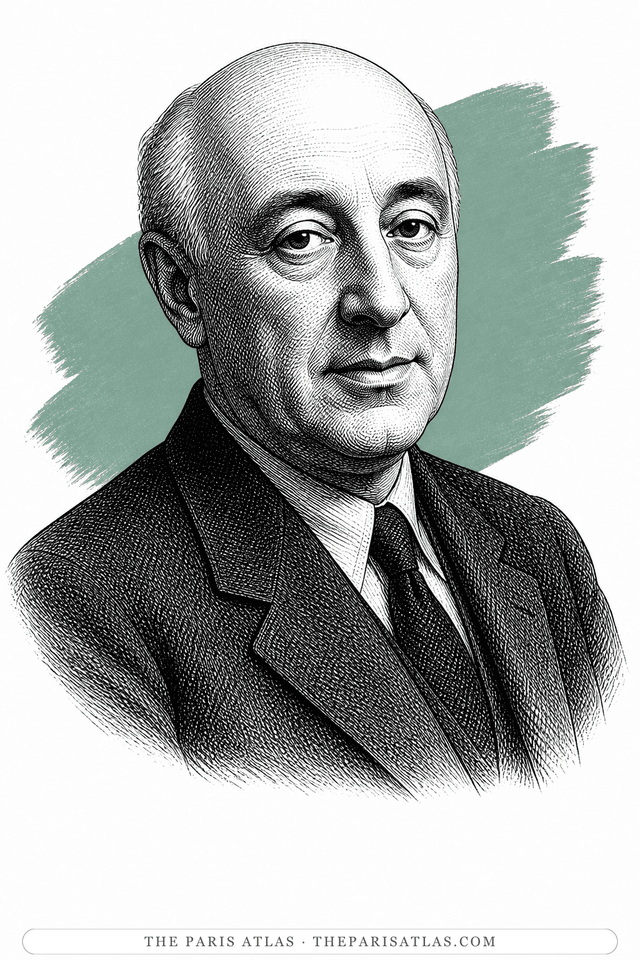
Jean Arp
Strasbourg-born sculptor and poet — Hans in German, Jean in French, both all his life — who co-founded Dada at the Cabaret Voltaire in 1916, composed collages by dropping torn paper 'according to the laws of chance', and settled at Meudon outside Paris in a house his wife Sophie Taeuber-Arp designed.
View artist
References
The sources below include collection records, catalogues, scholarly research, and primary materials that informed this page. They document The Virgin and Child with Saint Anne, its making, and its place in cultural history.


1La Vierge, l'Enfant Jésus et sainte Anne, dit La Sainte Anne (INV 776)
WebsiteMusée du Louvre, 2026Used forWeb source consulted for documented facts and historical context presented on the The Virgin and Child with Saint Anne page.
2Leonardo da Vinci (1452–1519)
WebsiteThe Metropolitan Museum of Art, 2002Used forUsed to place The Virgin and Child with Saint Anne within Leonardo da Vinci's documented oeuvre and verify its period, medium, or institutional context.
3The Life of Leonardo da Vinci
WebsiteRoyal Collection TrustUsed forUsed to cross-check artist chronology and the work's relationship to Leonardo da Vinci's wider practice.
4Leonardo da Vinci and the Clos Lucé
WebsiteChâteau du Clos LucéUsed forUsed for an additional museum or scholarly perspective on The Virgin and Child with Saint Anne's history and interpretation.
These references provide the documented foundation for this work's history and interpretation. Claim-level citations remain attached to the specific claims they support.
 Explore more resources