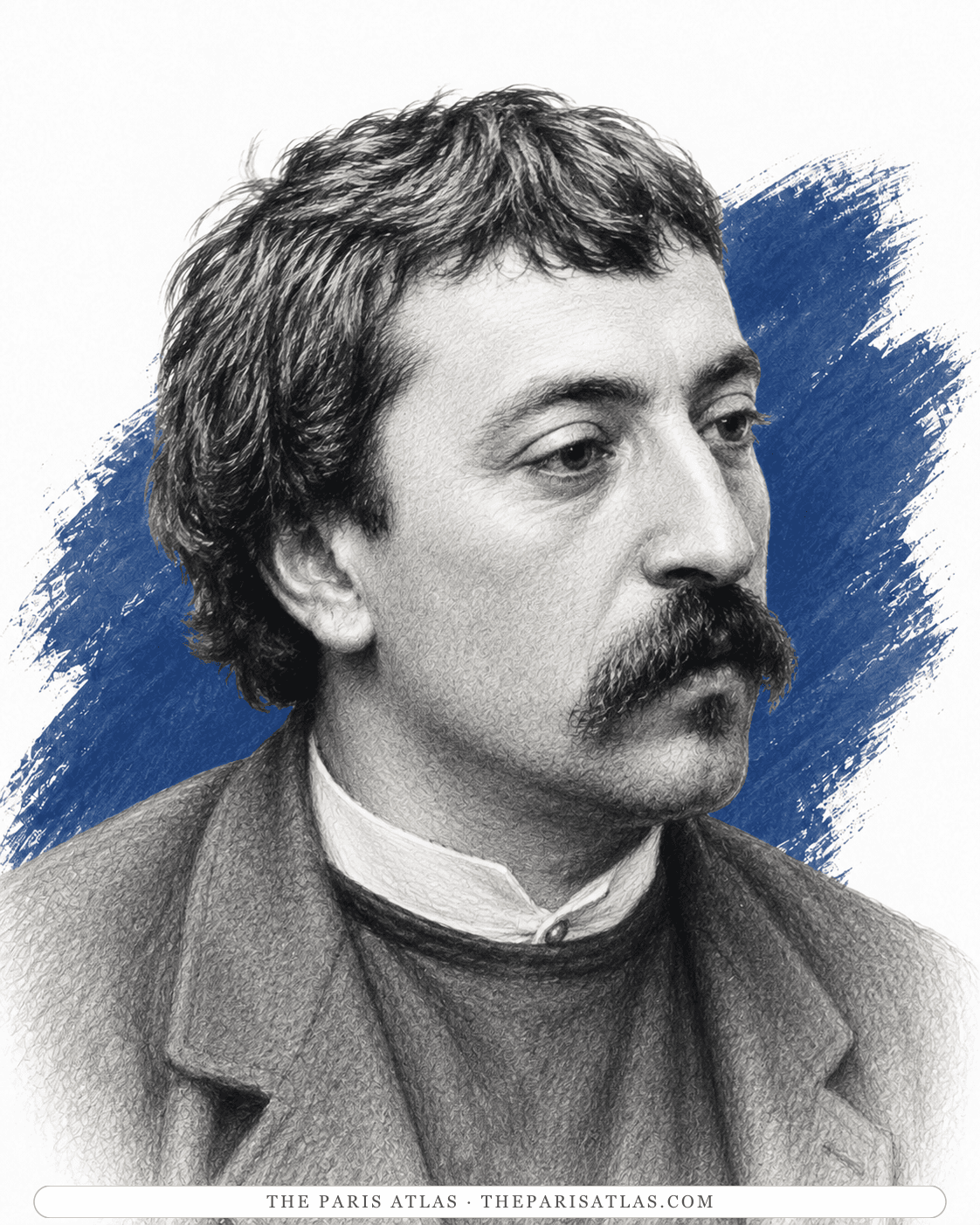
Paul Gauguin
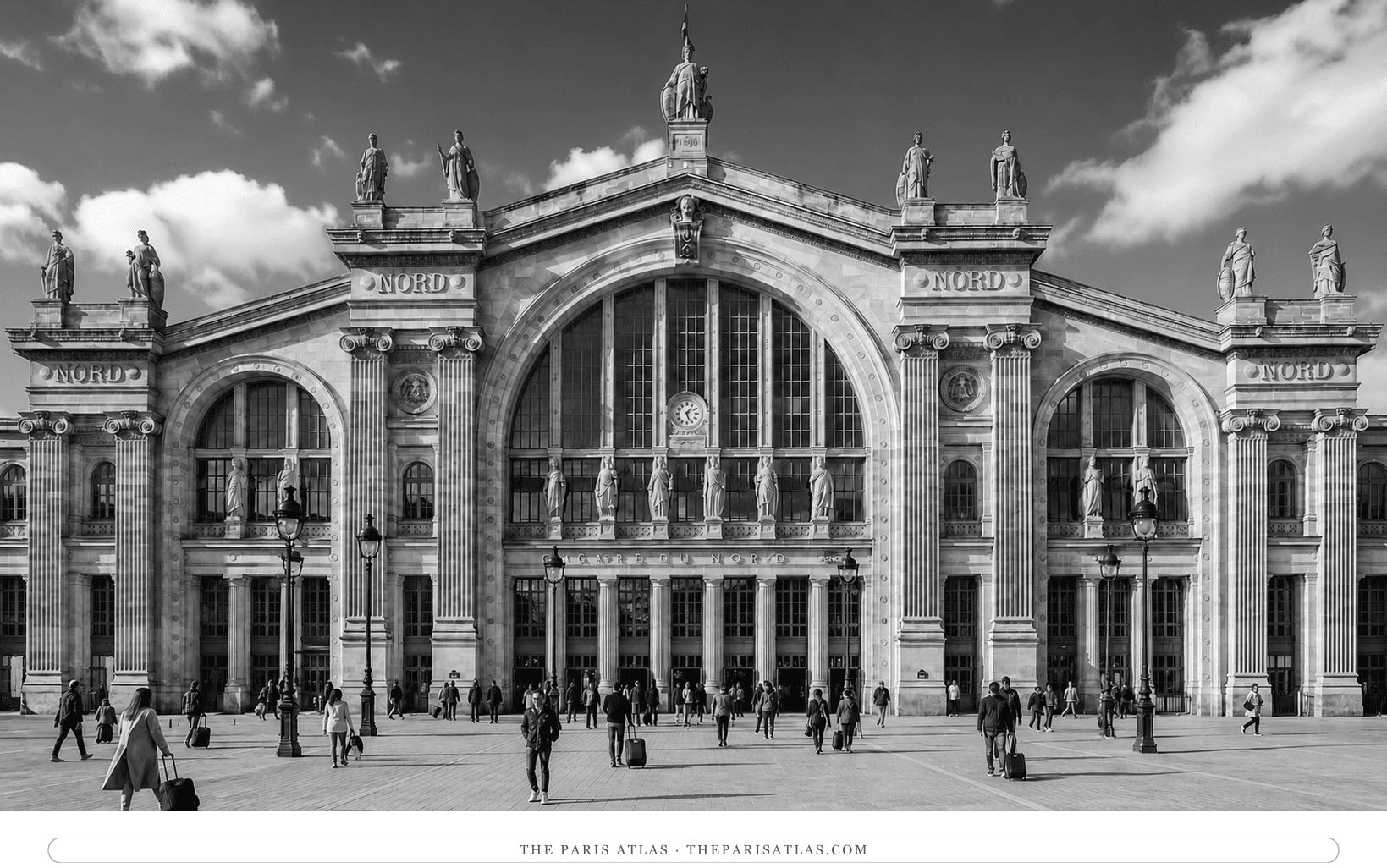
Paul Gauguin lodged near the Gare du Nord with his son Clovis after losing his income, working as a bill-poster in the winter of 1886 to pay for the boy's medicine.
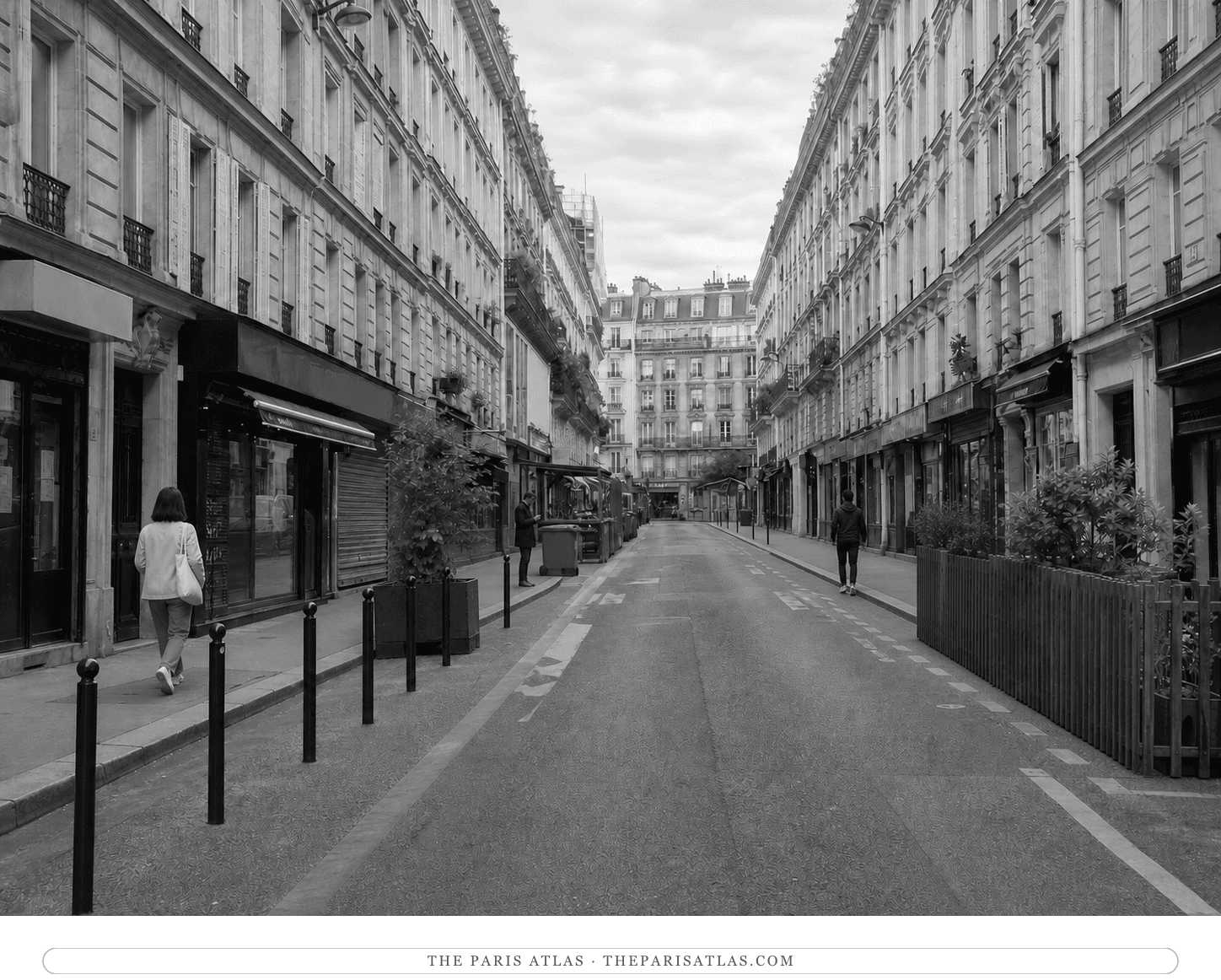
The cheap room near the Gare du Nord where Gauguin lived with his young son Clovis after the crash took his income — the same city as the place Saint-Georges, and a different world.

After the 1882 crash and the collapse of his marriage, Paul Gauguin came back to Paris with one of his sons, Clovis, and no money at all. They lodged near the Gare du Nord, in a district of railway workers and recent arrivals about as far from the place Saint-Georges as the same city allows.[1]
The move was the end of a steep descent rather than one sudden misfortune. Gauguin had given up the brokerage career that supported his household, tried to reduce expenses in Rouen, and moved the family to Copenhagen, where Mette had relatives and could teach French. He failed to establish himself there as either an artist or a salesman. When he returned to Paris, Mette and the other children remained in Denmark; Clovis came with him into a life for which neither had a secure income.[2]
This is the period in which he took whatever work he could get. In the winter of 1886 he was pasting advertising bills for a few francs a day, partly to pay for medicine when Clovis fell seriously ill. He was in his late thirties, had been a prosperous man five years earlier, and had chosen this.[3]
Bill-posting meant carrying paste and printed sheets through winter streets and fixing advertisements to walls. It is the least romantic labour in the Gauguin story, and that is why it belongs here. The later image of an artist rejecting bourgeois comfort can make poverty sound like a clean philosophical decision; the rue Cail period shows the daily consequences in rent, food, illness and time taken away from painting.
The address also corrects the geography of his legend. Gauguin's important Paris was not only the salons, dealers and exhibition rooms near the centre. At his lowest point it included the railway district east of Montmartre, chosen for cheap lodging and access rather than prestige. The distance from his former homes in the 9th can be walked, but economically the two lives scarcely touch.[4]
It is worth holding both facts at once when looking at the Tahitian pictures: the man who painted them had been genuinely destitute in Paris, and he had also left a wife and five children behind in Copenhagen to get there.
By the spring he sought cheaper conditions and a community of painters in Pont-Aven. Brittany did not solve his responsibilities, but it did provide low-cost lodging, subjects and the exchanges with other artists from which his mature style developed. Rue Cail is the Paris endpoint that made another departure seem necessary.
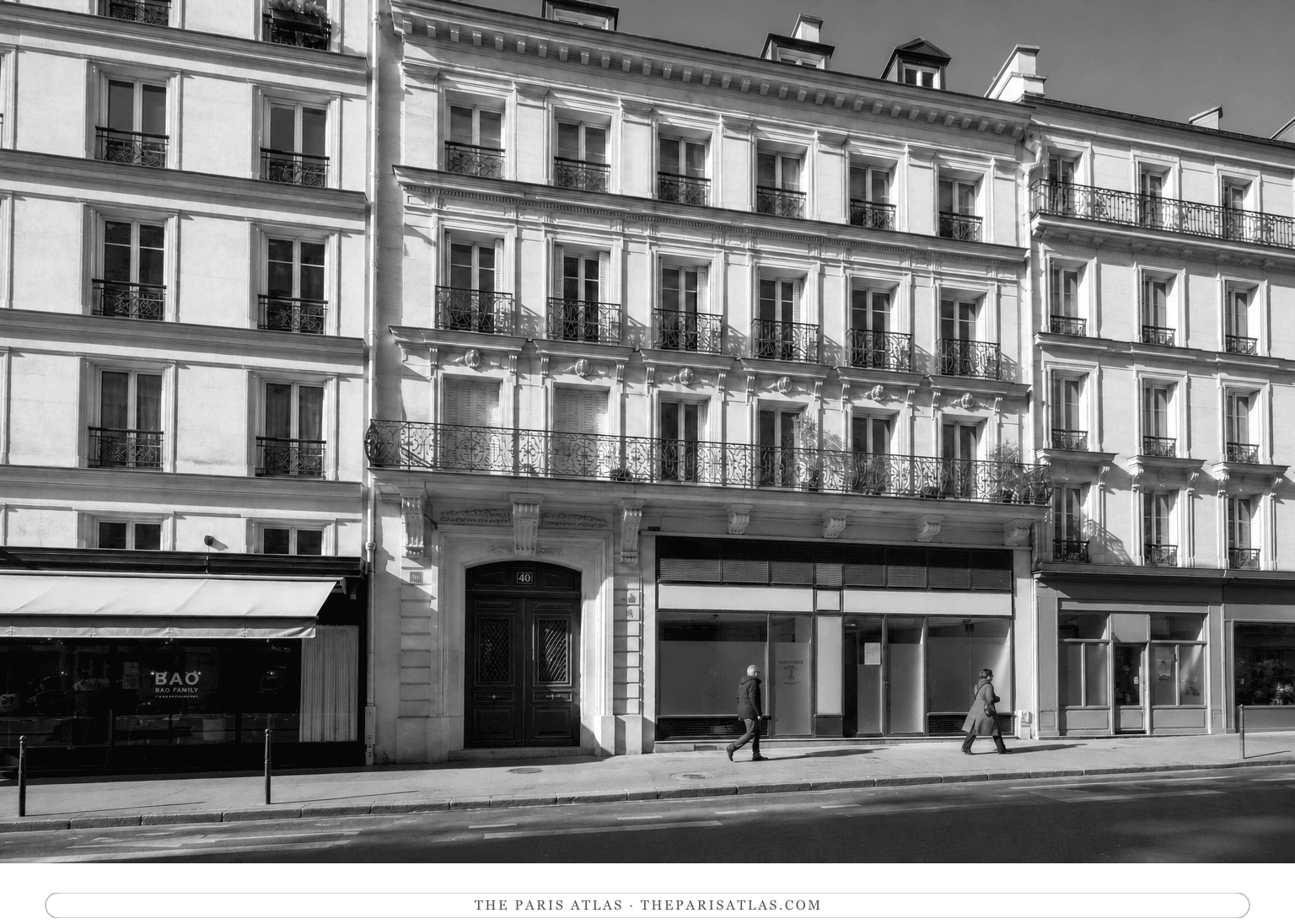
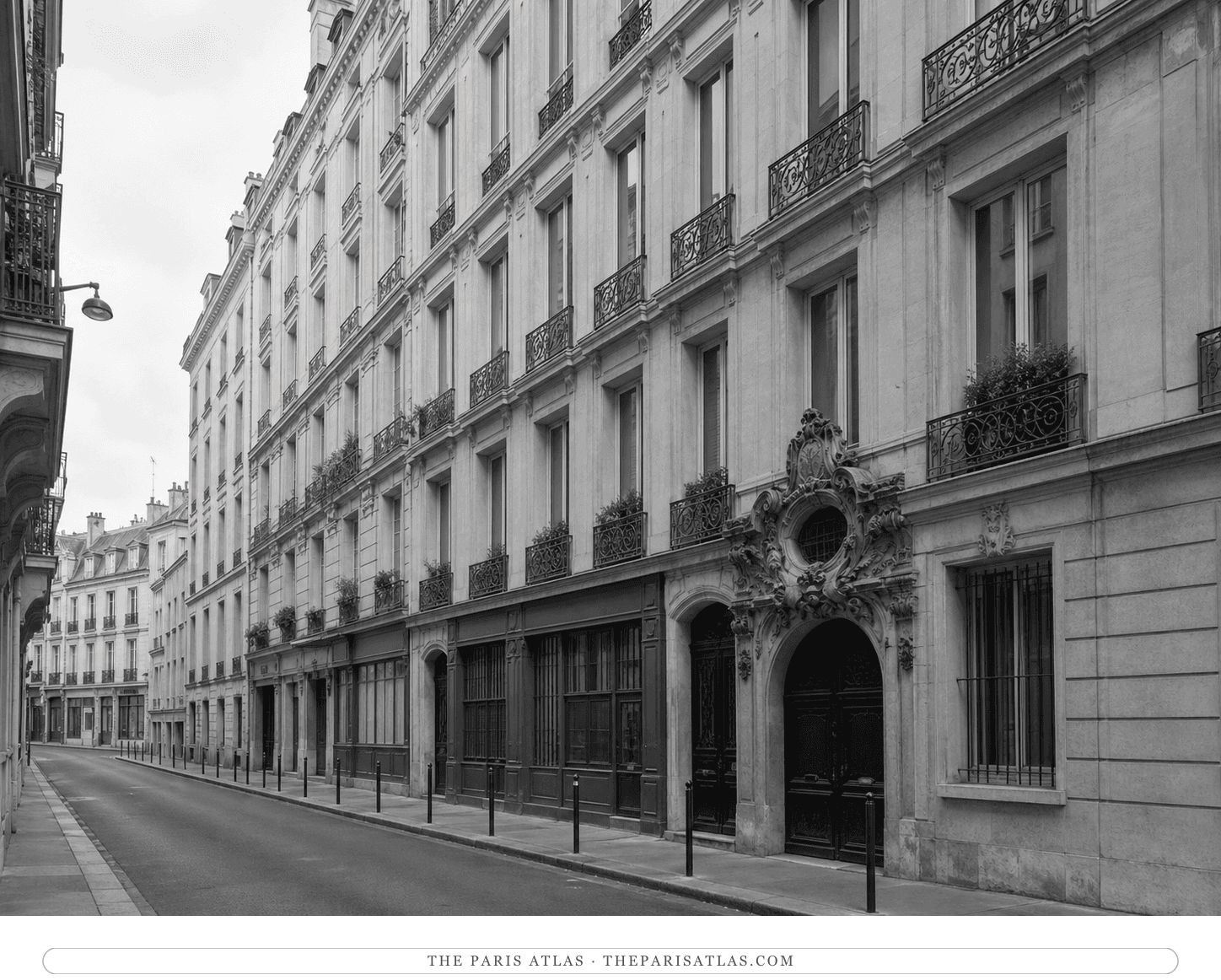
The building stands, unmarked, on a street that has kept its working character.
Clovis makes the episode more than a record of the artist's hardship. He was a child brought from the family home in Copenhagen into uncertain lodging with a father who was struggling to feed them both. When illness came, the cost of medicine became an immediate problem. Gauguin's willingness to paste bills is evidence of care under pressure, but it also exposes how completely the family economy had broken down after he refused to rebuild a conventional career.
The Gare du Nord area was shaped by movement. Railway tracks, workshops, hotels and cheaper rooms served travellers and workers arriving from northern France and beyond. For Gauguin, whose later biography is organised around dramatic voyages, rue Cail records a less glamorous kind of mobility: return without a stable household, temporary urban labour and the search for somewhere less expensive to go next.
Painting continued within those limits rather than outside them. Time spent finding work, caring for Clovis and securing food reduced the conditions for sustained production. The experience helps explain the appeal of Pont-Aven, where inns offered low rates to artists and an established seasonal community shared information and companionship. Brittany was not untouched isolation; it was a practical alternative to Paris rent.
The current building should be read as housing on a public street, not as a preserved artist's interior. No room associated with Gauguin is open and no plaque marks the lodging. What the address contributes is scale and sequence: it can be placed between the family's Copenhagen separation and the 1886 journey to Pont-Aven, making the material circumstances of that move visible.
The episode also changes how Gauguin's later claims of sacrifice should be weighed. He did accept humiliating work and real deprivation for painting, facts that should not be minimised. Yet the sacrifice was shared unevenly: Clovis experienced illness and insecure housing, Mette supported the other children in Denmark, and relatives became part of the safety net. Rue Cail is valuable because it holds artistic determination and family consequence in the same frame instead of using one to erase the other. The physical place was an ordinary building, but the decisions concentrated there shaped every later departure.
Seen from the station district, Paris was not simply the civilisation Gauguin later claimed to flee. It was also where he returned when plans failed, found casual work, placed a sick child under medical care and rebuilt contacts with artists. That dependence continued even from overseas through dealers, letters and hoped-for sales. The cheap lodging records the city's harshness, but also the support system he never fully ceased to need.
Gauguin returns to Paris with Clovis, effectively destitute.
He works as a bill-poster through the winter; Clovis falls ill.
He leaves for Pont-Aven in Brittany.
For long stretches, yes. After the 1882 crash he lost his living entirely and was reduced to bill-posting in Paris in 1886 to buy medicine for his son.
Paul Gauguin lodged near the Gare du Nord with his son Clovis after losing his income, working as a bill-poster in the winter of 1886 to pay for the boy's medicine.

Paris's great northern railway terminus: an operating 1864 station, a monumental Second Empire façade, and the place where the American poet Langston Hughes began his first Paris day with seven dollars.
Visit the place
The modest concert hall where the Prélude à l'après-midi d'un faune was first performed on 22 December 1894 — a piece often treated as the beginning of modern music, premièred in a room almost nobody has heard of.
Visit the place
Where Paul Cézanne lodged when he arrived in Paris in 1861 at twenty-two, having finally won his banker father's permission to paint — and where he lasted a matter of months before retreating to Aix.
Visit the place
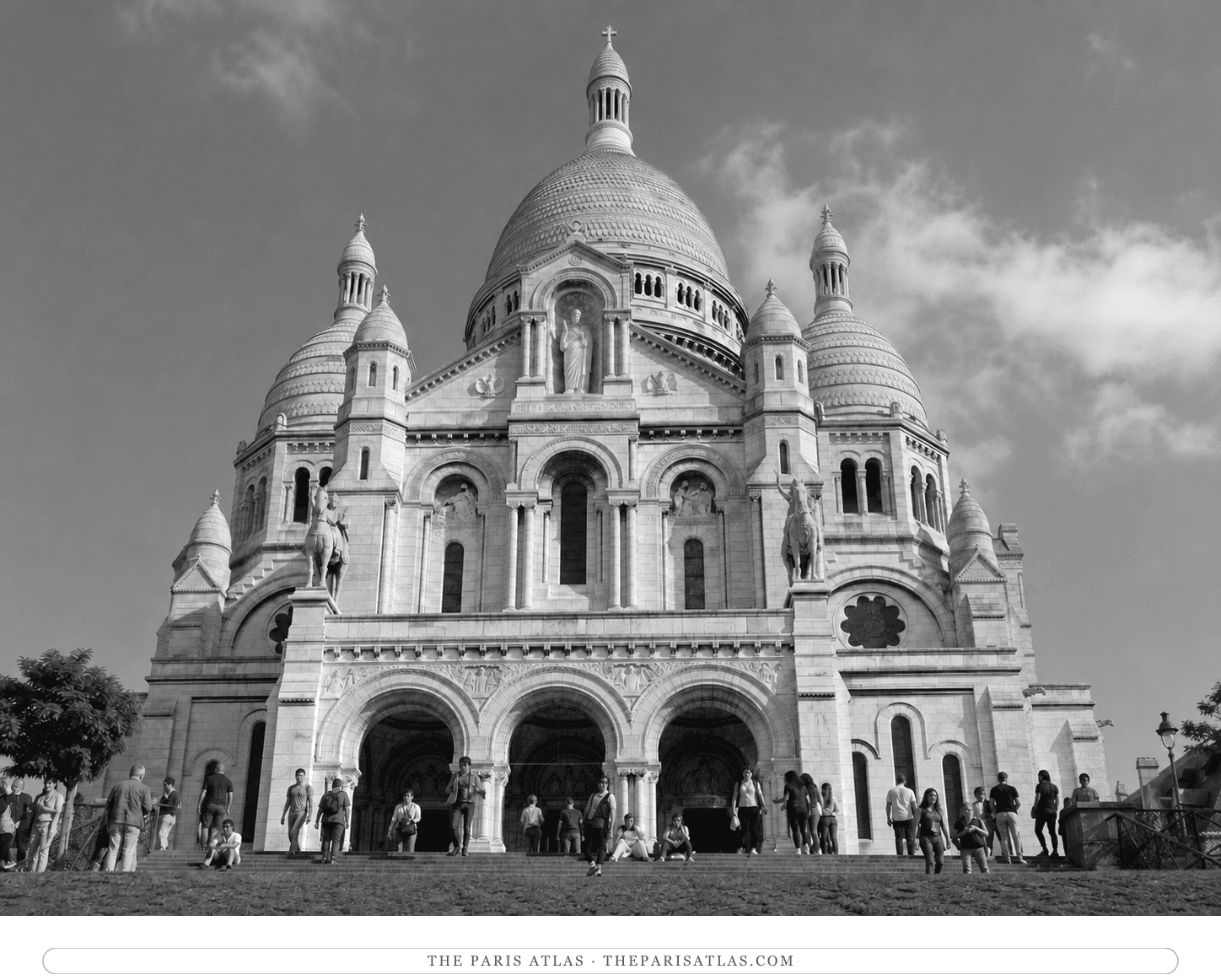
The white basilica on the summit of Montmartre, built by public subscription after France's defeat in 1870 and consecrated in 1919 after nearly forty years of work. Entry is free, every day 6.30 a.m. to 10.30 p.m. The dome — 280 steps, no lift — costs €8 and gives a 360-degree view over Paris.
Visit the placeThe sources below include histories, archival materials, scholarly research, and official records that informed this page. They document 10 rue Cail, the people connected to it, and its place in Paris.

Web source consulted for documented facts and historical context presented on the 10 rue Cail page.
Web source consulted for documented facts and historical context presented on the 10 rue Cail page.
Web source consulted for documented facts and historical context presented on the 10 rue Cail page.
Web source consulted for documented facts and historical context presented on the 10 rue Cail page.
These references provide the documented foundation for this page's history and context. Claim-level citations remain attached to the specific claims they support.
 Explore more resources
Newsletter
The cafés, studios, and walk-up flats where the work was made — one story from the map in every letter.