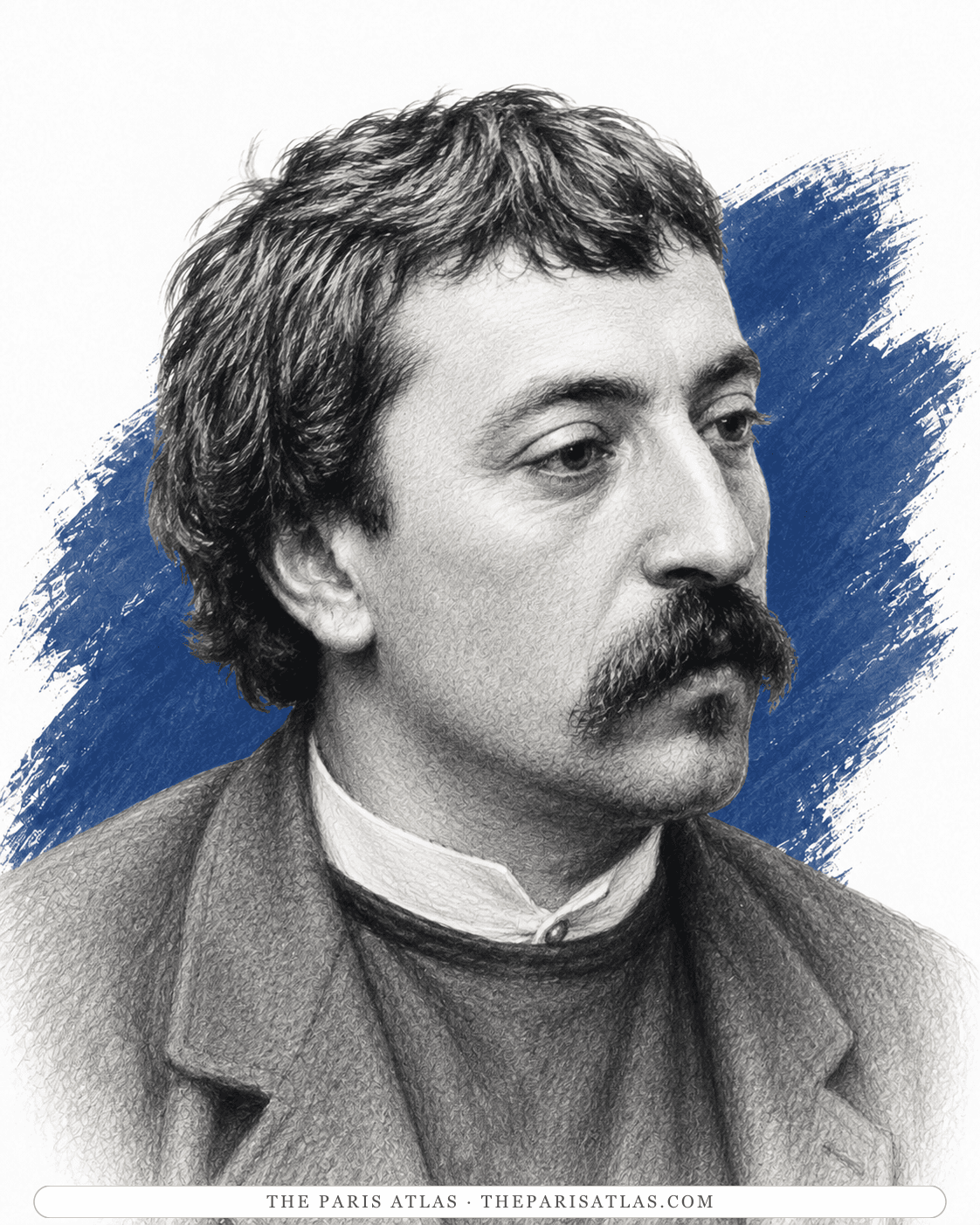
Paul Gauguin
Paul Gauguin and Mette Gad took their first married home on the place Saint-Georges in 1873, while he was prospering at the Bourse.
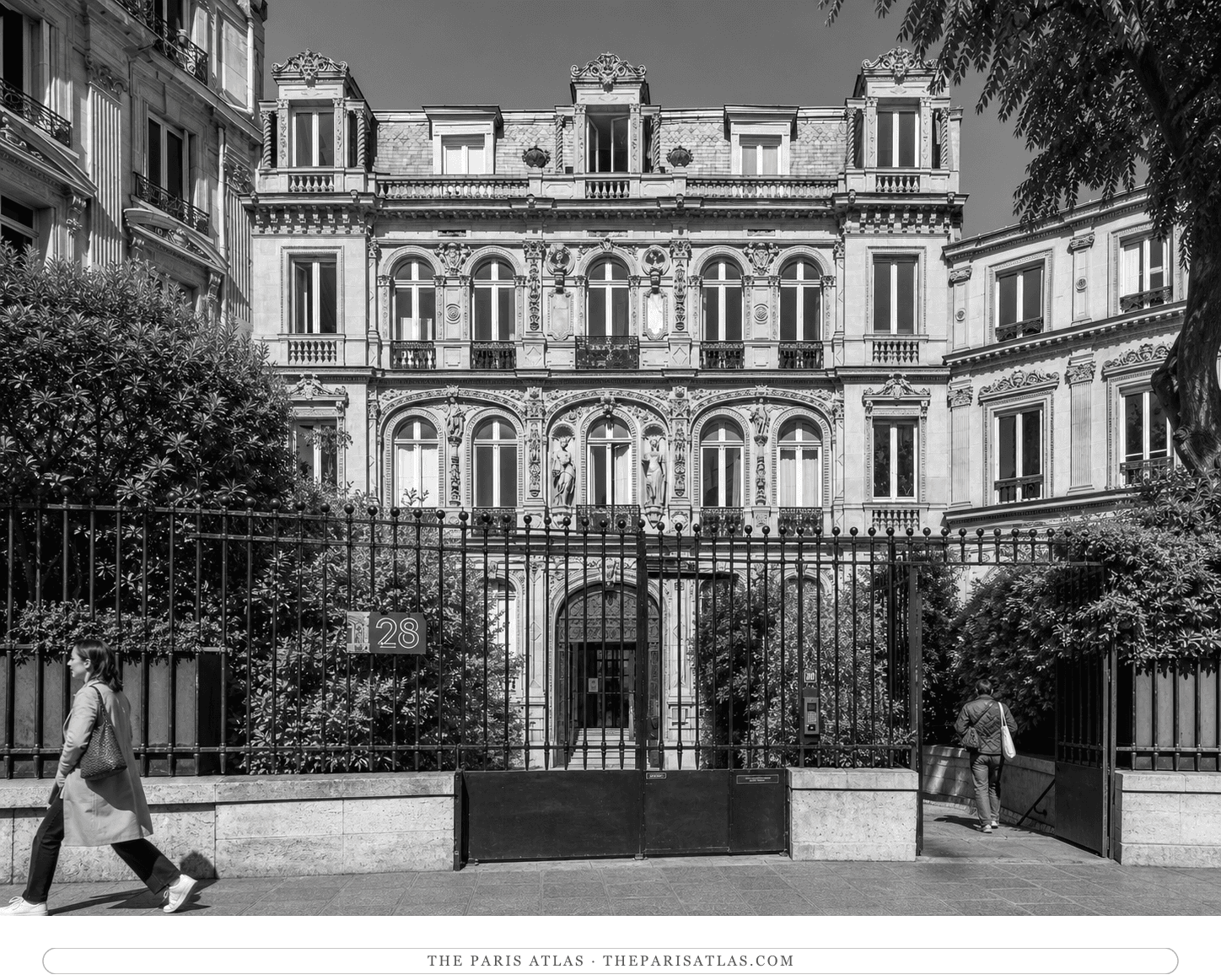
The first home Paul Gauguin shared with his Danish wife Mette Gad after their marriage in 1873, on a handsome small square — the address of a successful stockbroker rather than a painter.

Paul Gauguin married Mette Gad, a Dane, in 1873, and the couple took their first home on the place Saint-Georges. He was two years into a well-paid job at the Bourse and could afford a fashionable address.[1]
The square belonged to the comfortable residential Paris built around the lower slopes of Montmartre in the nineteenth century. Choosing it located the newly married couple close to Gauguin's family and guardian in the 9th while keeping the Bourse within an ordinary commute. It was a household organised around a conventional career, not an artist's improvised lodging.
This is the Gauguin who is easy to forget: a young man in his mid-twenties with a career, a foreign wife, and children arriving steadily, painting at weekends and spending his salary on canvases by Pissarro, Cézanne and Manet. Nothing in the arrangement suggested he would abandon it.[2]
His amateur status should not be mistaken for indifference. Through Gustave Arosa's collection and his growing friendship with Camille Pissarro, Gauguin was learning how contemporary pictures were made and building a collection of his own. The home could contain family furniture and advanced paintings at the same time. Domestic prosperity created the conditions in which he first took art seriously.[3]
It also created obligations that the usual heroic account of becoming an artist can blur. Mette had married a man with a salary and helped run a household that would eventually include five children. When Gauguin later treated full-time painting and repeated travel as necessities, the economic consequences were borne by the family as well as by him. This address makes the scale of what was relinquished visible.[4]
The square has kept its shape better than almost anything else in the quarter — the fountain in the middle, the ring of nineteenth-century façades, the scale. It is one of the few Gauguin addresses where the surroundings genuinely resemble what he saw.
That survival makes place Saint-Georges more informative than a plaque on an altered street. The central monument and garden, the short sightlines across the square and the continuous façades preserve the feeling of an enclosed residential address. The building itself is private, but the public square can be crossed and studied from every side.
Later Gauguin addresses tell a story of contraction and departure: cheaper quarters, rooms shared with a child, studios staged for visitors and hotels used before voyages. Place Saint-Georges is the necessary beginning of that sequence because it records stability rather than bohemian struggle.
The building is private.
The year of the marriage also places Gauguin before his first Impressionist exhibition. He had begun painting, but the identity visible to neighbours and employers was still that of a broker establishing a family. This chronology matters because later accounts can project the final artist backward, making every home sound like a temporary stop on a predetermined escape. At place Saint-Georges, permanence was the plan.
Mette's Danish background widened the household's geography before the eventual move to Copenhagen. Their marriage connected families and languages, and the children grew inside a home supported by Gauguin's employment. When he later moved them in search of cheaper life and artistic opportunity, Copenhagen was not an exotic destination but Mette's support network. The costs of his decision appear differently when her relationships are restored.
The paintings Gauguin bought during the broader prosperous period also changed the domestic interior. Works now isolated in museums once competed with furniture, children and daily routines. That setting let him examine technique repeatedly, but it also means the family's assets were tied to a volatile modern-art market. After financial security failed, collecting could no longer remain separate from household survival.
Place Saint-Georges is a public square, so its plan, fountain and garden can be experienced without entering the private building. The current structure at the address is a building in continuing urban use, not a Gauguin museum. The historically honest visit remains at street level and uses the surviving ensemble to understand the social position of the first married home.
The square's architectural survival makes it possible to discuss class without relying only on biography. This was not a railway-side lodging or an improvised atelier: the enclosed garden, ornamental fountain and composed façades announced respectability. Gauguin could inhabit that setting because finance paid reliably. When later images present him as naturally alien to bourgeois life, place Saint-Georges supplies material evidence that he knew its comforts from inside and sustained them for years. His rejection was made from experience, while Mette's later efforts show that the household did not reject security as a single unit.
No surviving view identifies the family's precise furnishings, and the page does not reconstruct them. What can be said is narrower and stronger: a newly married couple lived at this private address while Gauguin's conventional career was advancing, and the public square that organised their surroundings remains legible.
Gauguin marries Mette Gad; the couple settle on the place Saint-Georges.
He exhibits with the Impressionists for the first time.
Gauguin's Danish wife, married in 1873. They had five children. The marriage broke down after he gave up his career for painting, and she remained in Copenhagen.
Paul Gauguin and Mette Gad took their first married home on the place Saint-Georges in 1873, while he was prospering at the Bourse.

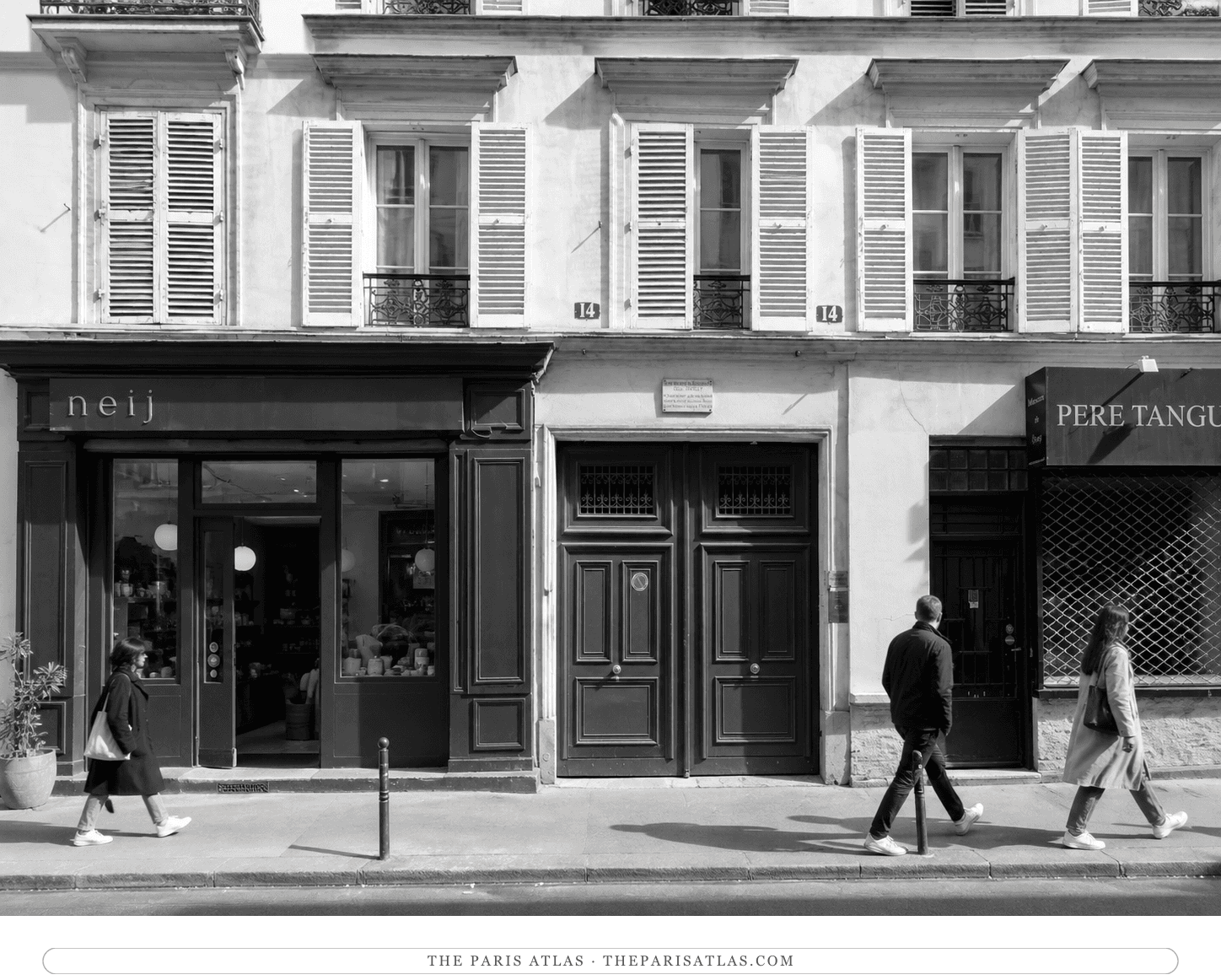
The tiny paint shop of Julien 'Père' Tanguy, who supplied the Impressionists on credit, hung their canvases in his window when no dealer would, and sat three times for Van Gogh's most affectionate portrait.
Visit the place
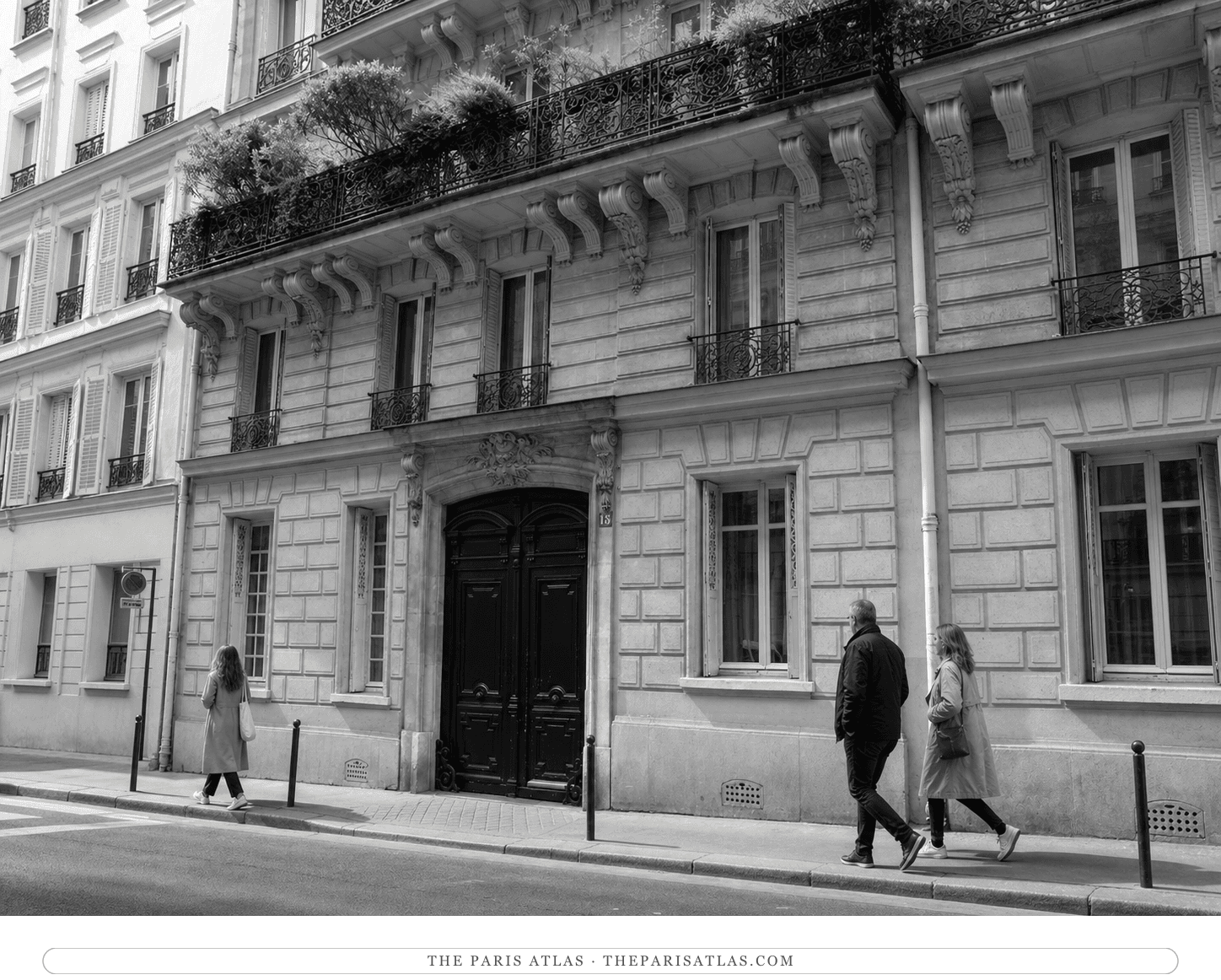
The house of Gustave Arosa — businessman, photographer and collector — who became Paul Gauguin's guardian, found him his job at the Bourse, and owned the Delacroix, Courbet and Pissarro canvases that started him painting.
Visit the place
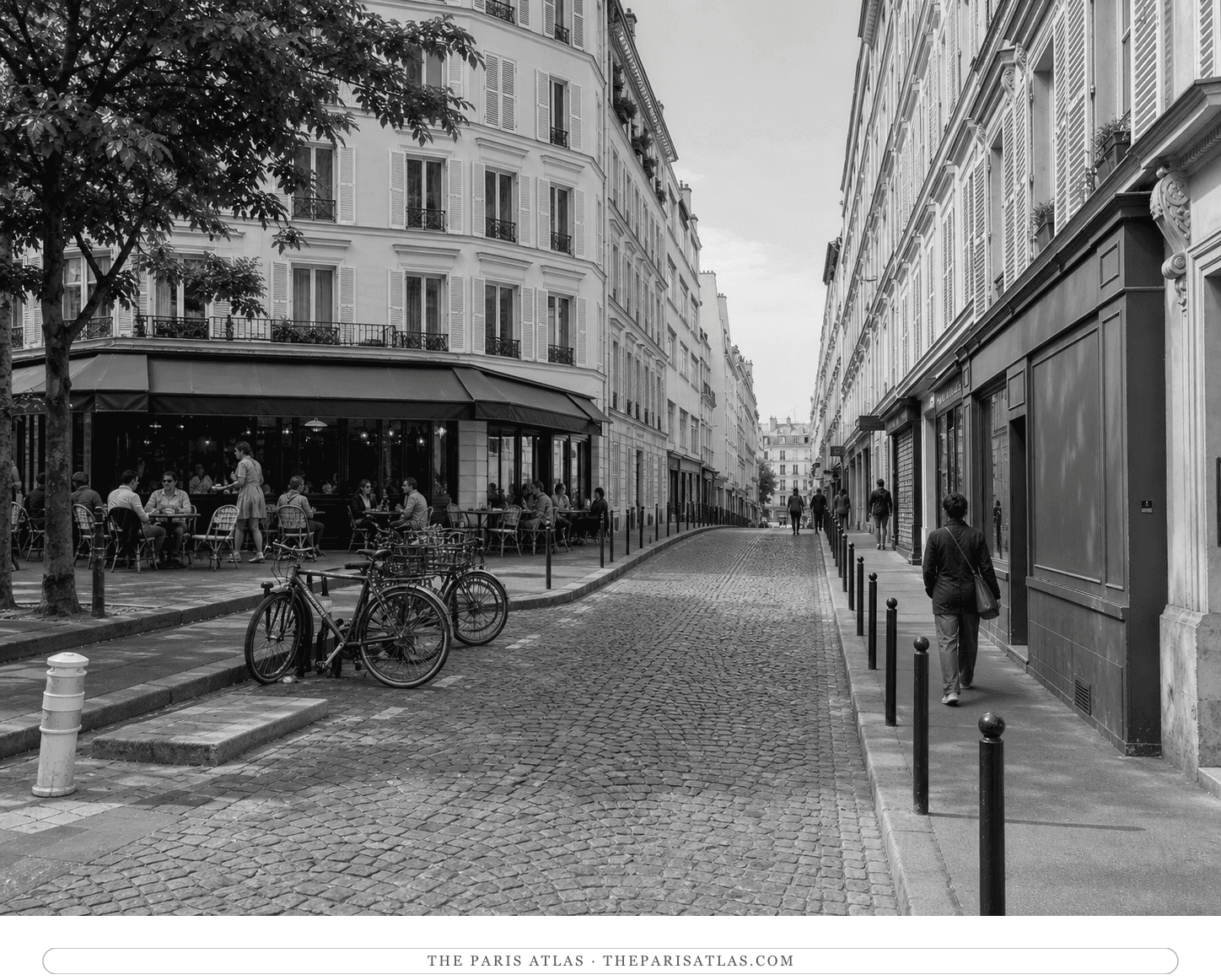
A Paul Gauguin address in the 9th arrondissement during the years when he was still a stockbroker, painting on Sundays and quietly assembling one of the better private Impressionist collections in Paris.
Visit the place
The house where Paul Gauguin was born on 7 June 1848, months before the family fled France for Peru — a departure that killed his father and shaped everything that came after.
Visit the placeThe sources below include histories, archival materials, scholarly research, and official records that informed this page. They document 28 place Saint-Georges, the people connected to it, and its place in Paris.


Web source consulted for documented facts and historical context presented on the 28 place Saint-Georges page.
Web source consulted for documented facts and historical context presented on the 28 place Saint-Georges page.
Web source consulted for documented facts and historical context presented on the 28 place Saint-Georges page.
Web source consulted for documented facts and historical context presented on the 28 place Saint-Georges page.
These references provide the documented foundation for this page's history and context. Claim-level citations remain attached to the specific claims they support.
 Explore more resources
Newsletter
The cafés, studios, and walk-up flats where the work was made — one story from the map in every letter.