Franz Kafka quotes
27 quotations, each verified against its source and credited to the work it comes from — the wording as Franz Kafka wrote or said it, not as the internet passes it around. Page 1 of 2.
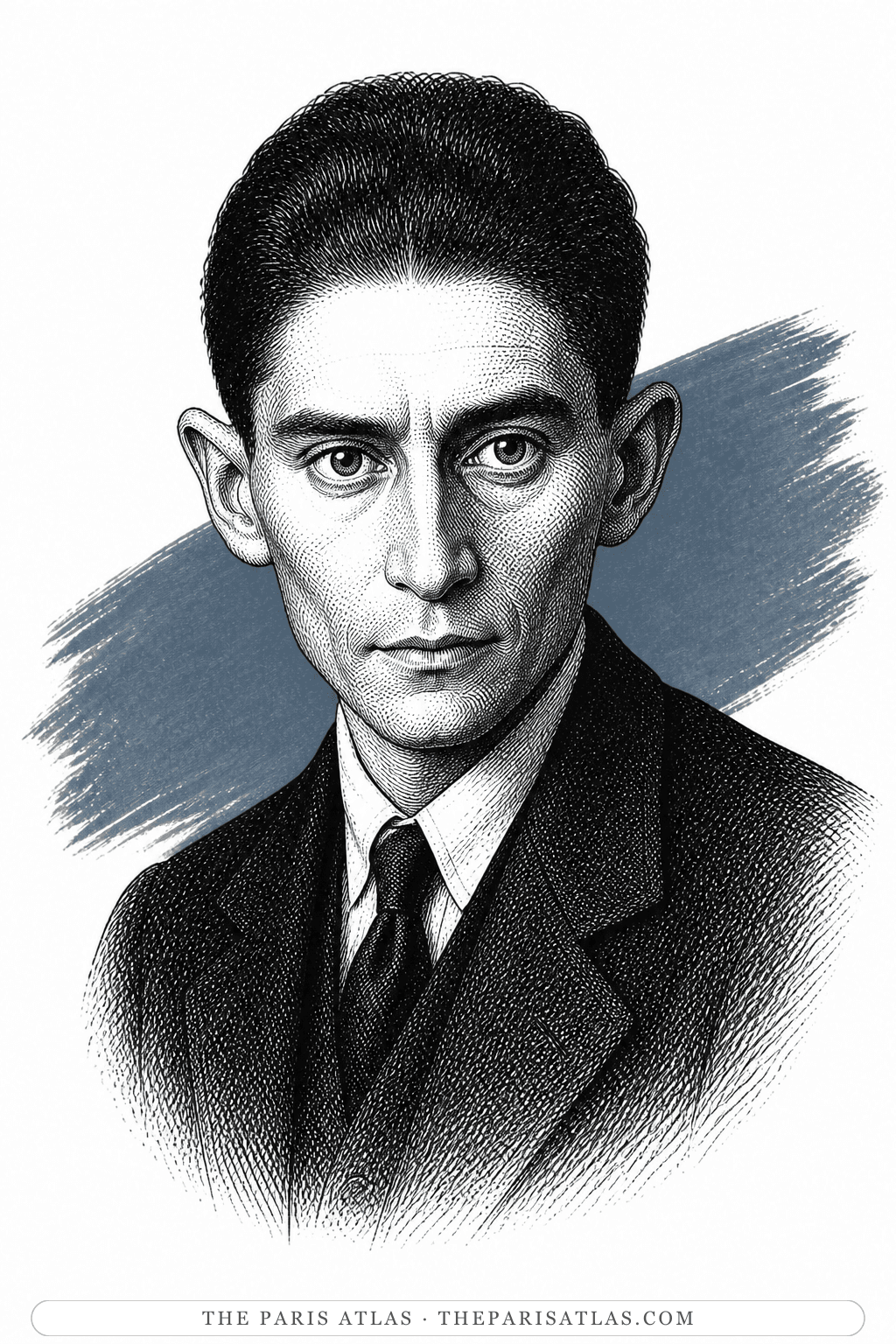

I think we ought to read only the kind of books that wound and stab us. If the book we are reading doesn't wake us up with a blow on the head, what are we reading it for? A book must be the axe for the frozen sea inside us.Ich glaube, man sollte überhaupt nur solche Bücher lesen, die einen beißen und stechen. Wenn das Buch, das wir lesen, uns nicht mit einem Faustschlag auf den Schädel weckt, wozu lesen wir dann das Buch? […] ein Buch muß die Axt sein für das gefrorene Meer in uns.
We are as forlorn as children lost in the woods. When you stand in front of me and look at me, what do you know of the griefs that are in me and what do I know of yours?Verlassen sind wir doch wie verirrte Kinder im Walde. Wenn Du vor mir stehst und mich ansiehst, was weißt Du von den Schmerzen, die in mir sind und was weiß ich von den Deinen.
Prague won't let go. It won't let go of the both of us. The little mother has got claws. We ought to set fire to it in two places, at Vyšehrad and at the Hradschin, and then it might be possible for us to get away.Prag läßt nicht los. Uns beide nicht. Dieses Mütterchen hat Krallen. Da muß man sich fügen oder –. An zwei Seiten müßten wir es anzünden, am Vyšehrad und am Hradschin, dann wäre es möglich, daß wir loskommen.
One morning, when Gregor Samsa woke from troubled dreams, he found himself transformed in his bed into a horrible vermin.Als Gregor Samsa eines Morgens aus unruhigen Träumen erwachte, fand er sich in seinem Bett zu einem ungeheueren Ungeziefer verwandelt.
Someone must have been telling lies about Josef K., he knew he had done nothing wrong but, one morning, he was arrested.Jemand mußte Josef K. verleumdet haben, denn ohne daß er etwas Böses getan hätte, wurde er eines Morgens verhaftet.
“Like a dog!” he said; it was as if he meant the shame of it to outlive him.»Wie ein Hund!« sagte er, es war, als sollte die Scham ihn überleben.
Nobody else could be admitted here, since this gate was made only for you. I am now going to shut it.Hier konnte niemand sonst Einlaß erhalten, denn dieser Eingang war nur für dich bestimmt. Ich gehe jetzt und schließe ihn.
Because I could not find the food I liked. If I had found it, believe me, I should have made no fuss and stuffed myself like you or anyone else.»Weil ich nicht die Speise finden konnte, die mir schmeckt. Hätte ich sie gefunden, glaube mir, ich hätte kein Aufsehen gemacht und mich vollgegessen wie du und alle.«
From a certain point onward there is no longer any turning back. That is the point that must be reached.Von einem gewissen Punkt an gibt es keine Rückkehr mehr. Dieser Punkt ist zu erreichen.
There is a goal, but no way; what we call a way is hesitation.Es gibt ein Ziel, aber keinen Weg; was wir Weg nennen, ist Zögern.
You do not need to leave your room. Remain sitting at your table and listen. Do not even listen, simply wait. Do not even wait, be quite still and solitary. The world will freely offer itself to you to be unmasked. It has no choice; it will roll in ecstasy at your feet.Es ist nicht notwendig, daß du aus dem Haus gehst. Bleib bei deinem Tisch und horche. Horche nicht einmal, warte nur. Warte nicht einmal, sei völlig still und allein. Anbieten wird sich dir die Welt zur Entlarvung, sie kann nicht anders, verzückt wird sie sich vor dir winden.
In the struggle between yourself and the world, second the world.Im Kampf zwischen dir und der Welt sekundiere der Welt.
Germany has declared war on Russia. Swimming school in the afternoon.Deutschland hat Rußland den Krieg erklärt. – Nachmittag Schwimmschule.
It is impossible to defend oneself when there is no goodwill.Es ist unmöglich, sich zu verteidigen, wenn nicht guter Wille da ist
Everyone is welcome!Jeder ist willkommen!
I don’t want any act of favour from the Castle, but my rights.
I came here to stay. I’ll stay here.
Guilt is always beyond doubt.Die Schuld ist immer zweifellos.
There would be no point in announcing it to him. He learns it on his body.Es wäre nutzlos, es ihm zu verkünden. Er erfährt es ja auf seinem Leib.
Honor your superior!Ehre deinen Vorgesetzten!
Understanding dawns on even the dullest. It begins around the eyes.Verstand geht dem Blödesten auf. Um die Augen beginnt es.
They stand for home. We don't want to lose home.sie bedeuten die Heimat; wir wollen nicht die Heimat verlieren.
Everyone knew: now justice is being done.alle wussten: Jetzt geschieht Gerechtigkeit.
You are a foreigner, keep quiet.Du bist ein Fremder, sei still.
Be just!Sei gerecht!
From the books
Every book with a quote collection of its own, each line verified against the text.
- In the Penal Colony quotes · 10 lines (1919)
Newsletter
Join our newsletter
New stories about art, literature and famous places around the world.