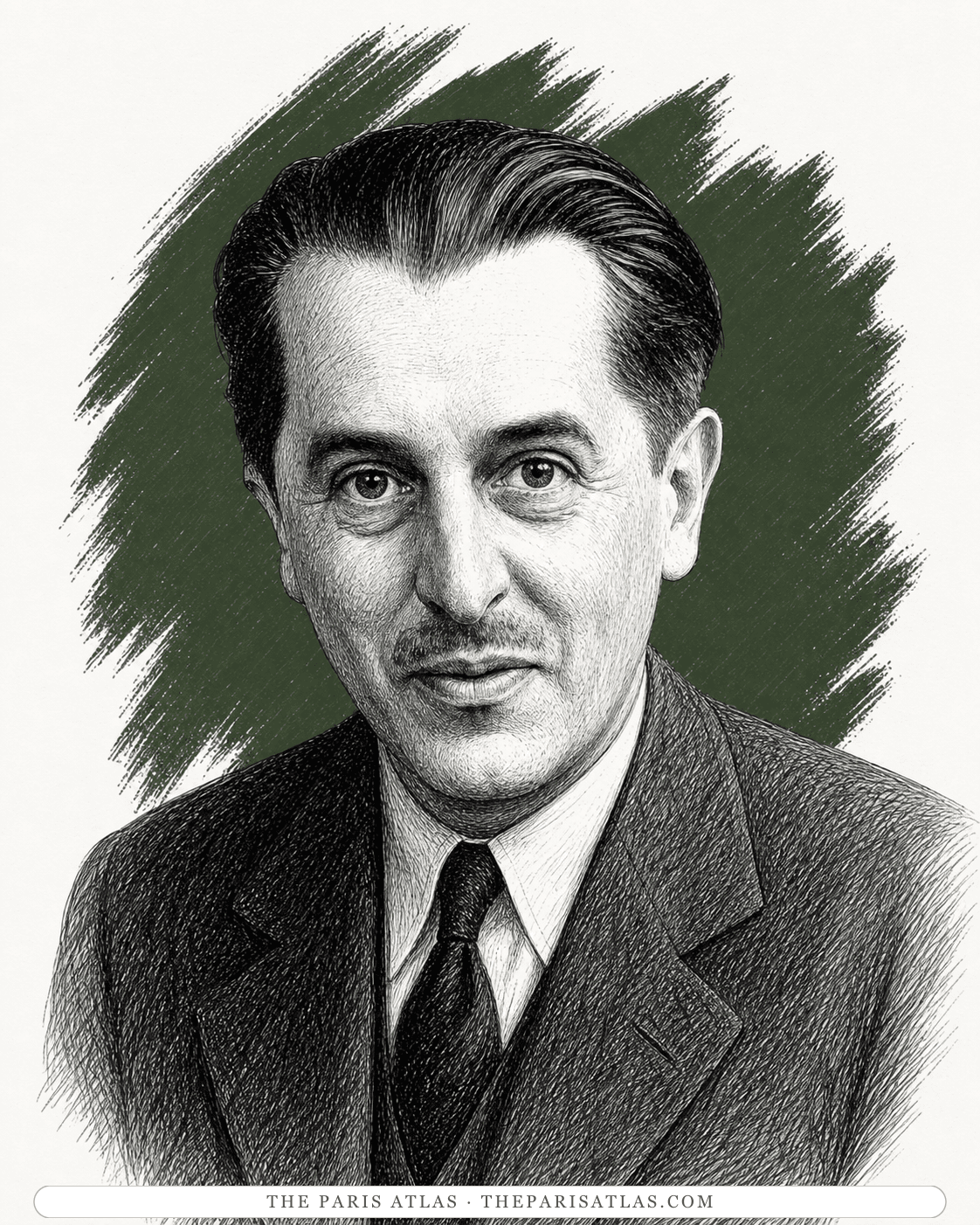
Jean Paulhan
- Author
- Editor
- Critic
Met · 1944
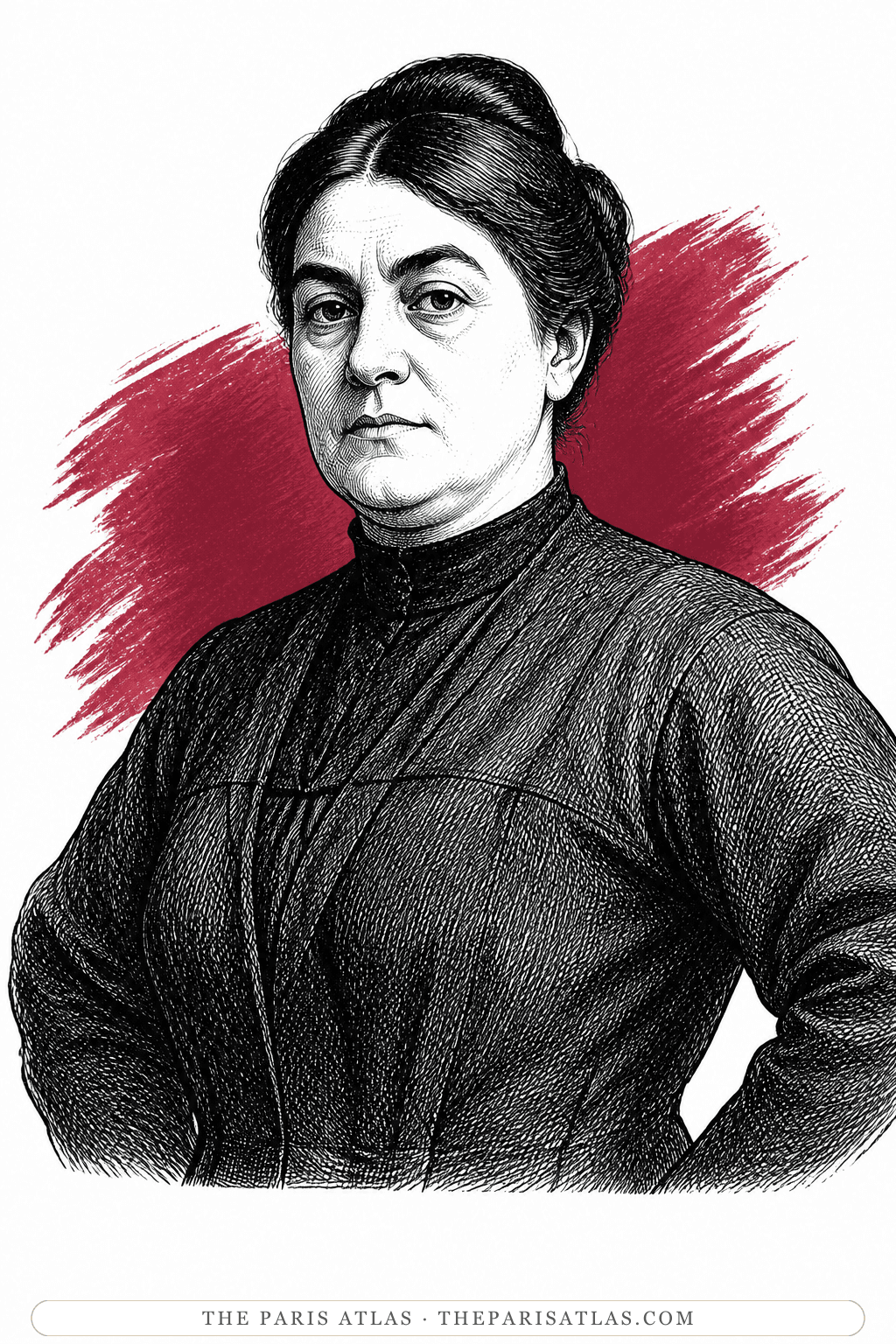
Paulhan met Dubuffet soon after the painter's permanent return to art and recognized the importance of his early postwar work. Their exchange became one of Dubuffet's central relationships with writers.
French painter, sculptor, writer and theorist who rejected conventional ideas of beauty, championed the work he called Art Brut, and turned rough materials, graffiti-like figures and eventually entire rooms into a sustained challenge to cultural authority.
Jean Dubuffet did not become a full-time artist until he was forty-one. Before that, he had already studied art, abandoned it, worked in the family wine business, started his own wine company in Paris, returned to painting, abandoned it again, and spent years wondering whether the entire professional art world had taught artists to see incorrectly.
When he finally committed himself to painting in 1942, he did so with unusual aggression toward almost everything normally considered evidence of artistic skill. He wanted awkward lines, scratched surfaces, crude figures and images that resembled graffiti or children’s drawings. He mixed paint with sand, plaster, tar, gravel, coal dust and straw. He painted ordinary people riding the Paris Métro and portraits in which cultured writers looked as though their faces had been carved into dirty walls.
Behind the provocation was a serious argument. Dubuffet believed that culture could become so powerful that people stopped creating freely and simply repeated forms they had been taught to admire. Museums, academies, critics and artistic movements could all become part of that conditioning. Centre Pompidou describes his career as a sustained attempt to escape the restrictions of academic culture and radically change the rules of modern art.
That search led him in two related but distinct directions. In his own art, he deliberately worked against conventional taste. At the same time, beginning in 1945, he collected work made by people outside professional artistic circles and coined the term Art Brut for it. The distinction matters: although Dubuffet’s own paintings are often casually called Art Brut today, by his definition he was not an Art Brut artist. He was a professional exhibiting painter. Art Brut was the term he reserved for the independent work he collected from self-taught creators who had developed their practices largely outside established art culture.
His experiments eventually expanded far beyond canvas. The dense surfaces of the 1940s led to portraits, distorted bodies, desert landscapes and near-abstract studies of soil. Then, in the 1960s, a doodle made while talking on the telephone grew into the twelve-year *L’Hourloupe* cycle: red, blue, black and white interlocking forms that escaped paintings and became sculptures, costumes, buildings and rooms people could enter. By the end of his career, Dubuffet had moved from drawing awkward passengers on the Paris Métro to building entire artificial worlds.
Jean Philippe Arthur Dubuffet was born in Le Havre on 31 July 1901 into a prosperous family of wine merchants. His background was comfortable and bourgeois, precisely the kind of conventional social world against which he would later define himself.[1]
At the Lycée François-Ier in Le Havre, his classmates included future writers Georges Limbour, Armand Salacrou and Raymond Queneau. These early literary connections were significant. Dubuffet would spend much of his adult life close to poets, editors and writers, and language eventually became almost as important to him as painting.
He began evening courses at the École des Beaux-Arts in Le Havre in 1917. A year later, after receiving his baccalaureate, he left for Paris with Georges Limbour intending to become an artist. Paris immediately exposed him to the professional art world he had imagined from a distance. He did not like much of what he found.
Dubuffet enrolled at the Académie Julian in 1918, but remained there for only about six months before deciding he preferred working alone. During these early Paris years he encountered artists and writers including Suzanne Valadon, Max Jacob, Raoul Dufy, André Masson, Fernand Léger and Juan Gris. For many young artists, such a network would have confirmed that they had finally arrived. For Dubuffet, it helped create doubt.[1]
He became increasingly suspicious of artistic education and of the idea that a painter should learn a sequence of accepted solutions from previous painters. He also pursued literature, languages, philosophy and music, looking beyond painting for forms of thought that might feel less constrained.
In 1923 he stayed in Lausanne with the writer Paul Budry and encountered Hans Prinzhorn’s influential book Bildnerei der Geisteskranken, which reproduced work made by psychiatric patients. The book became an early reference point in his developing interest in creation outside established artistic culture. By 1924, he had decided that the problem was larger than art school and stopped painting.
Dubuffet later described the decision as a crisis of faith in culture itself. In 1924, he left for Buenos Aires, stayed for several months and then returned to France. The following year he entered his family’s wine business in Le Havre. In 1927 he married Paulette Bret; their daughter Isalmina was born two years later.
In 1930, he established his own wholesale wine business in Bercy, the traditional wine-trading district of Paris. The future enemy of respectable culture had become a successful businessman, and for roughly eight years painting almost disappeared from his life.[1]
The detour is important because Dubuffet did not later approach the art world as someone who had spent his entire adult life inside it. He knew commercial business, invoices, clients, warehouses and everyday working life. When he eventually argued for an art of the “ordinary man,” he had spent considerable time outside professional artistic circles himself.
In 1933, Dubuffet tried again. He rented a studio on rue du Val-de-Grâce in Paris and began spending his afternoons painting. In 1934 he placed his wine company under management so that he could devote himself more seriously to art.[1]
His marriage broke down during this period. He met Émilie Carlu, known as Lili, and moved with her to 34 rue Lhomond. They married in December 1937. Together they experimented with papier-mâché masks and puppets as Dubuffet continued searching for a kind of creation that felt less conventional than salon painting.
The experiment failed commercially. In 1937, financial trouble forced Dubuffet back into the wine business. Once again, he stopped painting. He was thirty-six. For another artist, that might have been the end of the story.
The Second World War disrupted Dubuffet’s life along with everyone else’s. He was mobilized in 1939, assigned to the Air Ministry and later sent away from Paris after disciplinary problems. He was demobilized in 1940 and returned to his wine business.
Then, in 1942, something changed. At forty-one, Dubuffet placed the business in the hands of a manager and decided to paint seriously for the rest of his life. This third attempt would be permanent. His first important subjects were not mythological scenes or carefully posed nudes, but the people and streets around him in occupied Paris.[2]
The Paris Métro became one of his subjects. His commuters have thick bodies, awkward faces and clumsy outlines. Perspective collapses, and people seem pressed against one another inside the carriage. Instead of displaying the skill expected from an academically trained painter, Dubuffet deliberately made the images look direct and unschooled. Centre Pompidou describes these Métro gouaches as an important beginning of his mature work: an attempt at truthful representation through deliberately awkward lines and a childlike visual language.[3]
Dubuffet’s breakthrough depended heavily on a writer. In 1943, Georges Limbour helped introduce him to Jean Paulhan, the influential writer and editor associated with La Nouvelle Revue Française. Paulhan immediately understood that Dubuffet’s apparent clumsiness was deliberate.[4]
He became one of Dubuffet’s closest intellectual allies and introduced him to other literary figures and to the dealer René Drouin. Dubuffet’s rue Lhomond and rue de Vaugirard studios began attracting visitors including Paul Éluard, Francis Ponge and other writers interested in what this middle-aged former wine merchant was doing.
Paulhan also became one of Dubuffet’s favorite portrait subjects. Between the mid-1940s and 1947, Dubuffet repeatedly drew and painted him, exaggerating his close-set eyes, unruly hair, long nose and teeth rather than attempting a flattering likeness. The Metropolitan Museum records roughly twenty-eight portraits of Paulhan within a much larger campaign of portraits of Dubuffet’s literary and artistic friends. The relationship between the two men was larger than patronage: Paulhan gave Dubuffet an intellectual companion capable of arguing with him about language, culture and the function of art.[5]
René Drouin gave Dubuffet his first solo exhibition from 20 October to 18 November 1944 at 17 place Vendôme. The location made the confrontation particularly sharp. Place Vendôme represented elegance, wealth and refinement; Dubuffet filled the gallery with figures drawn as though refinement itself were the enemy.[6]
The exhibition divided viewers. Some were fascinated; others thought the work insulting or incompetent. The Fondation Dubuffet confirms that it was his first personal exhibition, while the Bibliothèque nationale de France preserves the catalogue and its exact Place Vendôme address. At forty-three, after abandoning painting twice, Jean Dubuffet had suddenly become one of the most provocative new artists in Paris.
Dubuffet soon pushed beyond deliberately crude drawing into deliberately crude materials. Beginning around 1945, his Hautes Pâtes paintings used extremely thick surfaces made from substances that conventional painters were expected to keep out of fine art: tar, asphalt, sand, cement, plaster, coal dust, pebbles, glass and straw. The Metropolitan Museum describes these mixtures as grounds into which Dubuffet scratched contours almost like graffiti on a wall.[3]
This was not random ugliness. Traditional European painting often tried to make the physical material disappear: paint became skin, fabric, sky or flesh. Dubuffet wanted the opposite. He wanted viewers to remain aware that the surface was physical matter. A face might emerge from plaster, a street look like something scratched into dried mud, and a landscape resemble the earth itself.
His *1946 exhibition Mirobolus, Macadam et Cie: Hautes Pâtes*** at Galerie René Drouin made that material attack on conventional painting explicit. The BnF records the exhibition at the same 17 place Vendôme gallery.
At the same time, Dubuffet was looking at artwork made by people who had little or no connection to the professional art world. In 1945, he began systematically assembling what he called Art Brut, literally “raw art.” That summer he undertook an important research trip through Switzerland, visiting psychiatric institutions and meeting doctors interested in the creative work of their patients. Through these networks he encountered creators including Aloïse Corbaz, Adolf Wölfli and Heinrich Anton Müller.
Dubuffet did not believe that mental illness automatically produced better art. His larger interest was in work made outside professional artistic conditioning. The collection therefore expanded beyond psychiatric hospitals. It eventually included work by self-taught creators, prisoners, spiritualists, isolated individuals and other people whose practices had developed at the margins of recognized art culture.
What interested Dubuffet was independence. He believed these creators could invent subjects, materials and visual languages without constantly measuring themselves against Picasso, Matisse, the Renaissance or whatever style galleries currently considered important. The idea remains enormously influential, but it is also debated. The creators Dubuffet grouped together did not form a movement, share a diagnosis or necessarily think of themselves as artists in comparable ways. Modern scholarship increasingly treats them as individual creators rather than merely examples of a category invented by Dubuffet. Still, his collecting forced museums and critics to take seriously work they had often ignored entirely.
Paris became the organizational center of the project. In 1947, the Foyer de l’Art Brut was established in the basement of Galerie René Drouin. The works were initially shown relatively privately rather than presented as another fashionable gallery movement.
In 1948, Dubuffet founded the Compagnie de l’Art Brut with figures including André Breton, Jean Paulhan, Charles Ratton, Henri-Pierre Roché, Michel Tapié and Edmond Bomsel. A pavilion lent by publisher Gaston Gallimard became another center for the collection.
Then, in 1949, Galerie Drouin presented a major Art Brut exhibition to the wider public. Dubuffet accompanied it with the manifesto *L’Art Brut préféré aux arts culturels—Art Brut Preferred to Cultural Arts*. The title alone made his position clear: he was not asking for Art Brut to be politely included beside established culture, but arguing that it could expose the limitations of established culture itself.
The distinction between the collection and Dubuffet’s own work deserves emphasis. He admired Art Brut, collected it, wrote about it, and allowed it to influence how he thought about creativity. But he did not simply copy the people he collected, and his own work did not meet his definition of Art Brut.
Dubuffet was professionally represented, wrote sophisticated theoretical texts, knew contemporary artists intimately and understood art history very well. His deliberately crude style was a conscious choice made from inside the cultural world he criticized. This contradiction is part of what makes him interesting: he was a highly cultured man arguing against the authority of culture.
In the later 1940s, Dubuffet painted an extended series of portraits of writers, poets and artists around him. The subjects belonged to the very intellectual elite he claimed to distrust, but he did not paint them as elites. Faces were stretched, scratched and distorted. A sitter’s most awkward feature might become the central structure of the picture. His portrait of Henri Michaux from 1947 is painted in oil on a mixture including putty, pebbles and sand.
These were not conventional caricatures either. Dubuffet wanted to escape the idea that portrait painting should faithfully reproduce the sitter’s physical appearance. Memory mattered more. He sometimes described likeness as something extracted, cooked or exploded inside memory, a process reflected in the deliberately extravagant title of his 1947 portrait exhibition at Galerie René Drouin. The portraits make cultured Paris look physically strange. That was deliberate.
Between 1947 and 1949, Dubuffet made several journeys into the Algerian Sahara. The desert altered his sense of landscape. Paris had given him crowds, walls, signs and compressed bodies; the Sahara offered enormous stretches in which distinctions between figure, ground and horizon could almost disappear.
The experience fed a long fascination with earth, geology and surfaces. Over the next decade, landscapes gradually became less recognizable as conventional landscapes. A painting might suggest cracked soil, stone, sand or a map without identifying any particular place. Dubuffet increasingly seemed interested in what the world looked like before someone named its parts.
In 1950–1951, Dubuffet turned to one of the oldest subjects in Western art: the female nude. He called the series *Corps de dames*. There was nothing conventionally graceful about it. Bodies become enormous flattened territories, heads may look tiny against vast torsos, limbs are reduced or displaced, and skin becomes another textured surface covered with scratches and marks.
Between April 1950 and February 1951, Dubuffet produced an extensive group of paintings, drawings, gouaches and prints around the subject. The pictures were deliberately anti-classical. For centuries, the female nude had been associated with ideal proportion, smooth skin and controlled beauty; Dubuffet treated the body like ground, bark or earth.
The result was another scandal. Whether the paintings liberate the body from conventional standards of beauty or simply subject women to another kind of distortion remains open to interpretation. What is clear is that Dubuffet was attacking one of the central traditions of European painting at its most sensitive point.
In 1955, Dubuffet began spending much of the year in Vence, in southern France, while continuing to return to Paris during the winter. His work became increasingly absorbed in matter. The Texturologies and Matériologies of the late 1950s often contain little or no recognizable subject. Surfaces resemble rock, cracked earth or magnified pieces of matter. The distinction between landscape painting and the material from which a painting is made begins to disappear.
Centre Pompidou describes this phase as part of Dubuffet’s larger effort to overturn accepted pictorial vocabulary through matter itself. He also experimented with unusual assemblages, sometimes incorporating plant material or butterfly wings. At this point, someone familiar only with his 1940s figures might have thought Dubuffet was moving permanently toward abstraction. Then he went back to Paris.
Dubuffet returned to live in the capital in 1961, after approximately six years based largely in Vence. The effect on his painting was immediate. Suddenly the browns and earth colors exploded into reds, yellows, blues and greens. Streets filled with cars, shop signs, windows, pedestrians and lettering. He called the series *Paris Circus*.
Works such as *Rue passagère and La Gigue irlandaise* turn Paris into a noisy surface on which everything seems to happen at the same time. Buildings, traffic and people cover almost every available part of the canvas. The Musée cantonal des Beaux-Arts in Lausanne describes the series as a complete reversal from the subdued geological world that preceded it: the earth gives way to the colored chaos of the metropolis.
Paris had once provided Dubuffet with the Métro passengers of the 1940s. Twenty years later, it gave him another beginning.
In 1962, Dubuffet was talking on the telephone and doodling with a ballpoint pen. The scribbles became the starting point for the most extensive project of his life. He called it *L’Hourloupe. The strange invented name was deliberately unstable; Centre Pompidou connects it to several associations, including the French sounds of hurler and loup, a tuft or houppe, and Maupassant’s story Le Horla*.
Visually, the system is easy to recognize. Black lines divide surfaces into irregular interlocking cells. Some areas remain white, while others are filled with red or blue, frequently striped or hatched. At first the images still contain figures and objects, but everything seems constructed from the same cellular substance: a head, chair, building, hand or street is made from the same visual language.
That was important to Dubuffet. The Hourloupe suggested a world in which our normal categories—person, object, background, architecture—might simply be temporary ways of dividing up one continuous reality. The cycle lasted from 1962 to 1974, far longer than most of his previous series.
Around 1966, Dubuffet began translating the Hourloupe language into three dimensions. He cut forms from polystyrene and other lightweight materials, producing figures whose thick black outlines seemed like drawings that had somehow climbed off the page. Then the sculptures grew—and grew. The artist who had once scratched a figure into thick paint was now thinking about buildings.
One of the most remarkable results was *Le Jardin d’hiver — The Winter Garden, developed between 1968 and 1970*. It is not really a sculpture that someone stands in front of; you go inside it. The environment measures roughly ten meters across. Its floors and walls bulge, dip and curve while black lines cross the white surfaces. There is no natural garden at all. Centre Pompidou compares it instead to an artificial cave.
Once inside, ordinary visual logic becomes unreliable. A black line might emphasize a ridge in the wall or contradict it. The drawing tells the eye one thing while the physical surface tells the body another. Dubuffet had effectively enlarged a drawing until the viewer was living inside it. Centre Pompidou acquired the work for the future museum, where it became one of Dubuffet’s best-known immersive environments.
The Hourloupe expanded into public space as well. *Group of Four Trees was installed in Lower Manhattan in 1972*. The huge black-and-white forms resemble trees only loosely. They seem more like fragments of Dubuffet’s private graphic language enlarged until they become architecture. By this stage, describing Dubuffet only as a painter no longer made sense.
Then the Hourloupe began moving. Dubuffet created *Coucou Bazar*, which he described as an animated painting. Performers dressed in black manipulated large painted cutouts, other figures wore Hourloupe costumes, and mechanical elements moved across the stage. Painting, sculpture, mime, dance, theater and sound merged into a single shifting environment.
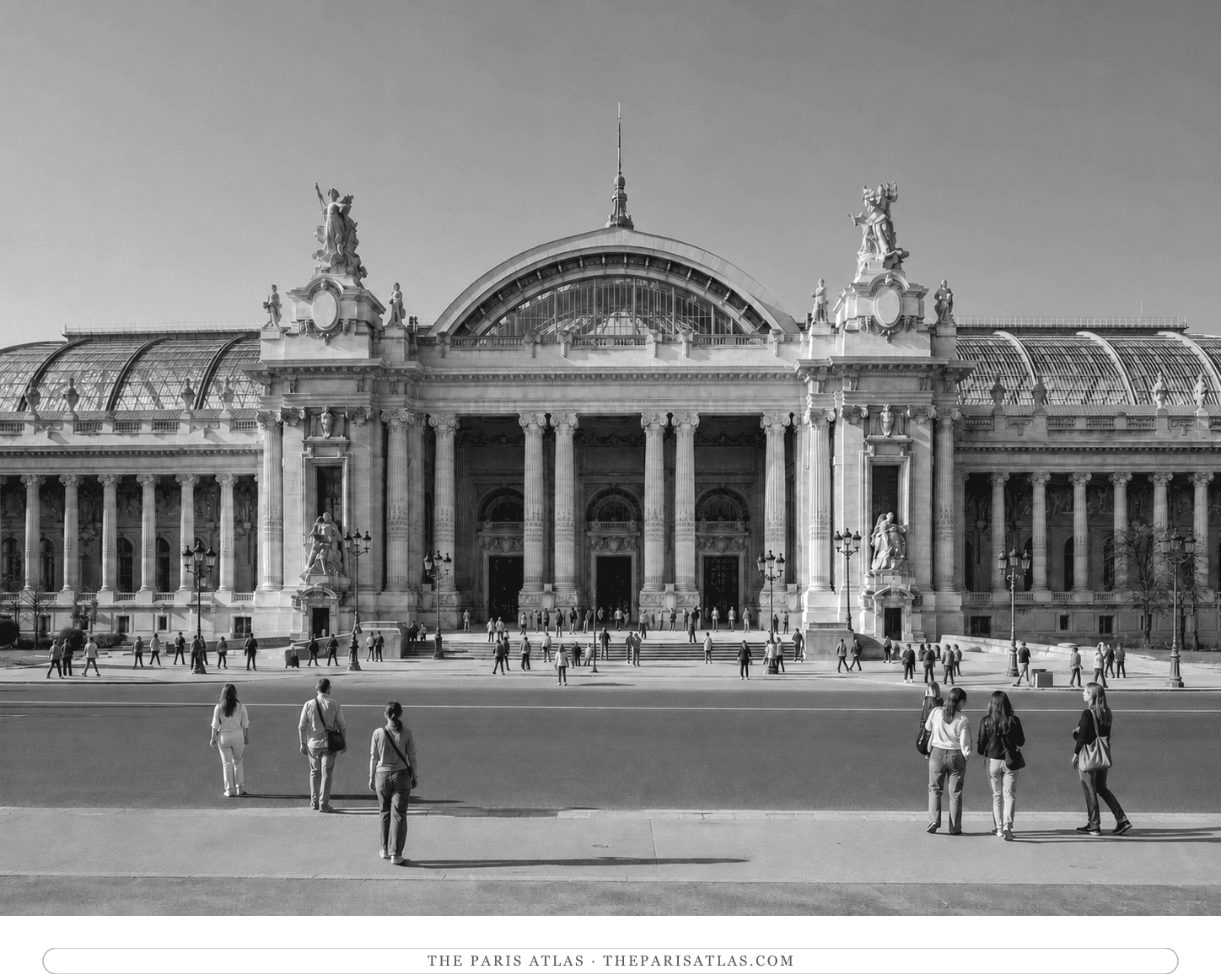
The work was first performed in New York in 1973 and then presented later that year at the Grand Palais in Paris as part of the Festival d’Automne. The Paris version lasted around fifty minutes and involved a sequence of changing tableaux in which performers and painted forms became difficult to distinguish from one another. Centre Pompidou later described Coucou Bazar as the culminating moment of the Hourloupe cycle. The transition was complete: the picture had become a stage.
While Dubuffet’s own work was becoming monumental, his Art Brut collection had developed into an enormous parallel project. After the original Compagnie de l’Art Brut dissolved in 1951, the collection spent more than a decade with the American painter Alfonso Ossorio in East Hampton. It returned to Paris in 1962, where a reorganized Compagnie continued research and collecting.
By 1971, the collection contained nearly 5,000 works by 133 creators. Dubuffet donated the entire group, along with its archives, to the City of Lausanne. The Collection de l’Art Brut opened at the Château de Beaulieu in 1976 and became the world’s first public museum devoted entirely to this field. The decision ensured that Art Brut would survive as something larger than Dubuffet’s private collection and that work by artists such as Aloïse Corbaz and Adolf Wölfli could eventually become known internationally under their own names.
Dubuffet’s war against conventional artistic values was not confined to painting. He was a prolific writer. In 1968, he published *Asphyxiante culture — Asphyxiating Culture*, perhaps the clearest expression of his belief that officially approved culture could suffocate genuine invention.
His target was not simply museums. It was the entire mechanism by which societies decide that some objects, forms of language and people are culturally valuable while others are unworthy of attention. FranceArchives summarizes his position as a desire to begin painting again from zero, as though museums, critics and the art market did not exist.
There is an obvious paradox. By 1968, Dubuffet was himself a famous museum artist. He knew it. Much of his later career exists inside that contradiction: the celebrated artist who continued arguing against the cultural system that celebrated him.
Dubuffet eventually created an institution to preserve his own work as well. The Fondation Dubuffet was established in 1973 and officially recognized as a public-interest foundation in 1974. Dubuffet remained its president until his death. The foundation now operates at two sites, including one in Paris and another at Périgny-sur-Yerres, where Dubuffet had worked on large-scale projects.
Again, the irony is striking: the critic of institutions created one. But without it, many of his immense environments, architectural models, papers and unrealized projects would have been extraordinarily difficult to preserve.
After ending the Hourloupe cycle in 1974, Dubuffet did not settle into repetition. The last decade of his career produced several radically different groups of works. The *Théâtres de mémoire of 1975–1978 assembled fragments of earlier drawings into complicated mental landscapes. The Psycho-sites of the early 1980s explored places as constructions of the mind rather than objective locations. Then came the Mires of 1983–1984*, increasingly abstract networks of rapid red and blue marks.
Finally, in 1984, Dubuffet created the *Non-lieux — Non-Places. The physical world almost disappears: no Métro passengers, Paris storefronts, female bodies, landscapes or Hourloupe architecture—only marks. The Guggenheim Bilbao has described these final series as a progressive withdrawal from material representation until the Non-lieux* approach painting as pure action with almost no reference to physical reality. It was an extraordinary ending for an artist who had once been obsessed with dirt, asphalt and stone.
Dubuffet continued drawing through 1984 and into the final months of his life. During the winter of 1985, he hurriedly wrote and illustrated a short autobiography, *Biographie au pas de course. Jean Dubuffet died in Paris on 12 May 1985*. He was eighty-three.
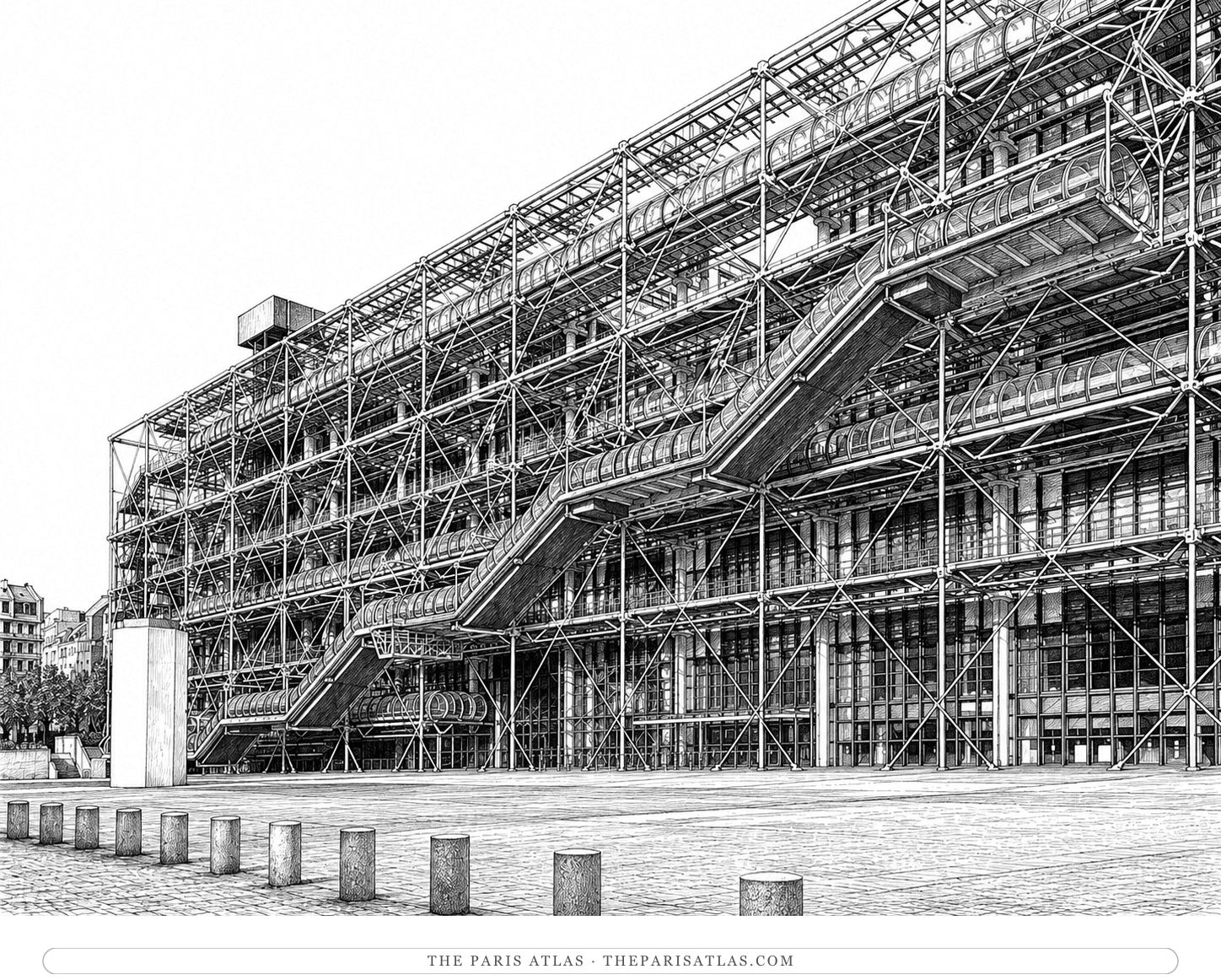
A little over a month later, Centre Pompidou opened an exhibition devoted to his final Non-lieux as a tribute. The artist who had spent decades insisting that culture could suffocate art had become one of the major figures in France’s national museum collection.
Dubuffet’s relationship with Paris was unusually complicated because the city represented both the culture he resisted and the material he repeatedly needed. He arrived in 1918 to attend the Académie Julian, entered the artistic circles around Valadon, Jacob, Masson, Léger and Gris, then rejected what he saw. He became a wine merchant in Bercy, and his experiments of the 1930s took place around rue du Val-de-Grâce and rue Lhomond.
The Métro and Paris streets provided the subjects of his definitive return to painting in 1942. His first solo exhibition took place at 17 place Vendôme, one of the most polished addresses imaginable for paintings celebrating roughness and ugliness. Galerie Drouin’s basement became the first Foyer de l’Art Brut, while Paulhan and the literary world of La Nouvelle Revue Française gave Dubuffet some of his closest friends and portrait subjects.
When he returned from Vence in 1961, the city itself exploded into the *Paris Circus paintings: traffic, shop signs, sidewalks, crowds and noise compressed into color. In 1973, Coucou Bazar* transformed the Grand Palais into the stage for his moving Hourloupe universe. In 1985, he died in the city he had spent most of his career arguing with.
Paris was both antagonist and collaborator. Dubuffet needed the city because it represented everything he wanted to attack: prestigious galleries, sophisticated critics, literary culture and institutions deciding what counted as art. But Paris also gave him ordinary passengers, graffiti, signs, traffic, pavements, shops, friends and arguments. His art grew out of both.
Dubuffet changed twentieth-century art in at least two different ways. The first was through his own work. He demonstrated that a painting could be built from materials associated with roads and construction sites rather than fine-art studios. He challenged conventional drawing, treated walls, soil and graffiti as serious visual sources, expanded a ballpoint-pen doodle into sculptures and buildings, and eventually made environments that viewers entered and a theatrical work in which painting itself seemed to move.
The second legacy is Art Brut. His collection changed what museums were willing to look at. Artists who had been classified primarily through psychiatric, social or institutional histories could begin to be considered for the complexity of what they had actually made.
That legacy remains complicated. Dubuffet’s dream of completely “uncultured” creation may itself be impossible; nobody creates entirely outside language, society or previous experience. The label Art Brut can also flatten radically different lives into a single category. But Dubuffet’s central challenge remains powerful.
He asked why a museum-trained painter should automatically be considered more important than someone who invented an extraordinary visual language alone; why clean marble should matter more than scratched plaster; why correct drawing should matter more than a compelling wrong one; and why a museum should decide where creativity begins. Those questions outlived his arguments about how to answer them. That may be his most durable achievement.
Born in Le Havre on 31 July into a family of wine merchants.
Begins evening courses at the École des Beaux-Arts in Le Havre.
Moves to Paris with Georges Limbour, attends the Académie Julian for roughly six months, then leaves to work independently. Meets figures including Suzanne Valadon and Max Jacob.
Frequents André Masson’s studio and meets Fernand Léger and Juan Gris. Stays in Lausanne and becomes increasingly interested in work created outside conventional artistic education.
Loses faith in professional art culture, stops painting and travels briefly to Buenos Aires.
Returns to Le Havre and joins his family’s wine business.
Marries Paulette Bret. Their daughter Isalmina is born in 1929.
Establishes his own wholesale wine business in Bercy, Paris.
Returns to painting, rents a studio on rue du Val-de-Grâce, later moves to 34 rue Lhomond, and experiments with masks and puppets. Meets Émilie “Lili” Carlu.
Marries Lili but returns to managing the wine business when financial problems threaten the company, abandoning painting again.
Is mobilized during the Second World War, then demobilized and returns to Paris and the wine trade.
At forty-one, places his business under management and commits himself permanently to art. Produces early mature work including the Paris Métro series.
Meets Jean Paulhan, who becomes one of his most important intellectual allies and helps connect him with René Drouin.
Holds his first solo exhibition at Galerie René Drouin, 17 place Vendôme, from 20 October to 18 November. The deliberately rough work causes controversy.
Begins producing the thick Hautes Pâtes works and starts systematically collecting what he calls Art Brut. Travels through Switzerland, meeting doctors and discovering creators including Aloïse Corbaz and Adolf Wölfli.
Publishes *Prospectus aux amateurs de tout genre* and continues developing heavily textured paintings and portraits.
Establishes the Foyer de l’Art Brut in the basement of Galerie Drouin and presents a major series of distorted portraits of writers and artists.
Makes several journeys into the Algerian Sahara, experiences that contribute to his increasing fascination with landscapes, soil and material surfaces.
Creates the Compagnie de l’Art Brut with André Breton, Jean Paulhan, Charles Ratton, Henri-Pierre Roché, Michel Tapié and others.
Galerie René Drouin presents the major exhibition *L’Art Brut. Dubuffet publishes L’Art Brut préféré aux arts culturels*.
Develops the provocative *Corps de dames* series, transforming the traditional female nude into flattened, heavily textured bodies.
Spends about six months in the United States and delivers his influential “Anticultural Positions” address in Chicago. His Art Brut collection remains with Alfonso Ossorio in East Hampton.
Begins spending much of the year at Vence, developing increasingly material-focused works.
Produces the Texturologies and Matériologies, pushing paintings toward surfaces resembling earth, stone and raw matter.
Returns to live in Paris and begins the vividly colored *Paris Circus* series of streets, crowds, traffic and shop signs.
Begins *L’Hourloupe* after making automatic ballpoint-pen doodles while talking on the telephone. The cycle eventually expands from drawing and painting into sculpture and architecture.
His Art Brut collection returns from the United States to Paris, where a new Compagnie de l’Art Brut is organized as a research center.
Begins publishing the *Fascicules de l’Art Brut* devoted to creators represented in the collection.
Translates the Hourloupe vocabulary into large polystyrene sculptures and architectural projects.
The Musée des Arts Décoratifs in Paris presents nearly 700 Art Brut works by 75 creators from the collection.
Creates *Le Jardin d’hiver*, an immersive black-and-white Hourloupe environment that viewers physically enter.
Publishes *Asphyxiante culture*, his major attack on the authority of official culture.
Donates his Art Brut collection—nearly 5,000 works by 133 creators—and its archives to the City of Lausanne.
*Group of Four Trees* is installed in Lower Manhattan.
Presents *Coucou Bazar* in New York and at the Grand Palais in Paris, turning the Hourloupe into an animated theatrical environment.
Establishes the Fondation Dubuffet, which is recognized as a French public-interest foundation in 1974.
Brings the twelve-year Hourloupe cycle to an end.
Develops the collage-like *Théâtres de mémoire*.
The Collection de l’Art Brut opens at the Château de Beaulieu in Lausanne.
Creates the Psycho-sites, Mires and finally Non-lieux, progressively reducing recognizable references to the physical world.
The French pavilion at the Venice Biennale is devoted to Dubuffet’s Mires.
Completes his hurried autobiographical *Biographie au pas de course* during his final winter.
Dies in Paris on 12 May, aged eighty-three.
Met · 1944
Paulhan met Dubuffet soon after the painter's permanent return to art and recognized the importance of his early postwar work. Their exchange became one of Dubuffet's central relationships with writers.
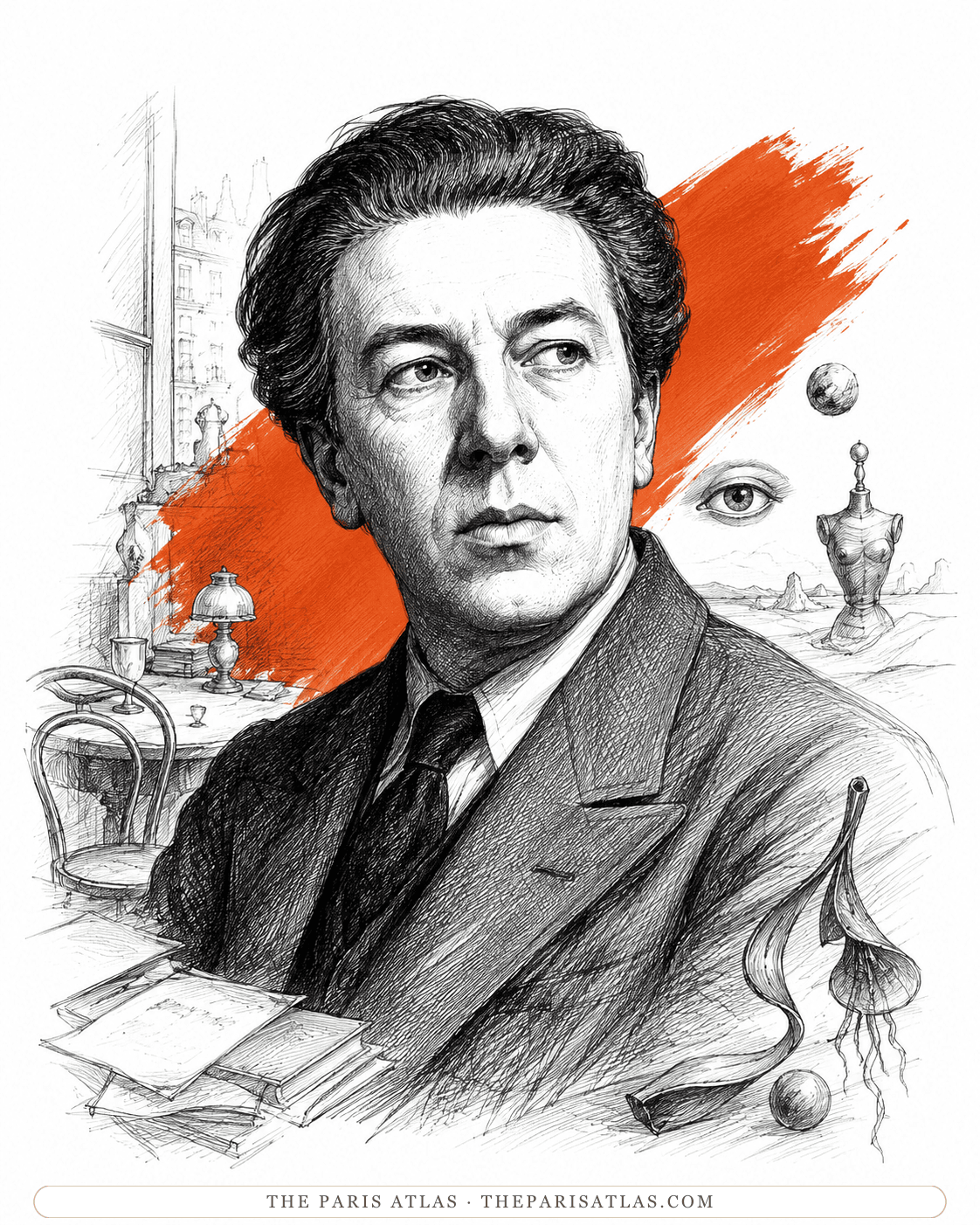
Met · 1940
Dubuffet and Breton were co-founders of the Compagnie de l'Art Brut in 1948 before disagreements separated their positions.
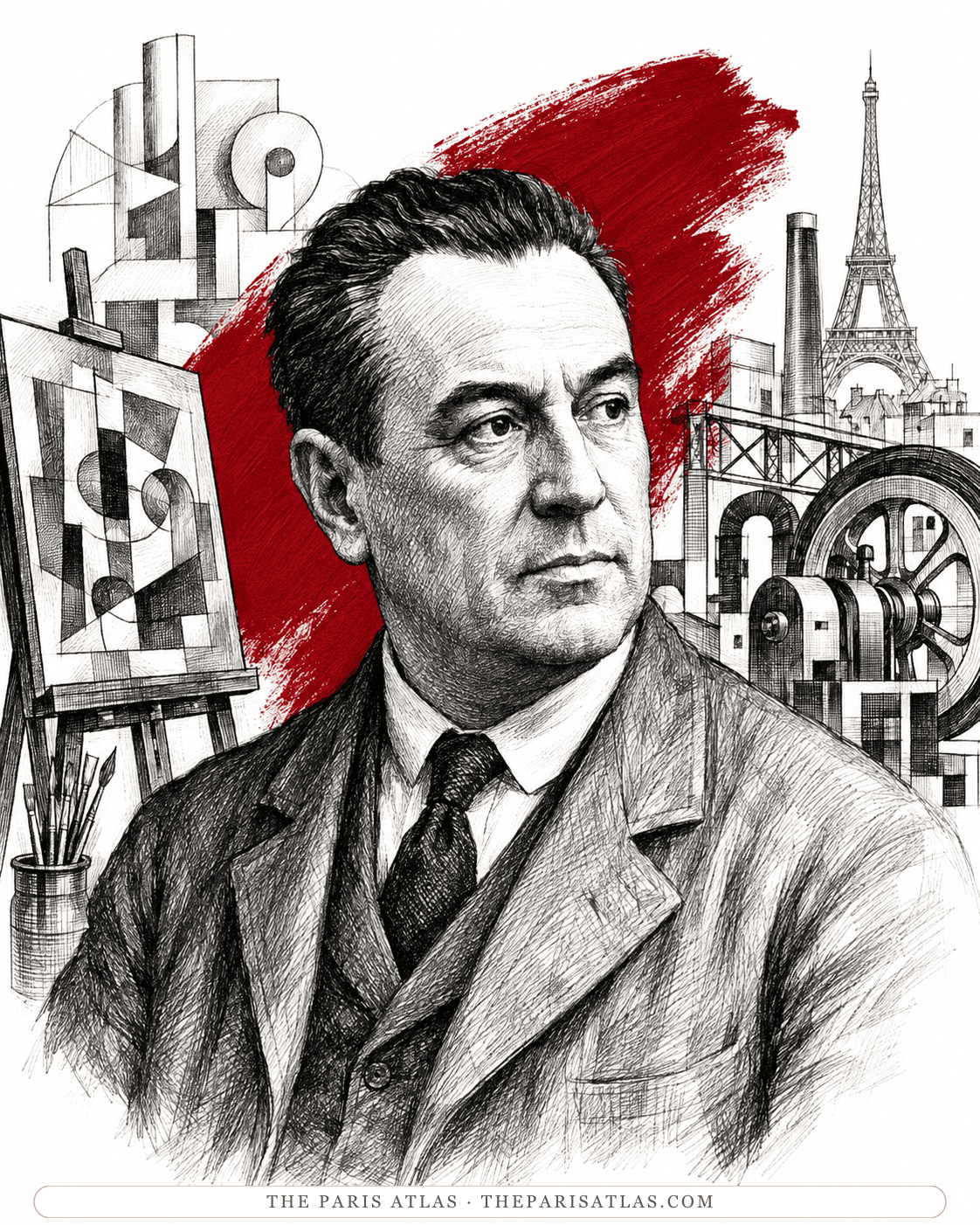
Met · 1918
Dubuffet met Léger during his first Paris period after moving from Le Havre in 1918.
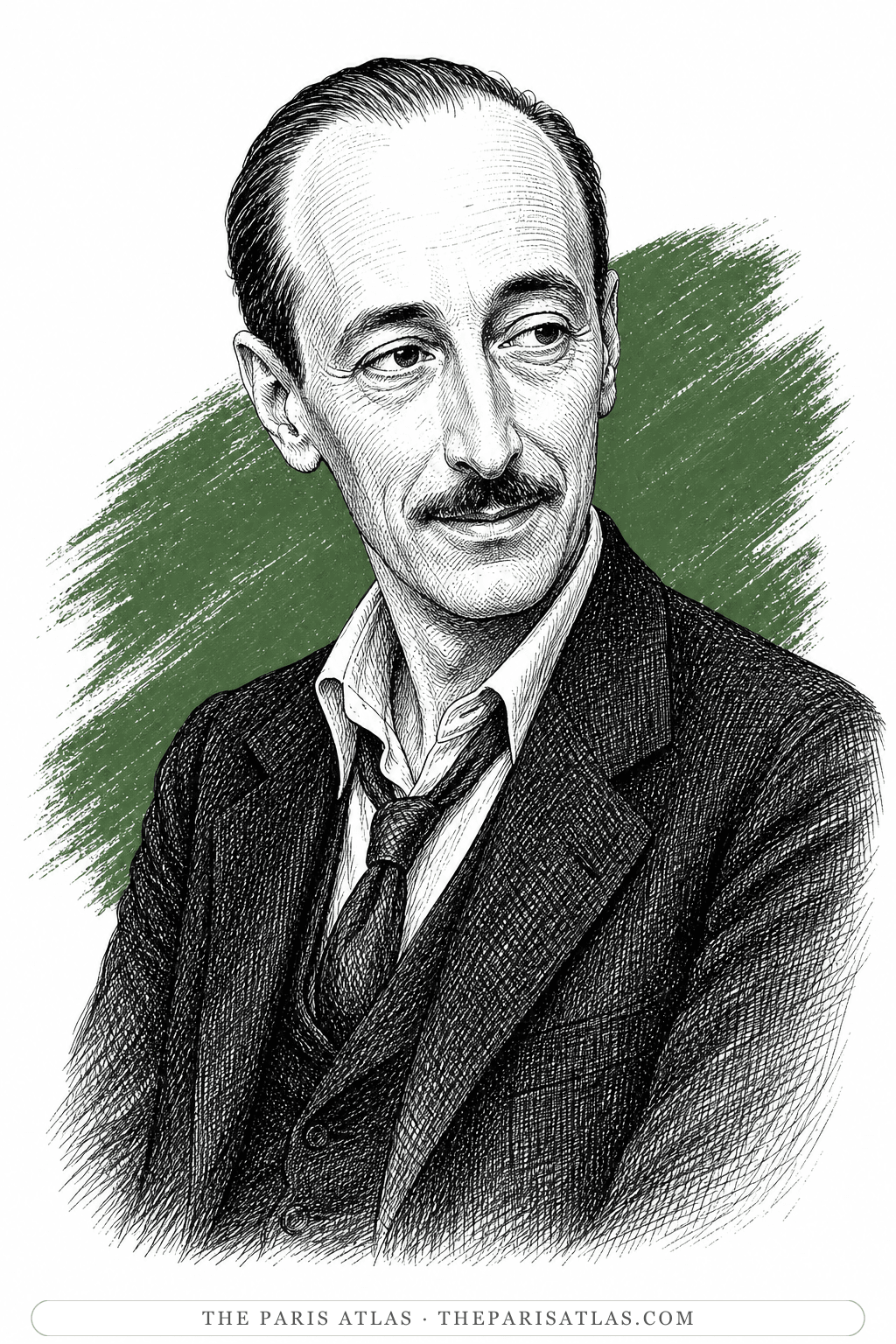
Collaborated with · 1948
Dubuffet and Roché were among the founders of the Compagnie de l’Art Brut in Paris in 1948.
Met · 1918
Dubuffet encountered Valadon during his first Paris period after moving from Le Havre to study art in 1918.

Dubuffet presented the Paris version of Coucou Bazar at the Grand Palais during the 1973 Festival d’Automne.
Visit the place
Centre Pompidou opened a tribute exhibition devoted to Dubuffet’s final Non-lieux shortly after his death in 1985.
Visit the placeMet · 1944
Paulhan met Dubuffet soon after the painter's permanent return to art and recognized the importance of his early postwar work. Their exchange became one of Dubuffet's central relationships with writers.
Met · 1940
Dubuffet and Breton were co-founders of the Compagnie de l'Art Brut in 1948 before disagreements separated their positions.
Met · 1918
Dubuffet met Léger during his first Paris period after moving from Le Havre in 1918.
Collaborated with · 1948
Dubuffet and Roché were among the founders of the Compagnie de l’Art Brut in Paris in 1948.
Exhibited at · 1985
Centre Pompidou opened a tribute exhibition devoted to Dubuffet’s final Non-lieux shortly after his death in 1985.
Exhibited at · 1973
Dubuffet presented the Paris version of Coucou Bazar at the Grand Palais during the 1973 Festival d’Automne.
Met · 1918
Dubuffet encountered Valadon during his first Paris period after moving from Le Havre to study art in 1918.
The sources below include biographies, scholarly essays, interviews, and primary materials that informed this page. They reflect both the historical record and ongoing critical conversations about Jean Dubuffet and their work.

Centre Pompidou’s artist authority record and overview of Dubuffet’s anti-academic career.
Foundation collection record for Dubuffet’s portrait of Jean Paulhan.
Official record for the 1947 portrait exhibition and Dubuffet’s theory of memory and likeness.
Official record of Dubuffet’s first solo exhibition at Galerie René Drouin in 1944.
Official history of the Fondation Dubuffet and its recognition as a public-interest foundation.
The foundation’s exhibition archive for Dubuffet’s career.
Detailed museum account of L’Hourloupe and its expansion into sculpture, architecture and immersive space.
Museum collection record for the immersive environment *Le Jardin d’hiver*.
Centre Pompidou’s interpretive article on the scale and bodily experience of *Le Jardin d’hiver*.
Collection record for *Rue passagère* and the Paris Circus cycle.
Collection record for *La Gigue irlandaise* from the Paris Circus cycle.
Retrospective material treating *Coucou Bazar* as the culmination of L’Hourloupe.
Record of the 1985 tribute exhibition devoted to Dubuffet’s final *Non-lieux*.
Core institutional history of Art Brut, the Compagnie, Dubuffet’s collection and its creators.
Museum history documenting Dubuffet’s donation to Lausanne and the 1976 opening.
Institutional account of Dubuffet’s Swiss research and the origins of the collection.
Museum record for Dubuffet’s portrait of Jean Paulhan, materials and larger portrait campaign.
Metropolitan Museum research index for Dubuffet’s works, exhibitions and reception.
MoMA artist record and broad institutional overview of Dubuffet’s work.
Museum record for the 1947 portrait of Henri Michaux and its unconventional materials.
Museum record and research material for the *Corps de dames* series.
Contemporary MoMA exhibition chronology for Dubuffet’s development through the late 1960s.
Museum collection record for *Corps de dame, jardin fleuri*.
Lausanne museum research on *Affaires et démarches* and Dubuffet’s Paris Circus reversal.
Bibliothèque nationale de France catalogue evidence for the Galerie René Drouin exhibitions at 17 place Vendôme.
French archival biography and account of Dubuffet’s anti-cultural ideas and *Asphyxiante culture*.
Festival archive for the 1973 Grand Palais presentation of *Coucou Bazar*.
Museum exhibition research on L’Hourloupe and Dubuffet’s final cycles.
Museum collection record for a late *Mire* and the transition toward the *Non-lieux*.
Web source consulted for documented facts and historical context presented on the Jean Dubuffet page.
These references anchor the page in the documented record and in the scholarly conversations around Jean Dubuffet. Every claim on this page traces back to one or more of the works listed here.
 Explore more resources