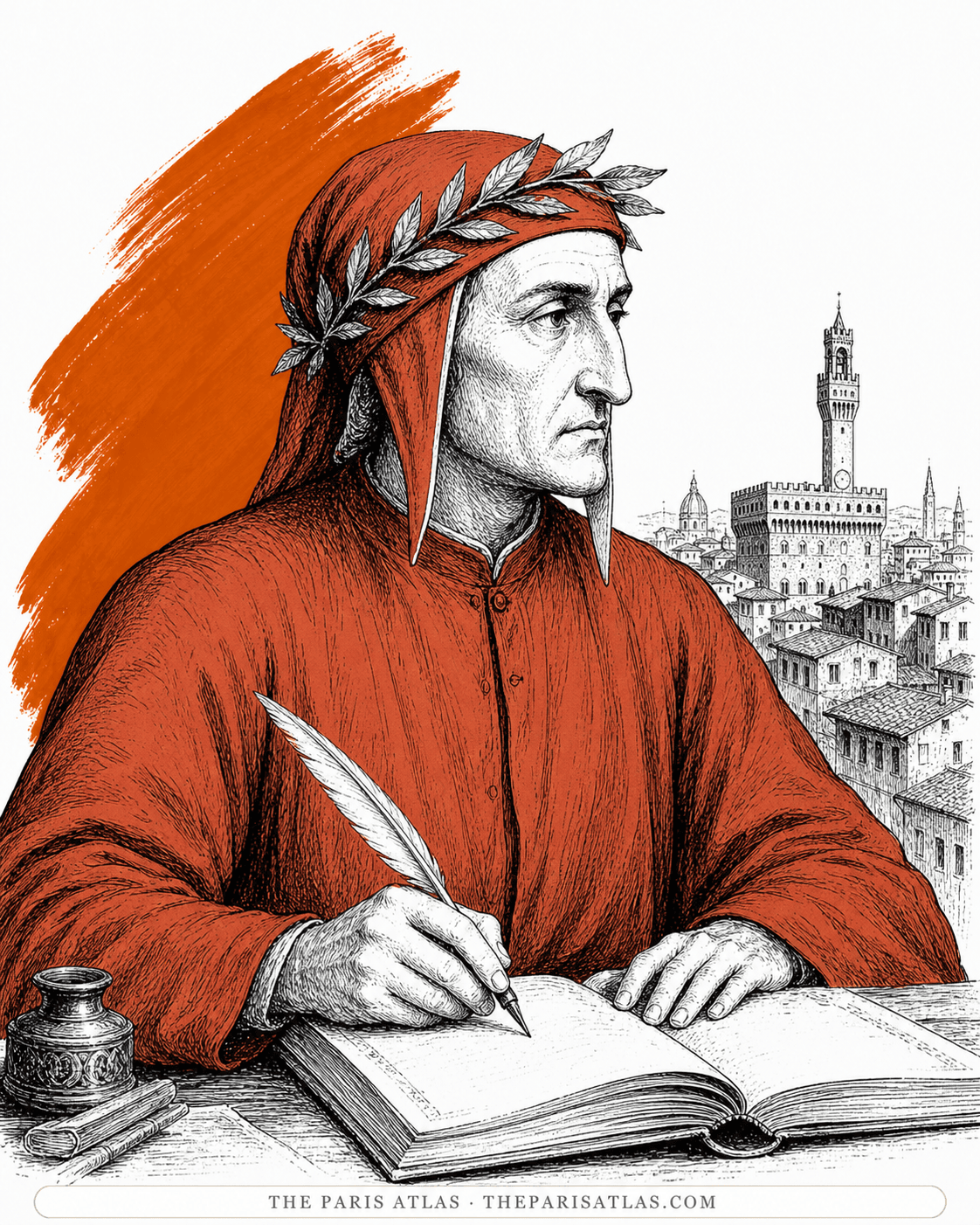
Florentine poet whose Divine Comedy supplied the first subject of Rodin's Gates of Hell and the original identity of The Thinker as Dante meditating over the damned.
The authors
163 writers so far. Every author page tells you where to start, what order to read their books in, and who to try next.
Start with these three
Browse every author
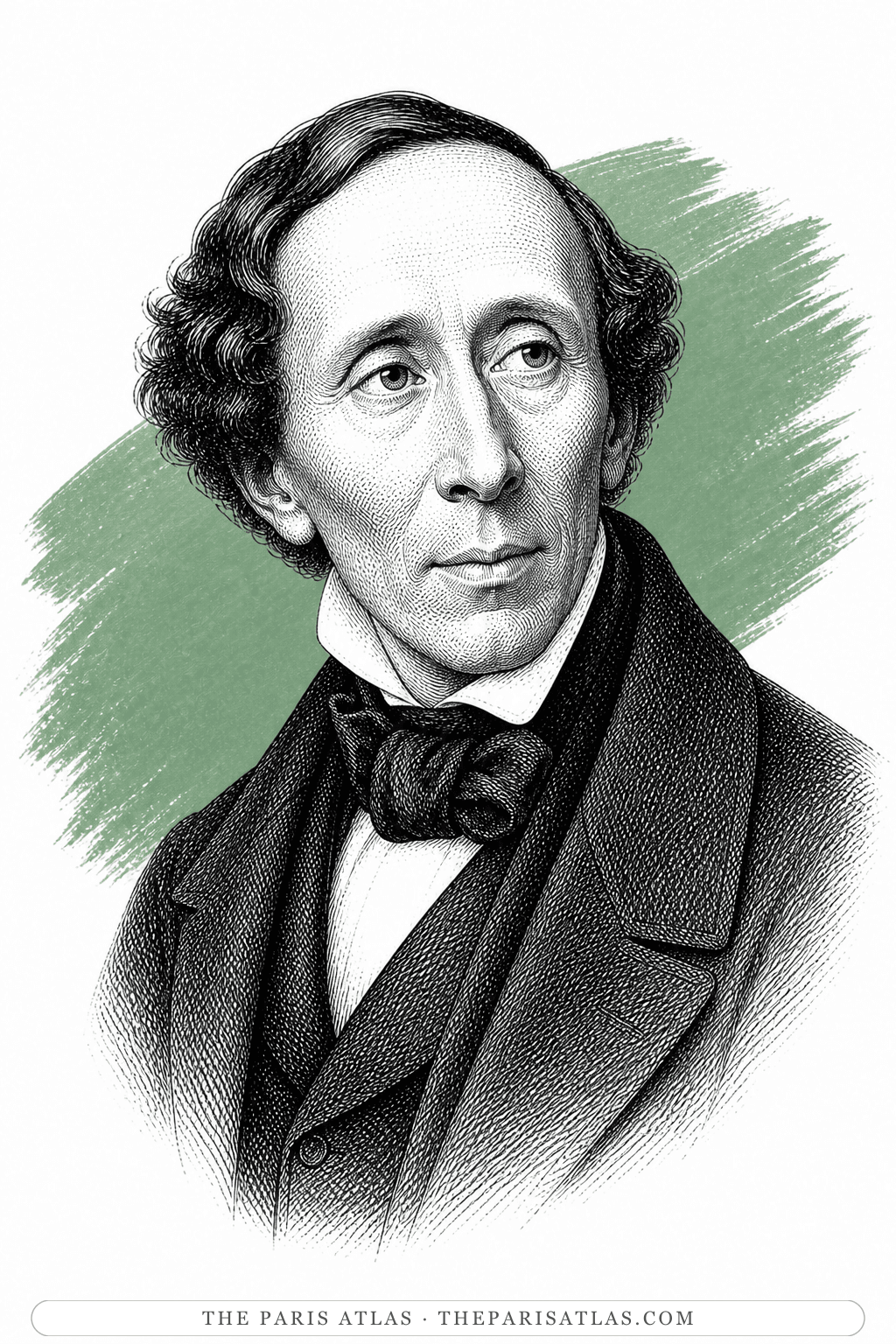
The Danish shoemaker's son who wrote The Ugly Duckling and The Little Mermaid, and who came to Paris in three separate years across a span of thirty-four: first at twenty-eight on a travel grant from the Danish king, knocking on the door of Victor Hugo, the most famous writer in France, as an unknown; then at thirty-eight, taken round the theatres arm in arm by Alexandre Dumas, the author of The Three Musketeers; and at sixty-two, turning the Paris world's fair of 1867 into a fairy tale.
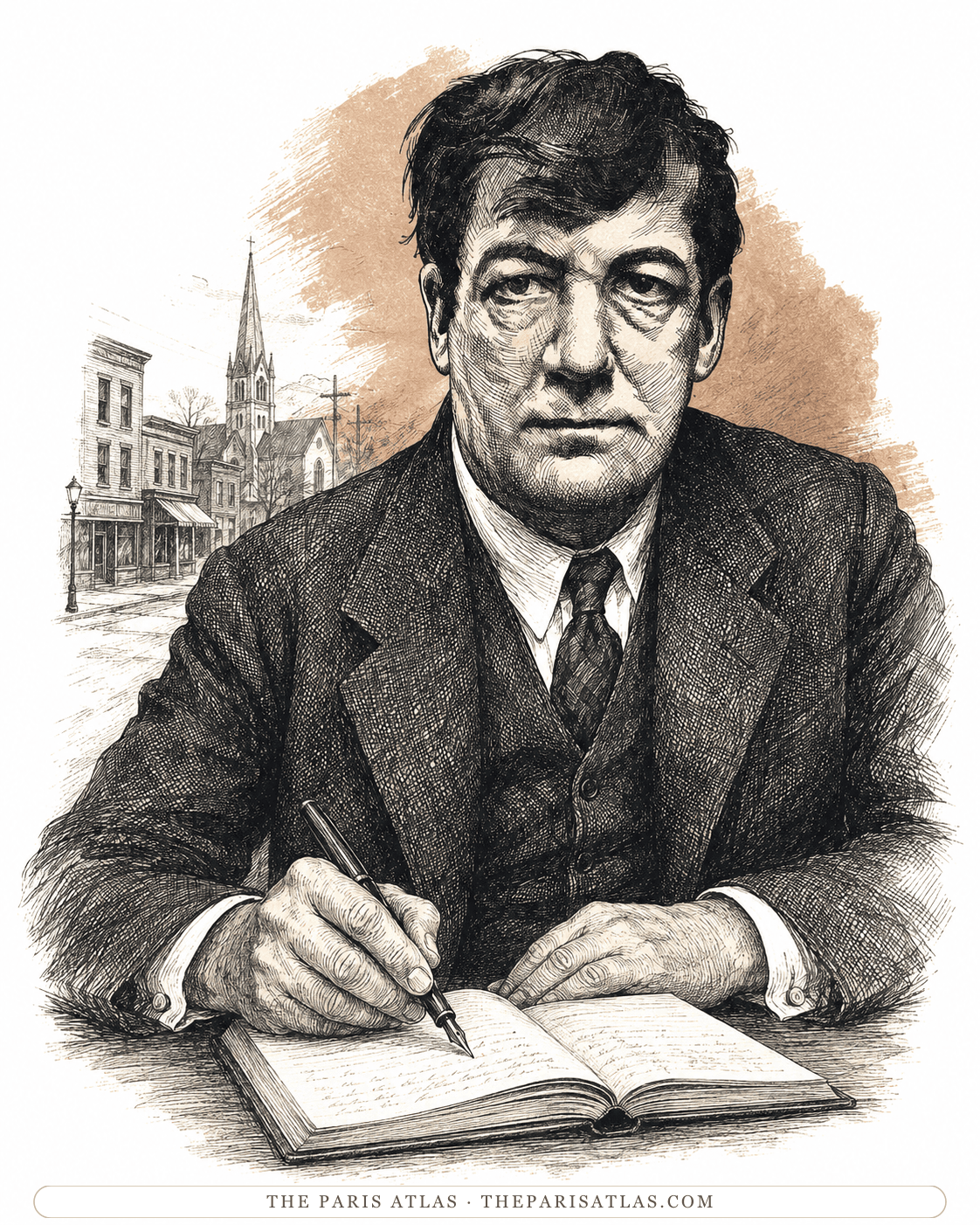
The Ohio ad man who walked out of his office, wrote Winesburg, Ohio, and sent the young Hemingway to Paris with letters of introduction.
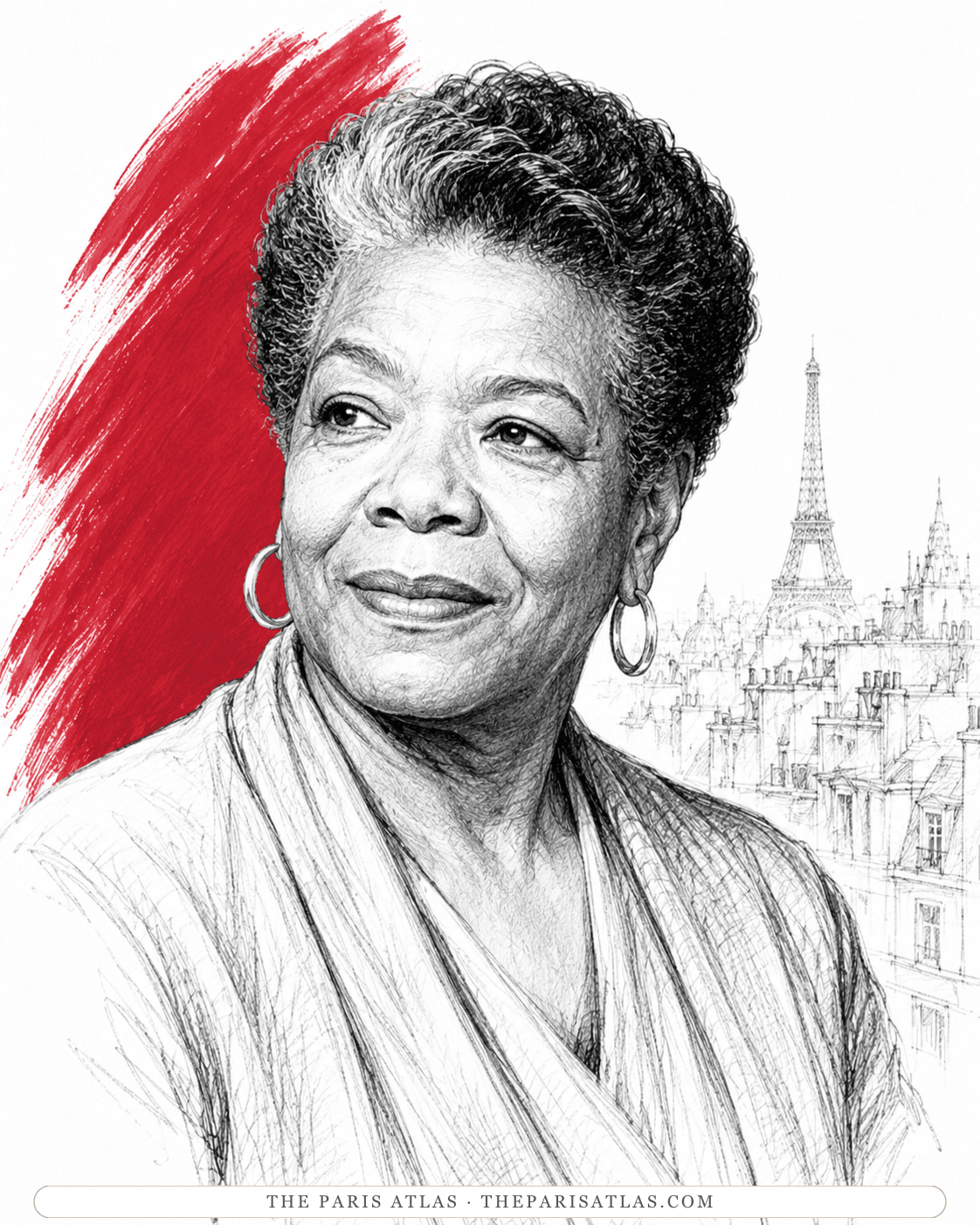
American poet, memoirist, and performer whose I Know Why the Caged Bird Sings (1969) opened a seven-volume autobiography. She toured Europe with Porgy and Bess in the 1950s, met James Baldwin in Paris, and recited at Bill Clinton’s 1993 inauguration.
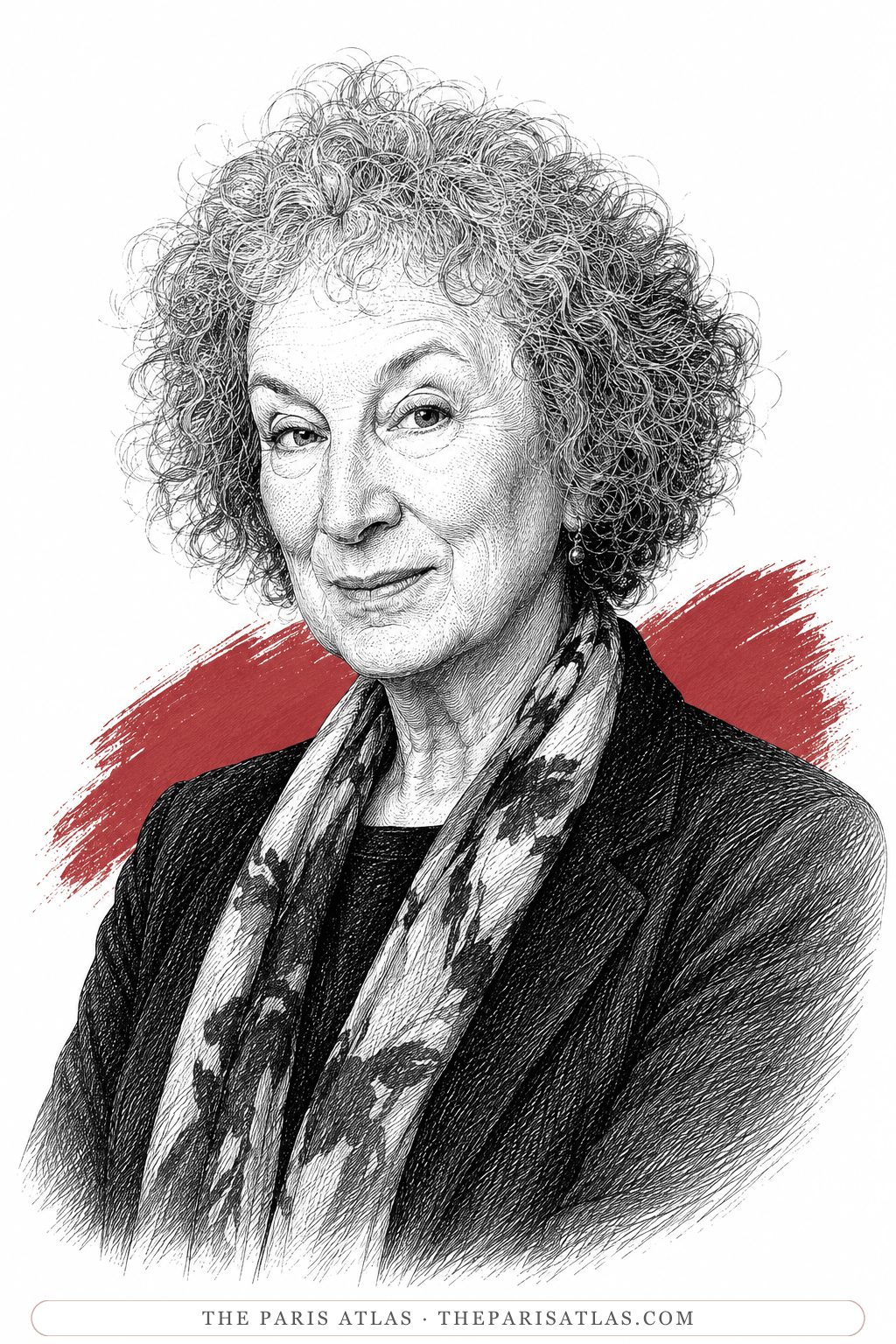
Canadian novelist and poet whose fiction examines power, gender, language, memory, and environmental collapse.
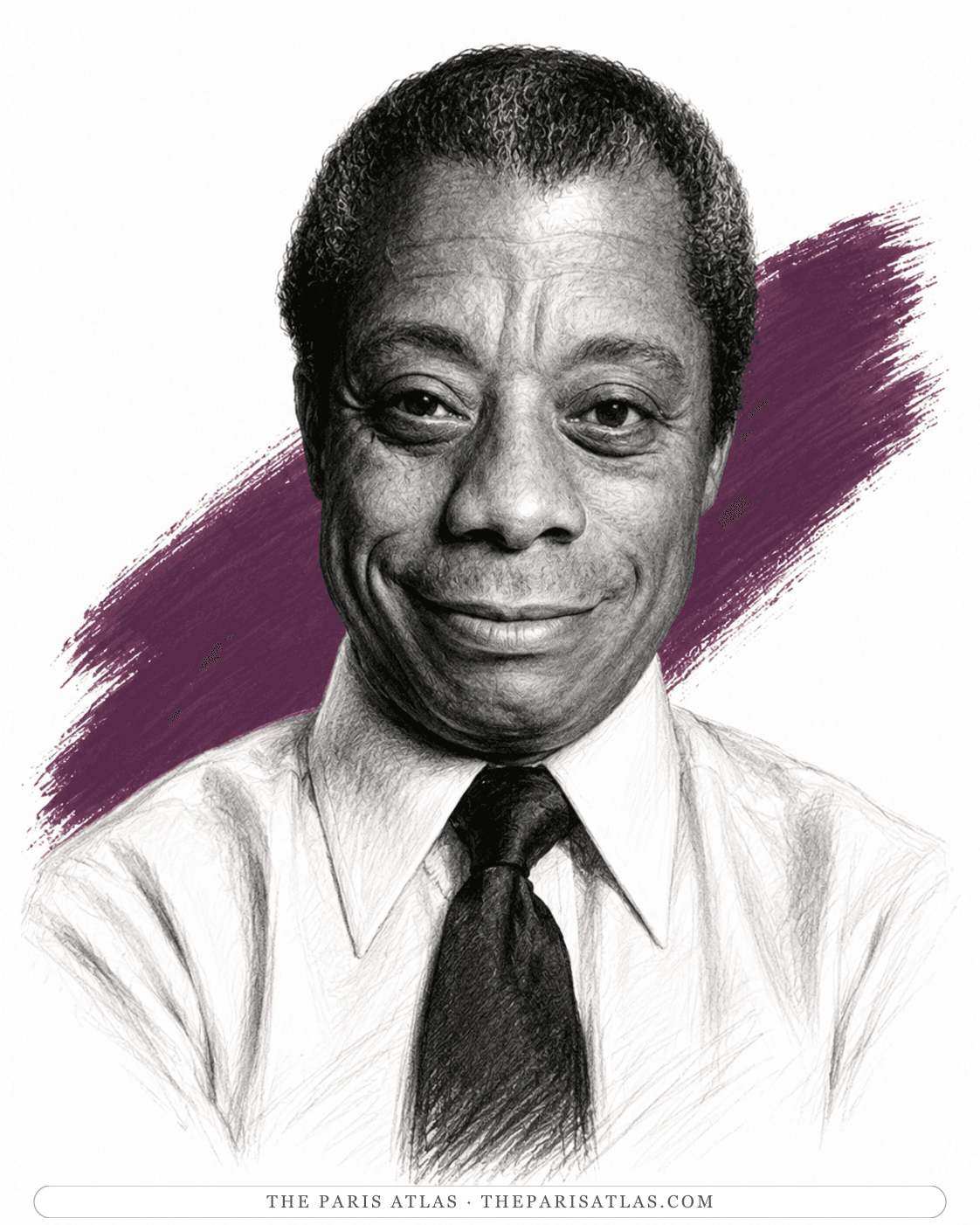
American novelist and essayist who left Harlem for Paris at twenty-four with forty dollars, and wrote the books that made him the most quoted witness to race, sex and belonging in twentieth-century America.
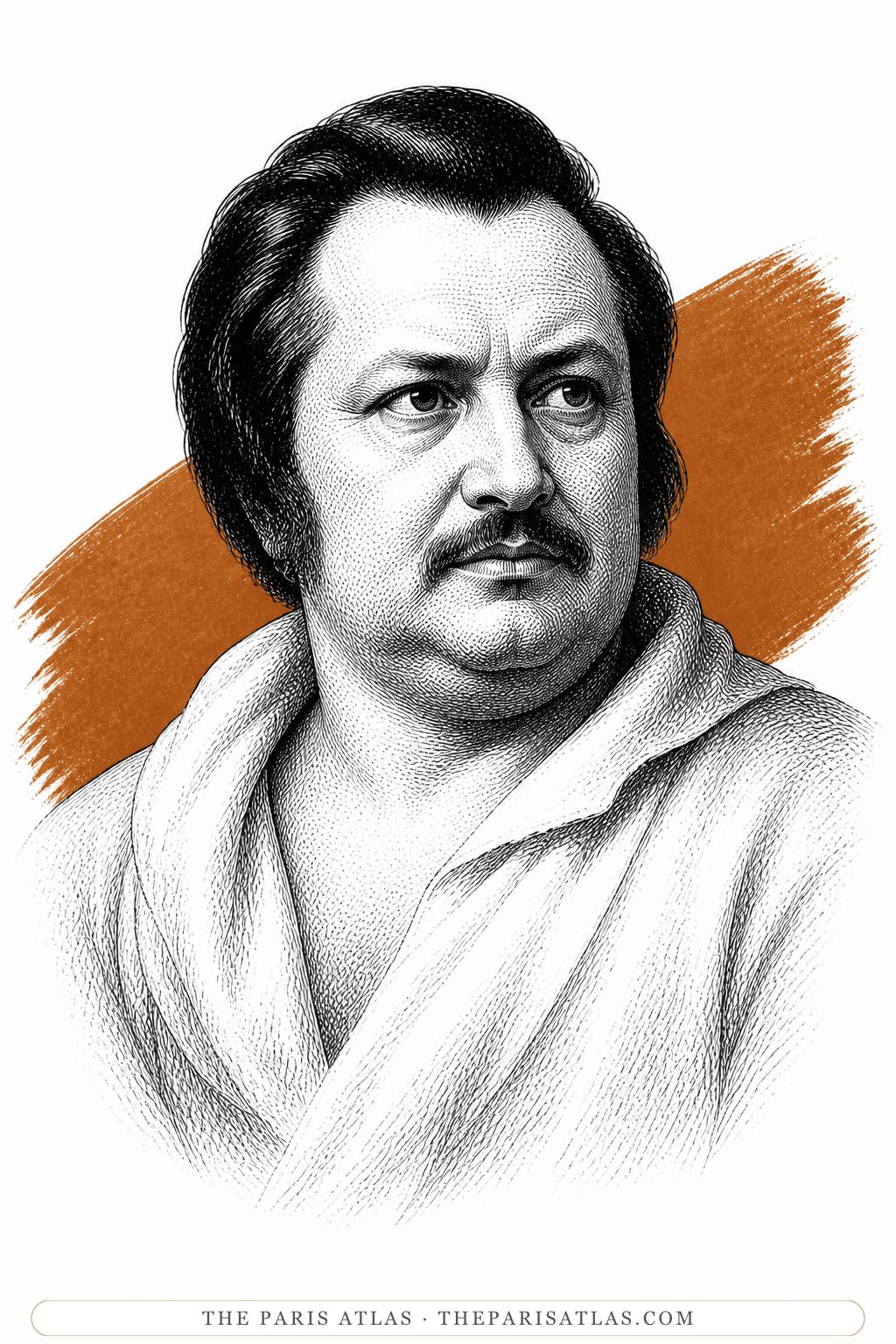
The novelist who set out to write the whole of French society as one connected system of books — La Comédie humaine, 'The Human Comedy', 137 titles planned and 90 finished, with more than two thousand characters walking from novel to novel. He wrote at night on coffee kept hot beside him, was ruined young by a printing business and never cleared the debt, and spent seven years in a house at Passy, then a village on the western edge of Paris, rented in someone else's name.
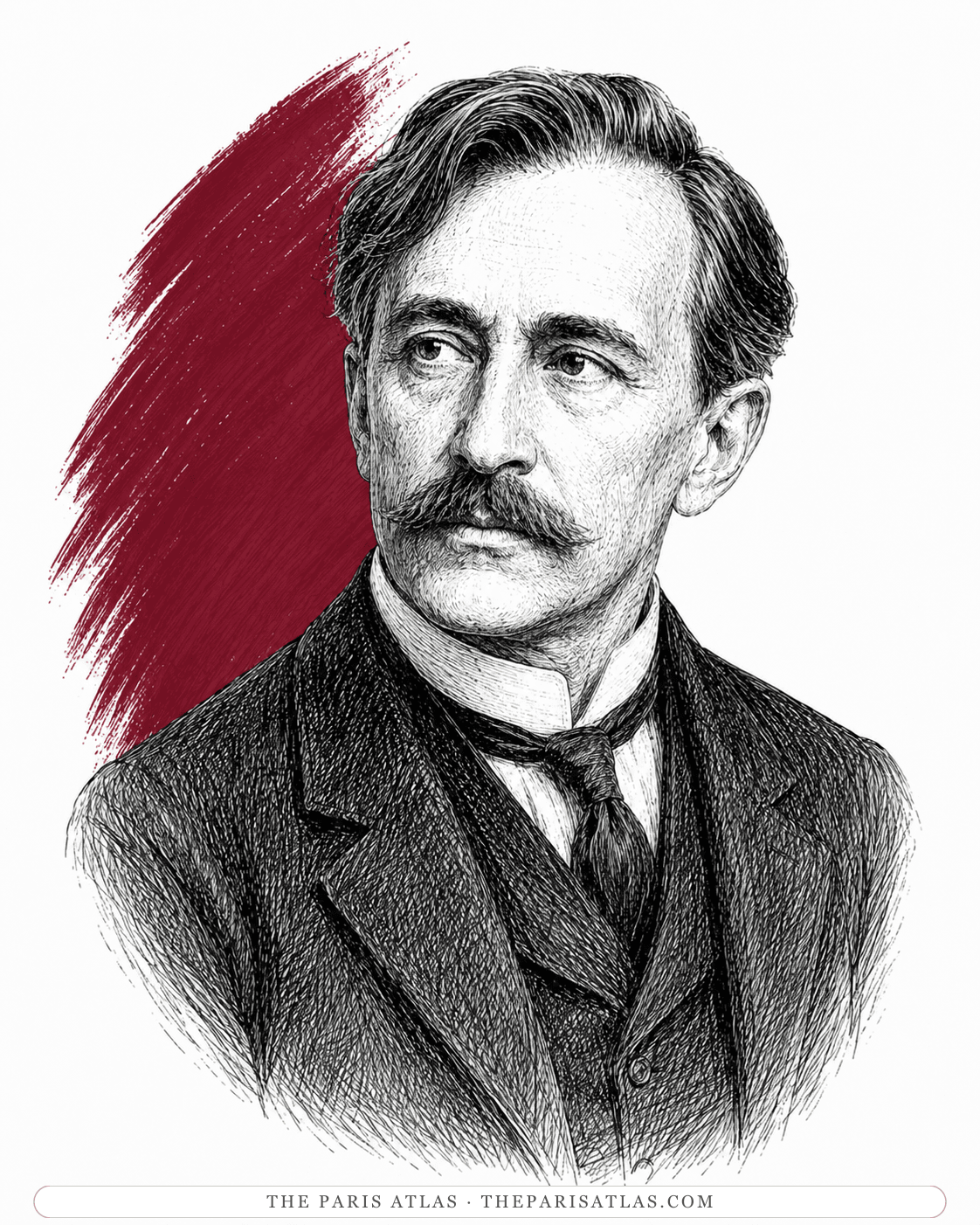
The novelist of Le Feu — the Great War's first great trench book, written from the ranks at forty-one — and the standard both Céline and Hemingway measured war writing against.
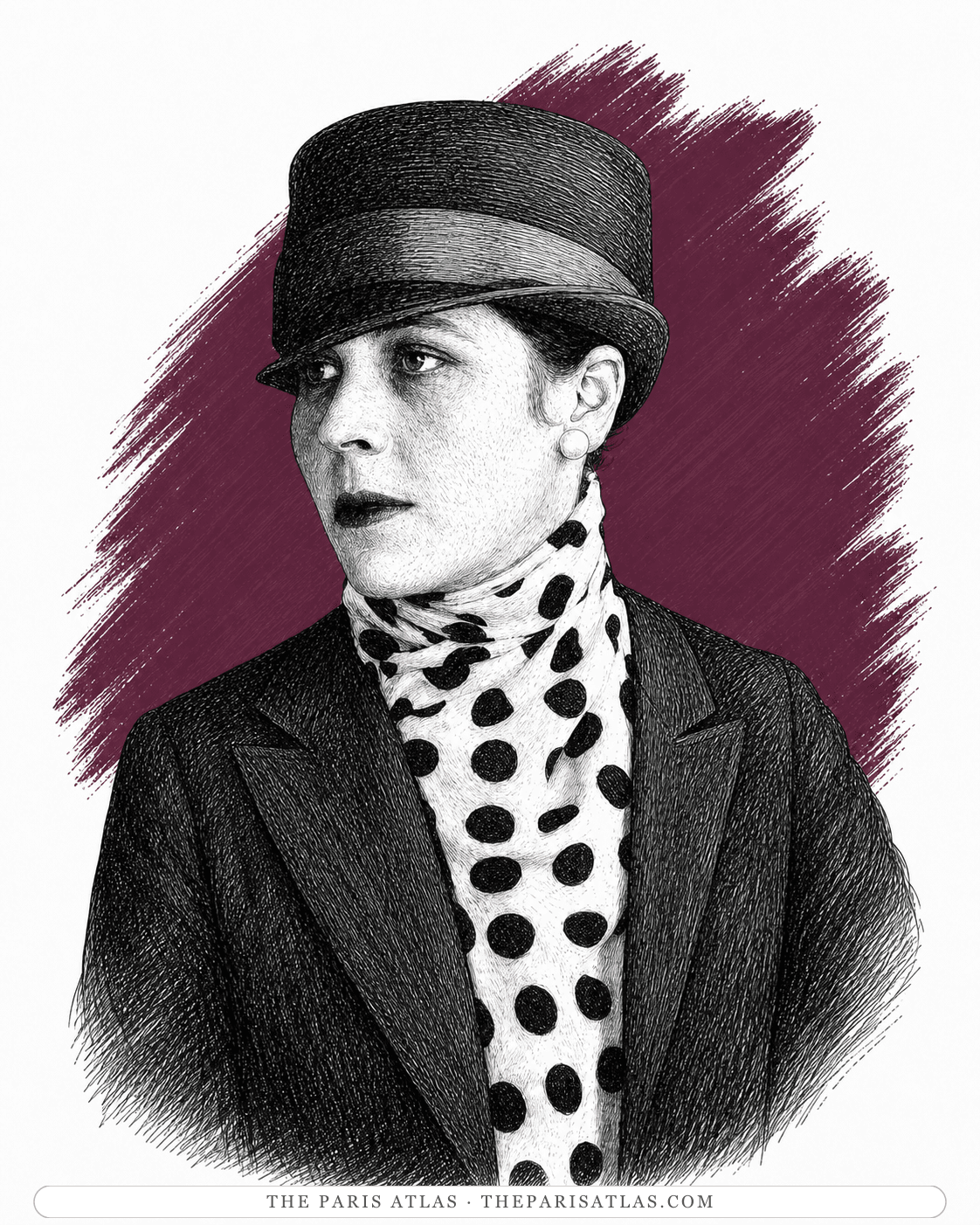
American writer and illustrator (1892–1982). She was a New York newspaper reporter for eight years before she was a novelist, spent the 1920s and 1930s in Paris, and wrote Nightwood, the 1936 novel T. S. Eliot took to Faber and introduced.
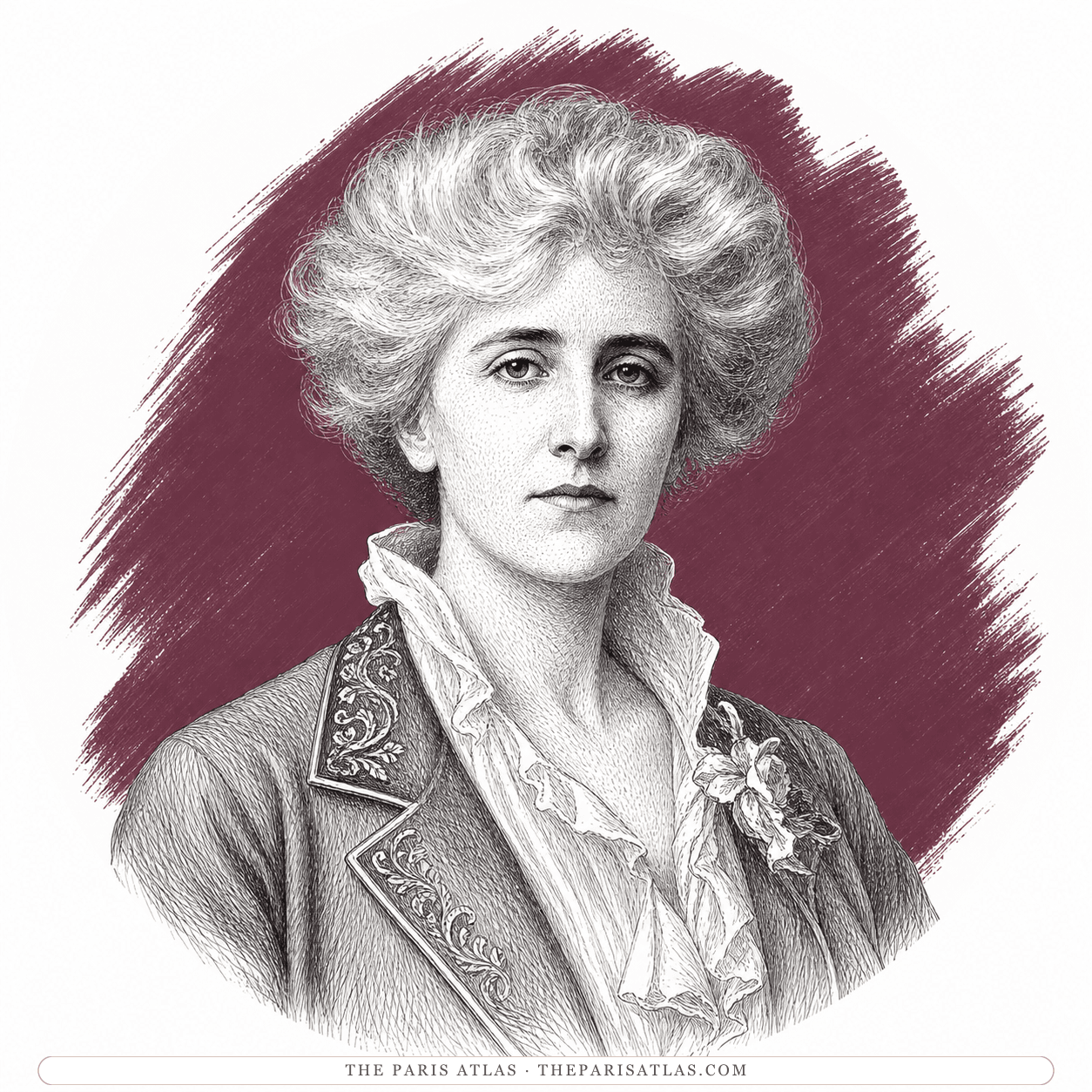
American writer who ran the Friday salon at 20 rue Jacob for sixty years, wrote her own books in French, and founded the Académie des Femmes as an answer to the all-male Académie française.
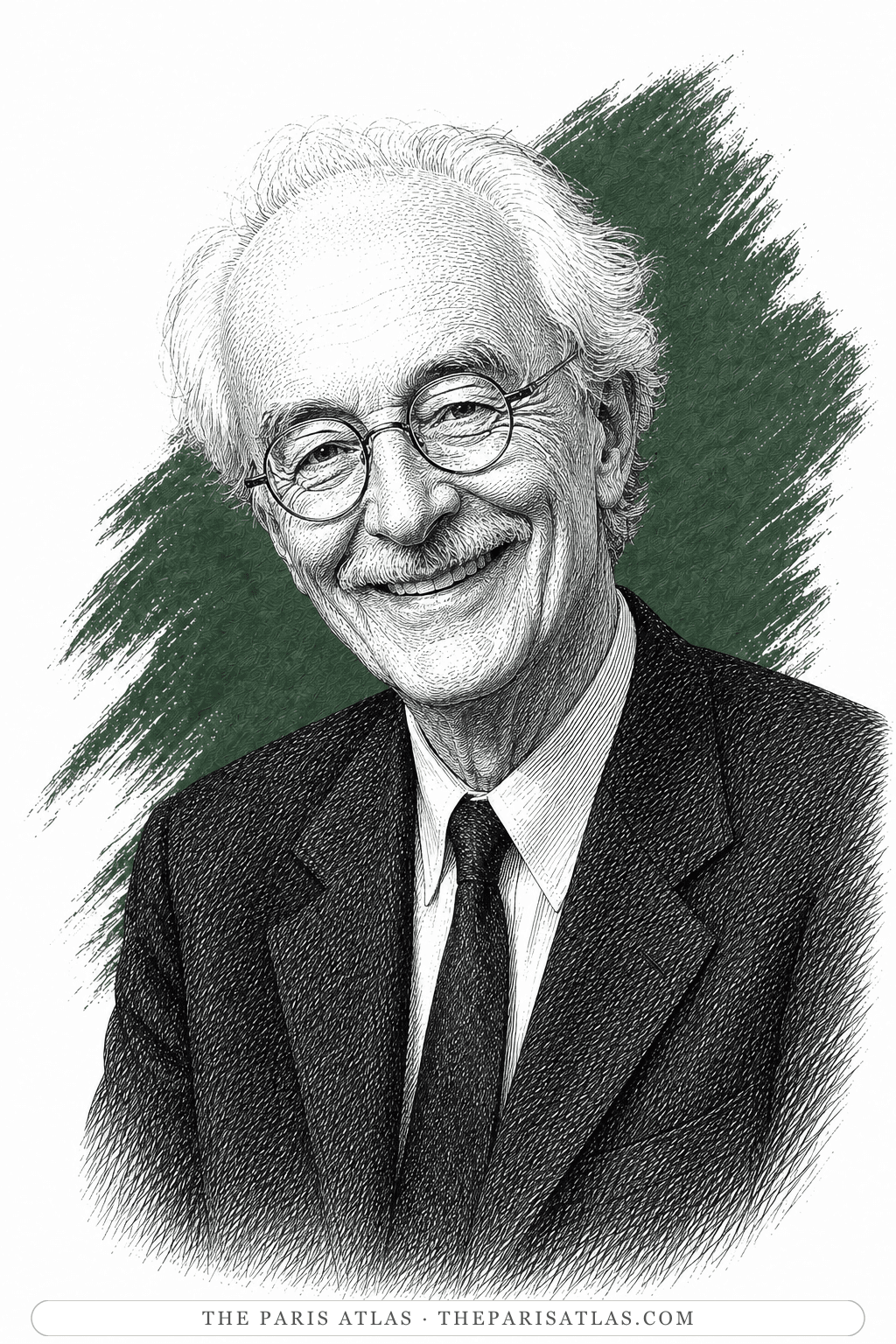
French publisher and writer whose Pacific Palisades conversations with Henry Miller became the 1976 book Flash Back.
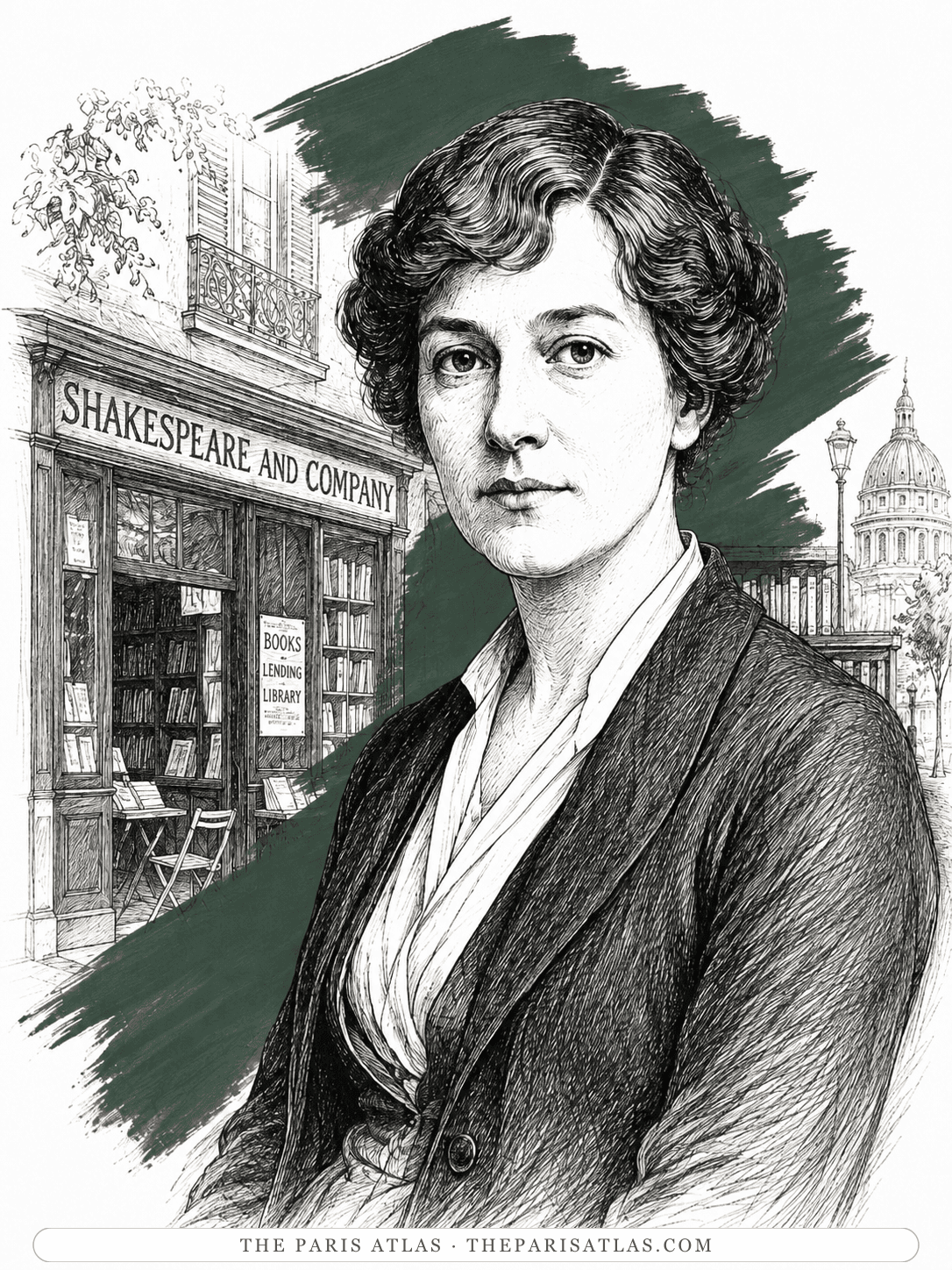
Founder of the original Shakespeare and Company, lender and publisher to the Lost Generation — the woman who put Ulysses into print.
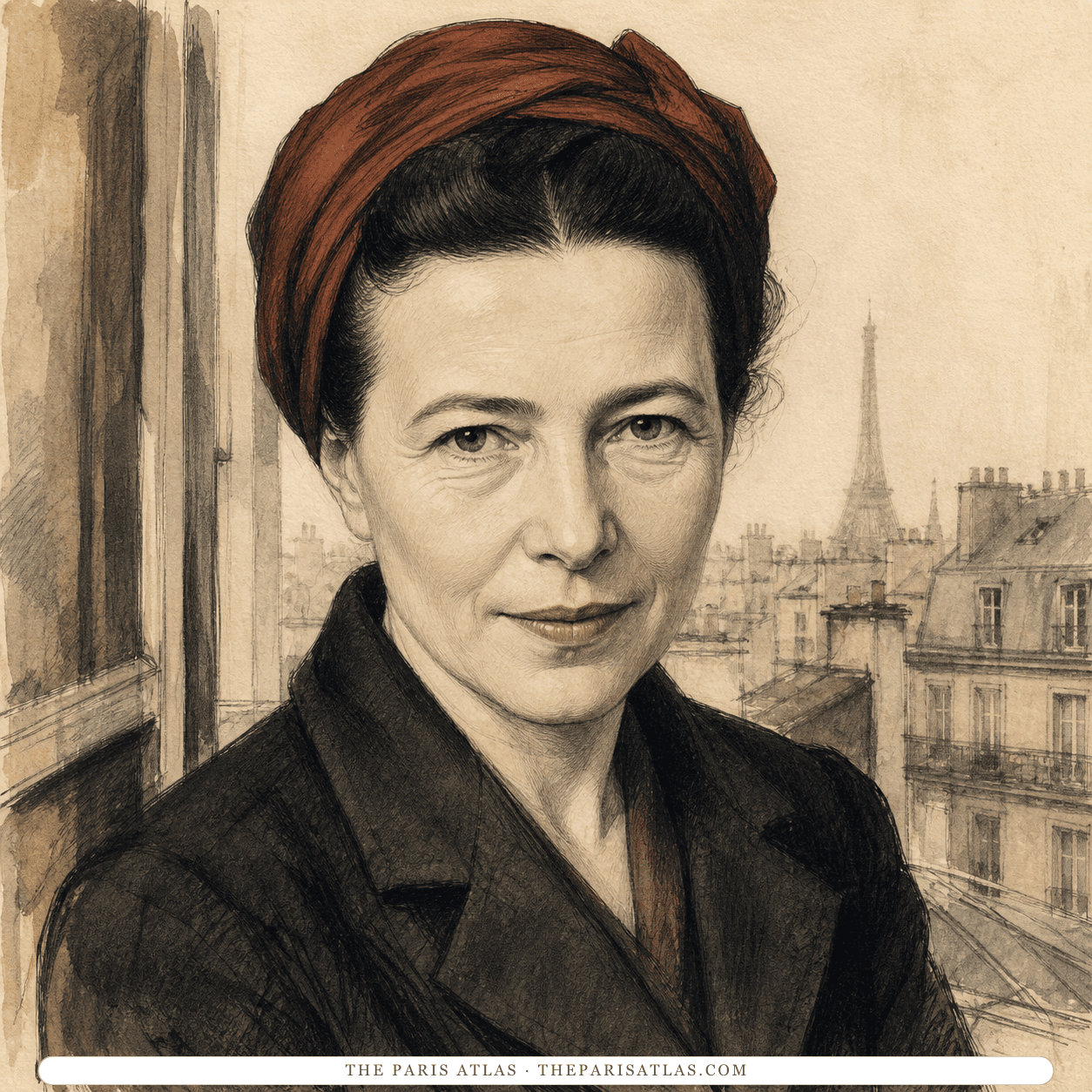
French writer and philosopher whose novels, memoirs, and social analysis examined freedom, gender, responsibility, aging, and the material conditions that shape a life.

The Dublin-born writer who settled in Paris in 1937, was stabbed in the street by a stranger a few months later, translated and typed intelligence reports for a Resistance cell during the German occupation of the city, and then did the strangest thing of all — began writing in French, a language not his own, and produced Waiting for Godot, which opened at a small Left Bank theatre in January 1953 and changed what a play could be.
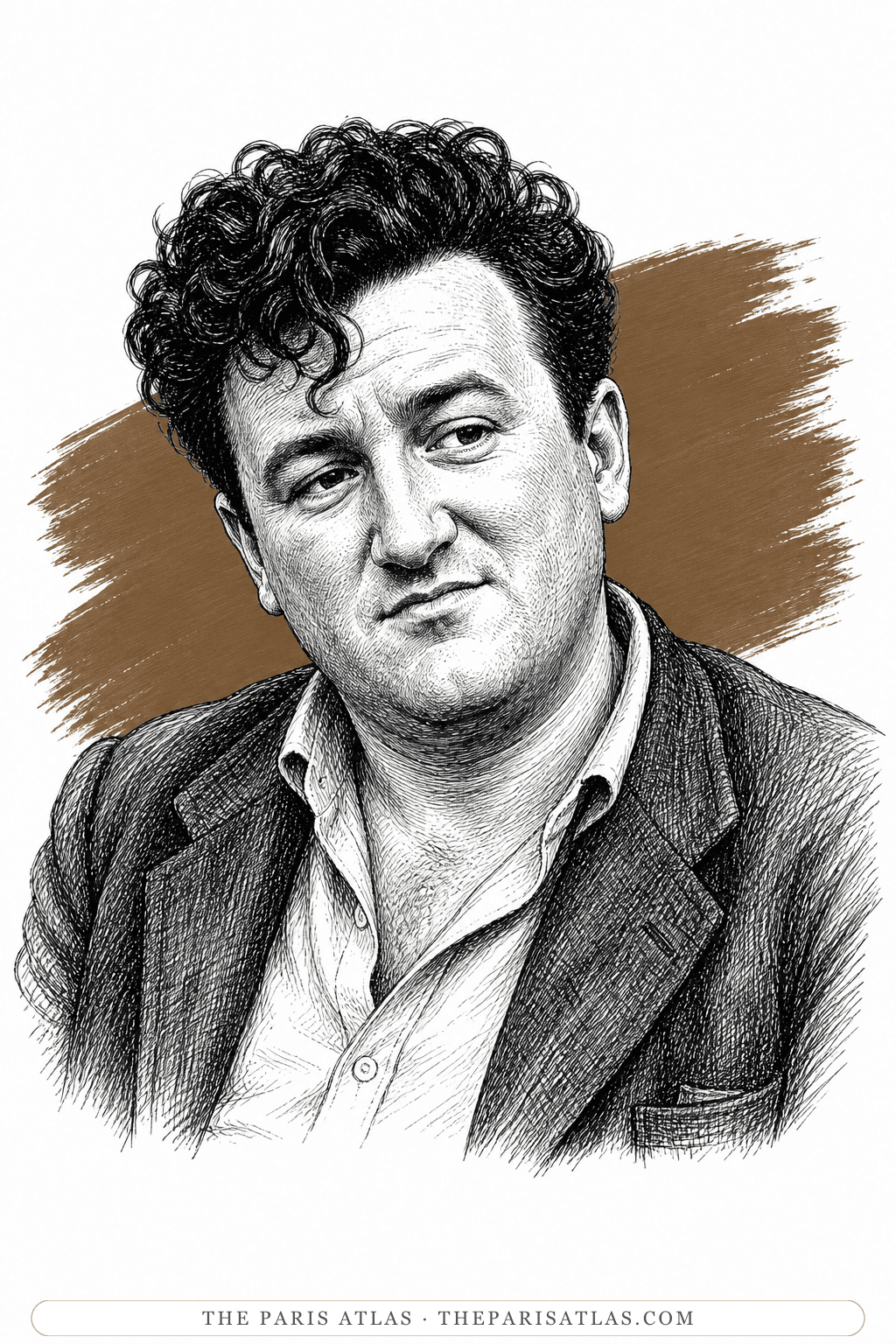
Irish writer, friend and drinking companion of J. P. Donleavy who suggested submitting The Ginger Man to Maurice Girodias's Olympia Press in Paris.
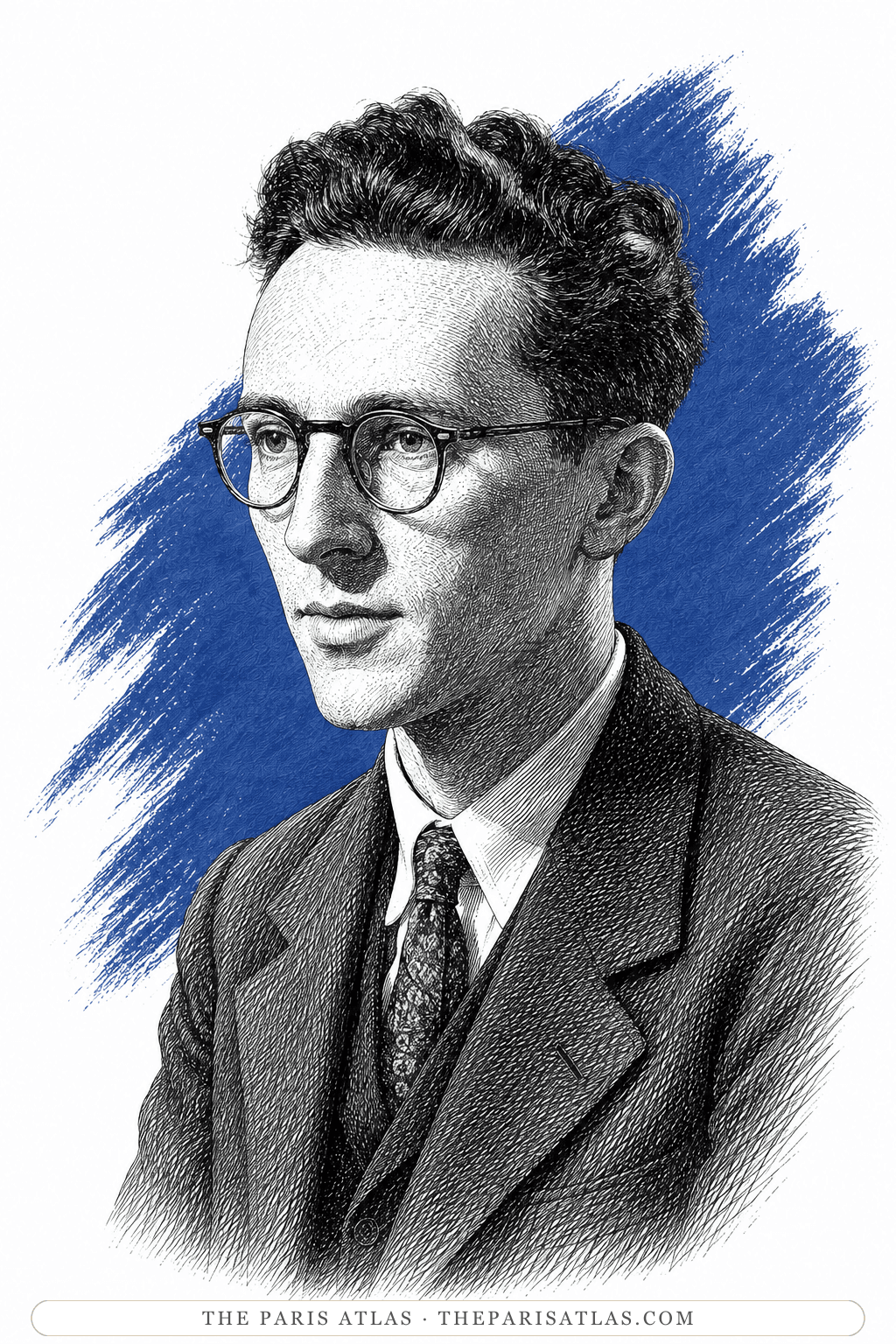
French journalist, translator and editor who helped carry Henry Miller into French and recorded the conversations published as Face to Face.
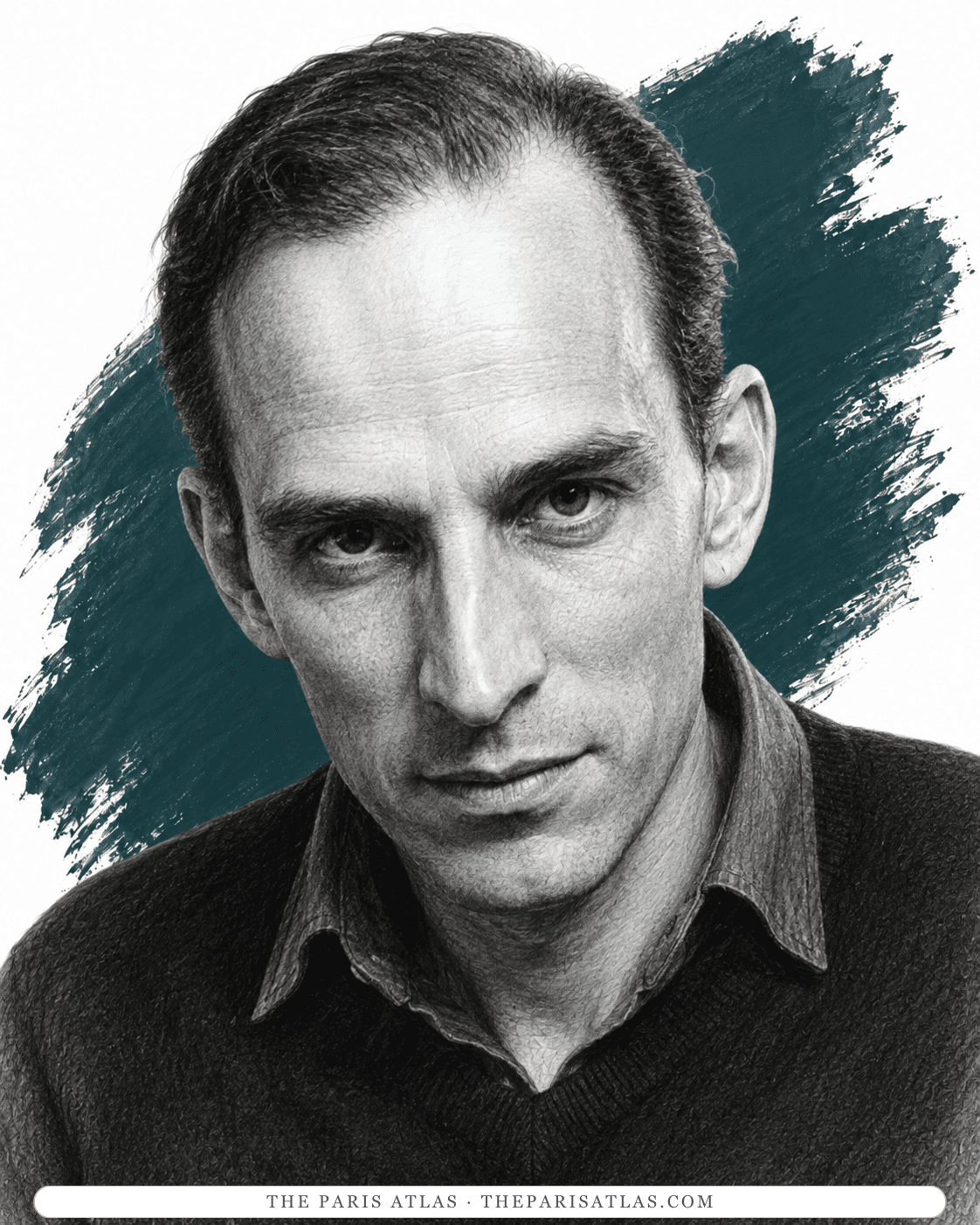
Swedish director of The Seventh Seal, Persona and Fanny and Alexander, whose sixty films put questions of faith, death and marriage on screen. James Baldwin profiled him in Nobody Knows My Name.
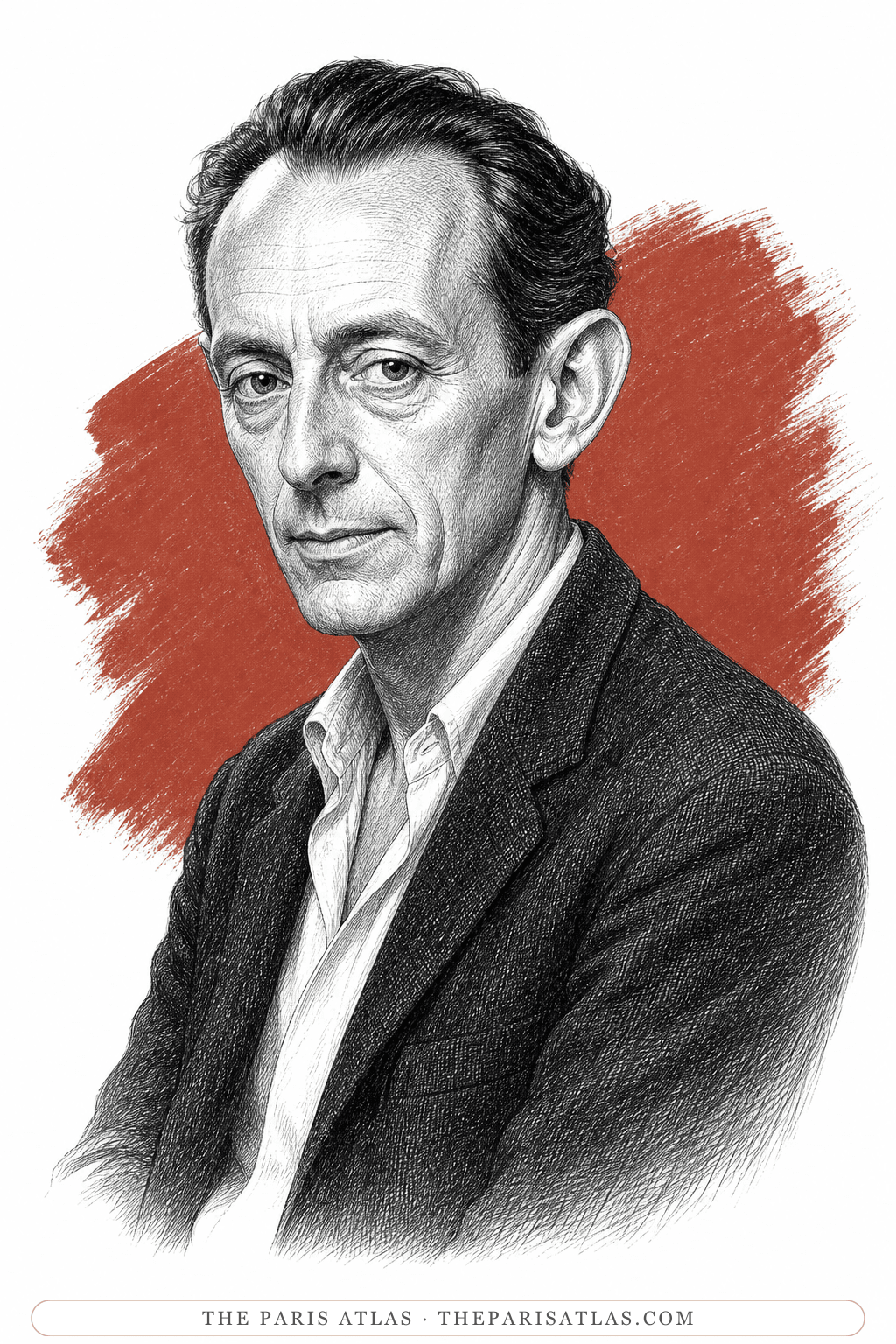
American novelist and composer whose expatriate fiction explores dislocation, unstable intimacy, fatalism, and North Africa.
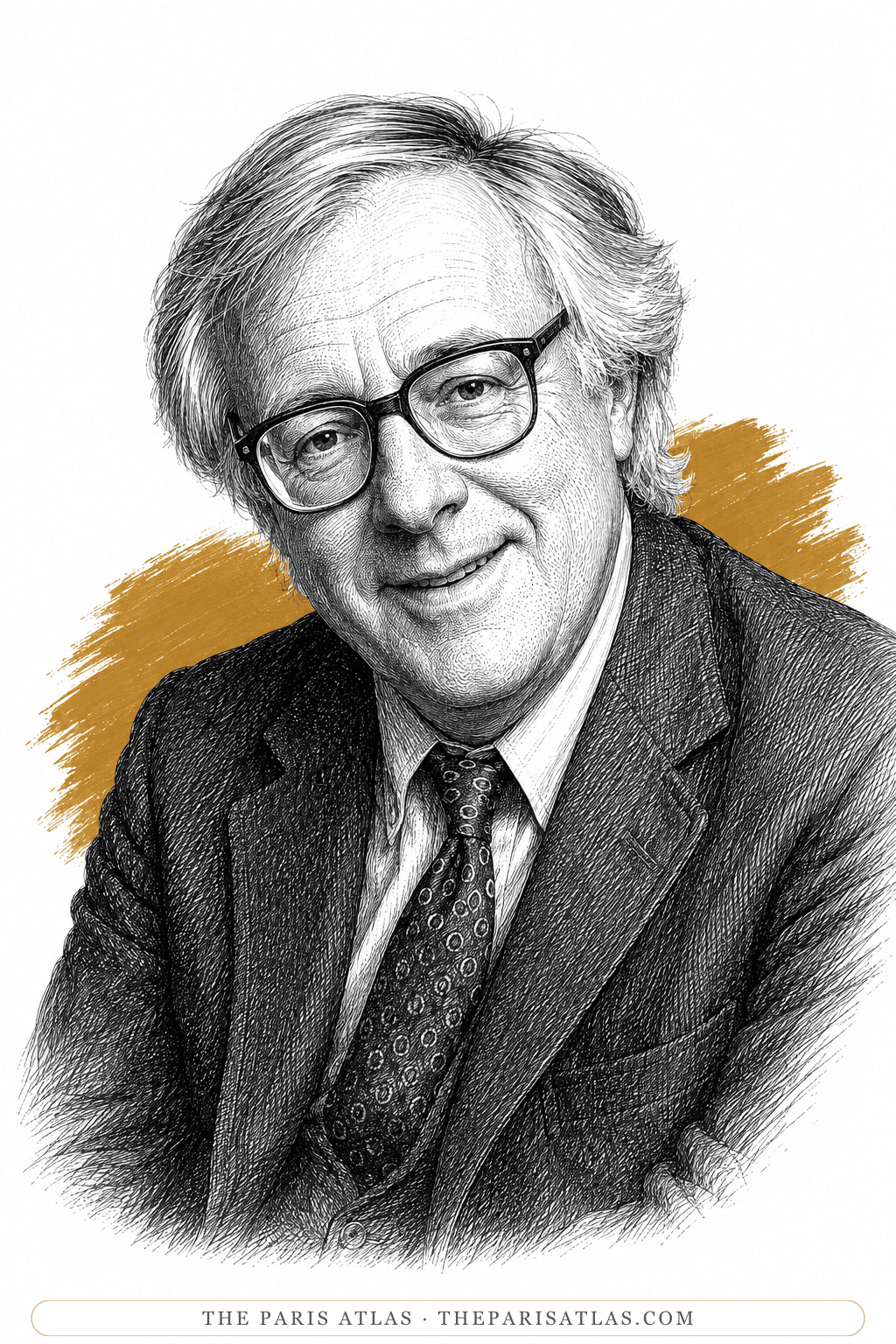
American writer of fantasy, science fiction and horror, and the author of Fahrenheit 451, The Martian Chronicles and Dandelion Wine.
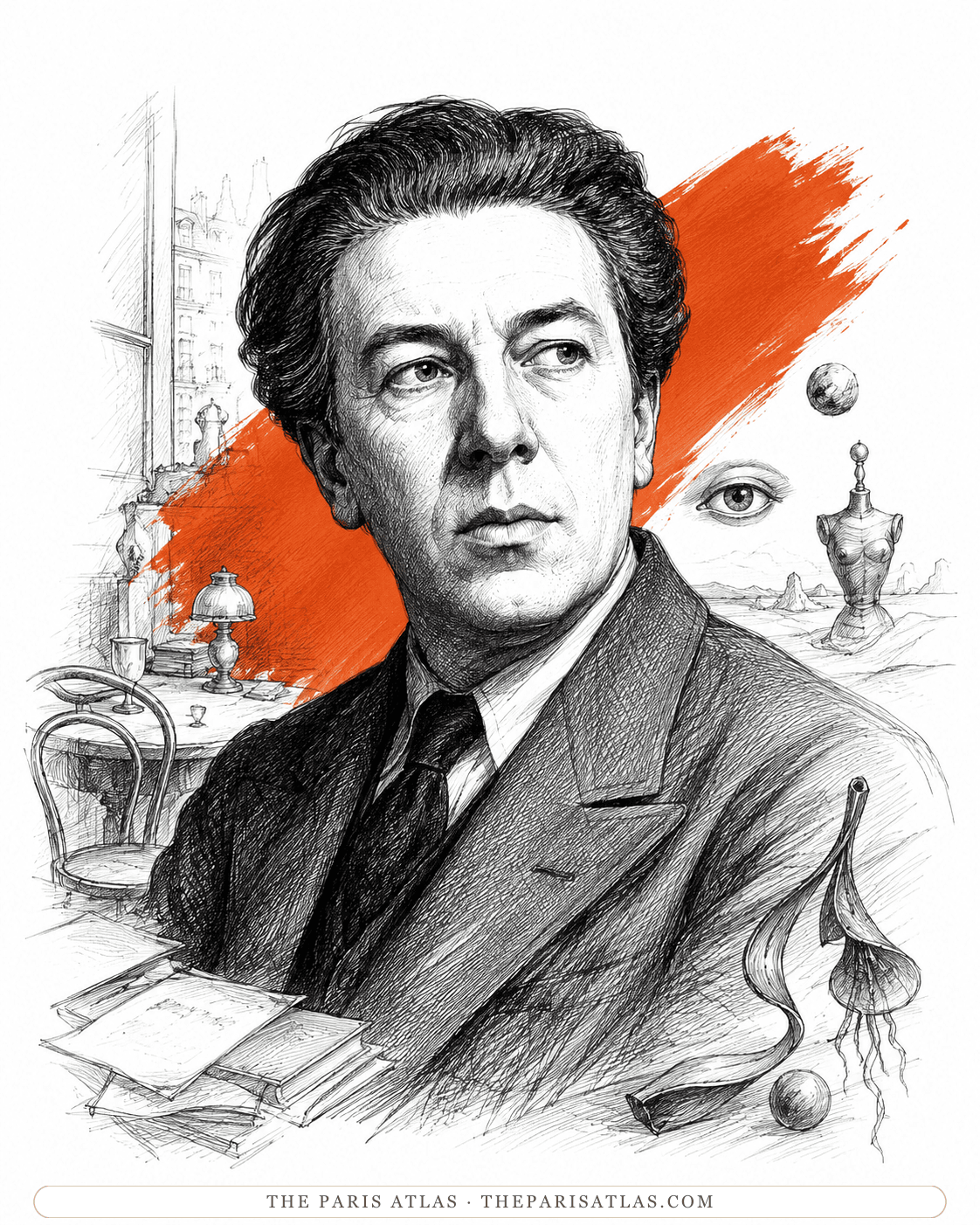
Wrote the Surrealist manifestos and decided who belonged to the movement. Dalí joined in 1929 and was expelled ten years later, by which time Breton had renamed him Avida Dollars.
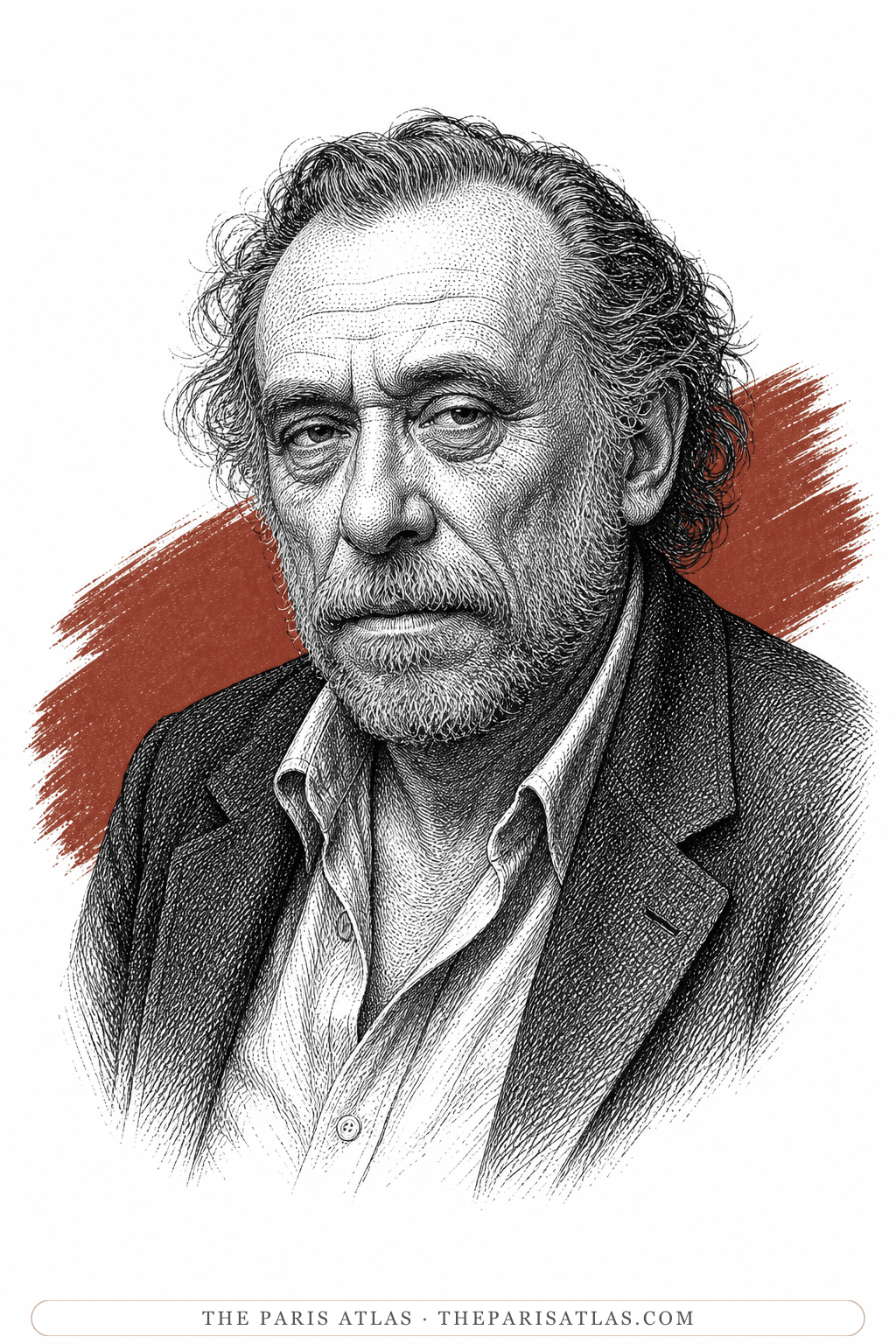
American poet and novelist of Los Angeles rooming houses, racetracks and the post office, who quit his job to write when a publisher offered him a hundred dollars a month. He came to Paris once, in September 1978, drank his way through a live television book programme and walked off the set — and French television has been replaying it ever since.
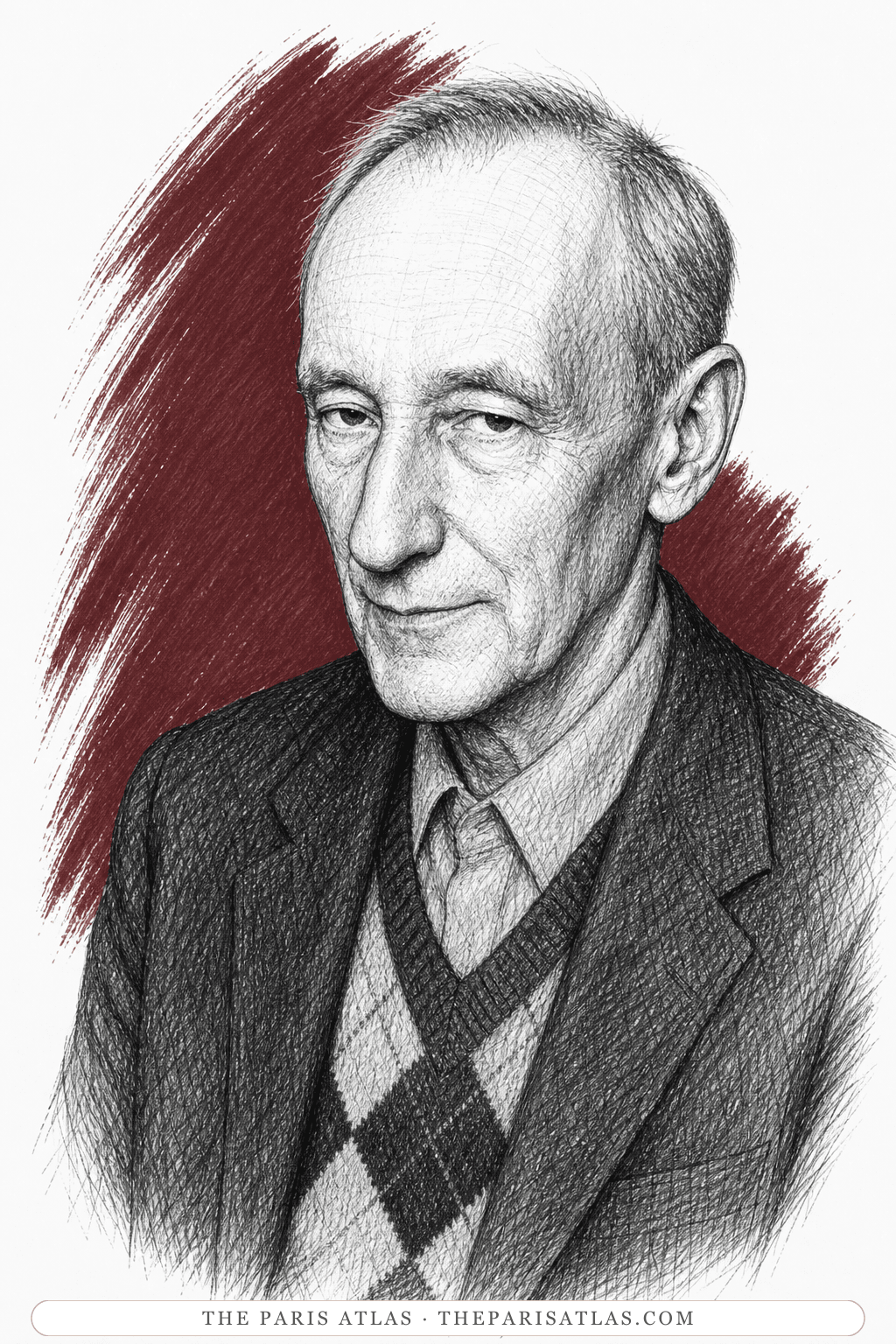
American Beat novelist, essayist, performer and visual artist who completed Naked Lunch at the Beat Hotel in Paris and made cut-up writing a defining avant-garde method.
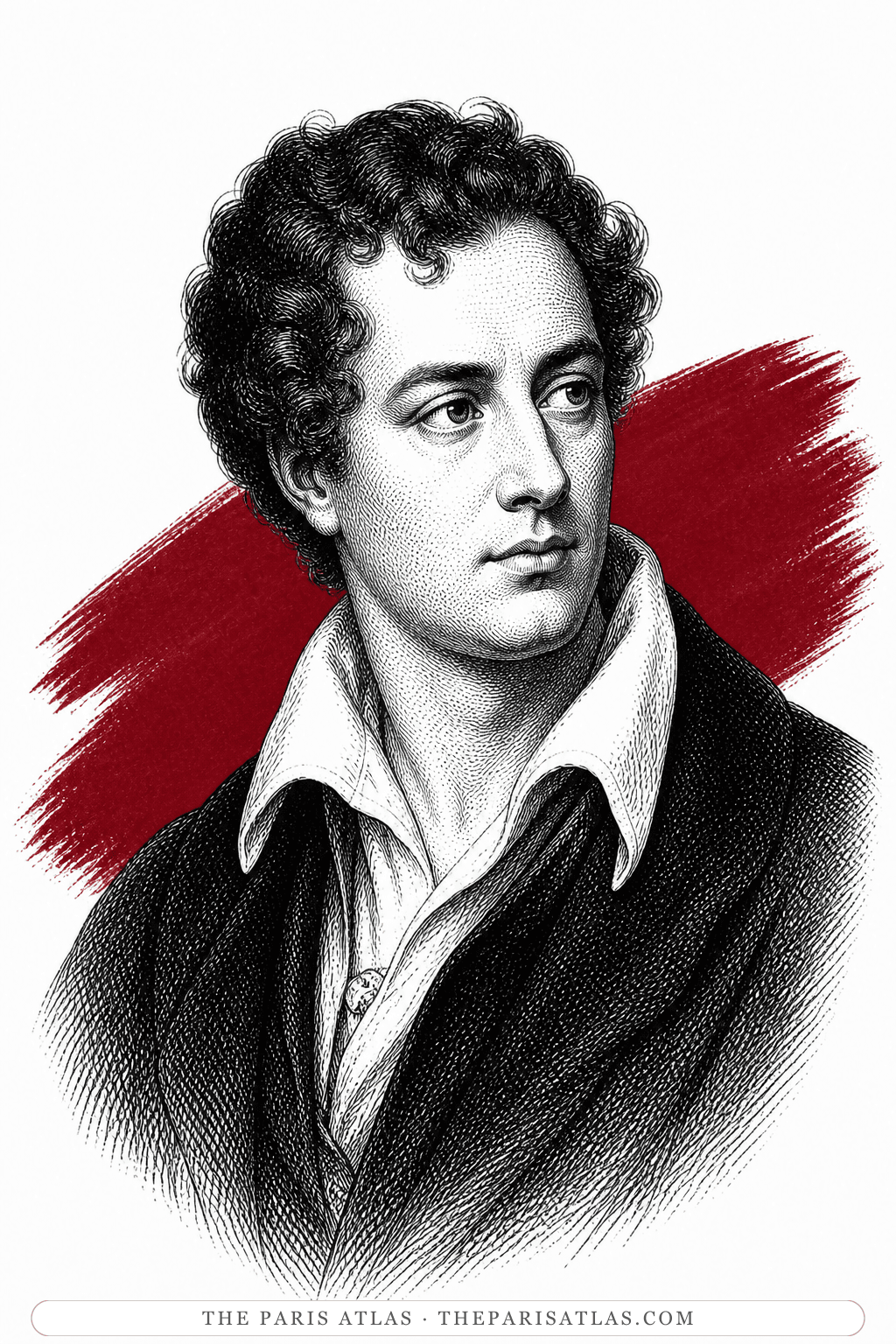
The most famous poet in Europe by the age of twenty-four, and the inventor of the brooding, guilty, magnificent outsider that literature still calls the Byronic hero. He never once set foot in Paris, but his books reached the city during his lifetime: Galignani published his works there in 1818. After his death, the French artist Eugene Delacroix built paintings out of his poems and showed them at the Paris Salon, the state's official art exhibition, while a French Romantic generation took him as its model.
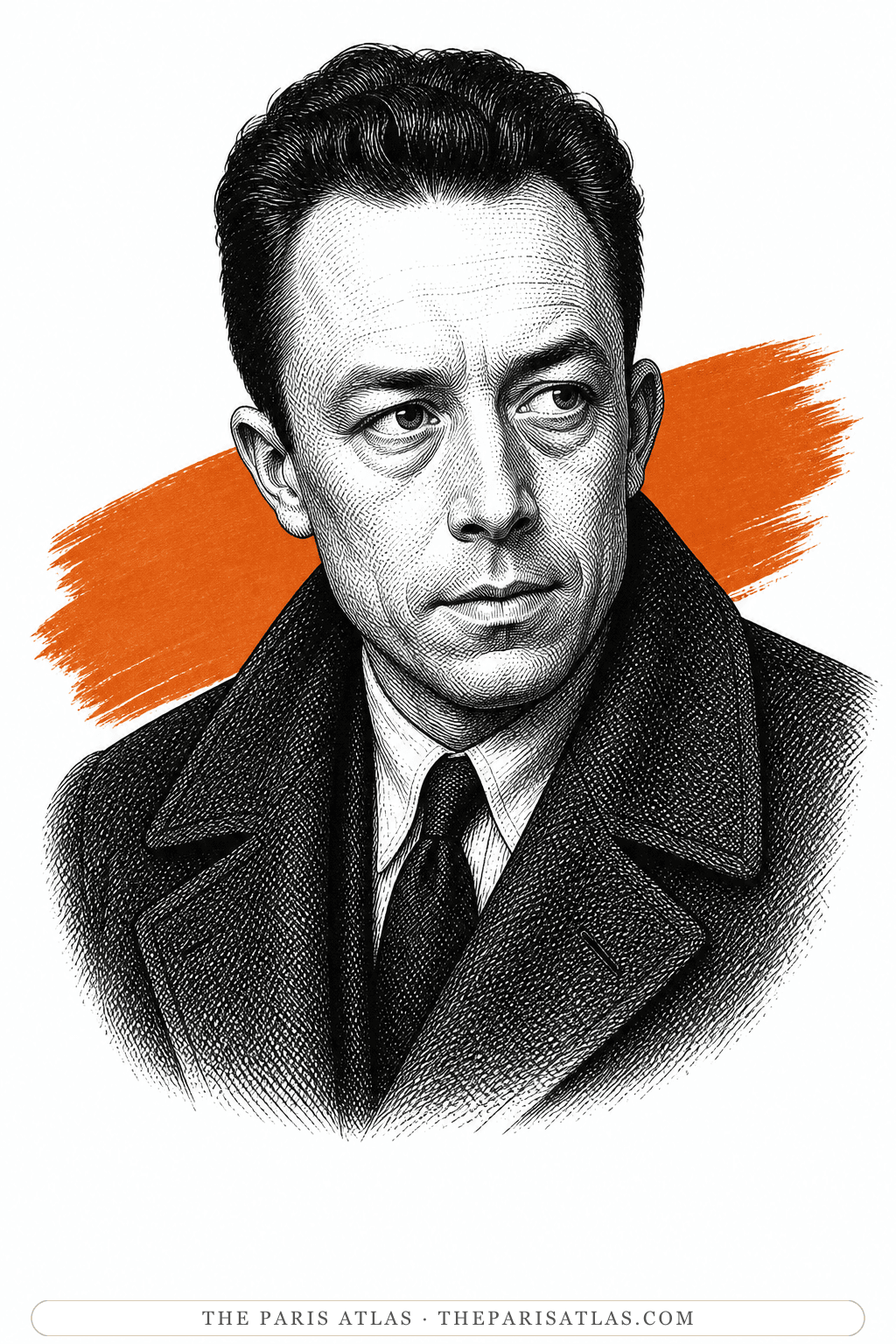
French Algerian novelist, essayist, journalist and playwright who used the absurd and revolt to ask how people should live without false consolation.
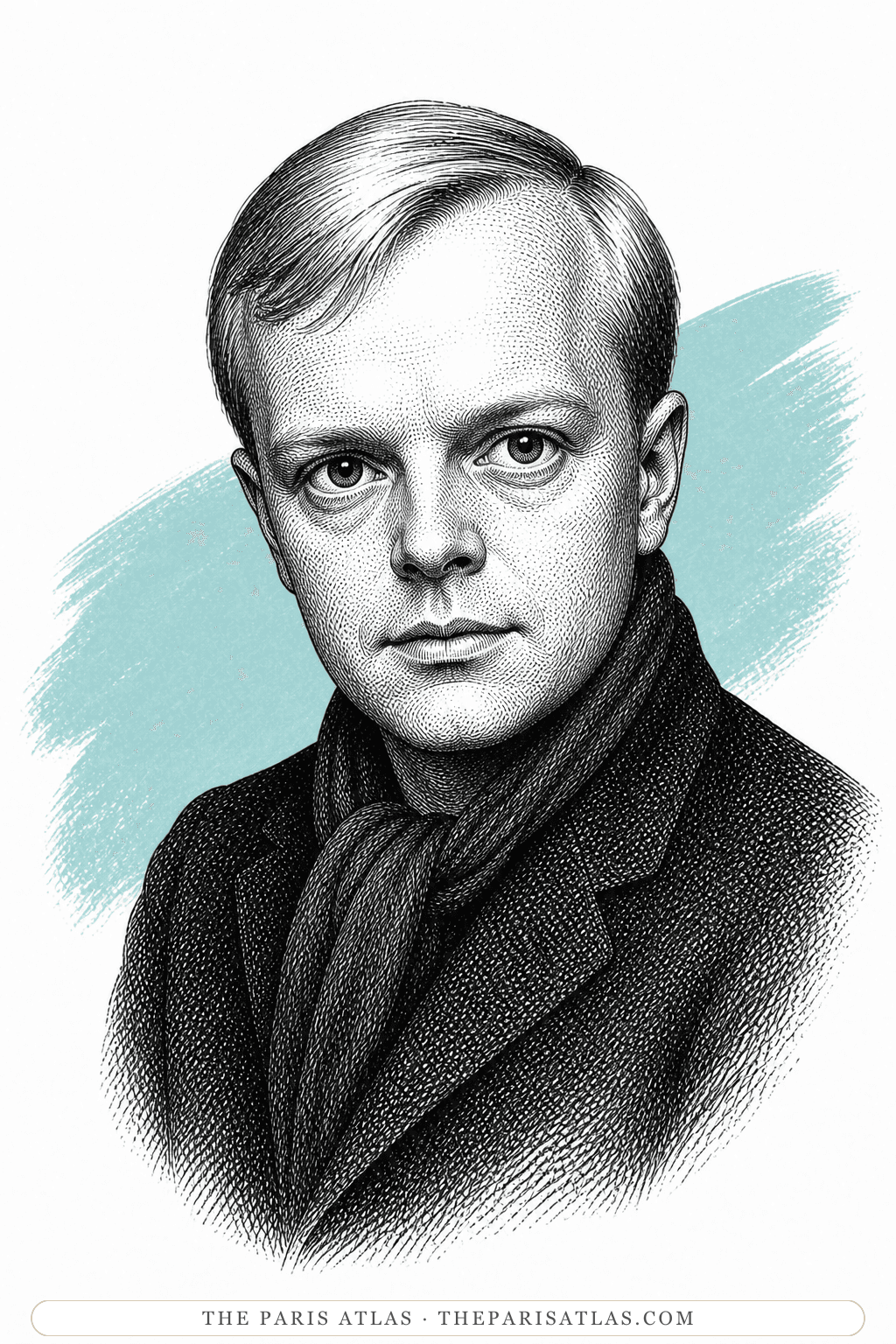
American novelist and reporter who was famous at twenty-three, invented what he called the nonfiction novel — reporting built with the technique of fiction and nothing made up — and spent much of the postwar years living abroad with his companion, the writer Jack Dunphy. His clearest statement of how he worked is the interview he gave in 1957, at the age of thirty-two, to The Paris Review, the literary quarterly founded in Paris in 1953 by young Americans living there.

English painter and writer who fled a debutante's future for Surrealist Paris at twenty, survived the war's wreckage of that life — internment for her lover Max Ernst, an asylum in Spain for her — and rebuilt herself in Mexico into one of the century's great painters of the uncanny.
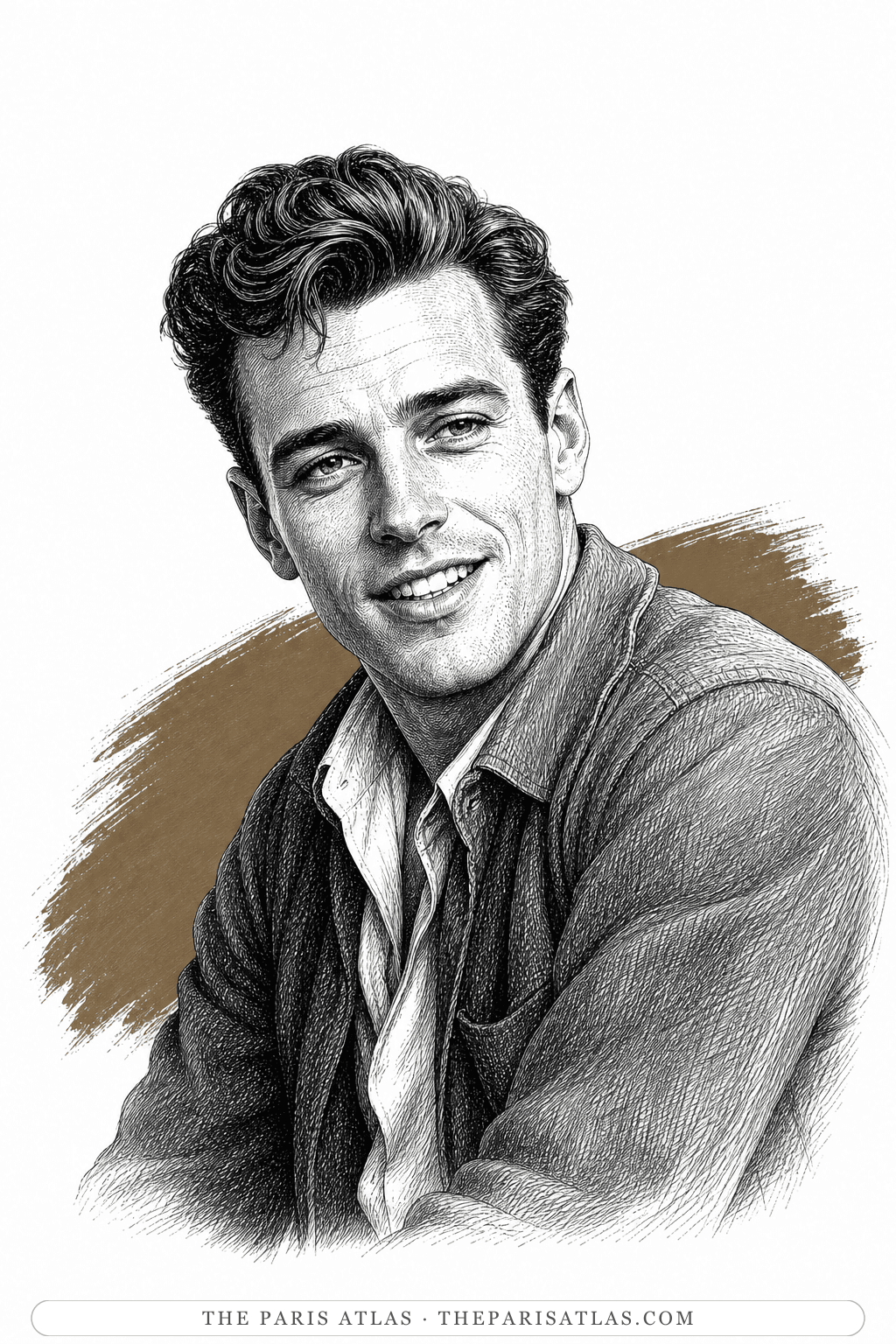
Jack Kerouac's friend, traveling companion and stylistic muse—the principal model for Dean Moriarty in On the Road and Cody Pomeray in Visions of Cody.
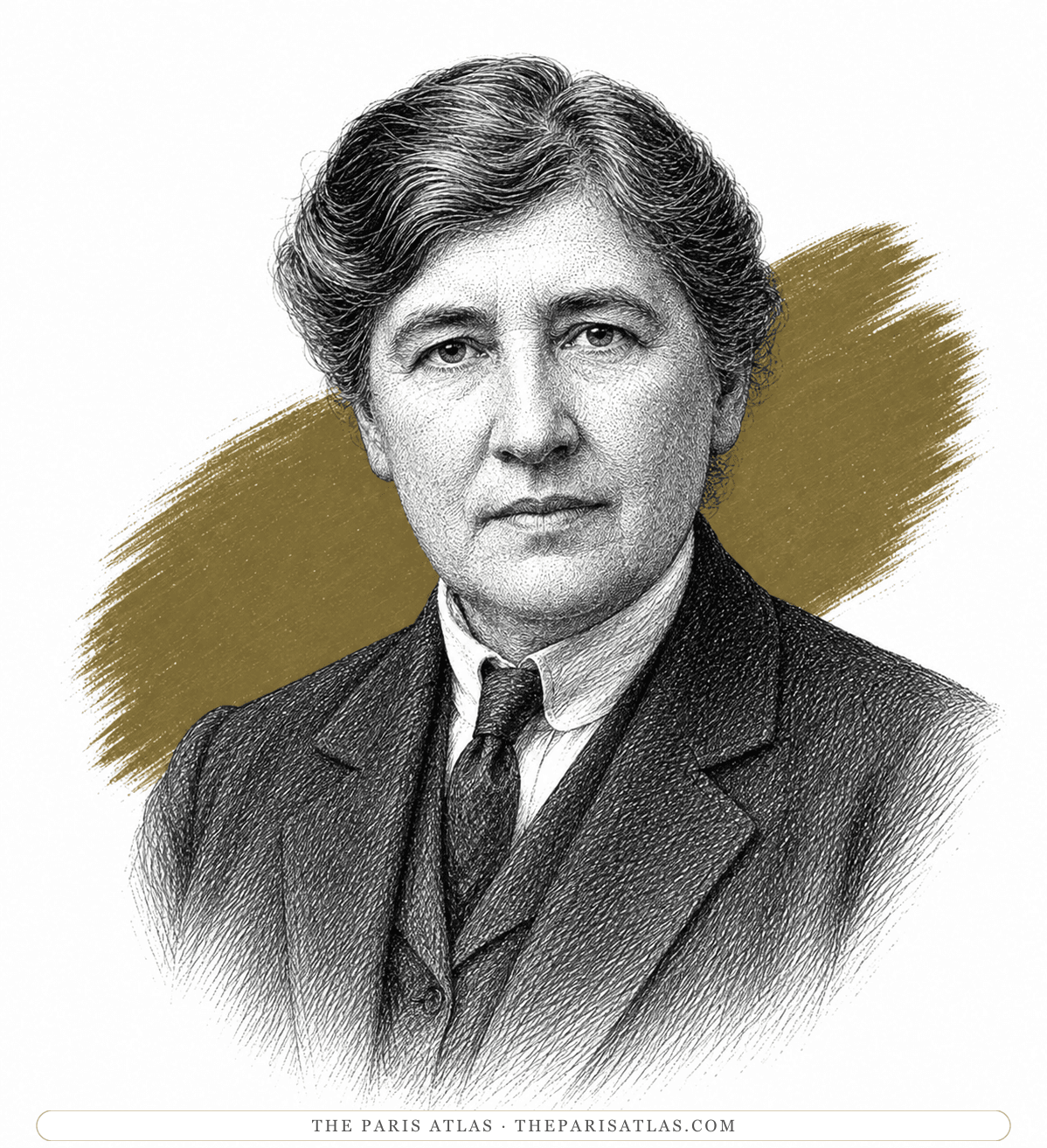
The American novelist of My Ántonia and A Lost Lady, whose work Fitzgerald admired to the point of writing to apologise for an unintended echo.
The doctor of the Paris slums who wrote the century's blackest, funniest novel — and changed the sound of French prose.
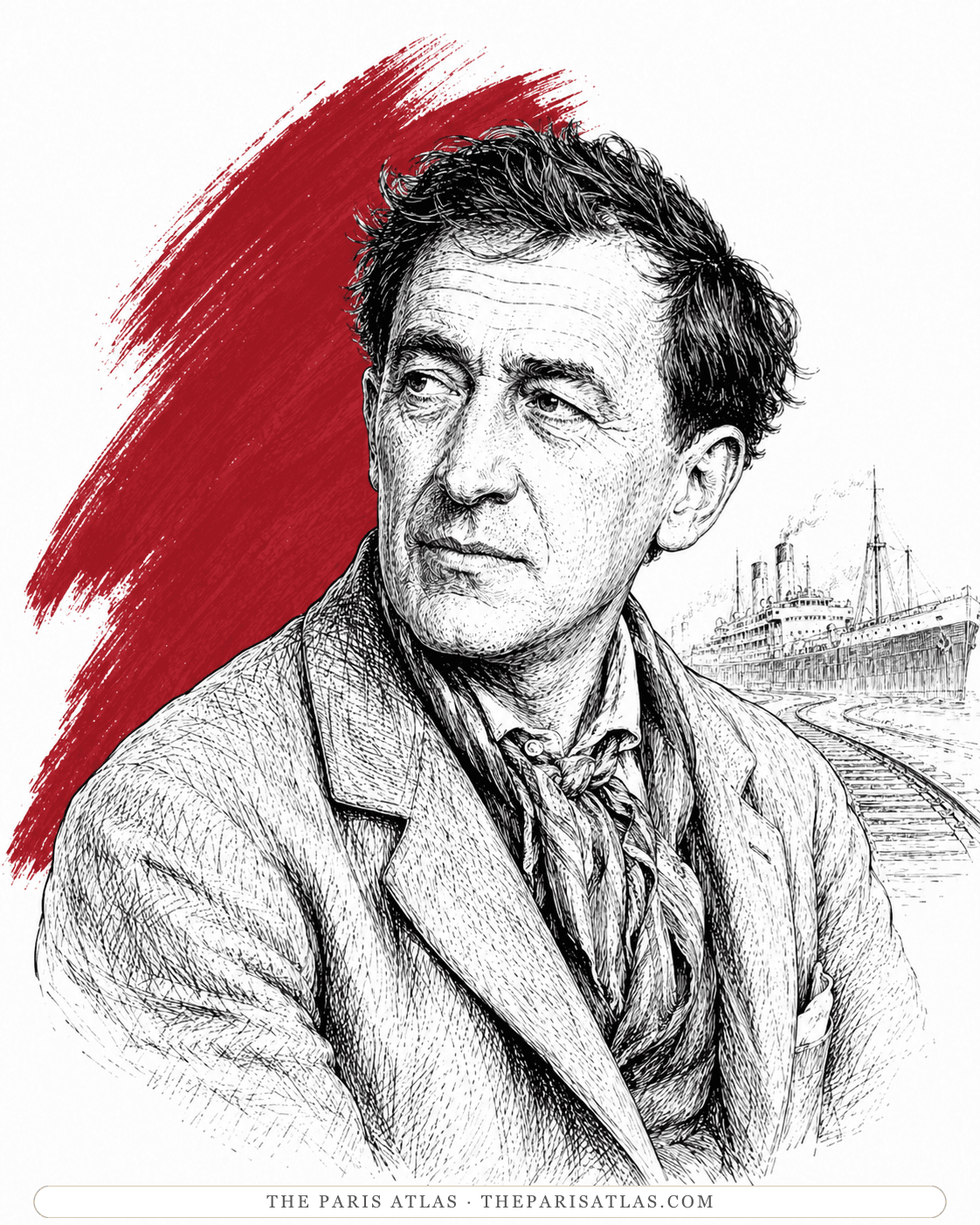
The one-armed adventurer-poet of the Paris avant-garde — La Prose du Transsibérien, Moravagine, the memoir tetralogy — and the living writer Henry Miller ranked above all others.
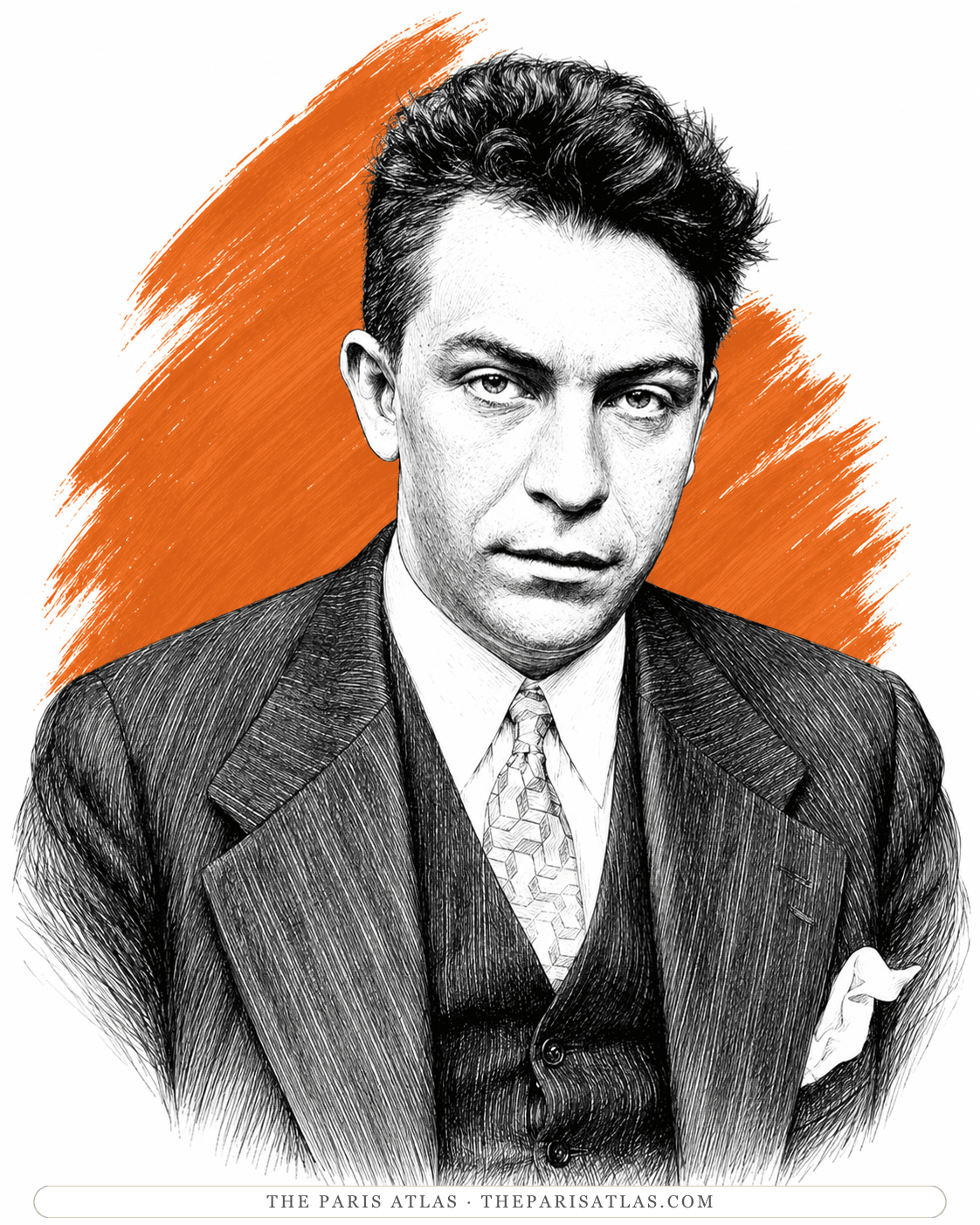
Spain's great liberal reporter — the man Belmonte trusted with his life story, the chronicler of the Civil War's cruelties on both sides, and the exile whose books came back decades after he died.
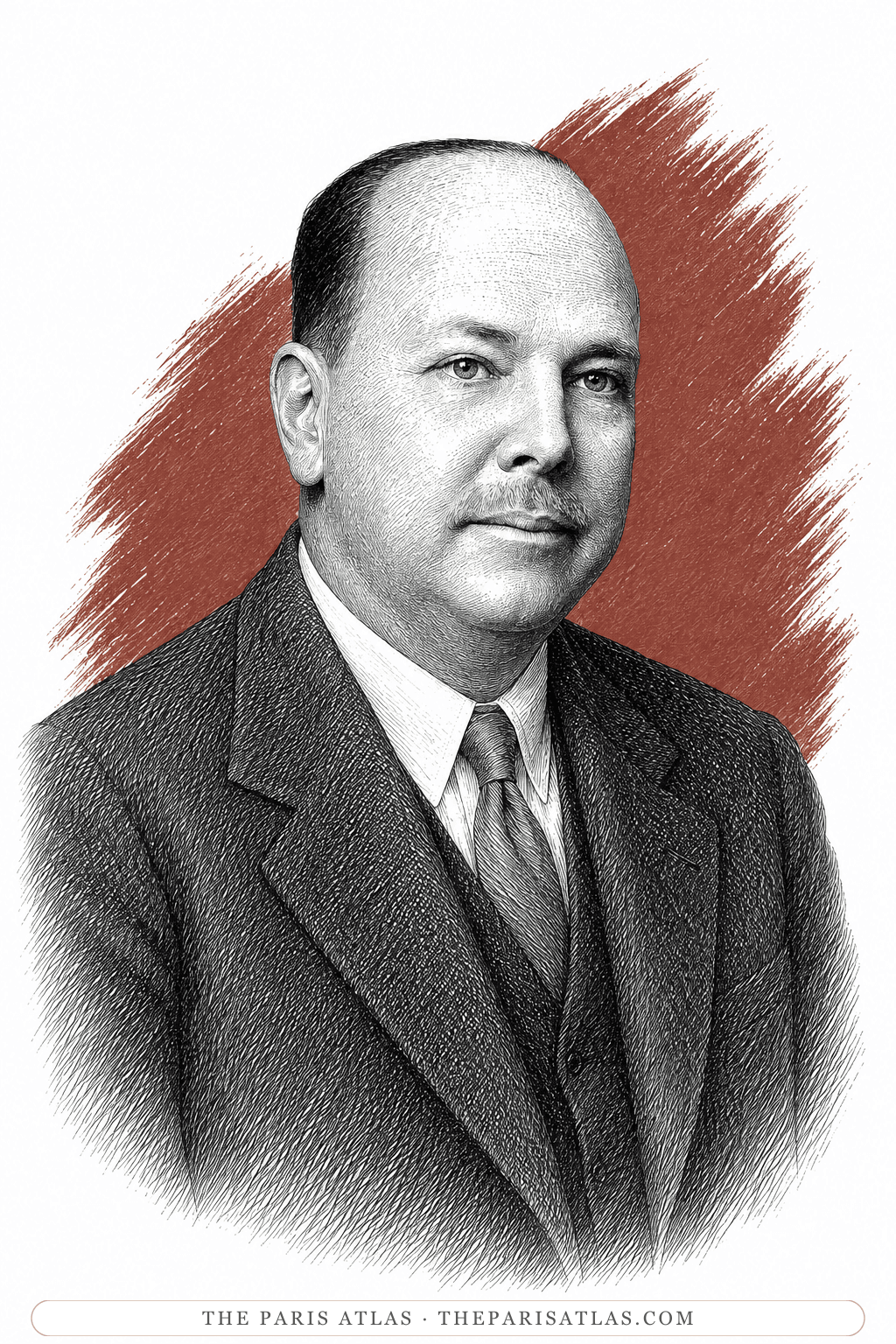
American diplomat, bibliophile and Casanova scholar whose long exchange with Henry Miller became Collector’s Quest.
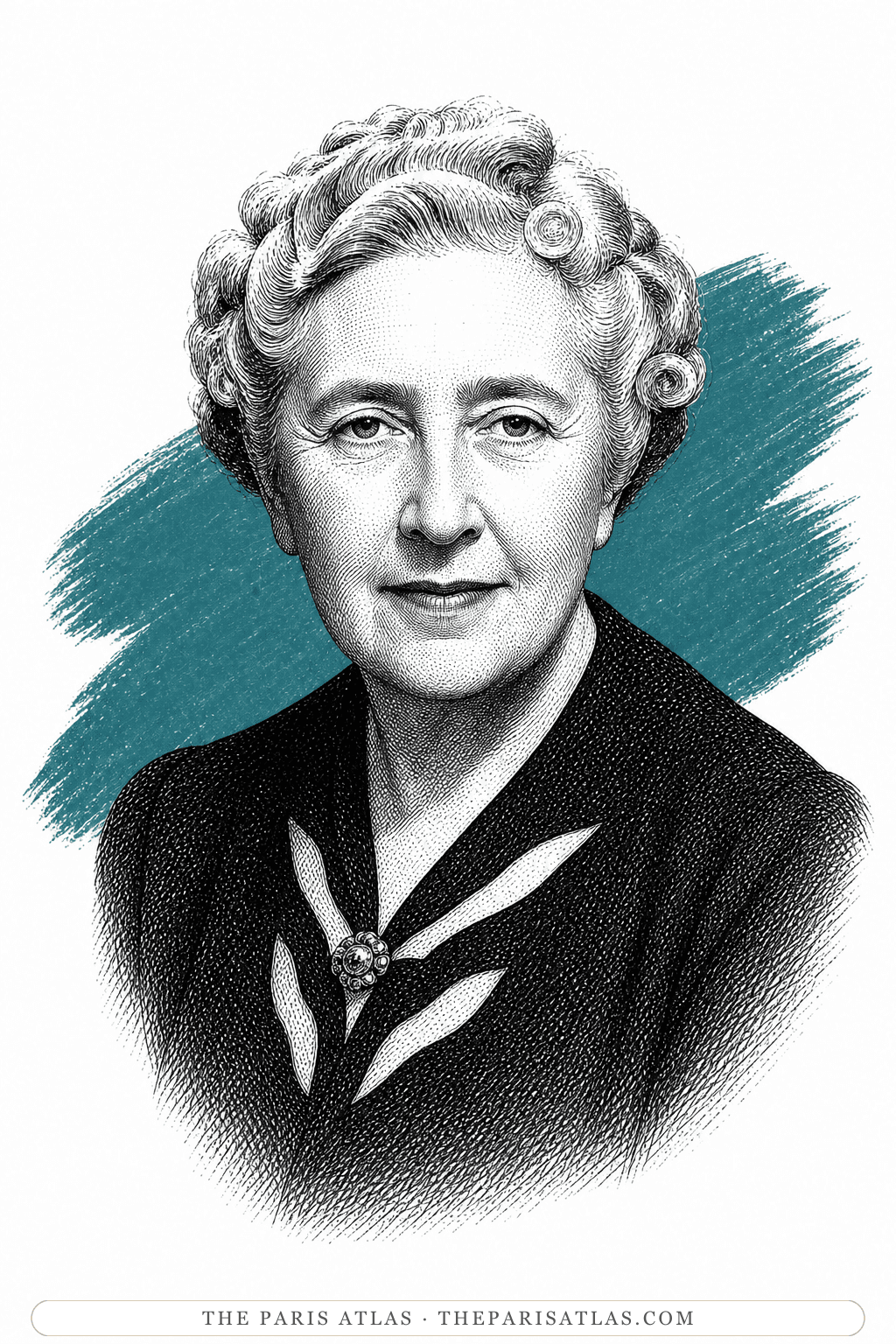
The best-selling novelist in history — around a billion copies in English and a billion in translation — who invented two of the most famous detectives in fiction, the fastidious Belgian Hercule Poirot and the watchful village spinster Miss Marple, and wrote The Mousetrap, the longest-running play in the world. Her Paris connection is small and honest: at fifteen her widowed mother took her out of a school in Torquay, the Devon seaside town where she grew up, and put her through a run of Parisian boarding schools, where she was good enough at the piano to have gone professional and too frightened of audiences to try.
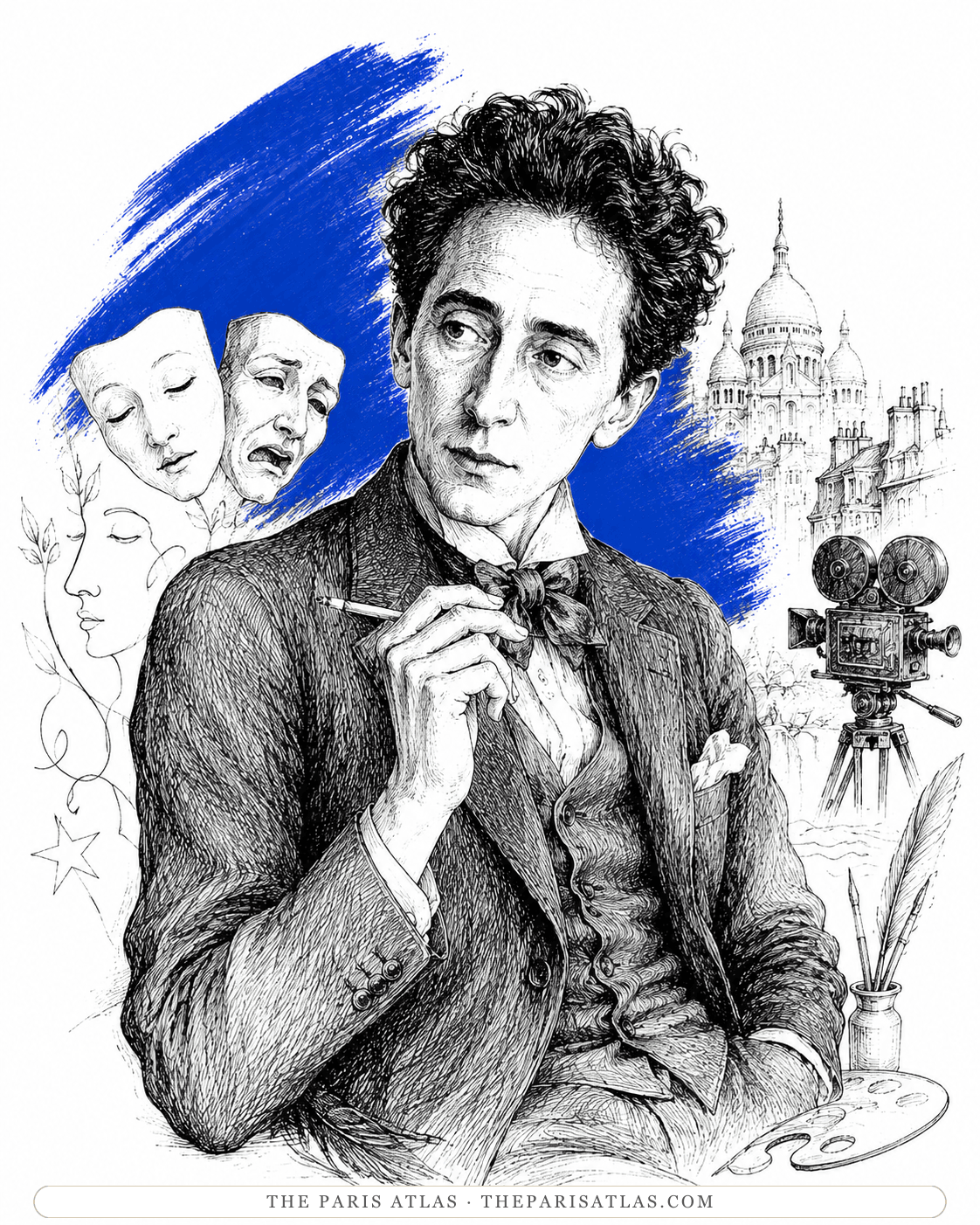
French poet, playwright, novelist, critic, visual artist and filmmaker whose career connected the Ballets Russes, Cubism, modern music, interwar theatre and postwar cinema.
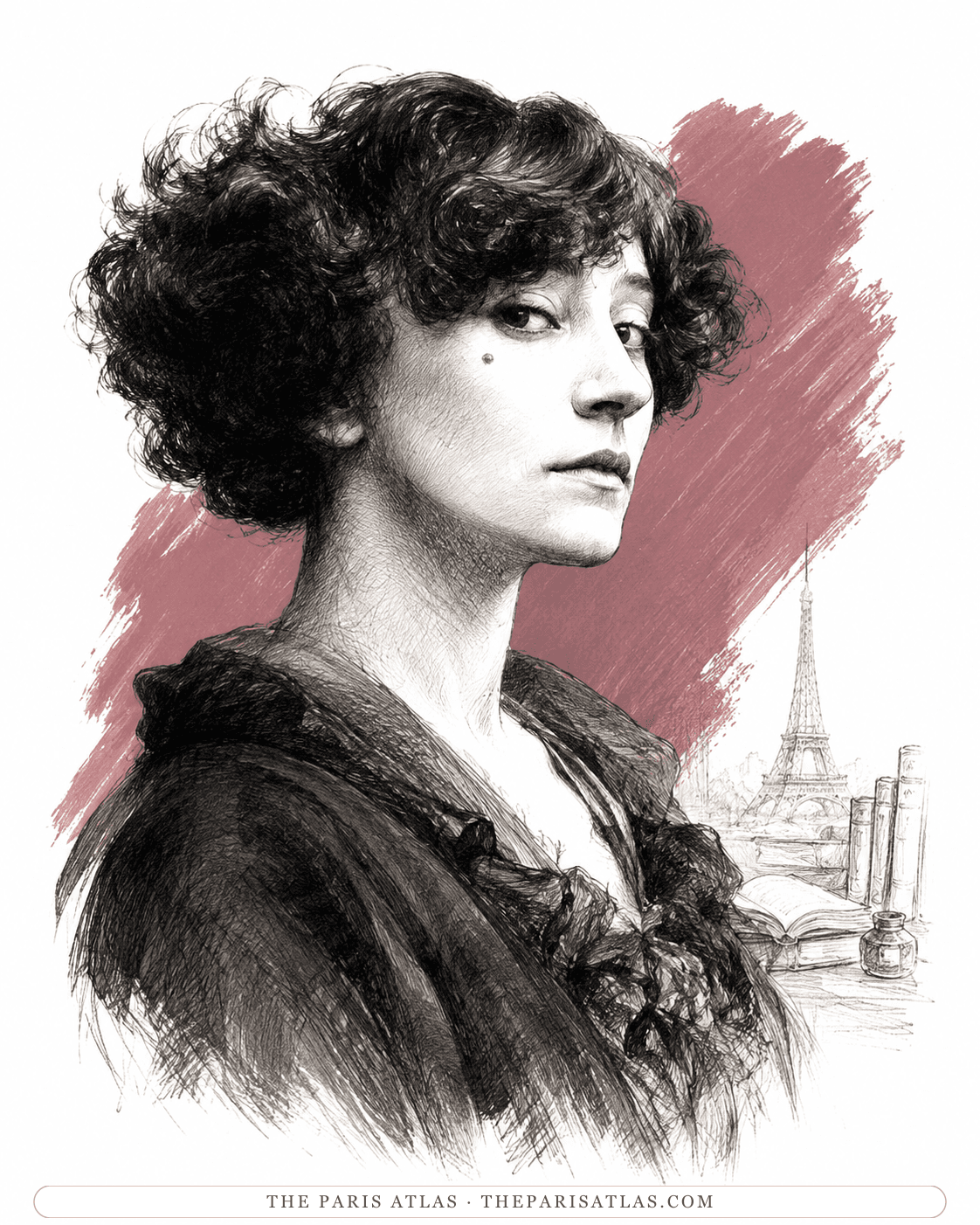
The French novelist who wrote the Claudine books under Willy’s name, earned her independence on the music-hall stage, and made women’s private lives a serious literary subject.
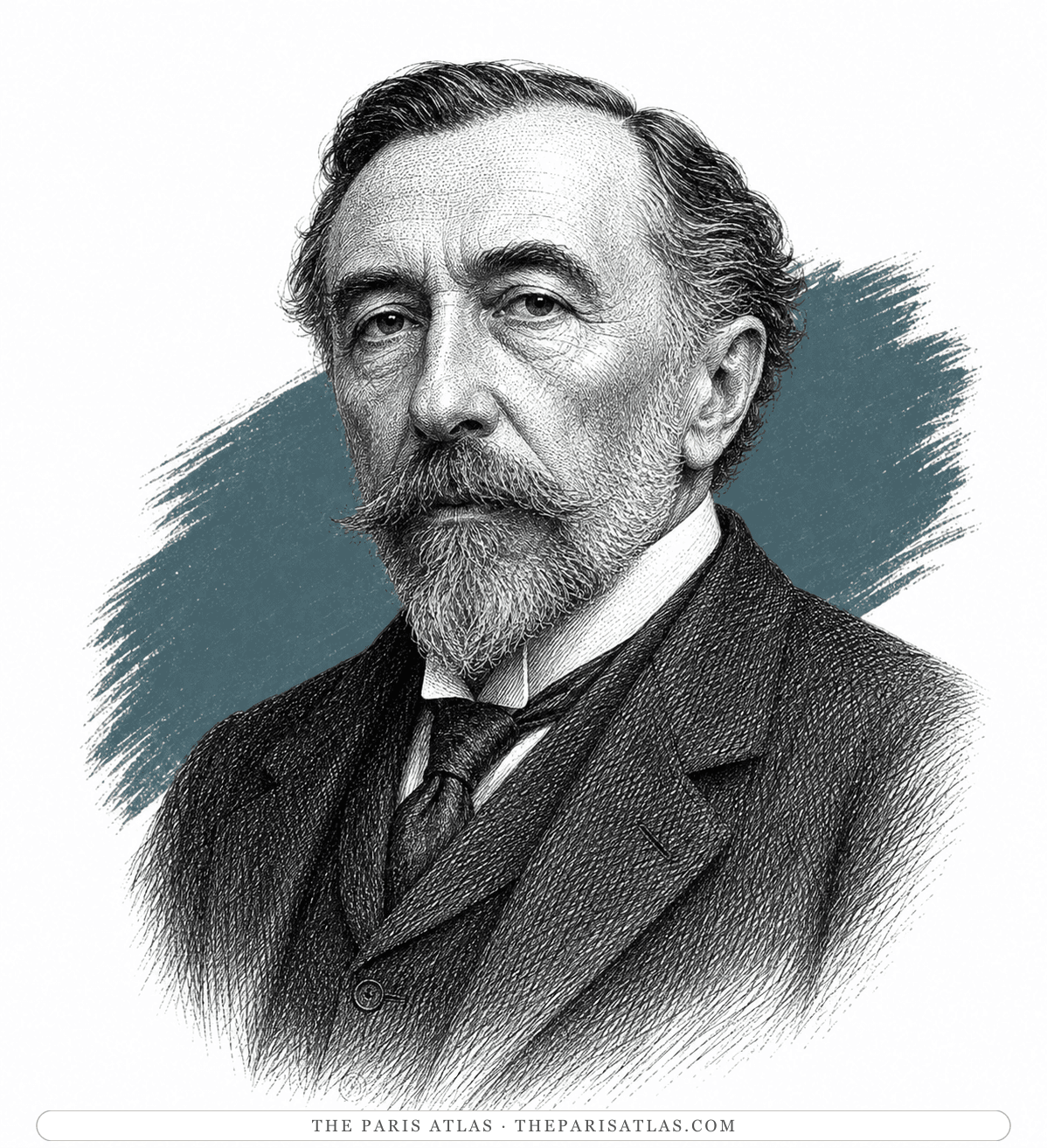
The Polish-born novelist of Heart of Darkness and Lord Jim, whose framed narrators taught Fitzgerald how to build The Great Gatsby.
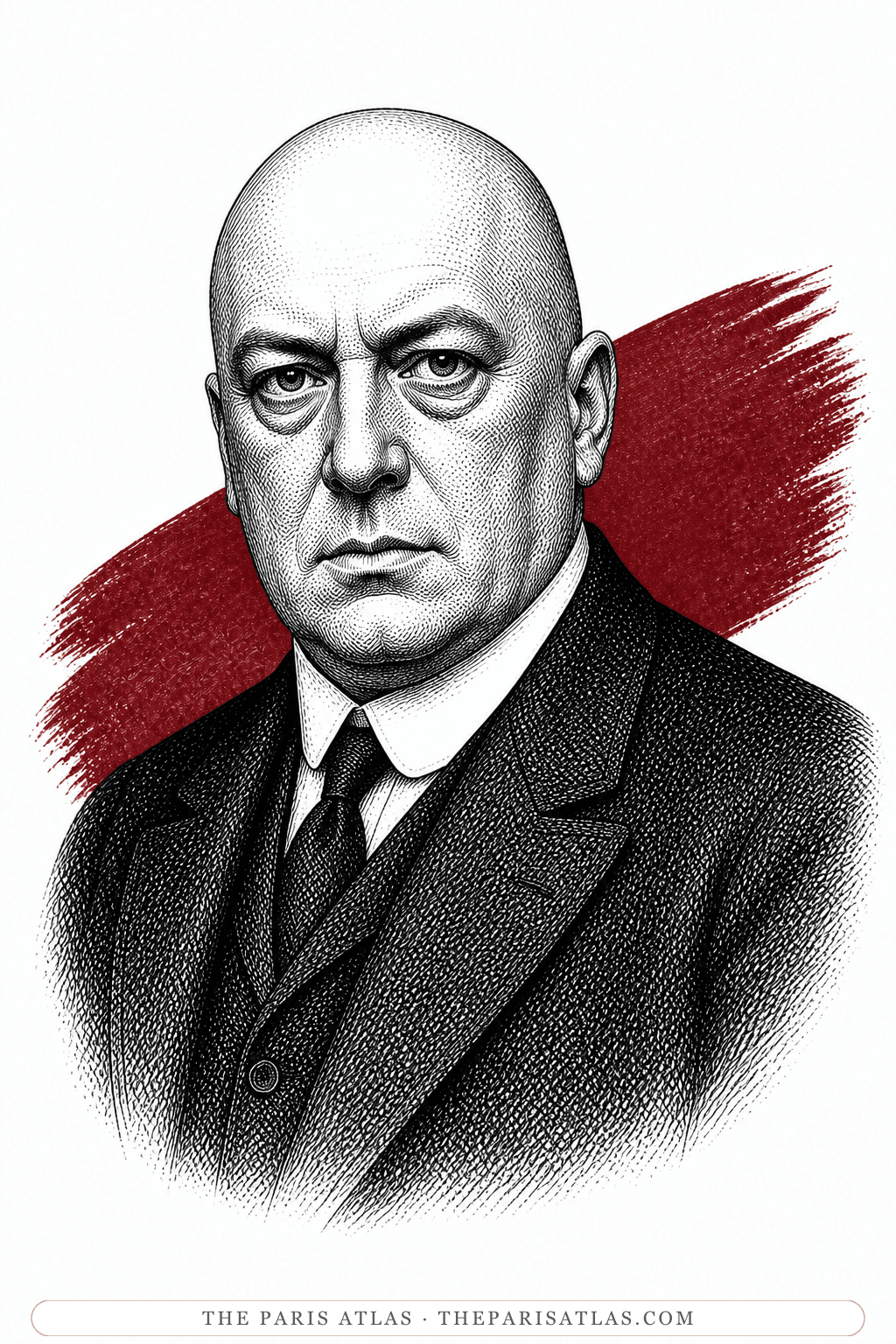
English occultist, writer, mountaineer and founder of Thelema whose long relationship with Paris connected ritual magic to the city’s Belle Époque and interwar artistic worlds.
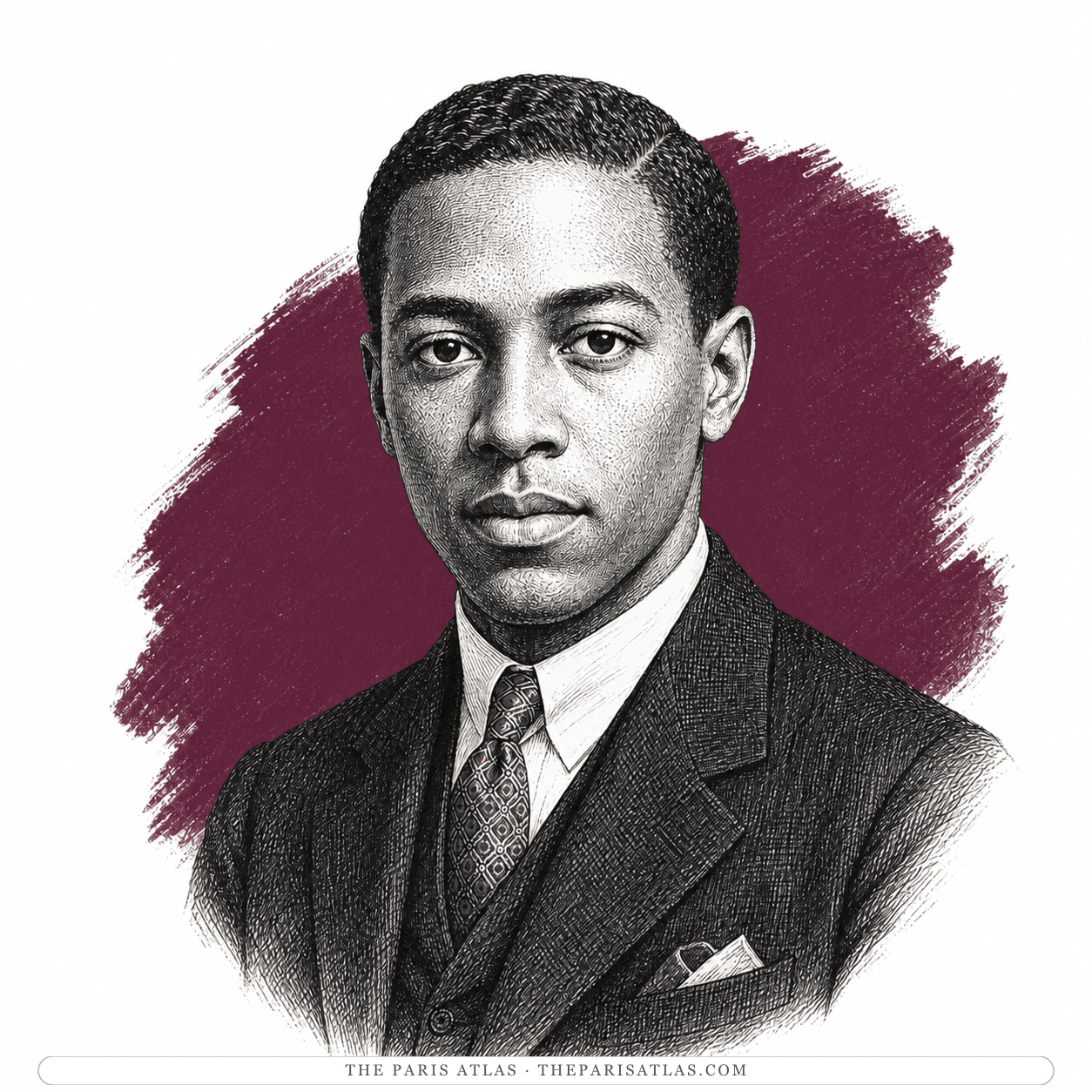
American poet whose traditional lyric forms carried some of the Harlem Renaissance's sharpest questions about race, faith and artistic freedom.
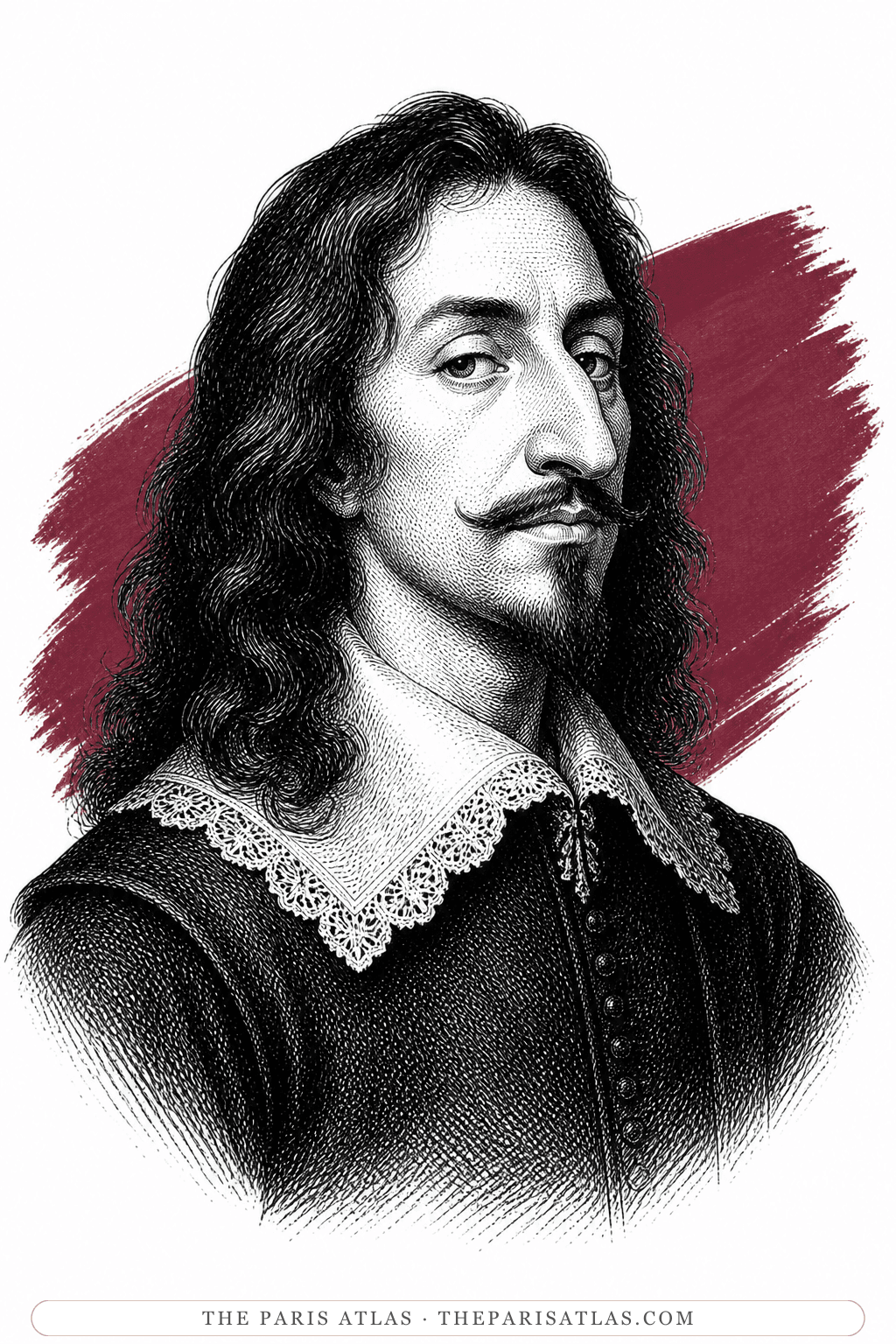
The real man, not the character. Savinien de Cyrano de Bergerac lived from 1619 to 1655, two and a half centuries before Edmond Rostand wrote the famous play that carries his name: he was a guardsman wounded at two sieges, a duellist, a freethinker, and the author of L'Autre Monde (The Other World) — imaginary voyages to the Moon and the Sun, printed after his death and often called the first science fiction written in French. The giant nose was an exaggeration of the nineteenth century, made popular by the writer Théophile Gautier; Roxane and the ghost-written love letters were invented by Rostand in 1897.
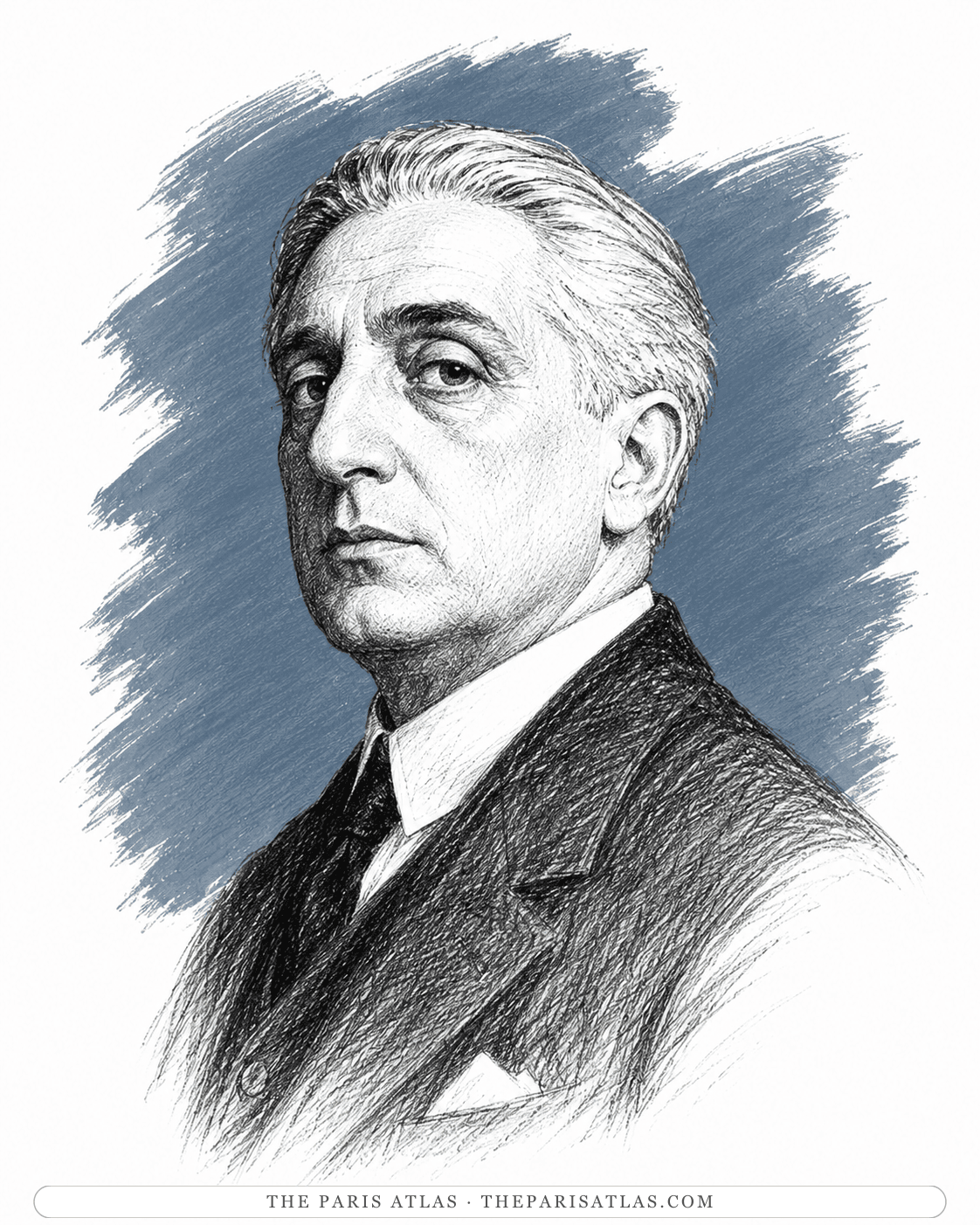
Italian painter whose metaphysical cityscapes helped shape Surrealism. The MNAC's 2018 Gala exhibition records that he valued her practical intelligence and asked her to act as his agent.
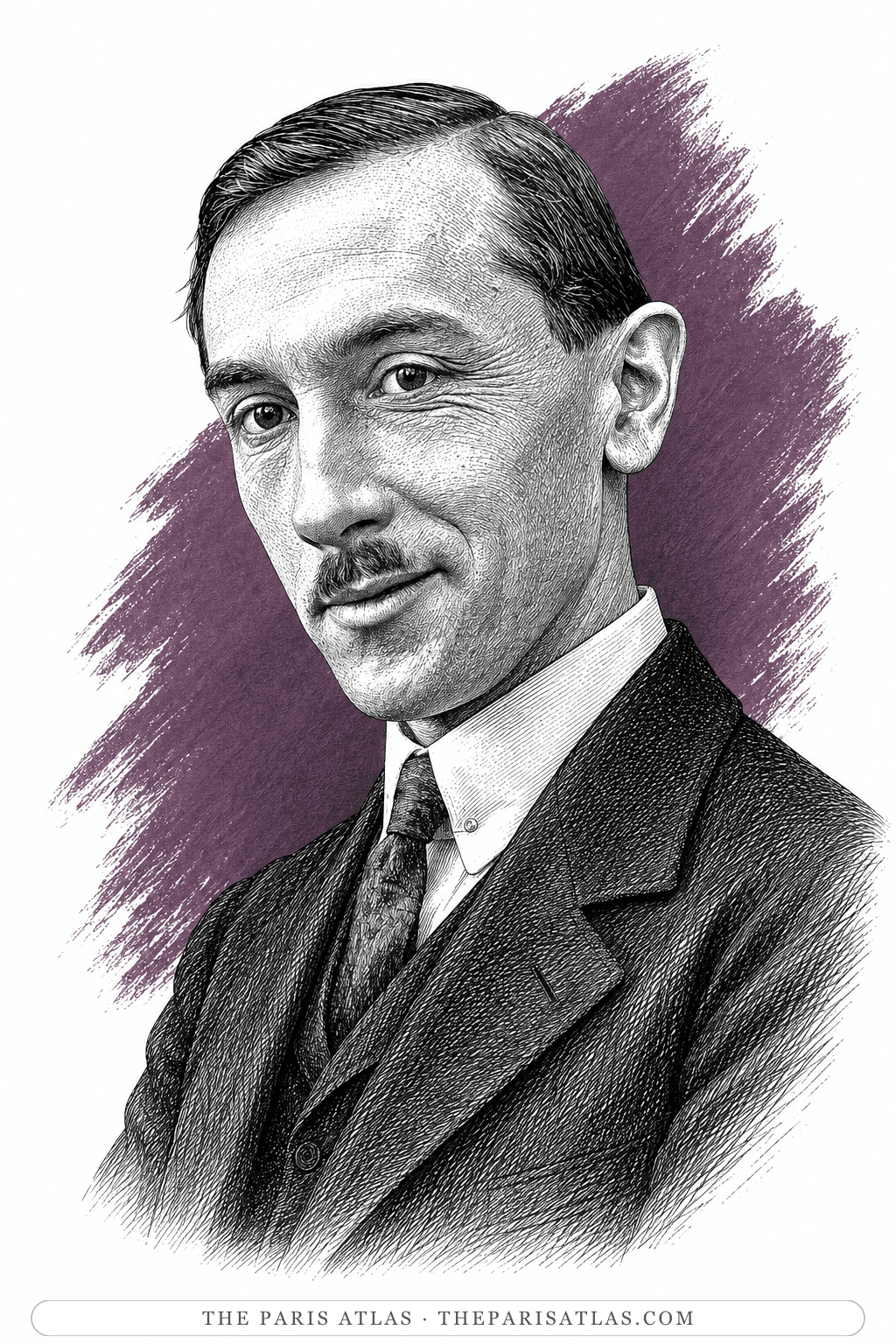
French novelist and poet whose unruly Jeanne d’Arc broke with Surrealist orthodoxy and whose southern retreat drew Henry Miller’s admiration.
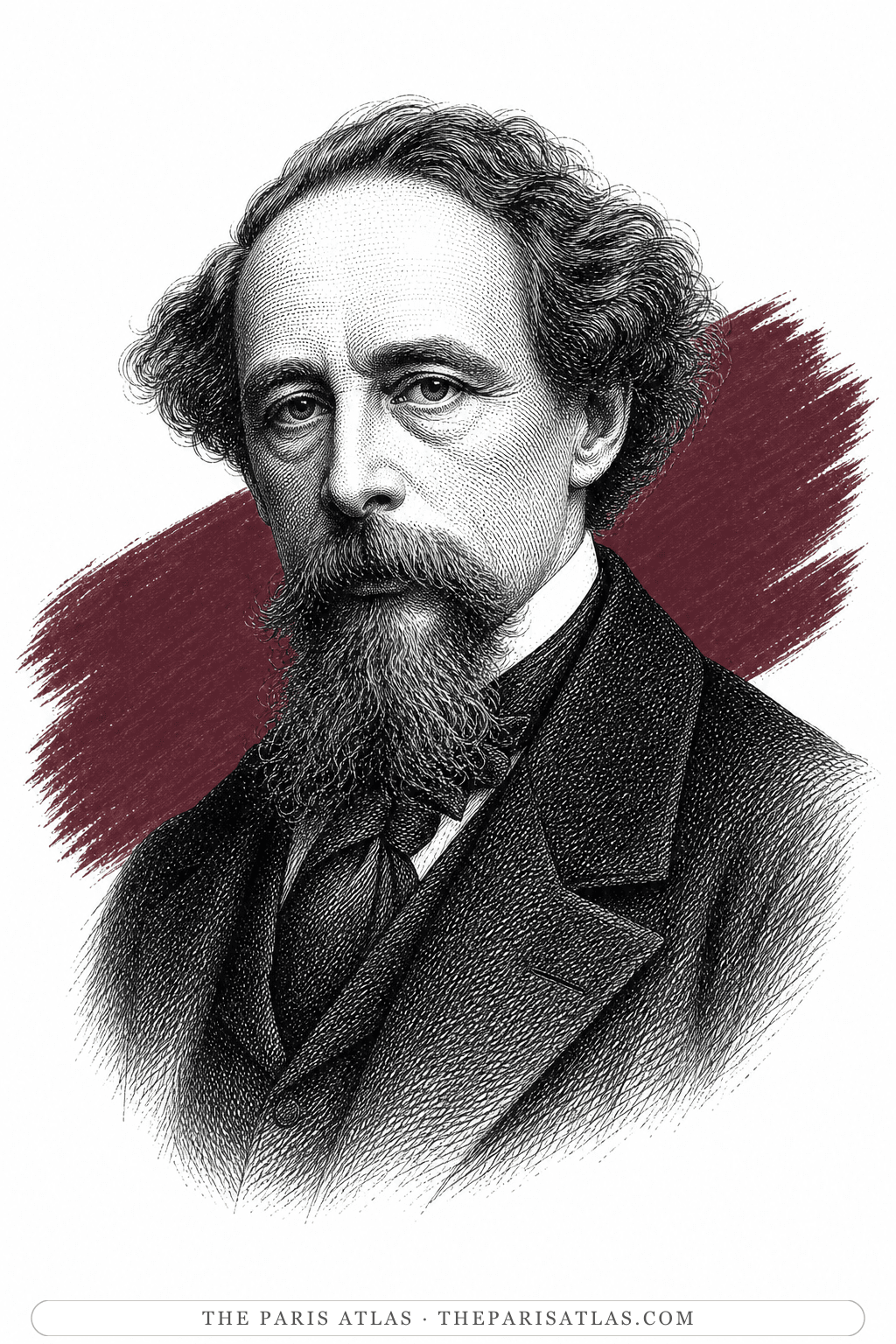
The most popular English novelist of the nineteenth century, who was never a Paris resident in the ordinary sense but kept coming back for twenty-five years: one winter in a rented mansion on the rue de Courcelles, a second winter on the Champs-Élysées writing Little Dorrit, repeated compulsive visits to the Paris Morgue — the riverside building where the city displayed its unidentified dead to the public — and a novel of the French Revolution, A Tale of Two Cities, that has shaped how English readers picture Paris ever since.
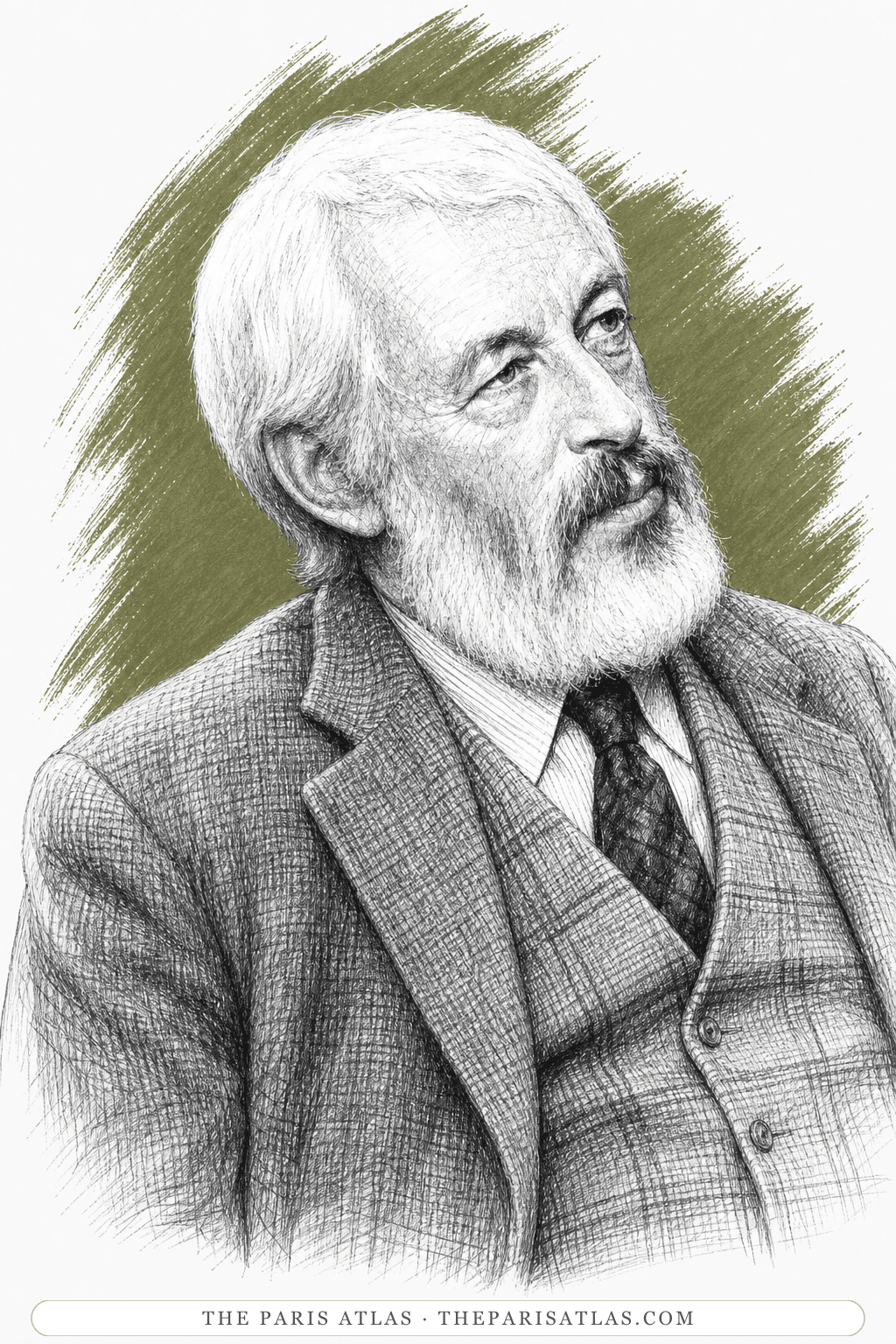
American-born Irish novelist, playwright and painter whose scandalous comic debut The Ginger Man was first published by Olympia Press in Paris after repeated rejection in Britain and America.
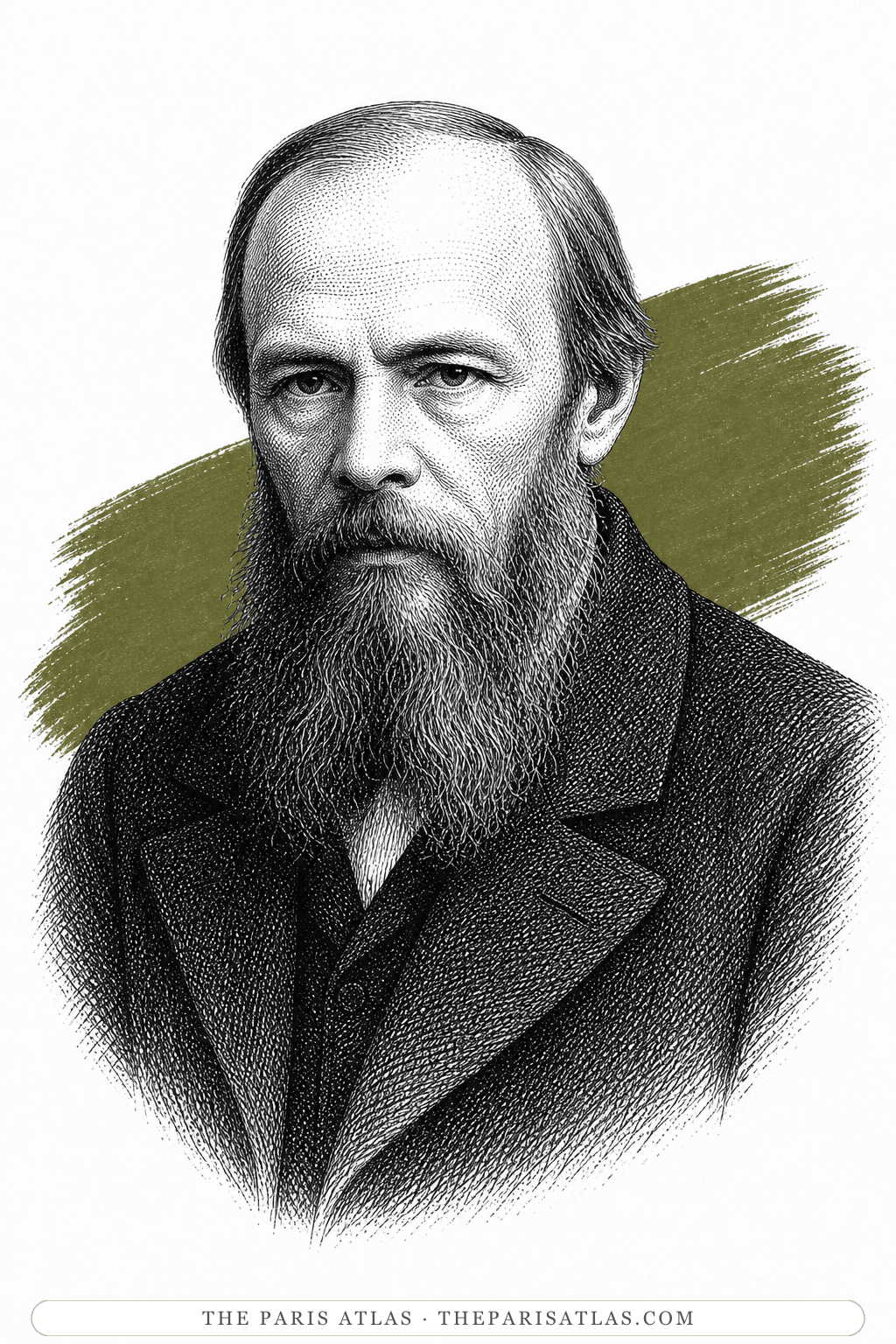
The Russian novelist who came to Paris twice in the 1860s, hated it with unusual precision, and wrote the result up as Winter Notes on Summer Impressions, a short, savage account of the French bourgeoisie that stands as the sharpest case ever made against the city by a writer passing through it.
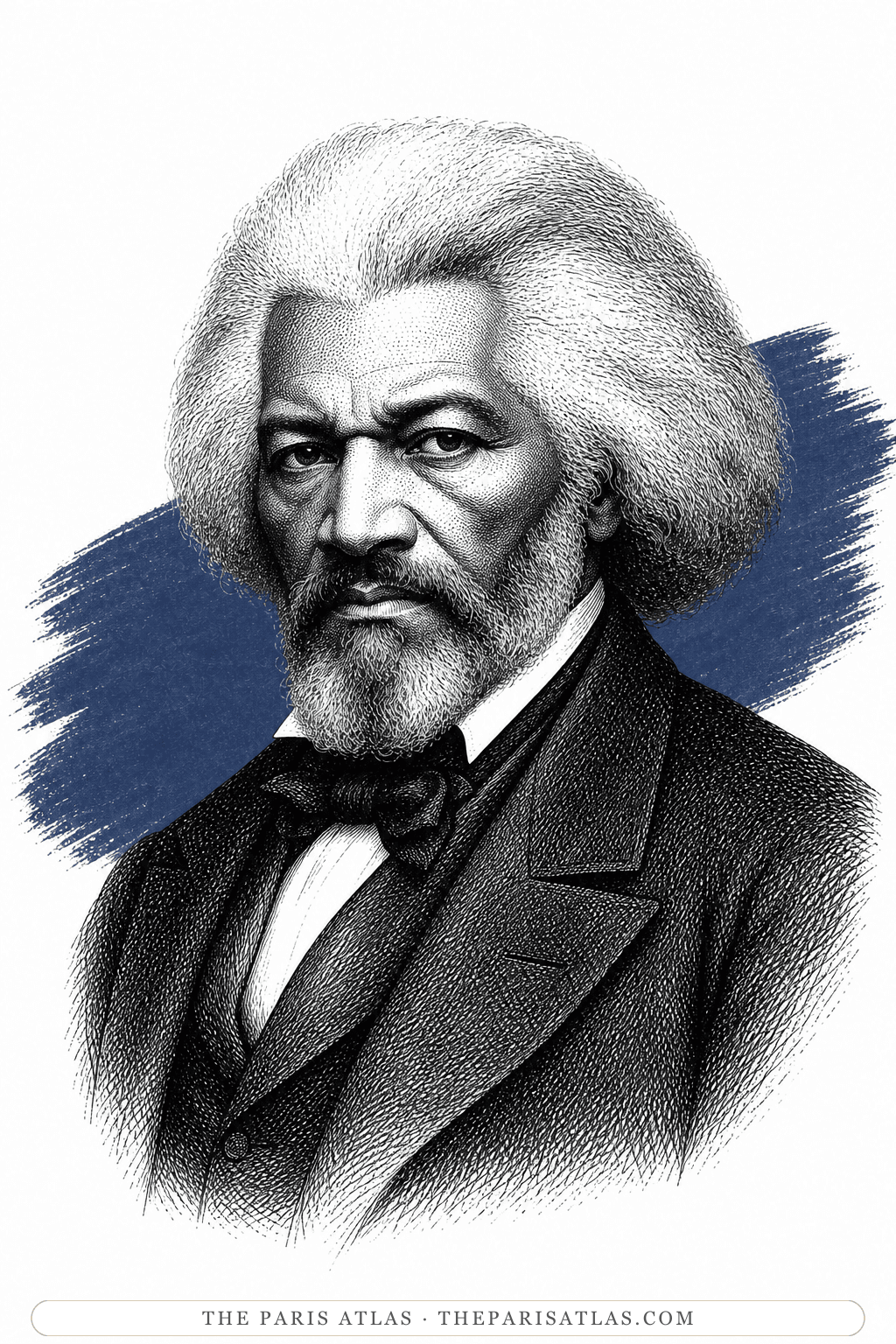
American abolitionist — a campaigner for the abolition of slavery — orator and newspaper publisher, born into slavery in Maryland in 1818, who escaped north in 1838 and spent the next half-century arguing for Black citizenship in books, newspapers and federal office. In 1859 the American minister in London, the senior United States diplomat in Britain, refused him a passport for France on the ground that he was not a citizen of the country he had been born in: American law at the time held that no Black person could be one. The French minister in London issued him a permit to enter France at once. Twenty-seven years later he reached Paris anyway, aged sixty-eight, and spent weeks in its galleries.
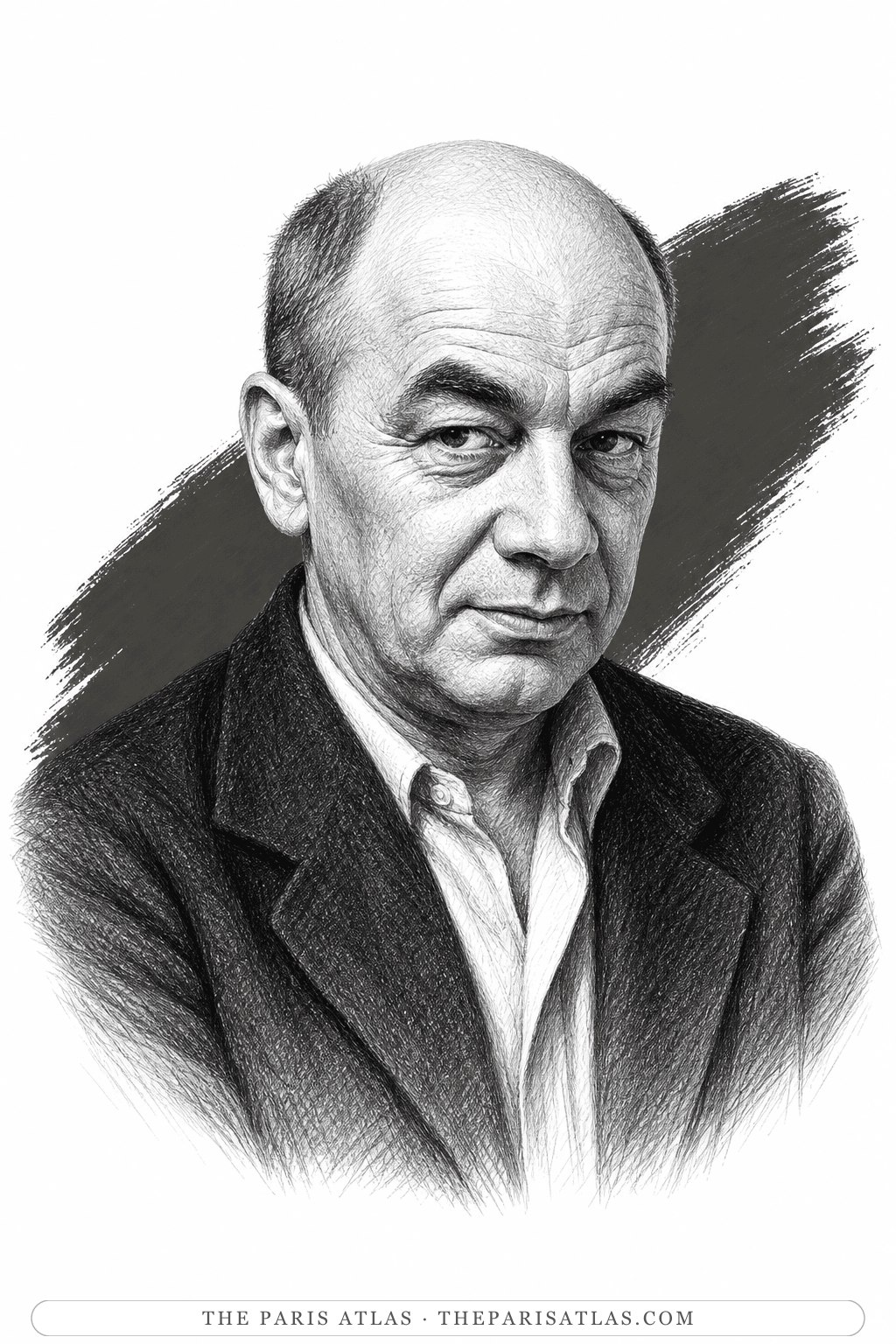
French painter, sculptor, writer and theorist who rejected conventional ideas of beauty, championed the work he called Art Brut, and turned rough materials, graffiti-like figures and eventually entire rooms into a sustained challenge to cultural authority.
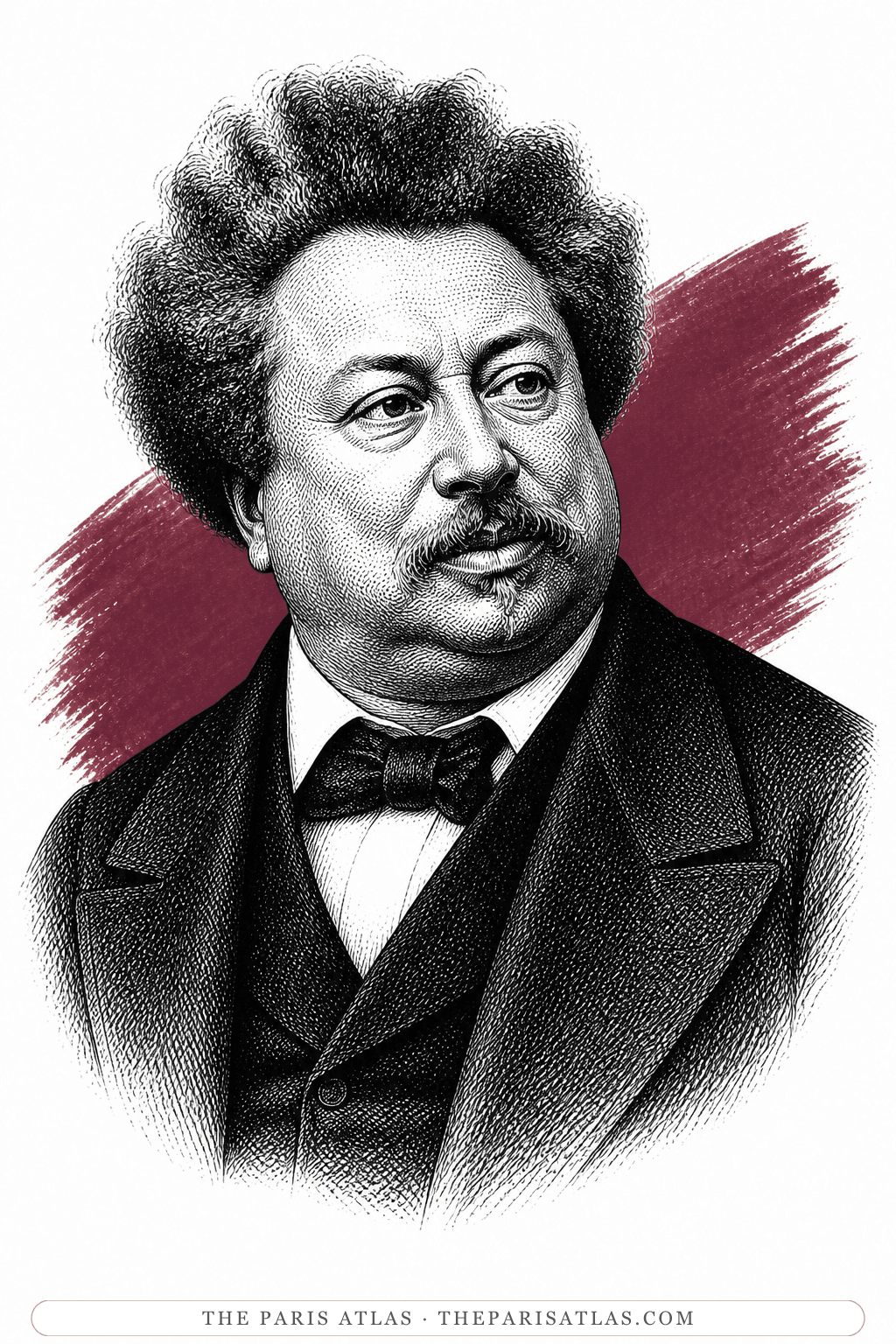
Author of The Three Musketeers and The Count of Monte Cristo, who arrived in Paris in his early twenties as a copying clerk, conquered the city's theatres at twenty-six, wrote more than three hundred volumes with a team of collaborators, built and lost a château outside Paris in under three years, and was moved into the Panthéon — the Paris monument where France buries its most honoured dead — in 2002. His father was the highest-ranking man of African descent to command in a European army.
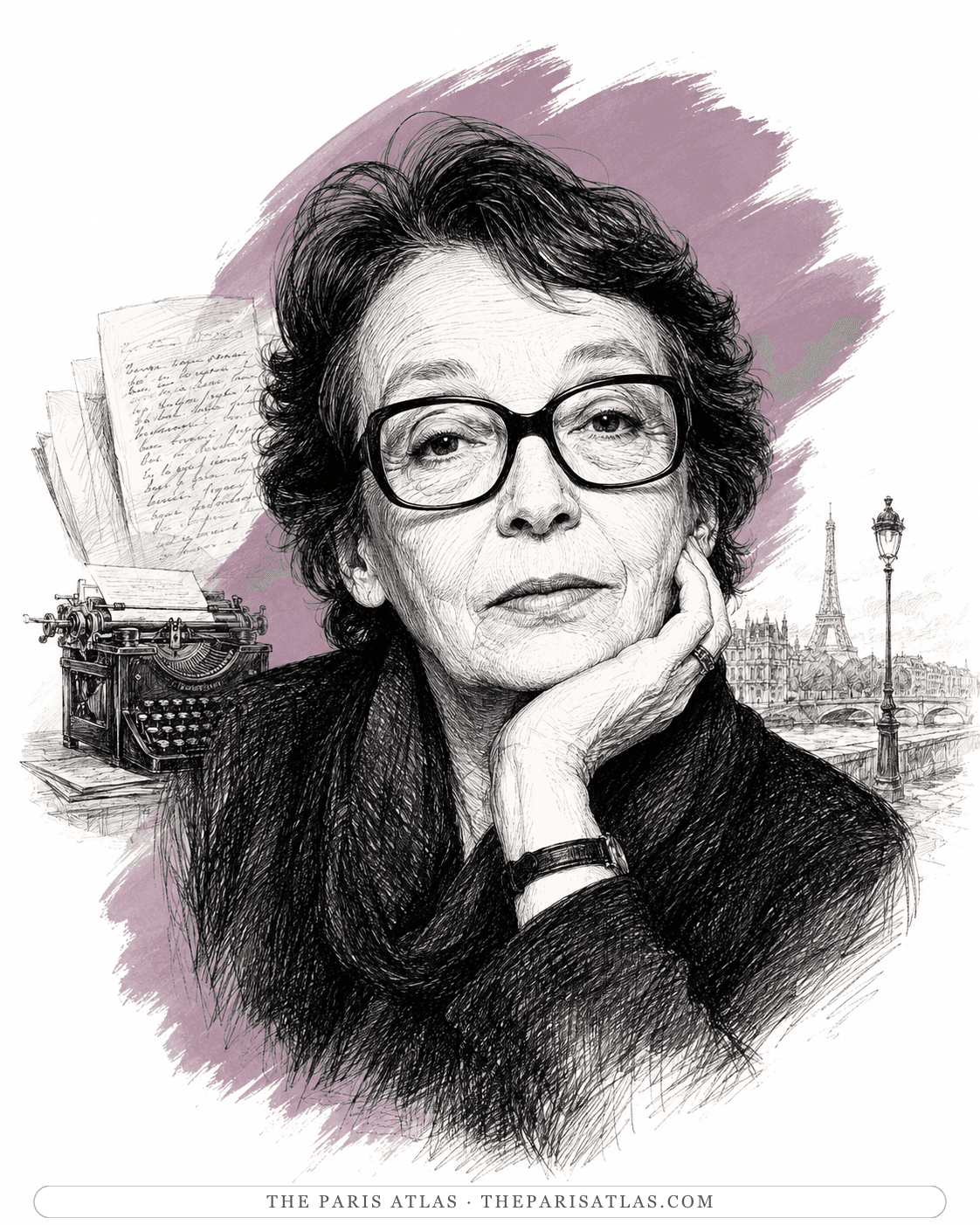
French novelist and screenwriter, later a director in her own right; her screenplay for Alain Resnais's Hiroshima mon amour (1959) carried the New Wave into literature and earned an Academy Award nomination.
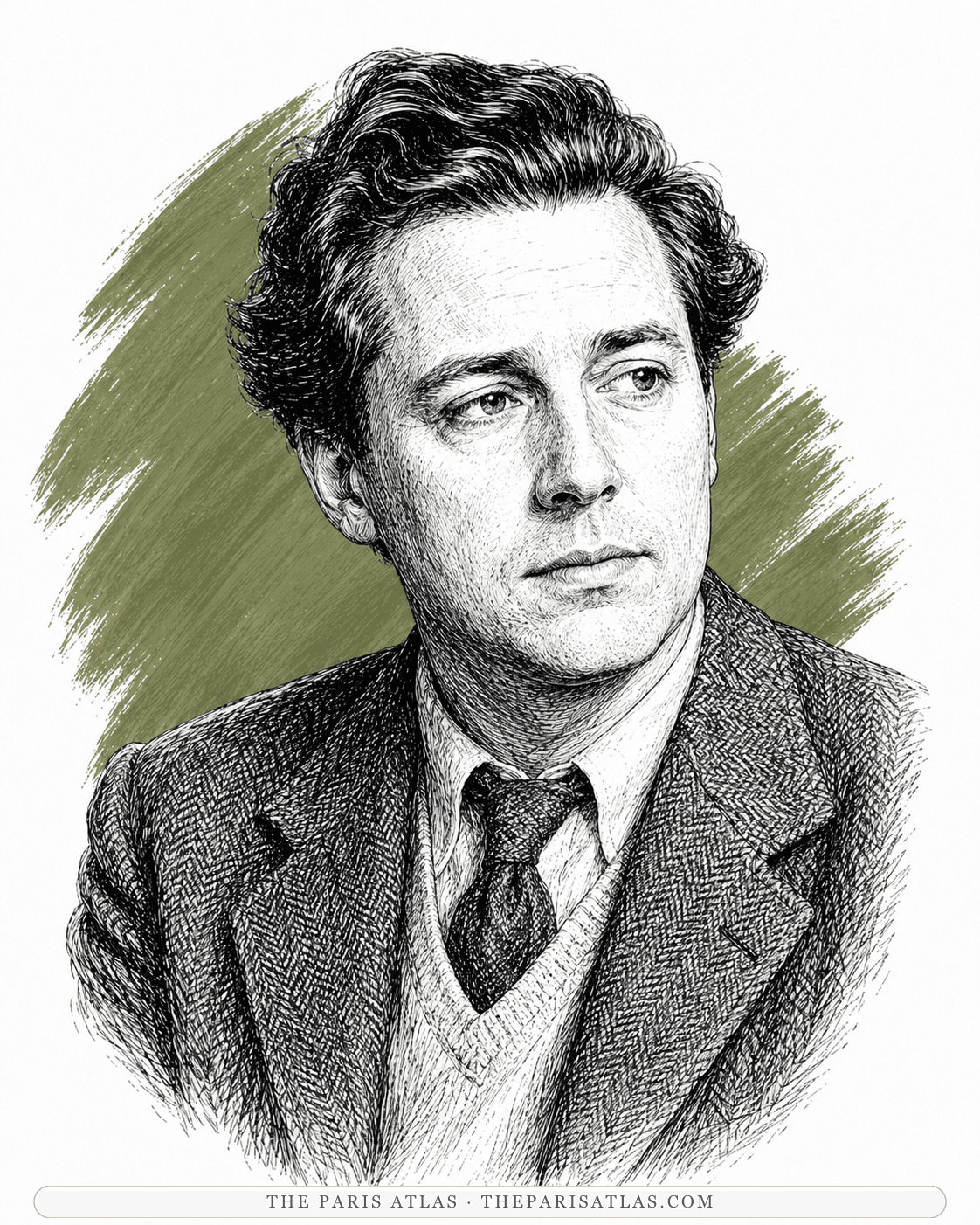
The Alexandria Quartet's author — converted to writing by Tropic of Cancer at twenty-three, and Miller's correspondent and ally for forty-five years.
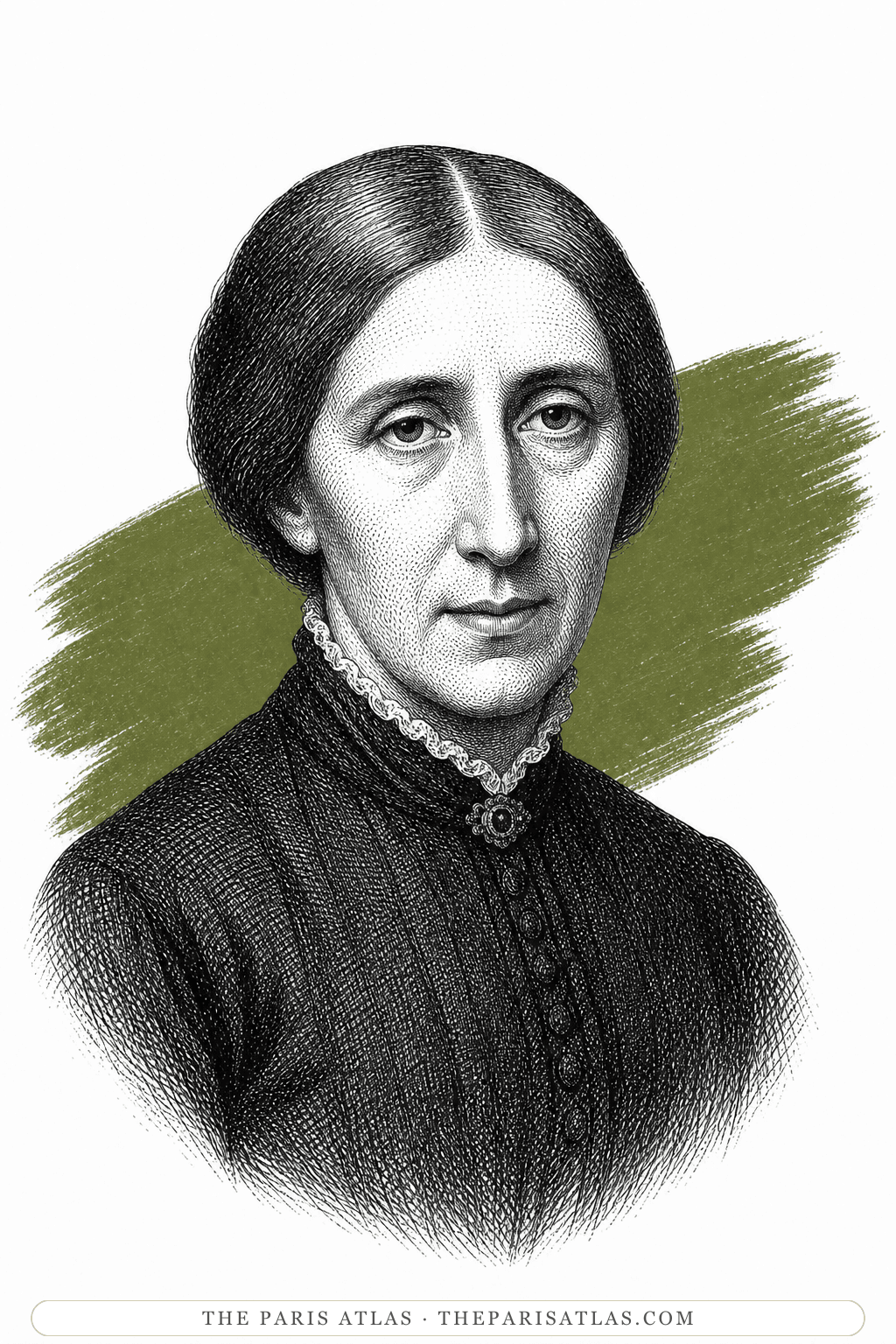
Mary Ann Evans, who wrote Middlemarch under a man's name because she was living openly with another woman's husband and knew what English readers would do with that. Her mind was formed in French and German: she translated Strauss and Feuerbach before she wrote a line of fiction, and the sight she most wanted in Paris was not a monument but the flat where Auguste Comte had lived.
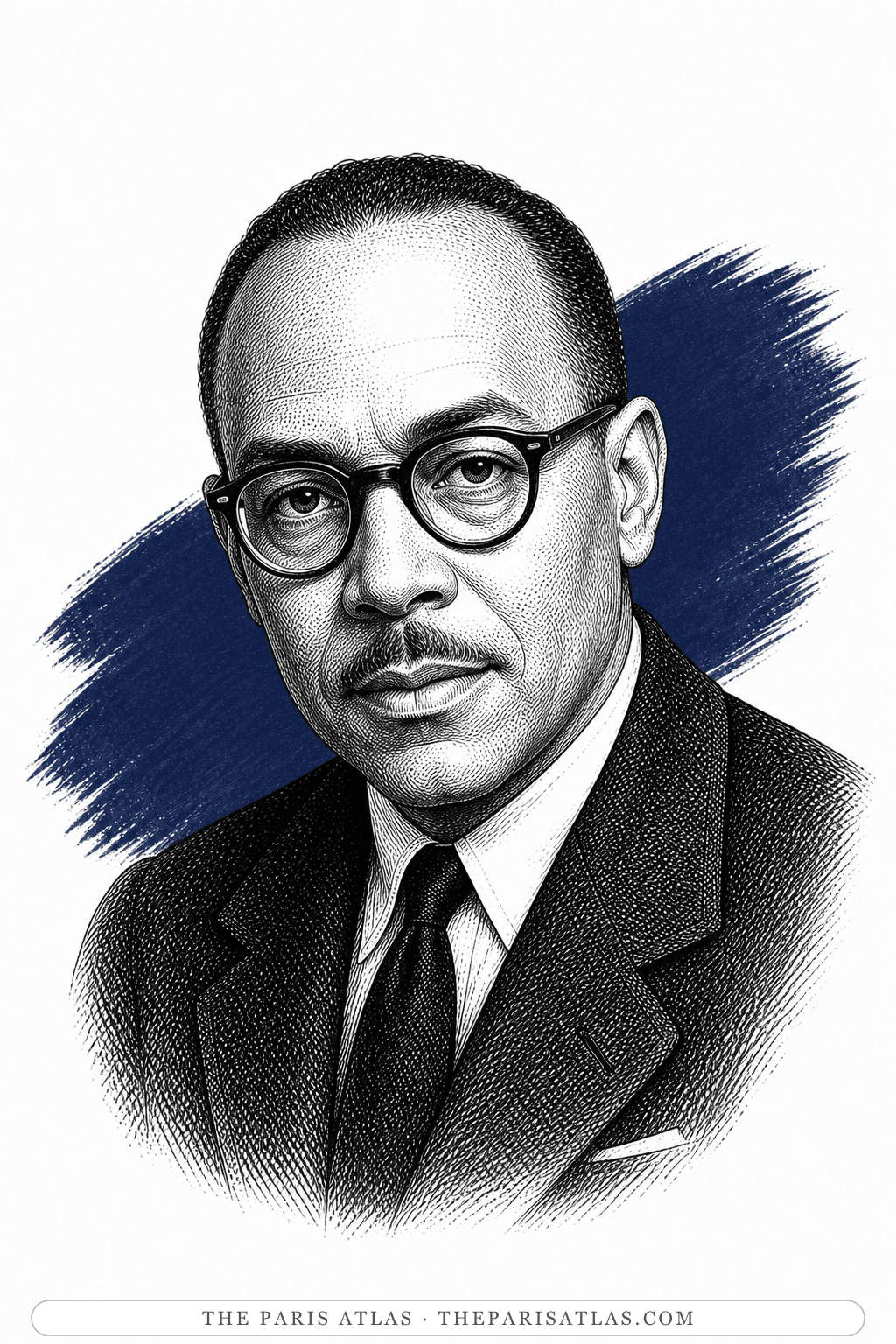
American novelist, whose Invisible Man of 1952 is one of the essential American books of the century. His Paris is deliberately brief: he came in the summer of 1954 to travel and lecture, spent a few weeks among the American expatriates, and gave The Paris Review its Art of Fiction interview at the Café de la Mairie the day before he left. Unlike Richard Wright and James Baldwin, he would not stay.
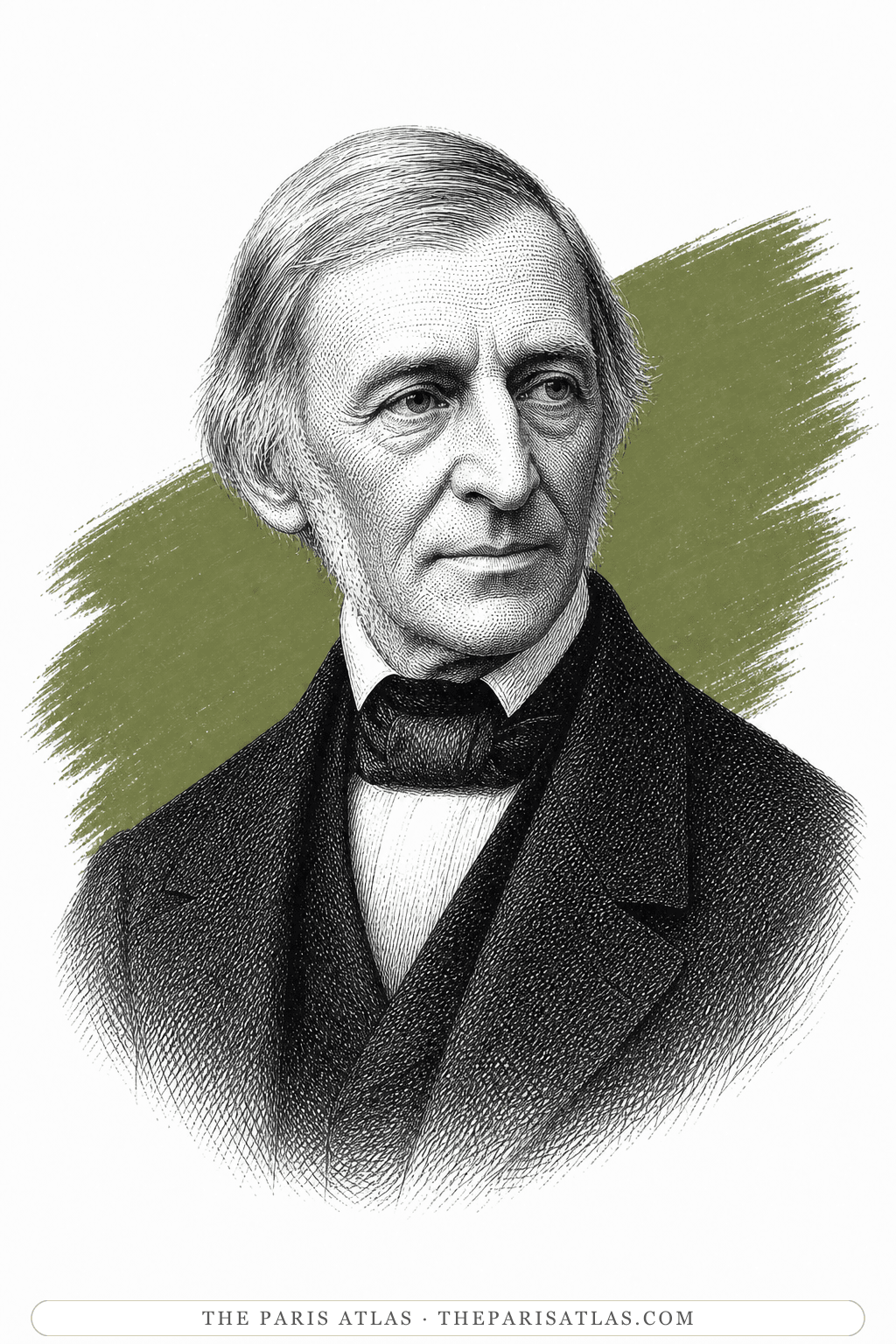
American essayist and lecturer who spent four weeks in Paris in the summer of 1833, walked into the natural history museum at the Jardin des Plantes on 13 July, and wrote in his journal that day: "I will be a naturalist." The idea he took home from that room became Nature (1836), the founding book of American Transcendentalism.
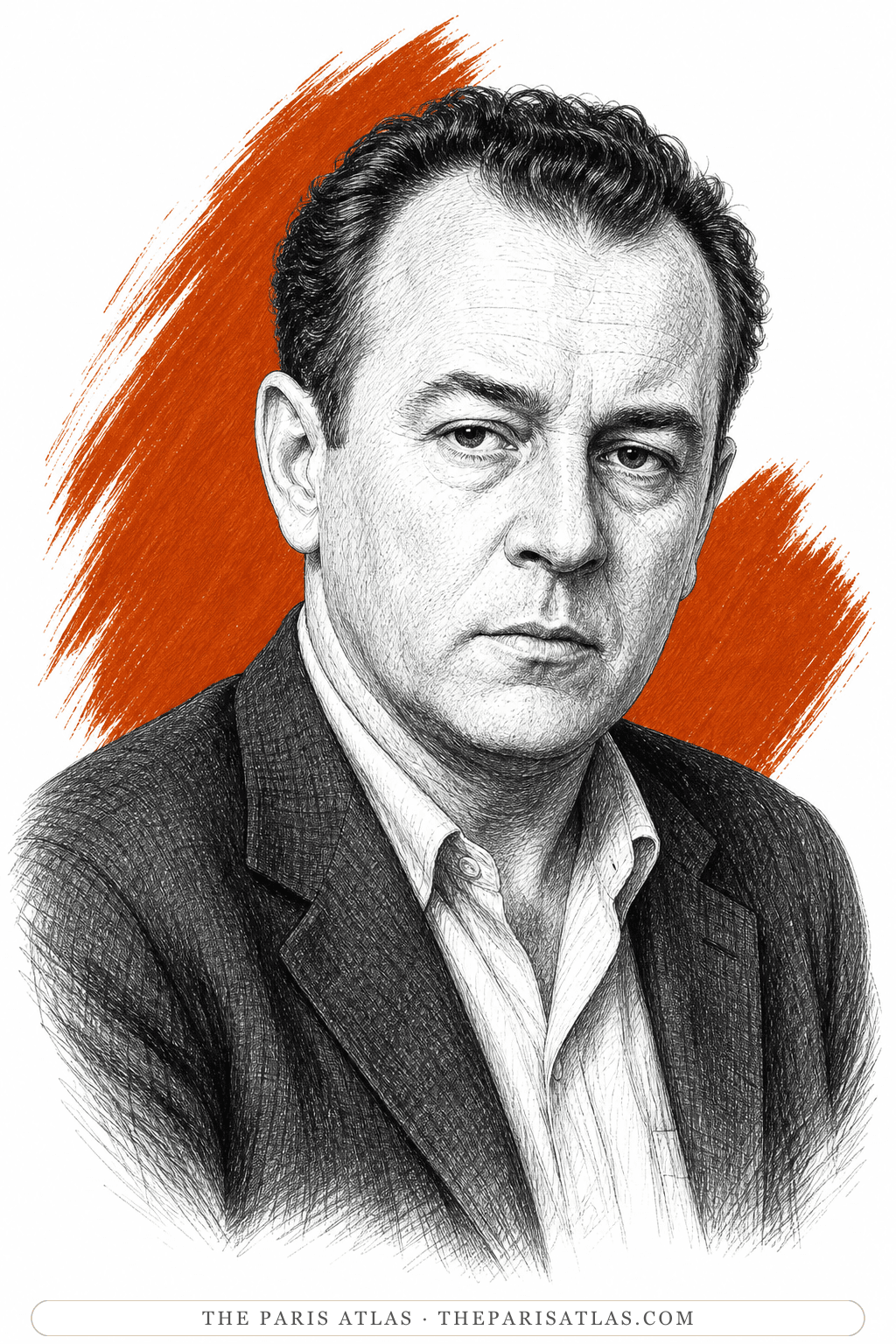
American novelist, short-story writer and screenwriter whose autobiographical fiction made Italian American family life, artistic ambition and Los Angeles into the world of Arturo Bandini—and whose nine-week stay in Paris produced “The First Time I Saw Paris.”
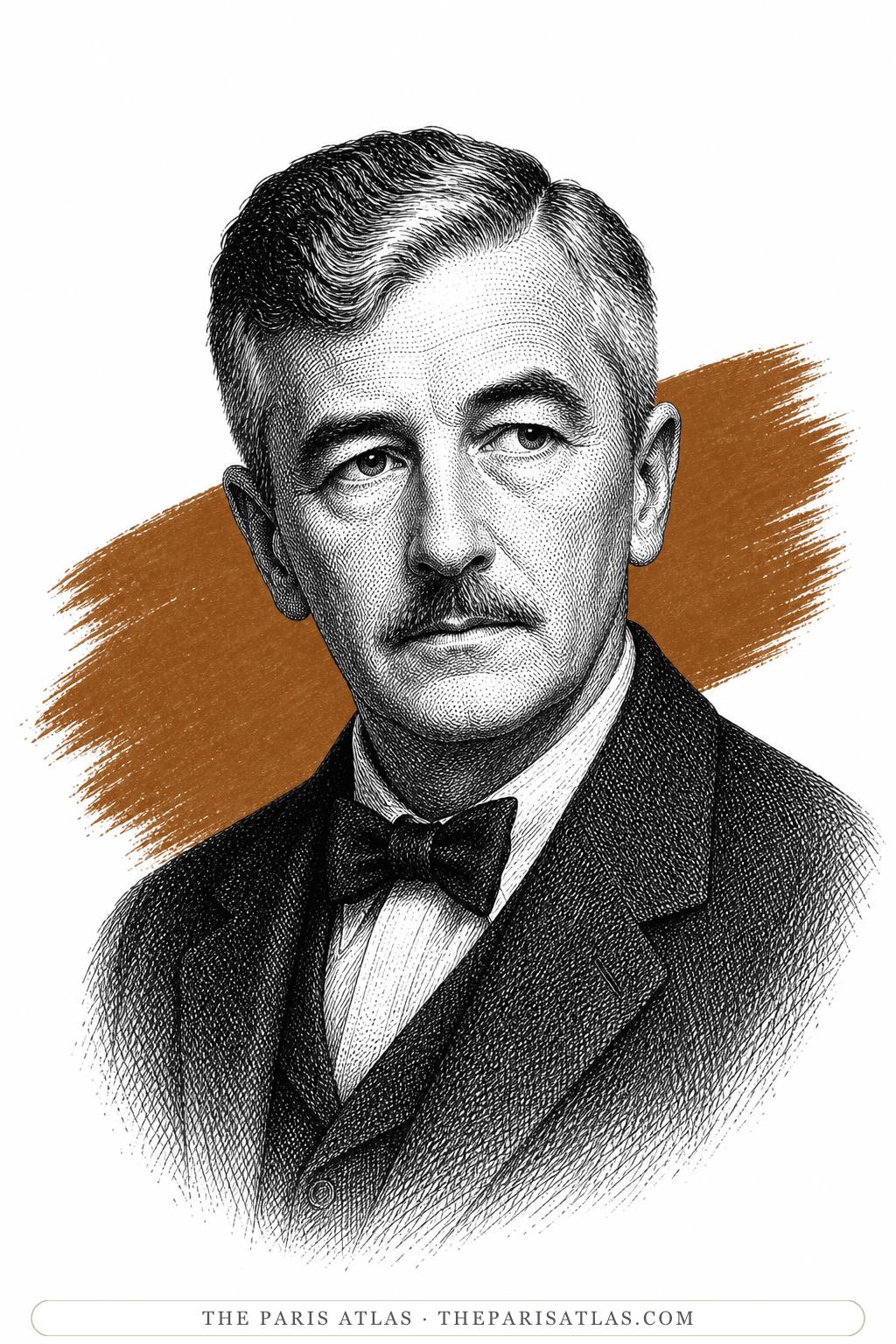
The American novelist who invented Yoknapatawpha County, the imaginary Mississippi county he called himself sole owner and proprietor of, and who spent the autumn of 1925 in a room at 26 rue Servandoni beside the Luxembourg Gardens — all but unpublished, calling himself a tramp, and walking to the café used by the Irish novelist James Joyce simply to look at him.
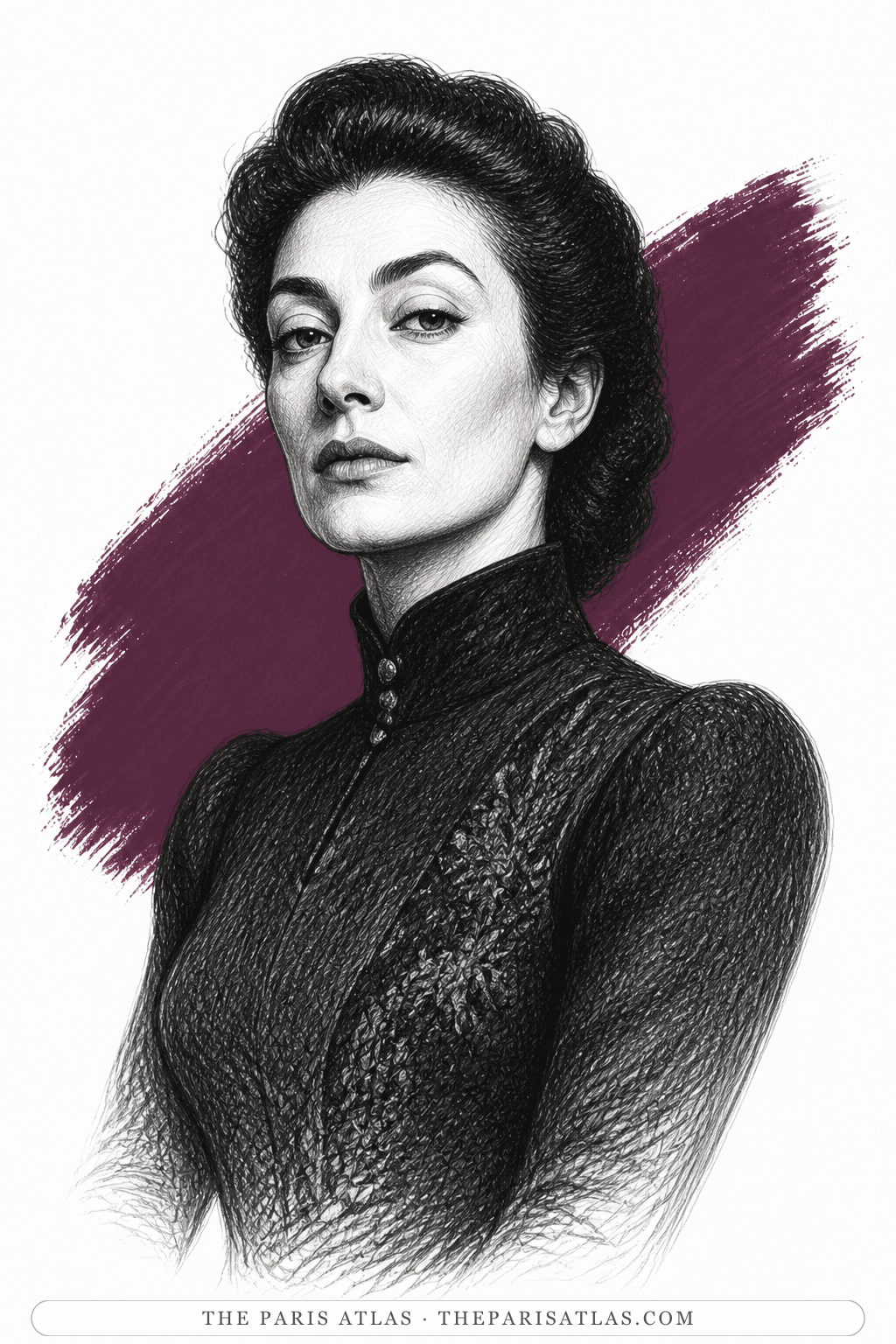
Argentine-born, Italian-raised painter, illustrator and designer whose dreamlike images of sphinxes, powerful women, androgynous men and ceremonial worlds placed her close to Surrealism without ever making her a formal member of the movement.
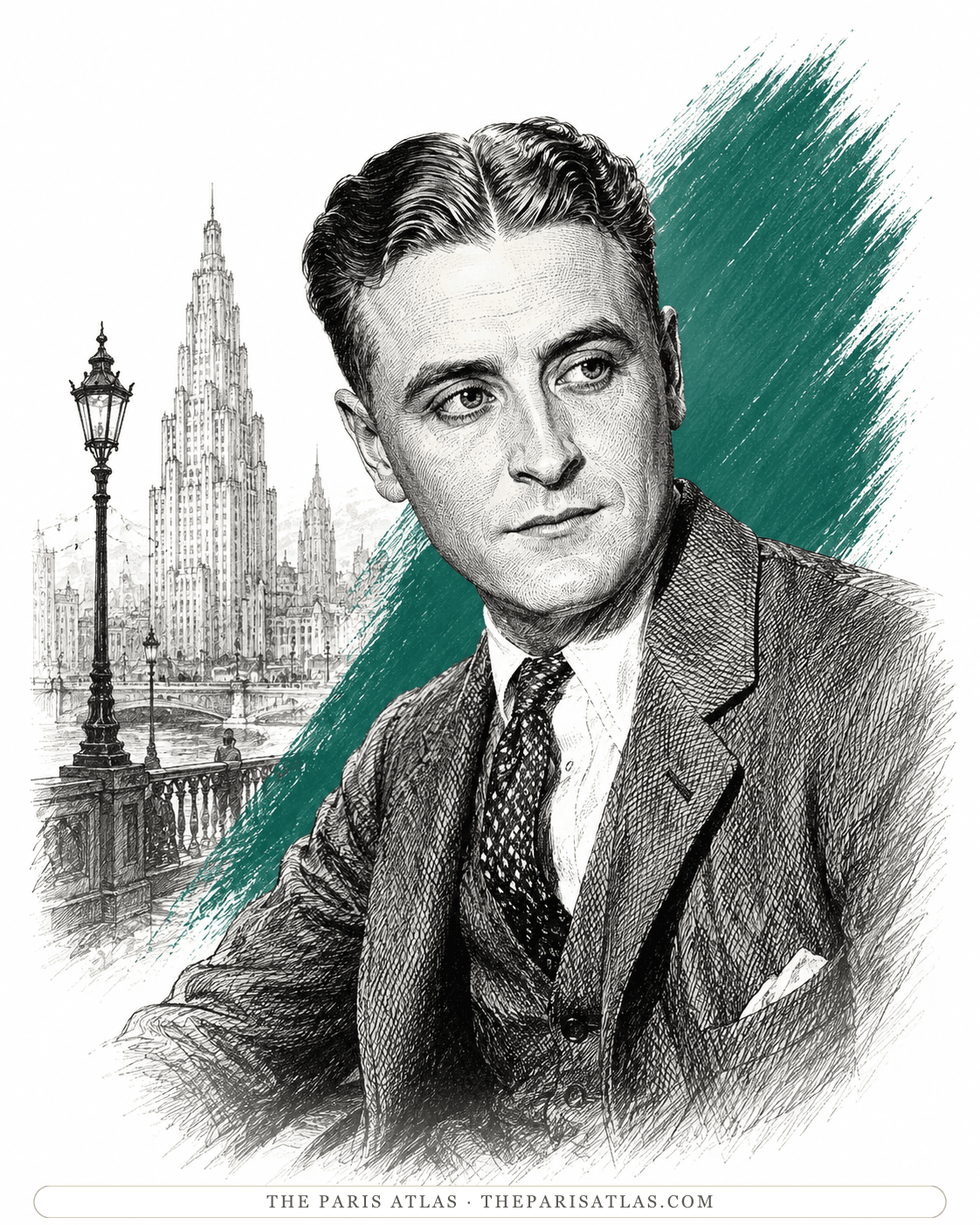
The Jazz Age's laureate — famous at twenty-three, author of Gatsby at twenty-eight, and owner of the longest posthumous comeback in American letters.
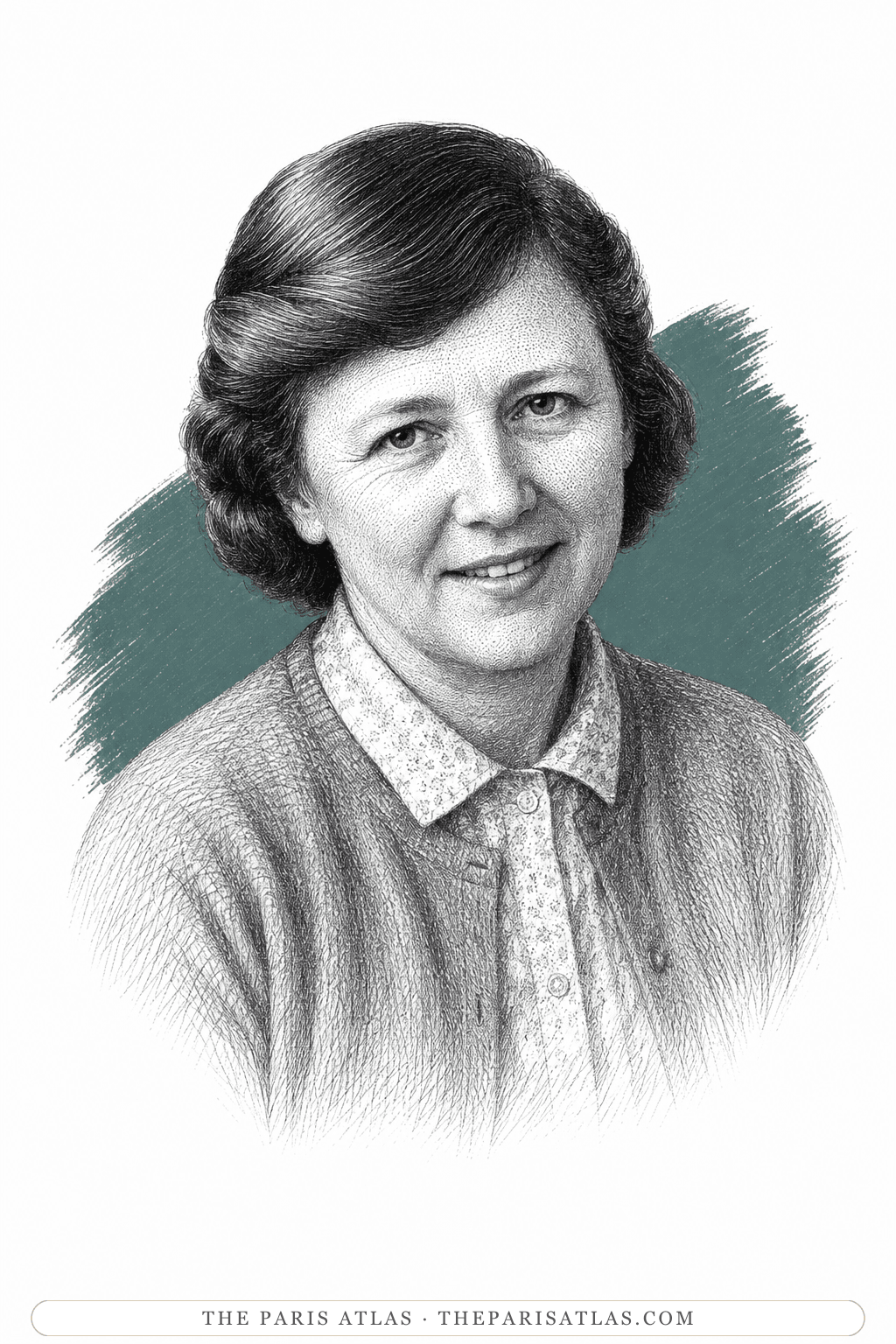
The only child of Scott and Zelda Fitzgerald — a writer and Democratic party organiser who gave her father's manuscripts to Princeton and managed his revival.
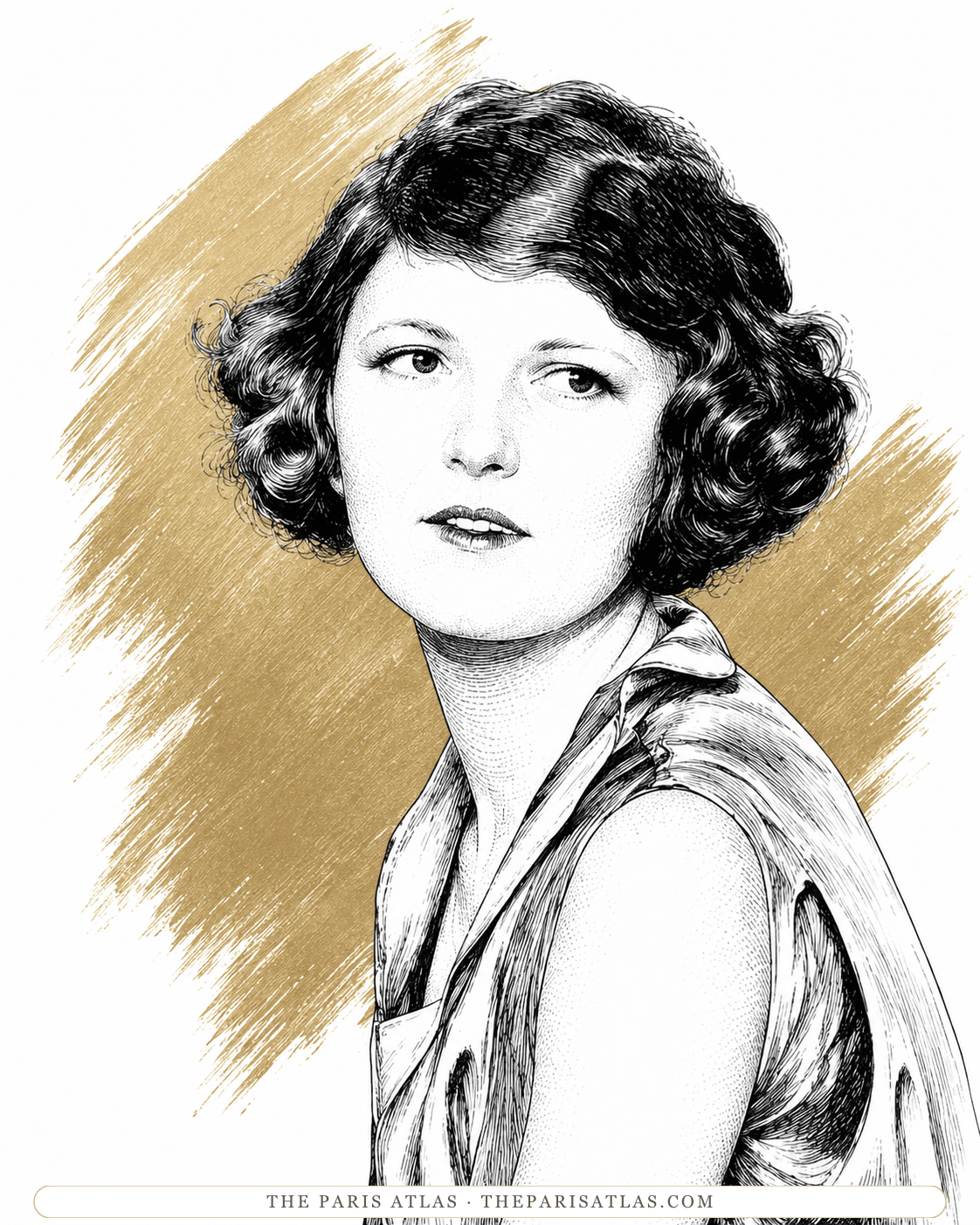
Novelist, painter, and the Jazz Age's other Fitzgerald — the subject of A Moveable Feast's most disputed portrait.
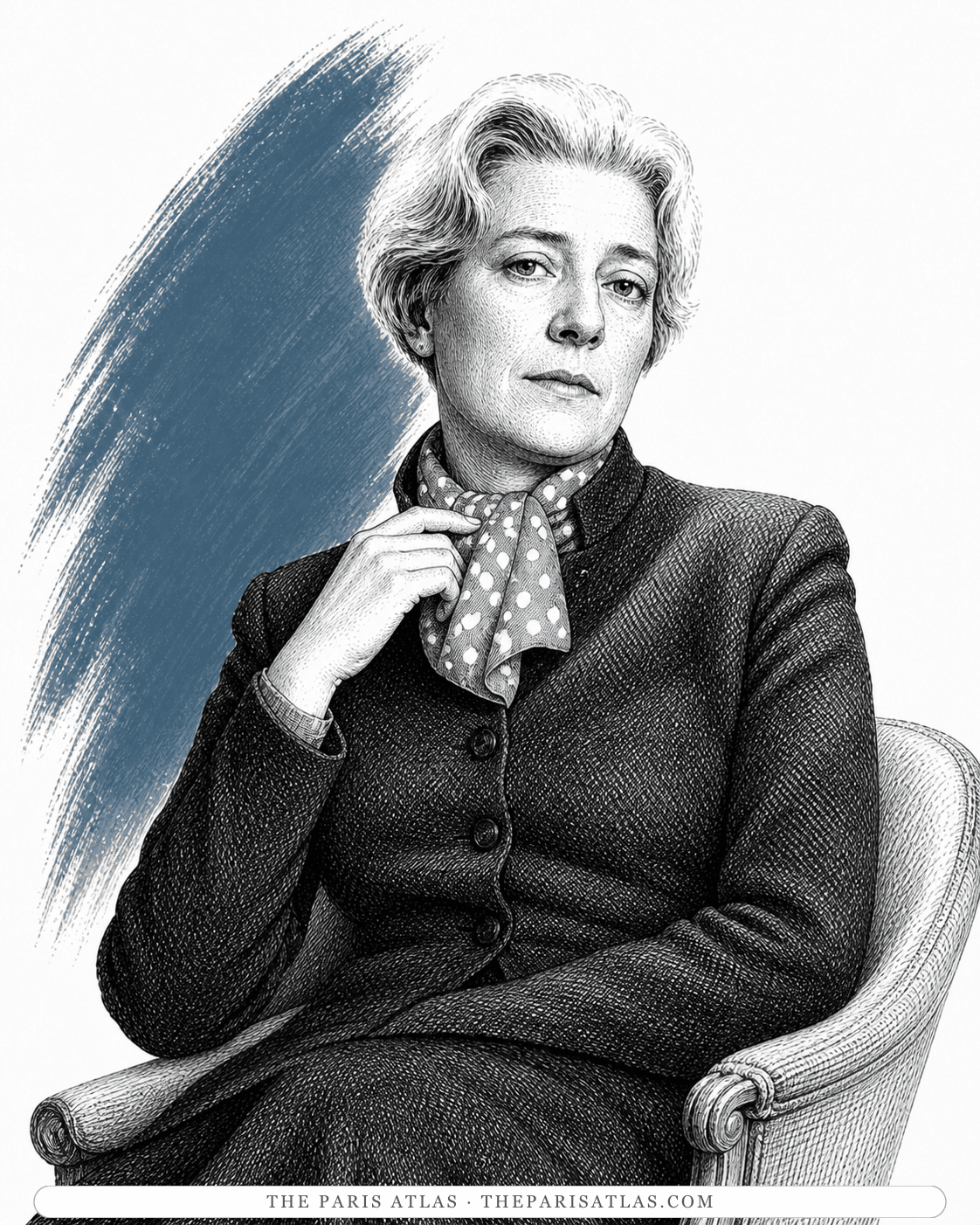
American journalist who wrote The New Yorker's fortnightly Letter from Paris under the pen name Genêt for fifty years, from 1925 to 1975, and whose dispatches are a running record of the city between the wars, under German occupation, and after.
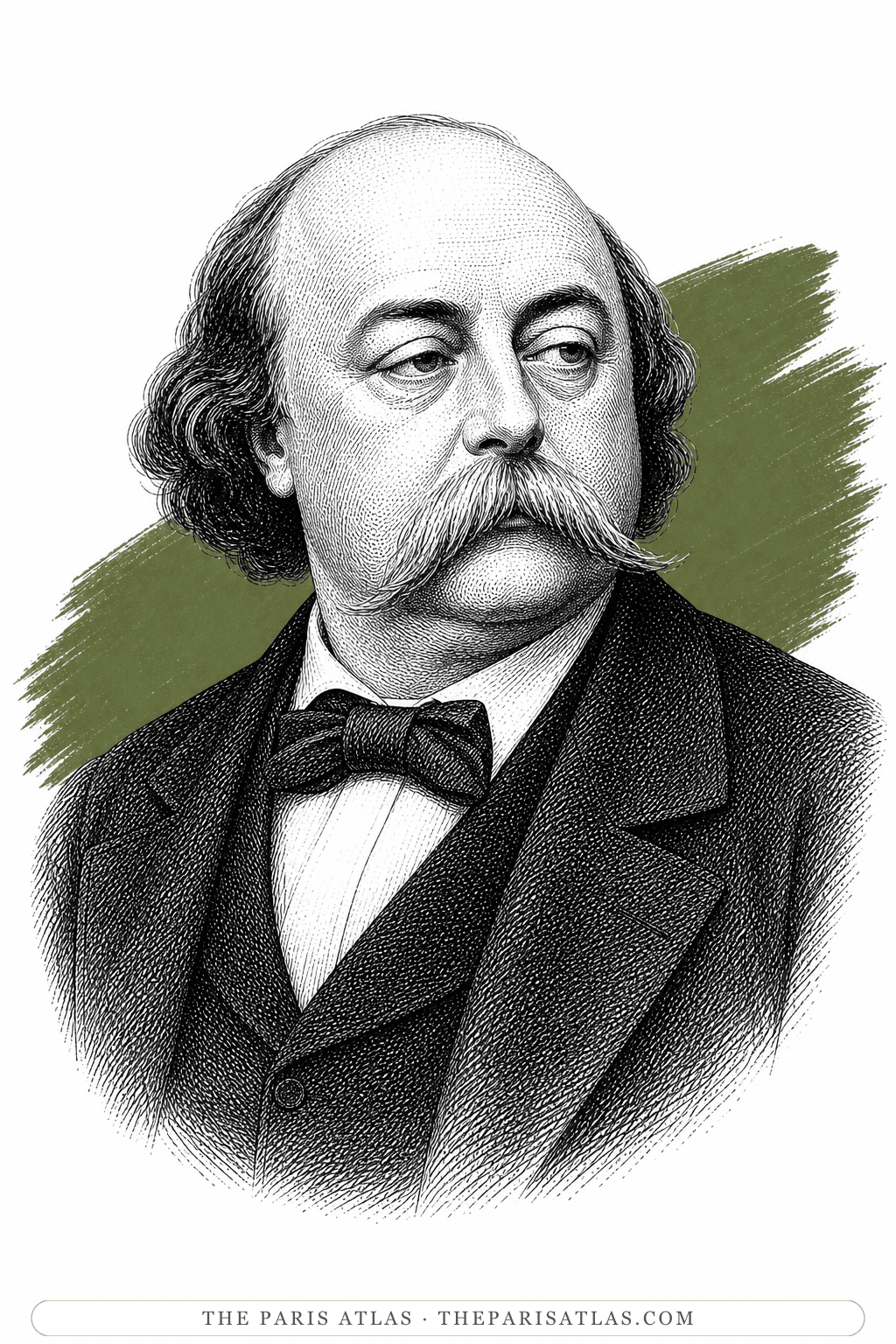
The novelist who worked in a garden house on the Seine outside Rouen, sentence by sentence, read aloud, for years at a time — and whose Madame Bovary, the story of a country doctor's wife who takes lovers, runs up debts and poisons herself, was prosecuted in a Paris courtroom in 1857 for offending public morals and acquitted. Months later the same chamber of the same court condemned Les Fleurs du mal ('The Flowers of Evil'), the one book of poems by Charles Baudelaire. His L'Éducation sentimentale ('Sentimental Education') is the great novel of Paris in the revolution of 1848.
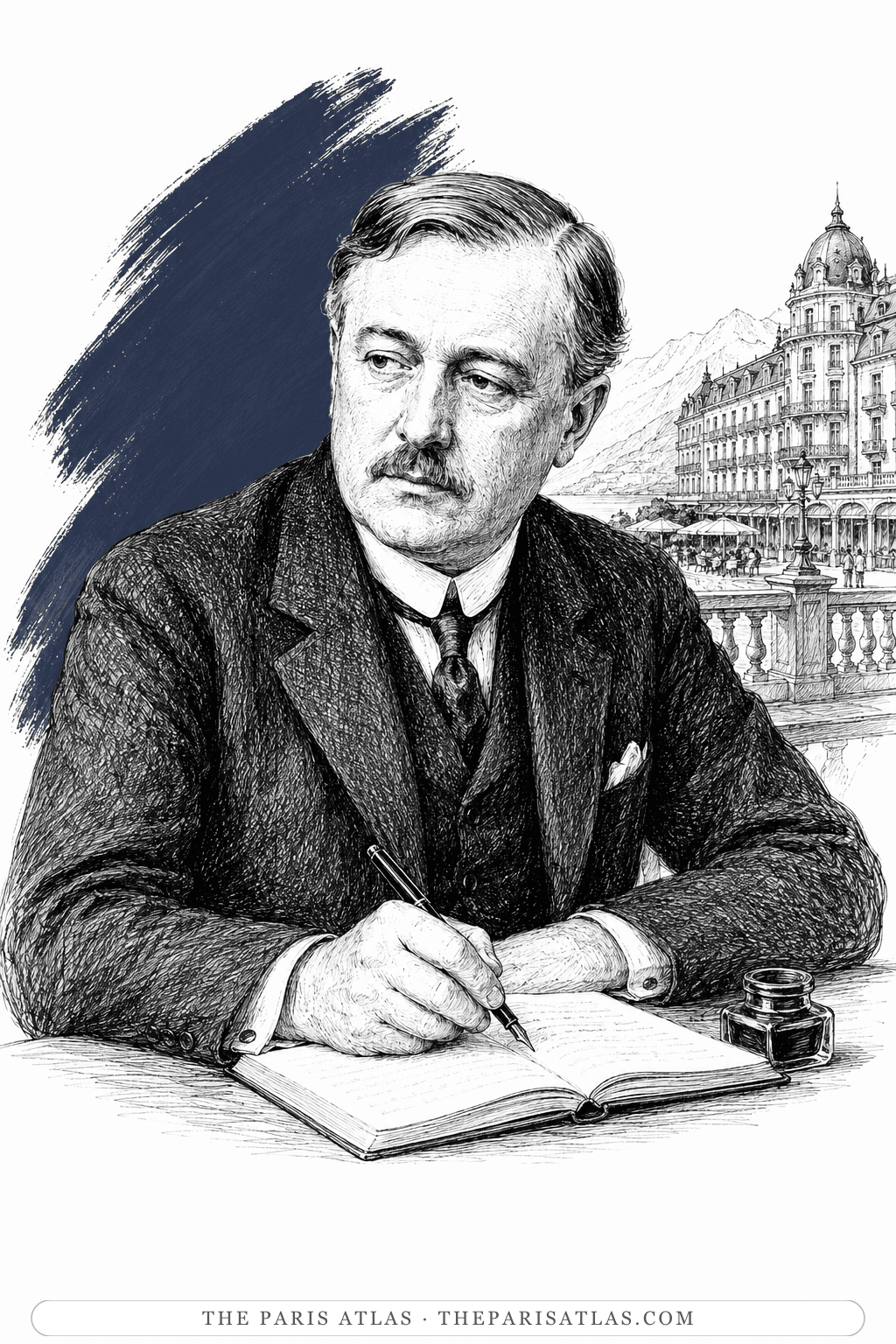
Novelist, editor, and one-man literary infrastructure — author of The Good Soldier, publisher of the young Hemingway, and host of the era's bal musette parties.
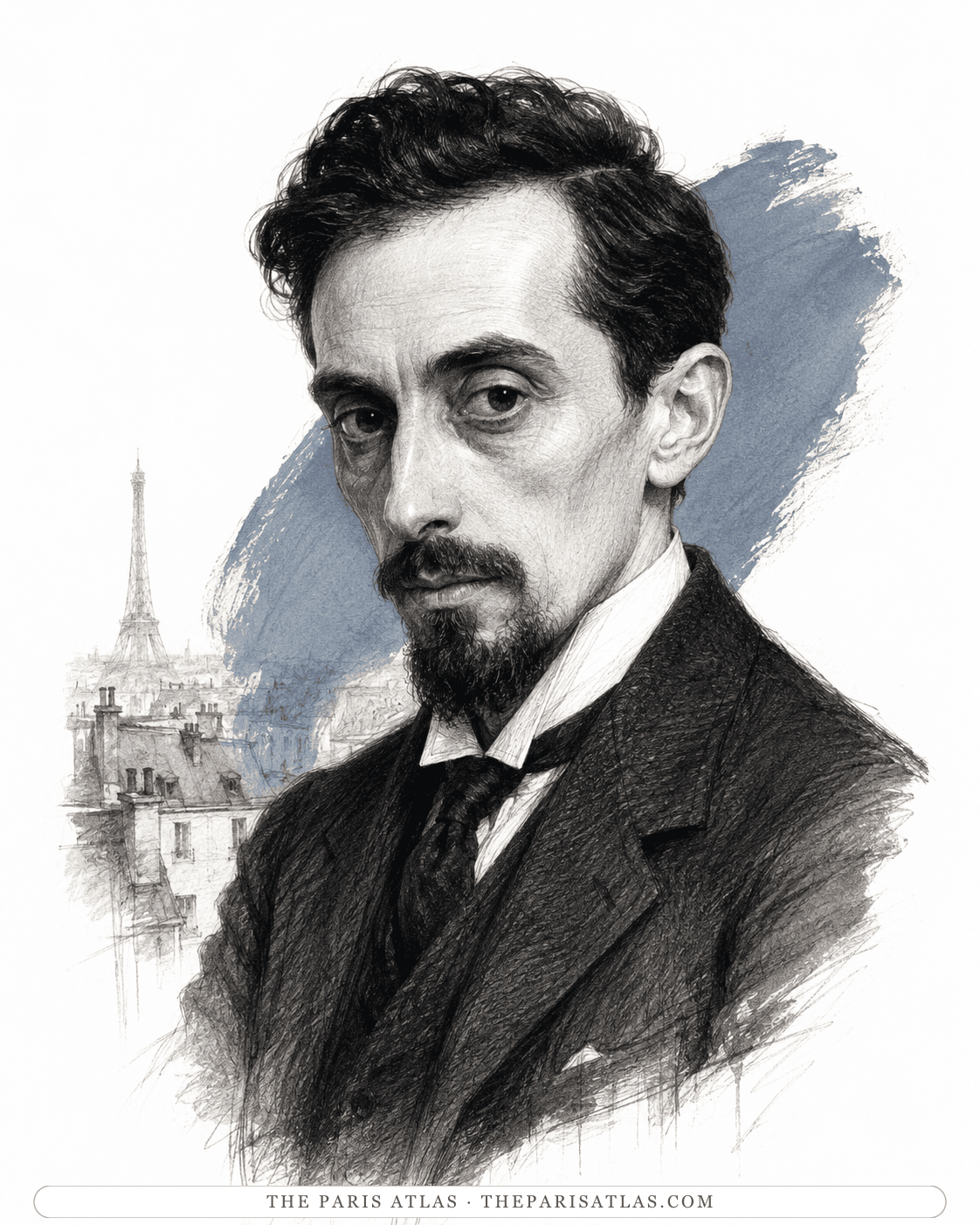
Writer, publisher of the Carrefour imprint, and Miller's philosophical sparring partner — the other half of the two-volume Hamlet correspondence, begun at 18 Villa Seurat, and Boris in Tropic of Cancer.
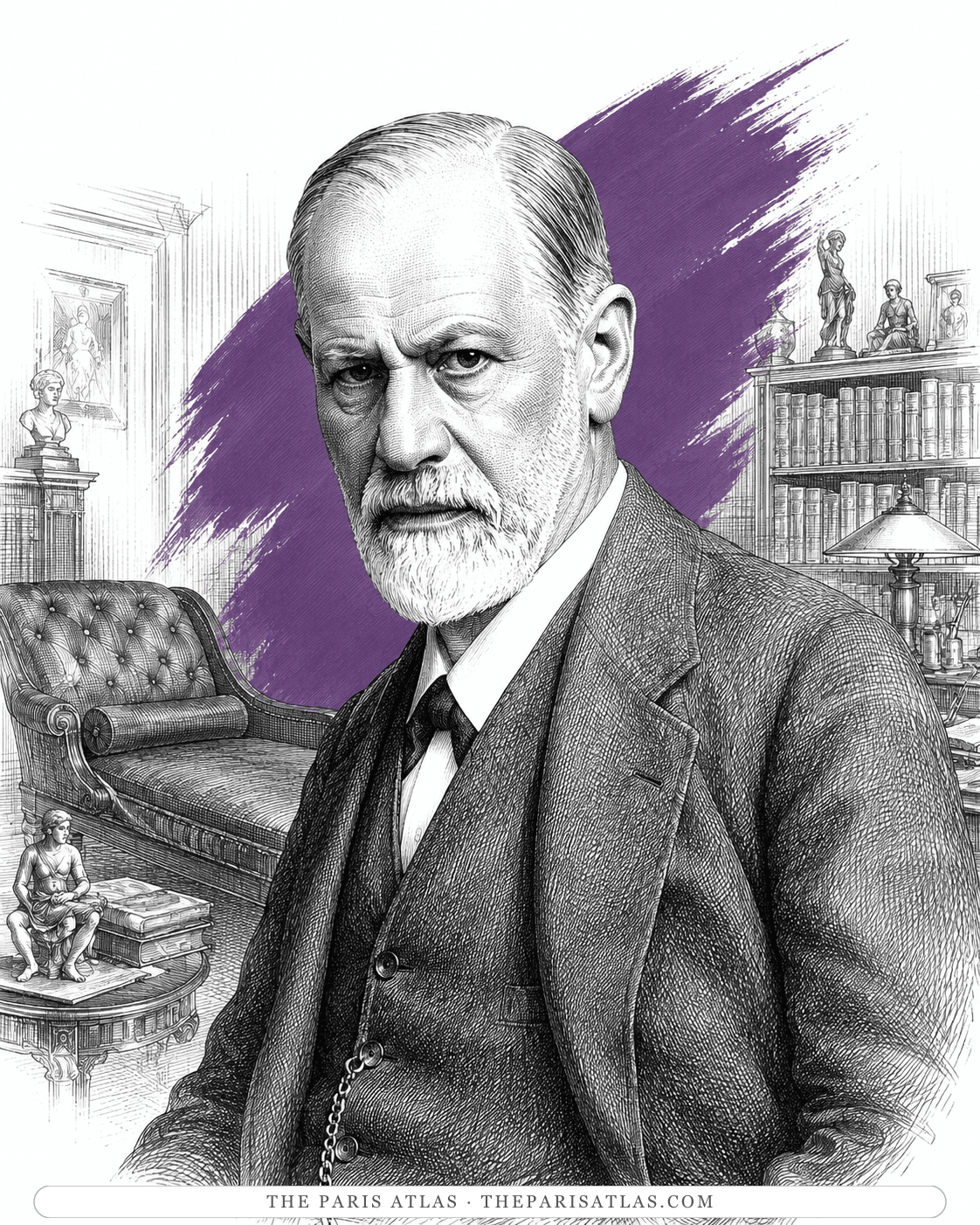
The Interpretation of Dreams gave Surrealism the theory it worked from. Dalí spent years trying to meet him and managed it once, in London on 19 July 1938, carrying Metamorphosis of Narcissus to show him.
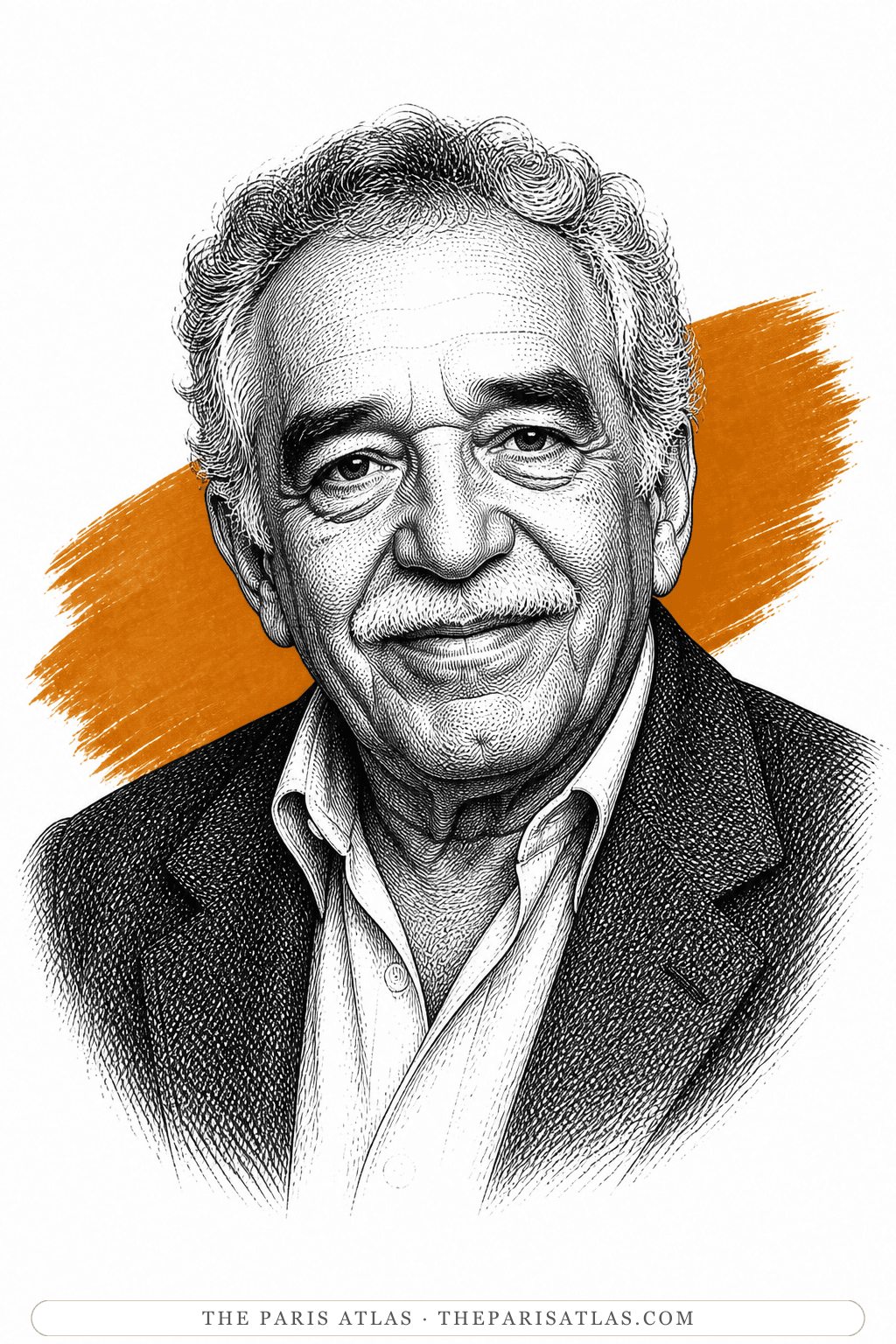
Colombian novelist whose One Hundred Years of Solitude carried him to the Nobel Prize in Literature in 1982, and who spent 1956 and 1957 stranded in a garret — a top-floor attic room — in the Latin Quarter, the student district of Paris, after the Bogotá newspaper that had sent him to Europe was shut down by a military dictatorship. He lived on credit from his landlady and on the deposit money from returned bottles, and wrote a short novel about a man waiting for a letter that never arrives.
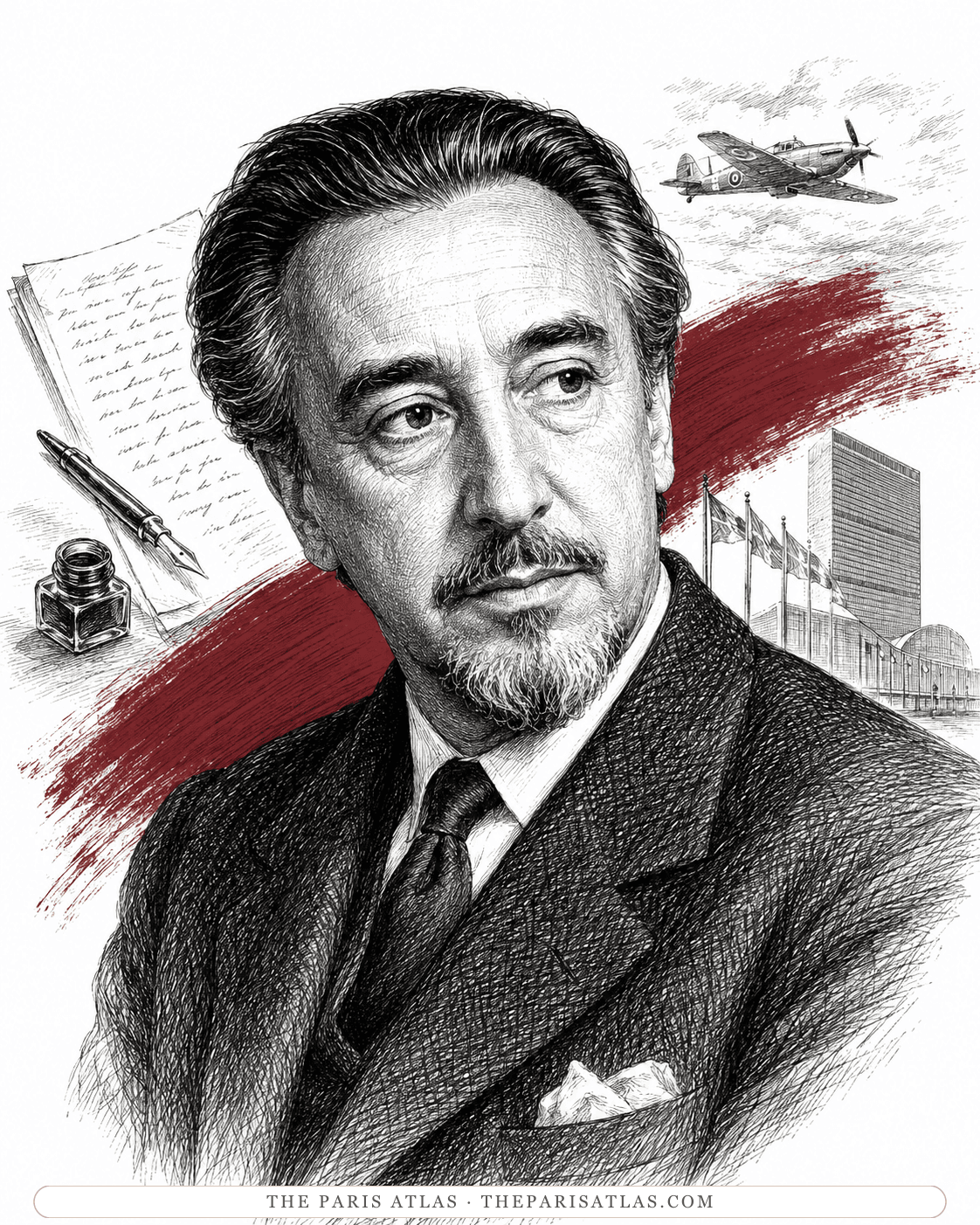
Novelist, diplomat, and the only writer to win the Prix Goncourt twice — once under his own name and once under a pseudonym. Jean Seberg's husband from 1962 to 1970.
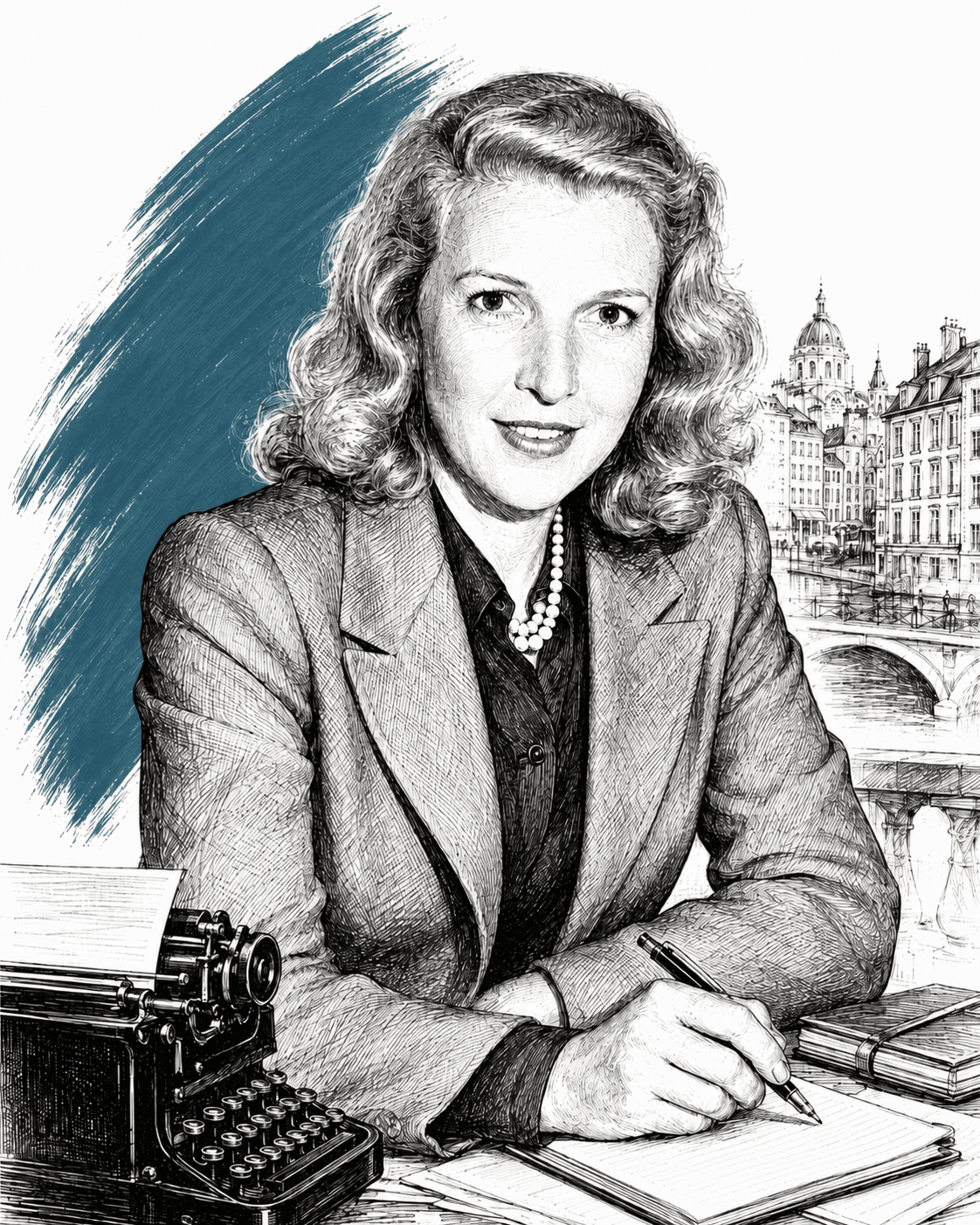
War correspondent who covered the Spanish Civil War, D-Day, and conflicts across five more decades; Hemingway's third wife, 1940–1945.
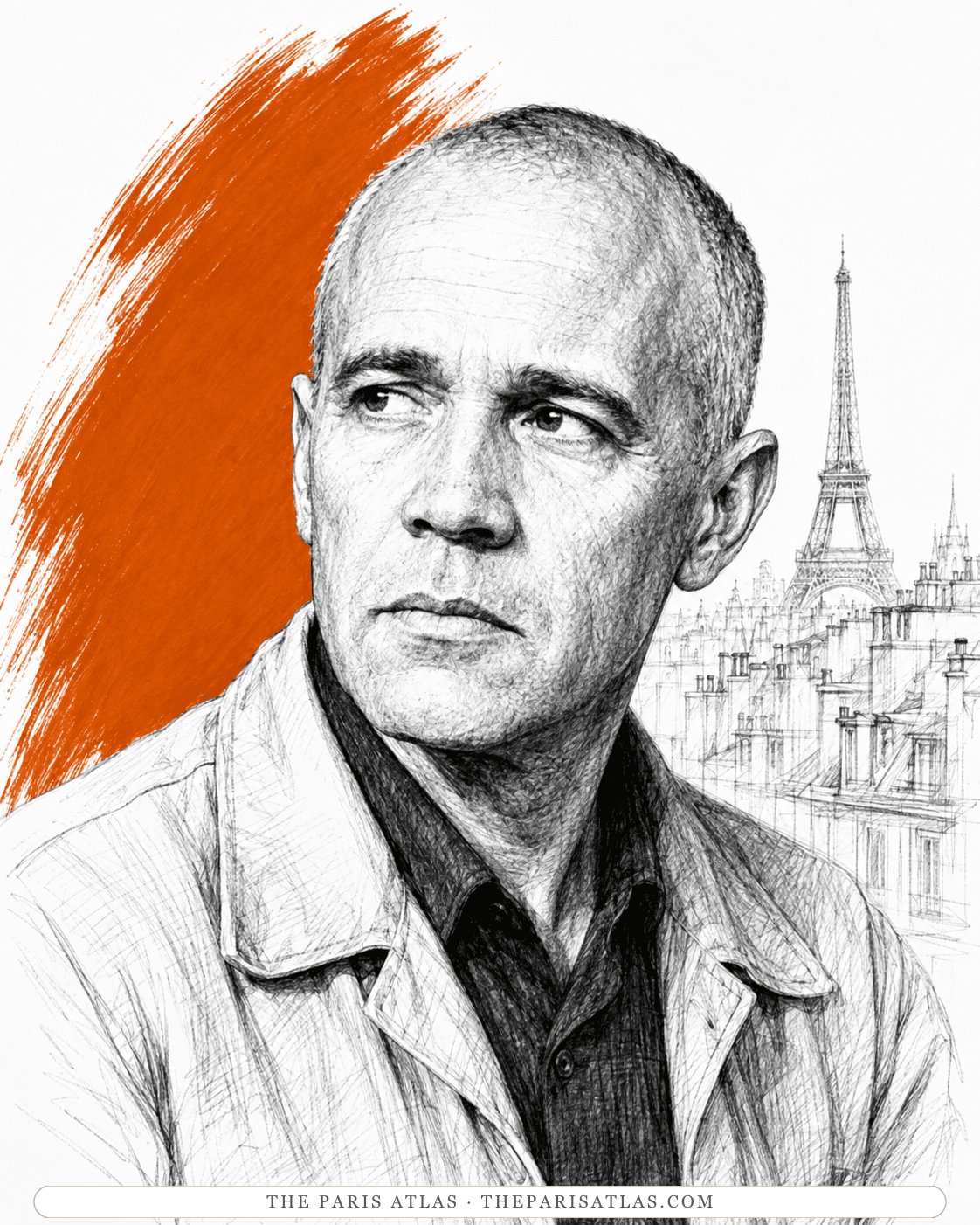
French novelist, poet, playwright, filmmaker and political writer who transformed abandonment, imprisonment, homosexuality, crime and revolt into lyrical prose and a theater of masks, ritual and unstable identities.
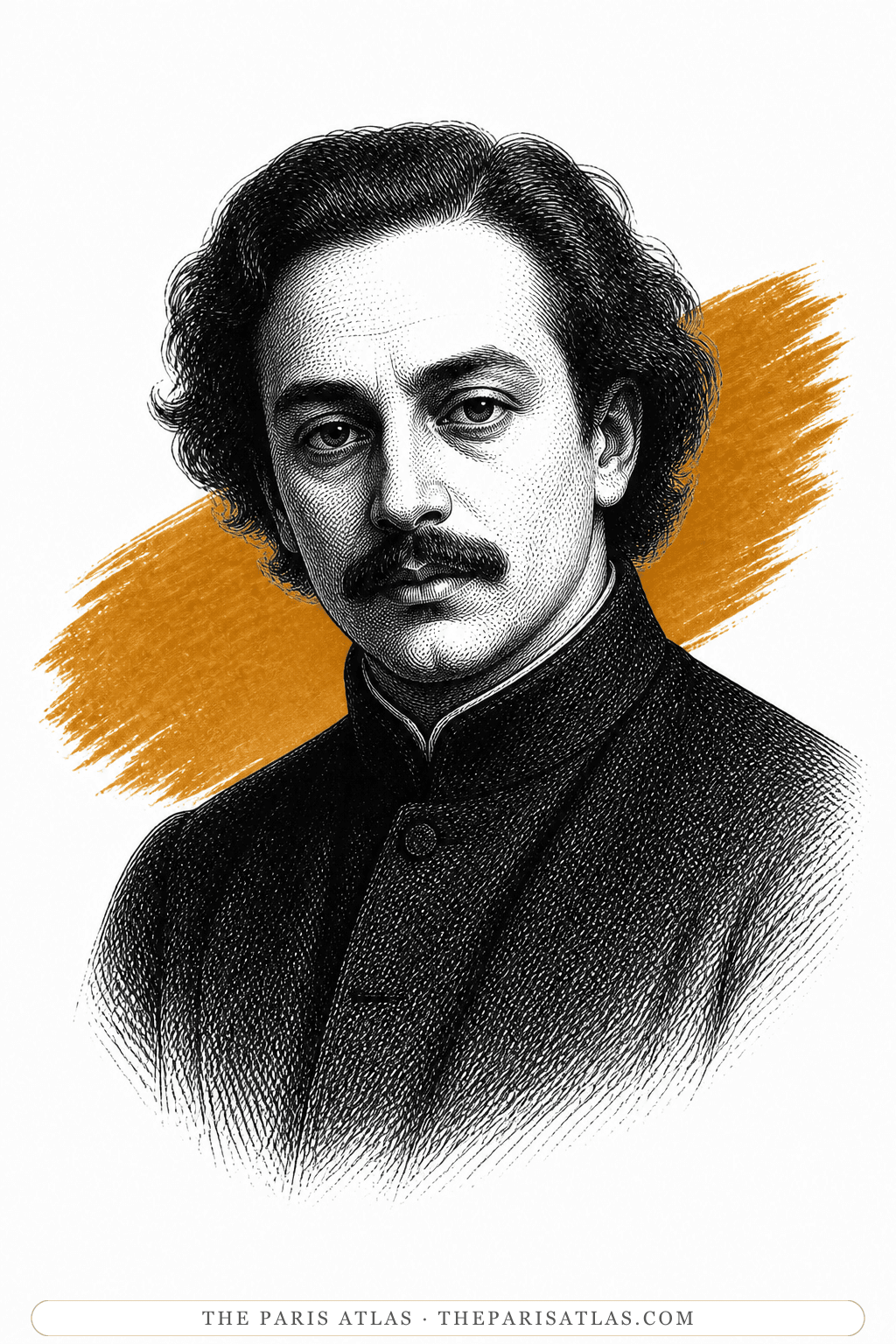
Lebanese-American poet and painter who wrote The Prophet, one of the best-selling books of the twentieth century, and who spent 1908 to 1911 in Europe — mostly Paris — learning to paint on the money of a Boston schoolmistress. He is two writers at once: a gentle sage in English, and in Arabic a founding modernist who broke classical verse open.
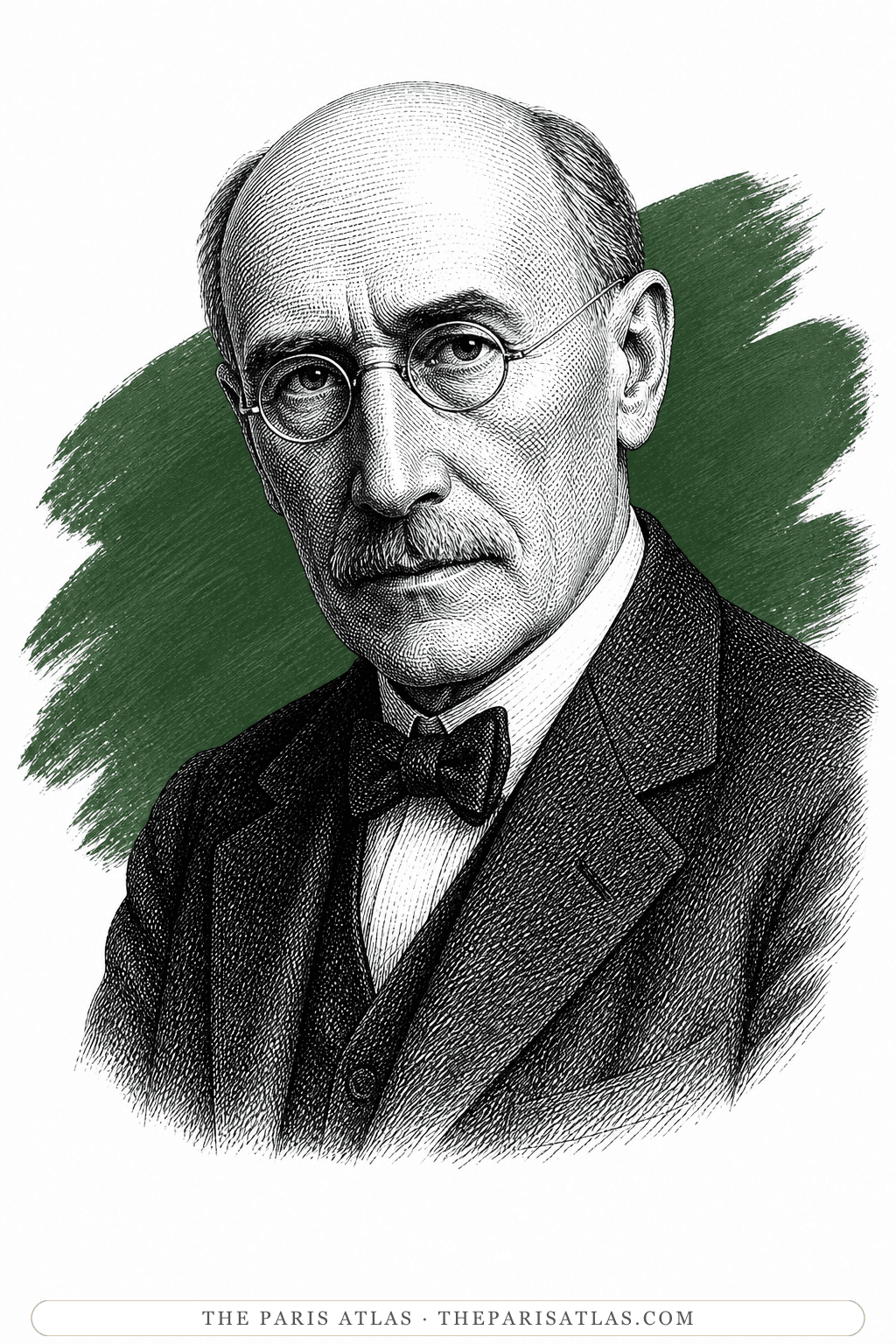
French novelist and essayist, Nobel laureate 1947, co-founder of the Nouvelle Revue Française and one of the most influential French writers of the first half of the twentieth century. Camus regarded him as the French moralist whose responsibility-of-the-writer position his own 1957 Nobel lecture deliberately echoed.
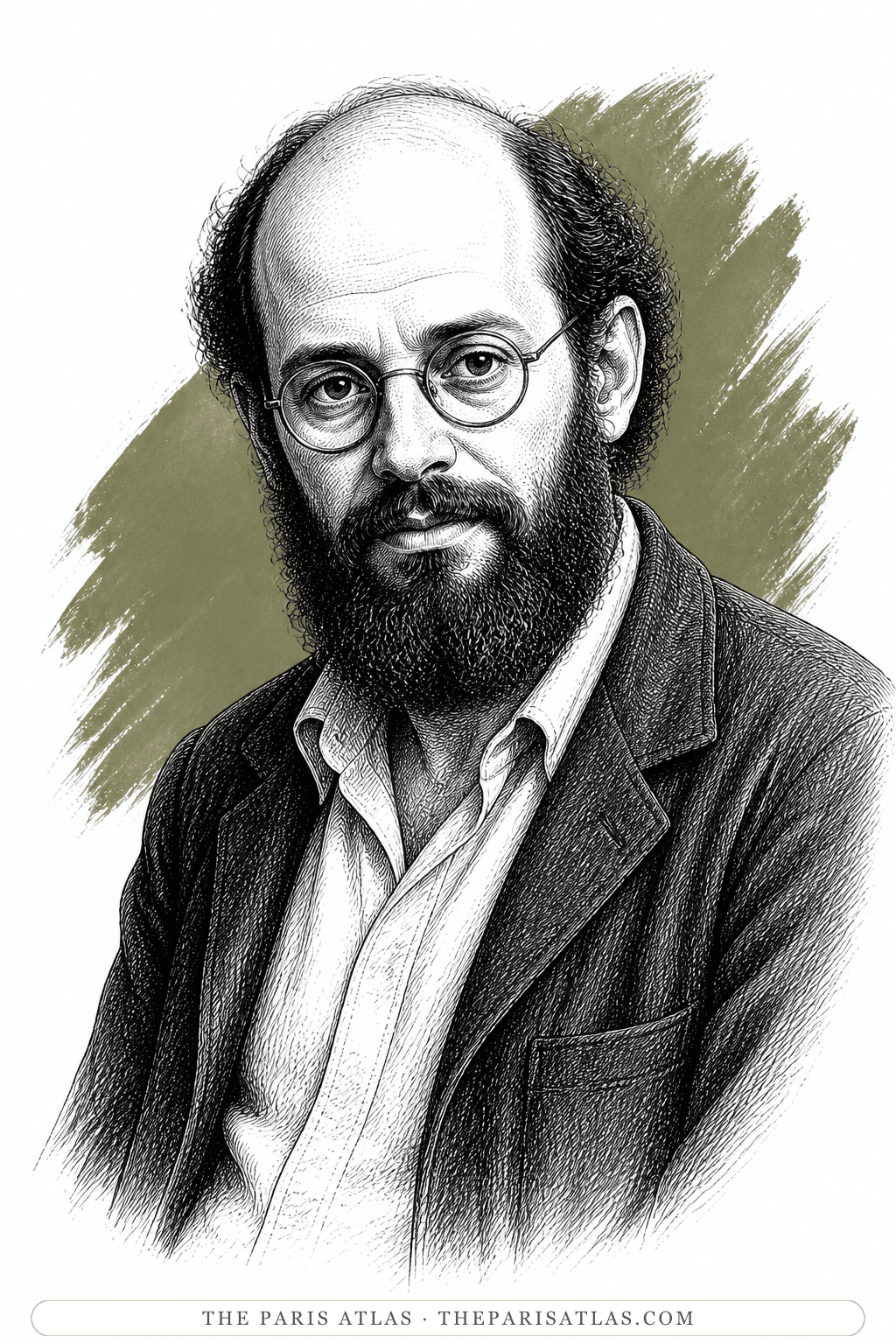
American poet whose long poem Howl and its 1957 obscenity trial made him a public figure, and who wrote Kaddish, his elegy for his mother, at the Beat Hotel in Paris.
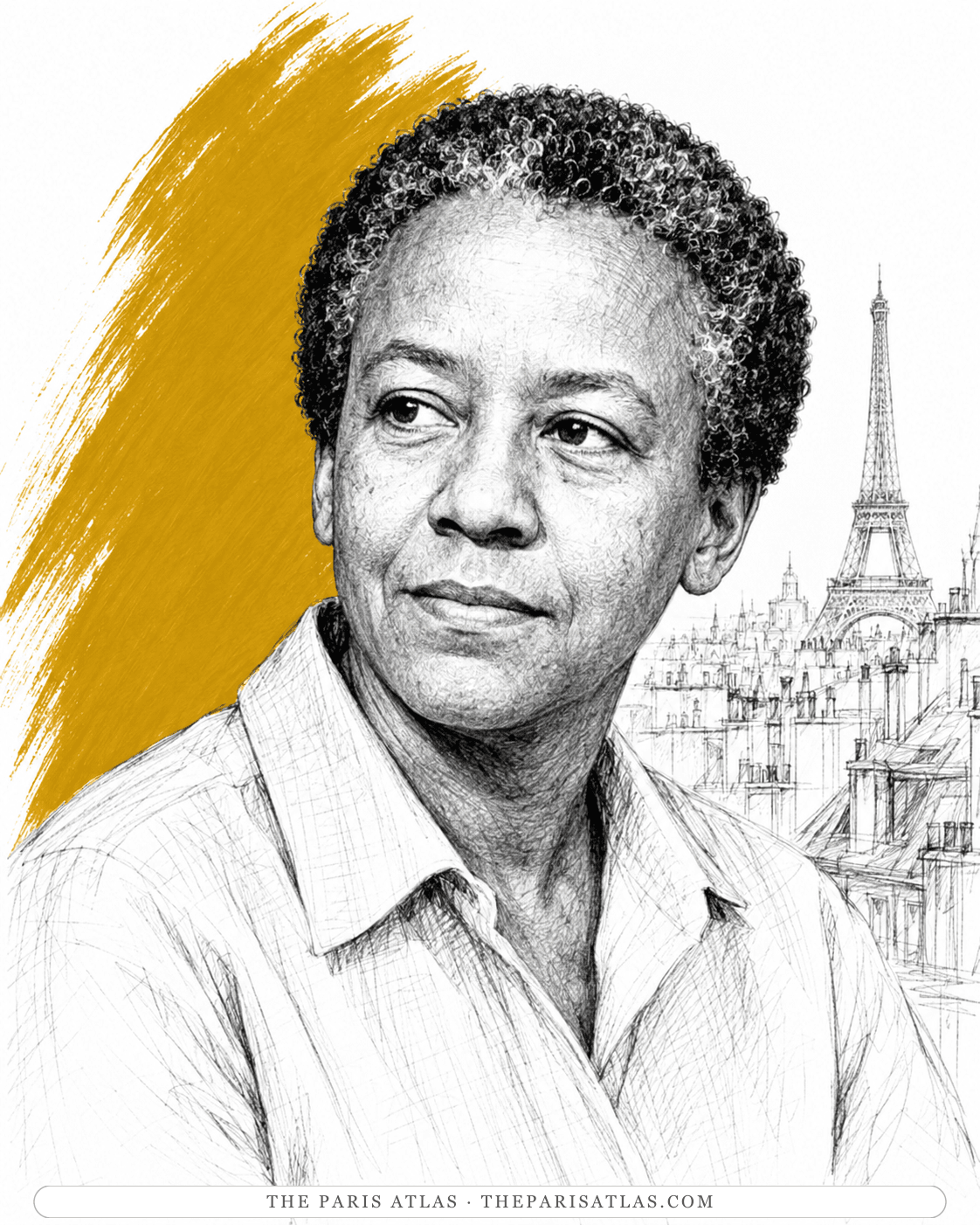
American poet who taped a two-part televised conversation with James Baldwin in London in 1971, published as A Dialogue.
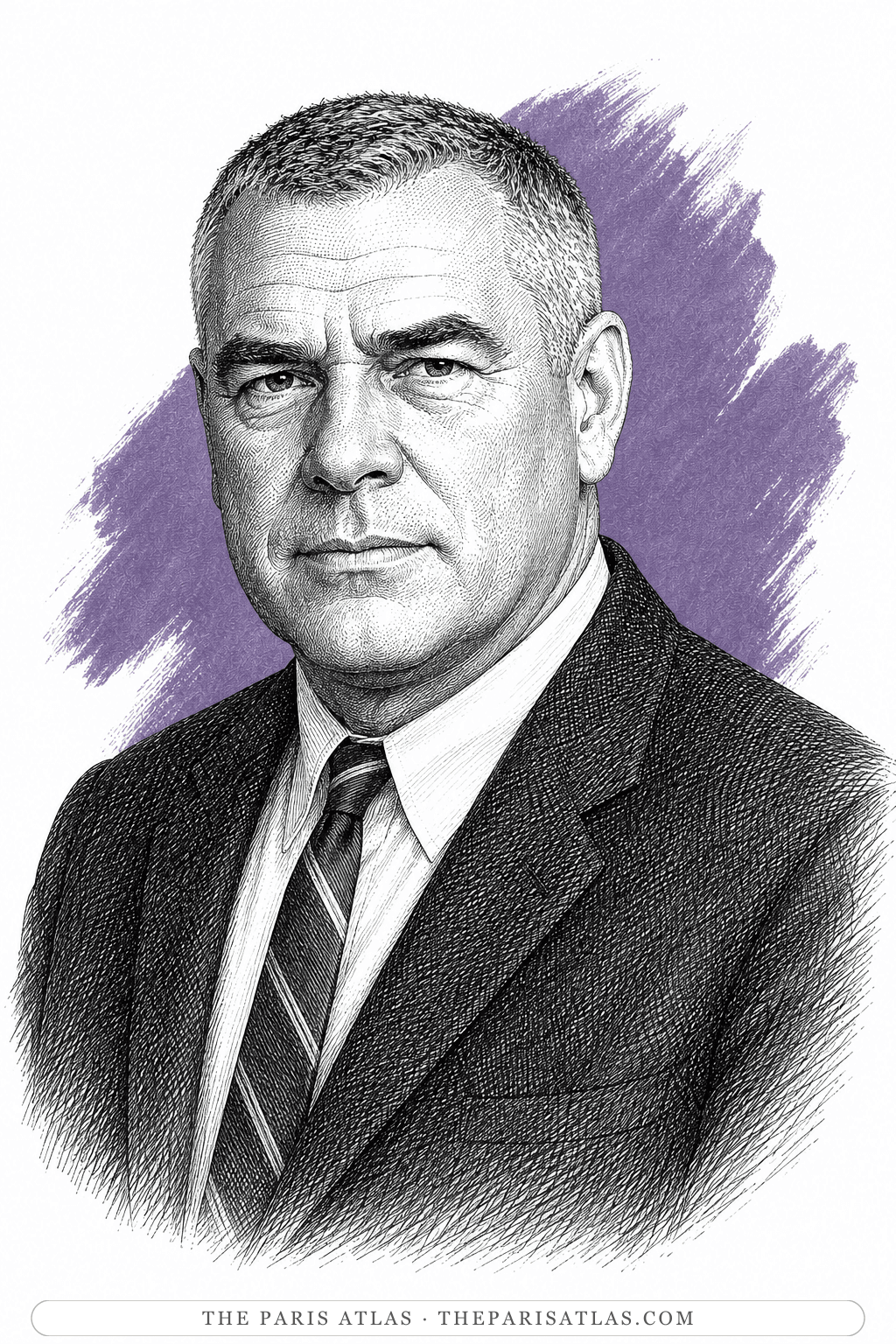
American literary critic whose sustained study of Henry Miller developed into both The Mind and Art of Henry Miller and Writer & Critic.
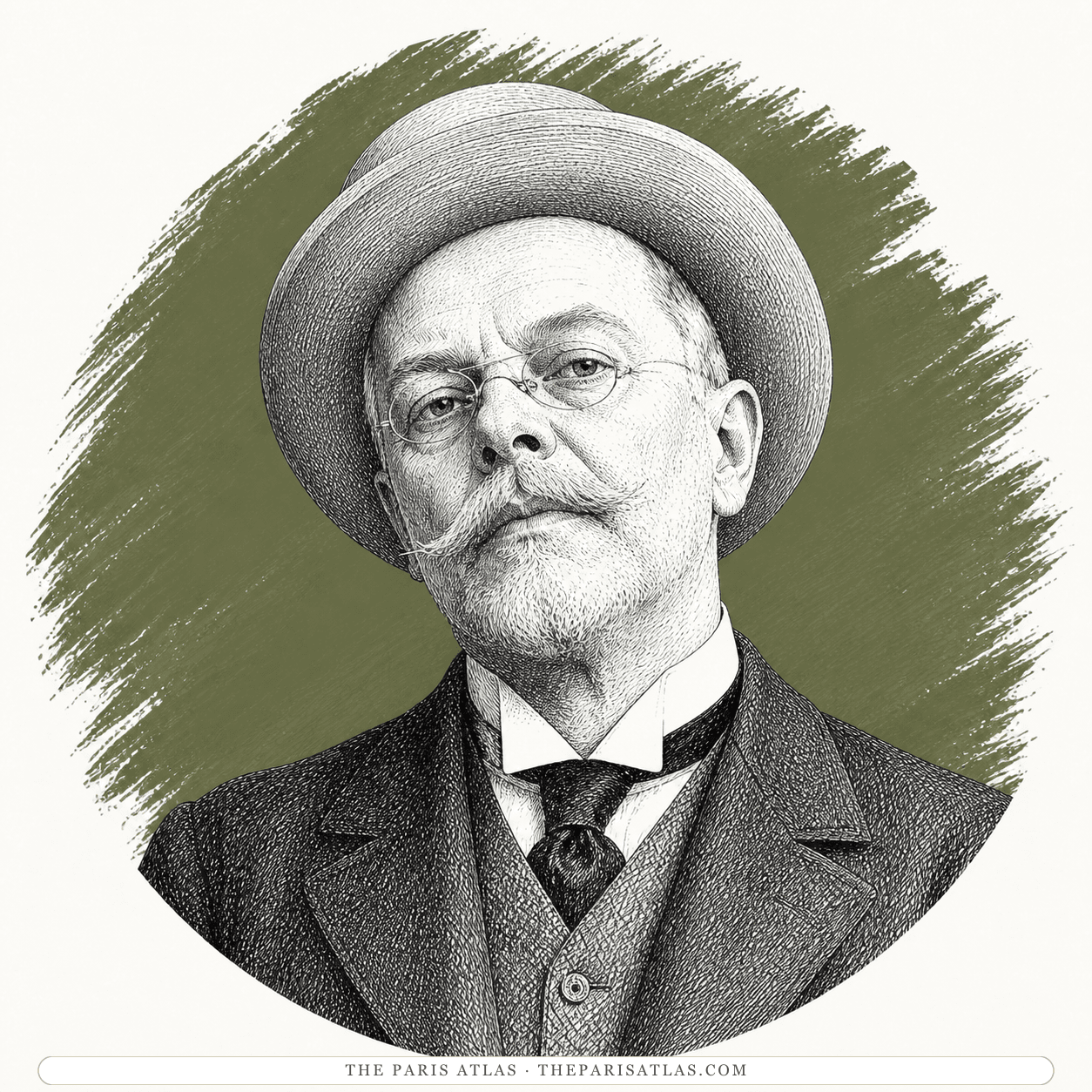
French critic and novelist who helped found the Mercure de France, was disfigured by lupus at thirty-three and withdrew from public life, gave Natalie Clifford Barney the name l'Amazone, and was read as a master by Ezra Pound and T. S. Eliot.
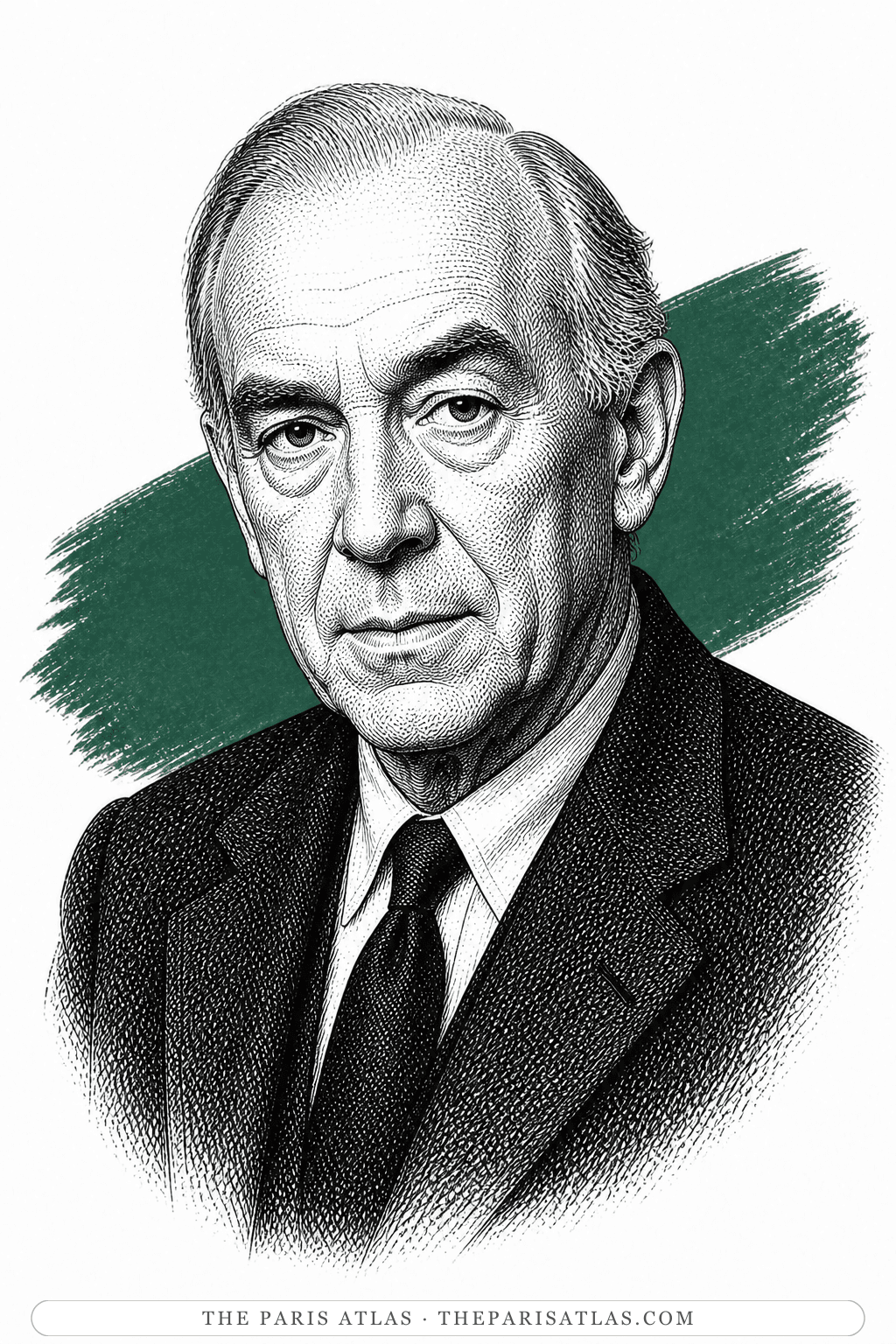
English novelist of guilt and betrayal — Brighton Rock, The Power and the Glory, The Quiet American — who wrote the screenplay for the 1949 thriller The Third Man, spent the Second World War inside British intelligence reporting to Kim Philby, the officer later exposed as a Soviet agent, and lived for twenty-four years in a fourth-floor flat above the harbour at Antibes on the French Riviera, from which in 1982 he accused the courts and police of nearby Nice of corruption.
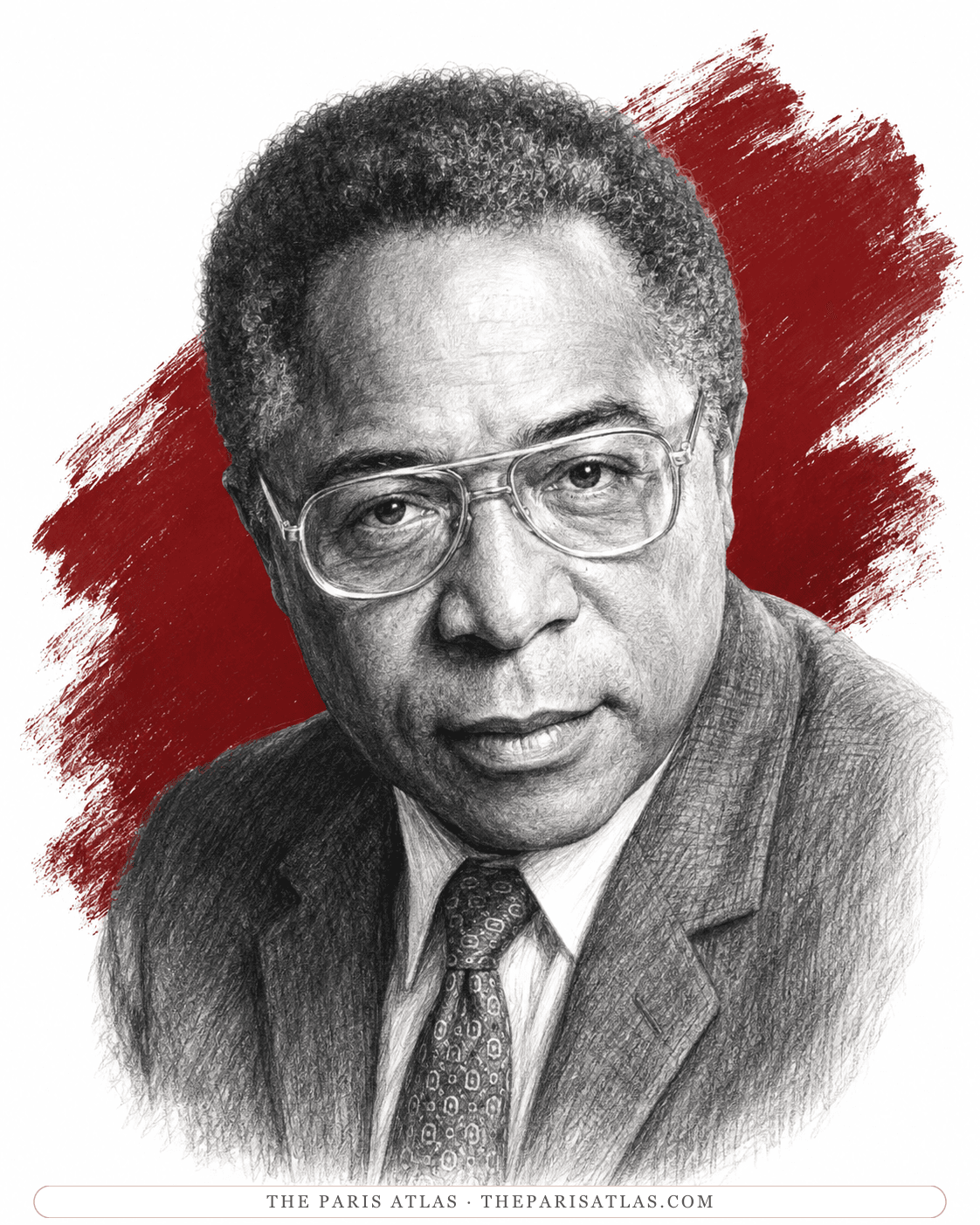
The journalist Malcolm X told his life to. Haley spent twenty years in the Coast Guard, launched Playboy's interview series in 1962, and drew The Autobiography of Malcolm X from more than fifty interviews between 1963 and 1965 — the book James Baldwin's screenplay One Day When I Was Lost adapts. Roots followed in 1976 and won a special Pulitzer Prize.
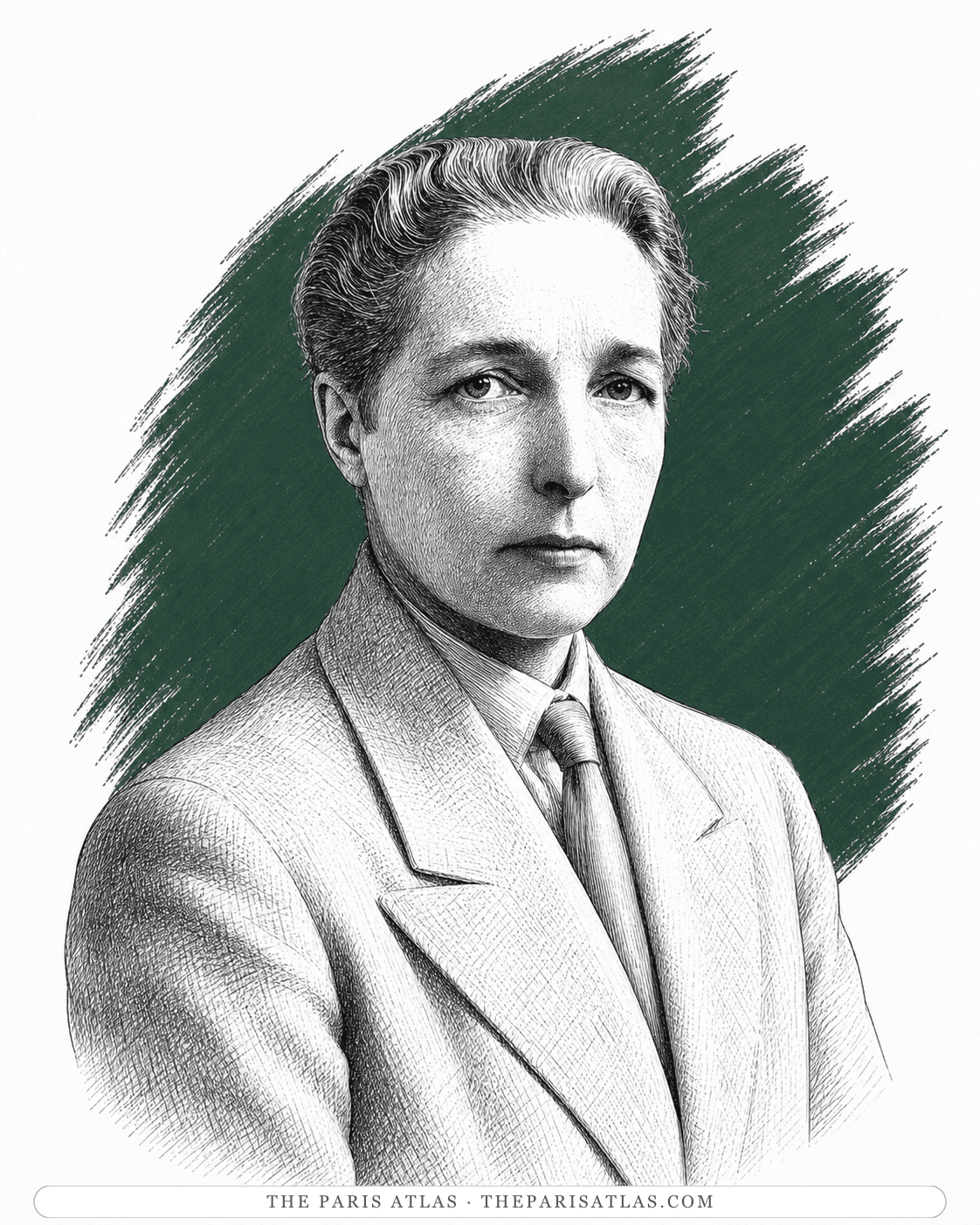
English novelist and poet, a prize-winner before she was a scandal, whose fifth novel The Well of Loneliness was ordered destroyed by a London magistrate in 1928 for writing about love between women without apologising for it.
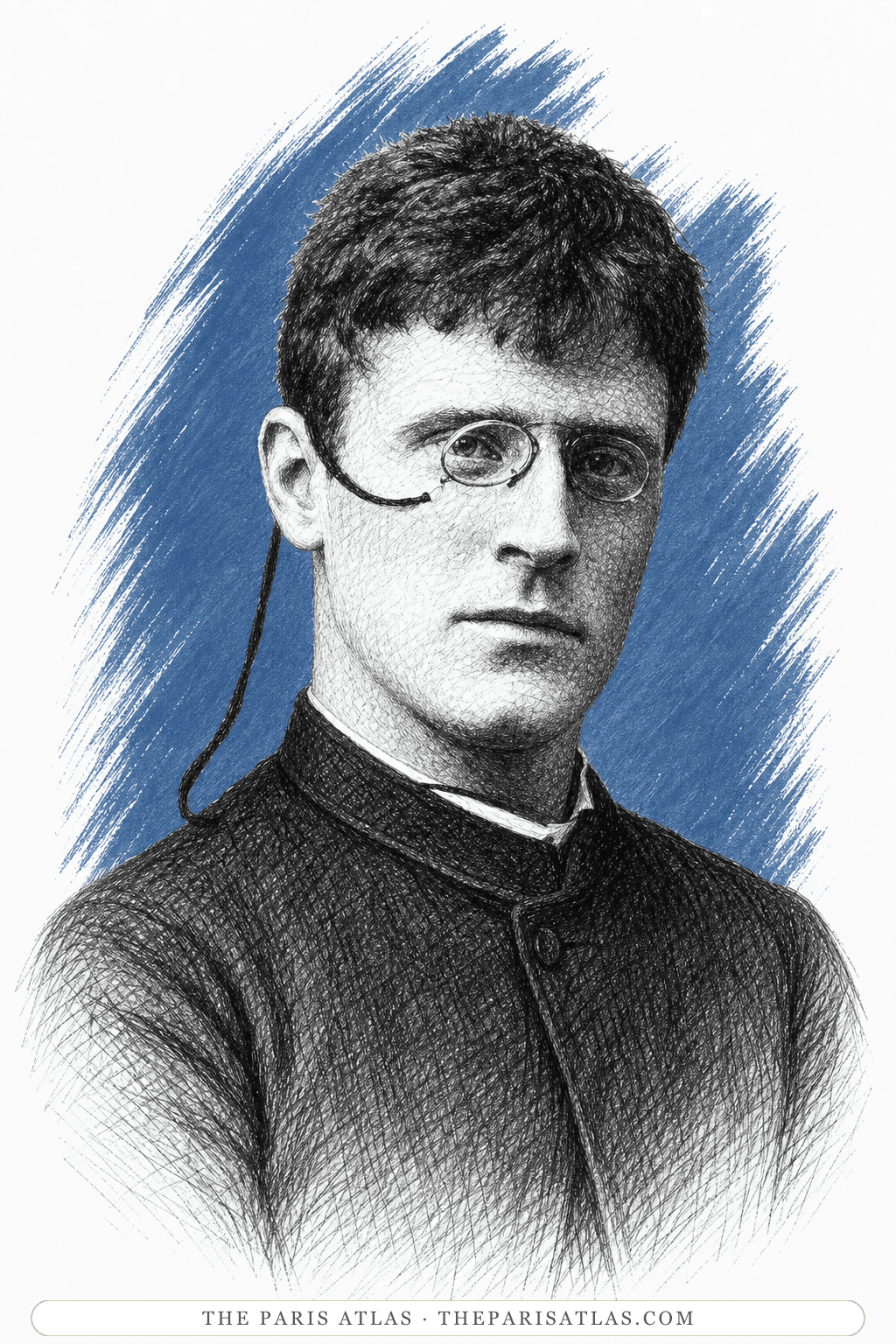
Norwegian novelist and Nobel laureate whose experiments with consciousness helped anticipate literary modernism—and whose support for Nazi Germany permanently complicated his legacy.
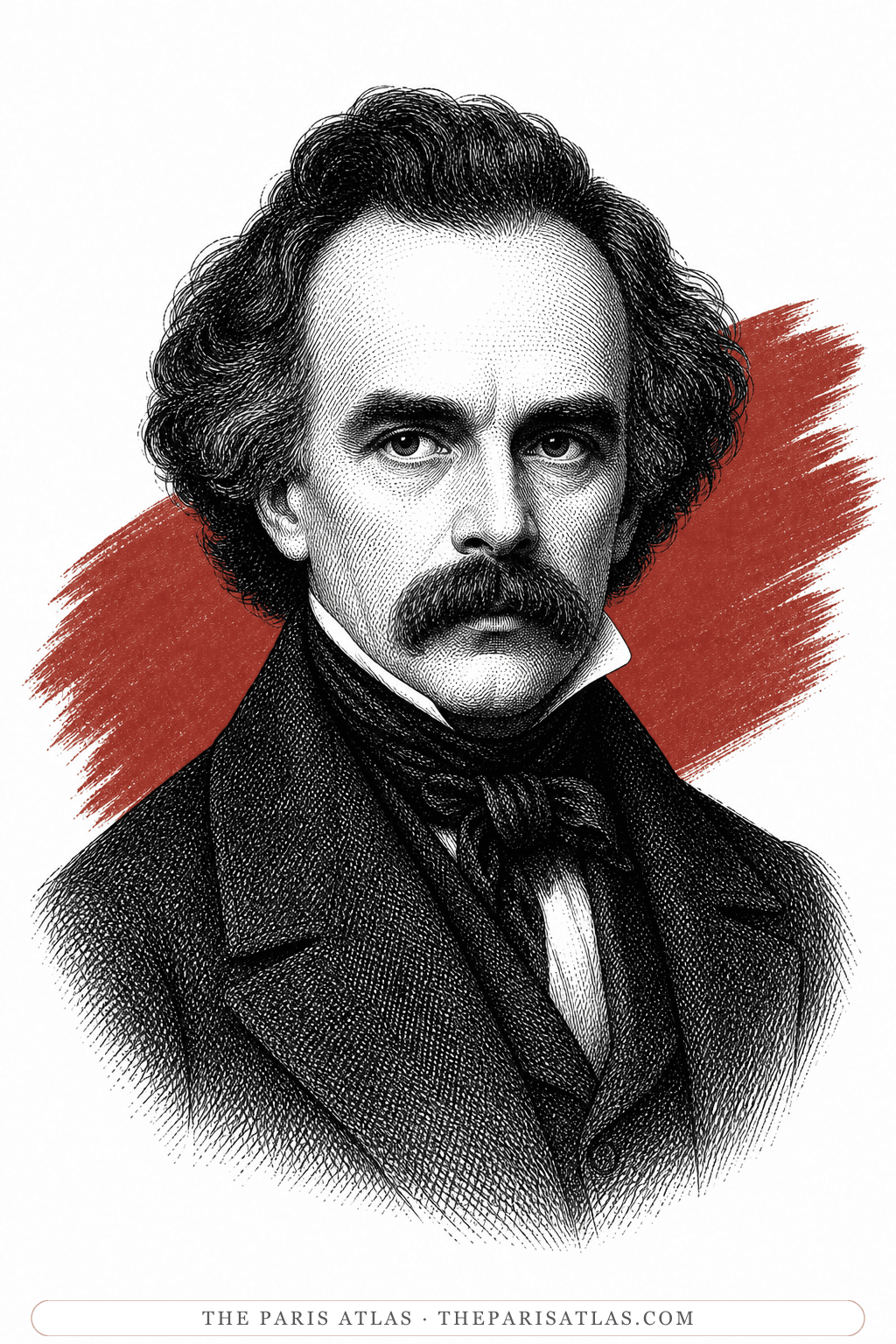
Author of The Scarlet Letter, who passed through Paris for one week in January 1858 on his way from the American consulate at Liverpool to Italy — and wrote it all down. He found the city more magnificent than London and colder than anything in America: "new, bright, magnificent, and desperately cold." He left saying he was quite tired of Paris and longed for home.
Author of The Sun Also Rises and A Moveable Feast; his pared-down style, developed in 1920s Paris, became the most imitated in American prose.
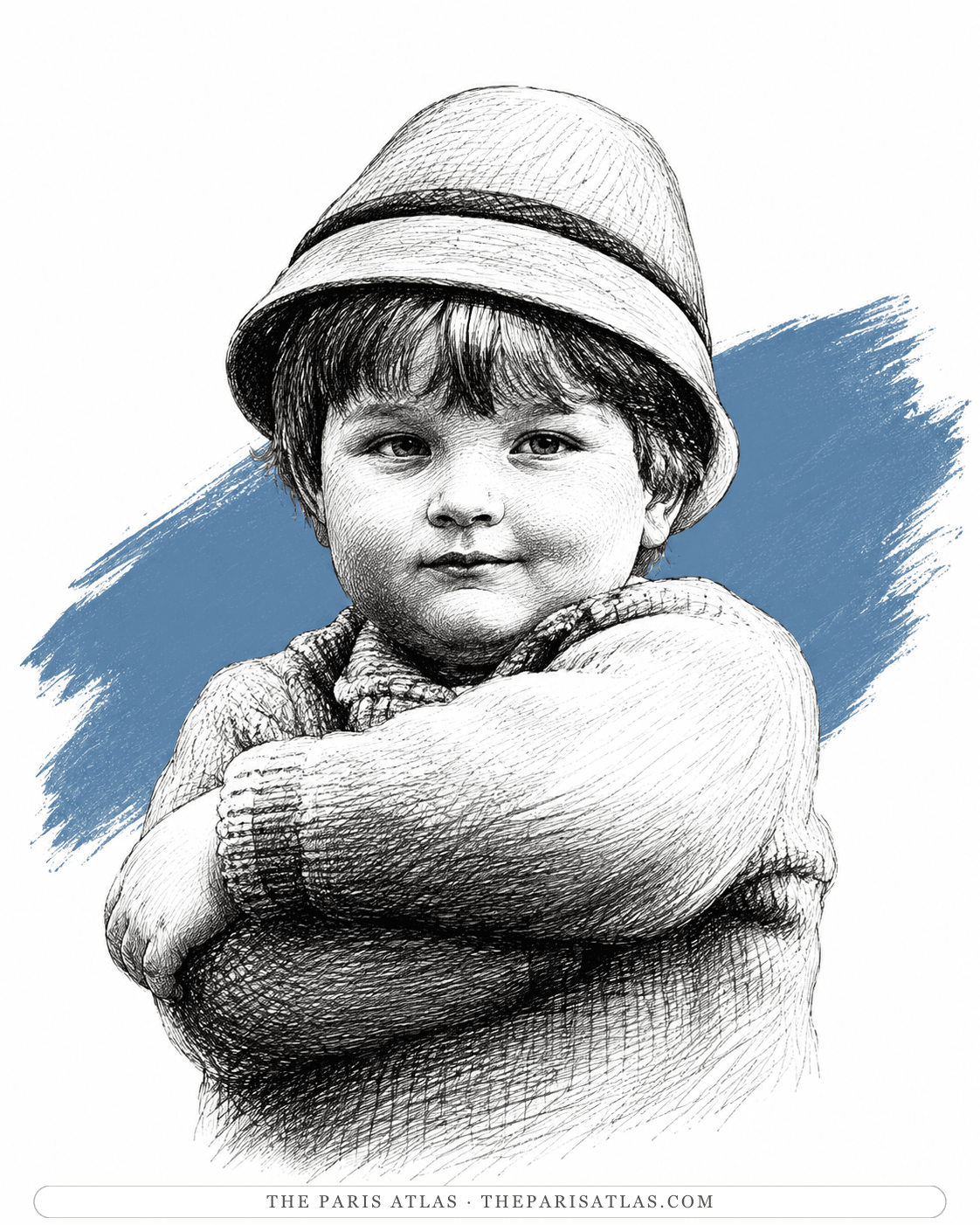
The 'Bumby' of A Moveable Feast — watched over by the cat F. Puss in Paris, and later an OSS parachutist, fly fisherman, and memoirist.
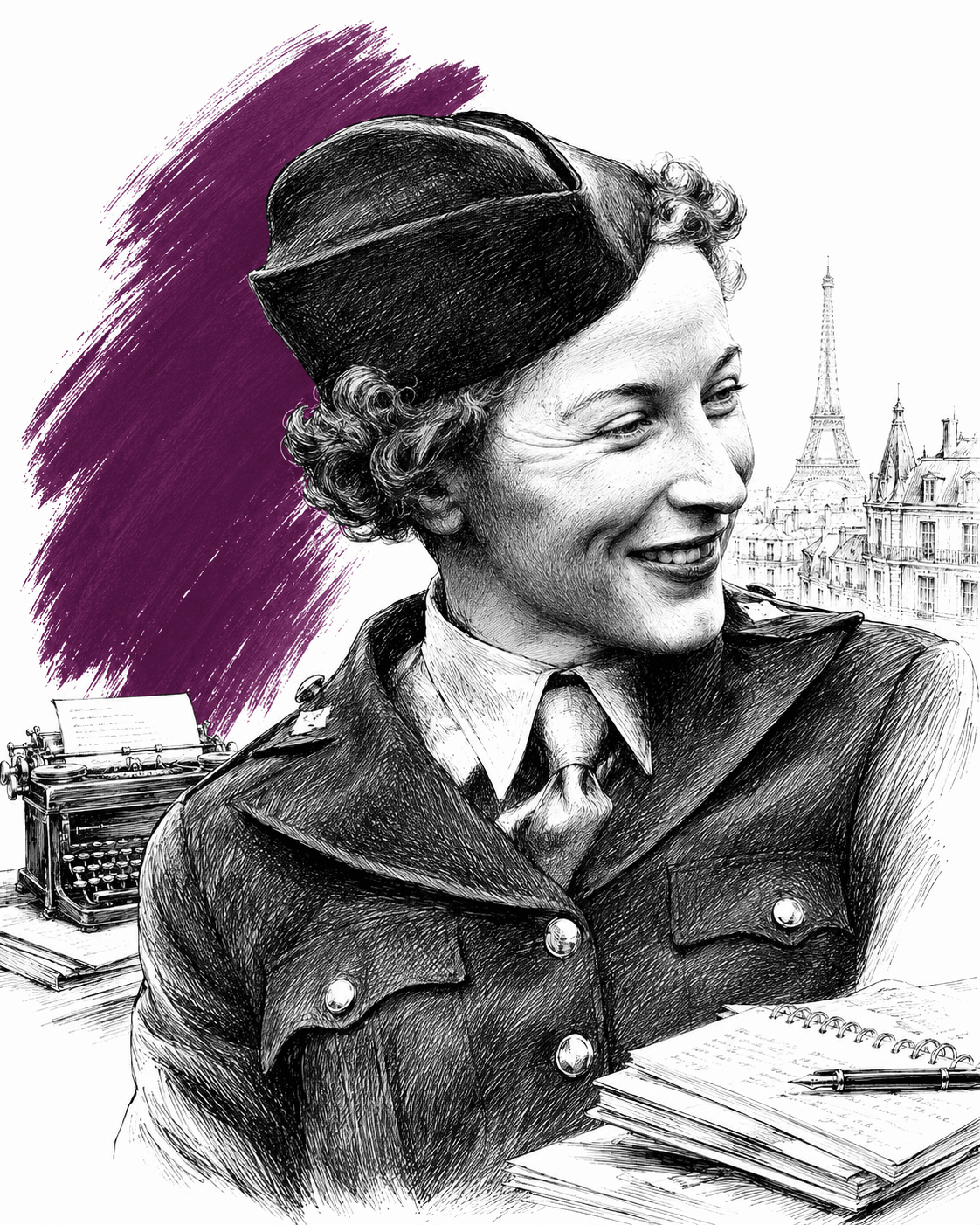
War correspondent who reported the Blitz and the liberation of Paris, then — as Ernest Hemingway's fourth wife, his typist, editor, and literary executor — shaped A Moveable Feast into print and preserved his archive.
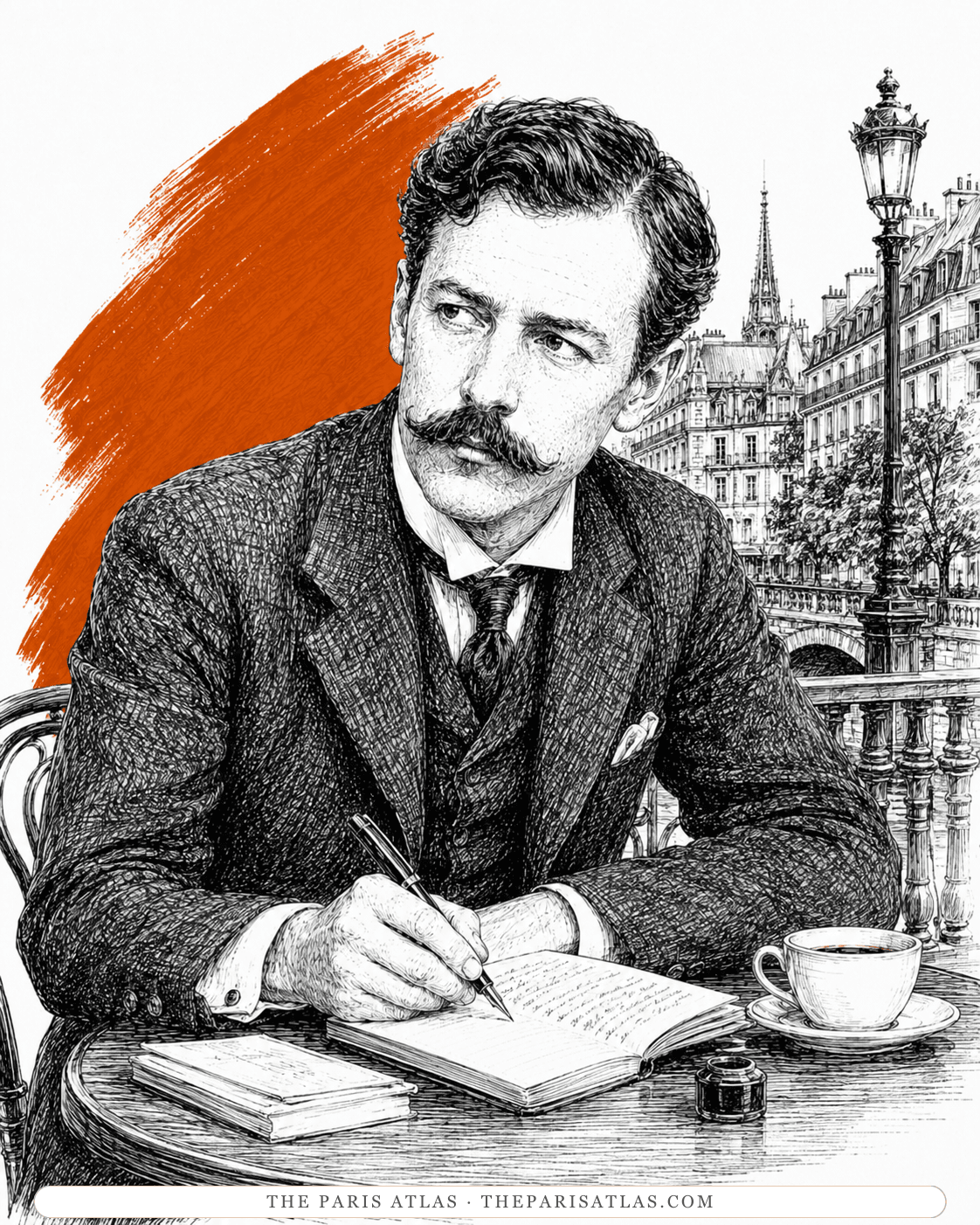
The Times's man in Paris — the journalist who knew every table in the quarter, French and Anglo-American alike, and wrote the era down while it was happening.
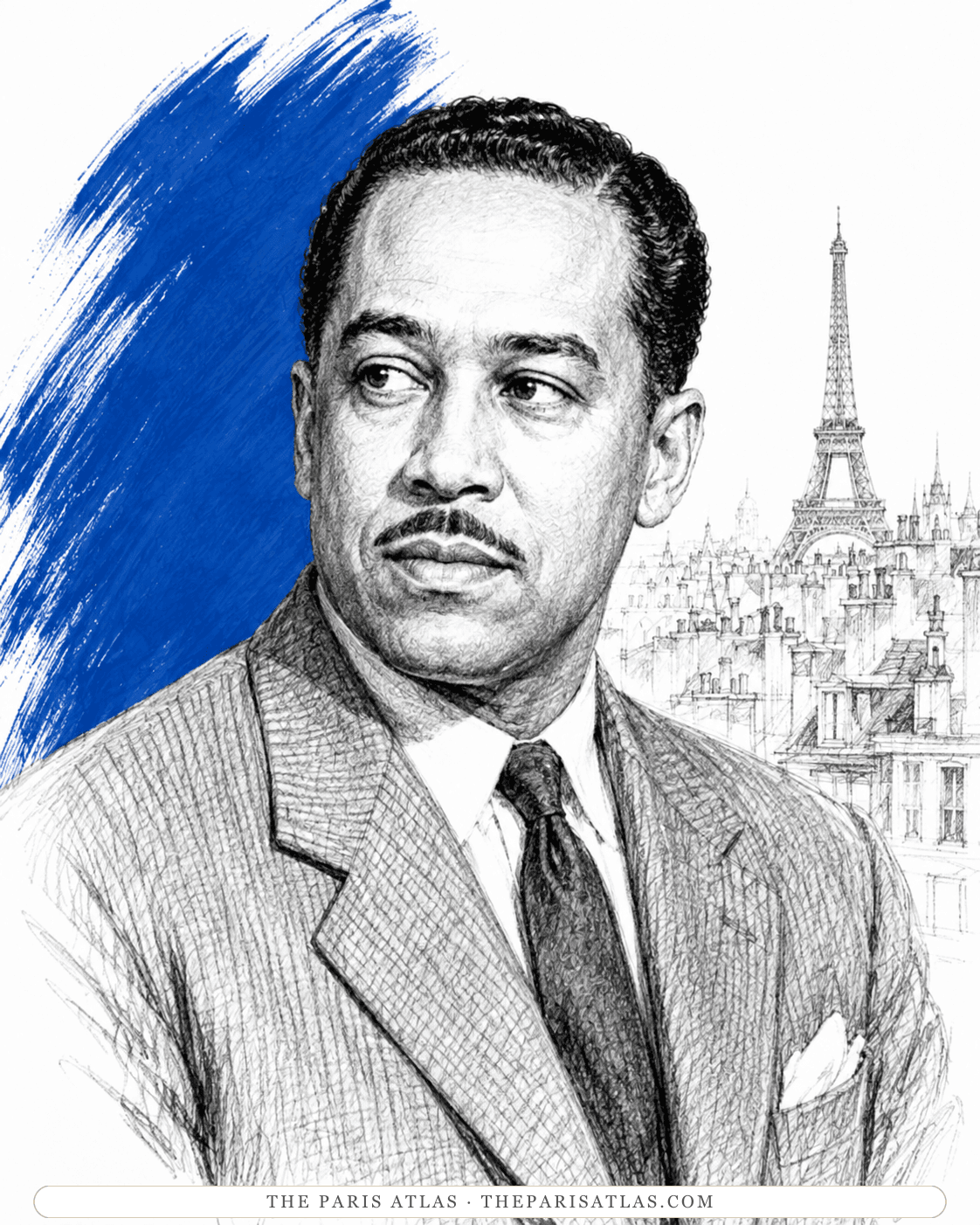
American poet at the center of the Harlem Renaissance. He spent most of 1924 in Montmartre, washing dishes at the Grand Duc nightclub, and told the story in his memoir The Big Sea.
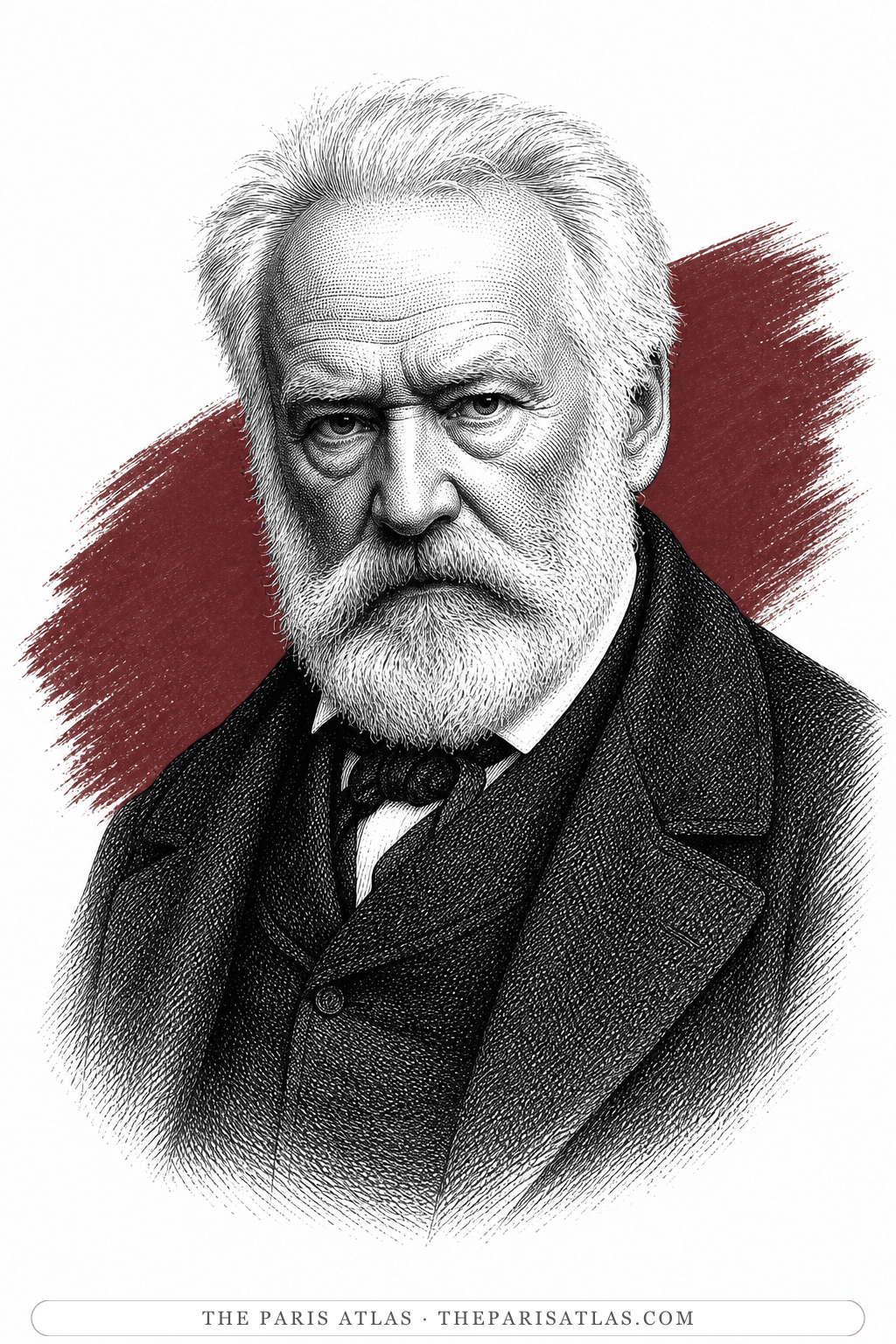
Poet, novelist and playwright who spent sixteen years in an apartment on the Place des Vosges that is now his museum, wrote a novel about Notre-Dame that shamed France into repairing the cathedral, spent nineteen years in exile for opposing the emperor Napoleon III, and was buried in the Panthéon — the Paris monument where France buries its most honoured dead — in 1885 after a funeral that brought roughly two million people into the streets of Paris.
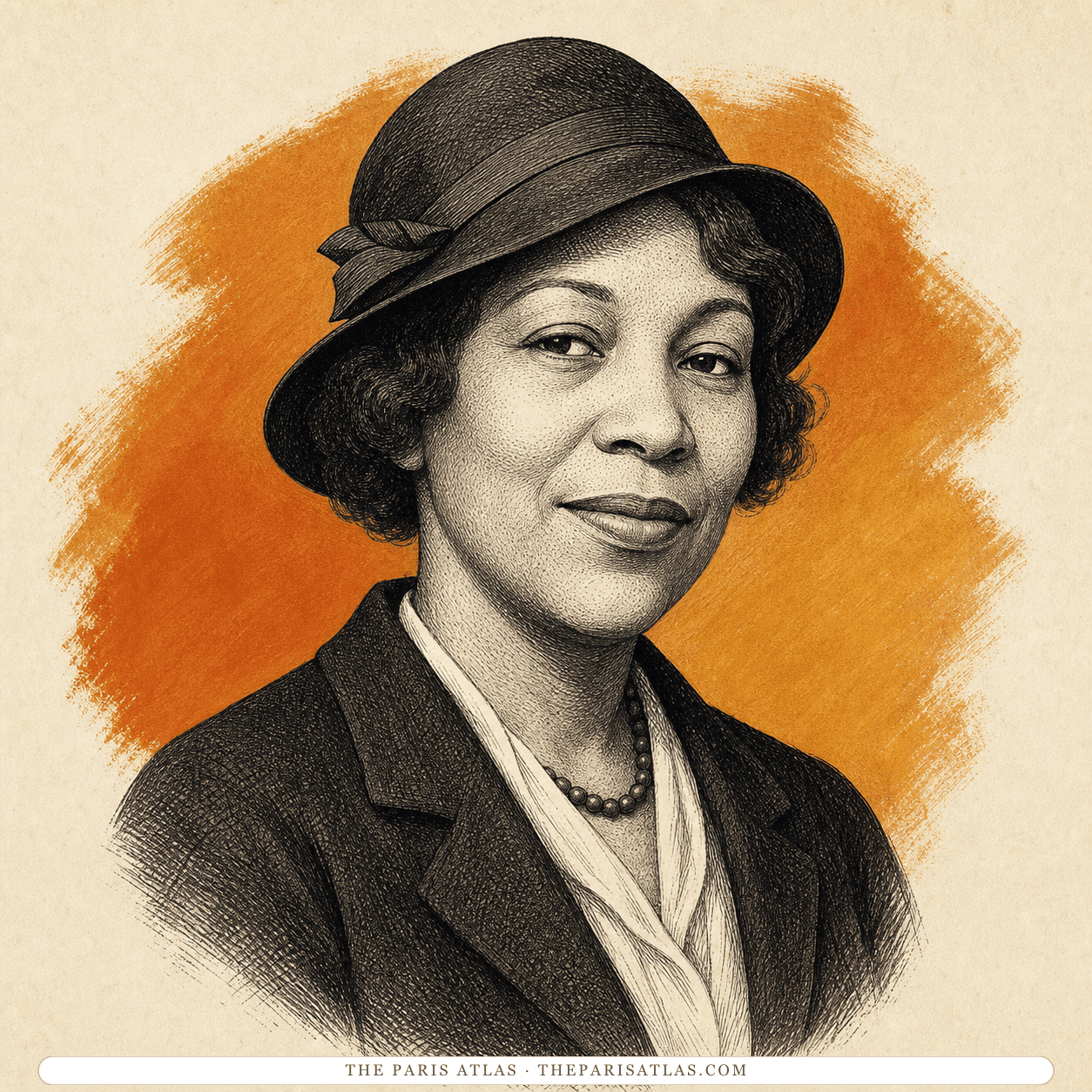
American novelist, folklorist and anthropologist who grew up in self-governing Black Eatonville, became an electric presence in the Harlem Renaissance, and wrote Their Eyes Were Watching God.
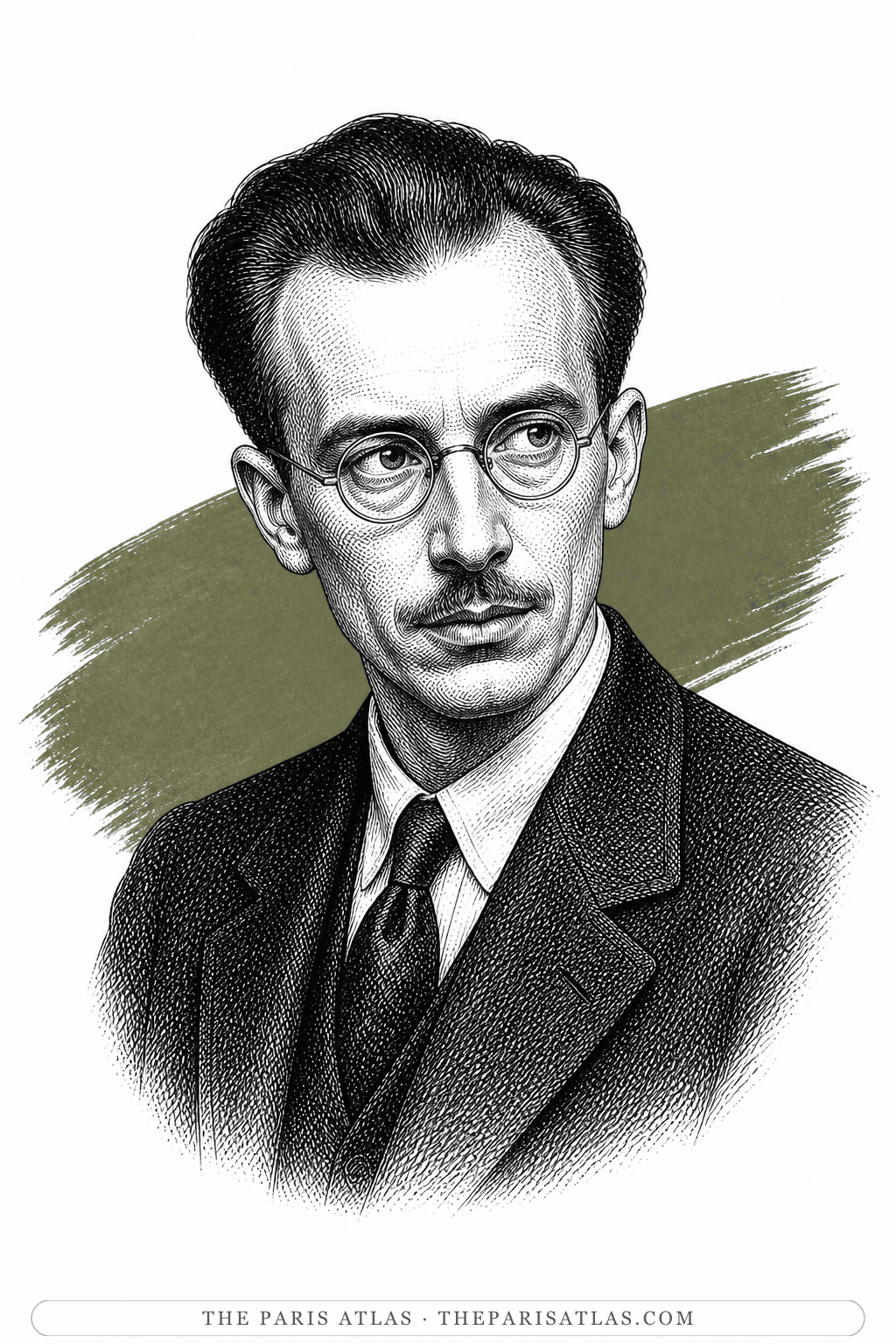
English novelist of Brave New World, which he wrote not in Paris but on the Mediterranean coast at Sanary-sur-Mer. His French years ran from a rented house at Suresnes on the western edge of Paris, where he pushed the dying D. H. Lawrence towards the city's presses, to seven years on the Riviera; he then left for California, wrote the best-known modern account of taking mescaline, the hallucinogenic drug made from the peyote cactus, and died on the day President Kennedy was shot.
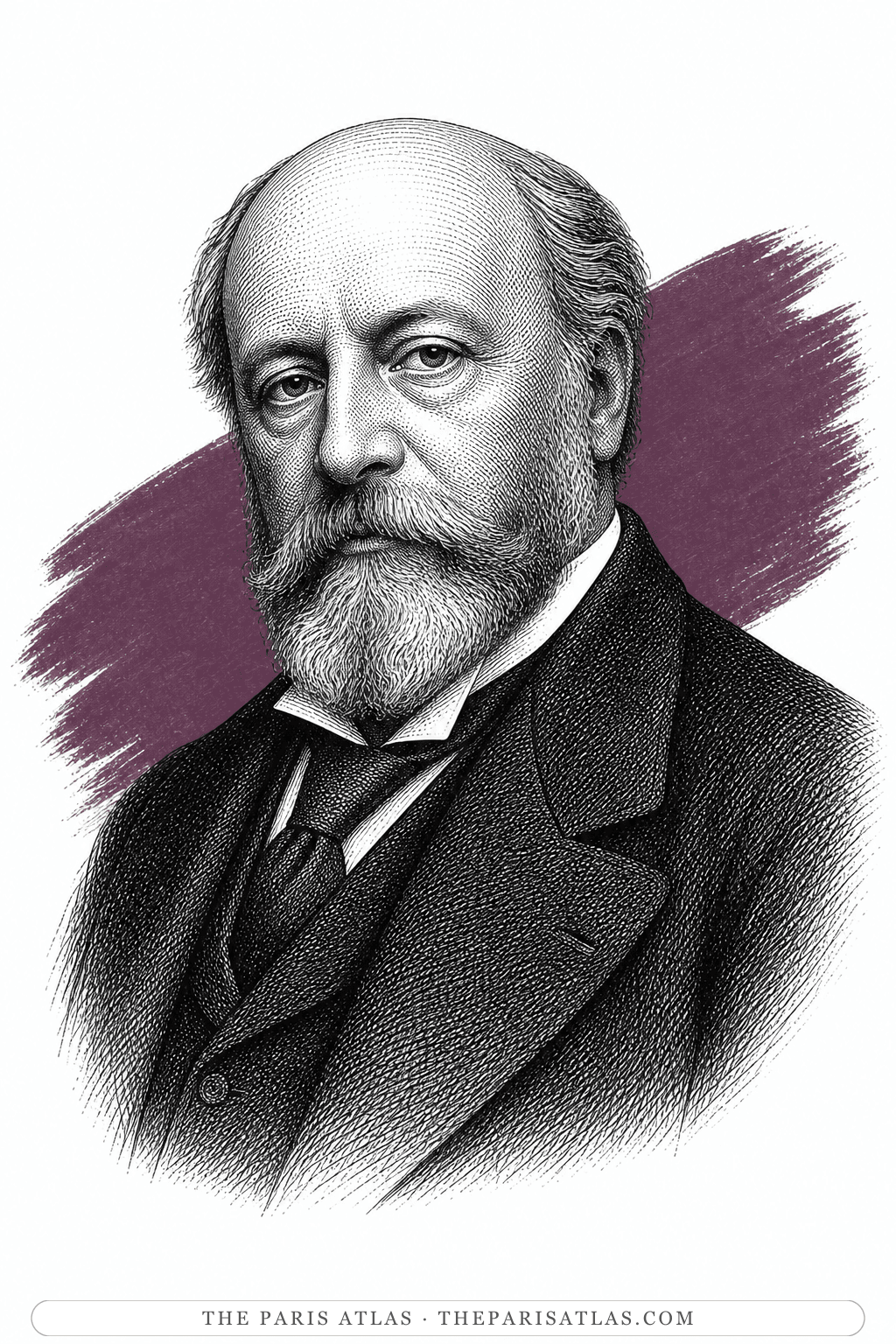
American novelist who moved to Paris in the autumn of 1875 meaning to stay for life, took rooms at 29 rue du Luxembourg, wrote The American there, got inside the Sunday circle around the French novelist Gustave Flaubert — and left for London in December 1876 having decided that a French literary world this closed would never let an American in.
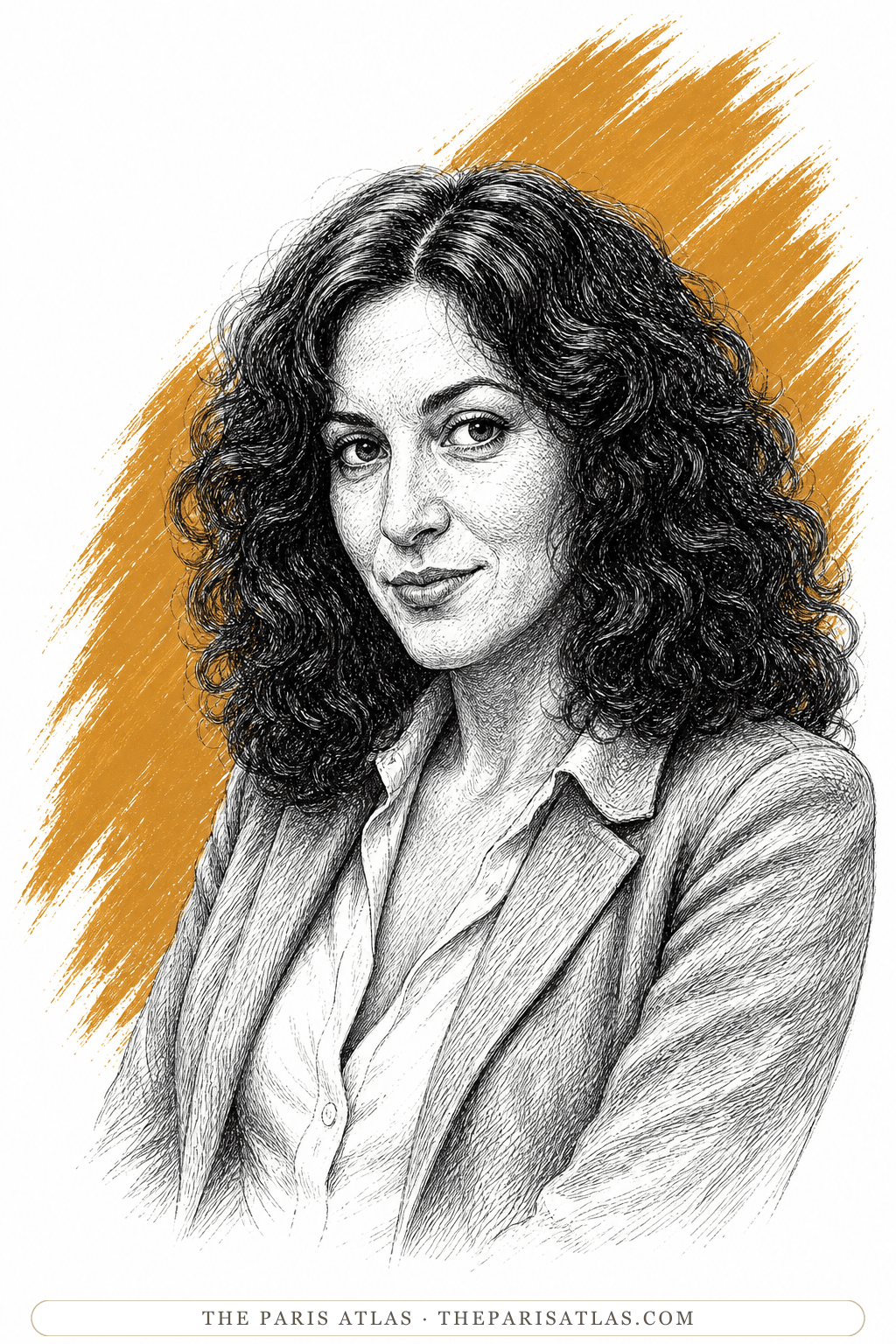
American novelist, poet, and memoirist whose candid writing about women’s desire and freedom made Fear of Flying a cultural landmark.
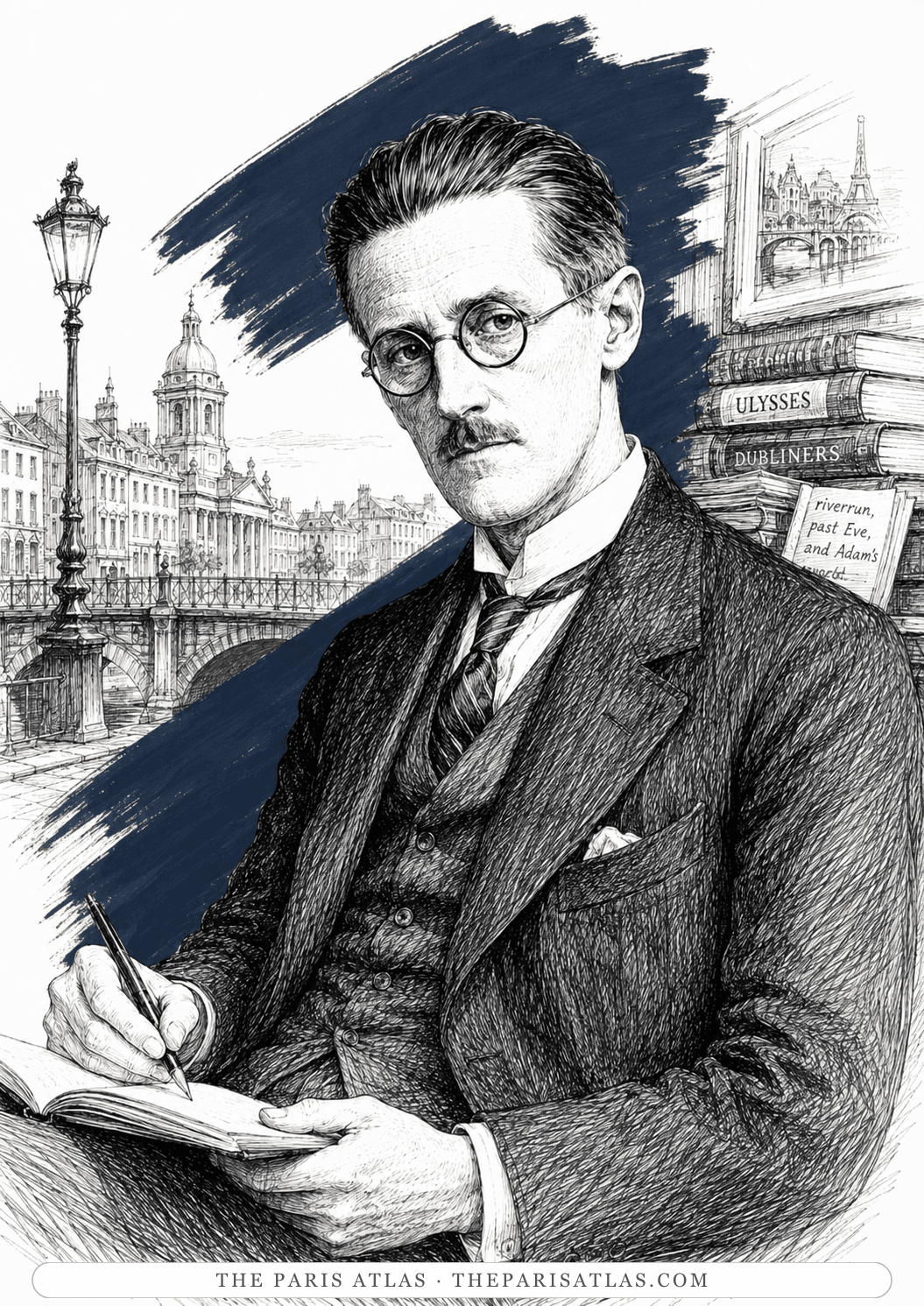
Dublin's great exile — he left Ireland at twenty-two, carried the city with him through Trieste, Zurich, and Paris, and rebuilt it entire in Ulysses.
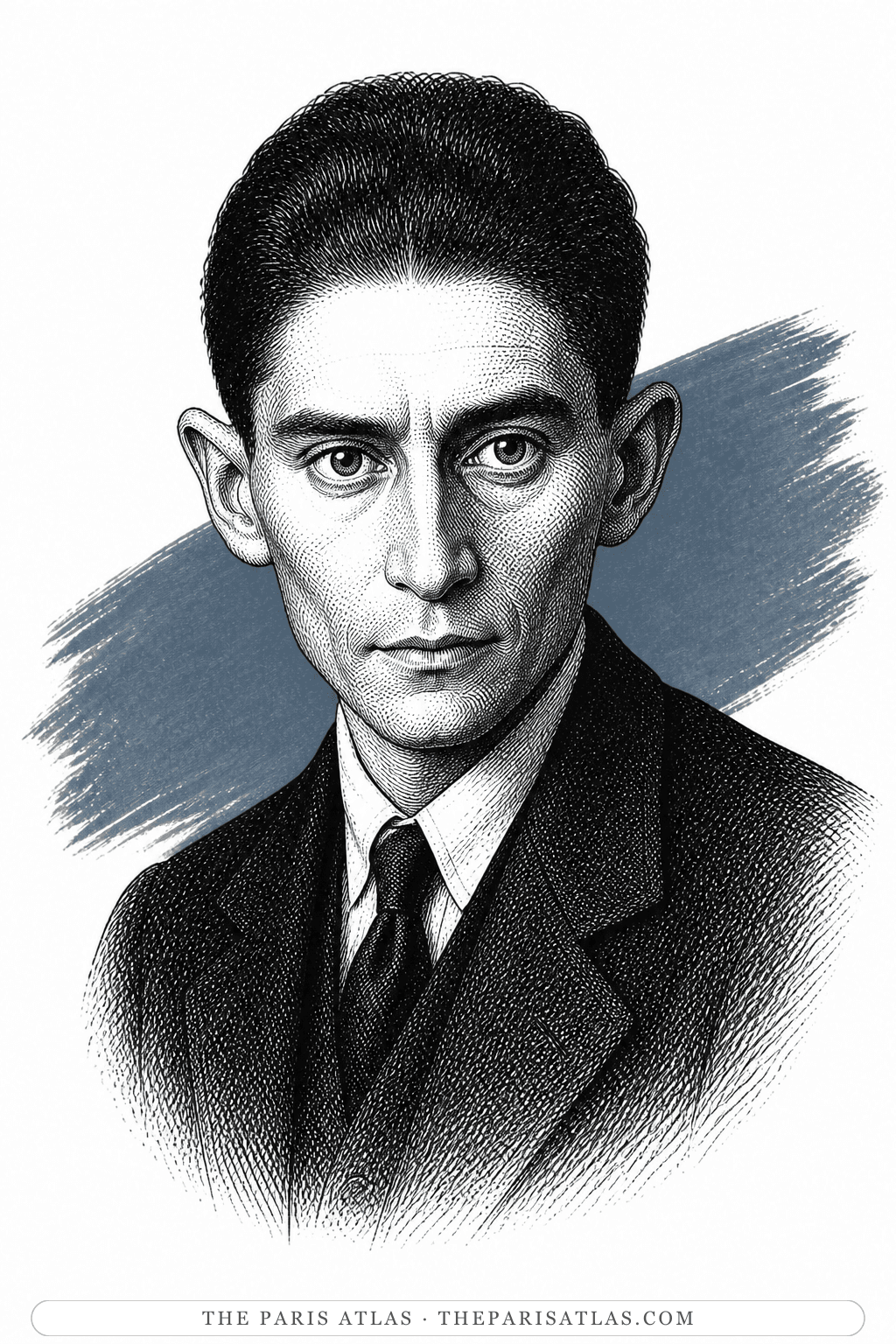
Prague novelist who worked fourteen years as an accident-insurance official, left three novels unfinished, told his friend Max Brod to burn everything, and was disobeyed. His Paris is a holiday, not an exile: he came twice as a tourist with Brod between 1909 and 1912, and never lived there.
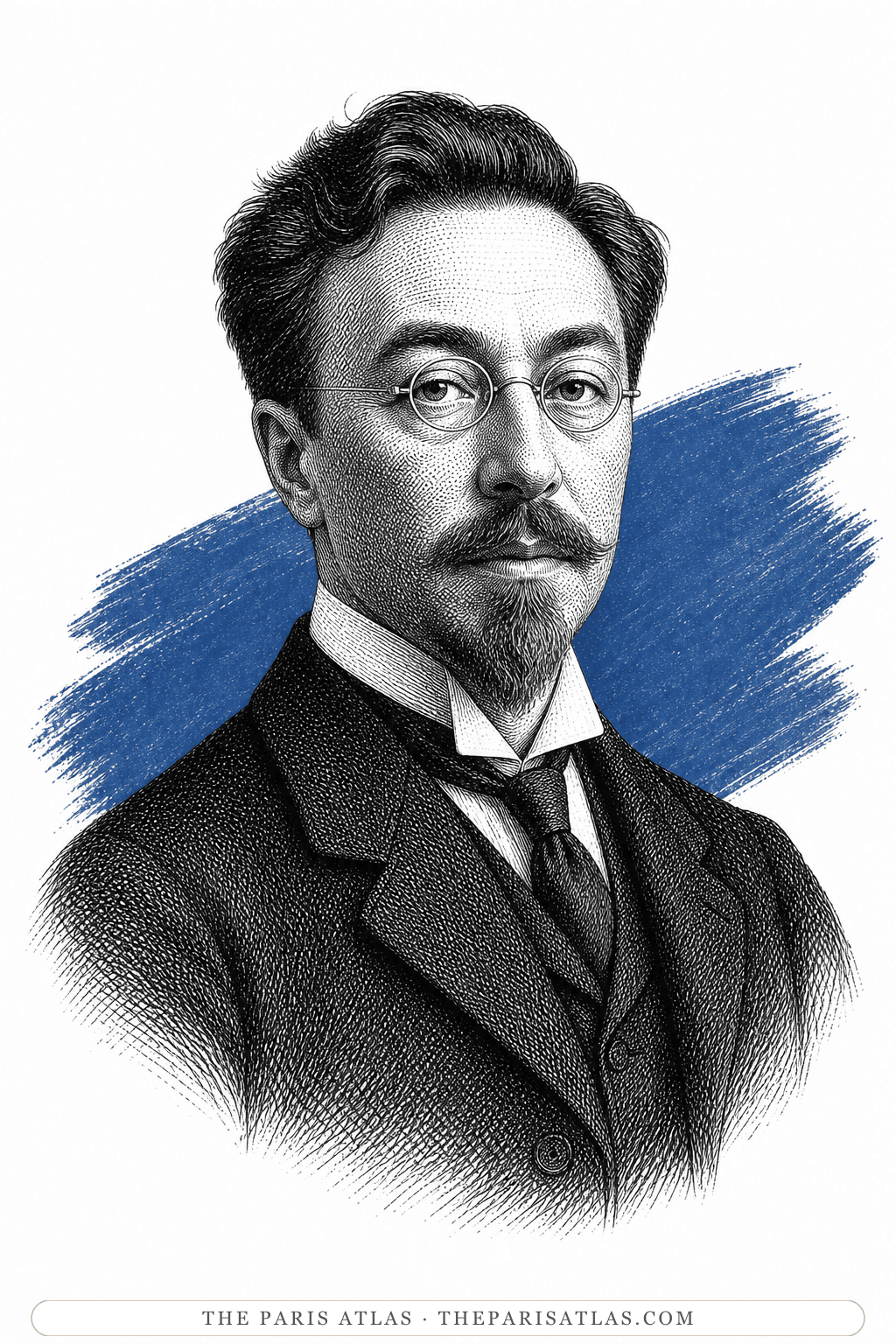
Russian painter, celebrated as a pioneer of abstract art, who gave up a Moscow law career at thirty to study painting in Munich, co-founded the Blue Rider group in 1911, taught for eleven years at the Bauhaus, the German design school — and spent his last eleven years in a flat in Neuilly-sur-Seine that the French artist Marcel Duchamp had pointed him towards, painting soft cell-like forms nothing like the hard geometry Germany knew him for.

The Danish-born actor at the center of Jean-Luc Godard's 1960s features — the French New Wave's defining female lead, whose performances carry their own authorship.
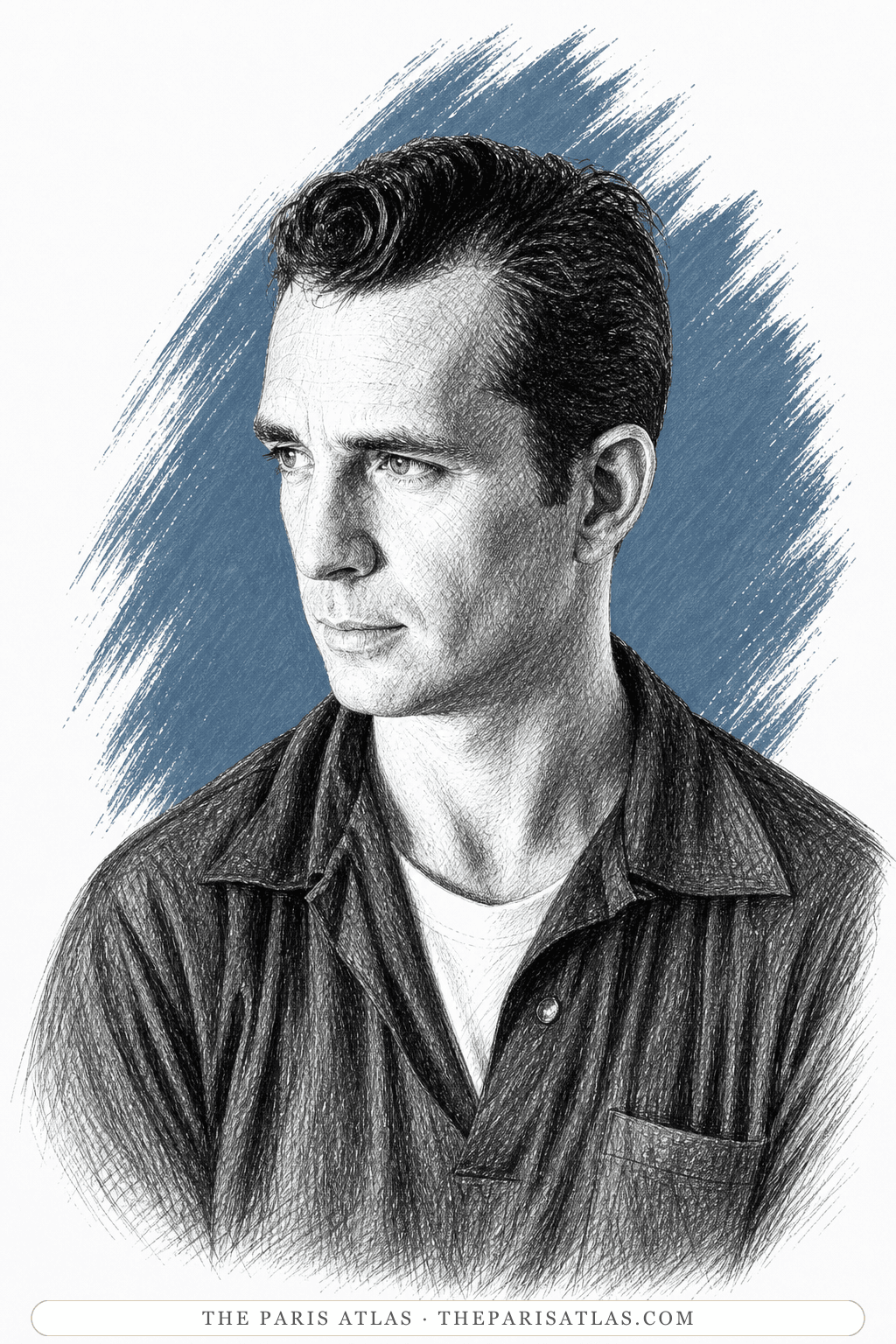
French-Canadian American novelist and poet whose rhythmic spontaneous prose made roads, jazz, friendship and spiritual longing central to Beat literature—and whose two Paris journeys culminated in Satori in Paris.
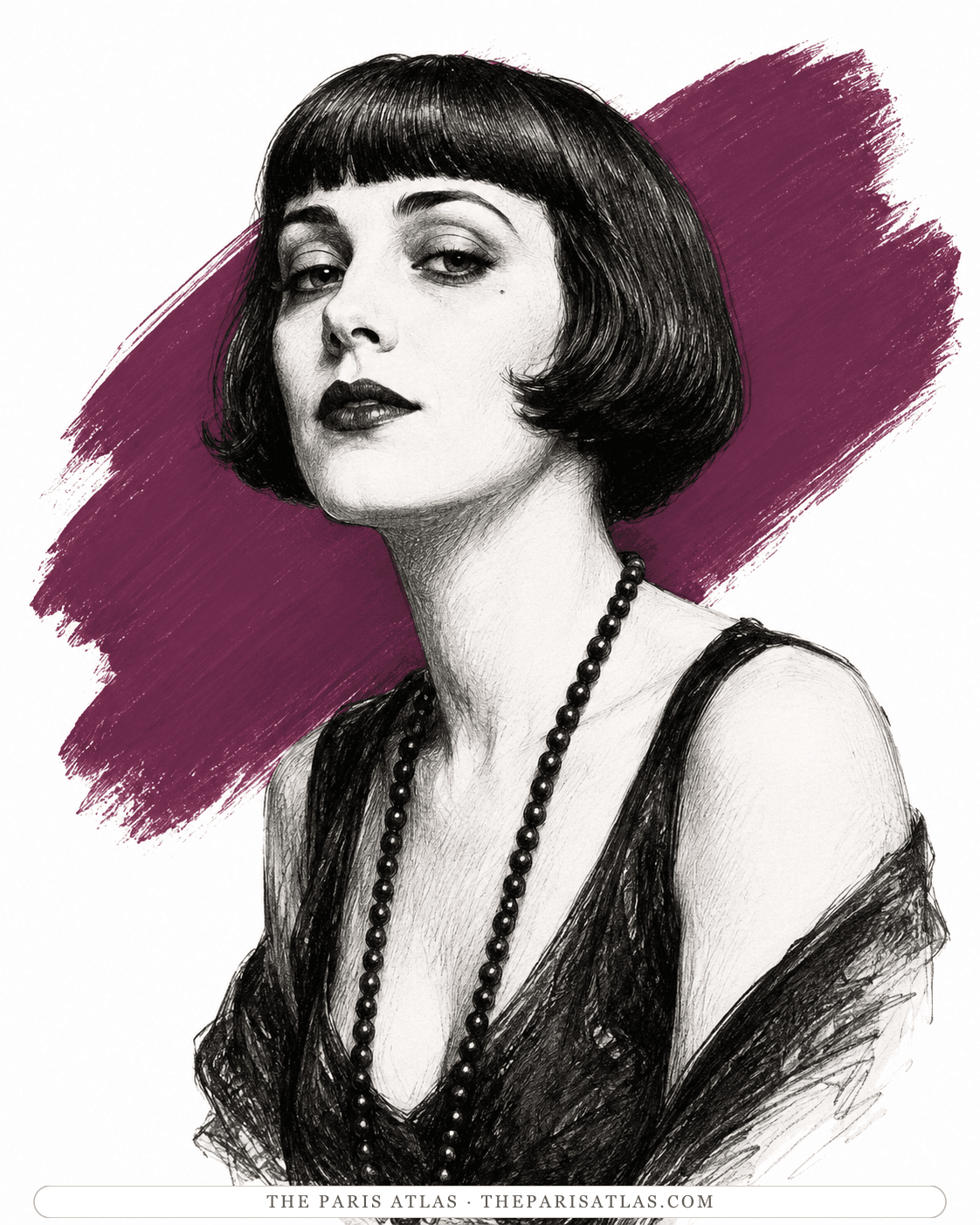
Alice Prin — model for Soutine, Foujita and Modigliani, Man Ray's partner and the back with the violin f-holes, cabaret singer at Le Jockey, memoirist introduced by Hemingway, painter of a sold-out show, and, by acclamation in 1929, Queen of Montparnasse.
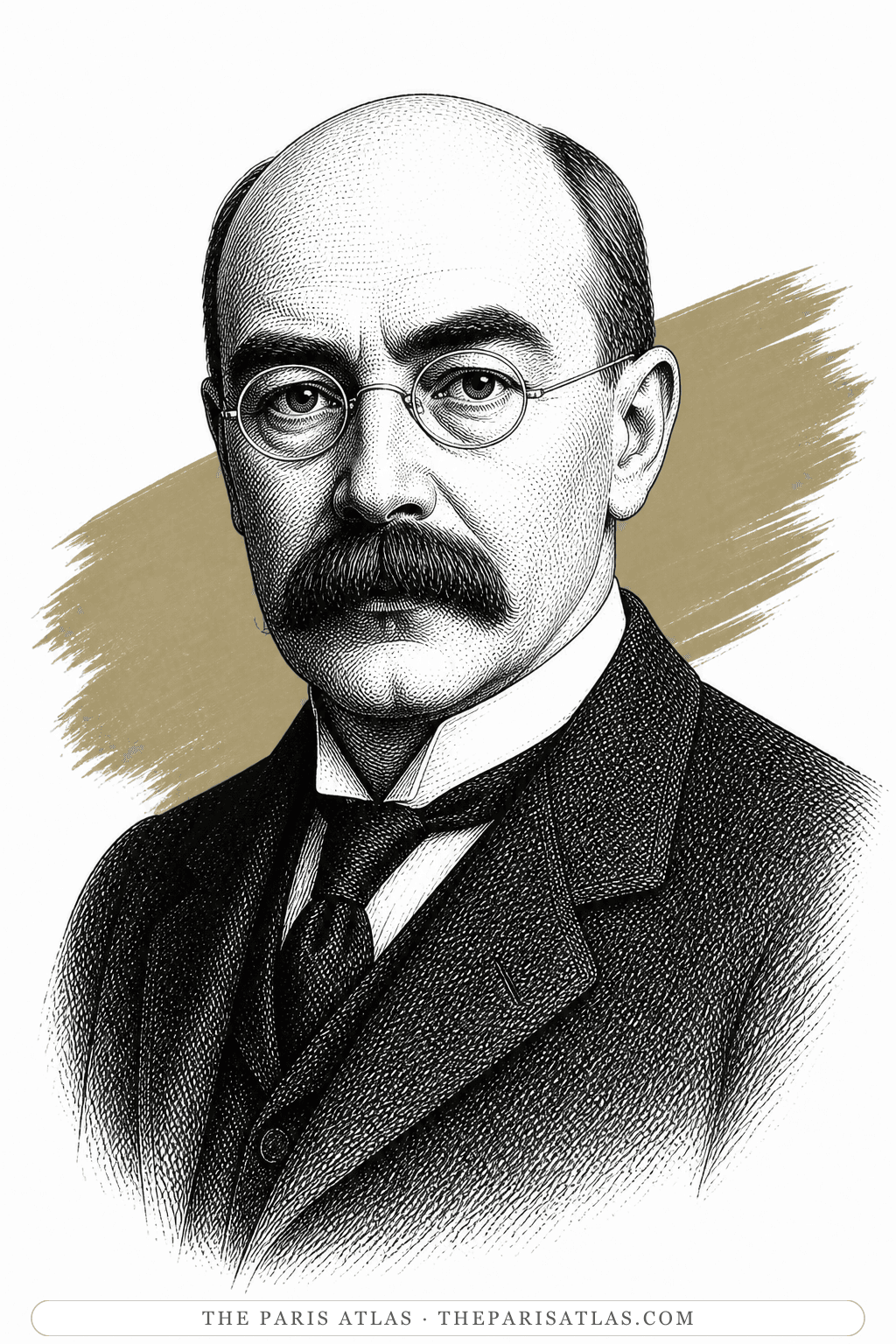
The English writer of the Jungle Books, Kim and Just So Stories, and in 1907 the first author writing in English to win the Nobel Prize in Literature. His love of France began at twelve, when his father turned him loose alone in the Paris Exhibition of 1878 with two francs a day; it ended with the war-graves work that kept him crossing the Channel after his only son was killed at Loos, and with a small French book, Souvenirs of France, published in Paris in 1933.
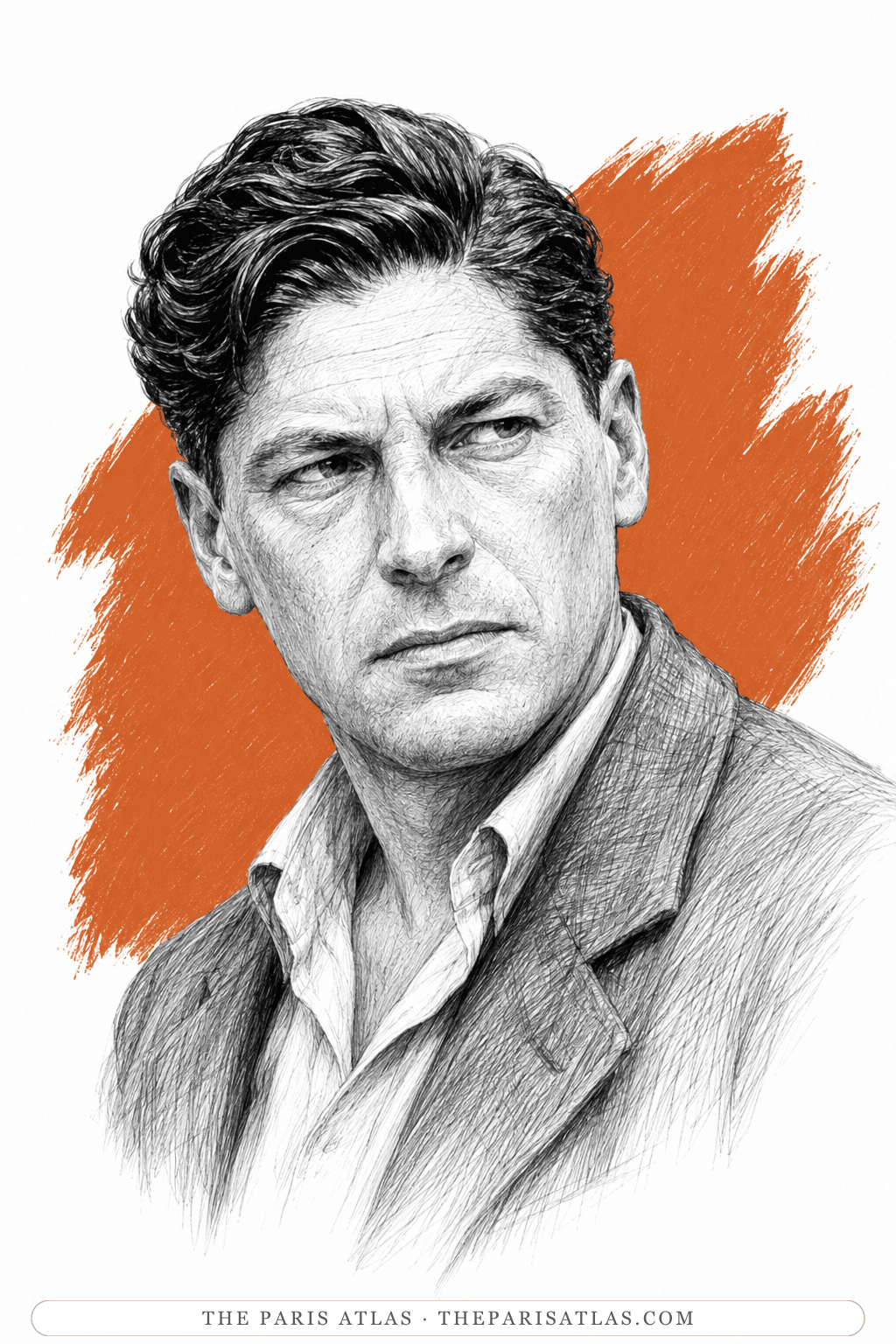
Hungarian-British novelist and essayist whose fiction examined revolution, ideology, imprisonment, and political disillusionment.
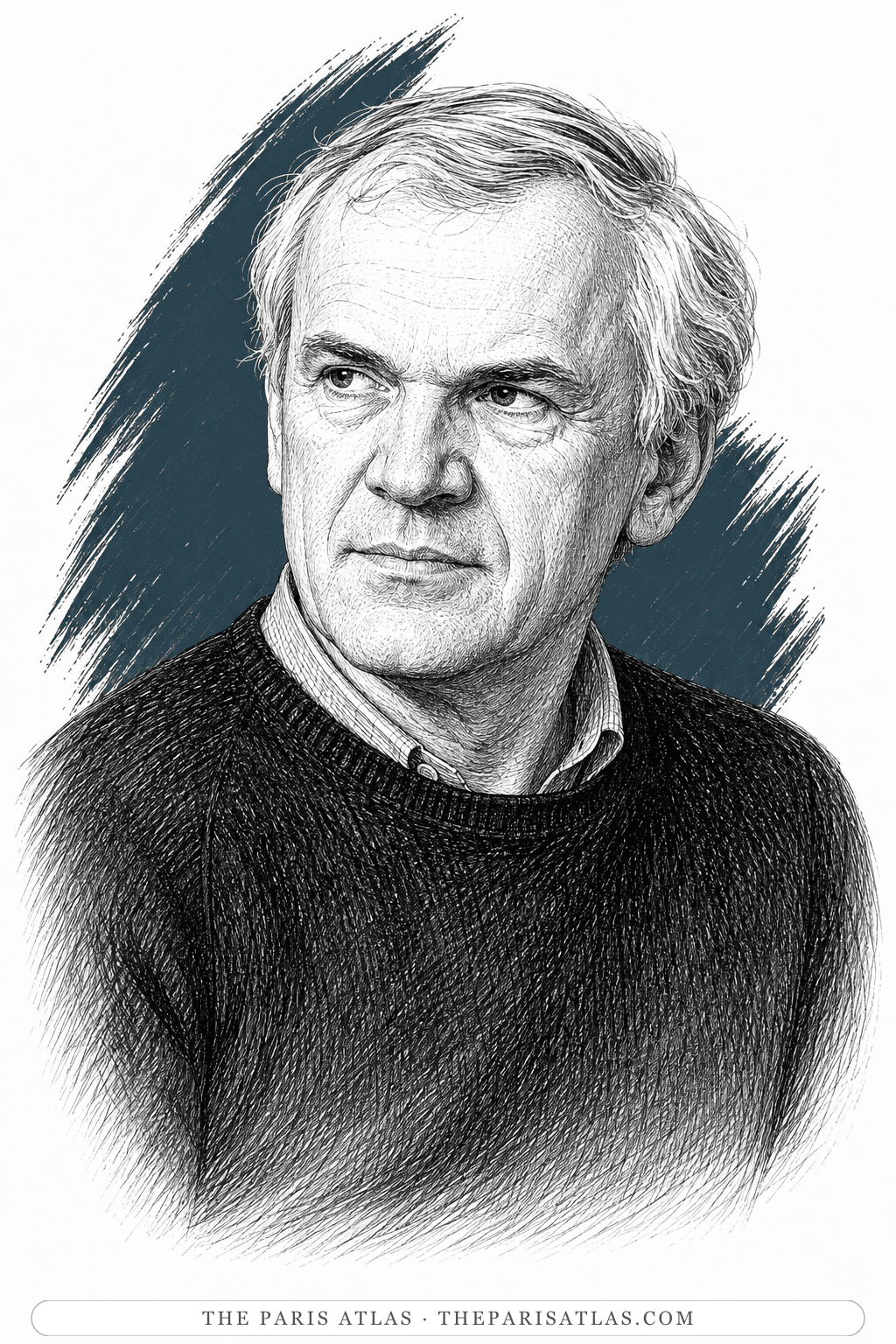
From communist Czechoslovakia to a new life in France, Milan Kundera turned love, memory and exile into novels where comedy meets philosophy. Paris became his home as he defended the novel’s freedom to question every certainty.
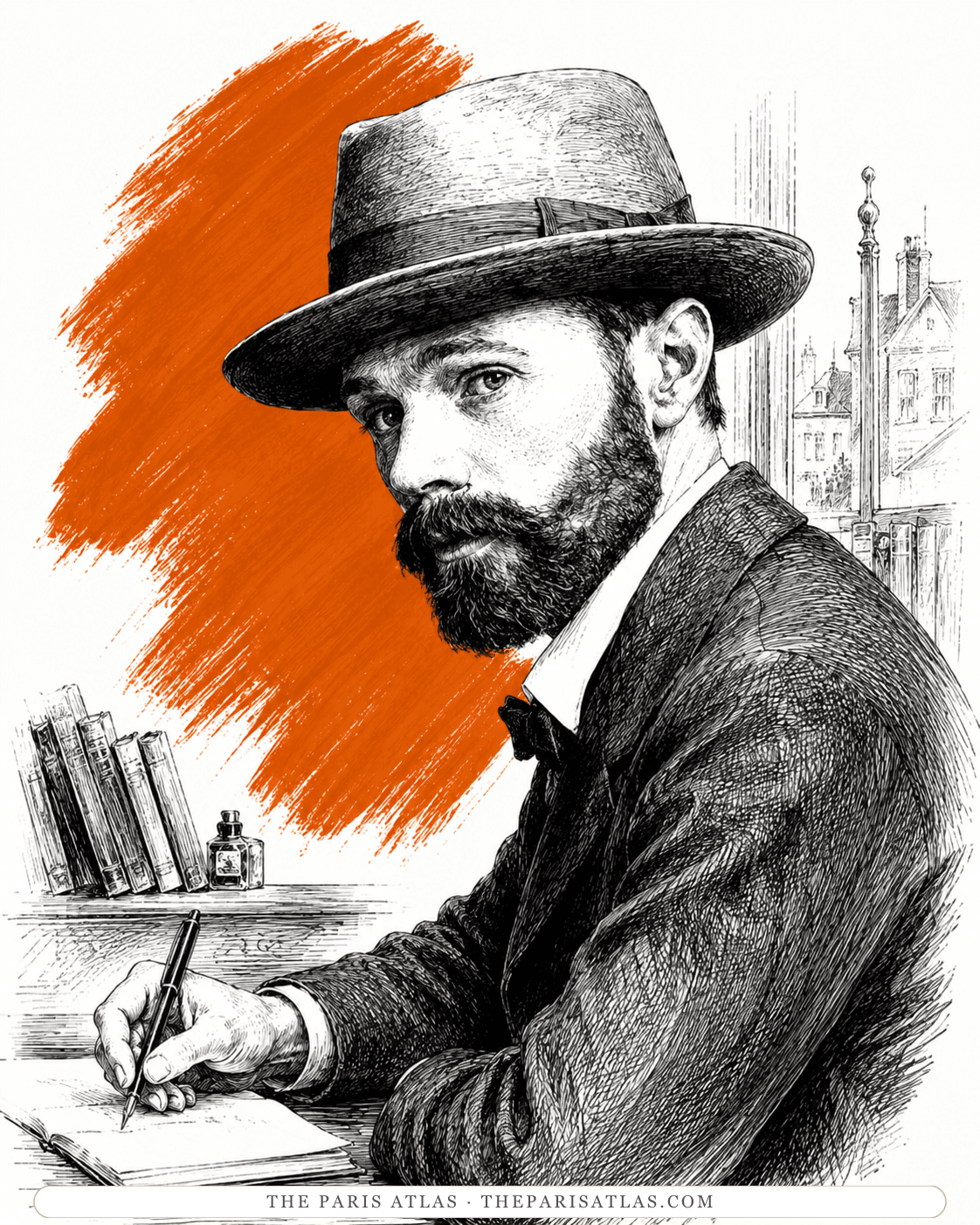
English novelist and poet out of a Nottinghamshire coalfield. A court destroyed The Rainbow in 1915, the police took his paintings off a London wall in 1929, and he came to Paris that March to get Lady Chatterley's Lover cheaply into print.
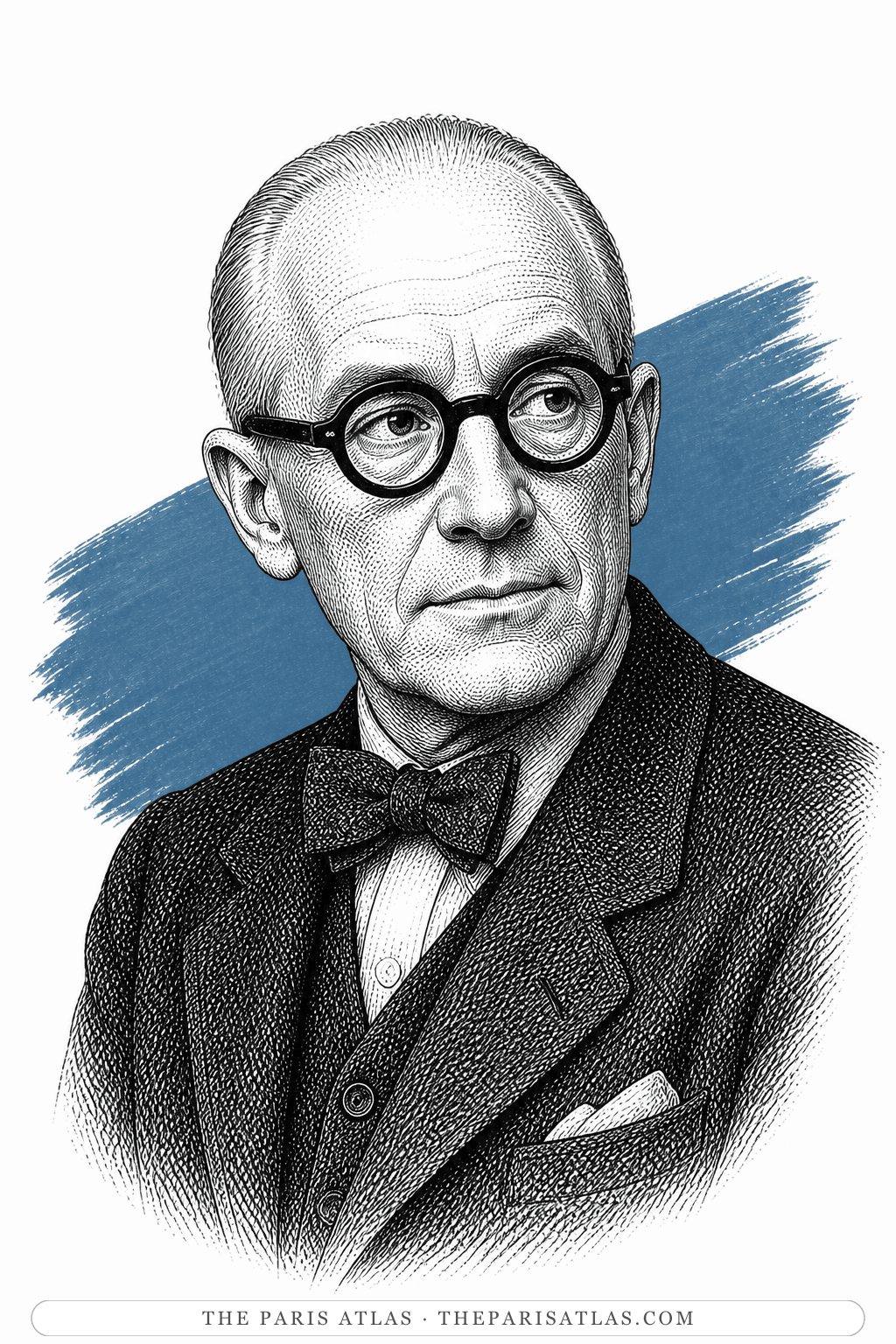
Swiss-born architect who arrived in Paris in 1917 as the painter Charles-Édouard Jeanneret, took the name Le Corbusier in 1920, and ran one atelier — his studio — at 35 rue de Sèvres for four decades. In 1925 he proposed demolishing much of the Right Bank of central Paris and replacing it with sixty-storey towers. Paris refused; the rest of the world adopted the idea after 1945.
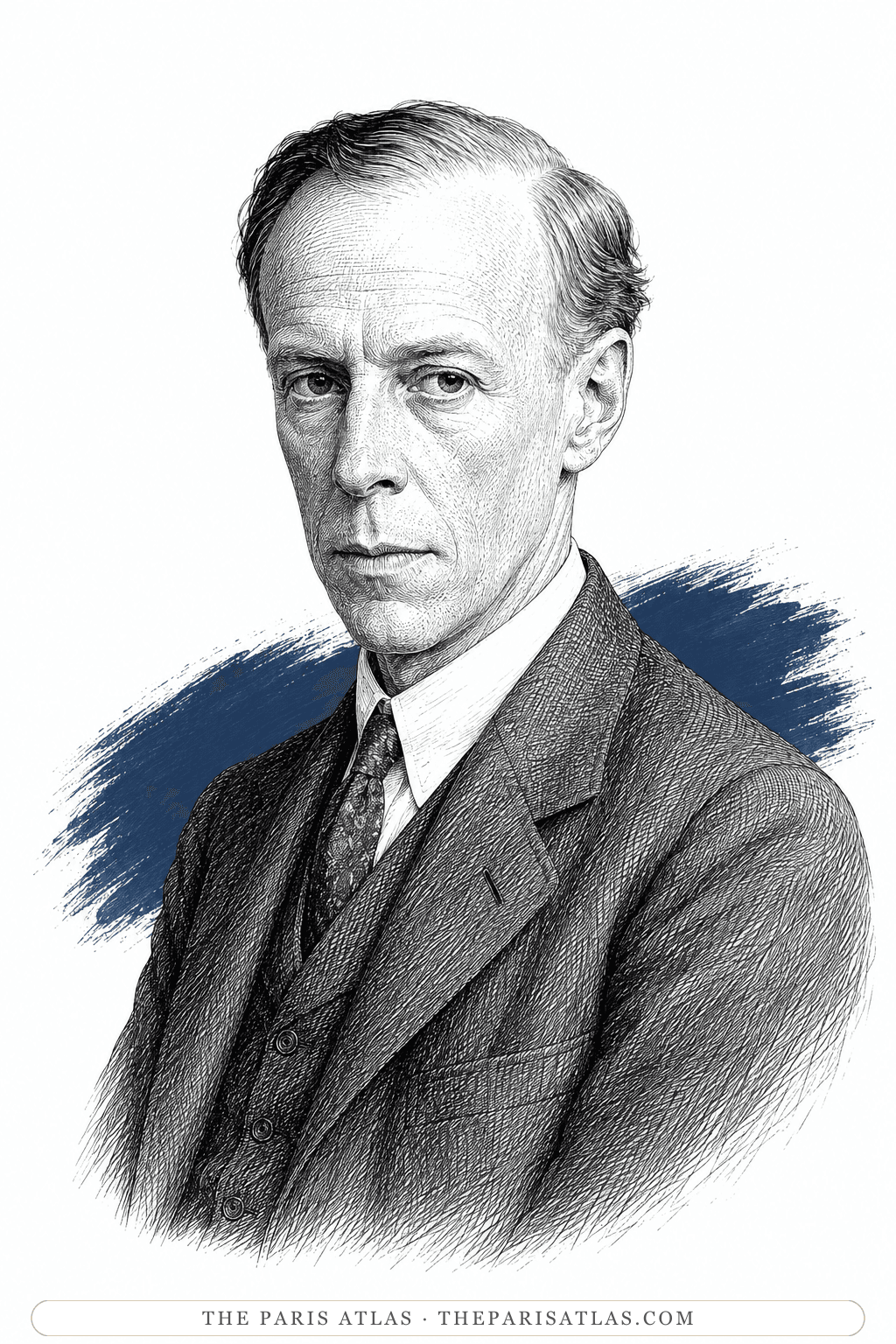
American novelist who satirised small-town conformity in Main Street and Babbitt, refused the Pulitzer Prize in 1926, and in 1930 became the first American to win the Nobel Prize in Literature.
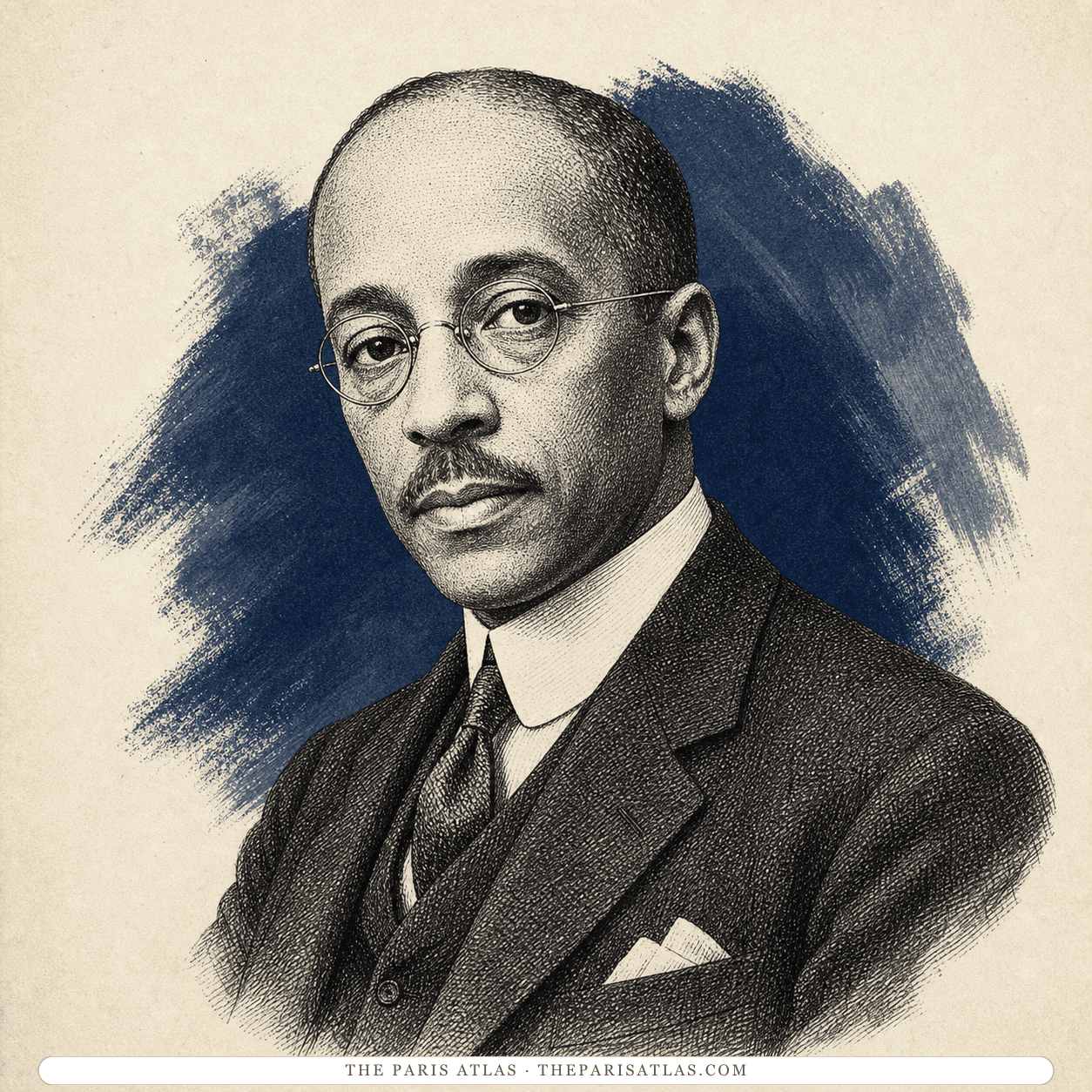
American philosopher, editor and Howard professor who became the first Black Rhodes Scholar and gave the Harlem Renaissance its defining anthology, The New Negro.
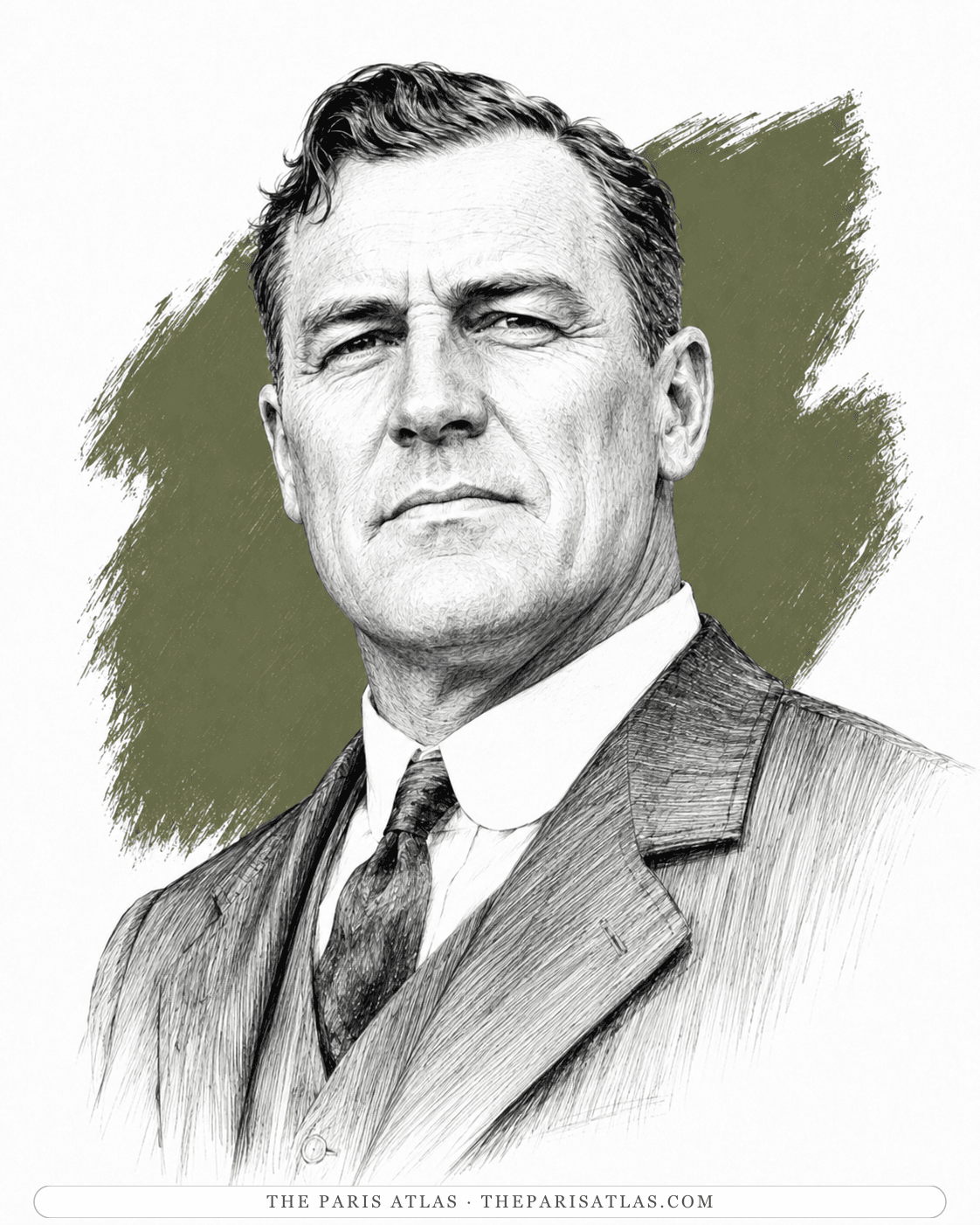
Editor of the modernist magazine Broom and a novelist in his own right — remembered instead as Robert Cohn, the character he spent the rest of his life answering.
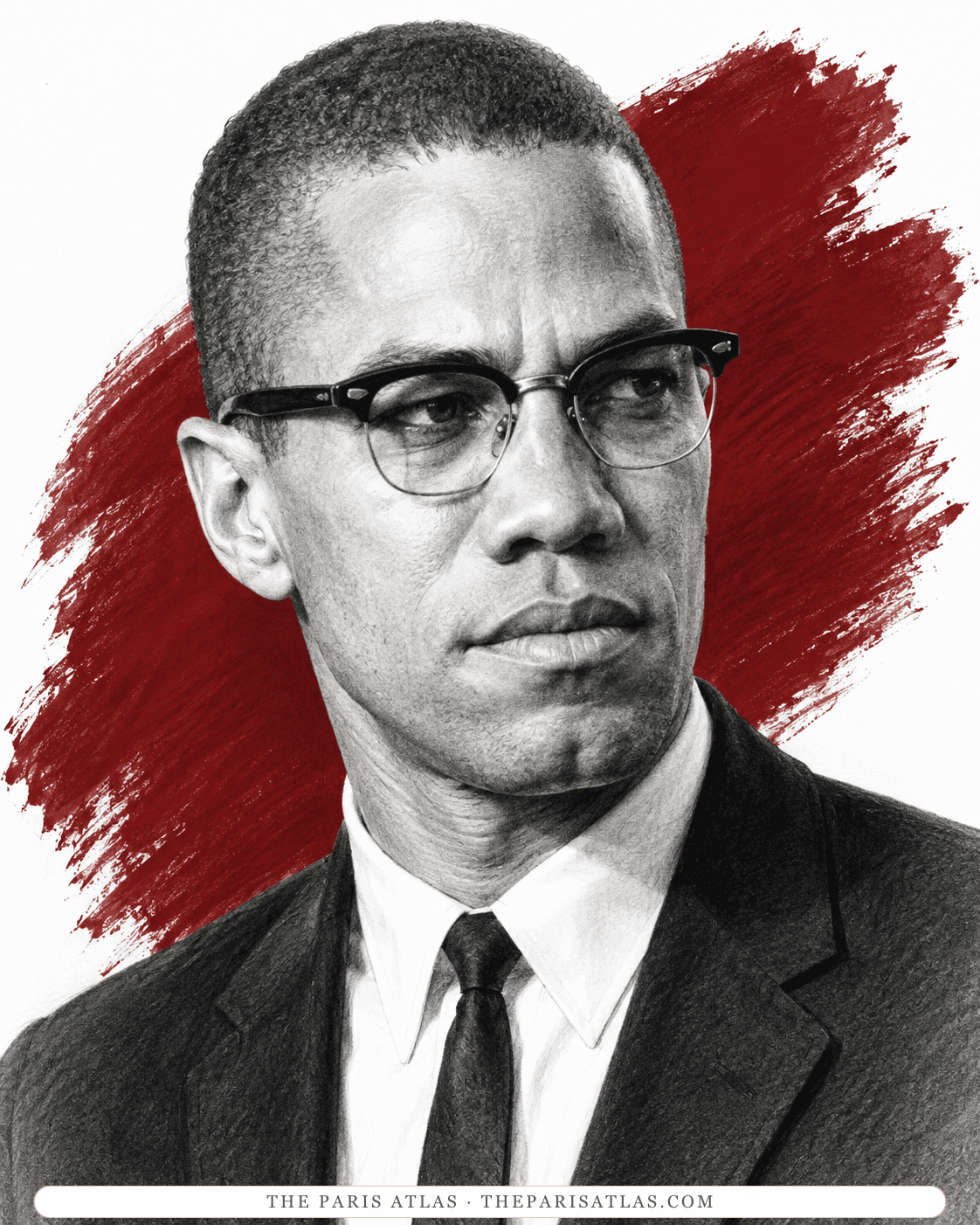
Minister of the Nation of Islam and then a movement of his own, assassinated at the Audubon Ballroom in 1965. James Baldwin knew him, debated him publicly, wrote his life as a screenplay in One Day When I Was Lost, and counted his murder among the three that shape No Name in the Street.
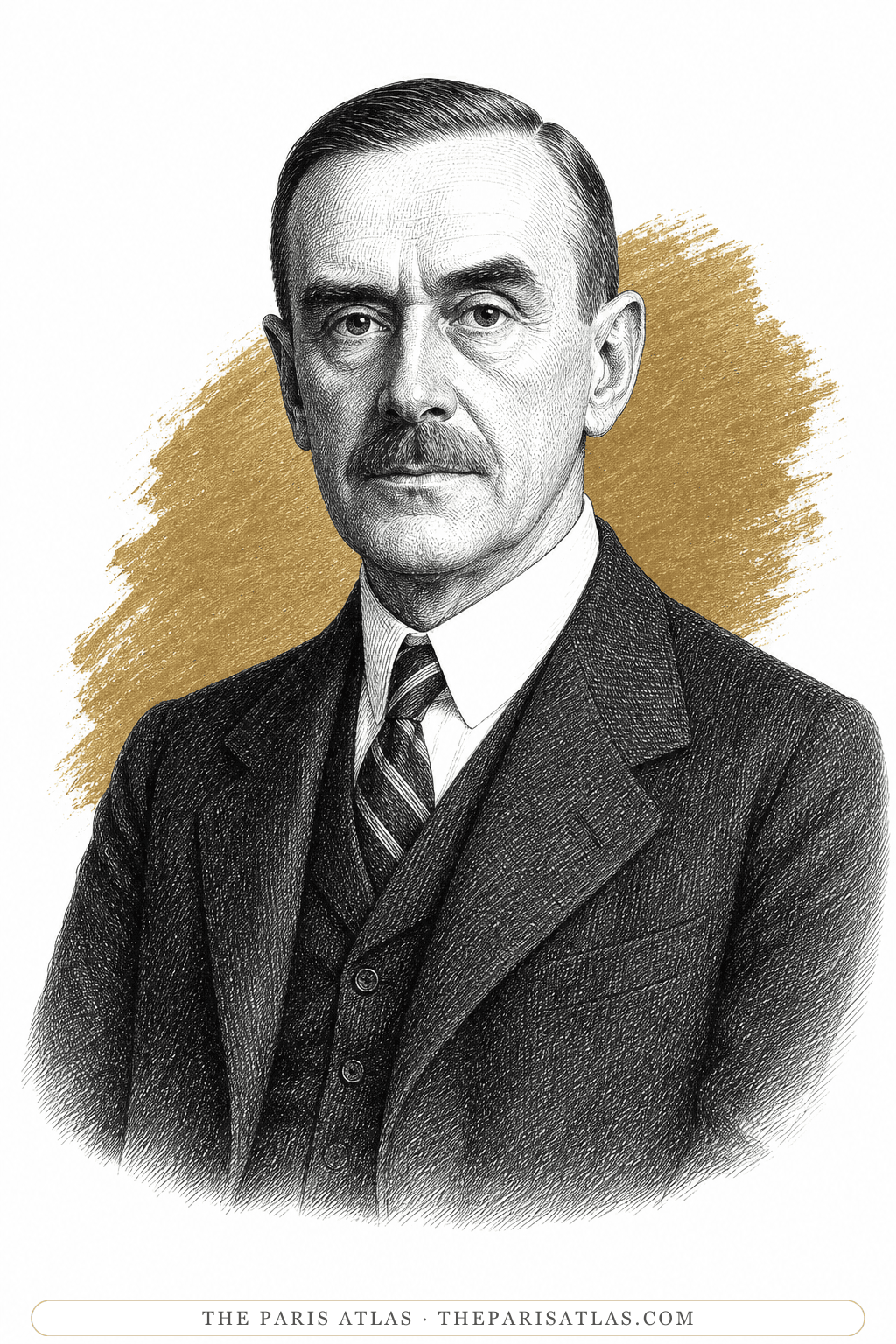
German novelist whose fiction studies desire, illness, art, and the collapse of disciplined identities.
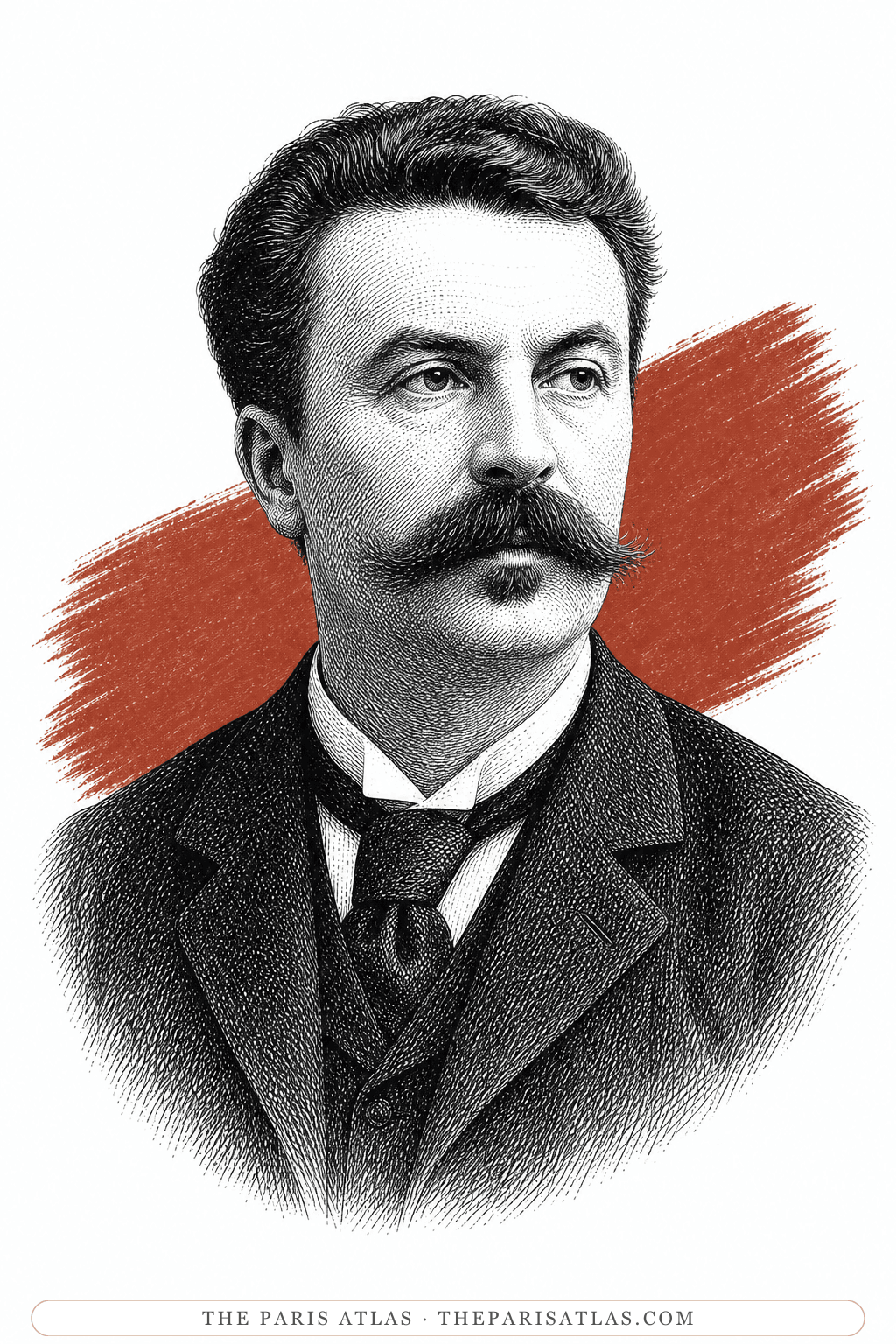
The greatest short-story writer in French, who spent eight years as a clerk in government ministries while the novelist Gustave Flaubert corrected his pages line by line, then wrote roughly three hundred stories and six novels in a decade before syphilis ended him at forty-two in an asylum at Passy, on the western edge of Paris. Bel-Ami — the nickname of its handsome, unscrupulous hero — is his portrait of the Paris press as an engine of corruption.
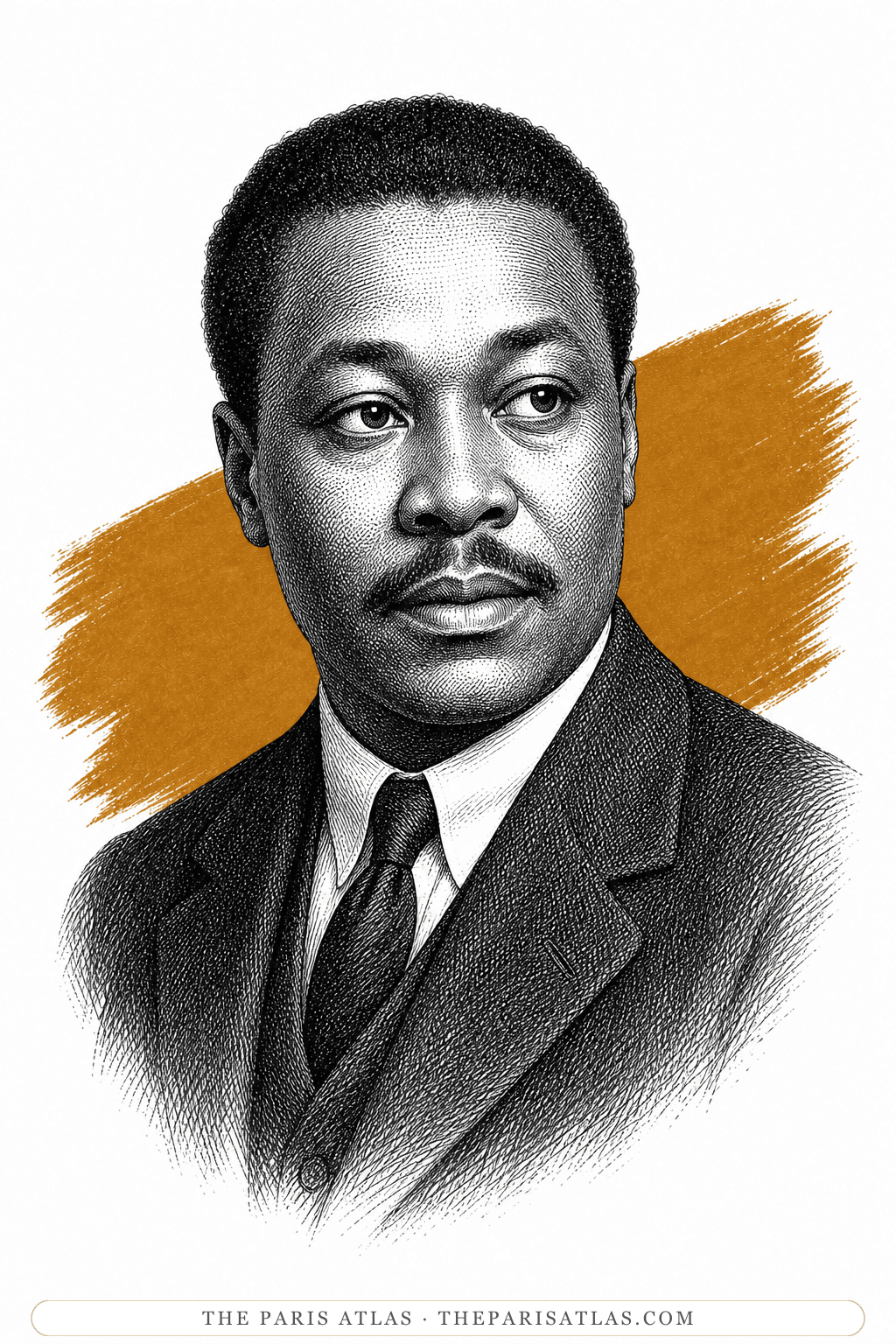
Jamaican-born poet and novelist, and one of the essential writers of the Harlem Renaissance. He arrived in Paris from Moscow in 1923 and stayed in France until 1928, writing Home to Harlem there — and forming a low opinion of the rich, white expatriate scene that dominates most accounts of the period. His Paris is the same years as Hemingway's and almost nothing like it.
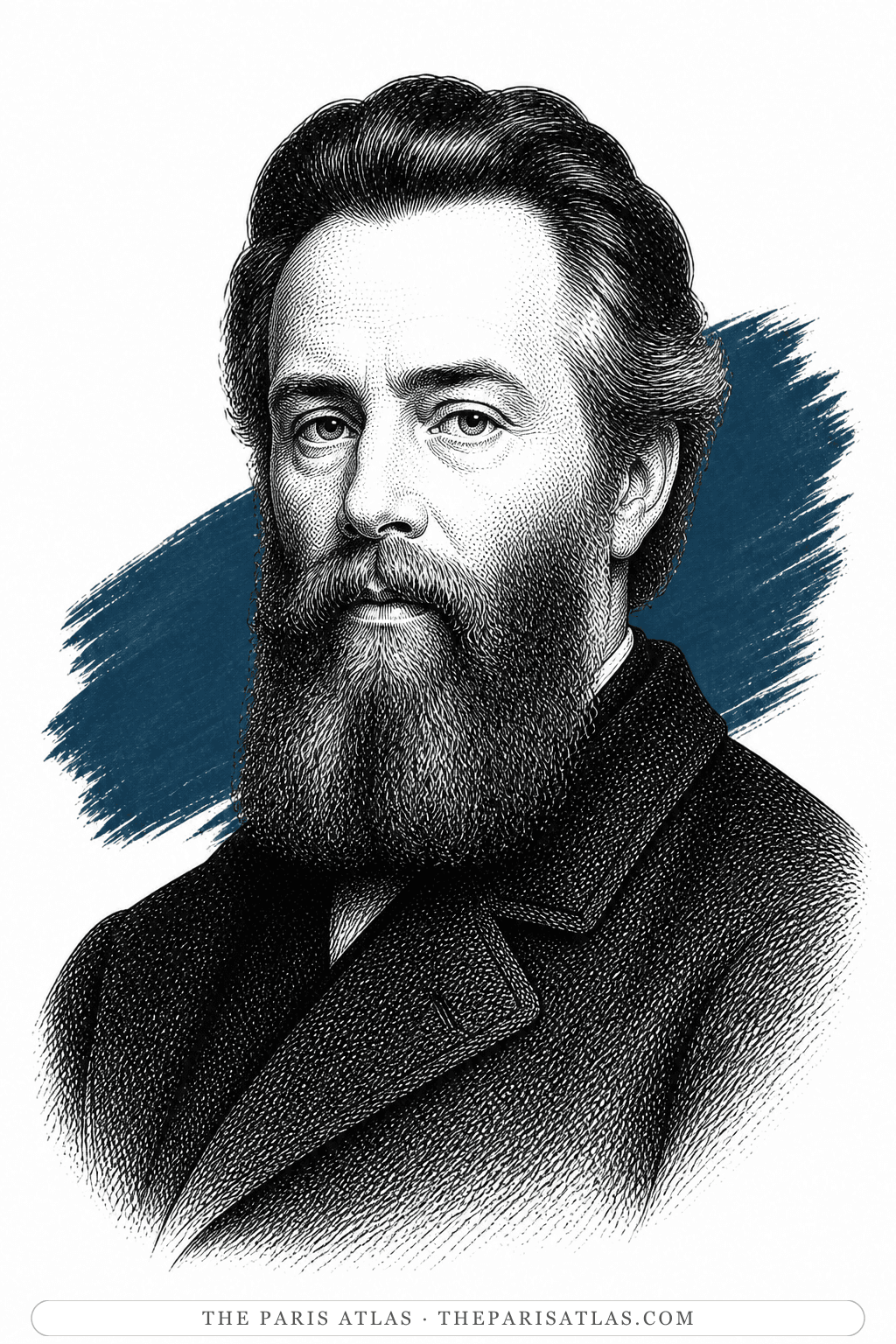
Author of Moby-Dick, who spent about eight days in Paris in the winter of 1849 in a fifth-floor room on the Rue de Bussy, spoke no French, went twice to look at the corpses on display at the public Morgue, and wrote of the medieval Hôtel de Cluny that it was "the house just the house I'd like to live in." He was thirty. Two years later the whale book appeared, failed, and buried him for seventy years.
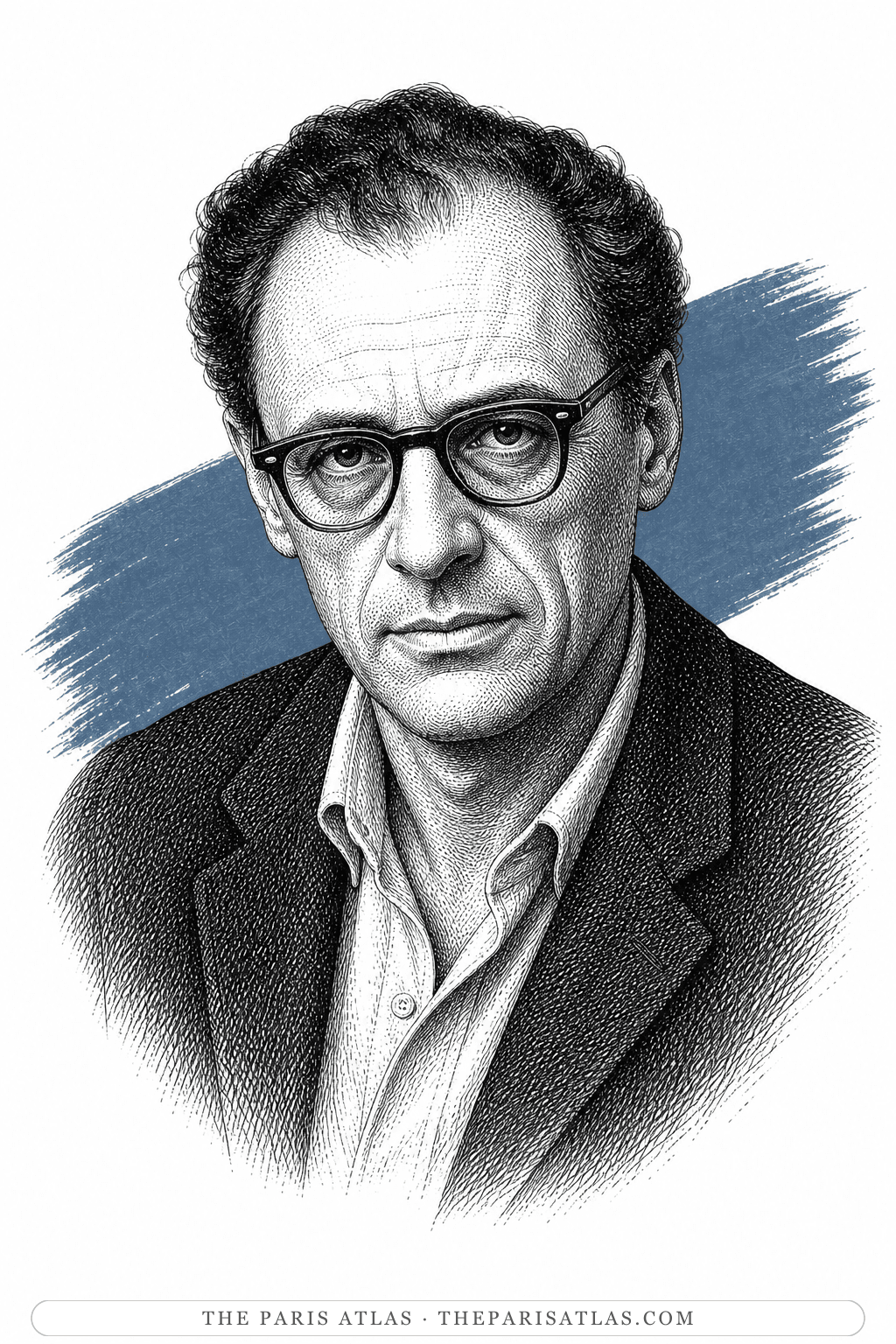
American playwright of Death of a Salesman and The Crucible, convicted of contempt of Congress in 1957 for refusing to give congressional investigators the names of former associates. In Paris his play about the Salem witch trials became a hit for the most famous acting couple in France, Yves Montand and Simone Signoret, and then a film scripted by the philosopher Jean-Paul Sartre that Miller disliked — the play reached France years before its author was allowed a passport to follow it.
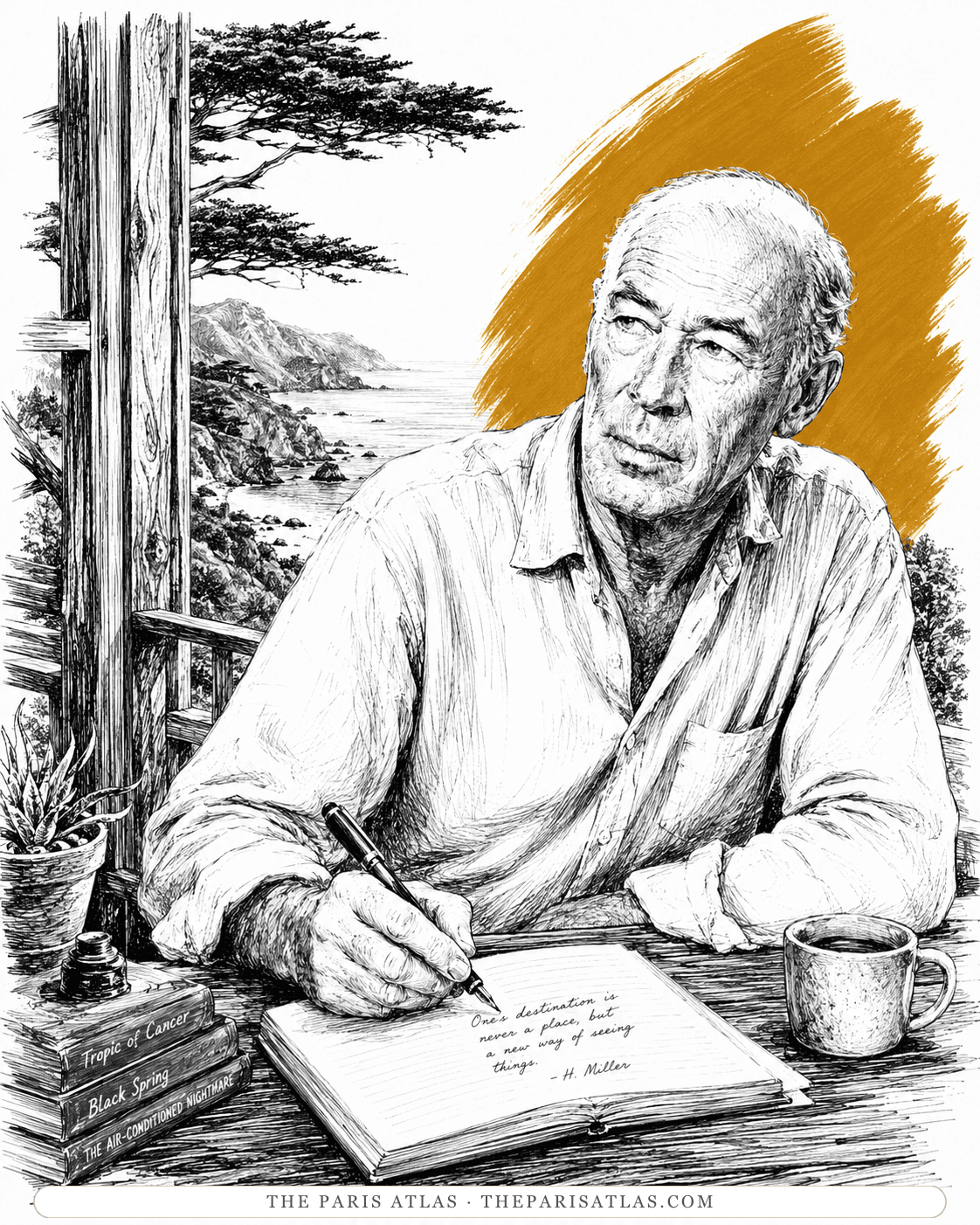
The Brooklyn dropout who arrived in Paris broke at thirty-eight and wrote the exuberant, banned books that ended American censorship.
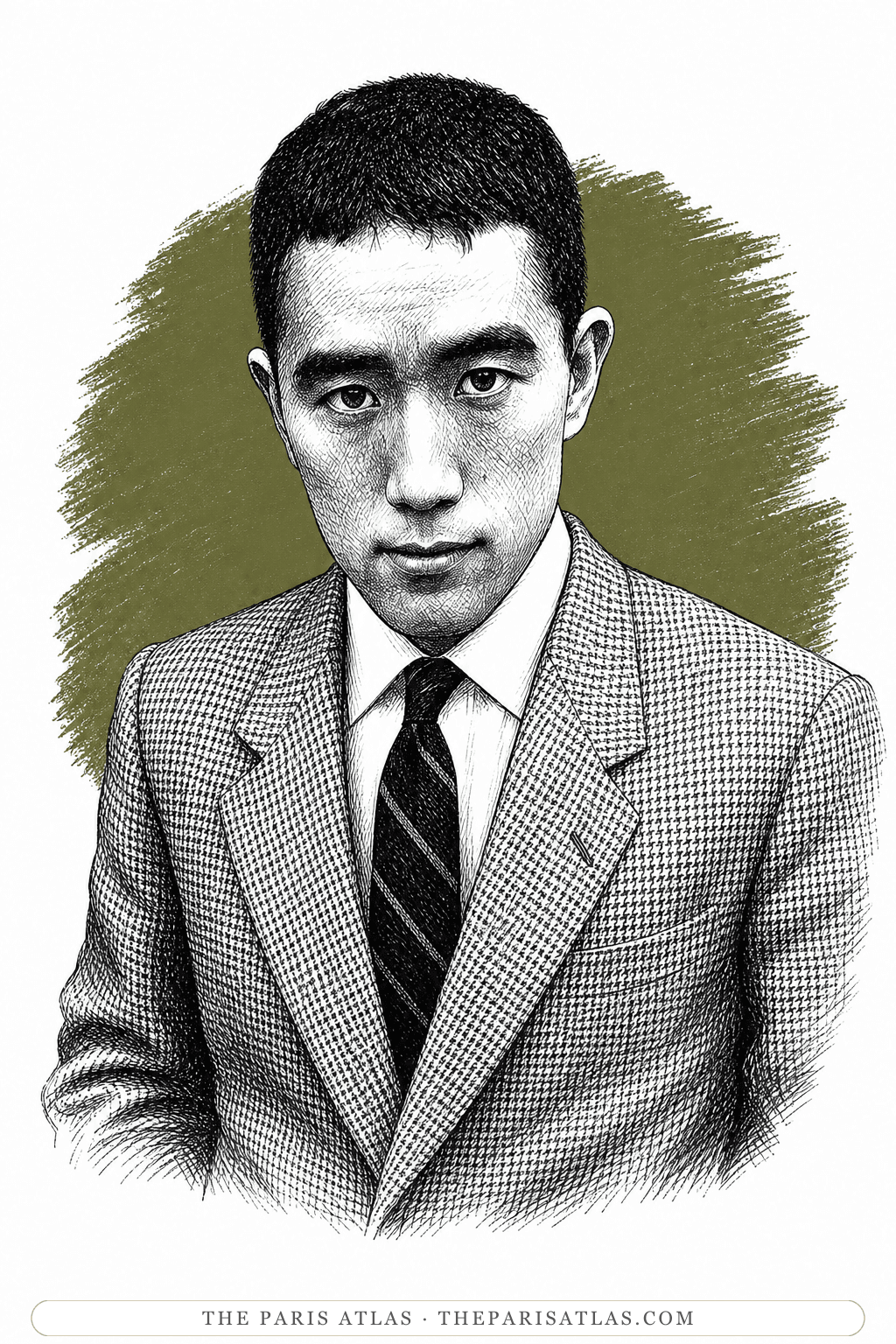
Japanese novelist and playwright whose work explores desire, beauty, performance, identity, and self-invention.
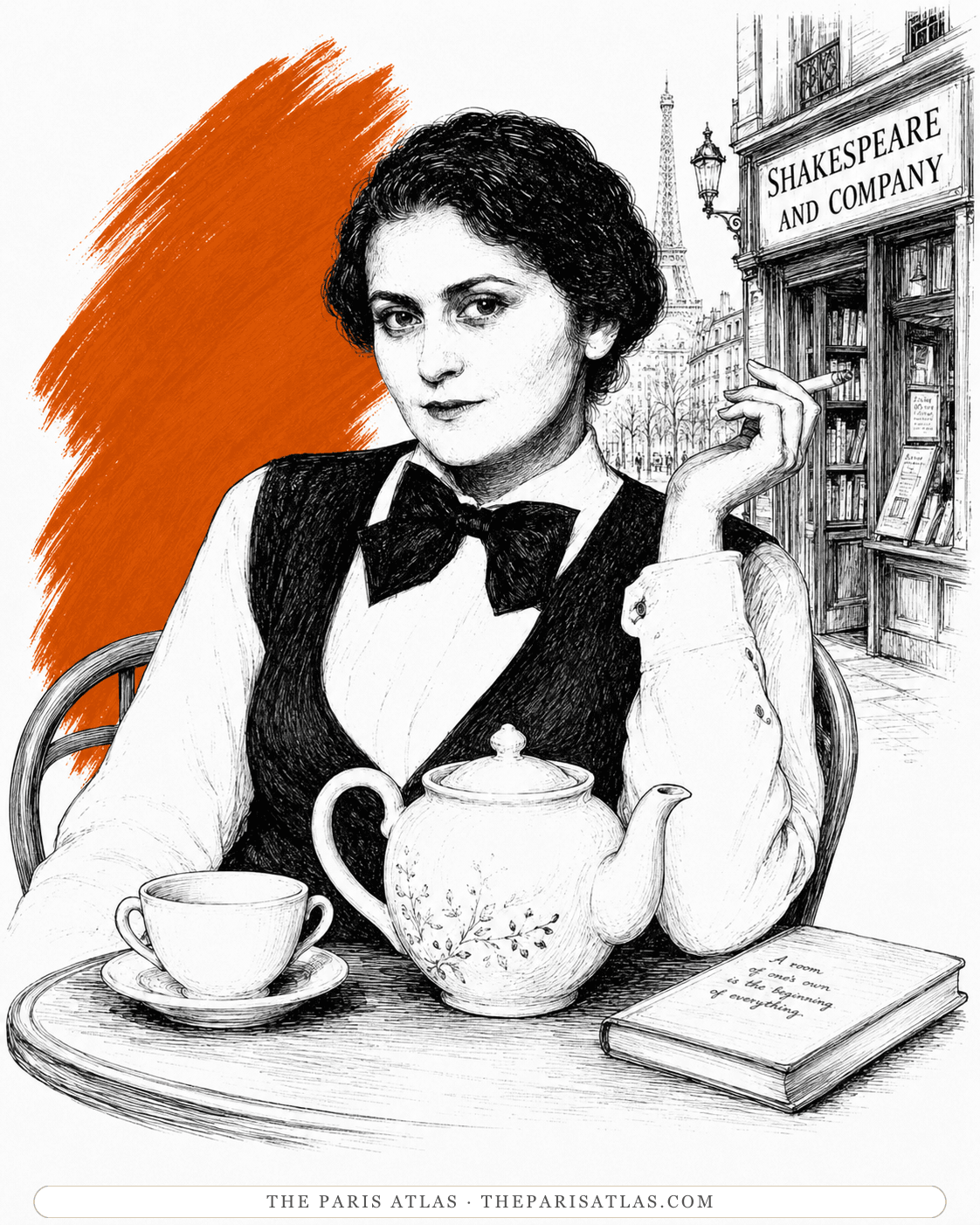
Proprietor of La Maison des Amis des Livres on the rue de l'Odéon — Beach's partner and the French half of literature's main street.
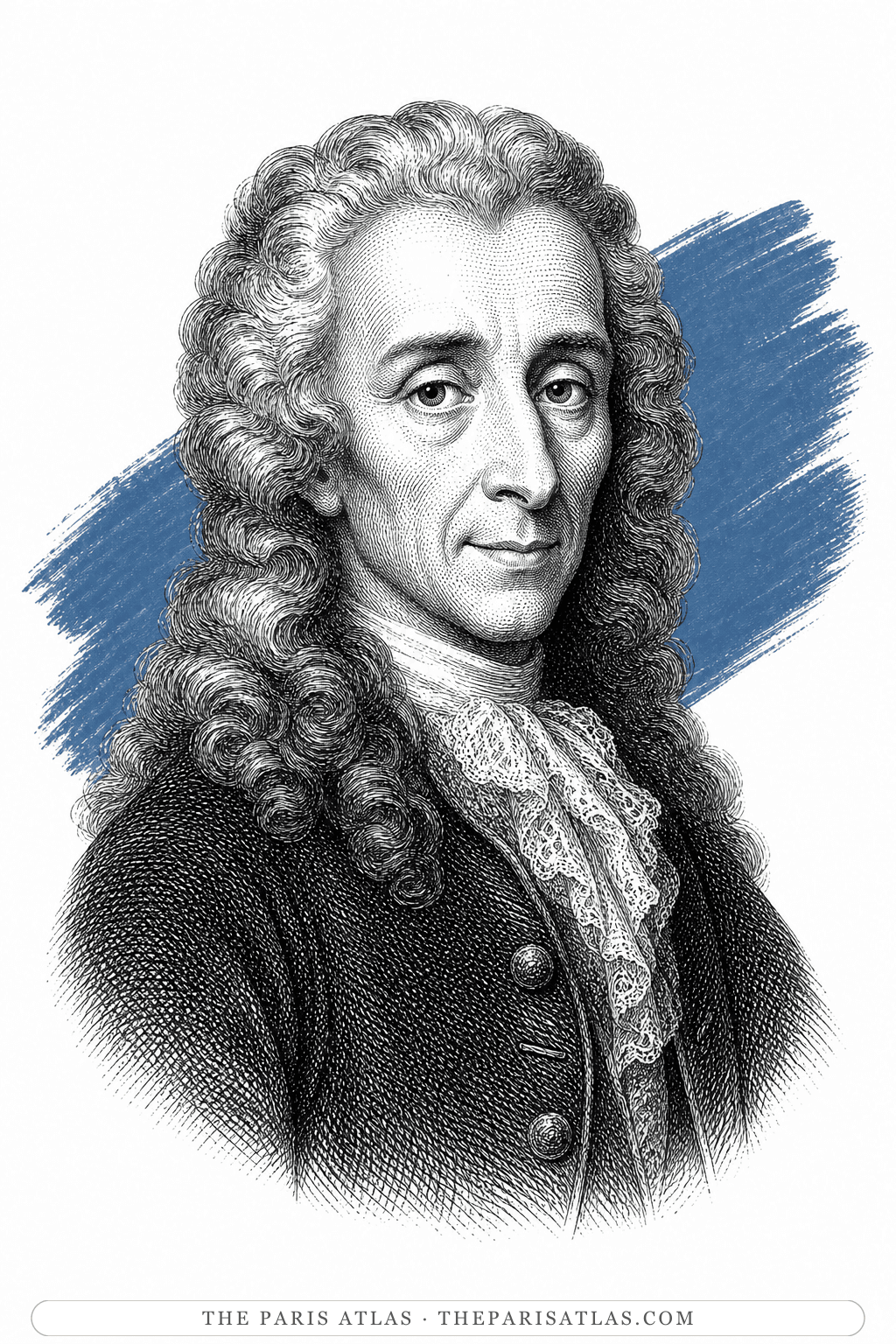
A judge from the Bordeaux wine country who in 1721 published, anonymously, a novel in letters about two Persian travellers loose in Paris — a device that let him mock the French court, the church and the city while pretending only to report what foreigners saw. Nearly thirty years later he produced The Spirit of the Laws, the book that argued a state's powers must be split so that each can check the others; the Americans writing their constitution called him the oracle on the subject.
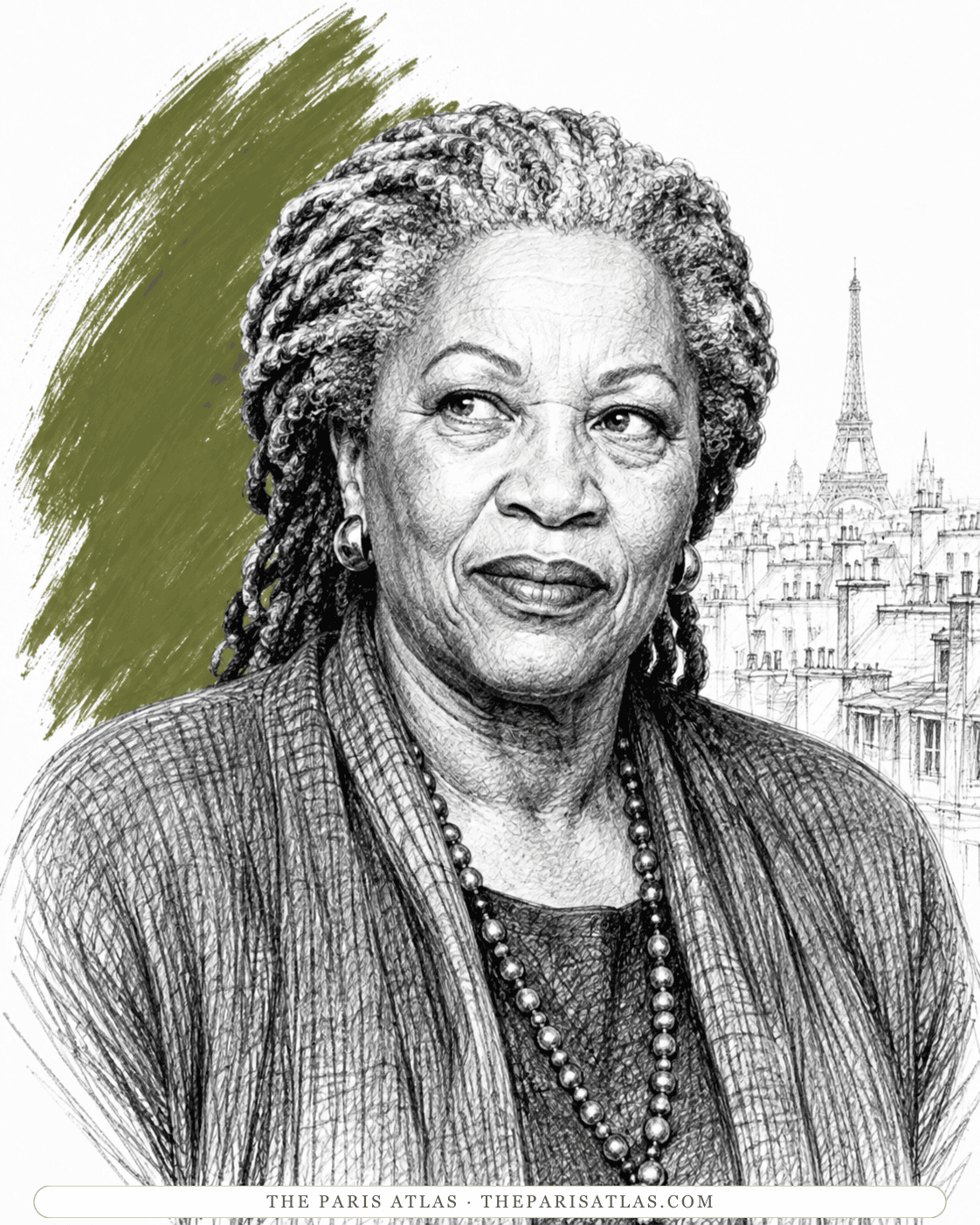
American novelist and Nobel laureate; a correspondent and ally of James Baldwin who gave a eulogy at his 1987 funeral.
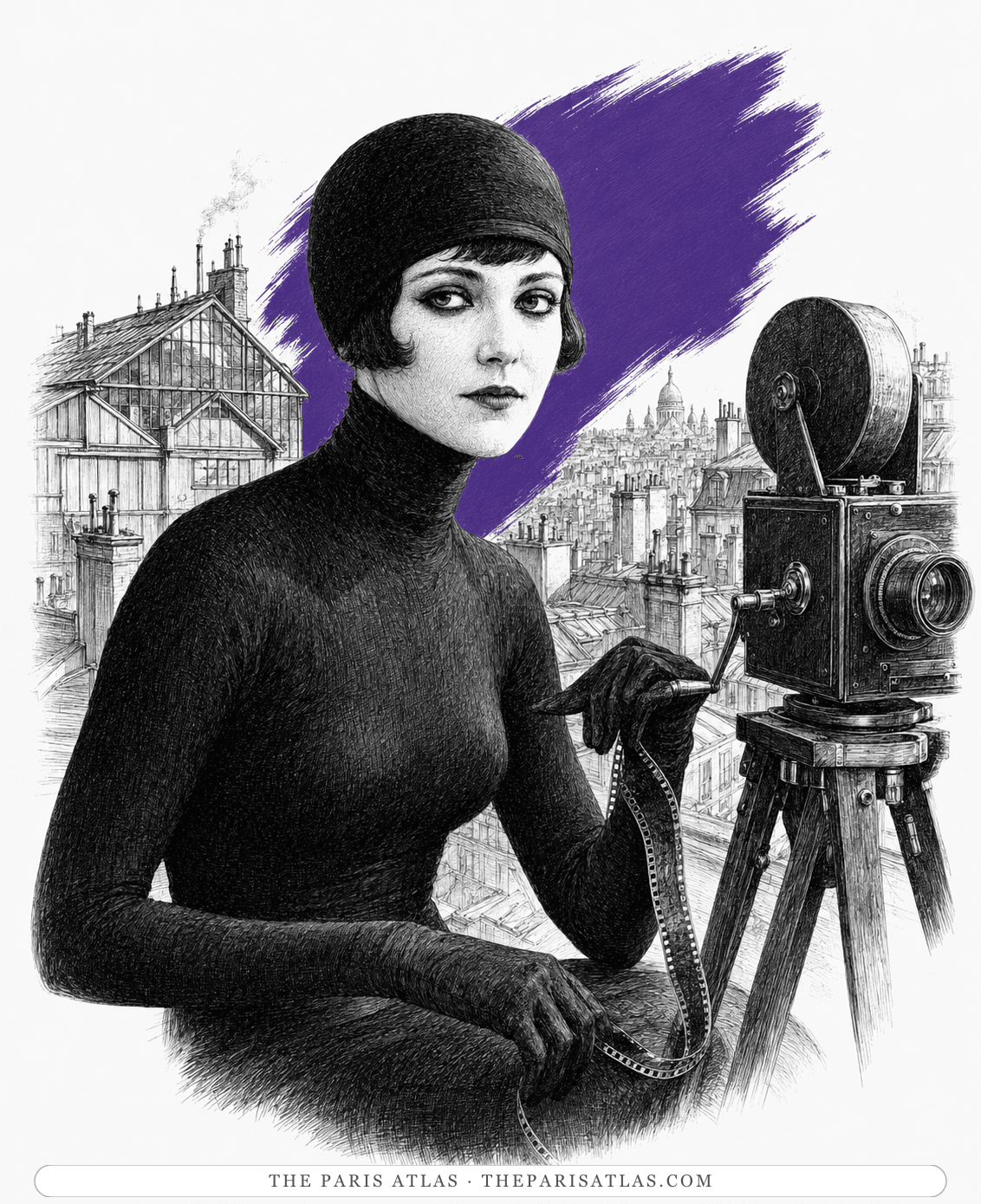
Irma Vep of Les Vampires — the black-clad figure the surrealists took as a muse — who then founded her own film company and, at the end, helped the Cinémathèque française preserve the era she had helped invent.
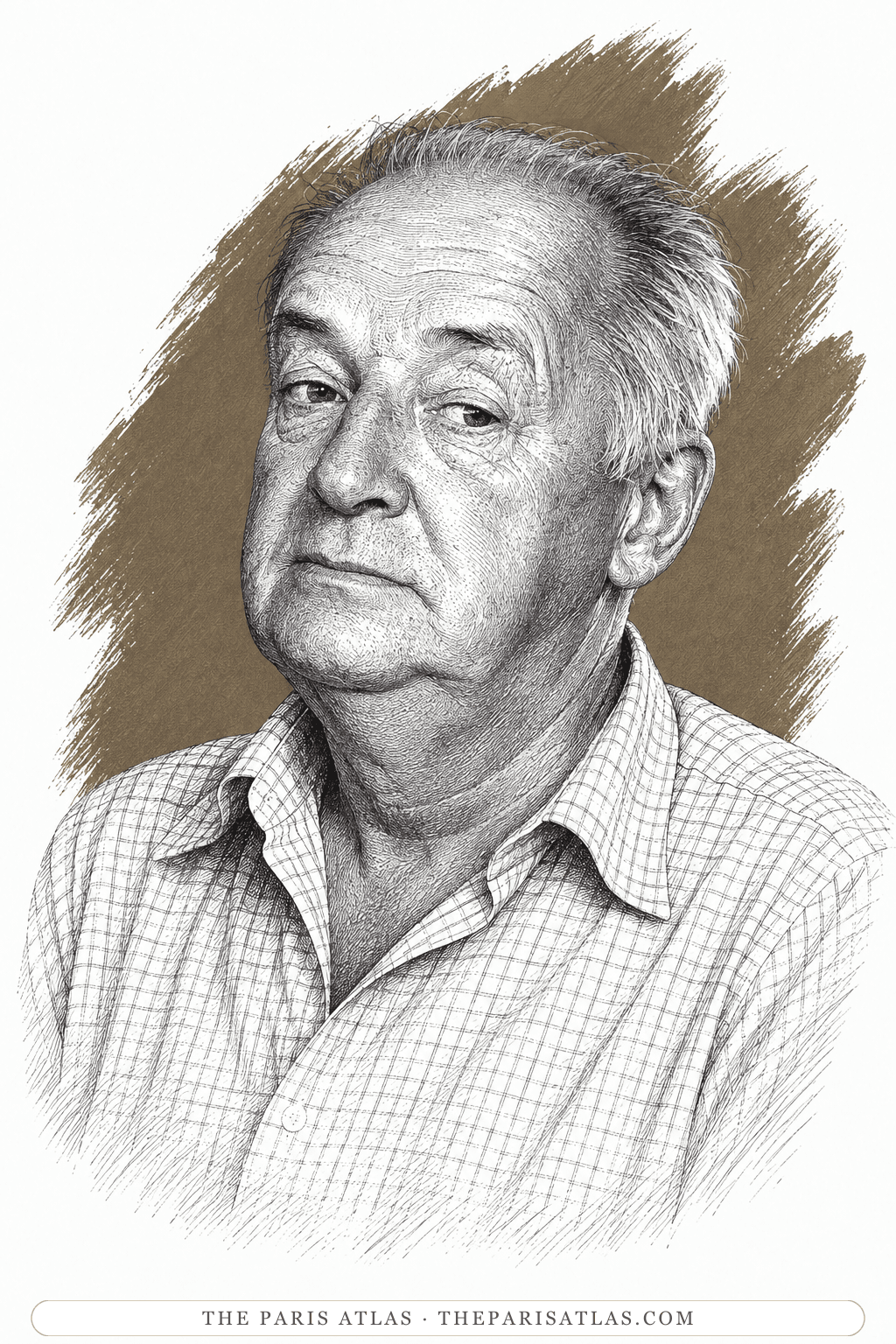
Russian-American novelist, poet, translator, critic, teacher and lepidopterist whose fiction transformed memory, exile, desire, deception and literary form through extraordinary verbal precision. He wrote his first nine novels in Russian for the émigré communities of Berlin and Paris. He crossed into English with The Real Life of Sebastian Knight, written in Paris in 1938–39, and became internationally famous when Olympia Press published Lolita in Paris in 1955. Pale Fire, Ada and the autobiography Speak, Memory followed.
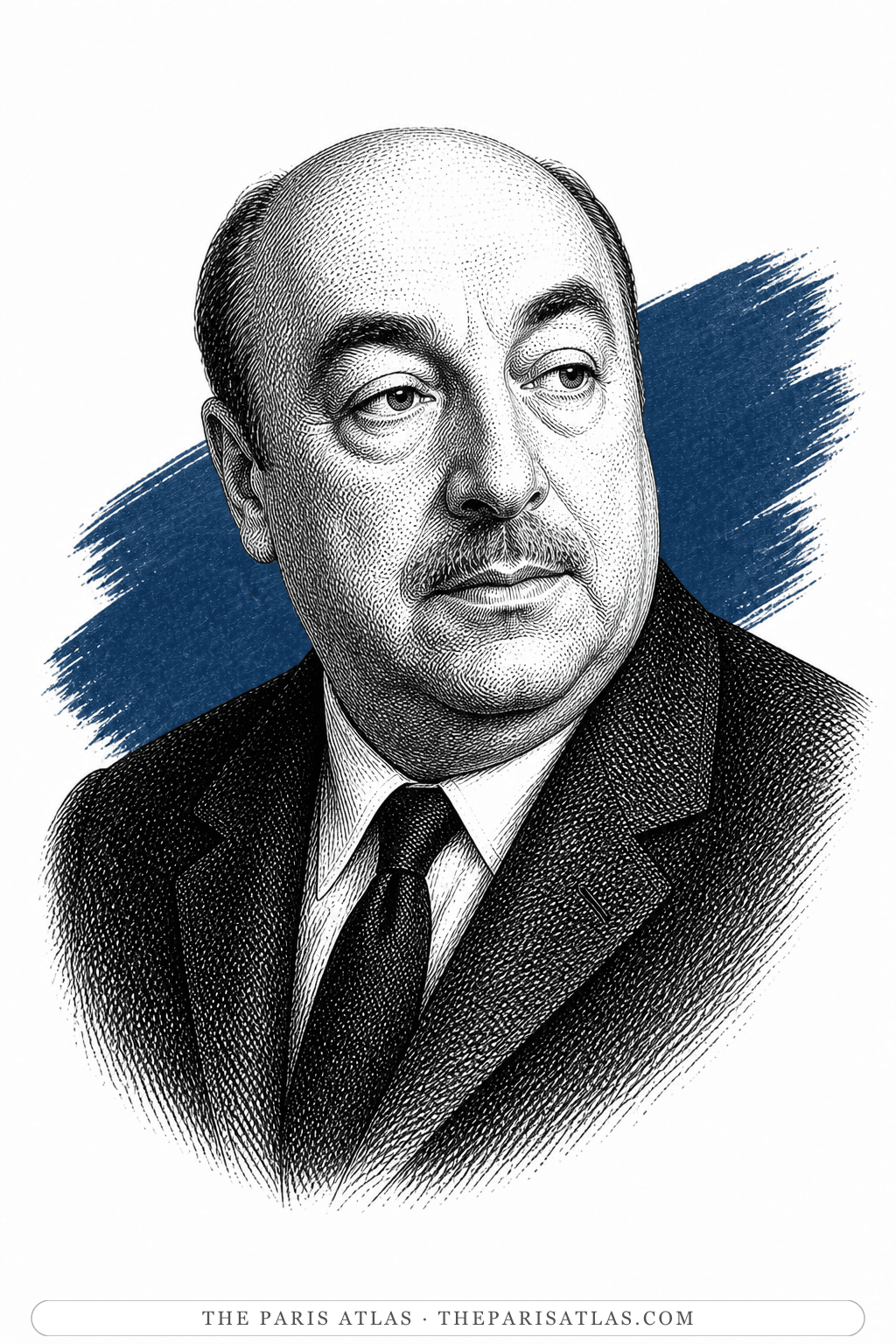
Chilean poet of the twentieth century's most widely read love poems, who spent his whole life in his country's diplomatic service and came back to Paris three times: passing through at twenty-three in 1927, on his way to his first consular post in Burma; running the rescue of refugees from the Spanish Civil War out of a Paris office in 1939; and serving as ambassador to France for Salvador Allende, Chile's newly elected socialist president, when the Nobel Prize in Literature reached him in October 1971.
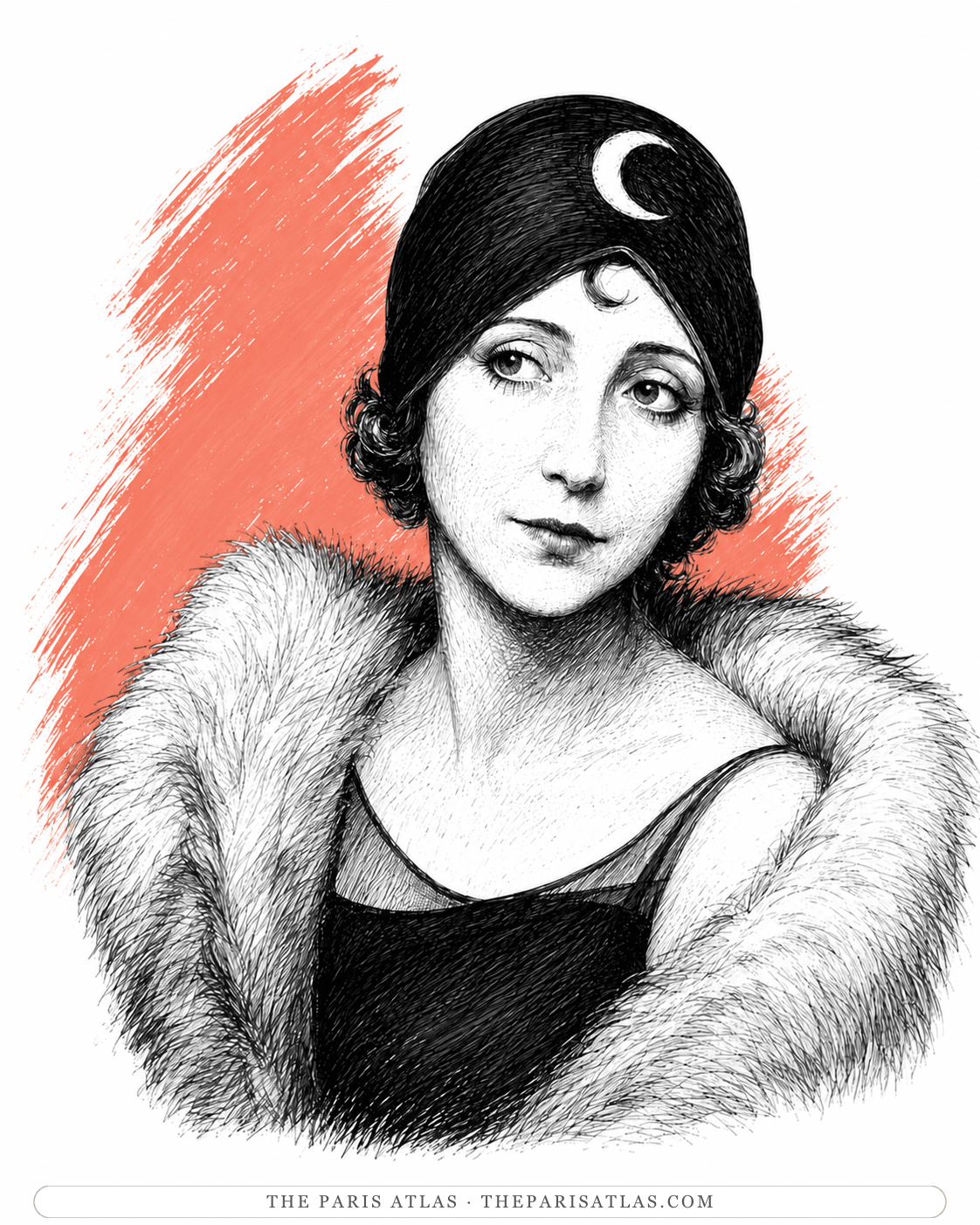
Diarist of the century — sixty years of the most famous journal in modern literature, Henry Miller's first champion, and, posthumously, the best-selling erotic writer of her age.
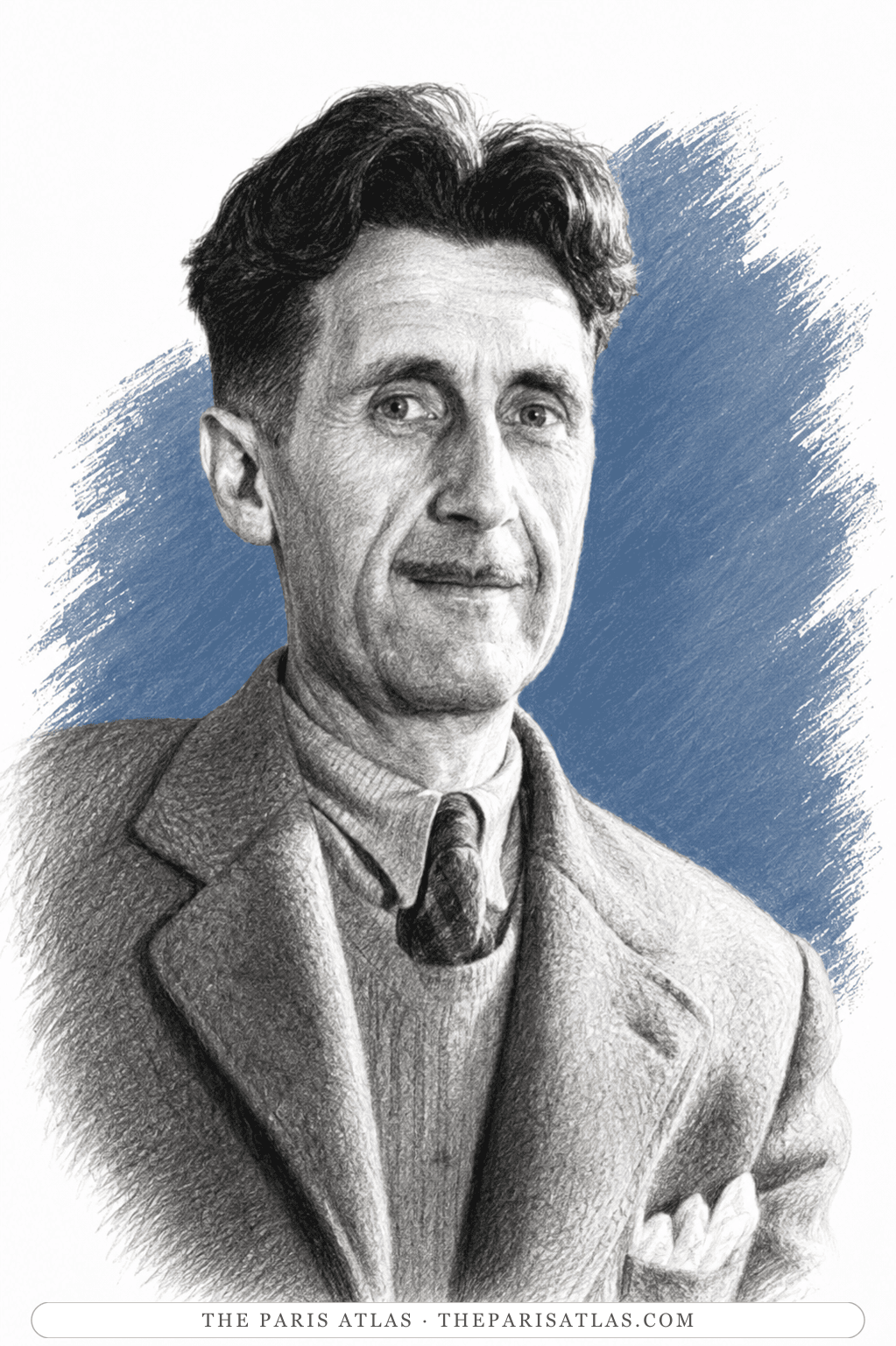
English novelist, essayist and journalist, born Eric Arthur Blair, who wrote Animal Farm and Nineteen Eighty-Four. He was an imperial policeman in Burma, a plongeur in Paris kitchens off the rue Mouffetard, and a militiaman shot through the neck in Spain before any of it.
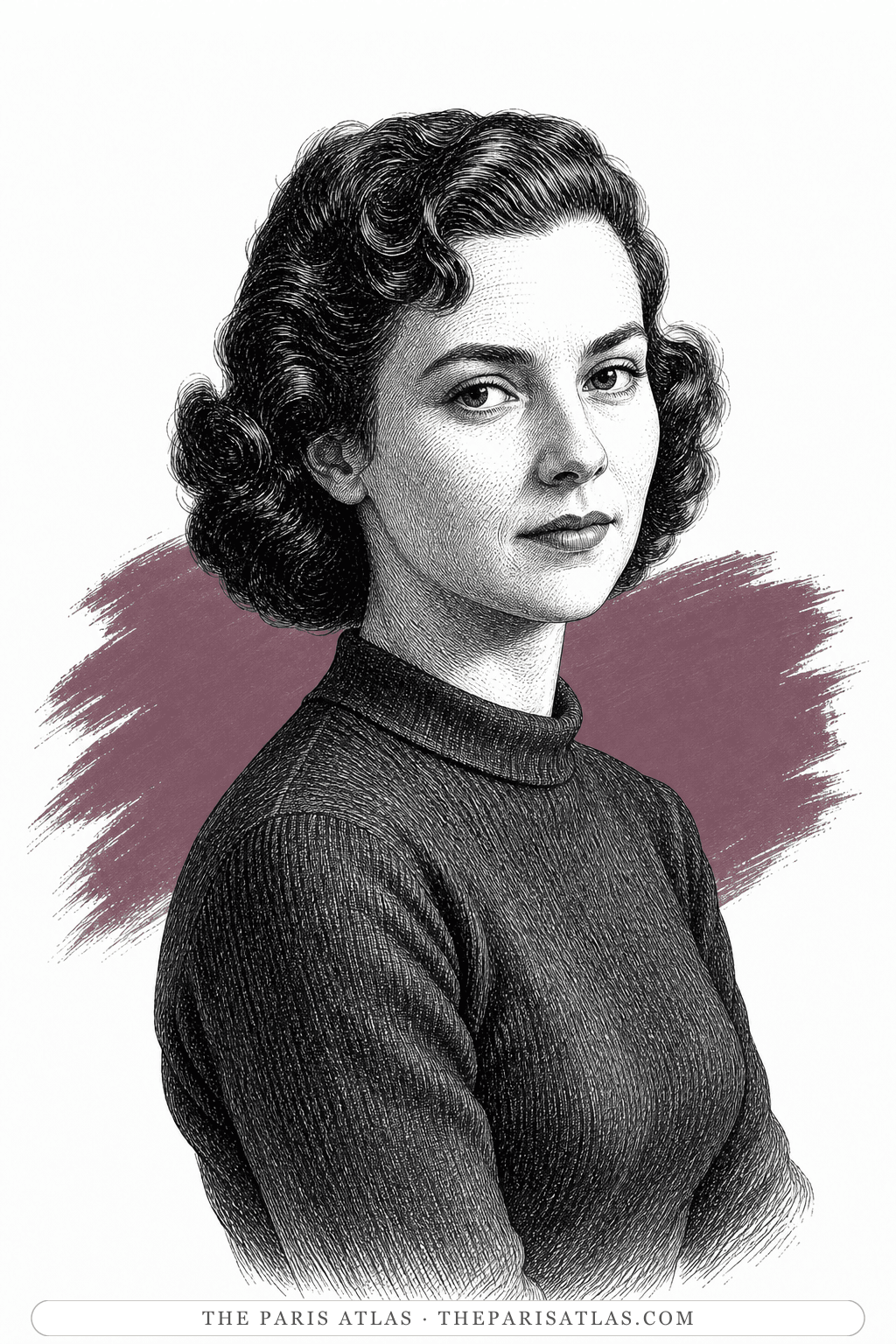
American memoirist and Jack Kerouac's first wife, whose New York apartment near Columbia was the gathering place where the first Beat circle formed in 1943 and 1944.
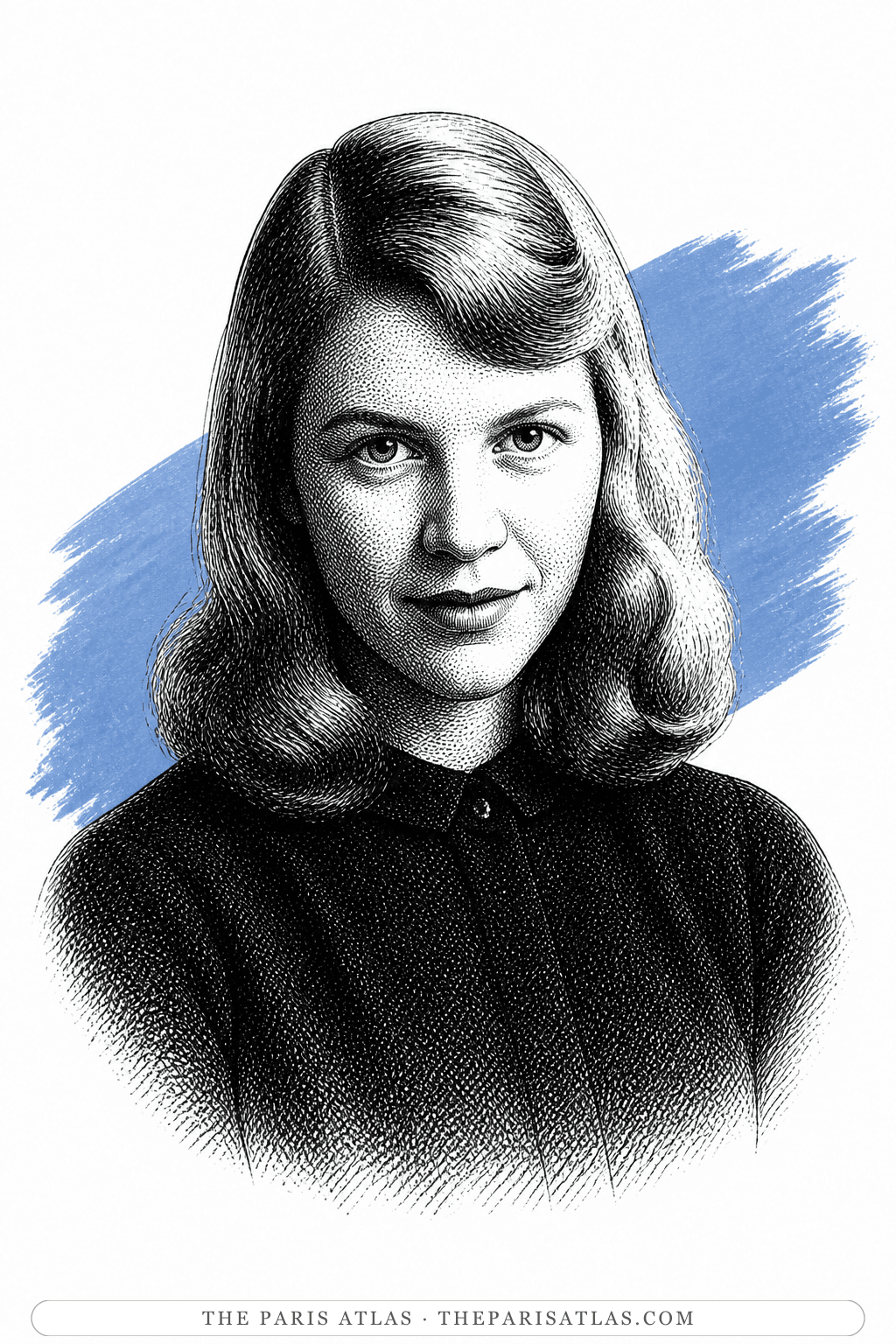
American poet who came to Paris in the spring of 1956, in the middle of her Fulbright year at Cambridge, to find the man she had been in love with for three years — and found he had gone. She had met Ted Hughes weeks before; she married him that June, and the honeymoon came back through Paris.
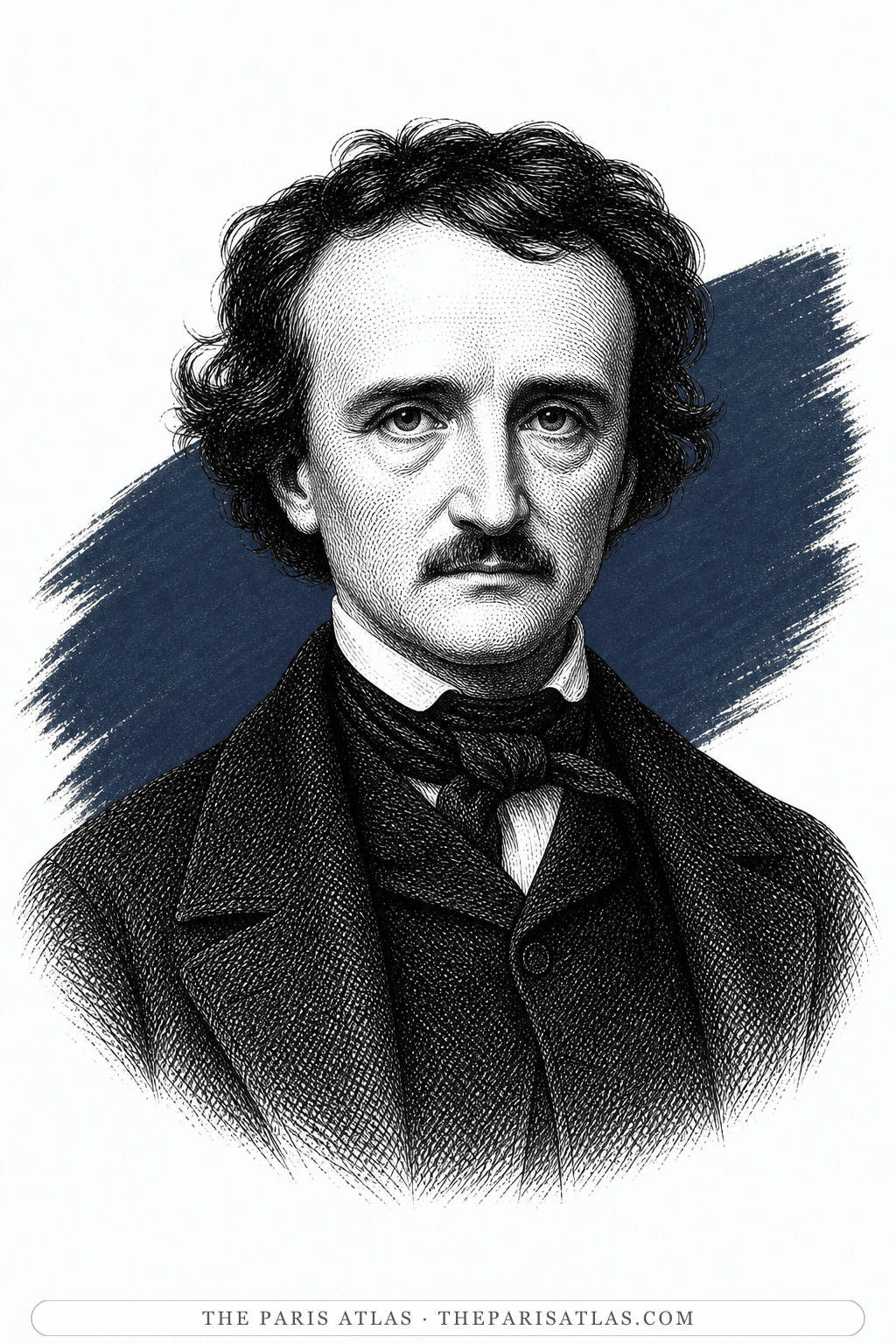
The American writer who invented the detective story on a Paris street that does not exist — and whose books, ignored at home, were turned by the poet Charles Baudelaire into French classics. Poe never crossed the Atlantic to France in his life.
Modernism's impresario — editor of Eliot, publisher of Joyce, Hemingway's line-cutter, and the era's most brilliant, most compromised poet.
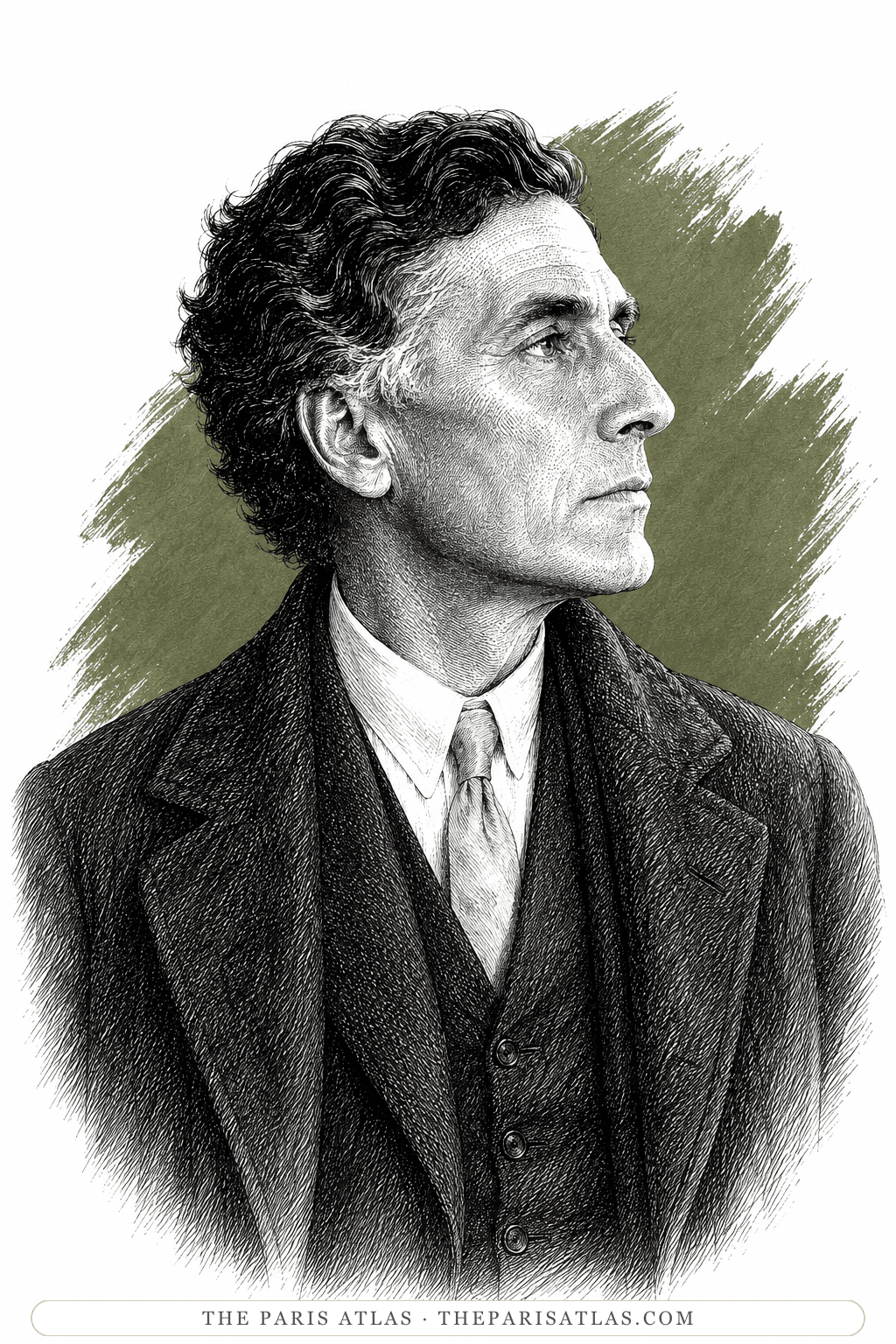
British novelist and philosophical writer whose exuberant exchange with Henry Miller became Proteus and the Magician.
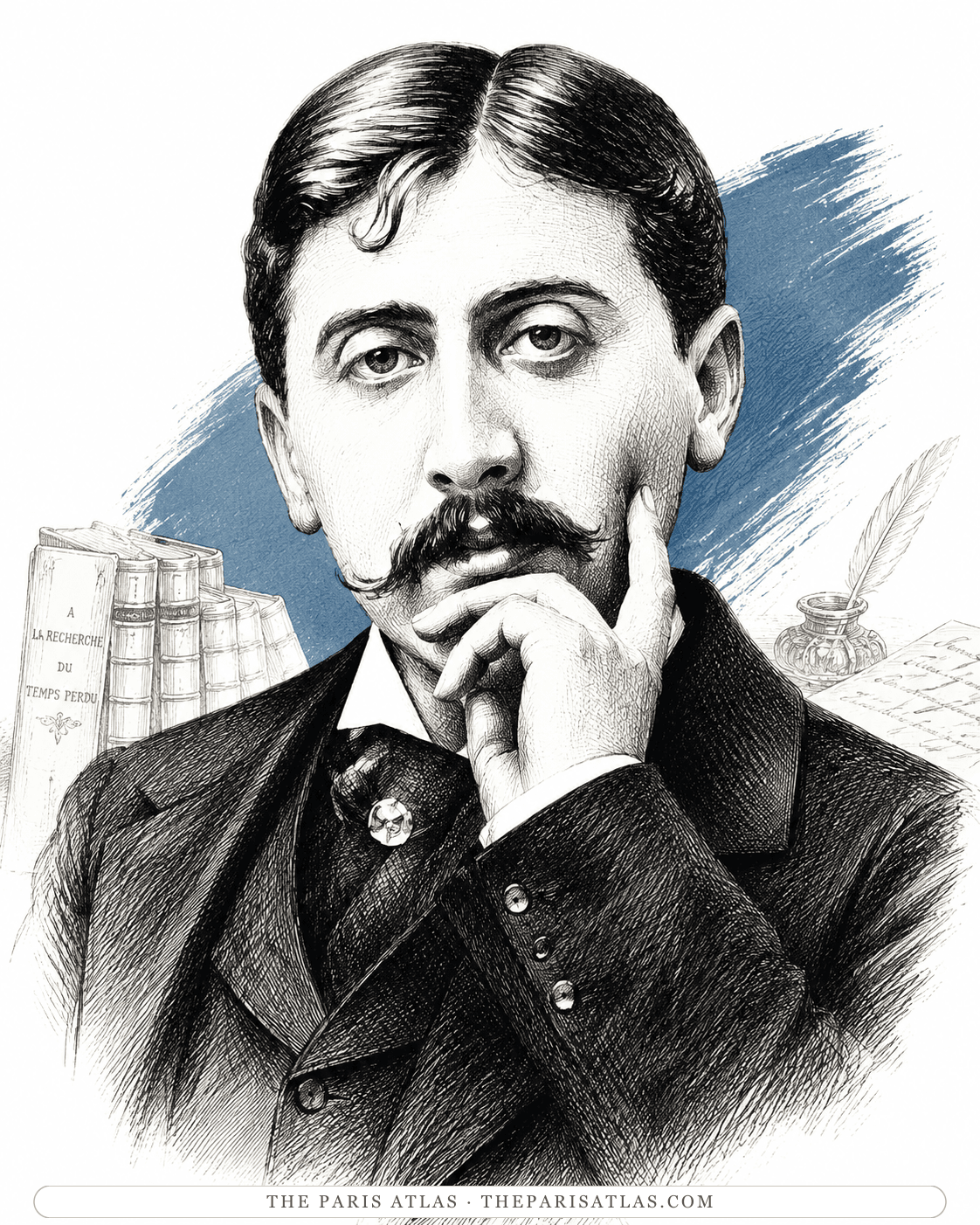
French novelist of the seven-volume In Search of Lost Time, written at night in a cork-lined room — the book that made memory itself the story.
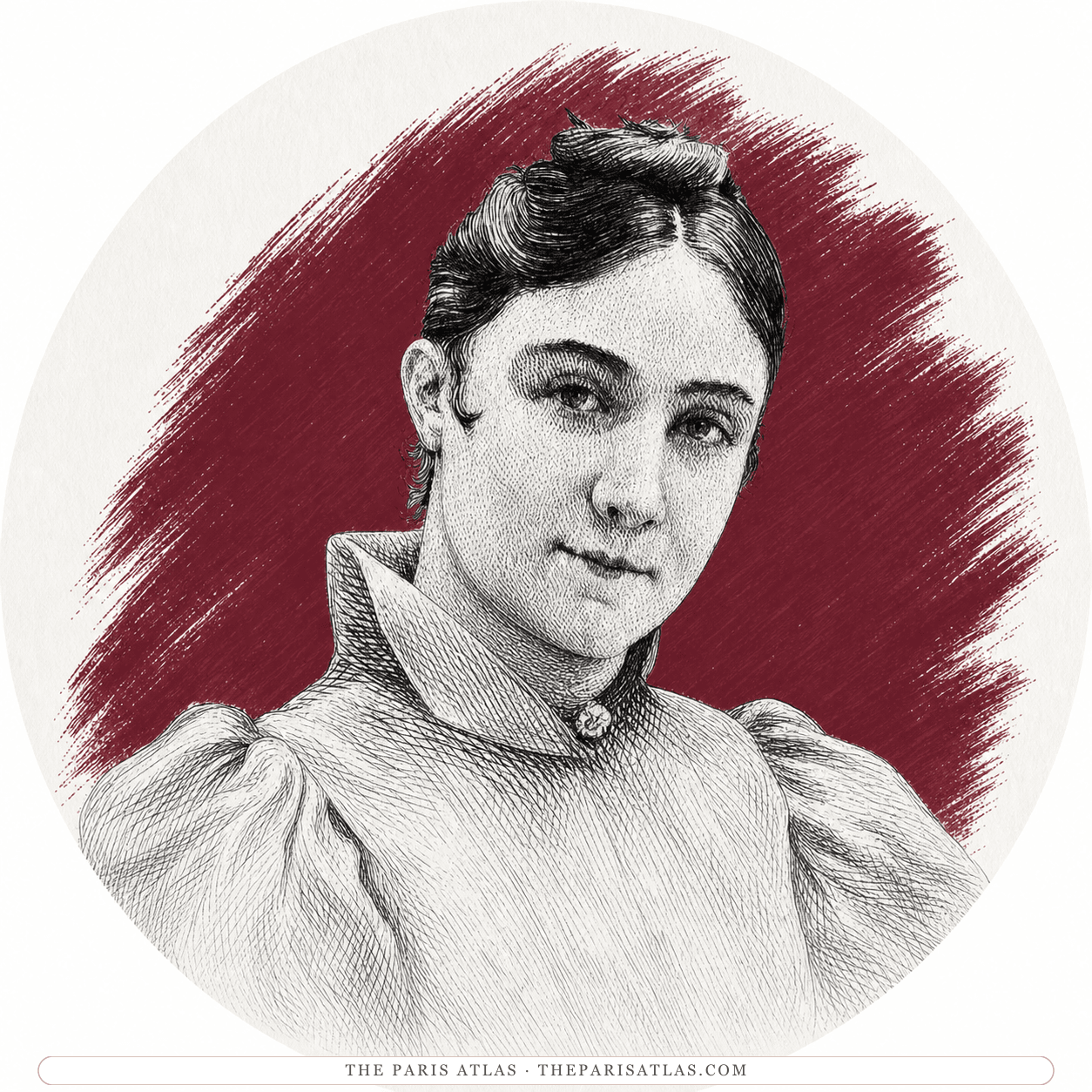
French novelist and critic who wrote Monsieur Vénus, was convicted of pornography for it by a Belgian court, held a police permit to wear men's clothes, and ran the Tuesday salon at the Mercure de France for four decades.
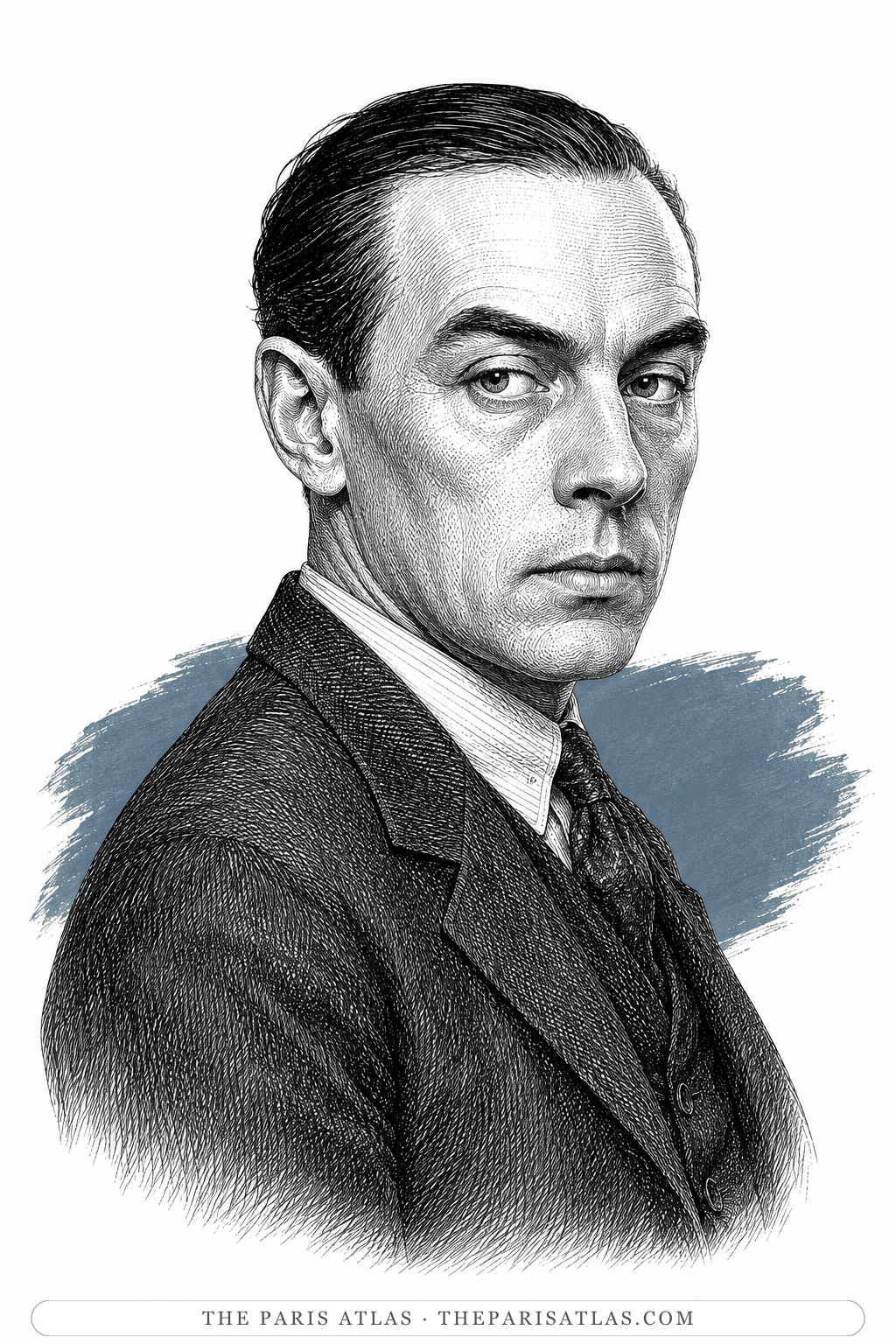
German novelist whose direct, unsentimental fiction follows soldiers and survivors marked by the First World War.
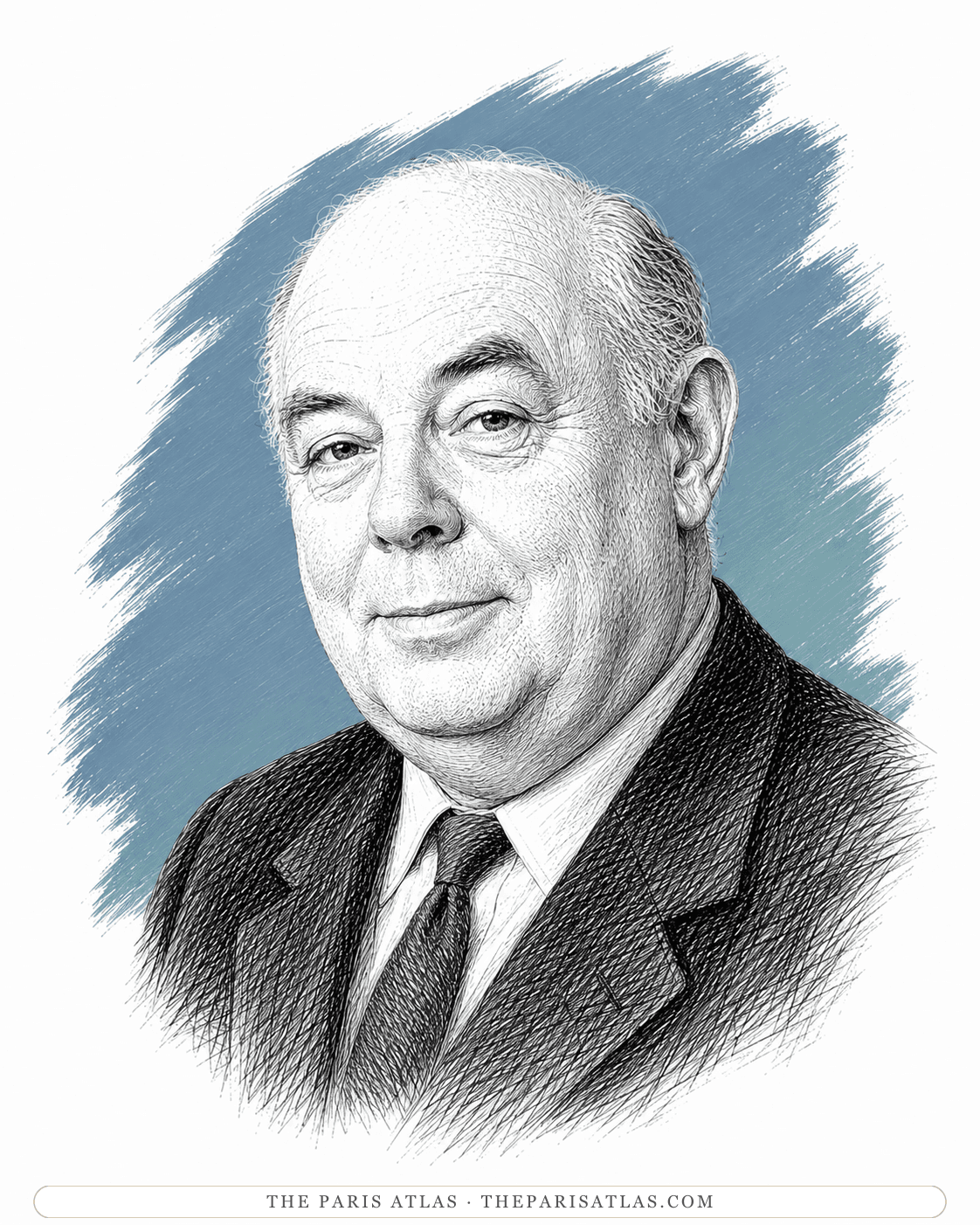
Director of Grand Illusion and The Rules of the Game — the painter's second son, who turned direct sound, deep focus, and ensemble acting into a cinema of social worlds, and whom the New Wave adopted as its master.
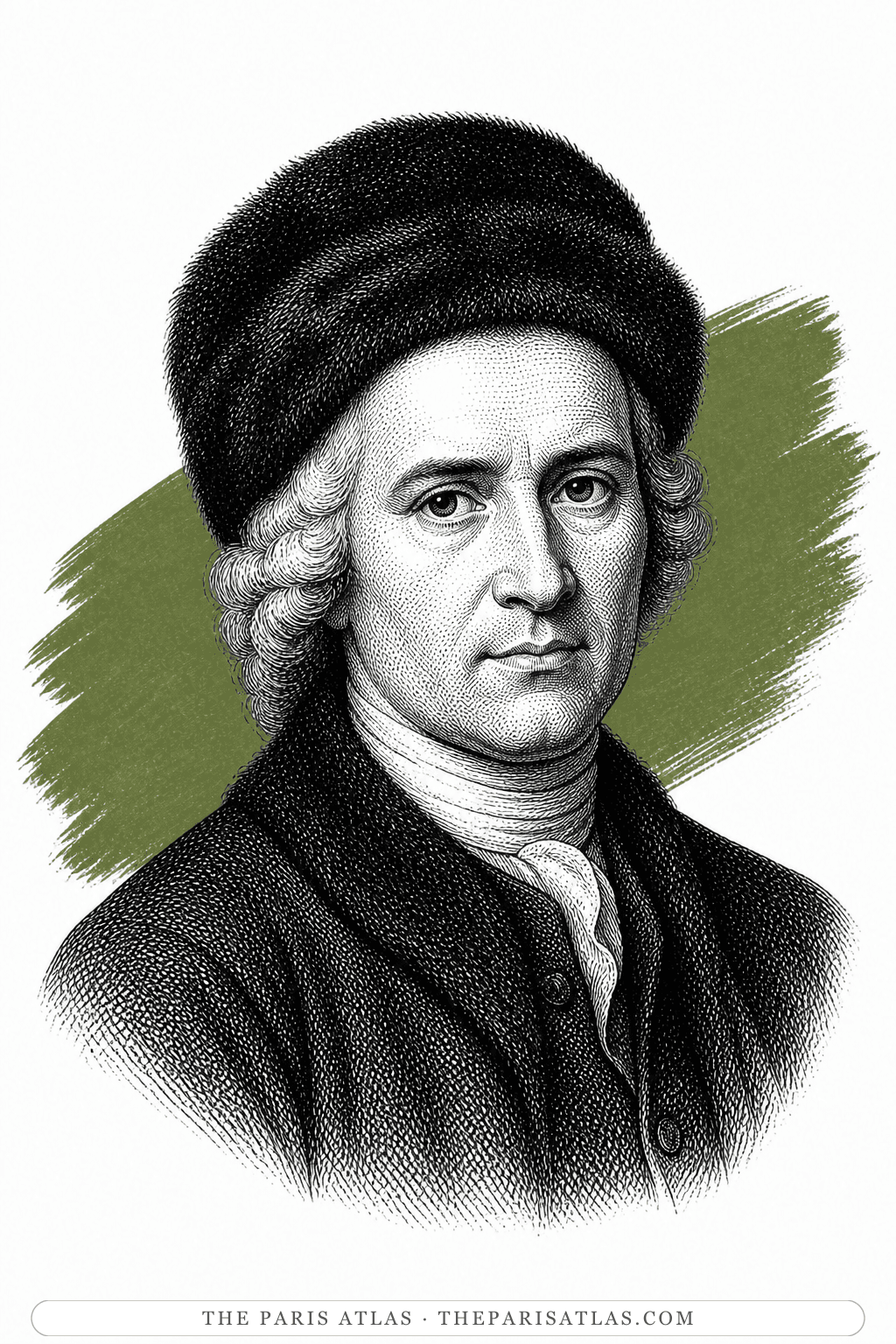
The Geneva-born writer who arrived in Paris in 1742 with a new system for writing down music, earned his living copying other people's scores by the page, and then wrote the books — The Social Contract, Émile, the Confessions — that got him chased out of France and, sixteen years after his death, carried into the Panthéon by the Revolution.
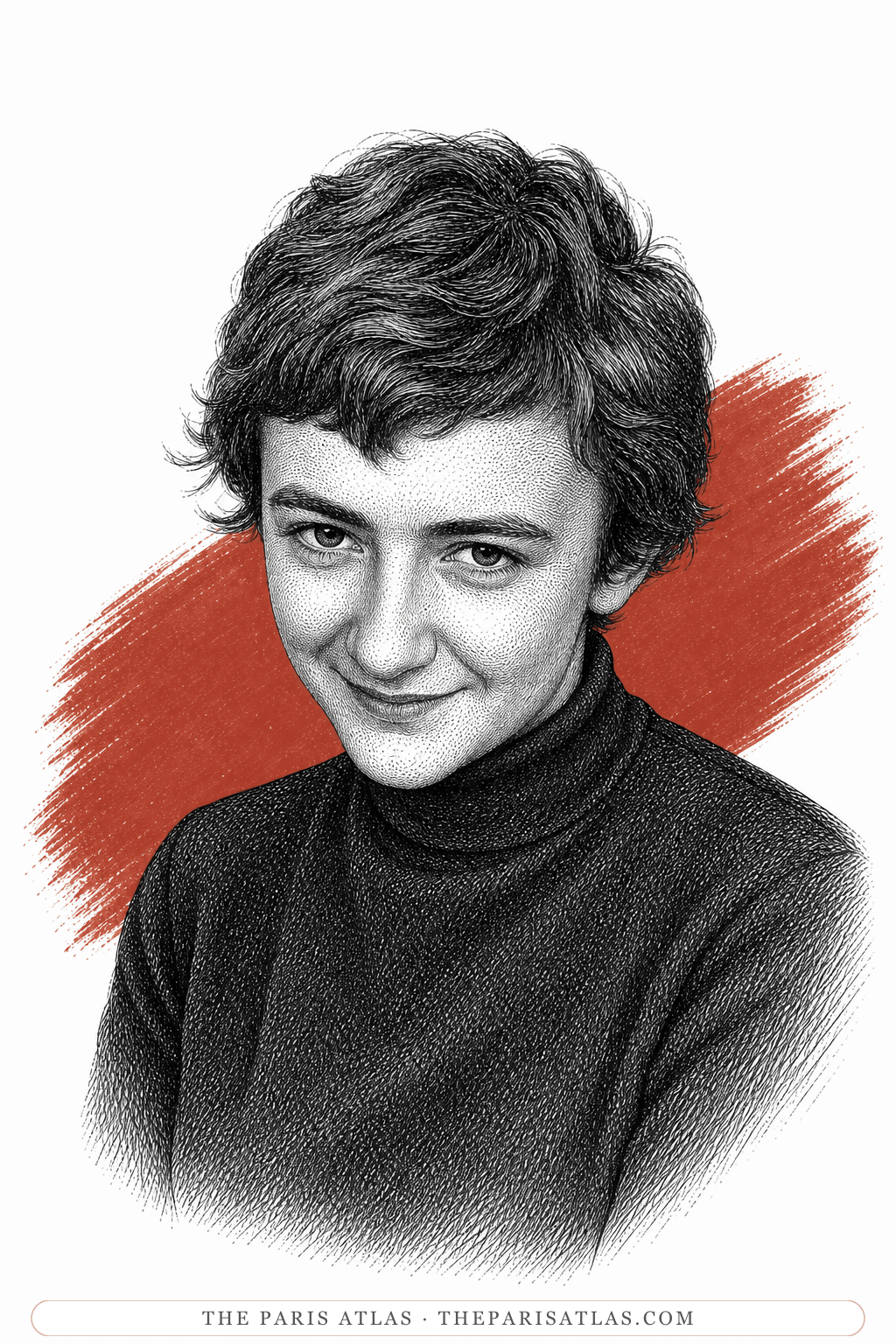
French novelist and playwright whose 1954 debut Bonjour Tristesse made its eighteen-year-old author famous for cool, concise stories of youth, freedom, desire, and emotional damage.
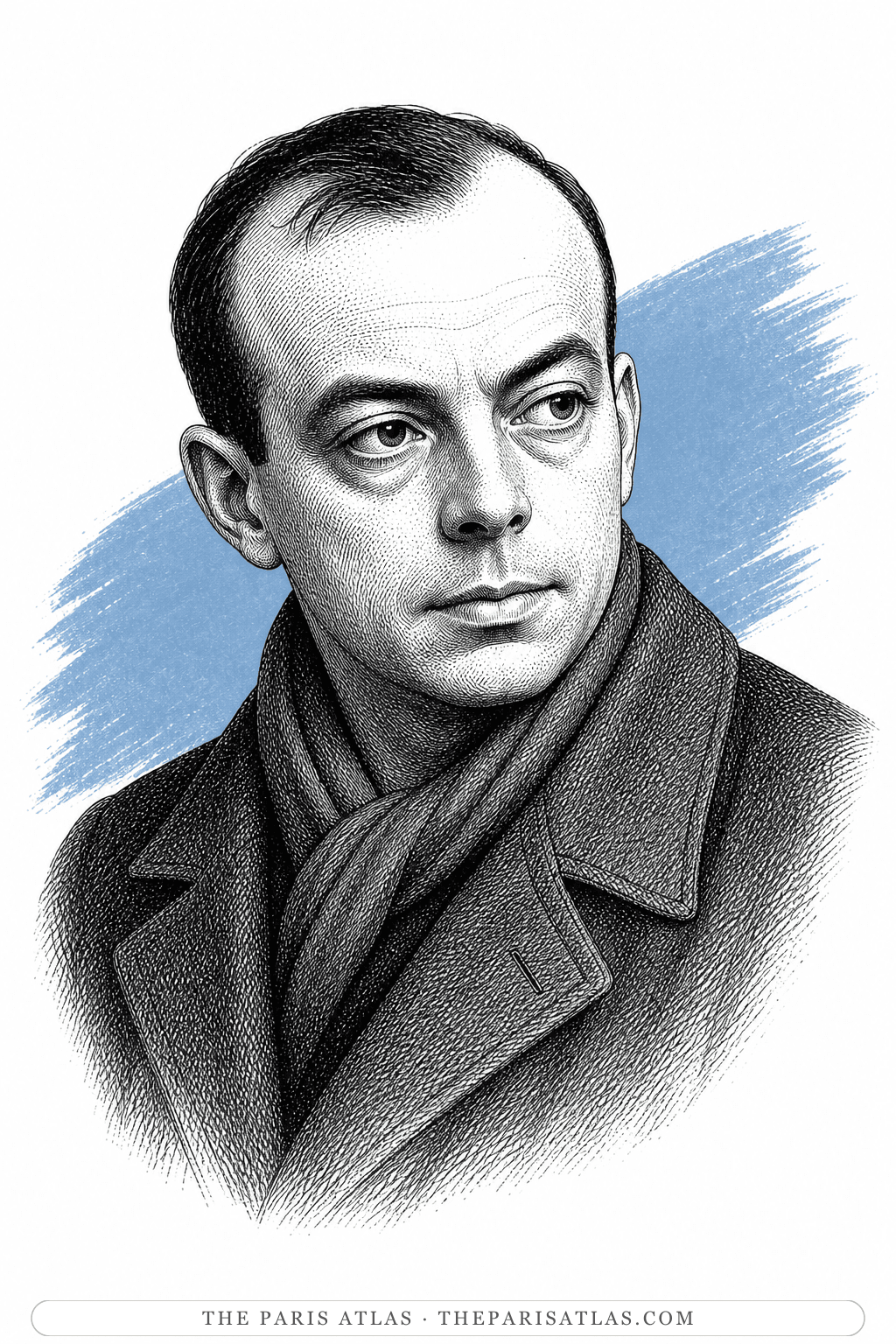
An aristocrat who flew the mail over the Sahara and the Andes and wrote the books that made those flights literature. Paris crowned him with the Prix Femina, one of France's leading literary prizes, in 1931, and with the novel prize of the Académie française — the official guardian of the French language — in 1939. Then, in wartime exile, he wrote Le Petit Prince ('The Little Prince') in New York, where it was published in 1943. France did not see it until 1946, two years after he disappeared over the Mediterranean.
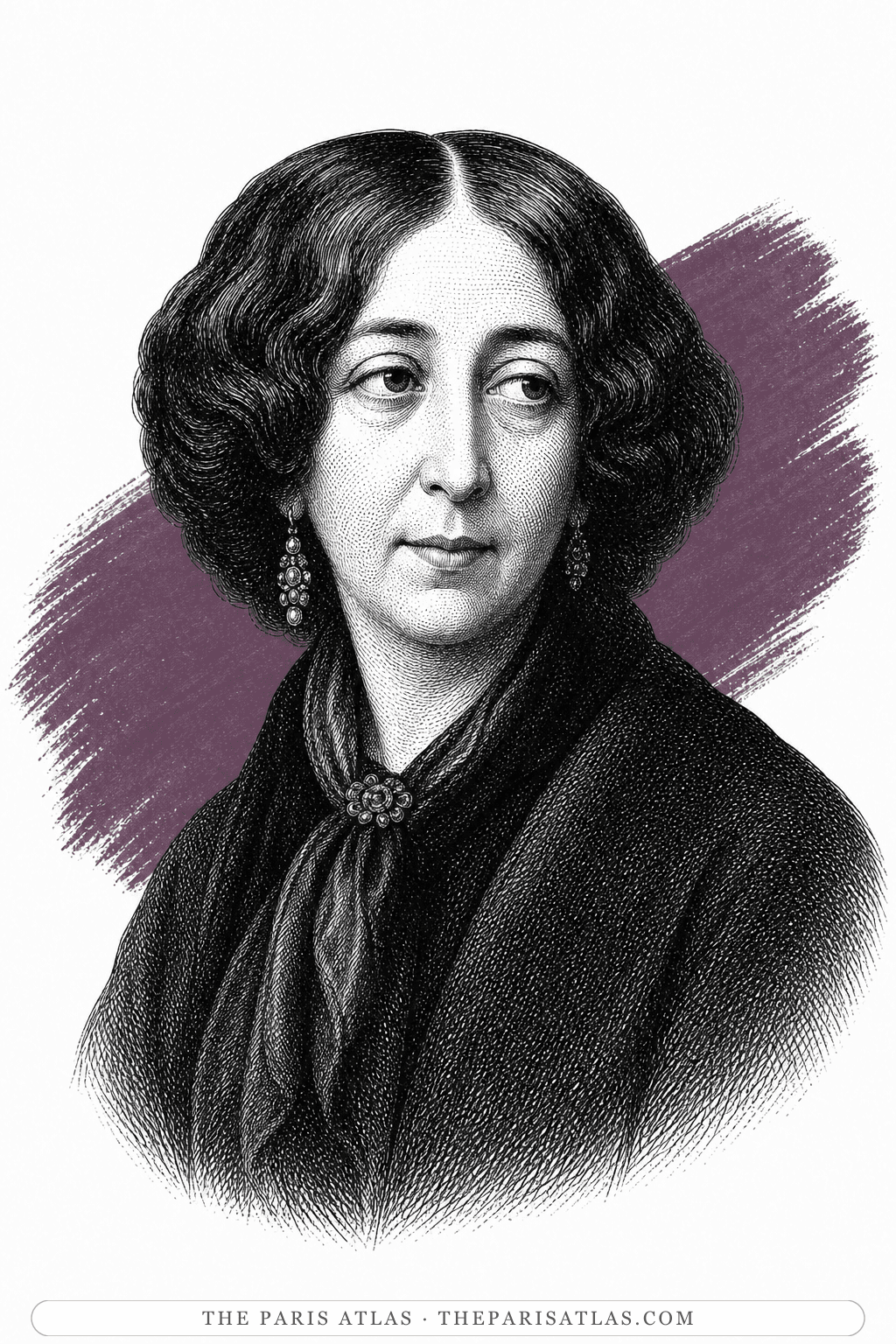
Born Aurore Dupin, she arrived in Paris in 1831, wore men's clothes so she could go where women were not admitted, published under a man's name, and became the most widely read French novelist of her century — and the partner of the composer Frédéric Chopin for nine years.
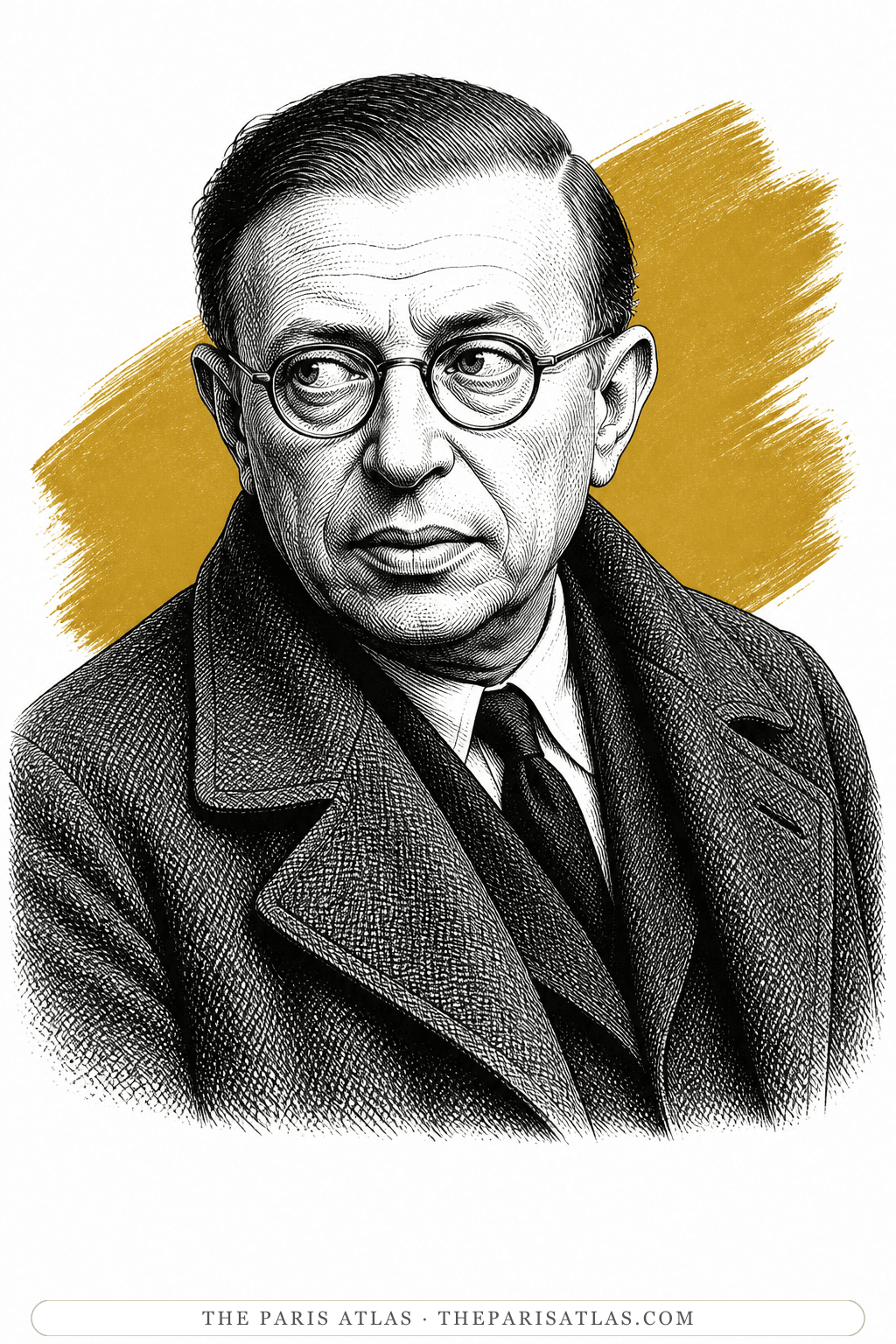
French philosopher, novelist and playwright, co-founder of Les Temps modernes, life partner of Simone de Beauvoir, and the central figure of French existentialism whose 1952 dispute with Albert Camus over The Rebel ended their friendship.
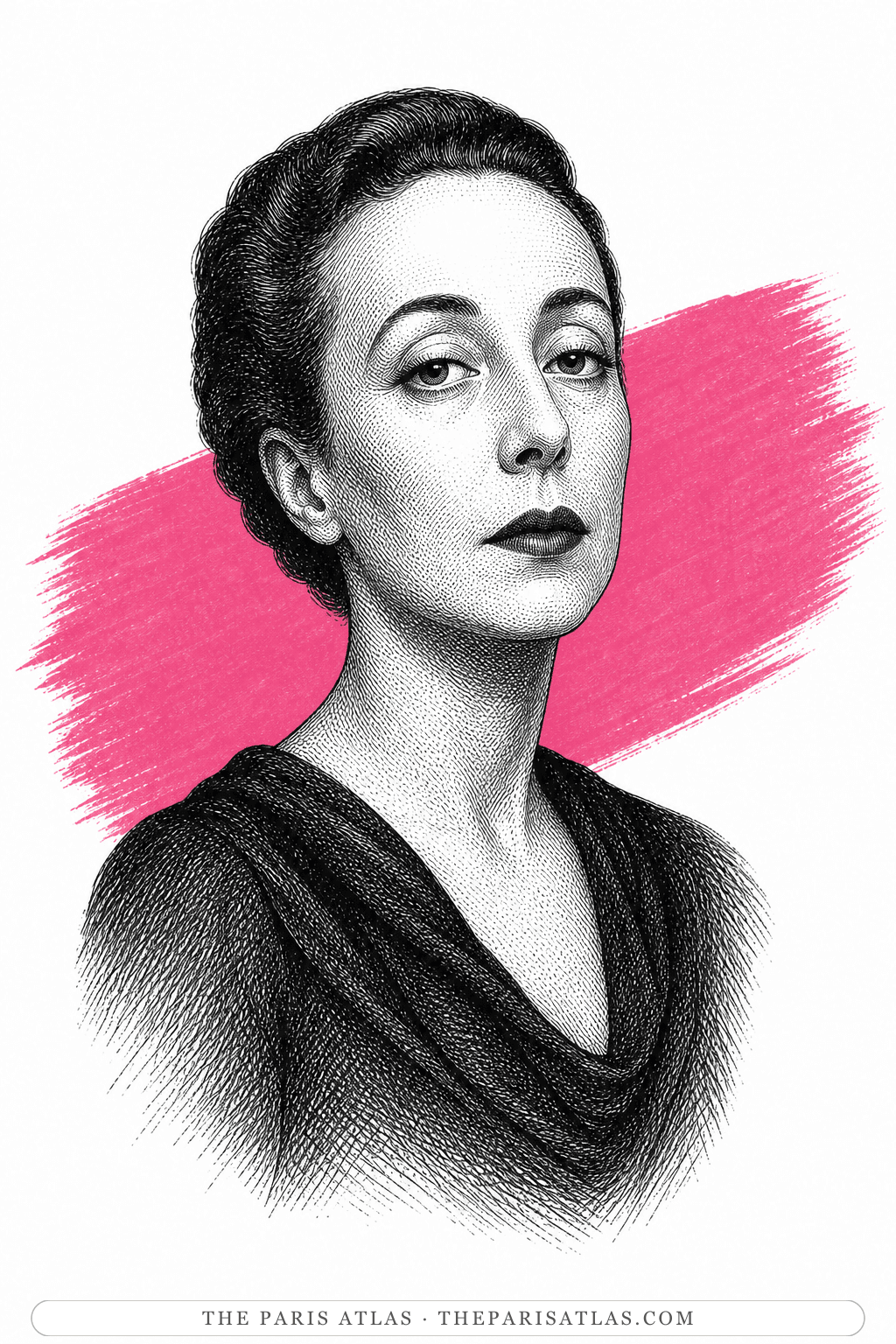
Couturière — a designer of made-to-measure clothes, cut and sewn by hand for one client at a time — who turned a Paris couture house into a workshop for the Surrealists, the artists who built their work out of dream logic and chance. From 21 place Vendôme she commissioned the painter Salvador Dalí, the poet and film-maker Jean Cocteau and the sculptor Alberto Giacometti to help make her clothes — a dress printed with a lobster, a hat shaped like a shoe, a colour she named shocking pink — then closed the house in 1954 and never designed again.
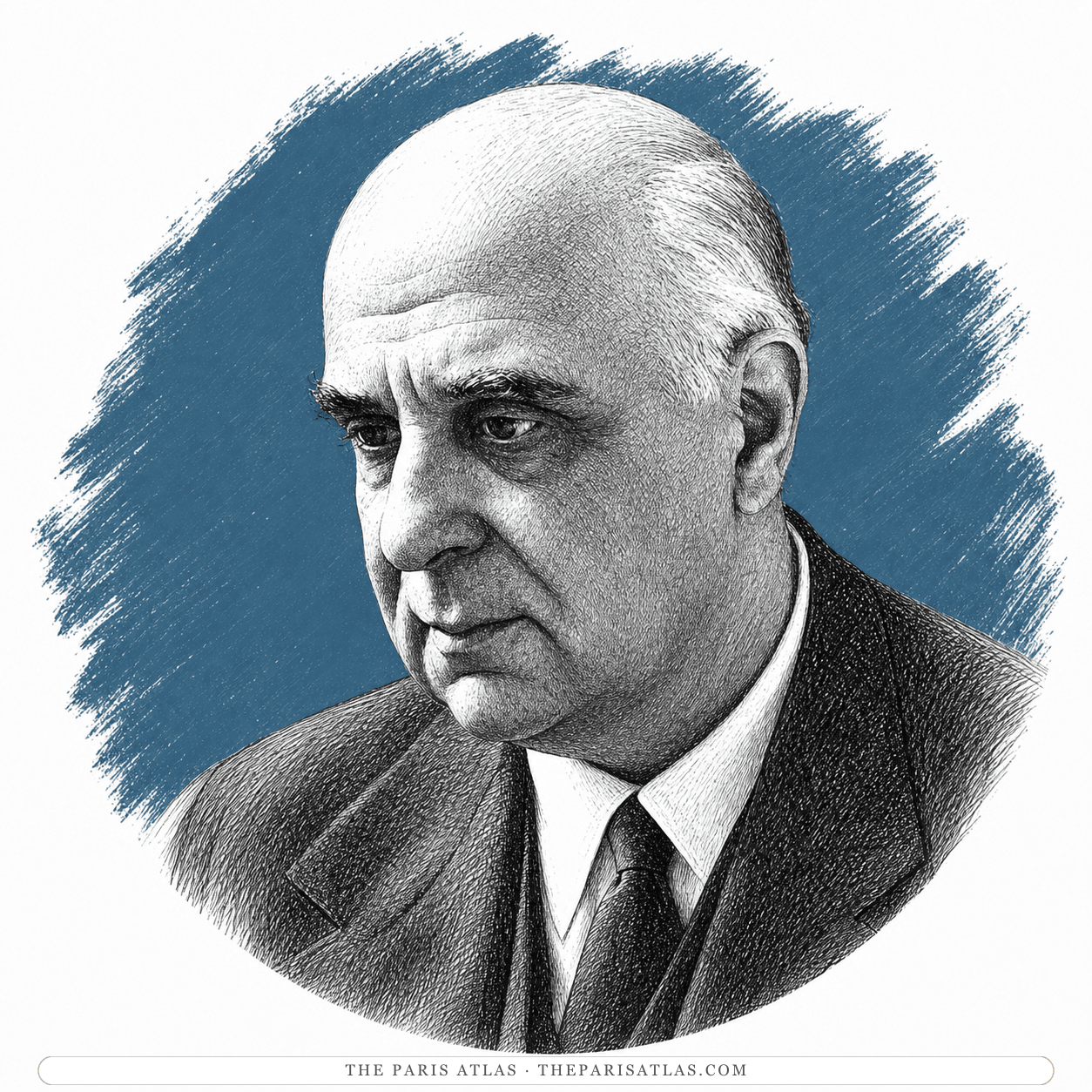
The Greek poet who won the Nobel Prize in Literature in 1963 and spent his whole working life as a diplomat. He appears under his real surname, Seferiades, in Henry Miller's The Colossus of Maroussi.
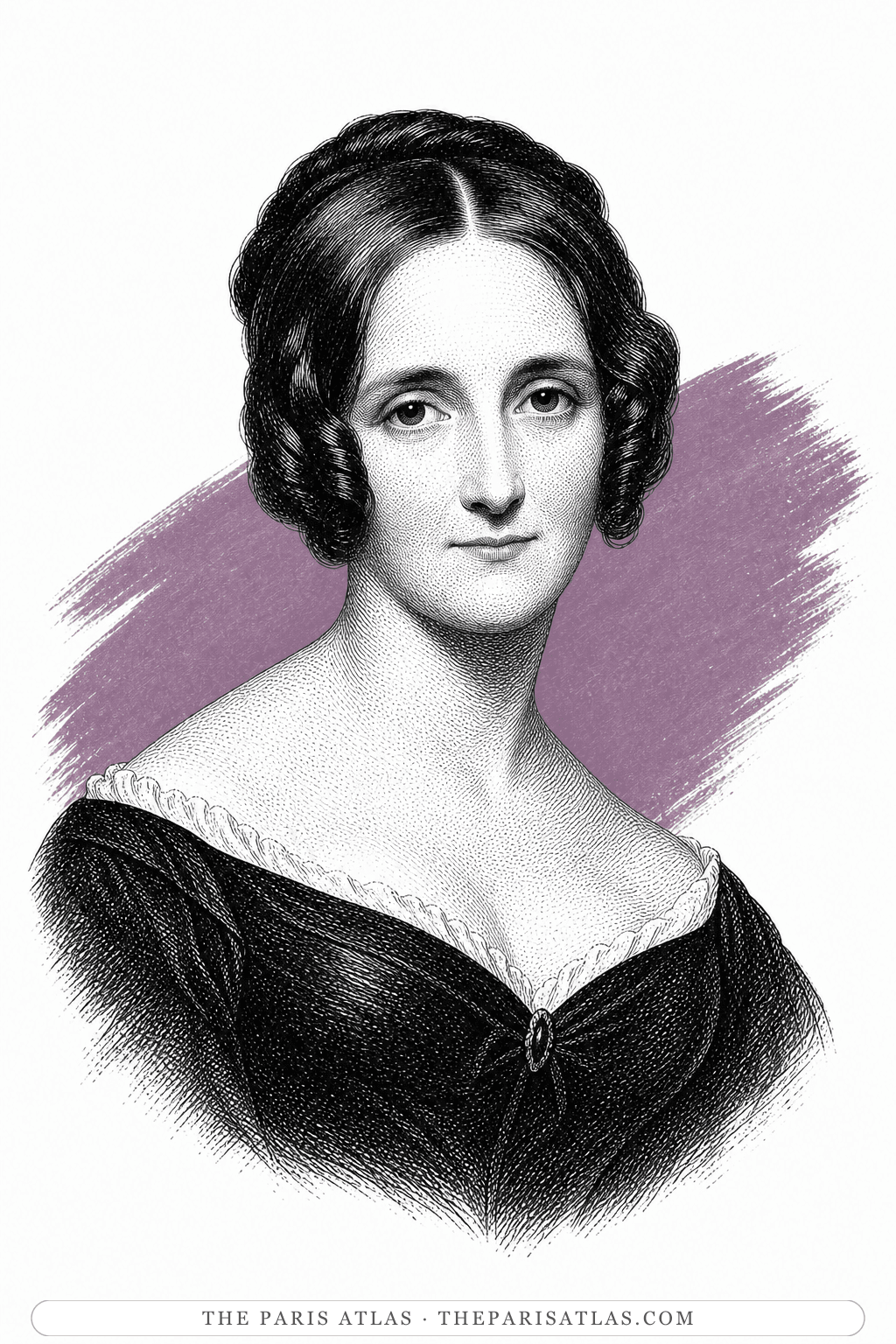
The author of Frankenstein, who first saw Paris at sixteen as a runaway. In the summer of 1814 she crossed from England to Calais with the poet Percy Bysshe Shelley and her stepsister Claire Clairmont, spent a week trapped in an expensive Paris hotel with no money, then bought a donkey and walked south-east across a France still wrecked by the Napoleonic wars. That journey became her first published book. Two years later, on a lake in Switzerland, she began her second.
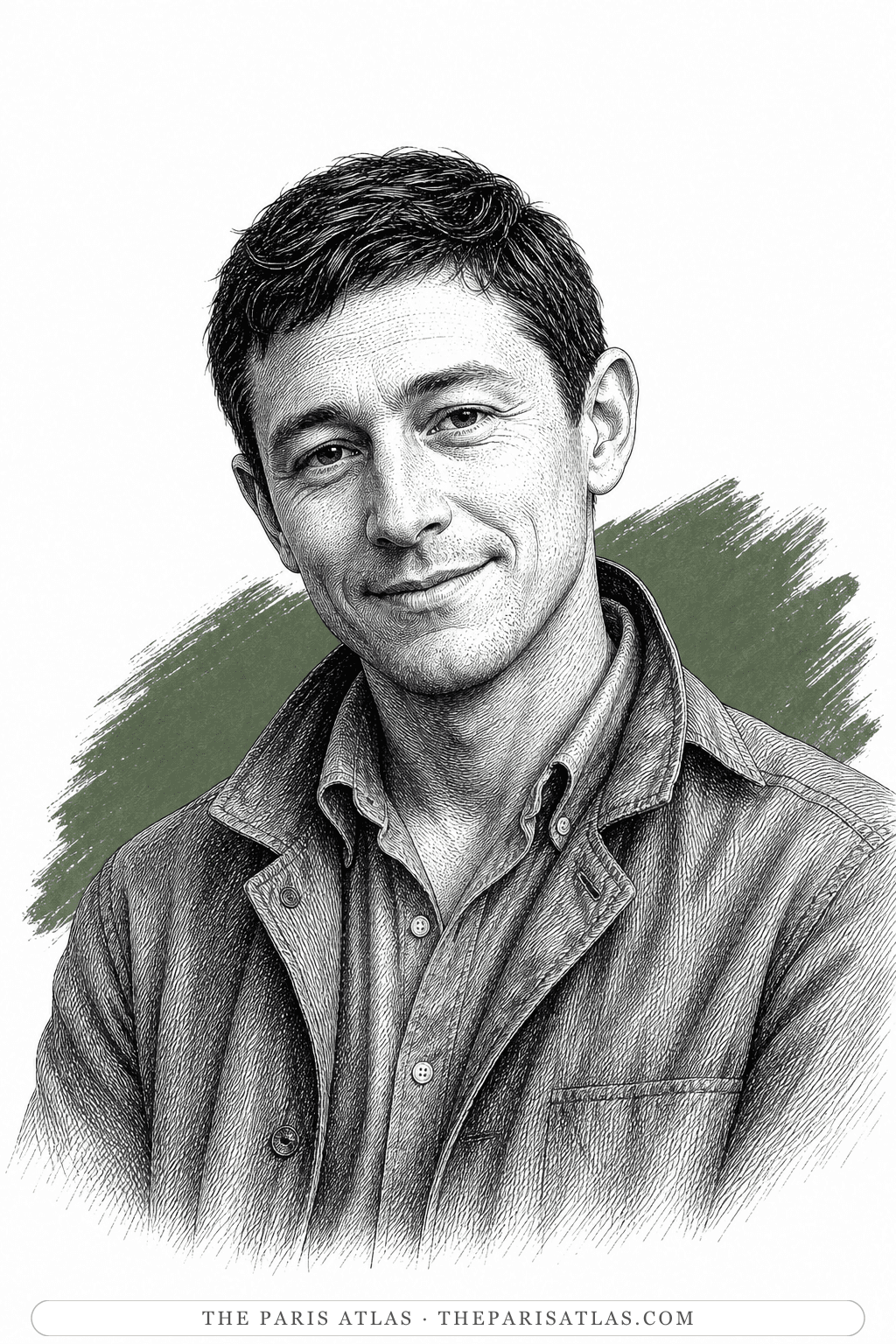
American poet and student of Asian religions whose friendship intensified Kerouac's Buddhism and inspired Japhy Ryder in The Dharma Bums.
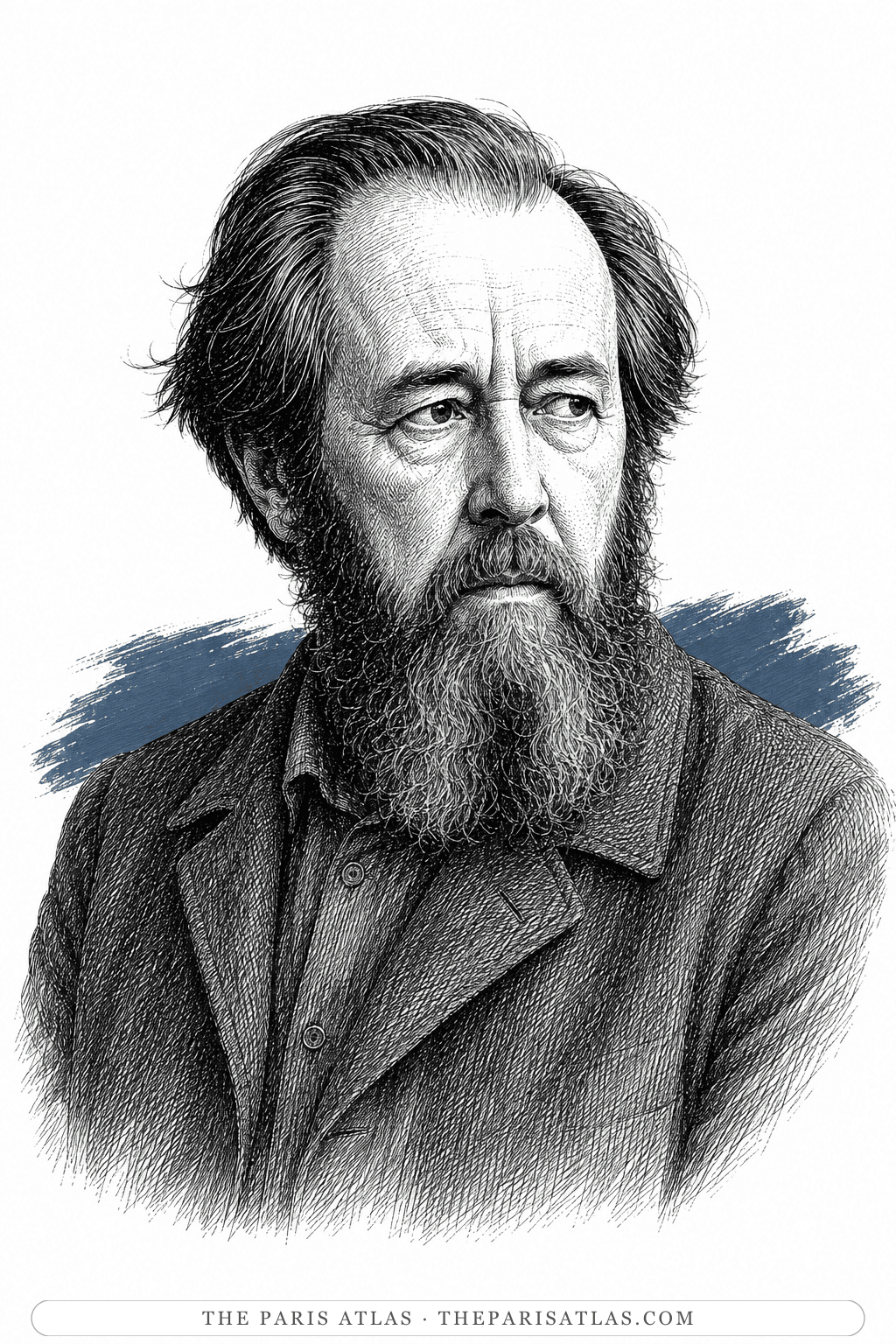
Russian novelist and dissident whose work documented Soviet prisons, labor camps, state violence, and moral endurance.

American essayist and critic who won a fellowship to Oxford in 1957, hated it, moved to Paris by Christmas, and spent the year that turned a philosophy graduate student into a writer. She came home in 1958, asked her husband for a divorce at the airport, and within six years had written "Notes on 'Camp'".
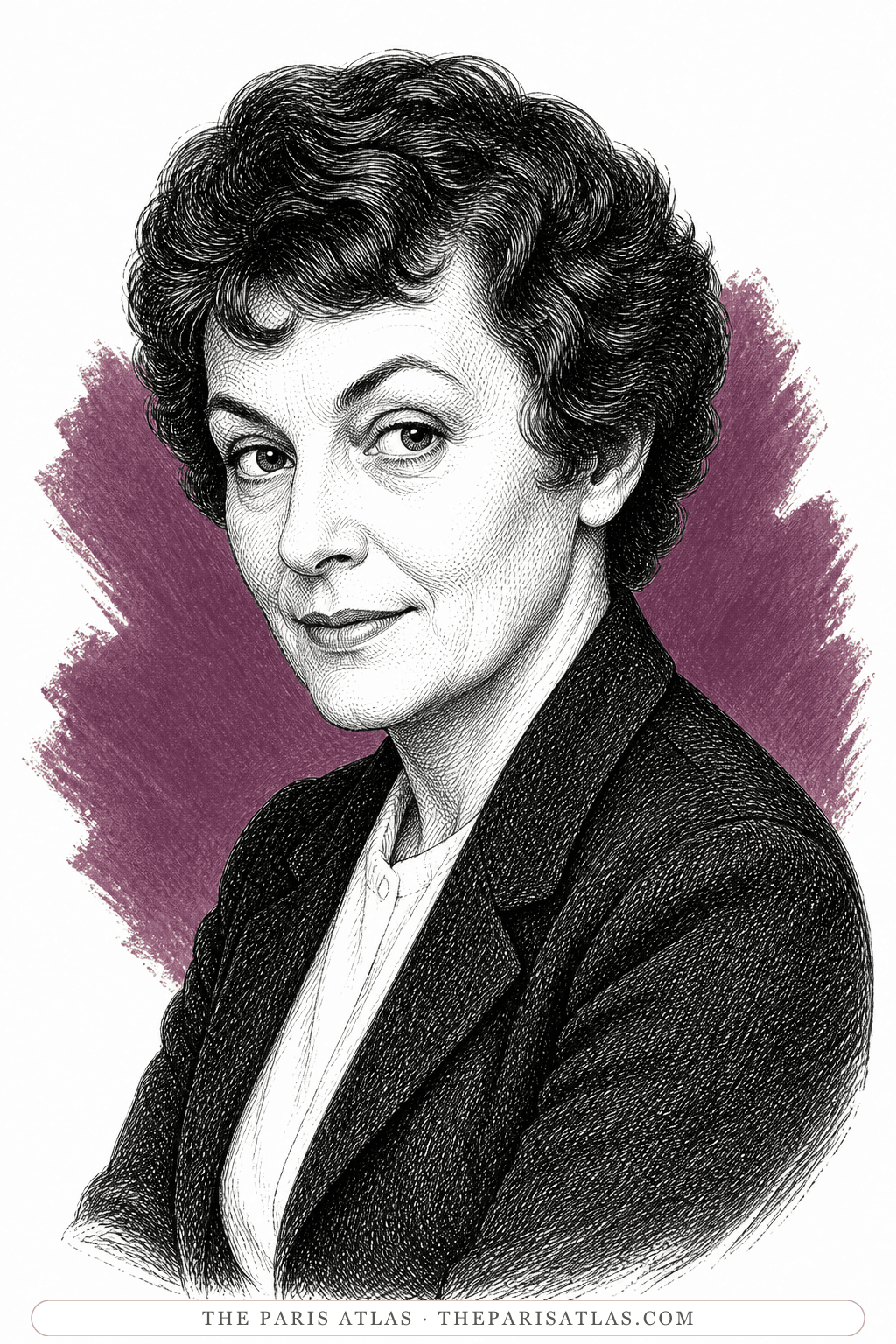
Scottish novelist known for cool, exact, darkly comic stories in which catastrophe arrives through controlled prose.
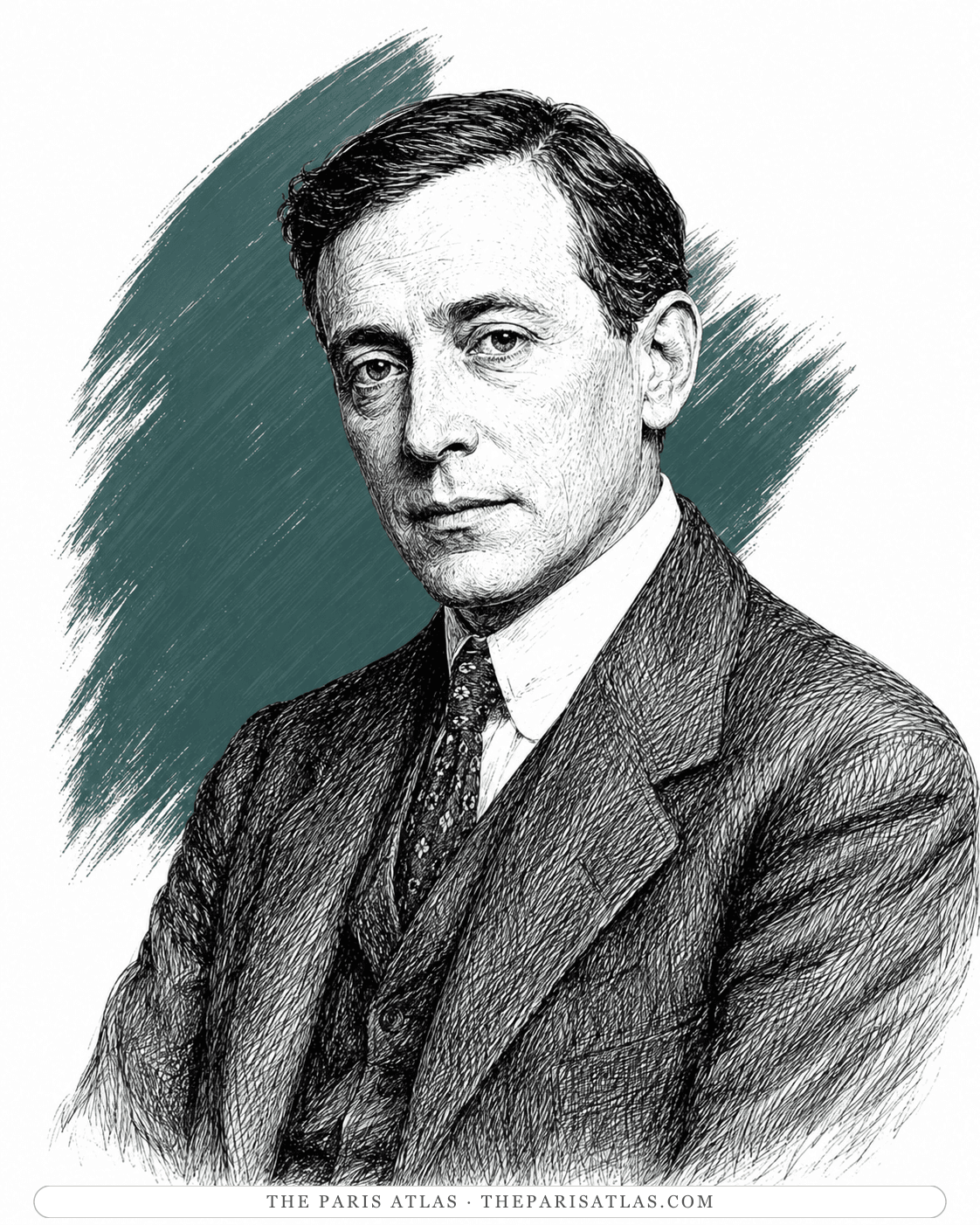
Editor of the 1922 symposium that sent a generation to France — then Montparnasse's great cautionary tale at the Select, Hemingway's Harvey Stone, and finally his own unsparing chronicler.
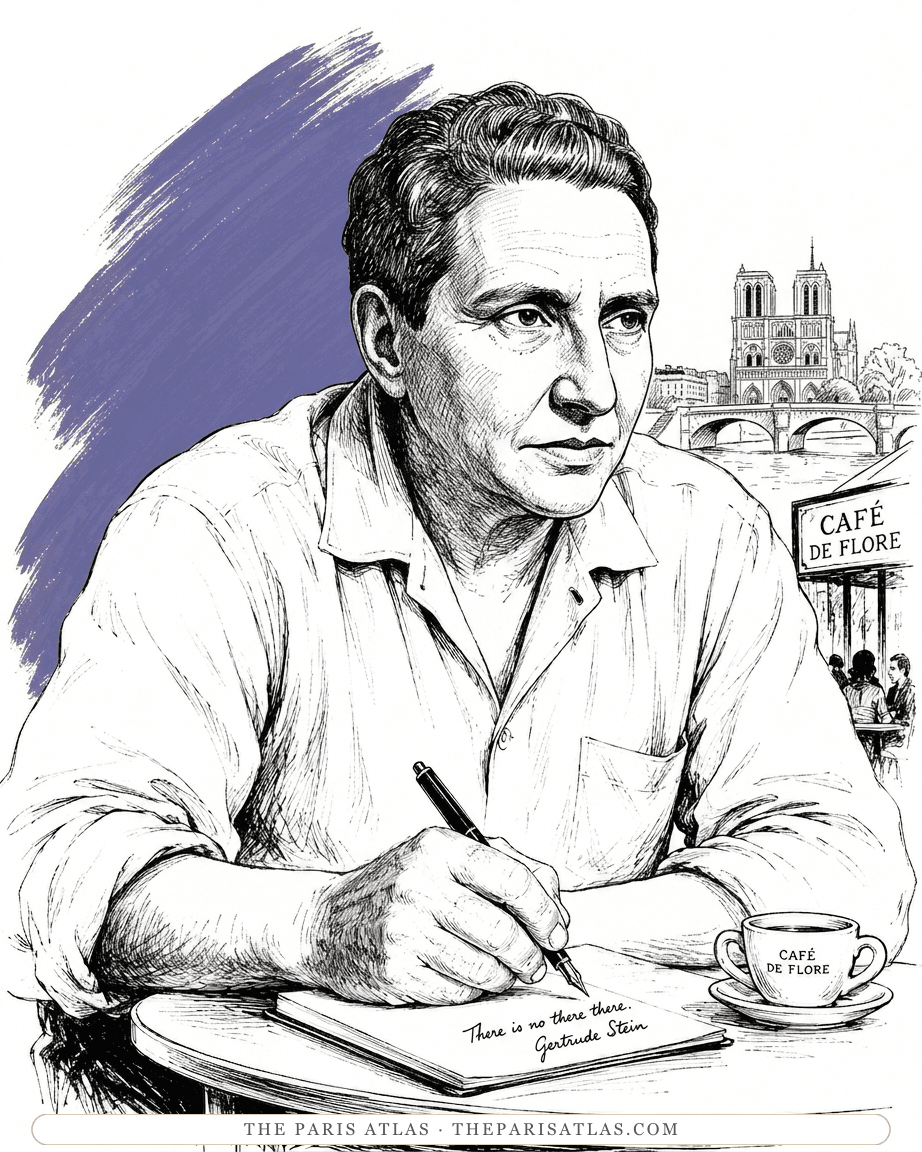
Writer, collector, and host of the rue de Fleurus salon where modern art and the Lost Generation were curated in the same room.
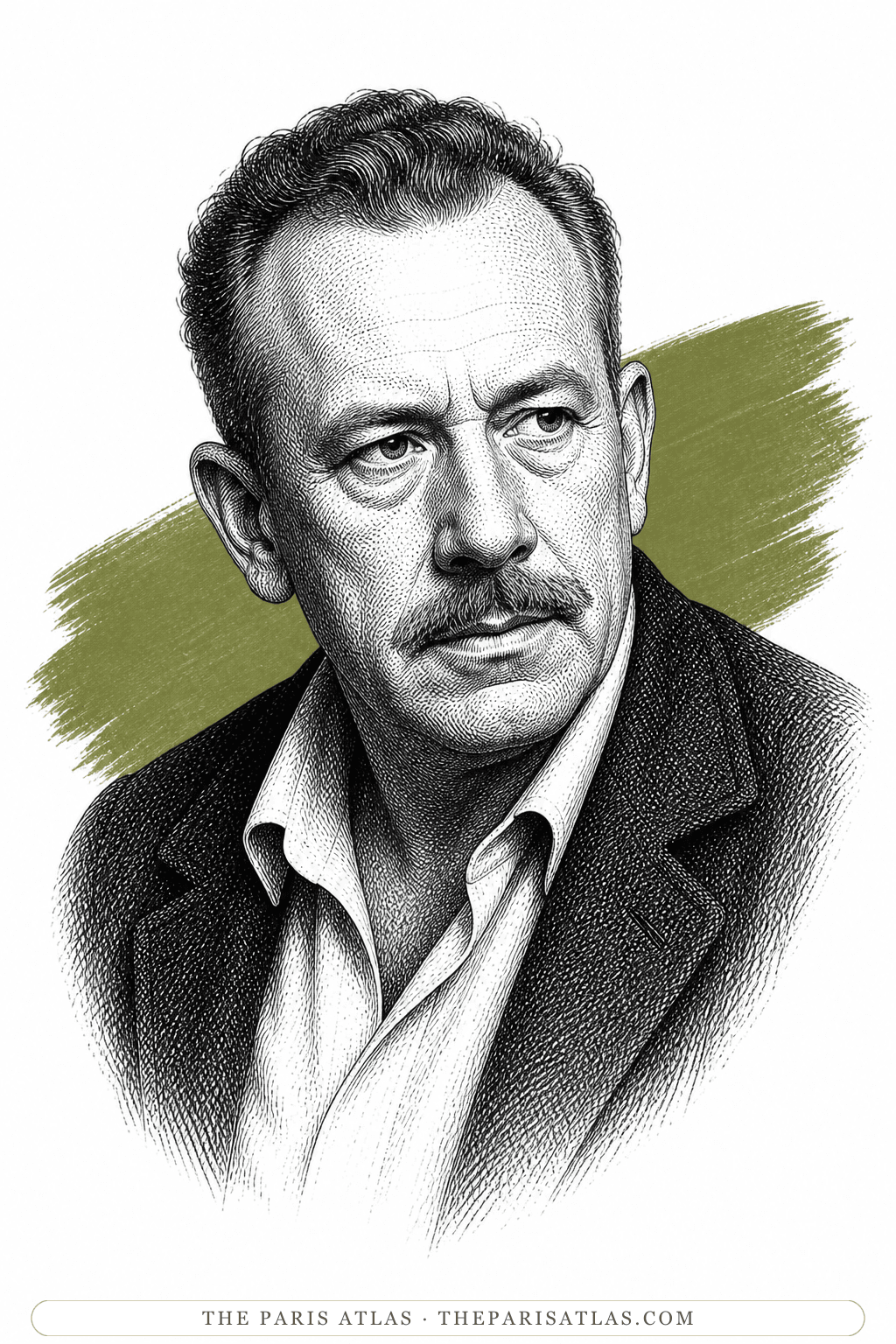
American novelist of the California fields and of the Dust Bowl migration — the exodus of farming families driven off the drought-ruined southern plains in the 1930s — awarded the Nobel Prize in Literature in 1962. In the summer of 1954 he moved into 1 avenue de Marigny in Paris and wrote for the Paris daily newspaper Le Figaro. Some of that work reached French readers in translation long before it was ever printed in his own English: one story waited sixty-five years.
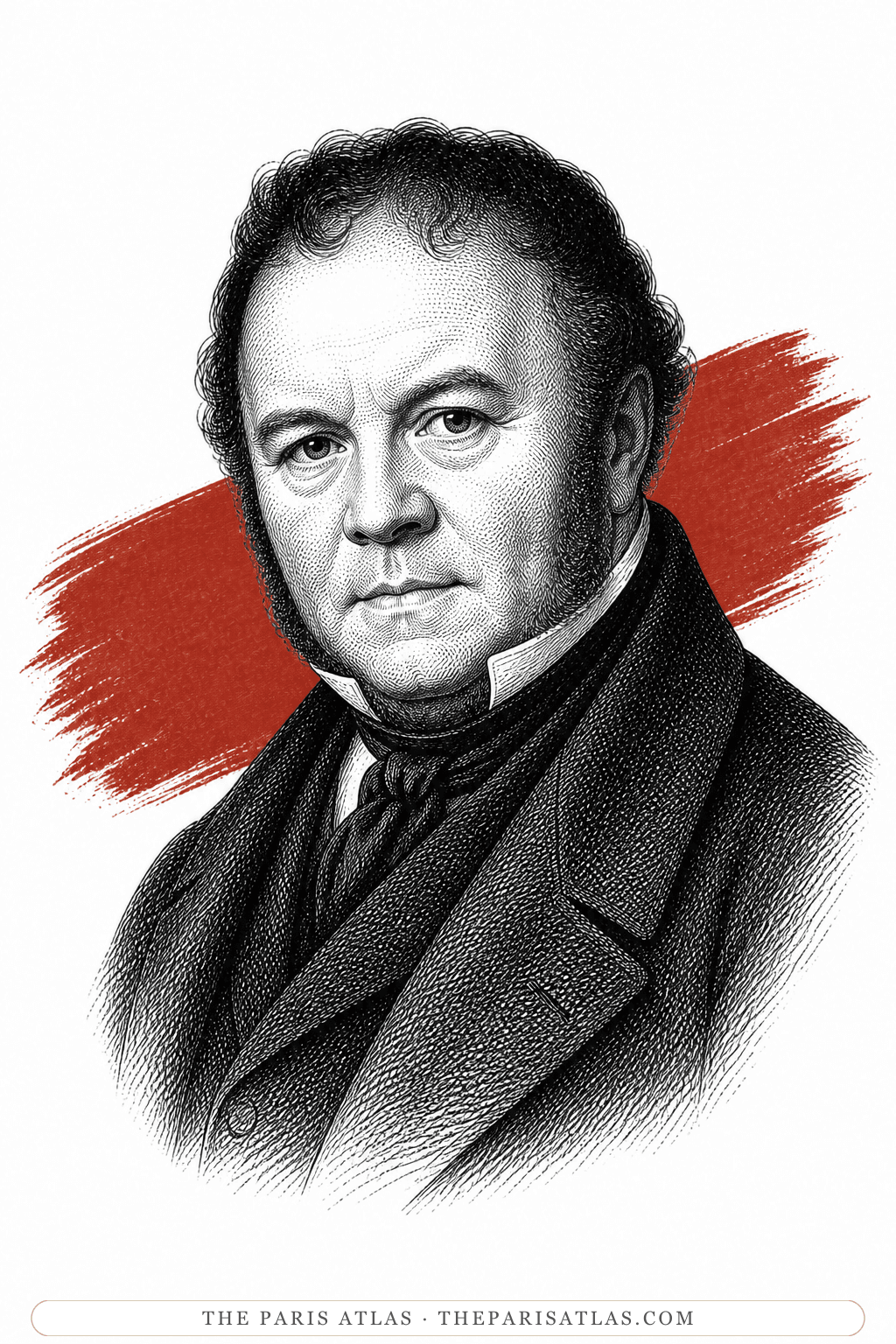
The Grenoble boy who left at sixteen and never went back willingly, wrote Le Rouge et le Noir ('The Red and the Black') and La Chartreuse de Parme ('The Charterhouse of Parma') around a career as a French government official, and addressed his books to a readership that did not yet exist — "the happy few". He predicted the date they would arrive: "I shall be read in 1880." He was very nearly right — his manuscripts began to be published in the 1880s, and made him a classic.
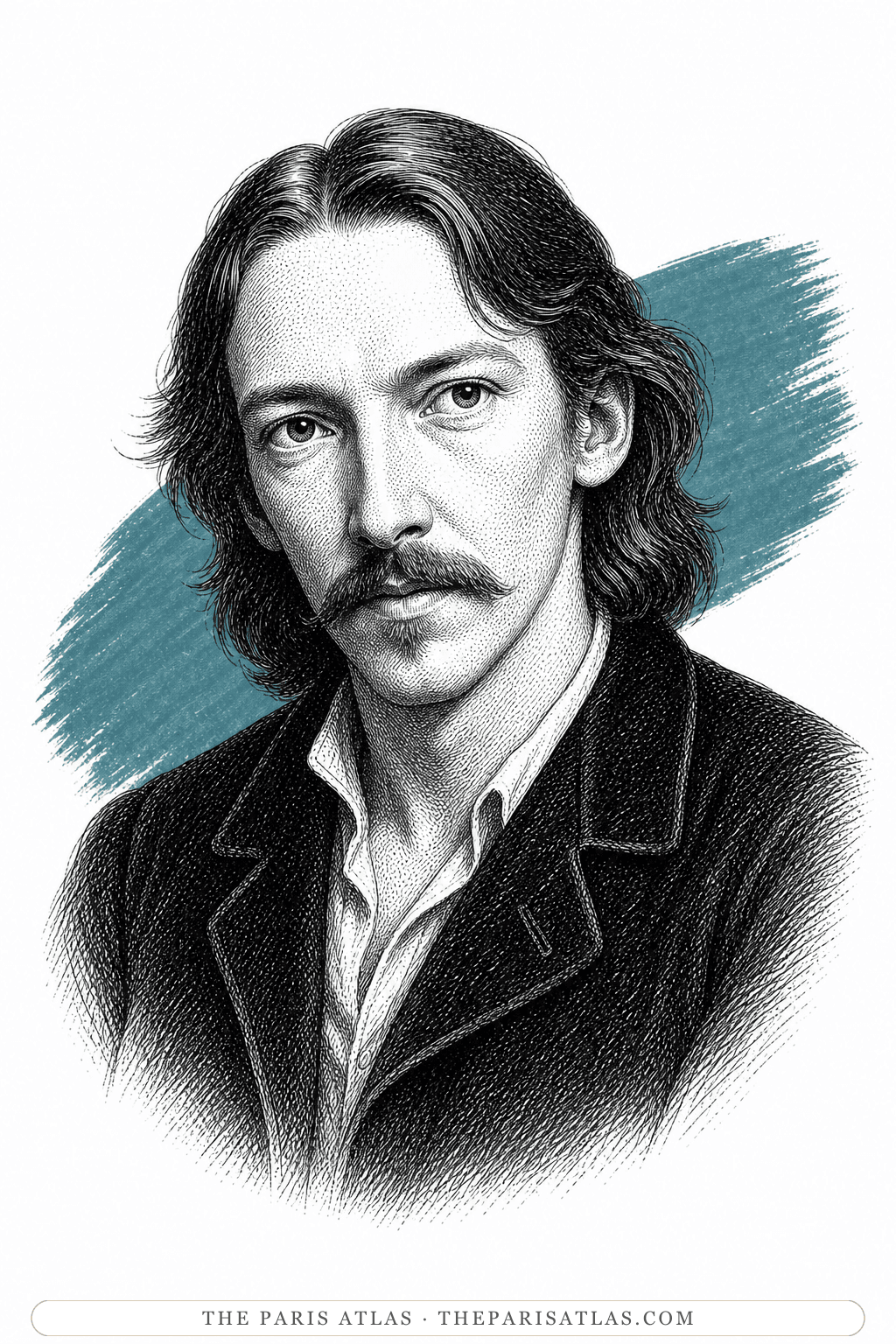
Scottish author of Treasure Island and Strange Case of Dr Jekyll and Mr Hyde, who spent the mid-1870s in the painters' villages south of Paris — Barbizon and Grez-sur-Loing, on the edge of the Fontainebleau forest — and at the dinner table of the Hôtel Chevillon, the village inn at Grez, in September 1876, met the married American woman he would follow to California and marry. He was dead at forty-four, in Samoa.
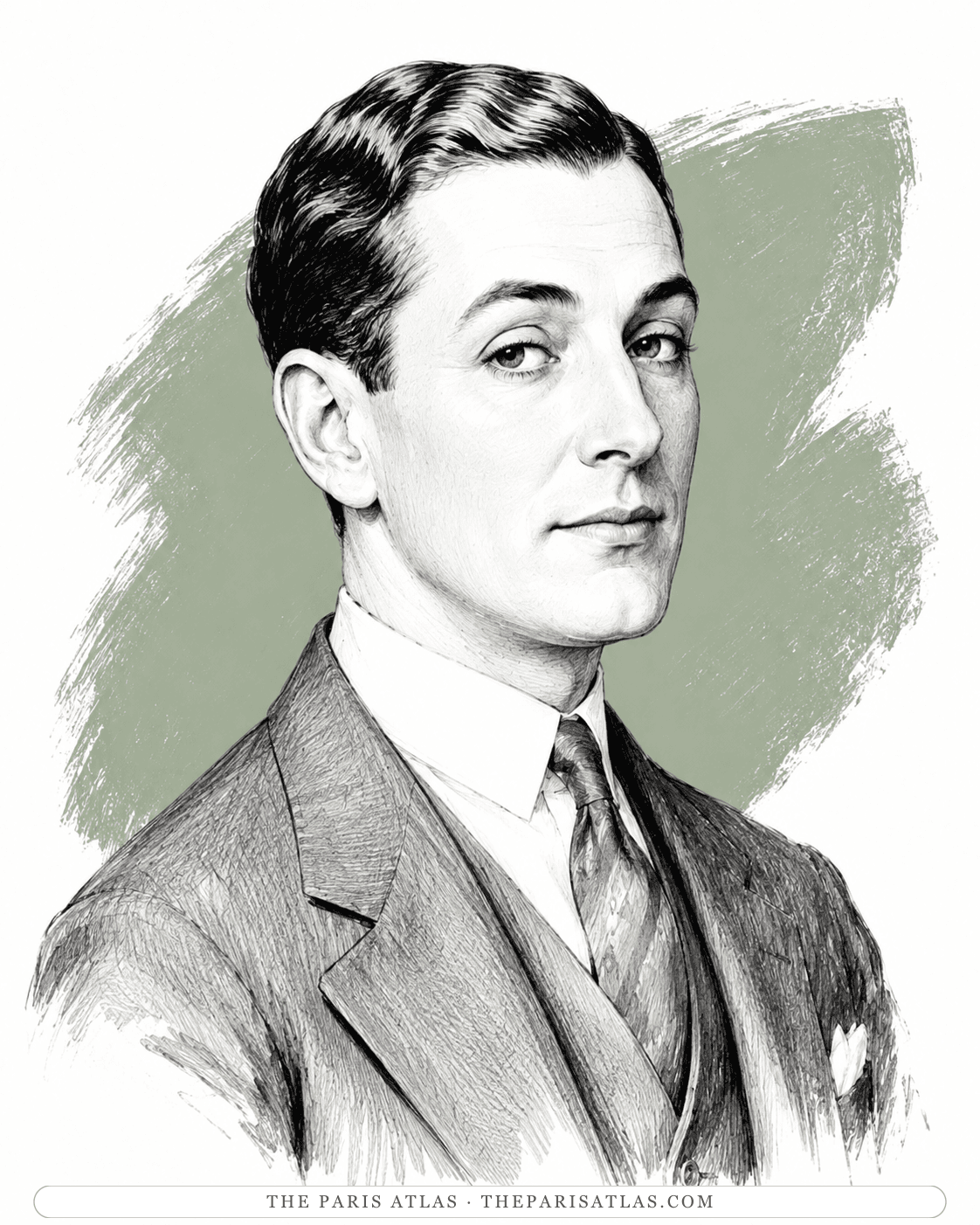
The humorist of the Pamplona party, half the model for Bill Gorton, and later an Oscar-winning screenwriter who lost his career to the Hollywood blacklist.
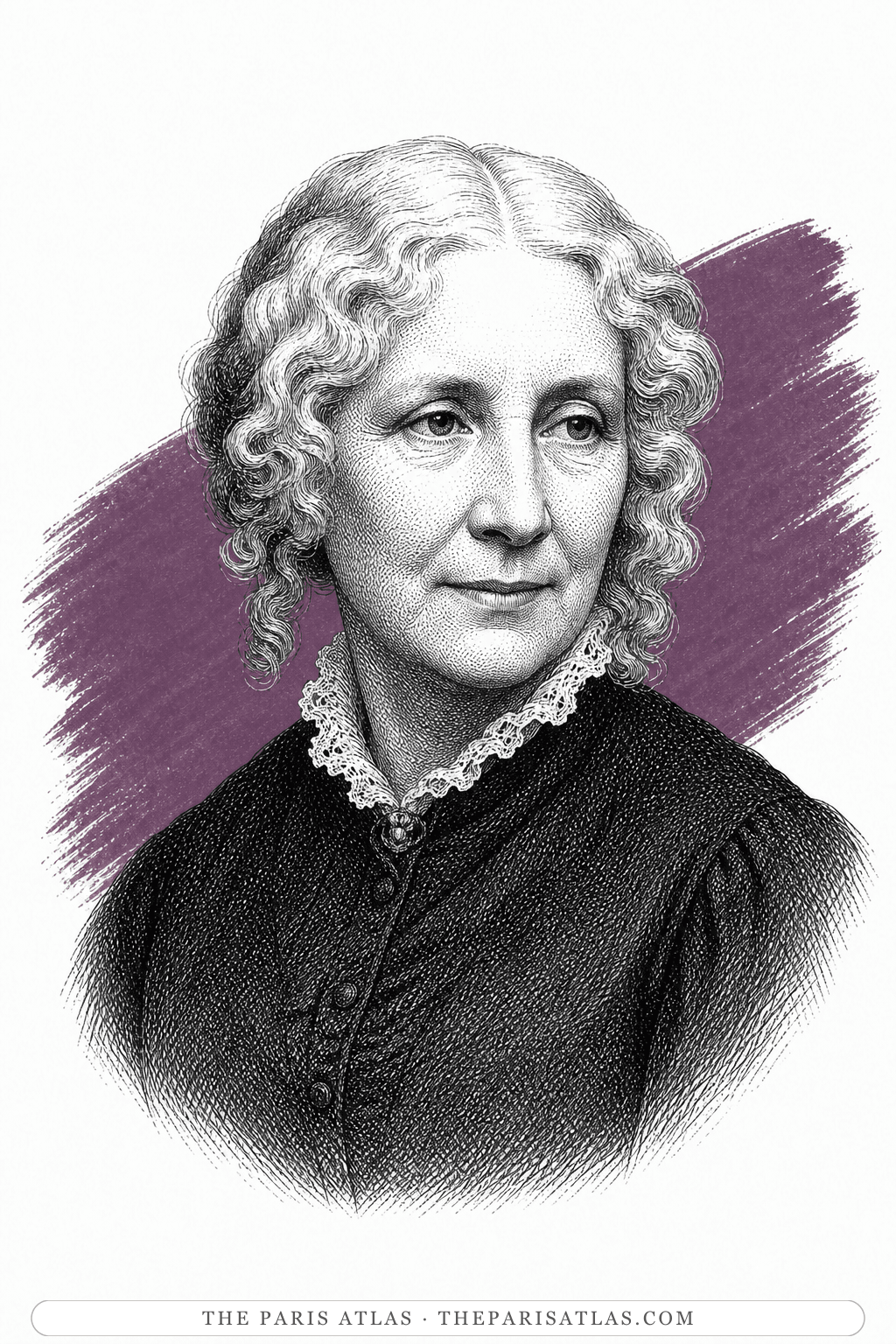
The Connecticut minister's daughter whose anti-slavery novel Uncle Tom's Cabin (1852) became the most explosive book of the nineteenth century and made her famous on two continents. In the summer of 1853 she came to Paris straight from a British tour that had mobbed her — and found, to her enormous relief, a city where nobody recognised her at all.
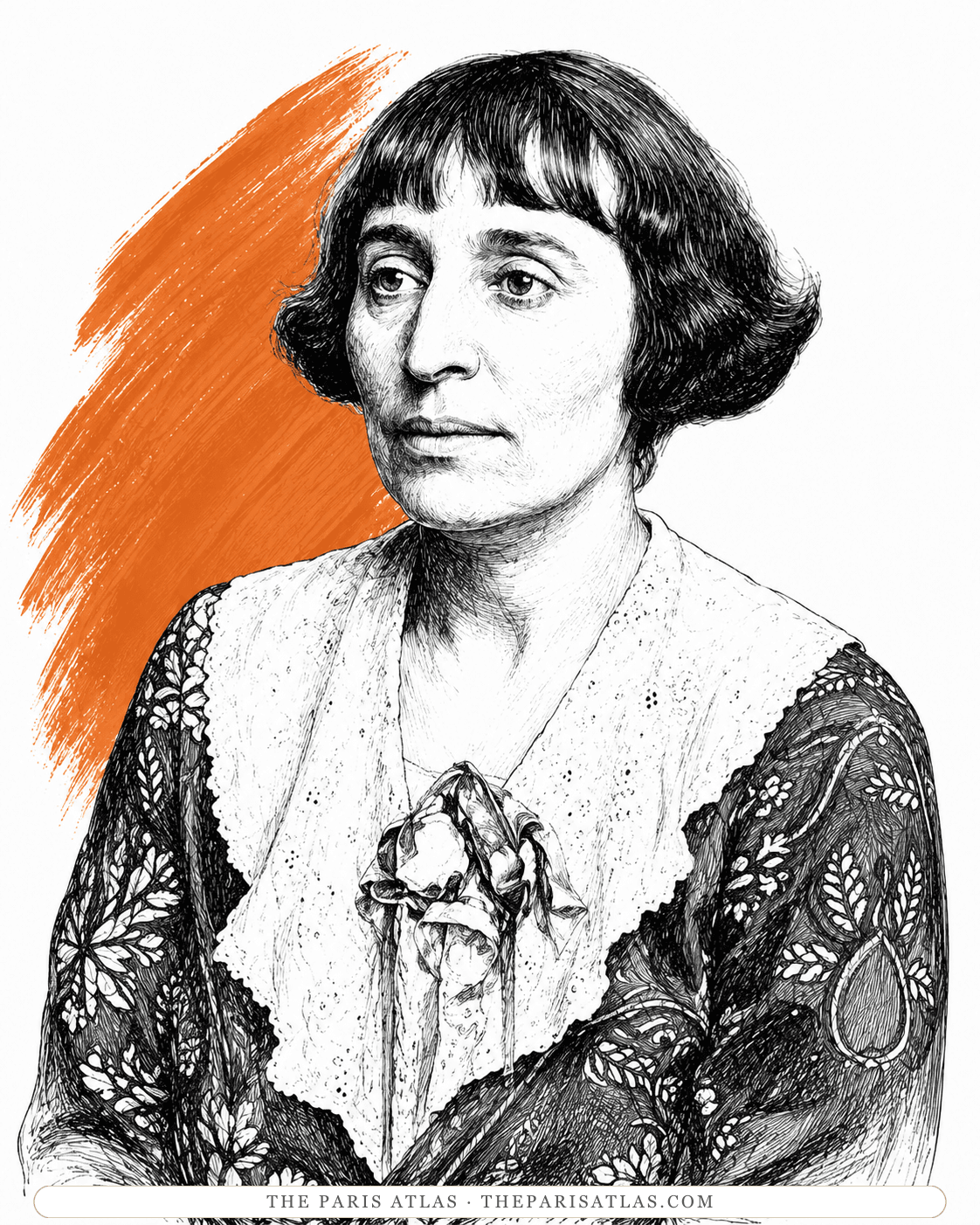
Gertrude Stein's partner of four decades and the other half of 27 rue de Fleurus — hostess, typist, publisher, and finally the voice the salon's history was told in.
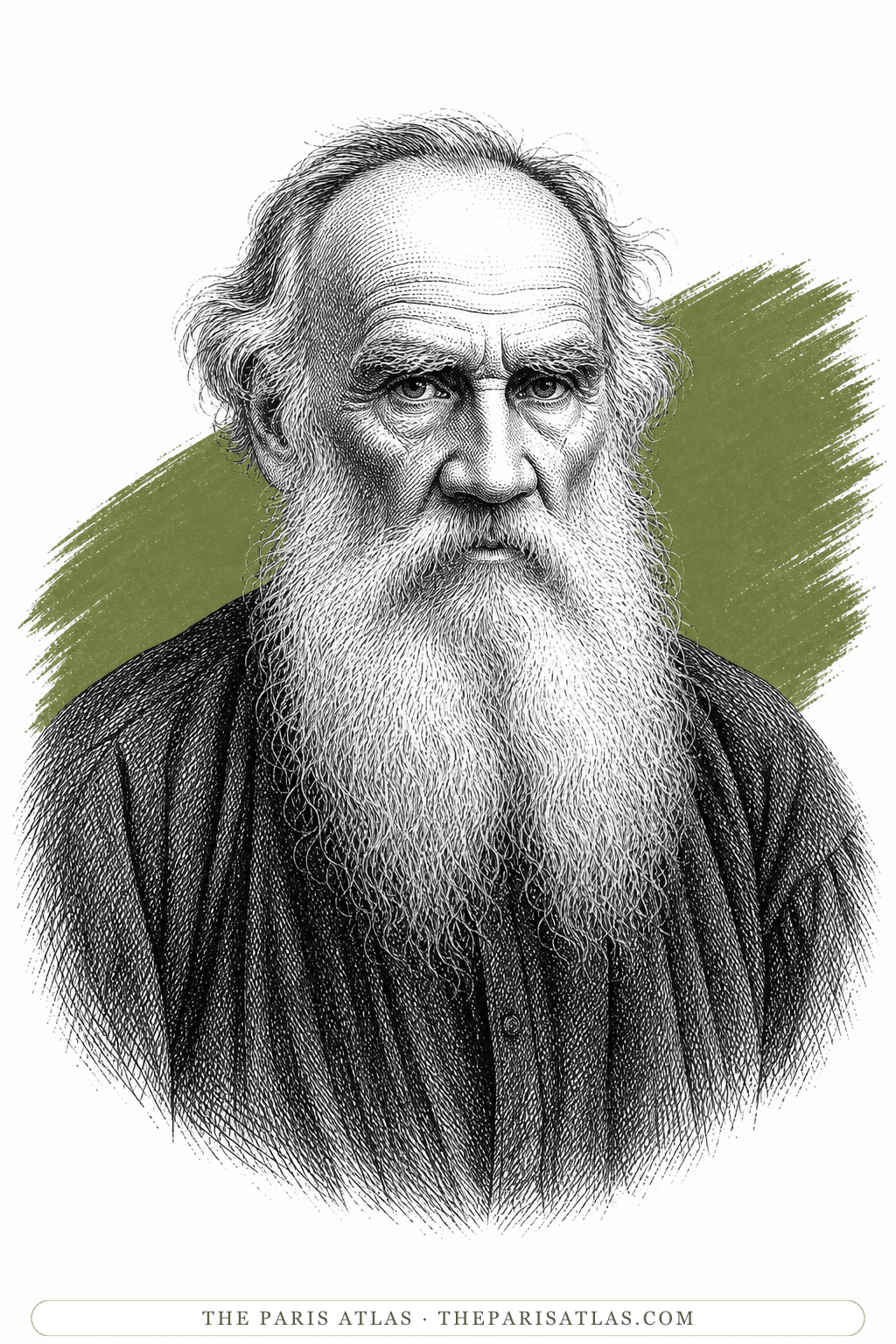
Russian novelist who wrote War and Peace and Anna Karenina, then renounced the life that produced them. He spent six weeks in Paris in 1857, and on one April morning went to watch a man beheaded in the street — an hour he said destroyed his belief in progress and in the state, and which he was still writing about twenty-two years later.
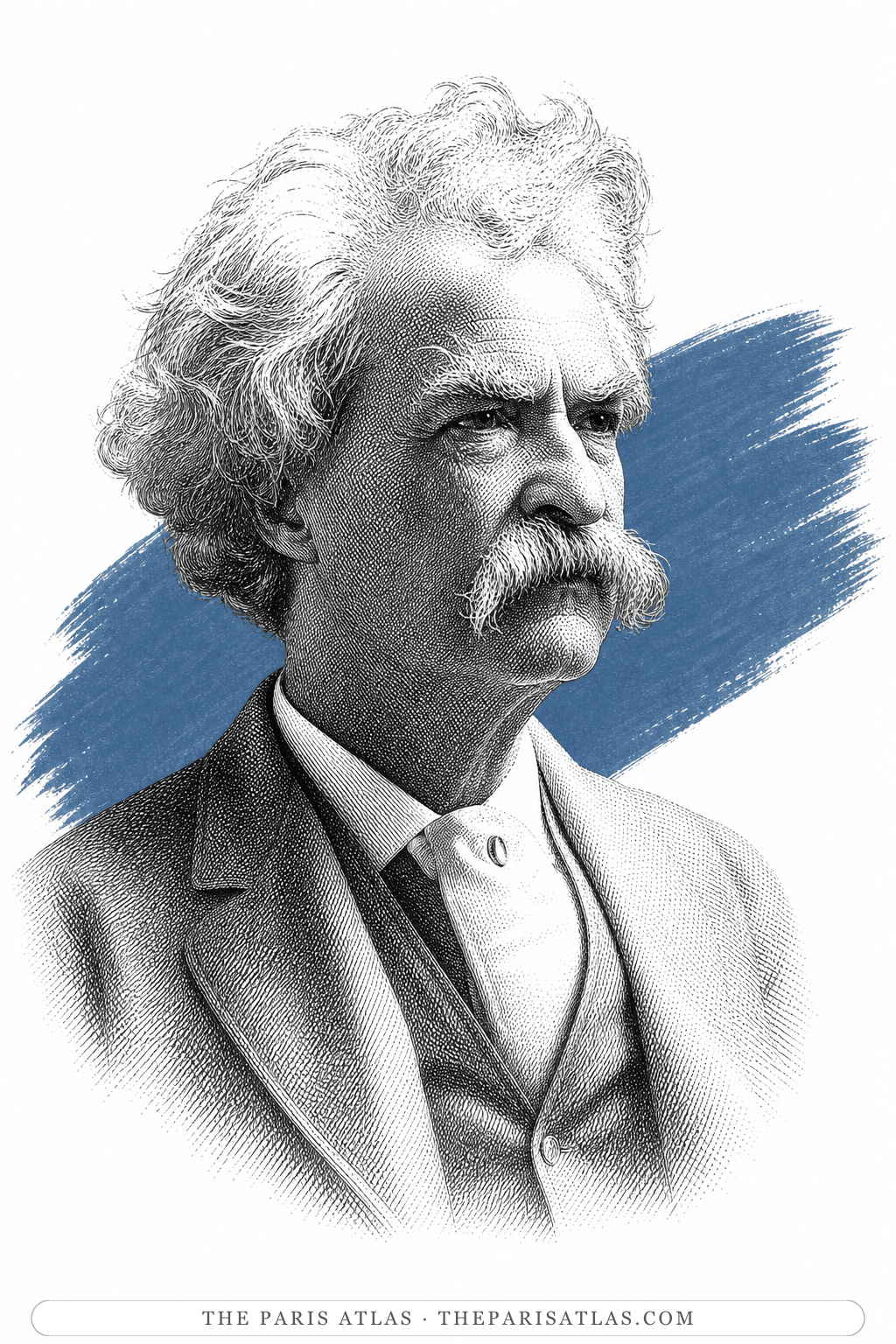
The Missouri newspaperman who became America's most famous writer, and whose first book made its reputation partly out of Paris: in 1867 he arrived with a shipload of American tourists, renamed his guide Ferguson, watched the high-kicking can-can through his fingers and wrote it all down. He kept coming back — and was living in Paris in the mid-1890s, broke, while finishing the novel he considered his best, Personal Recollections of Joan of Arc.
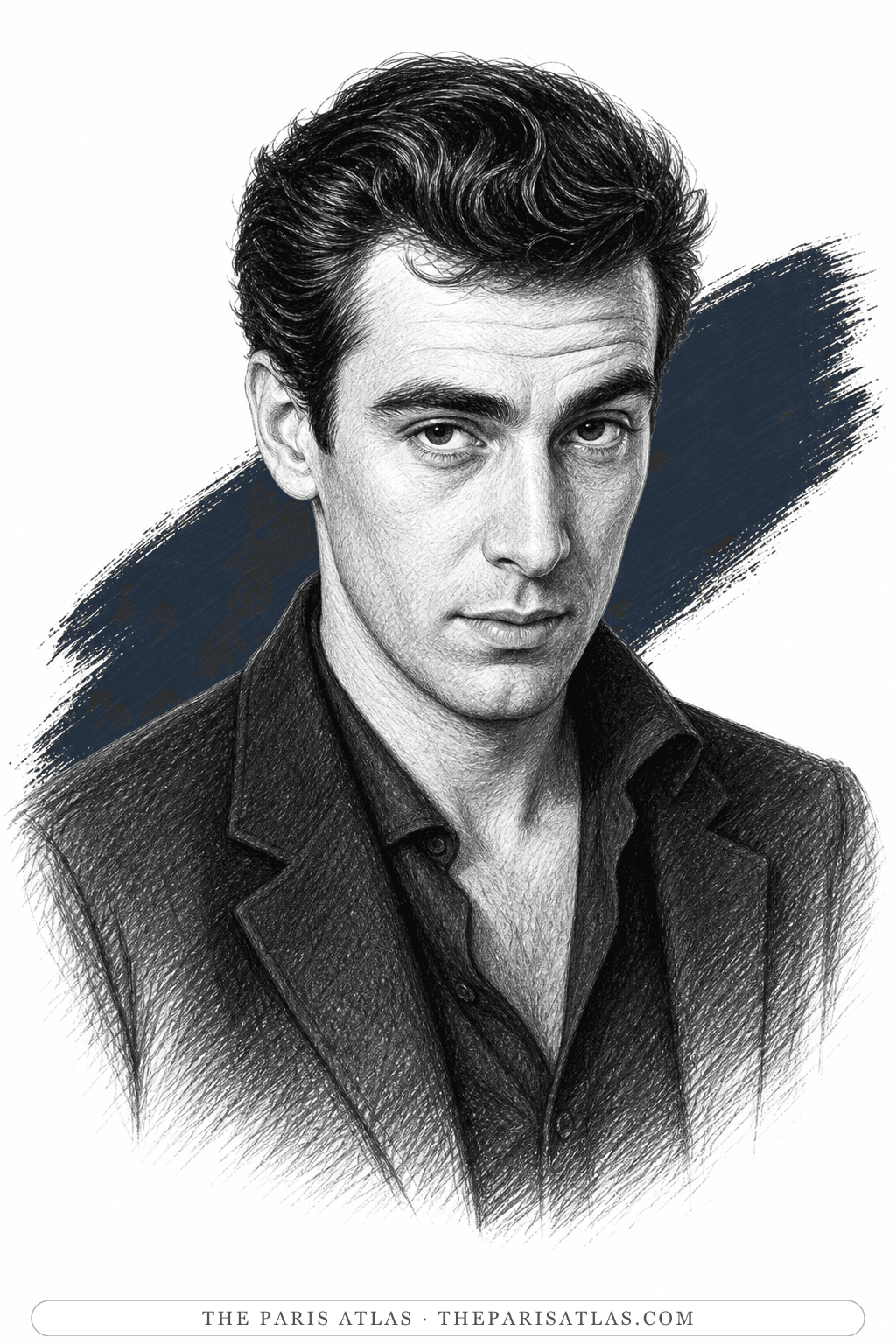
Paris-born French filmmaker, screenwriter, producer and writer whose provocative films helped loosen the sexual conventions of postwar European cinema and transformed Brigitte Bardot into an international star.
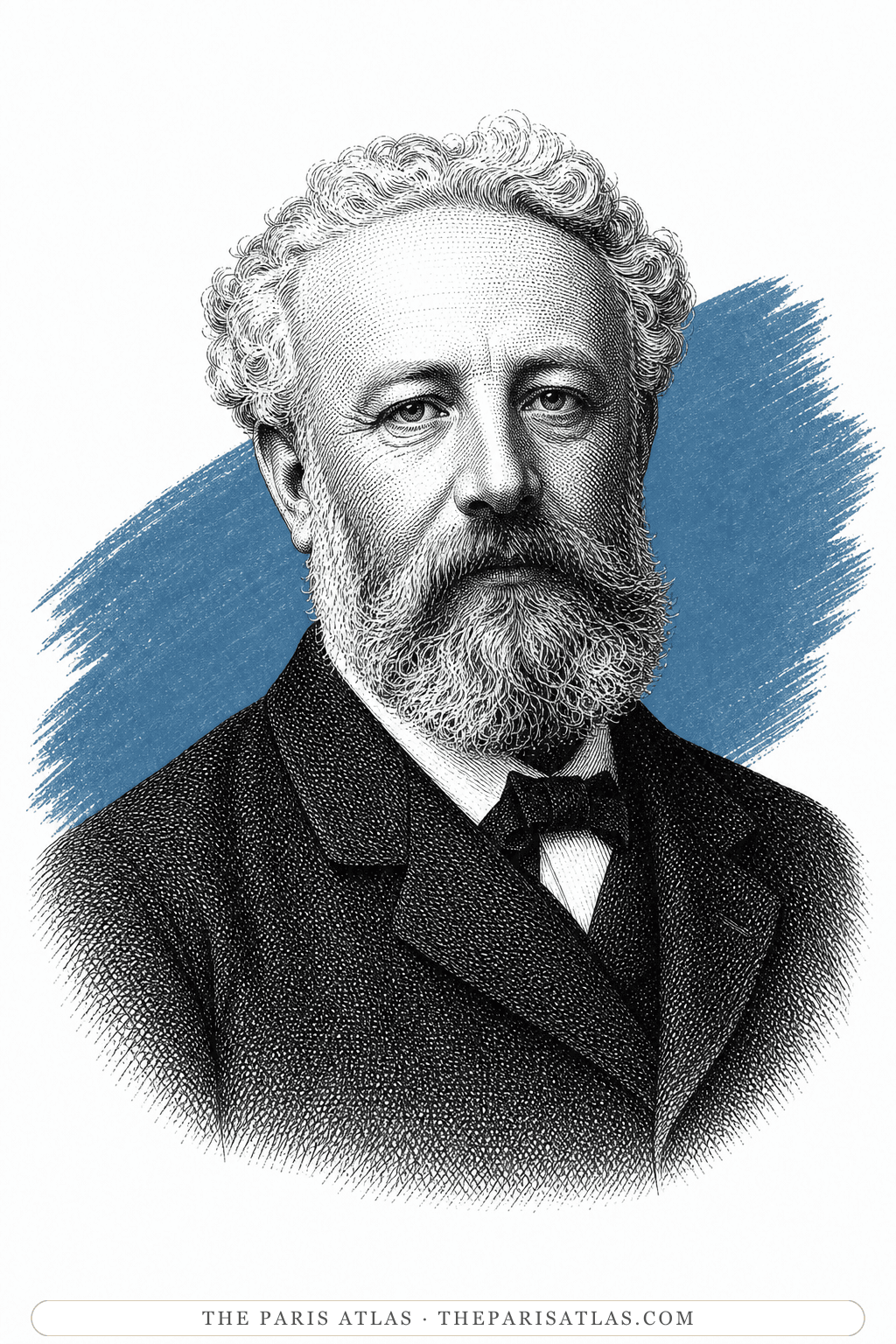
Author of the sixty-two adventure novels known as the Voyages extraordinaires — the 'extraordinary journeys' — including Twenty Thousand Leagues Under the Seas and Around the World in Eighty Days. Sent to Paris to study law, he was pulled into the theatre instead, got his first play staged with the help of the novelist Alexandre Dumas, and in 1862 met the publisher Pierre-Jules Hetzel, who put him under a contract for two books a year that he kept for over forty years.
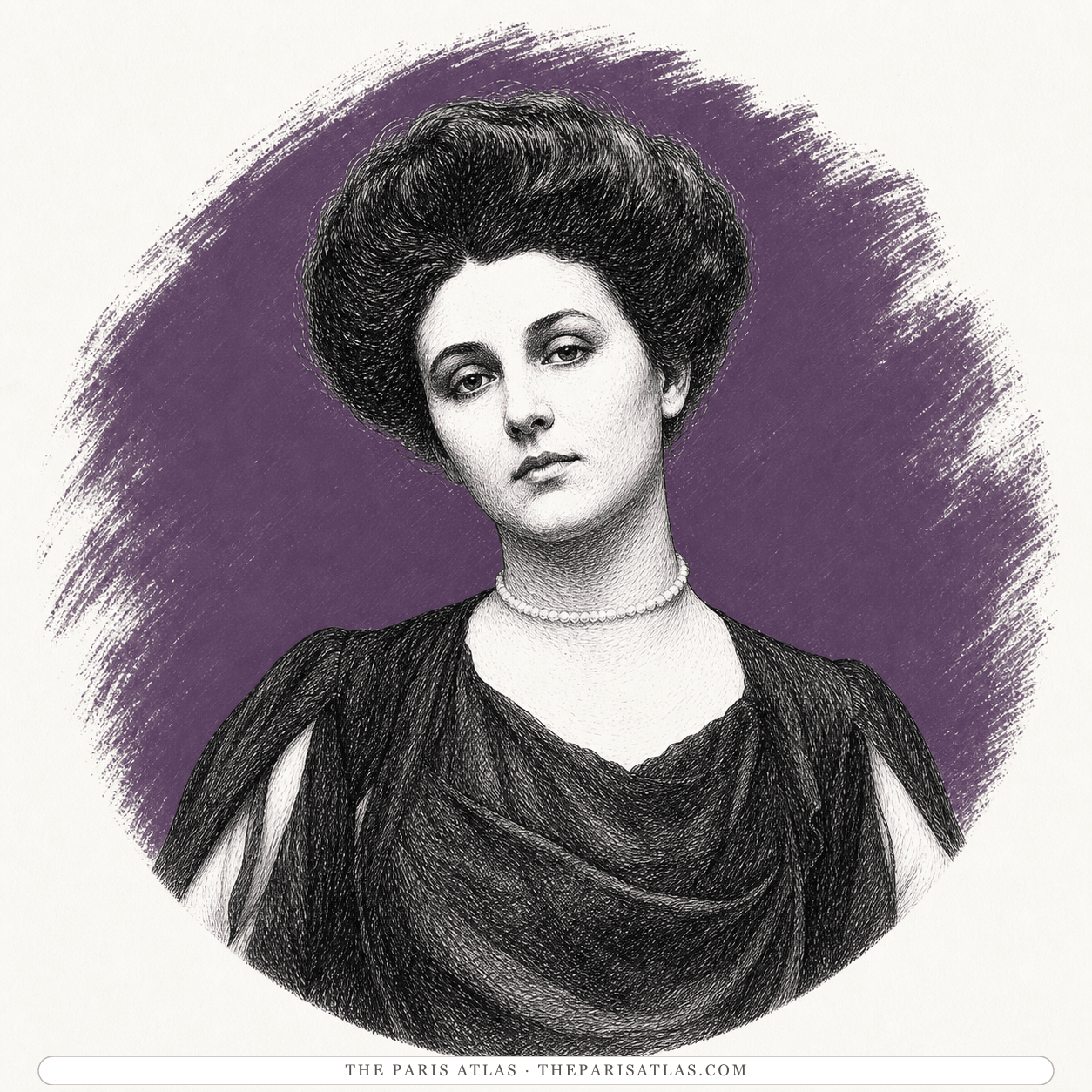
British poet who wrote entirely in French, made love between women the open subject of her work for the first time since Sappho, translated Sappho herself, and died in Paris at thirty-two.
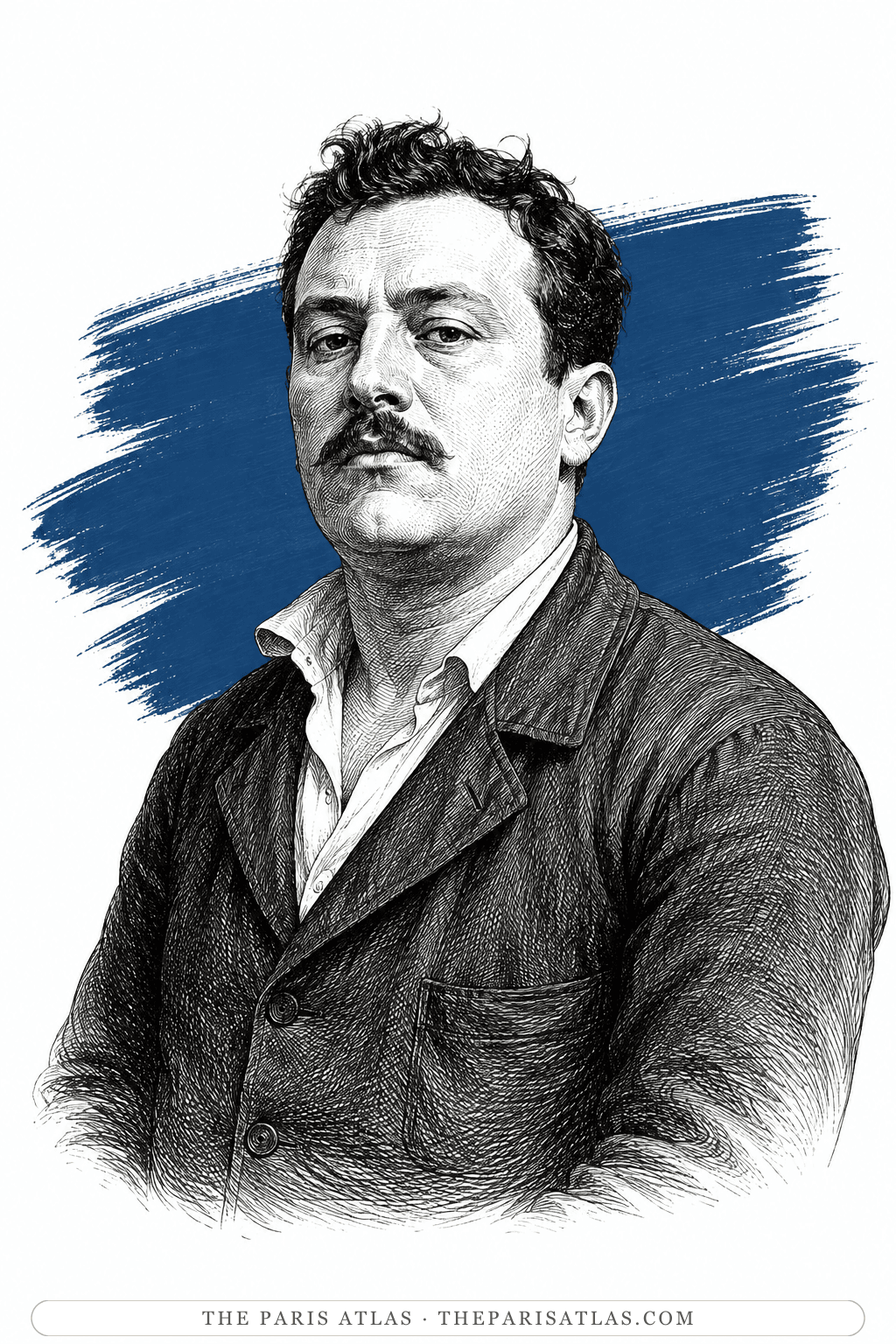
Self-taught French painter whose intense colour and forceful brushwork around Chatou made him one of Fauvism’s central figures.
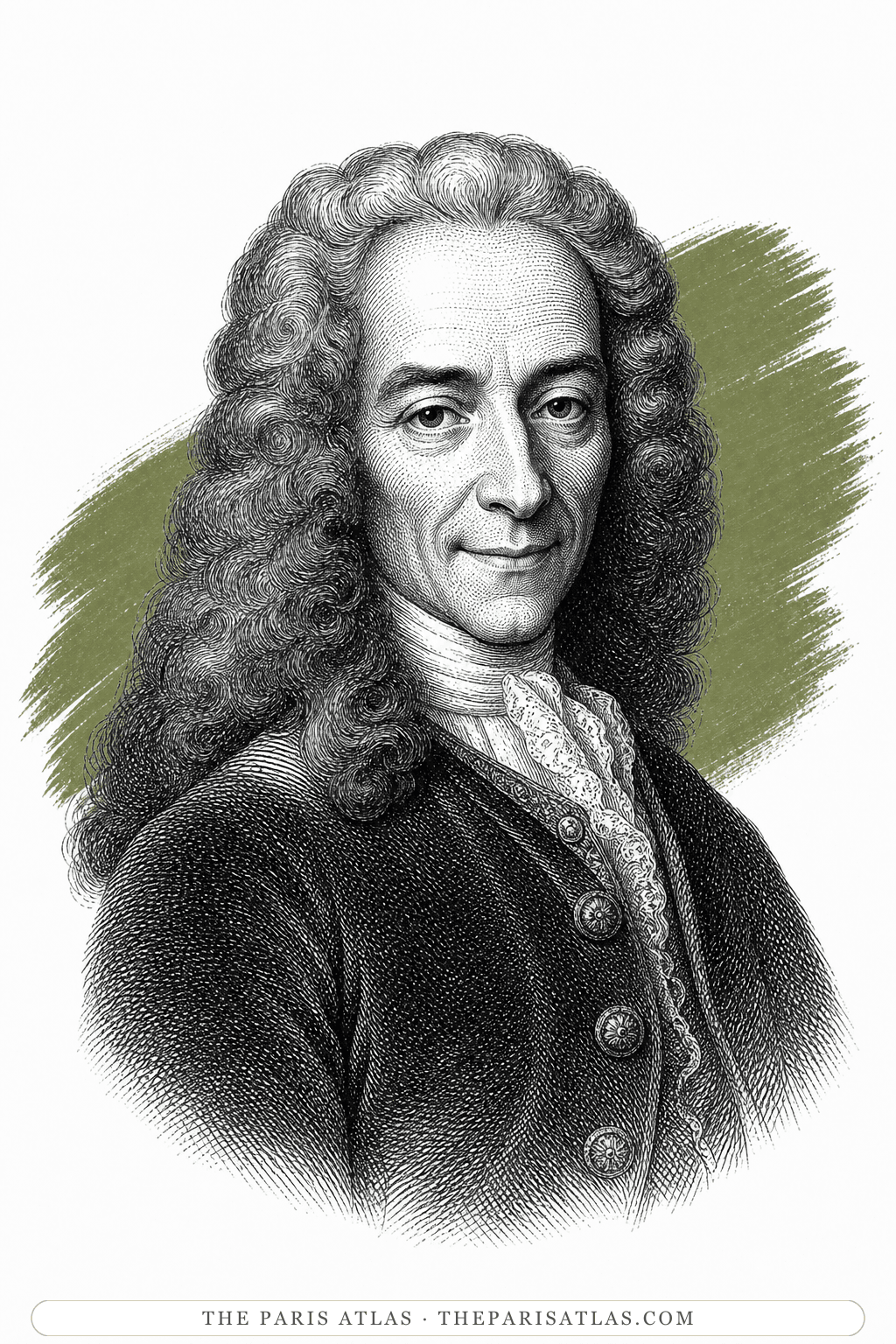
The writer born François-Marie Arouet in Paris in 1694, who was sent to the Bastille prison twice before he was thirty-five and spent most of his working life outside France — and who came back to Paris in 1778 to be crowned on stage at the Comédie-Française, the state theatre, died there weeks later, and was carried through the city a second time in 1791, dead, to be buried in the Panthéon, the resting place of France's most honoured dead.
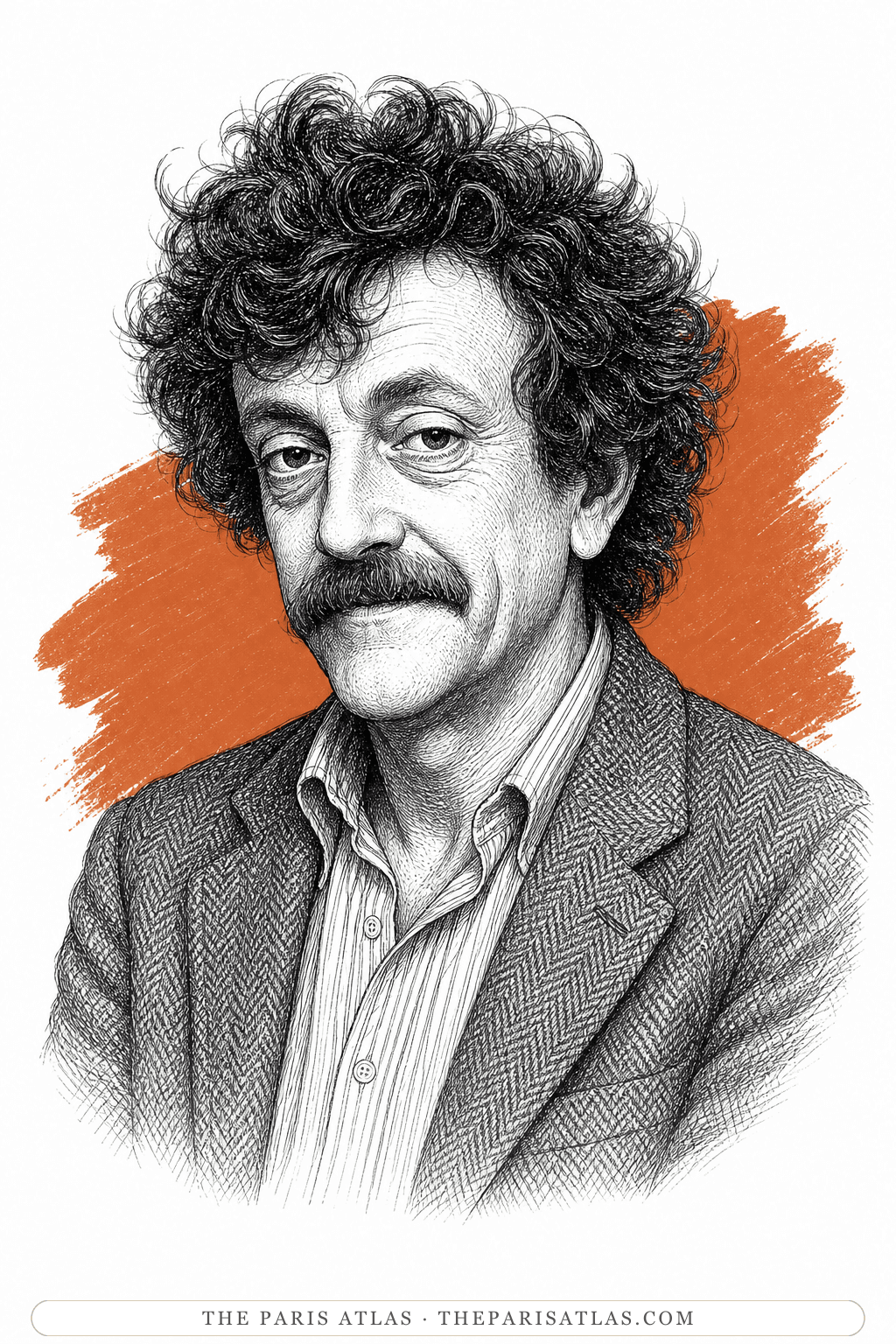
American novelist whose fiction combines satire, science fiction, and the experience of surviving the bombing of Dresden.
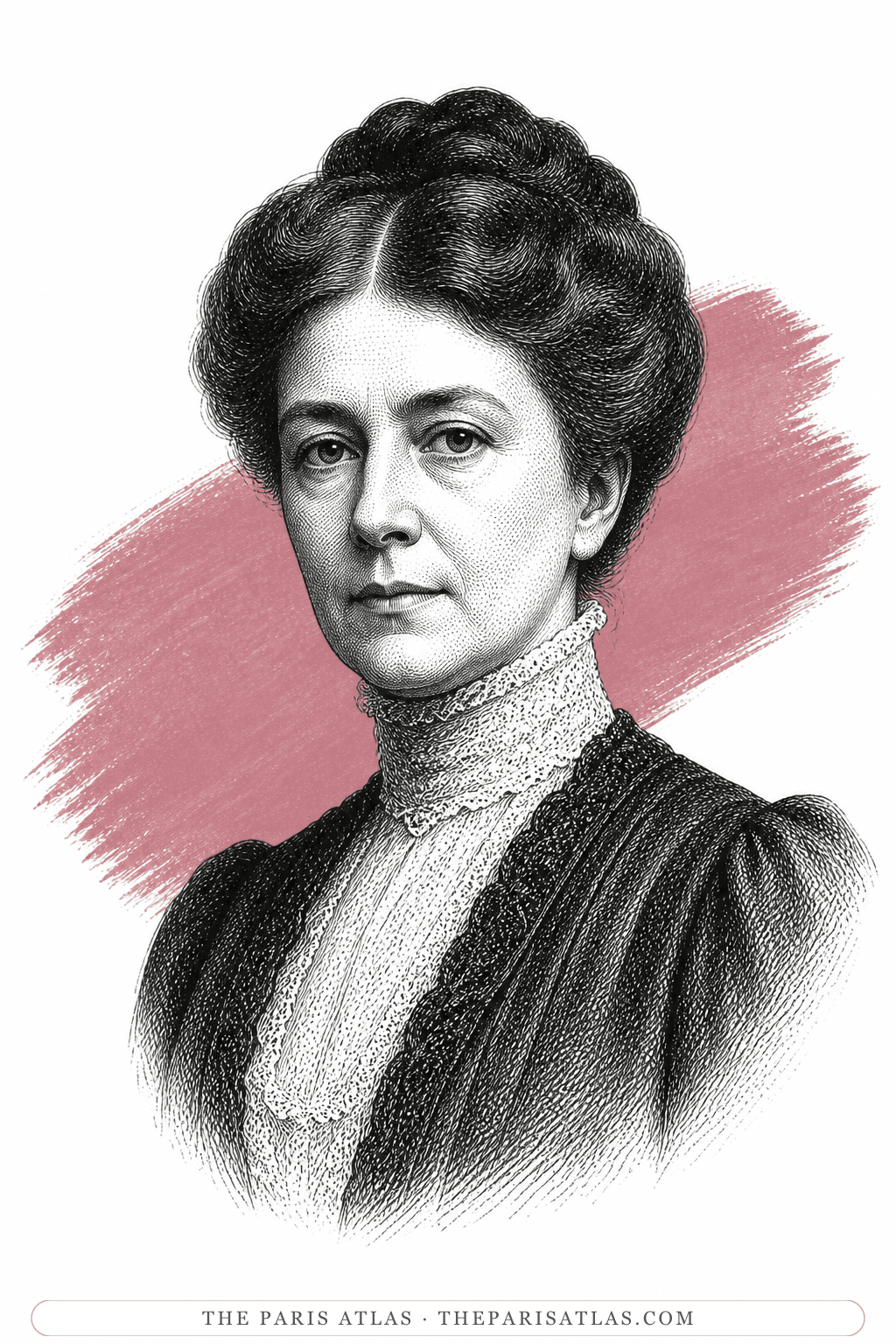
American novelist of The Age of Innocence and The House of Mirth, who left New York for Paris in 1907, kept an apartment on the rue de Varenne in the Faubourg Saint-Germain — the aristocratic quarter on the Left Bank — for thirteen years, ran refugee charities through the First World War that earned her the Légion d'honneur, France's highest national honour, in 1916, and became, in 1921, the first woman awarded the Pulitzer Prize, America's foremost literary award, for a novel.
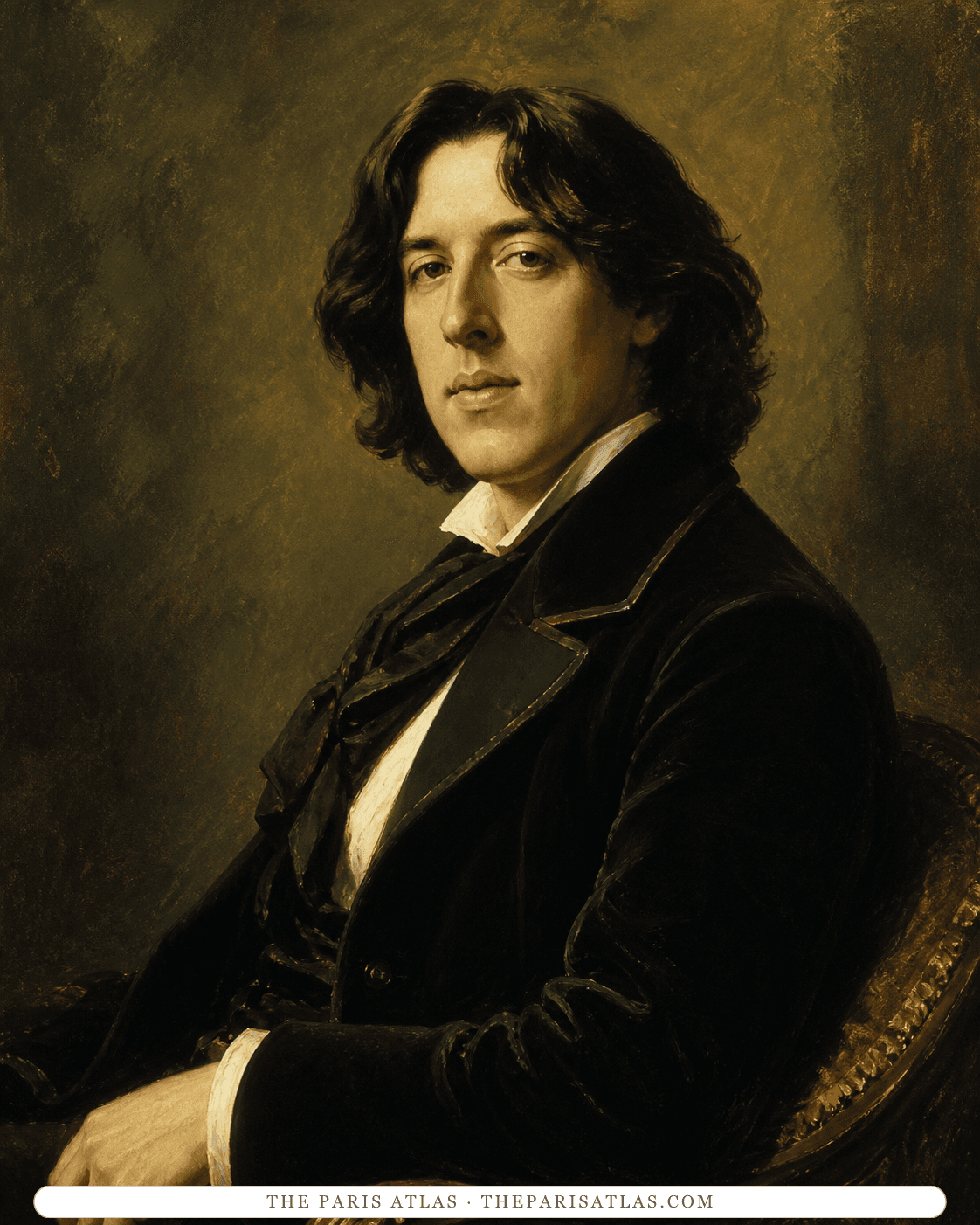
Irish playwright, novelist, poet, essayist, and editor whose social comedies, only novel, fairy tales, and prison writing joined wit to serious questions about art, class, sexuality, punishment, and freedom.
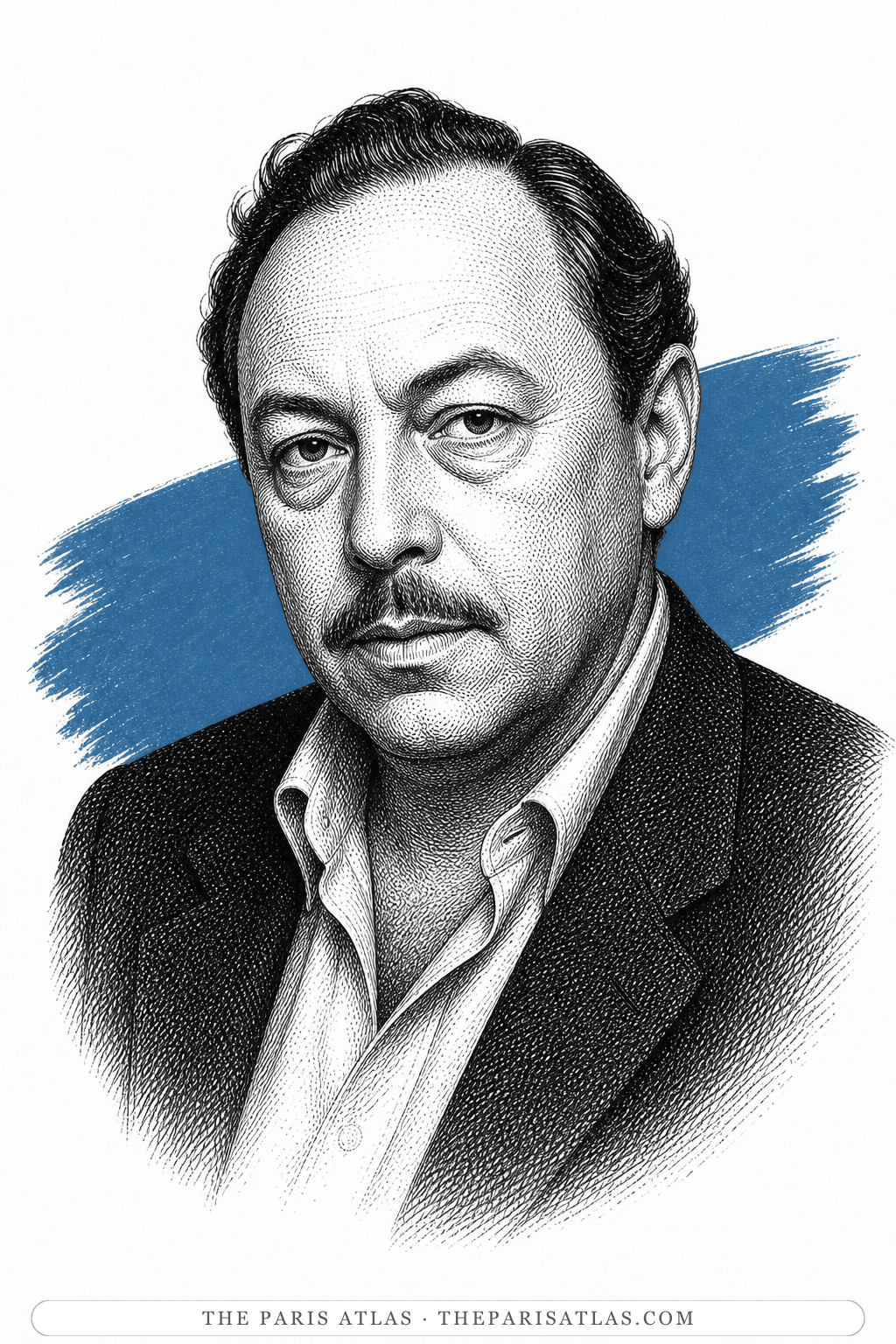
American playwright of The Glass Menagerie and A Streetcar Named Desire, whose Blanche DuBois reached Paris in October 1949 in an adaptation by the poet and film-maker Jean Cocteau, played by the screen star Arletty — the first of three Paris stagings that put his plays into the hands of Cocteau, the director Peter Brook and the novelist Françoise Sagan.
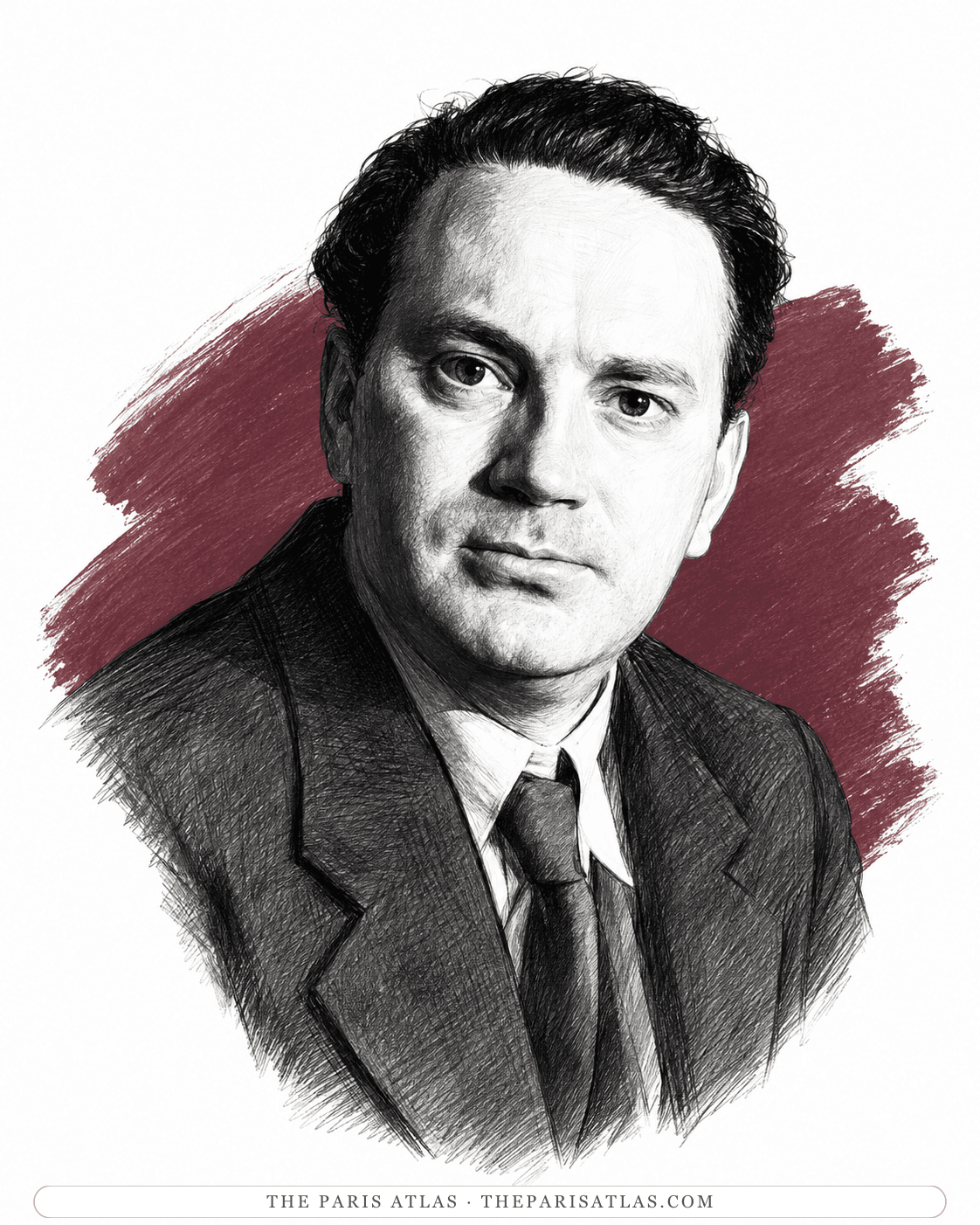
The American novelist who wrote Look Homeward, Angel — the third of Maxwell Perkins's great authors, and the one who came to resent what his editor had done for him.
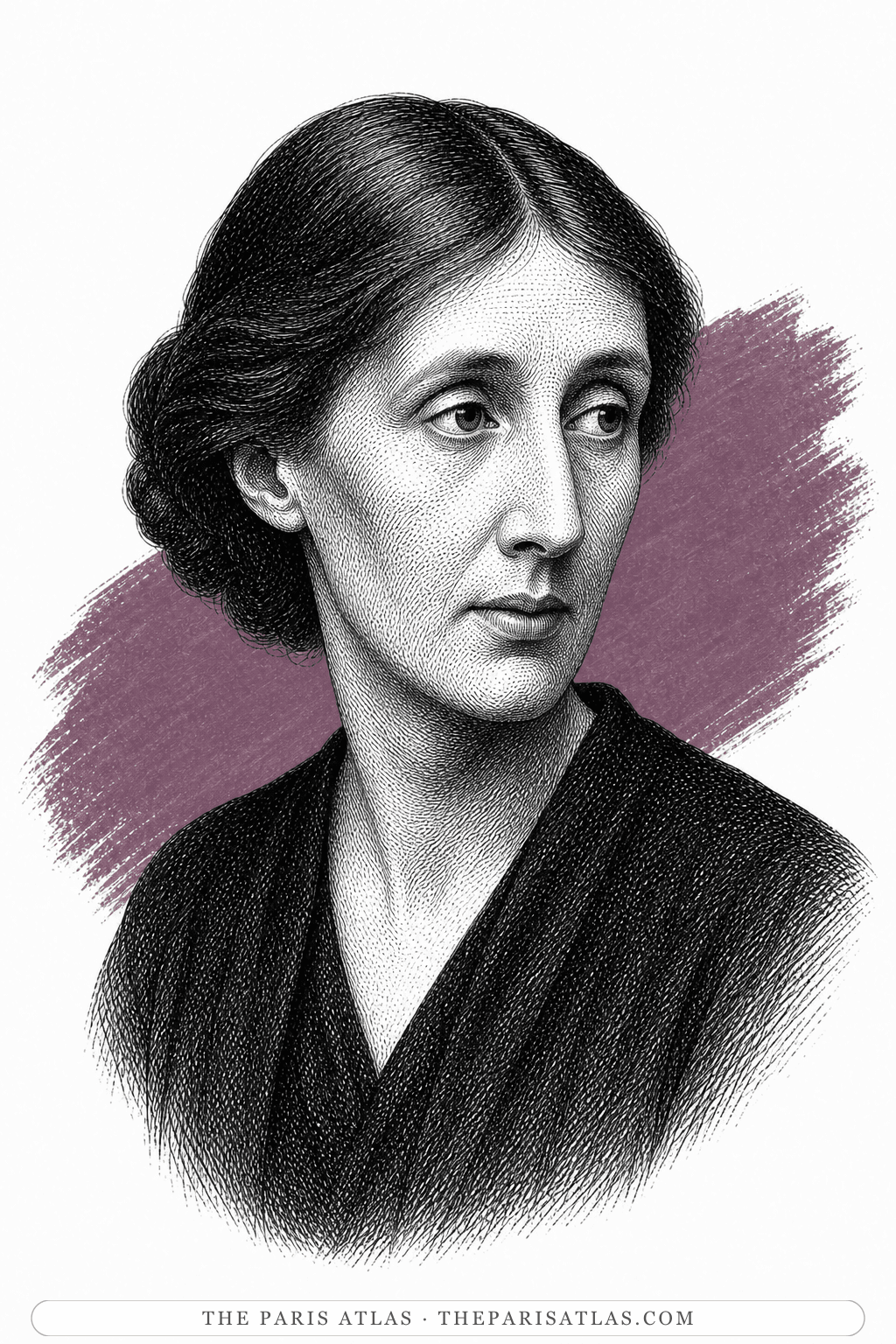
English novelist of Mrs Dalloway and To the Lighthouse, and one half of the Hogarth Press, the hand-press publishing house she ran with her husband Leonard. She never lived in Paris and never claimed to; she crossed to France as a traveller from 1907 onward, and in September 1928 spent a week there with the writer Vita Sackville-West, her lover — the only time the two of them went abroad together on their own. The Paris that changed her work came to her instead — carried into two London galleries by her friend Roger Fry in 1910 and 1912.
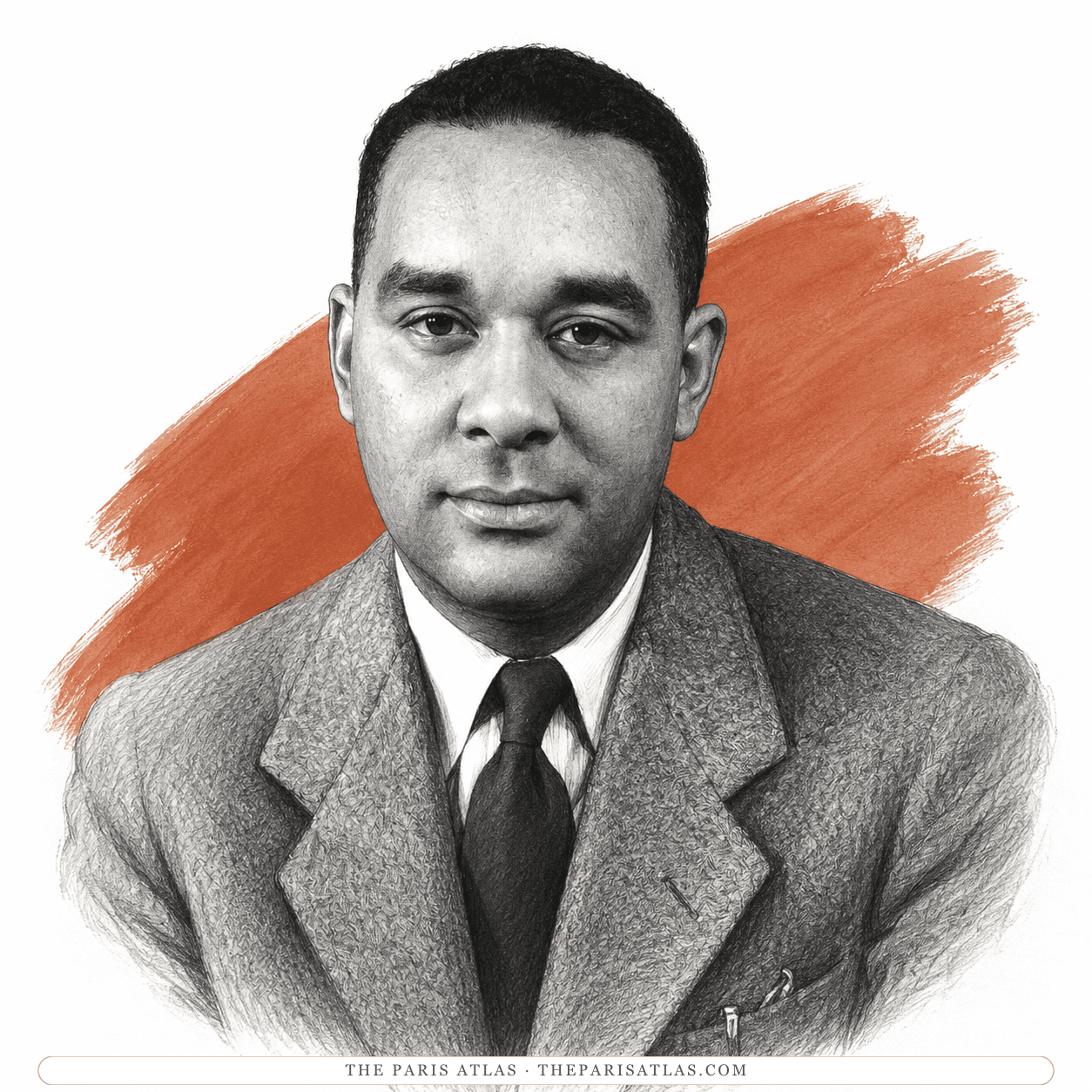
American novelist whose Native Son made him the most famous Black writer in the country, and who moved to Paris in 1946; he helped the young James Baldwin win the fellowship that got him there, then never forgave him for the essay that followed.
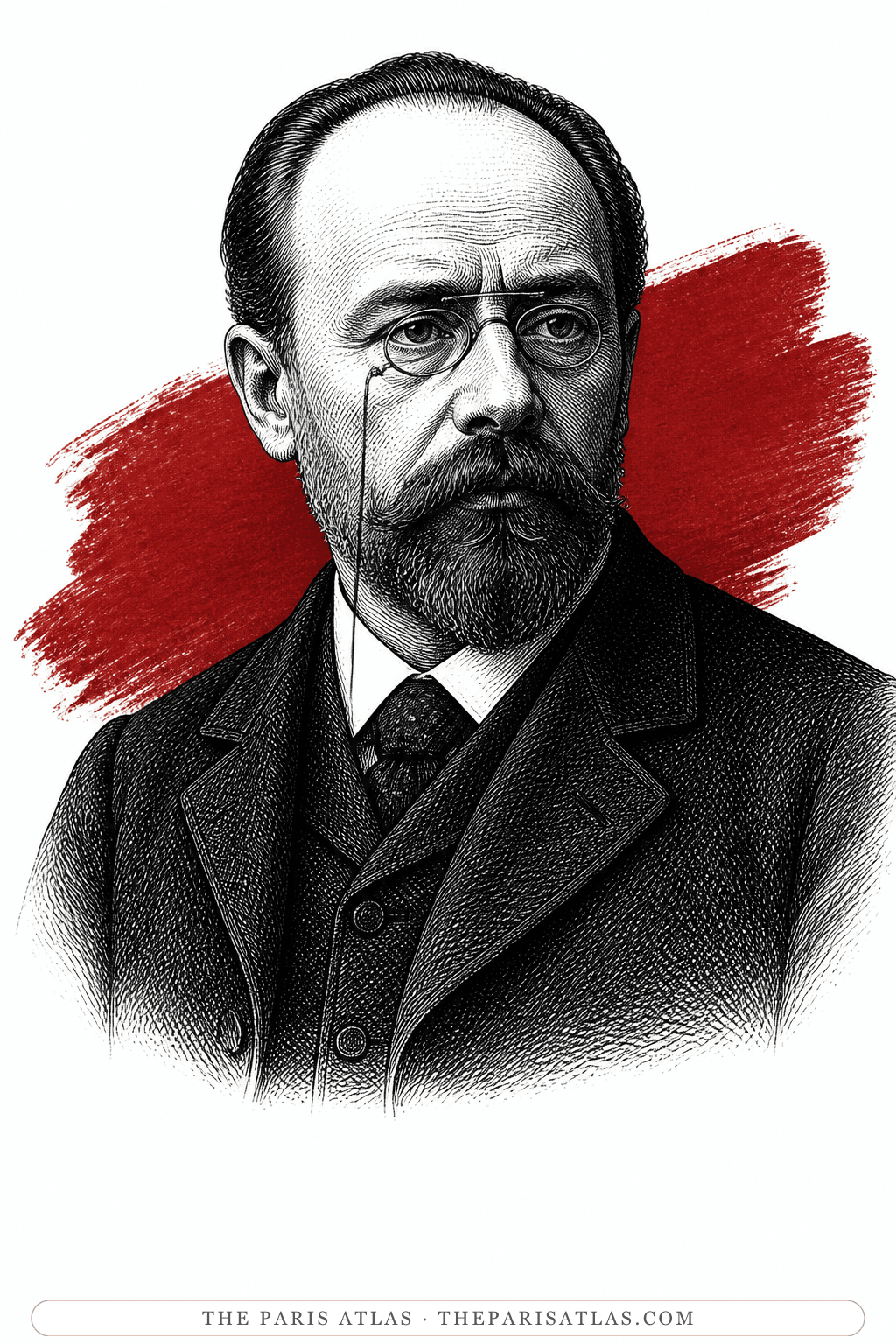
French novelist, journalist and playwright, the founder of literary naturalism and author of the twenty-volume Rougon-Macquart cycle including L'Assommoir, Germinal, Nana and La Bête humaine. His 1898 open letter J'accuse…! reopened the Dreyfus affair and remains one of the defining acts of political writing in French letters. Céline's 1933 Médan speech, Hommage à Zola, is his clearest statement about the inheritance of naturalism.
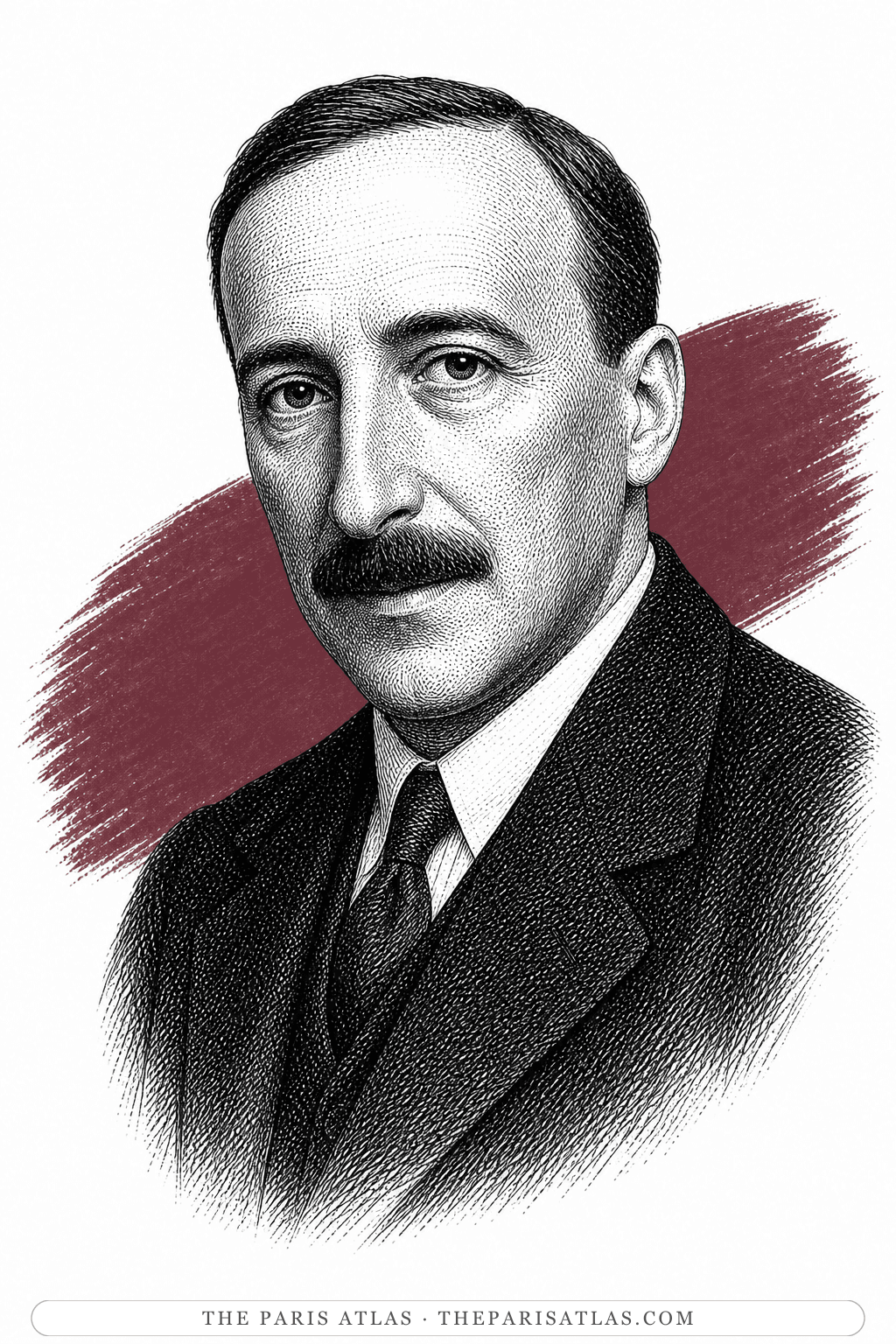
Austrian novelist, biographer and translator, and for a period between the wars one of the most widely translated writers alive. His Paris was the city of his youth — a year there around 1904, and the friendship with the Belgian poet Émile Verhaeren that came out of it — and it became one of the central settings of The World of Yesterday, his memoir of a European culture he watched destroyed.