The Paris AtlasCharting the artists, works, and places worth returning to.
  • Author
  • Playwright
  • Translator
· Austrian · 1881–1942

Stefan Zweig

Austrian novelist, biographer and translator, and for a period between the wars one of the most widely translated writers alive. His Paris was the city of his youth — a year there around 1904, and the friendship with the Belgian poet Émile Verhaeren that came out of it — and it became one of the central settings of The World of Yesterday, his memoir of a European culture he watched destroyed.

In images

Details

Lived
1881–1942
Born
28 November 1881
Birthplace
Vienna, Austria
Died
22 February 1942 · aged 60
Place of death
Petrópolis, Brazil
Nationality
Austrian
Profession
Novelist, biographer, translator
Major works
Letter from an Unknown Woman (1922); Beware of Pity (1939); Chess Story (1942); the memoir The World of Yesterday (1942); translations of Émile Verhaeren
Roles
AuthorPlaywrightTranslator

About Stefan Zweig

Austrian writer and biographer of a vanished Europe

Stefan Zweig was an Austrian writer who was, in the 1920s and 1930s, one of the most widely translated authors in the world. He was born in Vienna on 28 November 1881 and died in Petrópolis, Brazil, on 22 February 1942.

He wrote short novels and novellas about people overtaken by an obsession: a gambler, a chess player, a woman who loses everything in a single day. He also wrote biographies of Marie Antoinette, Erasmus, Magellan and Mary Stuart that sold in enormous numbers.

He was Jewish, and in 1934 the Austrian police searched his house in Salzburg. He left for England the same year, took British citizenship, and then moved on to New York and finally to Brazil, following the war in Europe from further and further away.

He finished his memoir, The World of Yesterday, the day before he died. He and his wife Lotte died by suicide together in their house in Petrópolis, having taken an overdose of the barbiturate veronal.

Vienna

Stefan Zweig was born in Vienna on 28 November 1881, the second son of Moritz Zweig, a wealthy textile manufacturer, and Ida Brettauer, from a family of bankers. They were Jewish and assimilated, and Zweig later wrote that religion played almost no part in his childhood.[1]

He grew up in the Vienna of Freud, Mahler, Klimt and Schnitzler, in a prosperous, cultured, liberal city that he later said had been wrong to assume its own stability would last. He took a doctorate in philosophy at the University of Vienna in 1904, on the philosophy of Hippolyte Taine, and never needed to earn a living from a job.

He published poems at nineteen and translated Verlaine, Baudelaire and the Belgian poet Émile Verhaeren, who became a friend. In his twenties he travelled constantly — India, North America, Europe — and collected manuscripts, eventually assembling one of the great private collections of composers' and writers' working papers.[2]

In 1914 he met his publisher, Anton Kippenberg of the Insel Verlag, in a Paris café, together with Rainer Maria Rilke, Romain Rolland and Léon Bazalgette. They were there to plan a collected edition of Verhaeren. The war began before it could be made.[3]

The First World War

When the First World War began in 1914, Zweig was found unfit for combat and worked in the war archives in Vienna. He had friends in every country now fighting, and the collapse of that shared world into nationalism appalled him.[4]

His friend the French writer Romain Rolland, then in Switzerland, argued that writers should stay in contact across the lines. Zweig agreed. He wrote an anti-war play, Jeremias, published in 1917 and staged in Zurich in February 1918, and spent the last part of the war in Switzerland among other pacifists.[2]

The First World War fixed the theme he returned to for the rest of his life: that European civilisation was a shared inheritance, that it was more fragile than anyone believed, and that nationalism would destroy it.

Salzburg and success

After the war Zweig settled in Salzburg with his first wife, Friderike von Winternitz, in a house on the Kapuzinerberg above the town. It became one of the meeting places of European literary life — Rolland, Joyce, Toscanini, Richard Strauss and many others came through.[1]

Between the wars he became extraordinarily successful. His novellas, story collections and biographies were translated into dozens of languages and sold in the millions, and by the early 1930s he was one of the most translated writers alive.[5]

He also wrote for the stage and for music. He wrote the libretto for Richard Strauss's opera Die schweigsame Frau. It was performed in Dresden in 1935 and then banned by the Nazi regime because Zweig was Jewish.[4]

What he wrote

Zweig's fiction is short, fast and psychological. His usual method is to have a narrator meet a stranger who tells a story of one overwhelming episode, and the story is compressed into a few hours or a single day.

Letter from an Unknown Woman, published in 1922, is the confession of a woman who has loved a writer since childhood and whom he has never once recognised. Amok, from the same period, follows a doctor in the tropics who refuses a woman's desperate request for help and is destroyed by what follows. Chess Story, his last work of fiction, is about a man who survives Gestapo isolation by playing chess in his head and comes out permanently damaged.[5]

His biographies use the same turning-point method over a longer span: Marie Antoinette, Mary Stuart, Erasmus, Magellan, Balzac. He was interested in the moment where a life turns, and he wrote history as a sequence of such moments.[5]

Exile

In February 1934 the Austrian police searched Zweig's Salzburg house, looking for weapons belonging to the socialist militia. Nothing was found, but the search told him what was coming. He left for London within weeks.[1]

He lived in London and then in Bath. He divorced Friderike in 1938, married his secretary Charlotte Altmann, known as Lotte, in 1939, and took British citizenship in 1940. She was twenty-seven years younger and had chronic asthma.[4]

Germany annexed Austria in March 1938 and Zweig became stateless overnight. His books were burned and banned in Germany, and his readership in his own language effectively disappeared. He kept writing in German for a public that no longer existed.[1]

Brazil

In 1940 Zweig and Lotte left England for New York, then travelled through South America. In August 1941 they settled in Petrópolis, a hill town above Rio de Janeiro.[4]

He had visited Brazil before and admired it, and wrote a book about it, Brazil: Land of the Future. The couple lived quietly, he worked on Chess Story and on his memoir, and he corresponded with other exiles.[5]

Living that far from Europe did not ease it. He was sixty, in a country whose language he did not speak, reading daily reports of German victories, with almost every European friend dead, scattered or in danger. In February 1942 the fall of Singapore convinced him that the war would go on for years and that Europe as he had known it was gone for good.

The World of Yesterday

The World of Yesterday is Zweig's memoir of the Europe he grew up in, written in exile without access to his papers, from memory.[6]

It describes the pre-1914 world as an age of security: the belief that progress was permanent and that catastrophe belonged to earlier centuries. Zweig calls that belief an illusion, and blames it for how unprepared his generation was. It then follows the two wars from the point of view of a man watching his own civilisation from outside.

He posted the manuscript to his publisher the day before he died. It is now his most read book.[6]

Death

On 22 February 1942, in their rented house at Petrópolis, Zweig and Lotte took an overdose of veronal, a barbiturate, and died together. They were found the next day, lying on the bed, his hand on hers. He was sixty; she was thirty-three.[1]

He left a short note, written in German and dated the day before. It thanked Brazil for taking him in. It said his own world was gone and that he was too tired at sixty to build another. He wrote that his friends might still live to see the war end, and that he was too impatient to wait for it and would go first.[1]

The reasons he gave are the ones the record supports: exhaustion, homelessness, the loss of his language and his readers, and his conviction that the war would not end in his lifetime. Lotte left no note of her own. Whether she chose to die with him or followed his decision is not documented. The note was his, and they died side by side.

Reputation

Zweig's reputation collapsed after his death and stayed low for decades, particularly in the German-speaking world, where critics dismissed the work as smooth and sentimental. He was compared unfavourably with harder writers of the same period.

Zweig's reputation recovered from the 1980s onwards, first in France and then in English. The Grand Budapest Hotel, Wes Anderson's film of 2014, took its manner and much of its material from Zweig's writing and sent a new generation of readers to him.

Why Stefan Zweig matters

Zweig wrote about the collapse of Europe between the wars from inside a rich and famous life. He had every advantage — money, fame, translation, friends in every capital — and he lost all of it in eight years, and he wrote down what that felt like while it was happening.

The fiction lasts because of its compression. A Zweig novella takes one person, one obsession and a few hours, and finishes in eighty pages. Chess Story, written in his last months, is the clearest thing he ever wrote about what political violence does to a mind, and he posted it from Brazil, the last country he reached as a refugee.

Life events

  1. 1881

    Born in Vienna on 28 November, the second son of Moritz Zweig, a textile manufacturer, and Ida Brettauer, from a banking family.

  2. 1900

    Publishes his first poems at nineteen.

  3. 1904

    Takes a doctorate in philosophy at the University of Vienna.

  4. 1907

    Travels widely — India, North America, Europe — and begins collecting composers' and writers' manuscripts.

  5. 1910

    Visits India and afterwards writes about the encounter with a world outside Europe.

  6. 1912

    His play The House by the Sea is staged in Vienna.

  7. 1914

    The First World War begins. Found unfit for combat, he works in the Vienna war archives.

  8. 1917

    His anti-war play Jeremias, published in 1917, is staged in Zurich in February. He spends the last part of the war in Switzerland among pacifists.

  9. 1919

    Settles in Salzburg with Friderike von Winternitz in a house on the Kapuzinerberg.

  10. 1920

    Marries Friderike.

  11. 1922

    Publishes Letter from an Unknown Woman, the confession of a woman the writer she loves has never recognised.

  12. 1926

    His novellas and biographies are being translated across Europe. He becomes one of the most translated authors alive.

  13. 1927

    Publishes Decisive Moments in History, his sequence of historical turning points.

  14. 1929

    Publishes his biography of Joseph Fouché.

  15. 1932

    Publishes Marie Antoinette, which sells in enormous numbers and is later filmed in Hollywood.

  16. 1933

    The Nazi regime comes to power in Germany. Zweig's books are burned and banned there.

  17. 1934

    Austrian police search his Salzburg house in February, looking for socialist militia weapons. He leaves for England within weeks.

  18. 1935

    Richard Strauss's opera Die schweigsame Frau, with Zweig's libretto, is performed in Dresden and then banned because the librettist is Jewish.

  19. 1936

    Travels to South America for the first time and is received as a celebrated writer.

  20. 1938

    Germany annexes Austria in March. Zweig becomes stateless. He divorces Friderike.

  21. 1939

    Marries his secretary Charlotte Altmann, known as Lotte, twenty-seven years his junior.

  22. 1940

    Takes British citizenship. He and Lotte leave England for New York.

  23. 1941

    Publishes Brazil: Land of the Future. In August the couple settle at Petrópolis, in the hills above Rio de Janeiro.

  24. 1941

    Works on Chess Story and on his memoir, The World of Yesterday.

  25. 1942

    The fall of Singapore in February convinces him the war will last for years.

  26. 1942

    Posts the manuscript of The World of Yesterday to his publisher, and on 22 February he and Lotte die by suicide together, from an overdose of the barbiturate veronal. They are found the next day.

  27. 1942

    The World of Yesterday and Chess Story are published after his death.

  28. 1943

    Chess Story appears in English and becomes his most read work of fiction.

  29. 1981

    The centenary of his birth begins a reassessment of a reputation that had collapsed after his death.

  30. 2014

    Wes Anderson's film The Grand Budapest Hotel, drawn from Zweig's writing and manner, sends a new generation of readers to him.

Stefan Zweig’s Places

The cataloged places connected to Stefan Zweig — through the books, and through the documented record.

Places you can enter today appear first, followed by addresses to see from outside and sites that have vanished.

Questions about Stefan Zweig

Who was Stefan Zweig?

An Austrian writer, born in Vienna in 1881, who was one of the most widely translated authors in the world in the 1920s and 1930s. He wrote novellas, short stories and popular biographies, and died in exile in Brazil in 1942.

How did Stefan Zweig die?

He and his wife Lotte died by suicide together on 22 February 1942, in their rented house at Petrópolis in Brazil, from an overdose of the barbiturate veronal. They were found the next day lying on the bed, his hand on hers. He was sixty and she was thirty-three.

Why did Stefan Zweig kill himself?

He gave his reasons in a note. He was sixty, stateless, exiled from a Europe he believed was gone for good, writing in a language whose readership had been taken from him, and convinced after the fall of Singapore that the war would last years. He wrote that he was too tired to build another life and was going ahead of his friends.

What should I read first by Stefan Zweig?

Chess Story, his last work of fiction, about a man who survives Gestapo isolation by playing chess in his head. It is about eighty pages. After that, Letter from an Unknown Woman, and then the memoir, The World of Yesterday.

What is The World of Yesterday?

Zweig's memoir of the Europe he grew up in, written in exile from memory without his papers. He posted it to his publisher the day before he died in 1942. It describes the years before 1914 as an age of security and treats that confidence as the illusion that made everything after it possible.

Why did Zweig leave Austria?

He was Jewish, and in February 1934 the Austrian police searched his Salzburg house on the pretext of looking for socialist militia weapons. He read the search as a warning and left for England within weeks, four years before Germany annexed Austria.

Connections and Sources

Stefan Zweig’s connections to people, places, and works, with the sources behind each one.

Lived at · 1904–1905

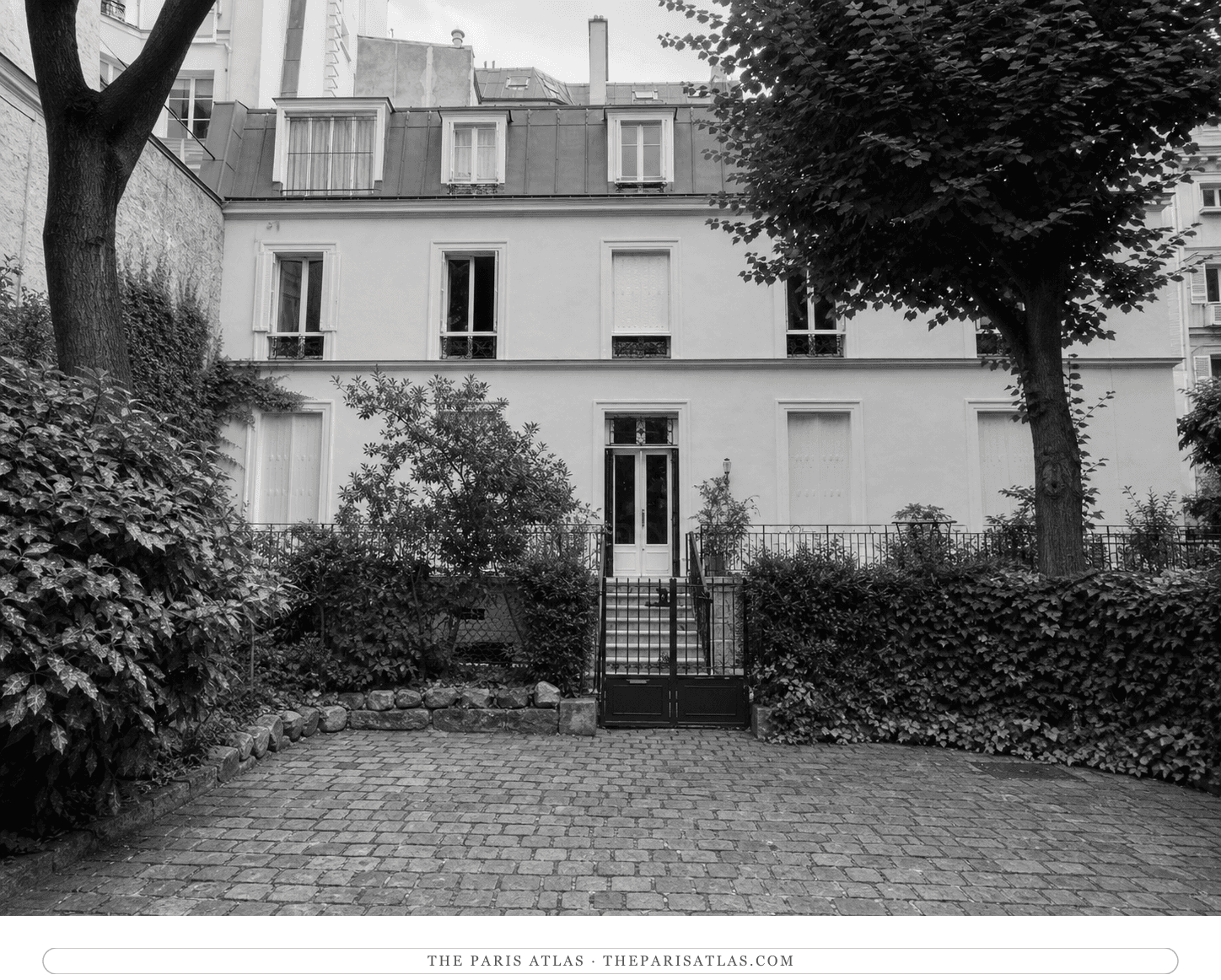
5 rue Victor-Massé

Zweig rented rooms at 5 rue Victor-Masse, then the rue de Laval, from November 1904 to June 1905, shortly after completing his doctorate on Hippolyte Taine. The stay became one of the set-pieces of his memoir The World of Yesterday.

— Stefan Zweig à Paris et ailleurs

References

References

The sources below include biographies, scholarly essays, interviews, and primary materials that informed this page. They reflect both the historical record and ongoing critical conversations about Stefan Zweig and their work.

  1. 1abcdefStefan Zweig — biographical chronology

    Website
    Stefan Zweig Centre Salzburg
    Used for

    Web source consulted for documented facts and historical context presented on the Stefan Zweig page.

    View source
  2. 2abEncounter at the Crossroads of Europe: the Fellowship of Zweig and Verhaeren

    Periodical
    The Public Domain Review
    Used for

    Contemporary reporting or criticism used to document the historical reception and context of Stefan Zweig.

    View source
  3. 3↑Stefan Zweig à Paris et ailleurs

    Website
    Terres d'écrivains
    Used for

    Web source consulted for documented facts and historical context presented on the Stefan Zweig page.

    View source
  4. 4abcdLebenskalender (life chronology)

    Archive
    Stefan Zweig digital, University of Graz
    Used for

    Archival evidence used to document the historical record connected to Stefan Zweig.

    View source
  1. 5abcdStefan Zweig (1881-1942)

    Website
    University at Buffalo Libraries
    Used for

    Research guide to Zweig's life and work, used for the publication sequence and the exile chronology.

    View source
  2. 6abThe World of Yesterday: Memories of a European

    Website
    Leo Baeck Institute
    Used for

    The institute's account of the memoir, written in exile and completed just before his death.

    View source
  3. 7Stefan Zweig

    Website
    Wikipedia
    Used for

    Reference article cross-checked for the Vienna childhood, the 1934 search, the exile years, the marriages and the deaths at Petrópolis.

    View source
i
Why these sources are here

These references anchor the page in the documented record and in the scholarly conversations around Stefan Zweig. Every claim on this page traces back to one or more of the works listed here.

Explore more resources
Browse all authors