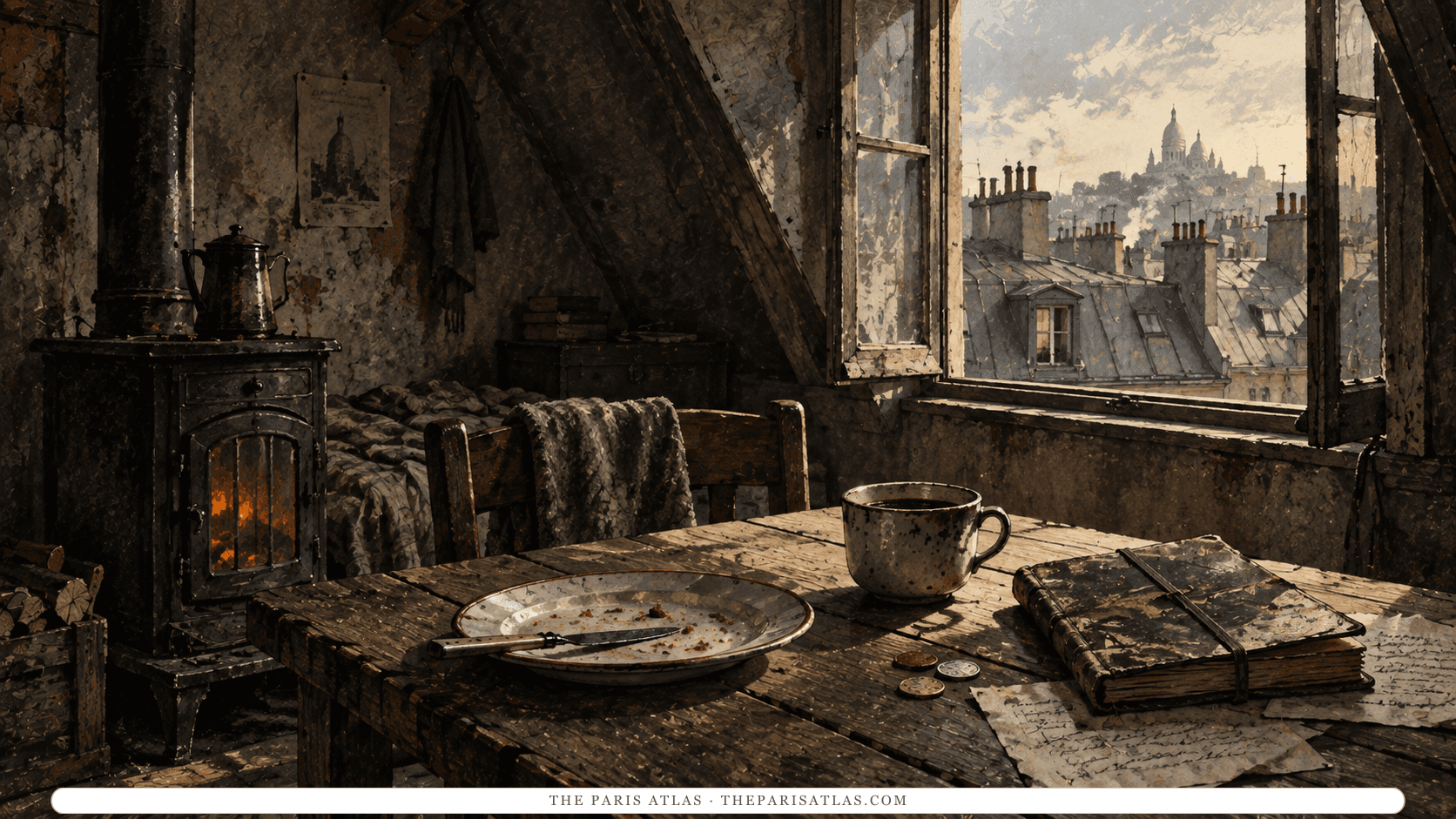
Paris on an empty stomach
The expatriate city as it was actually lived — cafés, cold flats, and hunger as a muse.
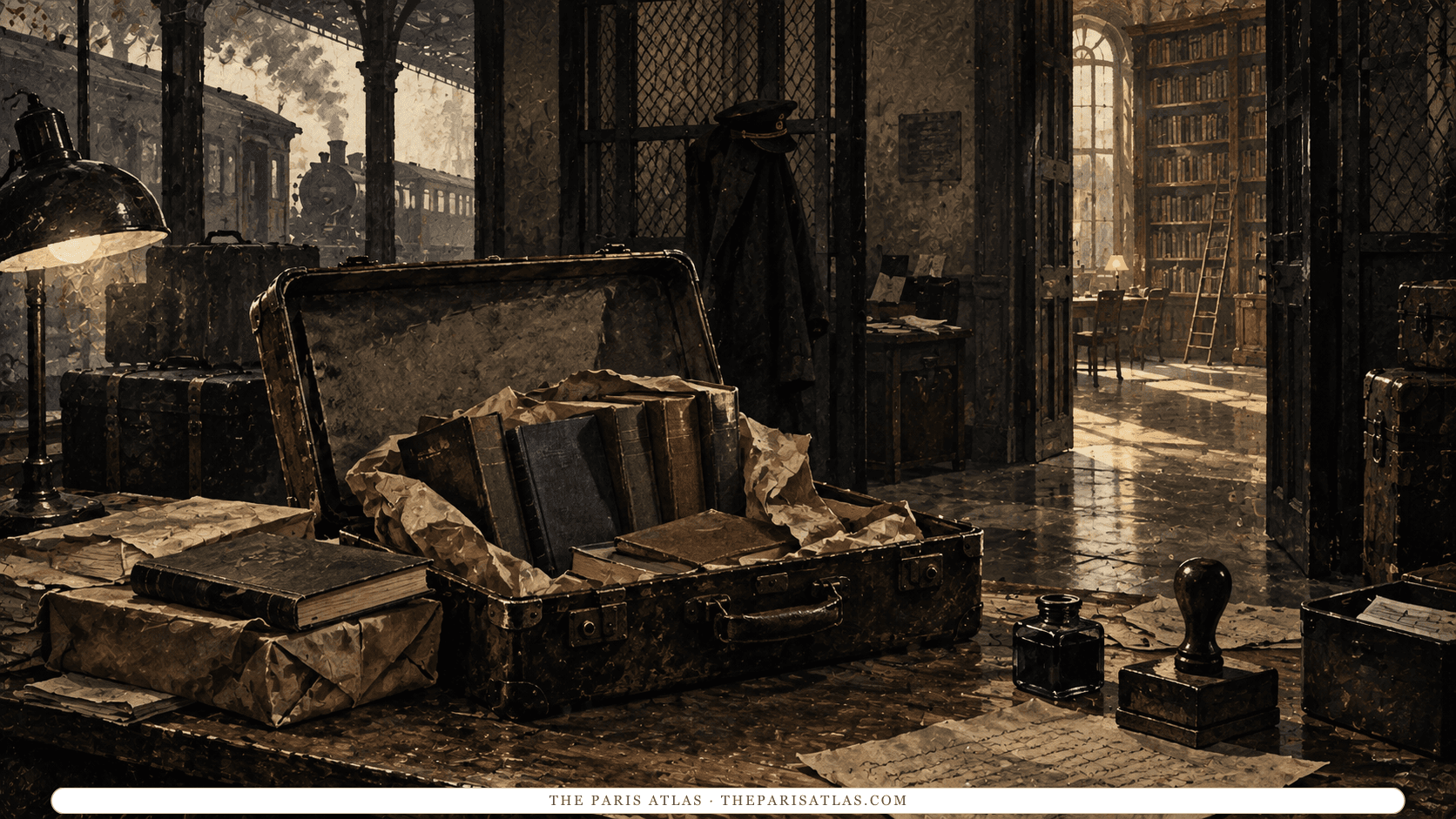
For three decades, some of the best books in this catalog traveled in false dust jackets and coat linings. Boston banned Hemingway; the U.S. Post Office burned Miller; and 'printed in Paris' on a title page meant, to a customs officer, probable cause.
This list is the contraband shelf: what was banned, why, and what the scandal was actually covering for. The pattern holds remarkably well — the censors reliably attacked the books that told the truth slant-free.

The case that ended it
The main event. Refused by every London and New York house, published by Paris's Obelisk Press in 1934, and contraband in the English-speaking world until Grove Press forced the issue in 1961 — through more than sixty prosecutions and into the Supreme Court. The verdicts ended literary censorship in America, more or less for good.

Banned alongside its sibling, sight mostly unseen. The New York prequel spent twenty-two years as the second-most confiscated title in American luggage.

Least deserved
Guilt by association: the quietest of Miller's Paris books was banned with the loud ones, which tells you the censors weren't reading closely. The best prose on the contraband shelf.

The respectable scandal
Yes, Hemingway too: the Scribner's Magazine serialization was banned in Boston in 1929, and Italy's Fascist government banned the novel outright for its account of Caporetto. Different censors, same reflex.

Banned in Boston and burned in Berlin — for frankness that reads almost quaint now, which is itself the lesson: yesterday's outrage is today's syllabus.

Feared everywhere
Never formally banned in France — the scandal was aesthetic. But translations were cut and bowdlerized for decades, and Soviet, Italian, and German censors each took their turn. Every regime found something in it to fear, which may be the sincerest review it ever got.
The expatriate city as it was actually lived — cafés, cold flats, and hunger as a muse.

First books first: the right entry point for each of the era's four voices — and what to read second.
The sources below include primary texts, publication records, archives, and literary history used to frame this reading list and its selections.
Publication history used for Obelisk Press, Henry Miller, and the circulation of books barred from English-language markets.
The original Paris edition at the center of the list's censorship history.
Contemporary serial record documenting the Boston suppression of the June 1929 issue.
Archival exhibition context used for The Sun Also Rises and its publication history.
These references document the historical and bibliographic context behind the list. The ordering and recommendations remain editorial judgments by The Paris Atlas.
 Explore more resources
Newsletter
One book, one honest argument for it, and what to read next. Written by a person, sent on Fridays.