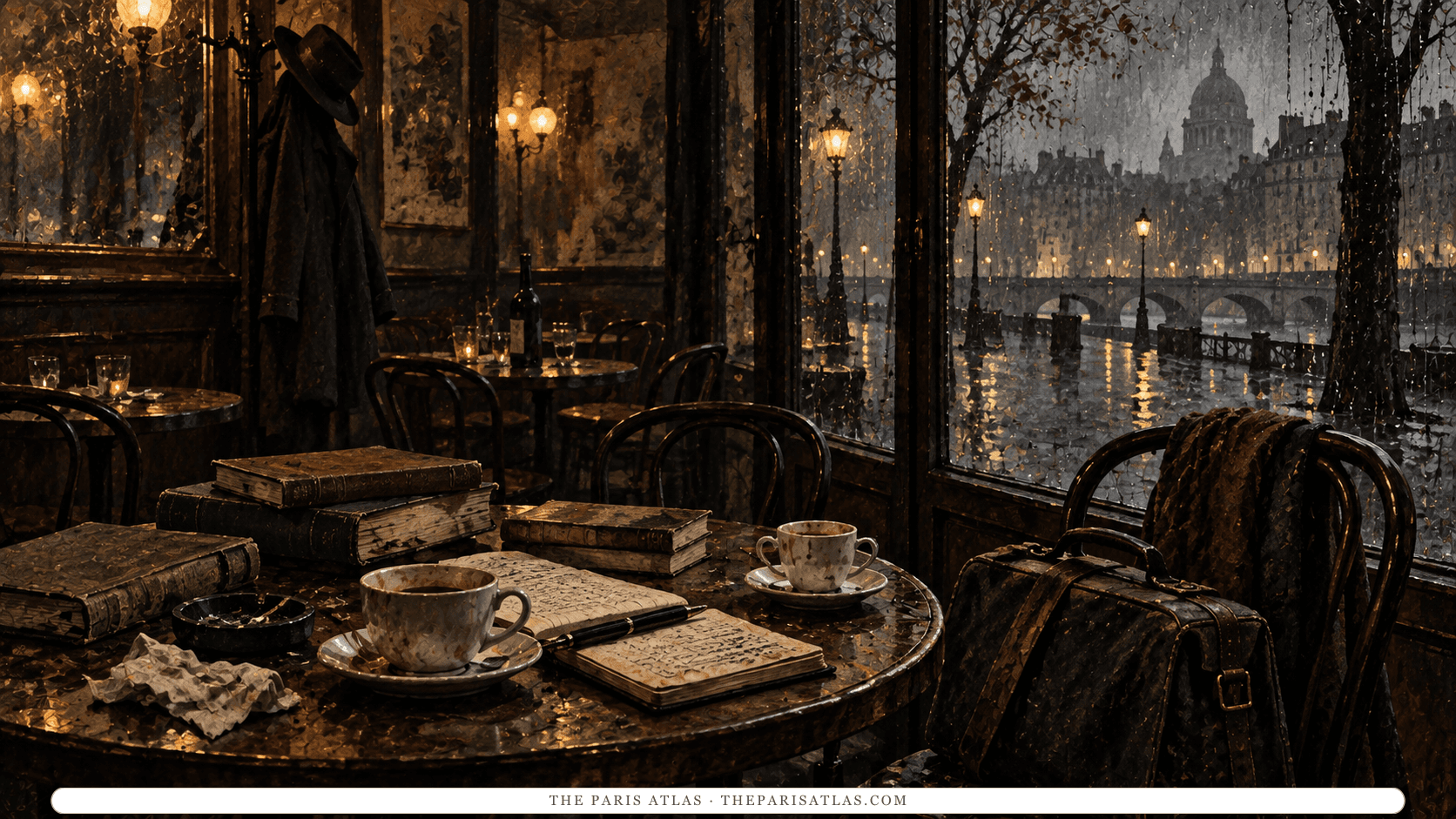
The essential Lost Generation shelf
Eight books that hold the whole era — the wound, the party, and the hangover.
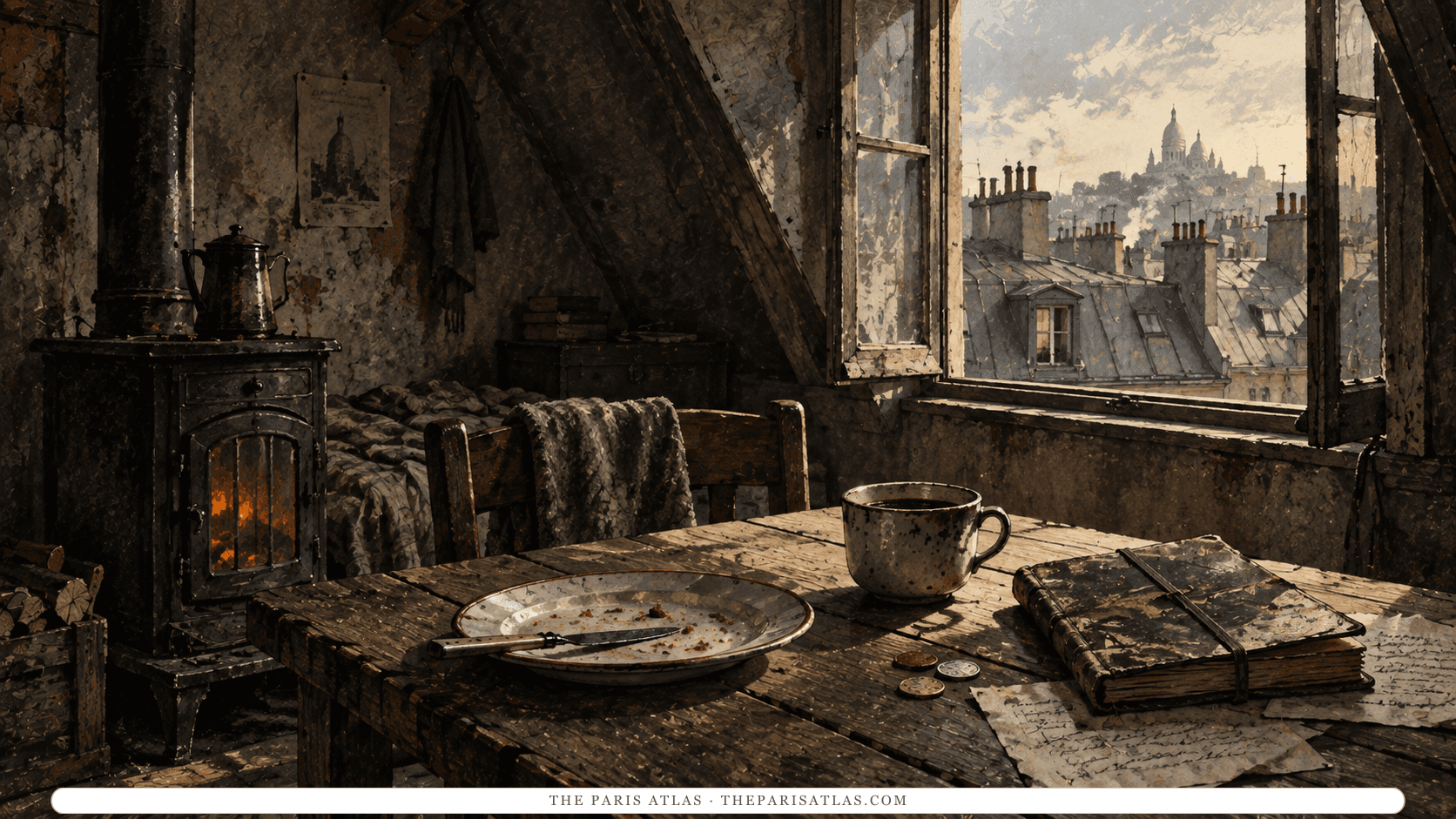
The postcard version of 1920s Paris is champagne at the Ritz. The version in the books is a cold-water flat above a sawmill, a café table held for three hours on one coffee, and dinner arranged around which friend hadn't been borrowed from lately.
This list is for the reader who wants the city itself — the streets, the rooms, the economics of the cheap franc — as the writers walked it. Read in any order, though we've put the tenderest first and the hungriest last.

Start here
The map. Rue du Cardinal Lemoine, the Closerie des Lilas, Sylvia Beach's lending library — sixty years of literary pilgrimage routes come from these sketches. Start here and the rest of the list has addresses.

The Left Bank at cocktail hour: the Dôme, the Select, taxis at dawn. The novel's Paris chapters are the era's nightlife preserved in amber — before the crowd flees south to Spain.

The hungriest
The same city, 1930s, no return ticket. Miller's Paris is walked at 3 a.m. on an empty stomach, and his hunger chapters are the genre's masterpiece — comic, precise, and never once self-pitying.

Paris as dream-city. The most musical of Miller's books drifts between the Brooklyn he came from and the Paris streets he couldn't believe his luck to be broke in.

The other Paris
The corrective: Paris for the people who couldn't leave. Céline's arcade childhood is the city's poor interior — the shop, the passage, the debts — a class below every expatriate on this list.

The night city. Bardamu's Paris is the suburbs the tourists never saw — the clinics, the courtyards, the rented rooms — rendered with a doctor's eye and a demon's tongue.

Printed in Paris
Hand-printed in Paris in 1925 by Bill Bird's Three Mountains Press, three doors from where Hemingway worked — the era's most audacious book-object, and its poem of everywhere.

The road in: Pound's farewell to literary London is the reason the movement's capital moved across the Channel. Read it as the era packing its bags.
Eight books that hold the whole era — the wound, the party, and the hangover.
The books customs officers seized and professors now assign — the era's contraband shelf.
The sources below include primary texts, publication records, archives, and literary history used to frame this reading list and its selections.

Primary text used for the list's cafés, streets, rooms, and economics of literary Paris.
Primary text used for the list's portrait of Left Bank nightlife and expatriate movement through Paris.
Primary text used for Henry Miller's hungry, street-level Paris of the early 1930s.
Primary text used for the list's account of Miller's autobiographical and dreamlike Paris writing.
These references document the historical and bibliographic context behind the list. The ordering and recommendations remain editorial judgments by The Paris Atlas.
 Explore more resources
Newsletter
One book, one honest argument for it, and what to read next. Written by a person, sent on Fridays.