

It Catches My Heart in Its Hands
The 1963 Loujon Press collection, the other significant pre-Black Sparrow book.
Read our take
A selection of Bukowski chosen by another editor to introduce him to strangers: eighty stapled pages, four hundred copies, printed in Madison, Wisconsin.
A Bukowski Sampler was published by Quixote Press in Madison, Wisconsin in July 1969, edited and introduced by the small-press poet and editor Douglas Blazek. It is eighty pages, saddle-stapled in printed wrappers, in an edition of four hundred copies, with illustrations by Bukowski. At the time Bukowski was forty-eight, still sorting mail at the Terminal Annex post office, and had published mostly in mimeographed magazines. Blazek assembled it as an introduction, drawing on work that was spread across dozens of magazines, for readers who had never come across the name.
Douglas Blazek edited Ole, one of the mimeograph magazines that carried Bukowski through the 1960s, and knew the work as it appeared. What he assembled was a sampler in the plain sense: a short introduction to a writer whose poems were spread across dozens of magazines with print runs in the hundreds.
Quixote Press printed four hundred copies. Two further editions followed, from Druid Books in 1971 and 1973. The standard Bukowski bibliographies list it as Dorbin A14 and Krumhansl 30.
The grand title, The State of World Affairs from a 3rd Floor Window, promises a survey that the speaker's narrow outlook cannot deliver. A dog and pigeon keep circling while his thoughts leap toward distant landscapes and nuclear destruction. His wait for something artistically impressive becomes the poem's subject: uneventful watching supplies the material he considers inadequate. The final reassurance about the bombs is comically unsupported by the courtyard. His judgments of the woman below also expose a restricted, objectifying gaze, not an observer whose elevated position grants reliable authority.
A Literary Romance turns correspondence into an encounter in which the narrator's expectations keep failing. The apple and notebook interrupt the seductive promise he has read into her poems. When he declares the poems bad, readers receive his verdict rather than the poems themselves: the narrative reserves critical authority for him. His own exhaustion, lateness and aging complicate that superior stance. The final generalization linking sexual experience to literary ability exposes the speaker's misogyny; it need not be accepted as the poem's lesson, or as evidence about a real woman's writing.
Douglas Blazek had been printing Bukowski in his own magazine for years, and chose what a newcomer should read first.
Eighty stapled pages, four hundred copies, the author's own drawings — the physical form the work took before Black Sparrow.
Bukowski’s drawings give the introductory selection a visual element beyond the assembled prose and poems.
1969
Quixote Press publishes the book in Madison in July, in an edition of four hundred copies.
1970
Bukowski leaves the post office in January to write full time.
1971
Druid Books issues a second edition, and a third in 1973.
The 1963 Loujon Press collection, the other significant pre-Black Sparrow book.
Read our take

The 1969 Black Sparrow collection, published the same year, that began the long partnership.
Read our takeA selection of Charles Bukowski's poems and prose published by Quixote Press in Madison, Wisconsin in July 1969, edited and introduced by Douglas Blazek.
A poet and small-press editor who ran the mimeographed magazine Ole, which printed Bukowski frequently in the 1960s. He chose the contents of this book and wrote its introduction.
The first edition was four hundred copies. Druid Books reprinted it in 1971 and 1973, so three editions exist, all small.
No. It was published in 1969 by a small press before ISBNs were in general use, and the two later editions carry none either.
Right at the turn. Bukowski was still working nights at the post office in 1969 and left in January 1970, once Black Sparrow Press guaranteed him a hundred dollars a month.
Explore authors with a similar voice, perspective, and influence.
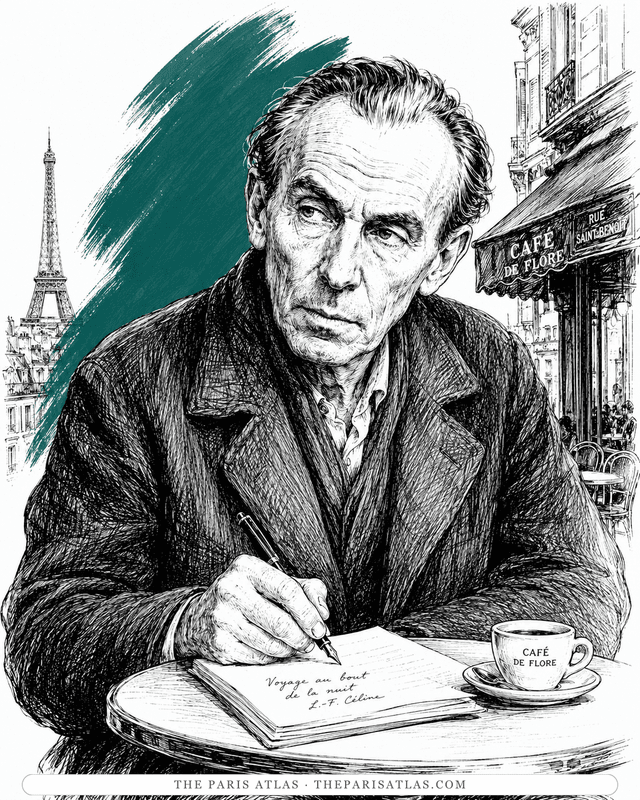
The doctor of the Paris slums who wrote the century's blackest, funniest novel — and changed the sound of French prose.
View author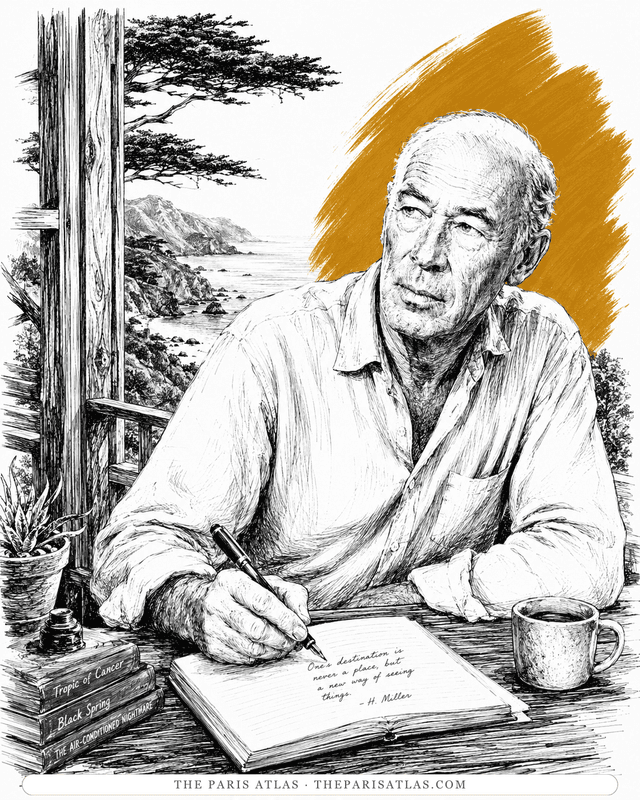
The Brooklyn dropout who arrived in Paris broke at thirty-eight and wrote the exuberant, banned books that ended American censorship.
View author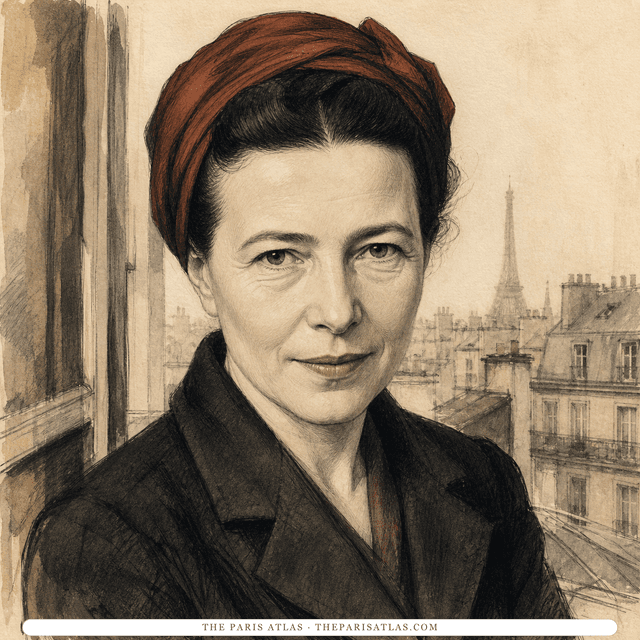
French writer and philosopher whose novels, memoirs, and social analysis examined freedom, gender, responsibility, aging, and the material conditions that shape a life.
View authorThe sources below include the primary text, editions, scholarship, archival materials, and other records that informed this page. They document A Bukowski Sampler, its publication, and its place in literary history.


The primary text represented by this page, used for descriptions of the work’s contents and for any quoted passages shown here.
The checklist entry: publisher, month, format, page count, print run, introduction and illustrations, with the Dorbin and Krumhansl numbers.
Where the book falls in the working chronology.
The small-magazine years and the move to Black Sparrow.
The 1960s mimeograph scene and Bukowski's place in it.
Complete public transcriptions of The State of World Affairs from a 3rd Floor Window and A Literary Romance, identified on the page as texts from the 1997 Burning in Water Drowning in Flame. Not a facsimile or line-by-line collation of the 1969 Sampler.
Specialist contents locate the two poems in the 1969 Sampler at pp. 27 and 29; bibliographic confirmation, not primary poem text.
The primary text is the baseline reference for every book page. Additional references document publication history, interpretation, and historical context where that evidence is available.
 Explore more resources