
The speaker of Phenomenal Woman
A woman explains her appeal through movement, confidence, and the way she treats others.
The book

The figure in the poem
Close readingThe speaker of Maya Angelou's Phenomenal Woman is a woman who claims the authority to explain her own appeal. Other women ask about her secret, and men are drawn to her without fully understanding why. Her answer directs attention toward how she inhabits her body, rather than whether that body meets a fashion ideal.
She questions who gets to set the standard
SparkNotes emphasizes the speaker's refusal to measure herself against conventional attractiveness. She does not accept the assumption that failing to resemble a fashion model makes her less fully a woman. The poem's repeated identification of herself reverses the direction of judgment: she names her own value.
That reversal is more specific than saying that everyone has inner beauty. The speaker remains vividly physical. The dispute concerns which features and gestures count, who interprets them, and whether an external standard has the final word.
Her body is described through what it does
Arms reach, a stride takes space, and a smile changes the face. These are descriptions of an active presence. The speaker's account asks the reader to imagine someone entering a room, moving, and responding, rather than holding still to be inspected.
The SparkNotes overview makes a related distinction between static appearance and the speaker's manner. Her attraction emerges through confidence and expression. This helps explain why the observers' search for a single hidden feature keeps failing: their question assumes that her appeal can be isolated from the way she lives in her body.
The answer keeps returning to the same person
The refrain gathers each new account of her presence back into an assertion of identity. She does not adopt a new self to satisfy the next audience. Repetition allows changing gestures and reactions to belong to a consistent, self-defined woman.
The voice can be proud without becoming a plea. The speaker describes the responses she produces, but she also controls the telling. A reader can notice the tension between the pleasure of being admired and the refusal to let admiration alone determine her worth.
Performance and self-possession
The PBS documentary on Angelou brings her work as a dancer, singer, actor, and writer into the same account. That performance background offers a useful context for a poem whose presence is carried through rhythm, gesture, and an address to listeners. The words invite a voice and a body to make their confidence audible.
The context should not turn every physical detail into a verified measurement of Angelou herself. The poem creates a speaker who can embody a position about womanhood. Her particular gestures make that position persuasive; they do not establish a rule that every woman must look or behave like her in order to possess value.
Sources and passages
- Maya Angelou, Phenomenal Woman
Primary text, credited to And Still I Rise, with its body imagery, audiences, and refrain.
- Phenomenal Woman: Analysis of the Speaker
Secondary discussion of the speaker's challenge to conventional appearance and her act of self-definition.
- Phenomenal Woman: Summary and Analysis
Secondary discussion of attraction, expression, and the observers' inability to identify a single secret.
- Maya Angelou: And Still I Rise, documentary transcript
PBS American Masters: context for Angelou's work across dance, song, acting, and writing.
Voice, imagery, and form
- A questioned standardThe opening refuses to let a fashion model's proportions decide her value.
- Gestures instead of measurementsReach, stride, and expression present a body doing things.
- An entrance into a roomOther people's reactions become part of the scene she describes.
- An elusive explanationObservers cannot reduce her presence to a single visible feature.
- A repeated self-definitionThe refrain returns the explanation to the speaker's own authority.
- A speaking presenceThe rhythmic return invites the assertion to be heard aloud.
If you like And Still I Rise


If you like Maya Angelou
Explore authors with a similar voice, perspective, and influence.
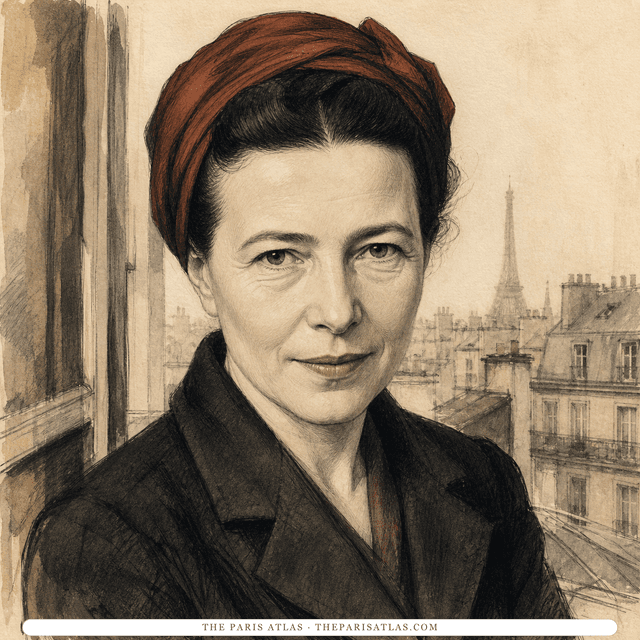
Simone de Beauvoir
French writer and philosopher whose novels, memoirs, and social analysis examined freedom, gender, responsibility, aging, and the material conditions that shape a life.
View author
Louis-Ferdinand Céline
The doctor of the Paris slums who wrote the century's blackest, funniest novel — and changed the sound of French prose.
View author
Henry Miller
The Brooklyn dropout who arrived in Paris broke at thirty-eight and wrote the exuberant, banned books that ended American censorship.
View author