The Paris AtlasCharting the artists, works, and places worth returning to.
Cover of And Still I Rise by Maya Angelou

And Still I Rise

by Maya Angelou

Angelou's third poetry collection joins bodily confidence and resistance to poems of hurt, labor, family, and memory.

Published
1978
Pages
64
Shelf rating
4.7

About Maya Angelou

Illustrated portrait of Maya Angelou
Maya Angelou

5 books shelved

The story, briefly

Spoiler-free

And Still I Rise is Maya Angelou's 1978 collection of thirty-two poems. It includes Still I Rise and Phenomenal Woman, alongside poems about love, violence, work, childhood, and aging. Three sections give the volume its shape. Its confident declarations share space with difficult relationships and remembered pain, so the whole book offers more than the celebratory voice of its best-known poems.

The story, in more detail

Phenomenal Woman makes bodily presence a source of confidence. The speaker names ordinary movements and features, then repeats her declaration of womanhood. The poem moves from other people's puzzled responses toward her own explanation of what makes her attractive.

California Prodigal uses a different vocabulary and setting. Old buildings and ancestral portraits surround an active present-day figure. Flowers and sunlight give the landscape movement while the painted ancestors remain fixed. The poem sets inherited surroundings against the life taking place within them.

Kin turns toward a brother and shared childhood. The speaker recalls walks, private conversation, and Arkansas evenings after describing separation and distress. Its address moves between family memory and uncertainty about the brother's experience. That uncertainty remains even when remembered laughter returns.

How the collection is arranged

Part One, Touch Me, Life, Not Softly, contains eight poems, including A Kind of Love, Some Say, Phenomenal Woman, and Men. Part Two, Traveling, contains fifteen, including California Prodigal, Woman Work, and Kin.

Part Three, And Still I Rise, contains nine poems. It begins with Still I Rise and ends with Thank You, Lord. The individual poem's title omits the opening And used in the collection's title.

Themes and analysis

These readings discuss events throughout the book, including its ending.

A repeated answer changes who can define the speaker

In Phenomenal Woman, the recurring declaration follows lists of gestures, features and movements. The speaker does not merely deny an unfavorable judgment; she supplies a different account of presence. The body's activity gives the answer substance, while the refrain makes others' uncertainty less decisive.

Repetition also determines the pace of the exchange. Observers may ask where attractiveness comes from, but the voice controls when and how the answer returns. The poem performs self-possession through its structure as well as naming it as a quality.

An interpretive scene inspired by Phenomenal Woman: the speaker’s stride and self-possession shape her presence. (Illustration — The Paris Atlas)

Family memory includes demands that strangers cannot meet

Kin begins with an expansive account of shared origin, then admits the speaker has tried to make other people replace her brother. That admission gives separation a consequence beyond loneliness. Affection can lead to claims on strangers who do not owe the relationship the speaker wants from them.

The return to childhood walks and private conversations does not make every uncertainty about the brother disappear. Repeated acknowledgment that he may be right keeps the address open. Shared memory supplies intimacy without giving the sister complete authority over his experience.

Ancestral images need a living present

California Prodigal sets the stillness of inherited buildings and portraits beside the activity of a present figure and a flowering landscape. The contrast makes inheritance more complicated than reverence. A place can contain the past without requiring the living to reproduce its fixed attitudes.

Read beside Kin, the poem shows two different relations to what precedes a person: a shared memory that continues to move a speaker, and images whose stillness is disturbed by life around them. Neither relation is captured adequately by calling the collection simply a book of confidence.

The three-part book makes room for more than its refrain

The title's famous assertion belongs to a collection that also contains violence, labor, intimacy and aging. The table of contents moves through Touch Me, Life, Not Softly and Traveling before reaching the section called And Still I Rise. A reader encounters forms of exposure and movement as well as declarations of strength.

That variety matters when individual poems circulate separately. The assertive speaker of Phenomenal Woman and the uncertain sister in Kin do not need to be reconciled into a single unchanging attitude. The book permits assurance and vulnerability to occupy distinct acts of speaking.

An interpretive image inspired by the title poem’s ocean and daybreak imagery, alongside the collection’s many other voices. (Illustration — The Paris Atlas)

Sources for these readings

Quotes from And Still I Rise

Quoted verbatim from the text, each line verified against its source.

But still, like dust, I’ll rise.
— Maya Angelou, Still I Rise, in And Still I Rise (1978)
I was your sister.
— Maya Angelou, Kin, in And Still I Rise (1978)

Why we recommend it

  1. The famous poems with their companions

    The full contents place confident declarations beside hurt, family memory, and work. Reading the collection broadens the view offered by a single frequently quoted poem.

  2. Different ways of making a speaking voice

    A refrain, a short list, and an address to a brother produce different effects. The selected readings make those differences easy to compare.

  3. Memory made specific

    In Kin, remembered walks and fireflies give childhood a place and a texture. California Prodigal similarly develops its argument through buildings, pictures, and plants.

What this book explores

The people in its pages

These are distinct speakers from two poems in the collection. Their voices are discussed as poetic constructions, without assigning each statement to Maya Angelou’s life.

Inside the book

Selected works from this book, with notes on each.

Still I Rise

The speaker answers attempts to humiliate or silence her with repeated assertions of survival. Comparisons with dust, air, and tides make that survival seem inevitable. The ending connects her voice to ancestors and the history of slavery.

Phenomenal Woman

A woman answers questions about her attractiveness by naming her body, movement, and self-possession. Each stanza returns to a declaration she makes for herself. The repeated answer refuses to let the observers' confusion define her.

A Kind of Love, Some Say

An opening question compares physical blows, asking whether the victim's body can distinguish their source. The poem examines the confusion of violence with love. Its bruises and shock give a concrete basis to that distinction.

Country Lover

This brief poem lists clothes, music, a dance, a drink, and a prospective partner. Short rhyming phrases give the list a quick pace. Very little explanation separates the details of a social evening.

California Prodigal

An old California property carries traces of its past in walls, vines, and portraits. Against that stillness, a living figure insists on activity and generosity. Flowers and sunlight complete the contrast between inherited images and present life.

Kin

Addressed to Bailey, the poem links a sister and brother through blood, separation, and remembered childhood. Private conversations and fireflies in Arkansas give the shared past specific forms. The speaker's affection does not resolve every uncertainty about her brother.

Timeline

  1. 1978

    Random House publishes And Still I Rise, Angelou's third collection of poetry.

  2. 1994

    The Complete Collected Poems of Maya Angelou gathers the poems with her other poetry collections.

  3. 2015

    The Complete Poetry preserves And Still I Rise as a distinct collection within a larger volume, retaining its three sections.

Book editions

Hardcover edition cover
Hardcover
Random House
1978
ISBN-13
9780394502526
The publisher's current record for the original collection identifies this ISBN, an August 12, 1978 publication date, and a 64-page extent. Library descriptions of early copies may count only numbered pages.
Ebook
Ebook
Random House
2011
Electronic edition of the collection, listed by the publisher with an August 17, 2011 release date.

Reader reviews

Loading reviews…

Cover of The Weary Blues by Langston Hughes

The Weary Blues

Langston Hughes

Hughes's earlier collection offers another approach to the rhythms of spoken language and Black musical traditions in poetry.

Read our take

Recommended alongside Montage of a Dream Deferred.

And Still I Rise: frequently asked questions

Is And Still I Rise a poem or a book?

And Still I Rise is the title of Angelou's 1978 poetry collection. Still I Rise, without the opening And, is a poem in its third section.

How many poems are in And Still I Rise?

The original collection contains thirty-two poems: eight in Touch Me, Life, Not Softly, fifteen in Traveling, and nine in And Still I Rise.

Does it include Phenomenal Woman?

Yes. Phenomenal Woman appears in the first section. Its repeated declaration of womanhood is distinct from the refrain in Still I Rise.

Is Caged Bird in this collection?

No. The poem Caged Bird belongs to Shaker, Why Don't You Sing?, a later poetry collection. It can appear alongside these poems in larger collected editions.

Are all the poems autobiographical?

The poems include family memories, but a poetic speaker should not automatically be treated as a factual account of the author's life. The book contains different voices, situations, and forms.

Which edition contains the original collection?

The Random House hardcover with ISBN 9780394502526 identifies And Still I Rise itself. Larger collected editions include additional books and therefore have different contents and page counts.

If you like Maya Angelou

Explore authors with a similar voice, perspective, and influence.

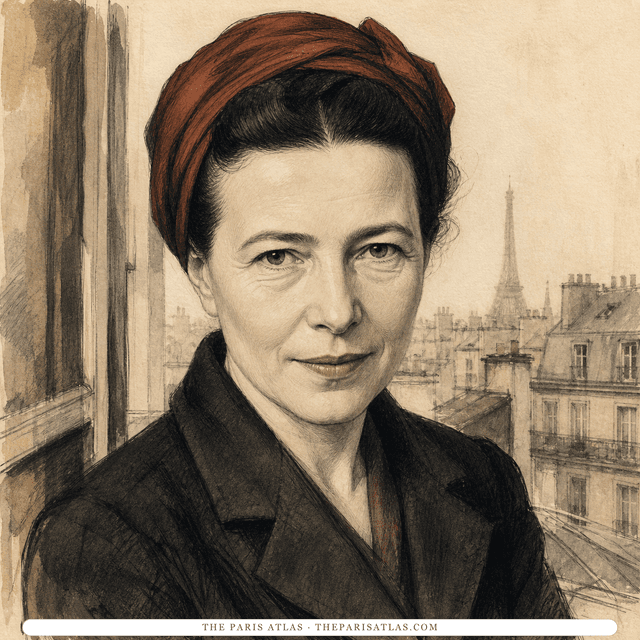
  • Illustrated portrait of Simone de Beauvoir

    Simone de Beauvoir

    French writer and philosopher whose novels, memoirs, and social analysis examined freedom, gender, responsibility, aging, and the material conditions that shape a life.

    View author
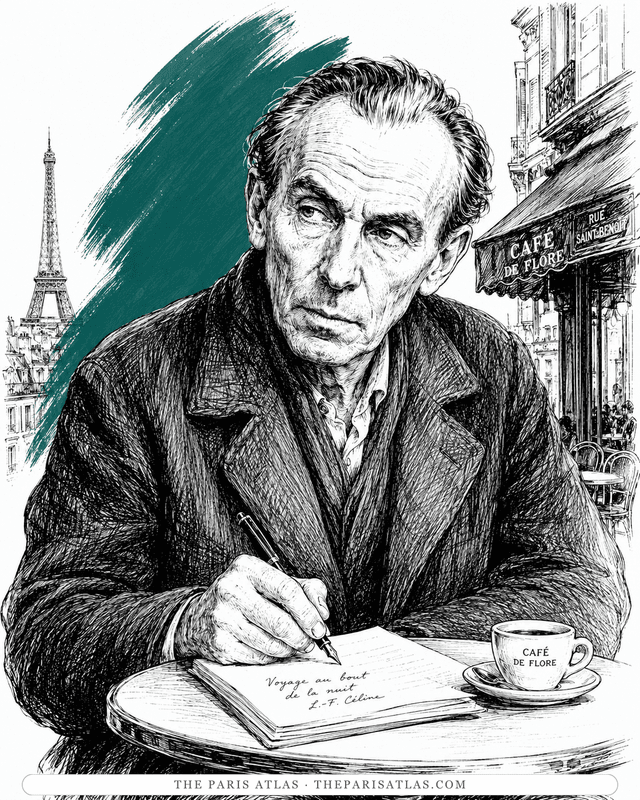
  • Illustrated portrait of Louis-Ferdinand Céline

    Louis-Ferdinand Céline

    The doctor of the Paris slums who wrote the century's blackest, funniest novel — and changed the sound of French prose.

    View author
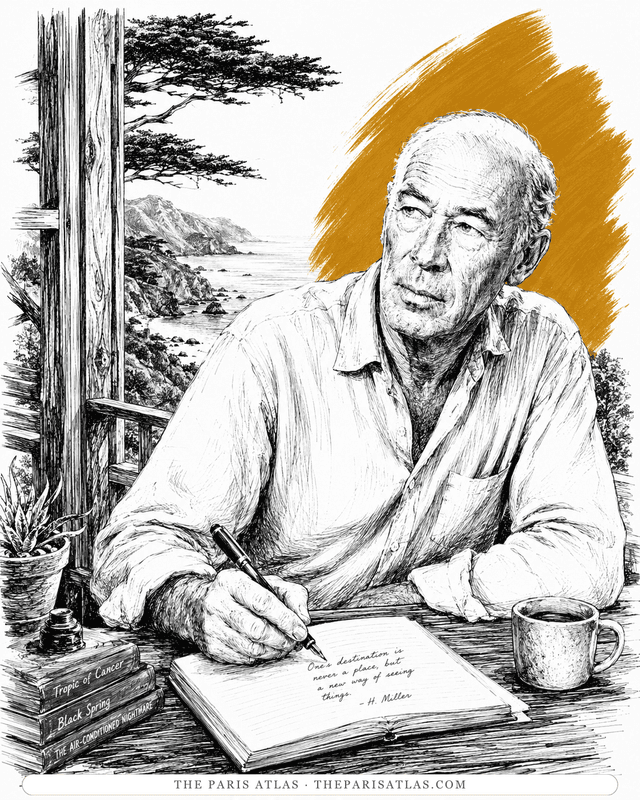
  • Illustrated portrait of Henry Miller

    Henry Miller

    The Brooklyn dropout who arrived in Paris broke at thirty-eight and wrote the exuberant, banned books that ended American censorship.

    View author
References

References

The sources below include the primary text, editions, scholarship, archival materials, and other records that informed this page. They document And Still I Rise, its publication, and its place in literary history.

  1. 1And Still I Rise

    Poetry
    Maya Angelou, 1978
    Used for

    The primary text represented by this page, used for descriptions of the work’s contents and for any quoted passages shown here.

  2. 2And Still I Rise: Original Collection and Selected Poem Texts

    Website
    Penguin Random House Higher Education
    Used for

    ISBN and publication details; complete texts of Still I Rise, A Kind of Love, Some Say, and Country Lover.

    View source
  3. 3The Complete Poetry of Maya Angelou: Scanned Contents

    Archive
    ETH Library, 2015
    Used for

    Scanned publisher contents establish the thirty-two poems and three sections, preserved within the 2015 collected volume. The same contents place Caged Bird in Shaker, Why Don't You Sing?.

    View source
  4. 4Phenomenal Woman

    Poetry
    Poetry Foundation, 1978
    Used for

    Authorized complete poem and its credit to the 1978 collection and 1994 collected edition.

    View source
  5. 5California Prodigal

    Poetry
    Poetry Foundation, 1978
    Used for

    Authorized complete poem for the landscape reading.

    View source
  6. 6Kin

    Poetry
    Poetry Foundation, 1978
    Used for

    Authorized complete poem, dedication, and verified quotation.

    View source
  1. 7Maya Angelou papers, 1857–2015

    Archive
    Schomburg Center for Research in Black Culture, New York Public Library
    Used for

    Archival drafts and publication context for the collection.

    View source
  2. 8Still I Rise: Analysis of the Speaker

    Website
    SparkNotes
    Used for

    Character close reading: Secondary discussion of the speaker's racial and gender identity and the unnamed addressee.

    View source
  3. 9Still I Rise: Summary and Analysis

    Website
    SparkNotes
    Used for

    Character close reading: Secondary account of the shift in stanza pattern and the repeated declarations near the ending.

    View source
  4. 10Maya Angelou: And Still I Rise, documentary transcript

    Website
    PBS American Masters, 2017
    Used for

    Character close reading: PBS American Masters: context for Angelou's work across dance, song, acting, and writing.

    View source
  5. 11Phenomenal Woman: Analysis of the Speaker

    Website
    SparkNotes
    Used for

    Character close reading: Secondary discussion of the speaker's challenge to conventional appearance and her act of self-definition.

    View source
  6. 12Phenomenal Woman: Summary and Analysis

    Website
    SparkNotes
    Used for

    Character close reading: Secondary discussion of attraction, expression, and the observers' inability to identify a single secret.

    View source
i
Why these sources are here

The primary text is the baseline reference for every book page. Additional references document publication history, interpretation, and historical context where that evidence is available.

Explore more resources