
Pip
The narrator, Philip Pirrip, whose expectations of gentility lead him to misunderstand both money and love.
He wants to become a gentleman worthy of Estella, then has to discover what responsibility that ambition has concealed.
The book

Who they are in the book
Spoiler-freePip tells his own story with knowledge his younger self lacked. His ability to acknowledge shame and mistaken judgments becomes part of the change the novel traces.
How Pip Is Portrayed
- Inventing parents from lettersIn Chapter I, Pip imagines his parents' appearance from their tombstones. His reading is touching and unreliable, introducing a child who must make sense of evidence without anyone to explain it.
- Acquiring a new shameIn Chapter VIII, Estella mocks his boots and hands. Pip begins to look at familiar parts of himself through her contempt; the wish to rise in class starts as a wound to his self-respect.
- Filling a silence with a fantasyIn Chapter XVIII, Jaggers refuses to name the benefactor. Pip supplies Miss Havisham as the answer himself, turning a lack of information into confidence that Estella belongs to his future.
- Rejecting the source of his comfortIn Chapter XXXIX, Magwitch's return horrifies him. The revelation exposes how thoroughly he has separated his desired identity from the labor and affection that paid for it.
- Staying beside a condemned manIn Chapter LVI, Pip visits the dying Magwitch, petitions for mercy and holds his hand. The relationship now requires public loyalty, with no fortune left to make it advantageous.
- Receiving care he has not earnedIn Chapter LVII, Joe nurses him and pays his debts. Pip's dependence reverses his earlier embarrassment about the blacksmith and makes gratitude a practical obligation rather than a polite sentiment.
If you like Great Expectations


If you like Charles Dickens
Explore authors with a similar voice, perspective, and influence.
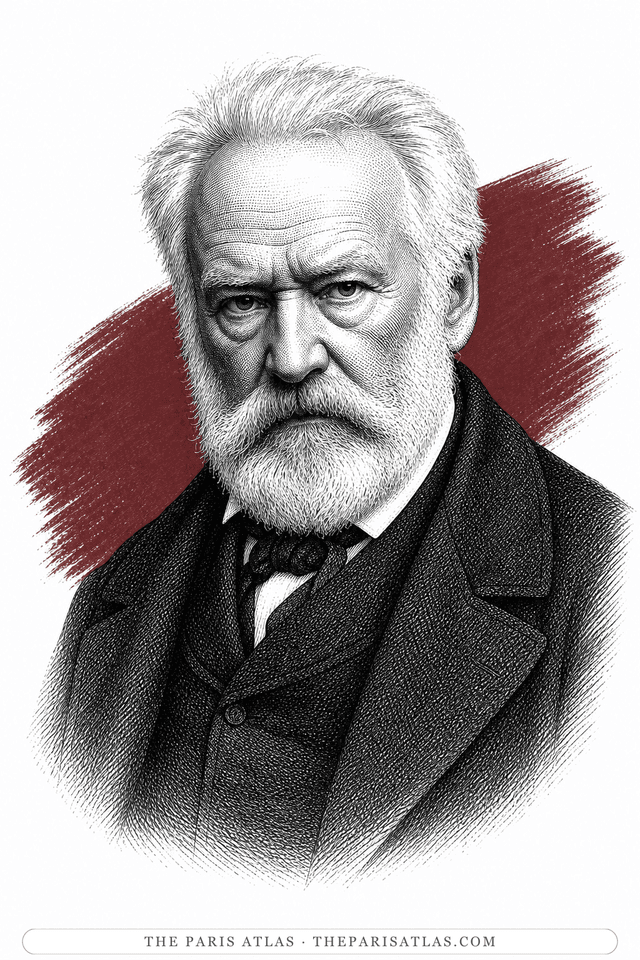
Victor Hugo
Poet, novelist and playwright who spent sixteen years in an apartment on the Place des Vosges that is now his museum, wrote a novel about Notre-Dame that shamed France into repairing the cathedral, spent nineteen years in exile for opposing the emperor Napoleon III, and was buried in the Panthéon — the Paris monument where France buries its most honoured dead — in 1885 after a funeral that brought roughly two million people into the streets of Paris.
View author
Mark Twain
The Missouri newspaperman who became America's most famous writer, and whose first book made its reputation partly out of Paris: in 1867 he arrived with a shipload of American tourists, renamed his guide Ferguson, watched the high-kicking can-can through his fingers and wrote it all down. He kept coming back — and was living in Paris in the mid-1890s, broke, while finishing the novel he considered his best, Personal Recollections of Joan of Arc.
View author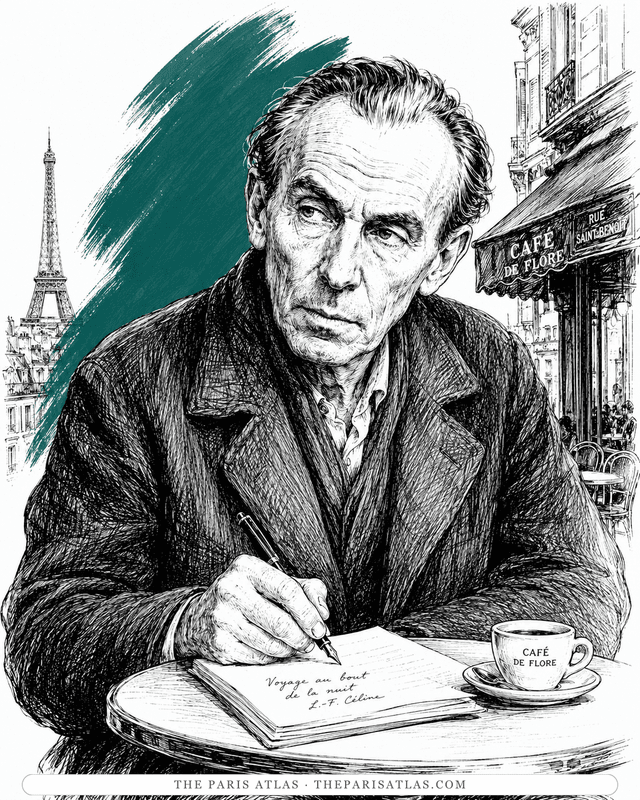
Louis-Ferdinand Céline
The doctor of the Paris slums who wrote the century's blackest, funniest novel — and changed the sound of French prose.
View author