
The student in Theme for English B
A twenty-two-year-old Black student questions what it means to write a truthful personal account.
The book

The figure in the poem
Close readingThe speaker of Langston Hughes's Theme for English B is a twenty-two-year-old Black college student writing an assignment for a white instructor. Asked to produce a truthful page from personal experience, the student questions whether truth can be separated from race, place, and the unequal relationship between teacher and pupil.
The assignment becomes the subject
The Poetry Foundation's teaching essay draws attention to the instructor's neat rhymes and easy instructions. They make authentic self-expression sound straightforward. The student's response becomes less settled, trying out different ways to identify the person who is supposed to emerge on the page.
The resulting contrast is formal as well as argumentative. A smooth instruction receives an answer full of turns, questions, and reconsiderations. The student fulfills the assignment by examining its assumptions. The page demonstrates why describing a self takes more work than the instructor's formula allows.
The journey home makes separation visible
The student travels from the college above Harlem to a room at the Harlem Branch Y. The route joins an institutional setting in which the student is the only Black person in class to a neighborhood with a different communal life.
In Visualizing Words and Worlds, the Poetry Foundation recommends drawing this journey to notice the separation between college and neighborhood. That approach makes the student's position concrete. The writer occupies more than one social space, and carries the experience of moving between them into the assignment. The poem itself does not name the college.
Personal tastes resist a racial checklist
The teaching essay follows the student's movement from demographic facts toward likes, pleasures, and habits. Musical tastes bring Bessie, bebop, and Bach together. The list refuses the expectation that a Black person's preferences must belong to one narrow cultural category.
This does not make race irrelevant. The student's page is shaped by a particular life, including unequal freedom, but the content of that life exceeds what the instructor could infer from a racial classification. The poem asks a reader to recognize specificity without turning it into a stereotype.
Mutual influence does not mean equal power
The ending argues that student and instructor belong to one another's experience, even when they resist that connection. The student can learn from the instructor while insisting that learning also runs in the other direction. The final qualification preserves the imbalance: the older white teacher remains freer.
The Poetry Foundation's account of Montage describes a collection shaped by the changing rhythms and voices of Harlem. In that setting, this student contributes one particular voice to a larger community. The assignment becomes a small encounter in which American interdependence can be stated without pretending that everyone participates on equal terms.
Sources and passages
- Langston Hughes, Theme for English B
Primary text: the assignment, journey through Harlem, personal tastes, and closing exchange with the instructor.
- Ten Poems I Love to Teach
Section 5 follows the changing style, the instructor's rhymes, and the student's attempts at self-definition.
- Visualizing Words and Worlds
A teaching account of mapping the student's journey between college and the Harlem Branch Y.
- Langston Hughes: Harlem
Collection context, including Hughes's prefatory account of Montage's musical changes and community voices.
Voice, imagery, and form
- The opening instructionThe teacher's easy formula gives the student a proposition to test.
- Age and racial positionThe student identifies an age of twenty-two and isolation as the only Black student in class.
- A route through HarlemMovement from college to the Y places the assignment within a social geography.
- A range of pleasuresThe preferences resist reducing a person to a demographic description.
- Questions within the answerReconsideration becomes part of the student's truthful page.
- The final qualificationMutual influence remains compatible with unequal freedom.
If you like Montage of a Dream Deferred


If you like Langston Hughes
Explore authors with a similar voice, perspective, and influence.
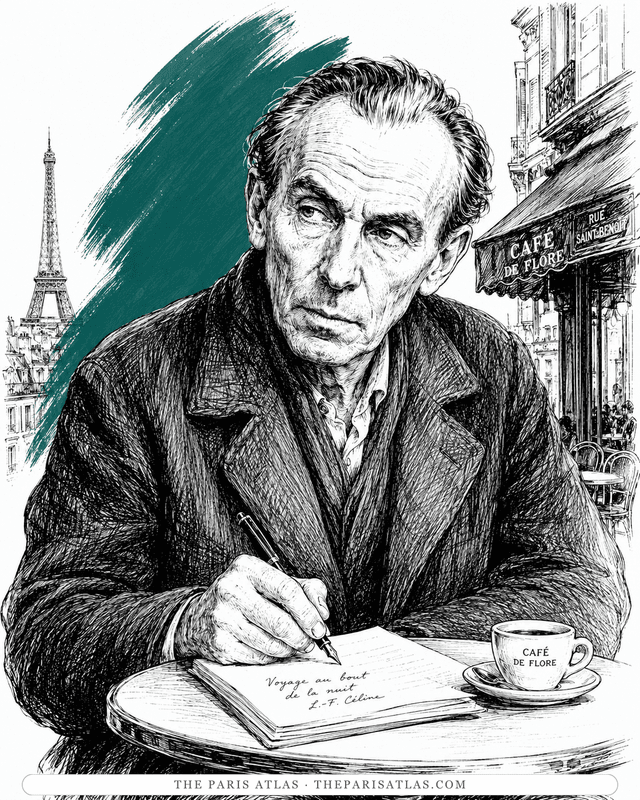
Louis-Ferdinand Céline
The doctor of the Paris slums who wrote the century's blackest, funniest novel — and changed the sound of French prose.
View author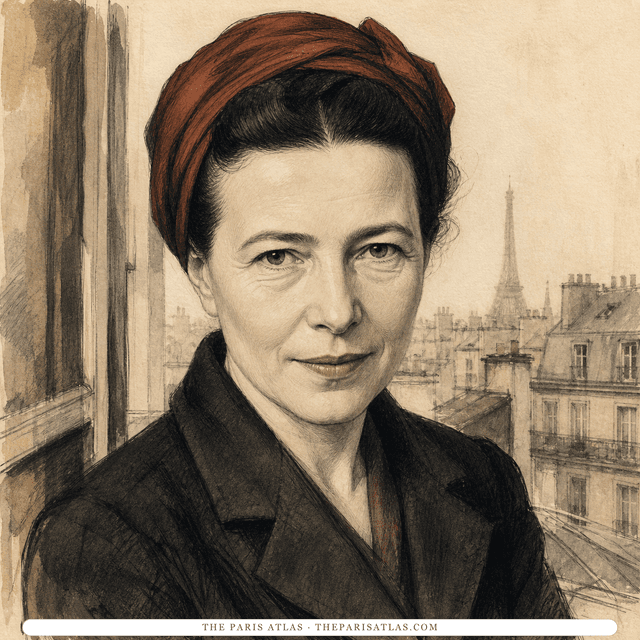
Simone de Beauvoir
French writer and philosopher whose novels, memoirs, and social analysis examined freedom, gender, responsibility, aging, and the material conditions that shape a life.
View author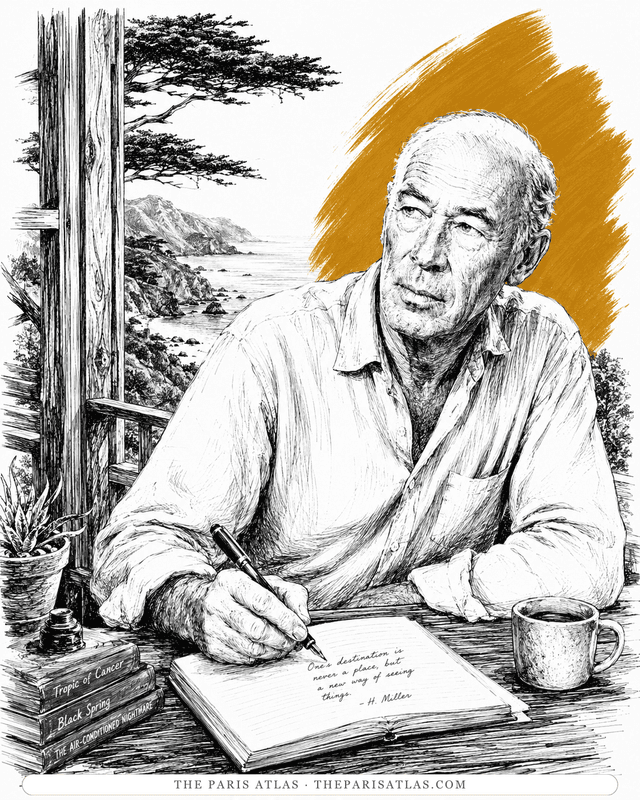
Henry Miller
The Brooklyn dropout who arrived in Paris broke at thirty-eight and wrote the exuberant, banned books that ended American censorship.
View author