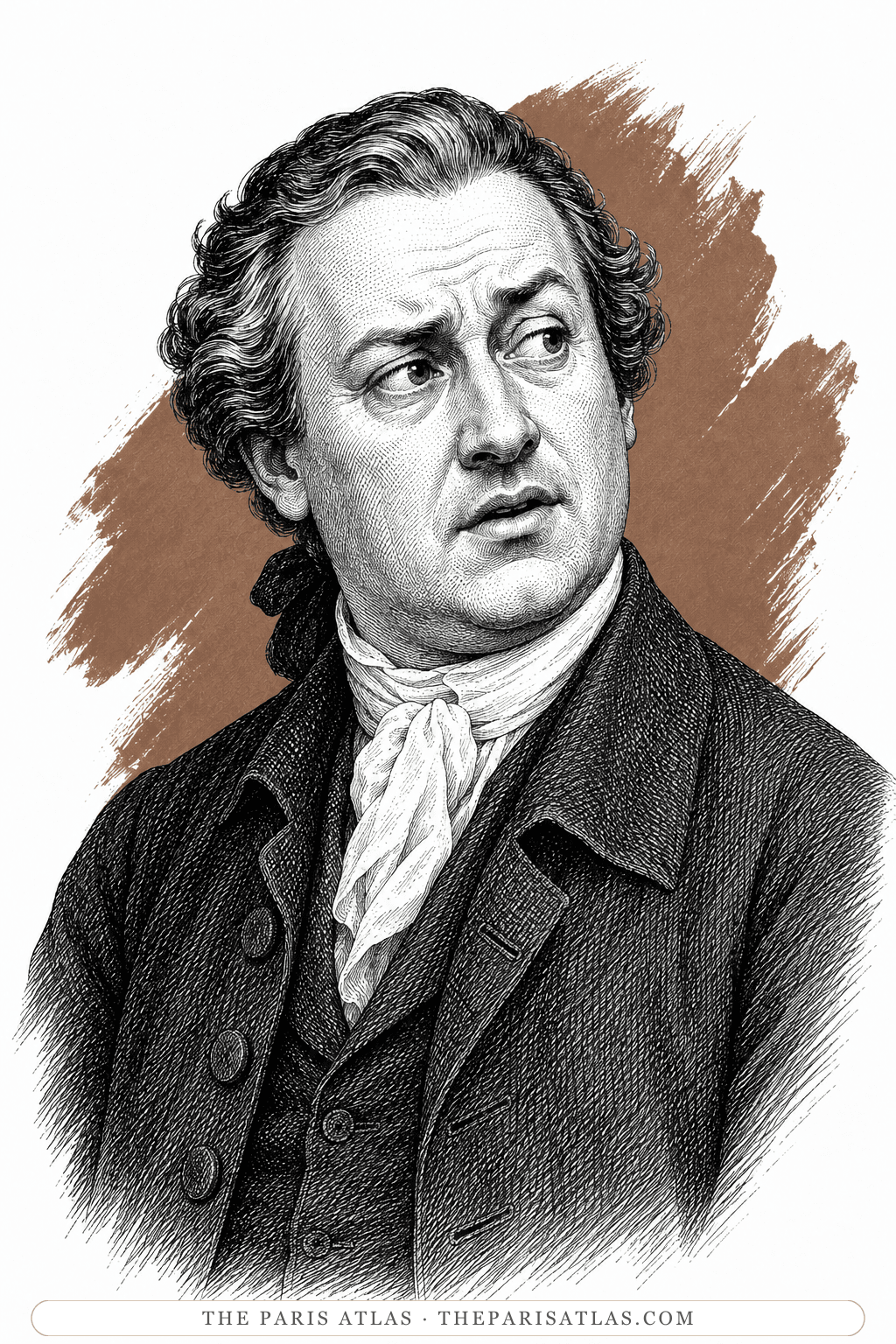
Speaker B in Liberty
The interlocutor whose objections test A’s account of freedom.
The book

Who they are in the book
Spoiler-freeB is the respondent who tests A's definition of freedom in Voltaire's article Liberty. B begins with ordinary expectations about choosing freely, then raises objections as A separates the causes of a wish from the power to act. The objections give the reader a way to participate in a difficult philosophical distinction.
The pressure placed on an ordinary idea of freedom
B readily agrees that someone near cannon fire cannot choose not to hear it. B also agrees that a person can move to safety when physically able. The difficulty appears when A says that this ability to act, rather than an uncaused will, is what freedom means.
B's resistance is understandable. In ordinary speech, being free often means more than having working legs or an open path. It can imply being the author of a choice. The dialogue becomes interesting because A and B are examining different expectations hidden within the same word.
The dog objection is more than a joke
B notices that A's definition would apply to a hunting dog pursuing a hare. The objection asks whether human reason and a human soul should make freedom fundamentally different. A replies that greater powers of thinking can make a person freer in degree without changing the nature of freedom itself.
B therefore forces A to accept a consequence that might otherwise remain concealed. The proposed definition does not preserve a special human exemption from causation. Even when A's mocking tone makes B appear foolish, the objection performs useful philosophical work by clarifying what the account commits its defender to.
Why B asks about a trivial game
The marriage example supplies a preference with recognizable motives: affection, the prospective partner's qualities, and hopes of being welcomed. B then asks about choosing odds or evens. A seemingly arbitrary choice is a stronger test of A's position because the chooser may feel no compelling reason for it.
A answers that some cause must still make one idea occur rather than the other. B's question thus exposes the difference between being unaware of a cause and having no cause. It also reveals where A relies on a general principle that B may still want to examine.
Qualified agreement preserves the reader's question
B finishes by suspecting that A is right and promising to think further. That response is more tentative than a complete conversion. It allows the dialogue to end with a clarified problem rather than a claim that every objection has disappeared.
B is valuable as a reader's representative precisely because familiar sayings are not immediately abandoned. The respondent asks for an account that can accommodate ordinary experiences of deliberation. The dialogue supplies no durable age, occupation, or personal history for B; its scenarios are devices for testing ideas about willing and acting.
Sources and passages
- Voltaire, Liberty
Primary text: H. I. Woolf's 1924 translation. B's objections concern the hunting dog, wishing at will, marriage, arbitrary choice, and the closing promise to reconsider.
How Speaker B in Liberty Is Portrayed
- A concession about hearingB admits that he cannot stop himself hearing nearby gunfire. Agreement begins with a limit on conscious control.
- A wish for safetyB says that he cannot want a shot to kill him or his family while he is of sound mind.
- Resistance to the animal comparisonB objects that A’s definition puts him alongside his hunting dog. He appeals to human reasoning as a difference.
- Reliance on familiar sayingsB repeats claims that wishes are free. A’s questions make him try to state what those expressions mean.
- Testing apparently arbitrary choicesB asks whether choosing odd or even in a game requires a reason. The example challenges A’s claim about causes.
- Qualified acceptanceB ends by saying that A may be right and that he will think further. The dialogue closes with consideration rather than a triumphant conversion.
If you like Philosophical Dictionary


If you like Voltaire
Explore authors with a similar voice, perspective, and influence.
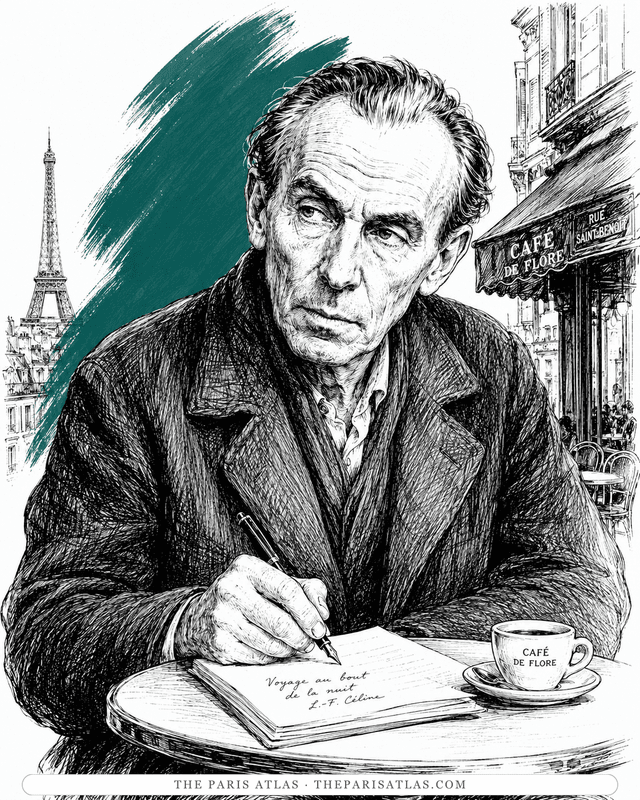
Louis-Ferdinand Céline
The doctor of the Paris slums who wrote the century's blackest, funniest novel — and changed the sound of French prose.
View author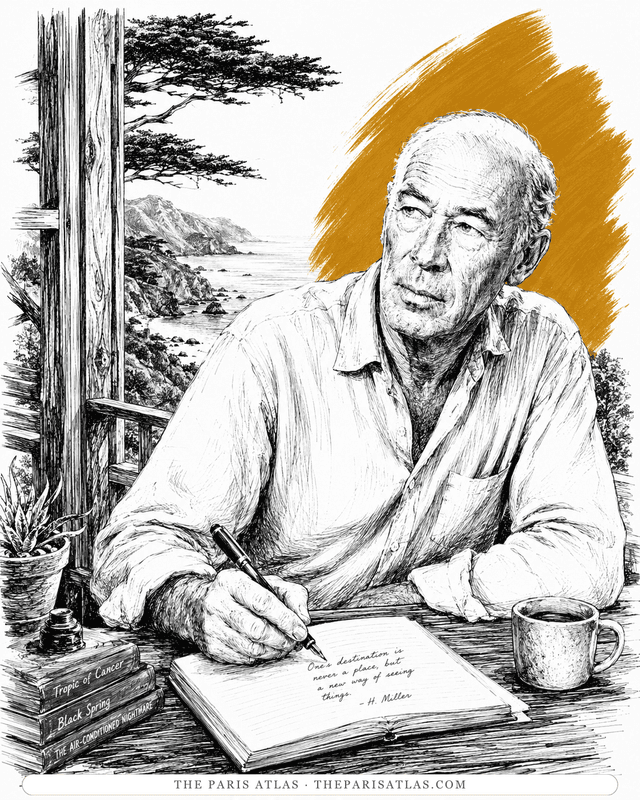
Henry Miller
The Brooklyn dropout who arrived in Paris broke at thirty-eight and wrote the exuberant, banned books that ended American censorship.
View author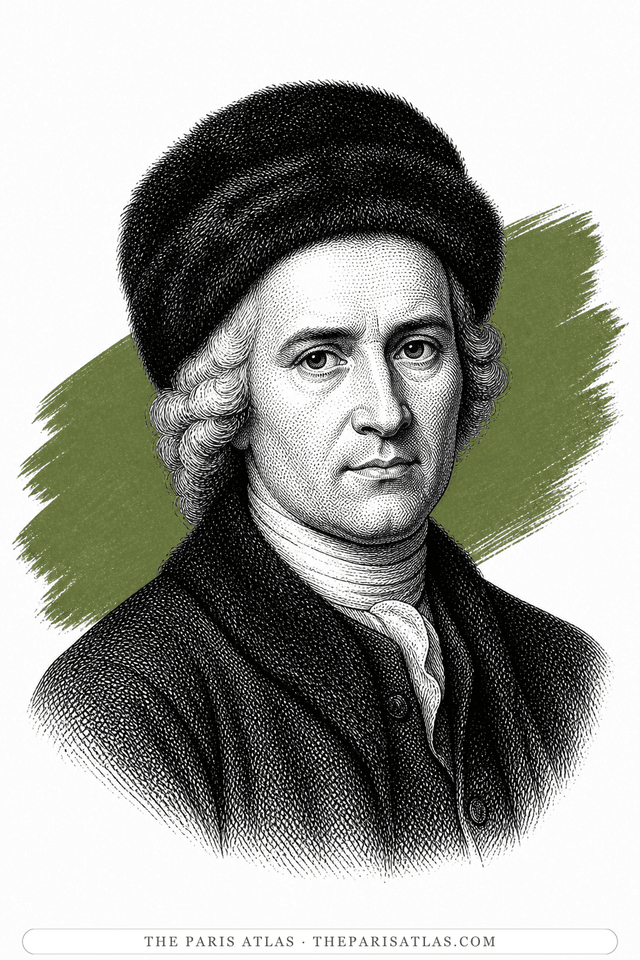
Jean-Jacques Rousseau
The Geneva-born writer who arrived in Paris in 1742 with a new system for writing down music, earned his living copying other people's scores by the page, and then wrote the books — The Social Contract, Émile, the Confessions — that got him chased out of France and, sixteen years after his death, carried into the Panthéon by the Revolution.
View author