


Portions from a Wine-Stained Notebook
The first story Bukowski published and the last one he wrote, in the same book — forty-six years of work recovered from magazines nobody kept.
- 2008
About Charles Bukowski
The story, briefly
Spoiler-freePortions from a Wine-Stained Notebook, published by City Lights in 2008 and edited by the scholar David Stephen Calonne, gathers Charles Bukowski's uncollected prose from 1944 to 1990. Most of it had not been reprinted since it first appeared, scattered across underground newspapers, small literary journals and pornographic magazines that no library kept. The book's range is its point: it opens with "Aftermath of a Lengthy Rejection Slip", the first short story Bukowski published, written when he was twenty-four, and includes "The Other", the last story he wrote. It also carries his first and last essays, and the first installment of the Notes of a Dirty Old Man column.
The story, in more detail
Bukowski published in places that were never meant to be archived. A story might run once in a mimeographed magazine with a print run in the hundreds and then exist nowhere. Calonne's work was to find those printings — in libraries, private collections and dealer inventories — and establish what Bukowski had actually written across five decades. The book is therefore a recovery rather than a selection. Work that had been effectively lost is back in print.
Themes and analysis
Rereading under the lamppost
In “Aftermath of a Lengthy Rejection Slip,” rejection becomes a peculiar form of recognition. Beneath the lamppost, the narrator treasures the letter's length and qualified praise, measuring himself against famous writers rather than treating the refusal as final. Yet he also imagines sacrificing Millie and their shared comforts to become the kind of author he thinks America wants. That fantasy makes his ambition comic and vulnerable: he claims artistic independence while allowing an editor's response to dictate his identity. The story begins with an aspiring writer trying to read himself into significance.
The flowered breakfast table
Scratching the table's painted flowers turns jealousy into a small, frustrated physical action. Nearby in the narration, the battered rejection slip becomes something to preserve like a pressed flower: ordinary decoration is attacked while literary refusal is treasured. The ending overturns the narrator's assumptions when his supposed editor identifies himself as an insurance salesman who has mistaken him for someone else. The mistake is mutual. The narrator's elaborate performance of literary seriousness has addressed the wrong audience, exposing how readily his desire for recognition supplies a story before he checks its facts.
Why we recommend it
Both ends of a career in one book
The first published story, written at twenty-four, and the last one written, fifty years later.
Work that had effectively vanished
Prose that existed only in magazines nobody kept, found and returned to print.
Small publications placed in context
The collection makes it possible to read material together that originally reached different magazine and newspaper audiences.
What this book explores
Timeline
1944
Bukowski publishes "Aftermath of a Lengthy Rejection Slip", his first short story, at twenty-four.
1967
The first installment of Notes of a Dirty Old Man appears in Open City.
2008
City Lights publishes Calonne's gathering of the uncollected prose.
Book editions

- Paperback
- City Lights
- 2008
- 9780872864924

- Hardcover
- City Lights
- 2008
- 9780872864962
Reader reviews
Readers may also like


More Notes of a Dirty Old Man
The other City Lights volume of uncollected column writing.
Read our take
South of No North
The Black Sparrow story collection from the middle of the span this book covers.
Read our takePortions from a Wine-Stained Notebook: frequently asked questions
What is Portions from a Wine-Stained Notebook?
A collection of Charles Bukowski's uncollected stories and essays from 1944 to 1990, published by City Lights in 2008 and edited by David Stephen Calonne. Most of the contents had not been reprinted since they first appeared.
Does it contain Bukowski's first published story?
Yes. "Aftermath of a Lengthy Rejection Slip", published when he was twenty-four, opens the book. His last story, "The Other", is also here.
Where had these pieces been?
In underground newspapers, small literary journals and pornographic magazines, most with print runs in the hundreds. Finding them in libraries and private collections was the editorial work.
Who is David Stephen Calonne?
A scholar who wrote a critical biography of Bukowski and edited both volumes of the uncollected prose. His introduction records where each piece was first printed.
Is there a second volume?
Yes — Absence of the Hero, published by City Lights in 2010, with thirty-nine further uncollected stories and essays.
If you like Charles Bukowski
Explore authors with a similar voice, perspective, and influence.
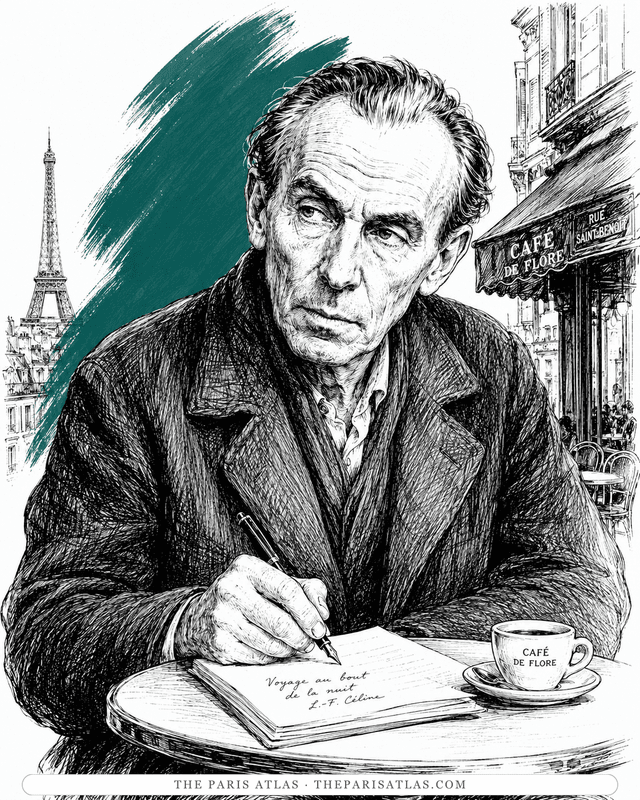
Louis-Ferdinand Céline
The doctor of the Paris slums who wrote the century's blackest, funniest novel — and changed the sound of French prose.
View author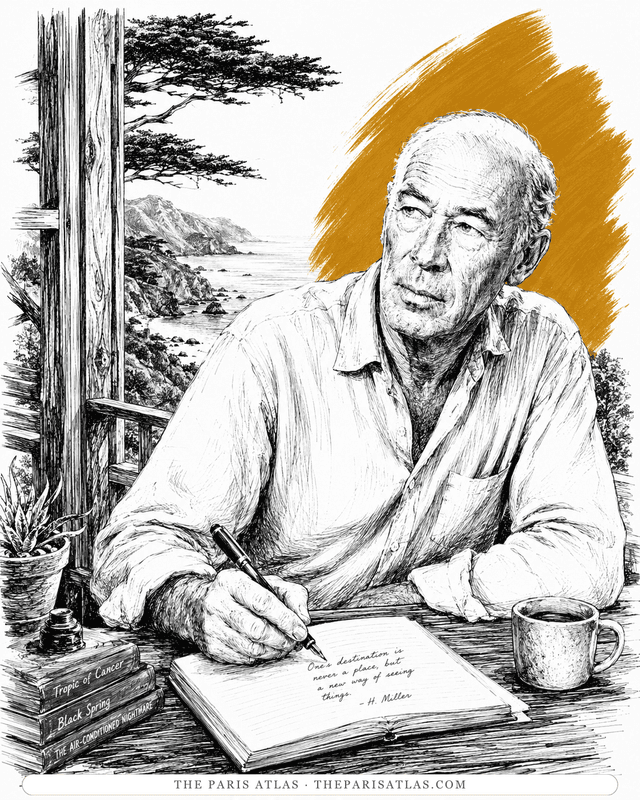
Henry Miller
The Brooklyn dropout who arrived in Paris broke at thirty-eight and wrote the exuberant, banned books that ended American censorship.
View author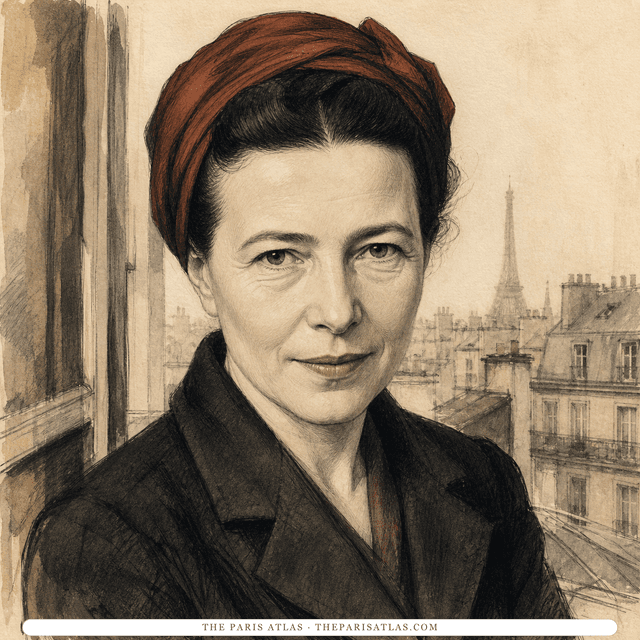
Simone de Beauvoir
French writer and philosopher whose novels, memoirs, and social analysis examined freedom, gender, responsibility, aging, and the material conditions that shape a life.
View author
References
References
The sources below include the primary text, editions, scholarship, archival materials, and other records that informed this page. They document Portions from a Wine-Stained Notebook, its publication, and its place in literary history.


1Portions from a Wine-Stained Notebook
NovelCharles Bukowski, 2008Used forThe primary text represented by this page, used for descriptions of the work’s contents and for any quoted passages shown here.
2Portions from a Wine-Stained Notebook — front matter and opening story extract
WebsiteCity Lights / extract reproduced on StudyLib, 2008Used forThe complete opening story, Aftermath of a Lengthy Rejection Slip, pp. 1–10; analysis is limited to this story, not the full collection.
3Portions from a Wine-stained Notebook: Short Stories and Essays
WebsiteWikipediaUsed forContents, the first and last stories, and the editorial history.
4Charles Bukowski
BiographyReaktion Books, 2012Used forThe editor's own critical biography, and the magazine career the volume recovers.
5Charles Bukowski timeline (bukowski.net)
WebsiteUsed forPublication chronology of the uncollected-prose volumes.
6Charles Bukowski: books and chapbooks (Verdant Press checklist)
WebsiteUsed forBibliographic details checked against the checklist.
i
Why these sources are here
The primary text is the baseline reference for every book page. Additional references document publication history, interpretation, and historical context where that evidence is available.
 Explore more resources