

Erections, Ejaculations, Exhibitions and General Tales of Ordinary Madness
The City Lights collection of the year before — the wilder underground-newspaper stories.
Read our take
The first Black Sparrow story collection: twenty-seven stories of the buried life, folding in the two rare 1960s prose pamphlets.
South of No North: Stories of the Buried Life, published by Black Sparrow Press in 1973, was Bukowski's first collection of short stories from the press that handled his poetry and novels. Its twenty-seven stories run the register of his short fiction — anecdote, invention and self-portrait, with Henry Chinaski, his fictional alter ego, appearing in several — and the volume quietly performs a rescue: it folds in the contents of his two scarce 1960s prose pamphlets, Confessions of a Man Insane Enough to Live with Beasts (1965) and All the Assholes in the World and Mine (1966), which had appeared in editions of a few hundred copies and became widely accessible here for the first time. The collection has stayed in print for fifty years and remains, with Hot Water Music, one of the two standard doors into the short fiction.
The title phrase — south of no north — names the compass of the stories: places off every map that matters, rented rooms and bars and jobs with nothing above or below them. Where the City Lights collection of the previous year had gathered the wilder underground-newspaper stories, this volume is the Black Sparrow version of Bukowski's short fiction: quieter selection, the same world. The two absorbed pamphlets give it bibliographic weight beyond its contents — the previously scarce 1960s prose pieces became widely accessible in a major collection here.
“Loneliness” first gives Edna room to imagine Joe’s solitary daily routine. Her sympathy makes a meeting possible, but neither his comfortable apartment nor his talk about relationships guarantees respect for her. His later refusal to let her leave exposes the gap between discussing loneliness and recognizing another person’s wishes. The repeated advertisement becomes more troubling when its promise of companionship turns into a demand. Edna’s departure is therefore an act of self-protection, not a failure to be sympathetic enough. Returning home ends this encounter without pretending that the desire for connection has been resolved.
The shoe repairs in “Bop Bop Against That Curtain” belong to a childhood economy in which damaged possessions provoke more concern than injured bodies. Worn soles cost money; torn trousers also expose the poverty the parents want hidden. The narrator’s account makes that pressure shape even how the boys play, teaching them to protect their clothing while accepting pain. His boastful toughness should not make the neglect admirable. Read beside the closing memory of unemployed fathers afraid of an electricity bill, the repairs connect family shame and material scarcity without turning remembered cruelty into an inevitable or excusable response.
With Hot Water Music, the standard entry to Bukowski's short fiction — and the one that carries the 1960s prose inside it.
Confessions of a Man Insane Enough to Live with Beasts and All the Assholes in the World and Mine, scarce as pamphlets, became widely readable in these pages.
The variety of stories lets readers compare Bukowski’s recurring alter ego with other ways of presenting a life on the margins.
1965–1966
The two prose pamphlets later absorbed by the collection appear in editions of a few hundred copies.
1973
Black Sparrow Press publishes the collection — its first volume of Bukowski's stories.
2002
The Bukowski catalogue passes to Ecco, which keeps the book in print.

The City Lights collection of the year before — the wilder underground-newspaper stories.
Read our take

One of the two 1983 volumes the City Lights collection was split into — the companion shelf of stories.
Read our take
Twenty-seven short stories of what the subtitle calls the buried life — rented rooms, bars, and low-paid work in Los Angeles — published by Black Sparrow Press in 1973. Henry Chinaski, a fictional alter ego of the author, appears in several.
Yes. Confessions of a Man Insane Enough to Live with Beasts — first published as a 500-copy chapbook in 1965 — and All the Assholes in the World and Mine (1966) are both collected here, which is how the two scarce pamphlets became widely readable.
It is one of the two usual introductions, with Hot Water Music. Start here for the buried-life stories and the absorbed 1960s prose; start with the City Lights volumes for the wilder underground-newspaper material.
A place off every map — south of a north that does not exist. It names the territory of the stories: lives conducted outside the city that appears in newspapers.
Yes — continuously since 1973, currently from Ecco under the original Black Sparrow ISBN.
Twenty-seven, including the two 1960s prose pamphlets it absorbed.
Explore authors with a similar voice, perspective, and influence.
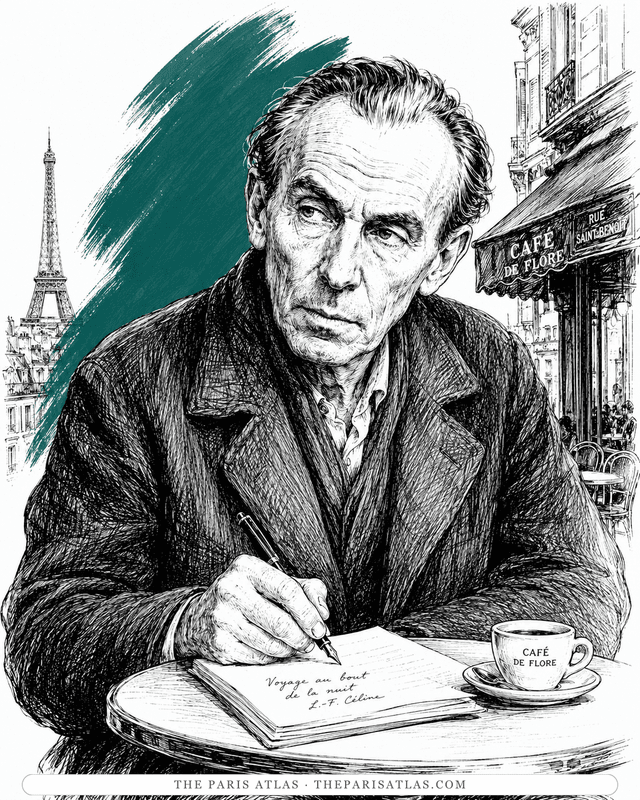
The doctor of the Paris slums who wrote the century's blackest, funniest novel — and changed the sound of French prose.
View author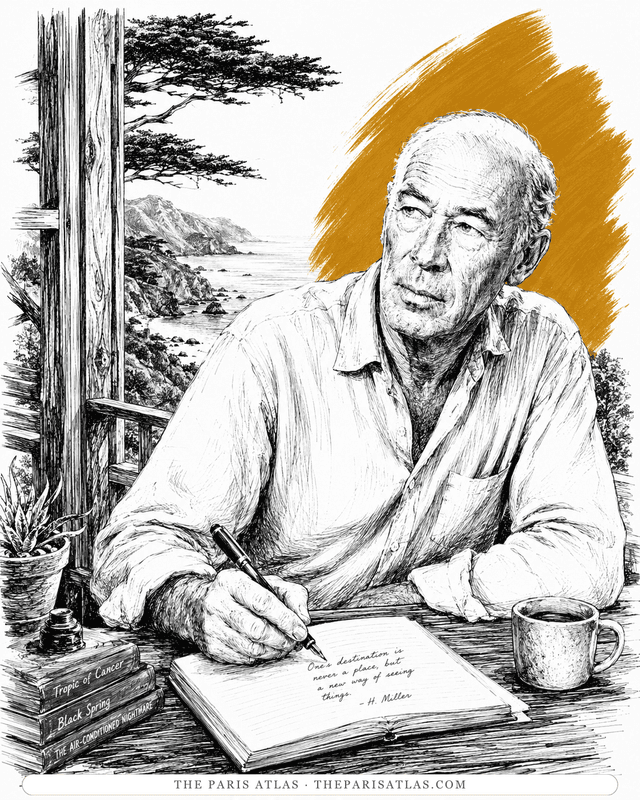
The Brooklyn dropout who arrived in Paris broke at thirty-eight and wrote the exuberant, banned books that ended American censorship.
View author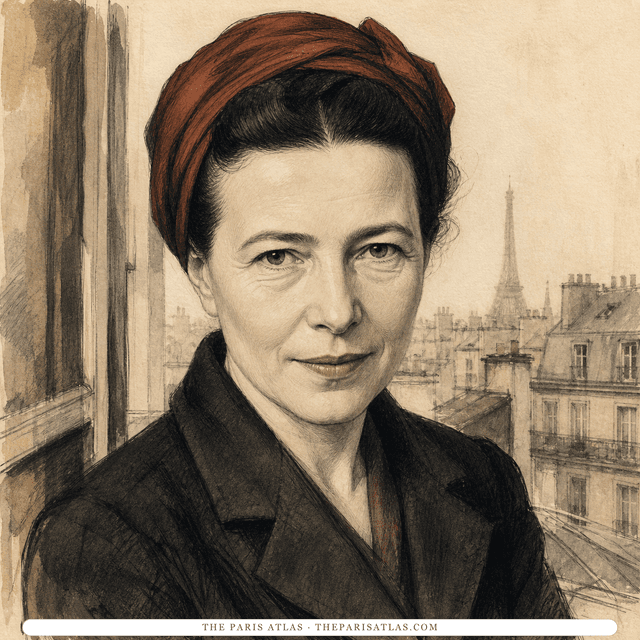
French writer and philosopher whose novels, memoirs, and social analysis examined freedom, gender, responsibility, aging, and the material conditions that shape a life.
View authorThe sources below include the primary text, editions, scholarship, archival materials, and other records that informed this page. They document South of No North, its publication, and its place in literary history.


The primary text represented by this page, used for descriptions of the work’s contents and for any quoted passages shown here.
The short fiction of the early 1970s and the absorbed pamphlets in the career narrative.
Contents including the two absorbed pamphlets, the Bensenville Mimeo Press chapbook history, and edition ISBNs.
Publication year and the collection's place in the chronology.
Bibliographic details checked against the checklist.
Complete publicly displayed English transcriptions of Loneliness and Bop Bop Against That Curtain. The teaching-page text has typographic and spacing errors; it is not an original-edition facsimile or a full-collection reading.
Specialist contents identify Loneliness on page 11 and Bop Bop Against That Curtain on page 17; used to confirm collection membership.
The primary text is the baseline reference for every book page. Additional references document publication history, interpretation, and historical context where that evidence is available.
 Explore more resources