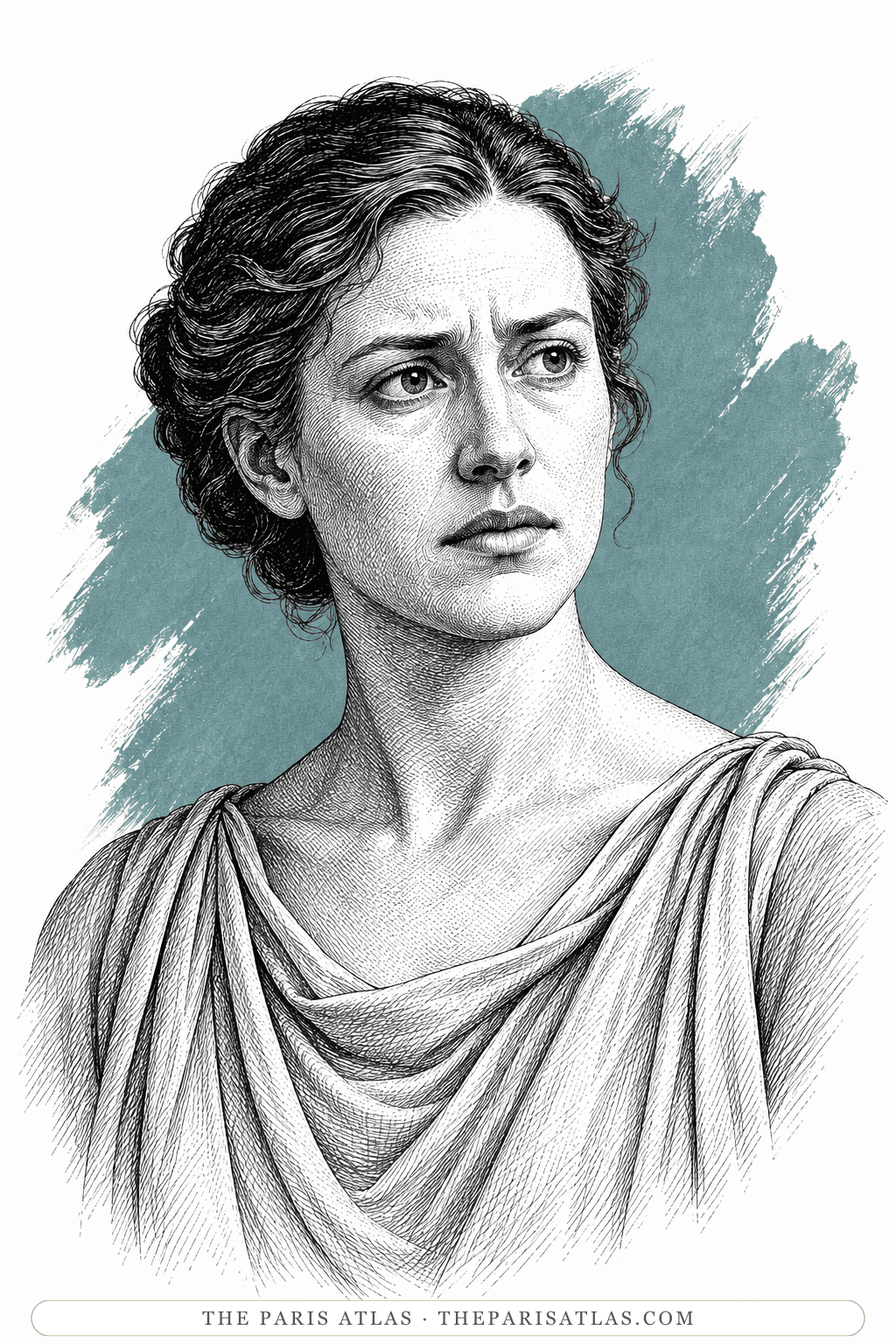
The speaker of Conversation Among the Ruins
A speaker addresses a destructive visitor amid the collapse of an imagined house.
The book

The figure in the poem
Close readingThe speaker of Sylvia Plath's Conversation Among the Ruins addresses a visitor whose arrival has devastated an imagined house. She remains seated and outwardly composed while describing the destruction around her. The contrast between an ordered appearance and a damaged relationship gives the short poem its dramatic pressure.
The painting supplies a scene, not a complete story
The poem responds to Giorgio de Chirico's 1927 painting of the same title. The National Gallery of Art describes a seated woman and a standing man separated by a table, surrounded by fragments of walls and a bare landscape. Their clothes also suggest different worlds: the woman wears a draped dress, while the man wears a modern suit.
That setting explains the poem's improbable meeting of classical dress, ordinary formal clothing, and architectural ruin. The painting offers an arrangement of figures that already makes conversation seem difficult. Plath gives one of those positions an accusing voice and a history of disturbance.
The house gives emotional injury a visible form
Fu Jen Catholic University's study guide distinguishes the poem's emphasis from the painting's. The poem gives the visitor destructive force and describes an earlier order that his arrival breaks. The ruined setting becomes evidence within the speaker's account of the encounter.
The first-person possessive matters: this was her house. Damage therefore concerns a space she understood as her own. The poem can be read as an account of an intimate relationship in which another person's force disrupts the speaker's arrangement of her life.
A composed figure inside a broken exchange
The university guide identifies the poem's sonnet structure, with an eight-line movement followed by six lines. The first movement describes destruction; the second holds the figures in an uncomfortable present. A tightly arranged form contains a scene in which another arrangement has failed.
Her stillness does not mean she has nothing to say. The poem is her sustained address, and the visitor receives no equivalent speech. The supposed conversation is therefore a monologue whose title makes the missing exchange more noticeable.
The distance between a gesture and an answer
In the museum's description, the man's hand rests on the table while the woman remains seated opposite him. The furniture connects the figures within one scene without making their relationship intelligible. The surrounding wall fragments deny them the complete enclosure of an ordinary room.
Plath's closing question asks what words could repair the damage. It does not provide the successful reconciliation that the title might lead a reader to expect. The speaker's controlled appearance and carefully shaped speech coexist with doubt about whether speaking can restore what has been lost.
What the comparison lets a reader see
Reading the poem beside its visual source shows how description can become an argument. A still arrangement acquires a before and after; one figure gains the authority to say what happened. The painting does not certify the speaker's accusation, but it helps reveal the choices through which Plath makes that accusation possible.
Sources and passages
- Sylvia Plath, Conversation Among the Ruins
Primary text: The Collected Poems, authorized HarperCollins preview, page 21.
- Giorgio de Chirico, Conversation among the Ruins, 1927
National Gallery of Art: the painting, its catalog record, and detailed description of the figures and setting.
- Conversation Among the Ruins: Study Guide
Fu Jen Catholic University: the poem's visual source, sonnet form, and change of emphasis from the painting. The reading above uses the museum's description for the painting's visible details.
Voice, imagery, and form
- An owned interiorThe speaker describes the elegant house as hers before its disruption.
- A persistent addressThe visitor remains the you to whom the accusation is directed.
- Seated and standingThe contrasting positions hold the encounter in an uneasy arrangement.
- Different clothingClassical dress and a modern suit make the figures seem out of step.
- An ordered formThe sonnet contains the account of a shattered domestic order.
- A question about repairThe close leaves the power of words in doubt.
If you like The Collected Poems


If you like Sylvia Plath
Explore authors with a similar voice, perspective, and influence.
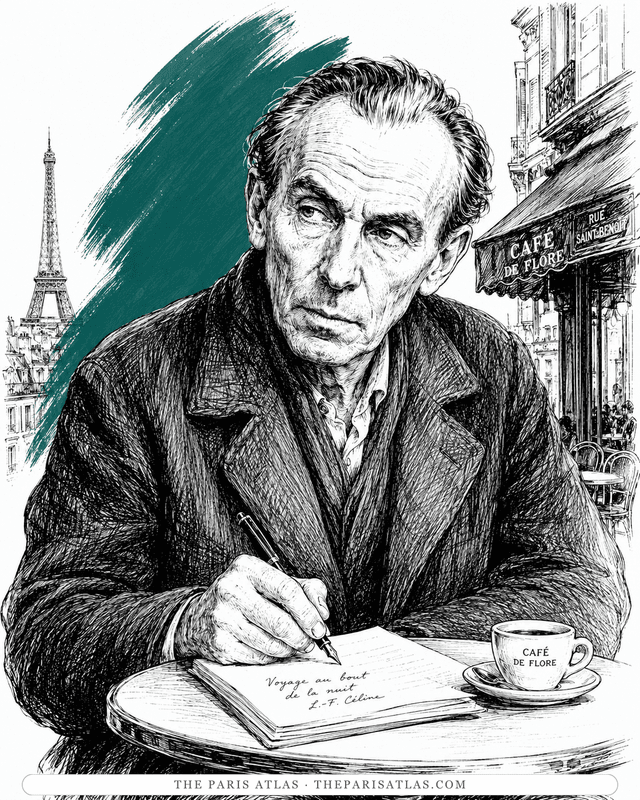
Louis-Ferdinand Céline
The doctor of the Paris slums who wrote the century's blackest, funniest novel — and changed the sound of French prose.
View author
Henry Miller
The Brooklyn dropout who arrived in Paris broke at thirty-eight and wrote the exuberant, banned books that ended American censorship.
View author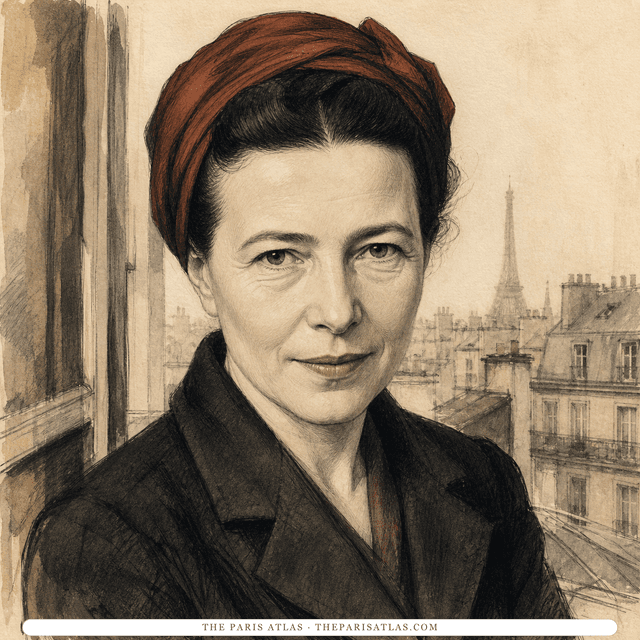
Simone de Beauvoir
French writer and philosopher whose novels, memoirs, and social analysis examined freedom, gender, responsibility, aging, and the material conditions that shape a life.
View author