
The Bukowski/Purdy Letters
The Paget Press book from three years earlier, also carrying Bukowski's drawings.
Read our take
One short story published on its own as a book, illustrated throughout by Bukowski, with eleven copies carrying an original drawing done by hand.
The Day It Snowed in L.A. is a single Charles Bukowski short story issued as a book by The Paget Press in 1986, illustrated throughout by Bukowski himself. It is a short book, printed from Sutton West, Ontario and Santa Barbara, California by the same press that had published his correspondence with the Canadian poet Al Purdy three years earlier. The subtitle names the story's character, Clarence Hiram Sweetmeat, who is Bukowski's invention. Alongside the ordinary printing, Paget produced a signed deluxe issue; rare-book listings describe eleven copies of it as carrying an original Bukowski drawing done by hand rather than a printed one.
Bukowski's stories normally reached readers in collections of twenty or thirty, or in the magazines before that. Publishing one story on its own, with drawings, is a decision about the book as an object rather than about the writing. The Paget Press had made a similar object out of the Purdy correspondence in 1983, printing those letters as photographs of the original sheets.
A bookseller's transcription of the opening sets Clarence's first sight of snow against his lifelong familiarity with Los Angeles. It then swerves into a crude reference to his mother. The snowfall could have introduced a gentle childhood memory, but Bukowski places an adult shock beside that new sensation. The change in register keeps Clarence's surprise from becoming a sentimental winter scene. Publisher Jim Cory recalls finding a handwritten draft in Bukowski's 1964 notebook that appeared almost unchanged more than twenty years later. Neither that manuscript nor the whole printed story was available to compare here.
An auction description identifies a page-seven drawing made after Clarence and two companions drive away a gang trying to take their melting snowman. The object is already disappearing, which makes the attempted theft both comic and oddly urgent. In this documented episode, rare Los Angeles snow gives the children something to build and defend together. The snowman is not a durable prize; that briefness sharpens the dispute over who gets to claim it. The auction account locates one scene and one original drawing, not the story's ending or the tone of every page.
The drawings are his, and eleven deluxe copies carry an original rather than a reproduction.
An unusual shape in the bibliography — a single short story published on its own by a small Canadian press.
Clarence Hiram Sweetmeat gives readers a fictional lead other than the recurring Henry Chinaski.
Circa 1975
Bukowski writes the story before its later appearance as an illustrated small-press book.
1983
The Paget Press publishes The Bukowski/Purdy Letters.
1986
The same press publishes this story on its own, illustrated by Bukowski, with a signed deluxe issue.

The Paget Press book from three years earlier, also carrying Bukowski's drawings.
Read our take

The 1990 volume mixing stories and poems, from the same late period.
Read our takeA single Charles Bukowski short story published as a book by The Paget Press in 1986, illustrated throughout by Bukowski.
The character named in the subtitle, The Adventures of Clarence Hiram Sweetmeat. He is a fictional creation of Bukowski's.
Short. It is a single story printed as a book rather than a collection, and the listings that describe it disagree on the exact page count.
A signed limited printing. Rare-book listings describe eleven copies of it as containing an original drawing Bukowski made by hand instead of a printed illustration.
Only for collectors. The story is a minor one, and the interest is in the object — the illustrations and the signed copies. Readers wanting the stories should start with Hot Water Music or South of No North.
Explore authors with a similar voice, perspective, and influence.
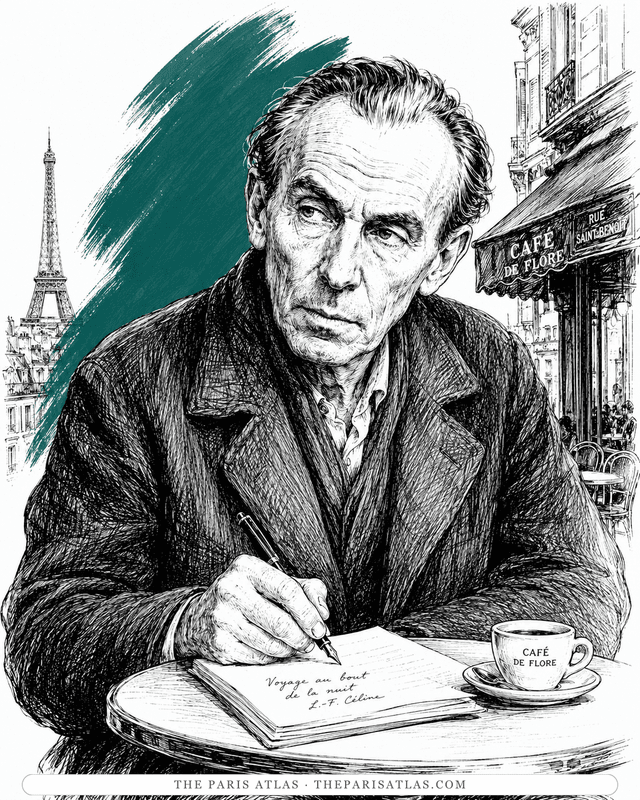
The doctor of the Paris slums who wrote the century's blackest, funniest novel — and changed the sound of French prose.
View author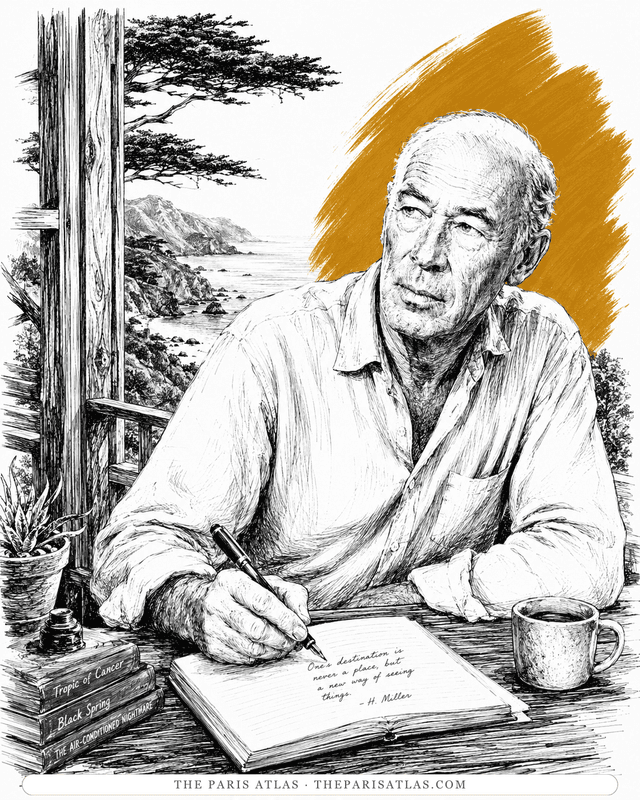
The Brooklyn dropout who arrived in Paris broke at thirty-eight and wrote the exuberant, banned books that ended American censorship.
View author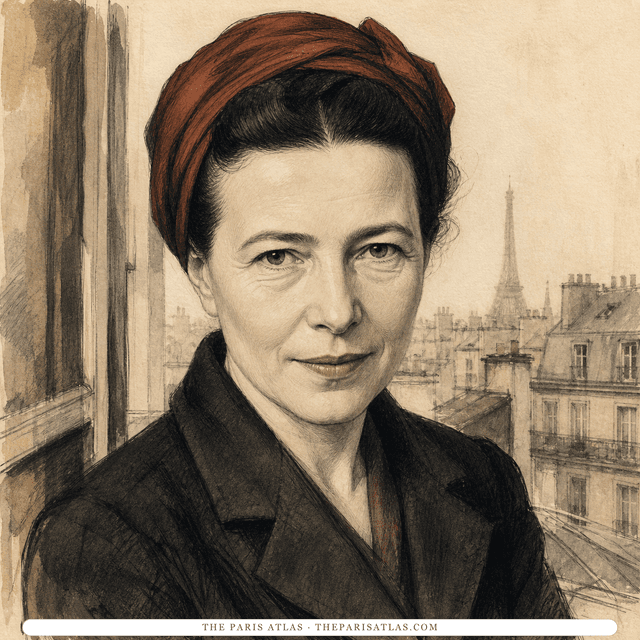
French writer and philosopher whose novels, memoirs, and social analysis examined freedom, gender, responsibility, aging, and the material conditions that shape a life.
View authorThe sources below include the primary text, editions, scholarship, archival materials, and other records that informed this page. They document The Day It Snowed in L.A., its publication, and its place in literary history.

The primary text represented by this page, used for descriptions of the work’s contents and for any quoted passages shown here.
An Oshtemo Book Sellers listing on AbeBooks paraphrases the tale's opening and reproduces its abrupt adult joke. The listing was not collated with the Paget Press text.
Publisher Jim Cory's first-hand account of seeing a handwritten draft in Bukowski's 1964 notebook; used for draft/publication context, not as a substitute for the printed story.
The auction house describes an original drawing for page seven and its position after the melting-snowman confrontation. Only that documented scene, not the complete comic, was used.

Edition record: publisher, year and ISBN.
Bibliographic details checked against the checklist.
Where the book falls in the late chronology.
The small-press publishing pattern of the 1980s.
Web source consulted for documented facts and historical context presented on the The Day It Snowed in L.A. page.
The primary text is the baseline reference for every book page. Additional references document publication history, interpretation, and historical context where that evidence is available.
 Explore more resources