

Screams from the Balcony
The Black Sparrow selected letters covering 1960 to 1970, the same years as the first half of this correspondence.
Read our take
Ten years of letters between Charles Bukowski in Los Angeles and the Canadian poet Al Purdy, printed as photographs of the originals with Bukowski's drawings still on them.
The Bukowski/Purdy Letters, published by The Paget Press in 1983 and edited by Seamus Cooney, collects ten years of correspondence between Charles Bukowski and Al Purdy. Purdy was a Canadian poet who lived in a cottage he built himself at Ameliasburgh, Ontario, and who won Canada's Governor General's Award for poetry twice, in 1965 and 1986. The two men wrote to each other between 1964 and 1974, when Bukowski was still working nights at the post office and was known mainly to readers of small poetry magazines. The book runs to 117 pages and reproduces many of the letters as photographs of the actual typed sheets, so the drawings and doodles Bukowski added in the margins are printed as he made them.
Bukowski wrote thousands of letters, and most of them are known through the Black Sparrow selected editions, where an editor chose which ones to print and set them in clean type. This book does the opposite. It takes a single correspondence and prints it whole for the decade it covers, showing the typing and the corrections along with the words. A reader follows the exchange in order rather than reading the letters an editor judged best.
The Paget Press issued the book from Sutton West, Ontario and Santa Barbara, California, and made a hand-bound limited run of 200 copies signed by both Bukowski and Purdy alongside the ordinary printing.
The kitchen-table letter turns workplace talk into a different kind of address. Bukowski says he has talked through the night to avoid listening to his fellow workers, yet now writes to someone whose attention he wants. In the passage reproduced by Robert Sward, approaching daylight offers no hopeful renewal; it seems to ridicule the exhausted speaker. The letter nevertheless creates a space beyond that isolation. Its complaints ask a distant fellow writer to recognize an experience that ordinary conversation at work has failed to make bearable.
Purdy's recollection of freight travel is not an unqualified claim to adventurous authority. In the letter excerpt quoted by Sward, he places those journeys beside admissions of foolishness, fear and boastfulness. The accumulated experiences establish kinship with Bukowski while the self-criticism unsettles the tough persona they might otherwise support. Remembering becomes a way of testing resemblance between two writers, not merely displaying a past. Purdy can recognize something of himself in his correspondent without pretending that their lives or poems are interchangeable.
Instead of the best letters chosen from thousands, this is ten years of a single correspondence in order.
Photographs of the original sheets, with his margin drawings printed where he drew them.
The exchange gives two working poets space to argue about writing without the structure of a formal interview.
1964
The correspondence between Charles Bukowski and Al Purdy begins.
1970
Bukowski leaves the post office in January to write full time; the letters continue.
1974
The decade the book covers ends.
1983
The Paget Press publishes the letters, edited by Seamus Cooney, with 200 signed copies.

The Black Sparrow selected letters covering 1960 to 1970, the same years as the first half of this correspondence.
Read our take

The 1963 Loujon Press collection Bukowski had just published when the correspondence began.
Read our takeA book of correspondence between Charles Bukowski and the Canadian poet Al Purdy, covering 1964 to 1974, published by The Paget Press in 1983 and edited by Seamus Cooney.
A Canadian poet who lived from 1918 to 2000 at Ameliasburgh, Ontario. He won the Governor General's Award for poetry twice, in 1965 and 1986, and was made an Officer of the Order of Canada in 1982.
Those volumes select Bukowski's best letters to many correspondents and set them in type. This one takes a single friendship and prints the decade of it, much of it photographed from the original typed sheets.
Yes. He drew and doodled on the letters he mailed, and because the book reproduces the sheets as photographs, the drawings appear where he put them.
Not especially. The 1983 first edition is out of print and the 200-copy signed issue is a rare-book item. Readers who want Bukowski letters in print should look to the three Black Sparrow volumes: Screams from the Balcony, Living on Luck and Reach for the Sun.
Explore authors with a similar voice, perspective, and influence.

The doctor of the Paris slums who wrote the century's blackest, funniest novel — and changed the sound of French prose.
View author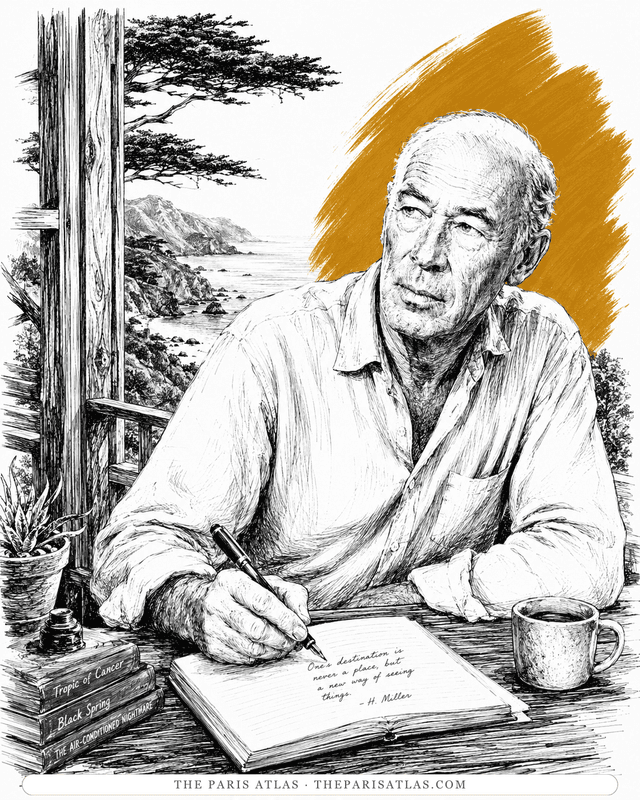
The Brooklyn dropout who arrived in Paris broke at thirty-eight and wrote the exuberant, banned books that ended American censorship.
View author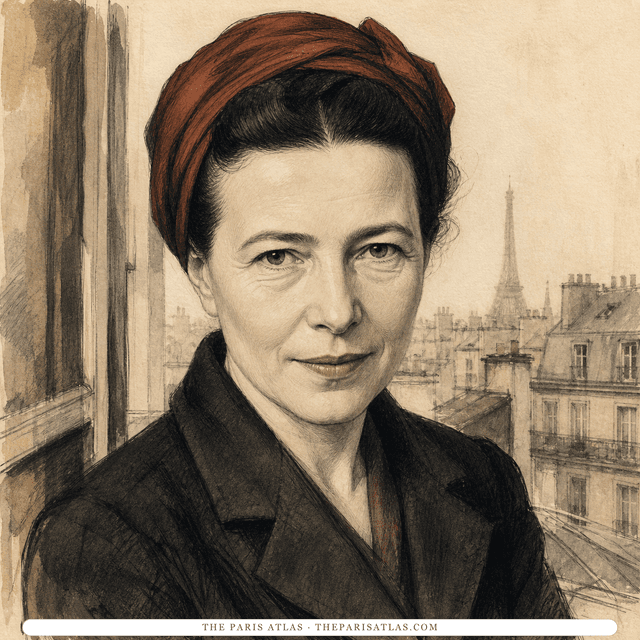
French writer and philosopher whose novels, memoirs, and social analysis examined freedom, gender, responsibility, aging, and the material conditions that shape a life.
View authorThe sources below include the primary text, editions, scholarship, archival materials, and other records that informed this page. They document The Bukowski/Purdy Letters, its publication, and its place in literary history.


Selected primary passages reproduced in a contemporary review; not complete letters or an independent facsimile collation.

Edition record: publisher, year, page count and ISBN.
The University of Toronto's Al Purdy bibliography, confirming the title and 1983 date.
Purdy's dates, Ameliasburgh, the two Governor General's Awards, the Order of Canada, and the quoted Bukowski remark.
Bibliographic details checked against the checklist.
Where the correspondence falls in Bukowski's working life.
The primary text is the baseline reference for every book page. Additional references document publication history, interpretation, and historical context where that evidence is available.
 Explore more resources