
Giovanni's Room
A useful contrast in its focus on queer desire, shame, social expectation, and the consequences of self-deception.
Read our take
by Alan Hollinghurst
Desire, beauty, class, and conditional acceptance inside wealthy 1980s Britain.
Nick Guest enters the wealthy, political world of a British family and becomes both participant and outsider. His social welcome proves more conditional than it first appears.
In 1983 Nick moves temporarily into the Feddens’ house while his university friend Toby is away, partly to keep Toby’s sister Catherine company. When Nick helps Catherine through a self-harm crisis, Rachel and Gerald invite him to stay indefinitely. Nick has long been attracted to Toby, but his first actual love affair begins with Leo Charles, a Black man from a very different social background.[1]
By 1986 Nick is still living with the Feddens and has become absorbed into their wealthy Conservative world. He is secretly involved with Wani Ouradi, an immensely rich Oxford acquaintance who publicly maintains a heterosexual engagement. Wani finances a luxury magazine and a proposed Henry James film project that give the men a respectable reason to spend time together. At Gerald and Rachel’s anniversary party, Nick—high on cocaine—asks Prime Minister Margaret Thatcher to dance.[1]
In 1987 the structure collapses. Nick learns that Leo has died of AIDS and that Wani is gravely ill. Gerald becomes engulfed in financial and sexual scandal. The press exposes Nick and Wani’s relationship, allowing Gerald to make Nick a convenient symbol of corruption while avoiding responsibility for his own conduct. Nick is expelled from the household and leaves facing an HIV test, suddenly aware that its welcome was always conditional.[1]
A young gay man pursues beauty and belonging inside an elite household during the political and social upheavals of 1980s Britain.
In summer 1983, twenty-year-old Nick Guest has just graduated from Oxford and plans postgraduate work on Henry James. He moves into the Feddens’ large Notting Hill house while Toby and his parents are away. Catherine ‘Cat’ Fedden has a history of self-harm, and when Nick helps her through a crisis, Rachel and Gerald ask him to remain. Temporary lodging becomes years of residence.
Gerald is an ambitious Conservative MP newly elected for Barwick; Rachel is elegant, wealthy, and socially assured. Nick is entranced by their furniture, art, friends, houses, and political access. His surname becomes increasingly pointed: he belongs enough to see private life but never enough to forget that the house and power are someone else’s.
Nick’s first substantial adult relationship begins with Leo Charles, a Black man from Willesden whom he meets through a personal advertisement. Because Leo lives with his religious mother and Nick has little privacy in the Feddens’ house, much of their sex occurs outdoors or in marginal public spaces. Leo introduces Nick to Pete, an older former lover and antiques dealer who is already ill.
By 1986 Nick is having a secret affair with Antoine ‘Wani’ Ouradi, a wealthy Lebanese Oxford acquaintance. Wani is publicly engaged to a woman and unwilling to live openly. He funds Ogee, a luxury magazine, and a proposed Henry James film project that disguise why he and Nick spend so much time together. Nick’s academic work drifts while the relationship brings money, gifts, cocaine, and extreme luxury.
Nick discovers Gerald’s affair with his assistant Penny Kent but keeps silent. Catherine, now diagnosed with bipolar disorder and taking lithium, sees through much of the family’s pretense and understands Nick’s relationship with Wani. At Gerald and Rachel’s anniversary party, Margaret Thatcher arrives as the object of Gerald’s political admiration. Nick, intoxicated and high, asks her to dance. She agrees.
Around the 1987 general election, Leo’s sister Rosemary tells Nick that Leo has died of AIDS. Wani is also visibly dying. He offers to leave Nick property and warns that Gerald faces serious trouble. The AIDS crisis now stands beside the financial and political crisis of the family Nick has idealized.
Gerald becomes implicated in financial impropriety. Catherine has Nick drive her to discover Gerald and Penny together, exposing the affair. Rachel is devastated and turns partly on Nick, blaming him for failing in the caretaking role the family assigned him. When the press discovers Nick and Wani’s relationship, Gerald redirects disgust toward Nick and portrays his gay lodger as a corrupting outsider.
Nick moves out and spends time with the dying Wani. The first and only issue of Ogee appears. When Nick returns to the empty Fedden house for his remaining belongings, Penny says her affair with Gerald will continue. Nick walks away for the final time. He is scheduled to take an HIV test the next day and fears a positive result.
Nick’s expulsion completes the title’s deepest irony. He has pursued beauty in bodies, houses, art, furniture, speech, and literary style, and he mistakes access to those things for secure membership in the world that owns them. When scandal arrives, the Feddens show that he was always disposable.
Gerald’s attack is hypocritical because Gerald himself has been unfaithful and financially compromised. Nick has behaved selfishly and benefited from privilege, but he did not create Gerald’s affair or business dealings. His sexuality makes him a useful public scapegoat, allowing the family to present its crisis as contamination by an outsider.
The AIDS crisis changes the scale of the ending. Leo is dead, Wani is dying, and Nick fears he may be infected. The Feddens can treat scandal as reputation management while Nick’s gay social world confronts mass death.
The book ends before Nick receives an HIV result. His uncertainty is the point. He has lost the house, Wani is disappearing, Leo is already gone, and beauty can no longer make consequence seem distant.
Beauty as desire and social aspiration: Nick desires men, but also houses, paintings, accents, furniture, parties, and class assurance. His aesthetic intelligence helps him notice the world while sometimes giving him a sophisticated way to avoid moral judgment.
The guest and the host: Nick becomes almost family, yet the difference between ‘almost’ and ‘family’ matters when loyalty is tested. His place depends on invitation, usefulness, and discretion.
Class mobility without ownership: Nick can learn elite codes exceptionally well, but cultural fluency is not inherited power. His fall exposes the limit of mobility based on proximity rather than ownership.
Thatcherism and private hypocrisy: Gerald presents family values and political confidence while conducting an affair and navigating questionable financial relationships. A culture celebrating wealth and competition can make private advantage sound like public virtue.
Race and unequal queer experience: Leo’s Black working-class family world differs sharply from Nick’s access to elite white spaces. Nick loves Leo but does not always understand the structural distance between them.
AIDS and historical rupture: the jumps from 1983 to 1986 and 1987 make loss feel abrupt. People disappear in the narrative gaps, just as epidemic history can transform what a recent past means.
Secrecy, visibility, and hypocrisy: Wani’s money buys elaborate camouflage but not freedom. Gerald’s heterosexual affair is hidden differently. Nick is relatively open among friends, yet public exposure still destroys his social position.
Hollinghurst writes in a richly descriptive third-person style closely aligned with Nick’s perceptions. Rooms, fabrics, buildings, bodies, paintings, clothes, and manners receive exact attention because Nick understands social life through aesthetic judgment.
Free indirect discourse lets Nick’s assumptions merge with the narration without always endorsing them. A reader may share his fascination with a person or room and only later recognize what he failed to notice. The style is part of the novel’s moral design.
The three-part structure creates large chronological gaps. Relationships have ended, illness has advanced, and political fortunes have shifted offstage. The final section gains force because the AIDS crisis arrives not as an explanatory subplot but as a historical transformation already underway.
Picador published The Line of Beauty in the United Kingdom on April 16, 2004. It won the 2004 Man Booker Prize. International paperbacks, U.S. editions, ebooks, audiobooks, and translations followed.
BBC Two broadcast a three-part television adaptation from May 17 to 31, 2006. Andrew Davies wrote it and Saul Dibb directed. Dan Stevens played Nick, with Tim McInnerny as Gerald, Alice Krige as Rachel, Hayley Atwell as Catherine, Oliver Coleman as Toby, and Alex Wyndham as Wani. The serial condenses a large interior novel and should be treated as a separate version when discussing scenes.
Jack Holden adapted the novel for the stage, directed by Michael Grandage. Previews began at London’s Almeida Theatre on October 21, 2025, followed by the official opening on October 29. Its streamlined dramatic emphases should not be projected back onto the novel.
Like Baldwin, Hollinghurst sees how respectability and desire can make someone feel invited and excluded at once.
Nick’s position lets readers observe privilege from someone who benefits from it without fully belonging.
The household brings intimacy and political respectability into direct contact, exposing the tensions between them.

An Oxford graduate whose pursuit of beauty and belonging places him inside the Fedden household.

A Conservative MP whose public morality and private conduct collide.

Gerald’s cultivated wife, whose affection for Nick proves less secure than he expects.

The sharp-sighted Fedden daughter who sees hypocrisy others avoid.

Nick’s first lover, whose life opens a London far outside the Feddens’ world.

Nick’s wealthy closeted lover, whose luxury can buy camouflage but not safety.

Nick’s Oxford friend, early crush, and doorway into the Fedden family.

Leo’s sister, who carries the news of his death to Nick.

Leo’s older former lover, whose illness foreshadows the epidemic Nick does not yet understand.

Wani’s immensely wealthy father, whose fortune funds the couple’s elaborate cover story.

Gerald’s assistant and secret lover, whose affair punctures the family’s public image.

A wealthy Conservative-connected family linking money, business, marriage, and influence.

The historical prime minister appears at the anniversary party as the center of Gerald’s political aspirations.
1983
Nick enters the Fedden household and begins his relationship with Leo.
1986
Nick’s affair with Wani and his immersion in the Feddens’ political world reach their height.
1987
AIDS deaths and political scandal overturn Nick’s sense of security and belonging.
2004
Picador publishes the novel on April 16; it wins the Man Booker Prize that year.
2006
BBC Two broadcasts Andrew Davies’s three-part adaptation, directed by Saul Dibb.
2025
Jack Holden’s stage adaptation premieres at the Almeida Theatre, directed by Michael Grandage.
A useful contrast in its focus on queer desire, shame, social expectation, and the consequences of self-deception.
Read our take
Hollinghurst’s debut also follows a privileged gay protagonist in 1980s London, but just before AIDS becomes the dominant rupture.
Read our take
Another wide social novel that connects sex, race, friendship, privilege, and the costs of private dishonesty.
Read our takePicador published it on April 16, 2004.
Yes. It won the 2004 Man Booker Prize.
Its three major sections are set principally in 1983, 1986, and 1987.
The surname emphasizes that he lives intimately with the Feddens but never owns his place in their family or class world.
Leo Charles, whom Nick meets through a personal advertisement.
Antoine ‘Wani’ Ouradi is Nick’s wealthy, closeted Oxford acquaintance and later secret lover. He publicly maintains an engagement to a woman.
Yes, as a fictionalized appearance of the historical prime minister at the Feddens’ anniversary party. Nick asks her to dance.
Leo dies of AIDS before the final section’s main action, while Wani is gravely ill and appears to be dying by the end.
The novel never reveals the result. It ends with Nick anticipating a test and fearing that it may be positive.
BBC Two broadcast a three-part serial in 2006. A stage adaptation by Jack Holden, directed by Michael Grandage, premiered at the Almeida Theatre in 2025.
Explore authors with a similar voice, perspective, and influence.
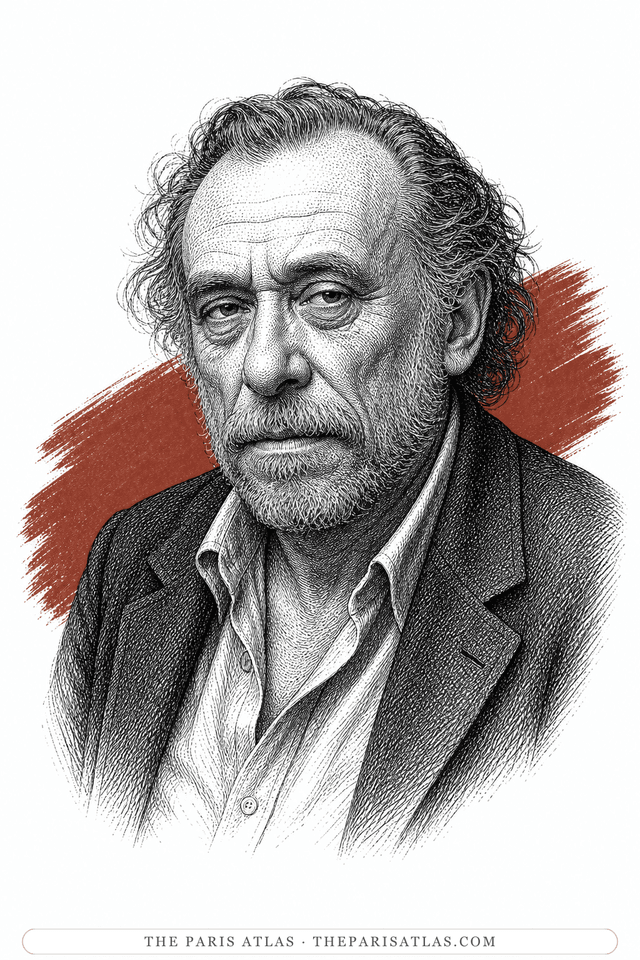
American poet and novelist of Los Angeles rooming houses, racetracks and the post office, who quit his job to write when a publisher offered him a hundred dollars a month. He came to Paris once, in September 1978, drank his way through a live television book programme and walked off the set — and French television has been replaying it ever since.
View author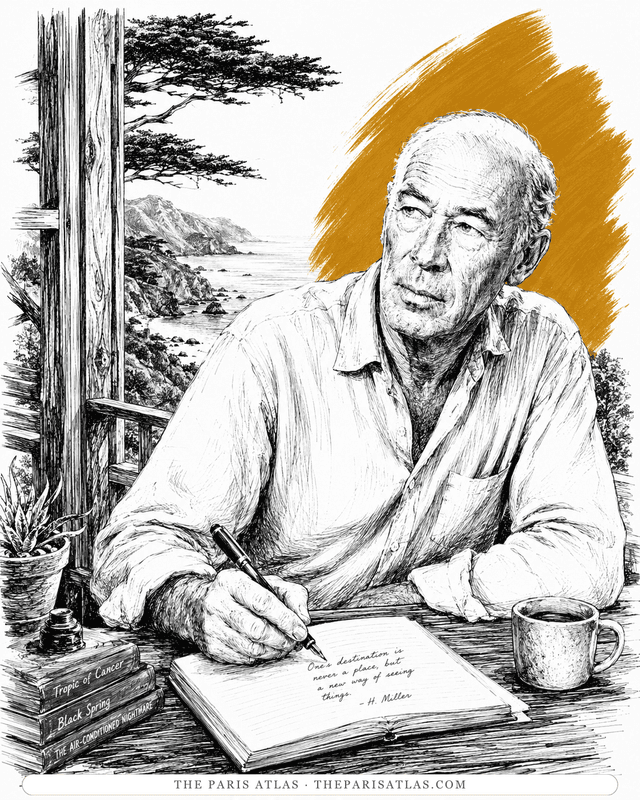
The Brooklyn dropout who arrived in Paris broke at thirty-eight and wrote the exuberant, banned books that ended American censorship.
View author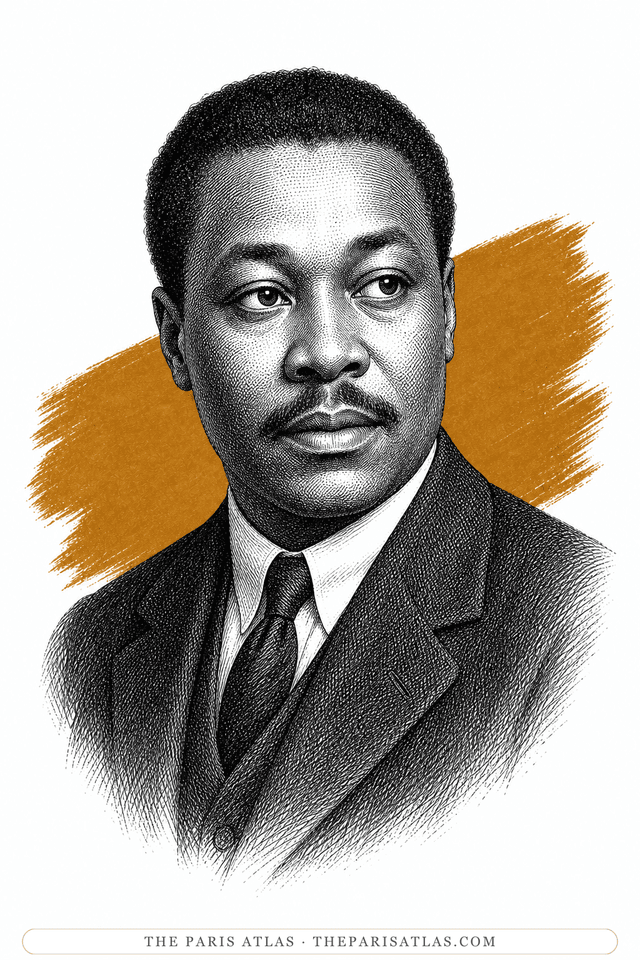
Jamaican-born poet and novelist, and one of the essential writers of the Harlem Renaissance. He arrived in Paris from Moscow in 1923 and stayed in France until 1928, writing Home to Harlem there — and forming a low opinion of the rich, white expatriate scene that dominates most accounts of the period. His Paris is the same years as Hemingway's and almost nothing like it.
View authorThe sources below include the primary text, editions, scholarship, archival materials, and other records that informed this page. They document The Line of Beauty, its publication, and its place in literary history.

Google Books catalogue record used to cross-check the title and edition metadata.
Internet Archive ISBN catalogue used to cross-check the edition and its availability in library holdings.
Library of Congress books catalogue used to cross-check the bibliographic record by ISBN.
Booker Prize record for the novel and its 2004 award.

Booker reading guide used for plot and thematic context.
Theater record for the stage adaptation.
The primary text is the baseline reference for every book page. Additional references document publication history, interpretation, and historical context where that evidence is available.
 Explore more resources