
Giovanni's Room
A foundational contrast in queer desire, shame, moral responsibility, and what men fail to understand about one another.
Read our take
by Alan Hollinghurst
Queer freedom in 1980s London meets class, power, loneliness, and the lives that came before it.
Will is young, wealthy, sexually confident, and living with little of David's hesitation about sleeping with men. Yet loneliness, class, exploitation, and queer history remain impossible to escape.
Will begins the novel involved with Arthur, a young Black working-class man, while spending much of his time at the Corinthian Club, where swimming, exercise, and cruising overlap. After Will rescues Lord Nantwich from a medical emergency, Nantwich invites him into an older aristocratic world and asks him to write his life. Will accepts the diaries partly because his doctor friend James thinks he is wasting his abilities.[1]
Will pursues new sexual interests, especially Phil, a shy eighteen-year-old bodybuilder. His relationships repeatedly expose the difference between admiring bodies and understanding people. Nantwich’s diaries describe love in Africa, British colonial life, coded gay culture, police entrapment, prison, and figures including Ronald Firbank. Contemporary homophobic violence reaches Will when skinheads attack him and destroy a rare Firbank book Nantwich gave him.[1]
The final revelations overturn Will’s assumptions. The prosecutor who aggressively pursued Nantwich was Will’s grandfather, whose career helped create the wealth and peerage Will inherited. Nantwich has not merely sought a flattering biographer; he has been educating the beneficiary of the system that punished him. Will’s personal disappointments are placed beside a history he can no longer dismiss as someone else’s past.[1]
A privileged young man is drawn into another man's history while moving through the pleasures and power structures of queer London.
William Beckwith is twenty-five, handsome, wealthy, unemployed, and financially protected by the family settlement created around his grandfather’s title and fortune. He spends his days swimming at the Corinthian Club, cruising, reading selectively, and pursuing sex. At the opening he is involved with Arthur Edison Hope, a young Black East Ender whose life Will chiefly experiences through sexual fascination.
While cruising in a park, Will enters a public lavatory where an elderly man collapses. Will saves him and later learns he is Charles, Lord Nantwich, an eighty-three-year-old aristocrat. Soon afterward Will finds Arthur frightened and bloodied, believing he killed Tony during a fight connected to Arthur’s drug-dealing brother Harold. Will shelters Arthur, but proximity reveals how little emotional structure exists beneath their sexual relationship.
Nantwich invites Will into a house full of books, artworks, erotic memorabilia, and the tense protection of his servant Lewis. He asks Will to write his biography. Will resists, but James Brook, his hardworking doctor friend, argues that he is wasting his intelligence. Nantwich gives Will diaries and notebooks, creating the book’s second narrative line.
At the Corry, Will notices Phil, an eighteen-year-old bodybuilder whose muscular appearance hides shyness and inexperience. Will seduces him. He also meets Bill, an older and enormously muscular boxing coach supported by Nantwich. Bill is devoted to Charles and quietly attracted to Phil. The connections show that Will’s apparently spontaneous sex life belongs to a network with histories he does not know.
Nantwich’s diaries carry Will backward into school, colonial service, relationships with men in Africa, and Charles’s love for Taha. Charles also recalls Ronald Firbank and a pre-liberation gay world of coded speech, class privilege, danger, and secrecy. The record complicates Will’s habit of seeing older gay men as survivors of an embarrassingly repressed age.
Will visits photographer Ronald Staines, who photographs Phil and participates in the production of erotic images. After Nantwich gives Will a valuable Firbank edition, skinheads beat Will, break his nose, rob him, and destroy the book. For perhaps the first time, beauty and class cannot protect him from homophobic violence.
The diaries darken. Charles was arrested for homosexual solicitation and prosecuted with particular severity. In prison he met Bill, who had also been imprisoned over a sexual relationship. Charles learned that Taha had been beaten to death in racially motivated violence. Will then discovers that the prosecutor who made an example of Nantwich was Sir Denis Beckwith, Will’s celebrated grandfather.
Arthur returns to Harold’s orbit, and James becomes vulnerable to police entrapment. Will expects access to Phil but instead discovers Phil having sex with Bill. The sight wounds his vanity and shows that Phil’s desire is independent of Will’s plans. By the end, Will understands that the diaries were an education and confrontation, not merely material for a conventional authorized biography. He and James watch archival film of Ronald Firbank at Staines’s home, linking generations rather than resolving every relationship.
The central revelation is that Will’s grandfather, Sir Denis Beckwith, prosecuted Charles Nantwich for homosexual offenses and used the case in a public career that led to honor, wealth, and hereditary status. Will’s freedom is partly subsidized by a history of repression. He inherits privilege without knowing what other men paid for it.
Nantwich’s request is more complex than an old man wanting his memories preserved. By choosing Will and giving him the diaries, Charles forces the young aristocrat to encounter a history the Beckwith family celebrates in another form. The project is pedagogical and accusatory as well as biographical.
Phil’s relationship with Bill creates a smaller version of the same lesson. Will has treated youth, beauty, race, and class as objects of appetite. Seeing Phil choose someone else removes Will from the center of the erotic scene and shows that other people are not extensions of his gaze.
The final Firbank film links generations instead of providing a conventional conclusion. Firbank, Nantwich, Bill, Will, and James belong to different moments of queer history but are not sealed apart. The summer of 1983 looks freer than Nantwich’s youth, yet entrapment and street violence remain, and the reader knows AIDS is about to transform this world.
Privilege and historical debt: Will’s money lets him imagine himself independent of history. The truth about his grandfather destroys that fantasy and asks what responsibility belongs to someone who benefits from harms he did not commit but had the luxury not to know.
Gay generations before and after liberation: Nantwich knew prosecution and prison; Will cruises openly enough to imagine the old restrictions nearly irrelevant. Their connection shows both real progress and continuity beneath it.
Race, empire, and erotic looking: Will’s relationships with Black men are shaped by race and class even when he describes desire as purely aesthetic. Nantwich’s colonial past expands the question into an imperial history where desire cannot be separated from unequal power.
The body as object: swimming pools, gyms, photography, pornography, bodybuilding, and cruising make the male body constantly visible. The novel asks when sophisticated looking becomes possession and when beauty hides another person’s subjectivity.
Books, archives, and queer inheritance: Nantwich’s diaries and the recurring presence of Ronald Firbank form an informal queer archive. Written records carry experiences across generations that official family histories omit.
Law and violence: Nantwich’s prosecution, Bill’s imprisonment, James’s entrapment, and Will’s beating place formal and informal persecution beside one another. Legal reform matters, but prejudice does not vanish when a statute changes.
The eve of AIDS: setting the story in 1983 gives Will’s sexual confidence retrospective fragility. The apparently endless summer is already nearing a catastrophe the characters do not yet understand.
Hollinghurst’s prose is sensuous, exact, and attentive to bodies, architecture, clothing, speech, class signals, and visual detail. Will narrates in the first person, and his intelligence makes the voice seductive even when his moral perception is limited.
Extended diary passages from Nantwich create a second historical texture and prevent 1983 London from becoming the only standard for queer life. Movement between Will’s present and Charles’s record gradually turns a social-sexual comedy into a historical reckoning.
Irony is crucial. Will can identify the precise shape of a body or quality of an edition while missing an obvious human implication. Hollinghurst rarely announces that Will is shallow or privileged; the gap between exquisite observation and incomplete understanding makes the point.
Chatto & Windus first published The Swimming-Pool Library in Britain in 1988, ISBN 0-7011-3282-5. Random House published the first American edition that year. Vintage issued its first Vintage International edition in 1989, ISBN 9780679722564. Page counts vary across editions and should be attached to a specific record.
The novel received the 1989 Somerset Maugham Award. Hollinghurst later received the E. M. Forster Award in 1991; that is an author award and should not be dated to the novel’s publication year.
The book has appeared in several languages. Open Library records a 1989 Dutch edition titled De zwembadbibliotheek. Translator names and first-translation dates should be verified from the relevant publisher or national-library record rather than inferred from later reprints.
The Alan Hollinghurst papers at Yale contain Kevin Elyot screenplay drafts for three episodes, dated April 1993, December 1993, and February 1994. The archive verifies a serious adaptation project, not a completed or broadcast television series. No major produced screen adaptation was verified.
It asks what changes—and what does not—when sexual freedom expands beyond Baldwin's world.
Will’s wealth makes it possible to question who benefits from the freedom he enjoys.
The novel makes earlier experiences of exclusion relevant to a younger man’s apparently confident life.

The wealthy young narrator whose exquisite eye does not guarantee moral understanding.

An elderly aristocrat whose diaries connect Will to queer history, empire, and prosecution.

Will’s young Black working-class lover, whose fear exposes the limits of their intimacy.

Will’s doctor friend and moral counterweight, who pushes him toward meaningful work.

A shy eighteen-year-old bodybuilder whom Will mistakes for an object of possession.

A powerful weightlifter whose prison history and tenderness complicate Will’s ideas of beauty.

Will’s celebrated grandfather, whose prosecution of Nantwich helped build the family prestige.

Arthur’s brother, whose criminal network belongs to a London Will can enter but not understand.

Harold’s associate, whose apparent death creates the opening crisis.

A society photographer connecting erotic images, camp, celebrity, and queer archives.

The African man Charles loved, whose story joins desire to colonial inequality and racist violence.

Nantwich’s protective servant, whose control of access complicates service and dependence.

Will’s curious six-year-old nephew, who brings family affection into his detached life.

Will’s sister and brother-in-law, whose family life contrasts with his bachelor freedom.

A Black chef whose presence continues the novel’s examination of racialized looking.

A gay policeman whose divided role exposes the overlap between queer life and policing.
1983
The novel’s present-day action unfolds in London on the eve of the AIDS crisis.
1988
Chatto & Windus publishes the British first edition; Random House issues the first American edition.
1989
Vintage publishes its first Vintage International edition, and the novel receives the Somerset Maugham Award.
1991
Hollinghurst receives the E. M. Forster Award, an author award distinct from the novel’s publication history.
1993–1994
Kevin Elyot drafts three episodes of an unproduced screen adaptation, now documented in the Hollinghurst papers at Yale.
A foundational contrast in queer desire, shame, moral responsibility, and what men fail to understand about one another.
Read our take
Hollinghurst’s clearest companion novel: another privileged gay protagonist learns that access to elite life does not equal innocence or belonging.
Read our take
A coming-of-age counterpart about the formation of a gay narrator’s identity, desire, and self-serving perspective.
Read our takeChatto & Windus first published it in Britain in 1988, and Random House published the first American edition that year.
The date places Will’s sexual confidence just before AIDS transforms the social world the reader is watching.
Charles Nantwich is an eighty-three-year-old gay aristocrat whom Will saves. His diaries teach Will about queer history and his own family’s role in it.
Sir Denis Beckwith was the prosecutor who pursued Nantwich for homosexual offenses, linking Will’s inherited privilege to a career that punished gay men.
The novel ends before a conventional finished biography appears. Will realizes that the assignment has functioned as an education and reckoning.
Phil is an eighteen-year-old adult bodybuilder and hotel employee whom Will seduces. Will later discovers that Phil is involved with Bill.
Bill is an older weightlifter and boxing coach who knew Nantwich in prison and later becomes involved with Phil.
Firbank’s books, persona, and archival image symbolize queer literary inheritance and the survival of a past through art.
Yale holds three screenplay drafts by Kevin Elyot from 1993 and 1994, but no completed major television or film adaptation was verified.
They are separate novels, but both examine privileged gay men, class, aesthetics, London, political history, and the limits of social access.
Explore authors with a similar voice, perspective, and influence.

American poet and novelist of Los Angeles rooming houses, racetracks and the post office, who quit his job to write when a publisher offered him a hundred dollars a month. He came to Paris once, in September 1978, drank his way through a live television book programme and walked off the set — and French television has been replaying it ever since.
View author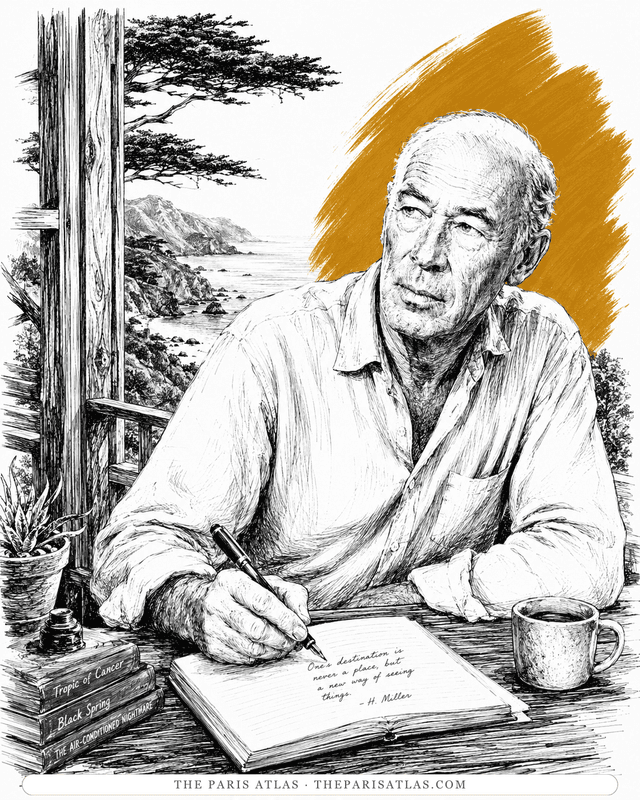
The Brooklyn dropout who arrived in Paris broke at thirty-eight and wrote the exuberant, banned books that ended American censorship.
View author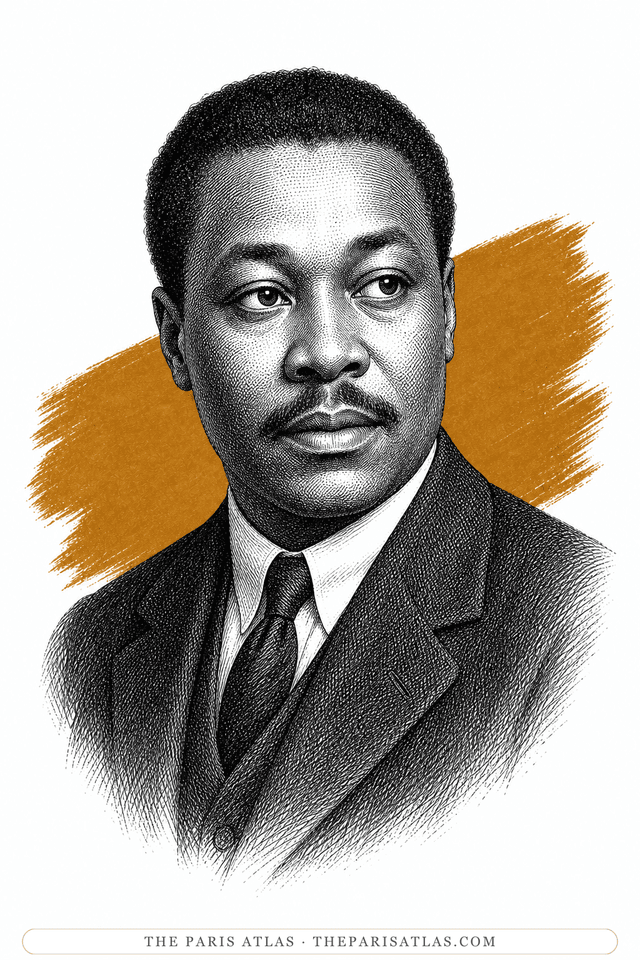
Jamaican-born poet and novelist, and one of the essential writers of the Harlem Renaissance. He arrived in Paris from Moscow in 1923 and stayed in France until 1928, writing Home to Harlem there — and forming a low opinion of the rich, white expatriate scene that dominates most accounts of the period. His Paris is the same years as Hemingway's and almost nothing like it.
View authorThe sources below include the primary text, editions, scholarship, archival materials, and other records that informed this page. They document The Swimming-Pool Library, its publication, and its place in literary history.


Google Books catalogue record used to cross-check the title and edition metadata.
Internet Archive ISBN catalogue used to cross-check the edition and its availability in library holdings.
Library of Congress books catalogue used to cross-check the bibliographic record by ISBN.

Scholarly discussion of race, empire, and historical memory in the novel.
Archival record for Alan Hollinghurst’s papers and literary career.
Official award history for the Somerset Maugham Award.
The primary text is the baseline reference for every book page. Additional references document publication history, interpretation, and historical context where that evidence is available.
 Explore more resources