

Barfly
The 1984 Paget Press edition of the screenplay, published before the film existed.
Read our take
The revised script with photographs from the set — and 140 copies signed by Bukowski, Mickey Rourke, Faye Dunaway and the director.
The Movie: “Barfly”, published by Black Sparrow Press in 1987, prints Charles Bukowski's screenplay in the form it reached the screen, alongside black-and-white photographs taken during production by Michael Montfort and Andrew Cooper. It revises the text Paget Press had published in 1984, when the film was still unfinanced. A limited issue of 140 copies carries four signatures — Bukowski, Mickey Rourke, Faye Dunaway and Barbet Schroeder — so a single copy holds the writer, both leads and the director.
Barbet Schroeder spent years raising money for the film, a struggle Bukowski turned into the novel Hollywood two years later. By the time this edition appeared the film was finished, Rourke had played Chinaski and Dunaway had played Wanda, and the book could show the production rather than anticipate it. Michael Montfort had photographed Bukowski before: he took the pictures for Shakespeare Never Did This in 1979, so the two books bracket the decade.
In the screenplay’s character sketch, Wanda’s clothes contain a history that dialogue need not immediately explain. Their outdated fashion and the shoes’ former expense make present appearance carry traces of an earlier life. Her continuing sense of style also complicates the description’s harsh scrutiny of her body: the person is not exhausted by the signs of decline that the text notices. Costume becomes a compact way to show persistence as well as loss. This tension belongs to the written portrait, not to a claim about any particular actor’s performance or wardrobe.
Eddie’s character description turns the bar into a stage for physical confidence. His acrobatics, quick talk and selective generosity with drinks all solicit an audience; work and self-advertisement occupy the same space. The writing then separates being socially recognizable as masculine from being admirable. It anticipates the pressure to like him precisely because he performs the expected part so fluently. The gymnastic display therefore carries an argument about approval as well as a visual instruction. Readers are invited to notice the distance between an impressive pose and the character judgment supplied beside it.
The revised text, with photographs from the production rather than illustrations anticipating it.
The signed issue puts the writer, both leads and the director on the same page.
The screenplay’s published form allows viewers to examine how dialogue and action relate to the completed film.
1984
Paget Press publishes the original screenplay while the film is unfinanced.
1987
The film is released; Black Sparrow publishes the revised script with production photographs.
1989
Hollywood tells the story of getting it made.


The 1984 Paget Press edition of the screenplay, published before the film existed.
Read our take

Charles Bukowski's screenplay for the 1987 film, published by Black Sparrow Press the same year with black-and-white photographs taken during production.
This is a revised text, published after the film was finished and illustrated with production photographs. The 1984 Paget Press edition came out while the film was still unfinanced and carries Bukowski's own drawings.
A run of 140 copies carries four signatures: Bukowski, Mickey Rourke, Faye Dunaway and Barbet Schroeder.
Michael Montfort and Andrew Cooper. Montfort had also photographed Bukowski's 1978 European trip for Shakespeare Never Did This.
Yes — Hollywood (1989), which fictionalises the years Schroeder spent financing it.
Explore authors with a similar voice, perspective, and influence.
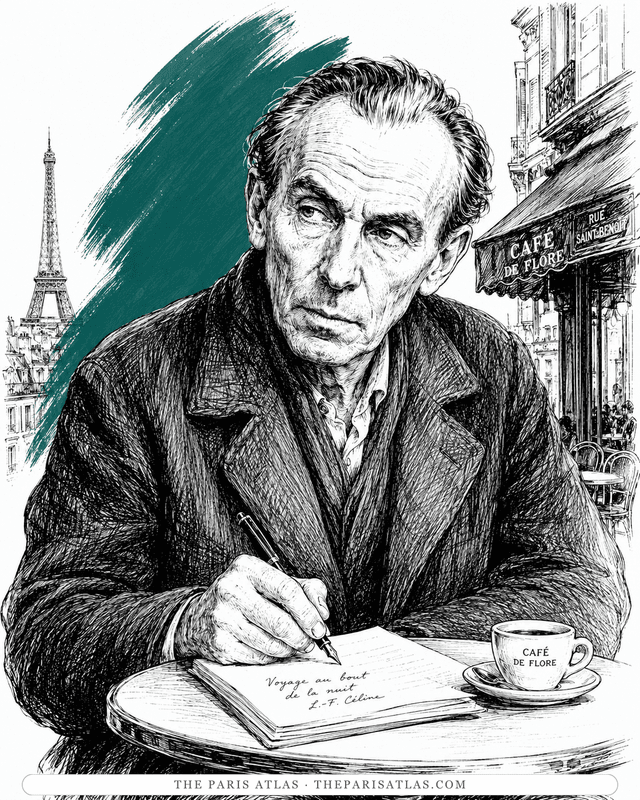
The doctor of the Paris slums who wrote the century's blackest, funniest novel — and changed the sound of French prose.
View author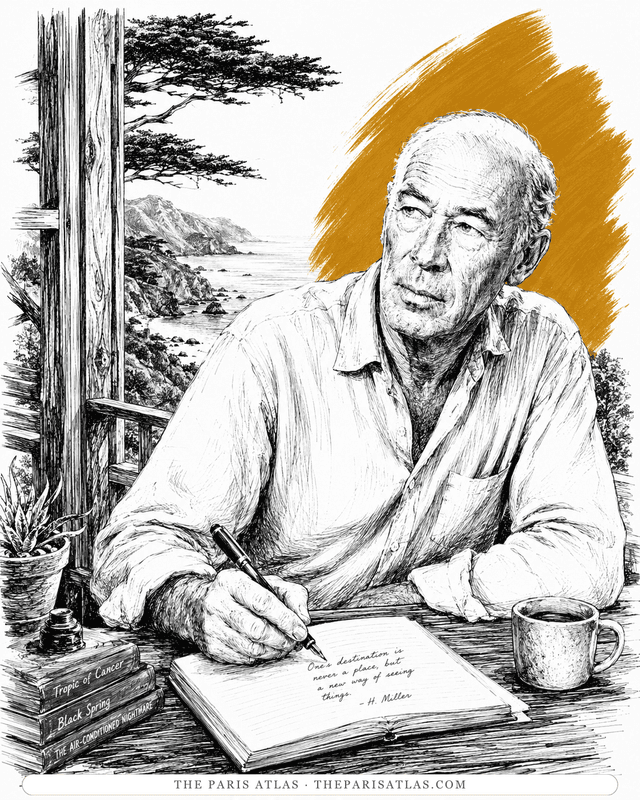
The Brooklyn dropout who arrived in Paris broke at thirty-eight and wrote the exuberant, banned books that ended American censorship.
View author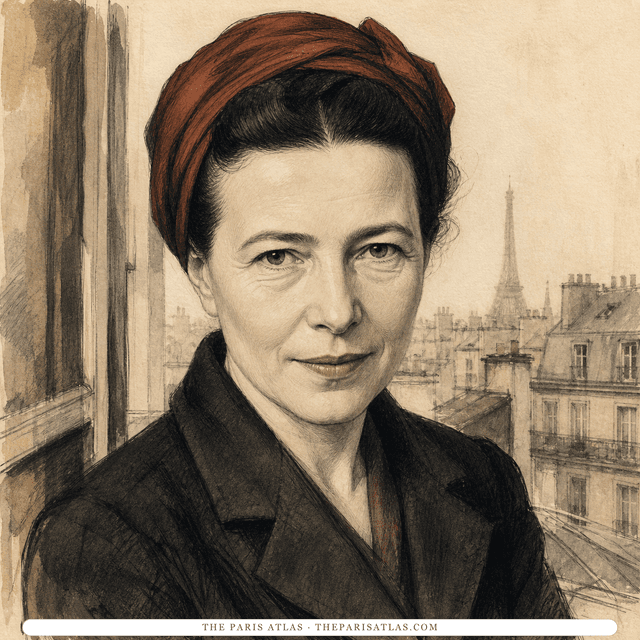
French writer and philosopher whose novels, memoirs, and social analysis examined freedom, gender, responsibility, aging, and the material conditions that shape a life.
View authorThe sources below include the primary text, editions, scholarship, archival materials, and other records that informed this page. They document The Movie: “Barfly”, its publication, and its place in literary history.


The primary text represented by this page, used for descriptions of the work’s contents and for any quoted passages shown here.
Publication details, the signed issue and the photographers.
Bibliographic details of the Black Sparrow editions.
The Schroeder collaboration and the film years.
Public character-description preview of the 2009 screenplay edition: Wanda’s complete sketch and the displayed portion of Eddie’s. Not a full-script reading or a collation of the 1984 and 1987 editions.
The primary text is the baseline reference for every book page. Additional references document publication history, interpretation, and historical context where that evidence is available.
 Explore more resources