
A Farewell to Arms
Both use direct prose to show love trying and failing to create shelter from death.
Read our take
by James M. Cain
A roadside affair becomes a murder plan, and getting away with it proves more dangerous than guilt.
Frank Chambers is a drifter who stops at a roadside restaurant in California and begins an affair with Cora Papadakis, the owner's young wife. Cora wants the restaurant but cannot bear her marriage to Nick. Frank wants Cora without giving up the freedom of the road. Their desire soon becomes a plan to kill Nick. James M. Cain tells the story in Frank's first-person voice, so readers hear every excuse and burst of confidence from a man who understands appetite better than consequence.
The first murder attempt is staged as an accident in the bath, but it fails and leaves Nick injured. A prosecutor suspects Frank and Cora, while their lawyer understands that the state has suspicion rather than proof. Fear briefly separates the lovers, but neither returns to an ordinary life.
Their second plan succeeds: they kill Nick during a drive and send the car over a cliff. The legal aftermath becomes a contest among lawyers, insurers, and blackmailers. Frank and Cora avoid conviction for Nick's death, but distrust enters the relationship they committed murder to secure.
The novel is short and fast, but it is not simply a puzzle about whether the killers will be caught. It asks what remains after desire gets what it demanded. Frank and Cora discover that shared guilt binds them while also making honest love nearly impossible.
Frank Chambers is thrown from a hay truck near the Twin Oaks Tavern. Owner Nick Papadakis gives him a meal and offers him work. Frank is ready to leave until he sees Nick's wife, Cora.
Frank and Cora begin an urgent affair. Cora explains that she married Nick for security but hates being trapped in the restaurant. Frank dislikes settled work, yet becomes willing to stay for her.
Cora proposes killing Nick. Their first plan is to strike him in the bathroom and make the death look like an accidental fall. A power failure interrupts the staging, Nick survives, and District Attorney Kyle Sackett suspects the couple.
Lawyer Arthur Katz keeps suspicion from becoming a case. Frank leaves, meets lion tamer Madge Allen, and briefly returns to the road. Cora works to improve the restaurant, but Frank comes back and their affair resumes.
During a drive, they get Nick drunk. Cora strikes him, Frank helps stage a crash on a cliff road, and Nick dies. Frank is injured arranging the scene, making the supposed accident plausible but leaving both conspirators vulnerable.
Sackett pressures Cora into signing a confession by making her believe Frank betrayed her. Katz uses the competing interests of prosecutors and insurers to discredit the confession and obtain a plea on a lesser charge.
Former investigator Kennedy obtains Cora's confession and tries to blackmail them. They recover and destroy the evidence, but mutual suspicion remains. Cora leaves to care for her dying mother, and Frank sees Madge again.
Cora returns and reveals she is pregnant. She and Frank finally speak honestly, reconcile, and marry. For a short time they imagine the restaurant and child might form a real life.
On a drive to the beach, Frank loses control of the car. Cora is killed and Frank survives. Sackett charges him with murder, and the earlier history makes the accident look deliberate.
Frank is convicted of Cora's murder even though her death was an accident. Katz cannot repeat the legal maneuver that saved him after Nick's death, and Frank's conduct makes an innocent explanation difficult to believe.
Waiting for execution, Frank dictates the account that forms the novel. He asks Father McConnell to help publish it and hopes to meet Cora after death. The confession tells the truth about Nick while insisting on the truth about Cora.
Frank is punished for the one killing he did not commit, but he is not innocent. He and Cora escaped legal judgment for Nick's murder. The law's second arrival is factually wrong and morally connected to the first crime—the title's postman has rung twice.
Frank and Cora call their attraction love, but each initially imagines possessing a different future through the other. Cora wants the restaurant without Nick. Frank wants Cora without accepting the limits of settled life. Murder removes one obstacle and reveals that Nick was never their only problem.
The restaurant represents Cora's chance to become respectable and independent. To Frank, the same building feels like confinement. Cain gives their conflict a physical shape: one person keeps looking at a business she can build, while the other keeps looking at the road.
Early on, a damaged sign gives Frank a way to turn apparently helpful work into an opportunity. He argues that a new neon sign will attract customers and urges Nick to have it made in Los Angeles. Once Nick leaves, Frank locks the restaurant door and approaches Cora. The promised improvement thus produces the opposite of its stated purpose: instead of welcoming customers, the business shuts them out. Cain makes the practical language of sales and repairs serve a private scheme.
Sackett and Katz bluff, divide the defendants, negotiate with insurers, and treat procedure as strategy. Katz's brilliance frees guilty clients; Sackett's certainty later condemns Frank for an accidental death.
The plot repeatedly returns in altered form. There are two murder plans, two important car crashes, two separations, and two prosecutions. Frank and Cora survive the crime they planned, then lose their future to an accident that resembles it.
The title never names a literal postman. It describes consequence returning after the first warning or judgment was escaped.
Cain writes in Frank's blunt first-person voice. The sentences are short, the vocabulary is ordinary, and scenes begin without long introductions. The speed makes Frank's decisions feel immediate while leaving readers room to notice what he refuses to examine.
Dialogue carries much of the pressure. Frank and Cora bargain, threaten, accuse, and reconcile in language that sounds practical even when the subject is murder. Cain rarely labels an emotion when an action can show it.
The confession form creates a useful gap. Frank can tell readers exactly what happened without fully understanding why. His facts can be honest while his explanations remain self-serving.
Frank’s invented acquaintance in a Cadillac supplies two excuses in the opening: someone else is supposed to pay for lunch, and later Frank supposedly returns to leave that person a message. Between those uses, he admits that Nick has seen through the story and describes his first sight of Cora. The reader therefore understands the return differently from the explanation Frank offers. His casual voice makes manipulation sound like everyday resourcefulness, while the sequence exposes how quickly one useful story can be adapted to another desire.
The best-known American adaptations are Tay Garnett's 1946 film with Lana Turner and John Garfield and Bob Rafelson's 1981 film with Jessica Lange and Jack Nicholson. Both expand a story whose force on the page comes partly from compression.
Cain matches Hemingway's fatalism and emotional restraint without making desperate love romantic.
The first-person confession is fast and readable, but Frank's confidence never becomes moral clarity.
Frank wants both Cora and the freedom of leaving, making his motives less stable than his confident voice suggests.

The drifter who narrates the affair, murder, and aftermath as a death-row confession.

Nick's ambitious young wife, whose longing for the restaurant and Frank drives both murder plans.

The restaurant owner whom Frank and Cora turn into an obstacle.

The defense lawyer whose tactics save Frank and Cora from a murder conviction.
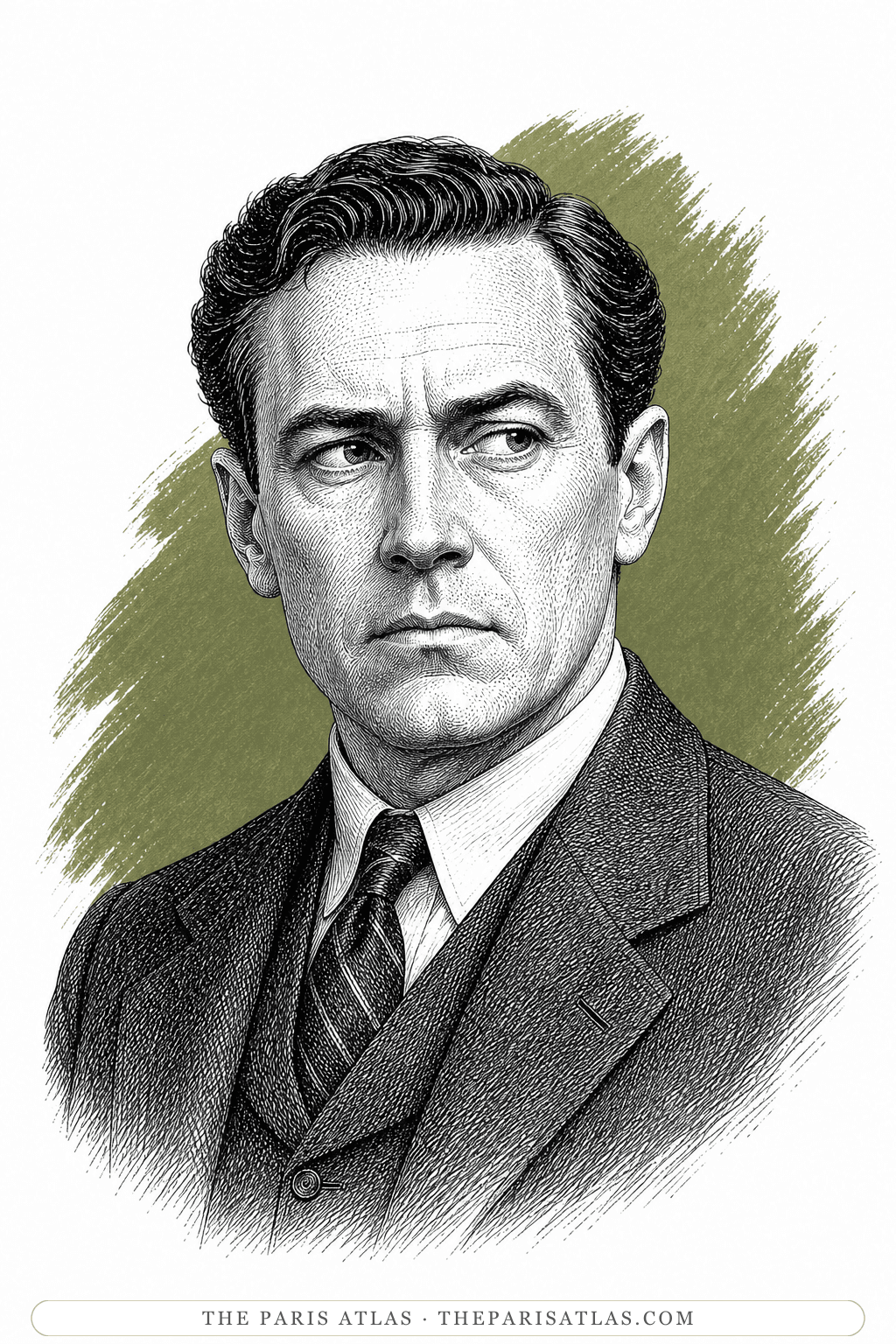
The district attorney who suspects the lovers early and later prosecutes Frank.

A lion tamer who offers Frank the wandering life Cora cannot share.
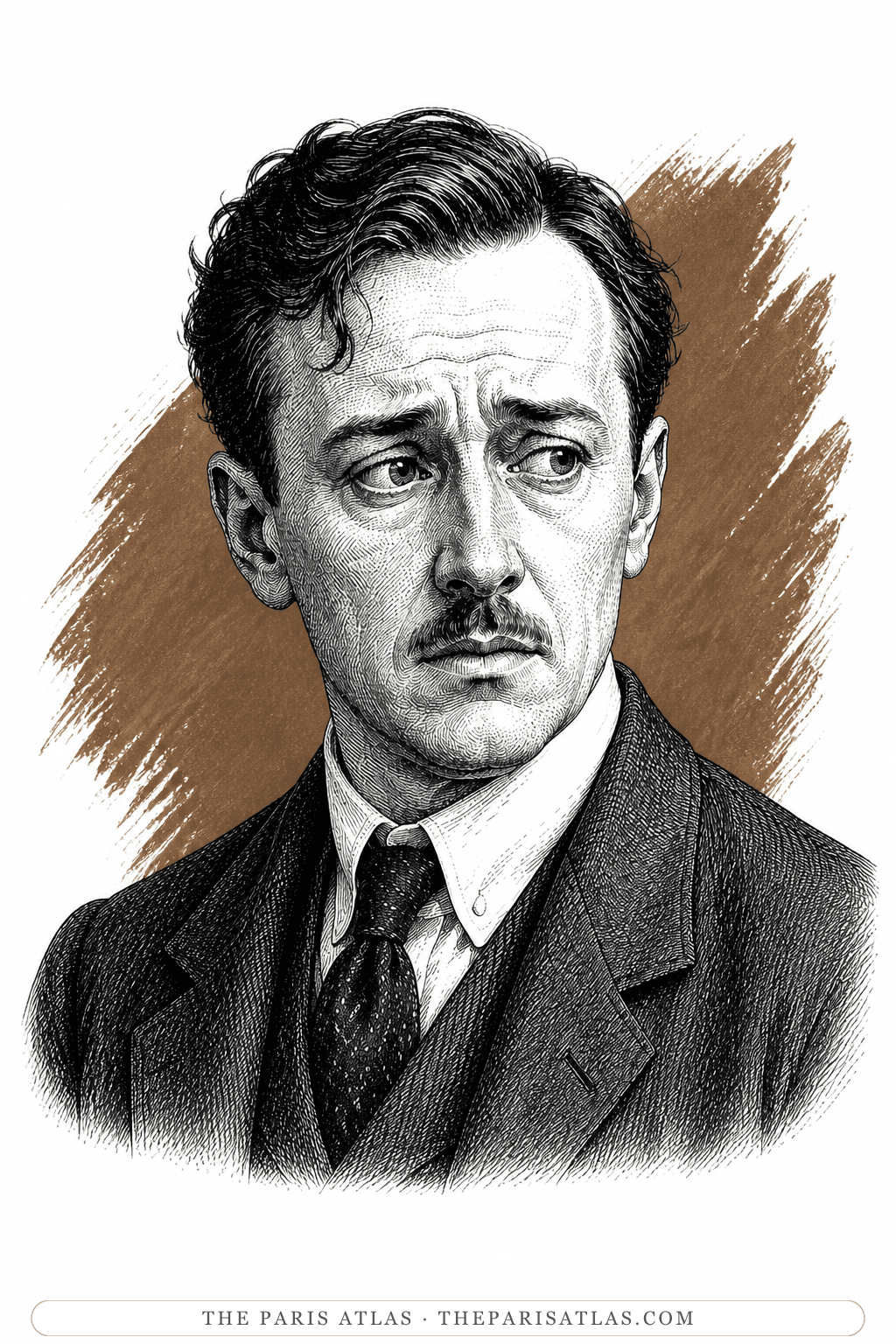
The former investigator who turns Cora's confession into a blackmail attempt.

The priest who receives Frank's death-row confession.
1934
Alfred A. Knopf publishes Cain's first novel.
1939
Pierre Chenal directs Le Dernier Tournant.
1943
Luchino Visconti's Ossessione adapts the story in Italy.
1946
Tay Garnett directs the MGM adaptation.
1981
Bob Rafelson directs a new American version.
1989
Vintage Crime/Black Lizard publishes its paperback.


Both use direct prose to show love trying and failing to create shelter from death.
Read our take
Both attach desire to ownership and expose the damage hidden inside an invented future.
Read our takeFrank Chambers narrates it as a confession written on death row.
They want their affair and the Twin Oaks without Nick controlling Cora or the business.
No. Nick survives and the failure alerts Sackett.
They avoid a murder conviction through Katz's legal strategy.
She dies in an accidental car crash while Frank is driving.
He is convicted of murdering Cora, a killing he did not commit, after helping her murder Nick.
The title suggests consequence returning after the first warning or judgment was escaped.
No. Several films adapt the story, including major American versions from 1946 and 1981.
Explore authors with a similar voice, perspective, and influence.
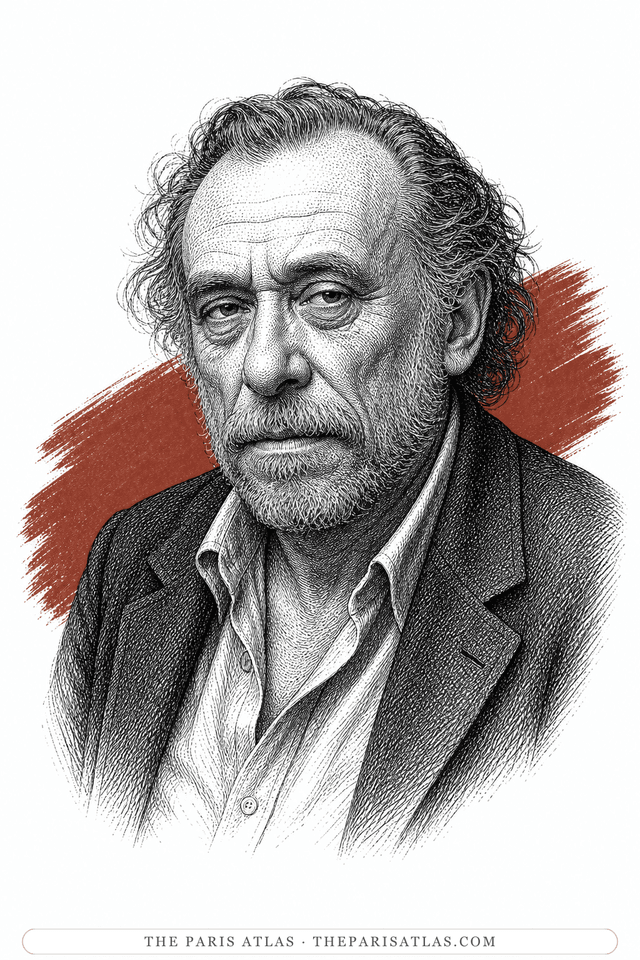
American poet and novelist of Los Angeles rooming houses, racetracks and the post office, who quit his job to write when a publisher offered him a hundred dollars a month. He came to Paris once, in September 1978, drank his way through a live television book programme and walked off the set — and French television has been replaying it ever since.
View author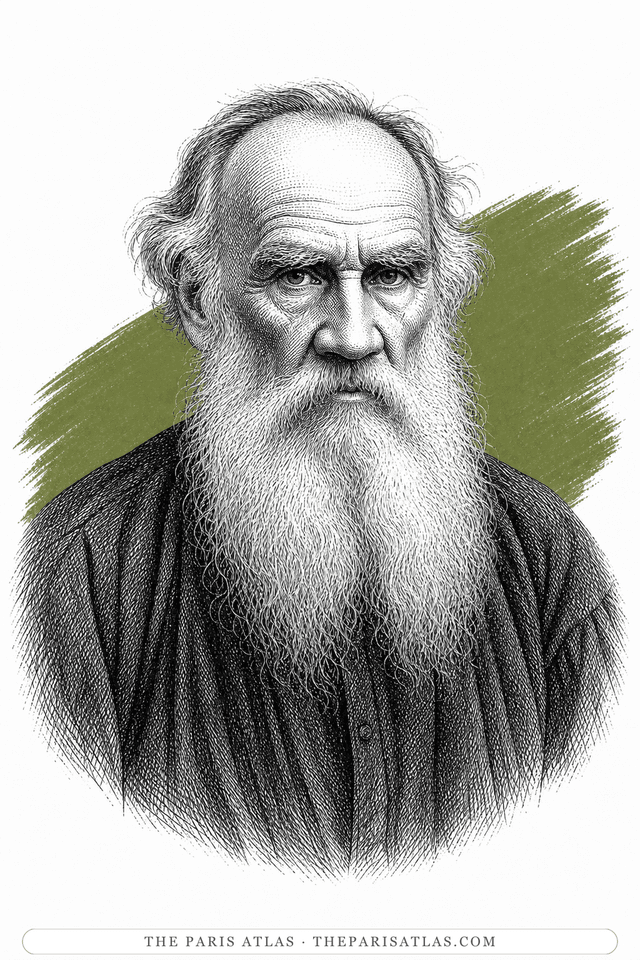
Russian novelist who wrote War and Peace and Anna Karenina, then renounced the life that produced them. He spent six weeks in Paris in 1857, and on one April morning went to watch a man beheaded in the street — an hour he said destroyed his belief in progress and in the state, and which he was still writing about twenty-two years later.
View author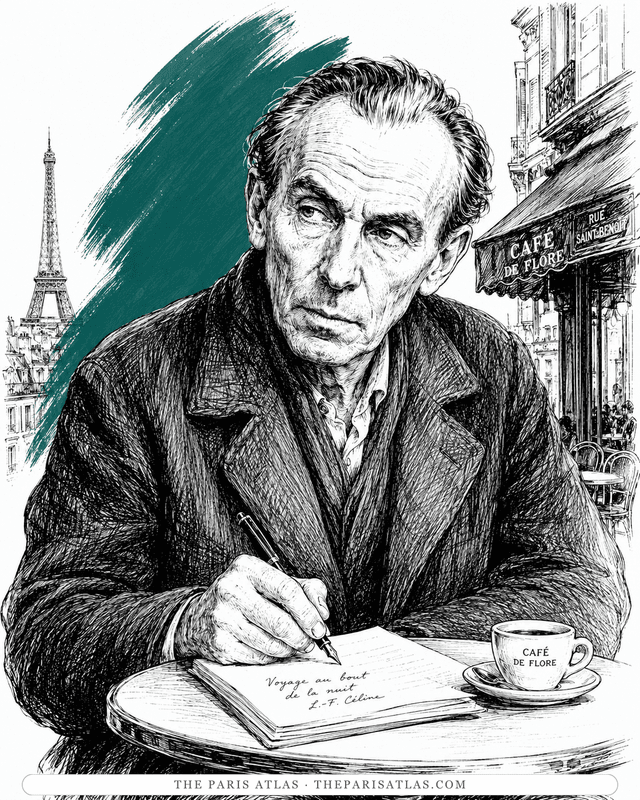
The doctor of the Paris slums who wrote the century's blackest, funniest novel — and changed the sound of French prose.
View authorThe sources below include the primary text, editions, scholarship, archival materials, and other records that informed this page. They document The Postman Always Rings Twice, its publication, and its place in literary history.


Publisher synopsis and edition details.
Publication and adaptation history.
1946 film credits.
Screen adaptation cross-check.
ISBN and edition cross-check.
Edition cross-check.
Library availability cross-check.
Bibliographic cross-check.

Authorized primary opening excerpt, used for the Cadillac pretext and replacement-sign readings.
The primary text is the baseline reference for every book page. Additional references document publication history, interpretation, and historical context where that evidence is available.
 Explore more resources