
The narrator of The Raven
A grieving reader who turns a bird’s repeated answer into questions about loss.
The book

The figure in the poem
Close readingThe unnamed narrator of Edgar Allan Poe's The Raven is a bereaved lover reading alone at night while mourning Lenore. A visiting bird becomes the listener to whom he directs increasingly desperate questions. His changing interpretation of one repeated answer supplies the poem's emotional movement.
Books cannot give him the escape he wants
At the beginning, the narrator seeks relief in old books but remains preoccupied with Lenore. The room's darkness, sounds, and furnishings become occasions for renewed anxiety. His learning has not given him a way to govern the associations through which grief returns.
The raven perches on a bust of Pallas, the classical figure associated with wisdom. A creature with one repeated word occupies that position above a man who can produce elaborate questions. The arrangement makes an irony visible: knowledge and intellectual effort cannot compel the answer he wants.
He changes the questions while the answer stays fixed
The narrator initially finds the bird's manner almost amusing. He also supplies a plausible explanation for its speech: it may have learned the word from a previous owner. That possibility remains available even as he begins to hear the response as a pronouncement on his own future.
The repetition does not need to acquire new information to become more painful. The narrator gives it new questions to answer. As the questions approach Lenore and the possibility of consolation, the same sound acquires consequences it did not possess when he was merely asking the bird's name.
Poe's explanation of the narrator's part in his suffering
In The Philosophy of Composition, Poe describes the lover as partly superstitious and partly drawn to tormenting himself. The narrator shapes questions so that the expected reply will intensify his sorrow. Poe's essay is a retrospective account of his artistic method, but this explanation can be tested directly against the poem's sequence.
The account makes the narrator more active than a helpless victim receiving a supernatural message. He knows an ordinary explanation for the bird's word, yet continues to seek a different kind of answer from it. His intelligence participates in the process that wounds him.
What the final shadow establishes
The last stanza presents the raven as still sitting above the door, its shadow enclosing the narrator's soul. The change from a recounted visit to a continuing condition makes the night feel impossible to leave. A particular encounter has become the form in which he understands his grief.
The ending does not require the reader to certify a supernatural bird. It establishes the narrator's conviction that escape is impossible. That distinction preserves the poem's central uncertainty: the raven may possess uncanny authority, or the bereaved man may have made an ordinary creature the voice of his own despair.
Sources and passages
- Edgar Allan Poe, The Raven
Primary text: the 1845 collection version, from the opening reading scene through the changing questions and final shadow.
- Edgar Allan Poe, The Philosophy of Composition
Poe's own discussion of the refrain and the lover's increasingly painful questions; a retrospective explanation of the poem's construction.
Voice, imagery, and form
- Reading through griefThe narrator begins tired and nearly asleep over old books. He has been seeking relief from sorrow for Lenore.
- An effort to explain soundsTapping and moving curtains frighten him. He repeatedly tries to steady himself by naming an ordinary visitor or the wind as the cause.
- Calling into darknessWhen the open door reveals nobody, the narrator whispers Lenore’s name. An echo briefly gives his own word back to him.
- A moment of amusementThe raven’s solemn appearance makes him smile. His first question asks the bird’s name rather than demanding a prediction.
- An ordinary explanation consideredHe suggests that the bird learned its single answer from a former owner. He can imagine repetition without prophecy.
- Questions shaped by longingDespite that explanation, he asks the bird about relief and reunion with Lenore. The questions make the same answer increasingly painful.
If you like The Raven and Other Poems


If you like Edgar Allan Poe
Explore authors with a similar voice, perspective, and influence.
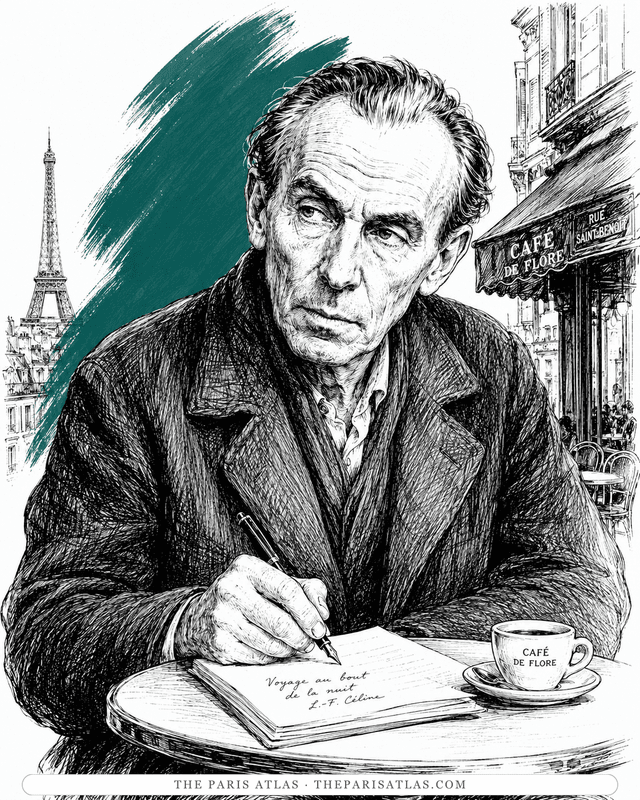
Louis-Ferdinand Céline
The doctor of the Paris slums who wrote the century's blackest, funniest novel — and changed the sound of French prose.
View author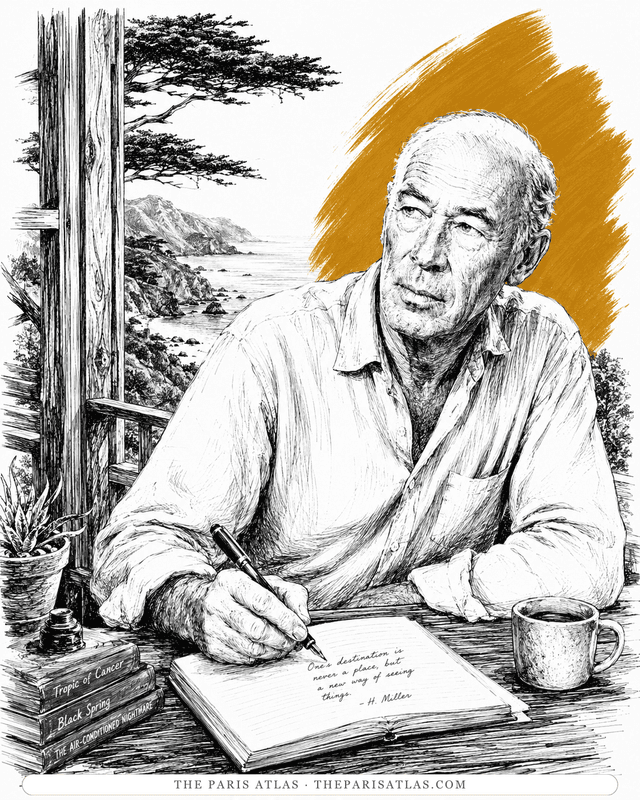
Henry Miller
The Brooklyn dropout who arrived in Paris broke at thirty-eight and wrote the exuberant, banned books that ended American censorship.
View author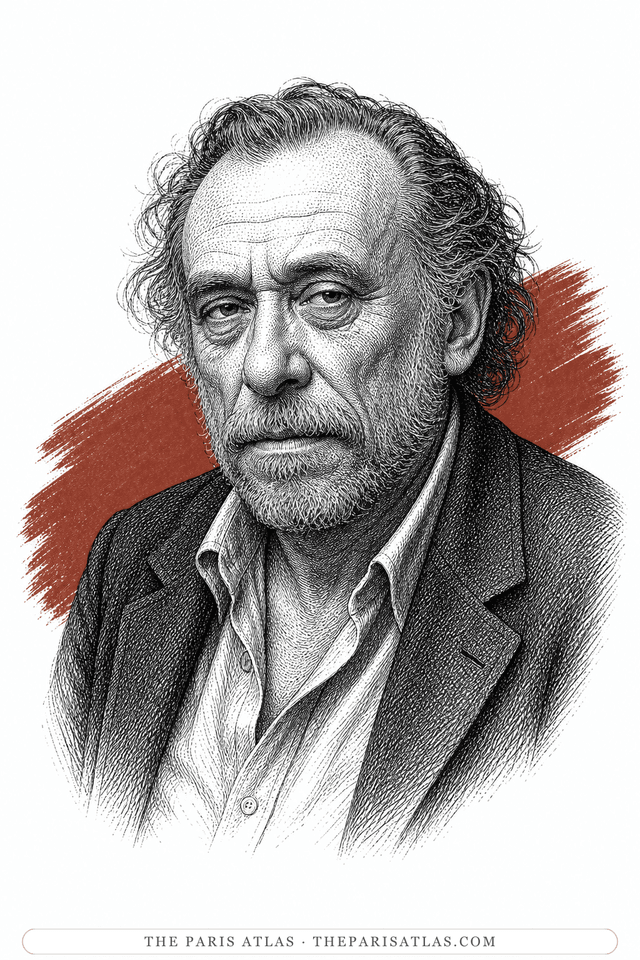
Charles Bukowski
American poet and novelist of Los Angeles rooming houses, racetracks and the post office, who quit his job to write when a publisher offered him a hundred dollars a month. He came to Paris once, in September 1978, drank his way through a live television book programme and walked off the set — and French television has been replaying it ever since.
View author