The Paris AtlasCharting the artists, works, and places worth returning to.
Cover of The Raven and Other Poems by Edgar Allan Poe

The Raven and Other Poems

by Edgar Allan Poe

Poe's 1845 collection places The Raven beside songs, haunted landscapes, youthful poems, and scenes from a verse drama.

Published
1845
Setting
Era
Shelf rating
4.7

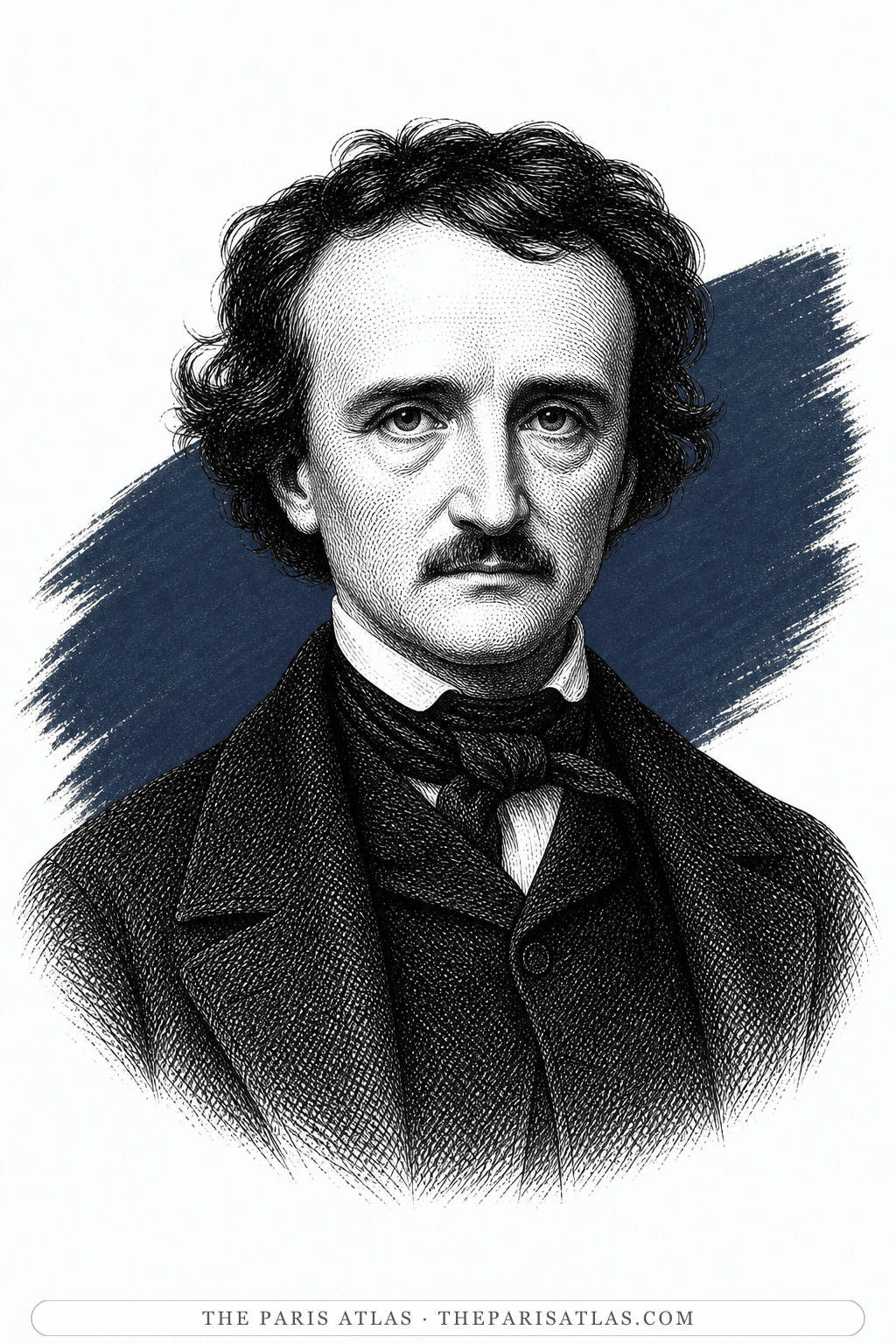
About Edgar Allan Poe

Illustrated portrait of Edgar Allan Poe
Edgar Allan Poe

5 books shelved

The story, briefly

Spoiler-free

The Raven and Other Poems is Edgar Allan Poe's poetry collection published by Wiley & Putnam in November 1845. Its contents comprise twenty-nine poems and scenes from Politian, his unfinished verse drama. The Raven opens the volume; a section labeled Poems Written in Youth closes it. The book brings grief and terror together with praise of beauty, imagined landscapes, and poems about the imagination itself.

The story, in more detail

The opening poem follows a bereaved speaker who tries to interpret a bird's repeated answer. The sound stays the same, but the questions become more painful. Internal rhyme, recurring phrases, and the return of the refrain make the reader hear the speaker's difficulty escaping his own thoughts.[1]

The collection does not maintain that one emotional condition. Eulalie describes marriage as a release from loneliness. To Helen imagines beauty as a homecoming, using the language of classical travel and sculpture. The Conqueror Worm and The Haunted Palace, meanwhile, turn a theater and a royal building into images of human life and mental collapse.[1]

Poe dedicates the book to Elizabeth Barrett Barrett, later known as Elizabeth Barrett Browning. In his preface, he says he wants the poems to circulate in the words he wrote, after alterations in the press. The later section gathers youthful work, including Sonnet—To Science, Al Aaraaf, and Tamerlane. Reading the volume in order therefore means moving backward through part of his development.[1]

What's inside the 1845 volume

The main section opens with The Raven and includes The Valley of Unrest, The Sleeper, Lenore, Israfel, Dream-Land, The City in the Sea, To One in Paradise, and Eulalie. The Conqueror Worm and The Haunted Palace precede scenes from Politian. These are separate poems and a dramatic excerpt, with no single continuous plot.[1]

The eleven entries in Poems Written in Youth begin with Sonnet—To Science and end with To Helen. Al Aaraaf and Tamerlane occupy substantially more space than the brief lyrics surrounding them. The arrangement places a selection of Poe's early ambitions beside the work for which he had recently become famous.[1]

Later poems such as Annabel Lee, Ulalume, and A Dream Within a Dream are absent from this 1845 collection. Modern anthologies called The Raven and Other Poems may include them, so a shared title does not guarantee the same contents.[1]

Themes and analysis

These readings discuss events throughout the book, including its ending.

Repetition can change meaning without changing words

In The Raven, the bird repeats one response while the bereaved speaker supplies increasingly painful questions. The sound's apparent significance changes because of the context the speaker gives it. Rhyme and recurring phrasing make a private difficulty audible: his thought keeps returning to the loss it hopes to escape.

The effect illustrates why a summary of what happens cannot substitute for hearing the poem. The visitor does remarkably little. Much of the action lies in the speaker's language and the reader's expectation of another return. Poe makes formal recurrence participate in the emotional event being described.

The reader draws his cushioned chair before the bird and turns its repeated answer toward his own loss. An original imagined scene inspired by The Raven in the 1845 collection The Raven and Other Poems. (Illustration — The Paris Atlas)

The collection gives beauty more than one use

To Helen imagines beauty as a return from wandering to a desired home. Eulalie presents a bride's arrival as the end of solitary grief. These poems differ from the bereaved voices for which Poe is especially familiar: their speakers describe presence and consolation, not simply an absent woman.

The contrast prevents the collection from becoming one continuous account of the poet's unhappiness. Its speakers adopt different emotional positions, often in highly idealized language. A reader can compare what each voice wants beauty to accomplish, and how completely the poem allows that wish to govern its imagined world.

Eulalie's speaker contrasts former solitude with the brightness of shared affection. An original visual interpretation of Eulalie—A Song in The Raven and Other Poems; the setting is imagined. (Illustration — The Paris Atlas)

Buildings and theaters become ways of imagining human limits

The Haunted Palace describes an ordered royal dwelling whose condition deteriorates. The Conqueror Worm places human figures inside a performance watched by mourning angels. Both make an abstract difficulty visible by giving it a setting, an audience, and movement through time.

The theater poem also unsettles the idea that its human performers control the action. Their circular pursuit is interrupted by the creature that supplies the ending. The closing identification of the play gives the scene a wider application to human life, while the spectators' grief offers no power to change its outcome.

The youthful section changes the direction of the reading

After the main selection and scenes from Politian, the book returns to poems labeled as youthful work. Sonnet—To Science asks what analytical knowledge does to the poet's imagined creatures and places. The question supplies an earlier version of a concern visible elsewhere: what kinds of experience survive explanation?

Poe's preface also complains about alterations made as poems circulated through the press. The volume is therefore an attempt to gather and control a body of work, not simply a container for the title poem. Its ordering and declared textual authority are part of the literary self-portrait it presents.

Sources for these readings

Quotes from The Raven and Other Poems

Quoted verbatim from the text, each line verified against its source.

If what I have written is to circulate at all, I am naturally anxious that it should circulate as I wrote it.
— Edgar Allan Poe, The Raven and Other Poems (1845), Preface
To seek for treasure in the jewelled skies
— Edgar Allan Poe, Sonnet—To Science, in The Raven and Other Poems (1845)

Why we recommend it

  1. The famous poem in a broader collection

    The Raven opens a volume that also contains affection, praise, and ambitious youthful verse. Its grief becomes one part of a wider range of poetic situations.

  2. Sound with a clear narrative function

    Refrains and repeated phrases do more than decorate the poems. They organize the speaker's questions in The Raven and the declared transformation of life in Eulalie.

  3. A view of Poe's earlier ambitions

    The youthful section places brief lyrics beside Al Aaraaf and Tamerlane. Its position at the end makes the volume an invitation to compare different stages of Poe's work.

What this book explores

The people in its pages

The grieving narrator of The Raven and the bride in Eulalie belong to different poems. They are poetic figures, and the collection does not connect them through a shared story.[1]

Also in the book

  • Illustrated portrait of Eulalie

    Eulalie

    The beloved bride described by the speaker of Eulalie—A Song.

Inside the book

Selected works from this book, with notes on each.

The Raven

A grieving reader admits a bird into his chamber and hears it repeat Nevermore. The bird's answer changes meaning as the speaker changes his questions. Repetition, internal rhyme, and the fixed setting make the encounter increasingly difficult for him to escape.

Eulalie—A Song

The speaker recalls loneliness before his marriage to Eulalie. Repeated phrases and comparisons with stars and moonlit vapor give the poem a songlike movement. Its declared relief from pain differs from the continuing grief of The Raven.

The Conqueror Worm

Angels watch a theatrical performance in which human figures move like puppets. A devouring creature interrupts the action, and the closing lines identify the drama as human life. The theater lets Poe move from spectacle to a compressed statement about mortality.

The Haunted Palace

A radiant palace governed by Thought falls into disorder. Windows, a door, and voices suggest a human head and its changing mental state. The earlier musical harmony becomes discord, while the building remains visible to people passing outside.

Sonnet—To Science

The opening poem of the youthful section addresses science as a force that removes mythological beings from the natural world. Its questions defend the poet's freedom to imagine. The final lines bring that argument back to a particular summer dream beneath a tree.

To Helen

The final poem compares Helen's beauty to ships carrying a weary traveler home. Classical references lead toward a still figure holding a lamp. The movement from sea travel to the illuminated figure makes beauty a source of recognition and return.

Timeline

  1. 1845

    Wiley & Putnam issues The Raven and Other Poems on November 19 as a separate book in paper wrappers.

  2. 1846

    Early in the year, the publisher begins issuing the poetry collection bound together with Poe's earlier Tales volume.

  3. 1969

    Charles E. Merrill publishes facsimiles of Tales and The Raven and Other Poems with Jay B. Hubbell's introduction.

Book editions

Paperback
Paperback
Wiley & Putnam
1845
Original separate volume, issued November 19, 1845, in paper wrappers; preliminary pages followed by 91 numbered pages. It was later bound together with Poe's Tales.
Paperback edition cover
Paperback
Charles E. Merrill
1969
ISBN-13
9780675095303
Tales, and, The Raven and Other Poems: facsimiles of the two 1845 first editions, with an introduction by Jay B. Hubbell. The library records separate pagination: xxvi, 228, 91 pages. This ISBN belongs to the combined volume; the original poetry section has 91 numbered pages.

Reader reviews

Loading reviews…

Cover of The Weary Blues by Langston Hughes

The Weary Blues

Langston Hughes

Hughes's collection uses different musical traditions, but it offers another way to study how sound and repeated phrases organize a speaking voice.

Read our take

Recommended alongside Poems and Tales.

The Raven and Other Poems: frequently asked questions

Is The Raven and Other Poems the same as The Raven?

No. The Raven is the opening poem of the 1845 collection. The book contains twenty-nine poems in total, along with scenes from the verse drama Politian.

When was The Raven and Other Poems published?

Wiley & Putnam issued the collection in New York on November 19, 1845. It first appeared separately in paper wrappers and was later bound together with Poe's Tales.

Does the original book include Annabel Lee?

No. Annabel Lee, Ulalume, and A Dream Within a Dream are later poems. Some modern selections using this collection's title include them, but they are absent from the 1845 contents.

What are Poems Written in Youth?

They are the collection's final section of eleven early poems. It begins with Sonnet—To Science, includes Al Aaraaf and Tamerlane, and closes with To Helen.

To whom did Poe dedicate the collection?

Poe dedicated it to Elizabeth Barrett Barrett, the English poet later known as Elizabeth Barrett Browning. The dedication uses her name before her marriage.

Which edition reproduces the original contents?

The selected Charles E. Merrill edition of 1969 reproduces the 1845 first editions of both Tales and The Raven and Other Poems. Its ISBN is 9780675095303. It is a combined facsimile volume, not the poetry book alone.

If you like Edgar Allan Poe

Explore authors with a similar voice, perspective, and influence.

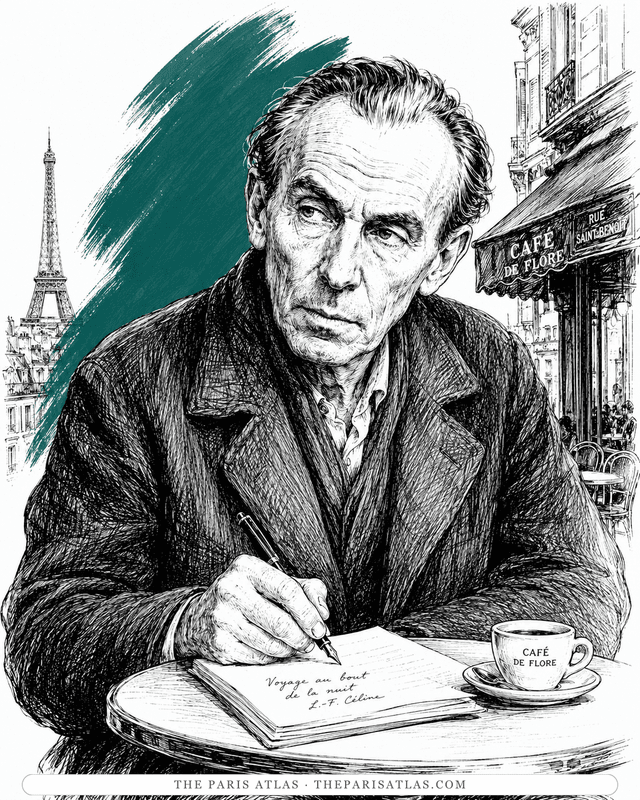
  • Illustrated portrait of Louis-Ferdinand Céline

    Louis-Ferdinand Céline

    The doctor of the Paris slums who wrote the century's blackest, funniest novel — and changed the sound of French prose.

    View author
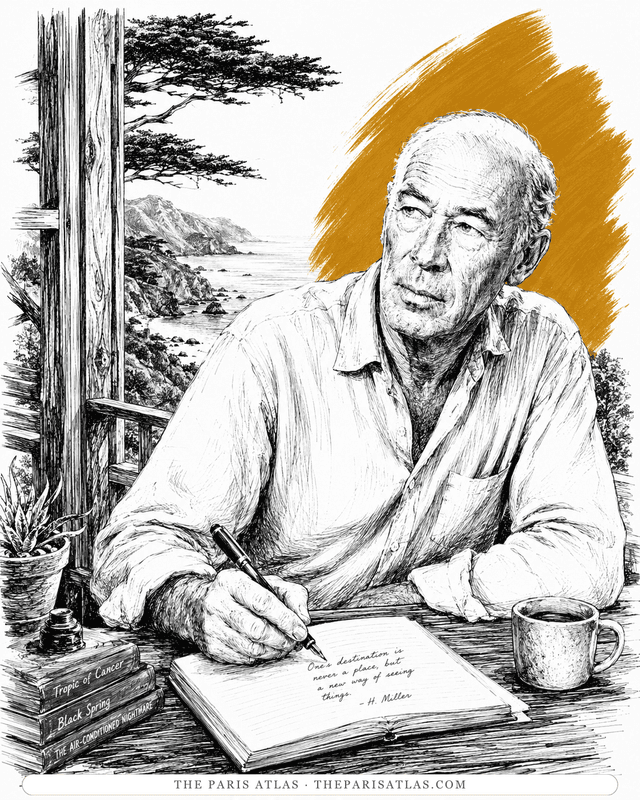
  • Illustrated portrait of Henry Miller

    Henry Miller

    The Brooklyn dropout who arrived in Paris broke at thirty-eight and wrote the exuberant, banned books that ended American censorship.

    View author
  • Illustrated portrait of Charles Bukowski

    Charles Bukowski

    American poet and novelist of Los Angeles rooming houses, racetracks and the post office, who quit his job to write when a publisher offered him a hundred dollars a month. He came to Paris once, in September 1978, drank his way through a live television book programme and walked off the set — and French television has been replaying it ever since.

    View author
References

References

The sources below include the primary text, editions, scholarship, archival materials, and other records that informed this page. They document The Raven and Other Poems, its publication, and its place in literary history.

  1. 1abcdefgThe Raven and Other Poems: First-Edition Bibliography

    Archive
    Edgar Allan Poe Society of Baltimore
    Used for

    Release date, original format, and later combined issue.

    View source
  2. 2The Raven and Other Poems (1845 contents and texts)

    Poetry
    Wiley & Putnam; transcription by the Poe Society, 1845
    Used for

    Original selection and order; six poems consulted for the reading guide; Sonnet—To Science quotation.

    View source
  3. 3Preface to The Raven and Other Poems

    Essays
    Wiley & Putnam; transcription by the Poe Society, 1845
    Used for

    Poe's purpose in collecting the poems and the verified preface quotation.

    View source
  4. 4Tales, and, The Raven and Other Poems: Merrill Facsimile Catalogue Record

    Archive
    Indiana University Libraries
    Used for

    1969 combined facsimile's editor, publisher, pagination, and paperback ISBN 0675095301, converted to ISBN-13.

    View source
  1. 5Edgar Allan Poe, The Raven

    Poetry
    Edgar Allan Poe Society of Baltimore, 1845
    Used for

    Character close reading: Primary text for the comparison between the bereaved lover and Eulalie's celebrating speaker.

    View source
  2. 6Edgar Allan Poe, The Philosophy of Composition

    Essays
    Edgar Allan Poe Society of Baltimore, 1846
    Used for

    Character close reading: Poe's own discussion of the refrain and the lover's increasingly painful questions; a retrospective explanation of the poem's construction.

    View source
  3. 7Edgar Allan Poe, Eulalie—A Song

    Poetry
    Edgar Allan Poe Society of Baltimore, 1845
    Used for

    Character close reading: Primary text: page 24 of the 1845 collection. The three stanzas establish the marriage, comparisons of brightness, and claim of mutual feeling.

    View source
i
Why these sources are here

The primary text is the baseline reference for every book page. Additional references document publication history, interpretation, and historical context where that evidence is available.

Explore more resources