The Paris AtlasCharting the artists, works, and places worth returning to.

Park · The western edge of Paris · 16e arrondissement

Bois de Boulogne

The buildingStill standing
Getting inWalk straight in
What's there nowStill the same

A public park, free and open. Very large — pick a section rather than attempting it whole.

The great park on the western edge of Paris, and the fashionable place to be seen in the late nineteenth century. Marcel Proust walked its Allée des Acacias — now the avenue de Longchamp — and turned it into a social arena in his novel. It is also where the outing happened after which, aged nine, he suffered the asthma attack that began his lifelong illness.

Address
Bois de Boulogne, 75016 Paris
Years
The fashionable promenade of Proust's Paris
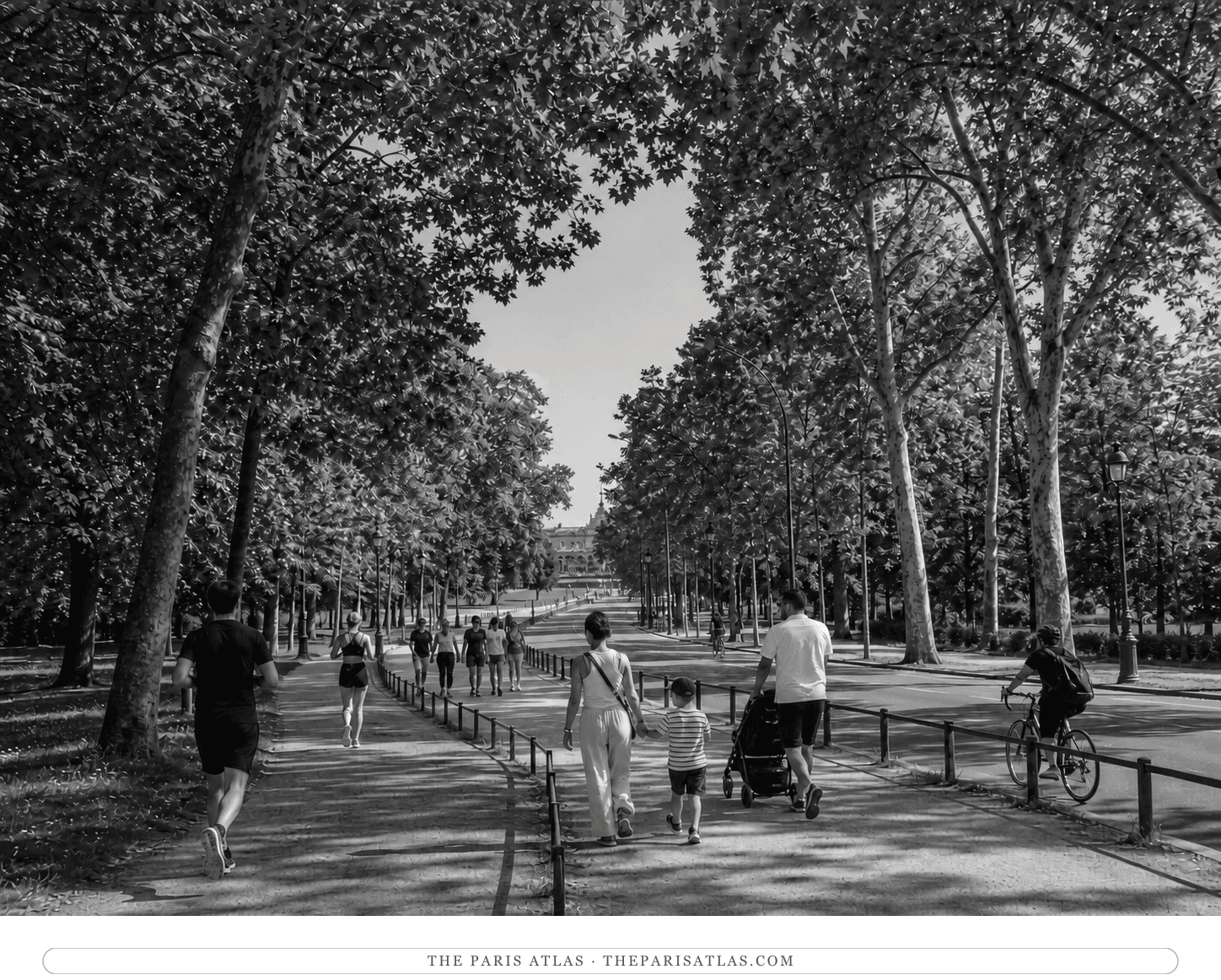
IllustrationPresent-day walkers and cyclists beneath the trees of the avenue de Longchamp in bright daylight

A bright present-day view of the broad, tree-lined promenade; the visitors are newly generated rather than copied from a reference photograph.

Editorial illustration

The place, briefly

The Bois de Boulogne is enormous — a former royal hunting forest on the western edge of the city, landscaped into a public park under Napoleon III as part of the same programme that produced the Parc Monceau and Parc Montsouris.[1]

In the late nineteenth century one stretch of it mattered more than the rest. The Allée des Acacias, which the city identifies with the present-day avenue de Longchamp, was where fashionable Paris went to be looked at: carriages at a walking pace, an unwritten timetable, and a precise understanding of who could be greeted by whom.

Marcel Proust frequented it, and turned it into one of the central social arenas of In Search of Lost Time. The promenade suits his purposes exactly, because it is a place whose entire function is display and observation — people arranged in public in order to be assessed, which is the novel's subject rendered as a physical space.[2]

The Bois carries a second, heavier association for him, and it is not social. Returning from an outing here at the age of nine, Proust suffered the severe asthma attack that marked the beginning of his lifelong illness. Everything that follows — the inverted hours, the cork-lined room, the decades largely spent indoors — proceeds from a condition that announced itself on the way back from this park.[3]

That double meaning is why it belongs on his map twice over: the arena where his society displayed itself, and the place his body first stopped him.

It is free, open, and far too large to do in one go. The avenue de Longchamp is the stretch to walk if you are here for Proust.[1]

Key facts

What it is
A former royal hunting forest, landscaped as a public park under Napoleon III
Where
The western edge of Paris, in the 16th
The stretch that mattered
The Allée des Acacias — identified with today's avenue de Longchamp
What it was for
Being seen: carriages at walking pace, and a precise etiquette of who greets whom
In the novel
One of the central social arenas of In Search of Lost Time
The other association
Returning from an outing here at nine, Proust had the asthma attack that began his lifelong illness
Admission
Free and open
The avenue de Longchamp today, on the stretch identified with the fashionable Allée des Acacias of Proust's Paris.Editorial illustration
A bright present-day view of the broad, tree-lined promenade; the visitors are newly generated rather than copied from a reference photograph.Editorial illustration
Historically informed editorial reconstruction of the Allée des Acacias at its late-nineteenth-century social height.Artistic reconstruction
The carriage promenade around 1895 in natural color; the anonymous people, vehicles, positions and colors are interpretive, and Marcel Proust is not depicted.Artistic reconstruction
The Lac Inférieur, one of the landscaped lakes created when the former royal forest became a public park.Editorial illustration
A present-day woodland path with the ordinary movement that keeps the enormous park from feeling empty.Editorial illustration
A present-day rowboat landing beside the lake, with newly generated visitors and staff.Editorial illustration

Timeline

  1. 1850s–60s

    The former royal forest is landscaped into a public park under Napoleon III.

  2. Late 19th century

    The Allée des Acacias is the fashionable promenade of Paris society.

  3. c. 1880

    Returning from an outing in the Bois aged nine, Proust suffers the asthma attack that begins his lifelong illness.

  4. 1913–1927

    In Search of Lost Time uses the promenade as one of its central social arenas.

On the map

Questions before you go

What is the Bois de Boulogne's connection to Proust?

Two things. He frequented the Allée des Acacias — the fashionable promenade, now the avenue de Longchamp — and made it one of the central social arenas of In Search of Lost Time. And returning from an outing in the Bois at the age of nine, he suffered the asthma attack that began his lifelong illness.

What was the Allée des Acacias?

The stretch of the Bois where fashionable Paris went to be seen in the late nineteenth century — carriages moving at walking pace, an unwritten timetable, and a precise etiquette about who could greet whom. The city identifies it with the present-day avenue de Longchamp.

Why does the asthma attack matter so much?

Because everything about how Proust worked follows from it. The inverted hours, the cork-lined bedroom, the decades largely spent indoors and the novel written from memory rather than from motion all proceed from a condition that first announced itself on the way home from this park when he was nine.

How should you visit it?

Pick a section — it is far too big to walk whole. If you are here for Proust, the avenue de Longchamp is the stretch that was the Allée des Acacias. It is free and open, on the western edge of the 16th.

Writers who knew this place

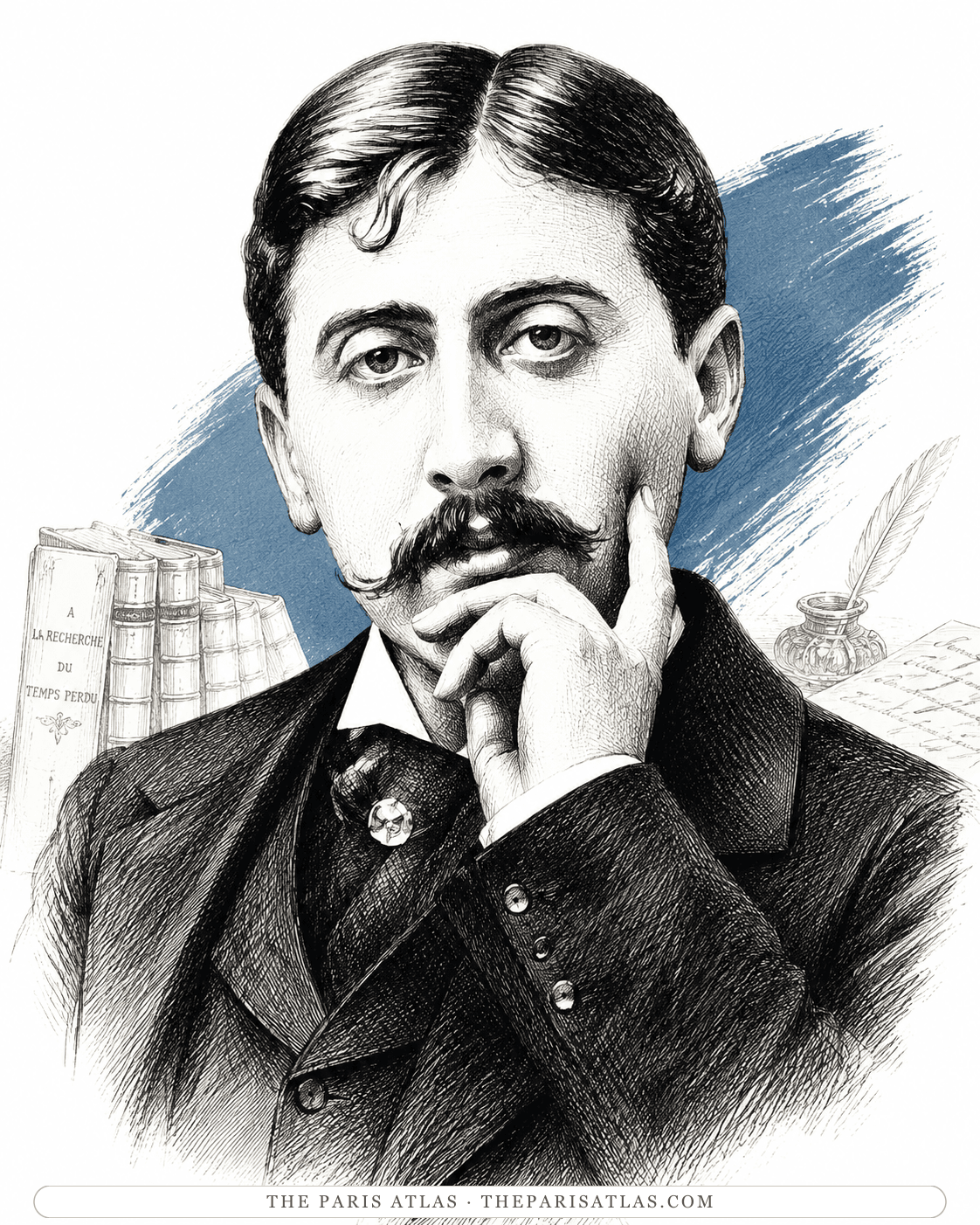
Illustrated portrait of Marcel Proust

Marcel Proust

French · French novelist of the seven-volume In Search of Lost Time, written at night in a cork-lined room — the book that made memory itself the story.

Frequented by

Proust frequented the Allée des Acacias — the fashionable promenade the city identifies with today's avenue de Longchamp — and made it one of the central social arenas of In Search of Lost Time. The Bois carries a second association: returning from an outing here aged nine, he suffered the asthma attack that began his lifelong illness.

— Balade du côté de chez Proust

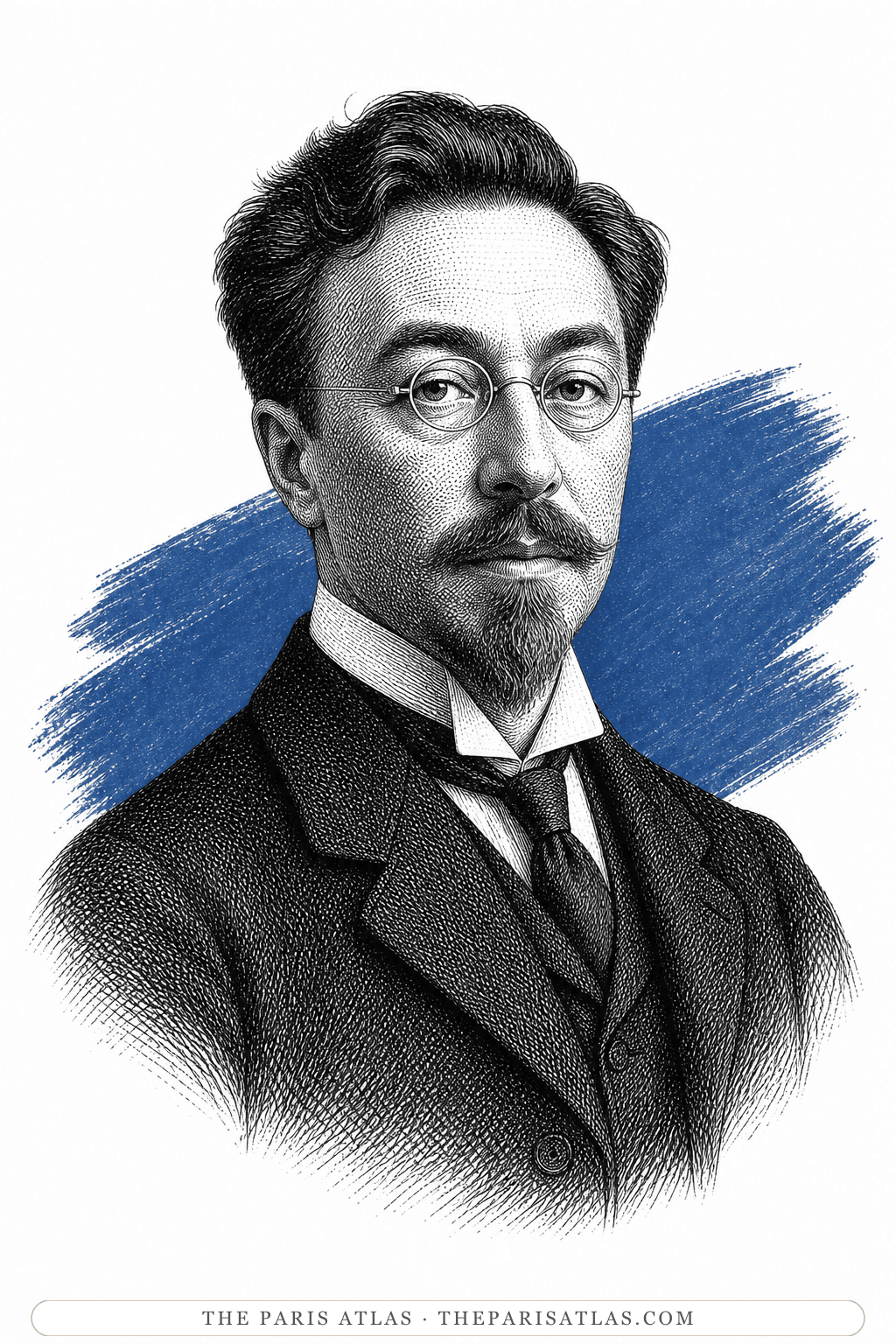
Illustrated portrait of Wassily Kandinsky

Wassily Kandinsky

Russian-born; French from 1939 · Russian painter, celebrated as a pioneer of abstract art, who gave up a Moscow law career at thirty to study painting in Munich, co-founded the Blue Rider group in 1911, taught for eleven years at the Bauhaus, the German design school — and spent his last eleven years in a flat in Neuilly-sur-Seine that the French artist Marcel Duchamp had pointed him towards, painting soft cell-like forms nothing like the hard geometry Germany knew him for.

Frequented by

The Bois de Boulogne lay immediately beside Kandinsky's Neuilly flat and he walked it regularly; the organic and cellular forms of his late painting are often connected to that habit.

— Inside Kandinsky's Studio in Neuilly

People who knew this place

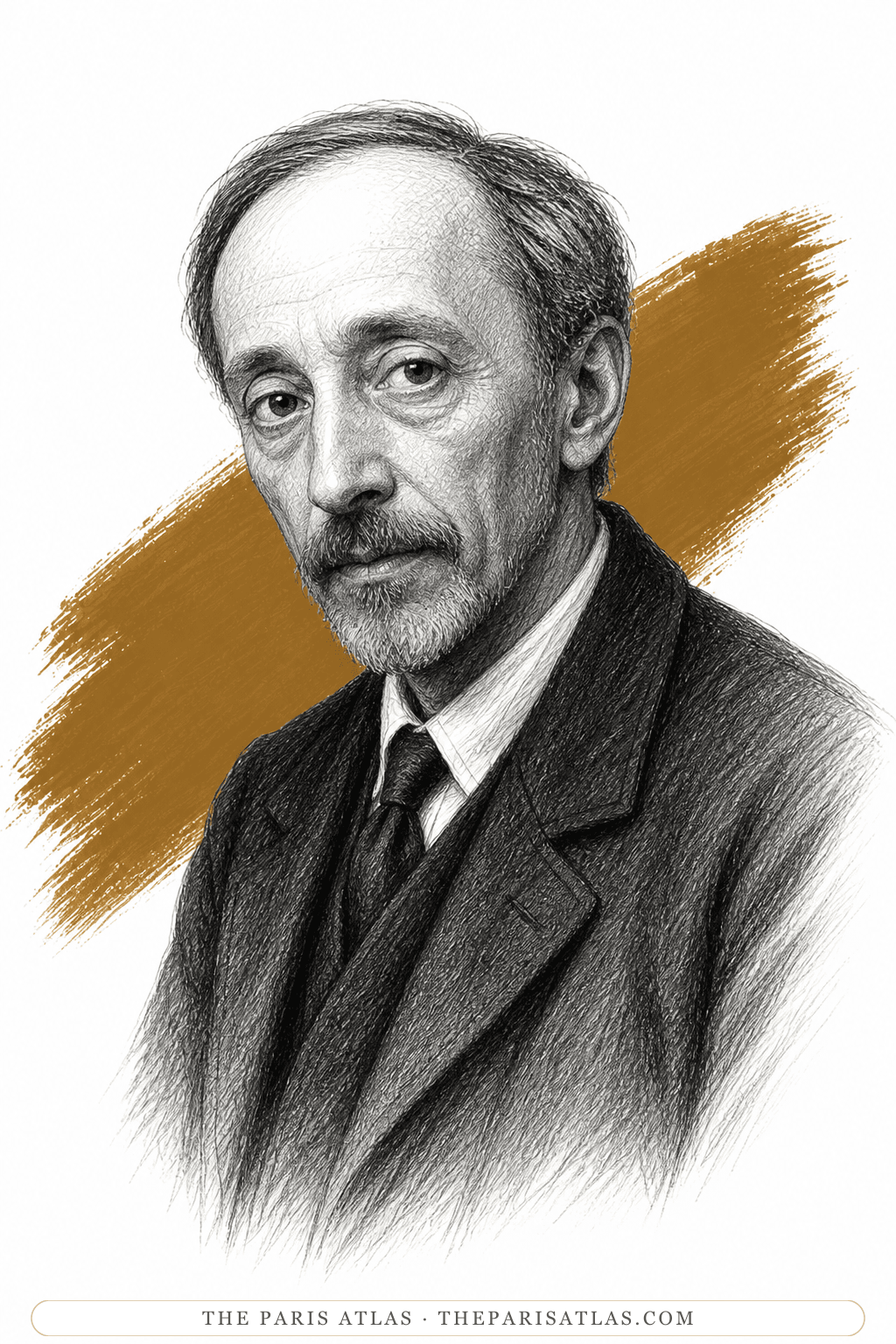
Illustrated portrait of Pierre Bonnard

Pierre Bonnard

French · Painter, Illustrator

The Bois de Boulogne belonged to Bonnard's recurring Paris subjects, where he studied the rhythms, encounters and visual accidents of modern public life.

Within walking distance

References

References

The sources below include histories, archival materials, scholarly research, and official records that informed this page. They document Bois de Boulogne, the people connected to it, and its place in Paris.

  1. 1abBalade du côté de chez Proust

    Website
    Ville de Paris
    Used for

    The city's Proust walk: the Allée des Acacias identified with the present-day avenue de Longchamp, its use as a promenade, and the asthma attack suffered on returning from the Bois at the age of nine.

    View source
  2. 2↑Project Gutenberg text of Du côté de chez Swann (#2650), the French original

    Website
    Marcel Proust
    Used for

    Web source consulted for documented facts and historical context presented on the Bois de Boulogne page.

    View source
  1. 3↑Proust Ink — Marcel Proust chronology (ed. William C. Carter)

    Website
    Used for

    Web source consulted for documented facts and historical context presented on the Bois de Boulogne page.

    View source
  2. 4OpenStreetMap

    Map data
    Used for

    Map data used to verify addresses, geographic coordinates, and the placement associated with Bois de Boulogne.

    View source
i
Why these sources are here

These references provide the documented foundation for this page's history and context. Claim-level citations remain attached to the specific claims they support.

Explore more resources

Newsletter

Paris, one address at a time.

The cafés, studios, and walk-up flats where the work was made — one story from the map in every letter.

Unsubscribe anytime.