The Paris AtlasCharting the artists, works, and places worth returning to.
  • Painter
· French · 1594–1665

Nicolas Poussin

French painter who spent most of his career in Rome and built historical and mythological subjects on clear composition and carefully differentiated gesture. His landscapes became reference points for Constable, Turner and Cézanne.

Details

Lived
1594–1665
Born
1594
Died
1665
Nationality
French
Roles
Painter

People Nicolas Poussin Knew

Relationships with other people, with sources for each connection.

Illustrated portrait of Gian Lorenzo Bernini

Gian Lorenzo Bernini

  • Sculptor
  • Architect

Met · 1624–1665

Bernini and Nicolas Poussin both worked in Rome for four decades, and Bernini told Chantelou in Paris in 1665 that it was he who had obtained for Poussin the commission for the altarpiece of the Martyrdom of Saint Erasmus in Saint Peter's, and that other painters had resented him for it. No source records a particular meeting between them, which is why this edge is marked probable rather than documented. Bernini talked about Poussin's pictures constantly in Paris, calling him the greatest and most learned painter there was, and saying in front of a Poussin landscape that he was a painter who works from up there, while pointing to his own forehead. Poussin was too ill to act as Colbert's agent in Rome over the Louvre designs, and died in Rome on 19 November 1665, a month after Bernini left France.
— Paul Fréart de Chantelou, Journal du voyage du Cavalier Bernin en France, edited by Ludovic Lalanne (1885), pp. 67, 90, 146, 190

Movements

The artistic and literary currents this life ran through.

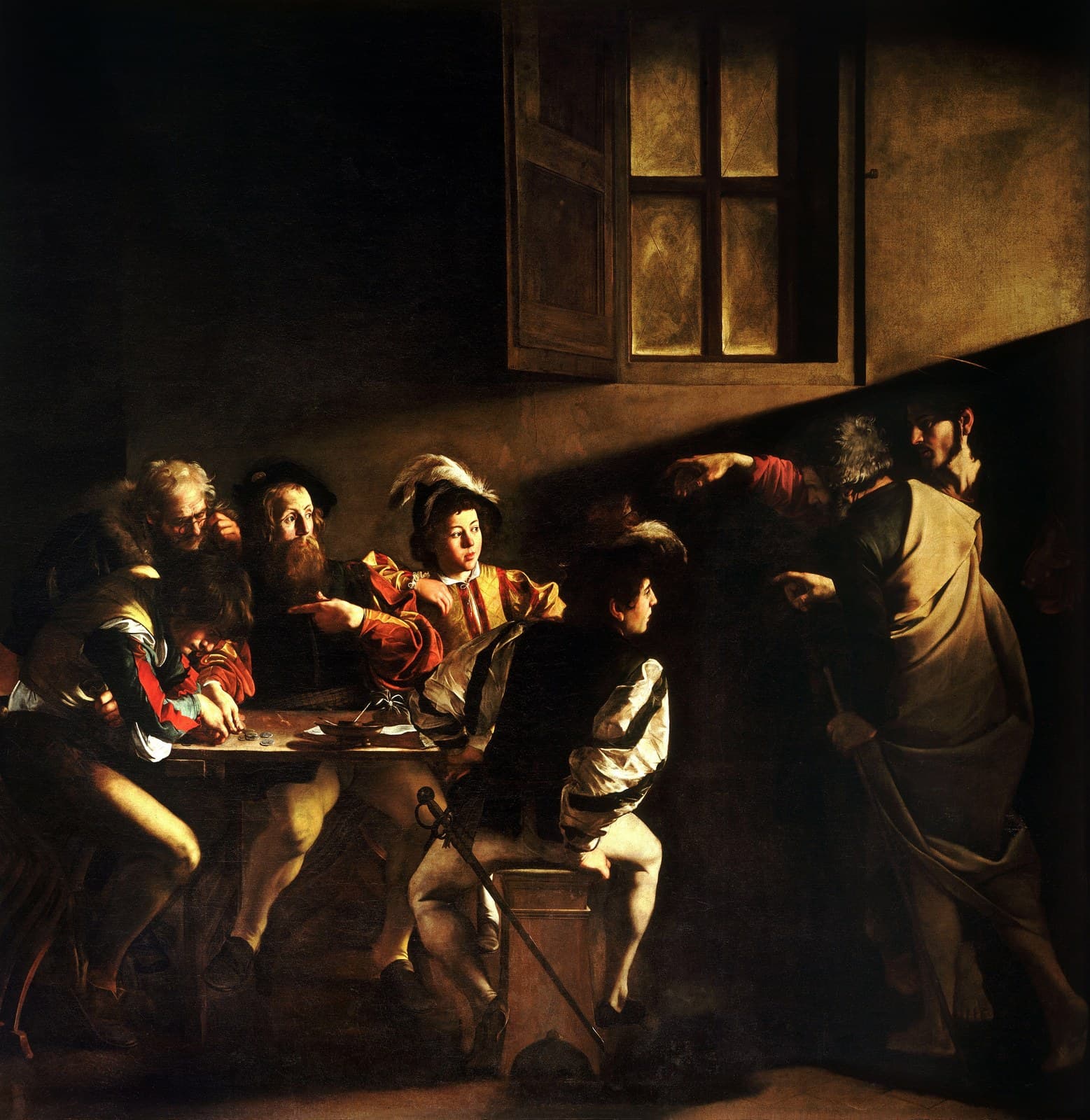
Caravaggio's The Calling of Saint Matthew: men in feathered hats counting coins at a table in a dark room, a shaft of light falling across the back wall, Christ at the right pointing toward them

Art movement and historical period · circa 1600–1750

Baroque Art

Poussin spent most of his career in Rome and built historical and mythological subjects on controlled gesture and lucid composition, asking a viewer to read relationships among figures rather than absorb an effect. His landscapes later became reference points for Constable, Turner and Cézanne.

— Nicolas Poussin (1594–1665); Poussin and Nature: Arcadian Visions

Connections and Sources

Nicolas Poussin’s connections to people, places, and works, with the sources behind each one.

Associated with · 1624–1665

Baroque Art

Poussin spent most of his career in Rome and built historical and mythological subjects on controlled gesture and lucid composition, asking a viewer to read relationships among figures rather than absorb an effect. His landscapes later became reference points for Constable, Turner and Cézanne.

— Nicolas Poussin (1594–1665); Poussin and Nature: Arcadian Visions

Met · 1624–1665

Gian Lorenzo Bernini

Bernini and Nicolas Poussin both worked in Rome for four decades, and Bernini told Chantelou in Paris in 1665 that it was he who had obtained for Poussin the commission for the altarpiece of the Martyrdom of Saint Erasmus in Saint Peter's, and that other painters had resented him for it. No source records a particular meeting between them, which is why this edge is marked probable rather than documented. Bernini talked about Poussin's pictures constantly in Paris, calling him the greatest and most learned painter there was, and saying in front of a Poussin landscape that he was a painter who works from up there, while pointing to his own forehead. Poussin was too ill to act as Colbert's agent in Rome over the Louvre designs, and died in Rome on 19 November 1665, a month after Bernini left France.

— Paul Fréart de Chantelou, Journal du voyage du Cavalier Bernin en France, edited by Ludovic Lalanne (1885), pp. 67, 90, 146, 190